Greg Goldstein's Comic Art Gallery

Erik Larsen, Paul Ryan & Al Milgrom — Fantastic Encore

Fantastic Four: World’s Greatest Comics Magazine #2, March 2001
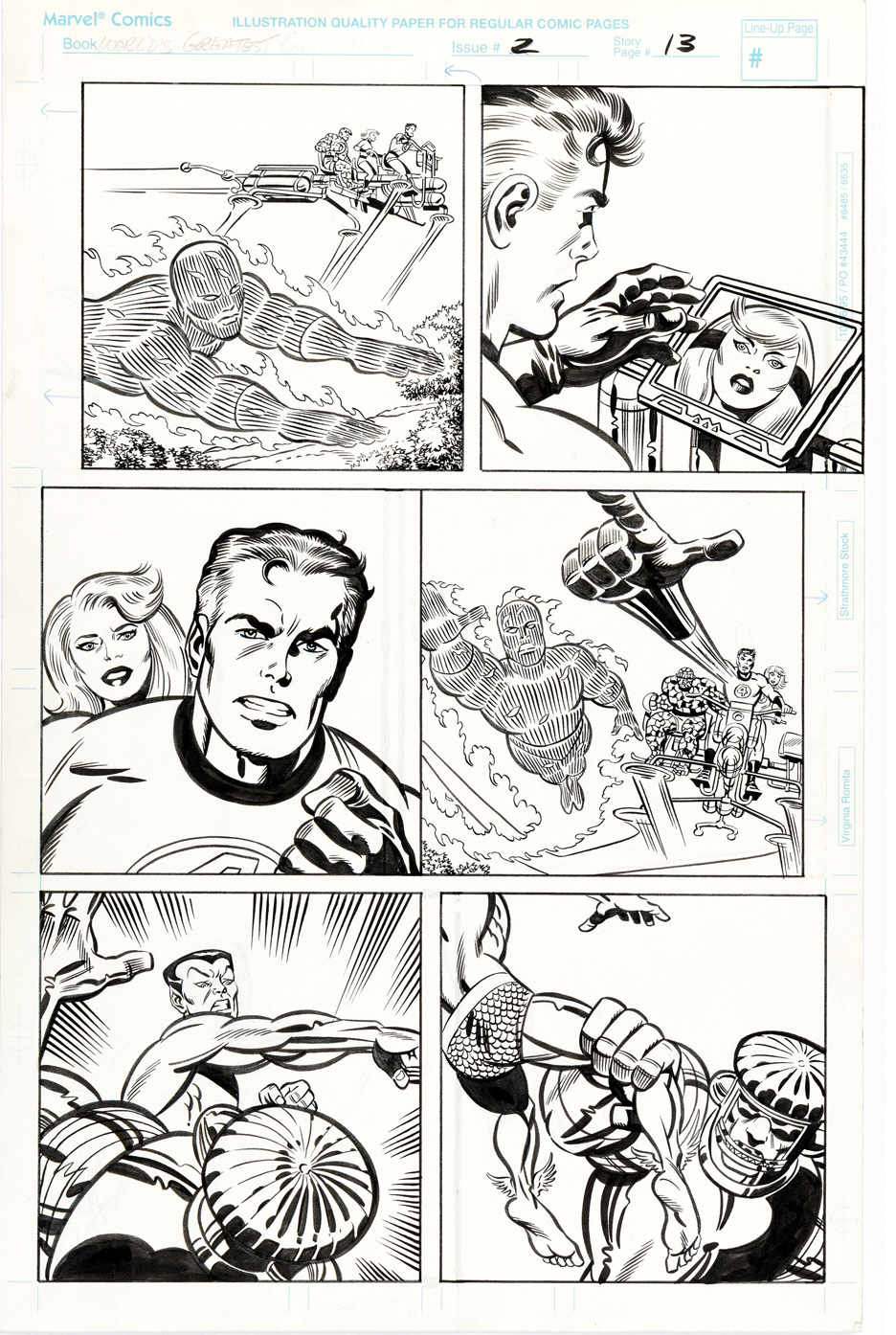
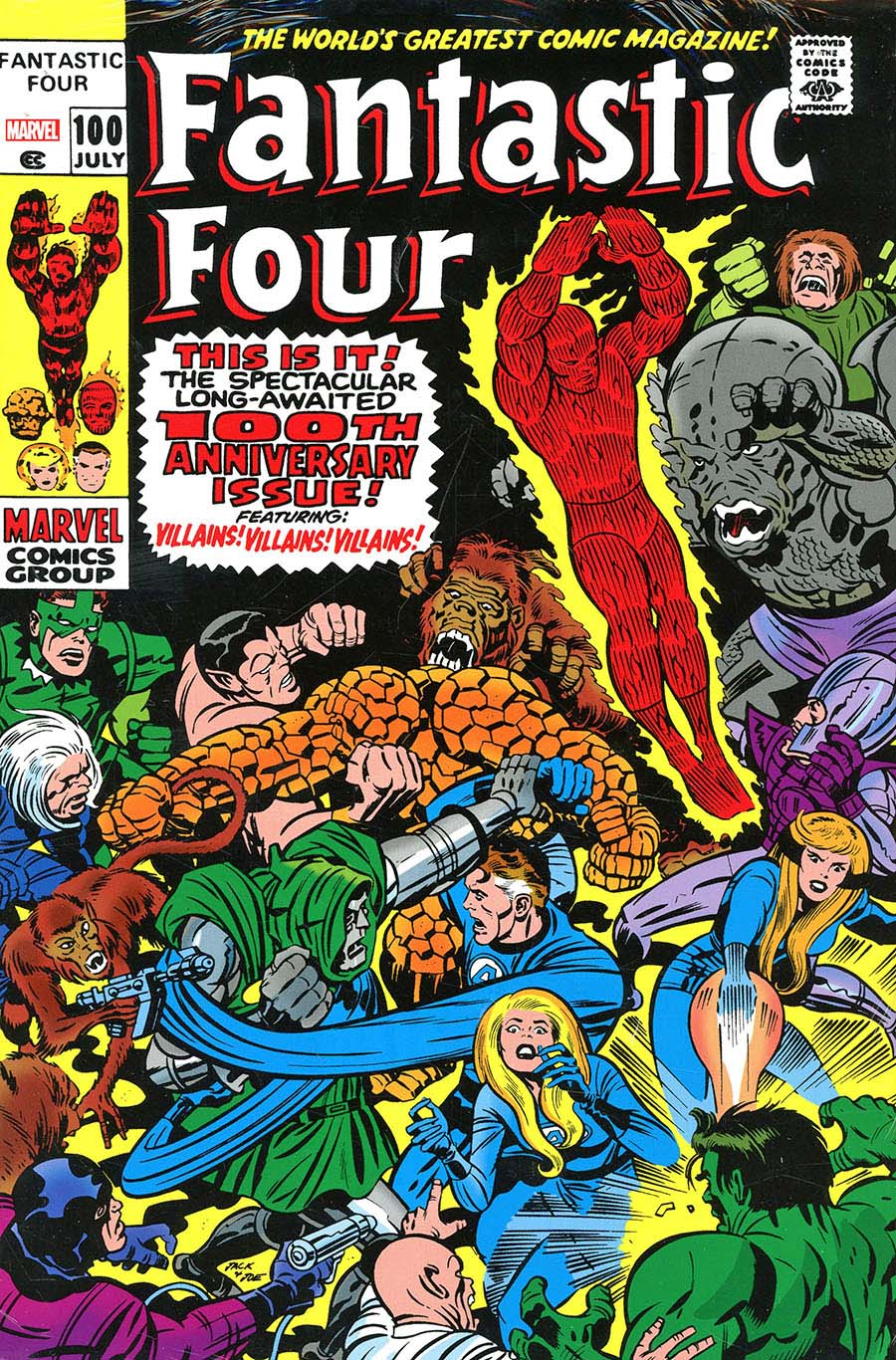
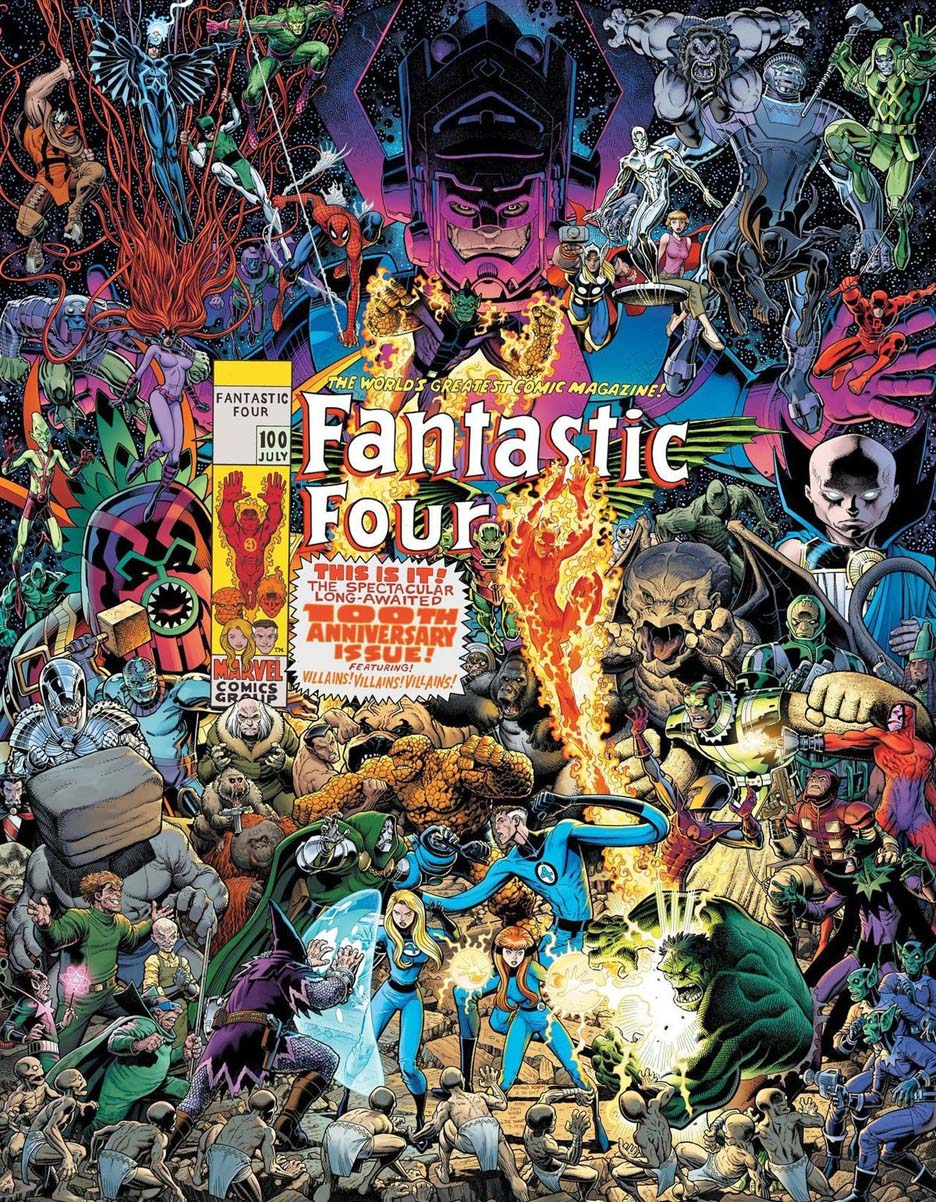
Fantastic Four: World’s Greatest Comics Magazine isn’t like a sequel to Lee and Kirby’s original run—it is one. Same premise, same mission: pick up the world’s greatest comic right after issue #100 and keep the engine humming.

This mini-series exists because a generation of creators grew up fluent in Kirby’s visual language and wanted to continue it, not reinterpret it. No grim updating. No clever winks. Just more Fantastic Four.

This page nails that idea perfectly. Erik Larsen provides the layouts, setting up classic, confident storytelling. Paul Ryan delivers clean, readable draftsmanship. Al Milgrom locks it all together with classic Marvel authority. You get the full team, Crystal, and Namor battling the Sentry—all in one terrific page of original art.

Across the series, the creative roster reads like a roll call of die-hard Kirby believers. Other contributors included Bruce TimmRon FrenzKeith Giffen, and Rick Veitch—artists who didn’t just admire Kirby, they revered him and understood what made the Fantastic Four tick.

What makes World’s Greatest Comics Magazine special is its confidence. It doesn’t explain itself. It assumes the Fantastic Four never stopped being the future. In that sense, it isn’t nostalgia—it’s continuity of imagination. And that’s about as Fantastic Four as it gets.
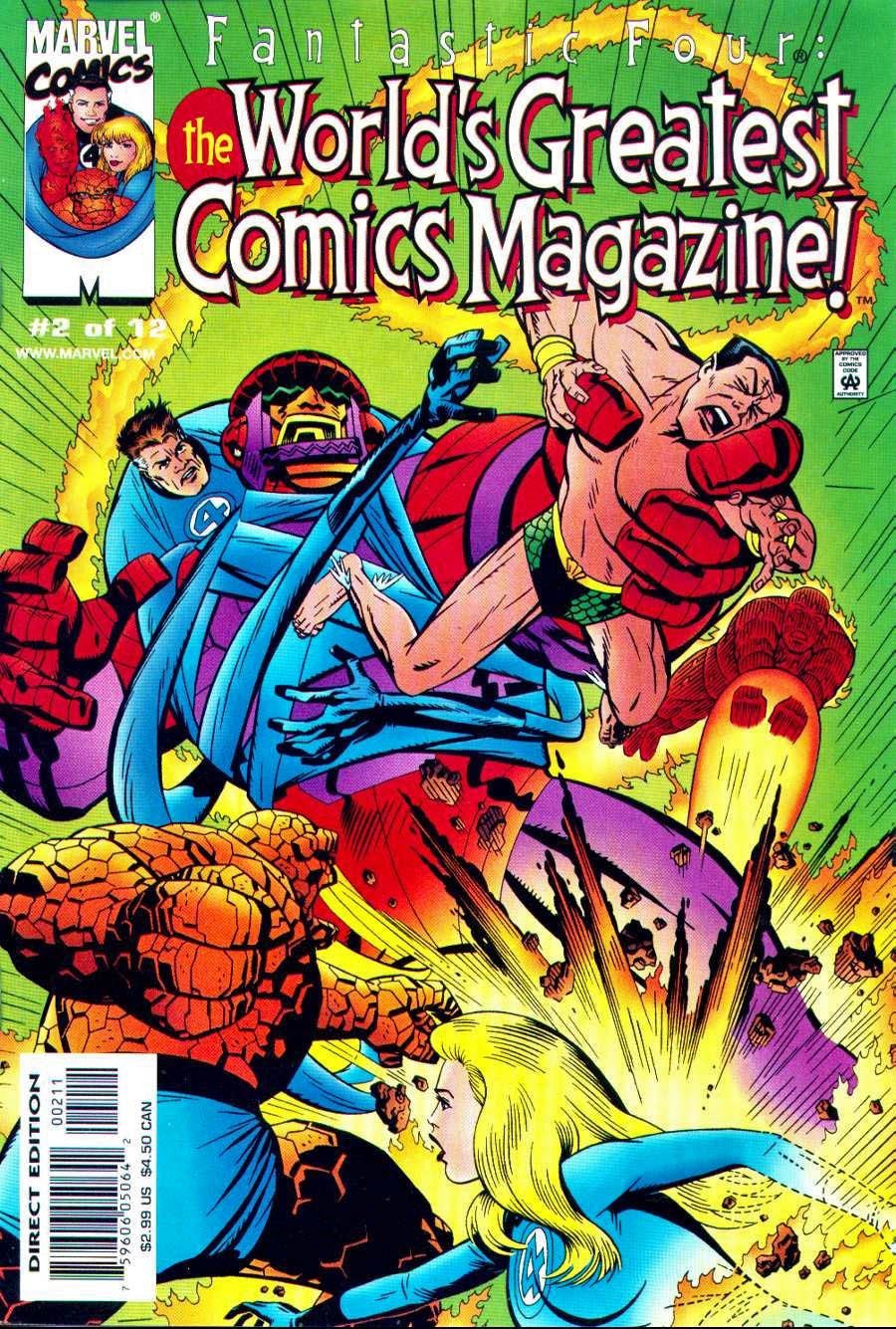
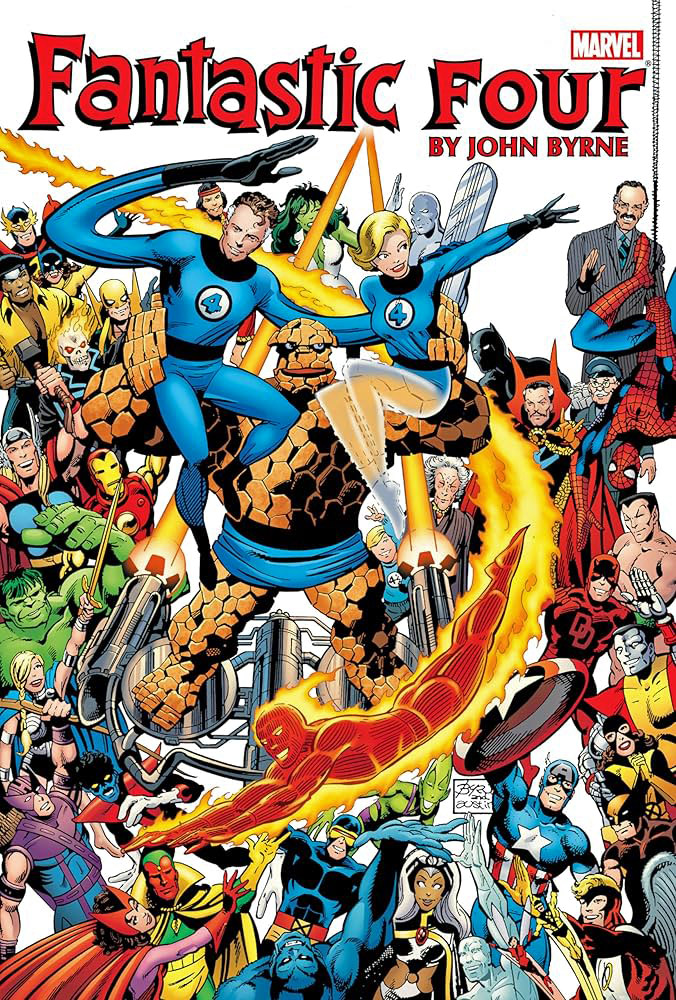
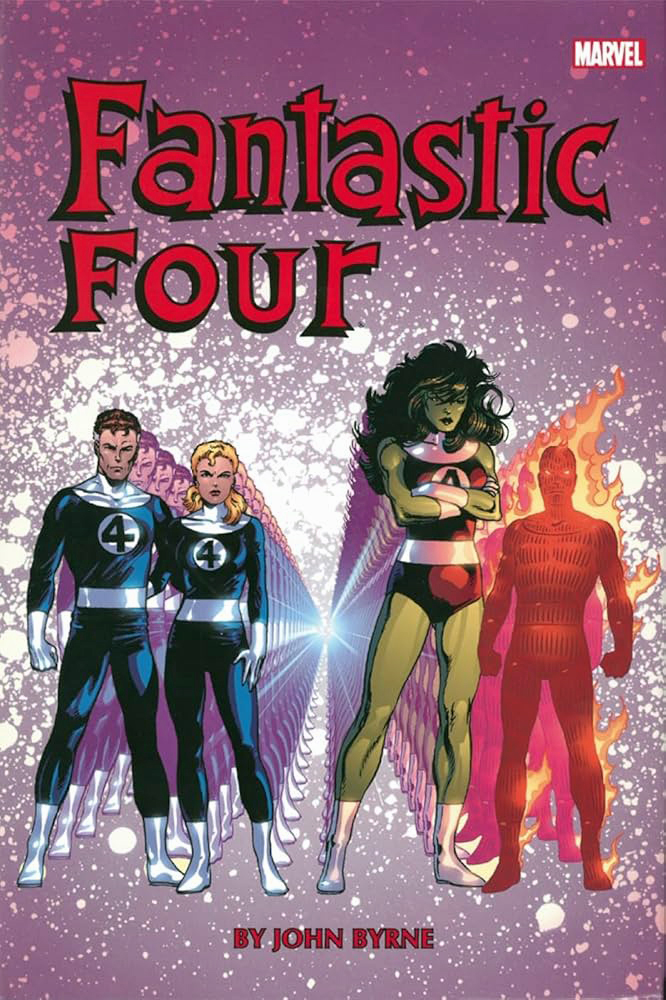
John Byrne — Fantastic, Again

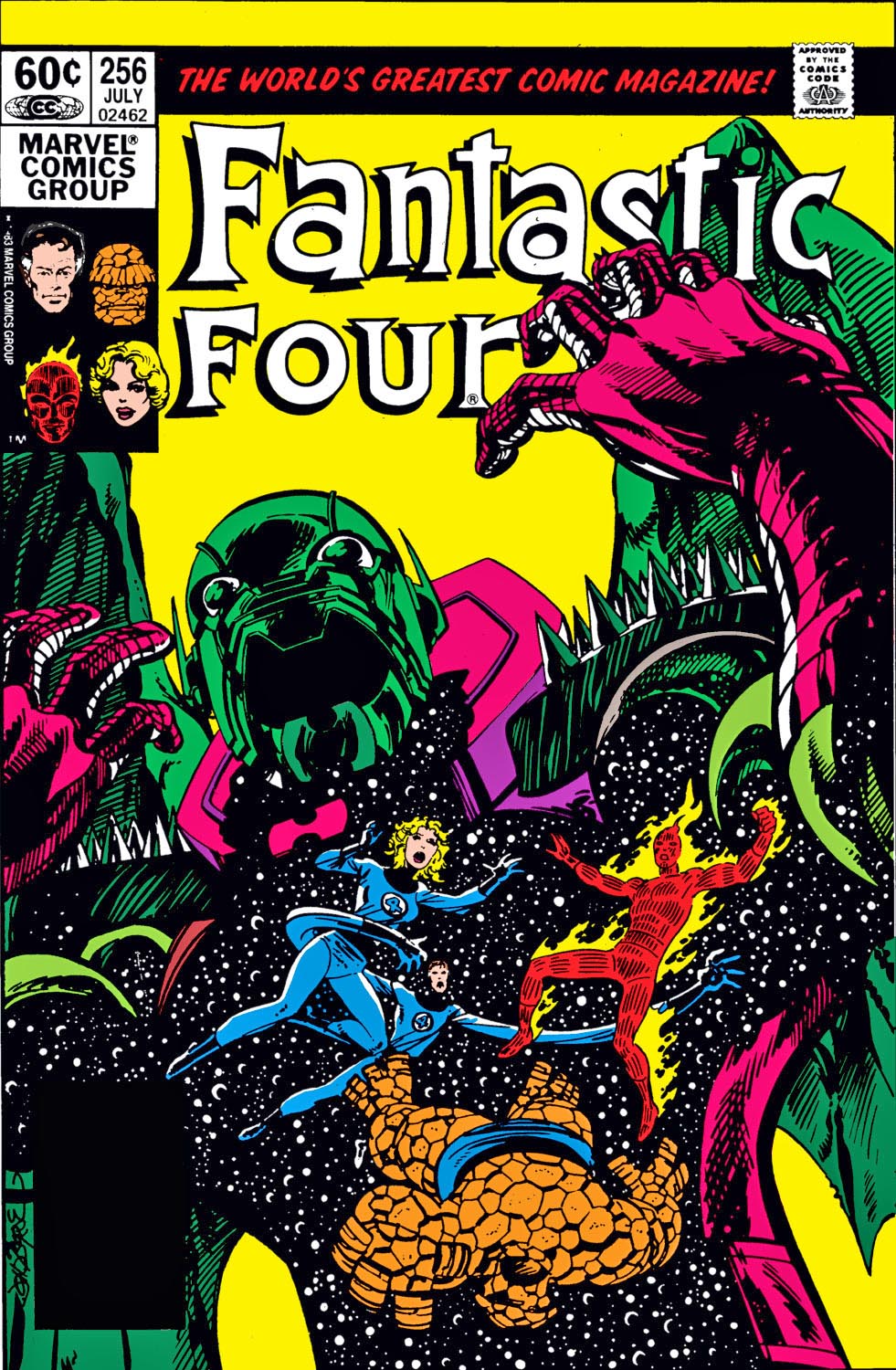
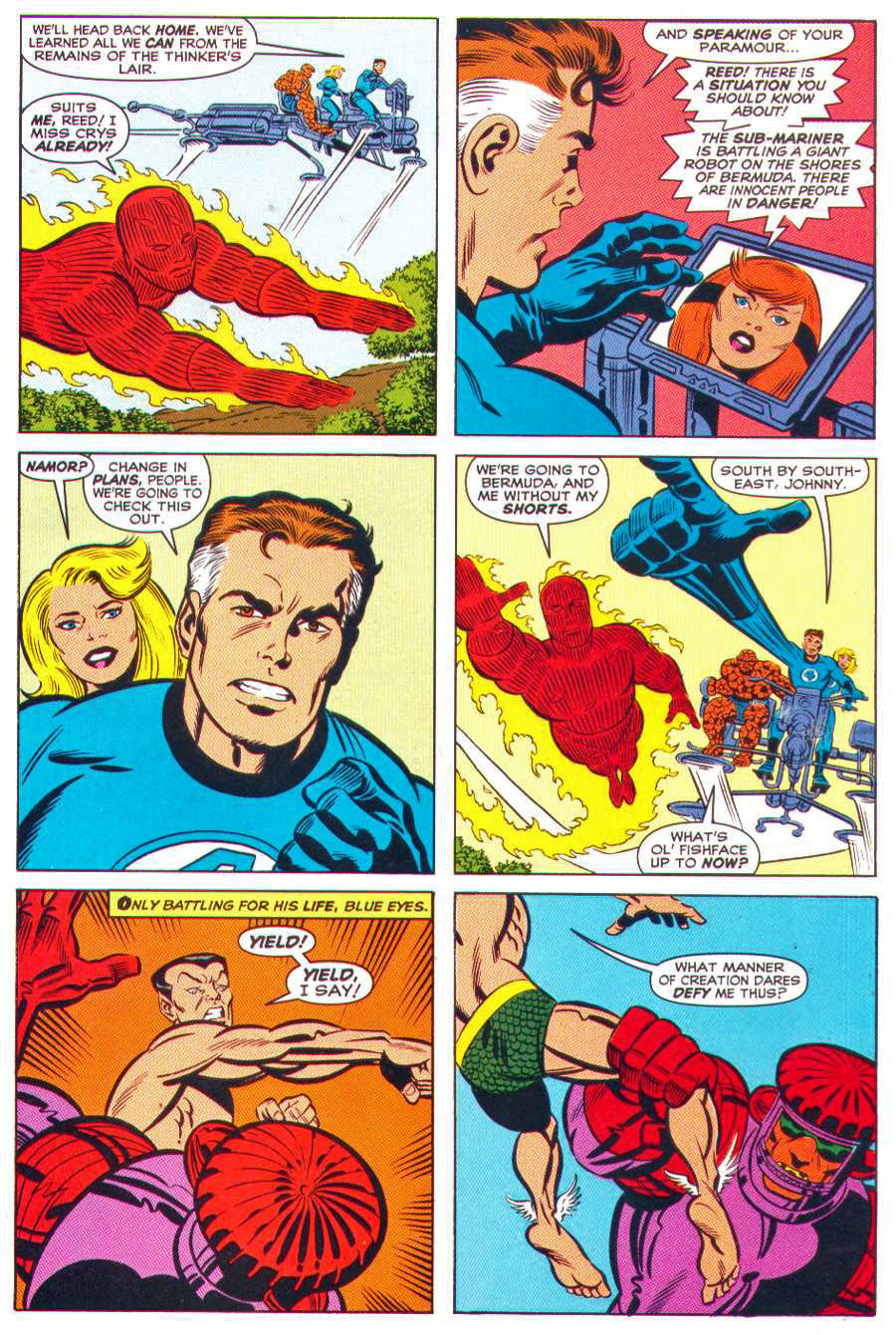
Fantastic Four #256, July 1983

John Byrne’s Fantastic Four earned its legendary status the right way. He took the keys to one of Marvel’s great books, respected the Kirby engine that powered it, and pushed it forward with smart, late-’70s storytelling.

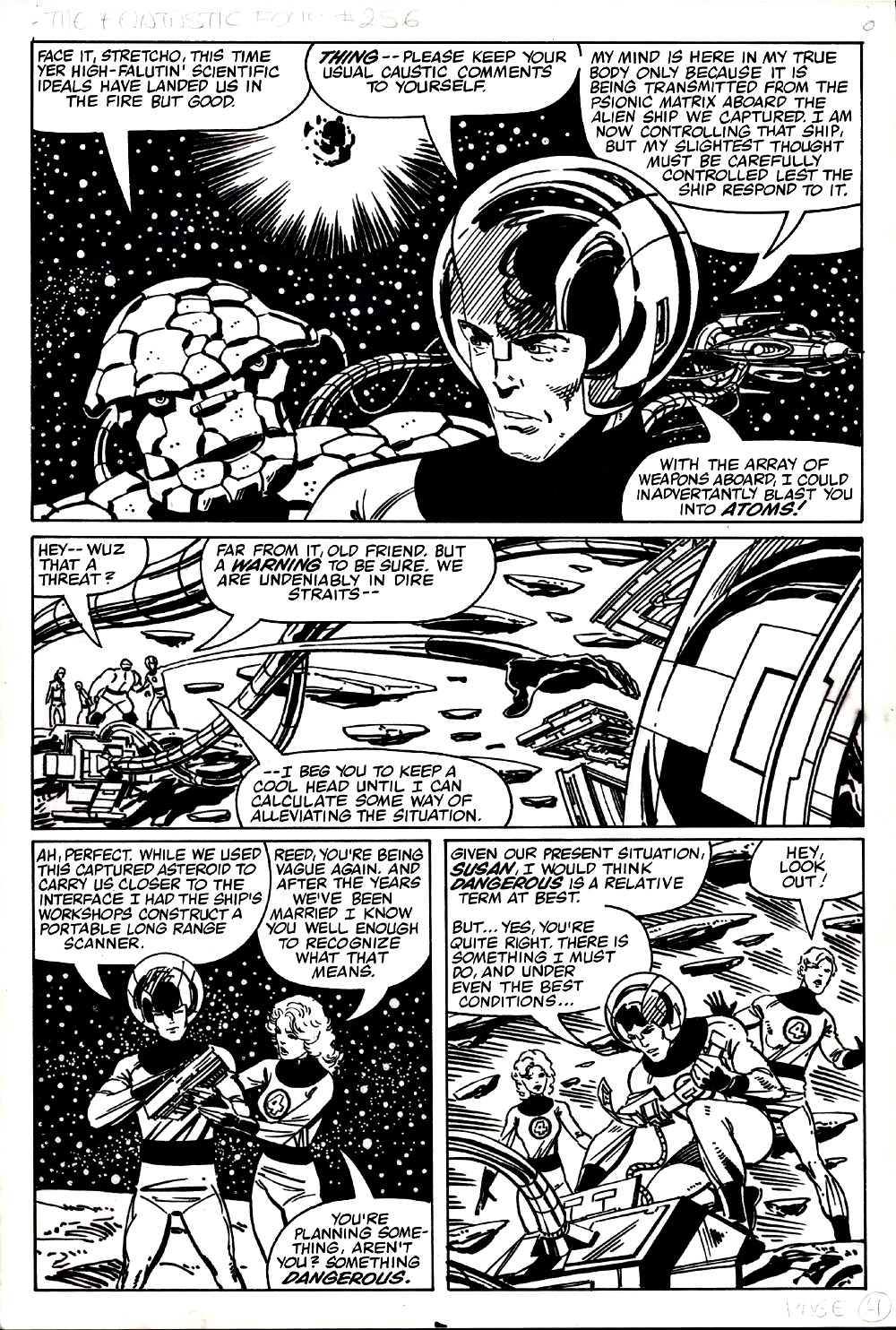
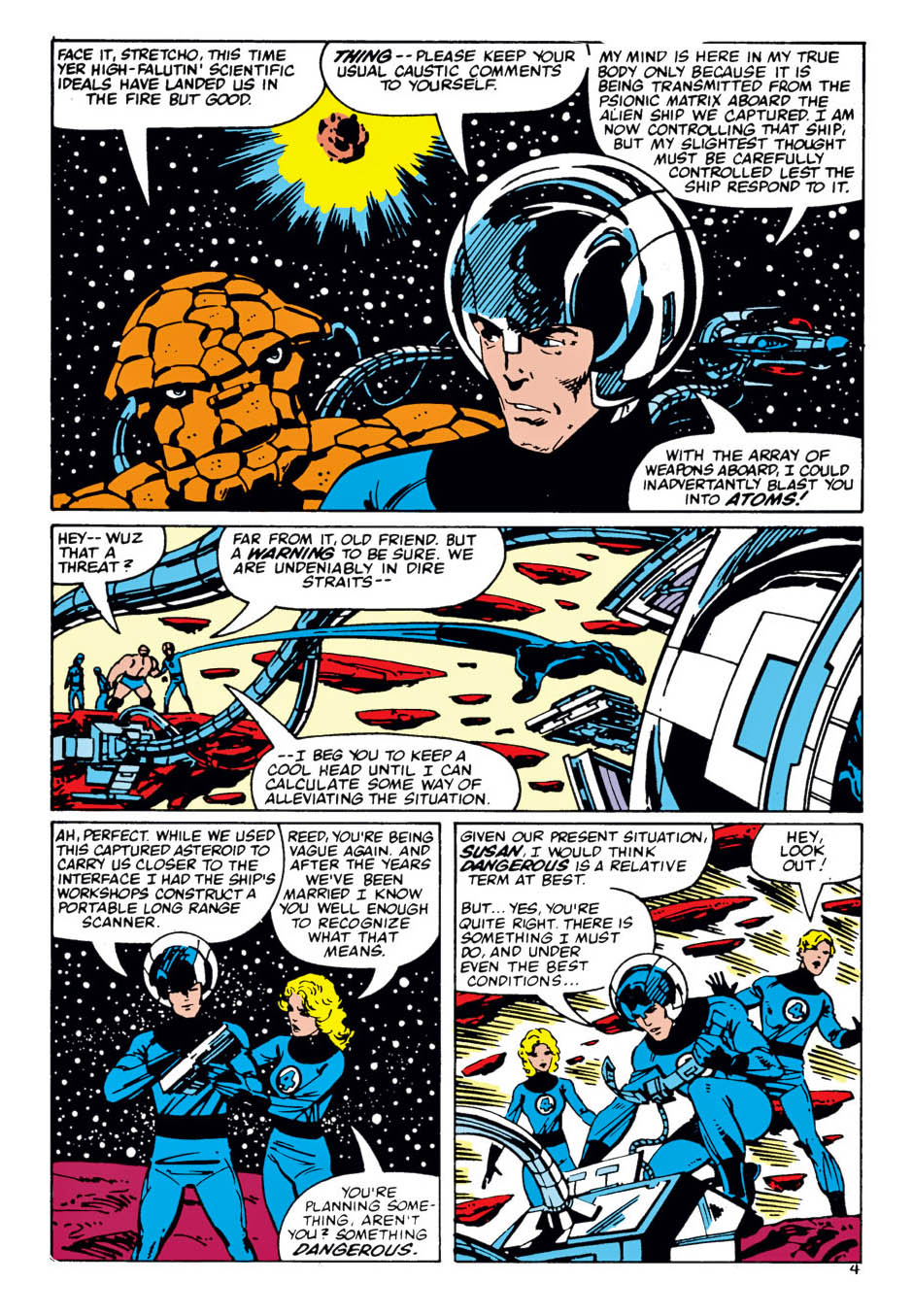
This Negative Zone page feels like classic FF: clear storytelling, dangerous tech, and characters who sound like smart people under pressure. Reed is cool and precise. Sue keeps things grounded.

Drawn oversized, the page has room to breathe — big machines, strange worlds, and that unmistakable sense of scale. Nothing feels decorative. It feels built.

The kind of Fantastic Four that made opening a new issue every month feel like an event.

John Buscema & Joe Sinnott — Fantastic Follow-up

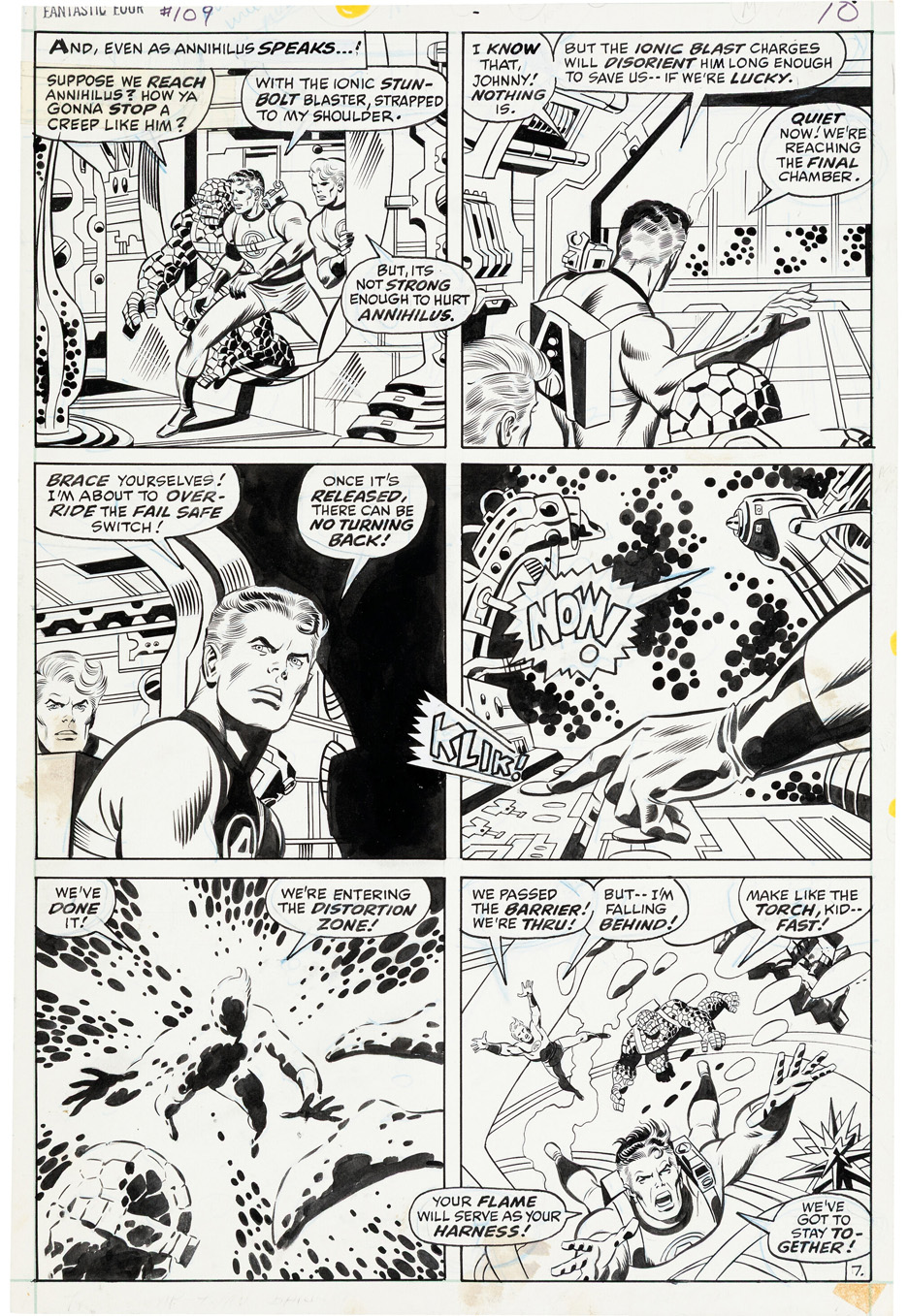
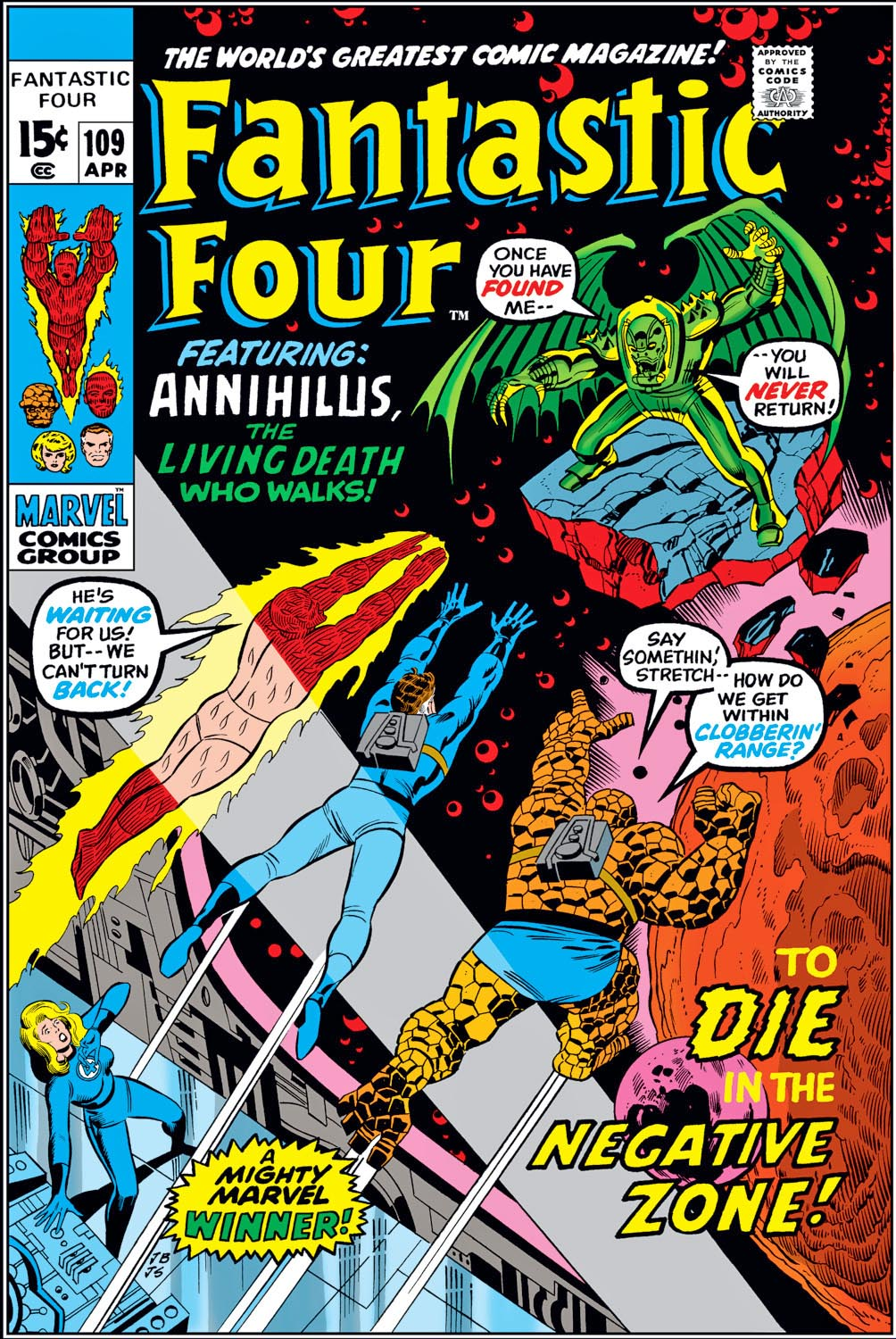
Fantastic Four #109, April 1971

If Jack Kirby built the Marvel Universe by flooring the gas pedal, John Buscema is the artist who proved it could keep moving at speed without flying off the road. This page from The Fantastic Four #109 doesn’t feel like a reset after Kirby—it feels like a smooth handoff. (Especially with the amazing Joe Sinnott continuing on as co-pilot.)

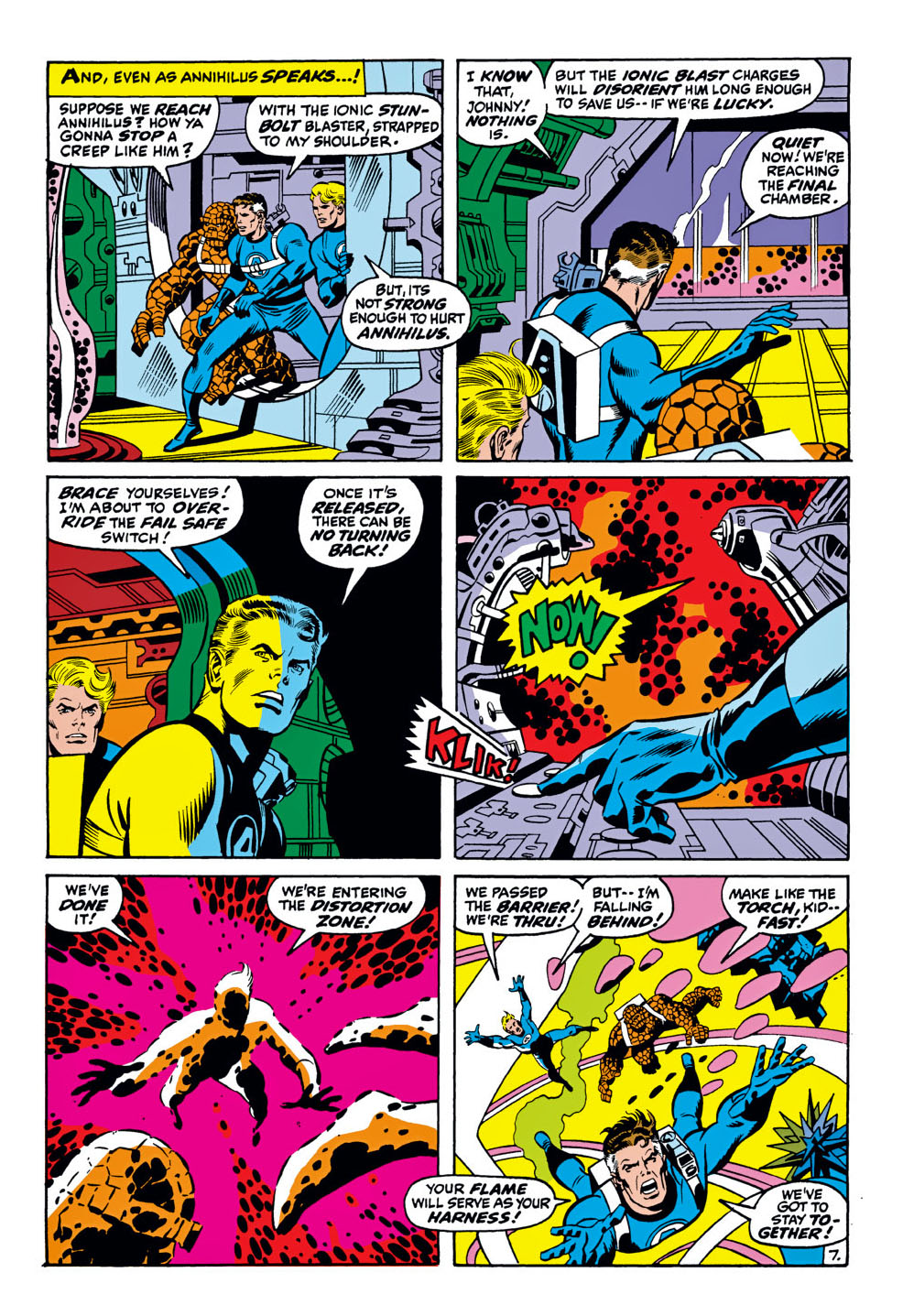
Nearly everything that defines the FF is here: impossible tech, last-second switches, and reality bending under pressure. Kirby detonates ideas; Buscema directs them. The action is clean, the staging is crystal clear, and even as the team tumbles through the “Distortion Zone,” you always know where everyone is—and what’s about to go wrong.

That’s why Buscema was the perfect artist to follow Kirby. He didn’t try to out-Kirby Kirby; he translated the chaos into confident, cinematic storytelling.

Fantastic Four #109 lands squarely in my prime spinner-rack era—back when the future arrived every month for 15 cents a pop. Owning this page feels like closing a long loop—from Wurman’s candy store (Long Beach, NY) back to the original art board, without losing any of the wonder.

In fact, it gains even more.

Jack Kirby & Joe Sinnott — Fantastic, 4ever

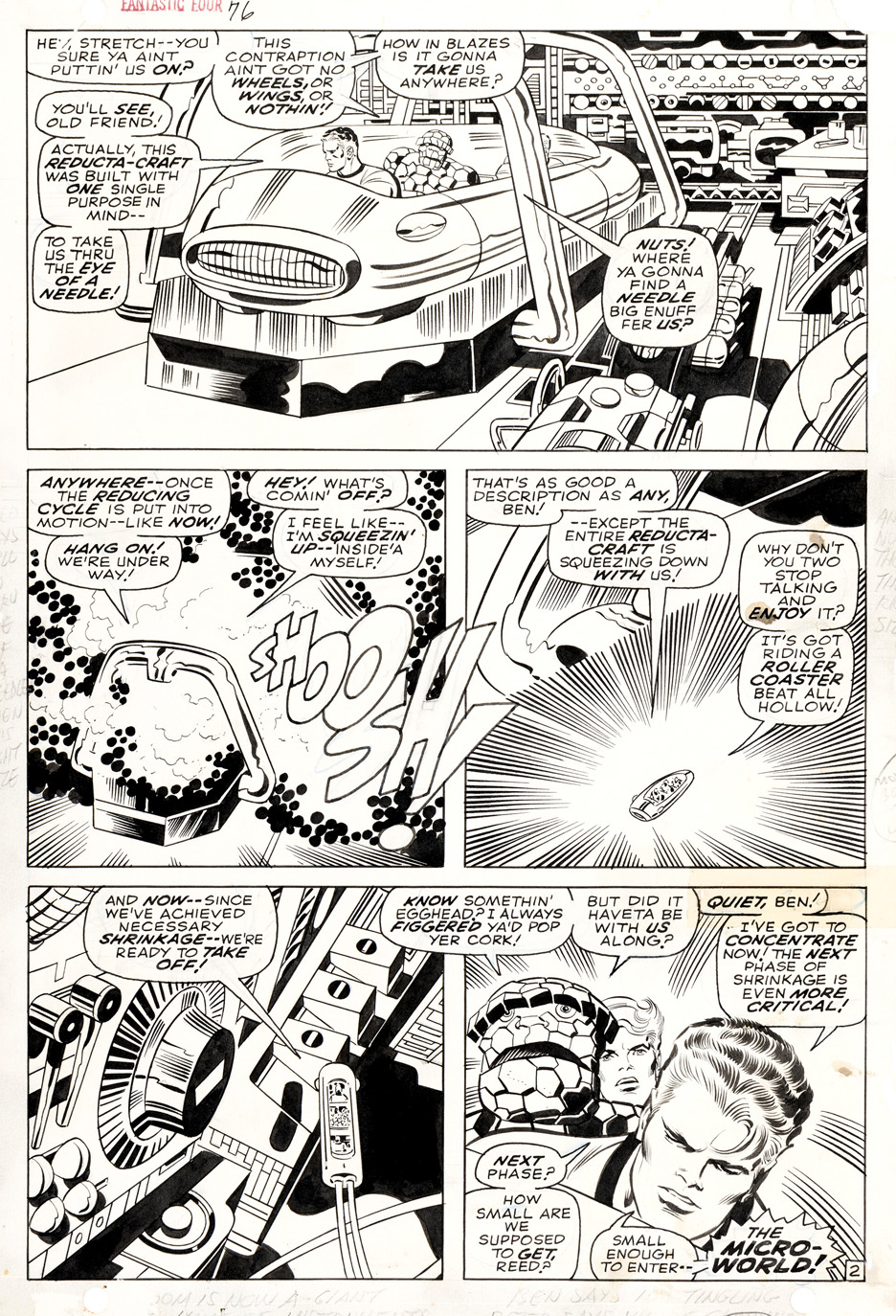
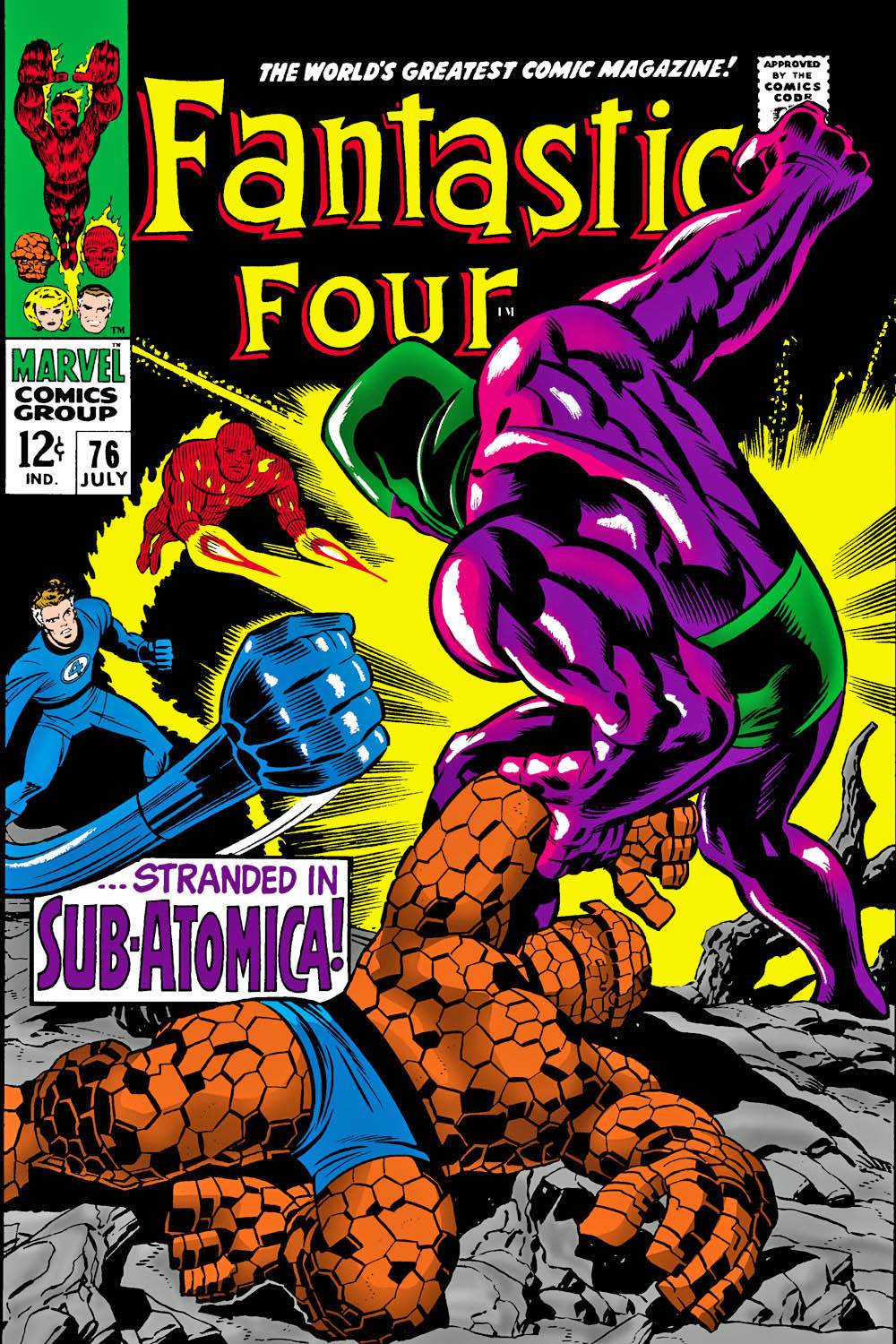
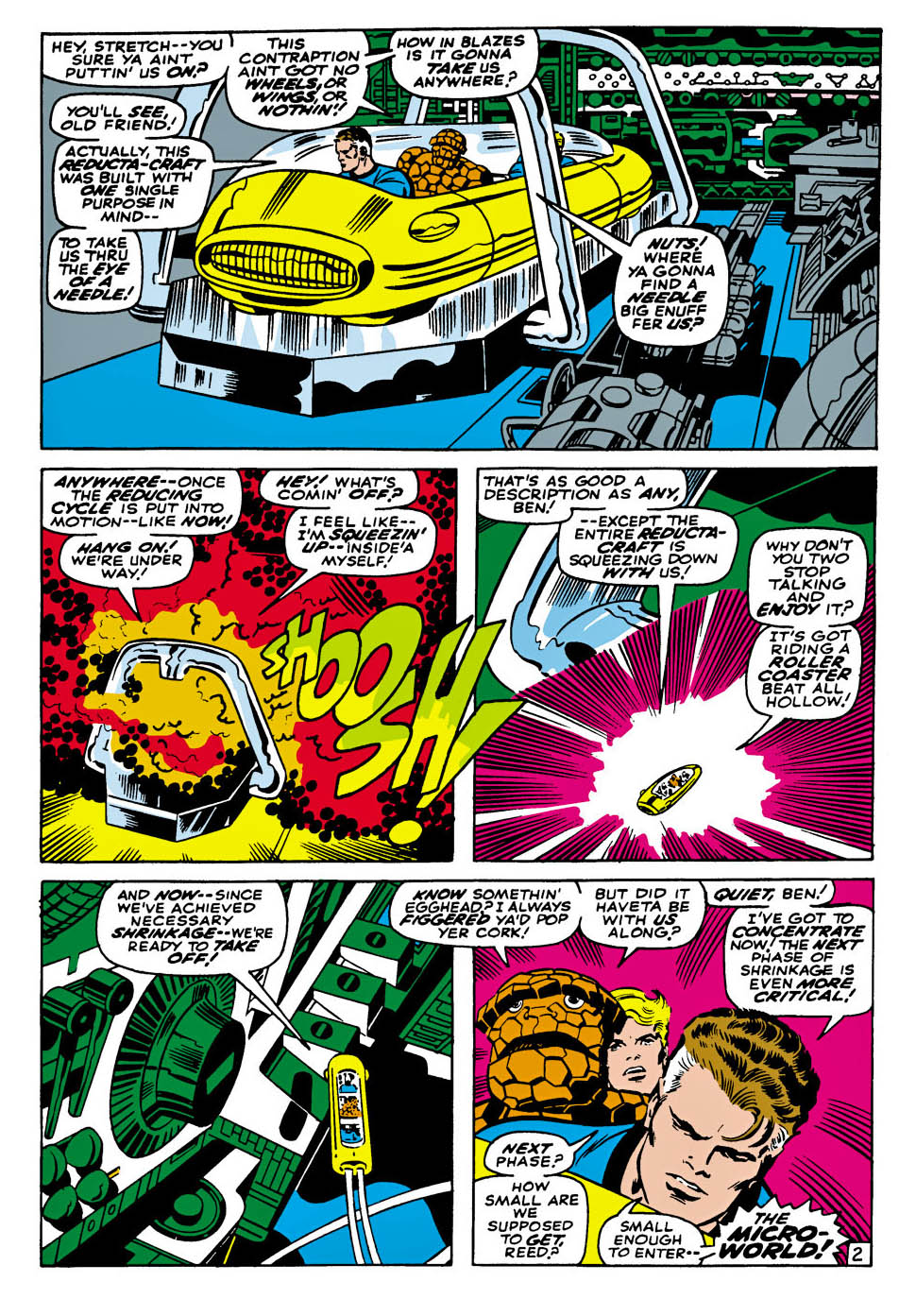
Fantastic Four #76, July 1968

Sixty-five years on, The Fantastic Four still feels like Marvel figuring itself out in real time—and getting it spectacularly right. These weren’t heroes born in alleys or back rooms; they were a product of the early ’60s, when the Space Race filled the headlines and the future felt thrilling, reckless, and inevitable. Rockets were launching, limits were being tested, and the question wasn’t should we go farther—it was how fast can we get there. Marvel’s cosmic imagination starts right here, with four people charging into the unknown.

And speaking of charging ahead—just look at this page by Jack Kirby, beautifully locked down by Joe Sinnott. This isn’t just a shrinking sequence; it’s Kirby inventing scale. Machines loom like alien vistas, panels crackle with motion, and your eye doesn’t just read the page—it gets pulled inside it. Sinnott’s inks keep all that chaos crisp, clear, and impossibly confident.

I continue to believe the first 100 issues (and especially the marvelous three-year stretch from about issues #39–76) of The Fantastic Four rank among the most important runs in comic-book history—one long creative hot streak where the ideas redefined pretty much everything that came before.

I’m never going to referee who did what between Kirby and Stan Lee, but one thing is pretty obvious: Lee contributed much of the personality, friction, and soap-opera snap that made the cosmic feel personal. The Fantastic Four bicker, joke, and melt down while rewriting reality—and that mix of big ideas and human irritation became Marvel’s calling card.

Happy 65th to the Fantastic Four: Marvel’s original first family, and a wondrous revolution in comic books.