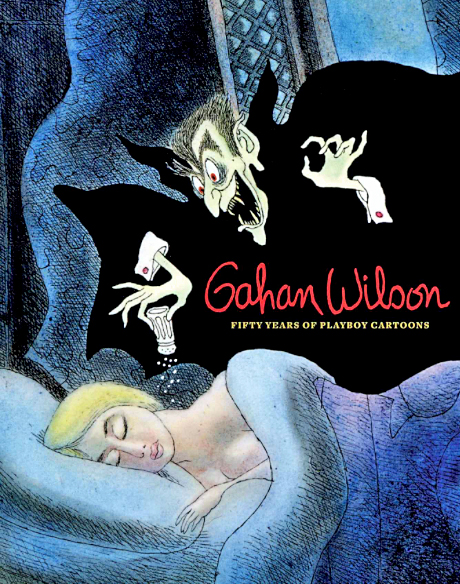
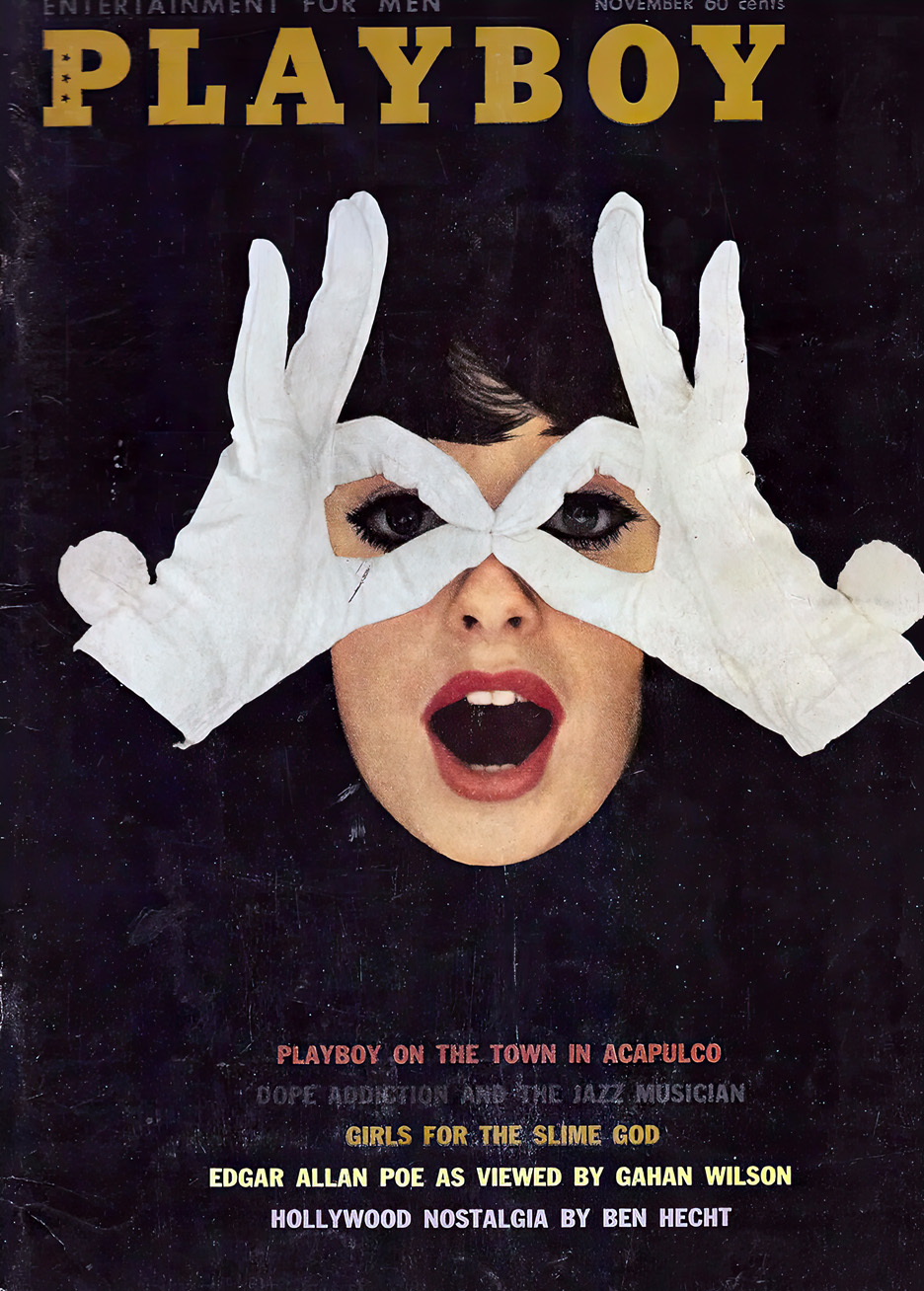
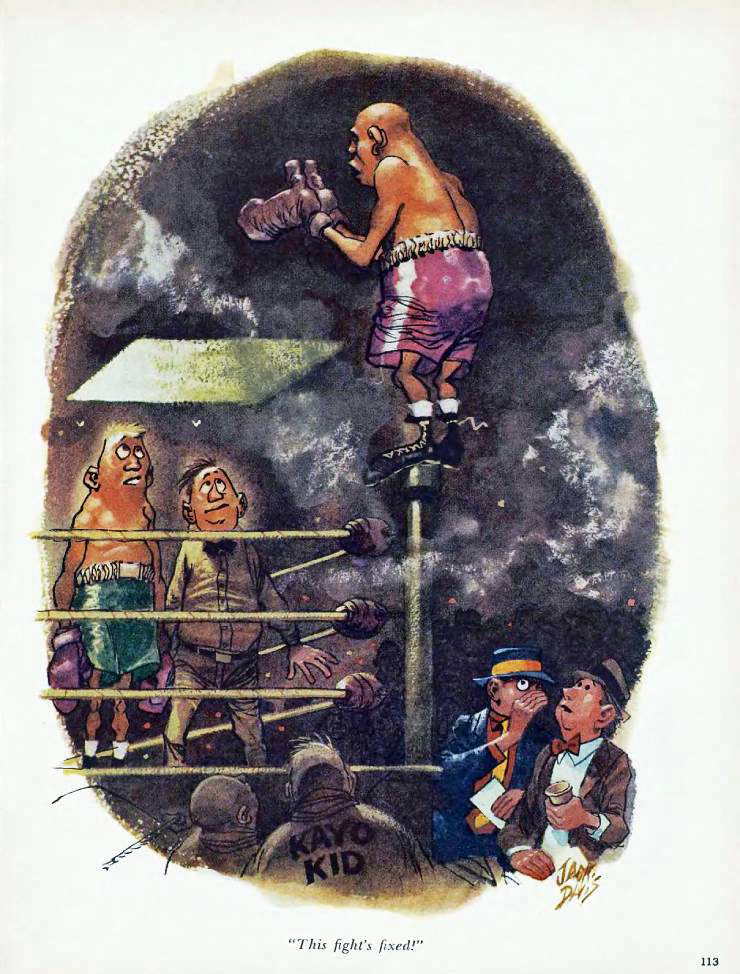
To say I was obsessed with Gahan Wilson’s amazing cartoons in the early 70s would definitely qualify as an understatement. The art and the gag almost always spoke to me.
I wouldn’t say I’m “obsessed” today… but I still love them and find them as entertaining as much as I ever did.
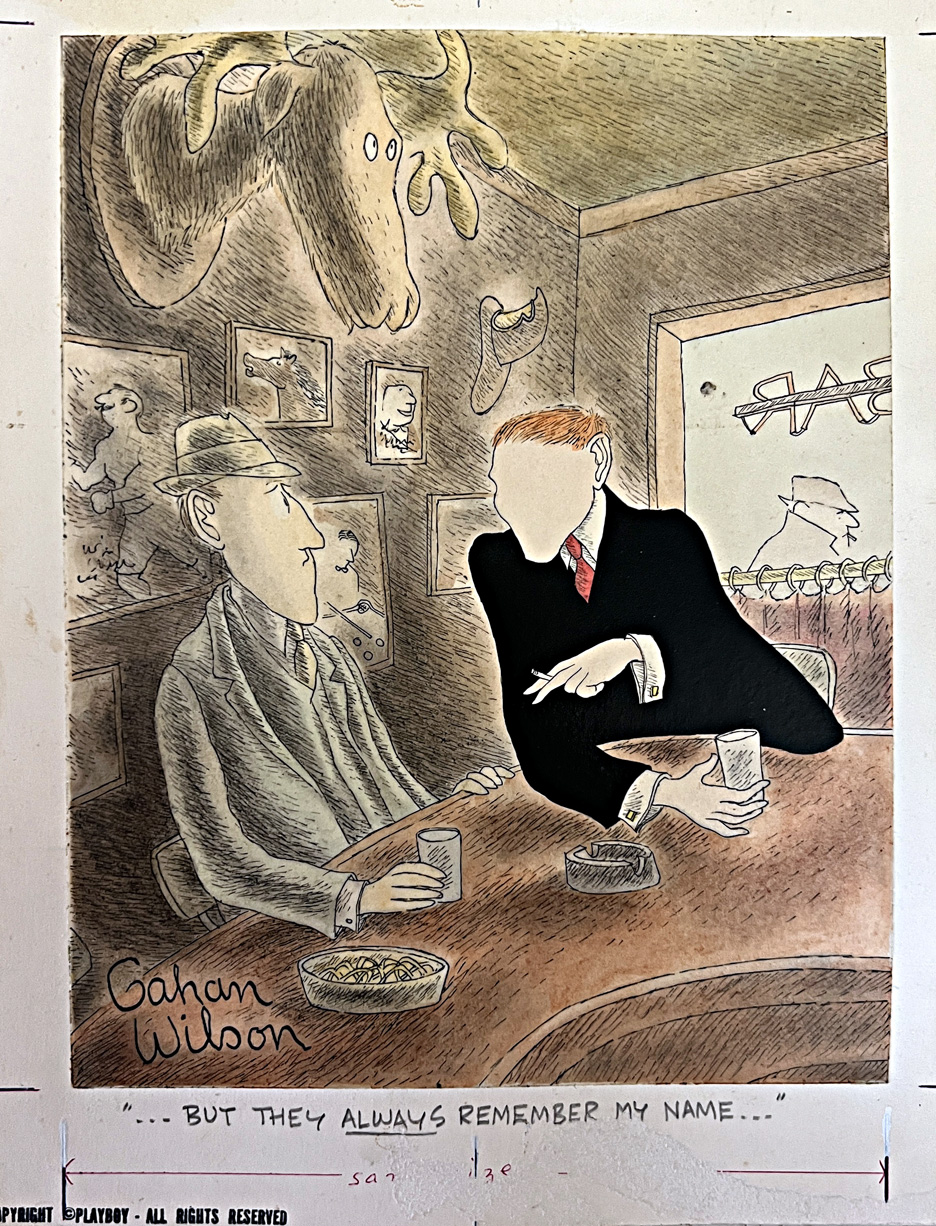
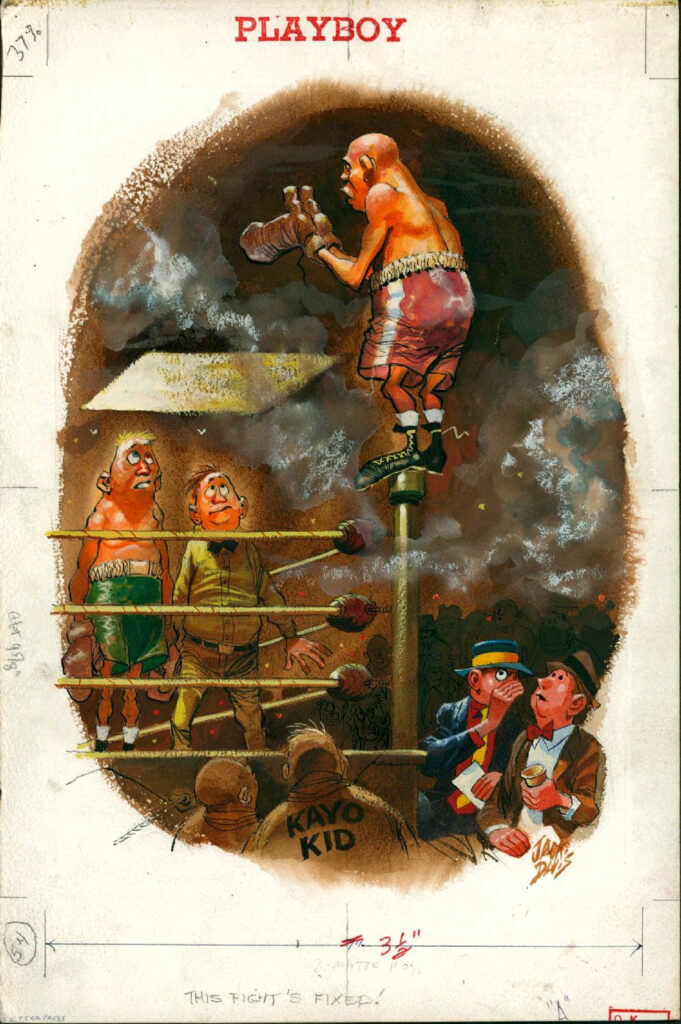
I’m delighted to finally own of his classic color Playboy cartoons.
San Diego Comic-Con — my 30th, at least — begins tomorrow, and who knows, maybe I’ll find another one.
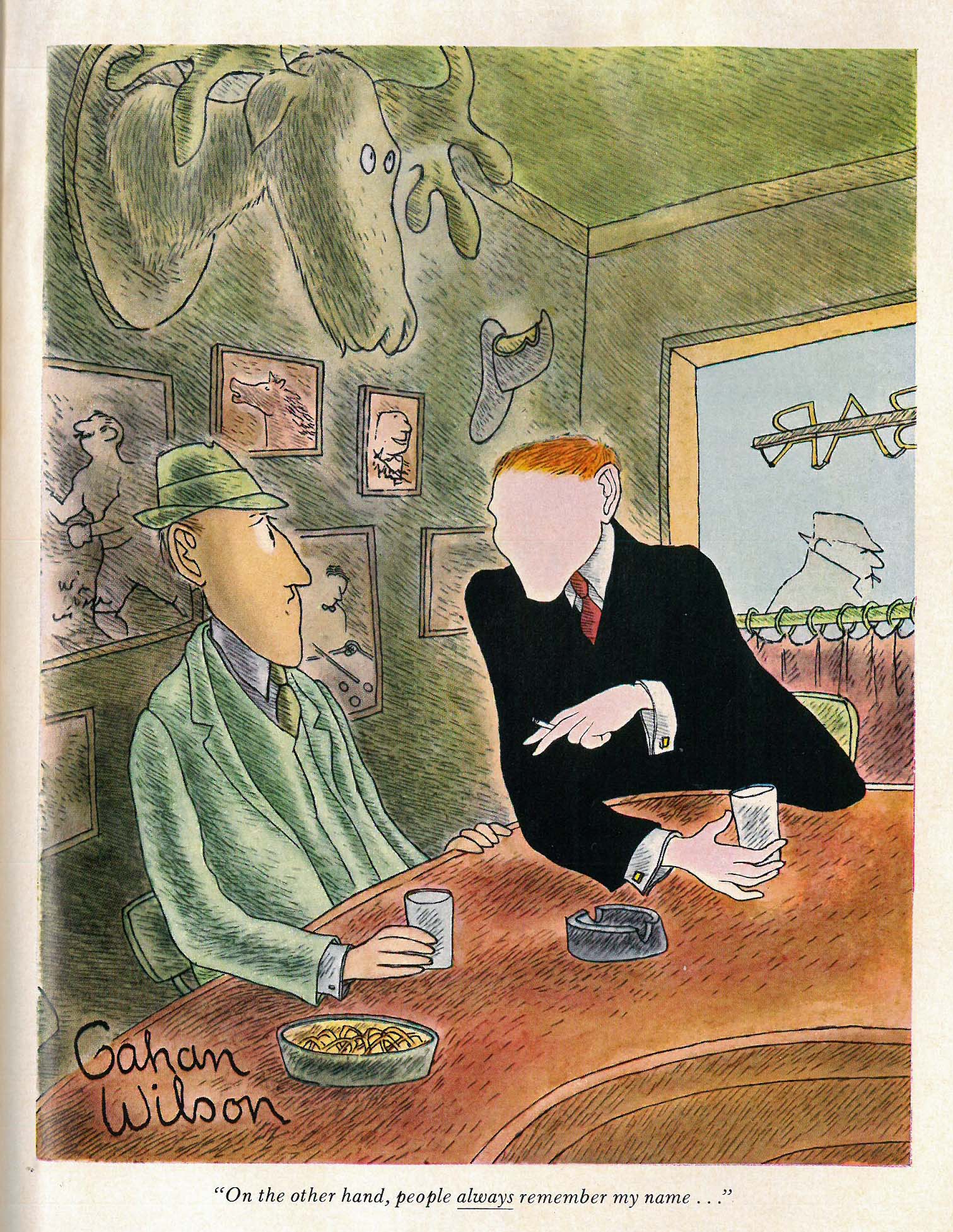
Fun fact: A slight edit made to the final published caption vs Wilson’s submission.
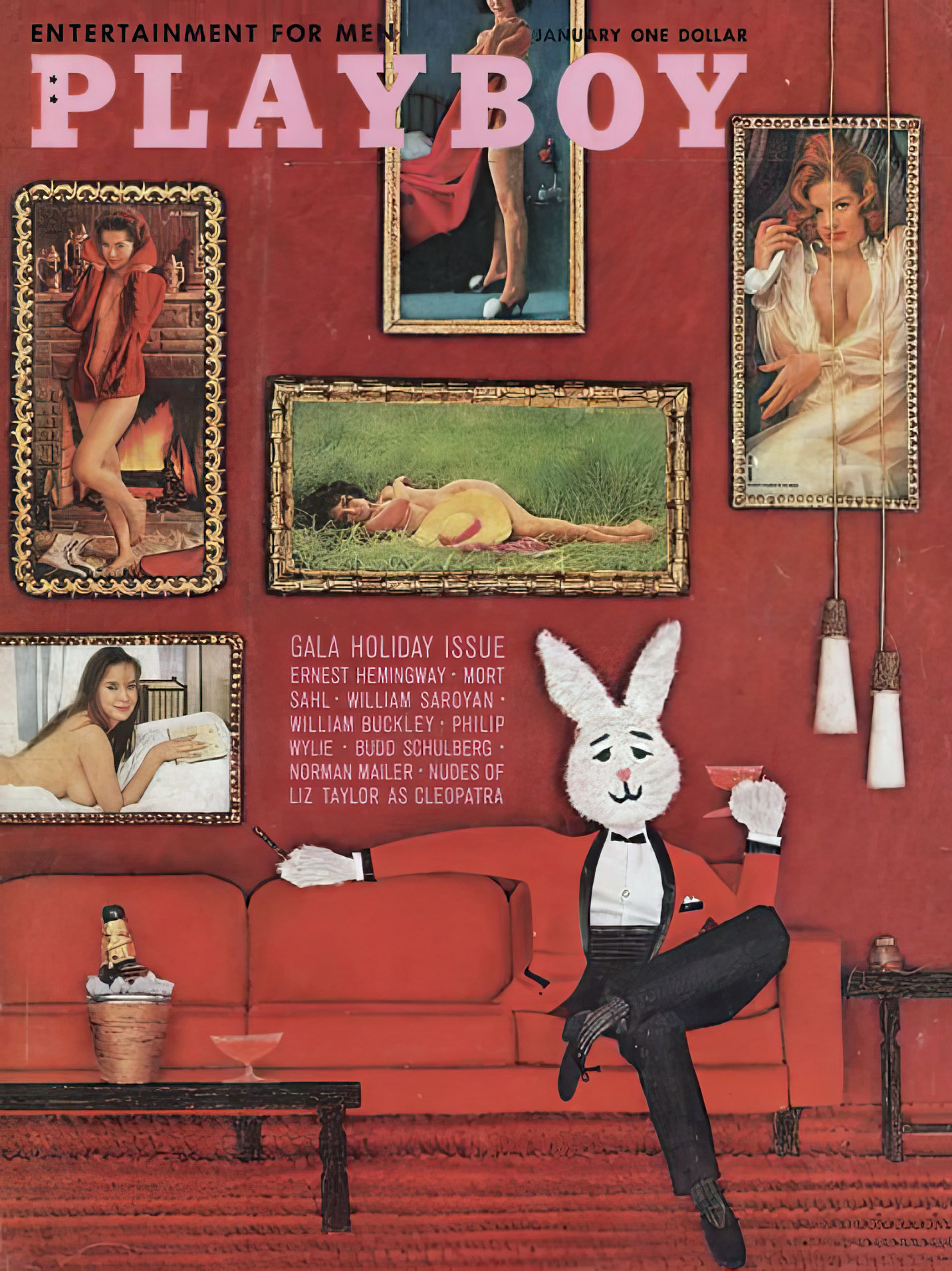
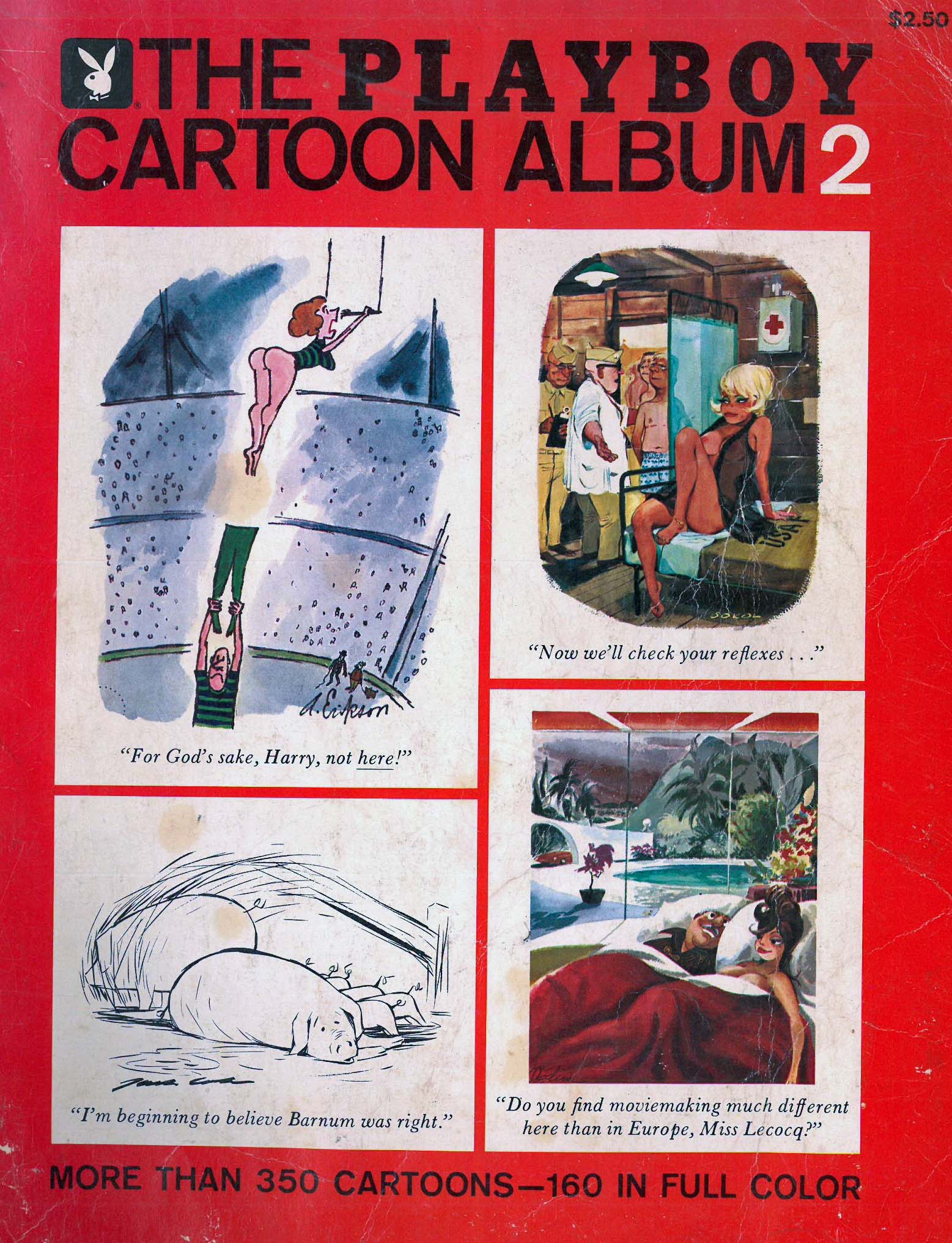
Wilson’s cartoons appeared in various Playboy collections throughout the 60s – 80s, and then ultimately in a complete collection (inexplicably now out of print) published by Fantagraphics in 2010.
Can you think of another artist whose work appeared in Mad, Time, TV Guide and Playboy at the height of their circulation in the 60s and 70s? Not to mention seminal work as a visual storyteller at EC Comics?
Nope, me either.
“Jack Davis was quite possibly the most ubiquitous American humor illustrator of all time. Davis was a master cartoonist, caricaturist, and illustrator, and his funny, fast-paced, manic, beautifully rendered work has graced the covers of countless comic books, magazines, and record albums and has also appeared on movie posters, bubble gum cards, and advertisements. A virtual mind-boggling one-man industry, Davis has been called “the fastest cartoonist alive” and “the master of the crowd scene.” It’s astonishing to realize that this quiet Southern gentleman was usually finished with assignments for the day and out on the golf course by 2:30 p.m.”
– Drew Friedman from his Fantagraphics book, Heroes of the Comics.
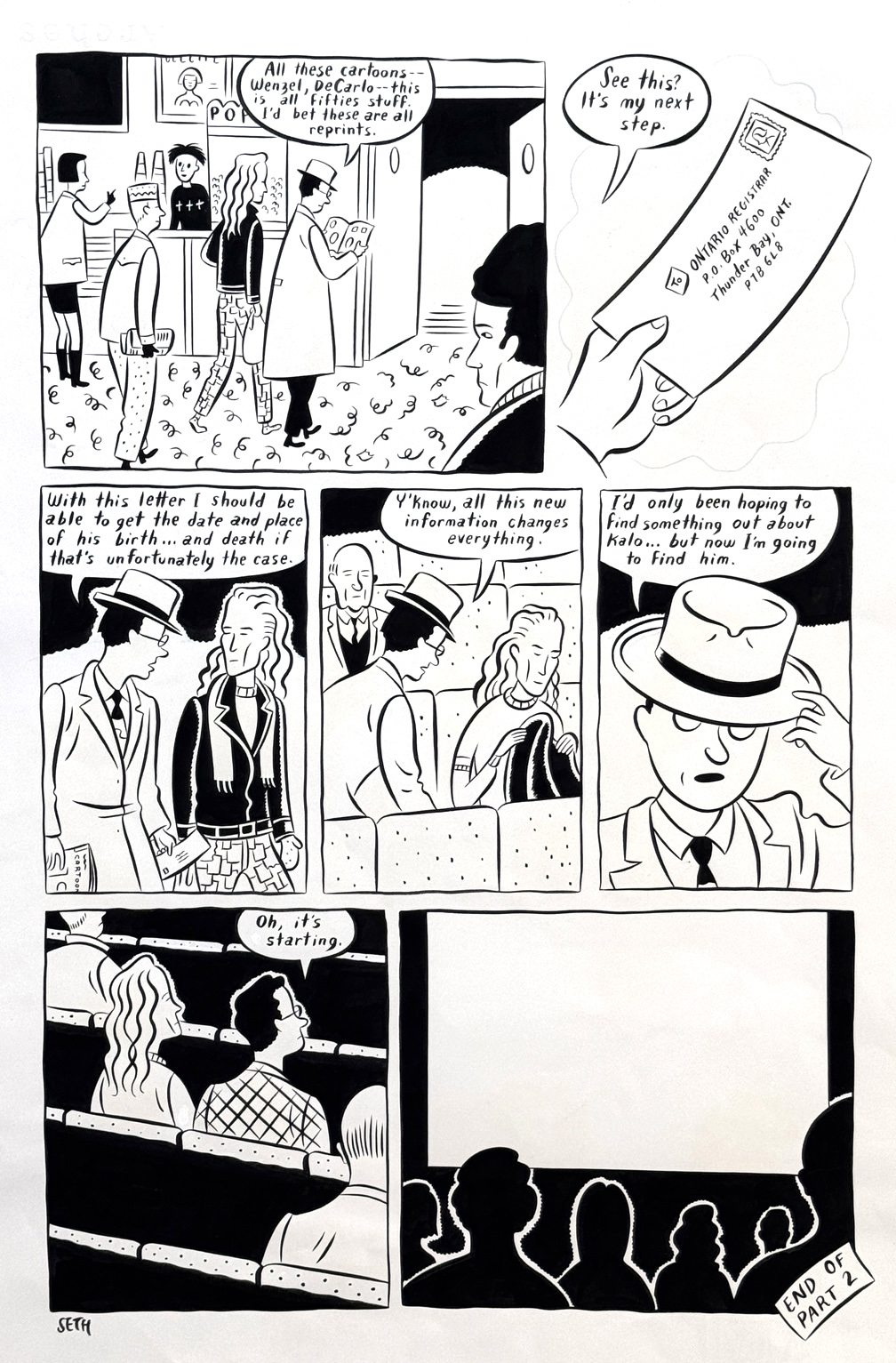
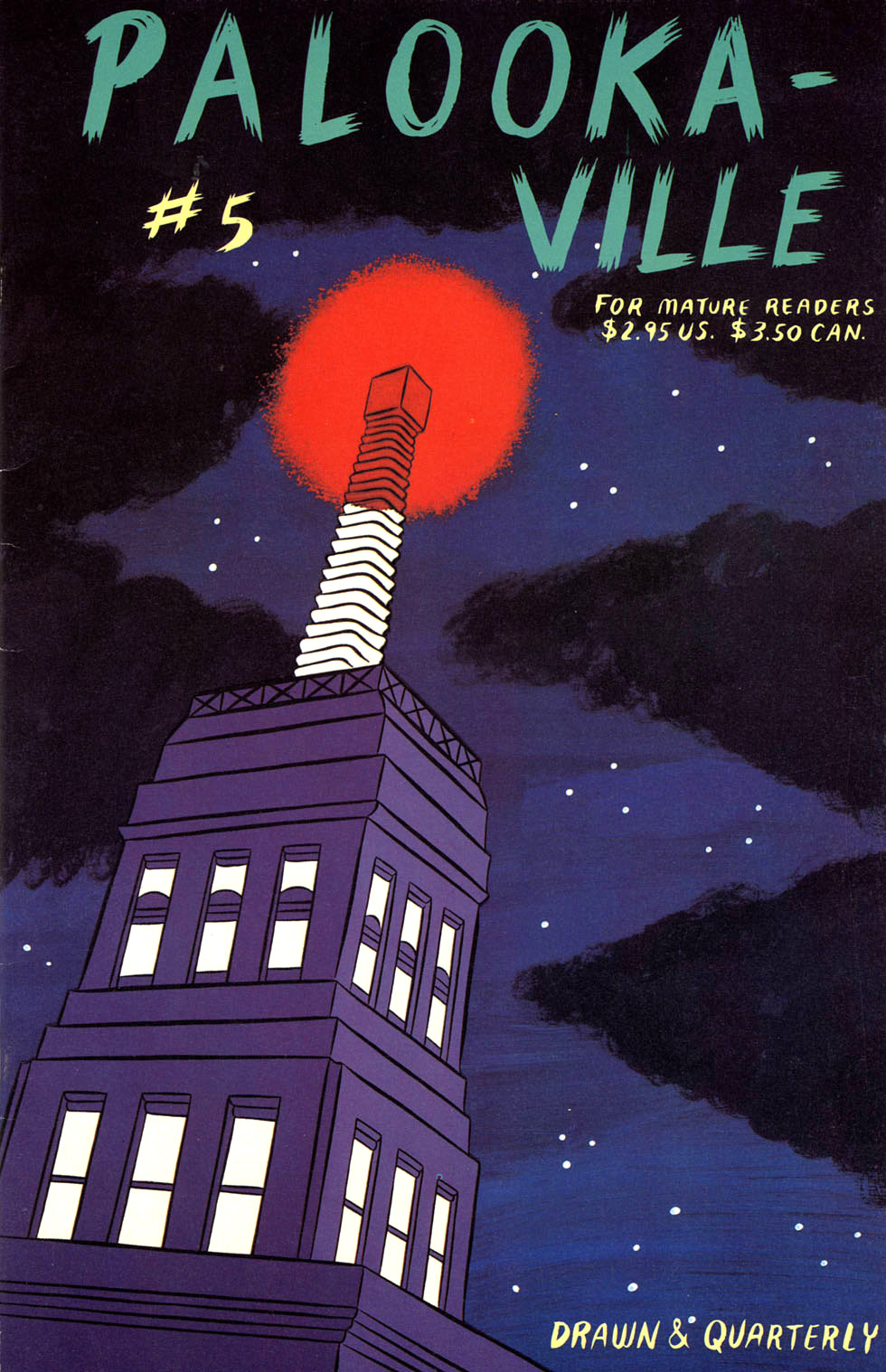
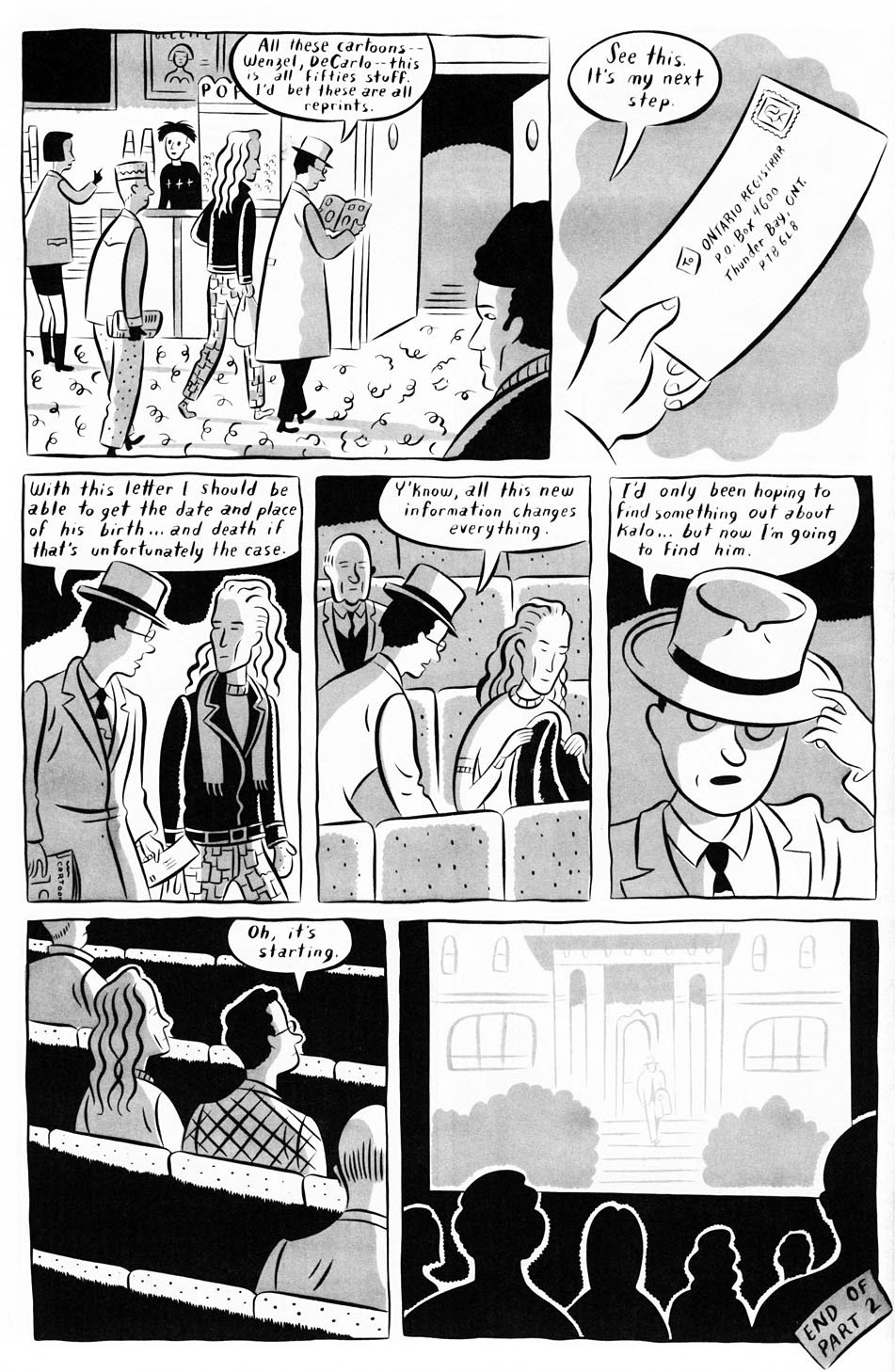
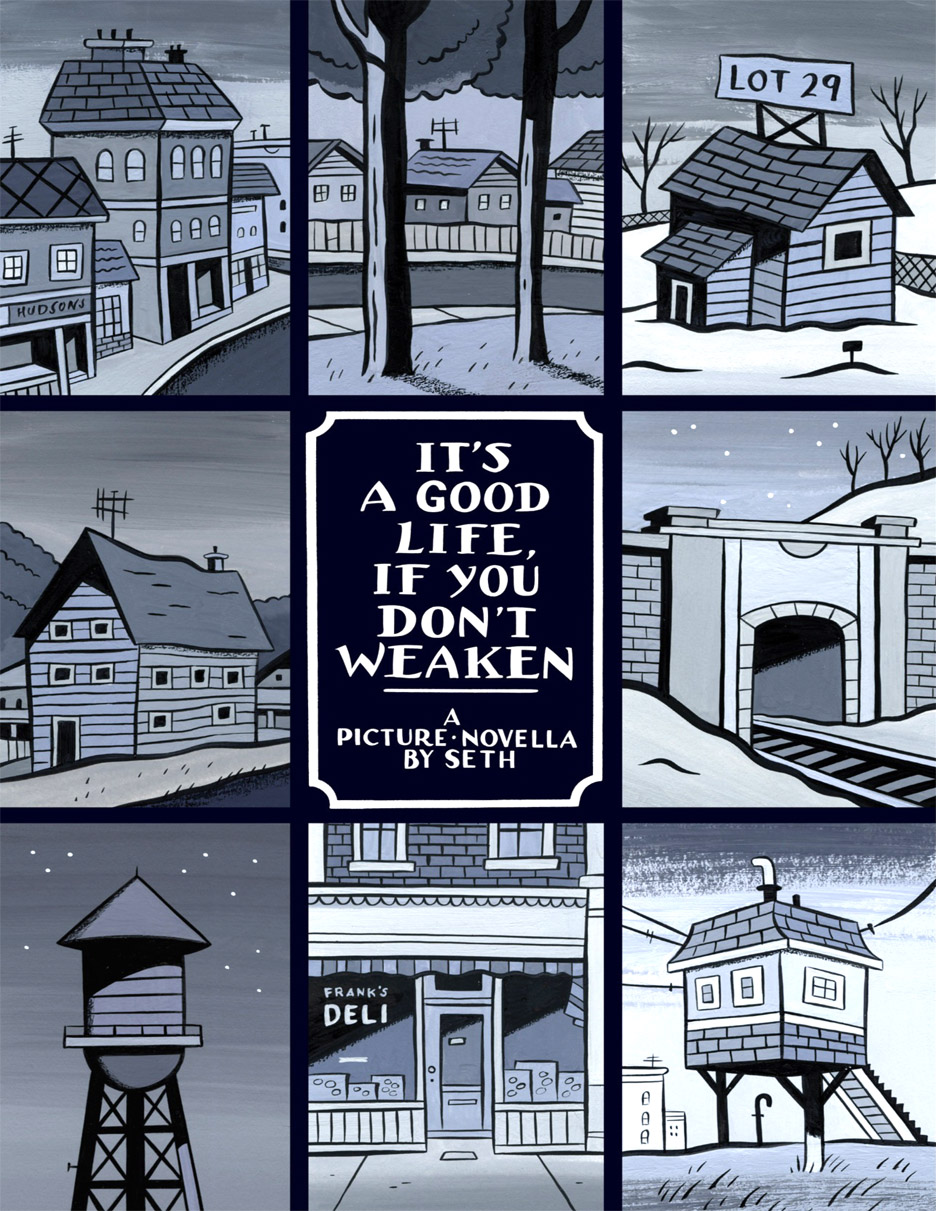
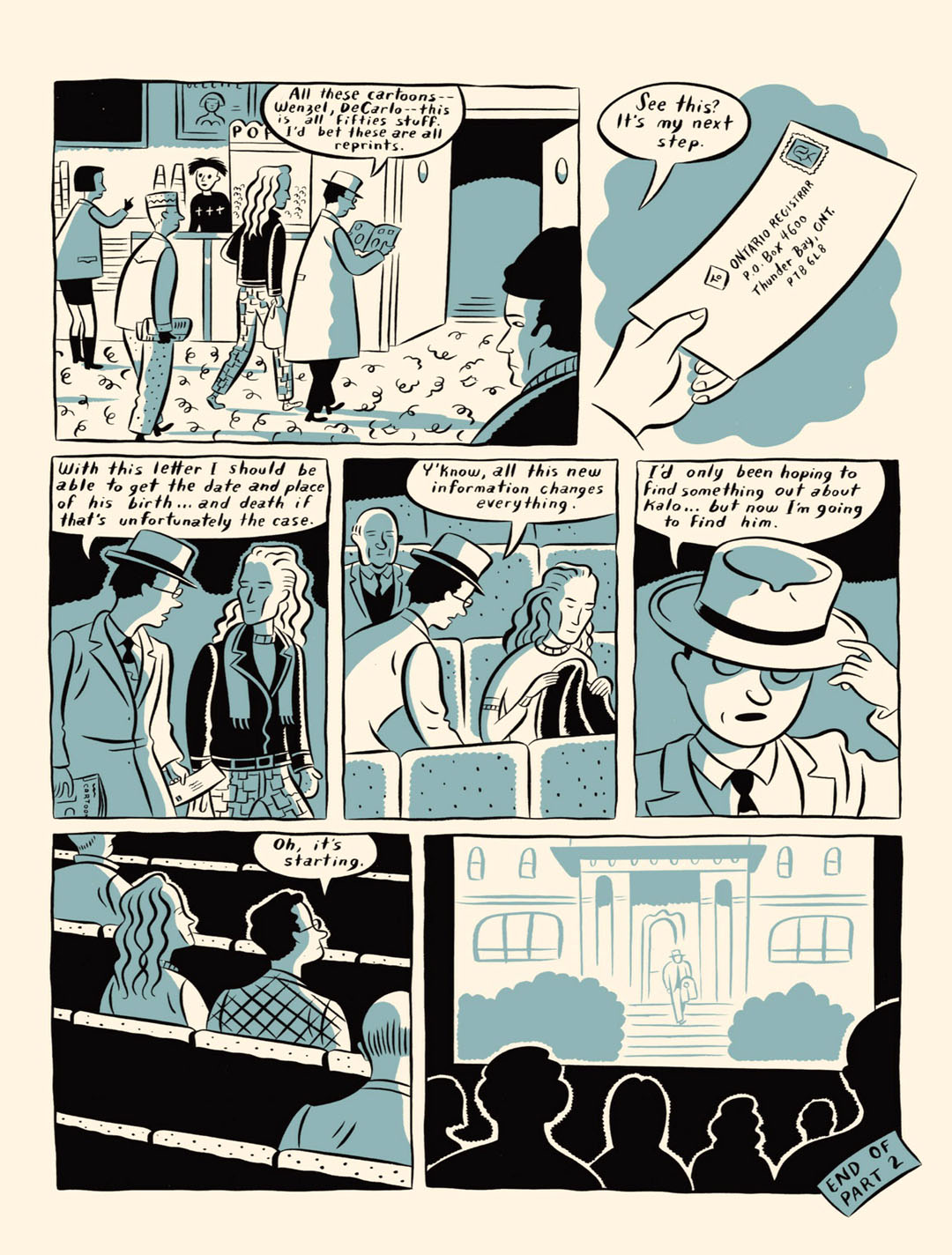
Palooka-Ville #5, May 1994, It’s A Good Life If You Don’t Weaken, 1996
It’s a mystery:
I have no idea why artist Seth (Gregory Gallant)is not held in higher regard by comic art fans.
Maybe it is because his art style is more classical New Yorker than traditional “alternative” art.
Whatever the reason, his originals sell for little compared to contemporaries like Daniel Clowes and Charles Burns.
Which of course has upside for collectors who want to acquire a beautiful original from his magnum opus, It’s a Good Life If You Don’t Weaken, for a reasonable price.
Fun fact: When Seth’s biographical story was originally serialized in the comics Palooka-Ville, it appeared in black and white with gray tones added in the production process. When It was collected into the complete graphic novel, it was transformed into a duotone story with blue tones replacing the gray. (See below.)
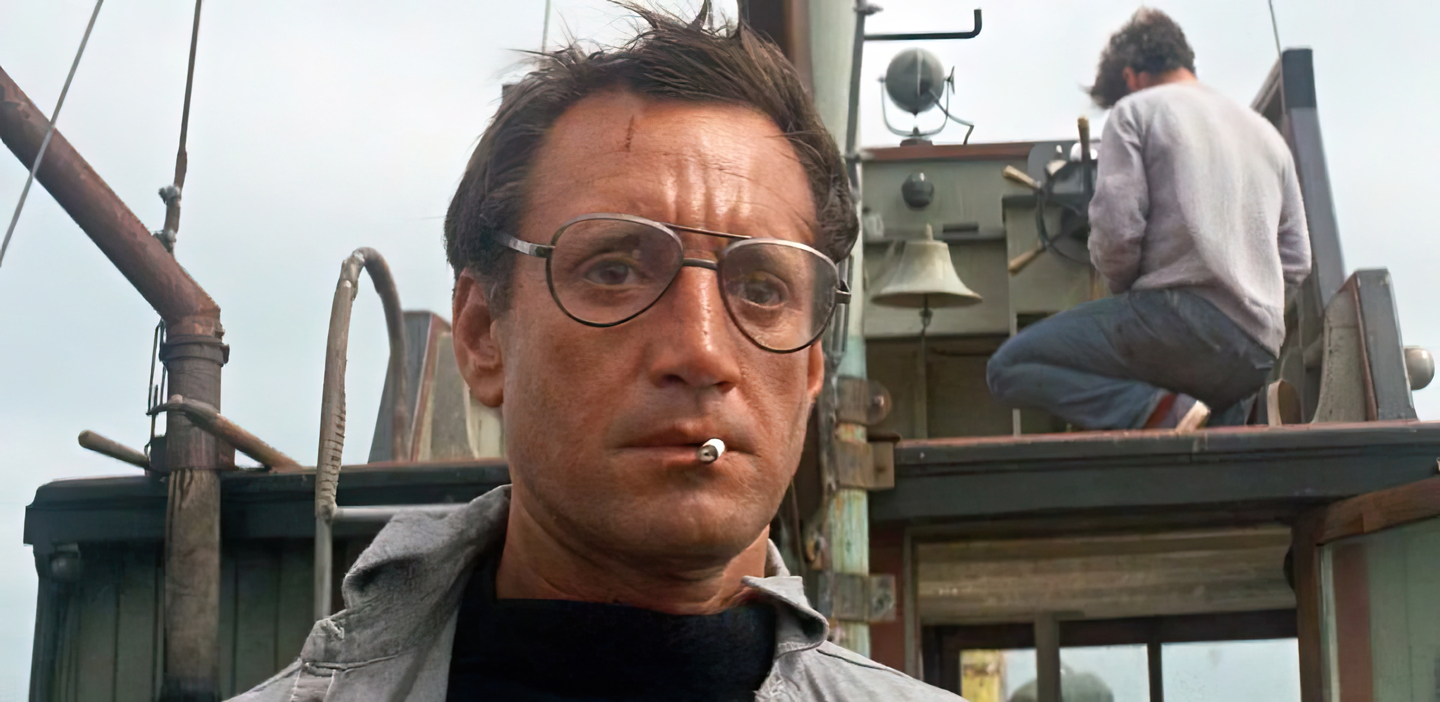
In fact, anyone who knows me well, knows that I have a tradition of watching the film every year around the July 4 Holiday. (The film takes place in “real” time from about June 28-July 7.)
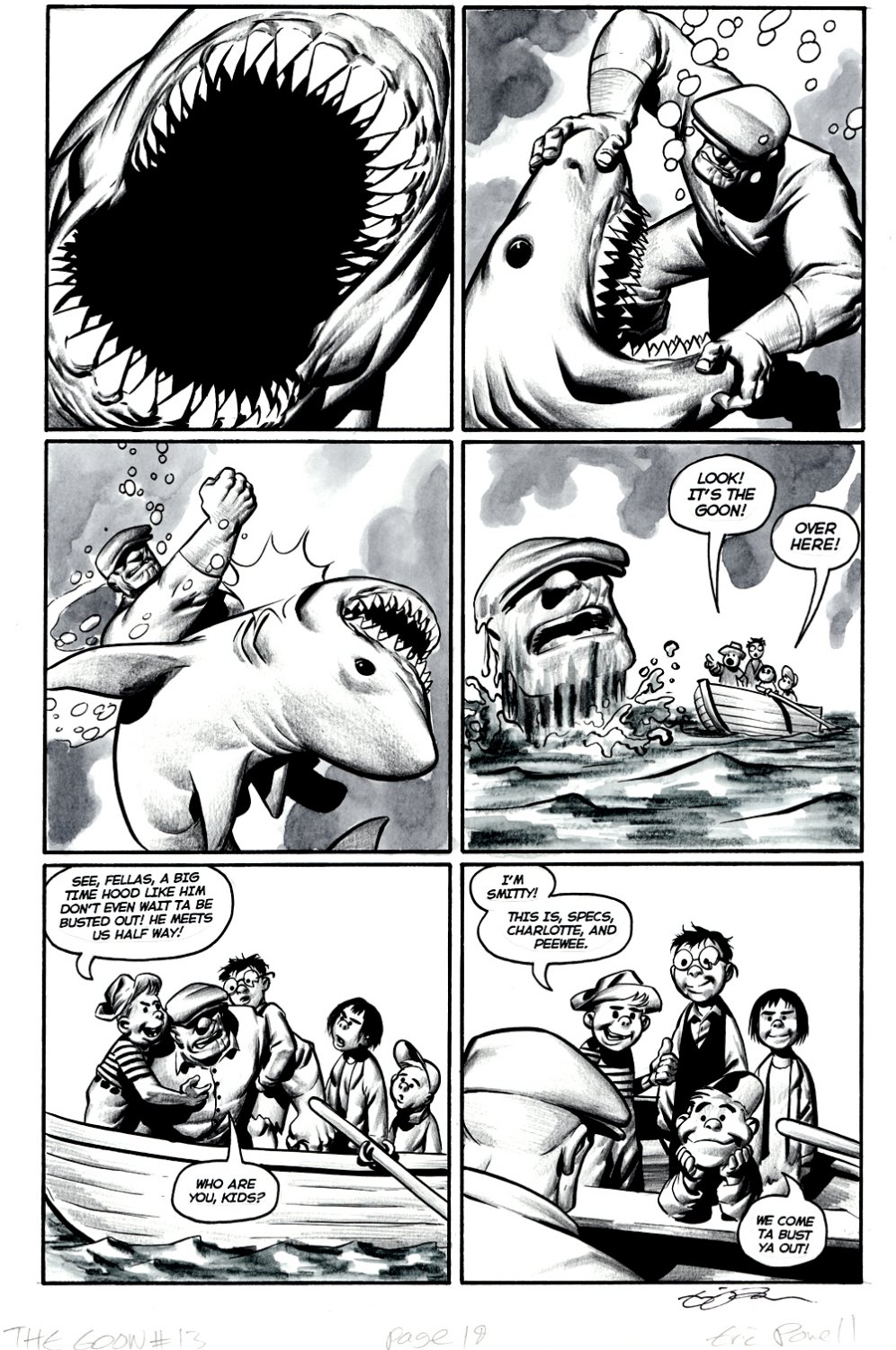
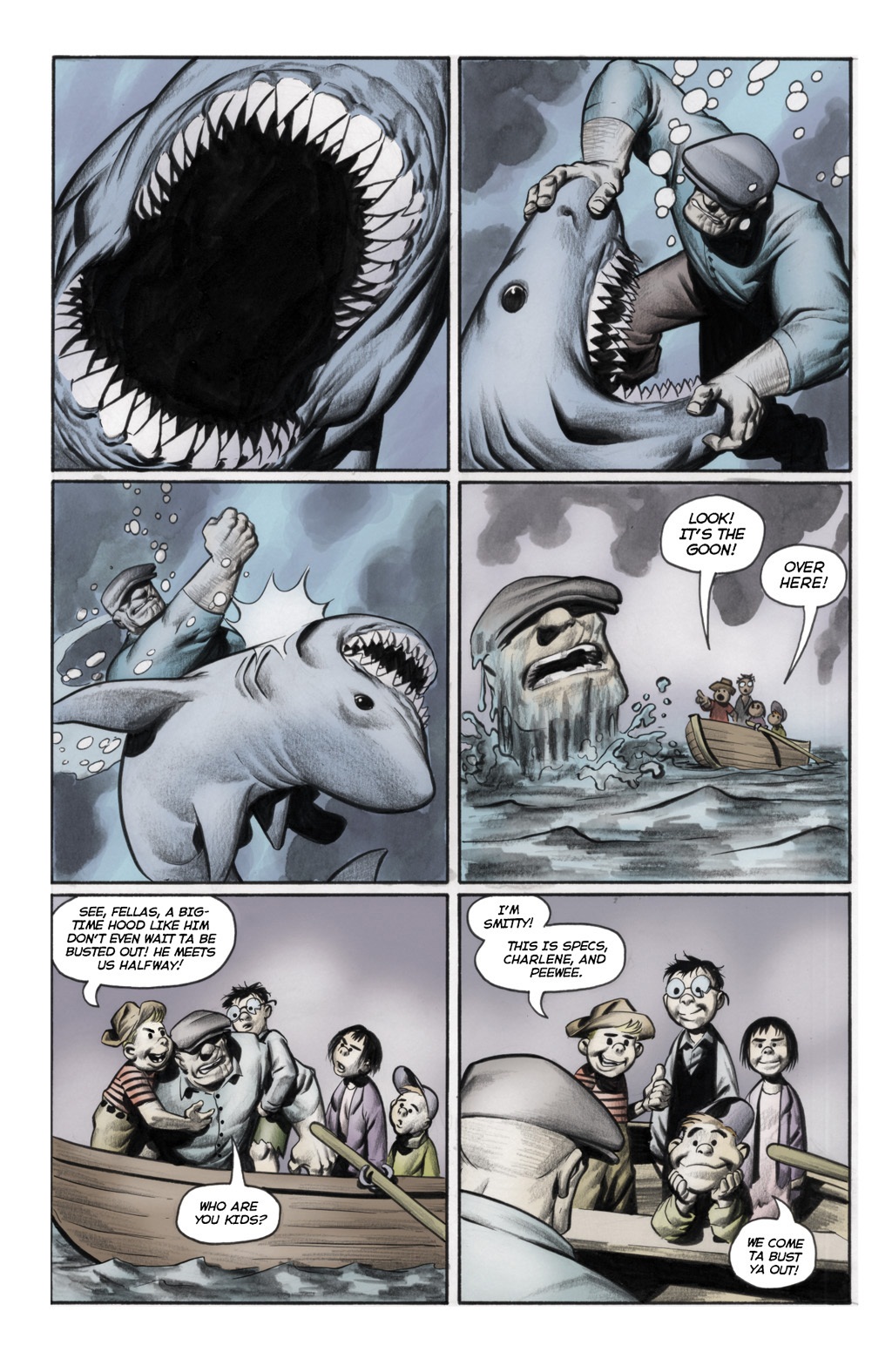
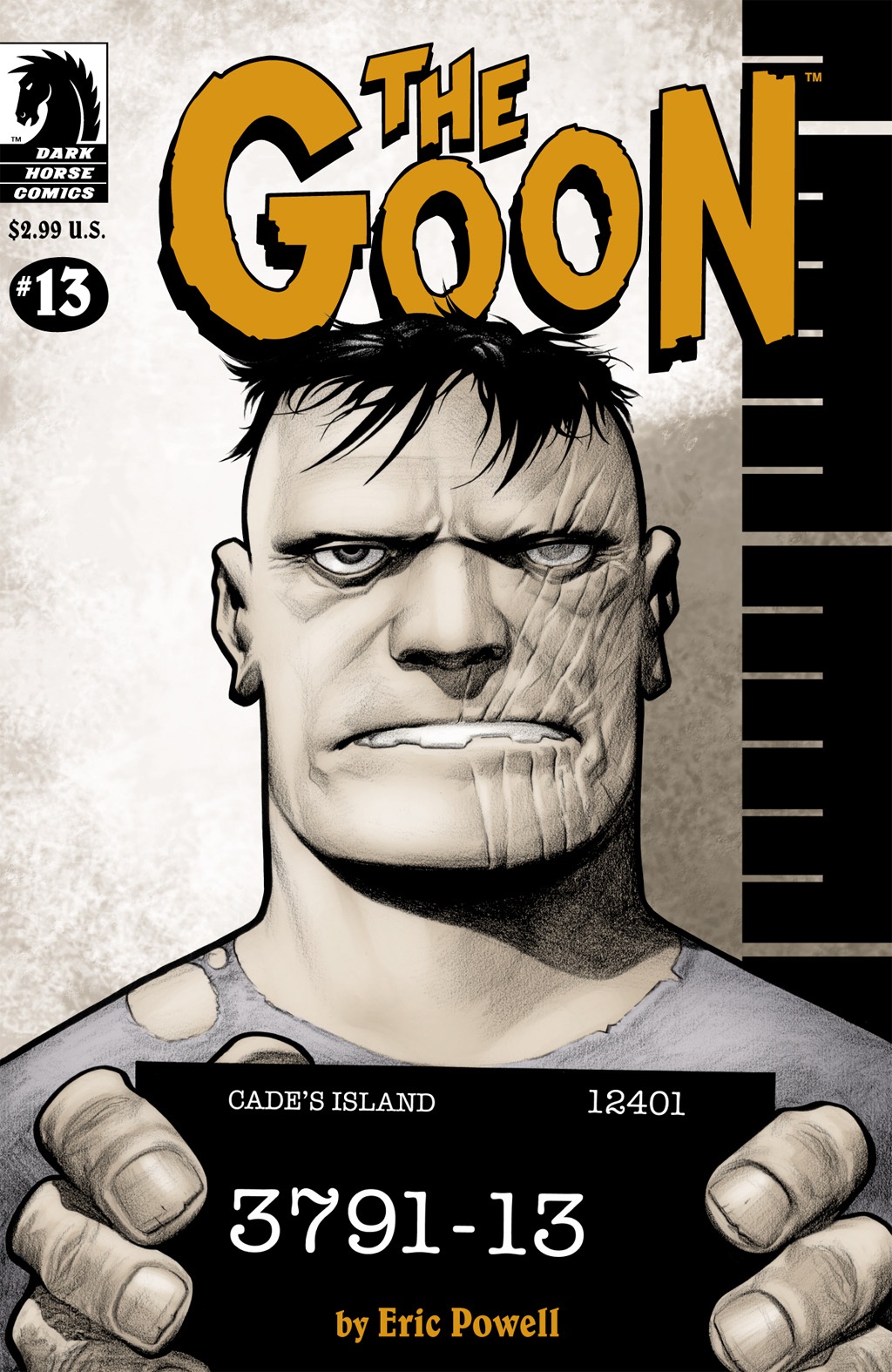
And of course, as discussed previously, I’m a big fan of Eric Powell and The Goon.
So, a page featuring the Goon vs. “Jaws”? A no-brainer. (Ok, just a regular ‘ol aggressive shark, but still…)
My friends who are also super fans of both Jaws and Powell’s art — a bigger group than you might imagine — are also impressed.
Be careful at the beach, everyone. Last thing we need is a panic on the Fourth of July.
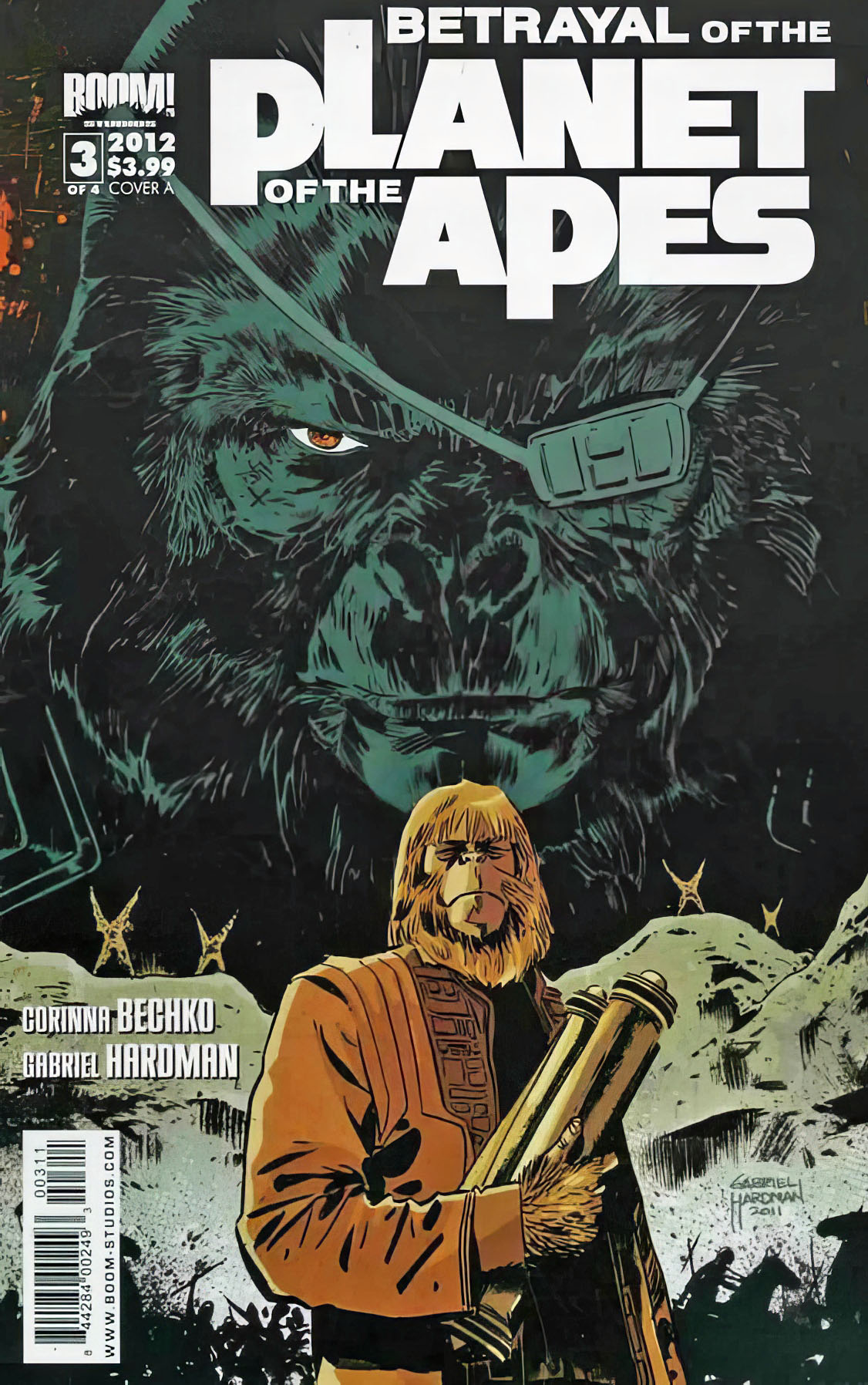
Betrayal Of The Planet Of The Apes #3, January 2012
True Confessions:
When I was at IDW Publishing, we chased the Planet of Thae Apes license hard. And I mean hard. (I’m a super fan.) We had some terrific story ideas, and some talented creators ready to come on board if we acquired it.
The challenge was, that Fox couldn’t provide us with a guarantee that they had proper clearances on the original Marvel material. Reprinting that material would help finance the creative costs on the new series, as well as help fund the licensing fees, so that ended up as a deal breaker for us.
So… Boom swept in and acquired those rights without the reprint guarantee. And did a great job on their new material. And the joke was on us, ultimately, because Boom did end up with at least some of those reprint rights.
Sigh.
That said, we did get to do a super fun Star Trek / Planet of The Apes crossover with Boom, which is mostly a story for another day. But one nugget: Boom asked me to negotiate the “Taylor” (Charlton Heston) likeness rights with the estate, and that was one of the more reasonable and rational Hollywood-style negotiations I have ever had. And even Marvel didn’t originally have those rights. So, there’s that.
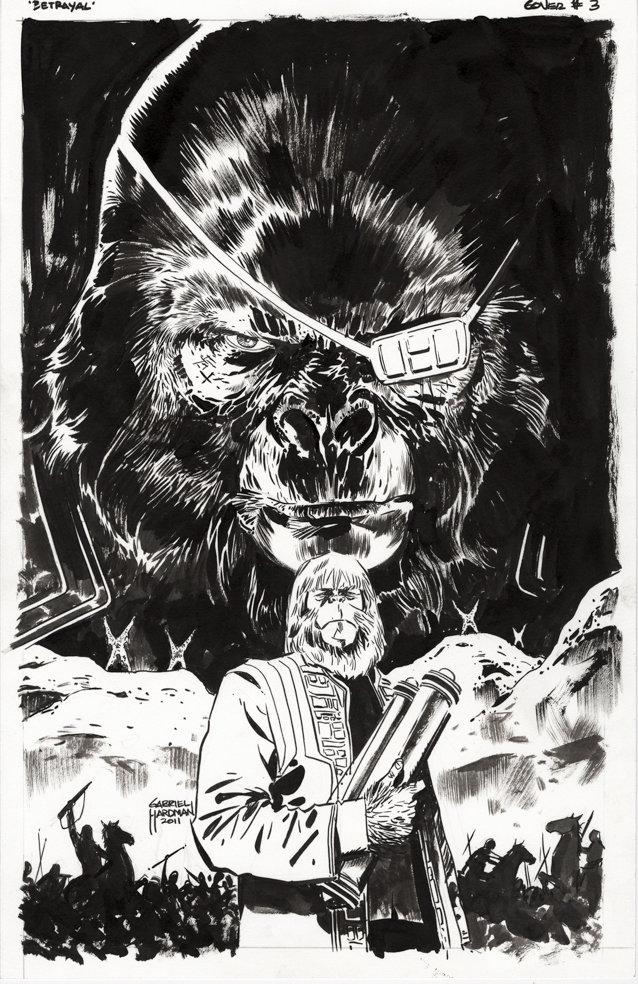
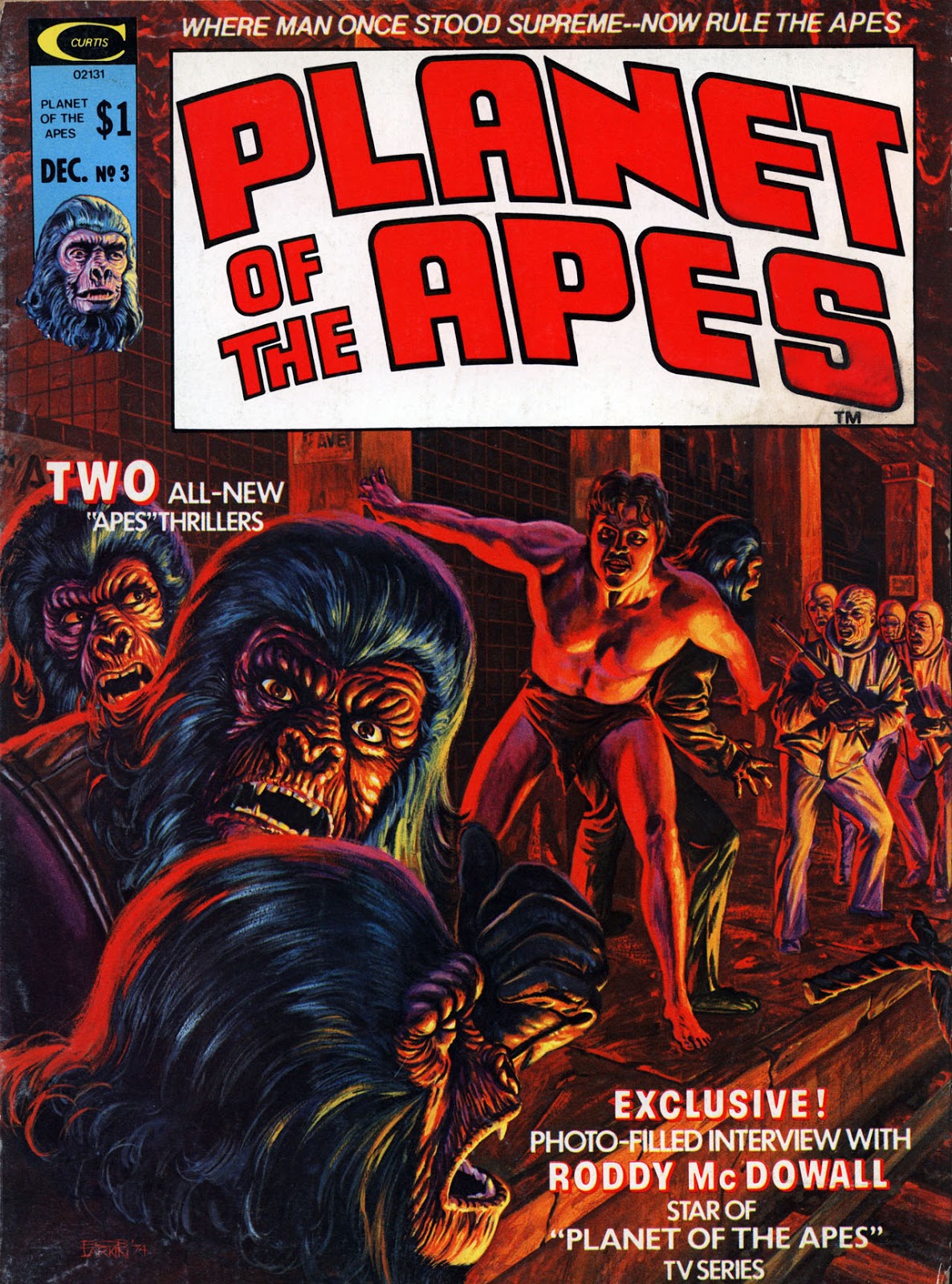
Oh, and the great Gabe Hardman did this superb cover for an issue of one the Boom series. Did I neglect to mention that?
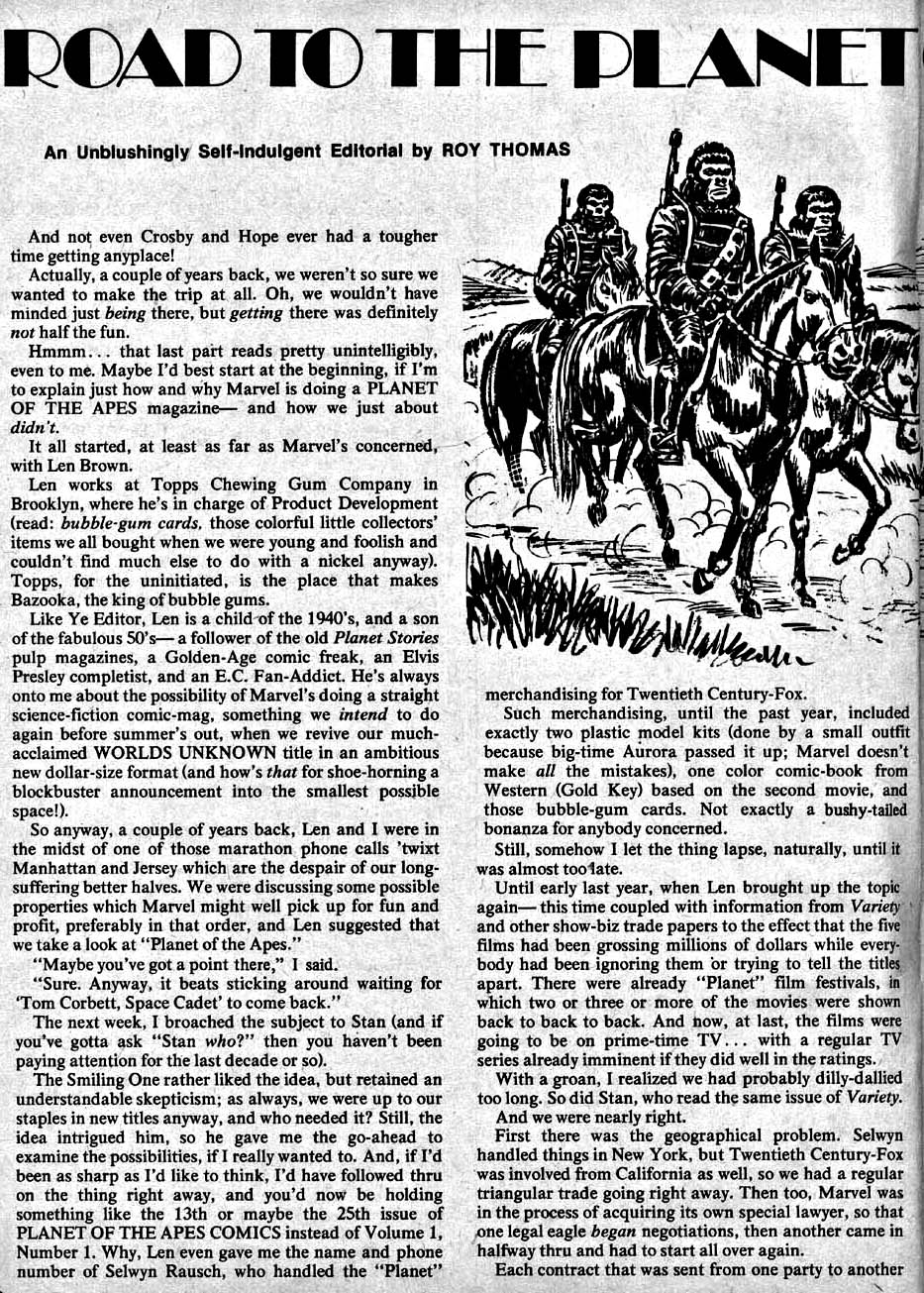
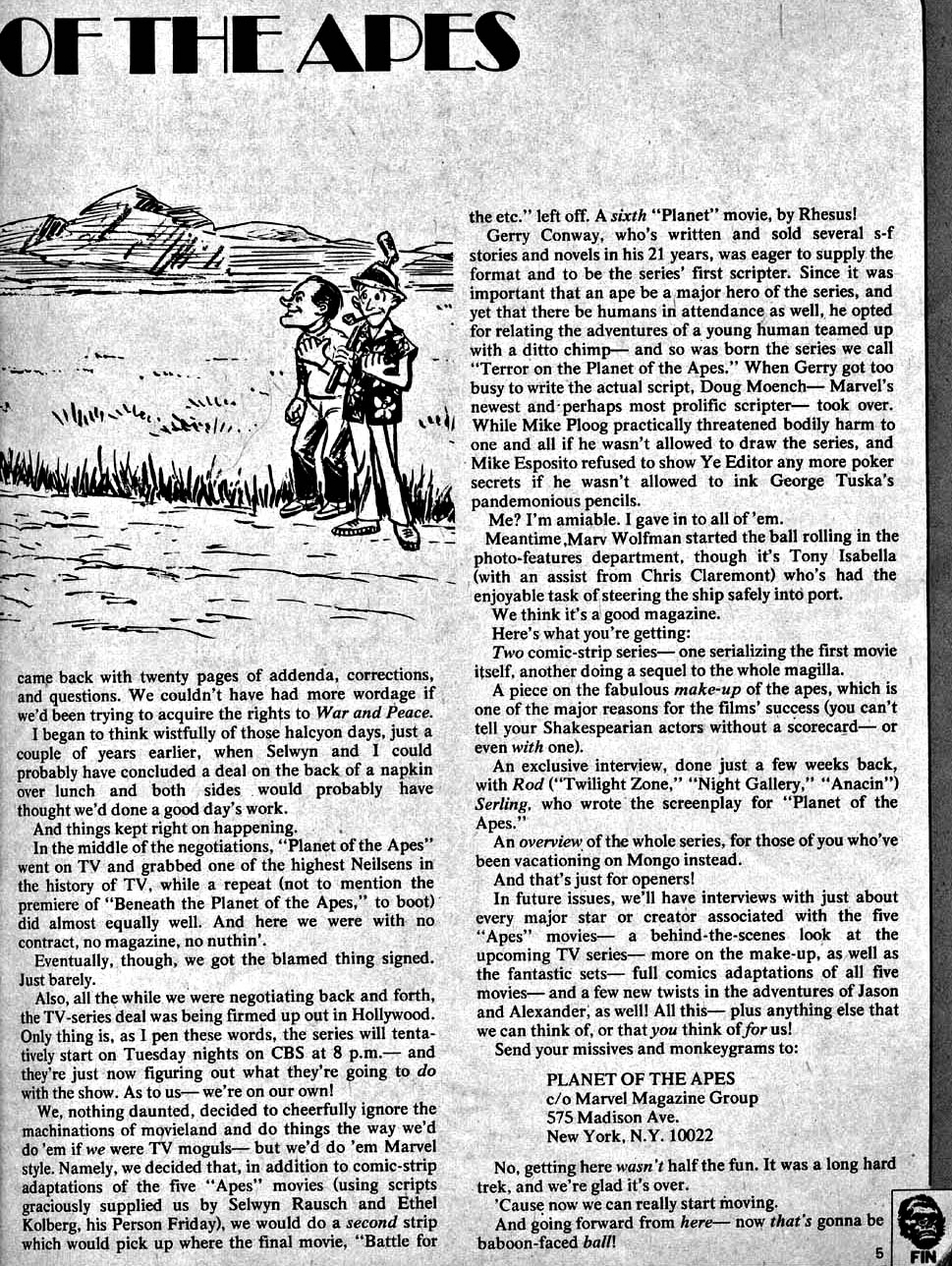
According to Roy Thomas, in an editorial in the first issue of Planet of the Apes magazine, it was my friend and old Topps colleague Len Brown who persuaded Roy — and Marvel — to acquire the POTA license. Roy’s article on that process is worth a read.
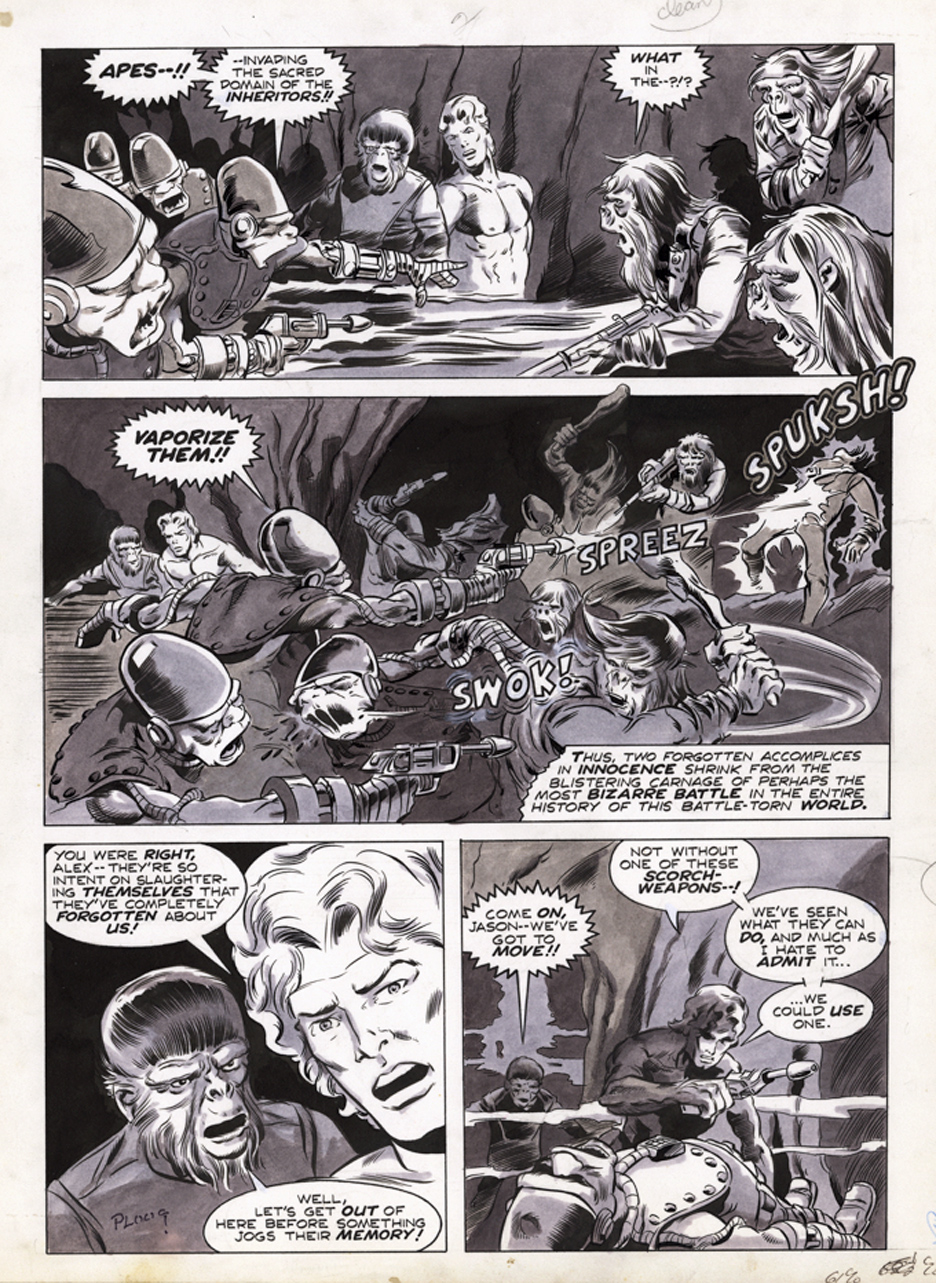
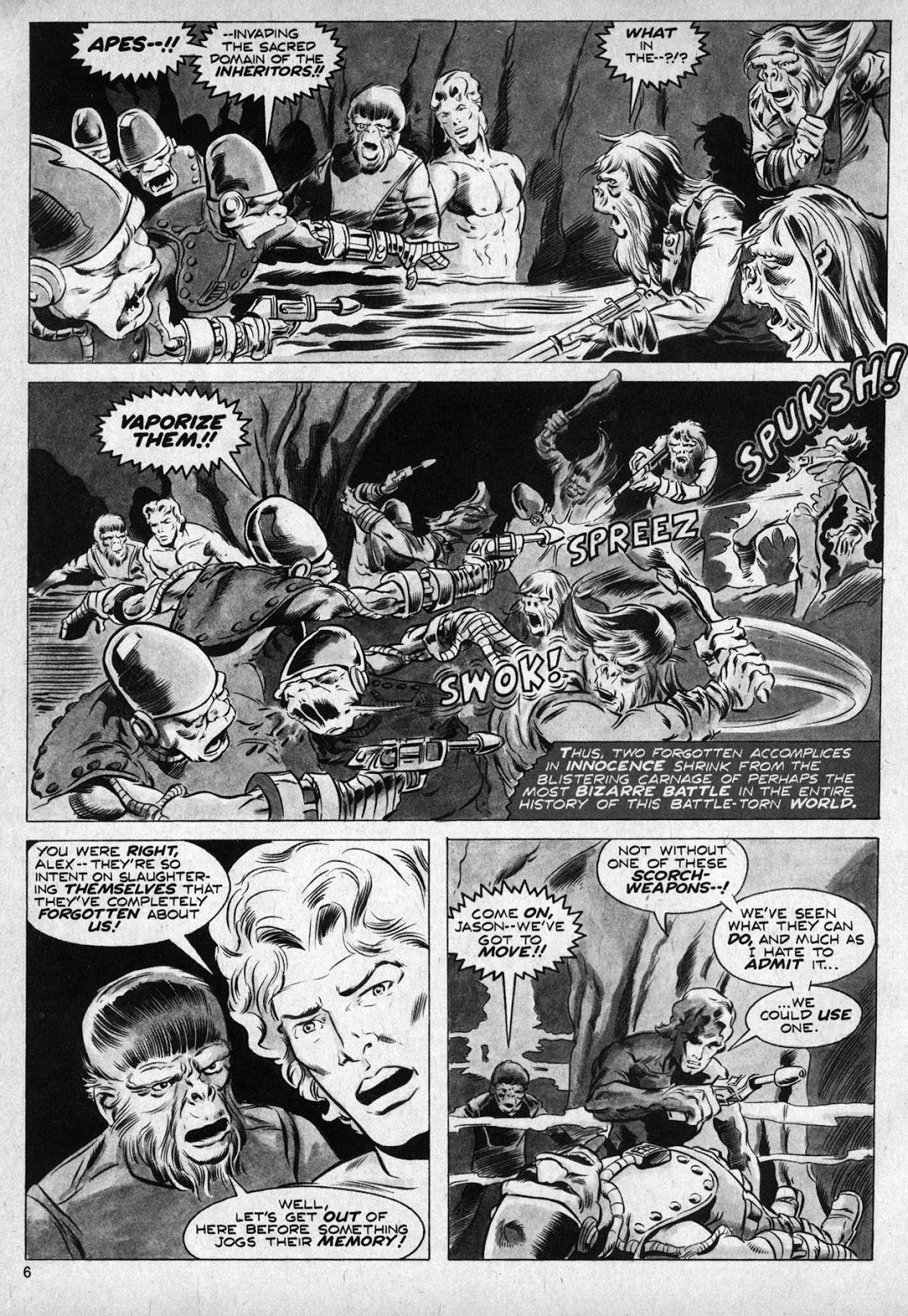
Another fun fact: Mike Ploog insisted he draw the series, which was developed as a sequel to the fifth and final original Apes film, Battle of the Planet of the Apes.
And that’s cool, because Mike provides us with some very lovely artwork throughout, including this terrific page.
Mutants! Monkeys! Maniacs! What more could you ask for?
(Special note: Pretty much everyone was late to the party on the POTA license, but when they finally got there in time for the final film and then the TV series, It became, as they say, “a thing.”)
Roy Thomas tells us the origin of Marvel’s Planet Of The Apes.
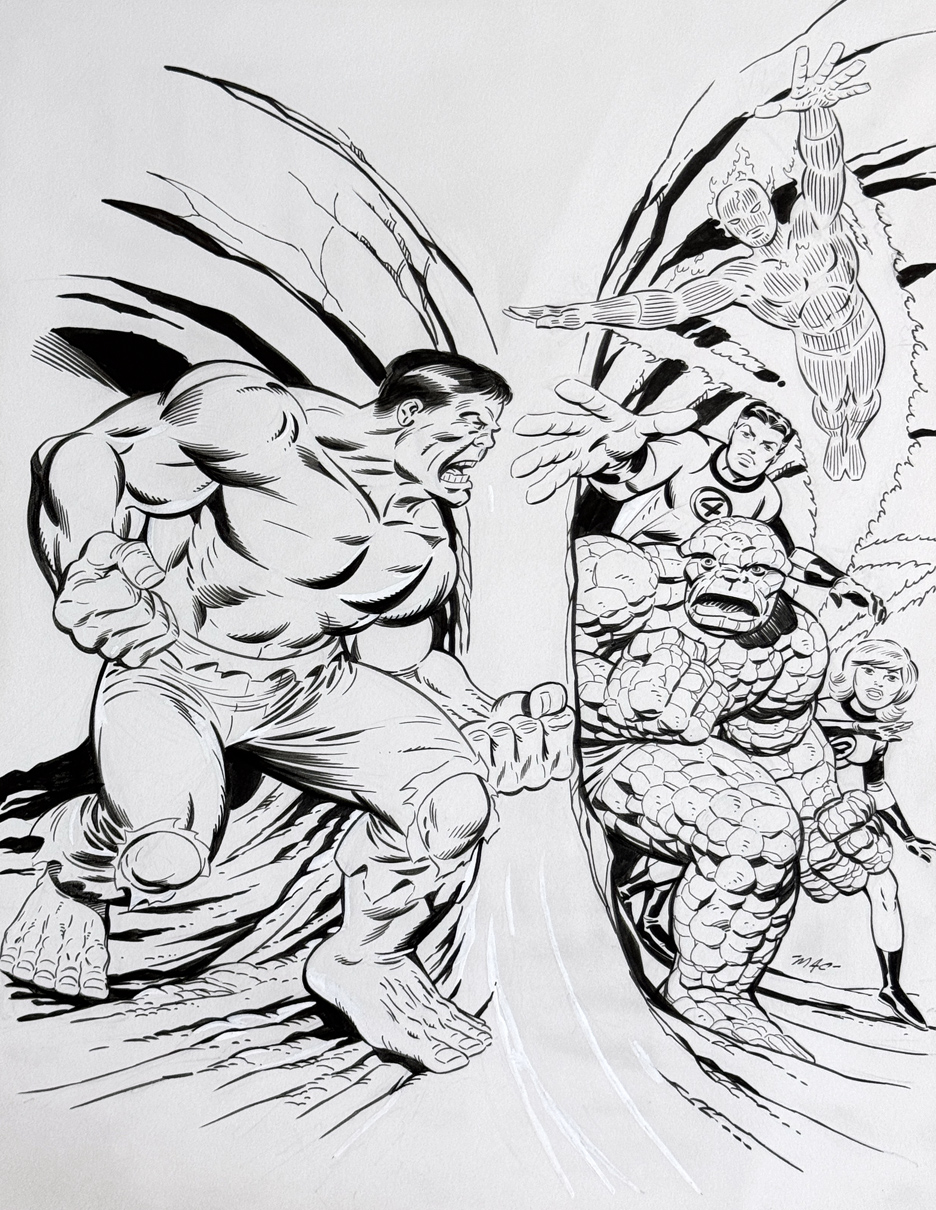
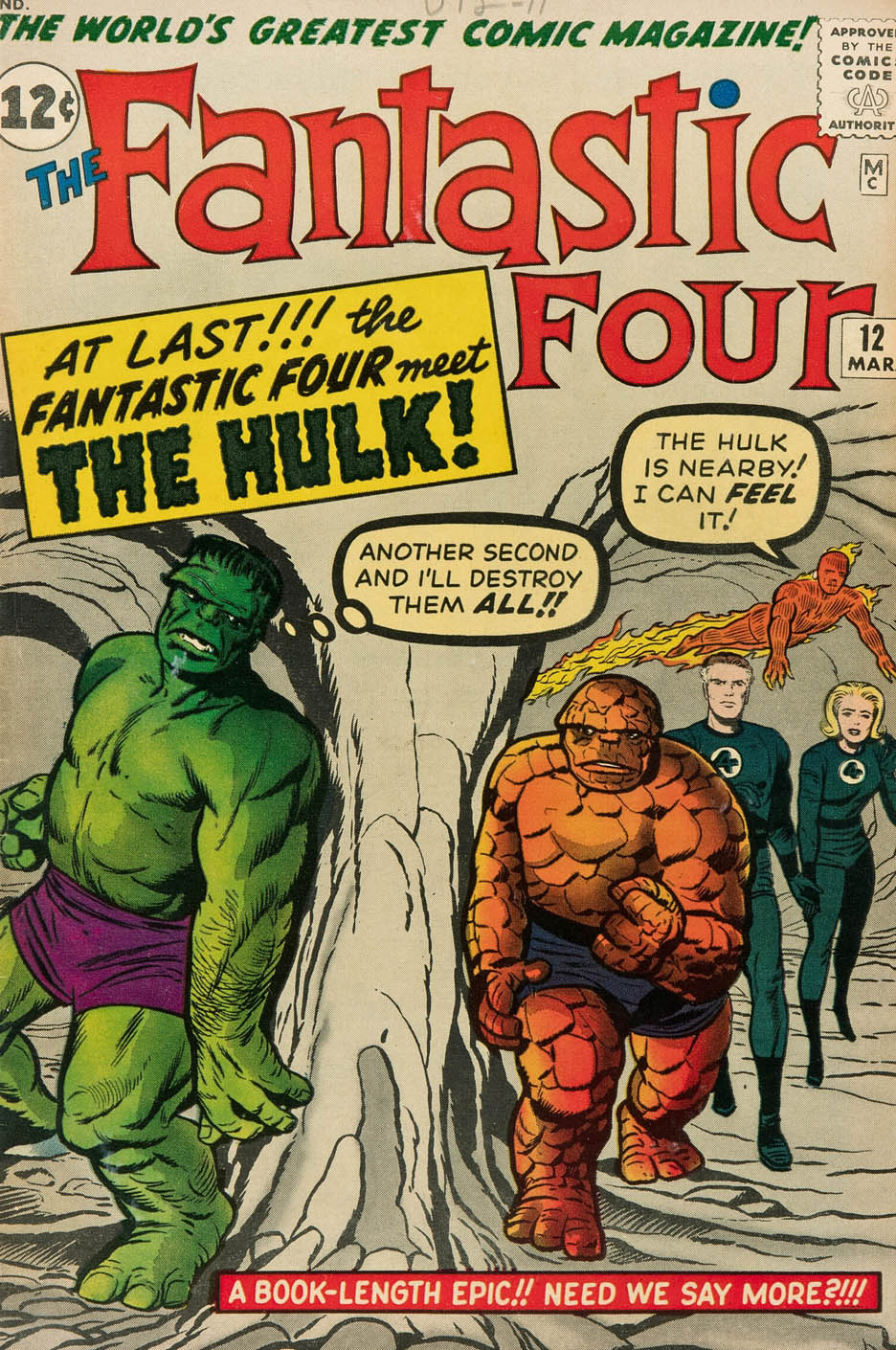
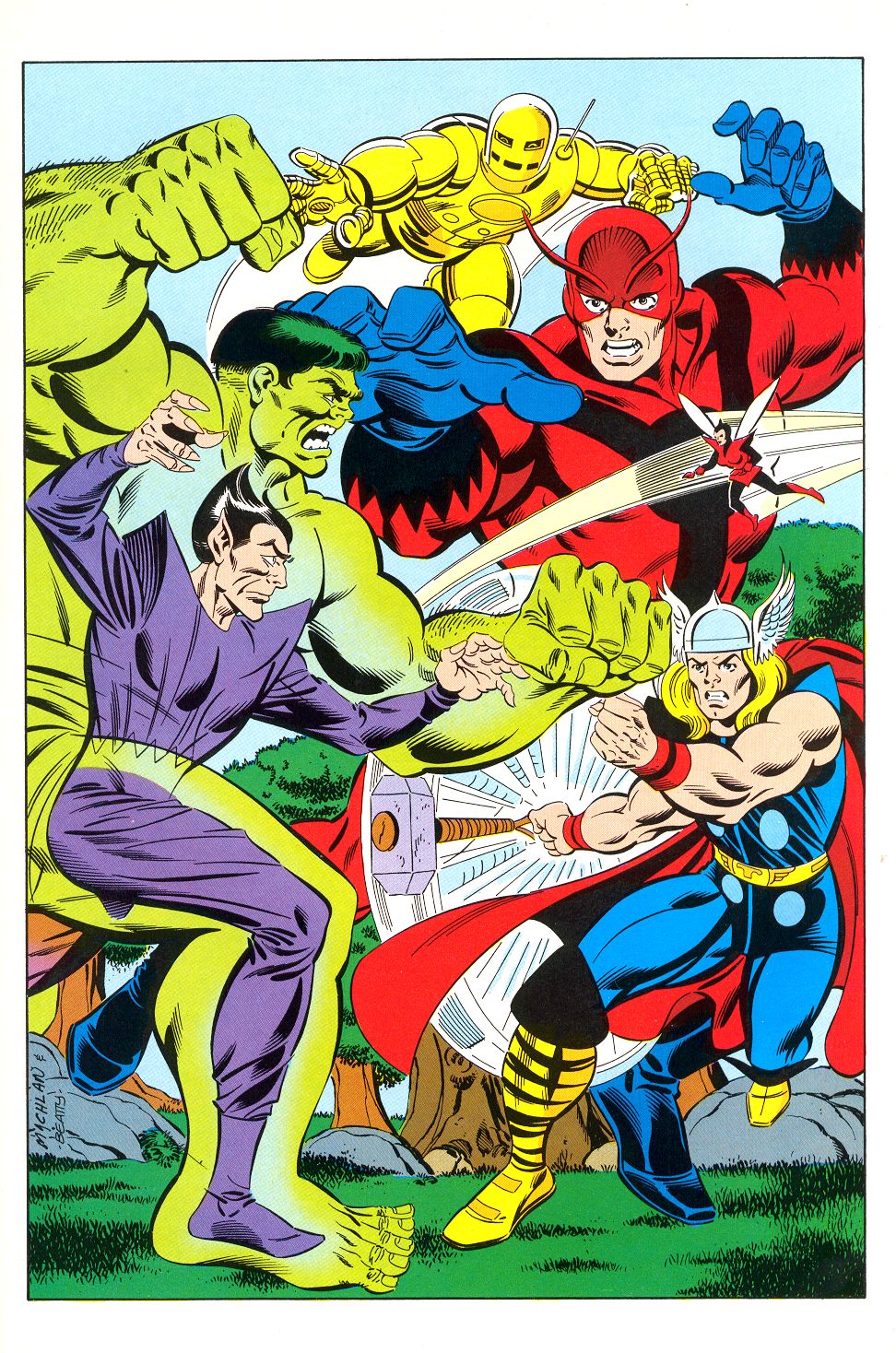
Jack Kirby created this iconic cover of the first meeting between the Hulk and The Fantastic Four in 1963. It would be the first of many, many epic fights between the Thing and The Green Goliath.
The late Mike Machlan takes Jack’s moment in time, and brilliantly adds a second or so to show what happens when the heroes actually come upon each other. One thing is certain — that cave will never be the same.
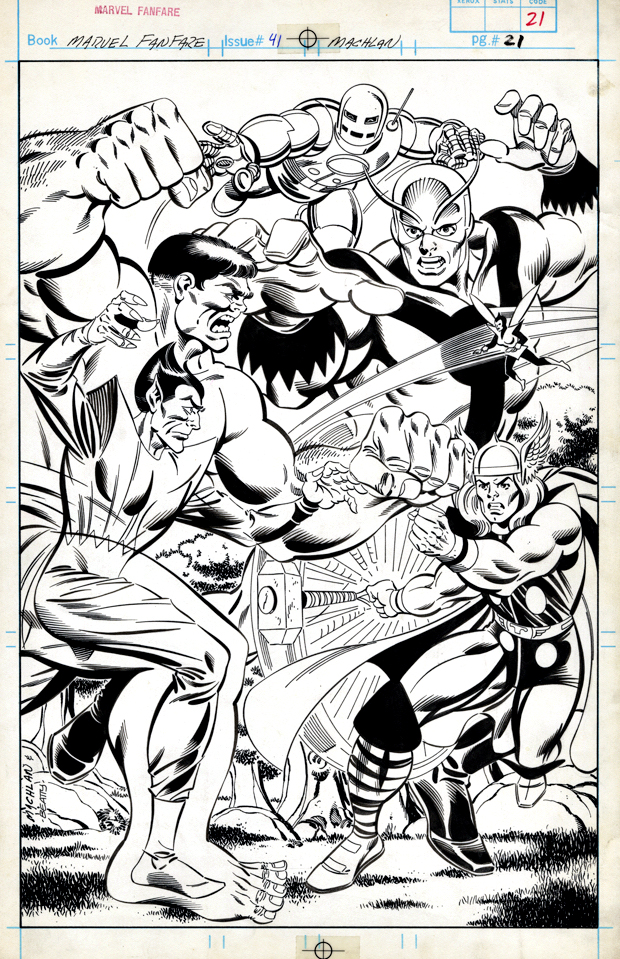
Machlan loved classic comics, and his recreations and reinterpretations can be found on the Comic Art Fans website and elsewhere. His professional career was much too short.
Original Machlan art and published page from Marvel Fanfare #41 as posted previously:
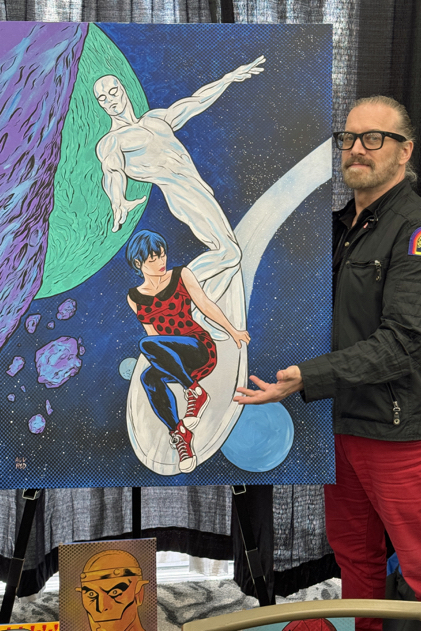
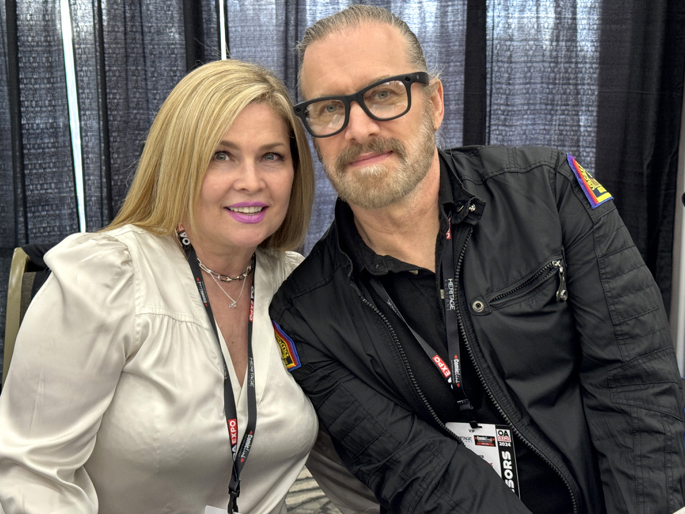
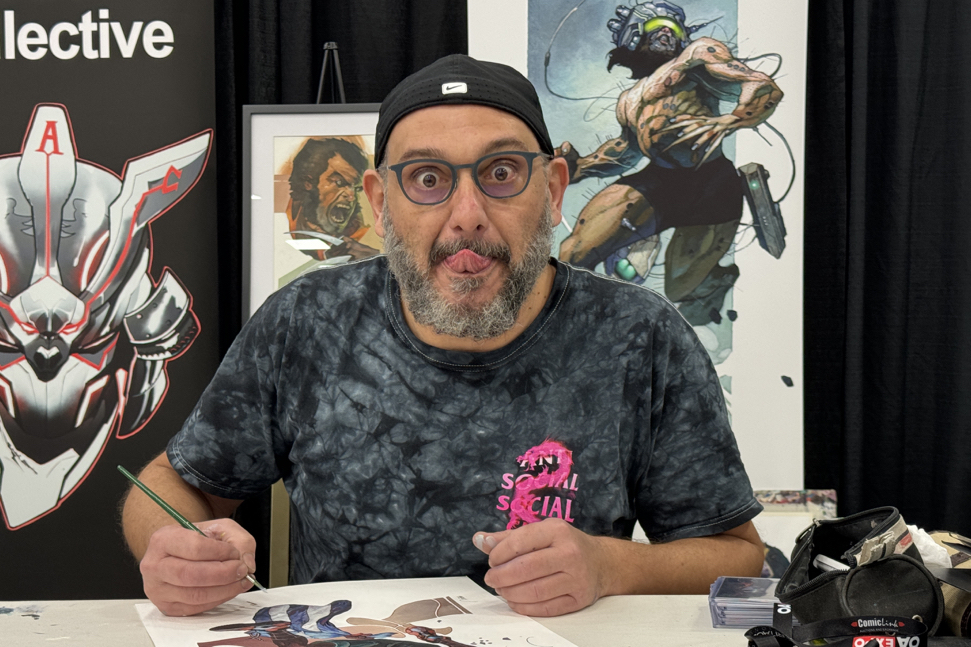
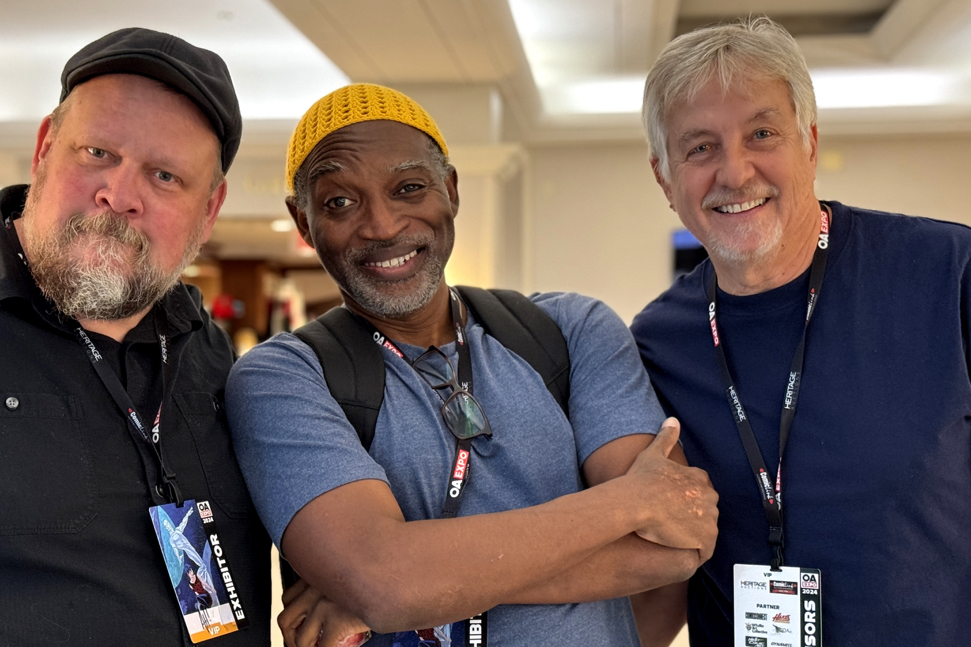
Paolo RiveraVincent Zurzulo (Metroplis Comics) w/ Erica ValeBob Layton & Dave JohnsonMike Allred with one of the largest Allred originals of all timeLaura and Mike AllredSimone BianchiAdam Hughes, Brian Stelfreeze, Greg Goldstein
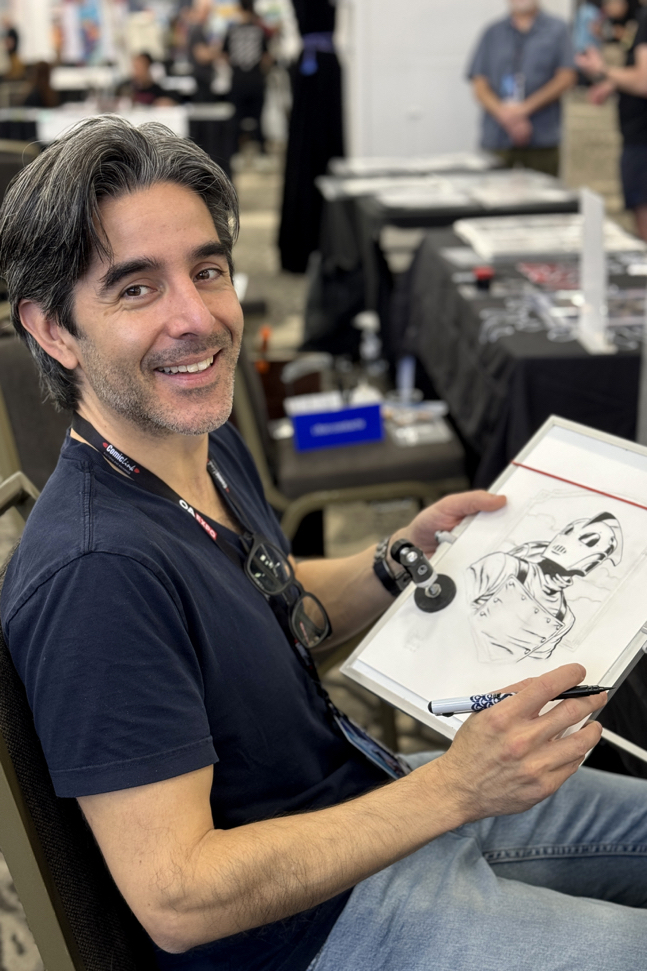
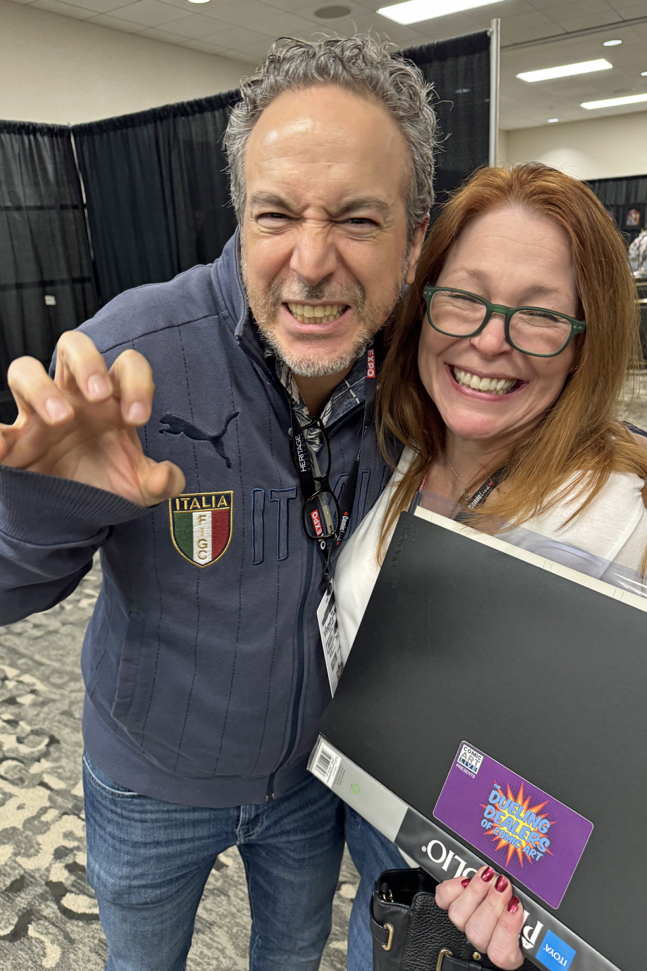
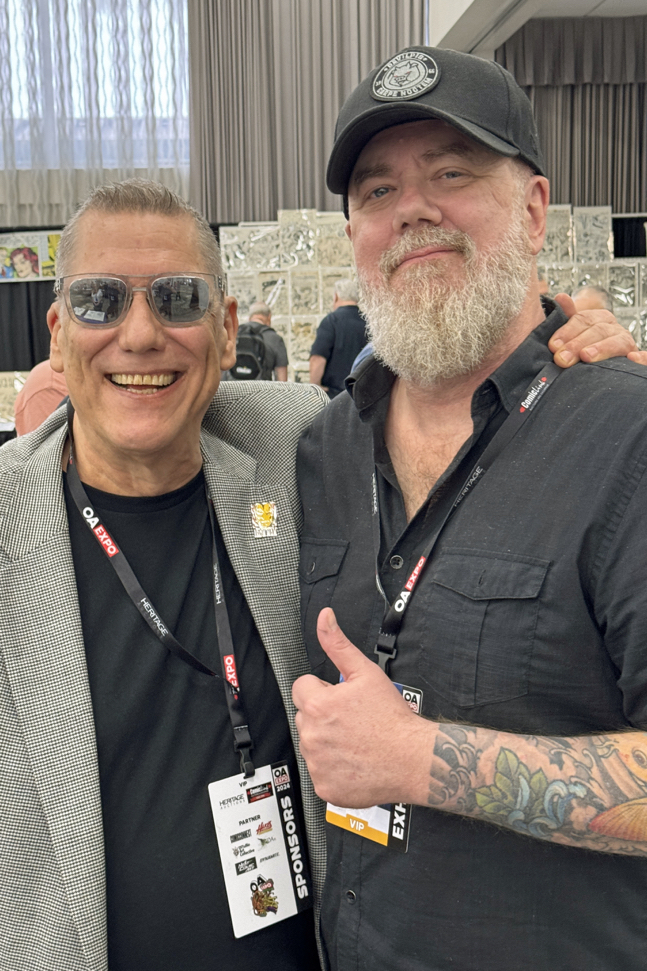
Somehow, four months passed, and these pics from the Original Art Expo haven’t made it to the blog.
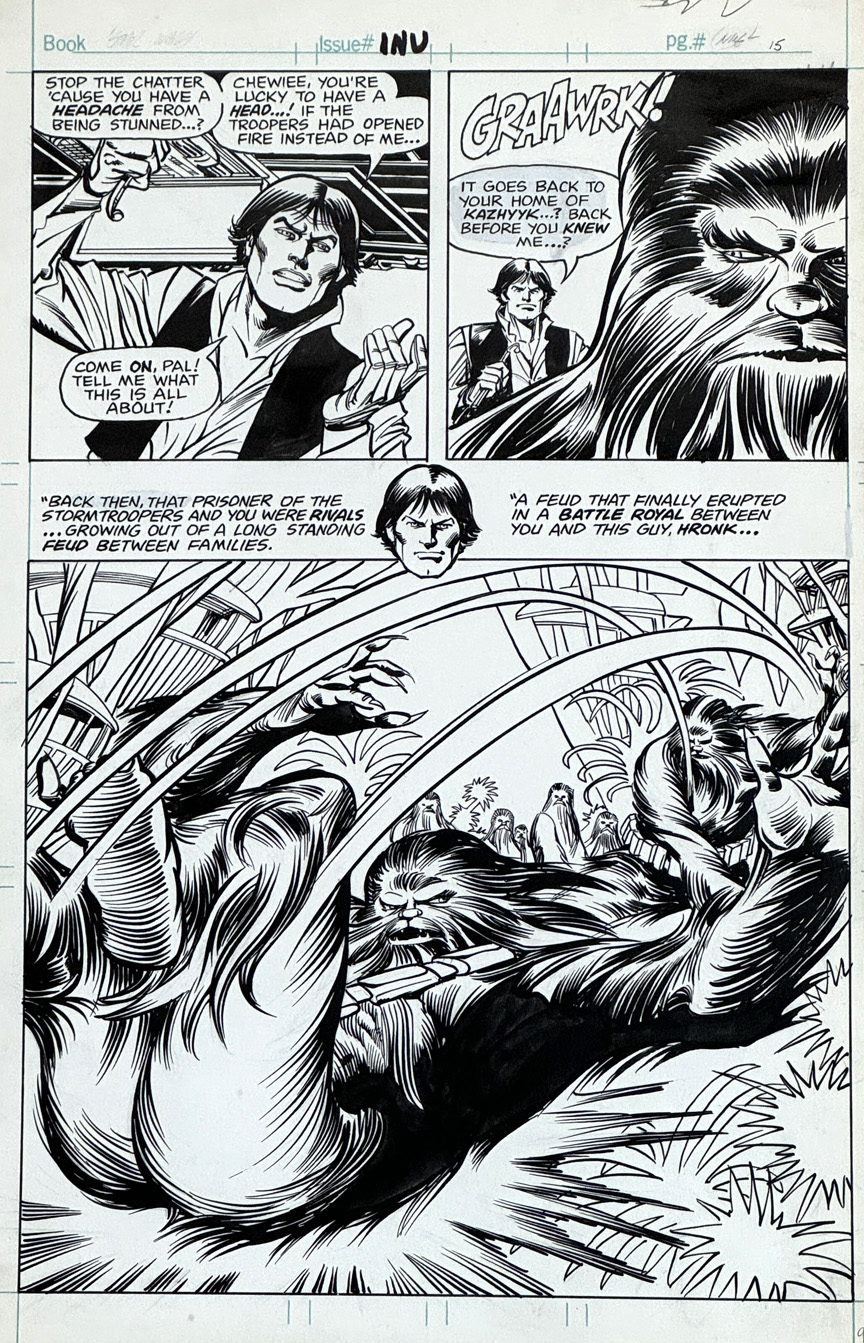
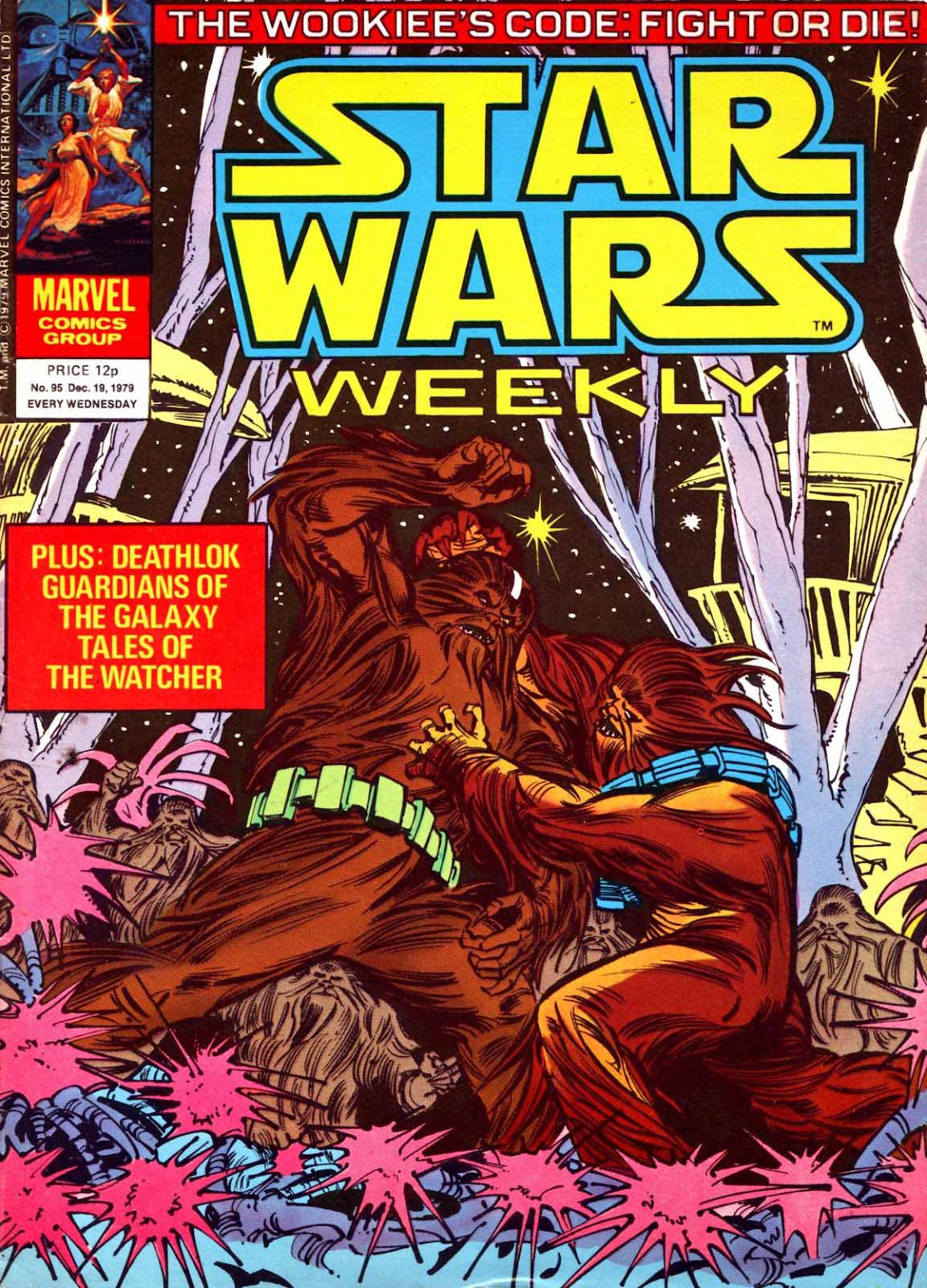
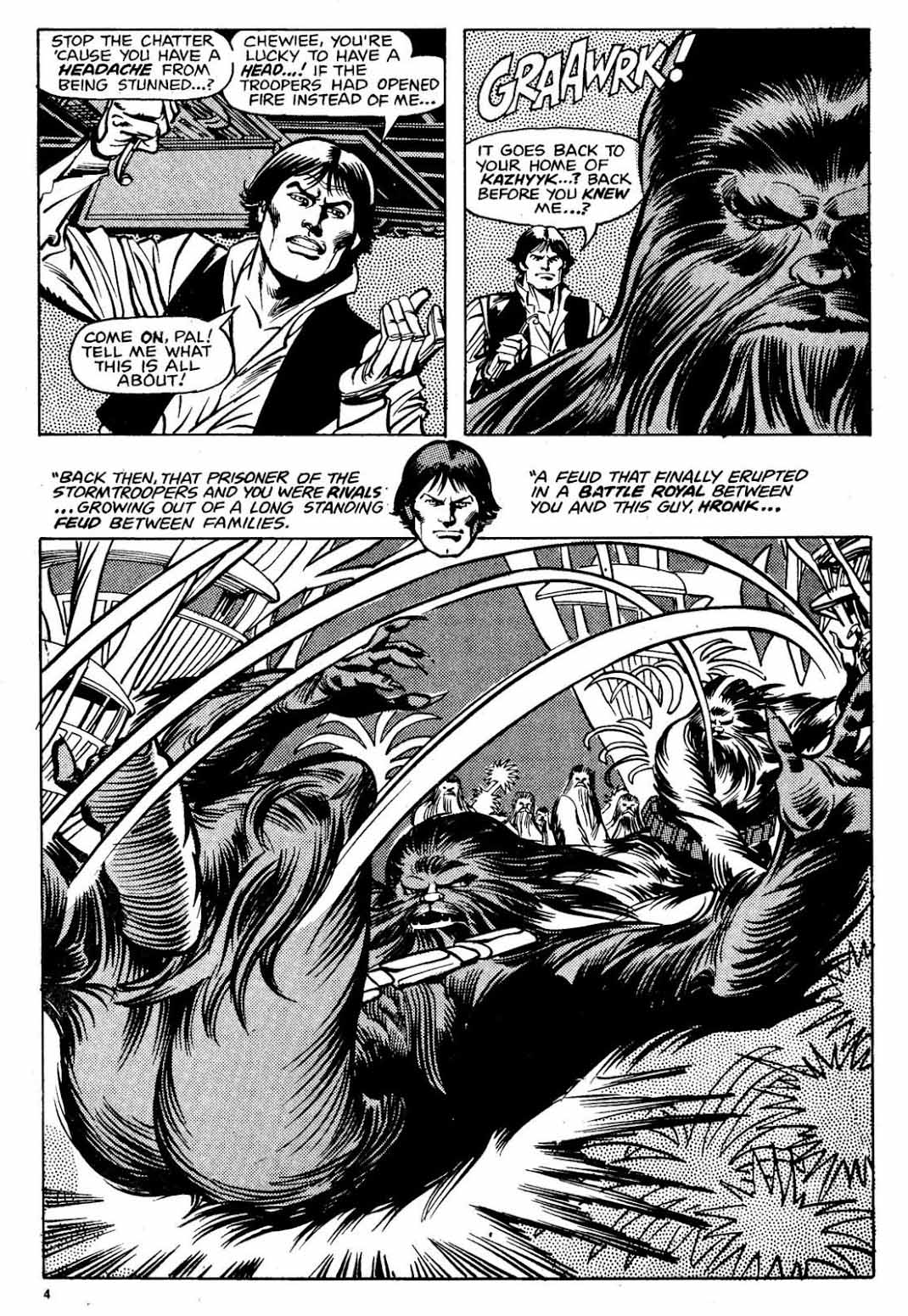
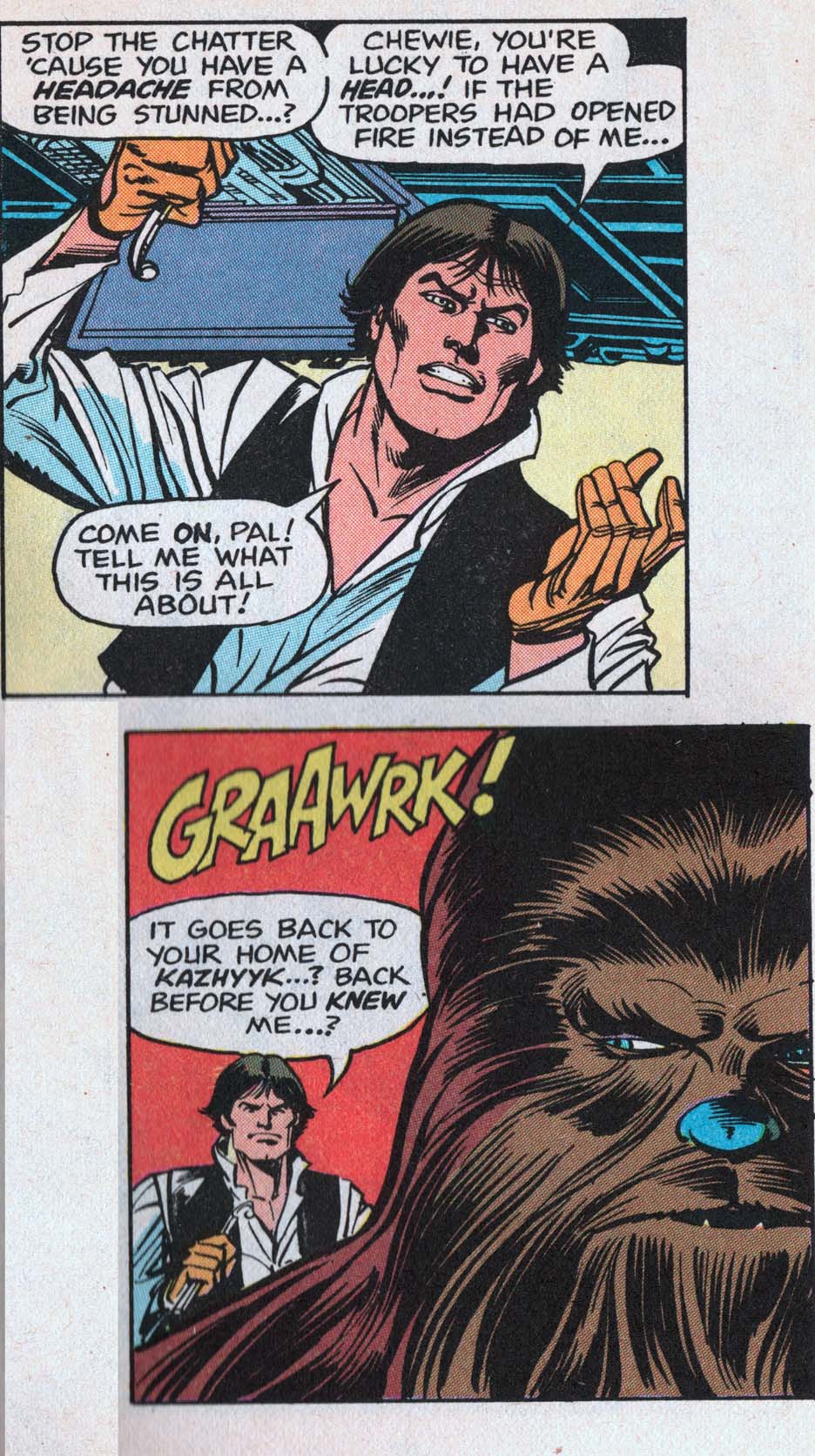
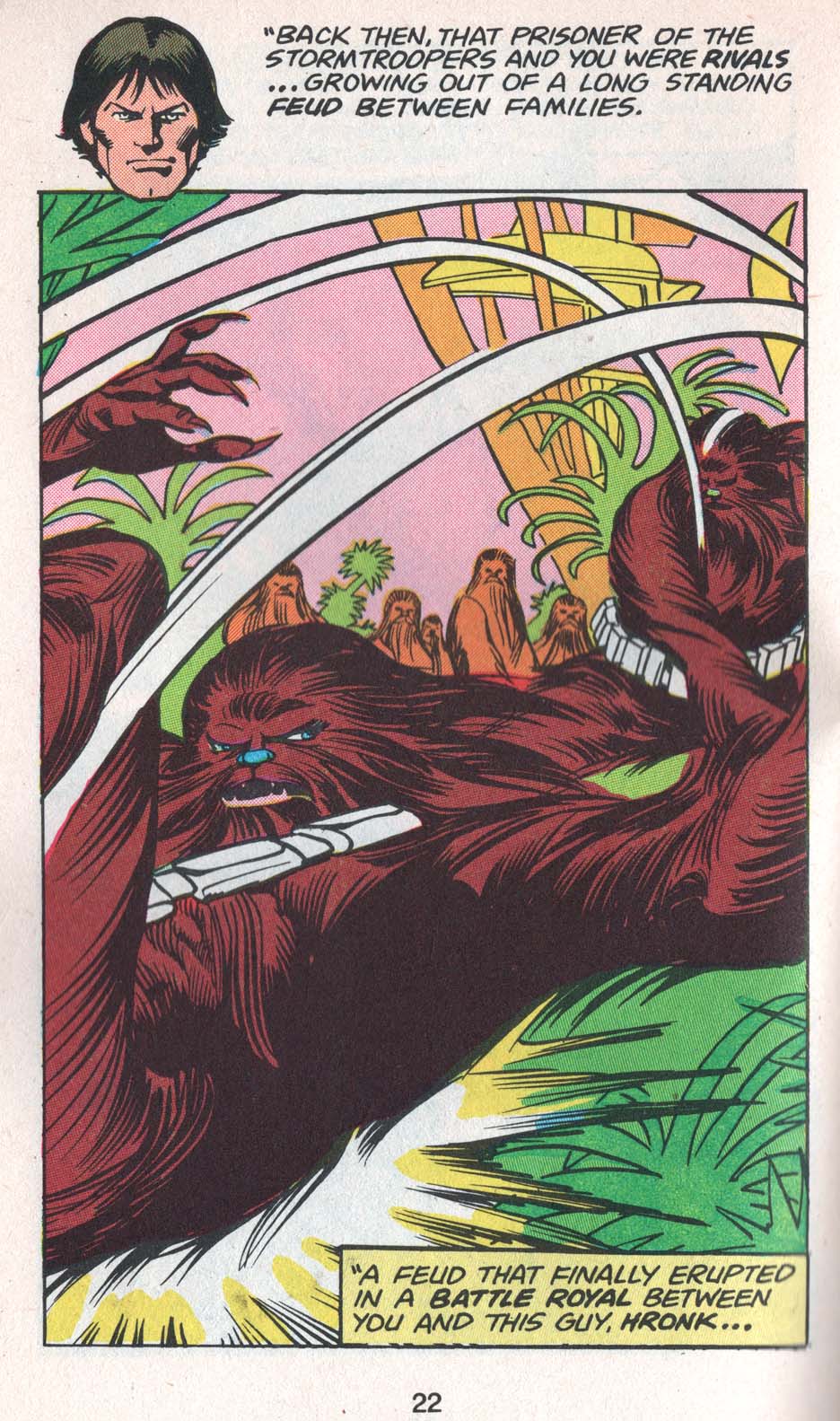
Here’s a terrific 1979 Star Wars splash page from Carmine Infantino; like a few other stories from the same era, it was originally exclusive to the Star Wars UK weekly.
I’ve never seen a definitive answer on this, but I suspect writer Archie Goodwin wrote several stories as “placeholders” until Lucasfilm gave Marvel some indication on the storyline/ direction of Empire Strikes Back. No one at Marvel could have been possibly known when that would be. So, Archie and Carmine kept going with “isolated” storylines, until they were brought into the loop.
(The ESB embargo date must have changed a few times too. Marvel advertises the adaptation at the end of #37 for the very next issue — which ends up as a filler story — because Empire doesn’t start till #39.)
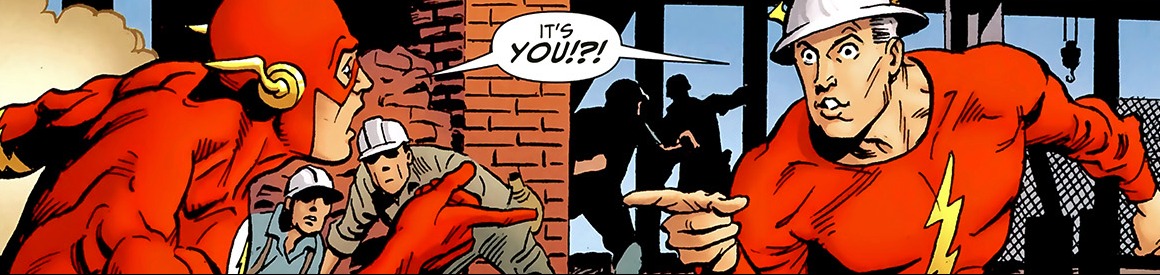
Lovely brushwork from Pablo Marcos nicely compliments and enhances Carmine’s “loose” pencil work. (As Carmine aged, his styled became looser and looser. Check his 80s return to DC’s original Flash series a few years later.)
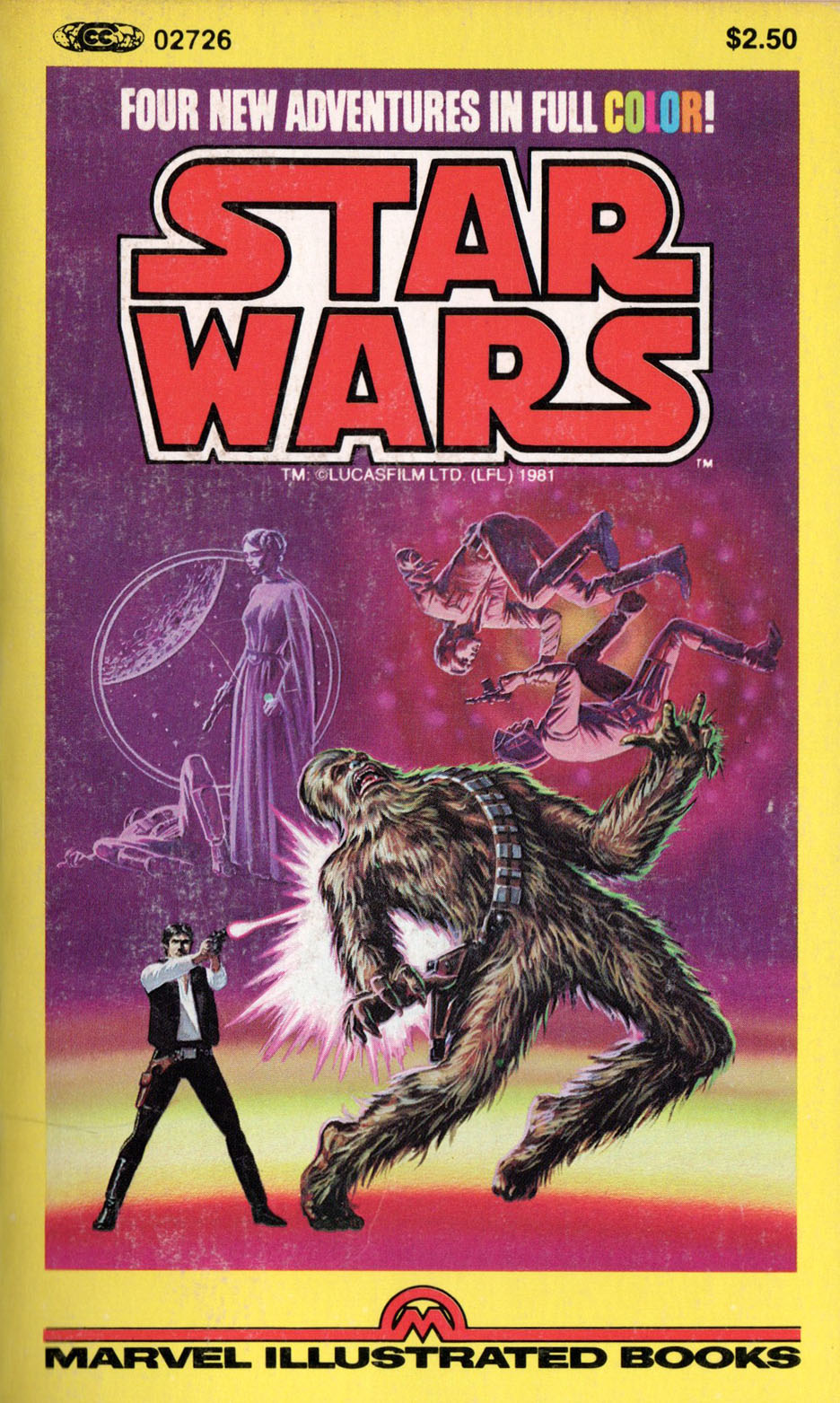
Another quirk about this story. It ultimately appeared in color (from Marie Severin) in a Marvel US paperback collection of “new” Star Wars stories. Cropping on the panels is inconsistent because the pages had to fit the odd format. (See below.)
George Lucas thought SF comics legend Al Williamson (EC, Flash Gordon) was an ideal choice to draw the original Marvel adaption of Star Wars. (Now officially titled Chapter IV: A New Hope.)
Unfortunately, Al was locked into his deal for the Secret Agent Corrigan newspaper strip and couldn’t take the gig.
(Fortunately for George, his other choice came through: Howard Chaykin, who was extraordinarily familiar and comfortable with SF and swashbuckling came on board for the adaptation and a few additional issues. But, as always, we digress.)
Al ultimately ended up doing wonderful adaptations of both Empire Strikes Back and Return of the Jedi. The stories are gorgeous.
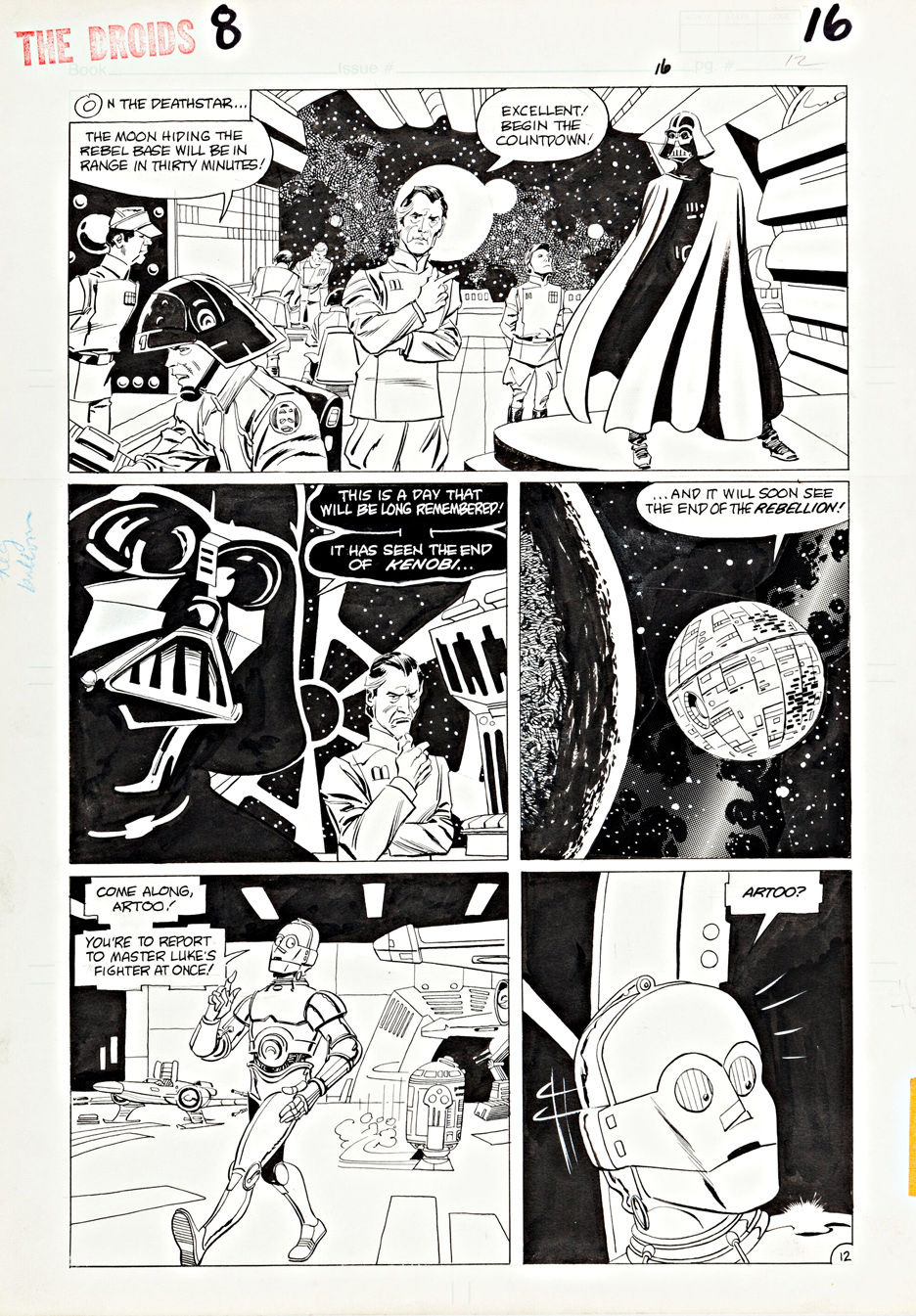
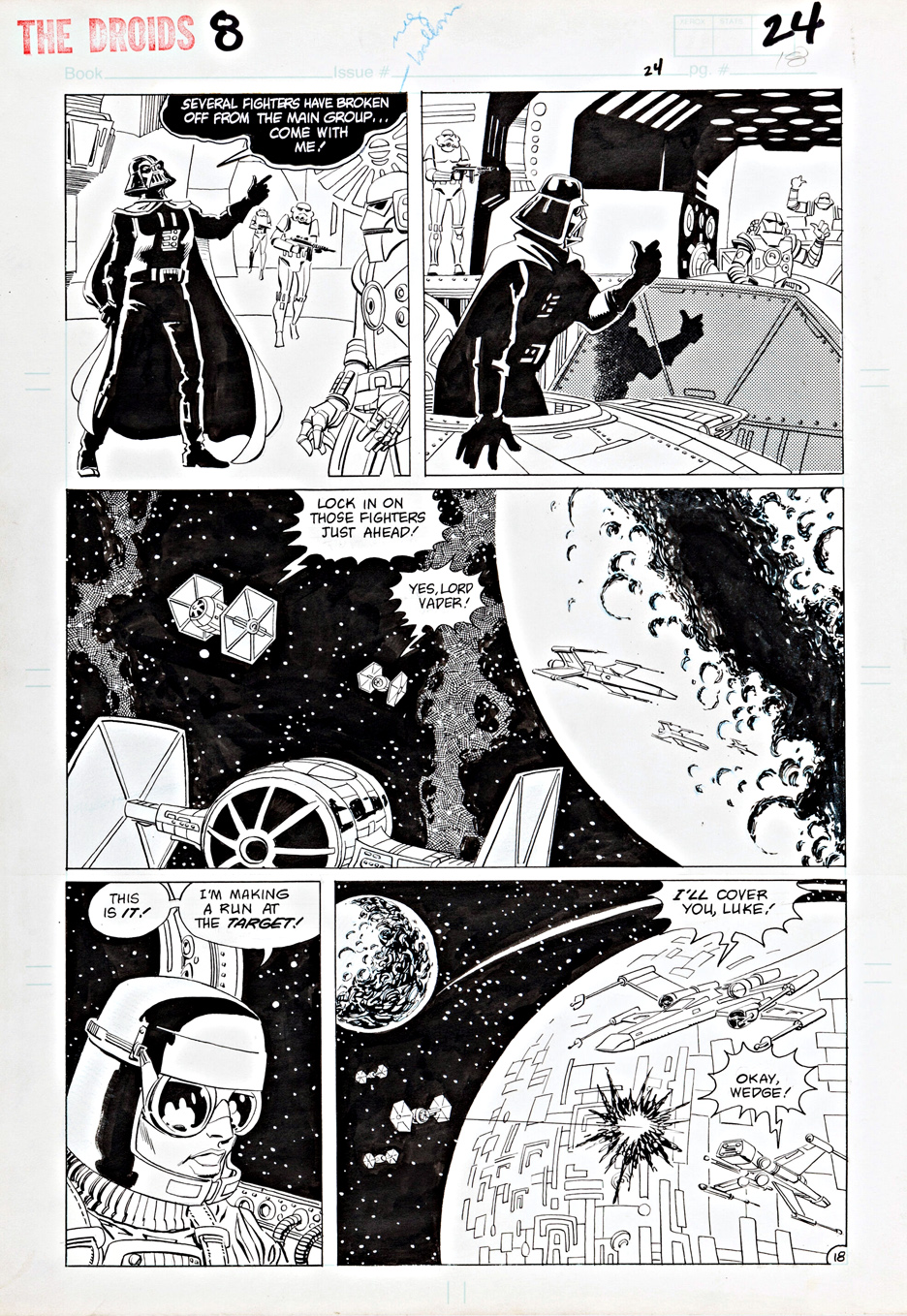
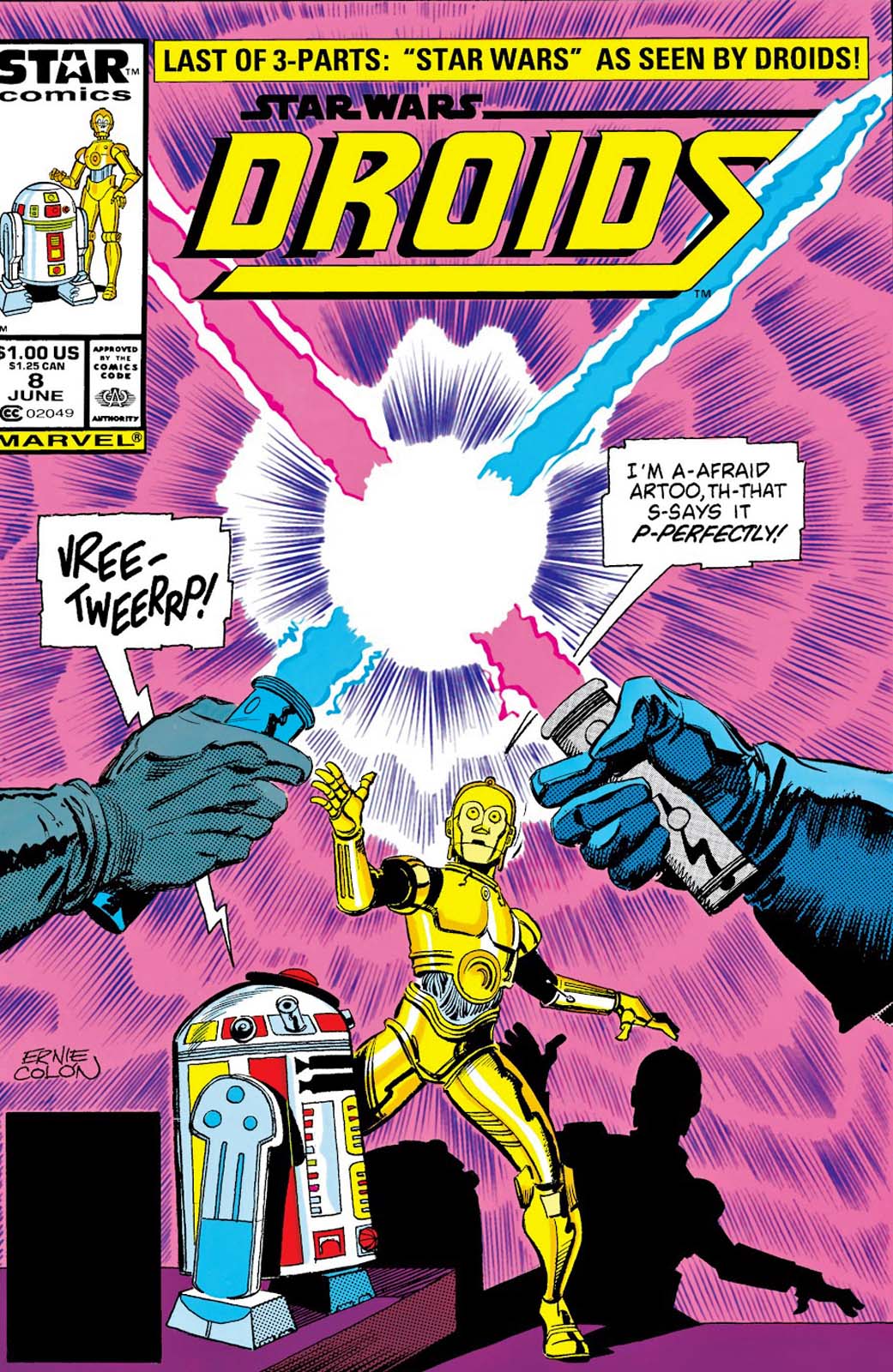
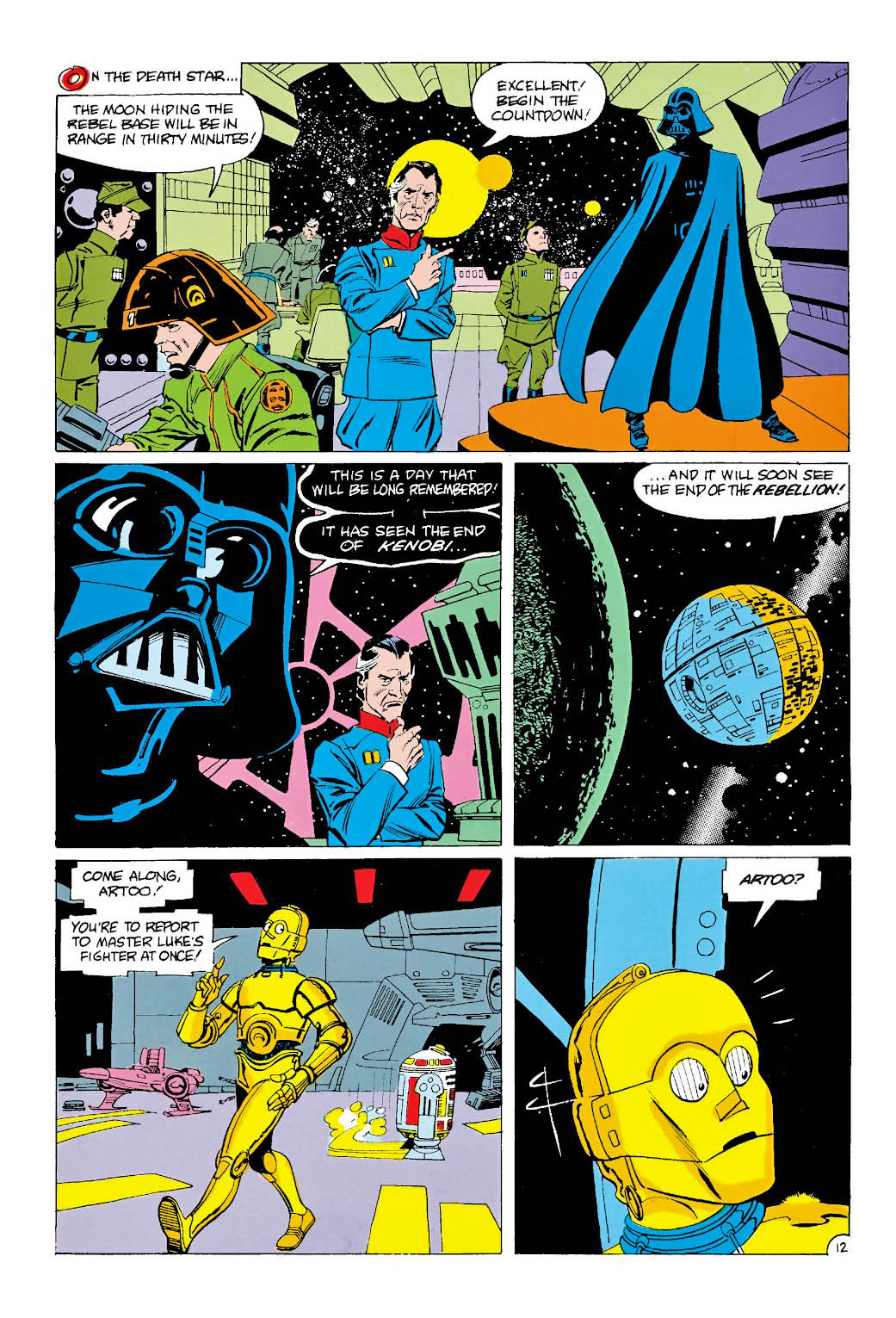
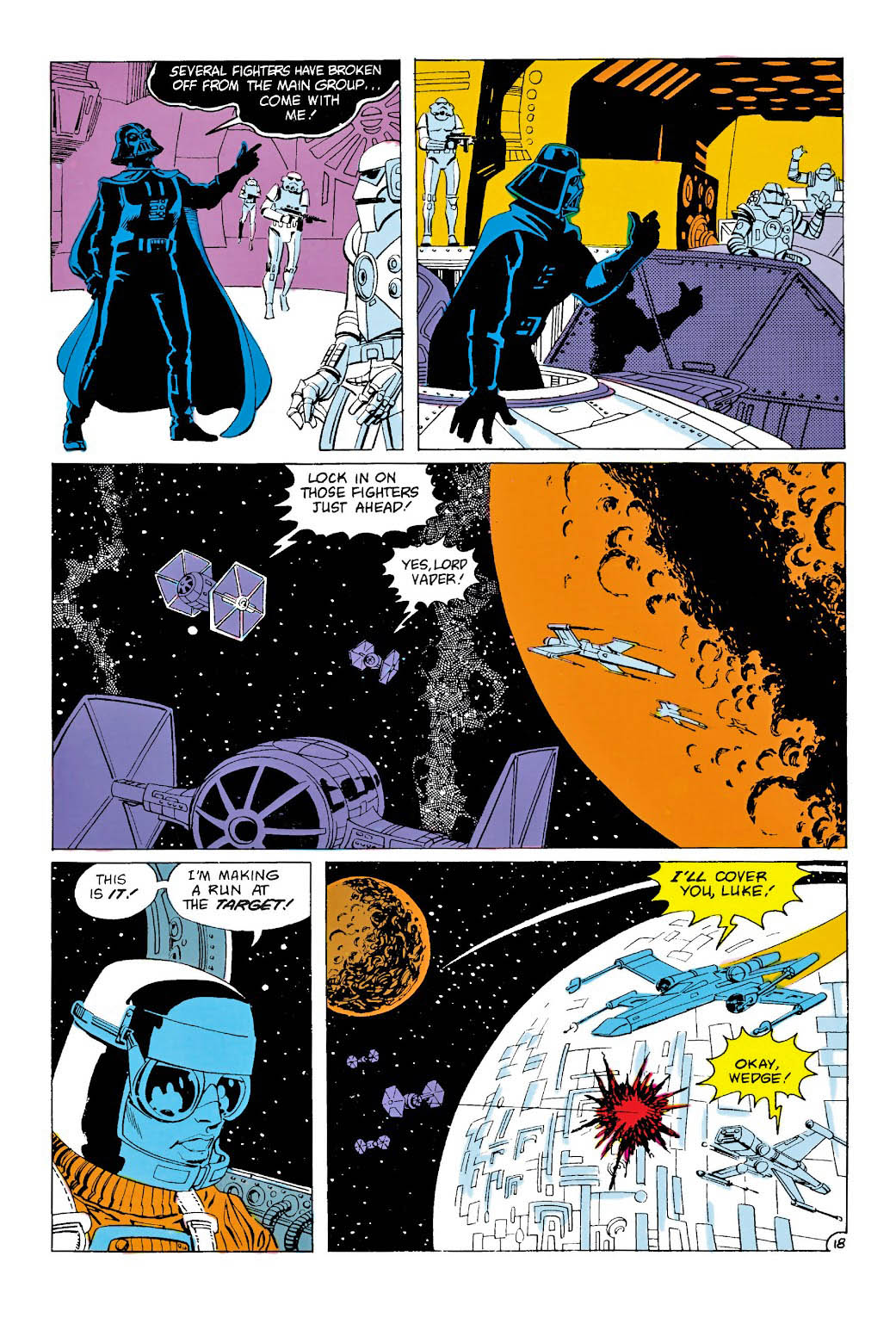
But… Al gets another shot on the original film, when, 10 years after the fact, Marvel decides to adapt A New Hope again — this time as a three-part story in the kids’ comic, Droids.
Ernie Colon provides lovely storytelling, and Williamson provides his beautiful inks, giving him credits on all three Star Wars original trilogy films.
As for the story itself — the main selling point is that this adaptation is told from the Droids’ point of view — which seems odd, since Lucas told interviewers that the films were told from the Droids’ POV, in the first place.