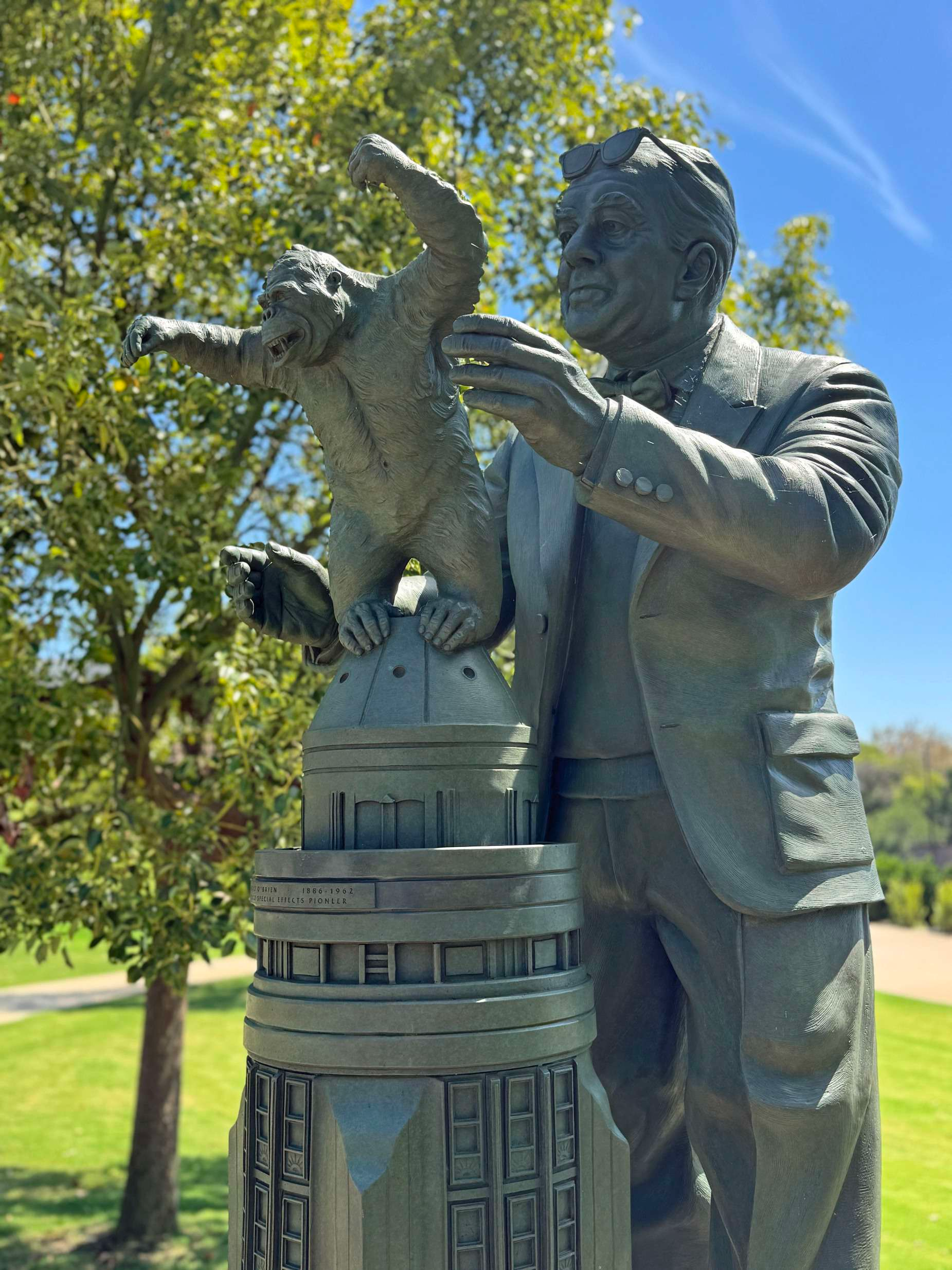
It is pretty obvious that I have posted a lot of Batman art over the years.
More than I realized, actually.
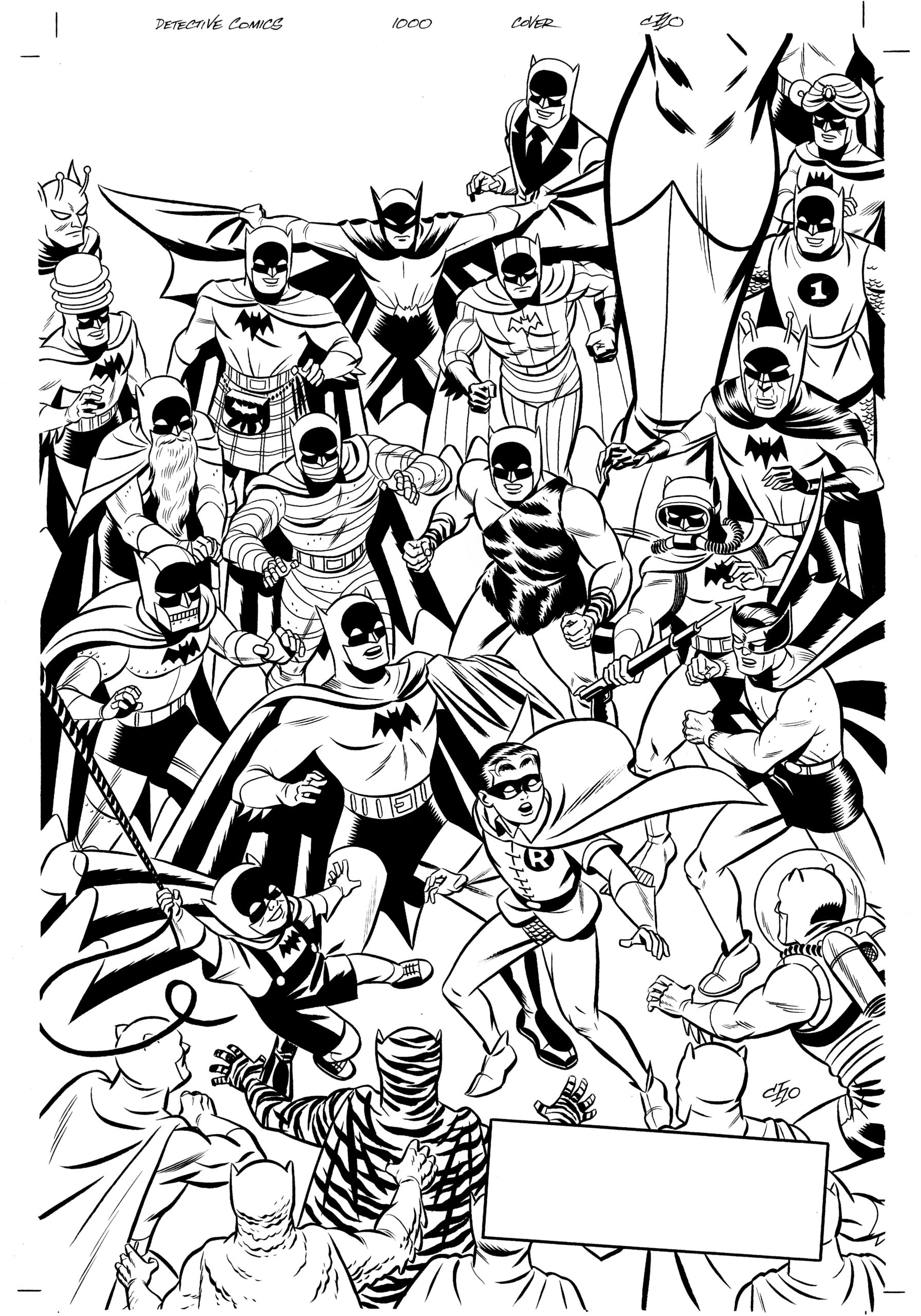
Neal Adams. Carmine Infantino. Jim Aparo. Gene Colan. Frank Miller. Berni Wrightson. Tim Sale. Michael Cho. Mike Parobeck. Russ Heath. Paul Smith. And plenty more.
Batman, Robin, Catwoman, Batgirl, the Joker, and assorted other Gotham residents — most of whom are not exactly having a good day.
I don’t own all of these pieces anymore, of course. But somehow, I keep finding new ones to add.
Rather than pretend I can pick a favorite, here’s one link to all of it:
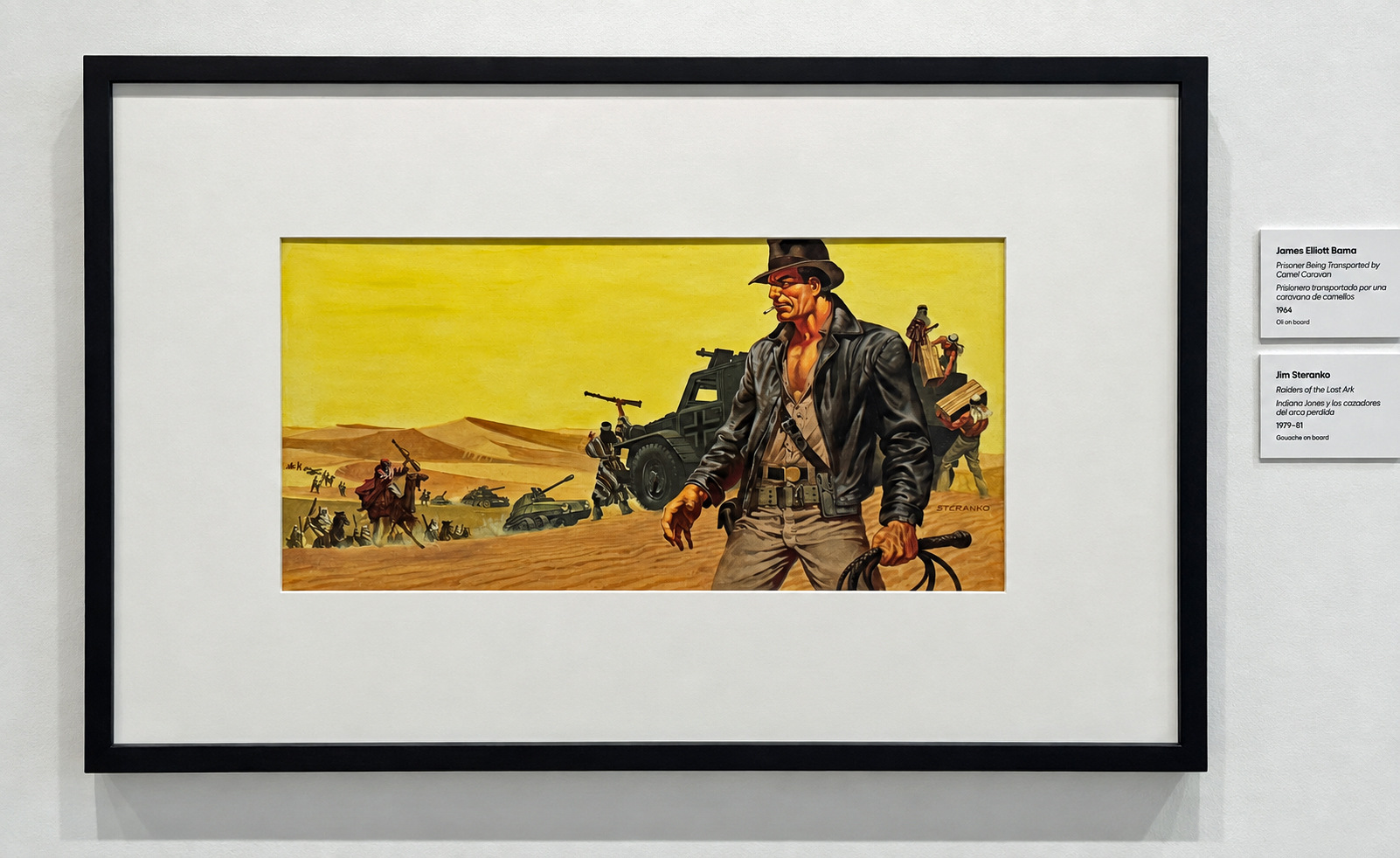
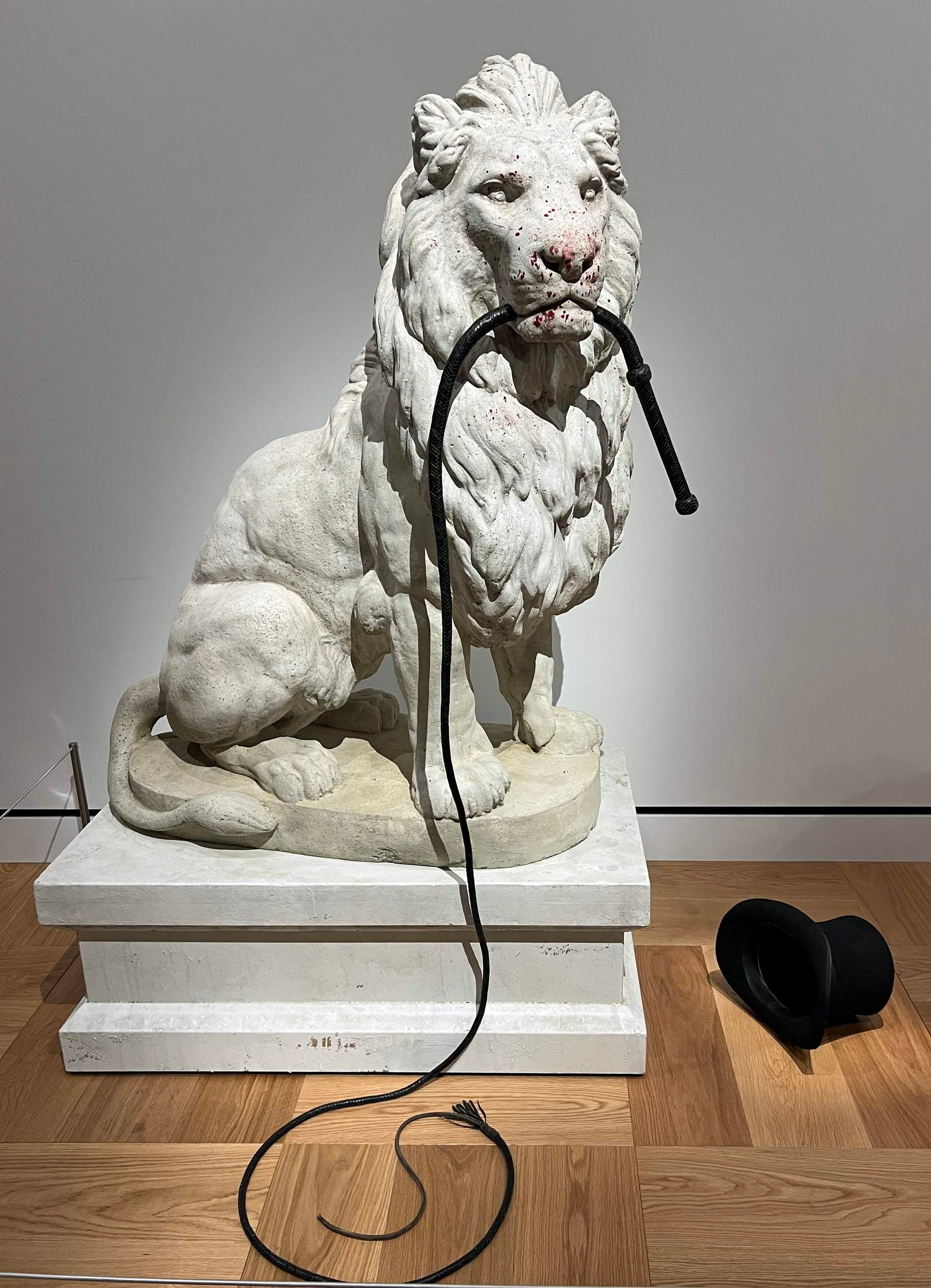
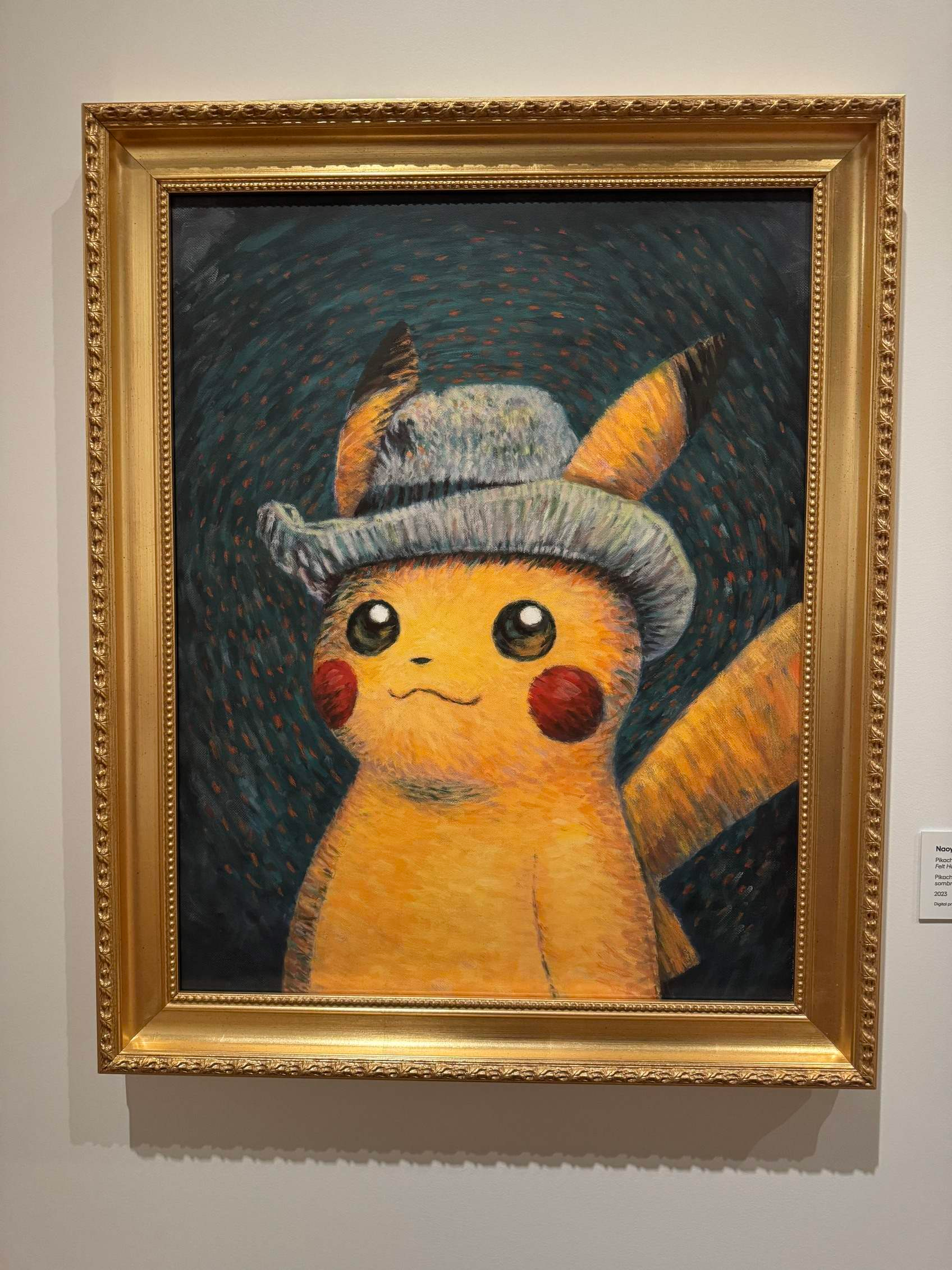
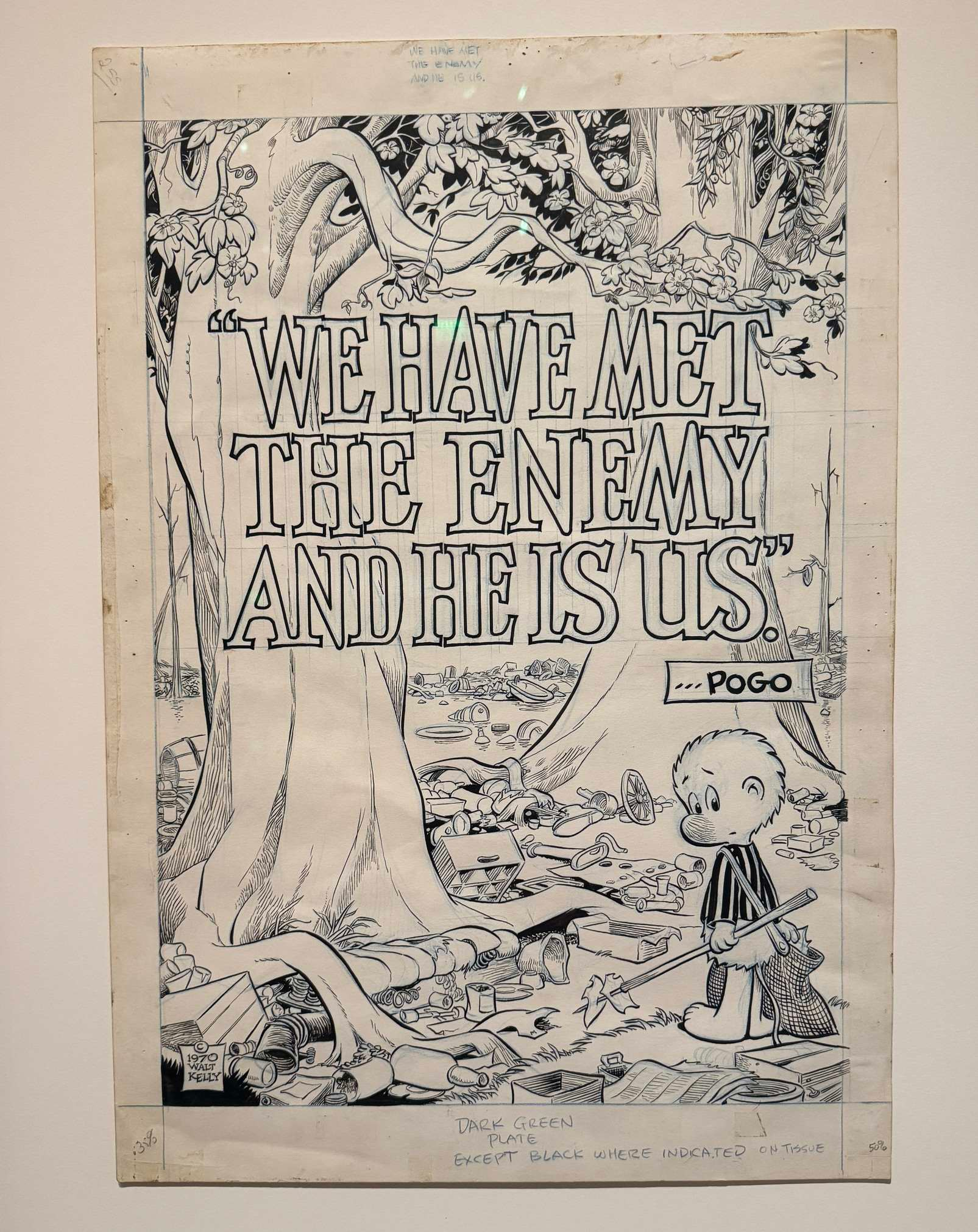
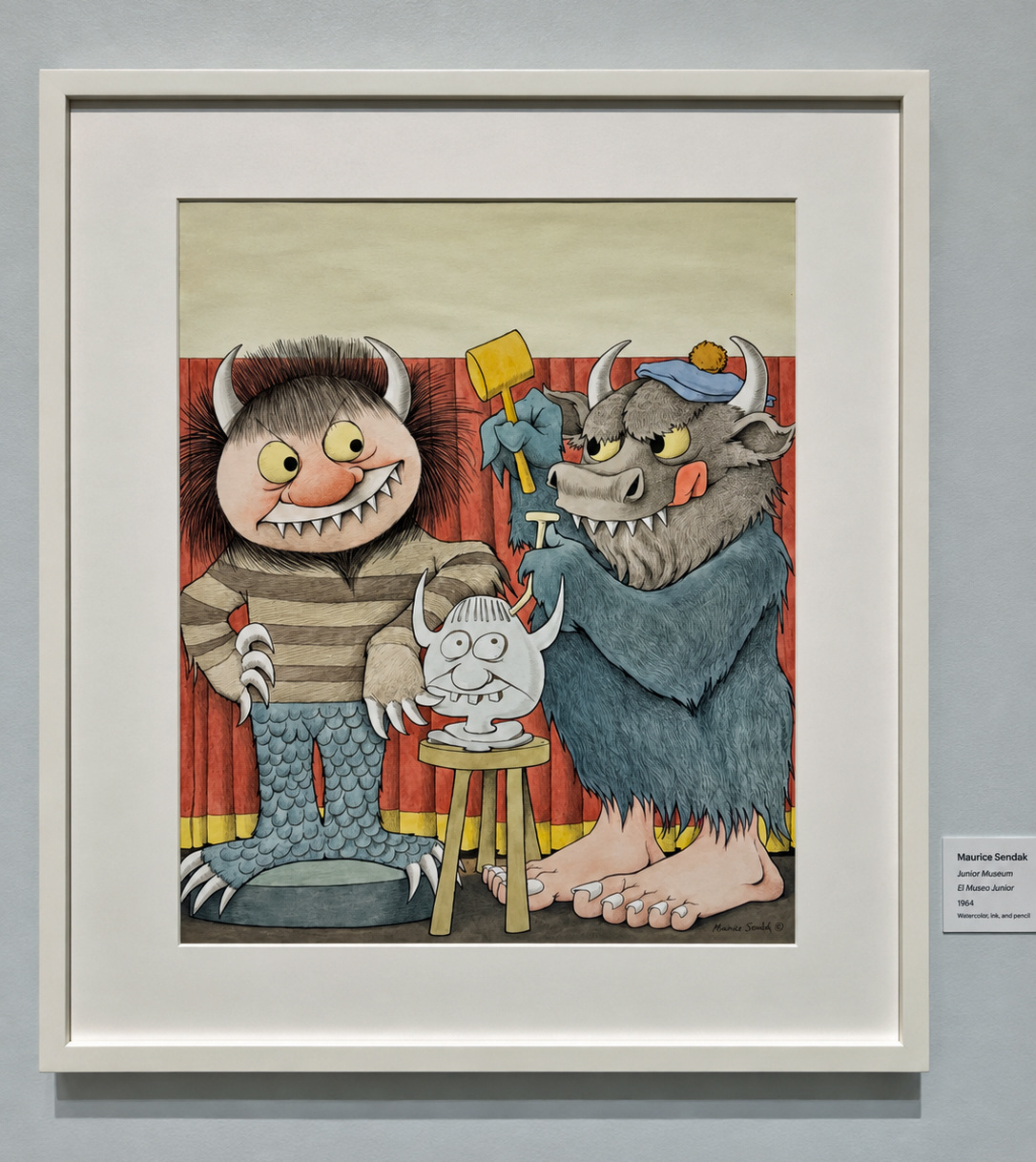
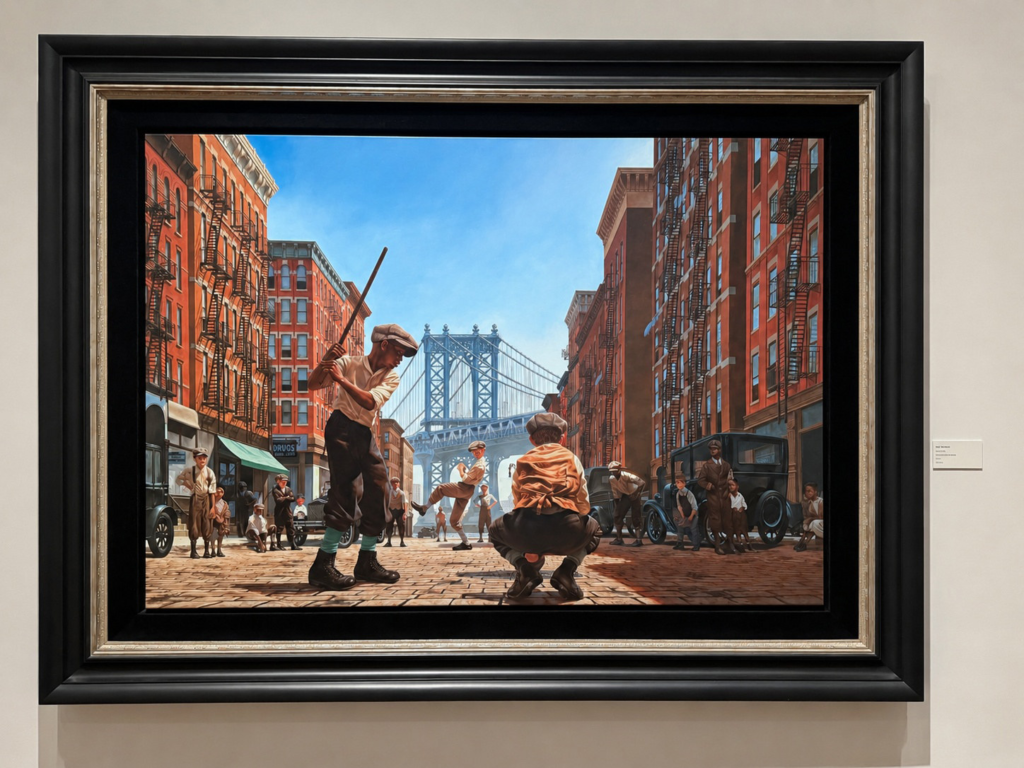
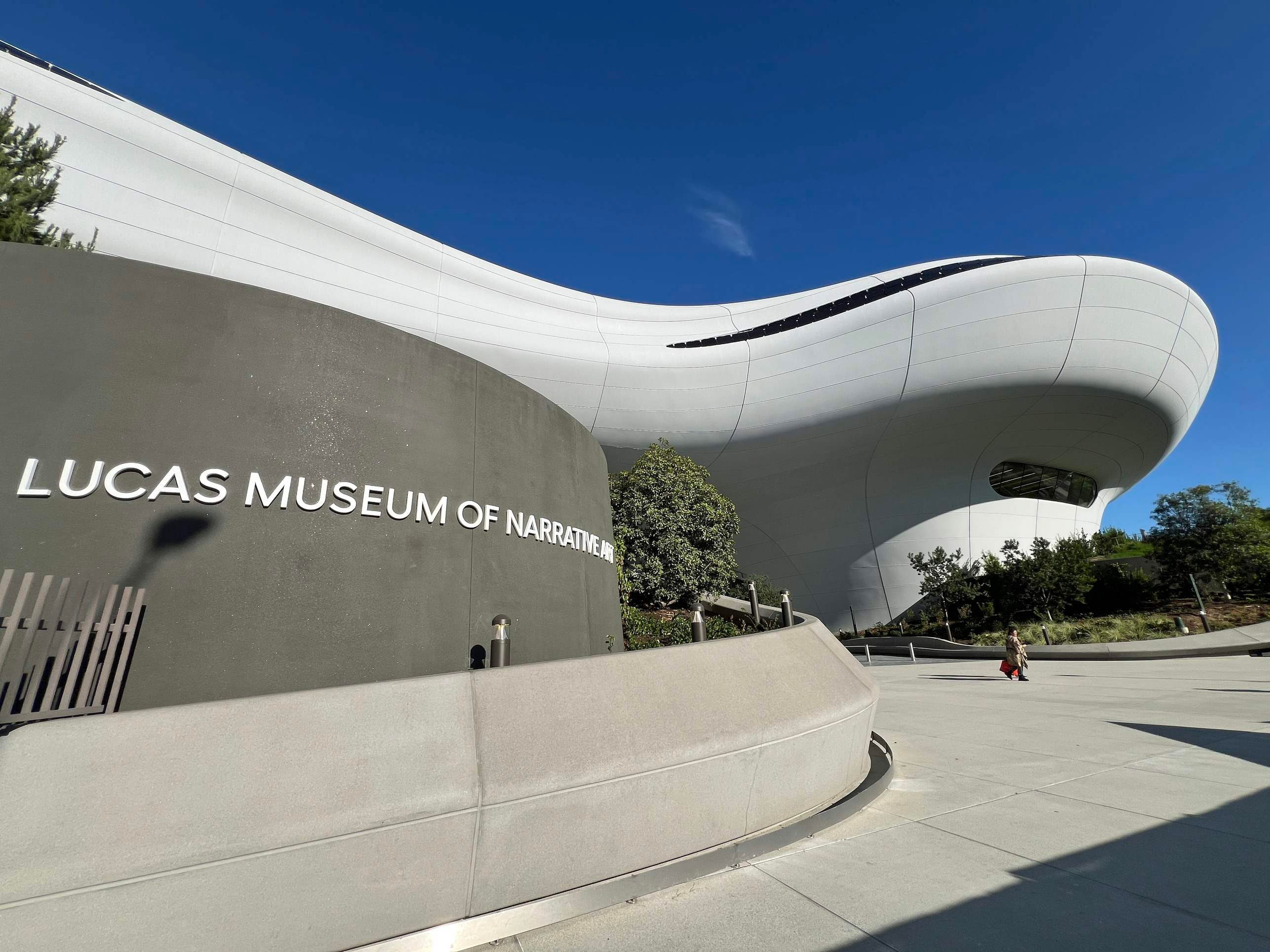
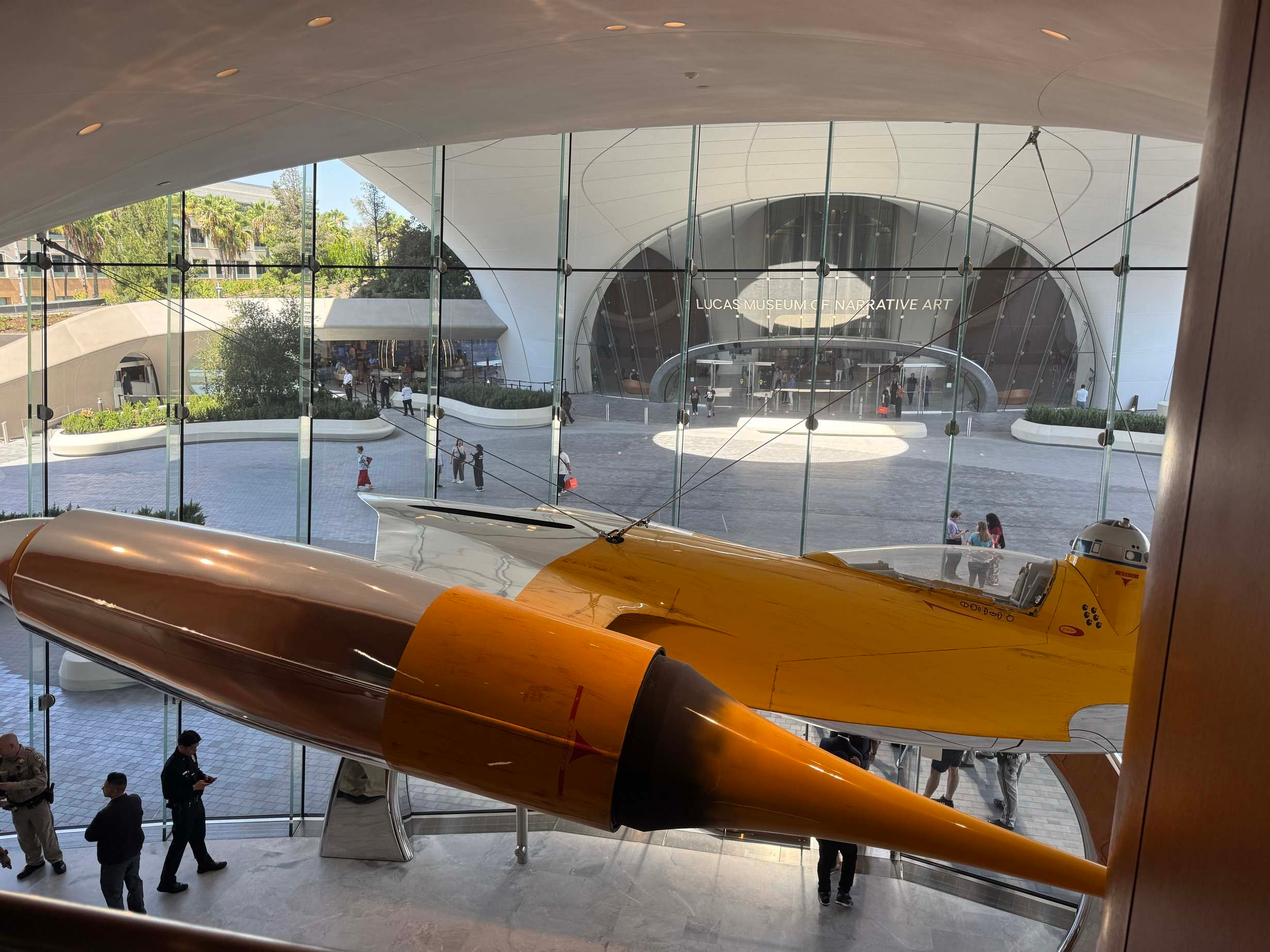
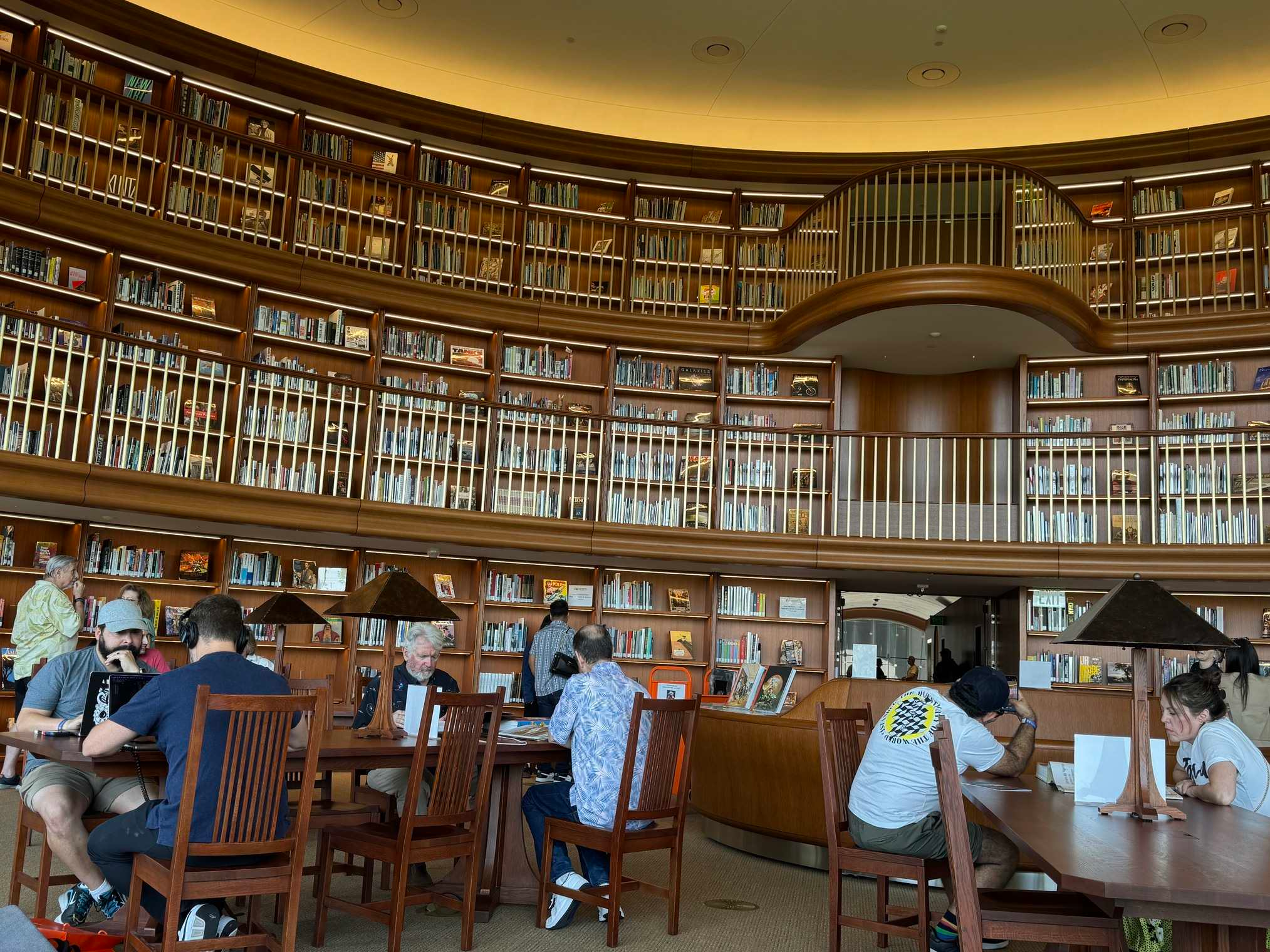
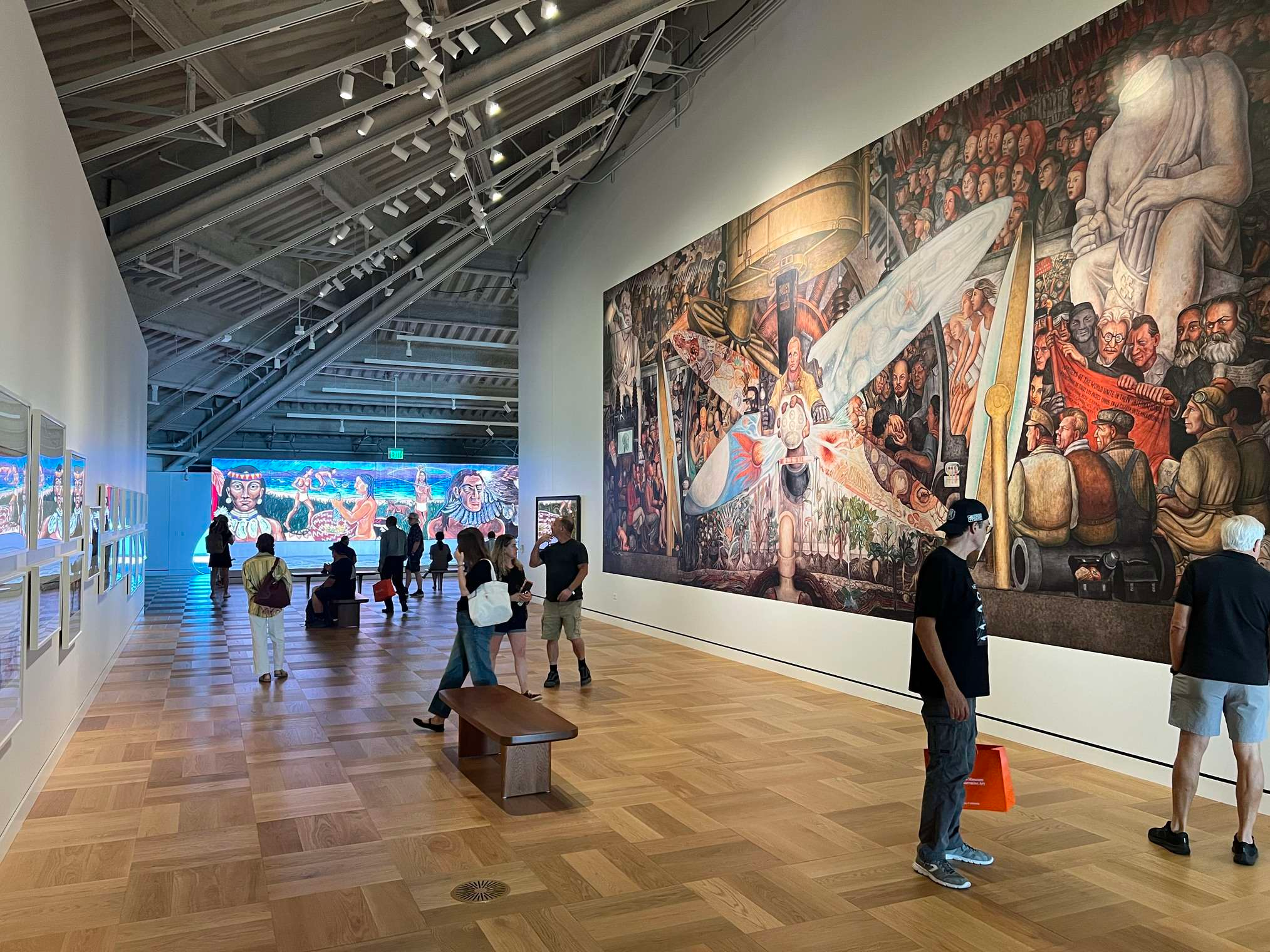
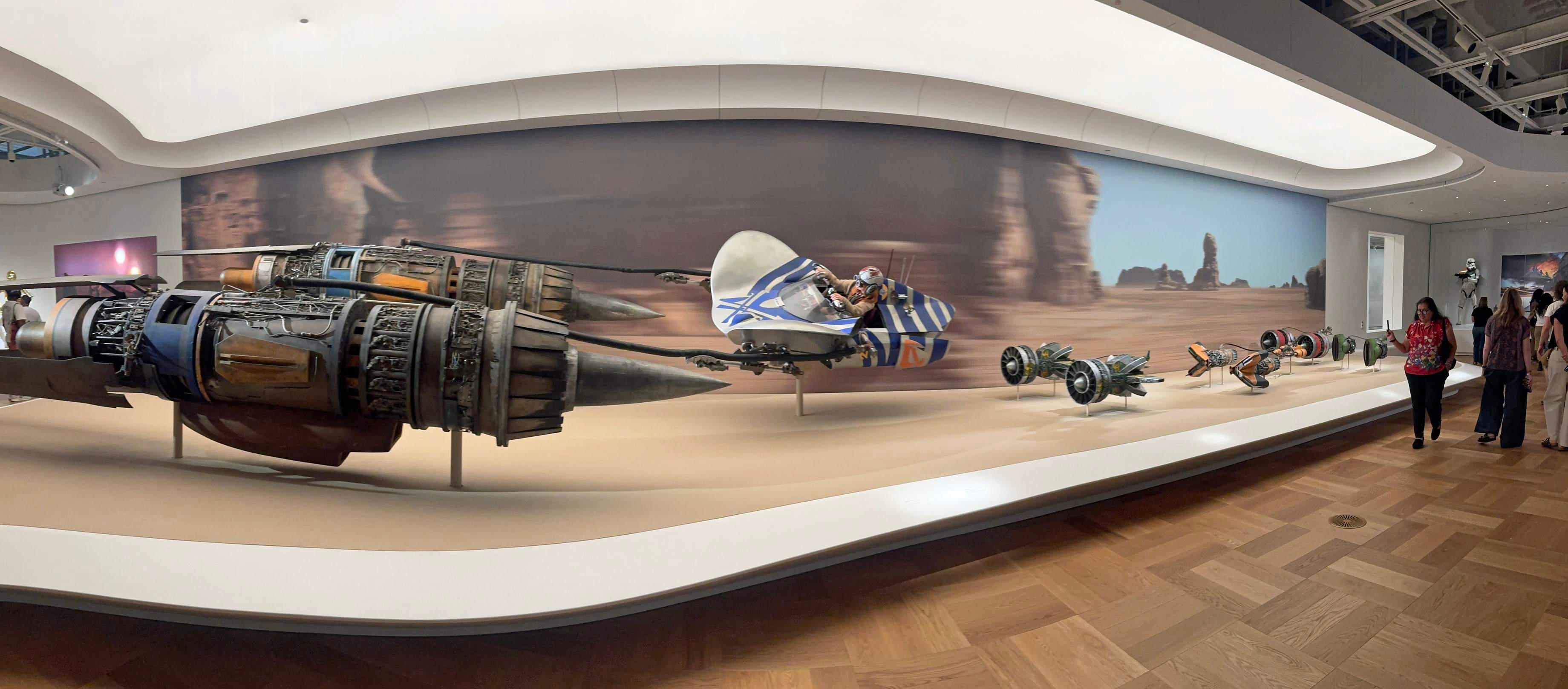
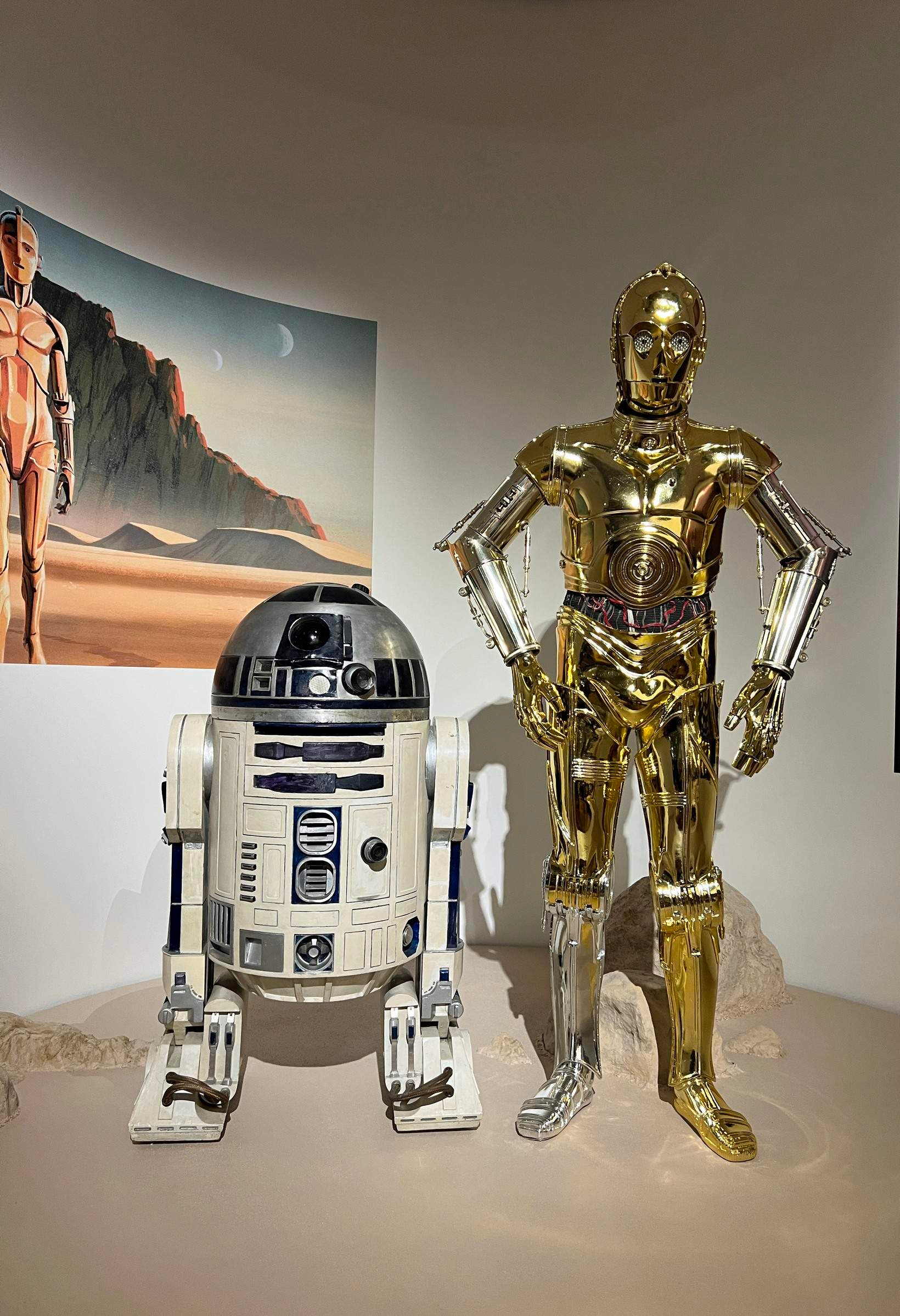
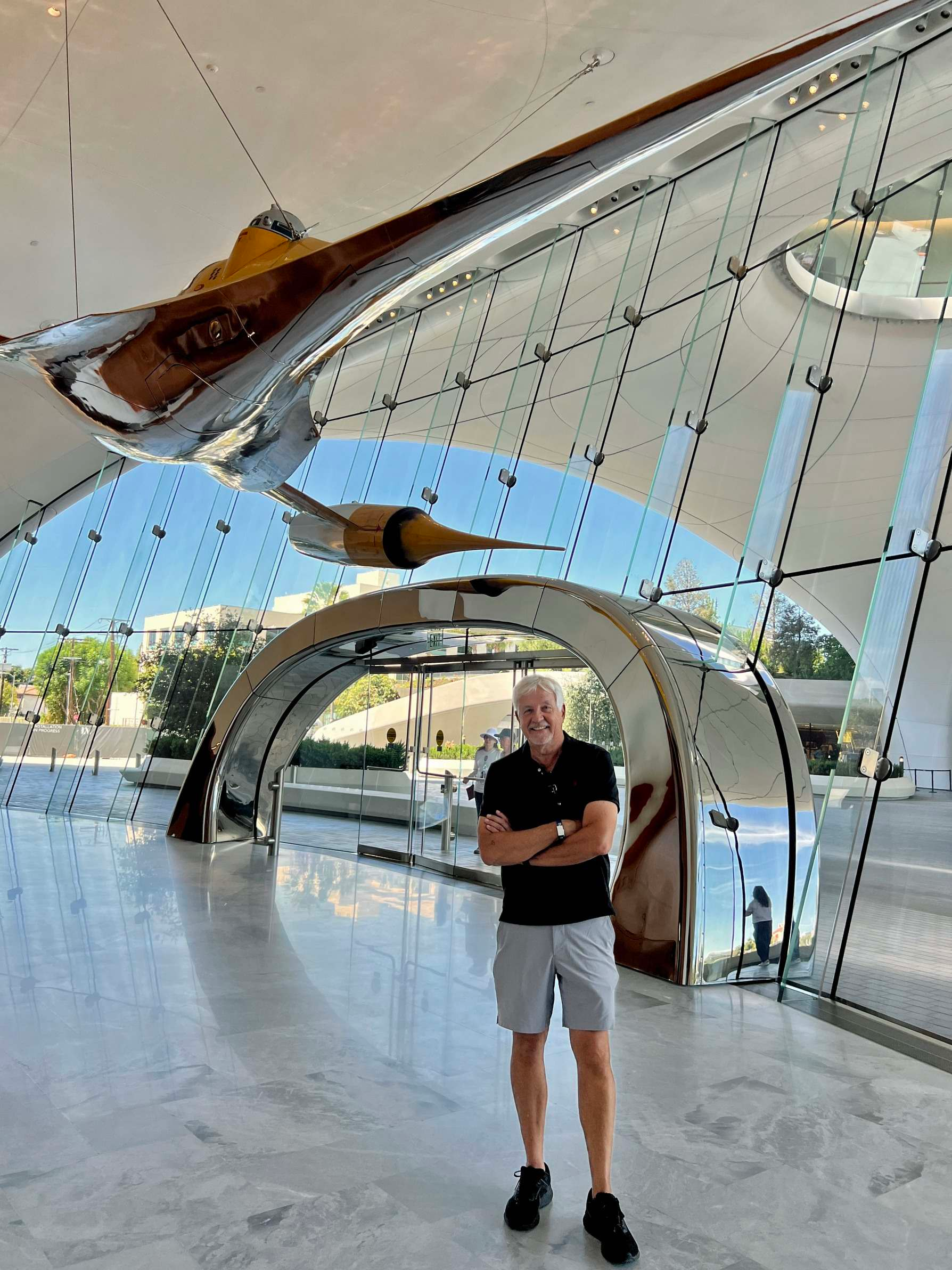
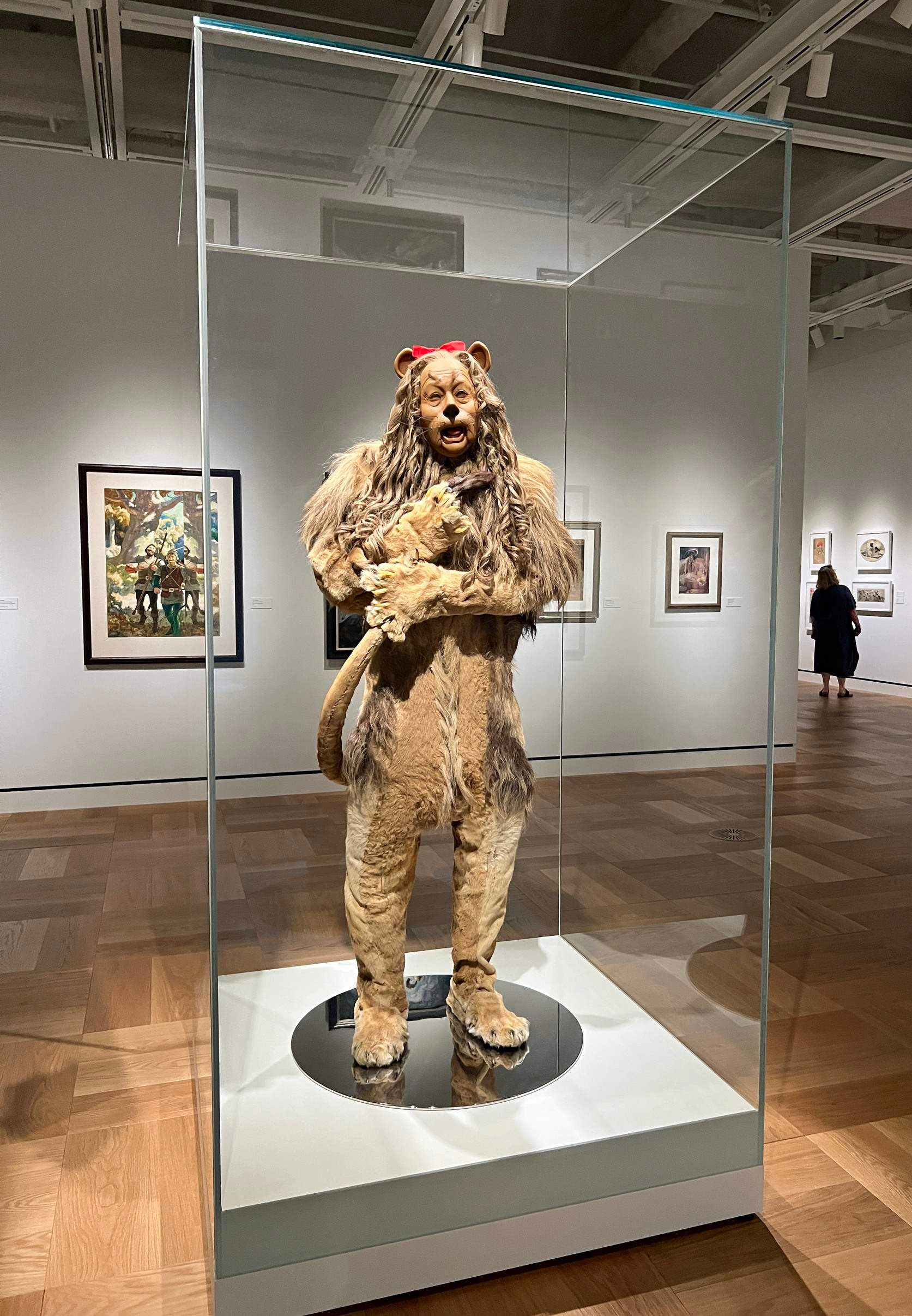
Lucas Museum of Narrative Art, Los Angeles, September 10, 2026
I’m a little late to the party on the Lucas Museum of Narrative Art.
Plenty has already been written, photographed, discussed and dissected. Some of my friends have written wonderful overviews.
So this isn’t an attempt at a definitive review.
It’s just what struck me.
In a word: astonishing.
Honestly, I was a little overwhelmed. There is a ton to take in, and I know I missed things.
Fine by me. I’m going back.
The building itself is spectacular — and innovative, to say the least — but once I got inside, the architecture pretty quickly became secondary.
I’m an art guy. Put great stuff on the walls and that’s where I’m looking.
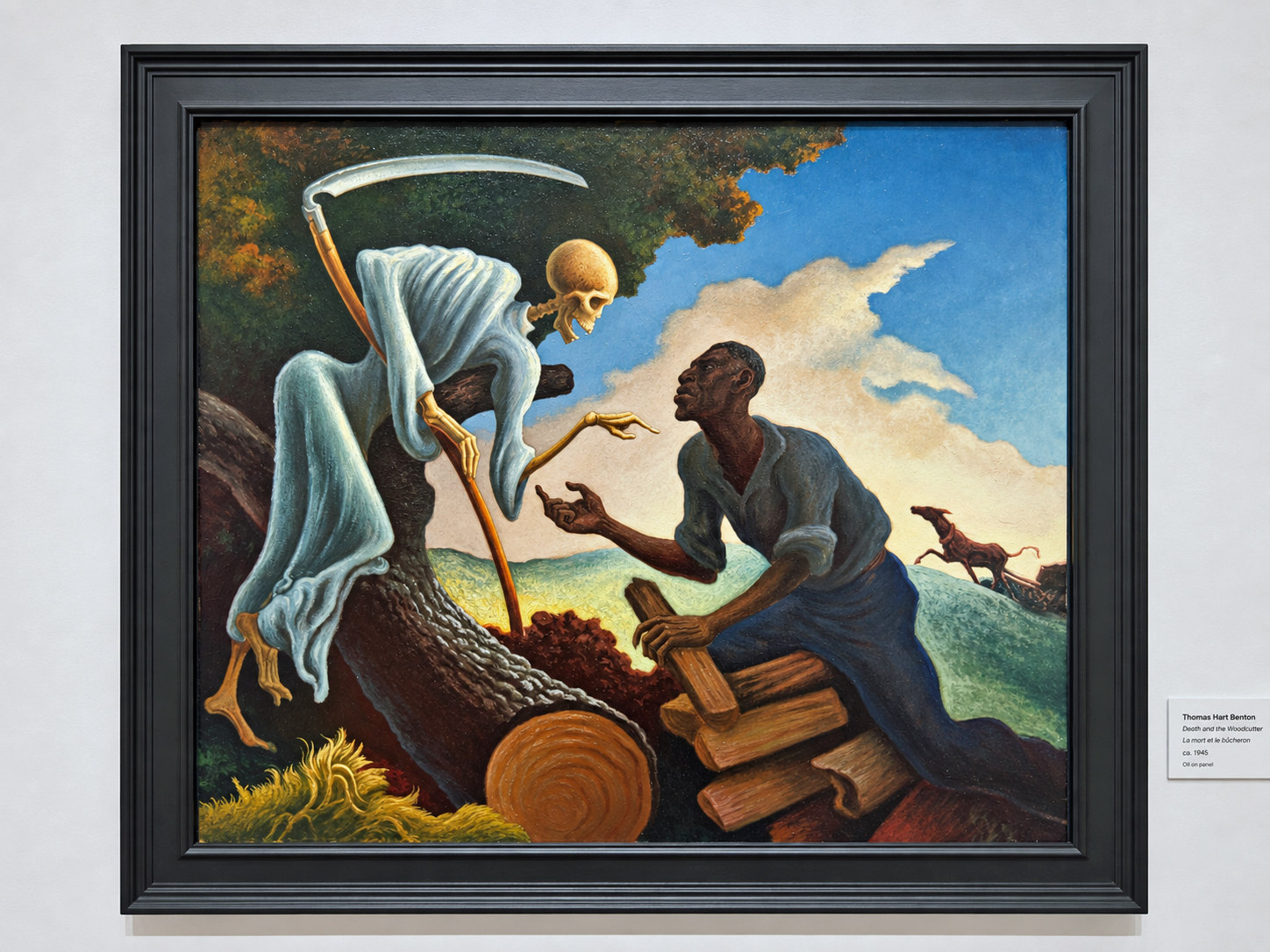
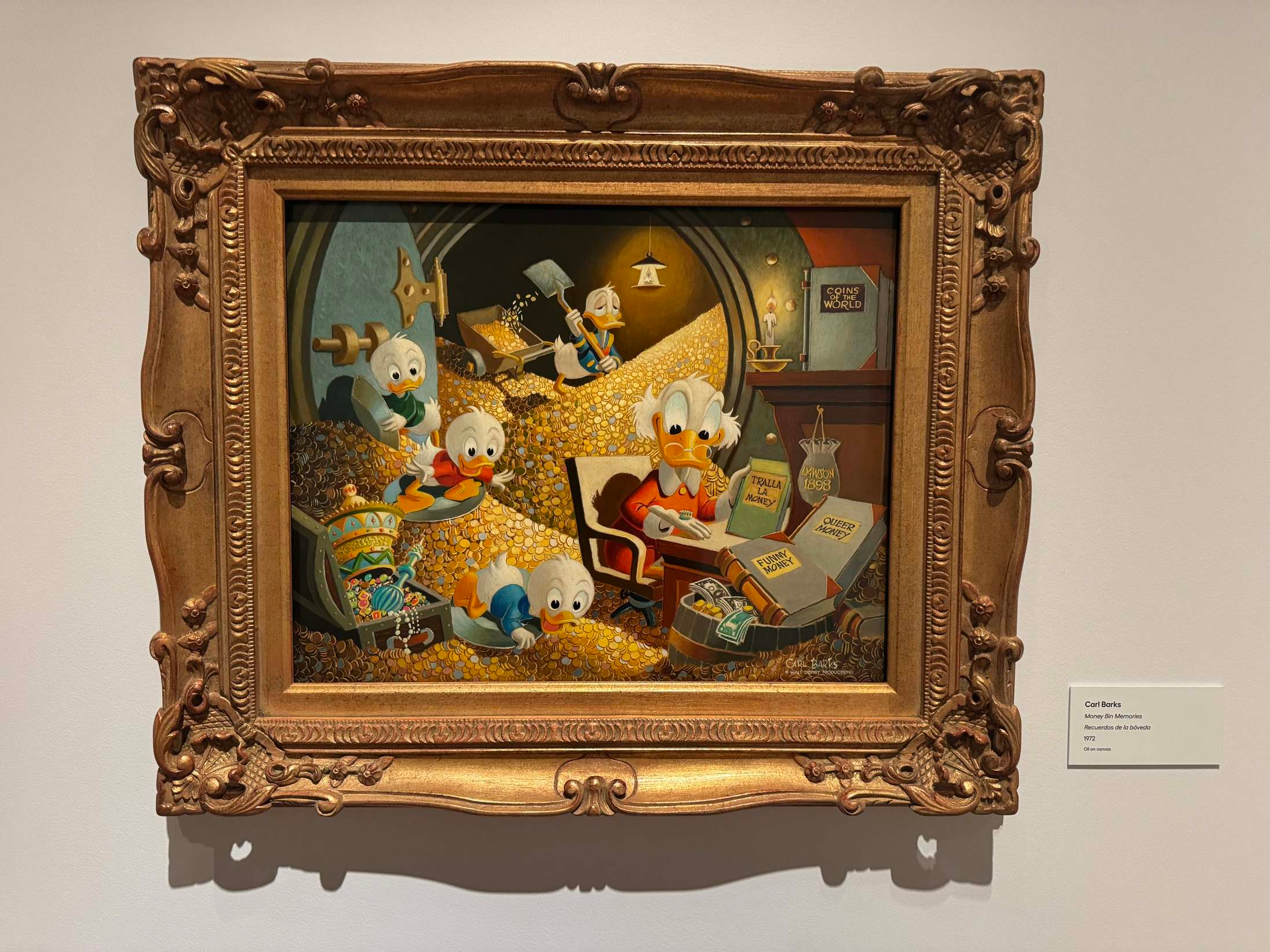
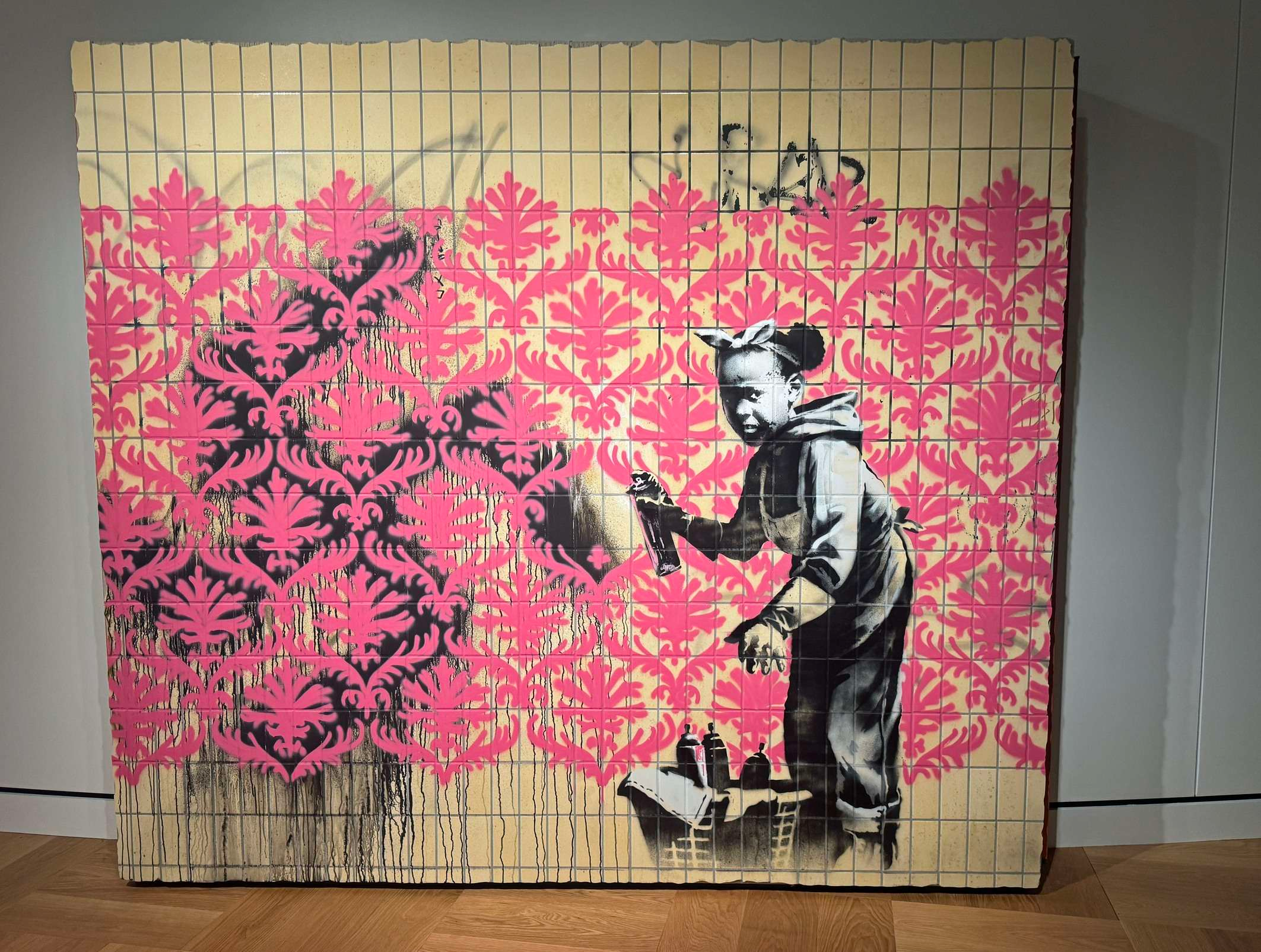
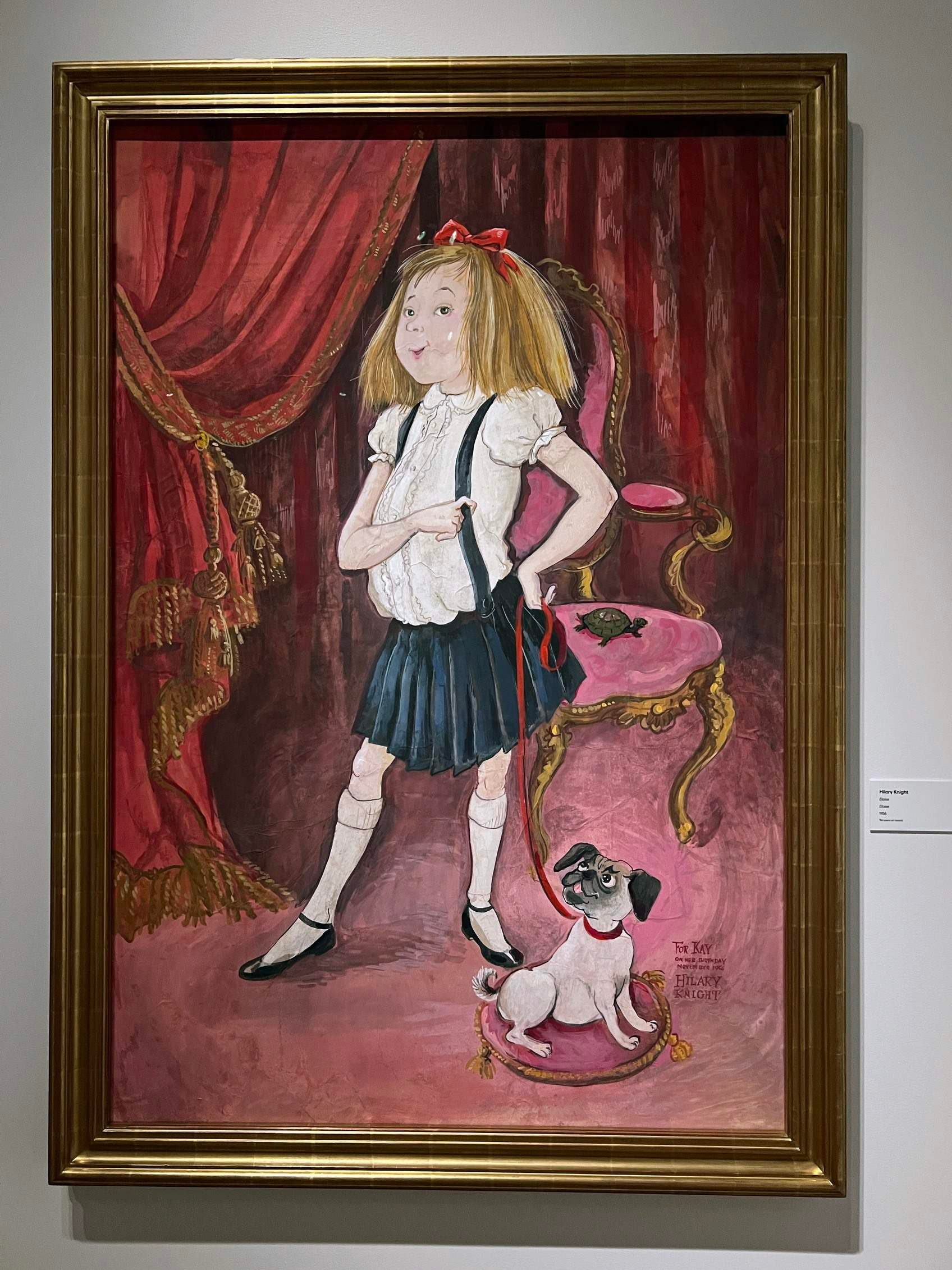
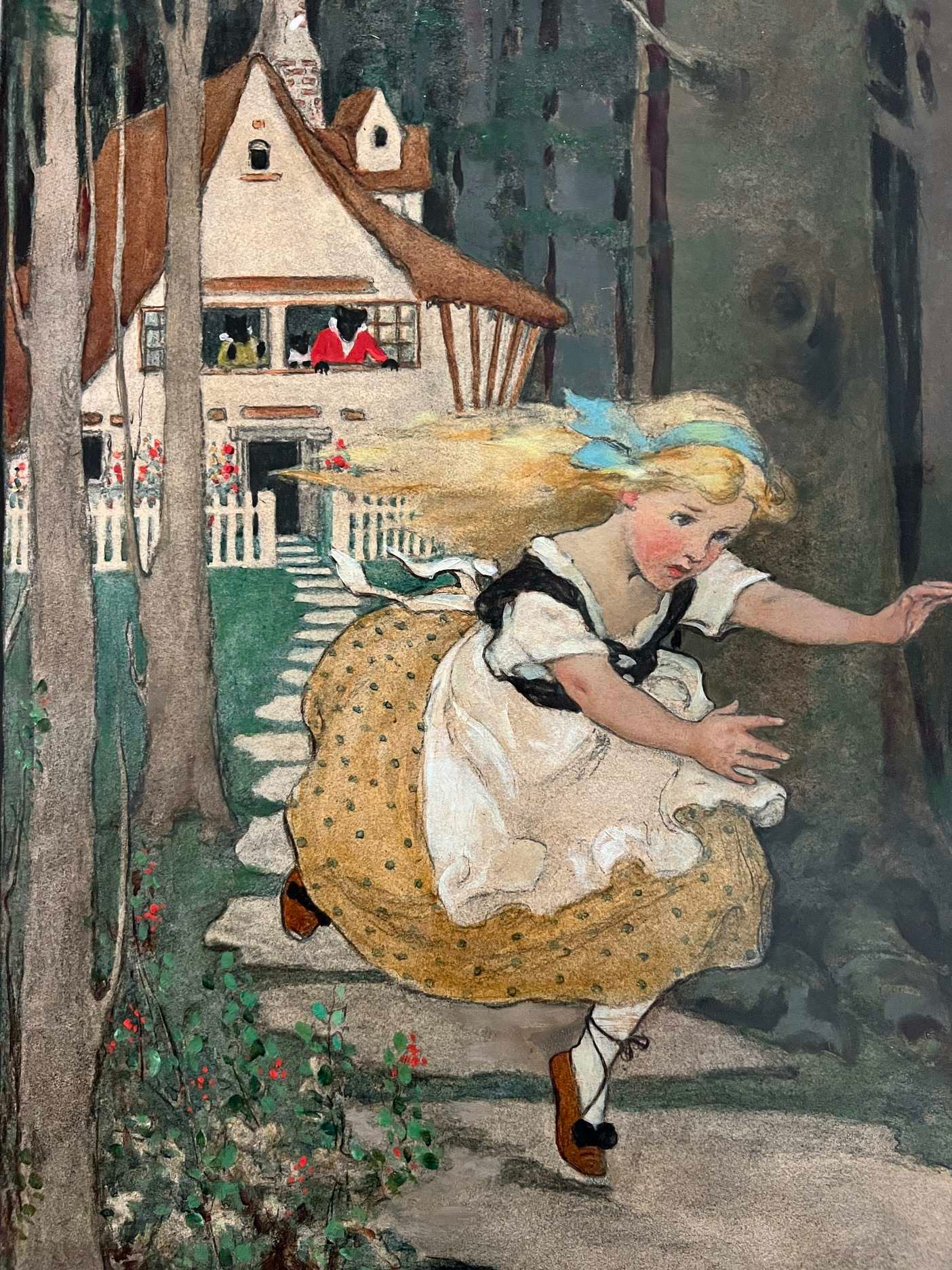
And there is some really great stuff on those walls.
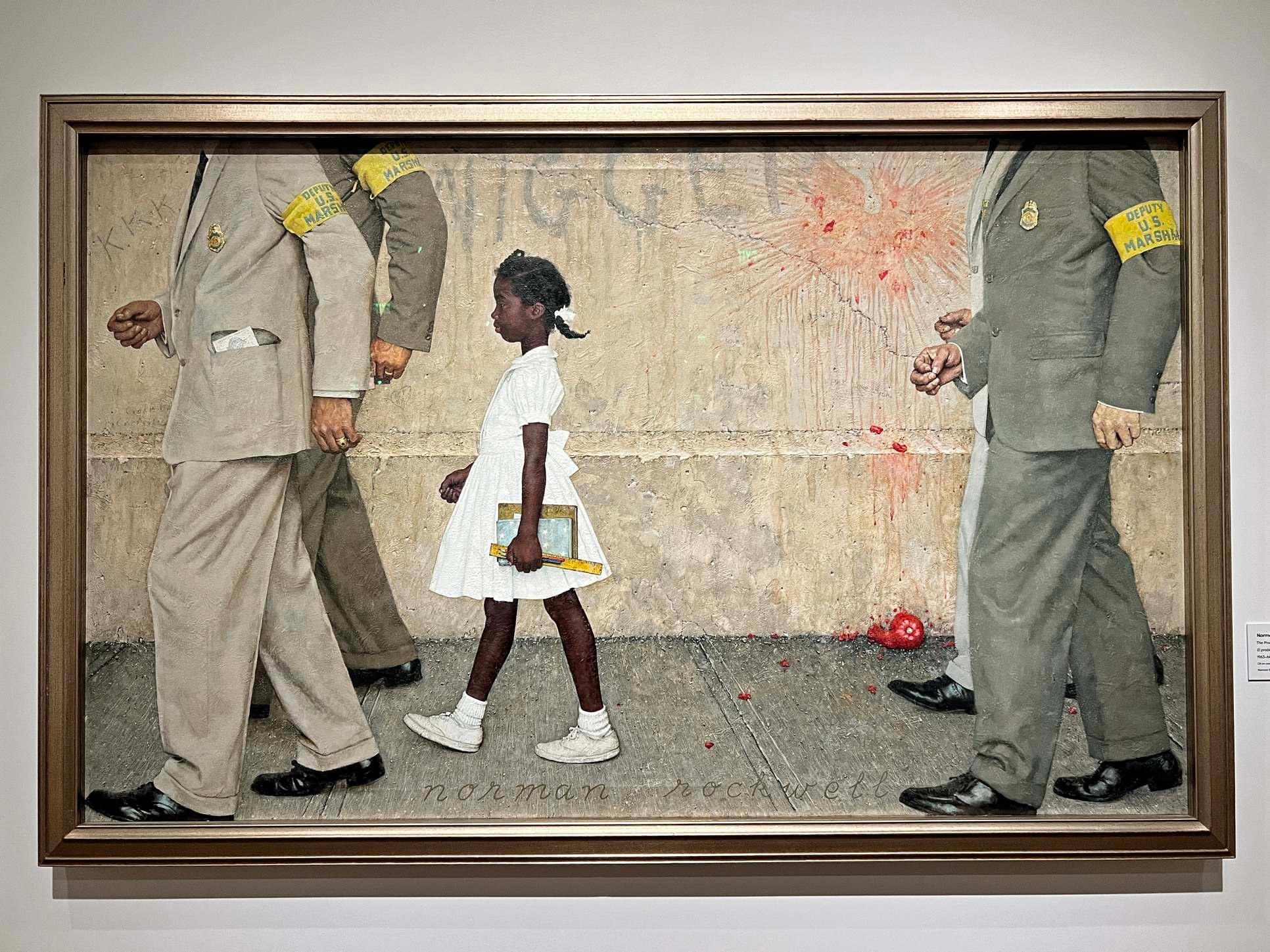
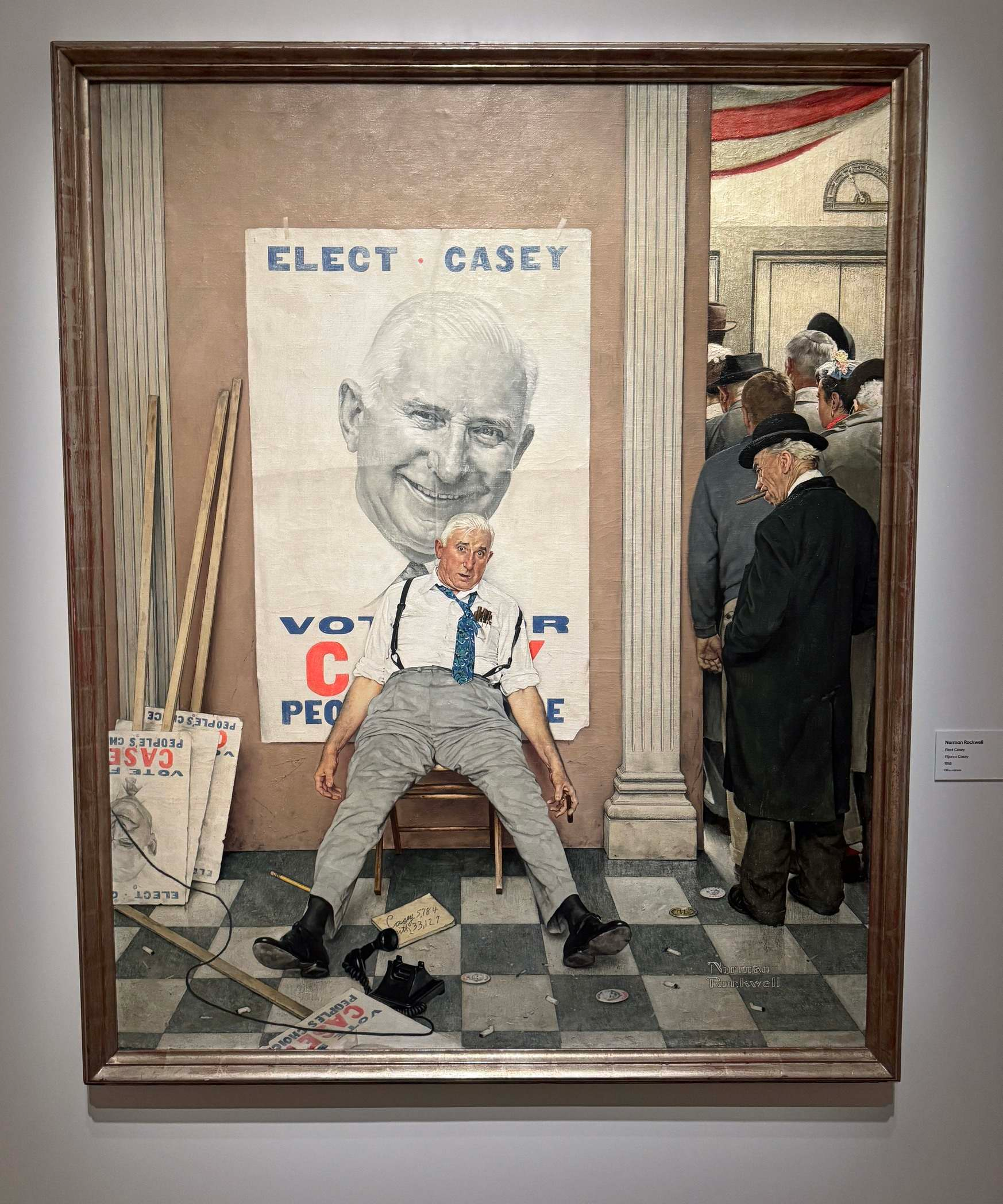
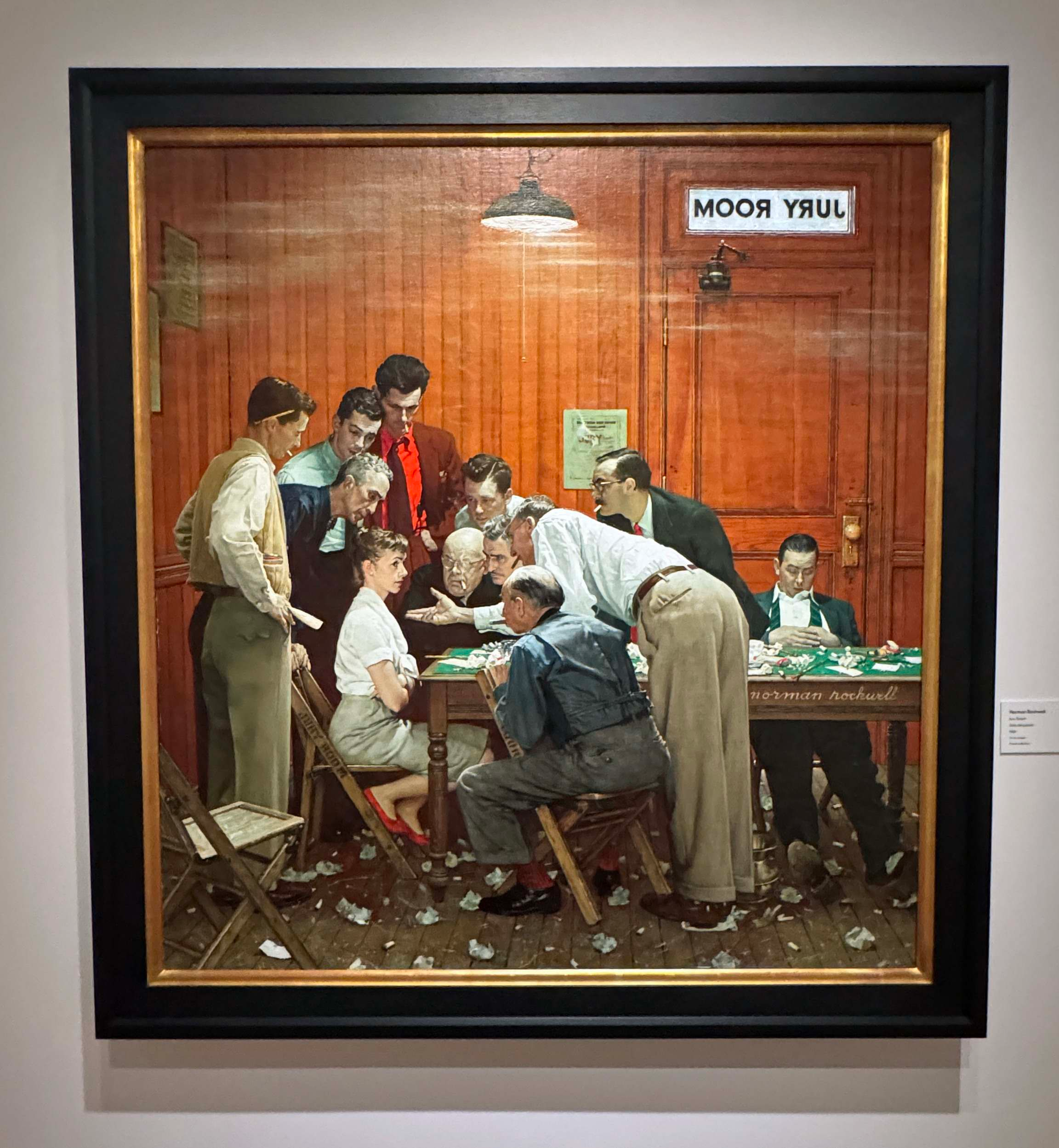
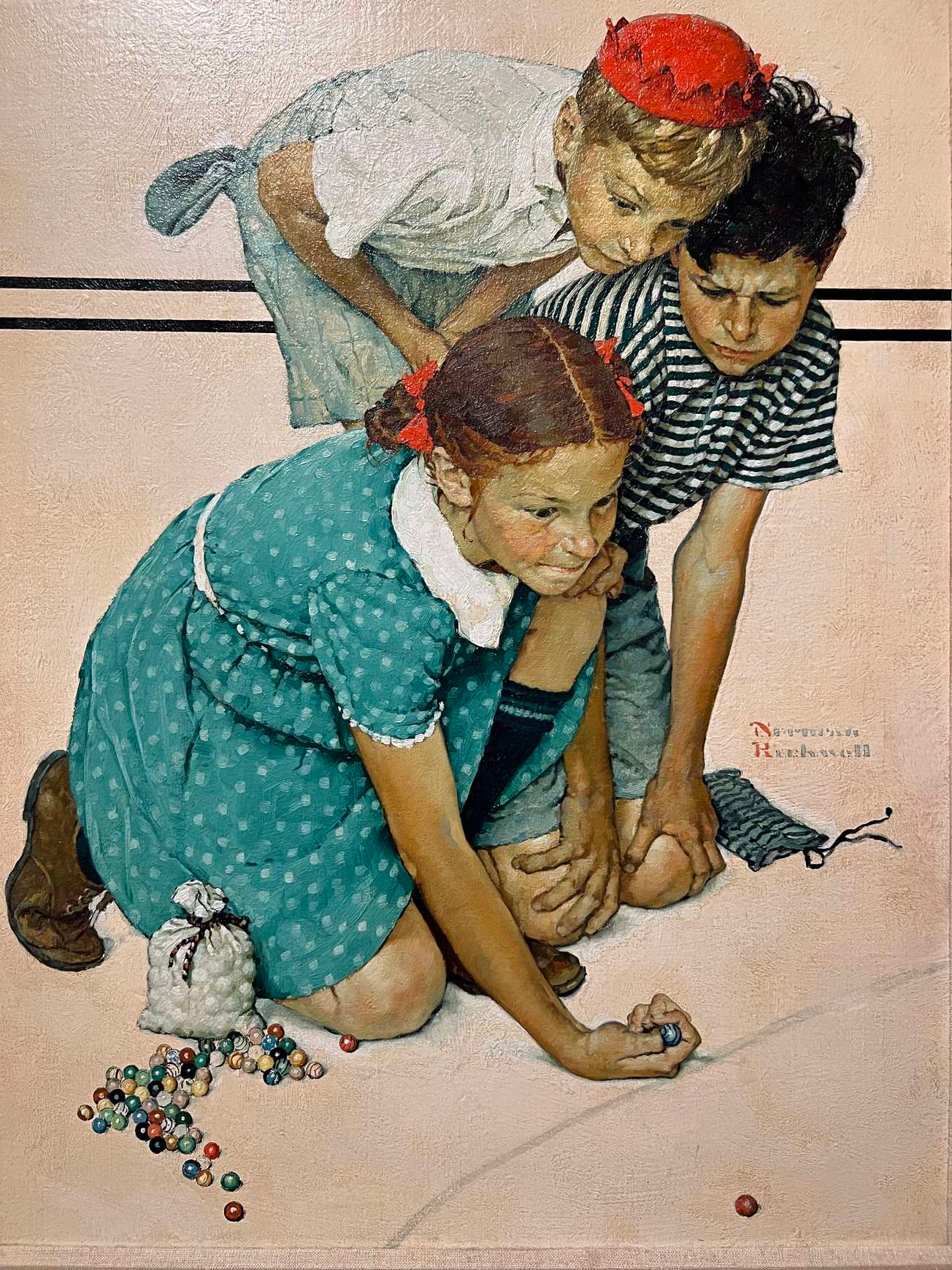
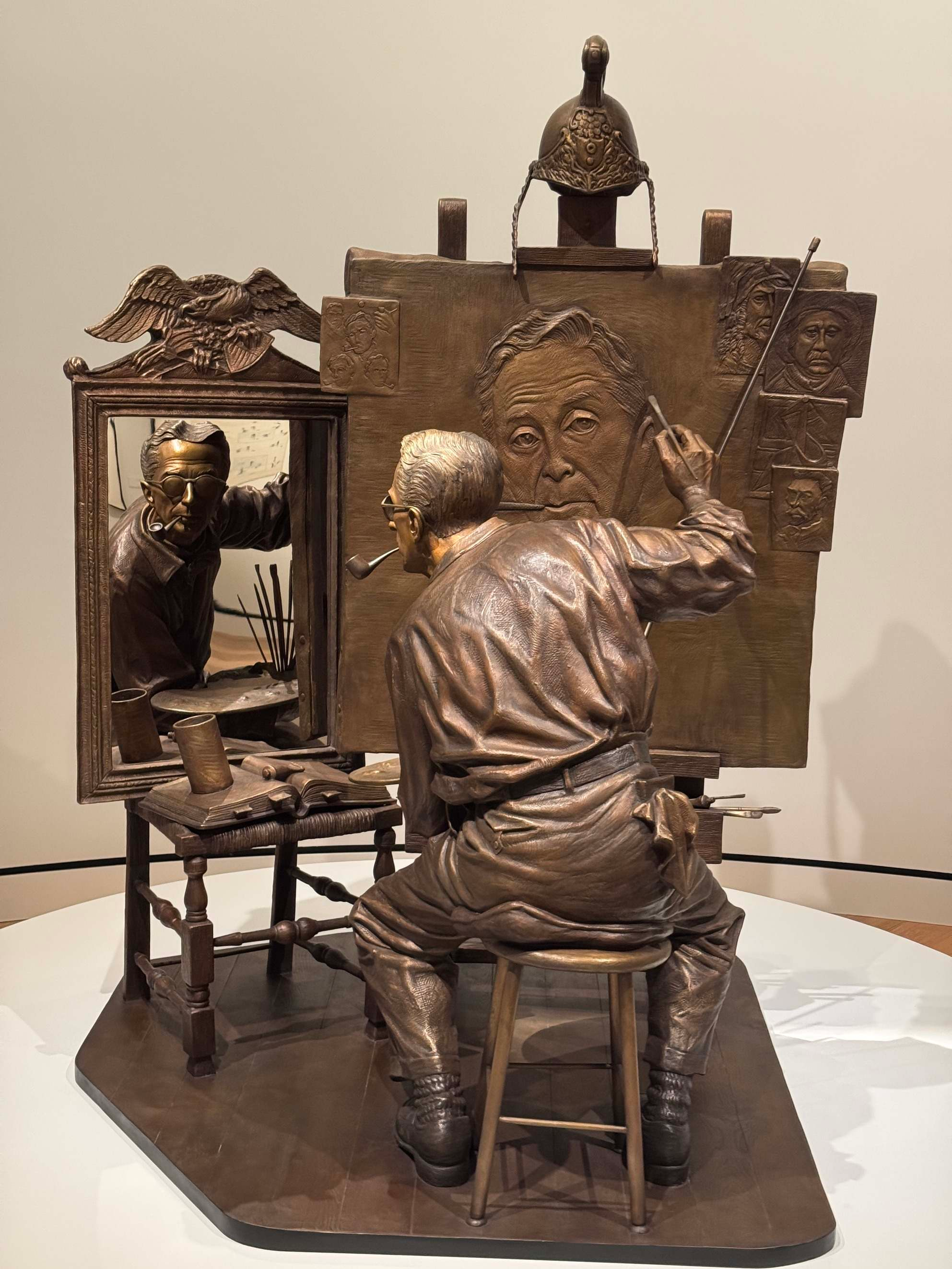
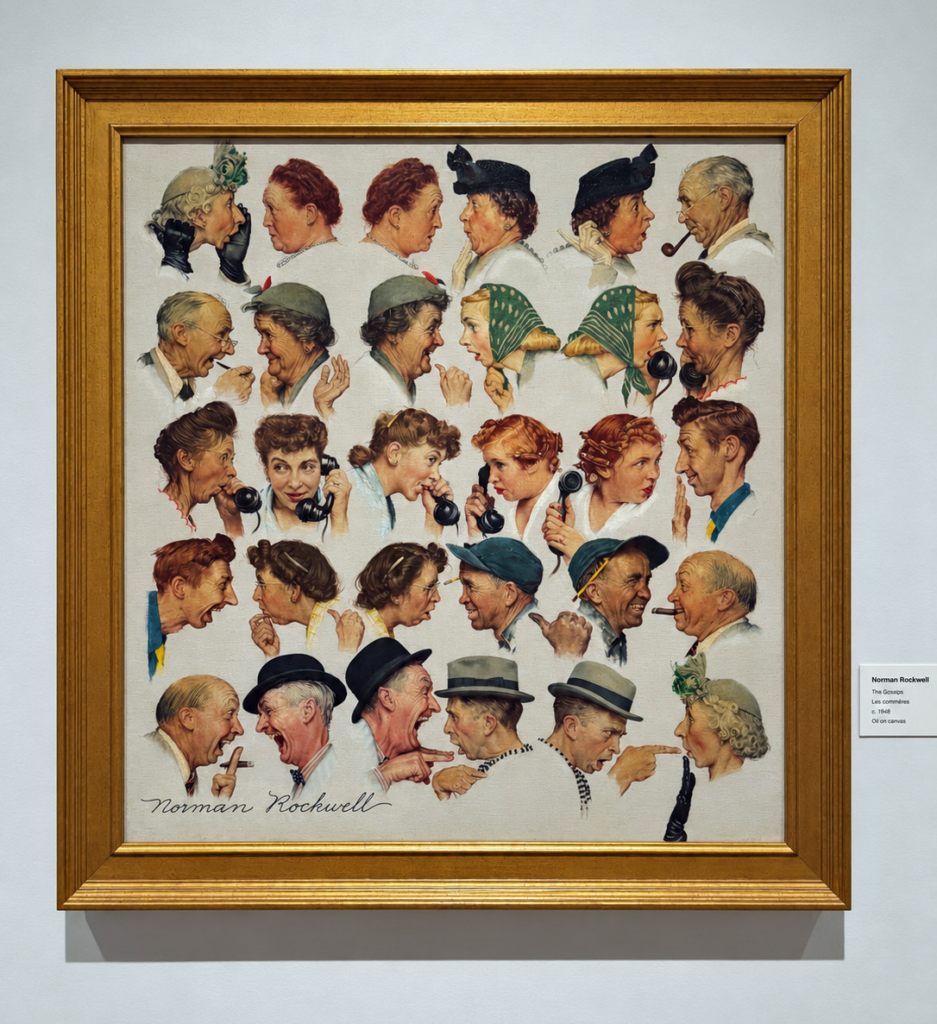
The Norman Rockwell collection alone is worth the trip. I’ve been to the Rockwell Museum in Stockbridge, Massachusetts, and it’s terrific, but Stockbridge is not exactly on the way to anywhere.
Seeing this many major Rockwells together in Los Angeles is pretty remarkable. A few, including The Problem We All Live With, are on loan.
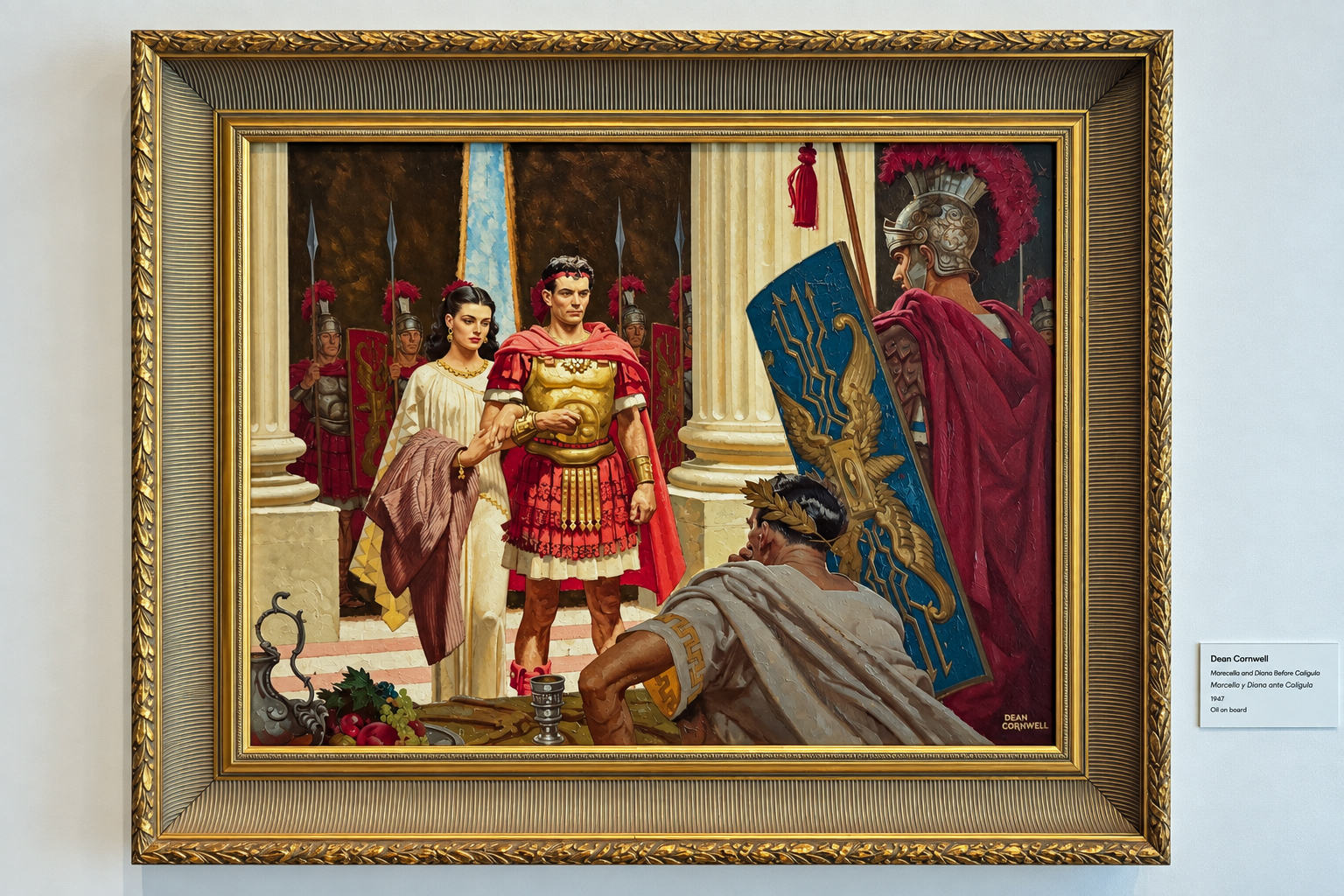
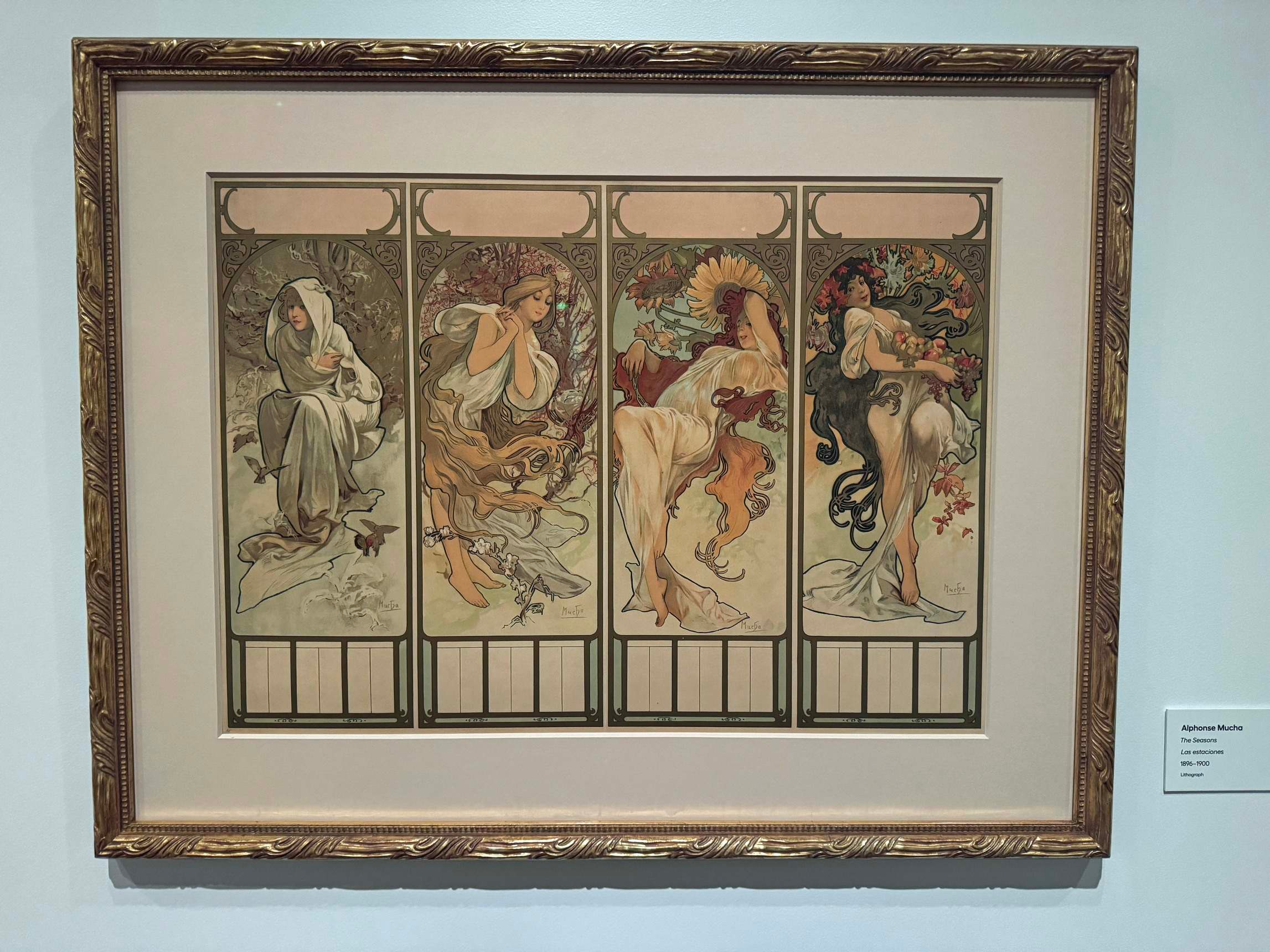
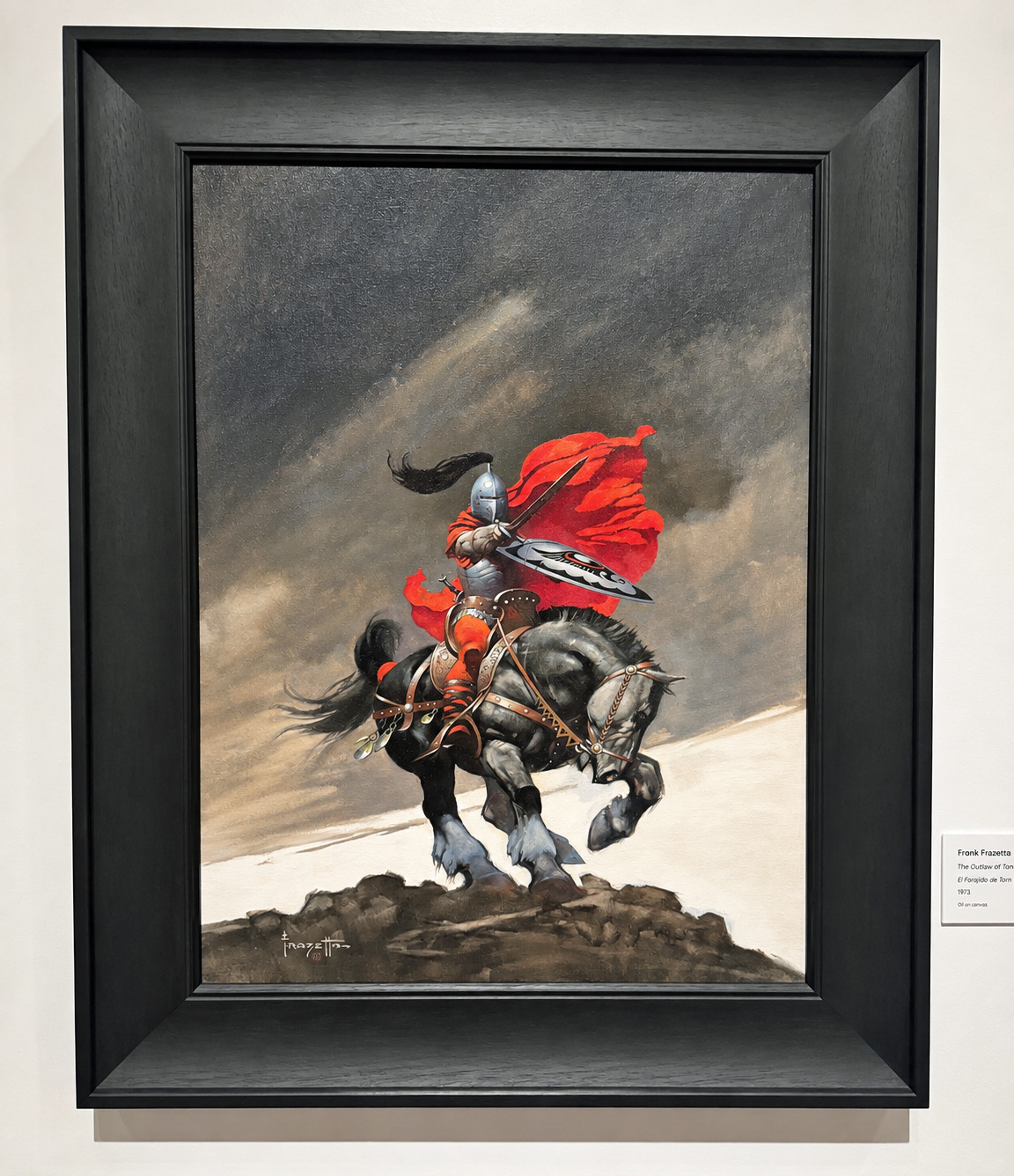
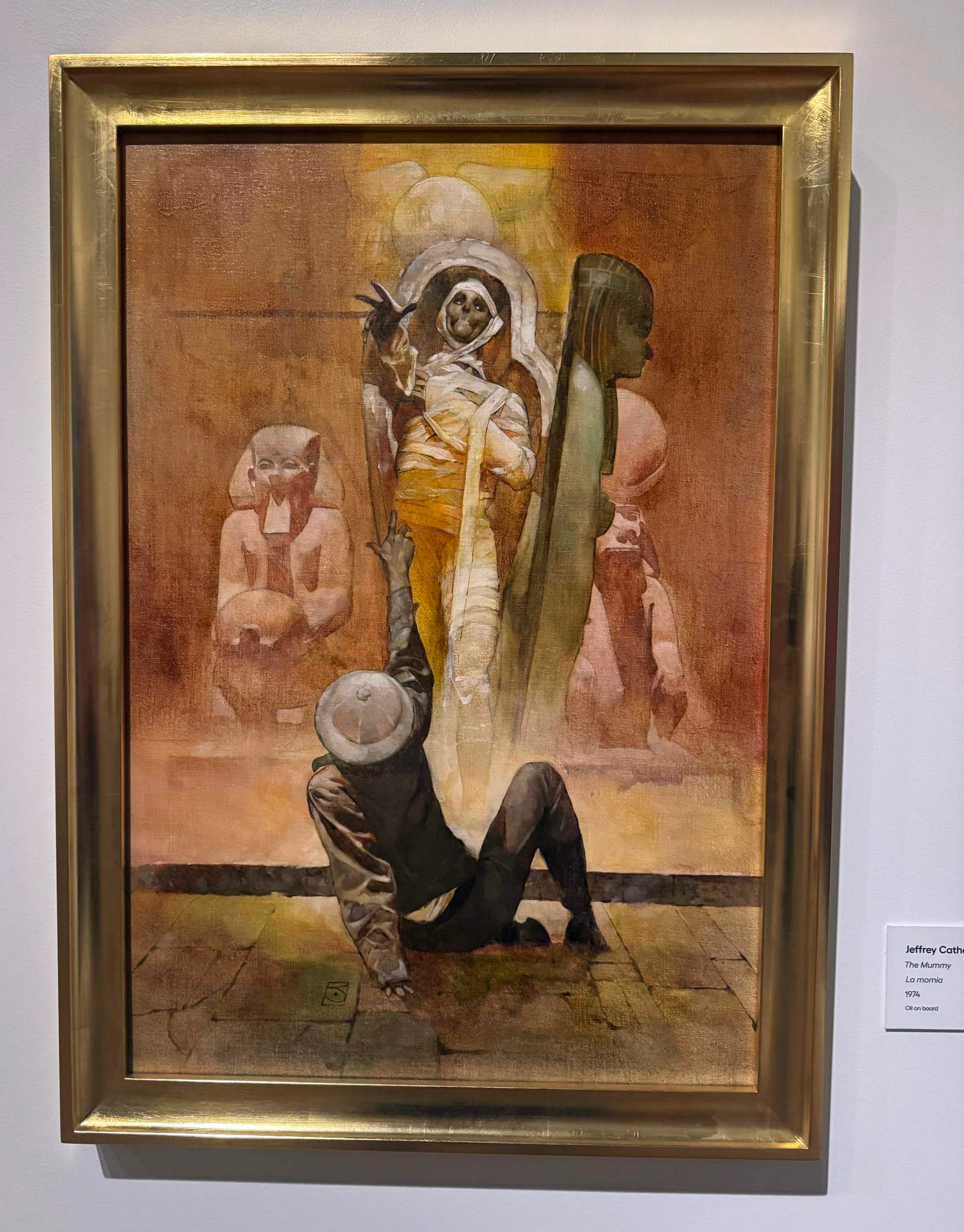
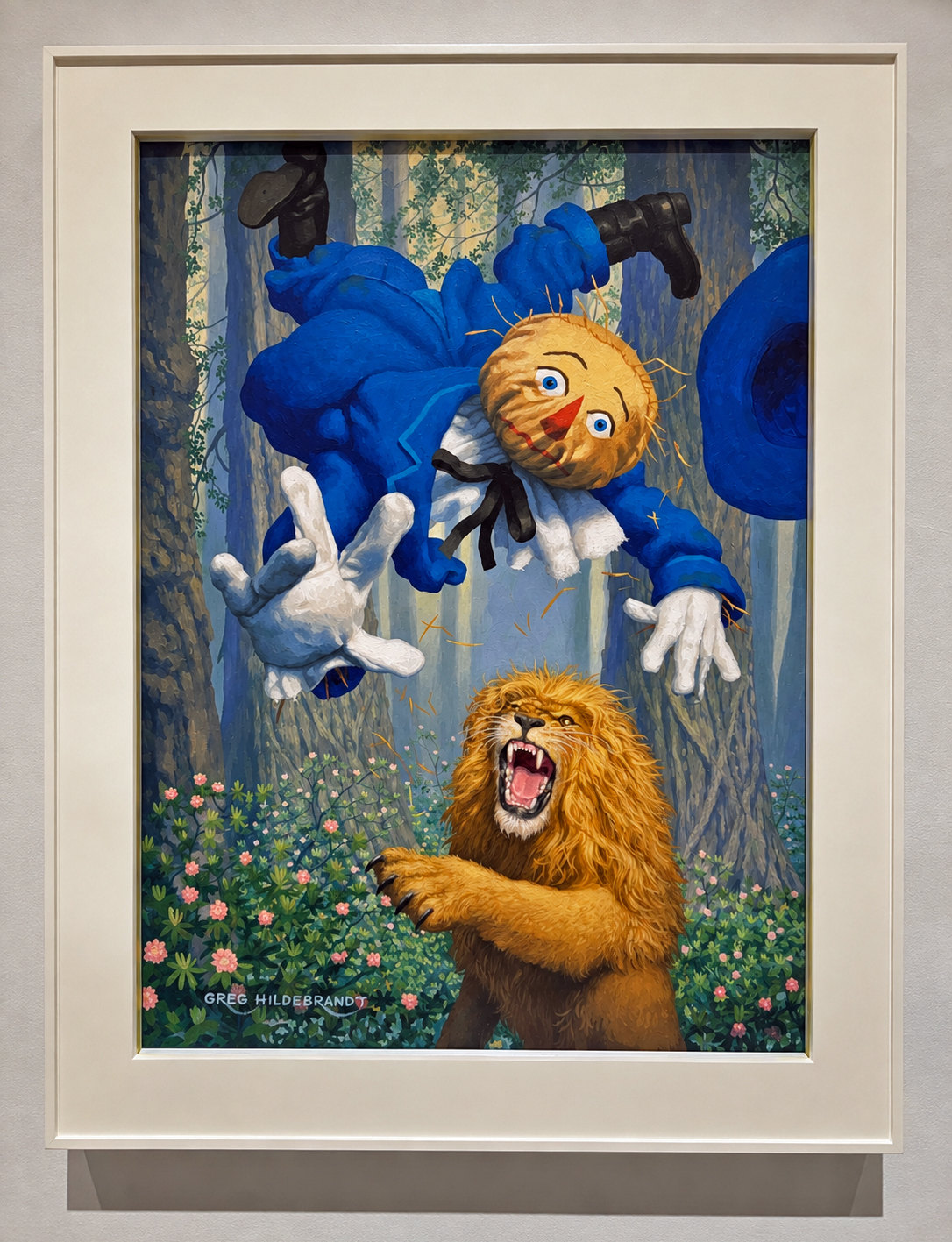
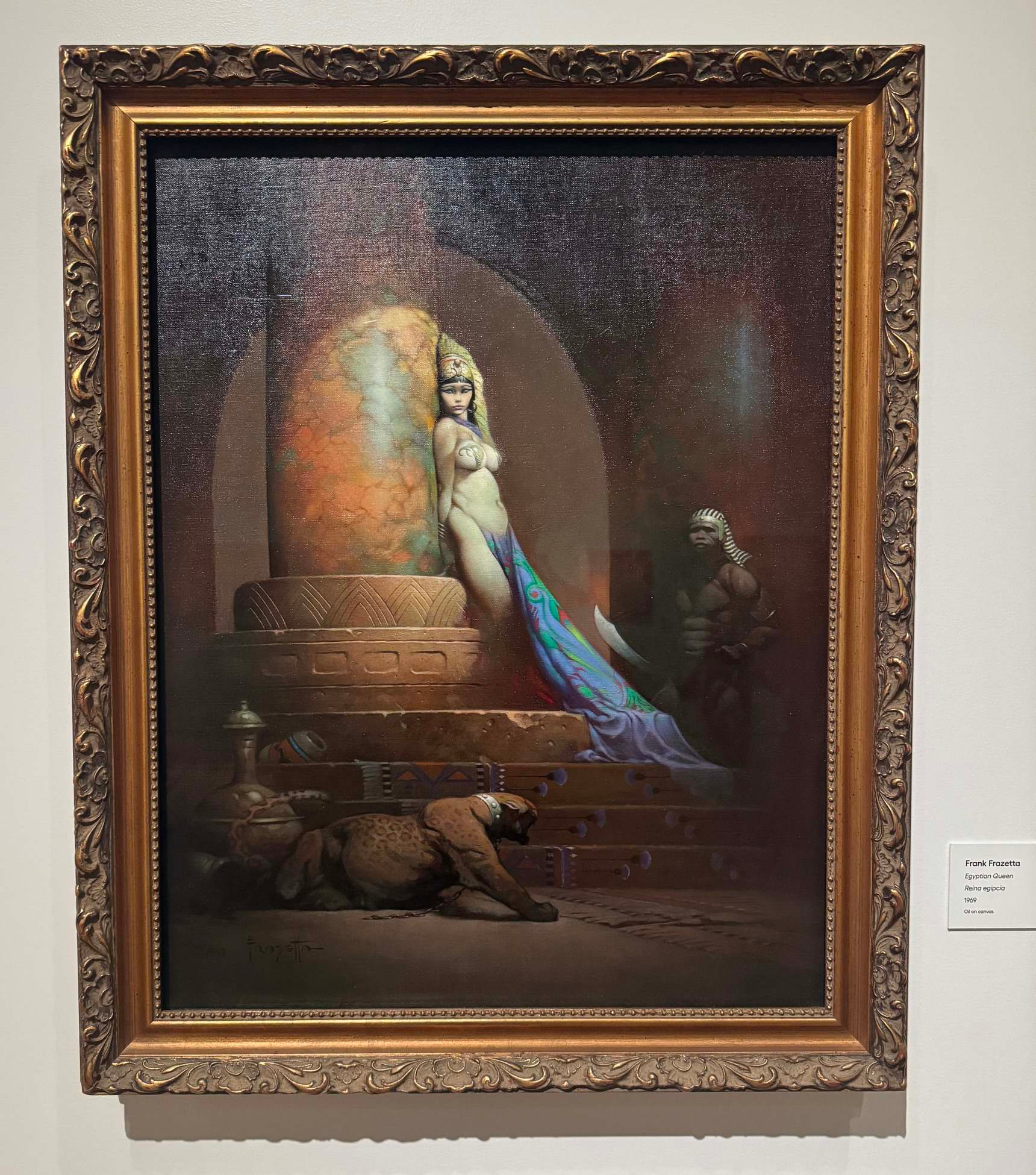
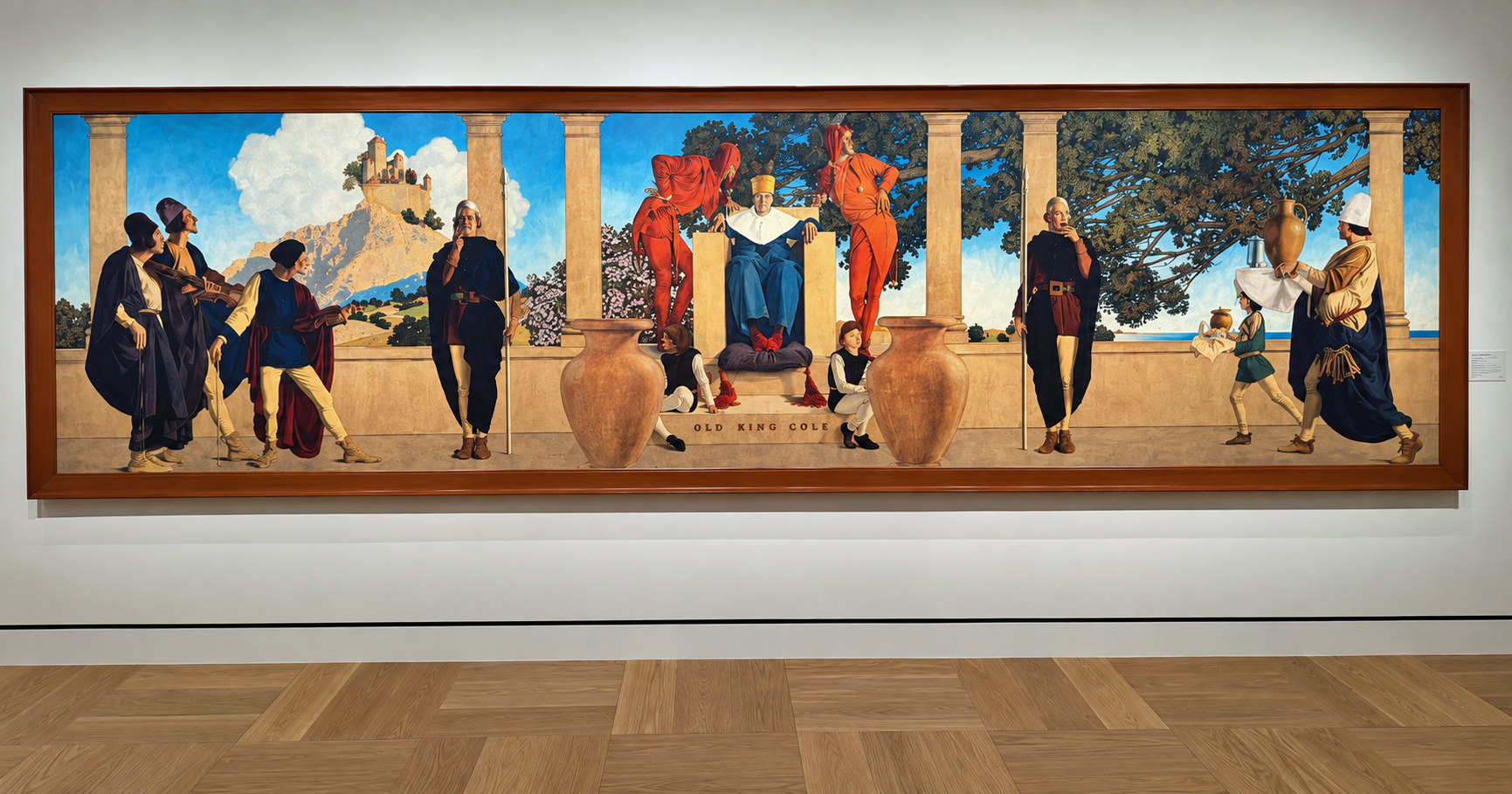
The Frazetta collection is smaller, but there are some monsters there. Same with N.C. Wyeth, Maxfield Parrish and a long list of great illustrators.
One fun surprise was Parrish’s Old King Cole. I’ve seen the famous mural at the King Cole Bar in the St. Regis in New York — worth an overpriced drink if you get the chance — but not this one.
Here, you can stand in front of it as long as you want.
Which I did.
One of the bigger surprises, though, was what I didn’t see.
When we did the three Star Wars Galaxy card series at Topps in the 1990s, Lucas bought a ton of the original artwork. He also accumulated an enormous amount of other Star Wars material over the years. For a long time, he had first right of refusal on any newly created Star Wars and Indiana Jones art.
I saw very little of it.
There is certainly Star Wars material in the museum, including the Star Wars in Motion exhibition, but I expected much more original art to come pouring out of the vaults.
No big display of Star Wars Galaxy paintings. Much less production and concept art than I expected.
So… where is all that stuff?
The museum owns tens of thousands of works and can obviously show only a fraction at a time. Presumably much of it will rotate in.
I hope so.
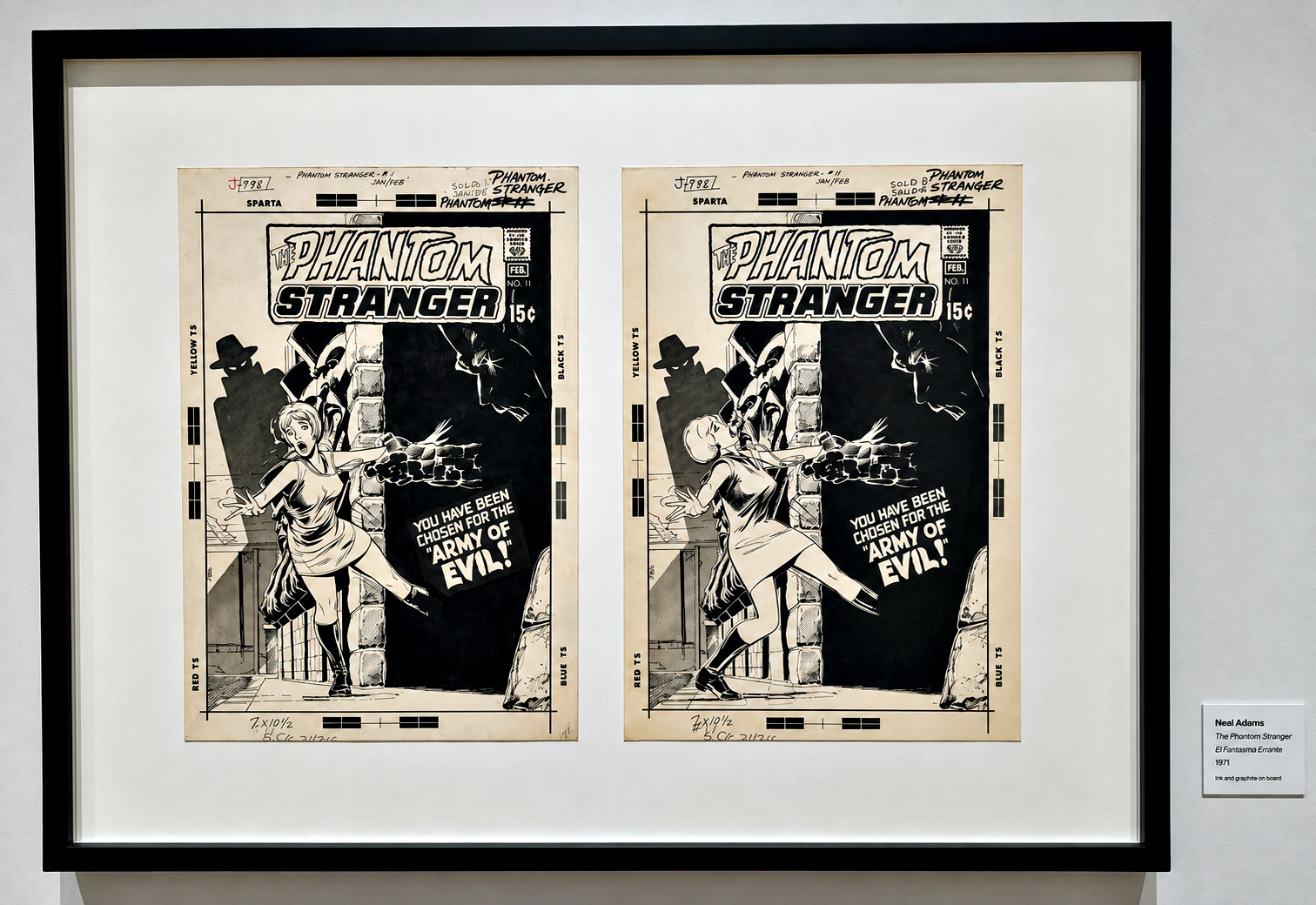
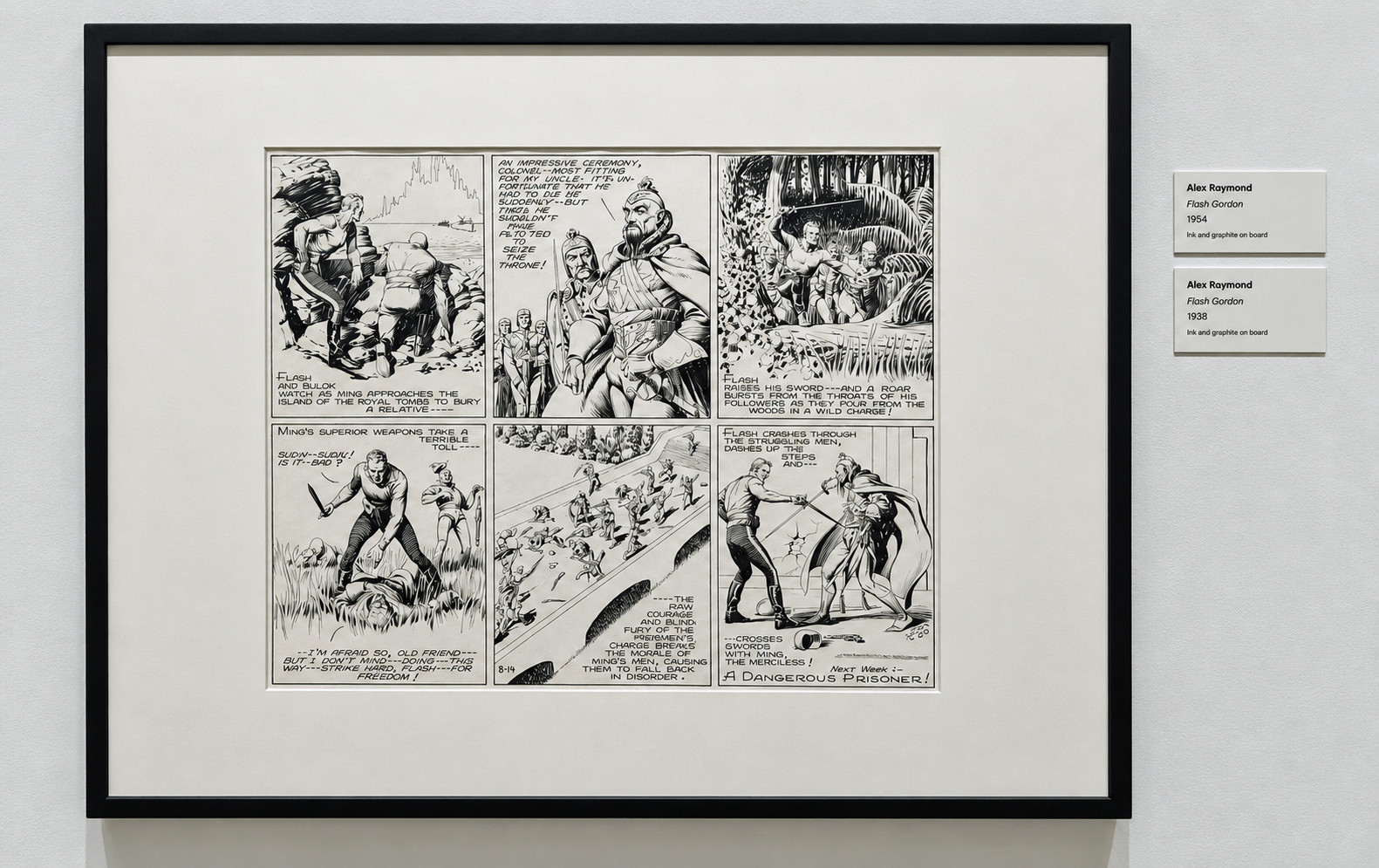
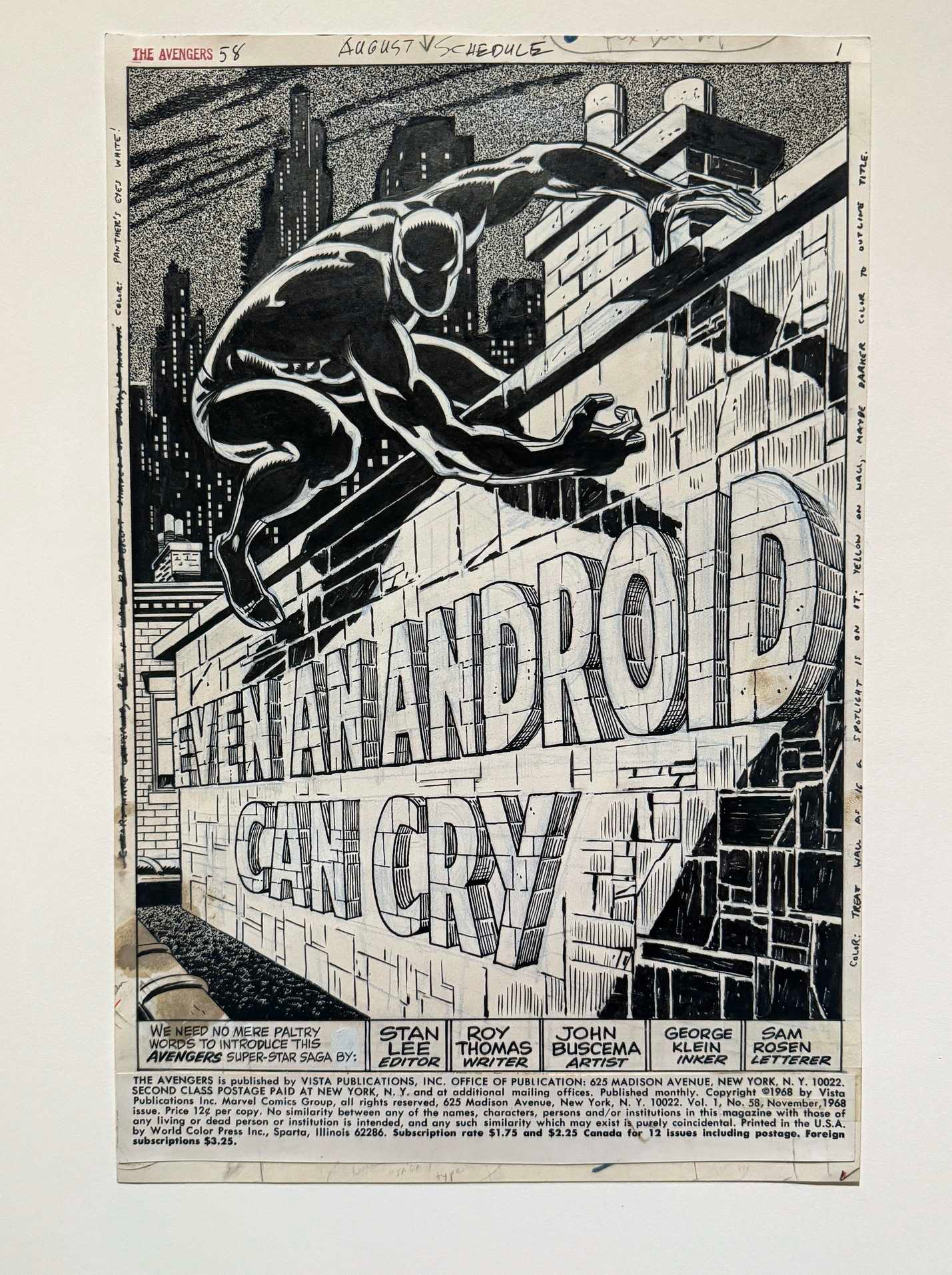
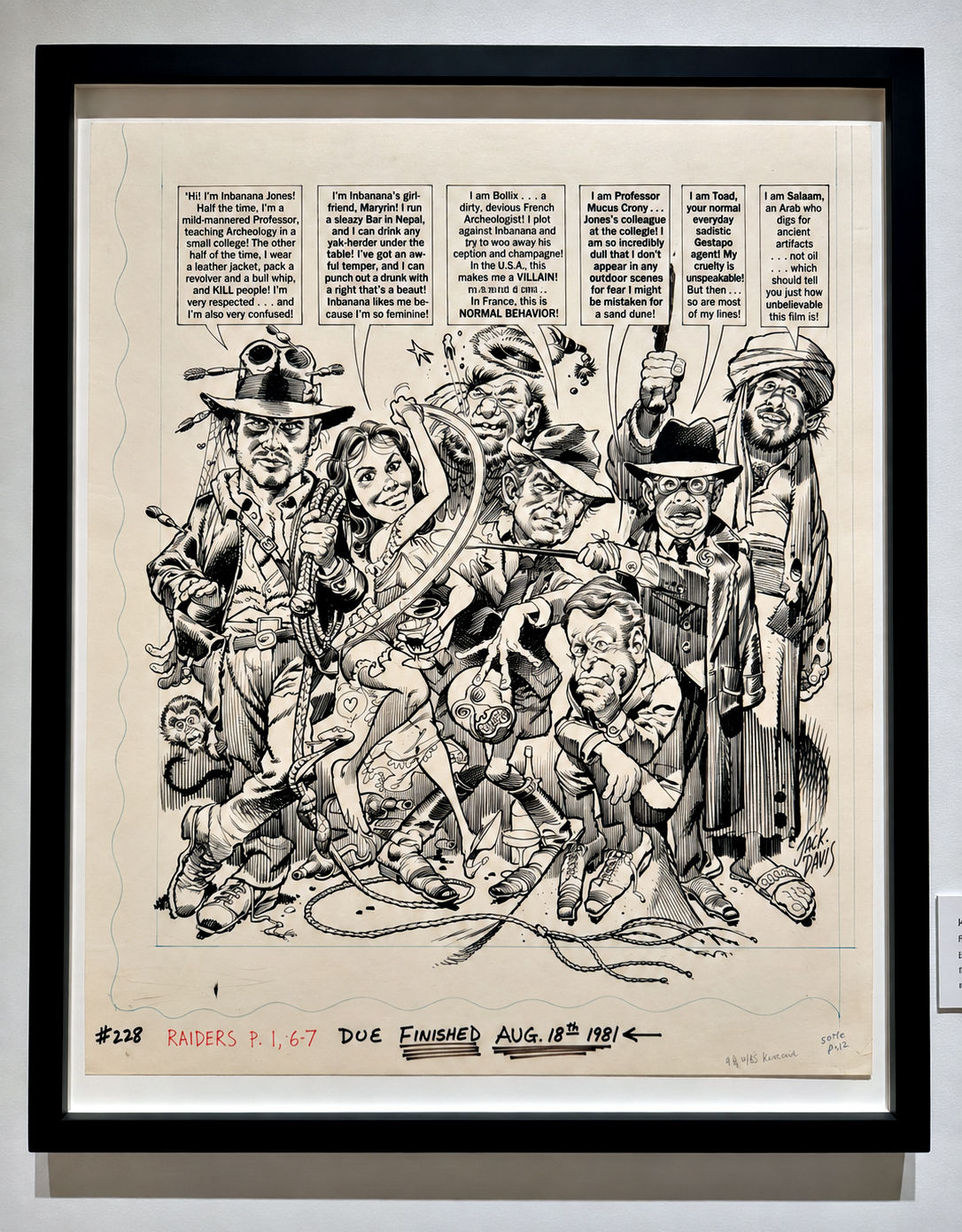
Naturally, I spent a lot of time with the comic art.
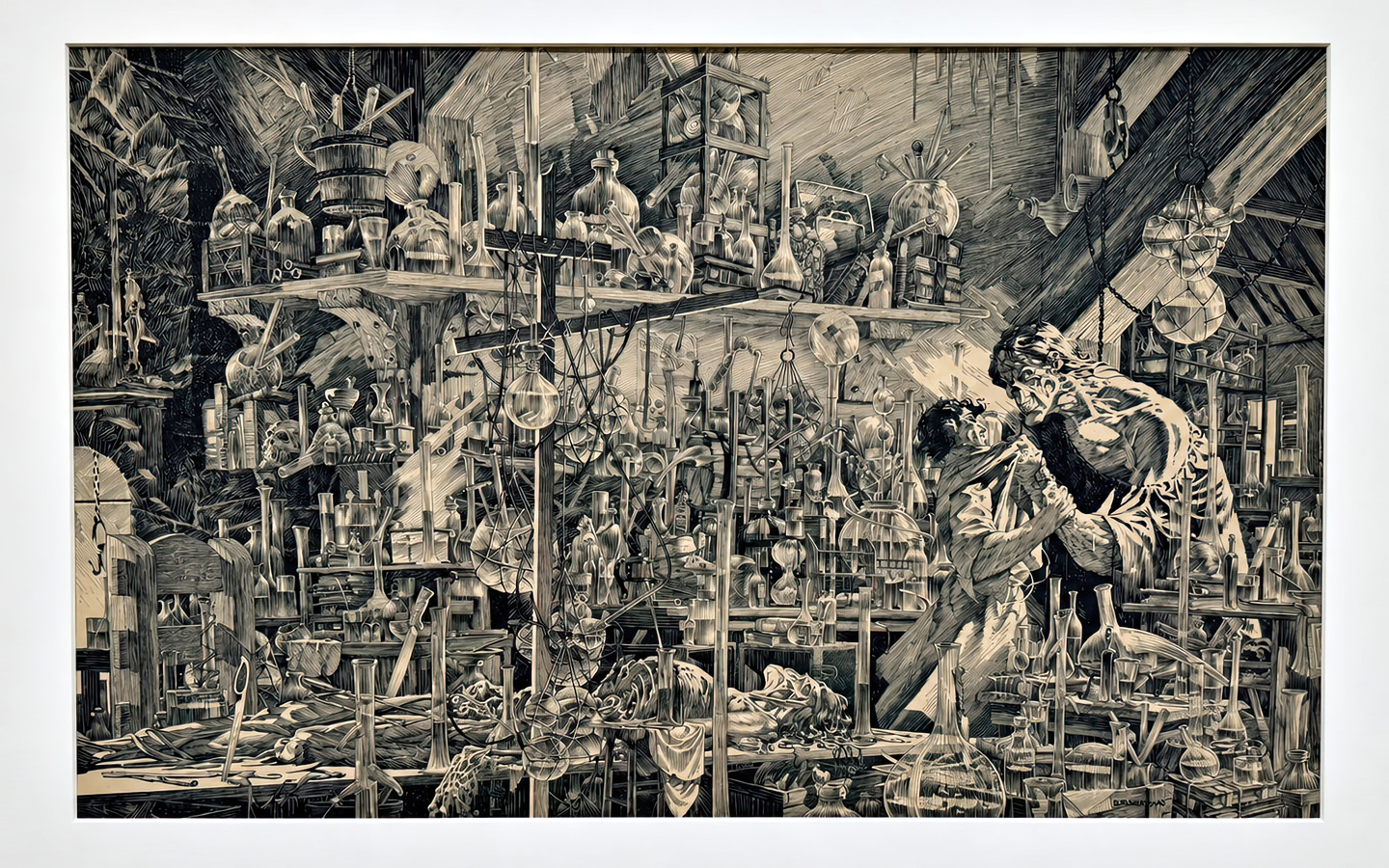
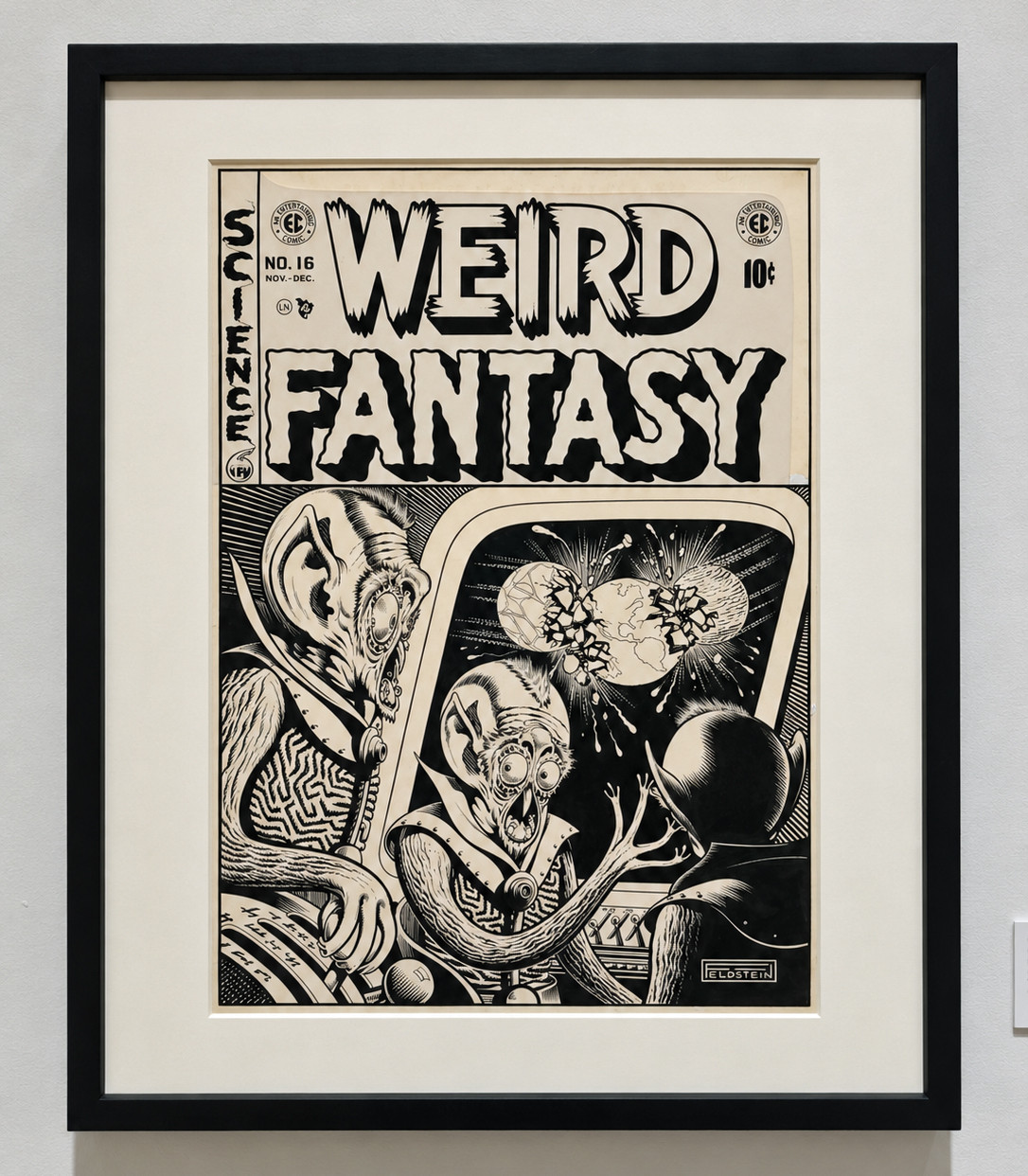
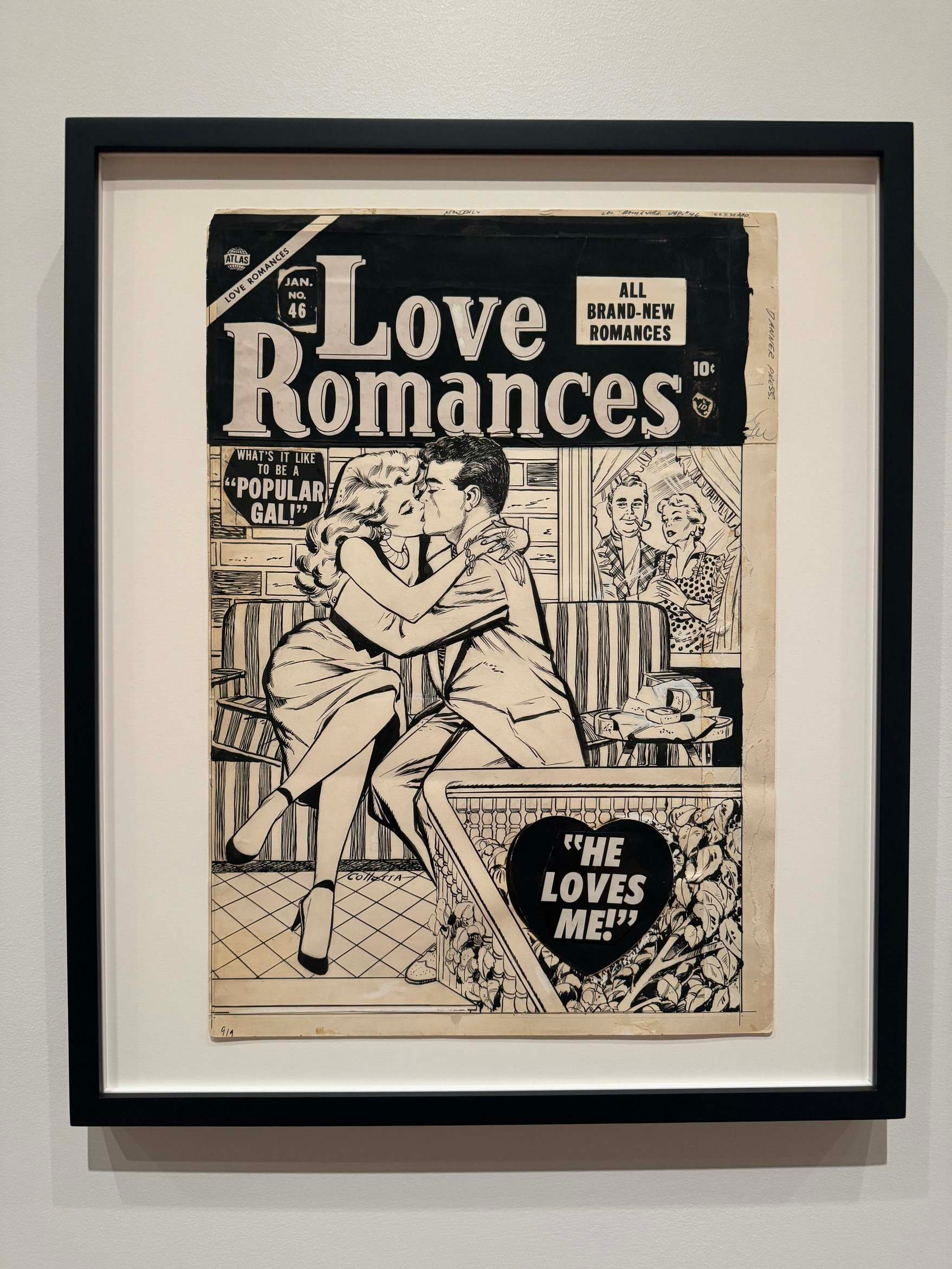
There are some terrific pieces, including one of the best Bernie Wrightson Frankenstein drawings I have ever seen. And anytime any original comic art is hanging in a museum, which is not often enough, I still get a kick out of it.
But I wanted more.
And more focus.
Oviously, I’m biased.
Still, this is the Museum of Narrative Art. It’s hard to imagine an art form more literally narrative than comics.
And the museum does own plenty of important comic art. Which makes some of the choices on display a bit puzzling.
No Ditko.
One Kirby.
Jack Kirby probably had more impact on contemporary popular culture than any comic-book artist who ever lived, so one piece seems… light.
Also odd: quite a bit of the comic art was material collectors have watched change hands at auction during the last decade or so.
Where is the stuff that hasn’t seen the light of day in 30 years?
That remains a mystery. For now.
My other quibble was context.
There is wonderful art everywhere, but often very little explaining why a piece matters, how it fits into the history of illustration and visual storytelling, or sometimes even why it’s hanging next to the thing beside it.
For a museum about narrative art, I’d like a little more narrative.
Apparently I’m not alone.
I learned afterward that you can use the museum’s mobile site and your phone camera to get additional information about the art.
Cool idea. I’ll try it next time.
But there was also plenty of room for a paragraph on the placard.
Still, what I kept thinking about afterward wasn’t any individual painting.
It was the scale of what George Lucas and Mellody Hobson have done.
Collectors collect. I understand that impulse pretty well.
But assembling a collection like this and then building a museum so the rest of us can see it is something else entirely.
Rockwell. Frazetta. Wyeth. Parrish. Comics. Film art. Illustration. Photography. Popular culture.
Images that lived in magazines, books, movies, advertisements — and our memories — now hanging together under one roof.
I can wish there were more comic art. I can wonder where all the Star Wars material is. I can complain about a placard.
Fair enough.
But when you step back and look at what Lucas and Hobson have built, those complaints get pretty small pretty fast.
There was also one slightly ridiculous collector moment.
Walking around, I realized that George Lucas and I have occasionally owned the same kinds of things.
His collection is, admittedly, a little more impressive.
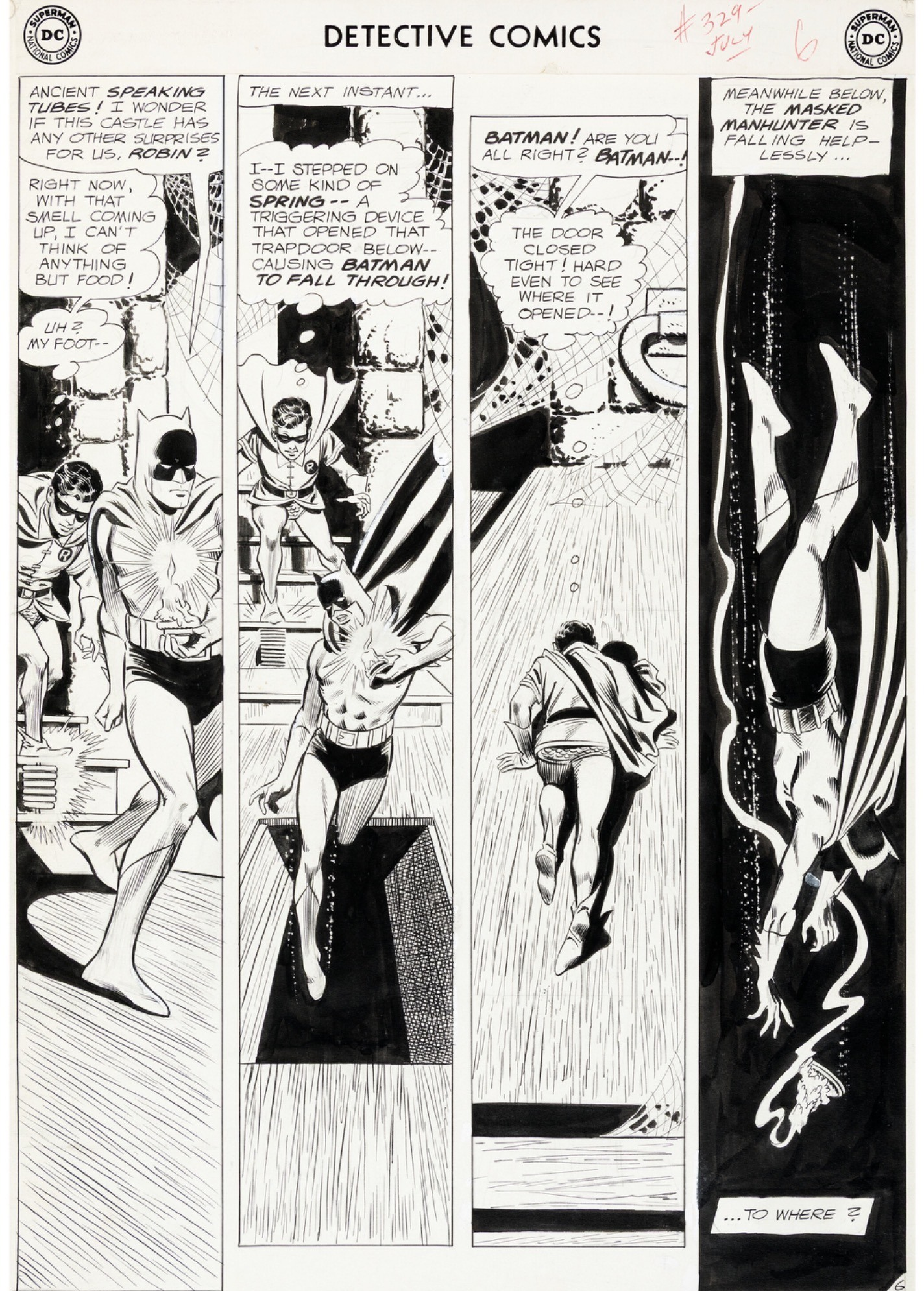
I always wanted an early Carmine Infantino Batman page, and I couldn’t resist this one: four tall vertical panels on a large-art 1964 page, from only the third issue of the “New Look” Batman.
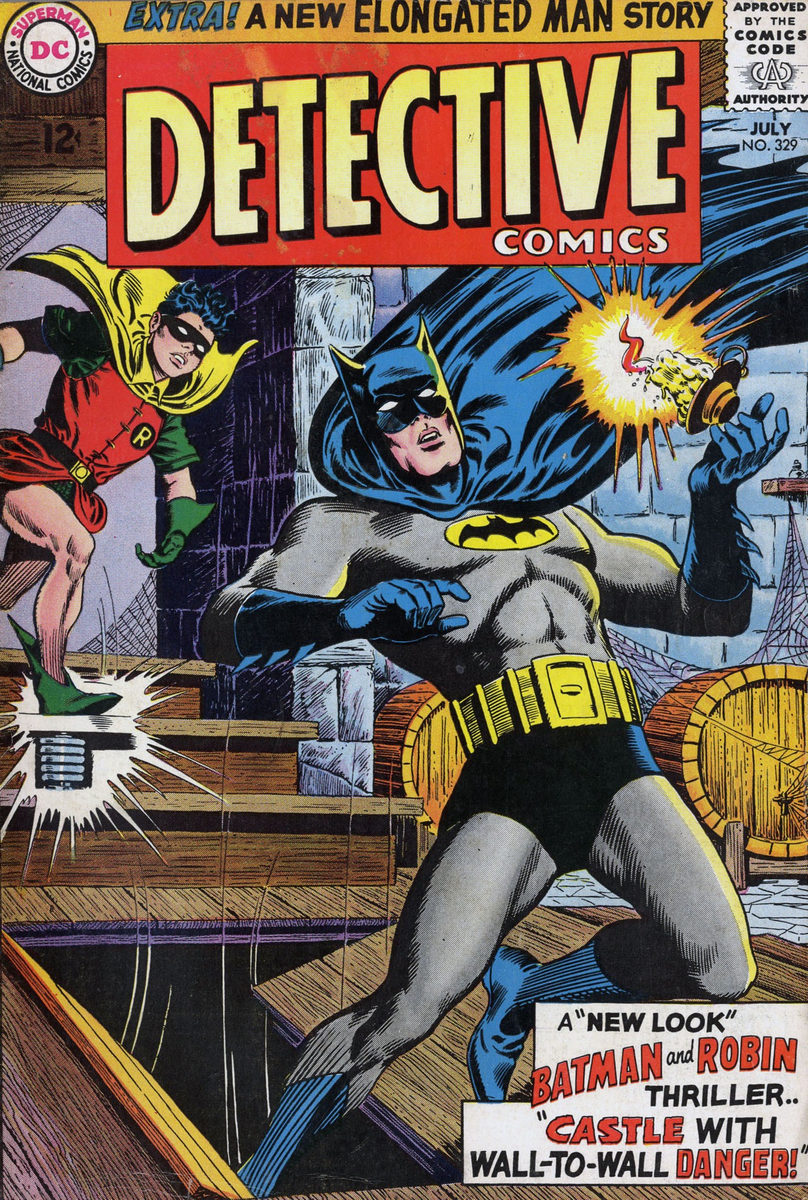
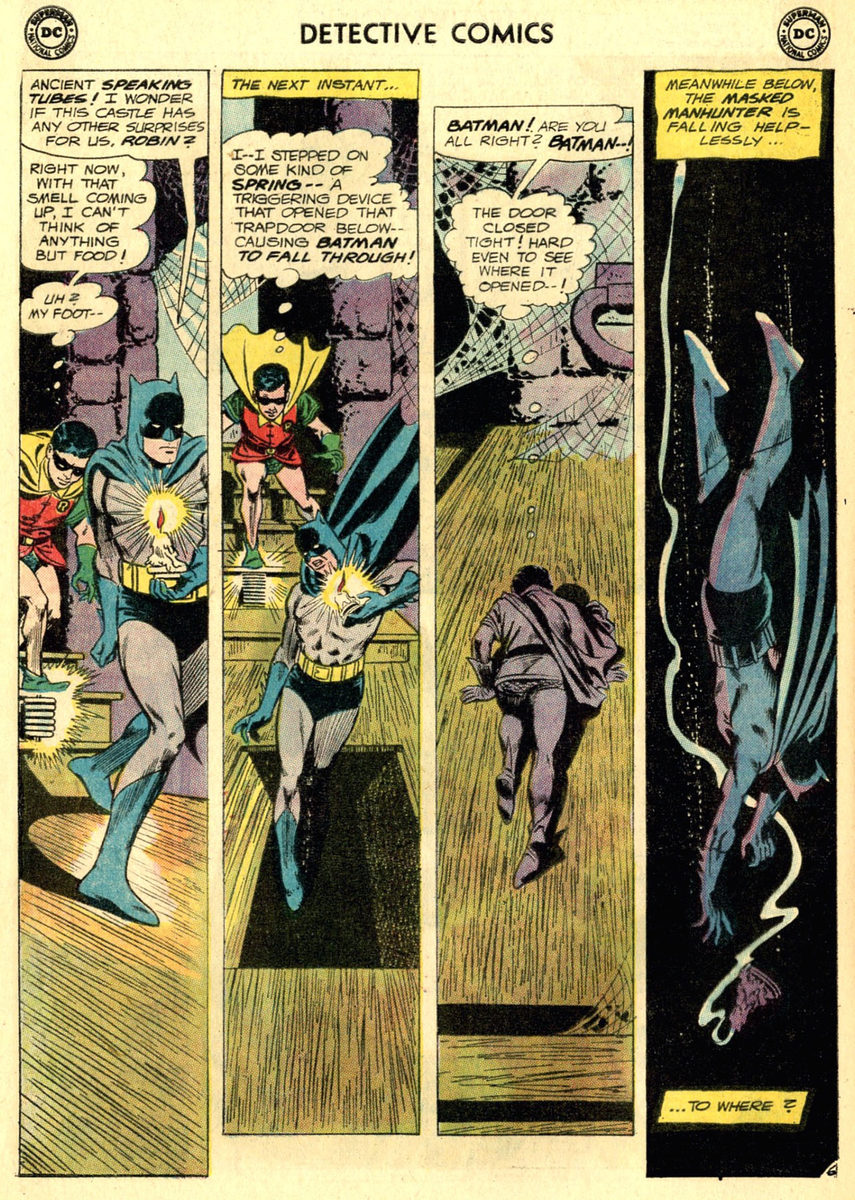
I love the layout. Infantino uses those narrow panels beautifully, moving Batman steadily downward through the page until that terrific final shot of him dropping into the darkness. (And, as a bonus, we are essentially looking at the cover scene.)
As Robin might have said: “Far out.”
Large-art Infantino Batman pages seem much tougher to find than his Flash work. There were simply fewer of them to begin with, and unless somebody is sitting on a hidden stash, they’re pretty scarce.
This page is from Detective Comics #329, published just a few months after DC decided Batman needed a bit of an overhaul.
By 1964, most of the company’s superhero line had moved pretty decisively into the Silver Age — the Flash, Green Lantern, Atom, Hawkman, along with the Challengers, Adam Strange, Doom Patrol and plenty of others.
Batman, meanwhile, was still dealing with goofy space aliens, mutant creatures, time travel, color variations of his costume — and whatever else somebody could dream up that month.
To be clear, as a very young kid, I loved those stories in the 25-cent reprints. But sales suggested readers at the time were a little less enthusiastic.
DC handed the Batman reins to Julius Schwartz, and the result was the “New Look” — more grounded stories, a redesigned costume, and a renewed emphasis on mystery and crime.
Infantino’s art made the change feel immediate. His Batman was sleek, elegant and modern, and this page is a great example of why I’ve always wanted one.
As for the stories?
Well, of course, not long after that, the TV show came along.
Things got silly again.
But that’s another tale.
Batman Day, an annual event, is Saturday, September 19.
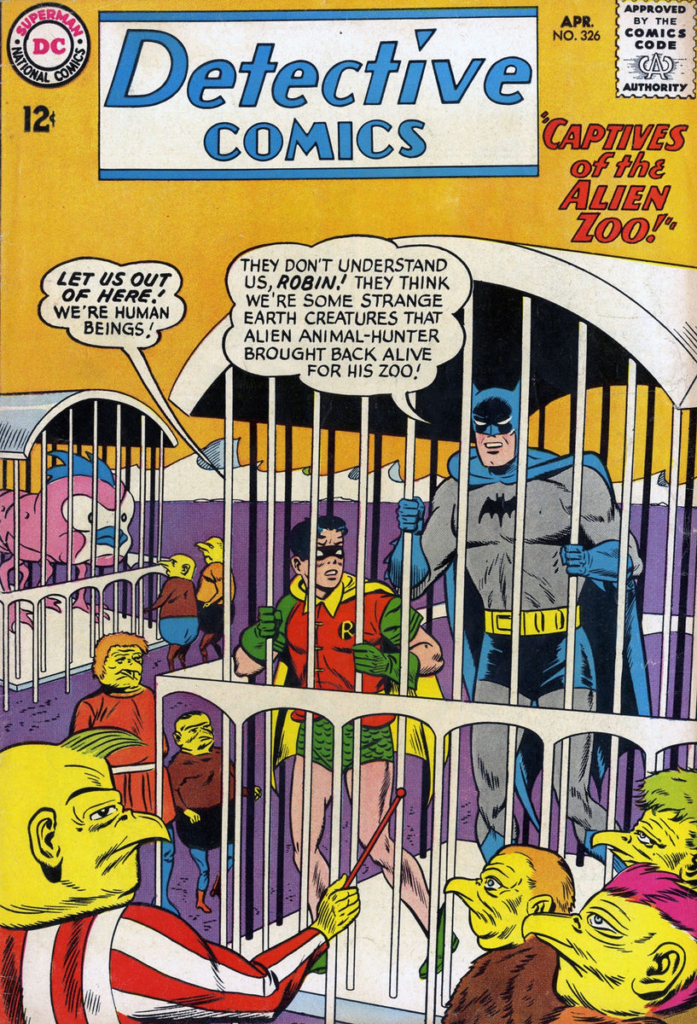
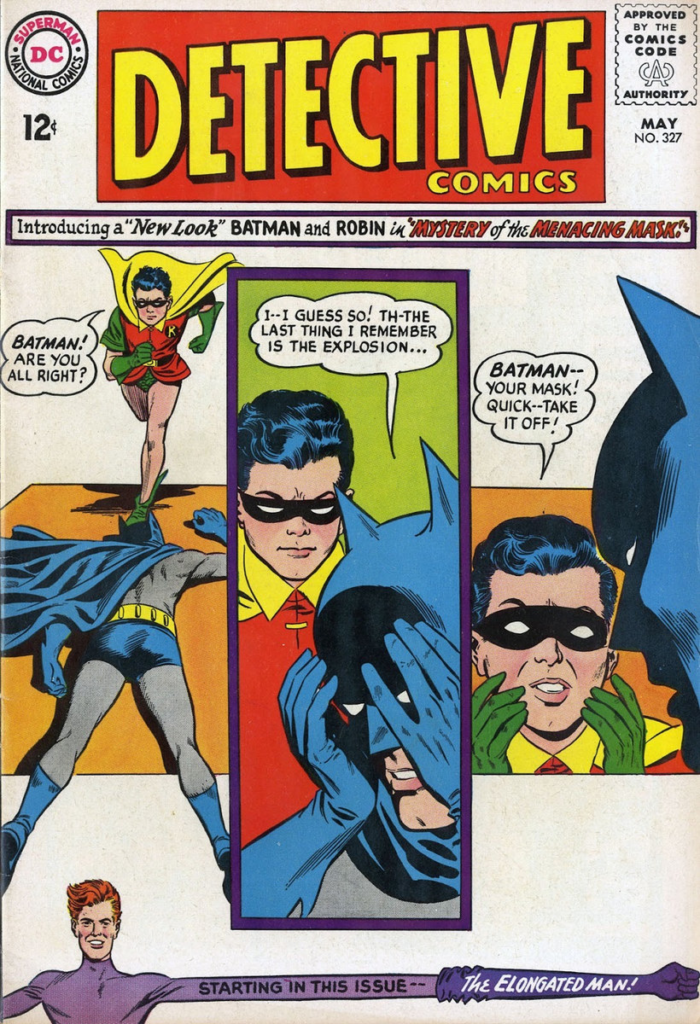
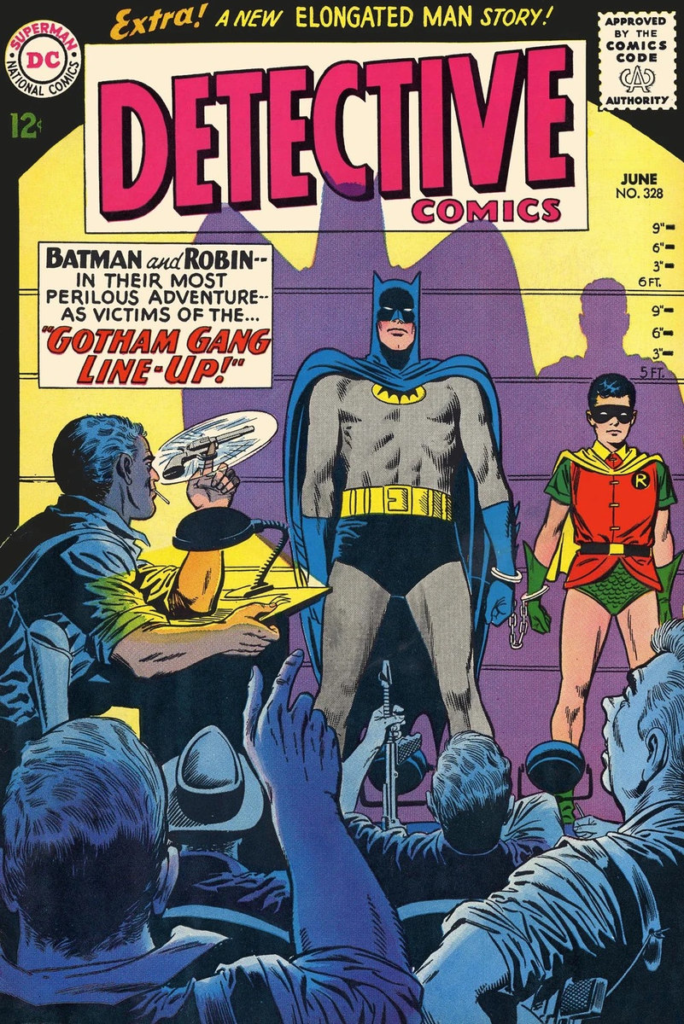
Batman went from a specimen in an interplanetary zoo to a somewhat more grounded superhero, complete with the new Bat-symbol — and a bigger, bolder logo for the comic itself.(It’s obvious from those early issues that consistency in the placement of the Bat-symbol was still a little sketchy.)
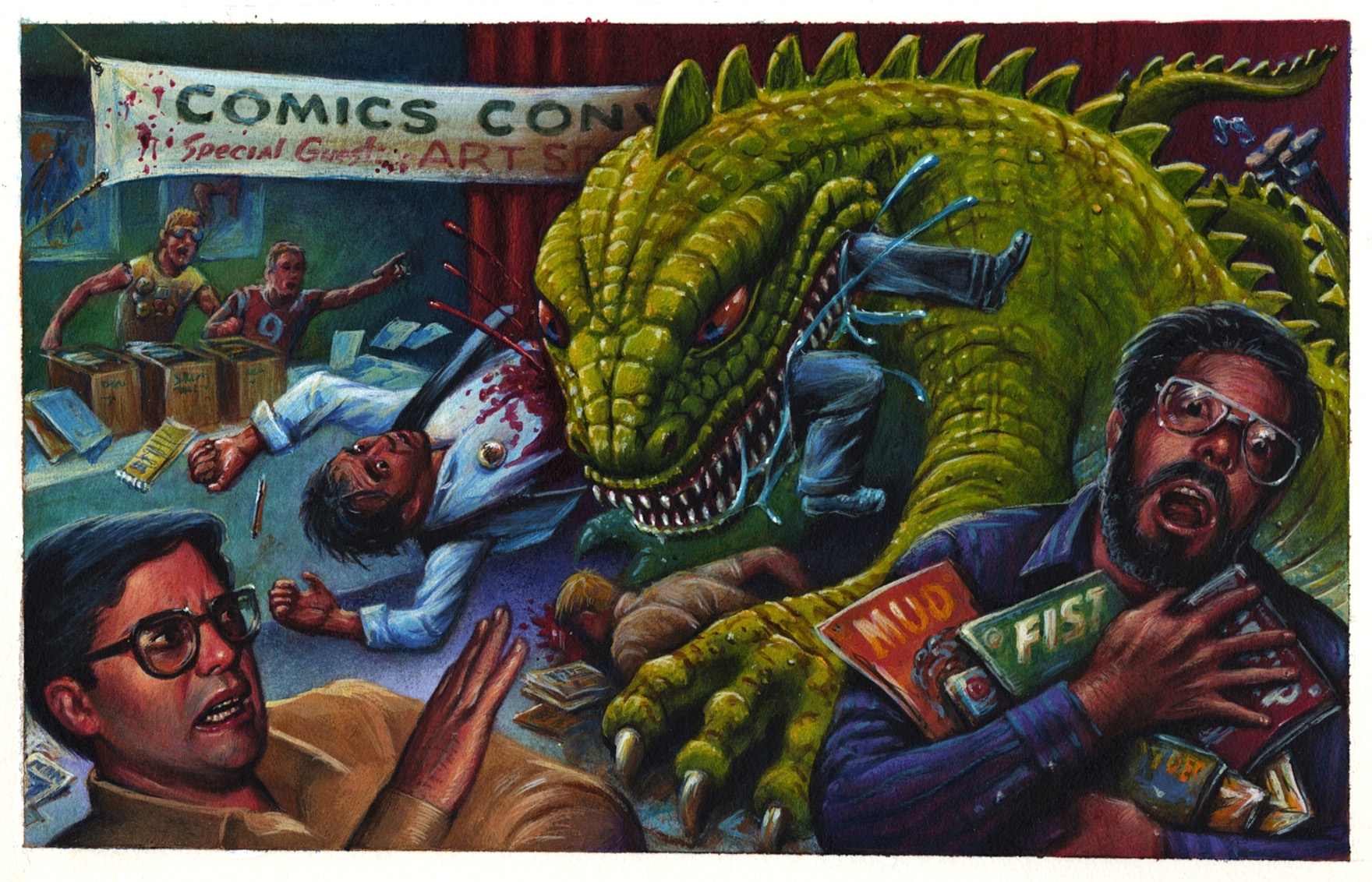
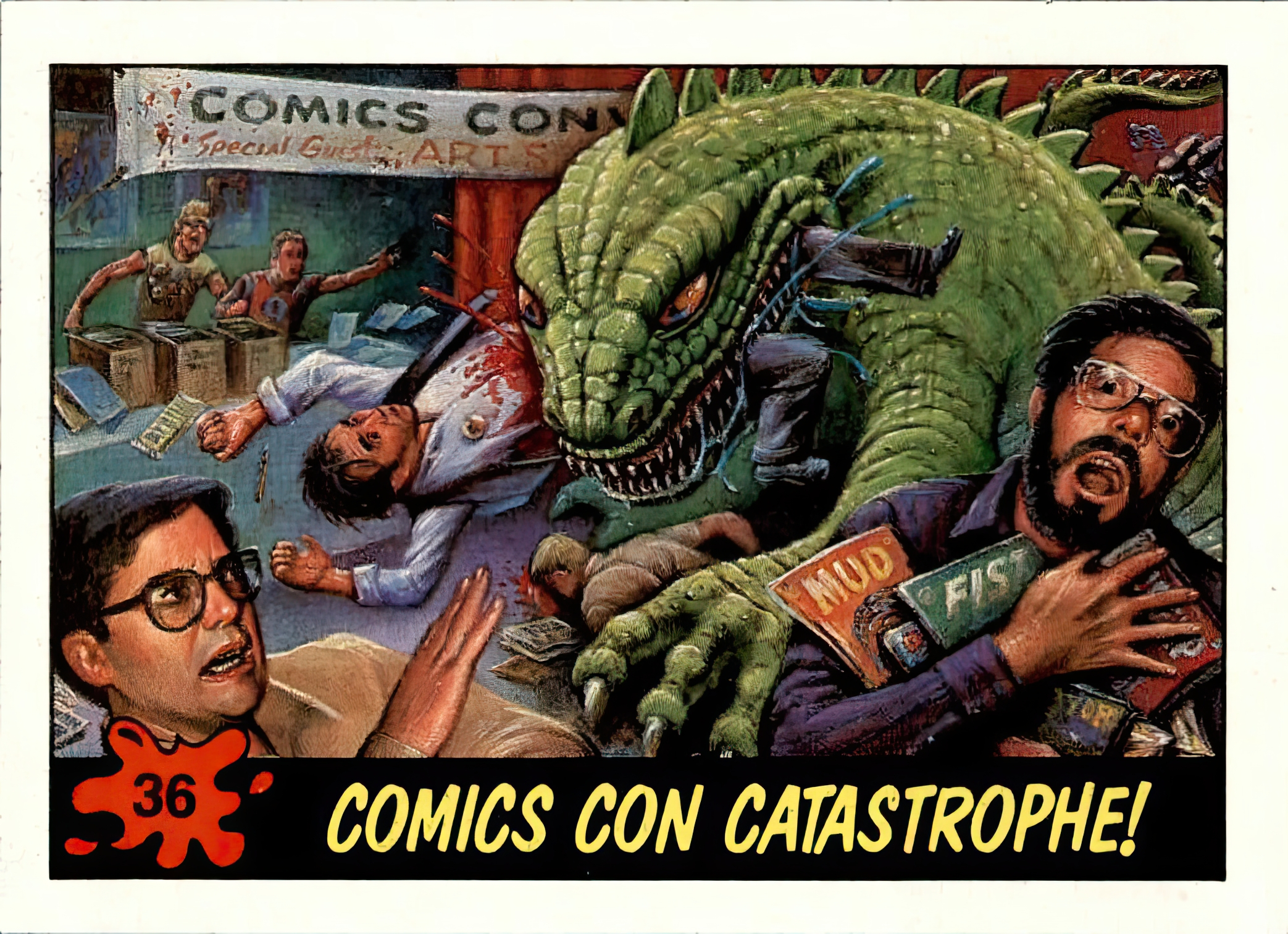
And no, he wasn’t eaten by angry, time-hopping dinosaurs, as depicted in one of those wonderfully deranged Topps Dinosaurs Attack! cards (’88) — Len clutching a stack of classic back-issue comics, Mark Newgarden down front, and Art Spiegelman actually being eaten.
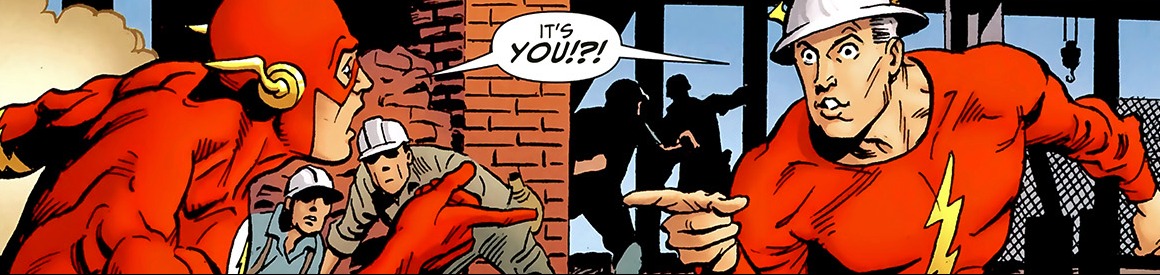
He died of considerably more conventional causes on August 11 at age 84.
Len was one of those guys whose career ran somewhat parallel to the comic-book business, but whose influence on it was enormous. At Topps, where he eventually became creative director, he helped shape more than four decades’ worth of non-sports cards and pop-culture projects.
He joined the company in 1959, basically right out of high school, and stayed for 41 years.
Forty-one years.
And during that time, an almost ridiculous amount of talent passed through Topps.
Wally Wood. Jack Davis. Basil Wolverton. Bob Powell. Norm Saunders. Jay Lynch. Art Spiegelman. John Pound.
And that’s hardly the whole list.
Spiegelman basically began his professional career there and eventually became one of the key creative forces behind Wacky Packages. Jay Lynch was another longtime contributor. John Pound became indispensable to Garbage Pail Kids. Shortly before decamping for Haight-Ashbury, Robert Crumb even did a card series for Topps.
All of these people wandering in and out of a chewing-gum company in industrial Brooklyn.
And Len, with a very good eye for talent and ideas, was right in the middle of it.
He developed an astonishing volume of licensed and non-sports card projects — everything from The Beatles and Batman to monsters, movies and TV shows — and for years handled much of it essentially on his own, until Gary Gerani joined him in 1972.
How juggling that many licensors and creators at once didn’t drive him right off a cliff, I have no idea.
Imagine being a kid opening those packs.
Now imagine being one of the guys deciding what went into them.
Pretty good job.
Len was also, at heart, a genuine comics guy, which naturally led Topps into some wonderfully oddball territory.
With his one-time roommate Roy Thomas, he was involved with the terrific Krazy Little Comics series — tiny superhero parodies with titles like The Amusing Spider-Guy, Fantastic Fear and Stupidman, with artwork by Wally Wood and Gil Kane.
Wally Wood and Gil Kane drawing tiny parody comics sold with bubble gum.
Only at Topps.
And then, of course, there was Mars Attacks.
That alone would have been enough.
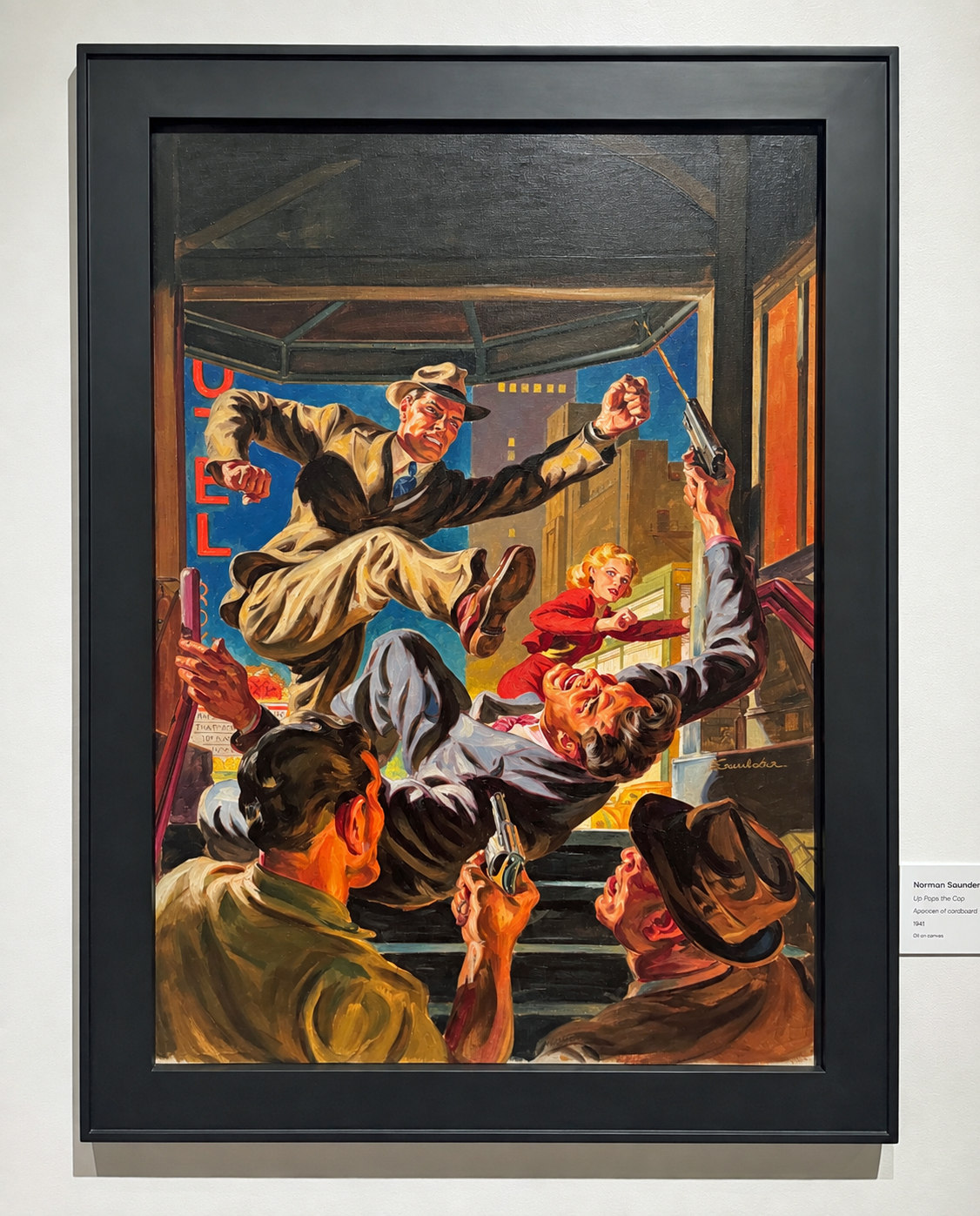
Len was a lifelong fan of science-fiction movies and EC Comics, and he came up with the idea that became Mars Attacks, working with Woody Gelman to develop the storyline. Wally Wood and Bob Powell helped visualize it, and Norm Saunders painted most of those unforgettable finished cards.
Basically, Len took all the great 1950s science-fiction movie ingredients — bug-eyed aliens, flying saucers, death rays, terrified crowds, destroyed landmarks — and turned the dial way up.
Especially on the gore.
Way, way up.
The result was one of the most memorable trading-card sets ever produced, horrifying parents and making a permanent impression on a generation of bubblegum-chewing boys.
Some of whom never quite recovered.
Len’s comics connection went well beyond Topps.
He was involved in the creation of Wally Wood’s T.H.U.N.D.E.R. Agents and wrote the original Dynamo story. Wood returned the favor by giving Dynamo the civilian name Leonard Brown.
Len always seemed a little sheepish about that when it came up.
But really — how many people can say Wally Wood named a superhero after them?
I think it should have been on his business card.
Len was also a very early collector of original comic art, recognizing that this stuff was beautiful and important at a time when hardly anybody was thinking about it that way.
His collection was long gone by the time I knew him, unfortunately dispersed after a difficult divorce. But just hearing Len talk about some of the pieces he once owned was jaw-dropping.
I was lucky enough to work with him for about four years at Topps, during the early ’90s when Topps Comics was launched.
For a lifelong comic-book fan who had spent decades working around the edges of the industry, that had to be pretty satisfying.
And Len was all over it.
I loved talking with him because the conversation could go just about anywhere — comics, cards, old movies, television, original art … and music.
Len was a huge rockabilly and classic-country fan and eventually became a radio DJ as well, hosting shows devoted to the music he loved.
That enthusiasm was genuine.
That was Len.
When I first walked into the old Topps building in Brooklyn in 1992, Len had already been there for more than 30 years.
Thirty years.
The Beatles had formed, conquered the world and broken up. Marvel Comics had created nearly its entire universe. Batman had gone from Shelly Moldoff to Carmine Infantino to Neal Adams to Frank Miller.
And Len Brown was still at Topps.
Still paying attention. Still plugged into what was going on. Still looking for the next big thing — and, more often than most people, finding it.
The funny thing was, he looked ridiculously youthful.
So youthful, in fact, that the first words out of my mouth when I met him were:
“You’re Len Brown?”
I later found out he’d heard that more than once.
Yes.
He was Len Brown.
The one and only.
One More Len Brown Story
I mentioned that Len was a very early collector of original comic art, long before most people saw much value in the stuff at all.
Funny thing is, years later I accidentally ended up with something that had once been in his collection.
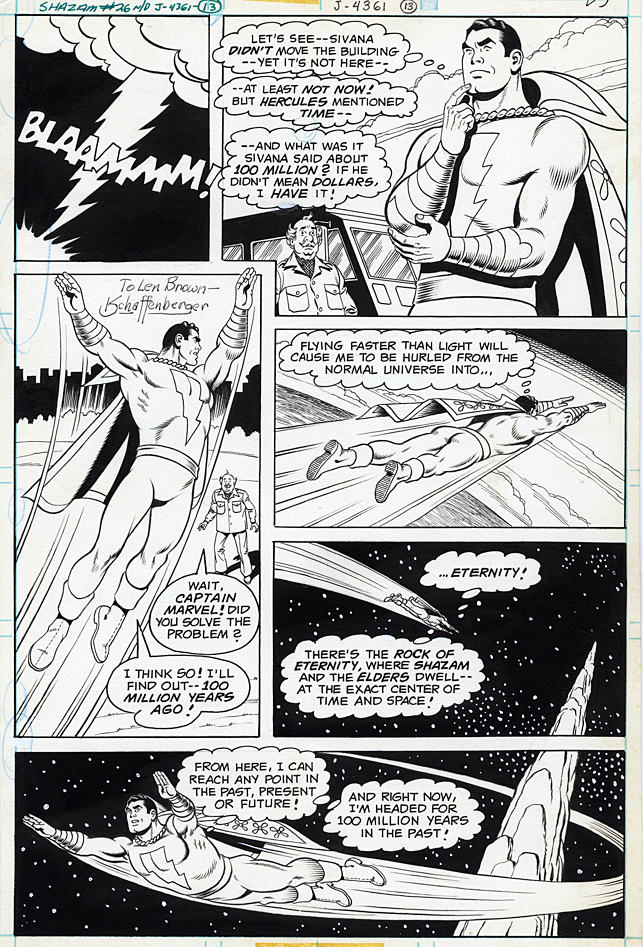
Around 2009, I spotted this terrific Kurt Schaffenberger Shazam! page online and bought it before I noticed the inscription:
“To Len Brown — Kurt Schaffenberger.”
So I called Len.
I told him what had happened and offered to send the page back.
He passed.
Losing the collection under the circumstances he did wasn’t a particularly happy memory, and by then Len was pretty much done with original art.
But I do think he got a kick out of the fact that, completely by accident, one of his old pages had found its way to me.
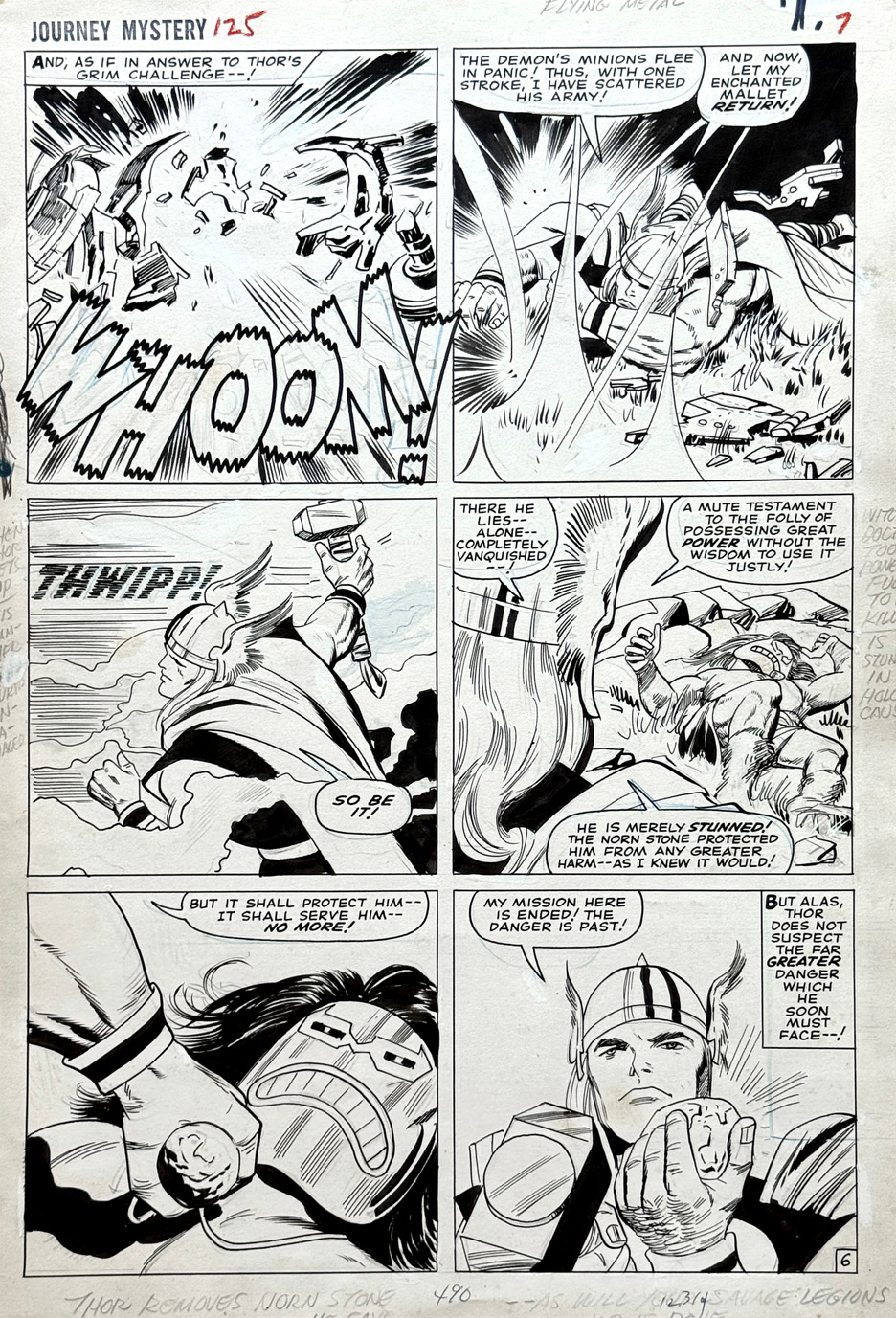
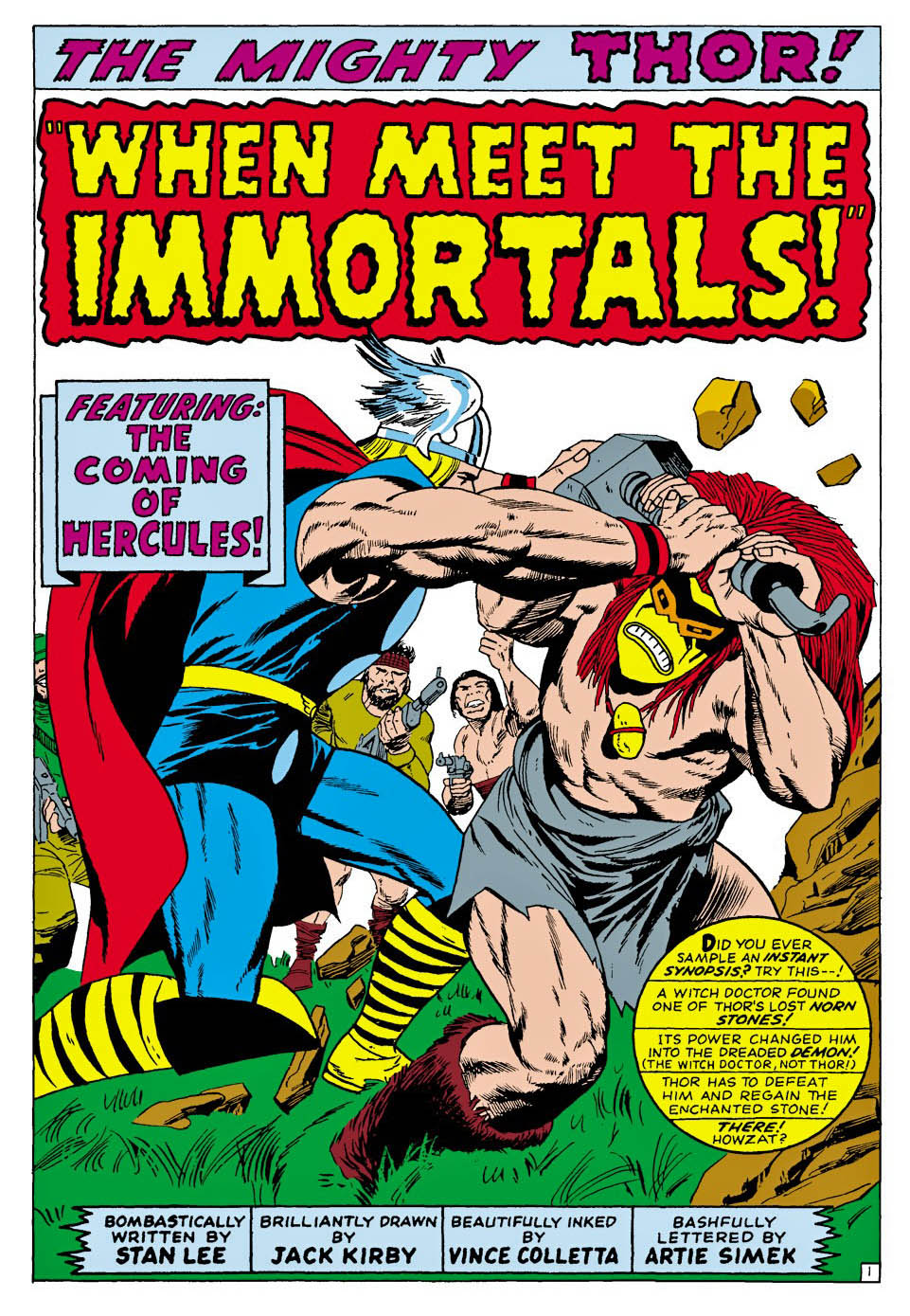
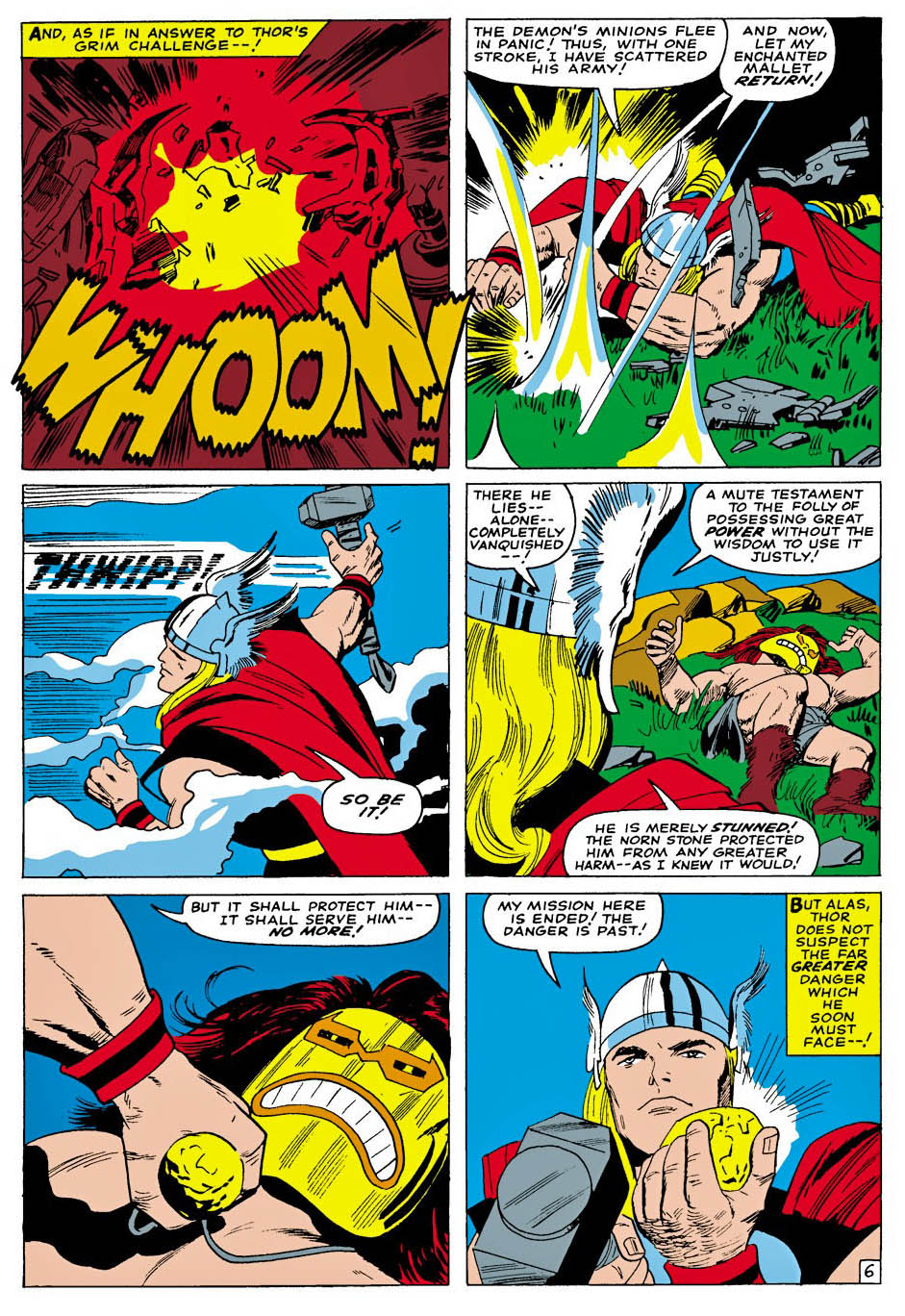
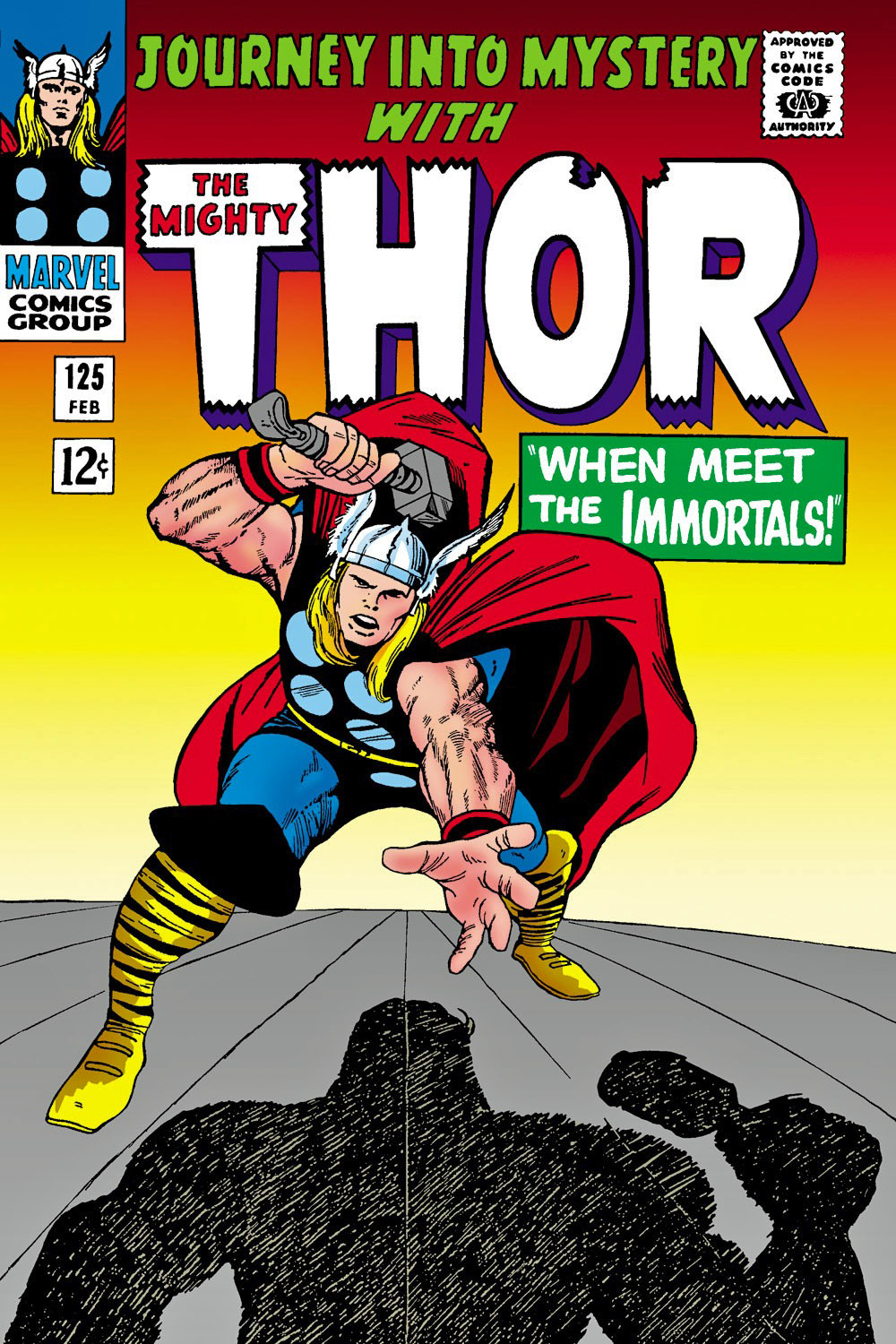
Here’s a great action page from Journey into Mystery #125 — the “final” issue before the book simply became Thor with #126.
It had been a long time coming. Monsters, aliens and demons had once filled Marvel’s story lineup, but by 1966 they’d pretty much been pushed aside — unless, as here, they were turning up as antagonists in the superhero books. Kirby, of course, never really stopped drawing monsters. Now they just had Thor to deal with.
Nothing new has been said about inker Vince Colletta in about 50 years, so I don’t have much to add to that conversation. I will say that I’m finally hearing more fans acknowledge that his Thor work, as evidenced here, isn’t bad at all — and in places, it’s quite good.
Colletta may have been an imperfect match for Kirby, but on Thor he often brought something that worked: a lighter, more decorative touch that suited the fantasy setting. And he certainly knew how to make the Asgardians look pretty and regal. (All that work on those romance titles paid off.)
But, as always, Kirby supplies the heart of the story — the movement, the scale, the impact. And, in this case, a reminder that Marvel’s monsters hadn’t really gone away. They’d just found themselves in a different kind of comic book.
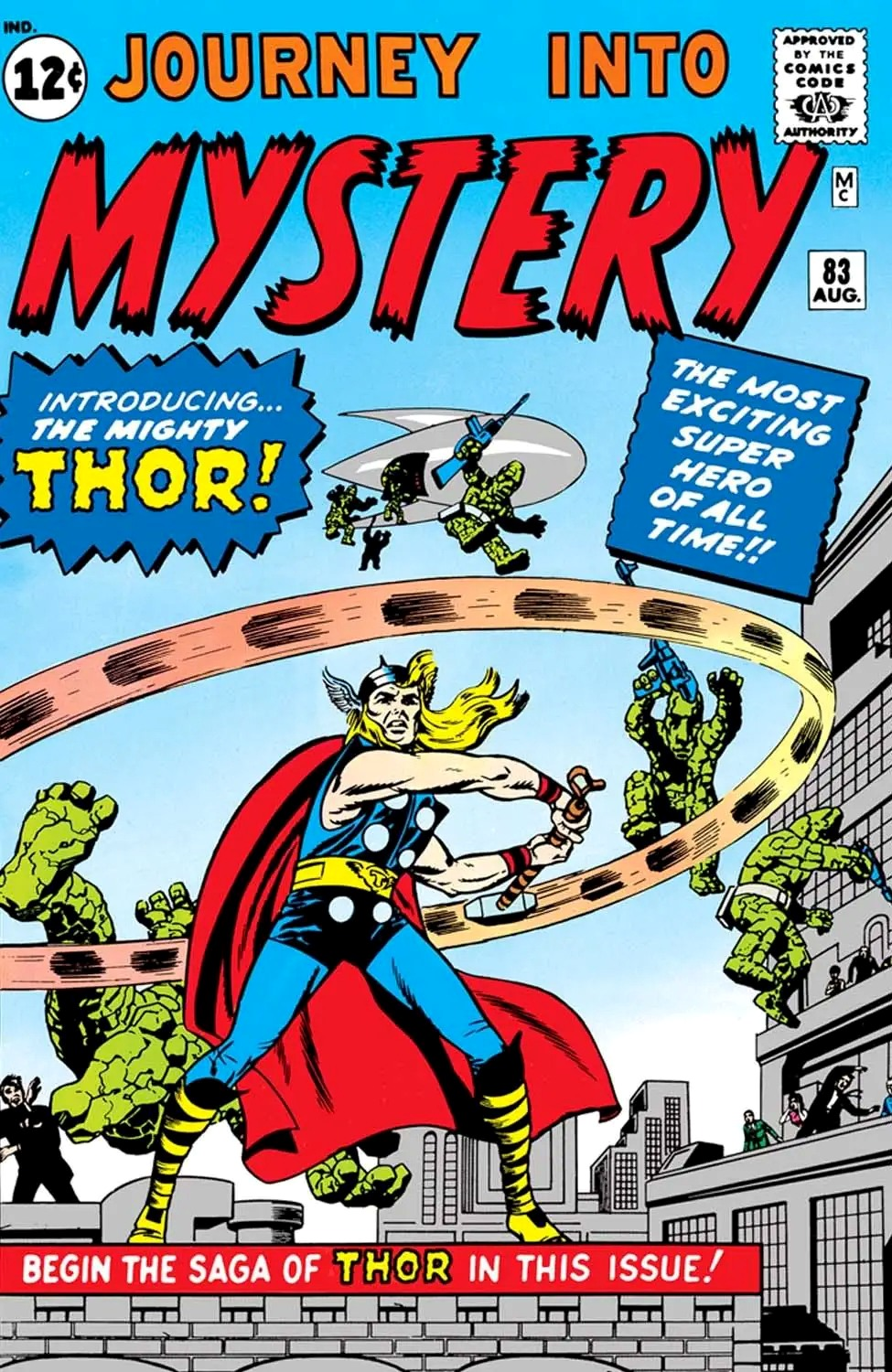
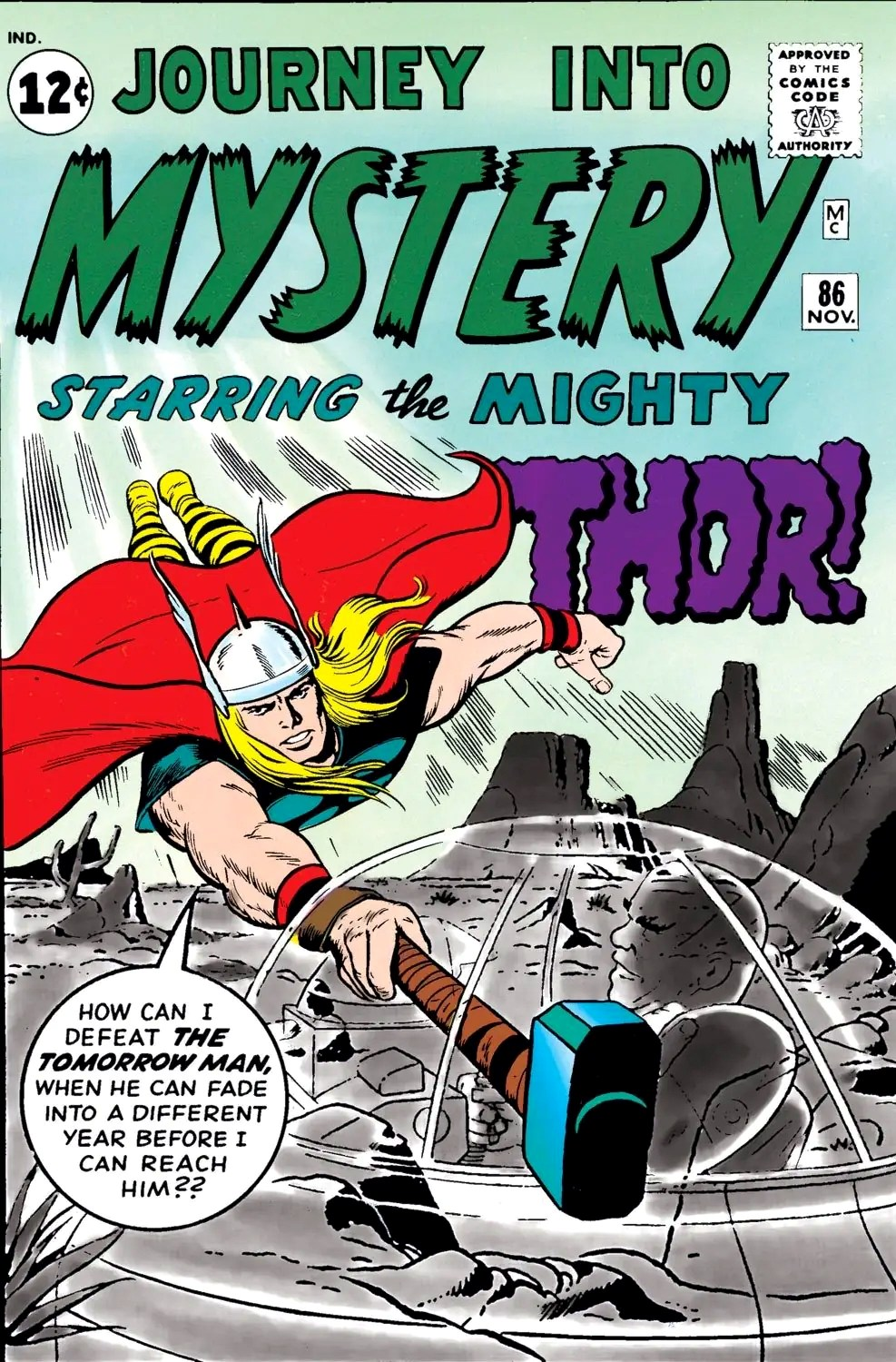
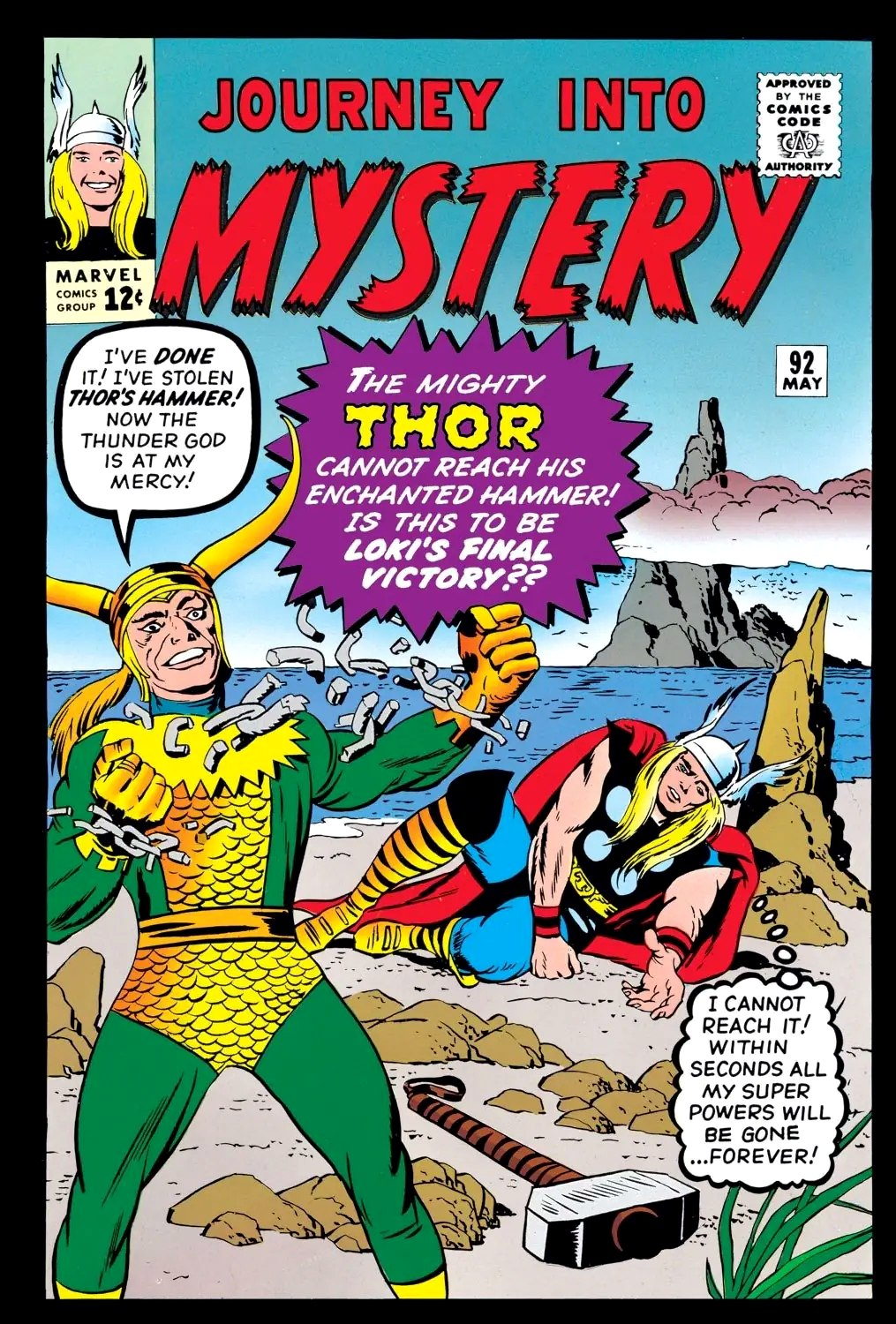
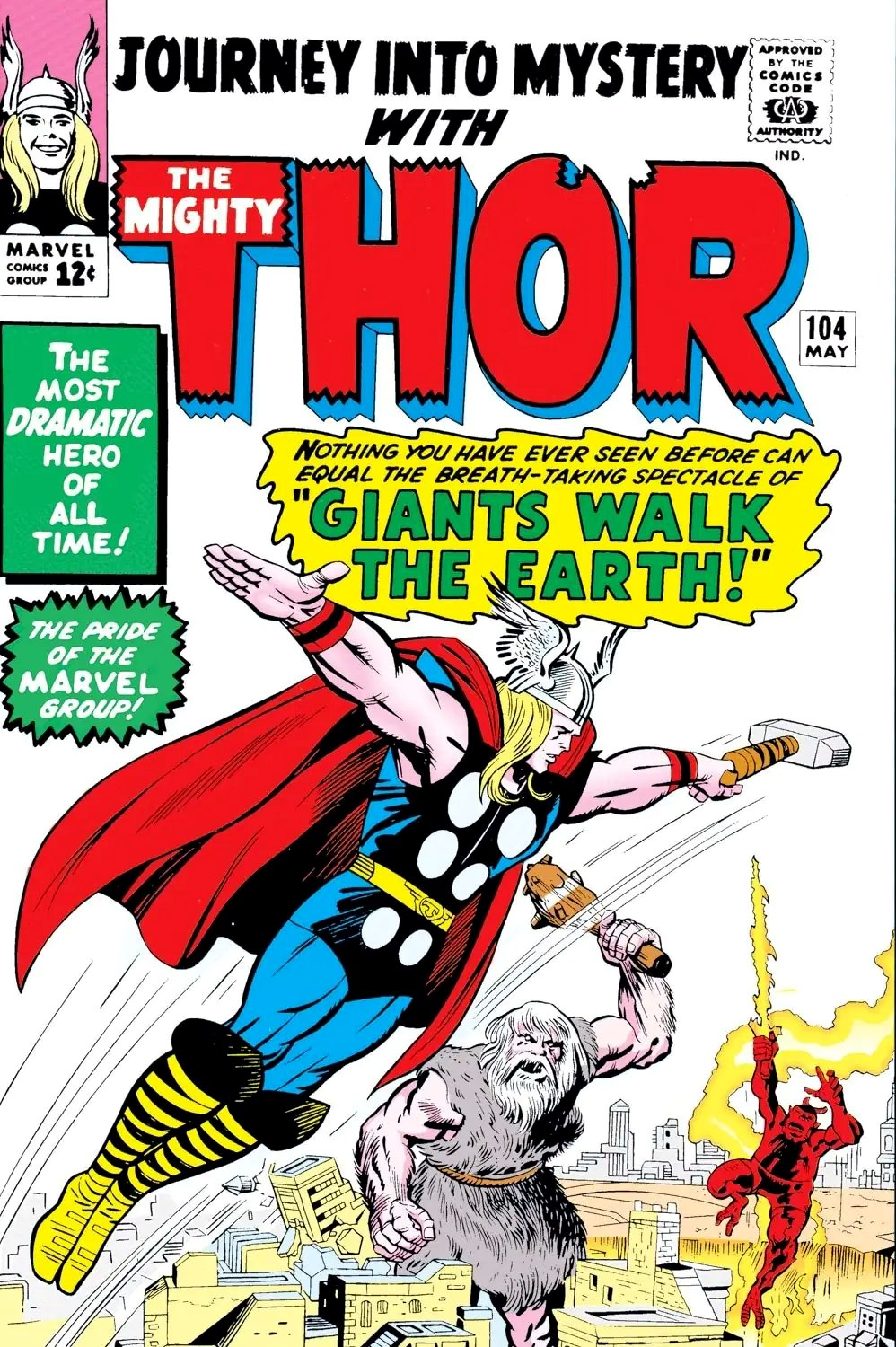
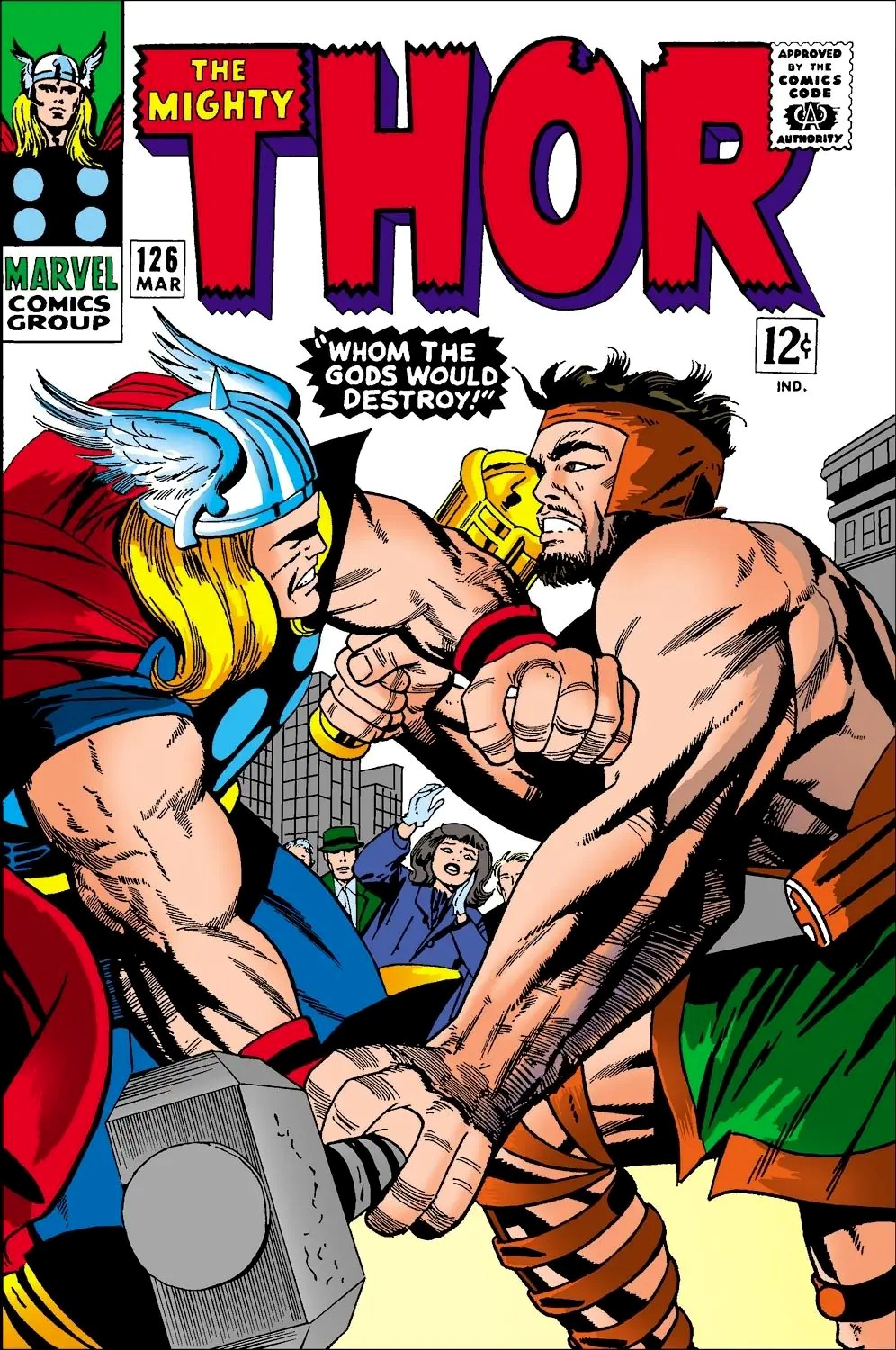
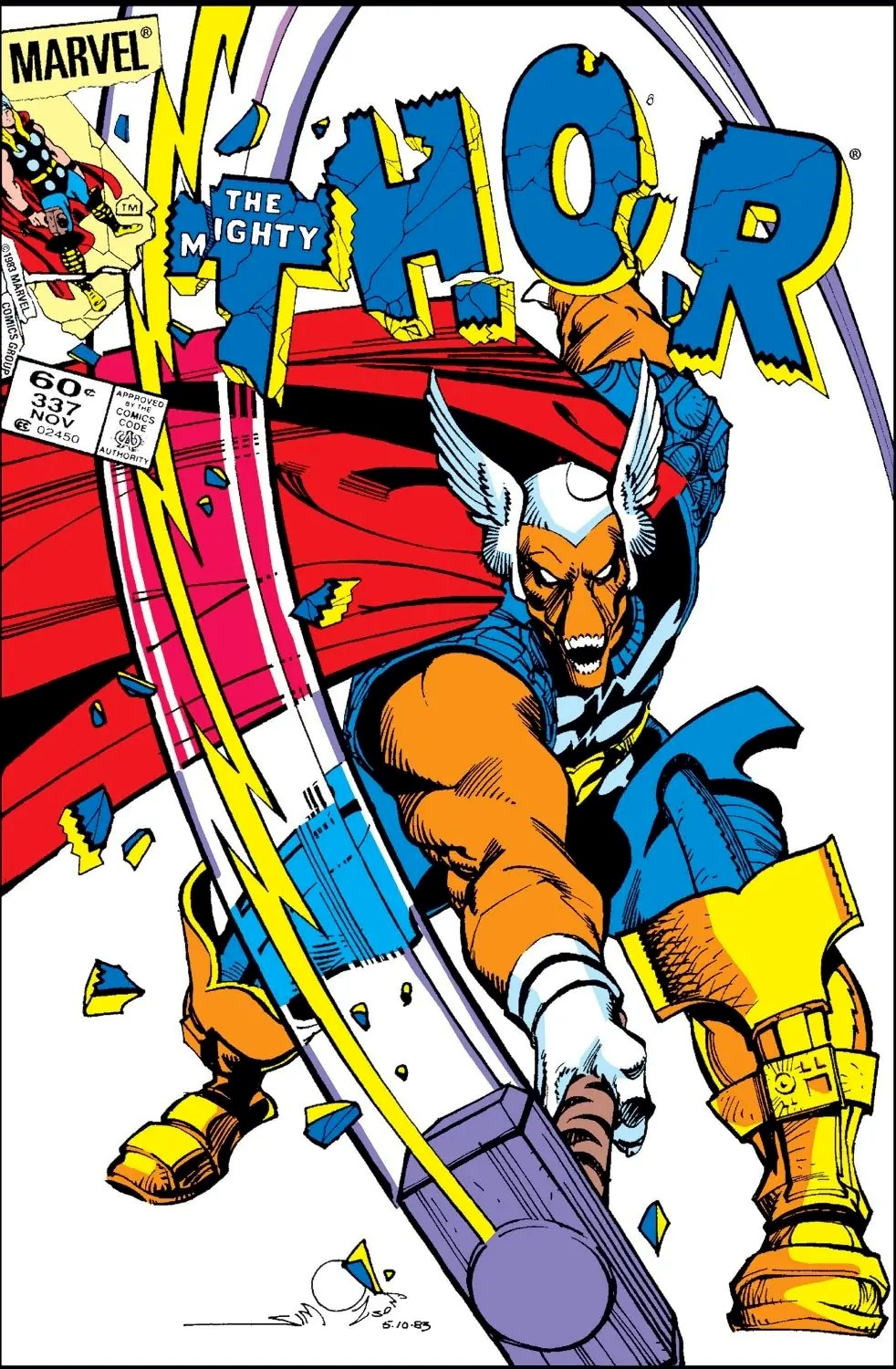
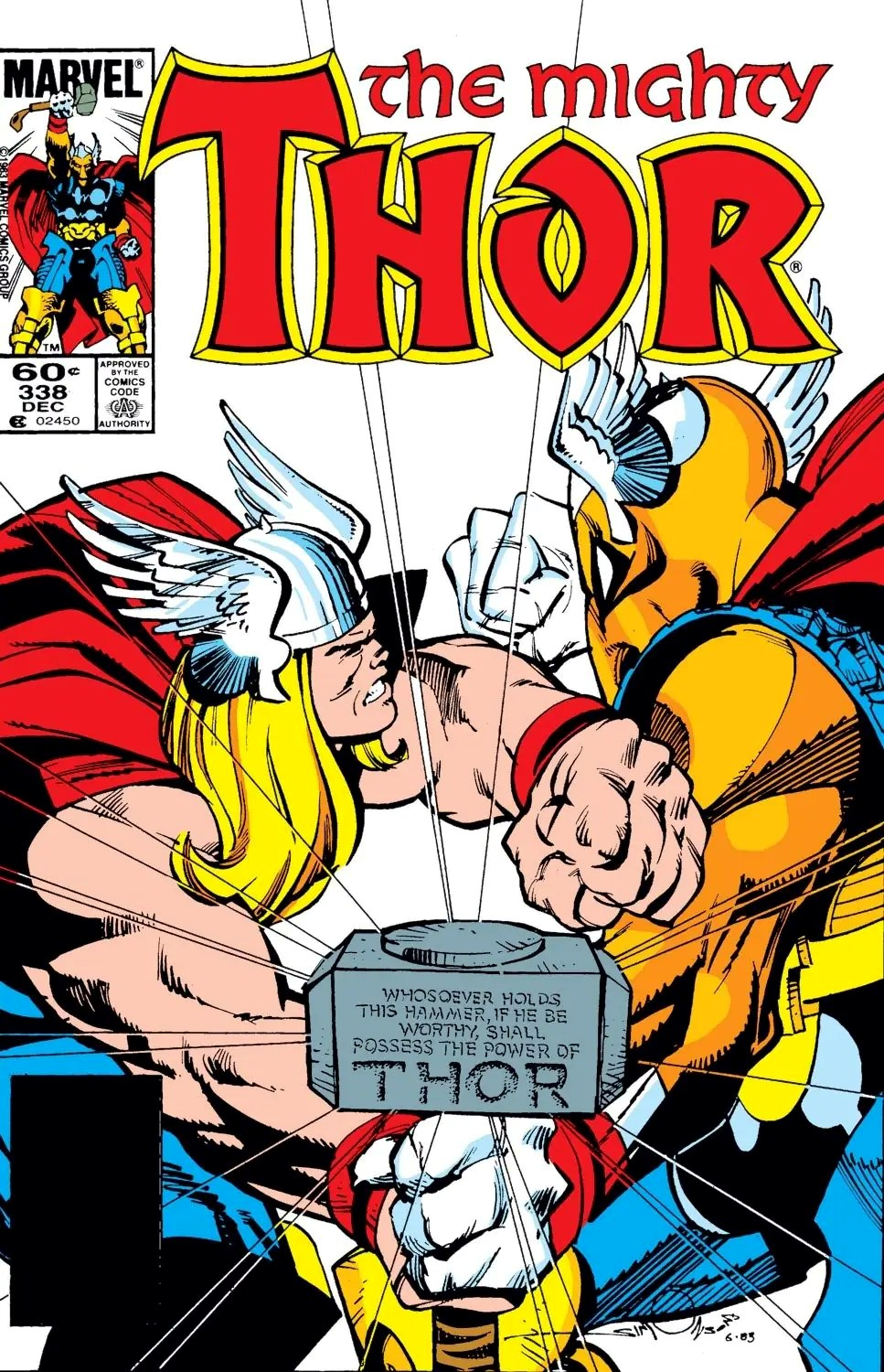
Trade dress in progress — Thor slowly took over Journey Into Mystery until it was just Thor, and then the cover logo stayed the same for about 17 years until Walter Simonson’s Beta Rey Bill took it apart.
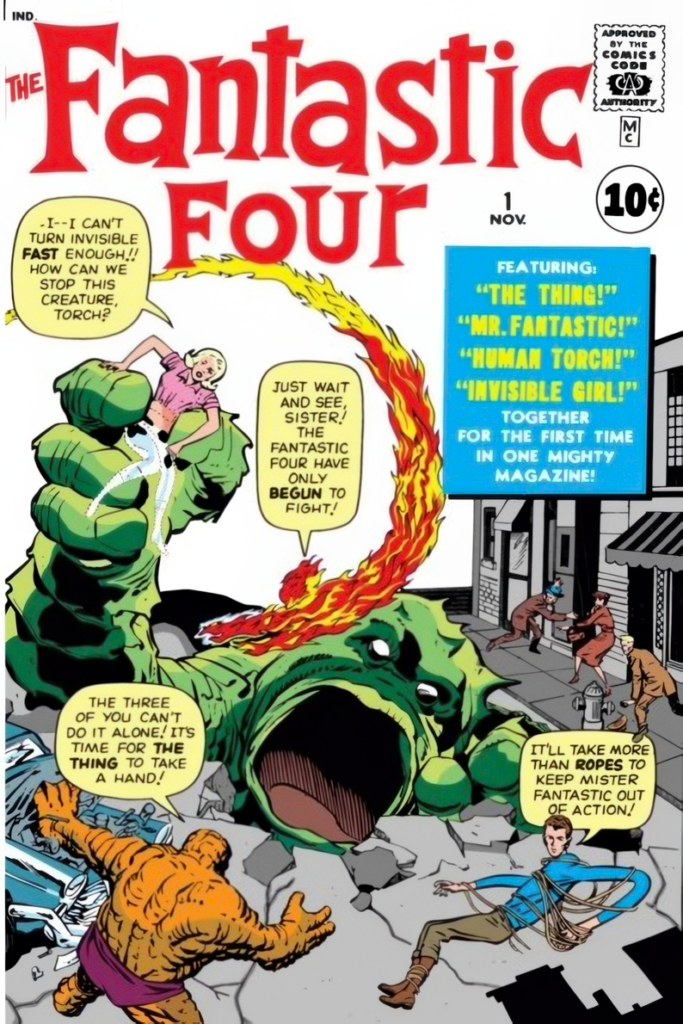
A few days ago marked the 65th publication anniversary of Fantastic Four #1, which hit the stands in August 1961. Stan Lee and Jack Kirby went on to produce 102 consecutive issues together, plus annuals — arguably the greatest sustained superhero family soap opera in comics history.
My first Fantastic Four off the stands was #63. After that, thanks to the usual childhood complications of schedules, availability and, mostly, money, I bought the book intermittently until somewhere around #98. From there, I don’t think I missed an issue for about 20 years.
And yes, I eventually went back and completed the run, as quickly as budget would allow.
Of course I did.
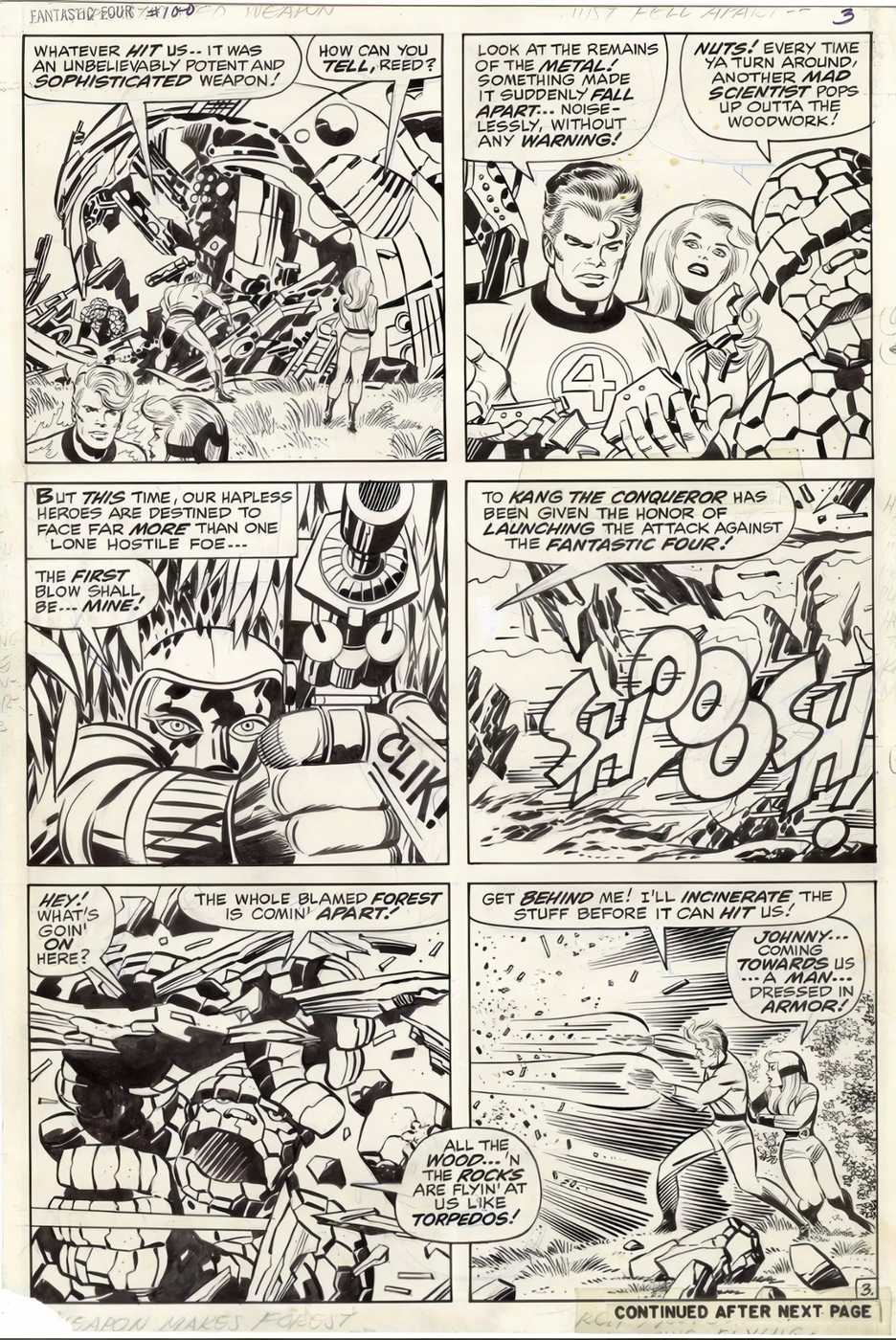
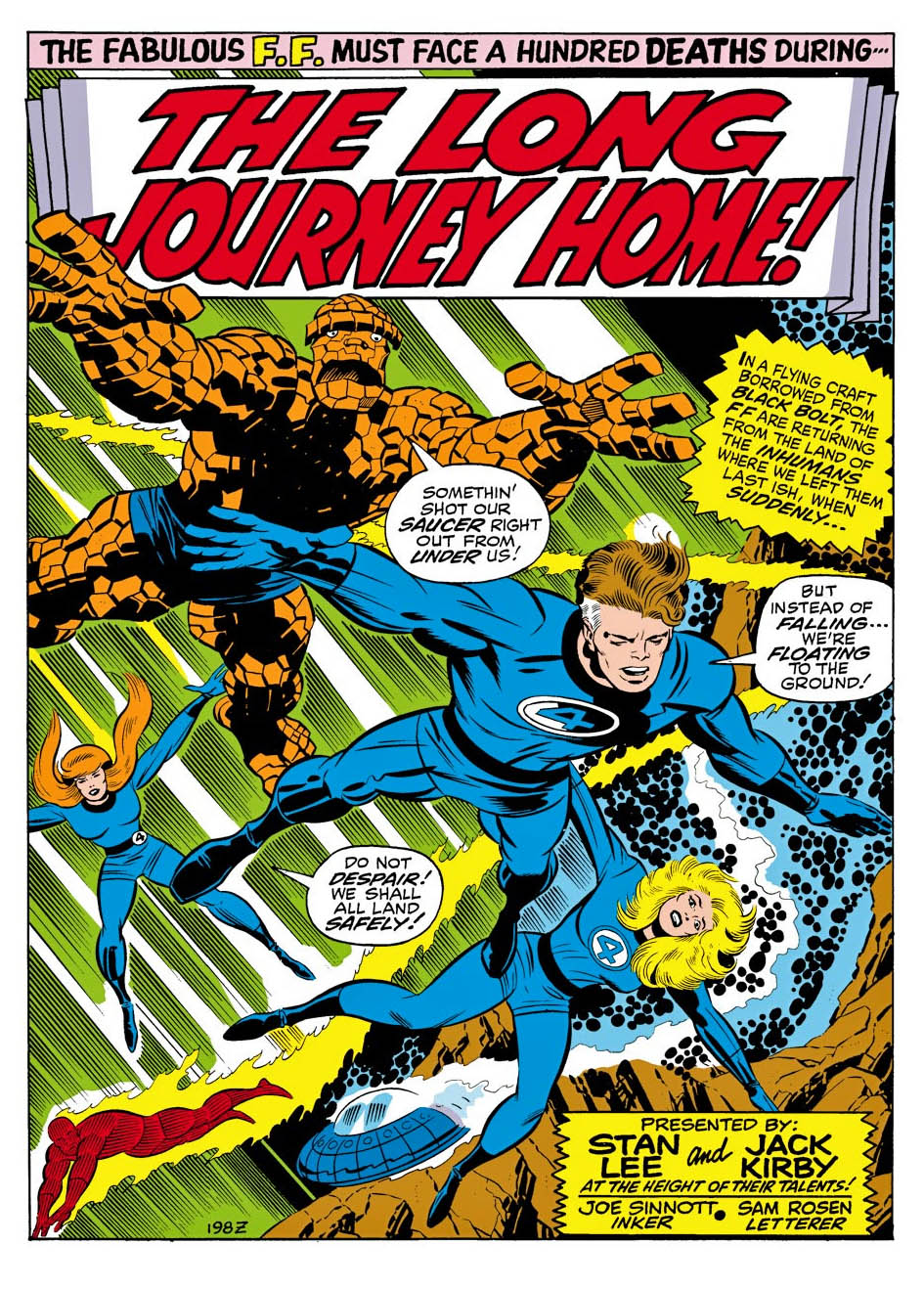
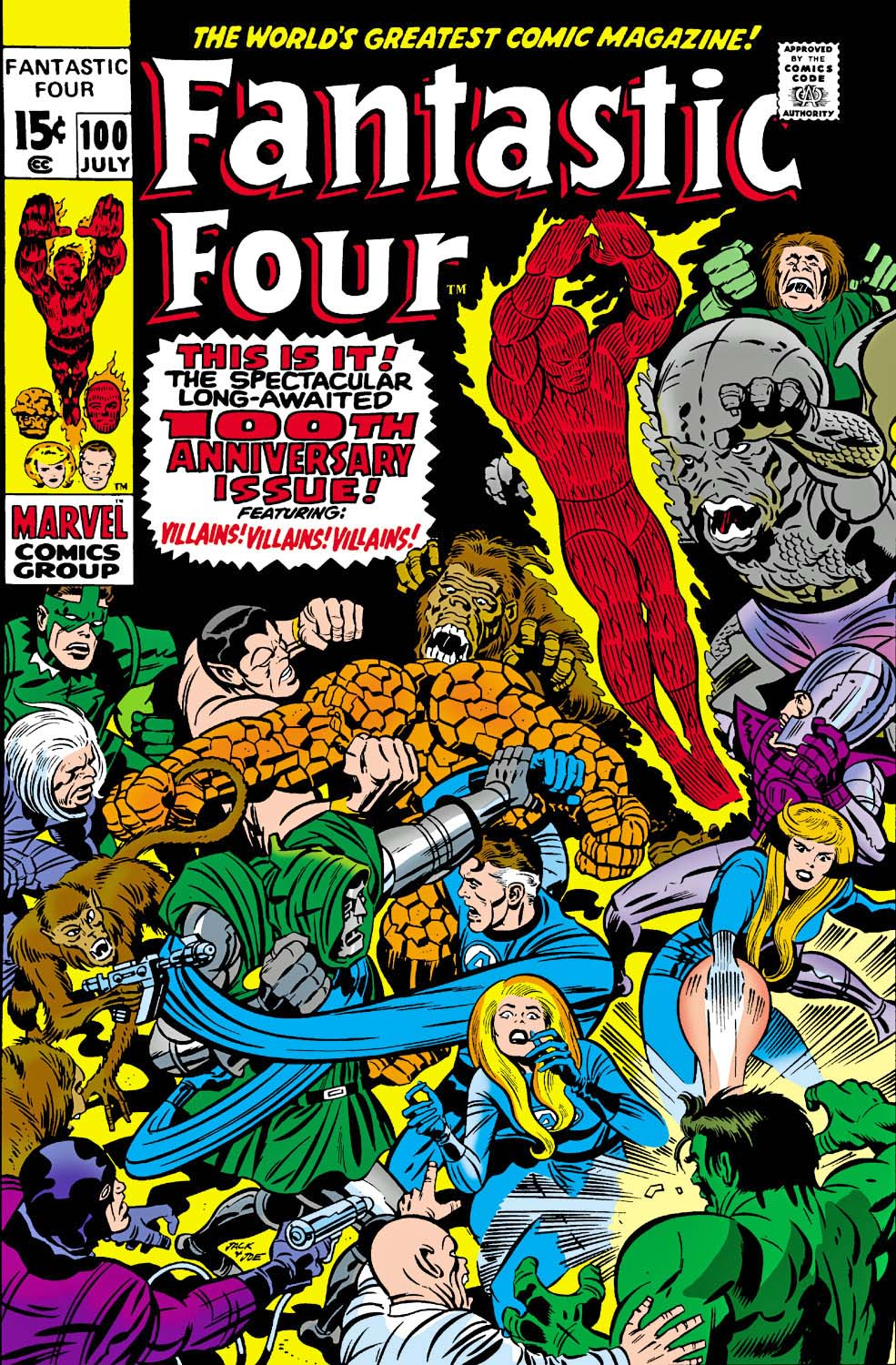
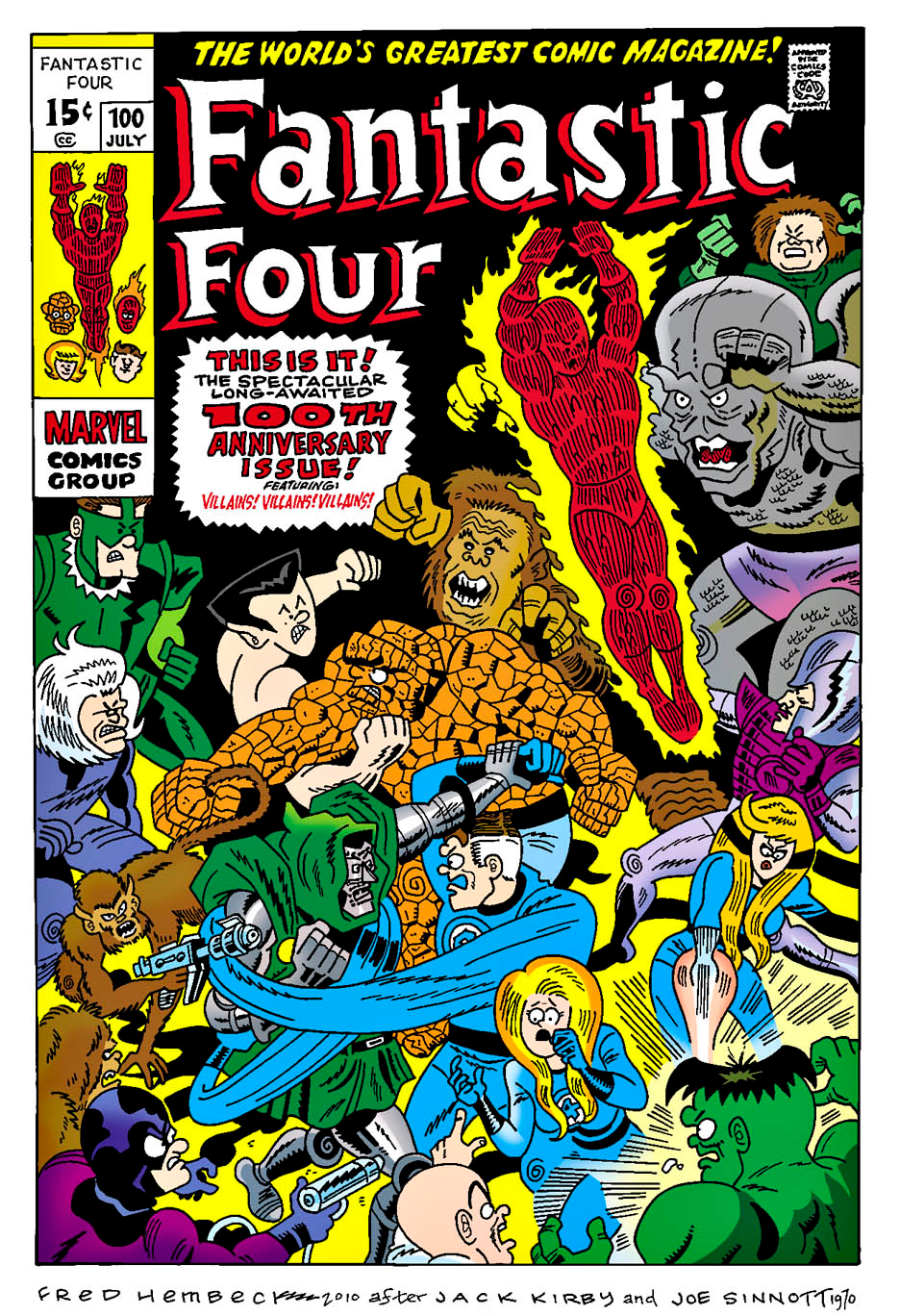
Fantastic Four #100 was also the first big Marvel anniversary issue I ever bought new, soon followed by Amazing Spider-Man #100 and Avengers #100. Triple-digit issue numbers felt like very serious business when you were a kid.
Which brings me to this page of original art.
I missed it the first time it came up for sale and figured I had blown it. Then, through an odd twist of fate, it became available again.
Couldn’t believe my luck.
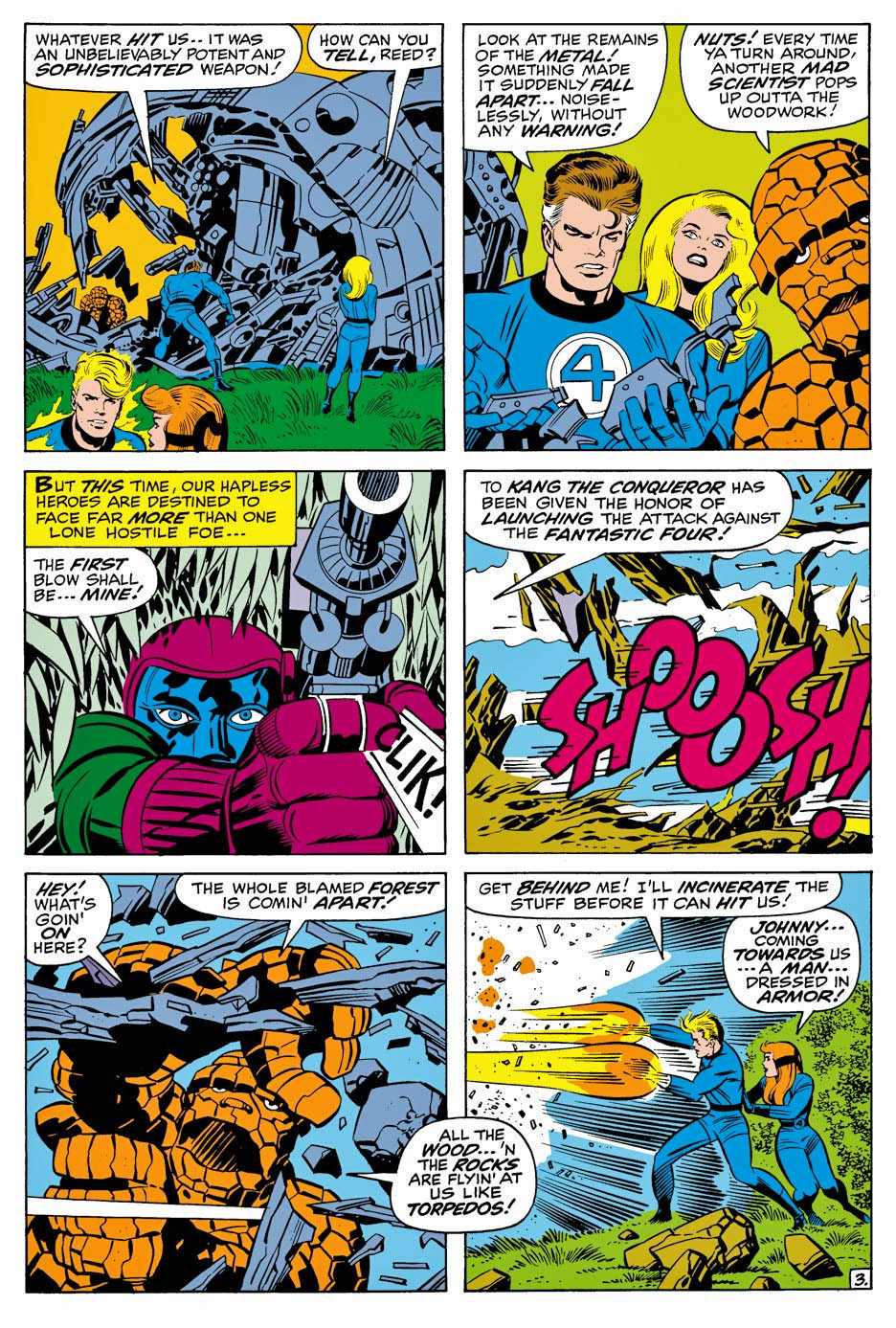
Kirby pencils. Joe Sinnott inks. The whole team is here, along with Crystal, plus “Kang.”
Well, technically an android pretending to be Kang.
But I digress.
I also remember looking at the cover of #100 in 1970 and pretty much guessing the premise before I even read it.
Which tells me that, even at that age, I was already reading way too many damn comic books.
The original cover — plus the Fred Hembeck cover I commissioned some years back, with recent coloring by Frank Cuonzo.
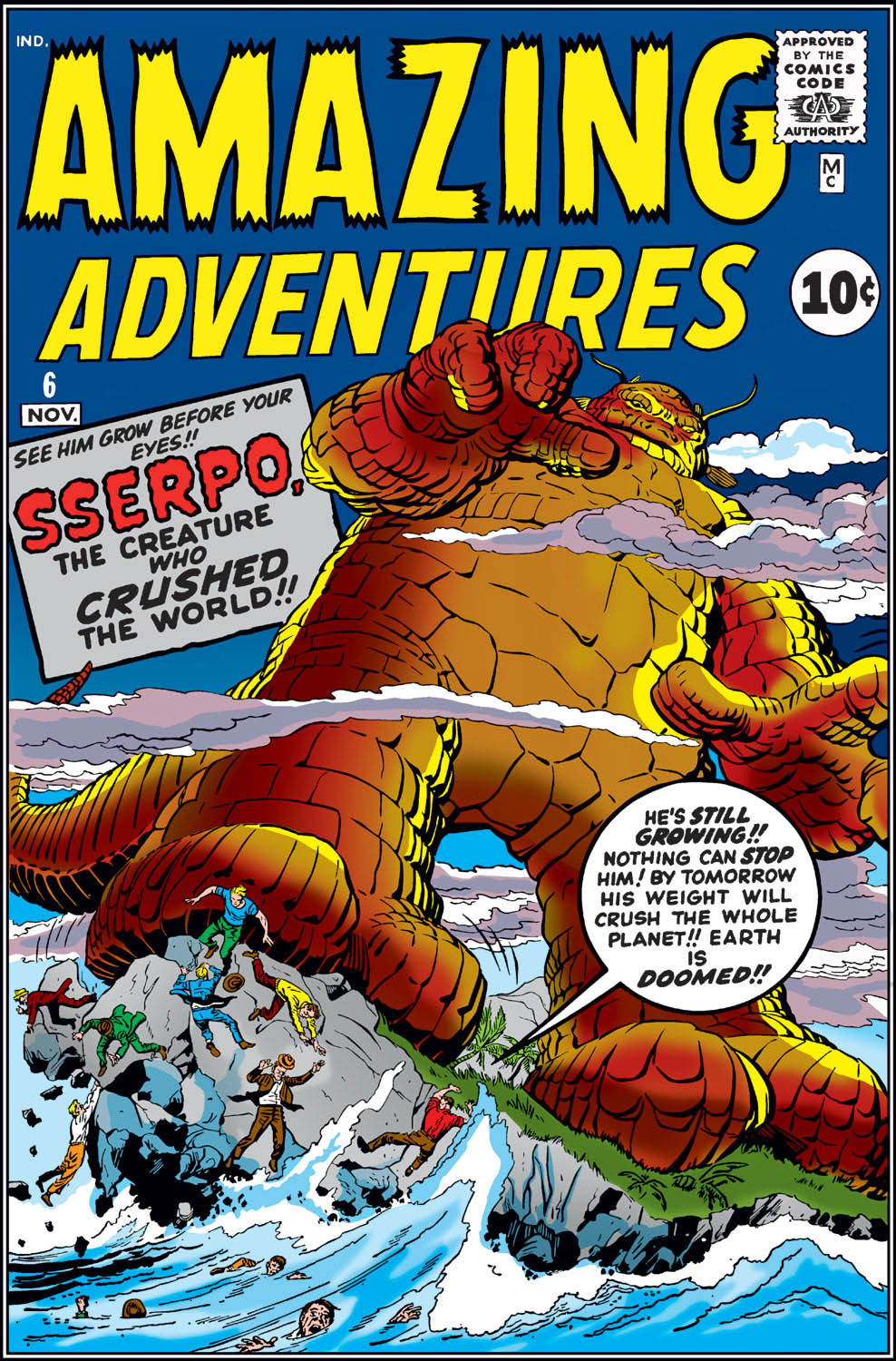
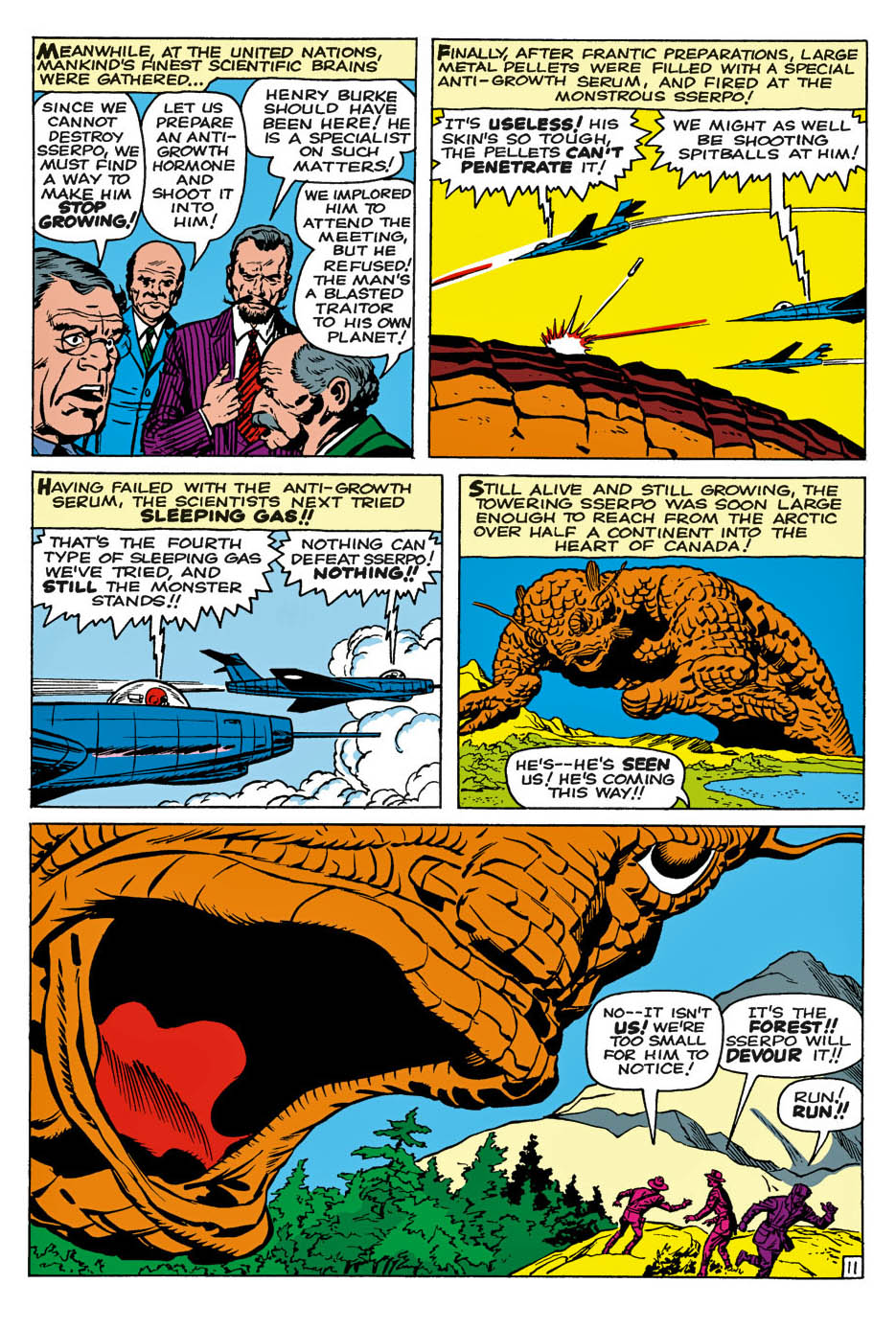
Jack Kirby would have turned 109 this month, which seems like the perfect excuse to celebrate one of his wonderfully ridiculous pre-Marvel monsters.
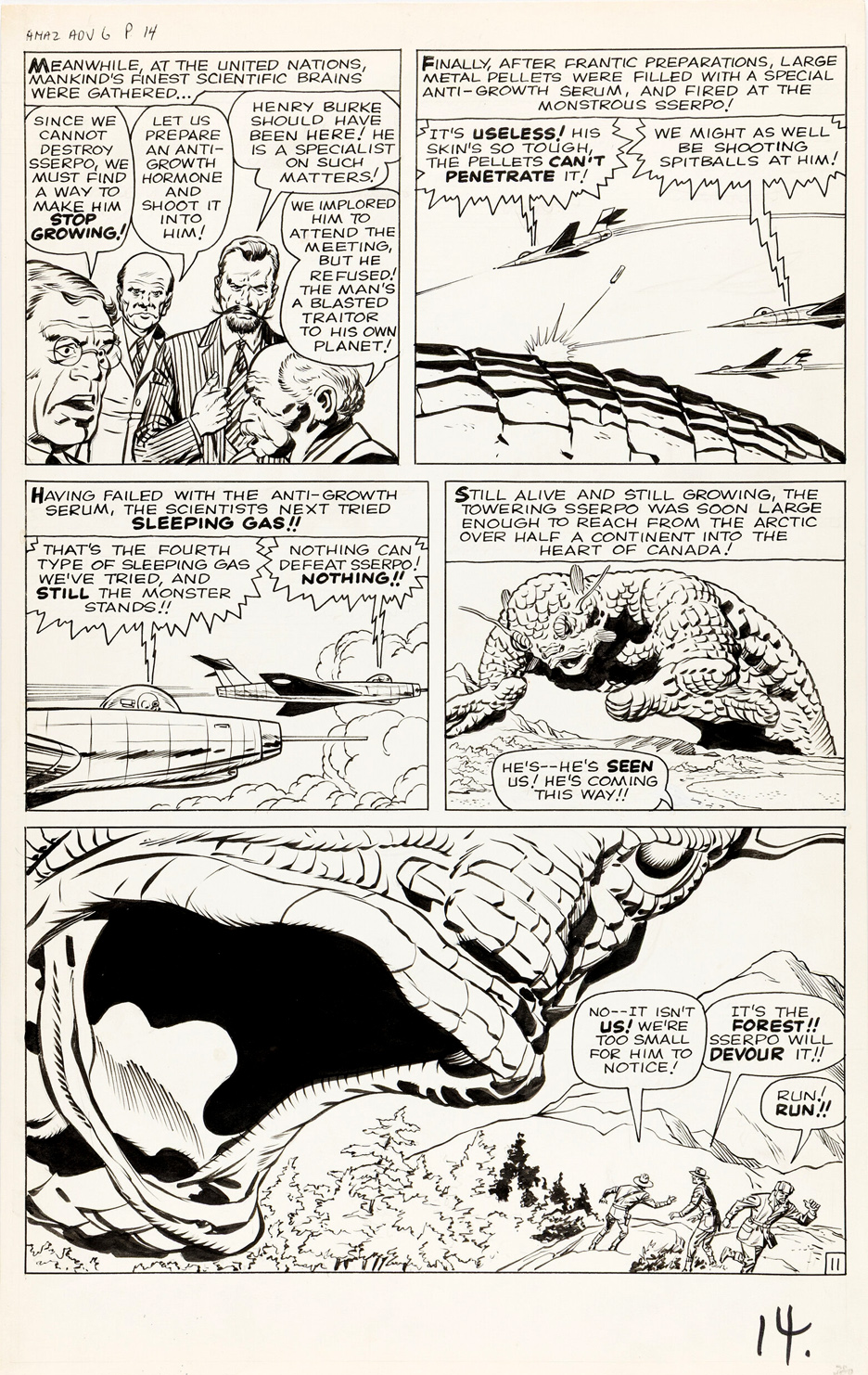
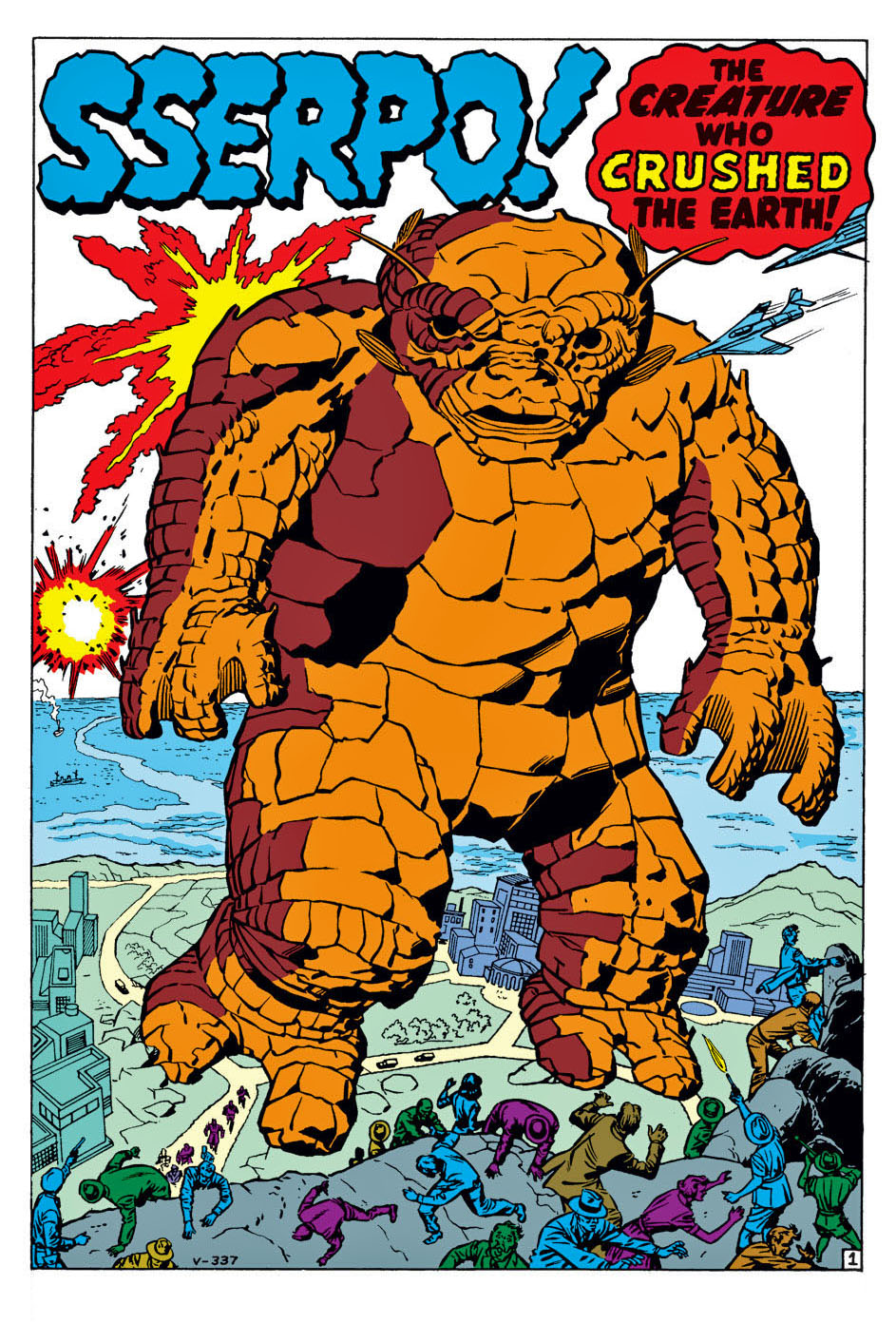
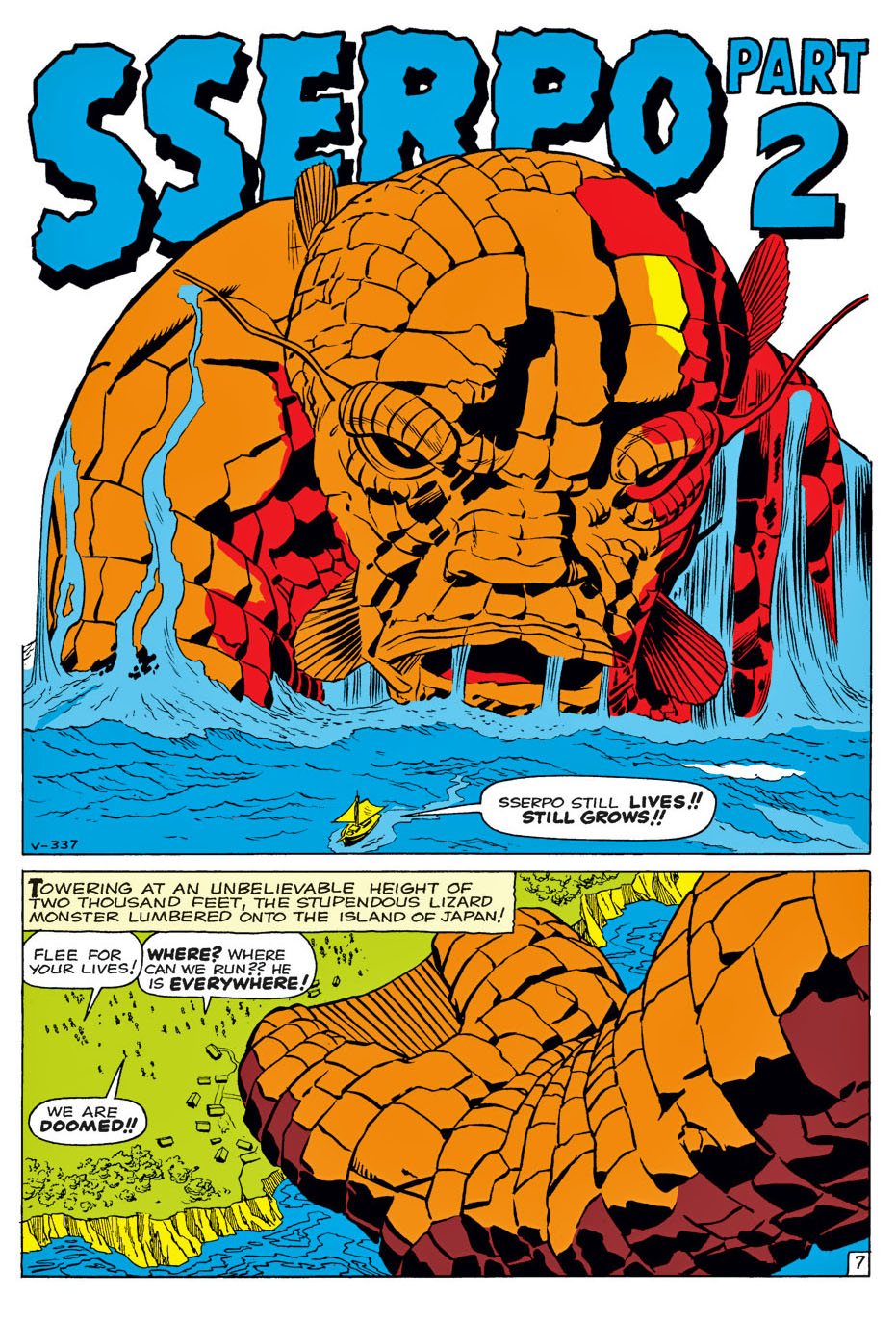
Meet Sserpo: a big, dumb creature with an even dumber spelling, brought to you by Kirby and Stan Lee in the first week of August 1961.
And what a great Kirby page this is.
Scientists shouting. Jets firing uselessly. Sserpo stomping across Canada. And then that enormous final panel, with Kirby pushing the monster so far into the foreground that he practically takes over the page.
Big, bold, absurd—and completely irresistible.
But Sserpo is more than just another giant monster.
Because one week later, Stan and Jack would unleash another one. Only this time, they brought along the Fantastic Four to fight him.
And just like that, everything changed.
One week separated the fading days of Marvel’s monster era from the beginning of the Marvel Universe—and, ultimately, the rebirth of an entire industry.
Of course, no one knew it at the time.
Not Stan. Not Jack. And certainly not the thousands of readers who had been happily gobbling up these stories for the previous four years.
To them, Sserpo was just another monster at the newsstand.
A week later, it was a whole new ballgame.
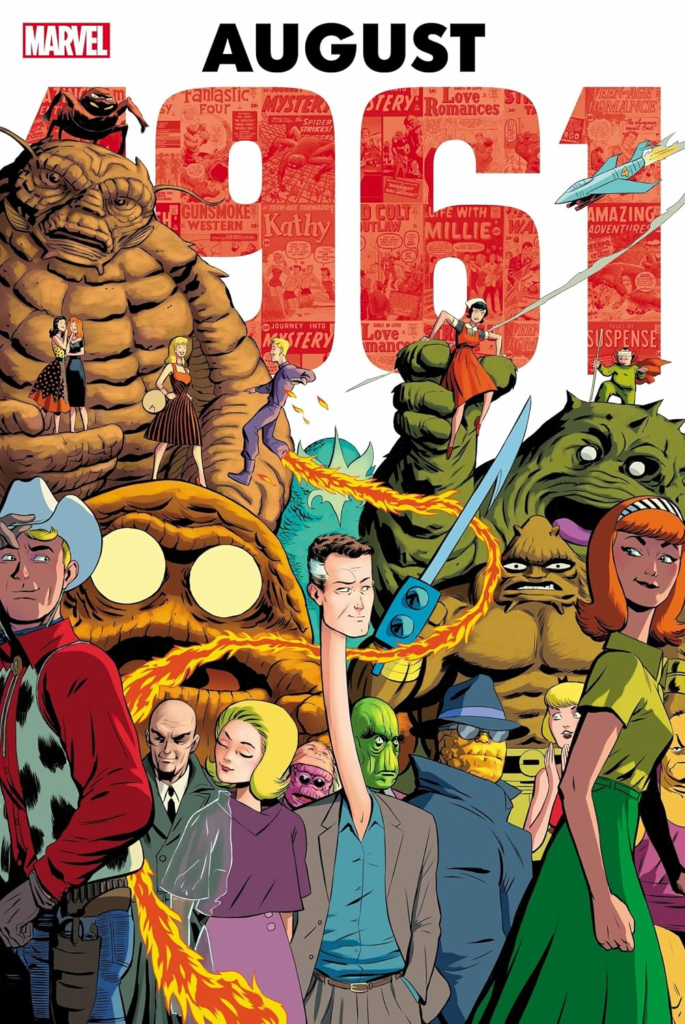
Sserpo seems to have changed his look from Part One to Part Two.If you want to see evrything Marvel produced in August 1961, grab a copy of this omnibus. Its a snapshot of the comic book world just priorate the “Marvel Age of Comics. ” That appears to be SSerpo in the top left.