Greg Goldstein's Comic Art Gallery

Zina Saunders — Vote!

Mars Attacks #1 Cover Variant, 2012

Vote indeed! (Just not for this guy.)

The terrifically talented Zina Saunders — daughter of legendary Mars Attacks painter Norm Saunders — created this card for our 1994 Topps Mars Attacks “sequel” series. So many good cards were created for that set, including many by Zina, that we ran out of room, and this one went unused…

Until 2012, when we acquired the Mars Attacks comic book license at IDW. Legendary comics marketing guru Dirk Wood had this crazy idea: What if we created 55 variant covers, each featuring one of the original 55 cards? Ha-ha. That’s funny.

Then we went ahead and did it.

And we upped the ante: We added an additional variant cover that you could only get if you bought the complete box set of variant covers.

Honestly, I think we all agreed we were nuts  — until some good orders came in. Collectors actually wanted all the covers. It was a novel way to have a complete “set” of the original Mars Attacks.

Maybe those are unrelated thoughts. We might still be nuts.

But I’m not voting the Martian ticket, regardless. Not this year, anyway.

Steve Ditko — Happiness Or Madness?

Tales of Suspense #41, May 1963

Happy Birthday to the great Steve Ditko, who would have turned 93 today.

Ditko drew — and possibly wrote (Stan Lee on credits, but that sometimes is overstated) — this neat little science fiction back-up story in the third issue of Iron Man.

These SF and horror stories would soon become rarities as publisher Martin Goodman and Editor Lee replaced them with a new line-up of superheroes, including a certain web-crawler that would bring Ditko more notoriety than anything else he would create.

The Amazing Spiderman #1 had just hit the newsstands. The rest as they say…

Mike Kaluta — Mr. Orlando’s Neighborhood

Secrets of the Sinister House #6, August 1972

Joe Orlando brought his EC Comics horror sensibilities with him when he landed at DC in the late 60s.

Talk about being in the right place at the right time.

DC became a company where artists and visual storytellers (Carmine Infantino, Joe Kubert, Dick Giordano, et al) started moving into upper management and making editorial decisions.

As Joe told writer Jon Cooke in the very first issue of Comic Book Artist in 1998:

“…Many times we were asked to do impossible things by writer/editors who had no sense of the visual-to do things that wouldn’t work and have to argue our way out of it. We just thought that as artists, we would do a better job working with talent.”

In just a few years, Joe turned around the moribund House of Mystery and the already-cancelled House of Secrets with tales of mystery, suspense and of course, horror. He and his team took advantage of the more-relaxed standards at the Comics Code, sometimes creating even more relaxed standards in the process. 

(A few years later, Marvel would follow suit with a glut of horror titles that included vampires, werewolves and zombies. But, as always, we digress.)

And sure enough, Joe’s comics nearly instantly became artistic showcases for veterans like Gil Kane and Orlando’s EC mentor Wally Wood, along with young Turks like Bernie Wrightson, Nestor Redondo, and Mr. Kaluta here.

(Plus great covers often by Neal Adams. Definitely worth 12 or 15 cents.)

By 1972, Joe had built yet another house in the neighbored, and this great Kaluta page featuring both DC horror hosts, Cain and Abel, is the delightful intro to Secrets of Sinister House #6.

Classic.

Ron Frenz & Sal Buscema — Ragnarok & Roll

Thunderstrike # 4, May 2011

FRenz Kirby etc

Ron Frenz goes full on Jack Kirby (with perhaps a dash of John Buscema) with this wonderful Mangog splash from the second Thunderstrike (Thor — sort of) mini-series.

Just because the “Monster Age” at Marvel ended when the superheroes took over the publishing schedule (early 60s), that didn’t mean that Kirby stopped creating great monsters during the era. 

In fact, the monsters had to be fiercer, meaner, and smarter — to provide antagonists worthy of our intrepid heroes.

Take Mangog here. His appearance typically means the end — of everything. Hence, Ragnarok. Stan and Jack introduced him in Thor 154 and 155 back in 1968 and he’s created havoc from time to time ever since.
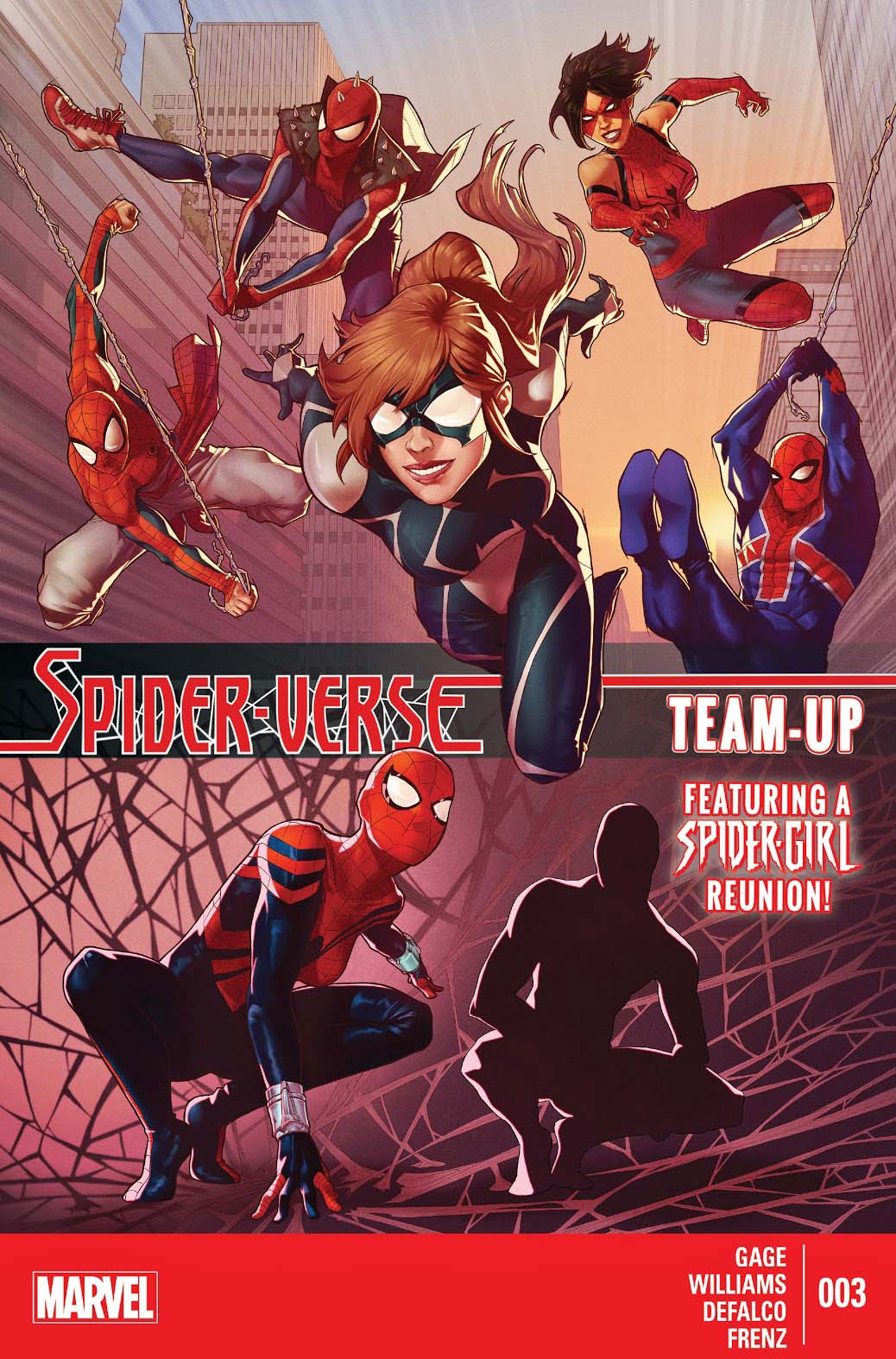
As for Mr. Frenz? Another great looking effort, with terrific inks by Sal Buscema.

Kirby Crackle included, no extra charge.

John Buscema & Tony DeZuniga — Skull On The Seas

Savage Sword of Conan #191, October 1991

Roy Thomas returns to Conan for the first time in 10 years, and partners with superstar artist John Buscema, pretty much picking up where the pair left off in terms of innovative and exciting Conan stories.

In addition to astonishing talent, Buscema could be very productive in terms of his total output — in this stretch of Conan he is providing layouts and rough pencils only, freeing him up for other projects. Here Tony DeZuniga provides some nice finishing touches for John. (I think here you can see John’s obvious handiwork, which was not always the case with DeZuniga inks.)

Lots of ink — as it were — has been spilled on who was Buscema’s best embellisher on Conan.  See here, here, and here for illustrative discussions.

My opinions have varied over time, and sometimes from issue to issue. The debate itself is fun.

And the talking skull? Spoiler alert: It belongs to King Kull’s arch nemesis Thulsa Doom. (In fairness, Thulsa eventually gives Conan much grief as well.)

Richard Corben — In The Swamp

Swamp Thing #20, December 2005

I discovered Richard Corben’s art at about the not quite ripe age of 12. I can’t remember if I saw it in the Warren magazines or in the underground comics first, but doesn’t matter. I was hooked.

(Undergrounds at age 12 or 13?  A longer story, for another day.)

The late Harlan Ellison, award-winning author — and often-vocal critic  — had this to say about Corben:

“It was obvious to anyone with the sensitivity of a doorknob that Corben was a rara avis, that right from the git-go he was first-rank, with a technique and an artistic sensibility wholly original, a technique and sensibility that created their own genre; and if there were to be imitators as there have been ⏤they were doomed forever to live in the shadow of the originator. It was as if Rich was born to illustrate my stories about the world of the hoverpaks and downunders.” 

Many art fans feel the same way about Corben’s work, and original pieces are rarely offered for sale, so I consider myself fortunate to have this great splash page from Corben’s brief visit with Swamp Thing.
Richard Corben turned 80 years old earlier this month. How in the heck is that even possible?

Gil Kane — Face of Evil

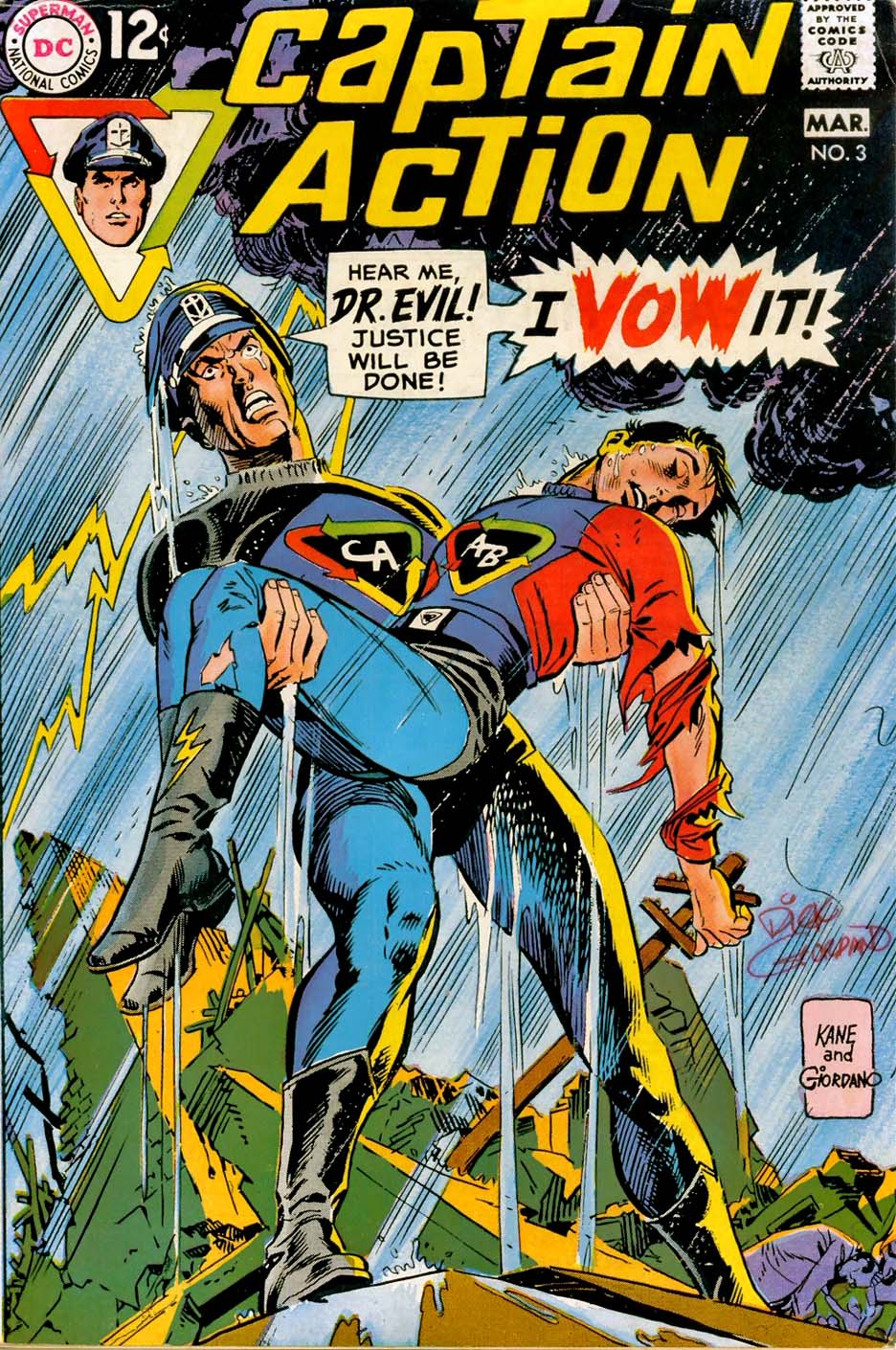
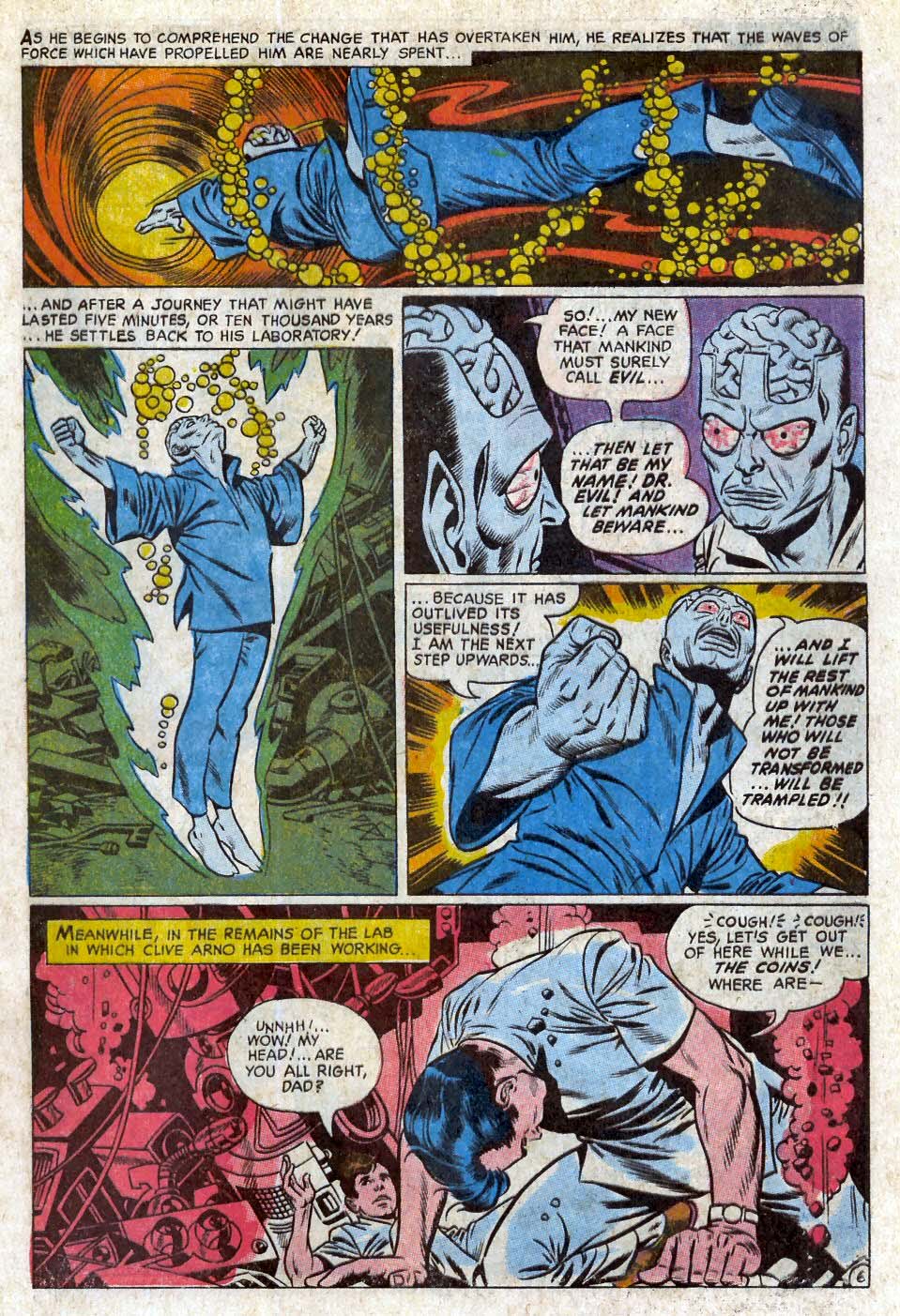
Captain Action #4, April 1969

Our ode to Halloween and the creatures of the comic books continues…

Dr. Evil — a good looking villain with a terribly cheesy name, even by the standards of the 1960s.

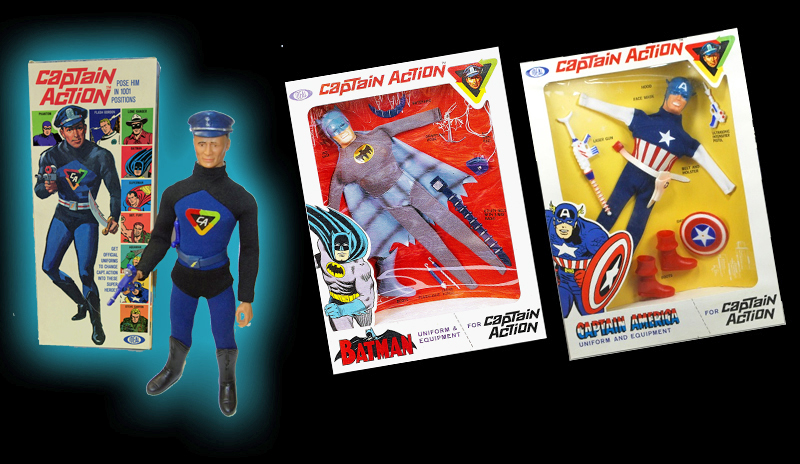
The character was the antagonist in the Captain Action “doll” product line, which launched in 1966. (More on that in a future post.)

DC adapted the toys into a short-lived series and Kane drew much of it. Ironically, the toy sales themselves were rapidly waning by the time the comic series launched in late 1968.

In this specific issue, Gil writes, pencils and inks the entire story — a first for him for either of the “big two” publishers.

And speaking of cheesy and the 60s: That amulet. The Nehru jacket. Those sandals. It just doesn’t get any better than this.

One very fashionably mod alien.

Jose “Pepe” Gonzalez — Blood For Profit

Vampirella #44, August 1975

Our ode to Halloween and the creatures that inhabit the comic book pages continues…

I could prattle on and on about the astonishing art of Jose Gonzalez, but…

I think it’ better if we hear from another amazing art talent, Joe Jusko, on this one. He knows a thing or two about Vampirella.

And he expressed his admiration for Jose’s art, in the intro for the terrific Gonzalez art book (Dynamite Publishing), more eloquently than I possibly could.

Excerpt from Joe’s intro:

“Gonzalez brought such life to Vampirella and made such an indelible mark on the character that it’s become impossible for longtime fans to think of one without the other. He possessed an illustrative line that elevated the strip from mere comics to high art and often experimented with mixing techniques within the same story.

“He went from crisp line art to subtle washes, to wondrously soft and delicate pencil renderings with the intent of conveying the mood or emotion of a certain scene…

“Gonzalez took the character seriously, and despite the obvious unconventionality of her attire, never played her as a joke…. Gonzalez had a true respect for her, and even when the later stories began to border on the absurd, he never lowered himself or his approach to the same level.

“There were other wonderful artists who took over the strip for various lengths of time (Esteban Maroto, Gonzalo Mayo and the always amazing Jose Ortiz) but fans always eagerly awaited the return of Gonzalez and rejoiced when his art eventually reappeared.”

Vampi in 5 panels (with some terrific close-ups), the undead, great wash-tone — a cool page, all around.

Eric Powell — Justice League Of Bizarros

Action Comics #857, December 2007

Our ode to Halloween and the creatures that often inhabit the comic book pages continues…

Bizarro Doomsday, at the bidding of Bizarro Lex Luthor, destroys the newly created members of the Bizarro Justice League.

Huh?

Trust me, it’s a wild ride. You just have to read it for yourself. Written by Geoff Johns and Richard Donner (Yes, that Richard Donner), the three-part story unravels (er, unfolds) in graphite, ink and wash-tone in perfect fashion by Eric Powell.

Donuts not included.