Greg Goldstein's Comic Art Gallery

Gray Morrow — Watching The Detectives

Swank Magazine, March 1975

Ah, irony. 

All these great detectives in this outstanding Gray Morrow illustration, and what I needed the most was some actual detective work to figure out where the piece was published. 

Despite the fact it looked like it could have appeared in any number of comic humor mags (Mad, Cracked, Sick, Crazy, et al) those pubs only featured black and white articles. And it didn’t fit with the vibe at National Lampoon. Also, the composition / design suggested a more conventional 2-page editorial spread, but it was too large and busy for TV Guide

After some relentless digging and some occasionally frustrating dead ends, I confirmed that the piece appeared in the March 1975 issue of Swank Magazine, an adult mag whose content often made Playboy seem like Reader’s Digest.

It’s a wonderful piece of nostalgia and a great DPS.

And, for better or worse, I’m old enough to have immediately recognized most of the cops here, without additional detective work.

Fun fact: I don’t own a physical copy of the mag yet, hence the lack of an image of the published piece to include with this post. It seems to be available for sale in a few places on-line, but they appear to be sketchy, and you can guess what might happen if give my credit card number and other personal info to an adult website.

Doug Wildey — Wildey Wild West

Gunsmoke Western #57, March 1960

How much of a perfectionist was the great Doug Wildey? He knew there was no chance the printed comic books of 1960 could capture the fine details in his draftsmanship, but he drew them anyway.

This is the second Wildey Atlas western title splash I’ve managed to acquire, and like the first, it’s a beauty. In fact, even more stunning.

By chance, this page was only display and offered for sale a few moments during last year’s San Diego Comic Con when I happened on it. I’m sure it would have been gone had I come by an hour or more later.

As I noted previously, Doug Wildey was an amazing storyteller and draftsman. Don’t just take my word for it — ask Stan Lee.

Back in about 2010, we visited Stan in his Beverly Hills office to get some pages signed for the first John Romita Spider-Man Artists Edition from IDW Publishing. Stan’s “people” were kind enough to let us bring some personal items to get signed as well, so I brought a few pages of original art with me. 

Stan, who was telling stories and singing while he was signing (Yes, singing, not a typo for signing. Story for another day.) stopped dead in his tracks when he saw this page of art. 

He stared at it quietly for a few moments — given the speedy pace of our morning, it seemed like an eternity — and you could see pleasant memories wash over his face. And then the big Stan Lee smile:

“Doug Wildey. Wow. He was great. So terrific. I loved his stuff. I wish we had a chance to do more together.” 

He handed the page back to me, still beaming, still examining it up and down as he slowly passed it back.  I had seen Stan sign thousands of items; many of them with fond remembrances, but nothing quite like this.

I’m sure he would have had the same reaction to this page as well.

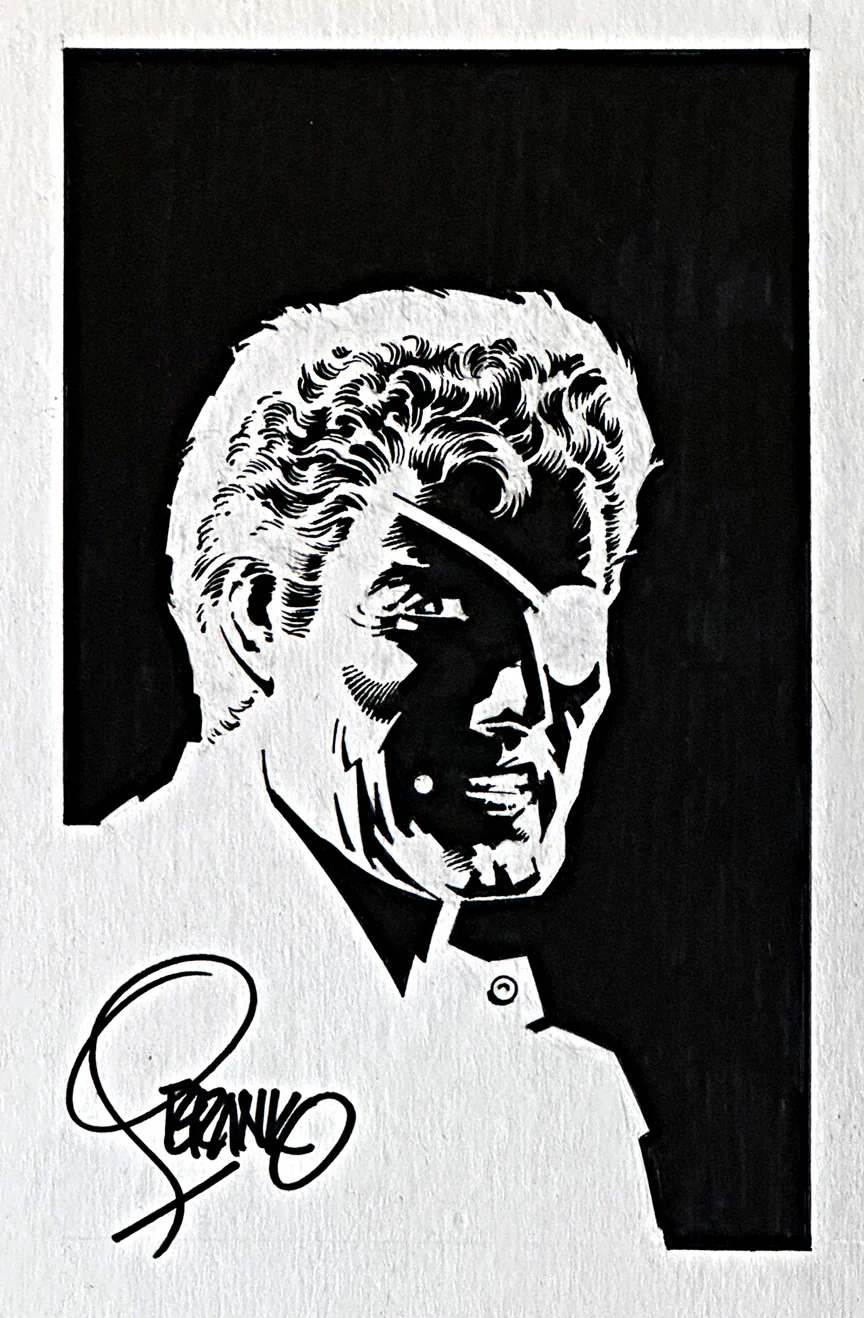
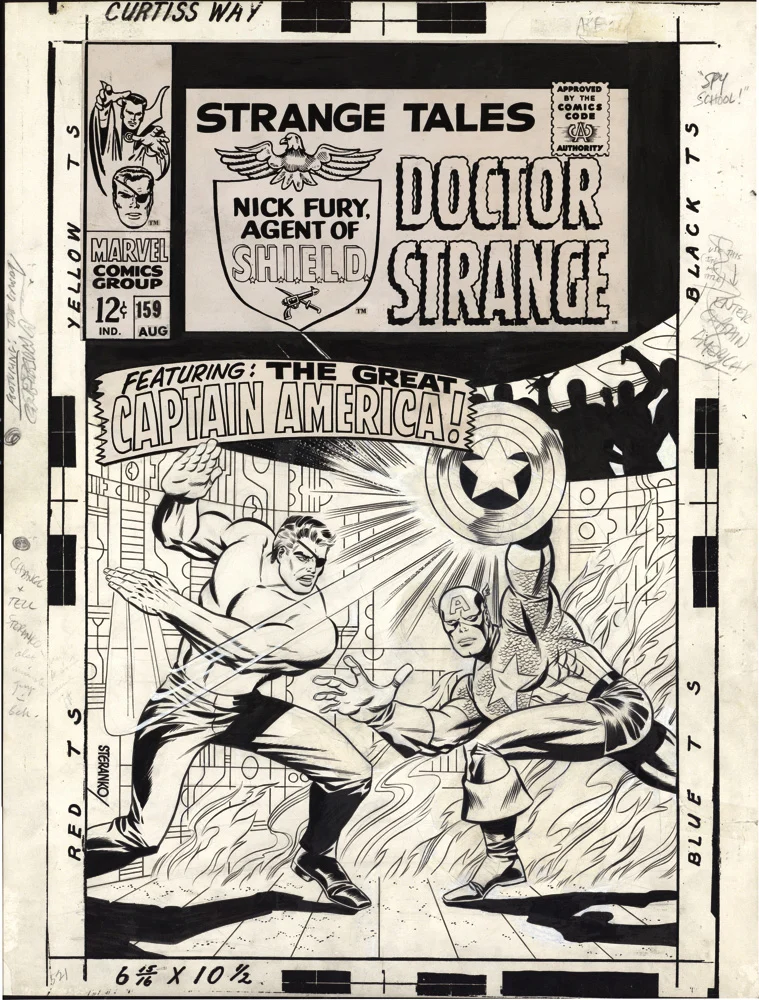
Jim Steranko — Full Of Fury

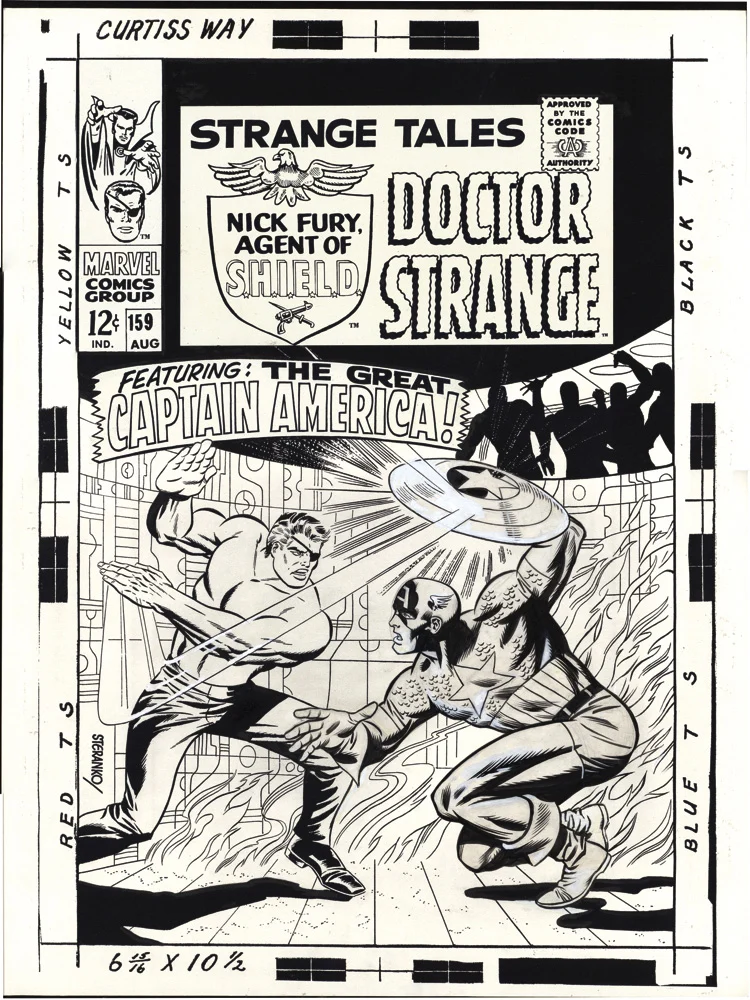
Nick Fury commission, undated

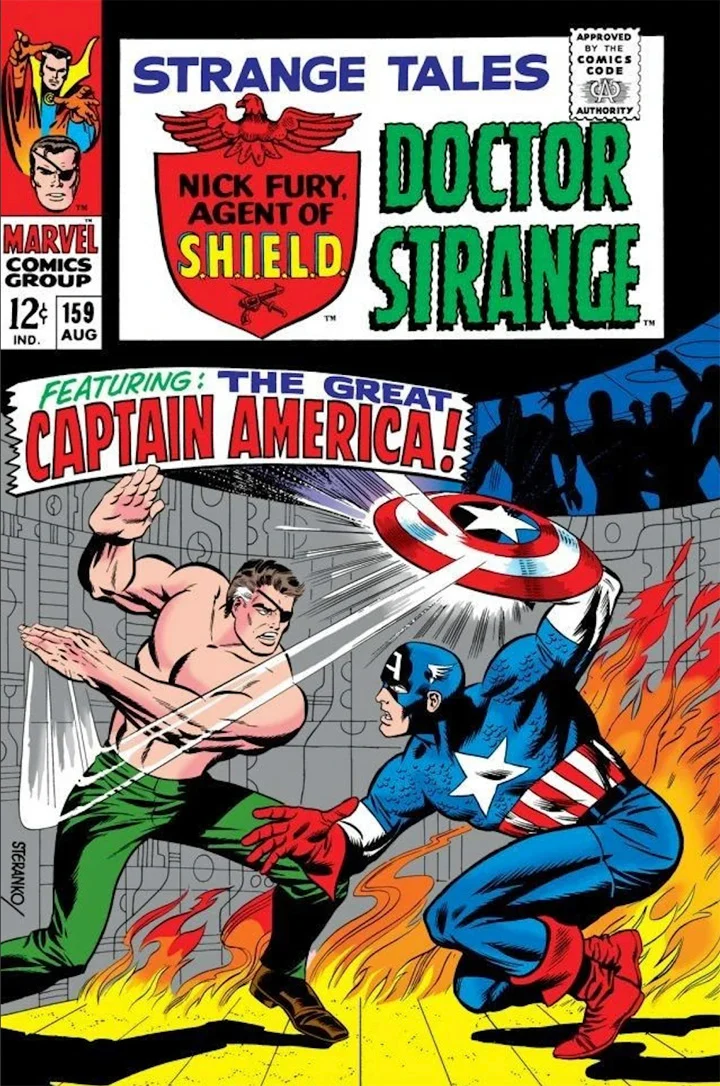
I was only a little kid (7.5 years — I checked) when I first discovered Jim Steranko in Strange Tales #159. (In fairness, I might have discovered him an issue or two sooner, but it’s Captain America’s appearance on the cover that stands out in my mind’s eye.)

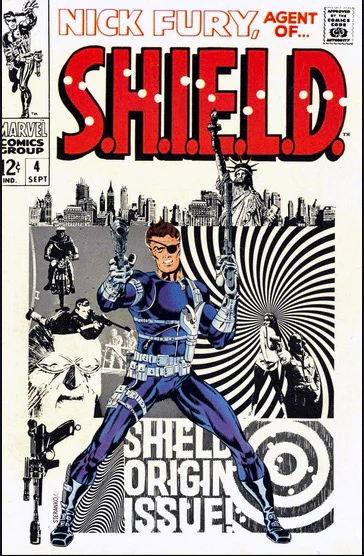
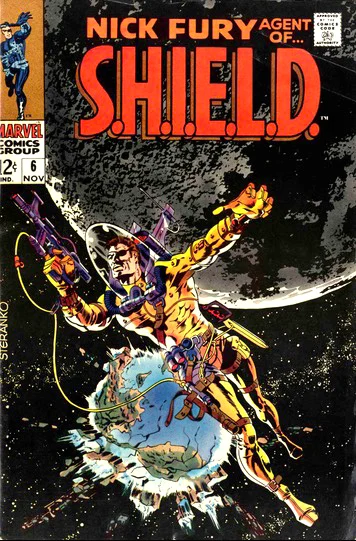
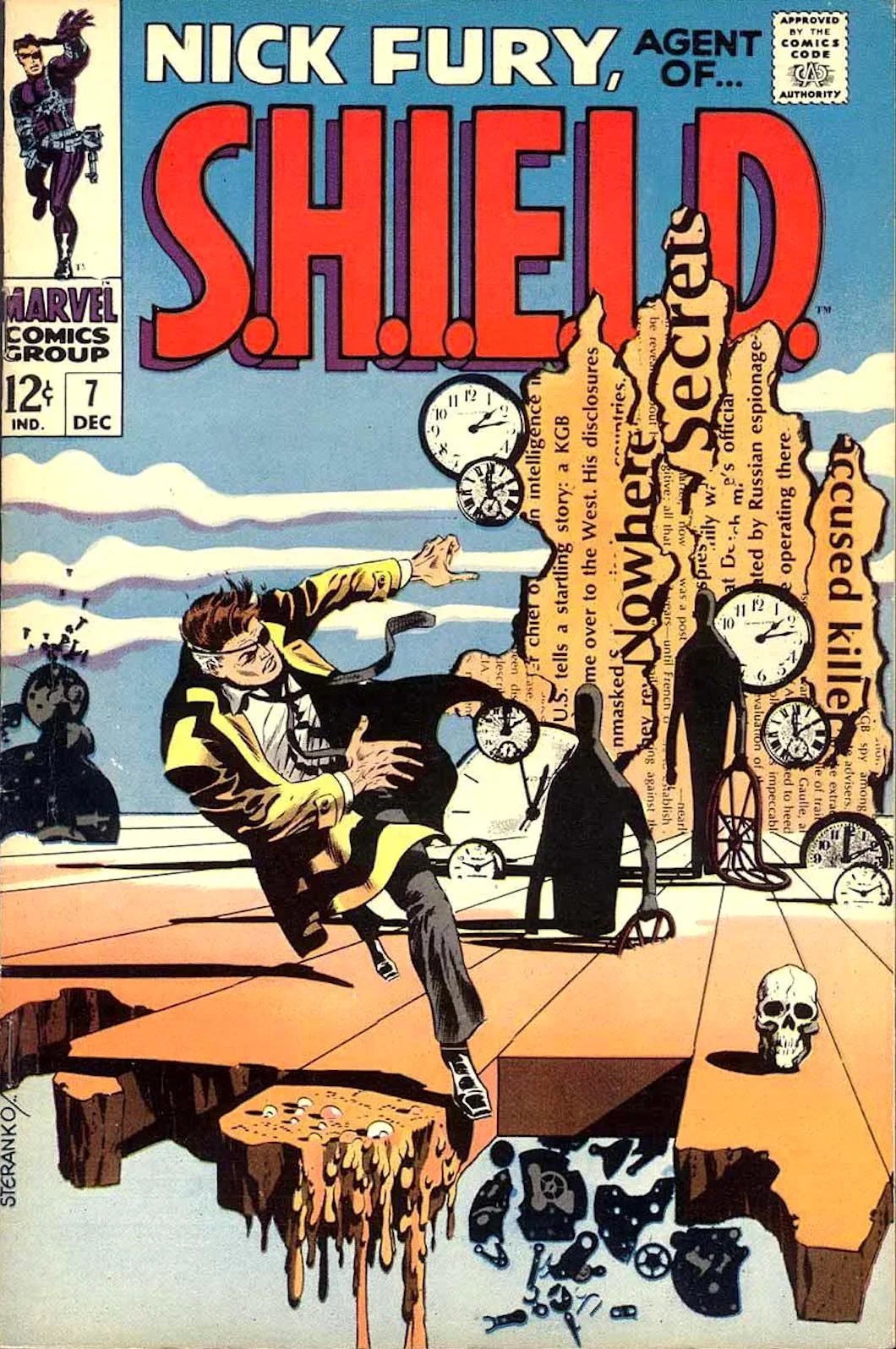
This is right around the time that Jim became STERANKO — no first name or other reference required.  In subsequent issues of Strange Tales, and then his short-lived legendary run on the solo Nick Fury series, I most definitely didn’t always understand what he was doing, but I knew it was dynamic, wild and special. Looking back at the material today, it remains so.

Jim holds on to most of his published artwork, so a cool specialty piece like this one is a rare opportunity to have something of Jim’s in a collection. And when — and if — that published art ever comes on the market, there is so little of it, and it will be in such high demand, that affordability is going to be a challenge. 

A big one.

Seth — Reflections Of A TV Host

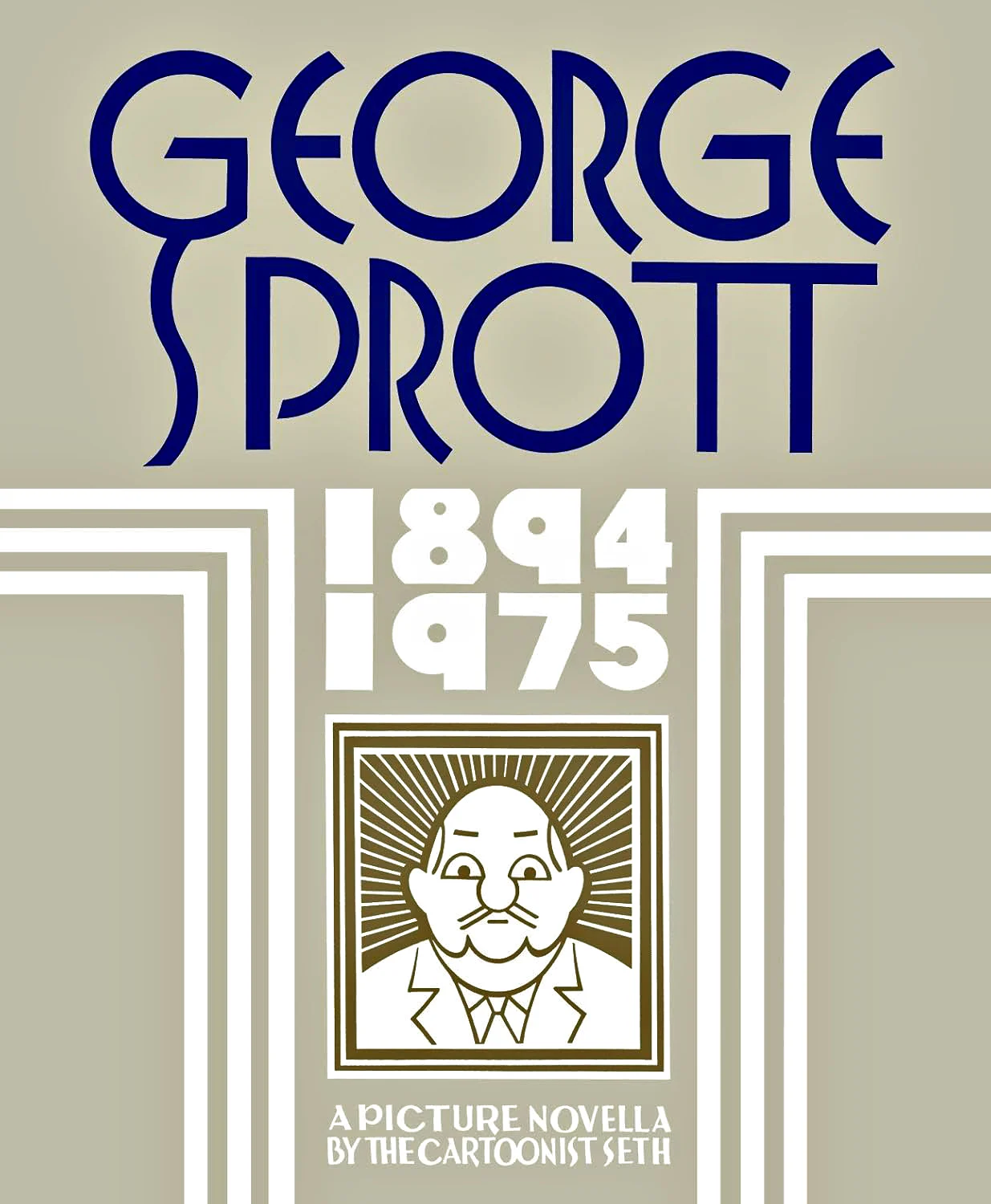
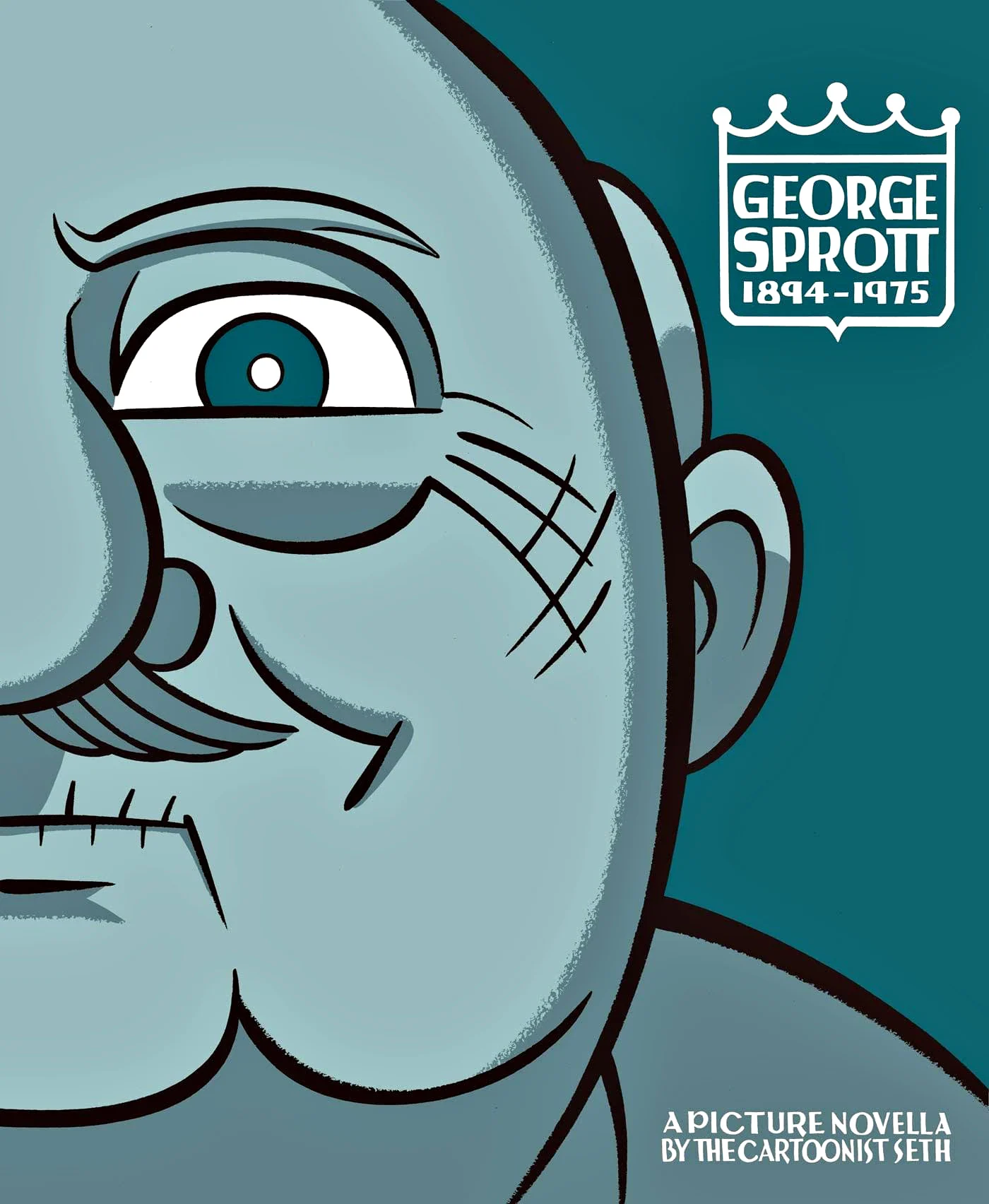
George Sprott: (1894–1975), 2009

Here’s a terrific page from a terrific artist and a great graphic novel: George Sprott: (1894–1975), a biography of a fictional Canadian TV personality.

I believe this color page was created exclusively for the graphic novel to flesh out the story. Sprott was originally serialized in the pages of the New York Times, with each strip its own story, and those originals are black and white.
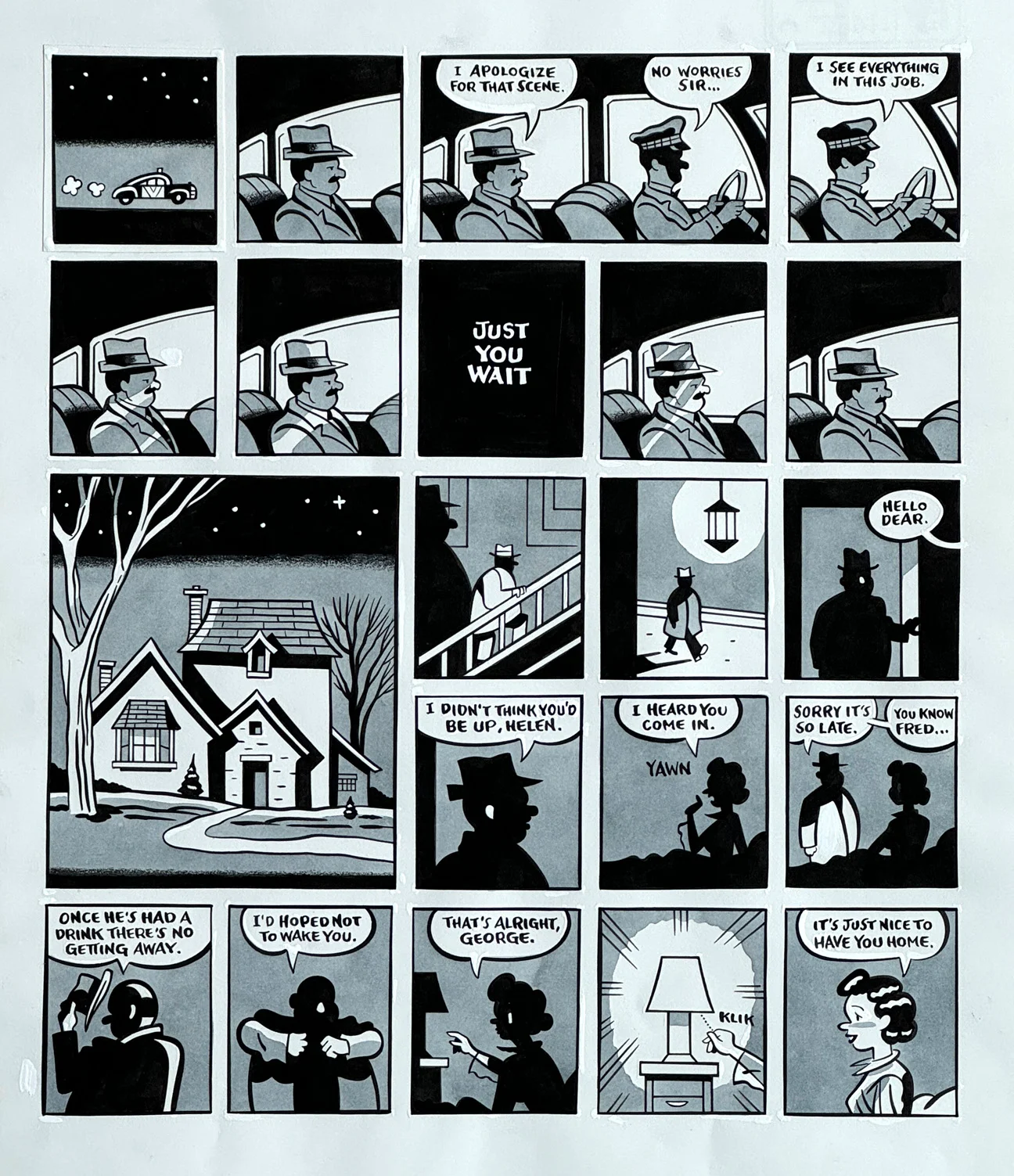
As noted previously, Seth (Gregory Gallant) is one of the most underrated “indie” artists of his generation. His beautifully clean art and his quiet, methodical storytelling (along with a wry sense of humor) are absolutely delightful.

Pro tip: Seek out the hardcover (below left) as opposed to the softcover (both out of print, but still plentiful) because the much larger trim size is more effective for Seth’s storytelling style utilizing smaller panels.

Frank Frazetta — A Bright Comet

Johnny Comet Daily Strip, June 5, 1952

This is the second Frank Frazetta Johnny Comet original strip I’ve owned, and it’s a vast improvement over the first.

William Wray, a very talented artist himself, says it best:

“That’s a great one — you got the drama, you got the cute girl, and the comedy poses.”

The short-lived Johnny Comet / Ace McCoy strips have been collected numerous times (see below) but we’ve yet to see an “ultimate” collection, complete, restored and properly formatted.

Of the existing collections, my personal favorite is the Eclipse hardcover, (or softcover) from 1991 which is similar to the horizontal Library of American Comics (LOAC) strip format, although it’s missing a few strips. It must have been somewhat over-printed, because there are still plenty of copies out there.
While I was working on this post, I happened to see a fun Dave Stevens tribute (Rocketeer) to Frazetta’s Johnny Comet on the great Facebook group, “Comics Swipes.” (H/T Arty Freeman).
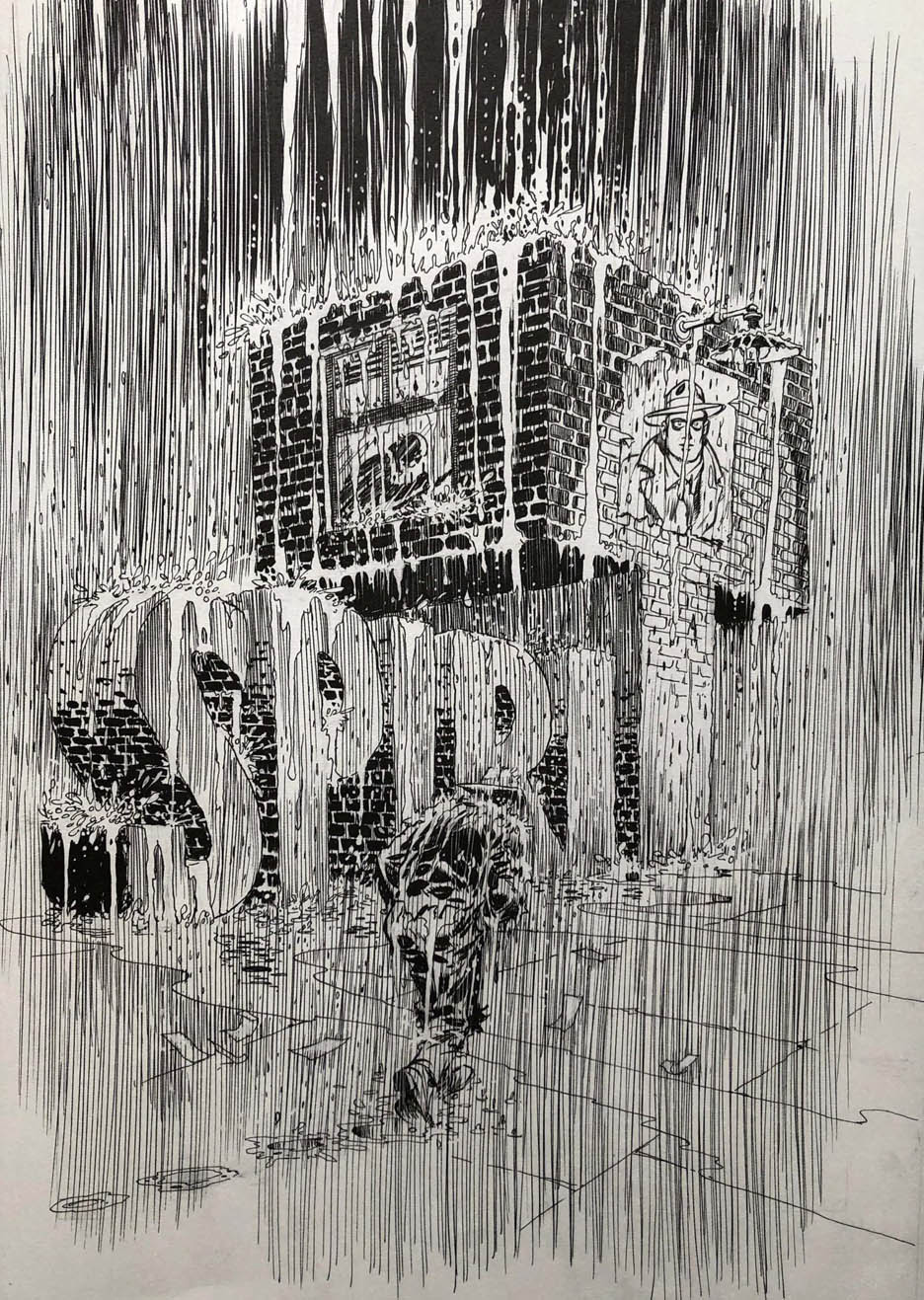
Will Conrad — A Spirited Tribute

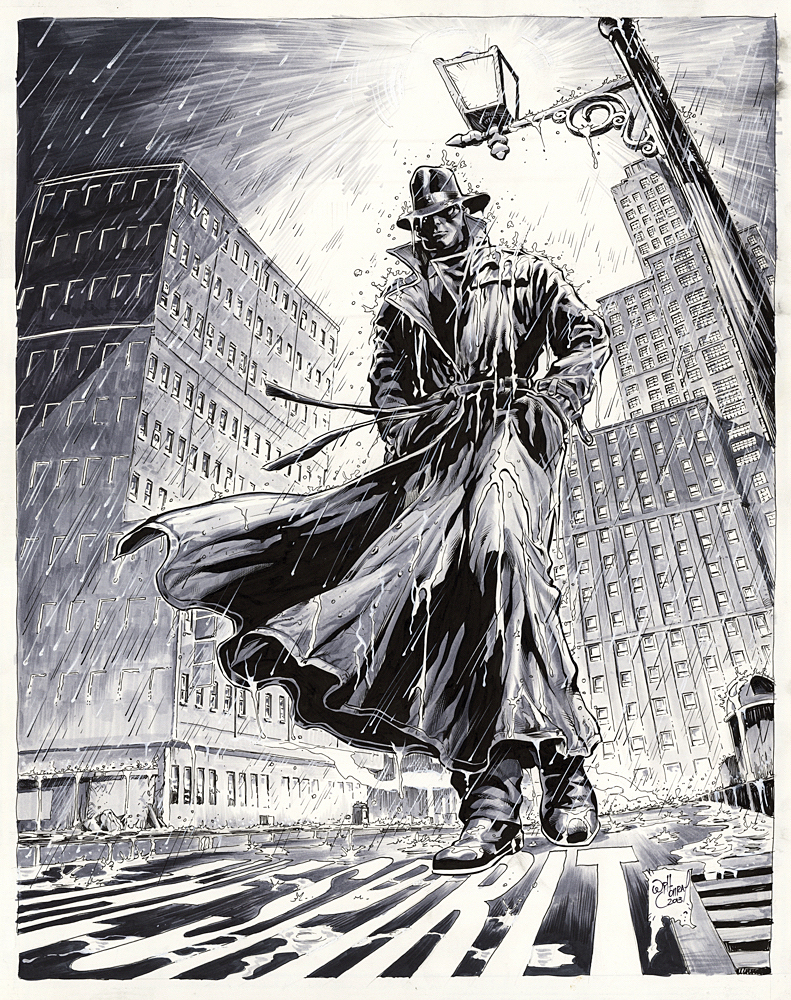
Spirit Commission, Tribute to Will Eisner, 2003

Celebrating “Will Eisner Week” and the 85th anniversary of The Spirit, with a repost of an early blog (2020). I finally framed this gorgeous piece a few weeks ago — and it’s even more stunning.

The very talented (and underrated) Brazilian artist Will Conrad is a self-professed Will Eisner geek. When he heard that Eisner would be attending a local convention, he labored over an over-sized Spirit piece to show Will, who was flattered and supportive.

Will held on to the piece for some time and tweaked it a bit to the point where he considered it “finished.” He knew how much I loved it, and after some unusual patience on my part, he ultimately let it go. (Thanks, Will!) 

“Sometimes Eisner used an empty street as part of the story. When he drew fog, the page was damp.

And the rain, always the rain, dripping off everything including the Spirit logo. He lingered over environments until you could almost smell the cheap hotel rooms, taste the tension, or feel on your flesh the chilly pall of a rain swept street.”

— Jim Steranko, History of The Comics, Volume 2

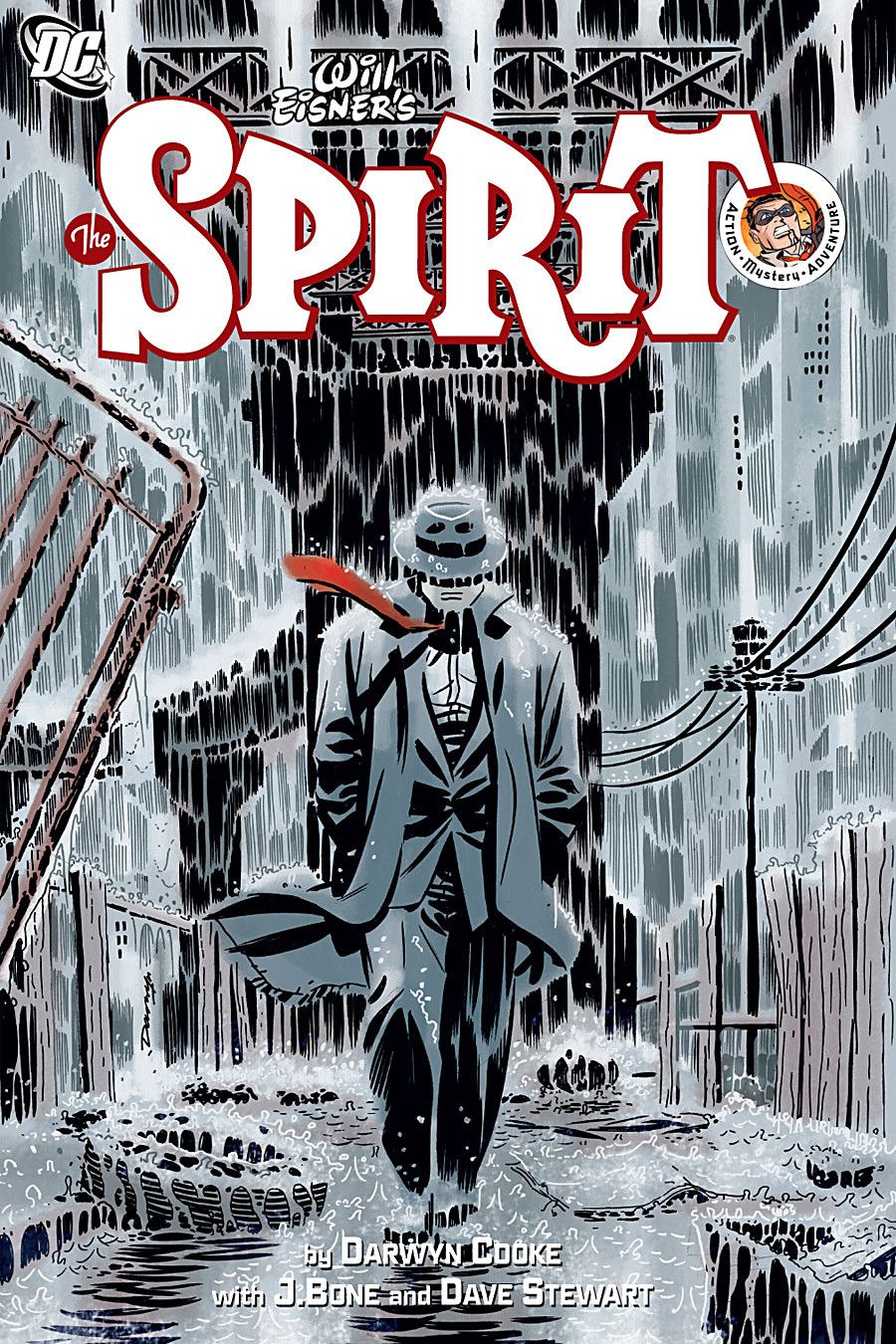
Raining on his parade — Eisner’s Spirit page from 1996 and Darwyn Cooke’s cover from 2009.

Jim Silke — A Great Century

American Century #21, February 2003

RIP Jim Silke, the multi-talented artist / art director/ writer who died last week at the age of 93. A great century (ok, nearly) indeed.

One of my favorite facts from Silke’s career is that he essentially started his “new” career as a comic book artist / writer in his early 60s.

Repeat: He started in his early 60s.

I acquired this wonderful painted cover late last year, part of a series he created for Vertigo’s American Century title.

A retro classic. 

And readers of this blog, especially any who visited me at the late Liberty Station IDW Publishing offices, know I definitely have a thing for old newsstands. (FYI, that’s Action Comics #183 from 1953, bottom right.)

Gil Kane & Wallace Wood — In Brightest Day…

Green Lantern #69, June 1969

Another checked box on the art bucket list: Green Lantern, pencils by Gil Kane and Inks by Wallace Wood, from the only GL issue (#69) they worked on together.

This dynamic page, created during the latter part of Kane’s run on the series, nicely showcases the artistic chops of both Kane and Wood. Although Woody was often known for completely overshadowing his pencilers, this issue’s collaboration is excellent — Wood adding his sleek polish to Kane’s imaginative storytelling and skillful figure work.

Green Lantern was all over the map during this period — story and art teams were always in flux, and it’s clear the book couldn’t find its footing. Ultimately,  that editorial challenge proved to be a boon to comics and DC specifically, when a half year later, Denny O’neil and Neal Adams took over, added Green Arrow and revamped it all. At that point, what did they have to lose?

The rest, as they say, is history…

Robert Crumb — NYAHH!

Motor City Comics #1, April 1969

Boingy Baxter is a classic early peak Crumb story that originally sold complete in 2017. Broken up in 2024, I managed to acquire a great page late last year. Here’s the description of the story from the original auction sale at Heritage:

“Speed freak Milton “Boingy” Baxter gets tranked out in Detroit and has to bounce his way out of a marriage and on to China, in this crazy five-pager. Motor City Comics was R. Crumb’s most straight-forward series from his early peak period, with less emphasis on sex and drugs (although not completely lacking in that department). It’s fun stuff with a lighter touch, particularly this story, with a 1940s-style title character reminiscent of slick deadbeat Al from the radio comedy My Friend Irma, who always called his girlfriend “Chicken.”

Motor City Comics #1 appeared at almost the exact same time as Zap #4 (see below), most infamously known for “Joe Blow”, a Crumb story that ultimately resulted in an obscenity conviction for some Zap retailers, and a long-term decline in the availability of outlets for underground comics.

It is definitely cool to check off a Crumb page from the original art bucket list, especially a terrific early one that is suitable for display in any setting.