Once again, another San Diego Comic-Con is I the books. I’ll be posting some photos in the next few days, but in the meantime… Here is Galactus entering the main room for the first time on Thursday I believe; 10-12 feet of one of the greatest costume designs and executions I’ve ever seen.
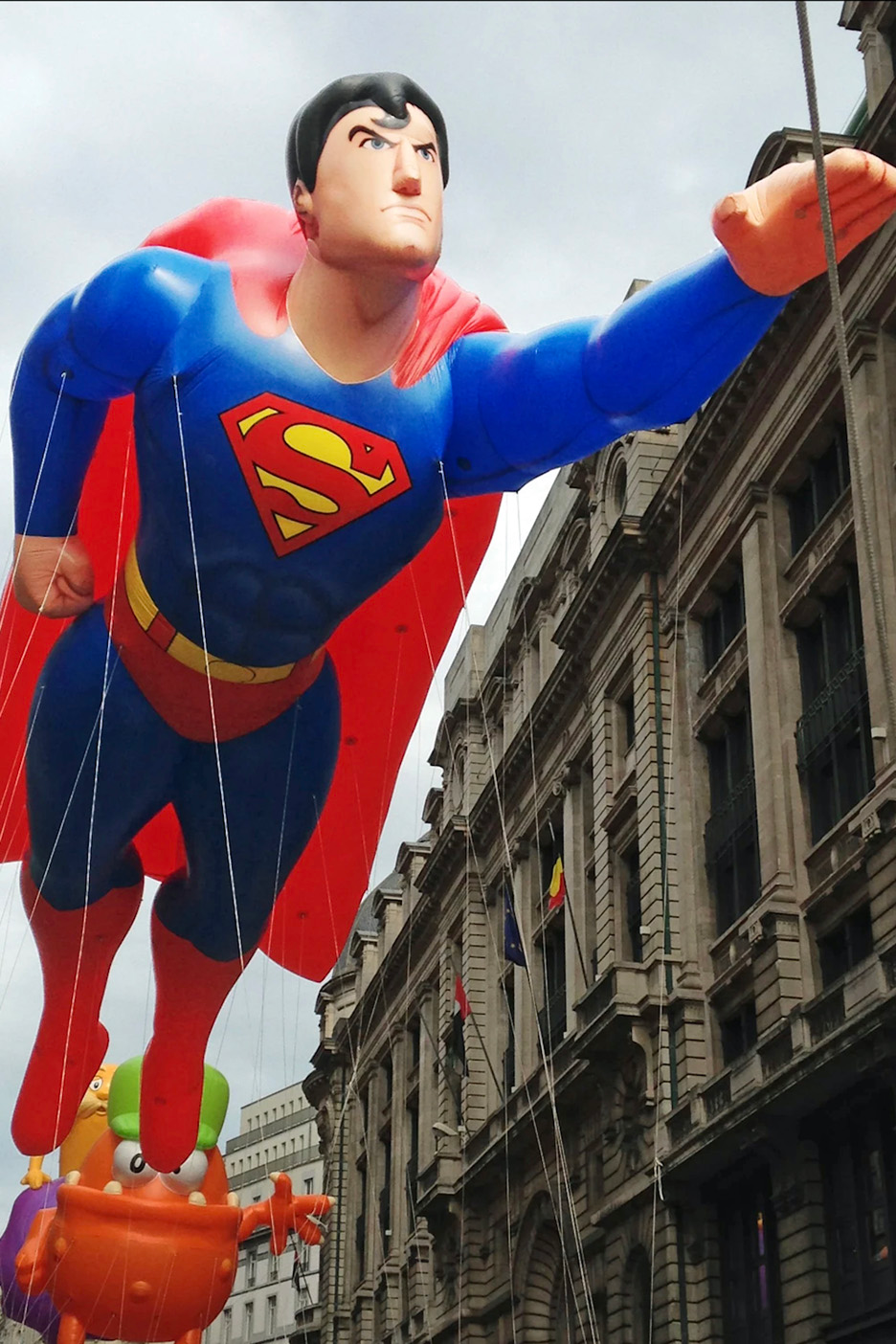
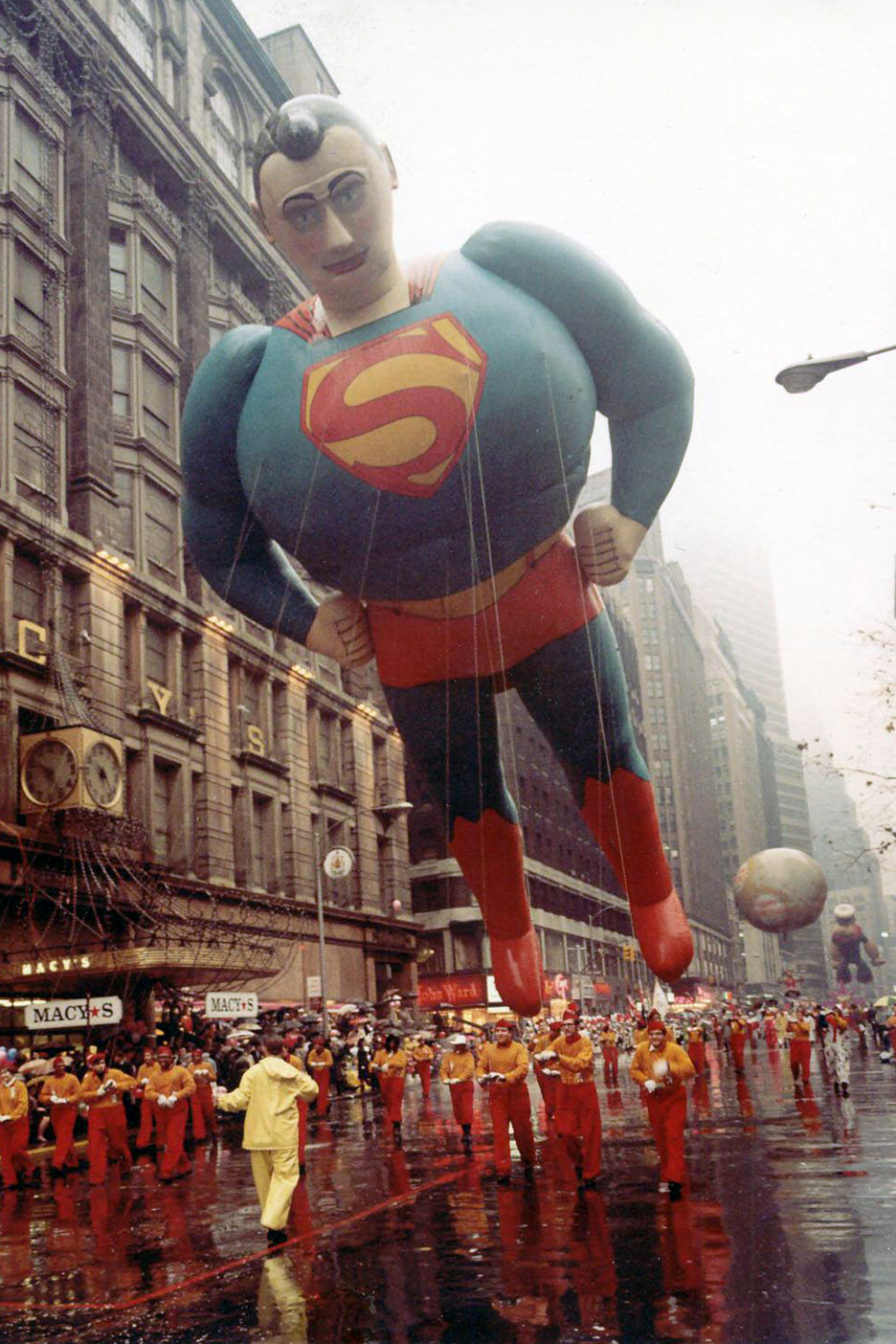
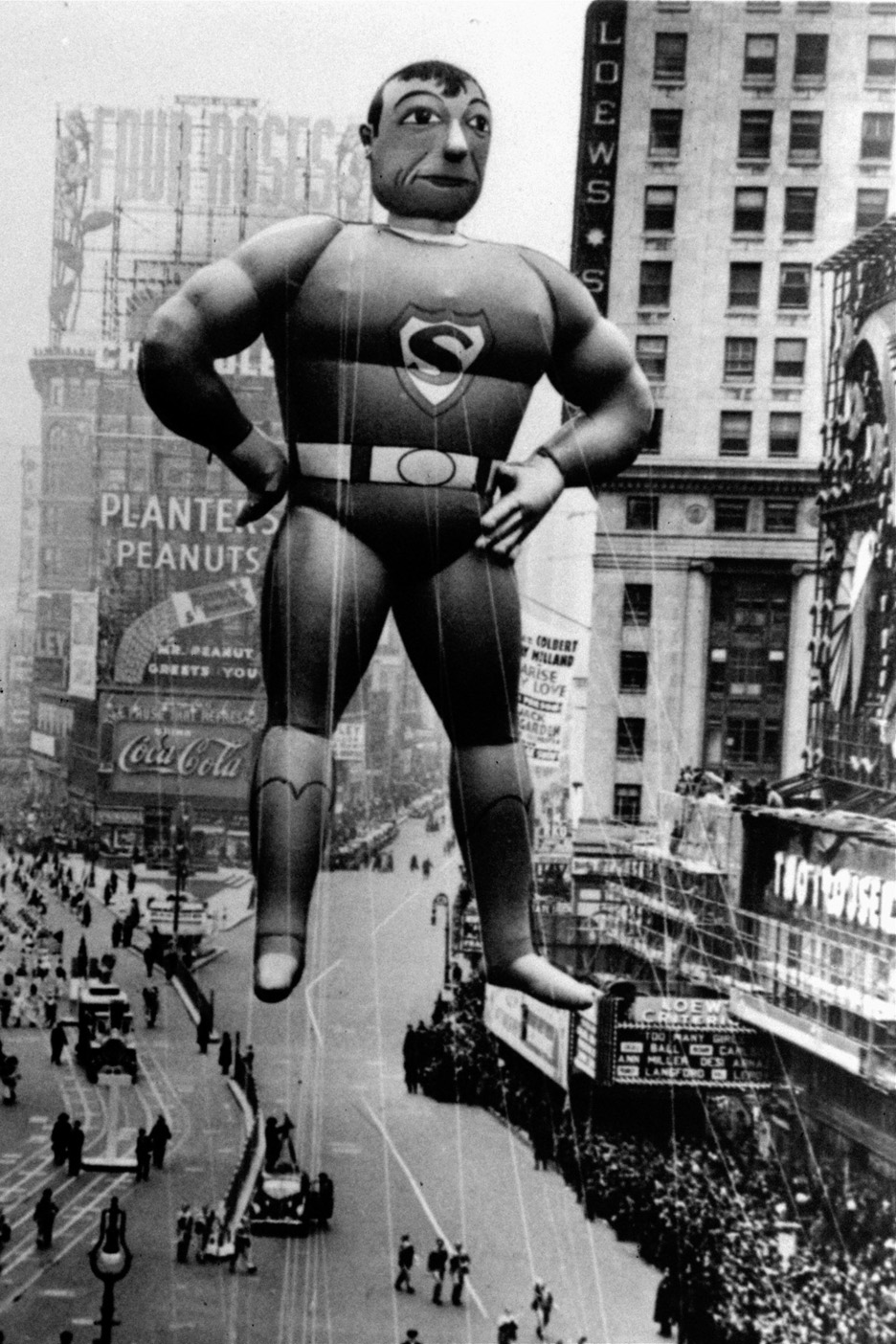
Who would’ve thought that Superman — the true beginning of the DC Universe, and the ignition for the fire that became the world of modern superheroes— AND The Fantastic Four — the first superheroes in the modern Marvel Universe — would hit the silver screen with major reboots at the same time? Definitely an unlikely coincidence.
So…
Here are all the Superman posts on the blog the last five years…
Let’s say you have a terrific Superman original art page from the equally terrific Arthur Adams…
And let’s say someone else also thinks it’s a terrific page — and makes you a fair offer for it…
So, you say to yourself: “Well, I’ll sell it, and get another terrific Adams Superman page down the line…”
But somehow, you actually don’t.
And then, one fine day (actually, a rainy one — but I digress), years later, you’re flipping through another collector’s portfolio, and you stumble on… the same page you had owned.
Offered at a much higher price than you received for it, naturally. Enough time has elapsed.
And you stare at it, and mutter to yourself: “Why did I sell this?”
So… you swallow your pride, and after some minor haggling, you purchase the page.
Congratulations! You’ve just discovered yet another inventive way to shred money — to get right back to where you started.
Superman Sunday Strip, (Syndicate Proof Sheet), December 15, 1940
Not quite original art, this is a syndicate proof sheet for the Superman Sunday comic strip, from December 15, 1940. The proof sheets are printed on higher quality paper, and the colors are extremely vivid — which you can see even though I photographed this example under glass.
(For an amplification of how this proofing process worked, see the new edition of Jack Kirby’s Sky Masters Sunday strips, which explains the process in some detail.)
I enjoy these early strips — Shuster’s art here often seems more polished than the comic books, where some of the art suffers from inconsistency. That’s of course not shocking: Superman’s explosive —and nearly instantaneous —popularity meant that Shuster, with the help of assistants and other artists, had to keep up with a prodigious amount of publishing.
This proof came from co-creator Jerry Siegel’s personal collection , and I was fortunate enough to snag one with a giant robot. (Plus, it is signed!)
Superman, Lois AND a giant robot. Seems like a hat trick to me.
A tear sheet from the Houston Chronicle features the strip in a classic half page format.The original classic Superman strips (first reprinted by Kitchen Sink) are available in at least four different book formats; although they are all technically out of print, most are readily (and inexpensively) available from secondary booksellers. Because they are so easy to obtain, when we launched the Superman reprint program at IDW Publishing in 2013, we started with the next group of strips.Superman fought the “Bandit Robots” a few months later on the cover of Action #36 (great art by Fred Ray.) But… there’s no matching story on the inside!The Man of Steel fights similar (albeit not quite identical) robots in 1941’s “Superman and the Mechanical Monsters,” the classic episode of the wonderful Fleischer animated series of cartoon shorts.
Once again, celebrating The 4th of July with a cool Captain America page seems like a an appropriate — albeit obvious — idea.
This year, Steve Epting helps us out, with a great Cap (and Sharon Carter) page from the Ed Brubaker story arc that introduced readers to the Winter Soldier. (AKA Bucky Barnes, if you’ve been copying Rip Van Winkle the last 20 or so years.)
Chances are Bucky, as a Russian agent, wasn’t celebrating in those days. But I’m guessing he’s made up for it more recently.
Pete Poplaski turns ordinary looking white-collar criminals into a rogues’ gallery suitable for Dick Tracy in this terrific cover for the short-lived “underground” comic, Corporate Crime. (Two issues, two years apart in 1977 and 1979.)
I’ve said plenty about Pete previously, but it deserves repeating: It’s amazing how he manages to capture so many classic art styles, so well. His originals (and I’m grateful that I own a few) are astonishing.
Seeing this cover for the first time a few months ago made me wistful that we (IDW Publishing) never pitched DC a Batman / Dick Tracy crossover set as a period piece in the 40s. Not sure if Pete would have been up for illustrating an entire series, but I certainly would have hired him for the covers.
I believe Mad Cave currently has the Tracy rights: Guys, it’s never too late.
If you want to sample the golden age of more “traditional” crime comics (1948-1954) you have plenty of opportunities with a plethora of terrific modern collections . Coincidentally, Poplaski also drew the cover for the Crime Does Not Pay sampler from Dark Horse Comics. (The original for that cover also came up for auction recently, but it was too graphic for my own taste.)
Family Values — The fifth Sin City yarn (and the only one released as a straight graphic novel instead of individual comic issues) — seems to be at the lower end of the rankings for Frank Miller Sin City fans. If you ask me (and I know you didn’t) this is a bad rap.
While definitely more straightforward and less rich story-wise than some of the earlier tales, Family Values is a revenge thriller told well. Perhaps fans found it too conventional: Had Miller decided to make a few changes, it could easily be transformed into a Daredevil/Electra/Punisher story.
This art is from the terrific multi-page opening sequence. Dwight McCarthy visits the scene of the crime of a recent gangland killing, at night, in Volkswagen Beetle… in a blizzard. Beautiful noir storytelling — and perhaps the best-looking snowstorm to ever appear in comics. And has a VW bug ever previously looked menacing? Only Miller could pull it off quite this way.
“Pok Pok “indeed.
(And my folks were in the food business. How could I resist a splash page with a diner in it?)
Family Values has been offered in multiple editions, most recently (the red graphic cover) in a lovely deluxe format (8 x 12 vs. 6 x 9).
A prized possession: A classic “Uncle Duke” original strip from Doonesbury. Certainly, my favorite character from that strip. And a perfect gag for the over-the-top Duke.
Hunter Thompson, the incredible “gone” journalist (Fear and Loathing in Las Vegas, et al) and Uncle Duke had a love-hate connection. Duke was a hyper-exaggerated version of Thompson—boozy, wild, unhinged—who appeared from time to time in the strip. Legend has it that, at first, Thompson was cool with the characterization, maybe even flattered. But eventually, he became irritated, believing Duke made him look like a complete maniac. During a 1977 lecture at the University of Colorado at Boulder, Thompson commented that “some people grow up and want to be firemen, and some want to be president; nobody wants to grow up and be a cartoon character.”
Thompson also said he had no desire to meet Trudeau “because I might set the little bastard on fire.”
That said, toward the end of his life, Thompson reportedly told friends he had “made peace” with the Duke character, and the depiction no longer annoyed him.
And truly, Thompson and Duke will both live on a very long time.
A reprint of the strip can be found in the “Club Scud” book, as well as the fantastic Duke collection “Action Figure” which does indeed come with an action figure of Uncle Duke.
Muhammad Ali,Alternate Cover, TV Guide, May 10, 1975
A 20th century hat trick — in one piece of Bernie Fuchs art:
• A terrific illustration — by a talented illustrator, whose well-known commercial work was among the best of its era.
• A magazine, that in its day, was among the most widely read, and a staple in many American households, mine included.
• An astonishing boxer and cultural icon who, when he self-identified as “the greatest” made a nearly impeccable case for that title with his actions. My admiration for Muhammad Ali’s ability, tenacity and courageousness of his convictions remains off the charts.
This illustration is one of a few that Fuchs created for the TV Guide cover. Like the final published image, it’s simple, but amazingly powerful — and instantly recognizable.
Muhammad Ali caught the last train out nine years ago today, June 3, 2016. He was 74.
Here is a very dynamic page from a very dynamic art duo (sorry, couldn’t resist) of Ron Frenz and Tom Plamer. Following the terrific run by Walter Simonson and a few fill-in issues from Gene Day, Frenz took over as regular penciller; Palmer stayed on as inker, once again providing a smooth consistency to the art.
As for the story? Don’t let the cover blurb fool you. The quest For Han Solo most definitely did not end here; he wasn’t able to return to Marvel’s Star Wars series until a few months after the release of Return of The Jedi. (Issue #81, to be precise.) And again, Marvel’s creative team did a heckuva job with the little information they had ahead of ROTJ.