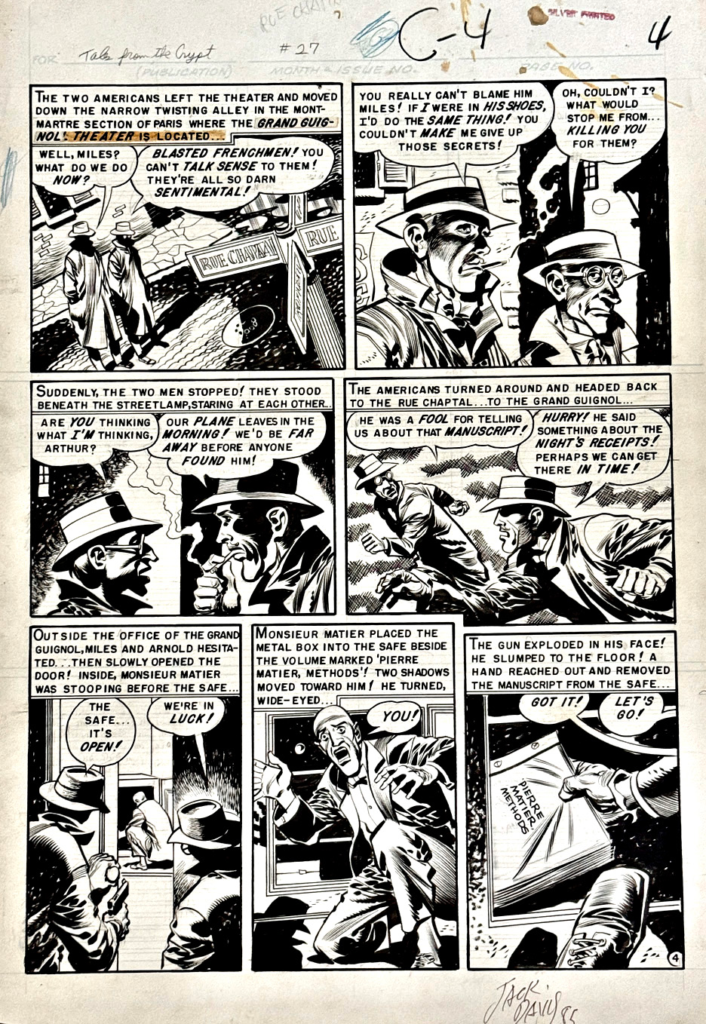
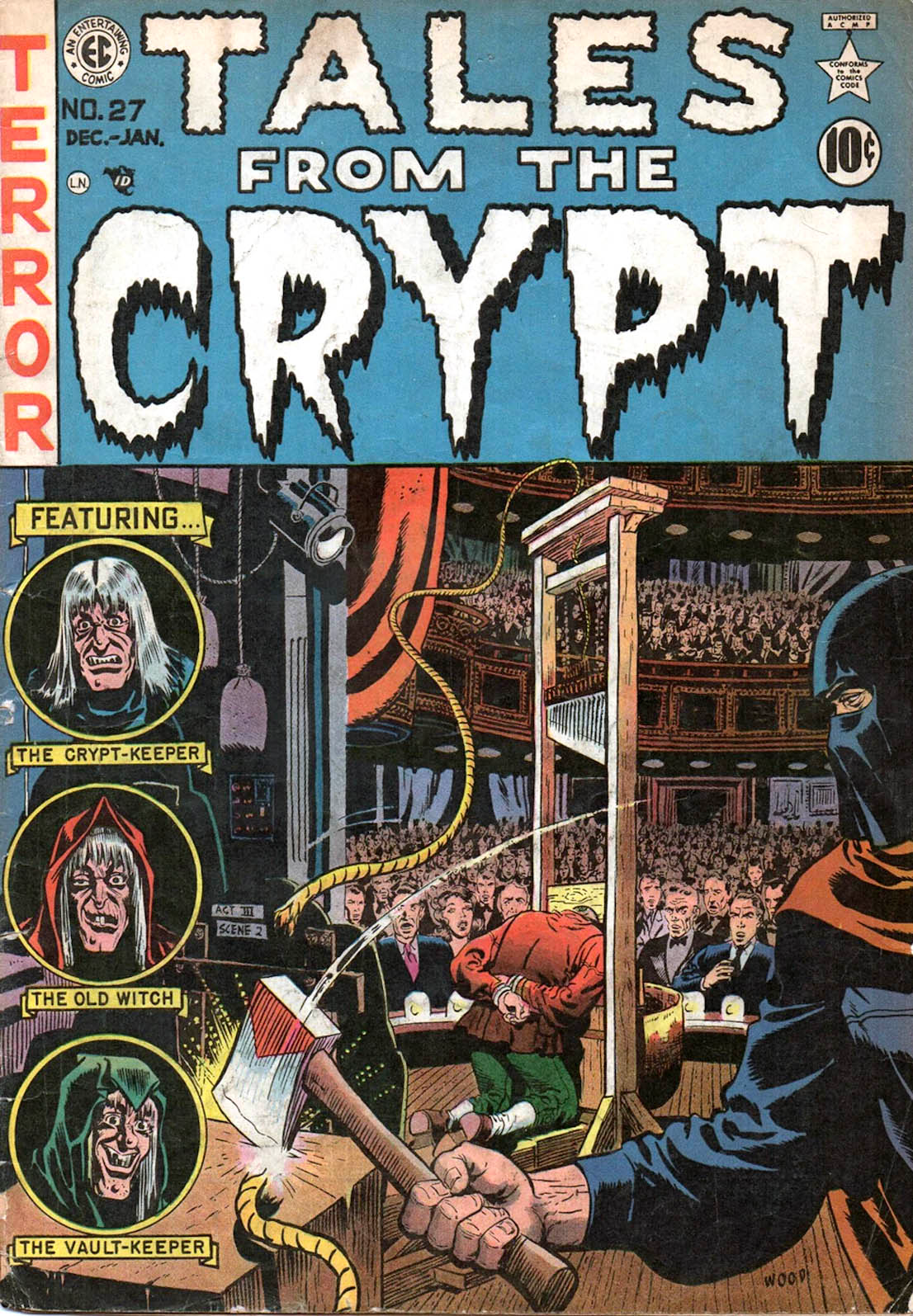
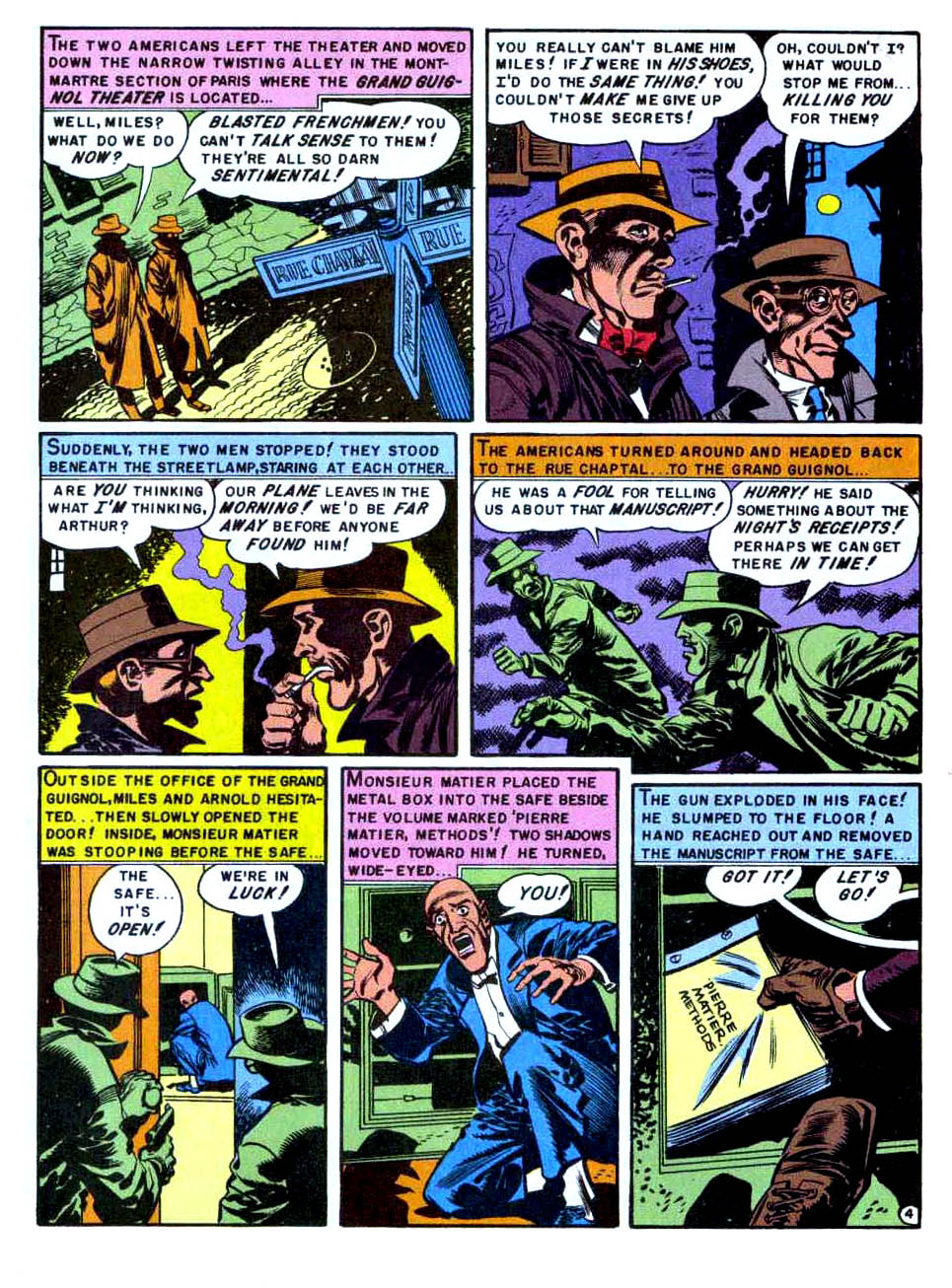
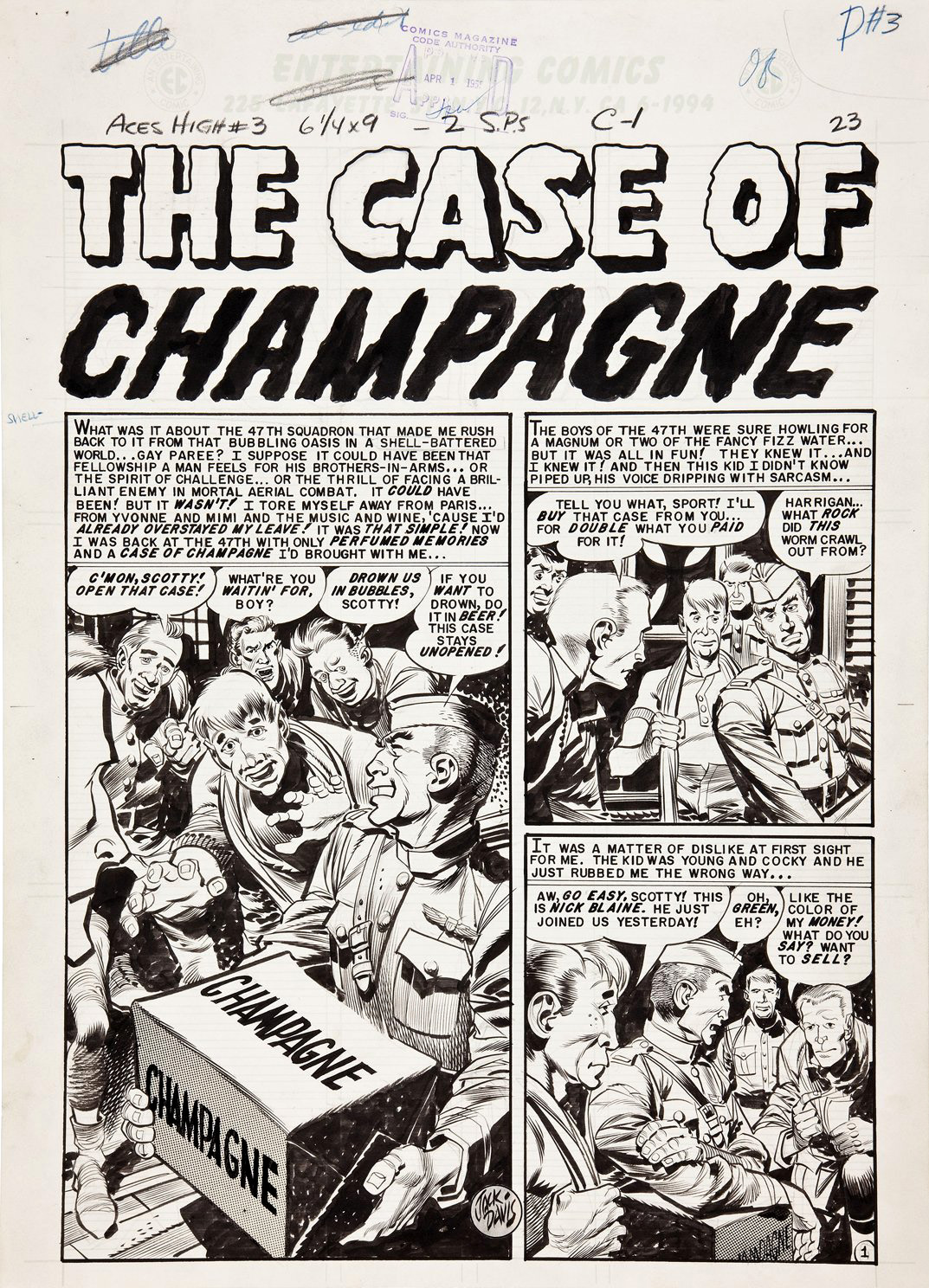
I love dynamic panel pages like this from Tales From The Crypt and EC’s other horror titles: Dark, foreboding, and yes, murderous — but without the gore. More film noir than horror, Jack Davis once again crafts the dramatic scene with a terrific balance of shadows and light.
Since I can remember, the prolific Davis has been one of my favorite artists, and he should absolutely be on any list of best commercial illustrators of the 2nd half of the 20th Century.
Side note: As one of EC’s youngest artists, he hadn’t quite turned 27 years old when he drew this.
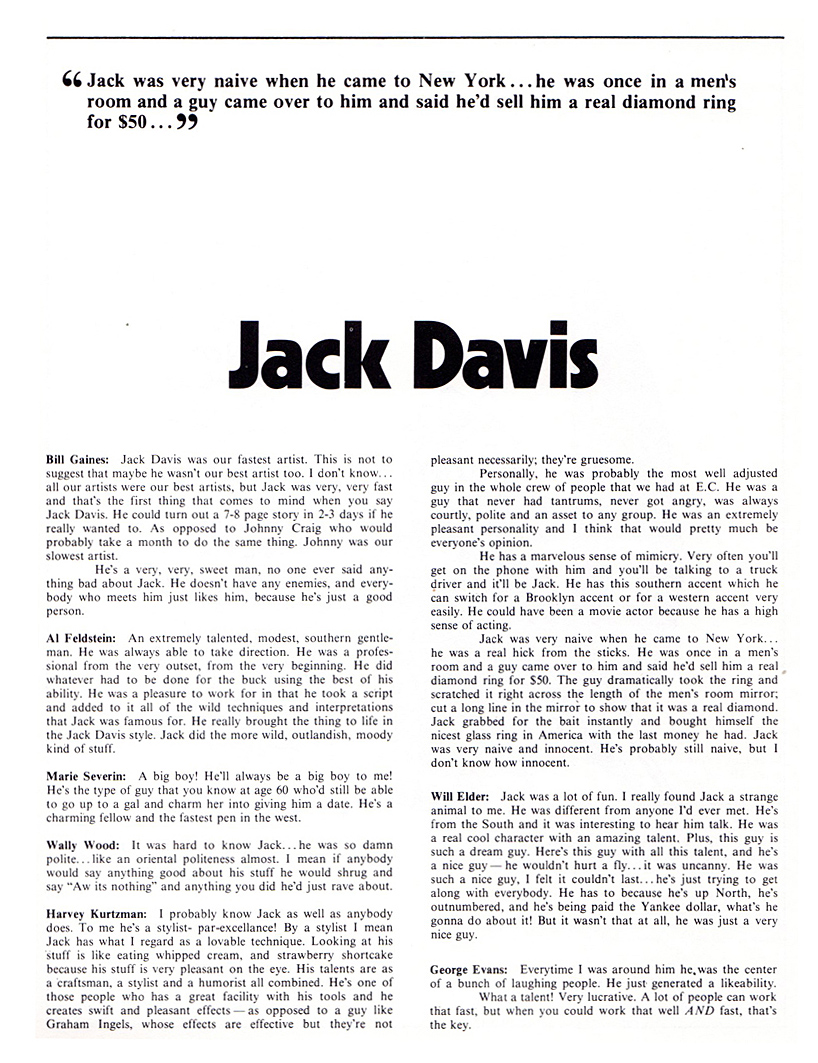
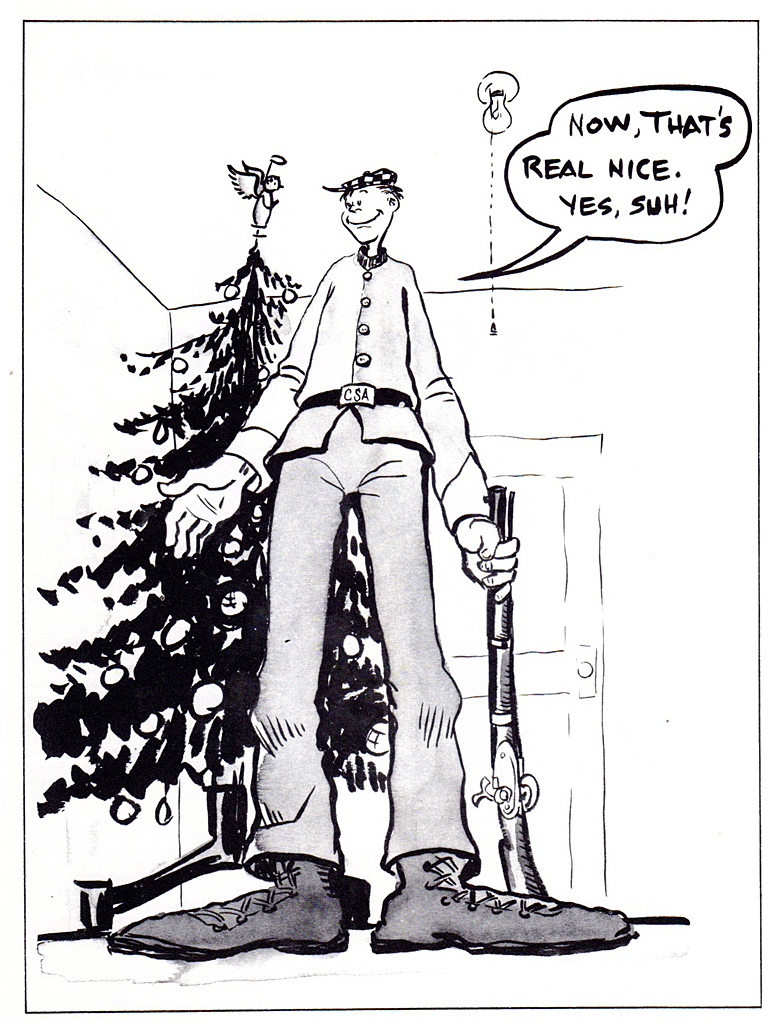
EC’s creators discuss the legendary Jack Davis for his profile in the 1972 EC fan convention.Art by Marie Severin.
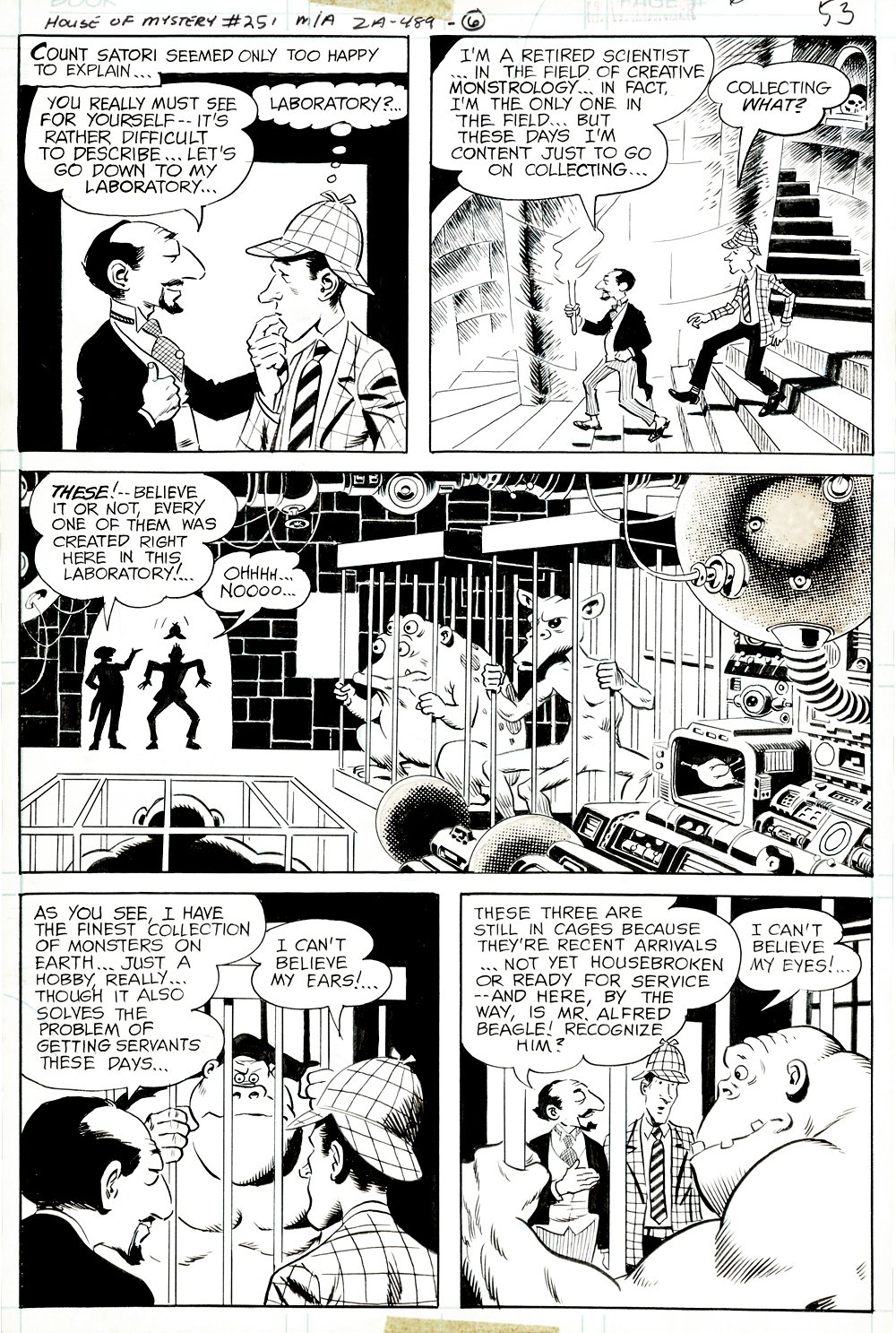
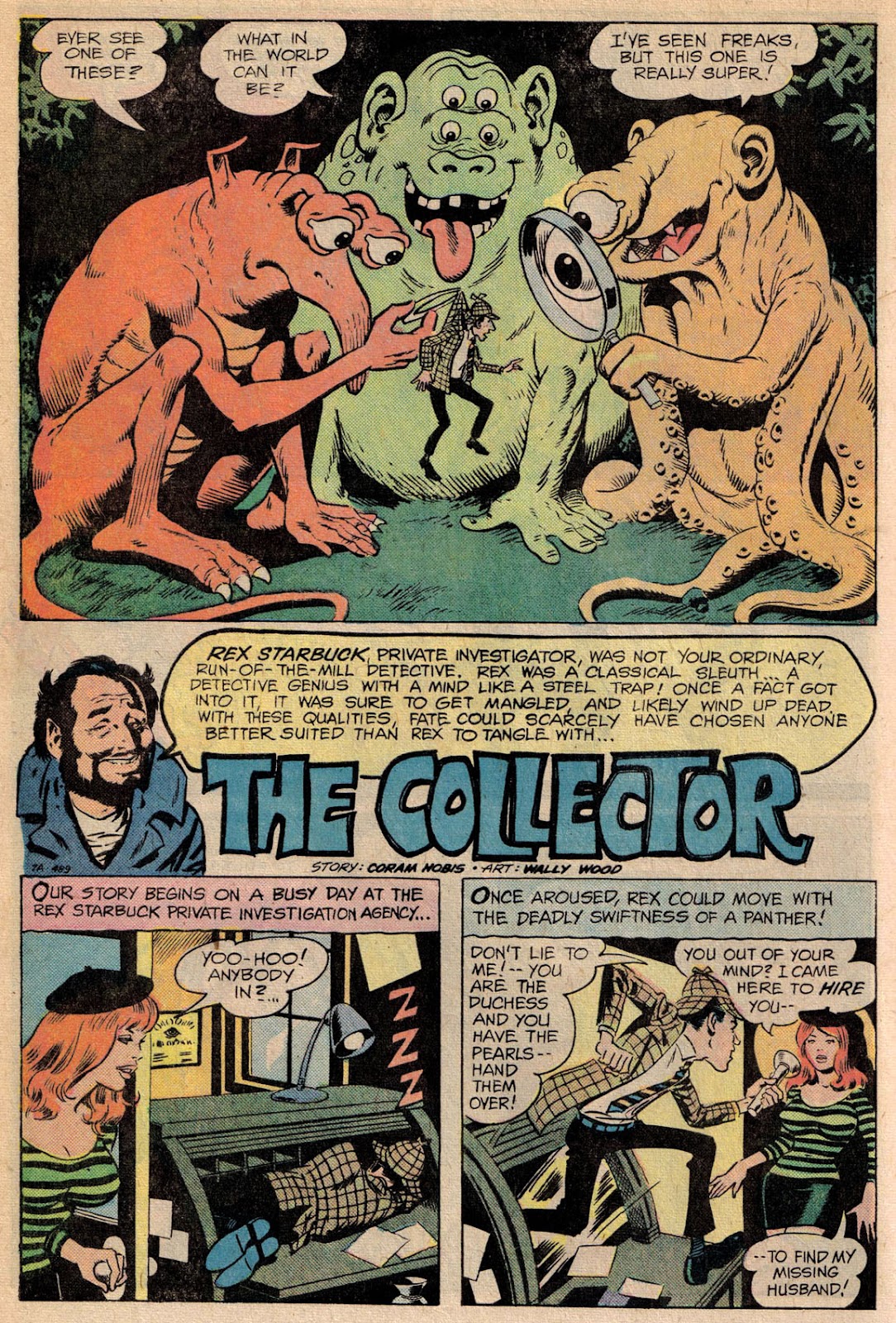
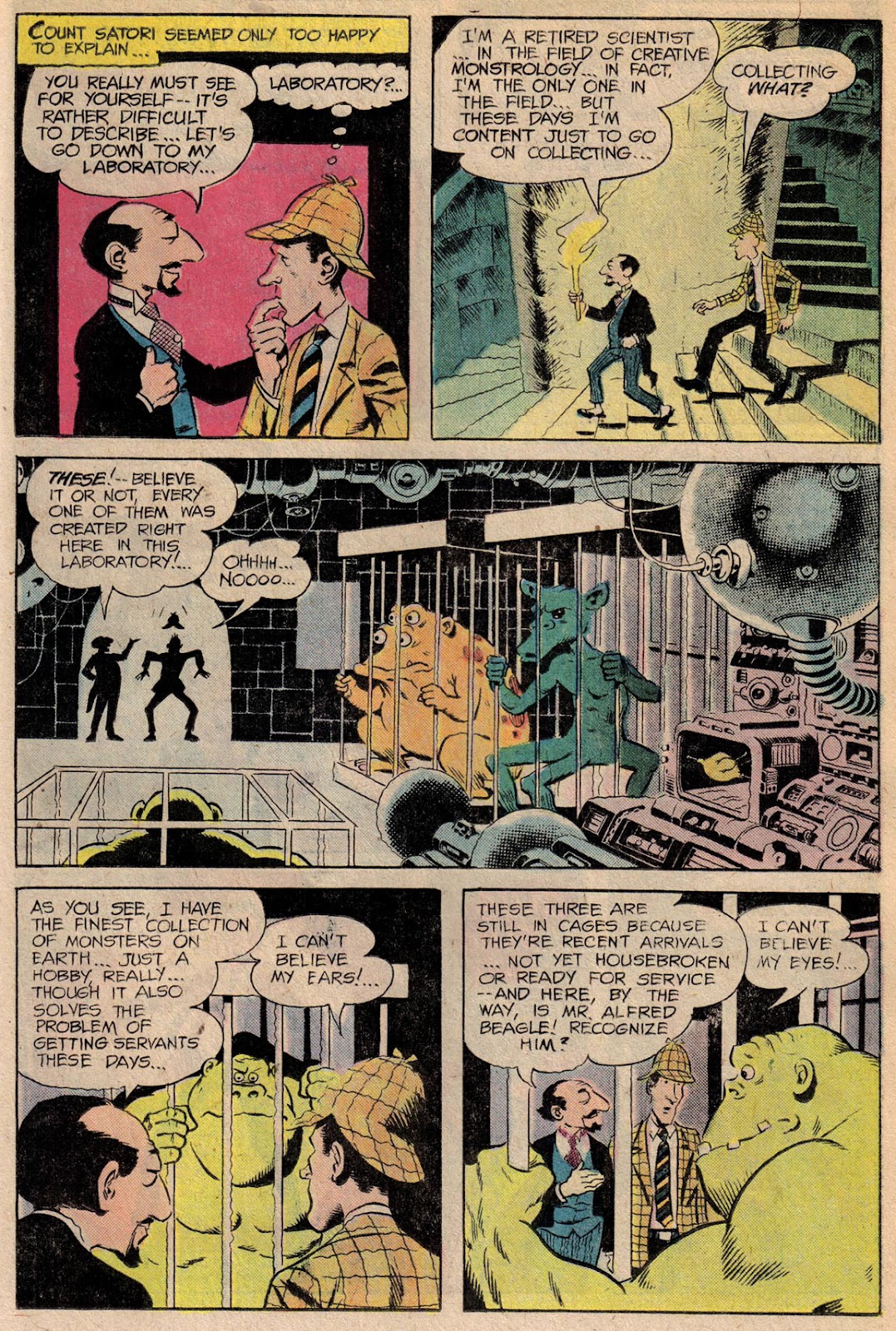
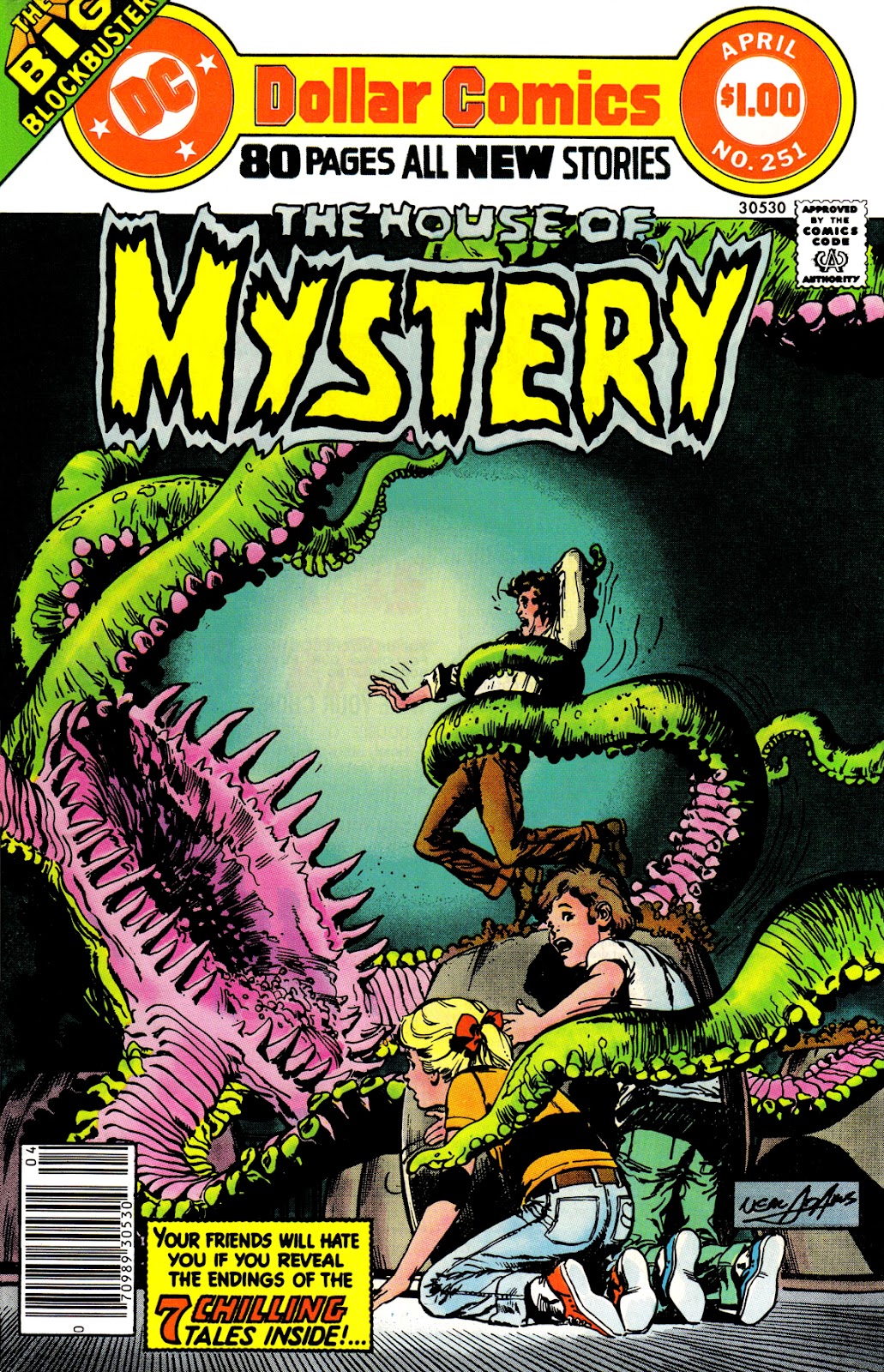
Please collect all the random and misc. (and typically GREAT) stories from the legendary Wallace Wood in one place — omnibus, compendium, DC Finest, whatever. I’m constantly discovering “new” storiesI’ve missed like this one, aptly titled “The Collector.” (Pencils and inks by Woody, blueline breakdowns by Al Sirois.) Reprinted only once, 40 years ago, in a cheapie digest.
Woody deserves better treatment.
Thank you for your attention to this matter.
Yr. Pal,
Greg
PS That middle panel page is such a great throwback to Woody’s classic EC days, isn’t it? The coloring doesn’t quite do it justice.
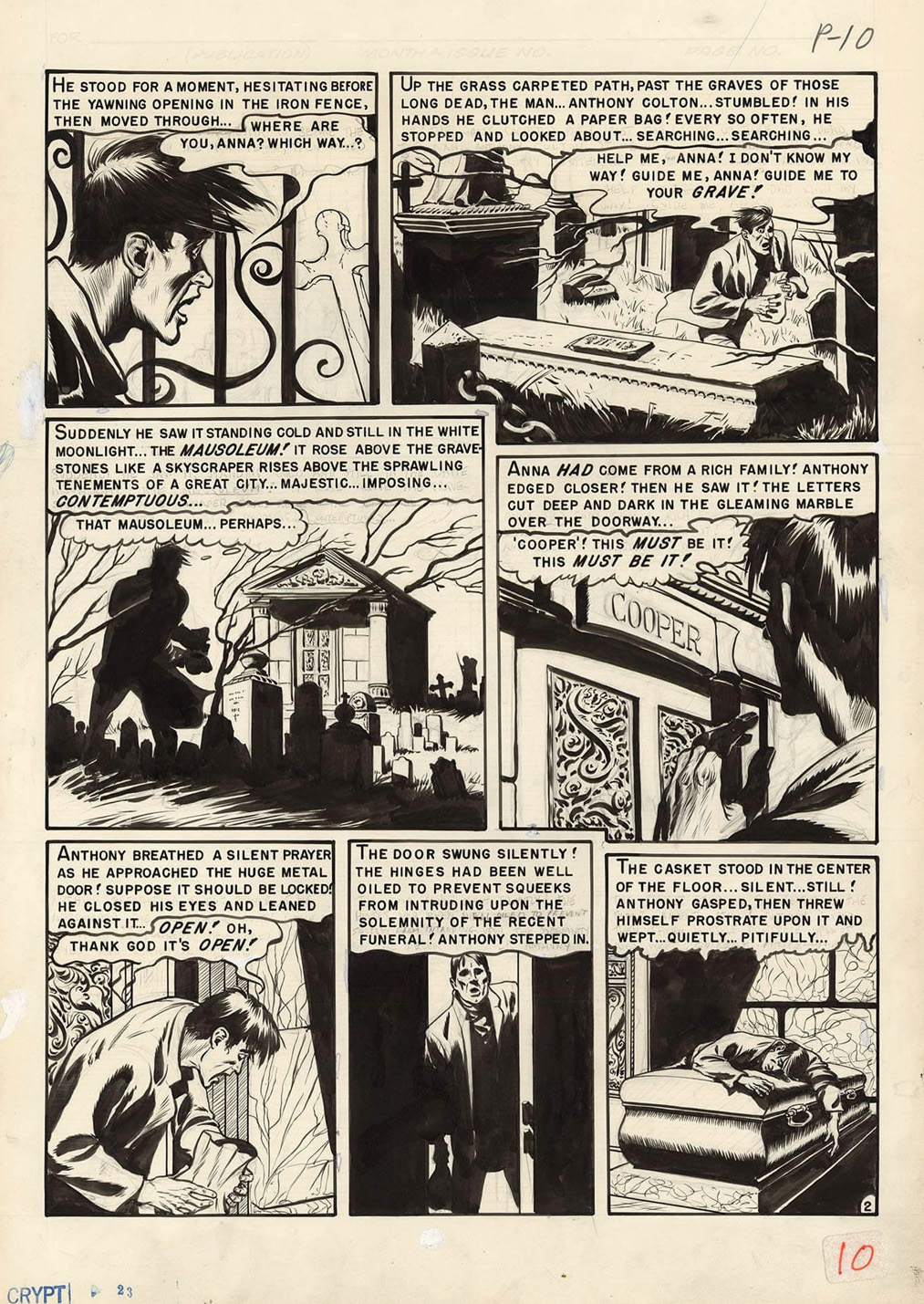
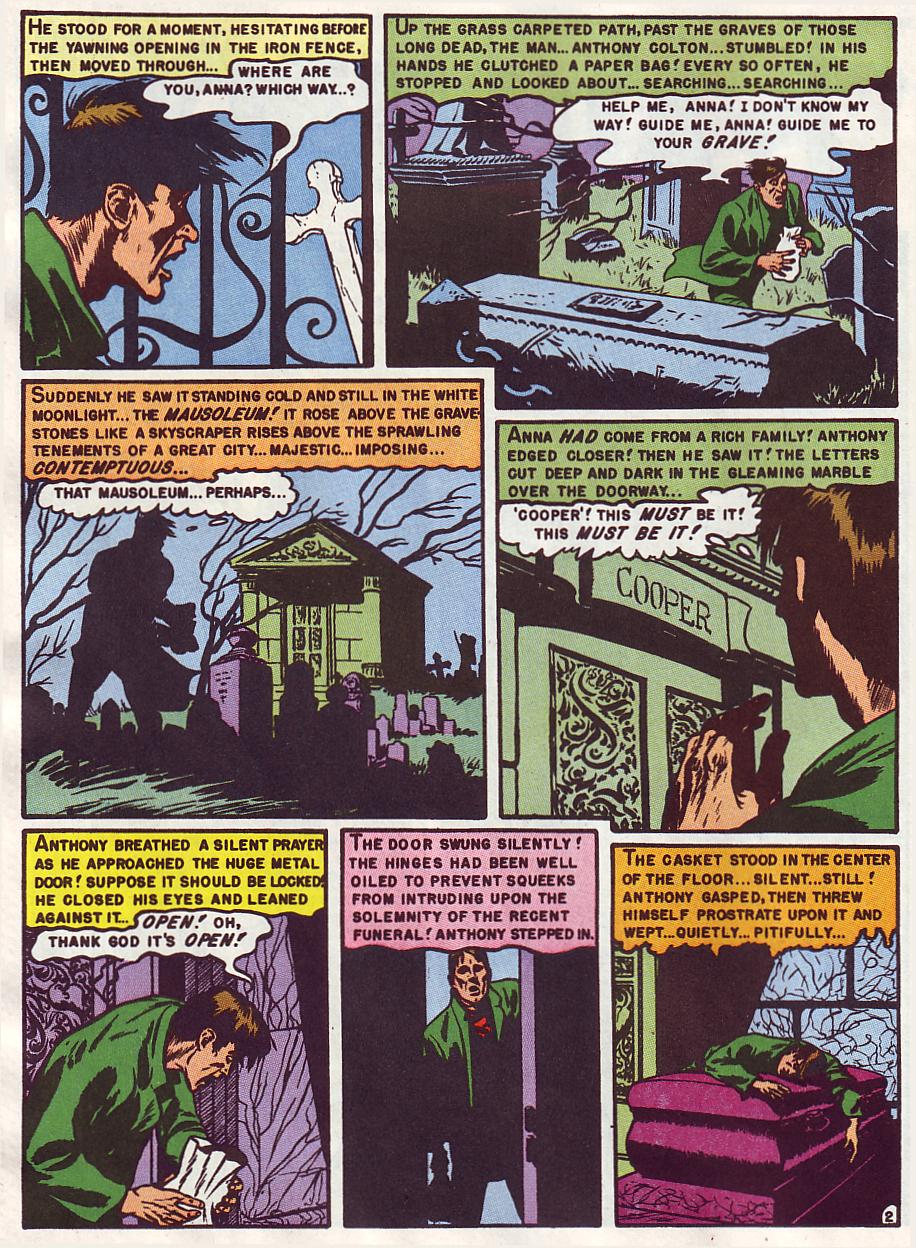
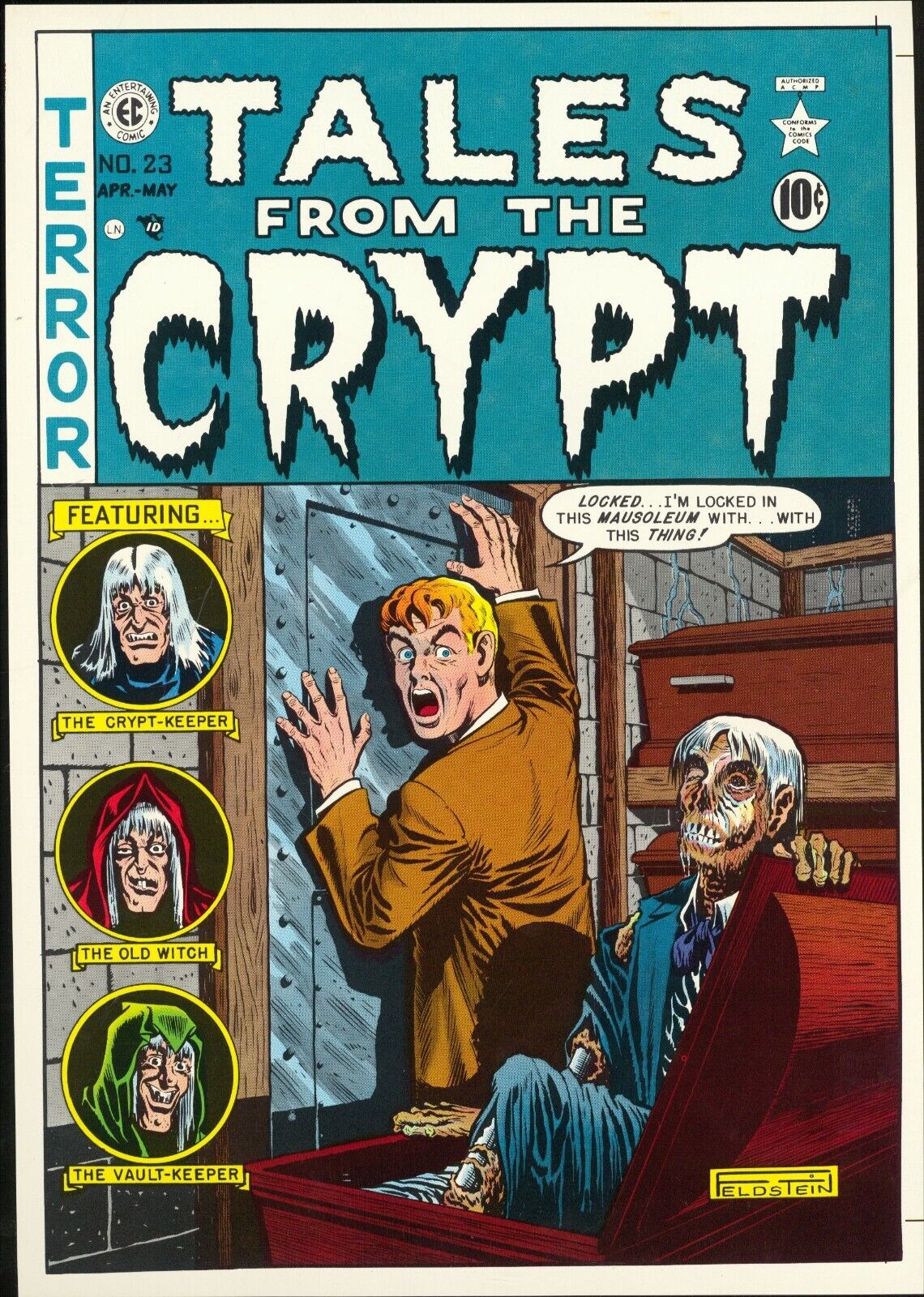
Graham (“Ghastly”) Ingels creates a fabulous story page for the classic (and unsurprisingly, horrific) EC tale, “Last Respects.” (Tales of the Crypt #23.)
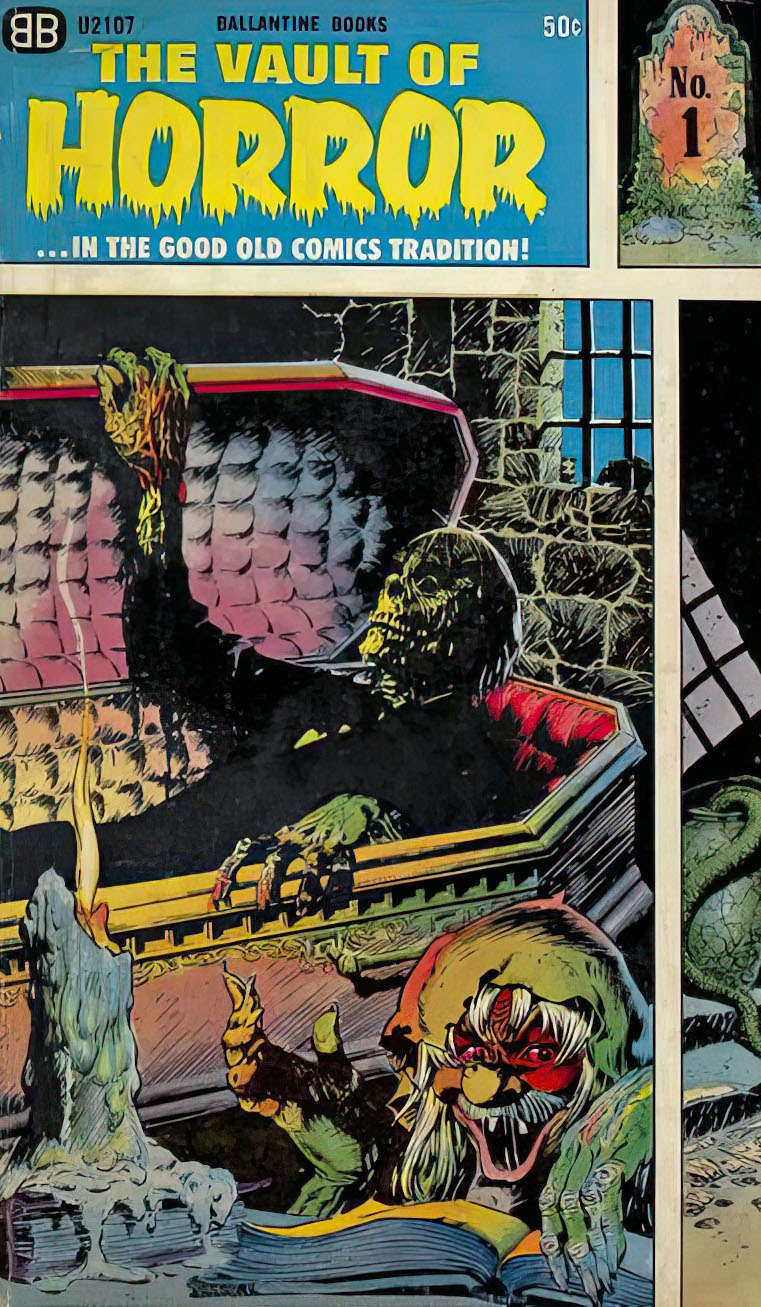
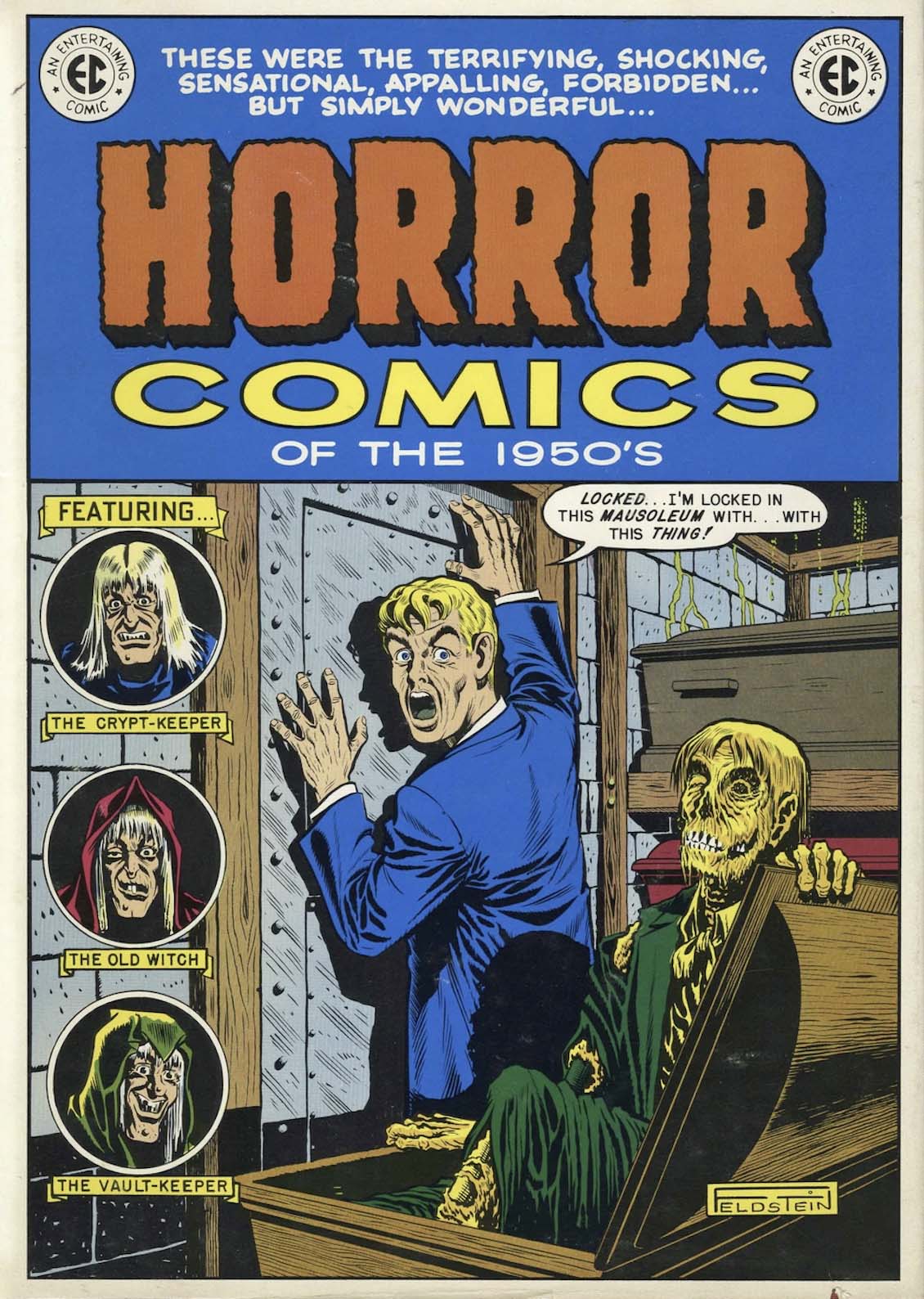
I likely first ran into this specific story from the Vault of Horror reprint paperback (1965) which I grabbed at a flea market sometime the early 70s. Oddly, the Crypt cover from this story was reused as the jacket art for the amazing Nostalgia Press EC reprint collection (1971) (which hooked me into EC Comics to begin with) — but did not include the story inside!
As for Ingels himself? — He was the most prolific of the EC horror artists and in many ways, he was the most intriguing personality of the EC gang. Later in his life, he was certainly the most elusive, seemingly horrified (pun intended) by his contribution to these classic comics.
*Yes, I know it’s a mausoleum, but crypt was more fun, and appropriate.
See you next week for another taste of Halloween horror; it is October after all!
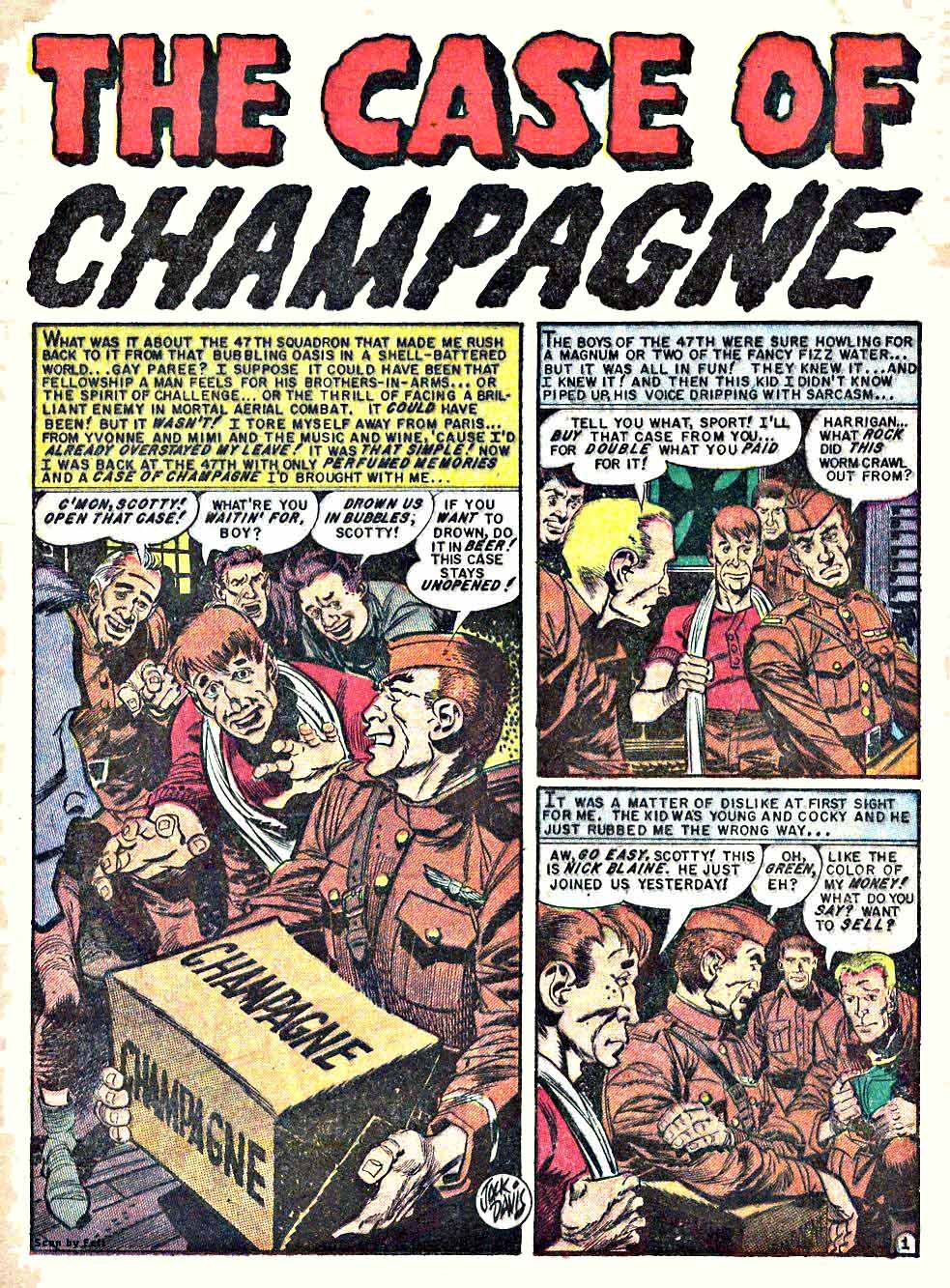
An entire case of Champagne might be a bit much for a New Year’s celebration — unless you have a big crowd, and they all like to drink the bubbly.
Either way, Jack Davis brings us a killer EC title page from Aces High. A lovely way to start the new year.
(Fun fact: This page kicked around for a while as part of the complete story. When it was finally broken up, the pages sold very quickly — and at an aggregate price greater than the entire story.)
Reed Crandall pencils and inks a terrific page from a Crusades story about honor and betrayal. It appears in one of EC’s final comic books before the company completely exited the 10-cent color periodical business.
The Comics Code may have taken some of the teeth out of the storytelling of EC’s New Direction titles,
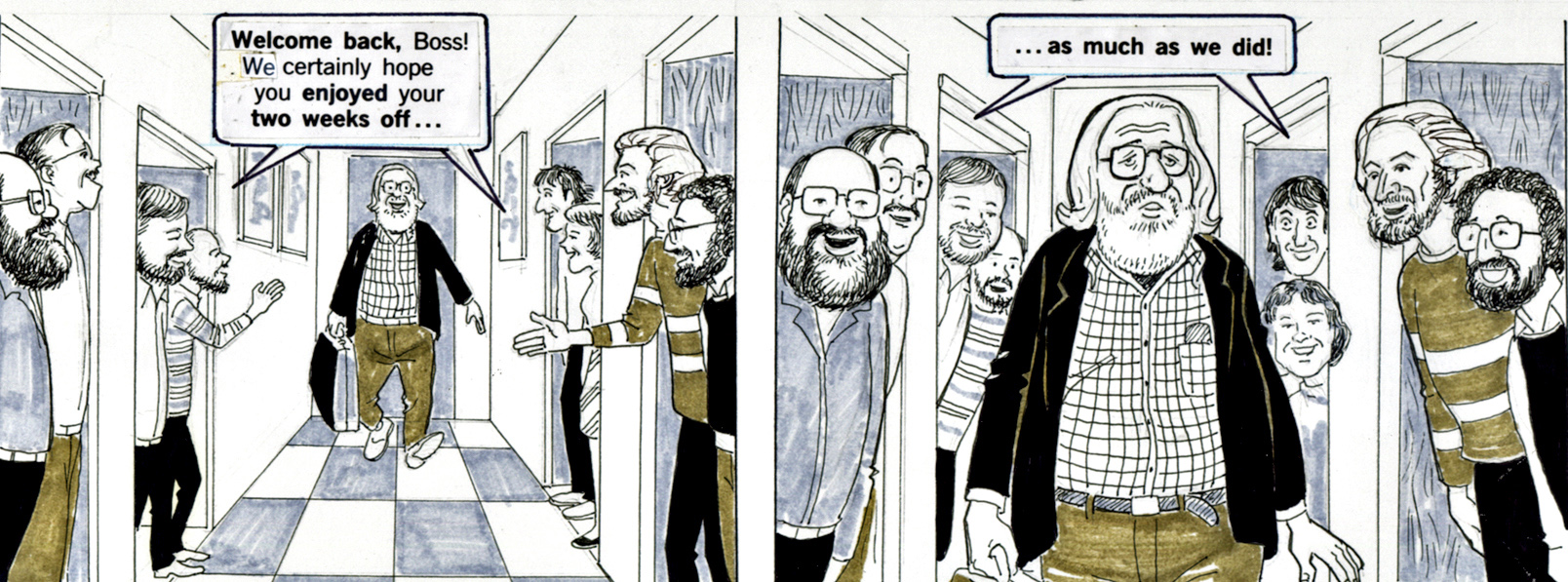
Dave Berg loved to draw his friends, neighbors and colleagues into his Mad Magazine “Lighter Side” series. On this great strip, Mad Publisher William (Bill) Gaines and other staffers get the full Berg treatment. I love this.
Mad staffers here are —
Leftside, front to back:
Lenny Brenner, Tom Nozkowski, Charlie Kadau, Joe Raiola
Rightside, front to back:
Nick Meglin, John Ficarra, Sarah Friedman, Andrew Schwartzberg
(Thanks to my pals Joey Cavalieri and Charlie Kochman for filling in the names of folks I didn’t know.)
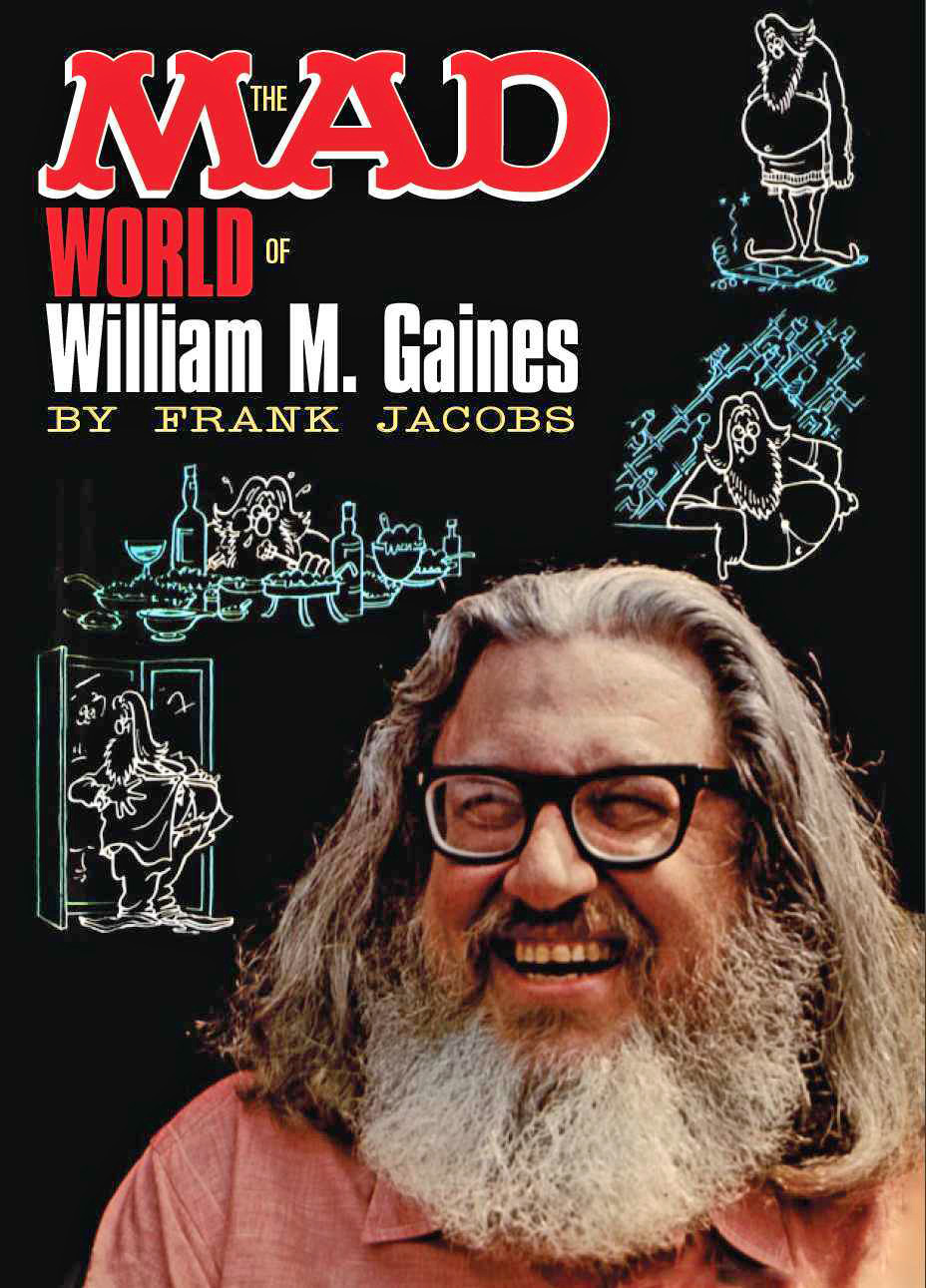
Left: Still one of my favorite biographies of all time. Right: A fun ad parody featuring the Mad gang further back in the day.
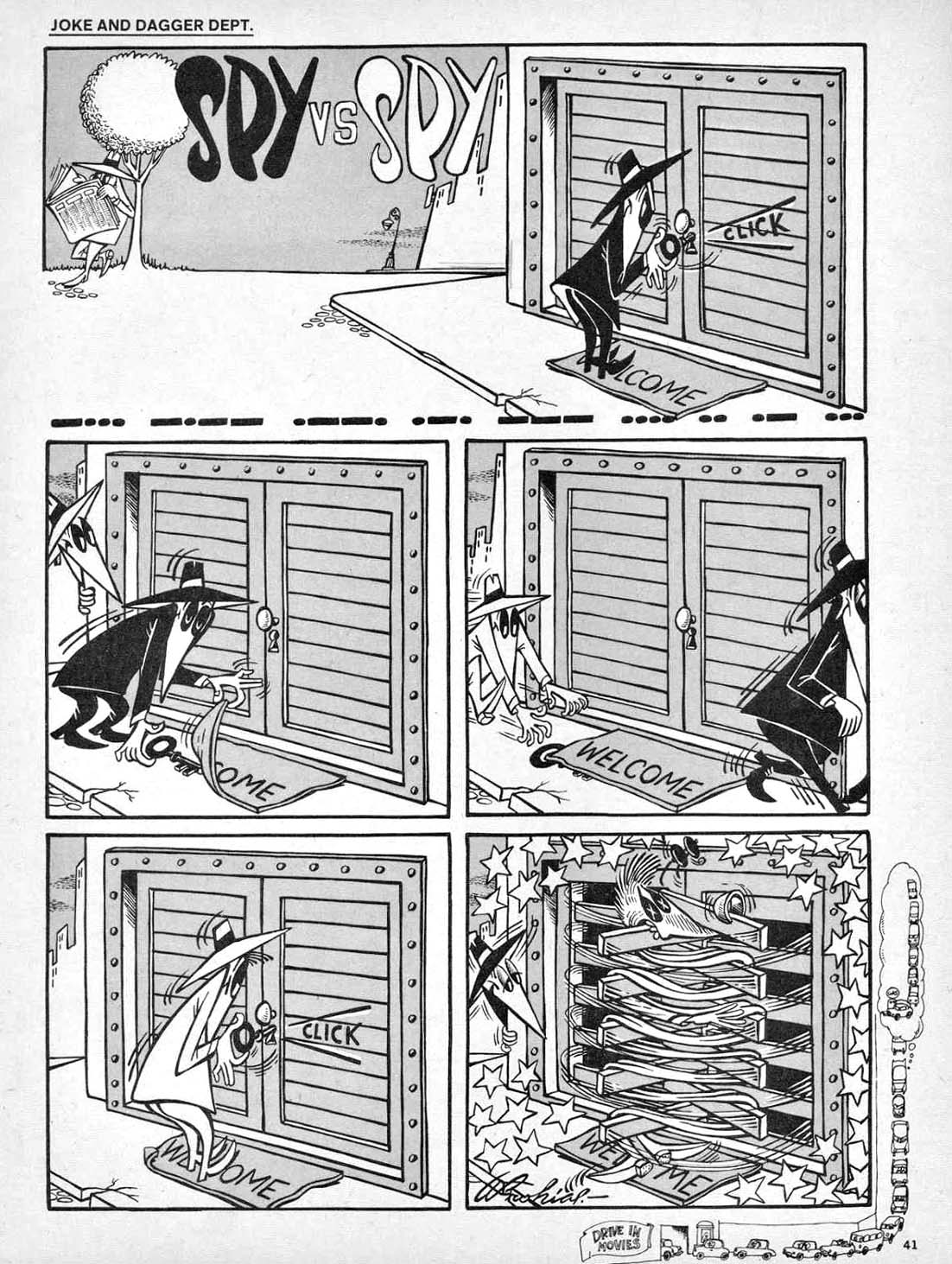
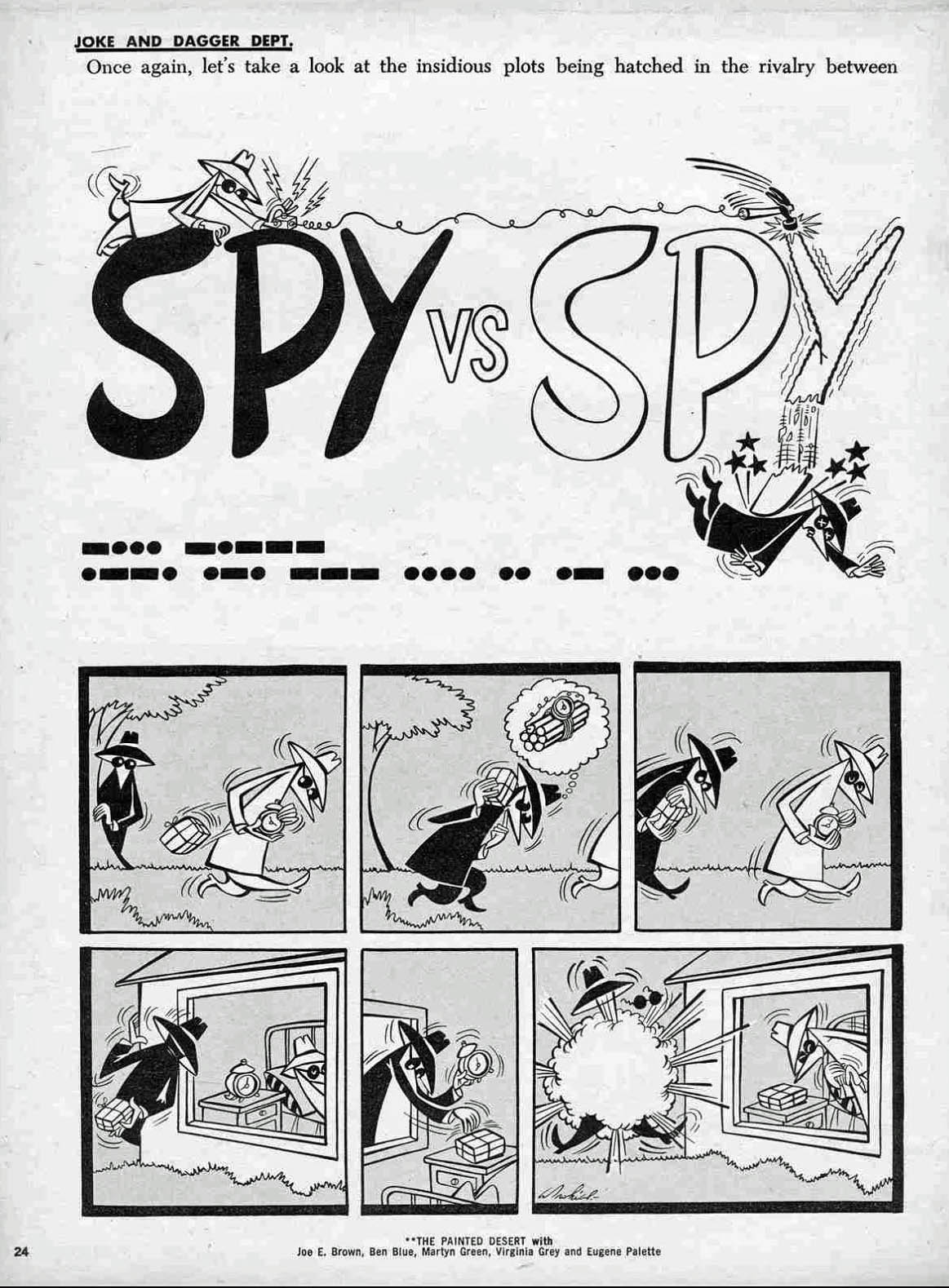
One punch line panel of the iconic Spy vs. Spy gag strip often sported more violence than an entire episode of Looney Tunes. (That’s saying something.)
And we loved it.
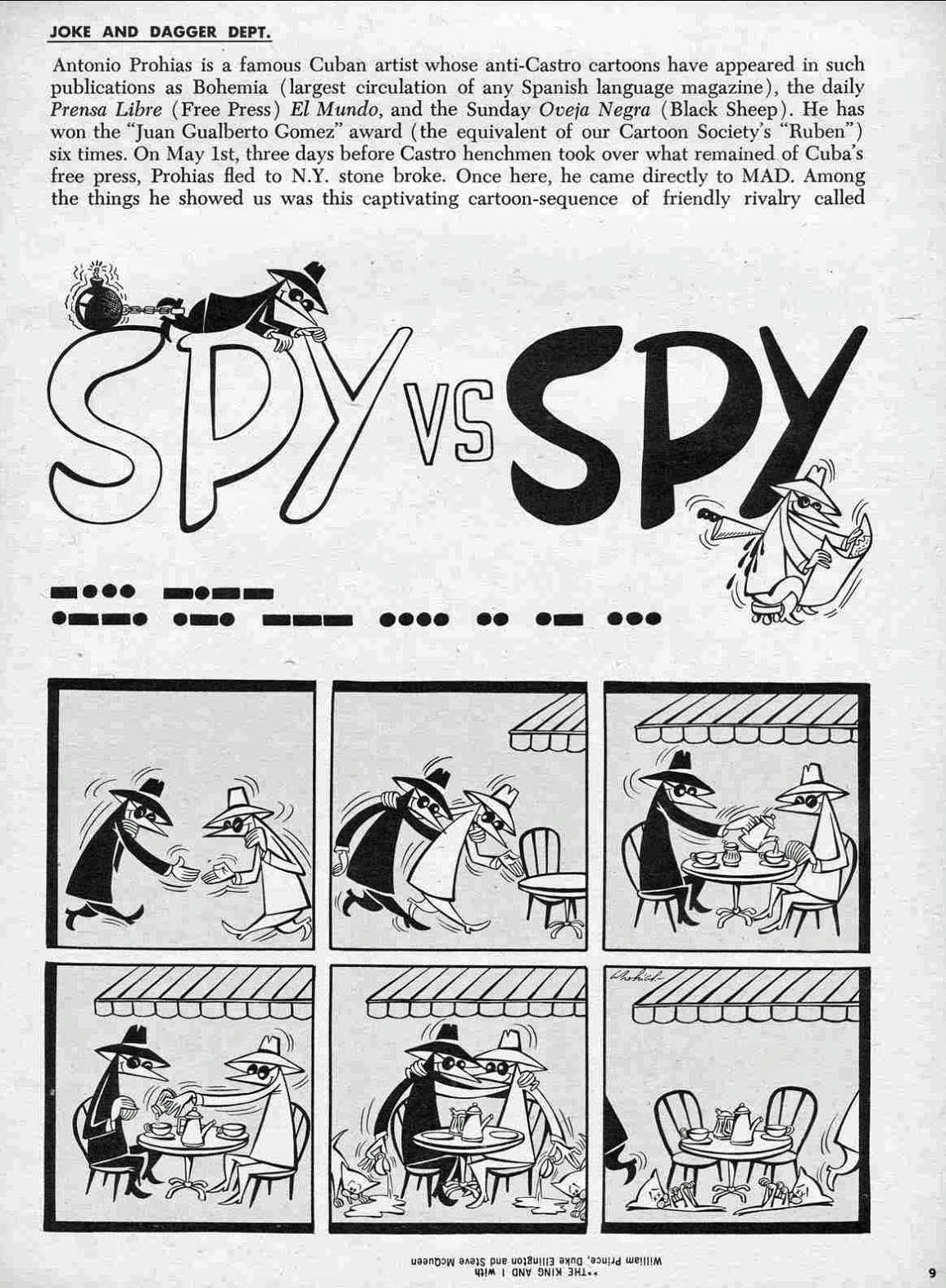
Prohias, a Cuban refugee, was a genius. He didn’t speak very much English. And he didn’t have to. Humor is a universal language.
And me personally? I love wordless gags. After all, cartooning is a visual medium.
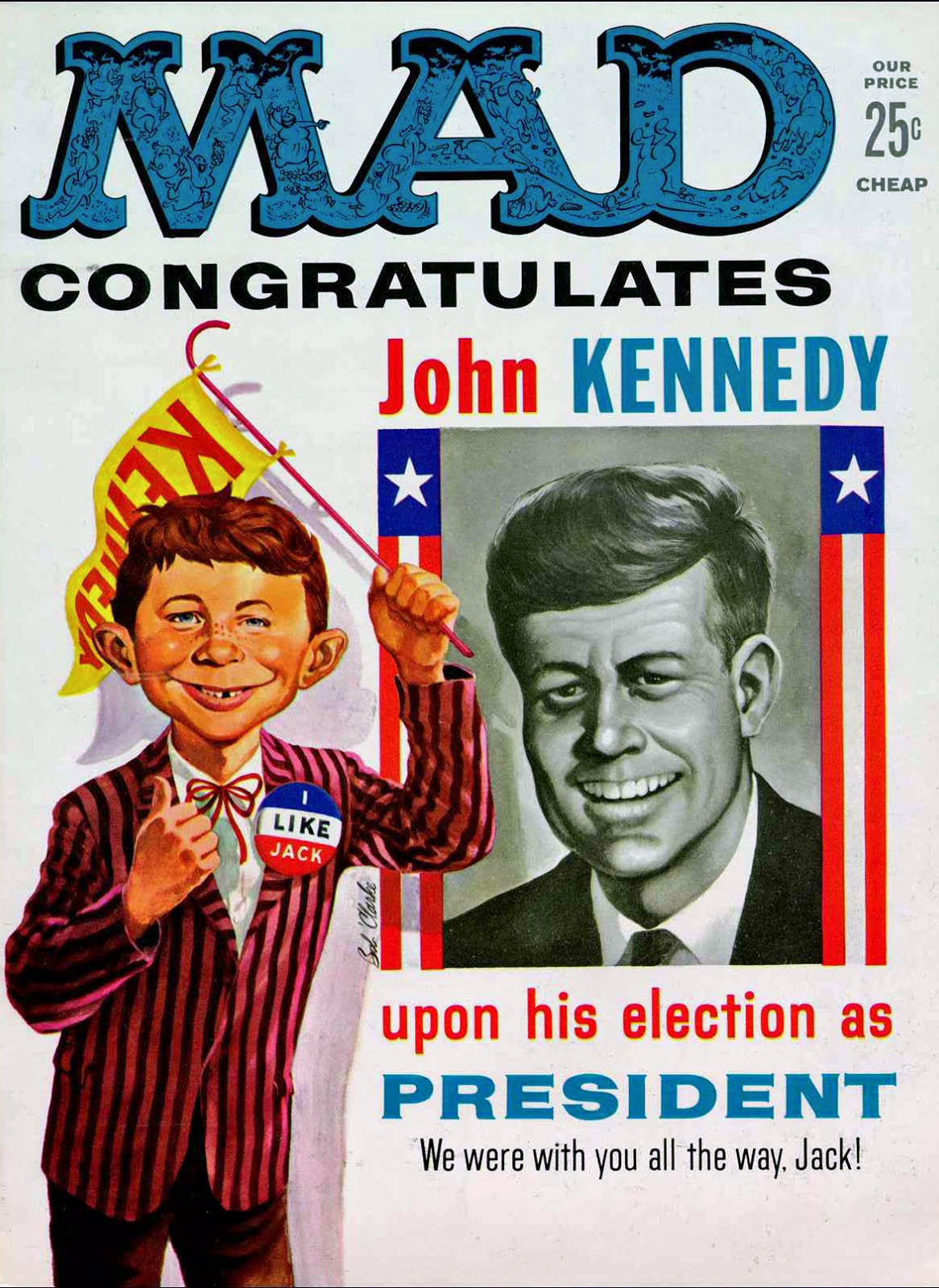
Spy vs. Spy made its debut in a classic issue of Mad — the infamous election flip cover. Newsstand proprietors could face out whoever actually won the election. (Spoiler alert: It was JFK.) Also above are the first three Spy gags, all appearing in the same issue.
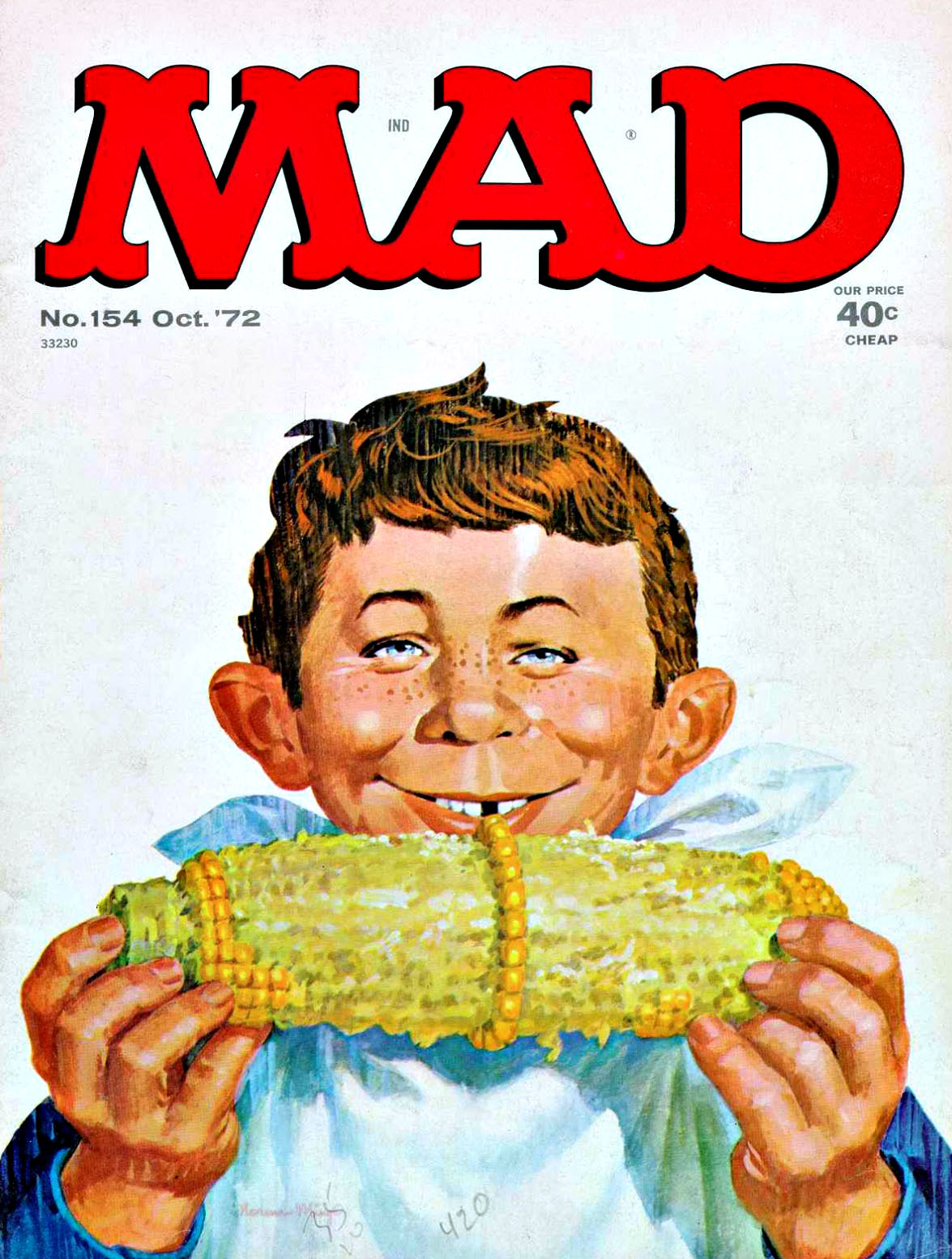
I was fortunate to visit Mad’s offices in 1976 and received the classic Cheap, Crummy Souvenir. More importantly, I met many of the “Usual Gang of Idiots” including the fearless leader himself, Bill Gaines.
When artists Mort Drucker and Angelo Torres were creating those amazing Mad movie parodies (especially the earlier ones) they often had trouble acquiring official photo references. The solution? Torres would sneak a camera into the movie theater and quietly snap some photos for himself or Drucker.
In other words, the Mad artists were the original film pirates.
You have no idea how much I love that.
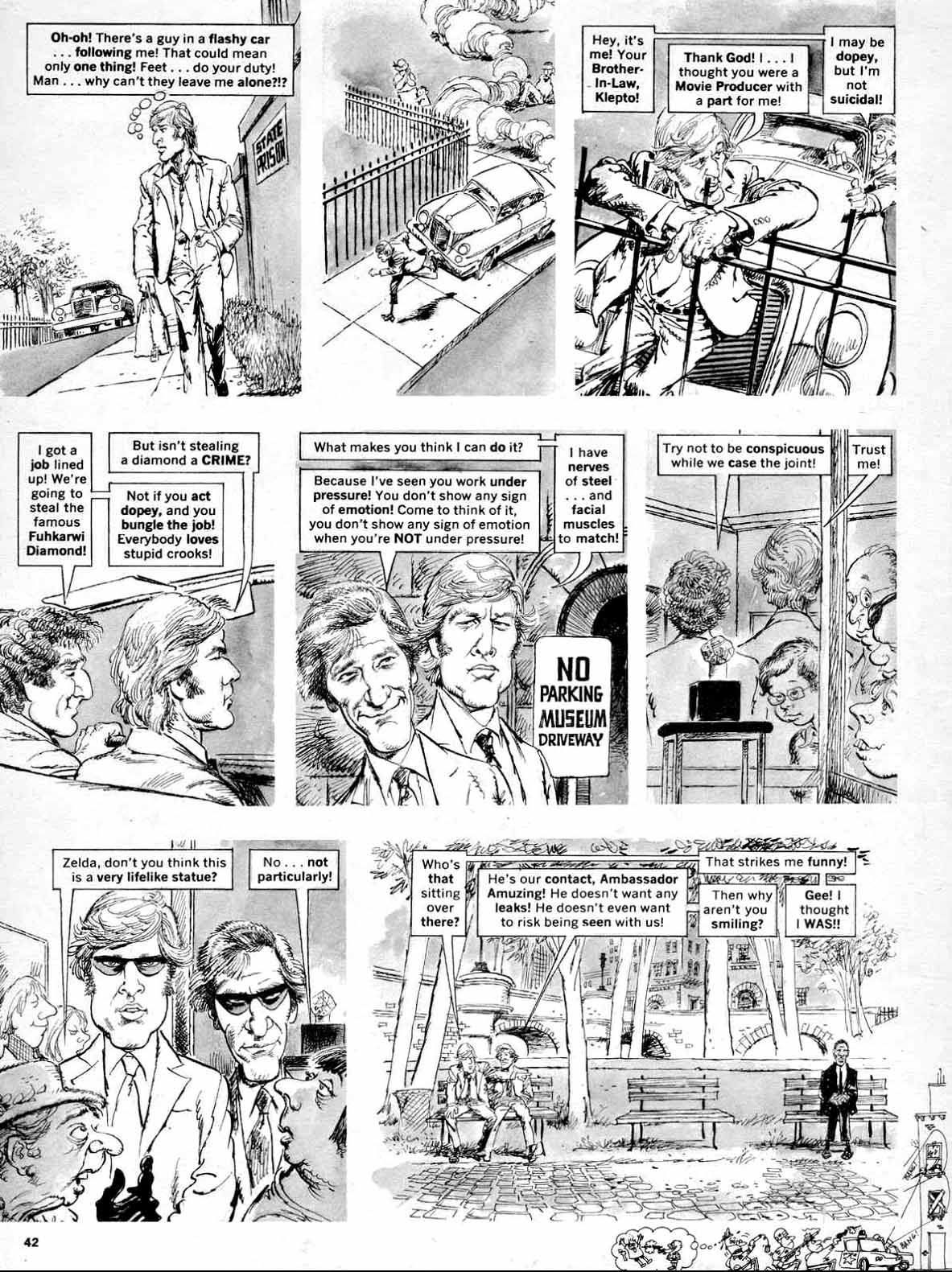
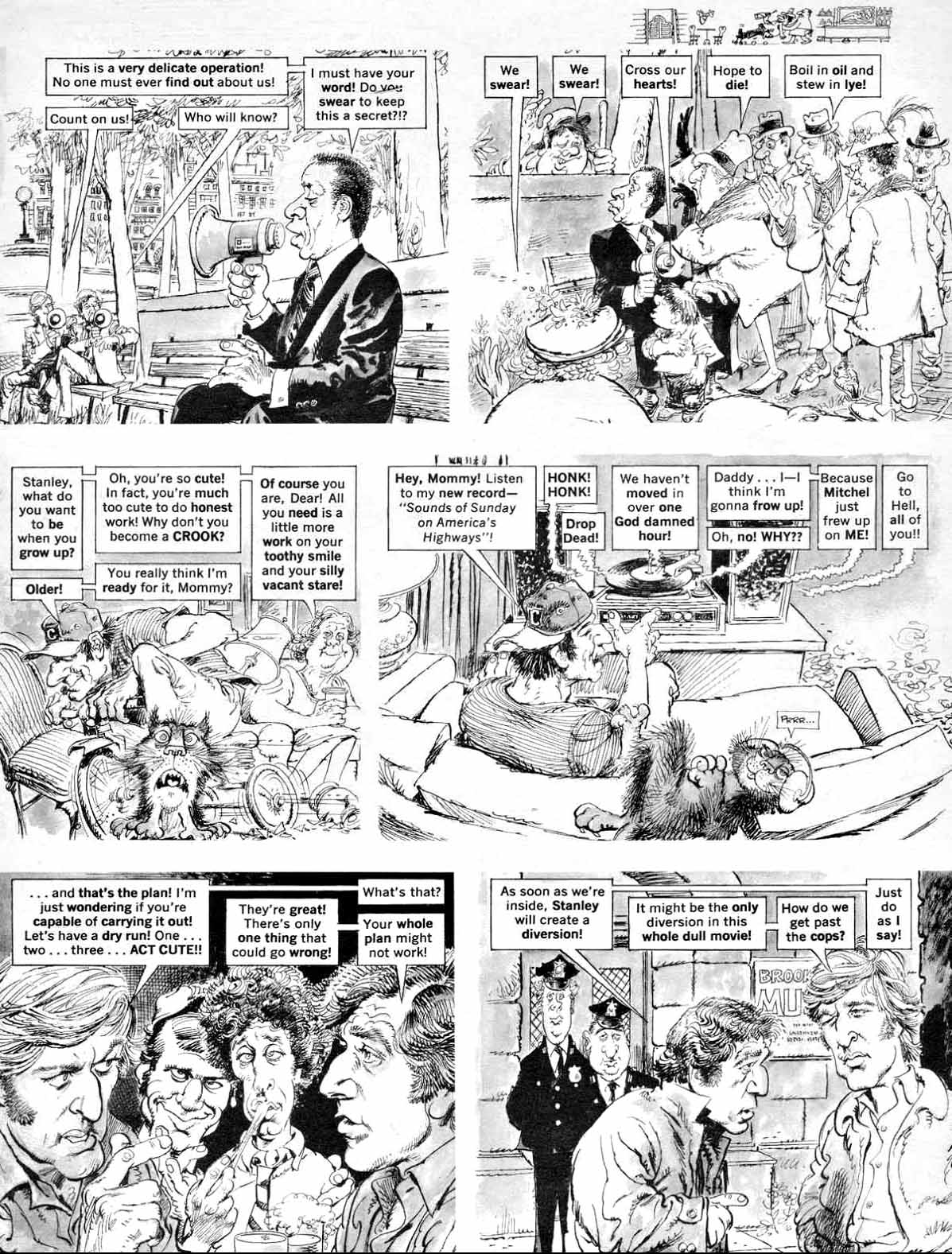
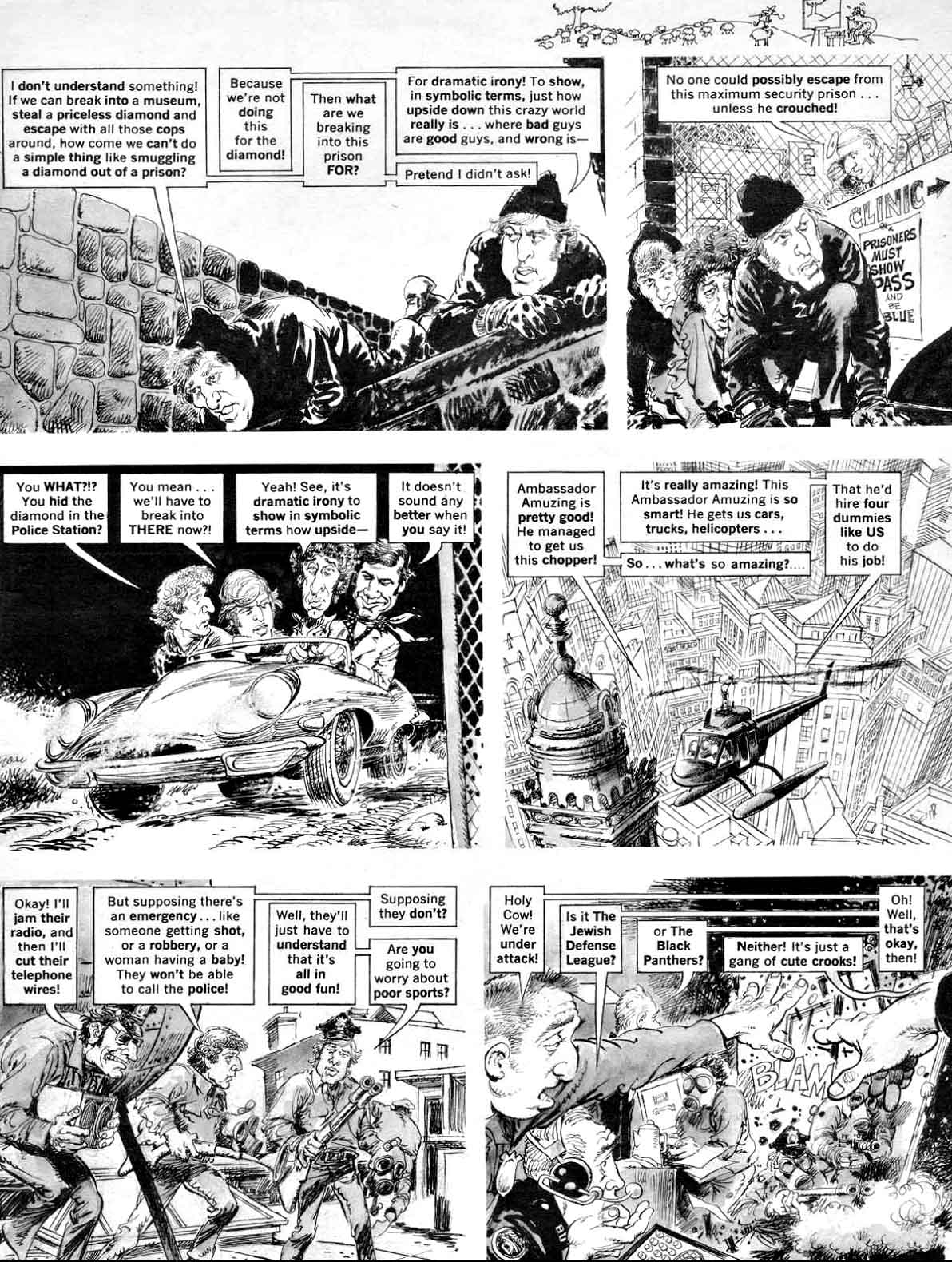
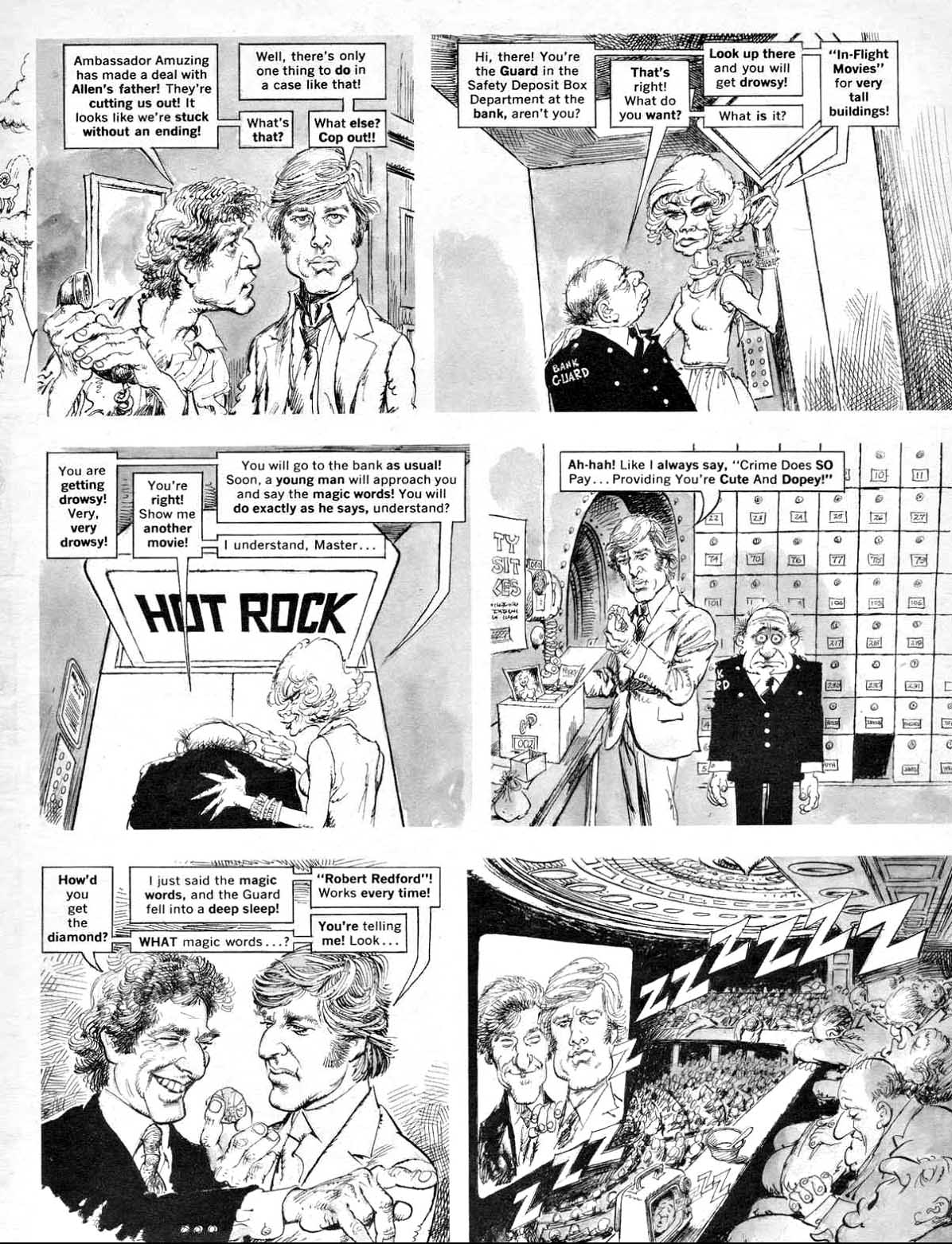
This classic Drucker page from a parody of the film “The Hot Rock” comes with a personal anecdote as well:
I discovered my pal Stuart Ng had three original pages from this story for sale about six or seven years ago. I didn’t want all three, I only wanted one (they’re huge — about 18×24), but even if I did, we couldn’t agree on price. (Hot Rock is one of my favorite films, and it’s one of Stuart’s also, and besides, it’s not like Drucker pages are lying around.)
So of course, every so often, I would revisit the pages, and of course, following the rest of the original art market, the price would increase and I couldn’t bring myself to pull the trigger.
(Insert emoji of me slapping myself here.)
Finally… A few months ago, we had a meeting of the minds. He sold me one, and he knows it’s going into a good home. I paid more than I wanted to, he sold it for less than he wanted to, and that seemed like the making of a decent compromise.
And I think he still has the remaining two available, in case other Hot Rock fans see this post. Tell him Greg sent you.
Although somewhat forgotten today, The Hot Rock is a classic caper film, written by the legendary screenwriter William Goldman and based on the first book in the “Dortmunder” series by (the also legendary) Donald Westlake. Filmed on location in New York, including some neighborhoods I was personally familiar with, I’ve loved it since it was released 50 years ago.
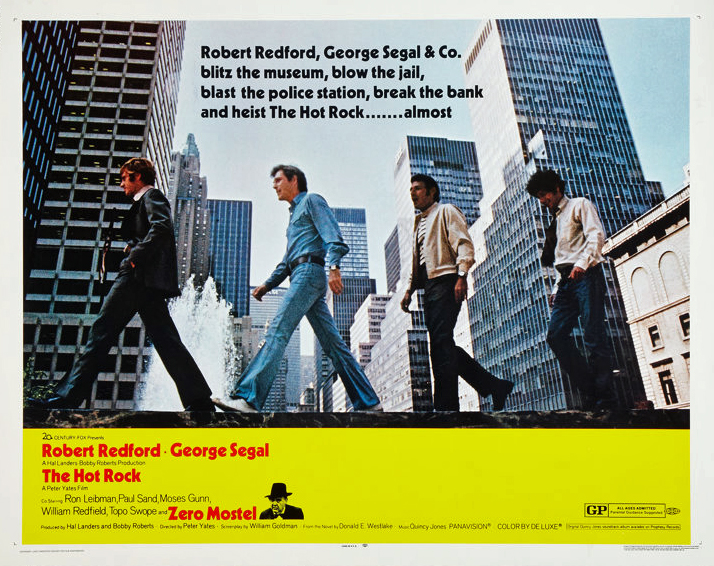
The first(?) of endless Abbey Road swipes and homages is featured in Hot Rock promo art. I love that George Segal copied George Harrison’s outfit entirely, right down to the footwear. I will bet that somewhere in that photographer’s archive is an even more exact mirror of the Abbey Road cover.
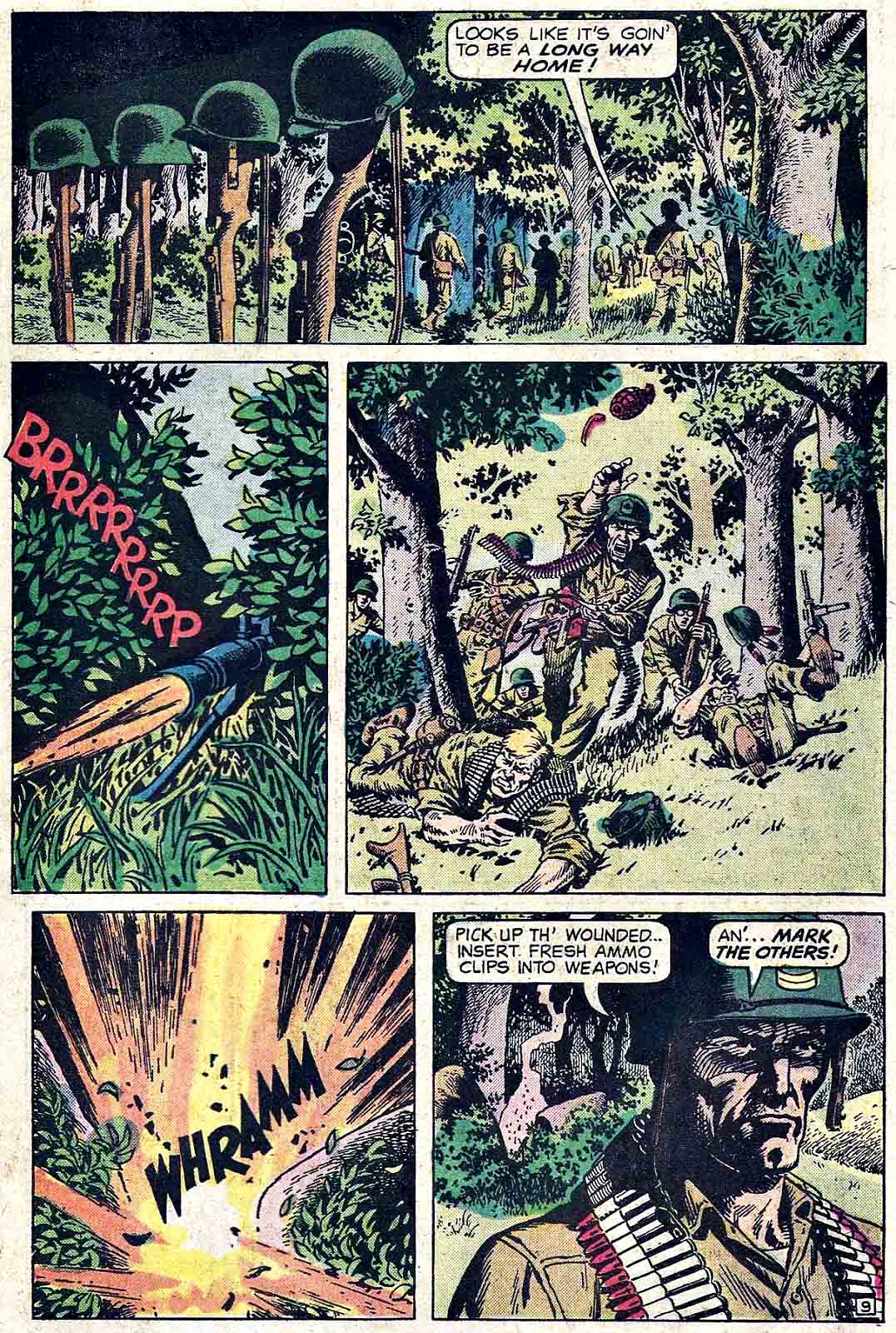
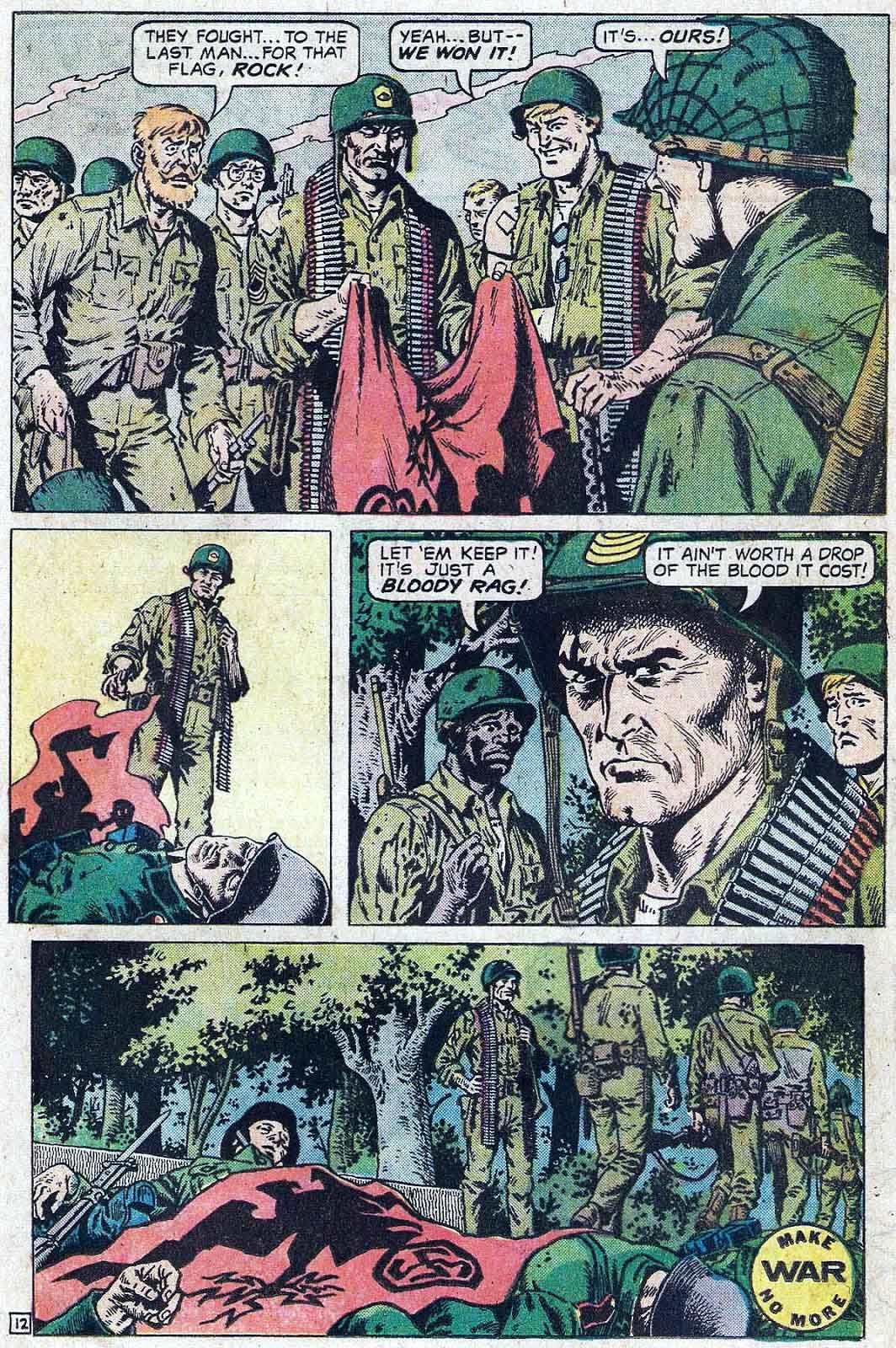
The single greatest compliment I ever heard abut John Severin’s art — and there were many others — came from Jack Kirby, via Mark Evanier:
“Jack used to say that when he had to research some historical costume or weapon for a story, it was just as good to use a John Severin drawing as it was to find a photo of the real thing.”
Severin’s lavish attention to detail caught my eye early. The line-work was so precise and polished. It was amazing stuff, especially considering that those details needed to reproduce on cheap, pulpy newsprint running on industrial web presses.
As a kid, especially remember his pitch-perfect inking on Herb Trimpe’s pencils for The Incredible Hulk. I also loved John’s pairing with sister Marie Severin on some of the earliest issues of Kull. John’s had one weakness was that occasionally his realistic line work could come off as stiff and inking Marie’s more dynamic layouts solved that issue.
Severin was best known for three non-superhero genres: Westerns, humor, and war. He was a pro at all three, and everything else he touched as well.
As Evanier wrote, “They don’t make ’em like that anymore.”
Indeed they don’t.
(These two pages, along with others, were especially selected for the exhibit “War No More” at the Words & Pictures Museum in Northampton, Mass. in 1993.)
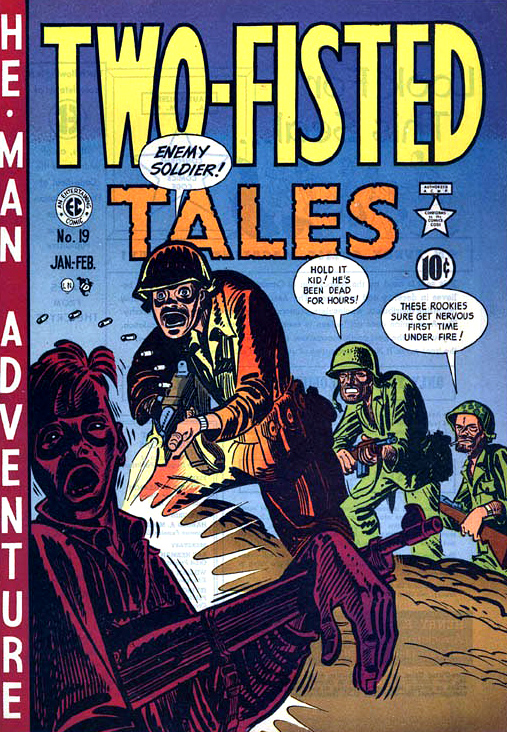
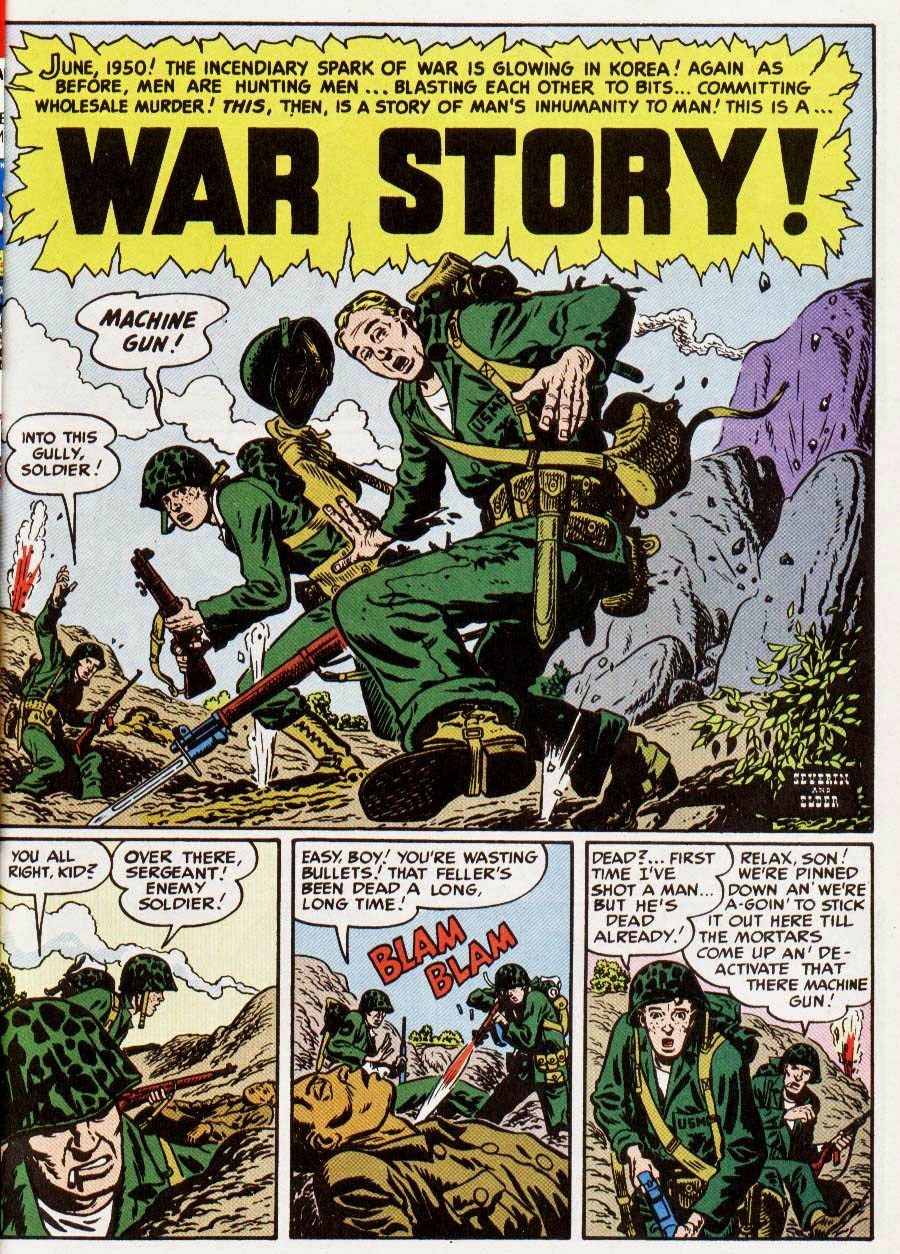
John Severin’s first published war story appeared in EC’s Two Fisted Tales; inks by Will Elder and layouts by Harvey Kurtzman.
Early issues of Kull The Conqueror featured pencils (& colors) by Marie Severin and inks by brother John.
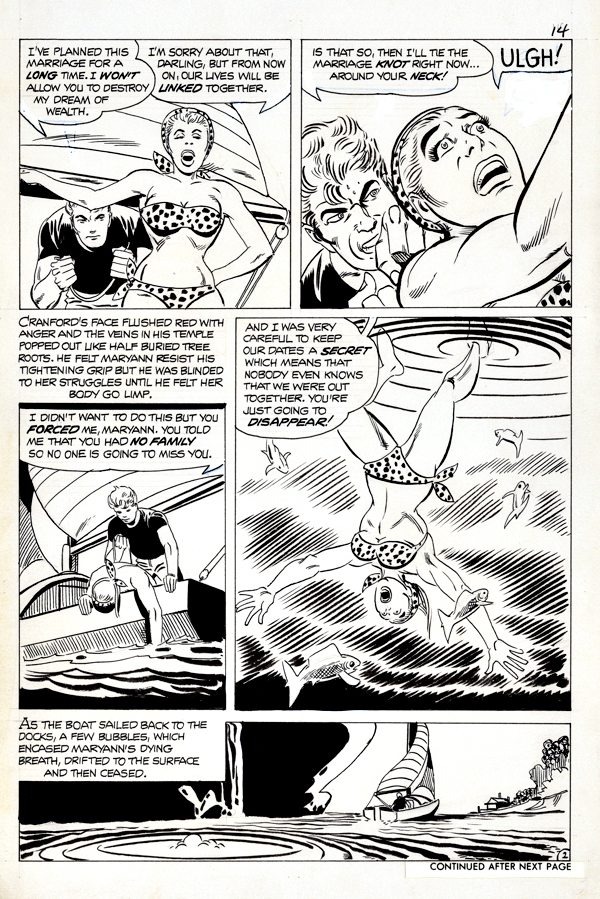
Legendary artist Steve Ditko delivers a great page in this mid-70s “EC-style” story of murder and comeuppance. (And puzzled fish. Don’t forget the puzzled fish.)
Ditko’s work during this period at Charlton tends to be a bit all over the map in terms of draftsmanship and level detail, but this story is a fine example of his more polished work from the era.
(For the record, even lesser Ditko stories are still better than 80-90 percent of the rest of industry’s output in that timeframe, especially at secondary companies.)
From a rights and commercial standpoint, it’s likely that this Ditko material will never officially be collected into trades. Some of it can be found on the Internet, and fortunately, the Charlton horror comics themselves are typically very inexpensive in lesser condition.
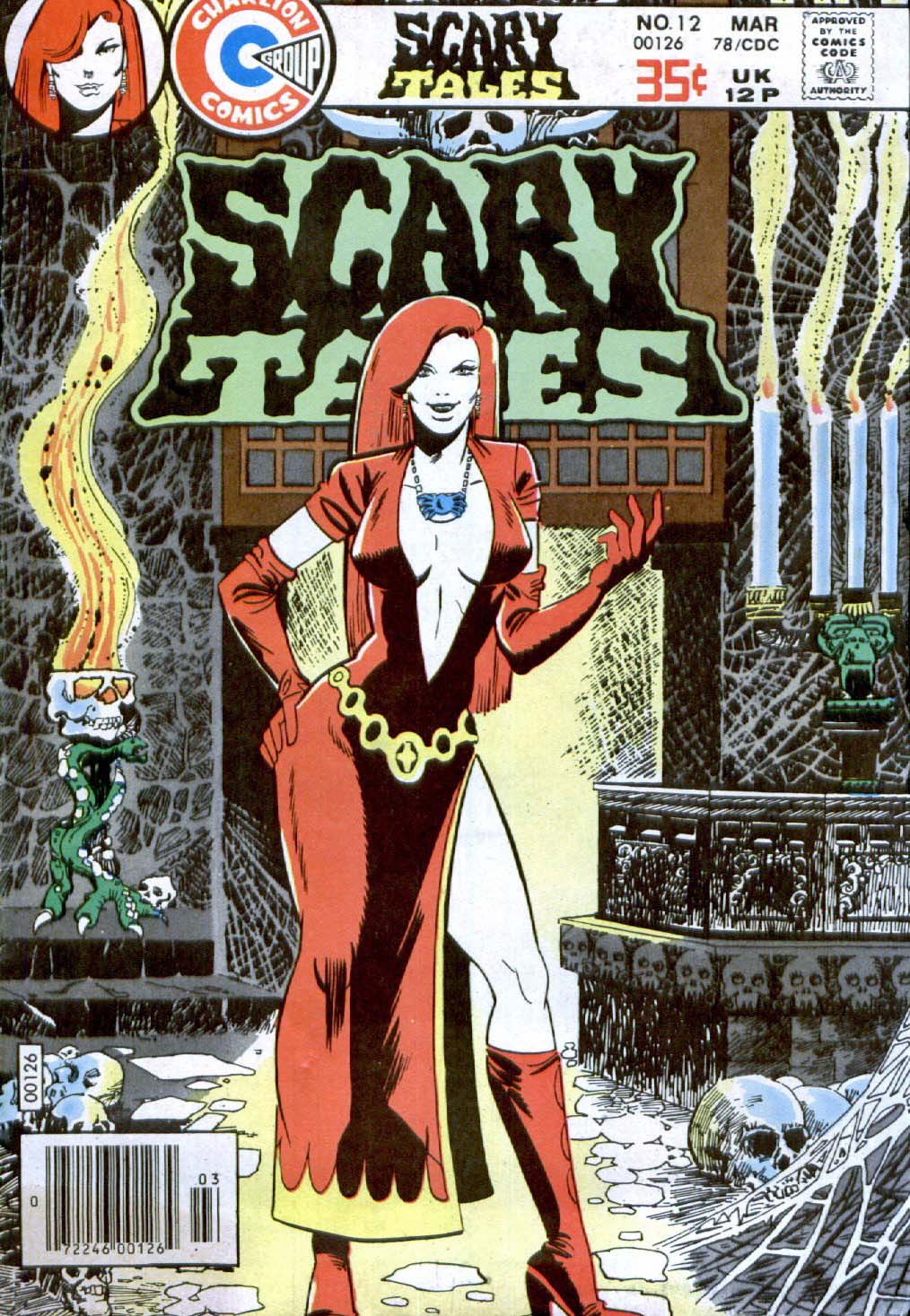
In addition to the original publication, “The Drowned Girl” was also reprinted in an “all-water” horror-themed comic a few years later.