Seth — Friday Night Frights
The Funny Pages, The New York Times, October 8, 2006
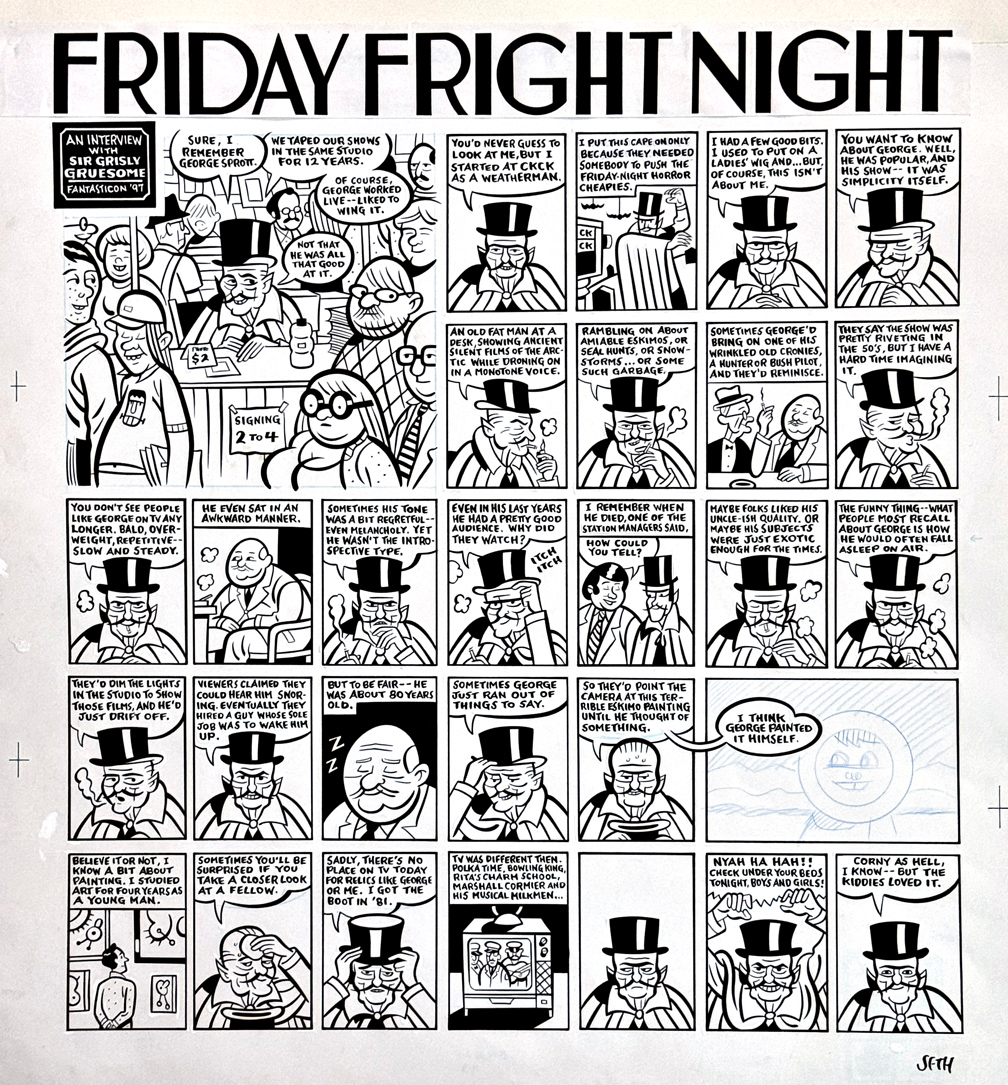
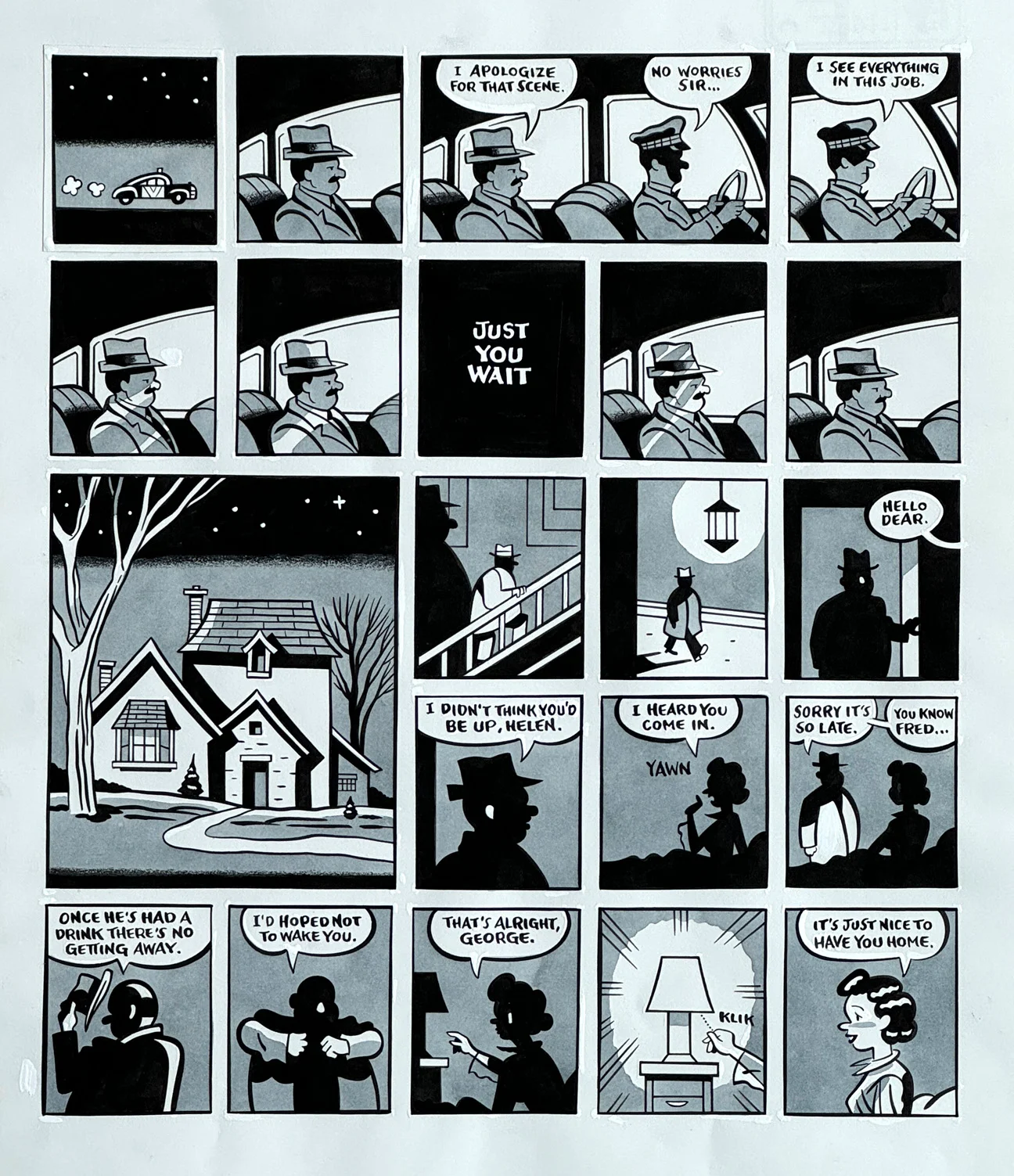
Here’s a terrific page from the terrific Seth (Gregory Gallant) — and an unlikely source for “indie creators:” The New York Times.
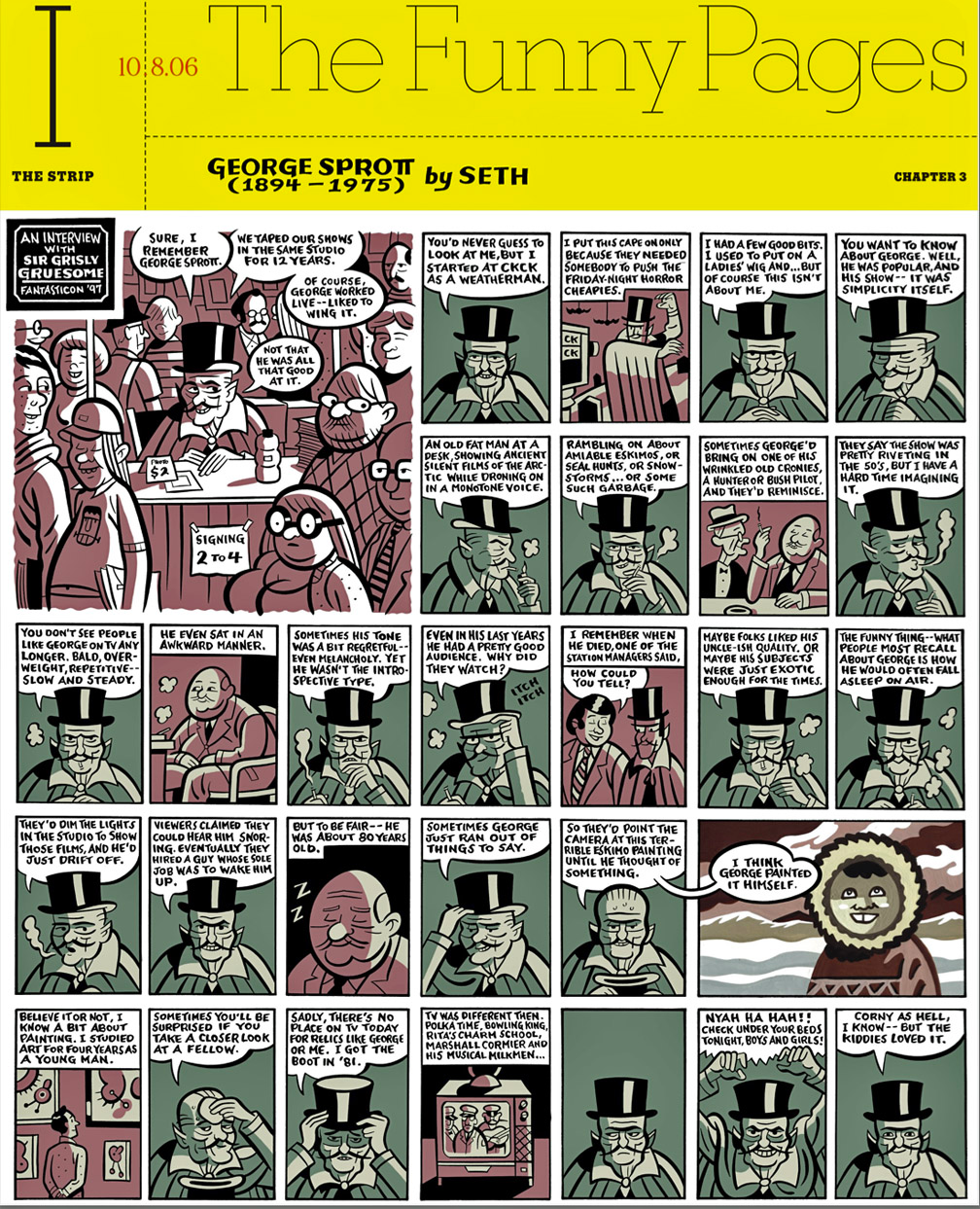
The Times briefly ran weekly comic strips from Seth and other similar storytellers in its Sunday Magazine nearly twenty years ago.
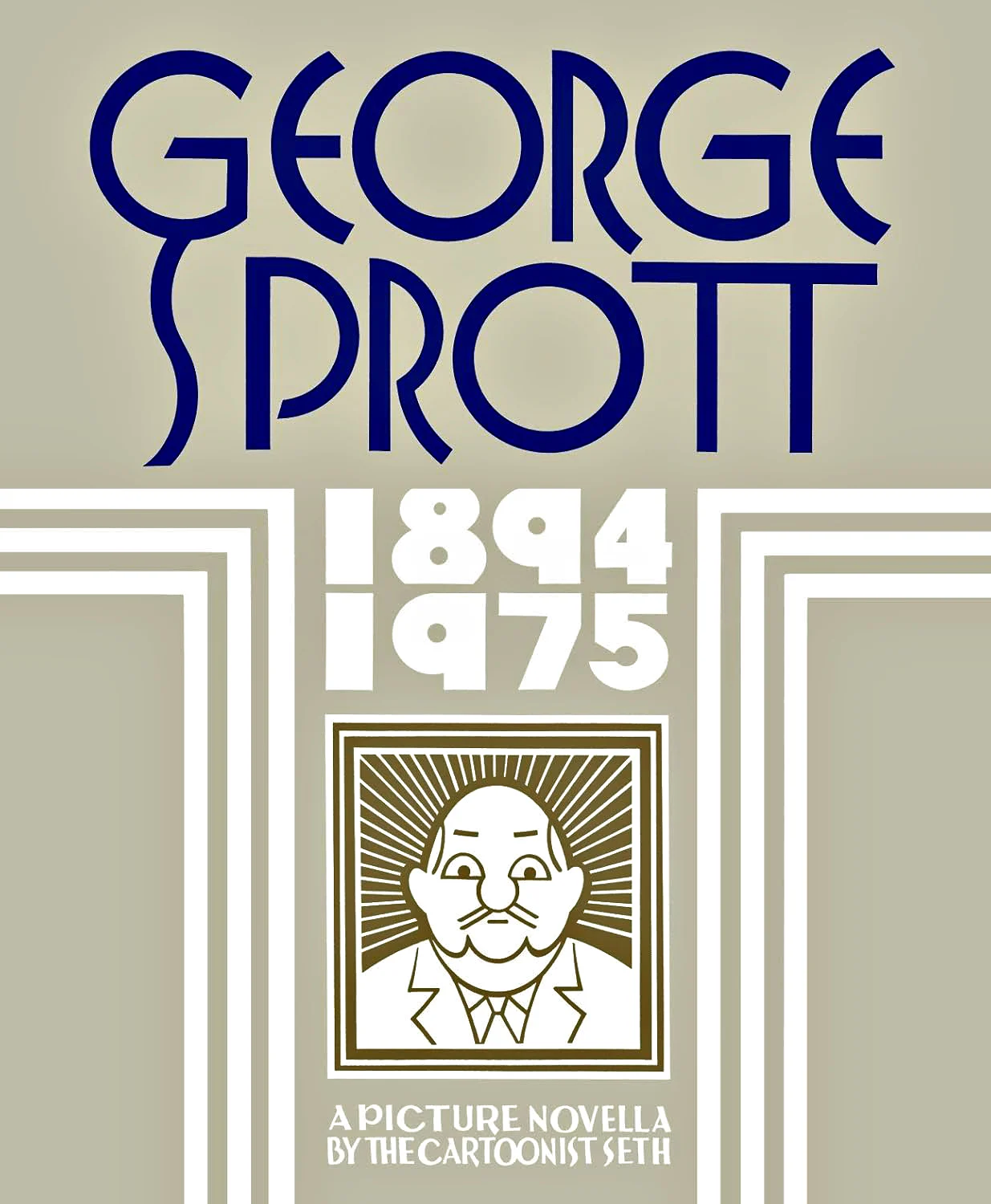
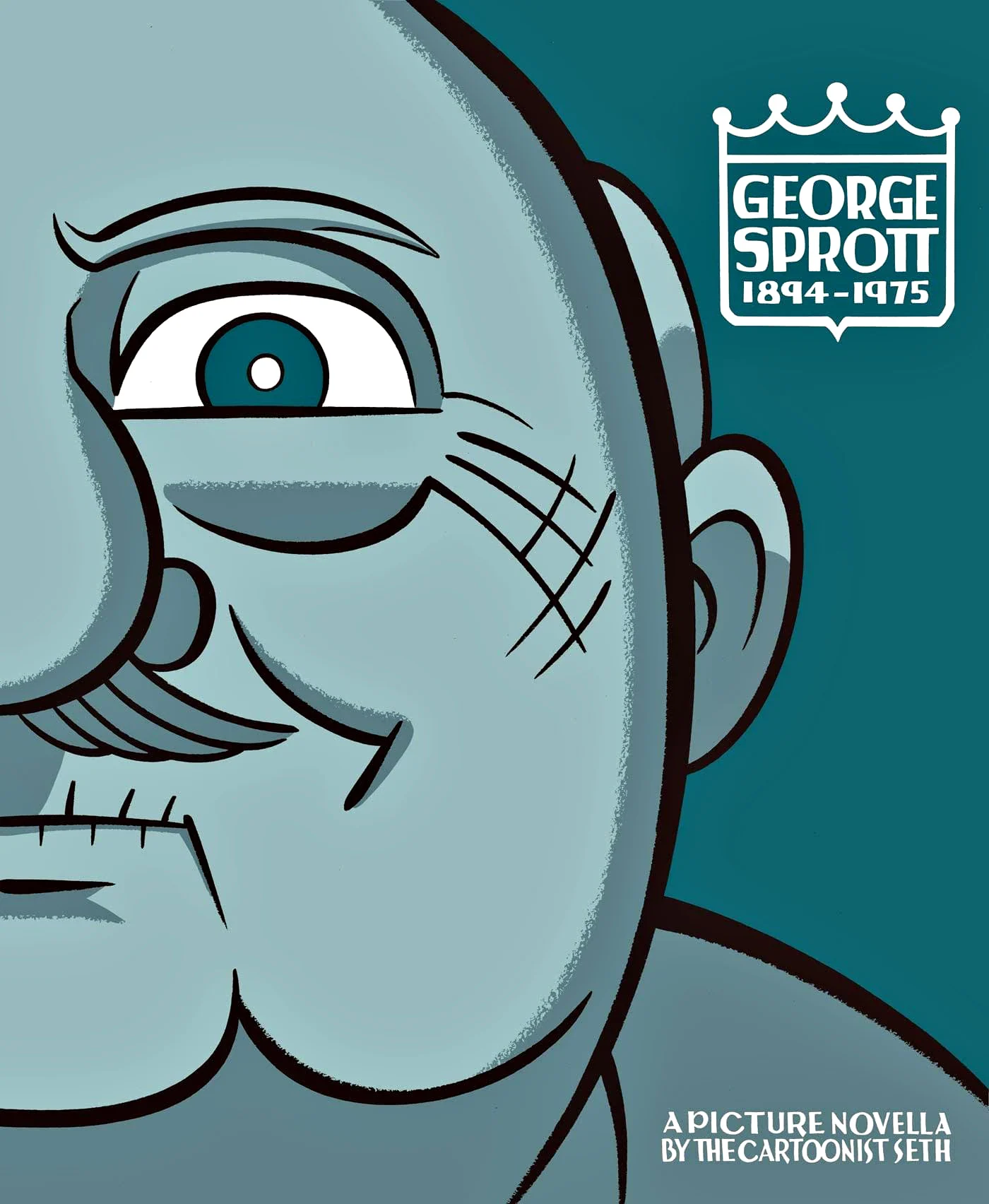
The serialization of Seth’s strips ultimately led to a complete graphic novel: George Sprott: (1894–1975), a biography of a fictional Canadian TV personality.
The large-format originals that appeared in the Times are in glorious black and white. To flesh the story out for the graphic novel, Seth created some beautiful duo-tone color pages book too, and I’m fortunate to own one of those as well.
I’ve said it before: Seth is one of the most underrated indie artists of his generation. His beautifully clean art and his quiet, methodical storytelling (along with a wry sense of humor) are absolutely delightful.
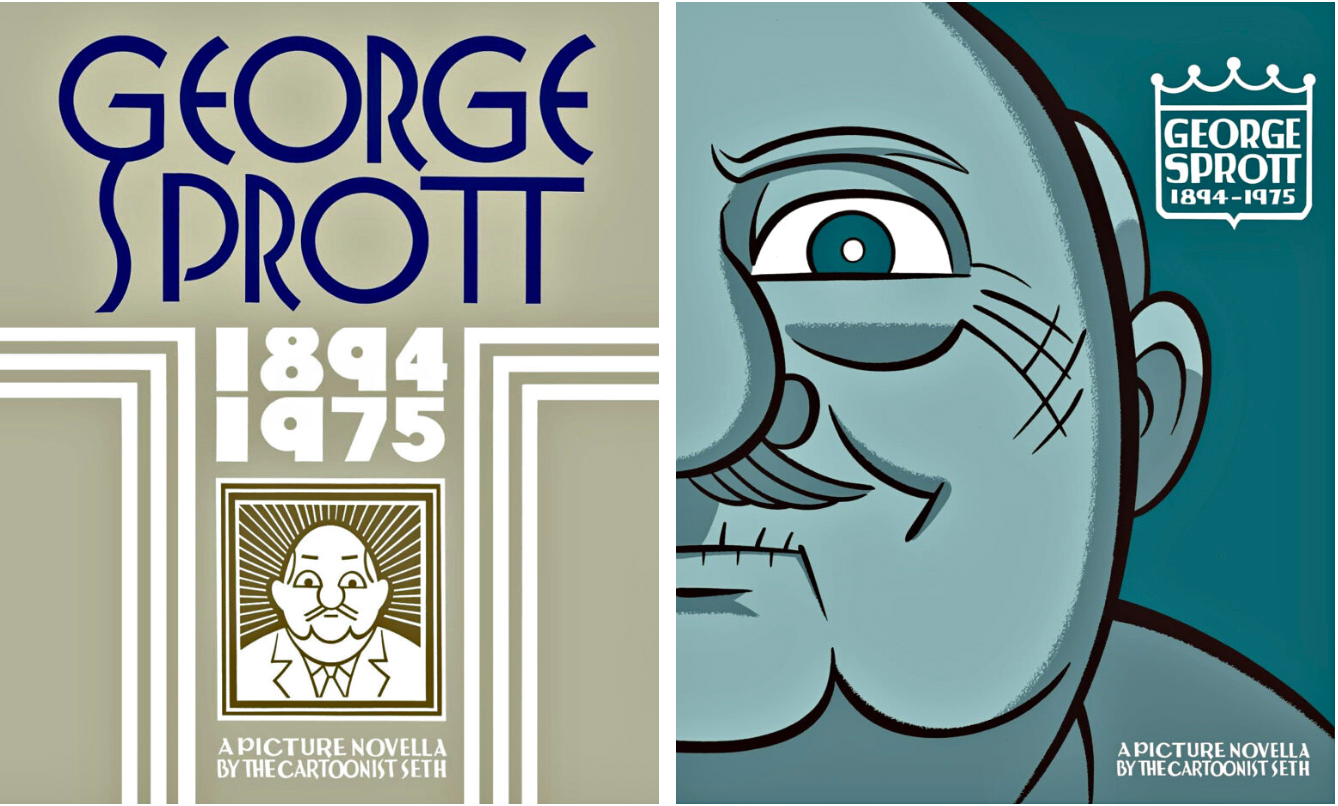
Pro tip: Seek out the hardcover (left) as opposed to the softcover (both technically out of print, but still plentiful) because the much larger trim size is more effective for Seth’s storytelling style utilizing smaller panels.