Greg Goldstein's Comic Art Gallery

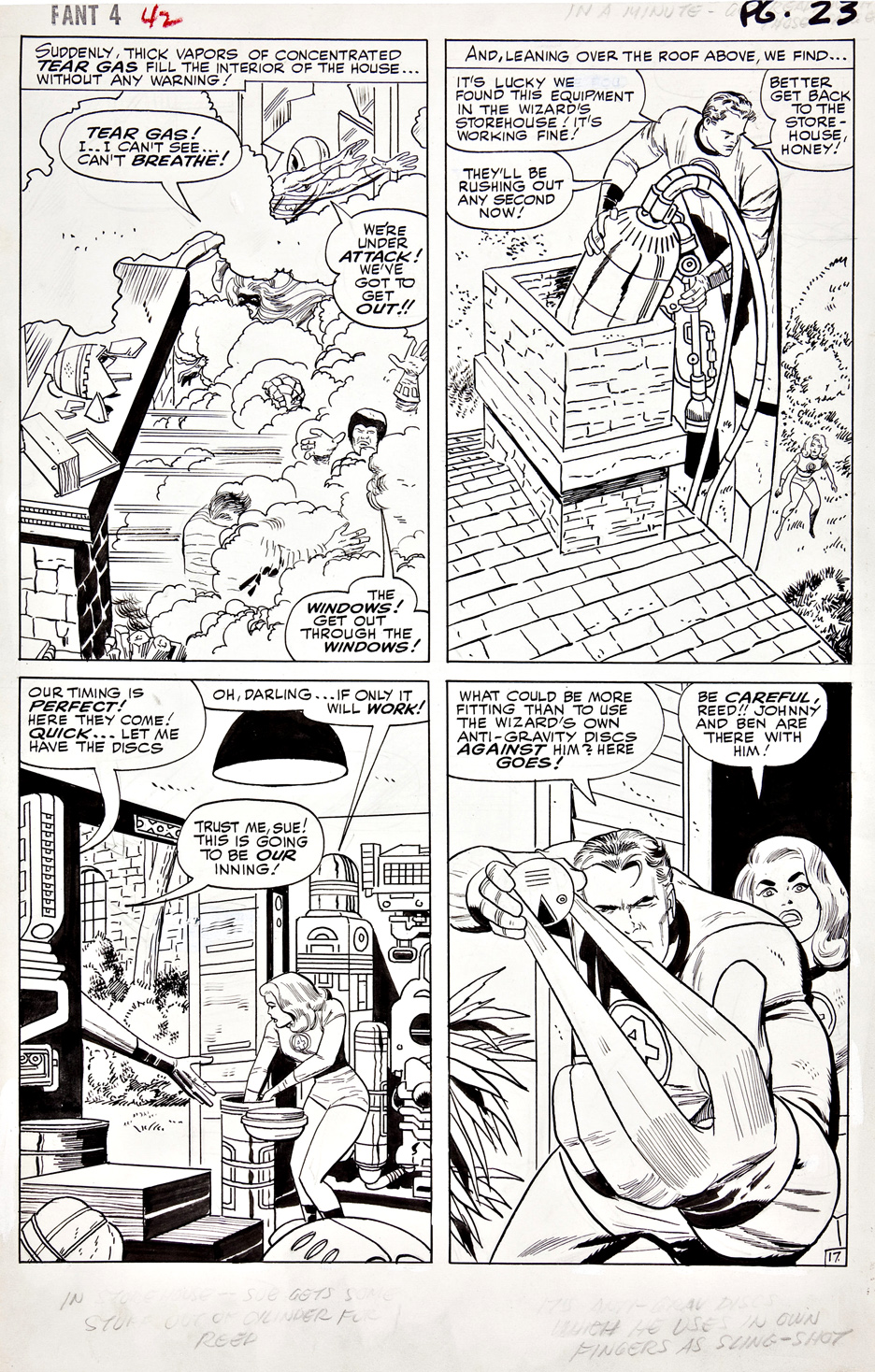
Erik Larsen, Paul Ryan & Al Milgrom — Fantastic Encore

Fantastic Four: World’s Greatest Comics Magazine #2, March 2001
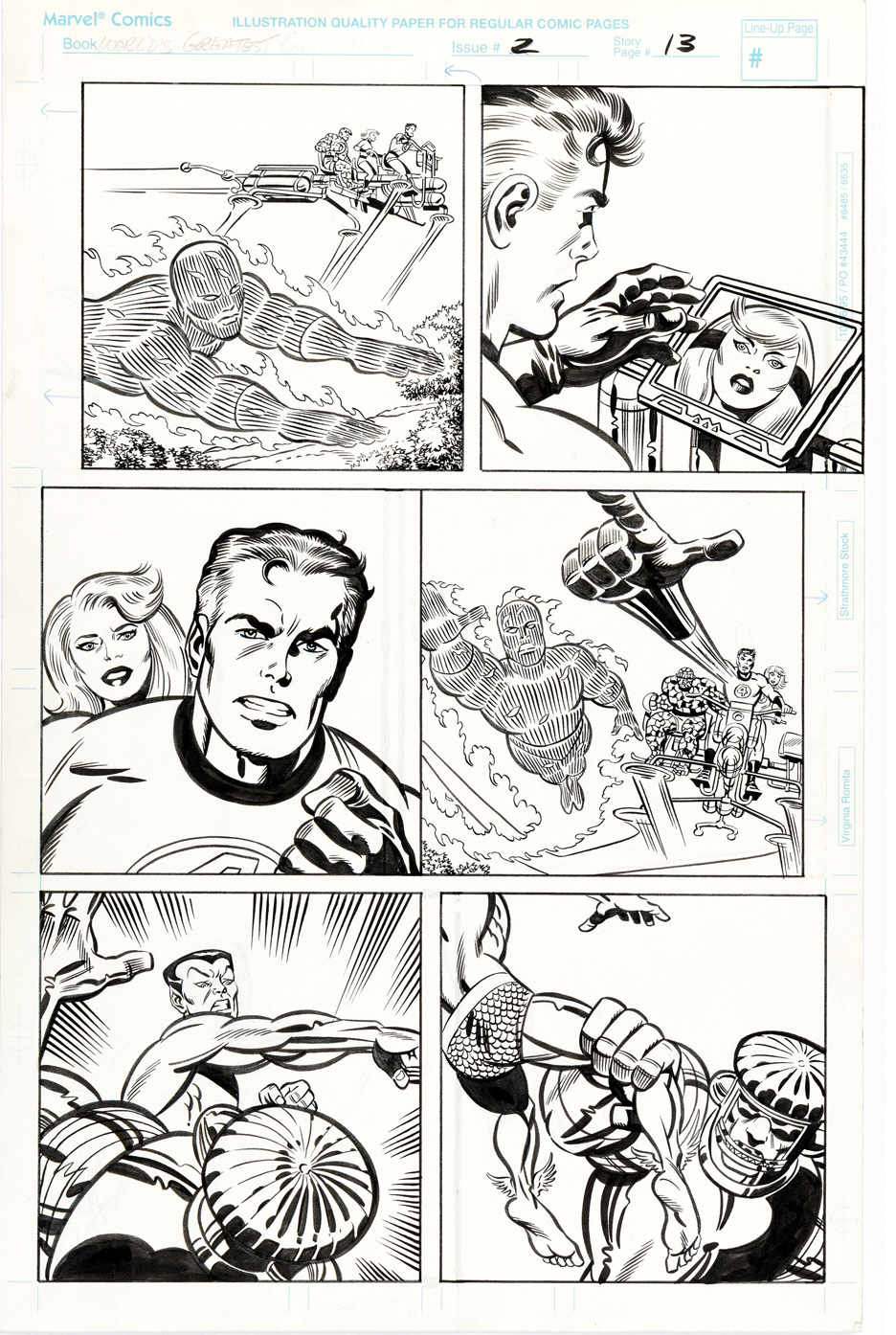
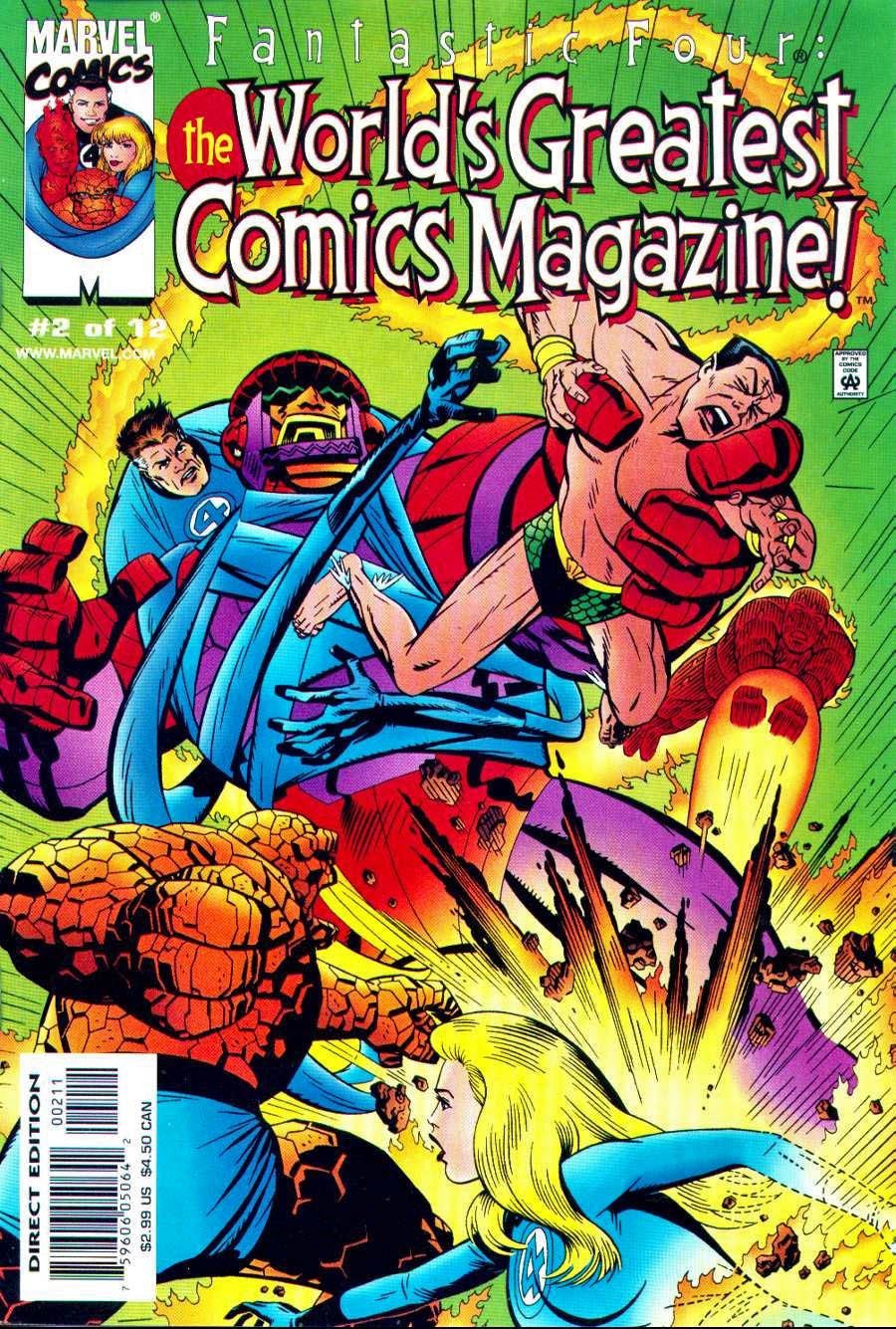
Fantastic Four: World’s Greatest Comics Magazine isn’t like a sequel to Lee and Kirby’s original run—it is one. Same premise, same mission: pick up the world’s greatest comic right after issue #100 and keep the engine humming.

This mini-series exists because a generation of creators grew up fluent in Kirby’s visual language and wanted to continue it, not reinterpret it. No grim updating. No clever winks. Just more Fantastic Four.

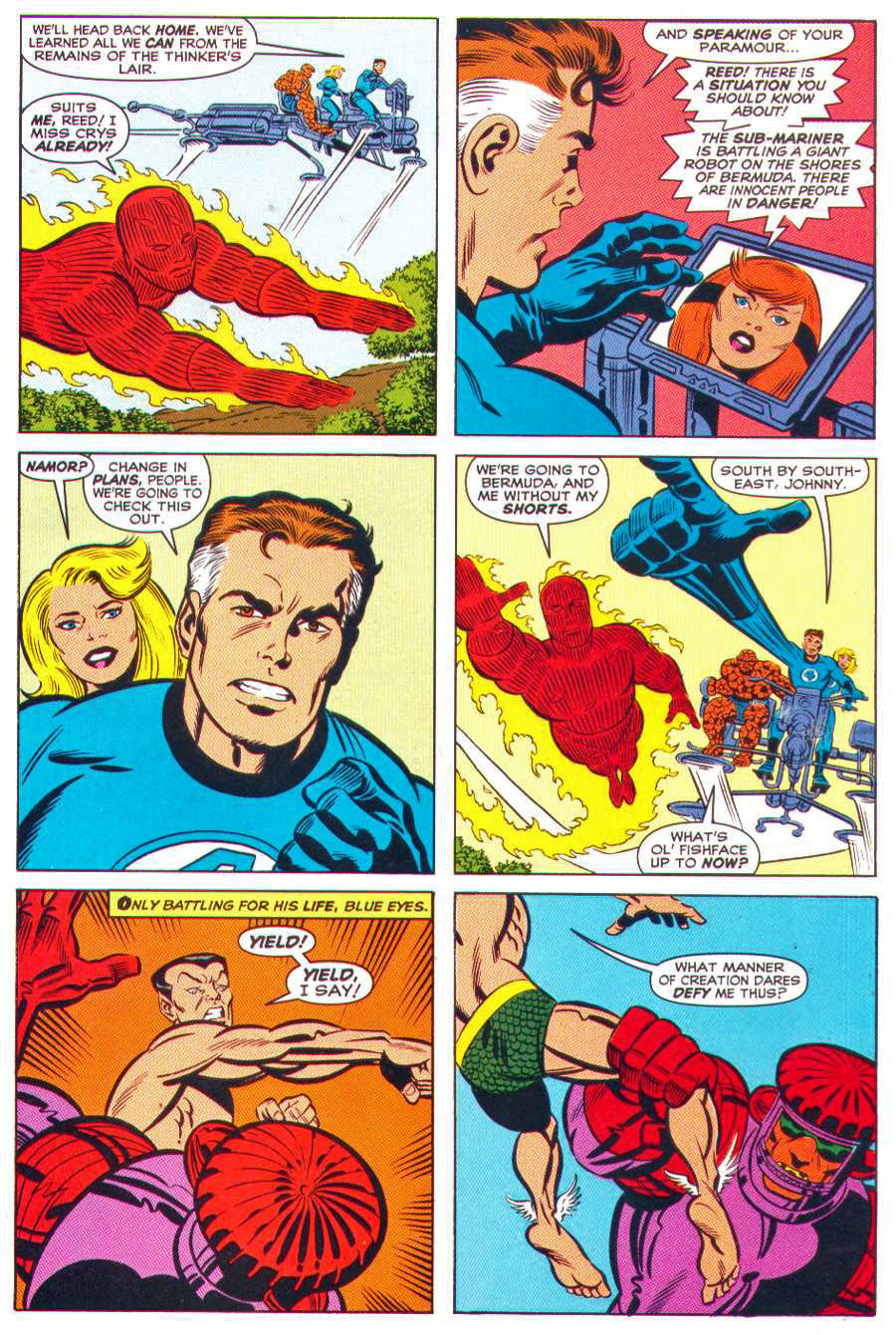
This page nails that idea perfectly. Erik Larsen provides the layouts, setting up classic, confident storytelling. Paul Ryan delivers clean, readable draftsmanship. Al Milgrom locks it all together with classic Marvel authority. You get the full team, Crystal, and Namor battling the Sentry—all in one terrific page of original art.

Across the series, the creative roster reads like a roll call of die-hard Kirby believers. Other contributors included Bruce TimmRon FrenzKeith Giffen, and Rick Veitch—artists who didn’t just admire Kirby, they revered him and understood what made the Fantastic Four tick.

What makes World’s Greatest Comics Magazine special is its confidence. It doesn’t explain itself. It assumes the Fantastic Four never stopped being the future. In that sense, it isn’t nostalgia—it’s continuity of imagination. And that’s about as Fantastic Four as it gets.
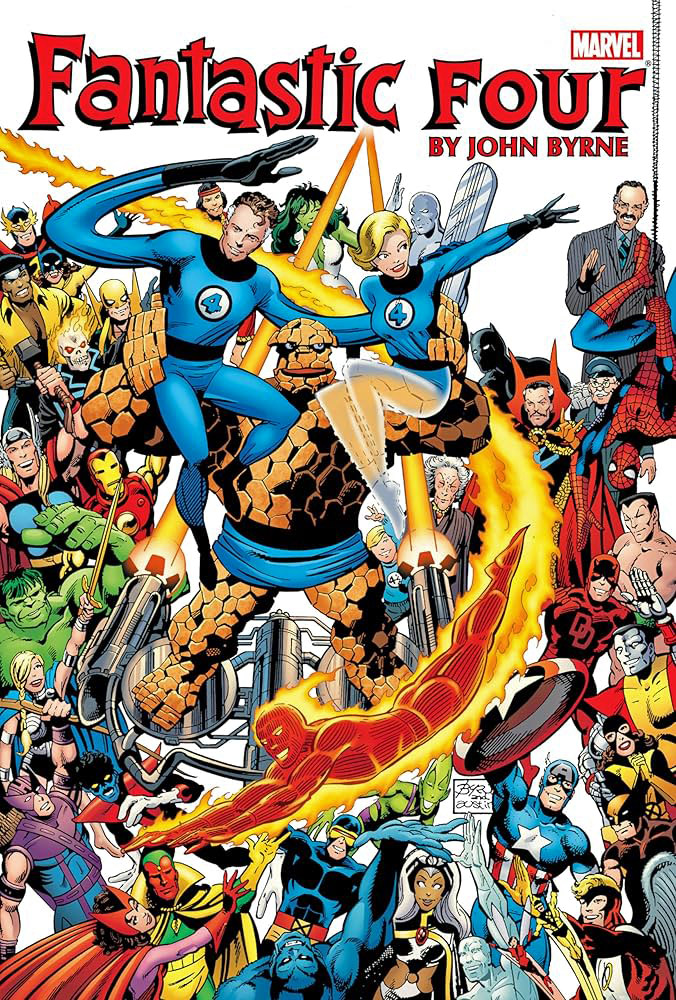
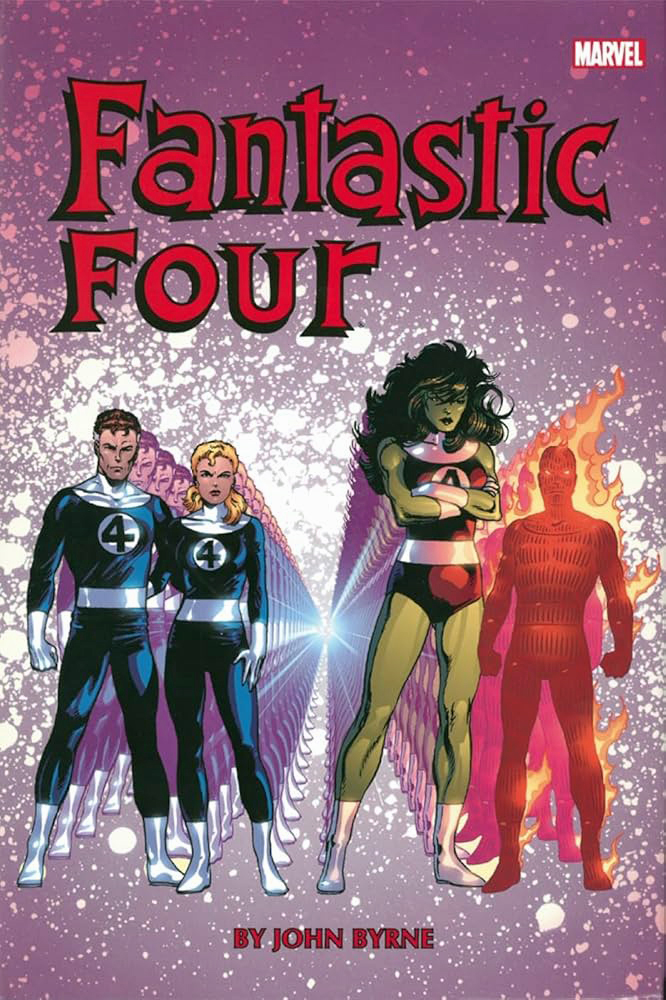
John Byrne — Fantastic, Again

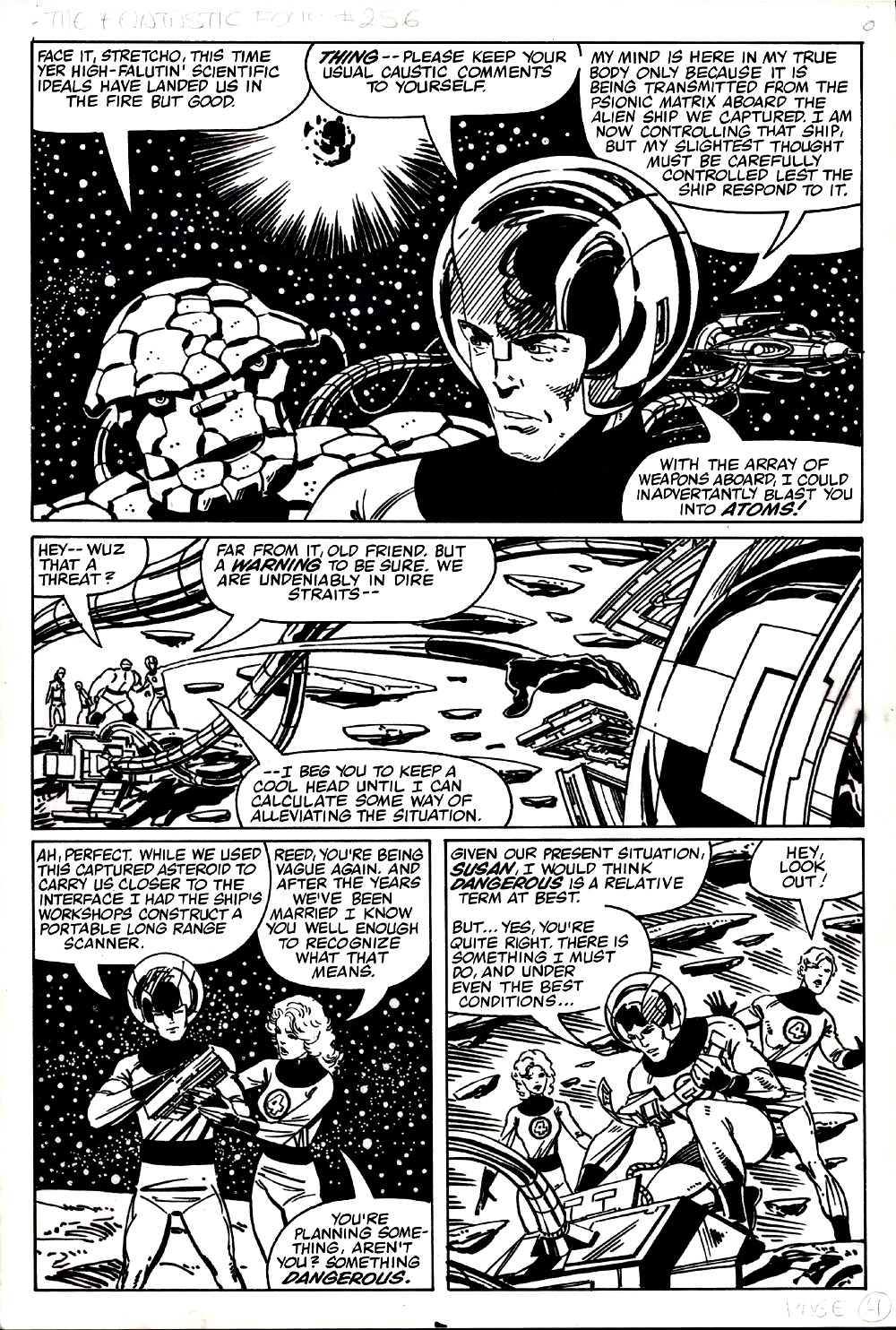
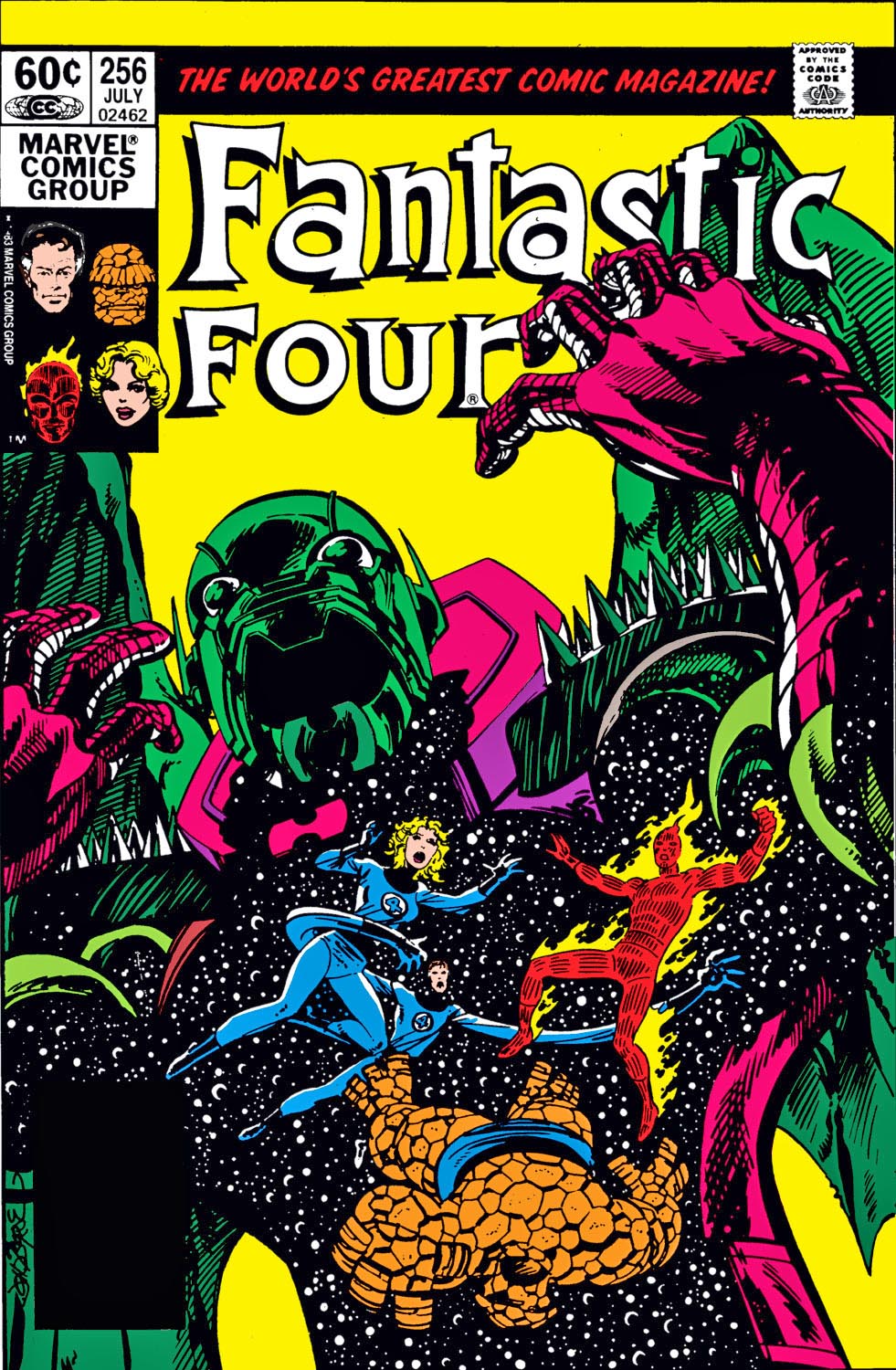
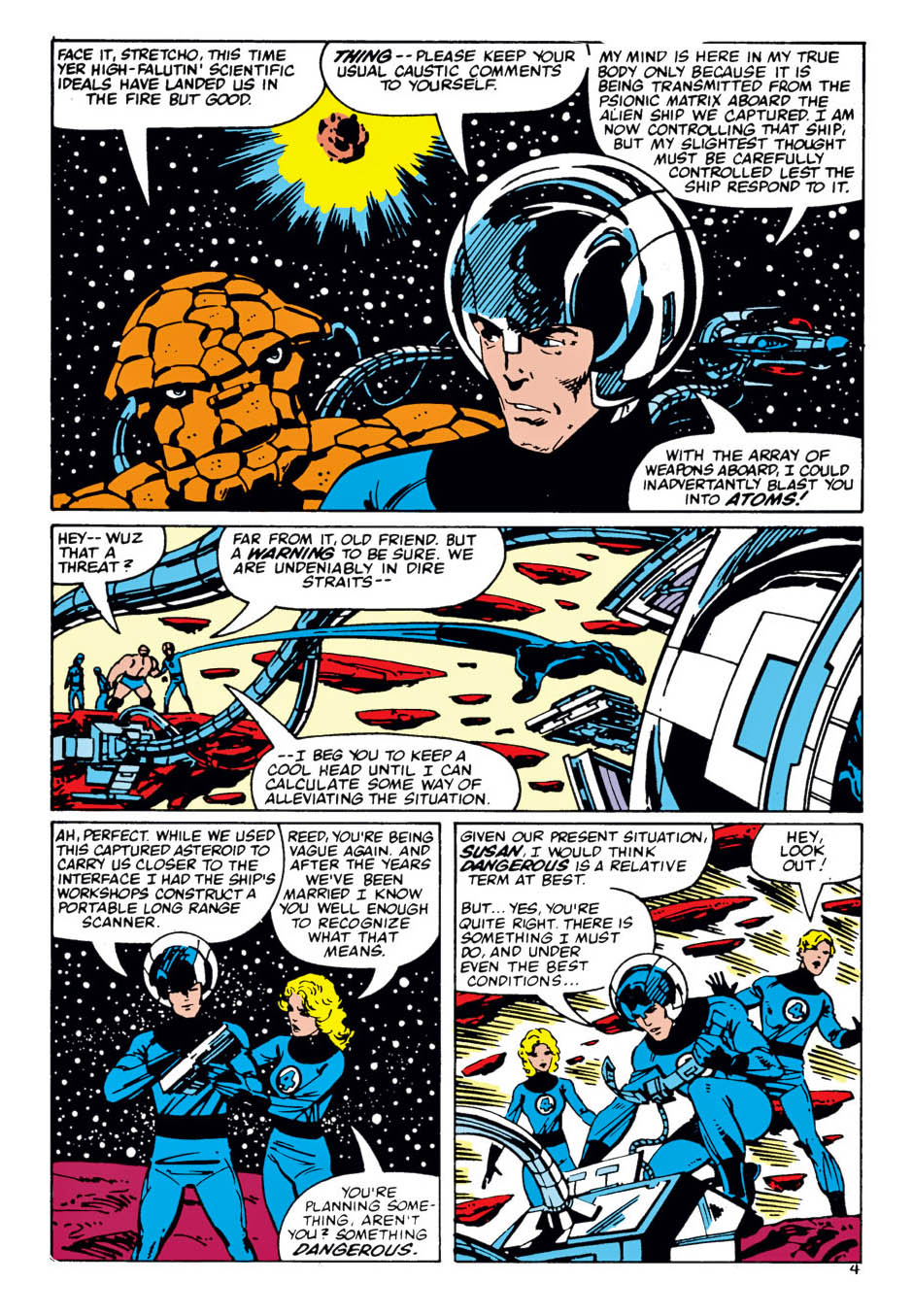
Fantastic Four #256, July 1983

John Byrne’s Fantastic Four earned its legendary status the right way. He took the keys to one of Marvel’s great books, respected the Kirby engine that powered it, and pushed it forward with smart, late-’70s storytelling.

This Negative Zone page feels like classic FF: clear storytelling, dangerous tech, and characters who sound like smart people under pressure. Reed is cool and precise. Sue keeps things grounded.

Drawn oversized, the page has room to breathe — big machines, strange worlds, and that unmistakable sense of scale. Nothing feels decorative. It feels built.

The kind of Fantastic Four that made opening a new issue every month feel like an event.

Jack Kirby & Joe Sinnott — Fantastic, 4ever

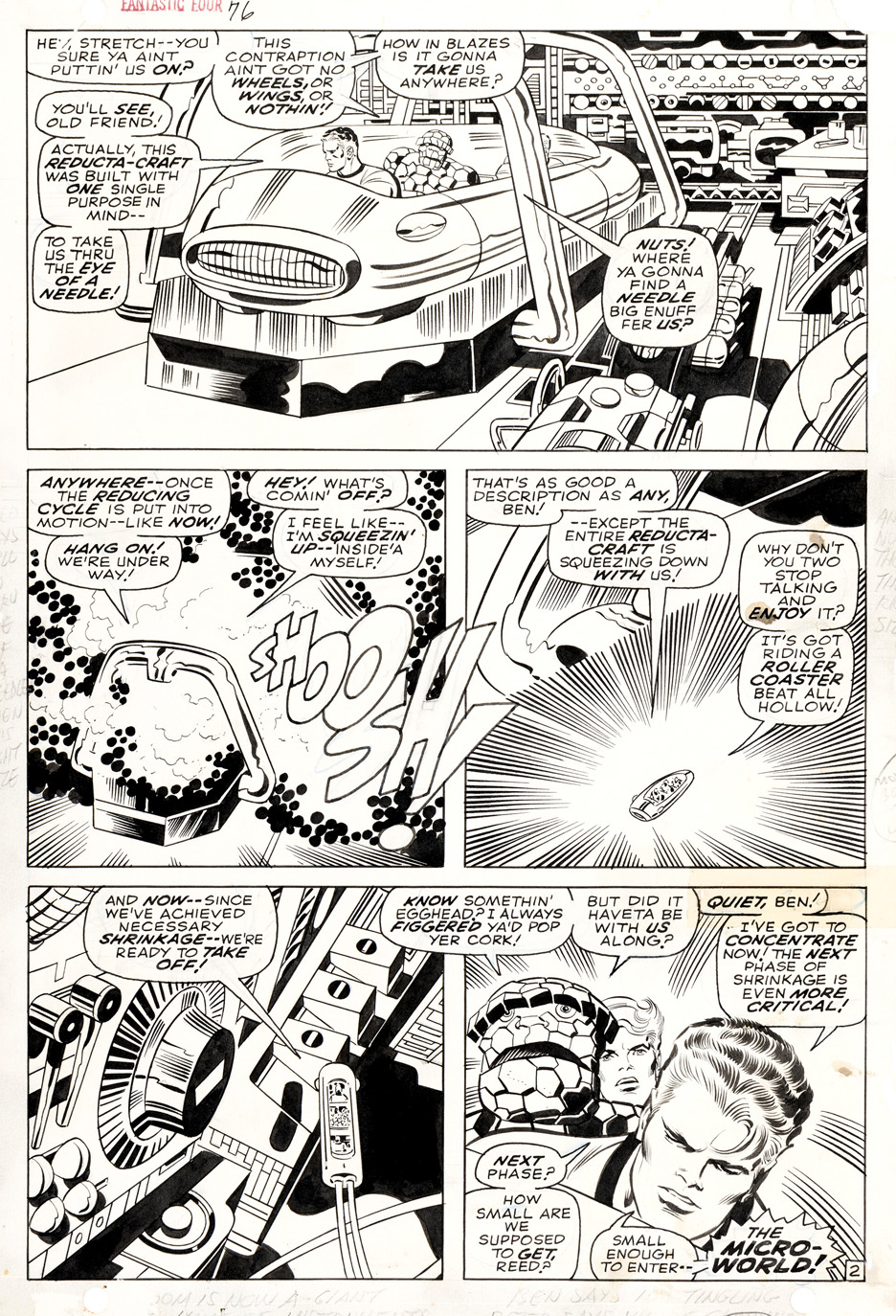
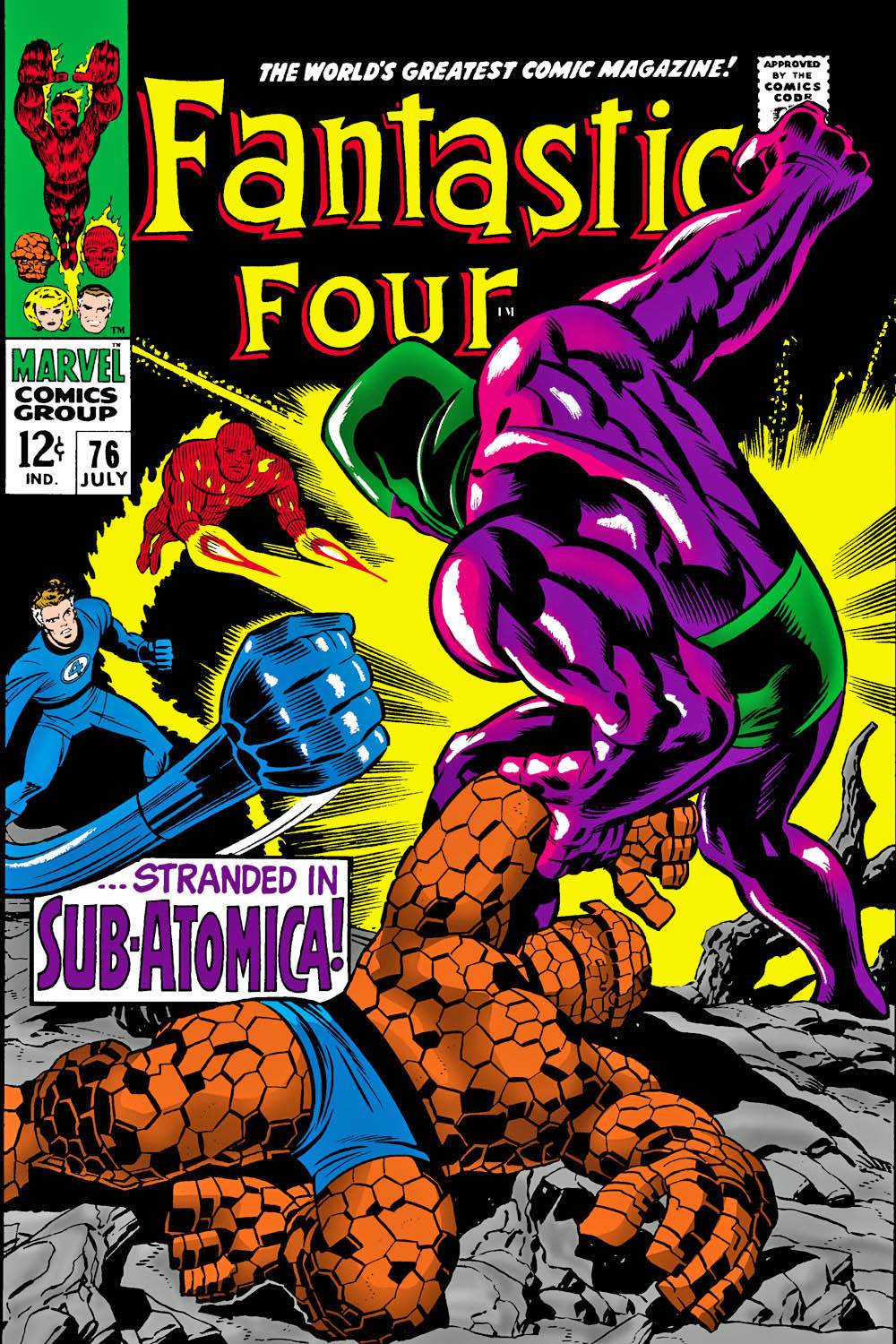
Fantastic Four #76, July 1968

Sixty-five years on, The Fantastic Four still feels like Marvel figuring itself out in real time—and getting it spectacularly right. These weren’t heroes born in alleys or back rooms; they were a product of the early ’60s, when the Space Race filled the headlines and the future felt thrilling, reckless, and inevitable. Rockets were launching, limits were being tested, and the question wasn’t should we go farther—it was how fast can we get there. Marvel’s cosmic imagination starts right here, with four people charging into the unknown.

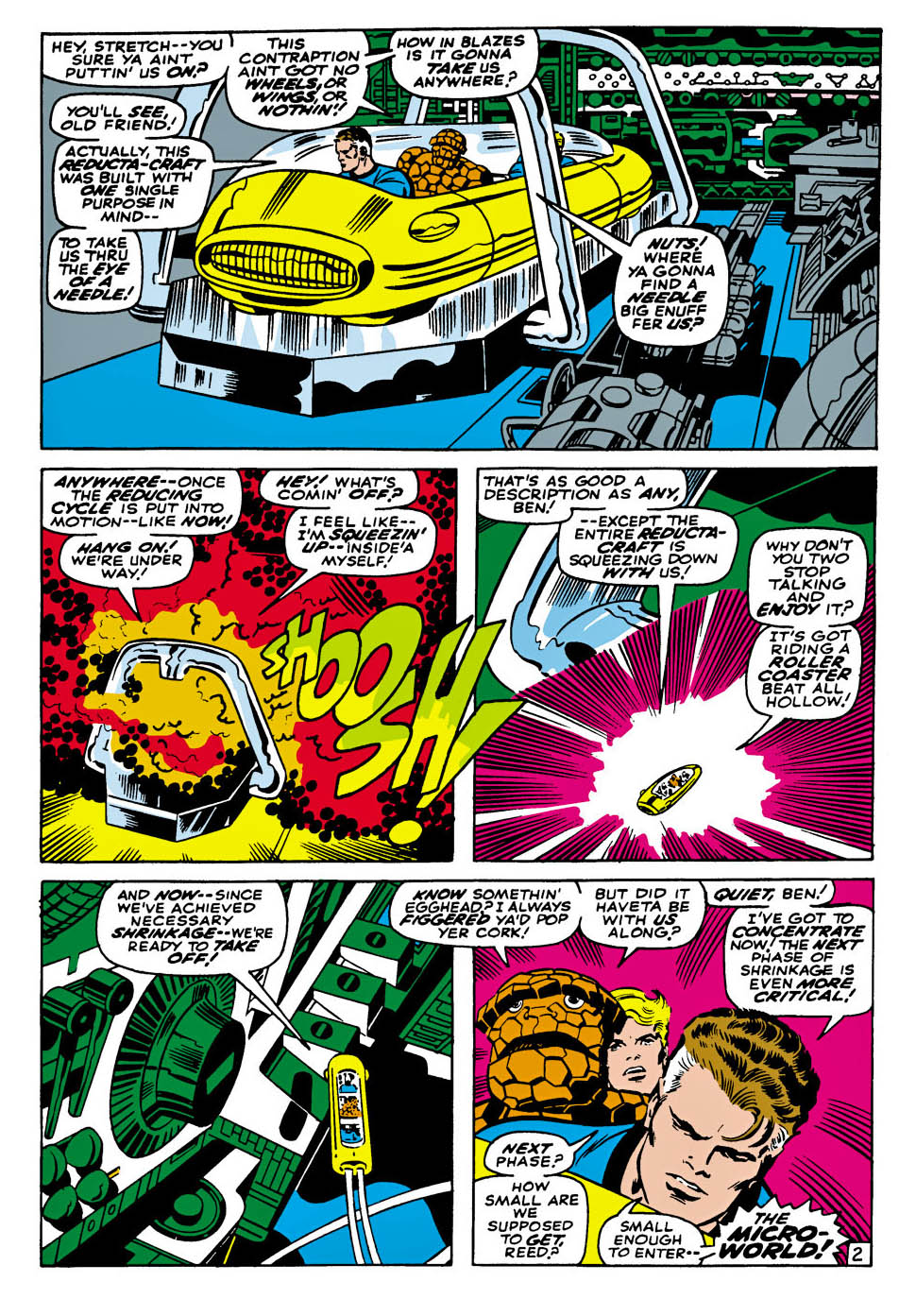
And speaking of charging ahead—just look at this page by Jack Kirby, beautifully locked down by Joe Sinnott. This isn’t just a shrinking sequence; it’s Kirby inventing scale. Machines loom like alien vistas, panels crackle with motion, and your eye doesn’t just read the page—it gets pulled inside it. Sinnott’s inks keep all that chaos crisp, clear, and impossibly confident.

I continue to believe the first 100 issues (and especially the marvelous three-year stretch from about issues #39–76) of The Fantastic Four rank among the most important runs in comic-book history—one long creative hot streak where the ideas redefined pretty much everything that came before.

I’m never going to referee who did what between Kirby and Stan Lee, but one thing is pretty obvious: Lee contributed much of the personality, friction, and soap-opera snap that made the cosmic feel personal. The Fantastic Four bicker, joke, and melt down while rewriting reality—and that mix of big ideas and human irritation became Marvel’s calling card.

Happy 65th to the Fantastic Four: Marvel’s original first family, and a wondrous revolution in comic books.

Jack Kirby & Mike Royer— Ragnarök at the North Pole

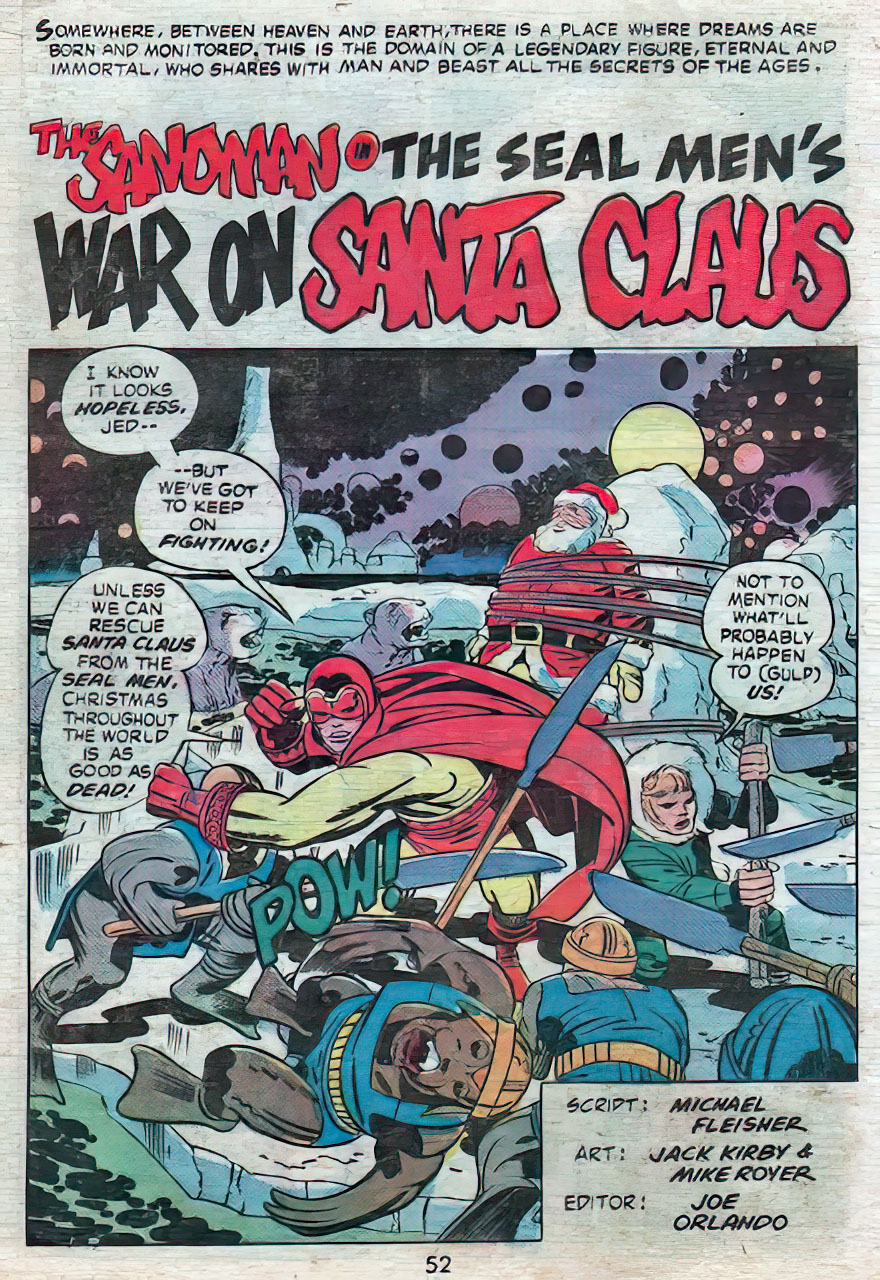
The Best of DC #22, March 1982 (Intended for Sandman #7, —Unpublished — 1975)

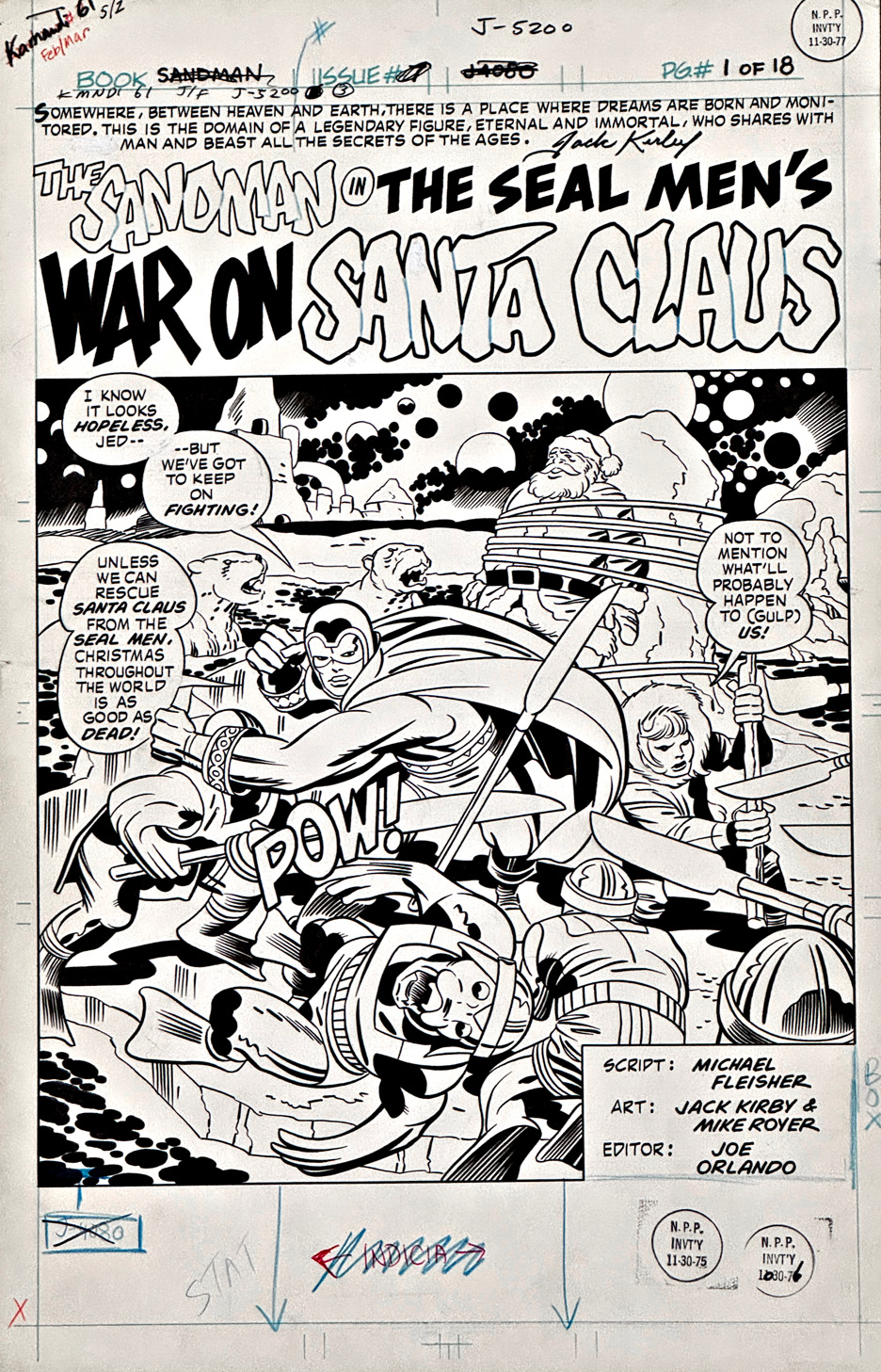
When Jack Kirby wanted to make an entrance, he didn’t tiptoe — he detonated. This Sandman title page kicks down the door, grabs you by the collar, and announces, “Strap in — things are about to get very weird.”

Only he could take a story called The Seal Men’s War on Santa Claus and treat it like Ragnarök at the North Pole. The floating spheres, extra moons, and cosmic backdrop all calmly insist, “Relax — this is exactly how dreams are supposed to look.”

Down on the ground, Sandman is carving a path through a crowd of angry Seal Men, cape swirling, fists flying, looking every bit like someone who rescues Santa on an annual basis. Jed is right beside him, doing his best with a staff that’s taller than he is, while poor Santa watches from the background, wrapped up like he’s on the world’s least festive gift list.

Mike Royer’s inks give the whole scene its crisp, confident snap — bold lines, clear action, and just enough shadow to keep the mayhem grounded.

It’s light, it’s wild, and it is unmistakably DC Kirby — a dream-world dust-up where everyone seems to believe in the moment. 

Even Santa.

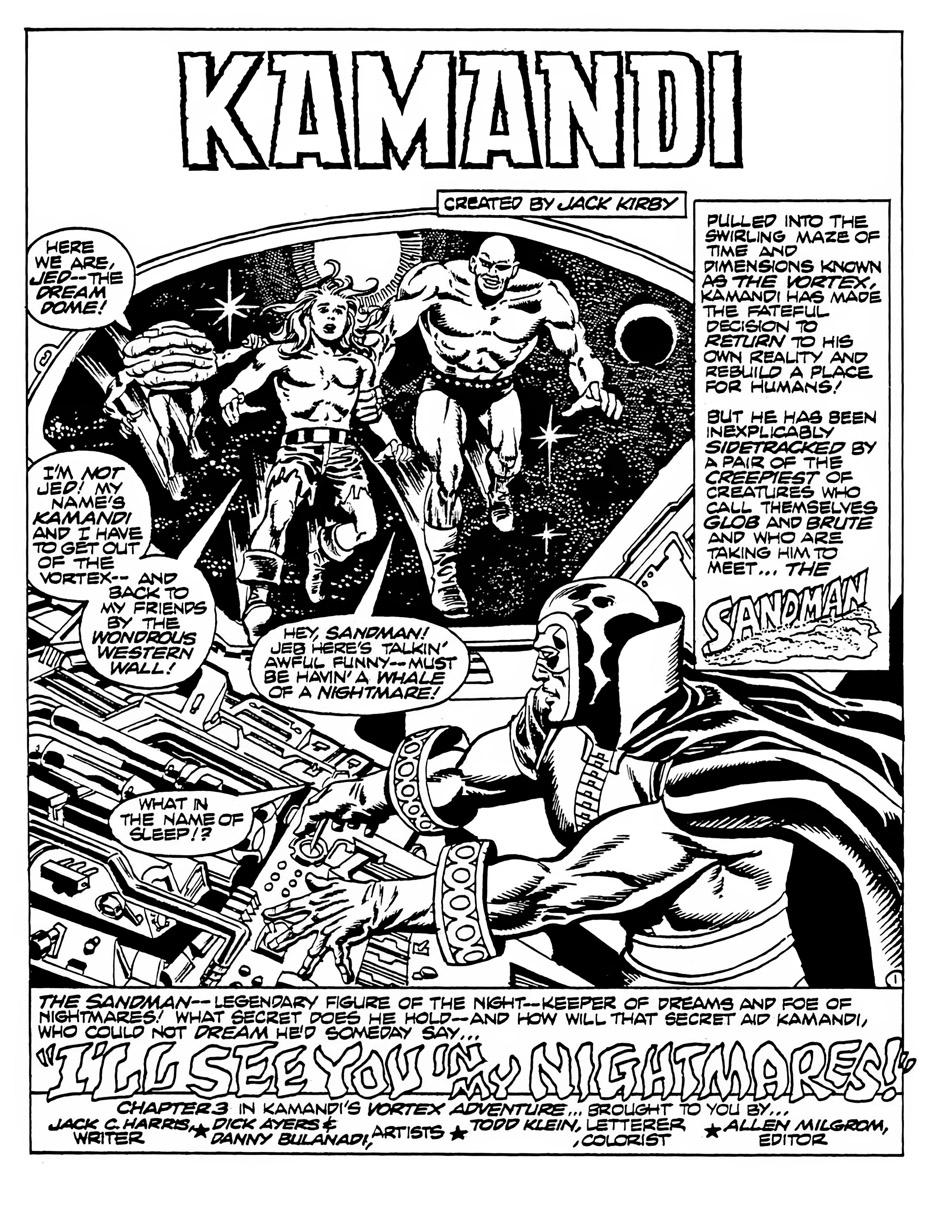
Has any comic story ever been cancelled twice? Jack Kirby holds a lot of comic-book records, but this one might be the strangest.

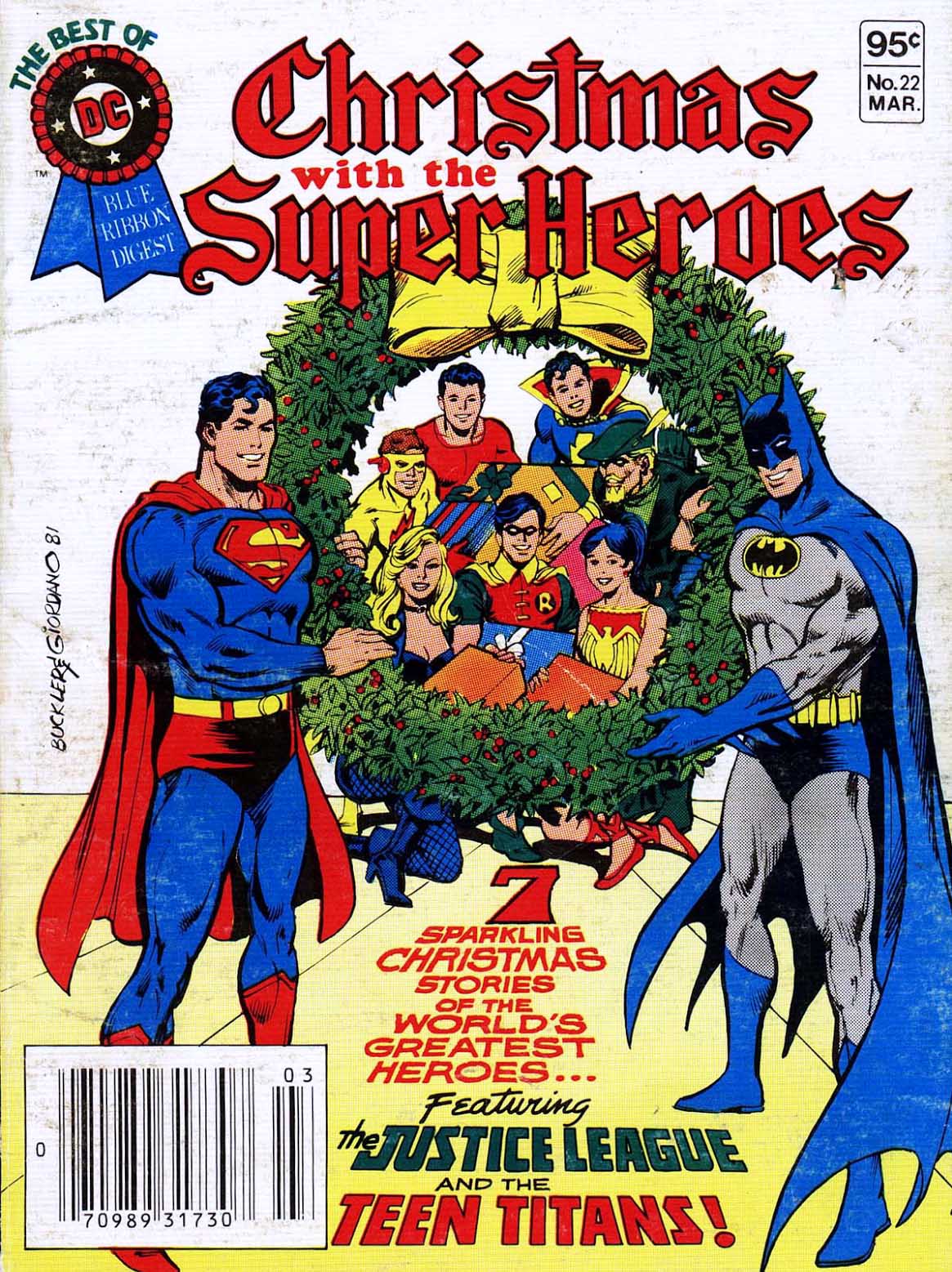
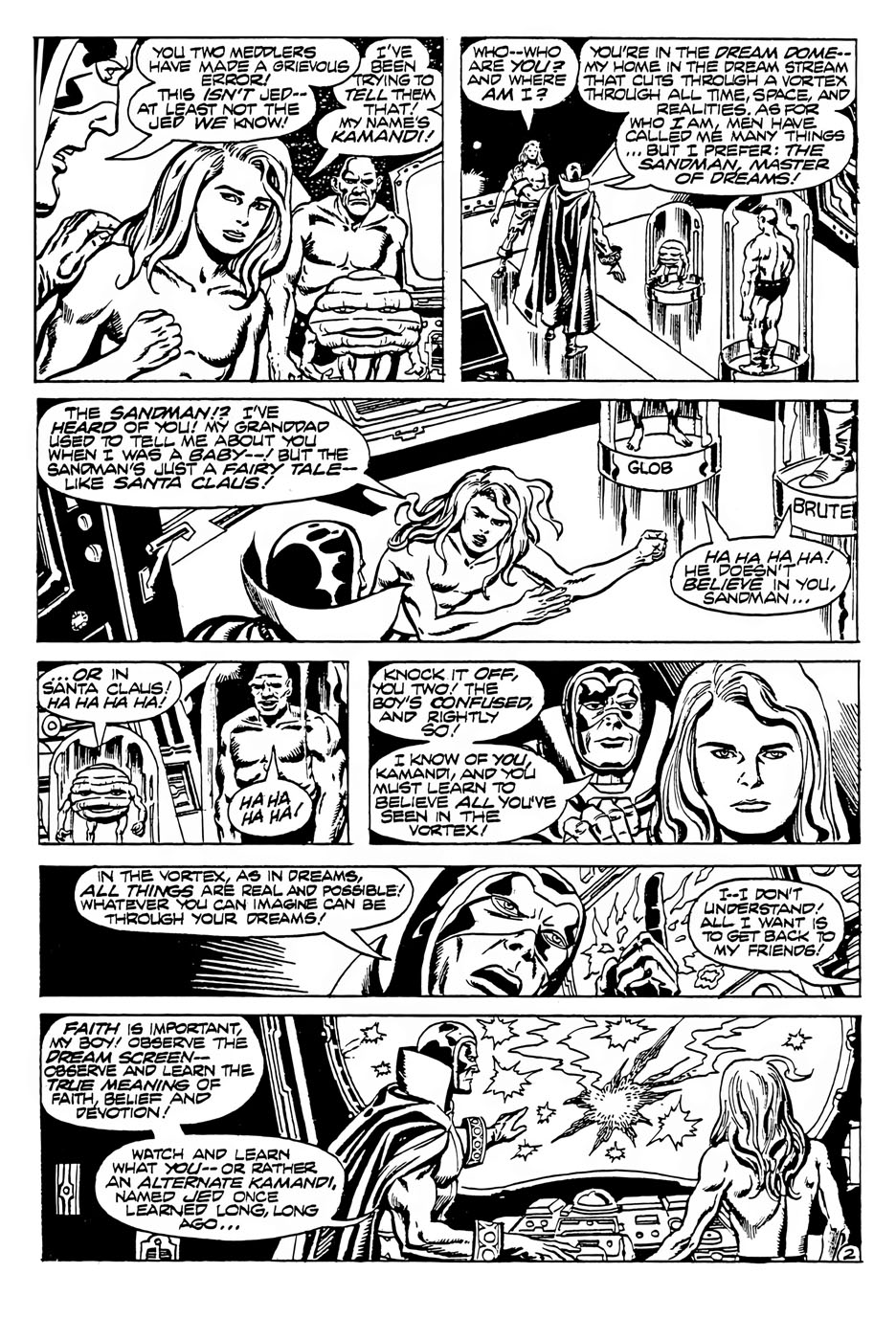
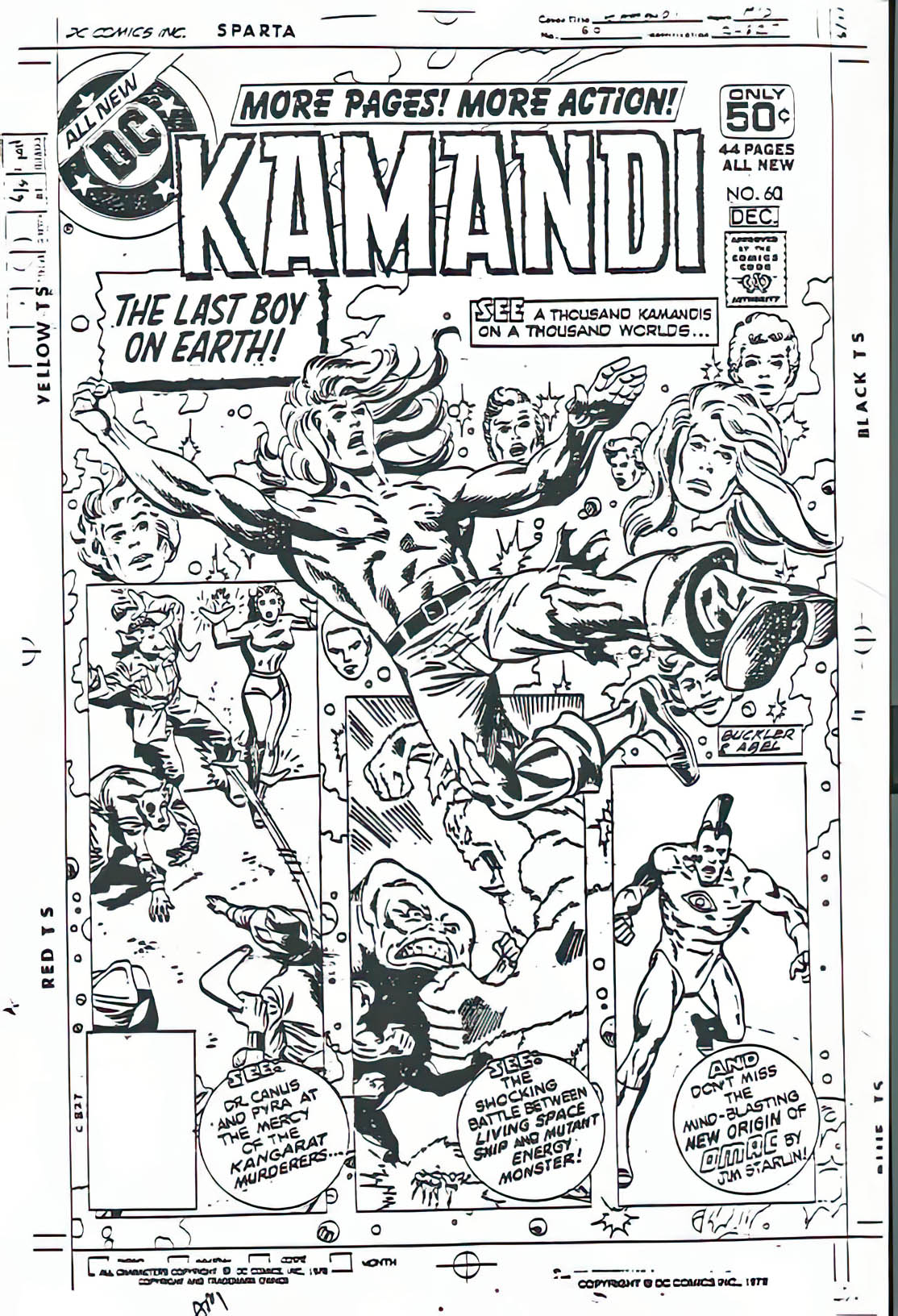
Sandman #7 was fully finished when DC pulled the plug on the series after issue #6 in 1975. The completed story went into limbo — filed away, forgotten, probably wondering what it did wrong. A few years later, DC tried again, planning to incorporate it narratively (don’t ask) in Kamandi #61… and then the infamous “DC Implosion” hit. Kamandi was cancelled too.

It finally escaped publishing purgatory in Best of DC #22, a digest-sized Christmas special from late 1981 — because if you’re going to rescue a lost Kirby comic, why not do it as a bite-sized stocking stuffer?

Sigh.

It arrived late, sure — but fortunately, Kirby pages age better than most publishing plans. 

(And now, fortunately, you can find a full-size version collected in The Kirby DC Bronze Age Omnibus. The perfect Christmas present to give yourself.)

John Buscema & Tom Palmer — Avengers, Assemble

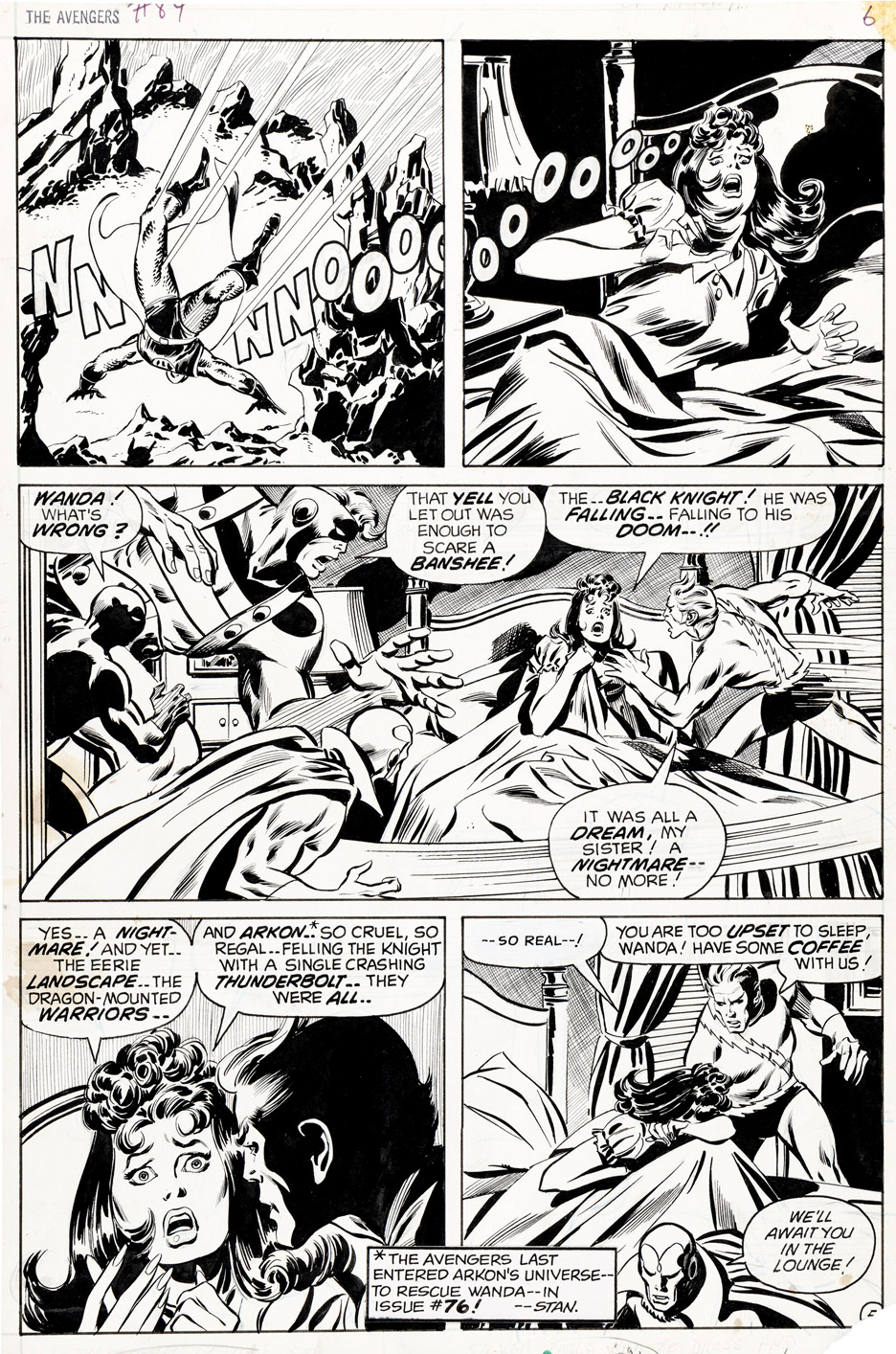
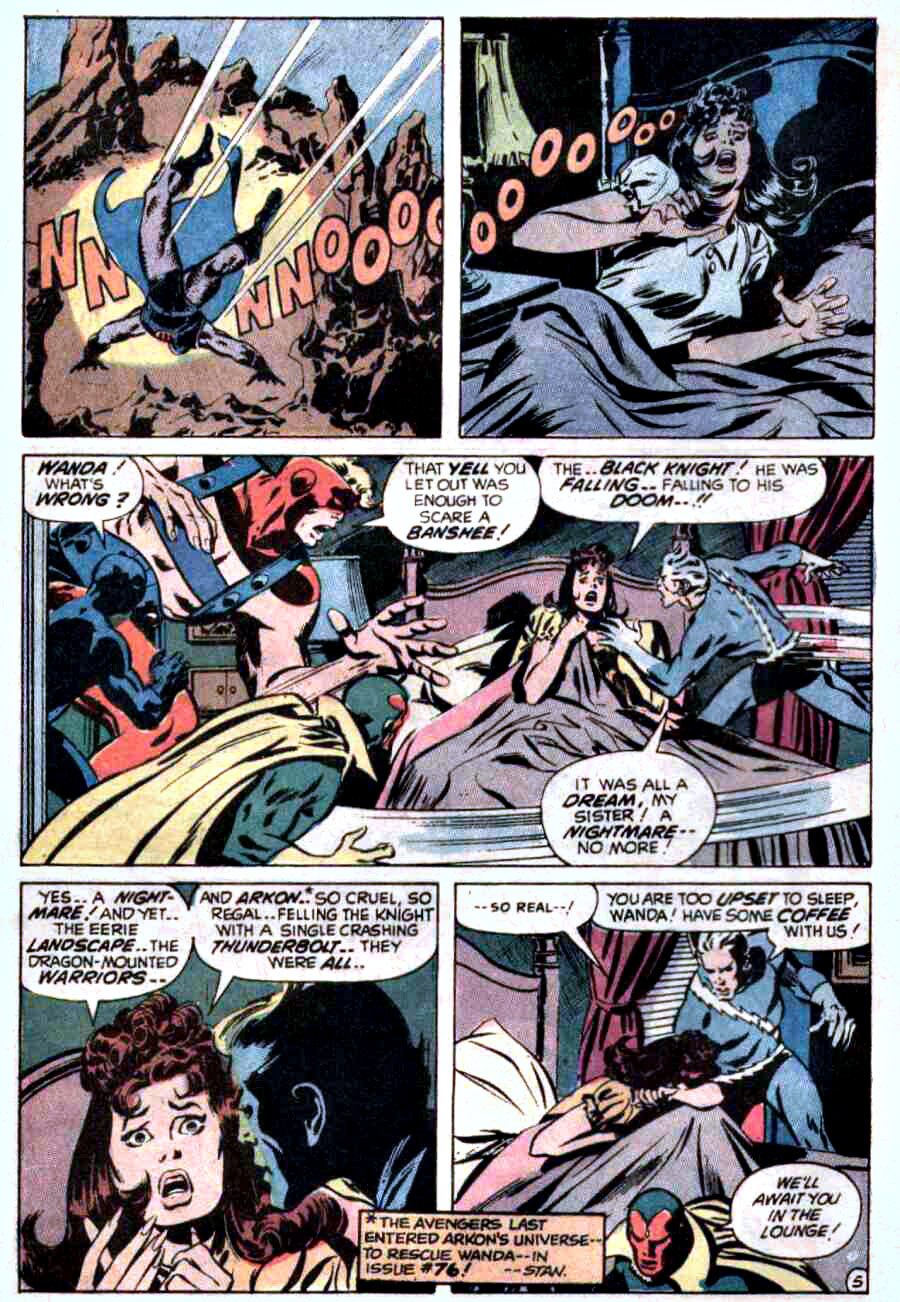
Avengers #84, January 1971

John Buscema was the Avengers artist of the late ’60s and early ’70s—despite famously claiming he didn’t much care for superheroes.

Every panel feels like it could’ve been pulled from a widescreen adventure film, even when the scene is nothing more than a nightmare and a jolting wake-up. That was his magic: Buscema could make anything feel epic.

This page shows exactly how he defined the Avengers in that era. Grace, power, and cinematic clarity are baked into every beat, transforming a bad dream into something memorable—and unmistakably Avengers.

Behind the scenes, Marvel was running hot. Kirby had just left for DC, schedules were tightening, pages were due, and assignments were shifting fast. You can feel a stronger Tom Palmer inking presence here than in some earlier issues, suggesting John may have supplied looser pencils as deadline pressure mounted and the machine kept moving.

Marvel may have been in motion, but Buscema’s vision was locked in.

Superman & The Fantastic Four — Double Feature

Superman & Fantastic Four Art Pages, Various

Who would’ve thought that Superman — the true beginning of the DC Universe, and the ignition for the fire that became the world of modern superheroes— AND The Fantastic Four — the first superheroes in the modern Marvel Universe — would hit the silver screen with major reboots at the same time? Definitely an unlikely coincidence.

So…

Here are all the Superman posts on the blog the last five years…

https://greggoldsteincomicartgallery.com/?s=superman

…and here are all the Fantastic Four posts from the same period.

https://greggoldsteincomicartgallery.com/?s=%22fantastic+four%22

Enjoy! I’m off to SDCC; let the madness begin!

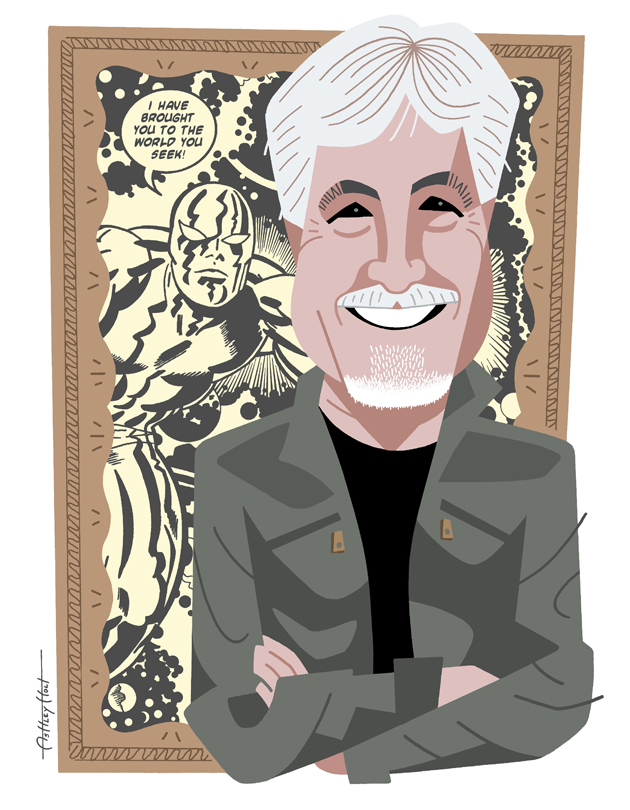
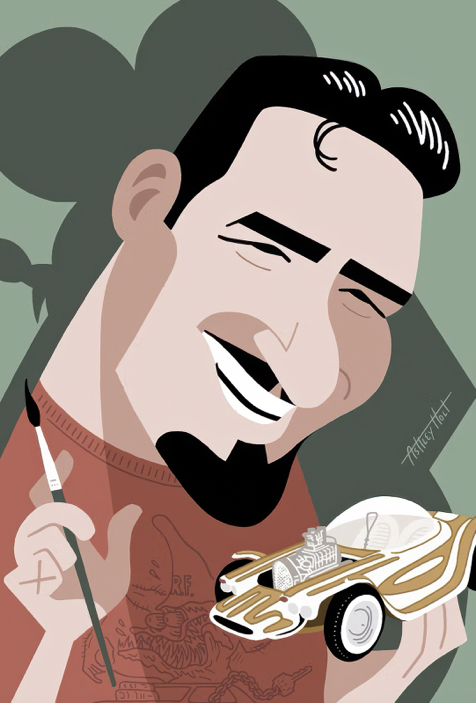
Ashley Holt — In Good Company

Commission, April 2024

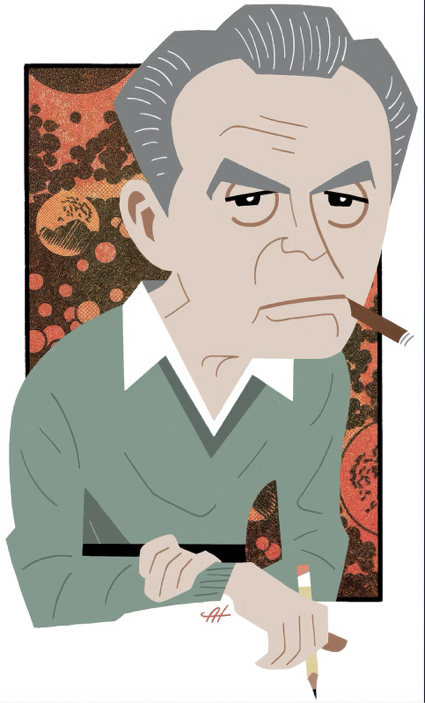
I discovered Ashley Holt’s terrific portrait illustrations a few years ago — via Howard Chaykin — and became an ardent admirer from day one. He’s depicted some of our favorite people in colorful and instantly recognizable form.

Now, I’ve joined the club.

Ashley is a pleasure to deal with. He sells prints and books, takes commissions, and has a lovely website that makes it easy to admire or acquire his art. 

Additionally, he has a well-written Substack column (“The Symptoms”), where he employs a lively — and occasionally biting — style that matches the spirit of his art. 

Follow / subscribe to everything he offers, and you won’t be disappointed.

Trust me on this.

As for Ash’s note about this illustration of yours truly?:

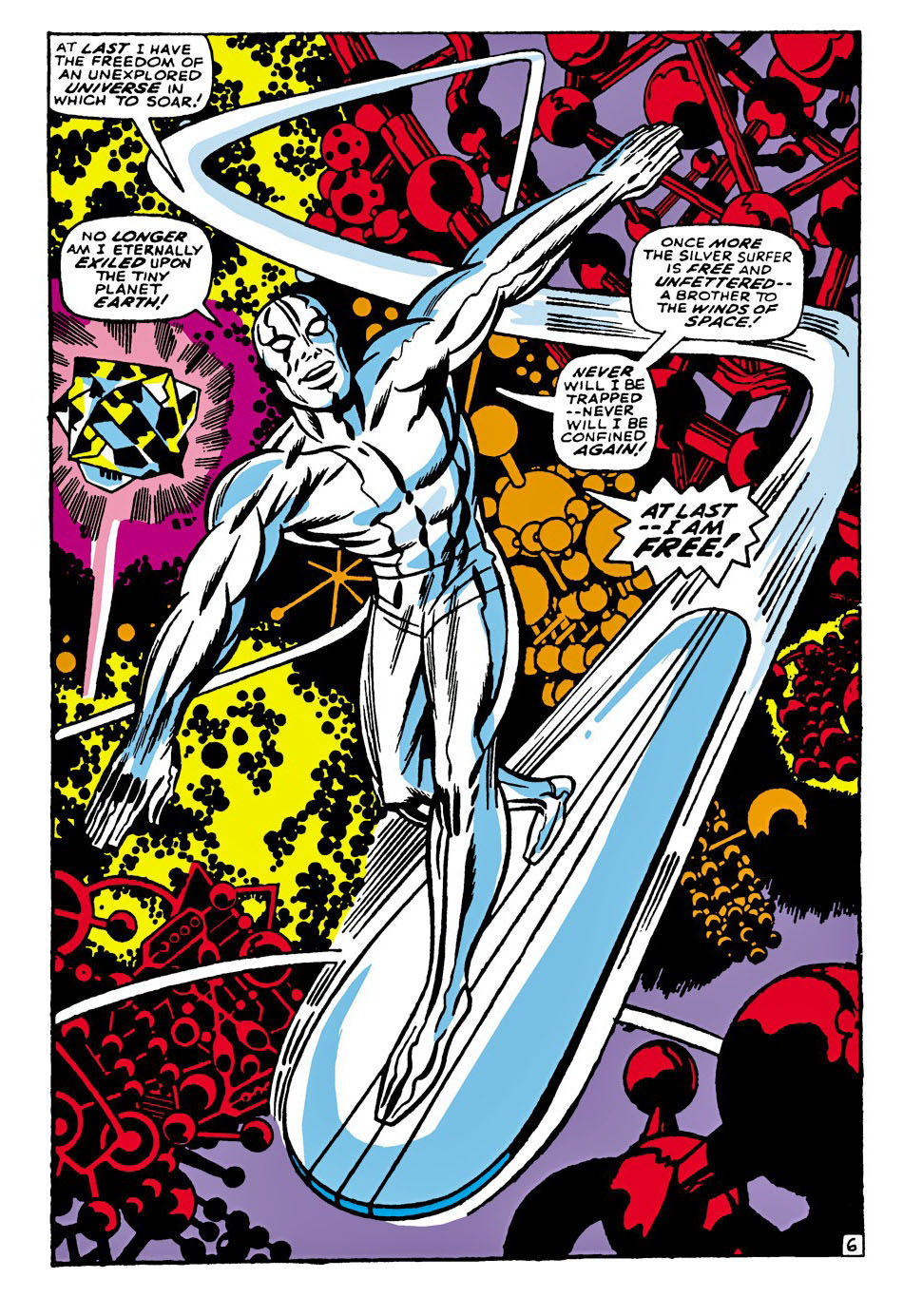
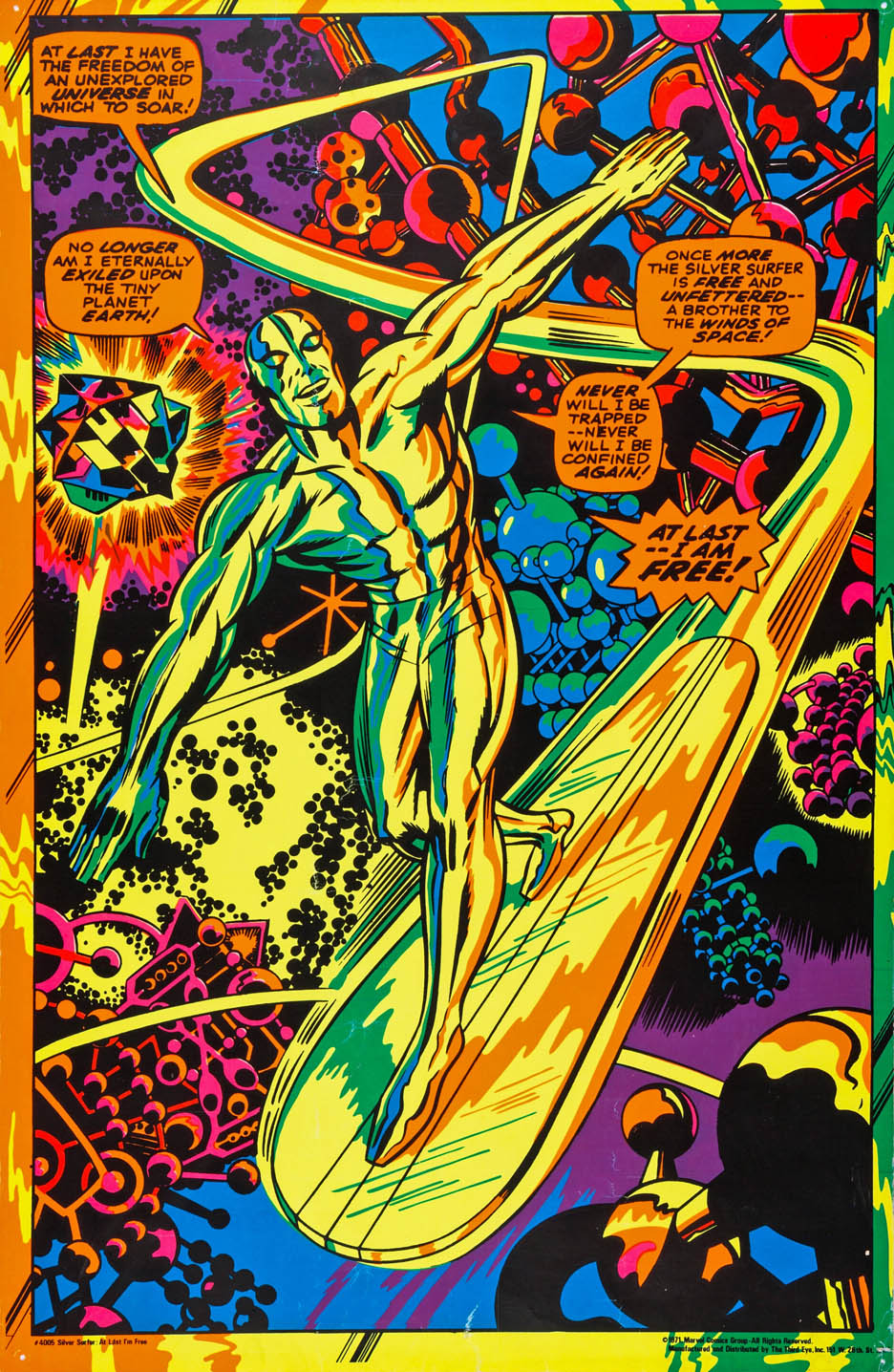
“Greg Goldstein, comics art connoisseur and former CEO of IDW Publishing, posing in front of a Jack Kirby drawing of a comics character who shall not be named for reasons of trademark law but who is definitely not riding a surfboard of any kind.”

Find Ashley here —

https://www.ashleyholt.com

https://thesymptoms.substack.com

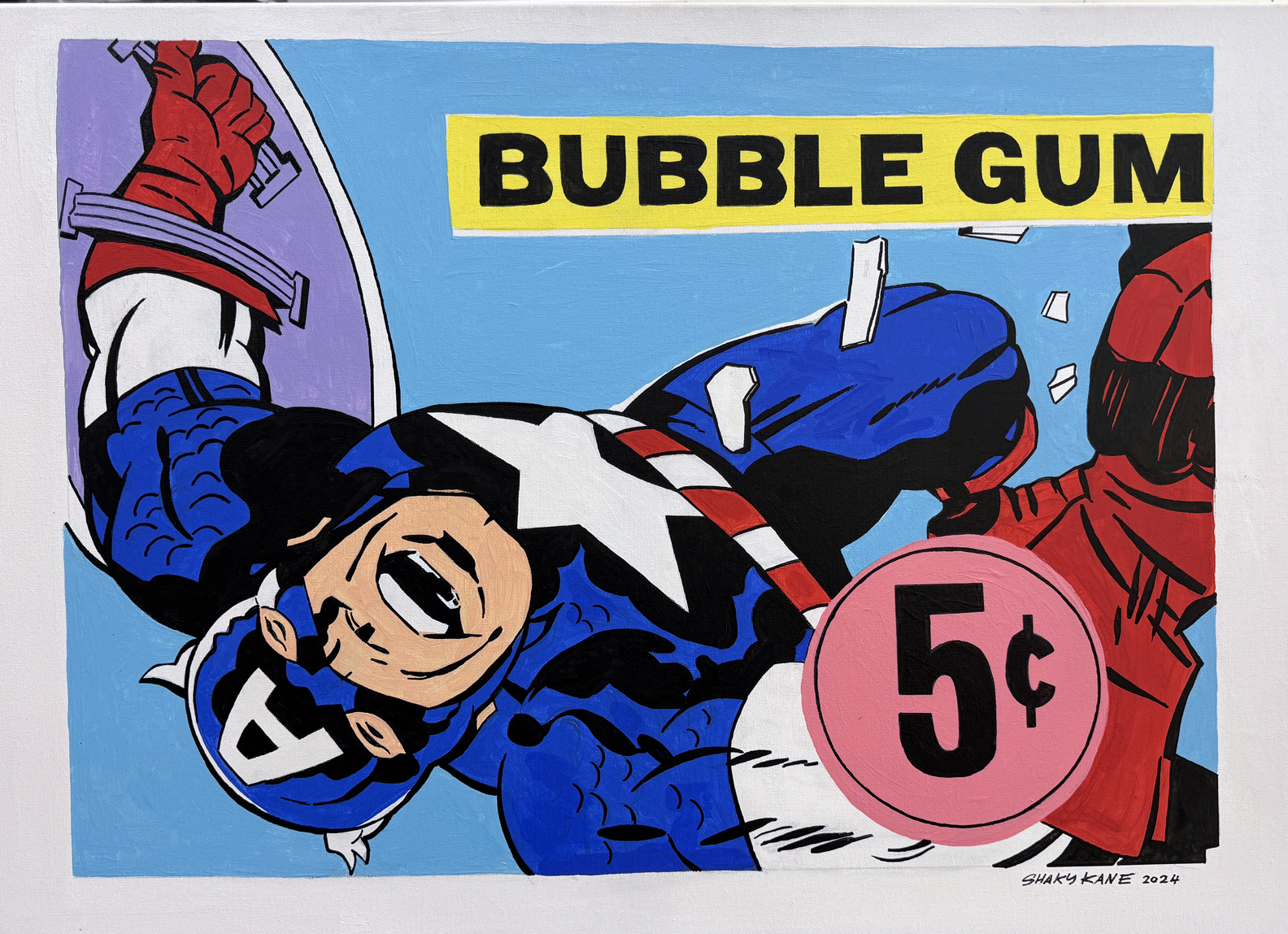
Shaky Kane — Of Bubblegum & Kings

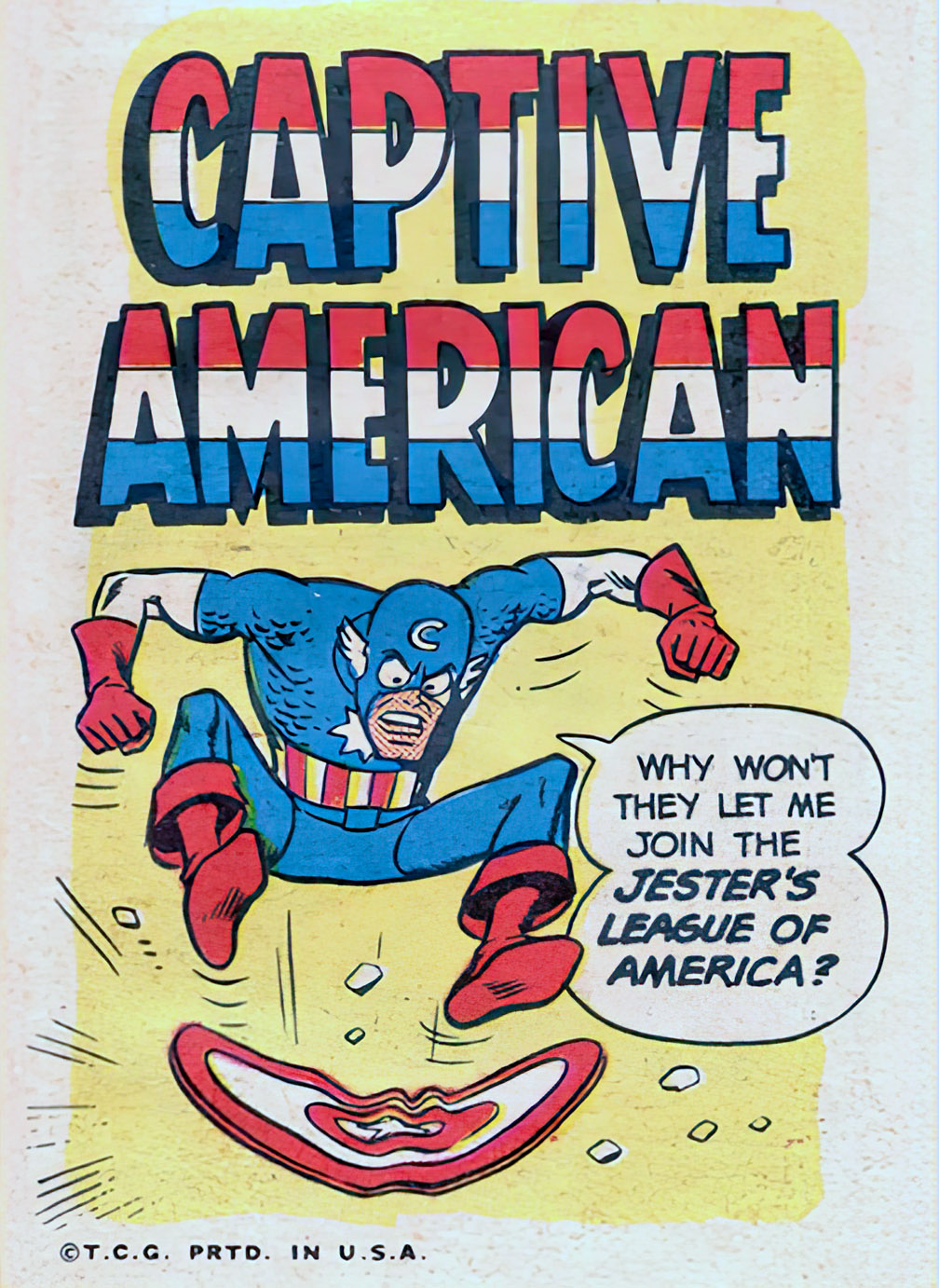
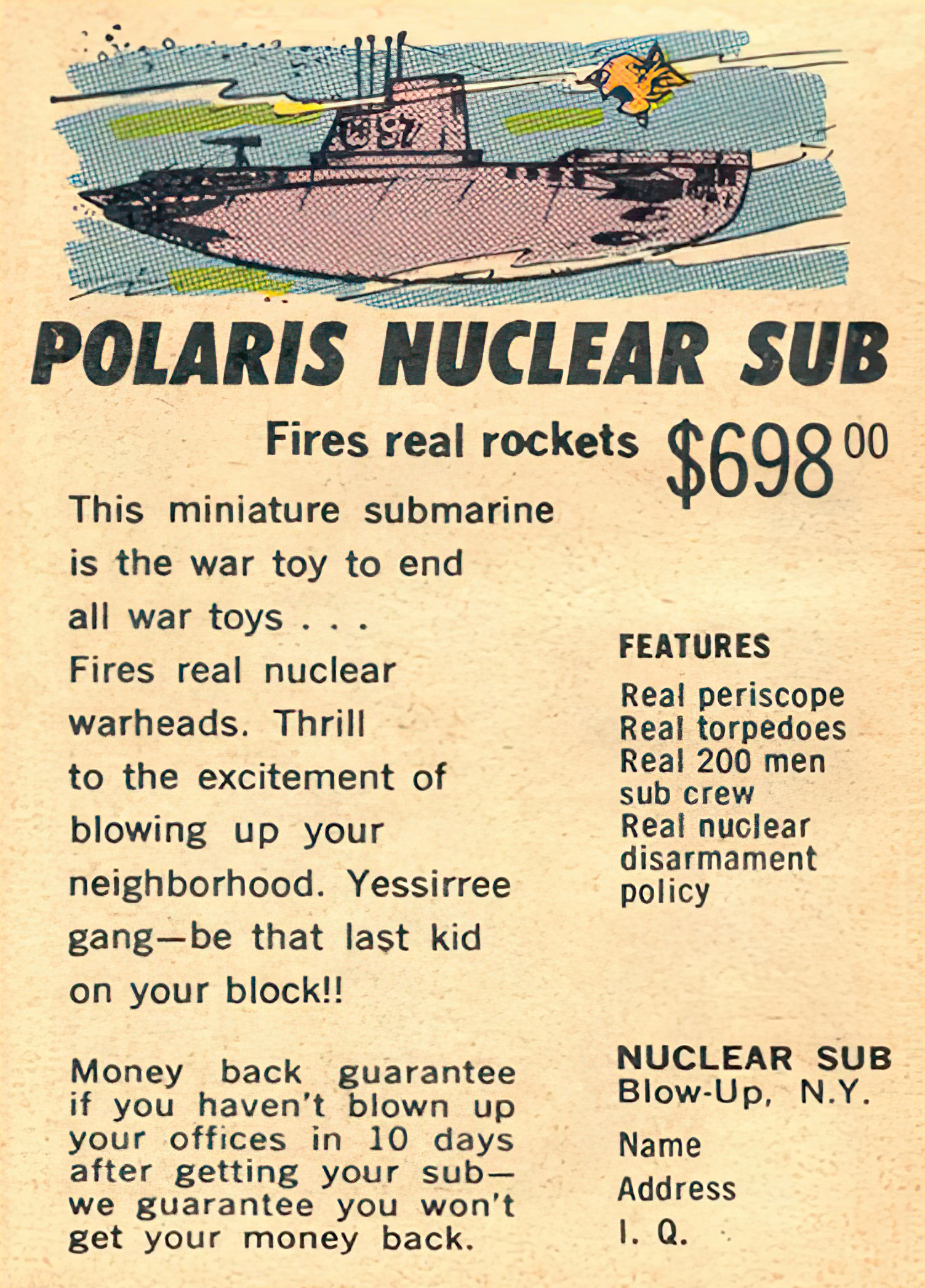
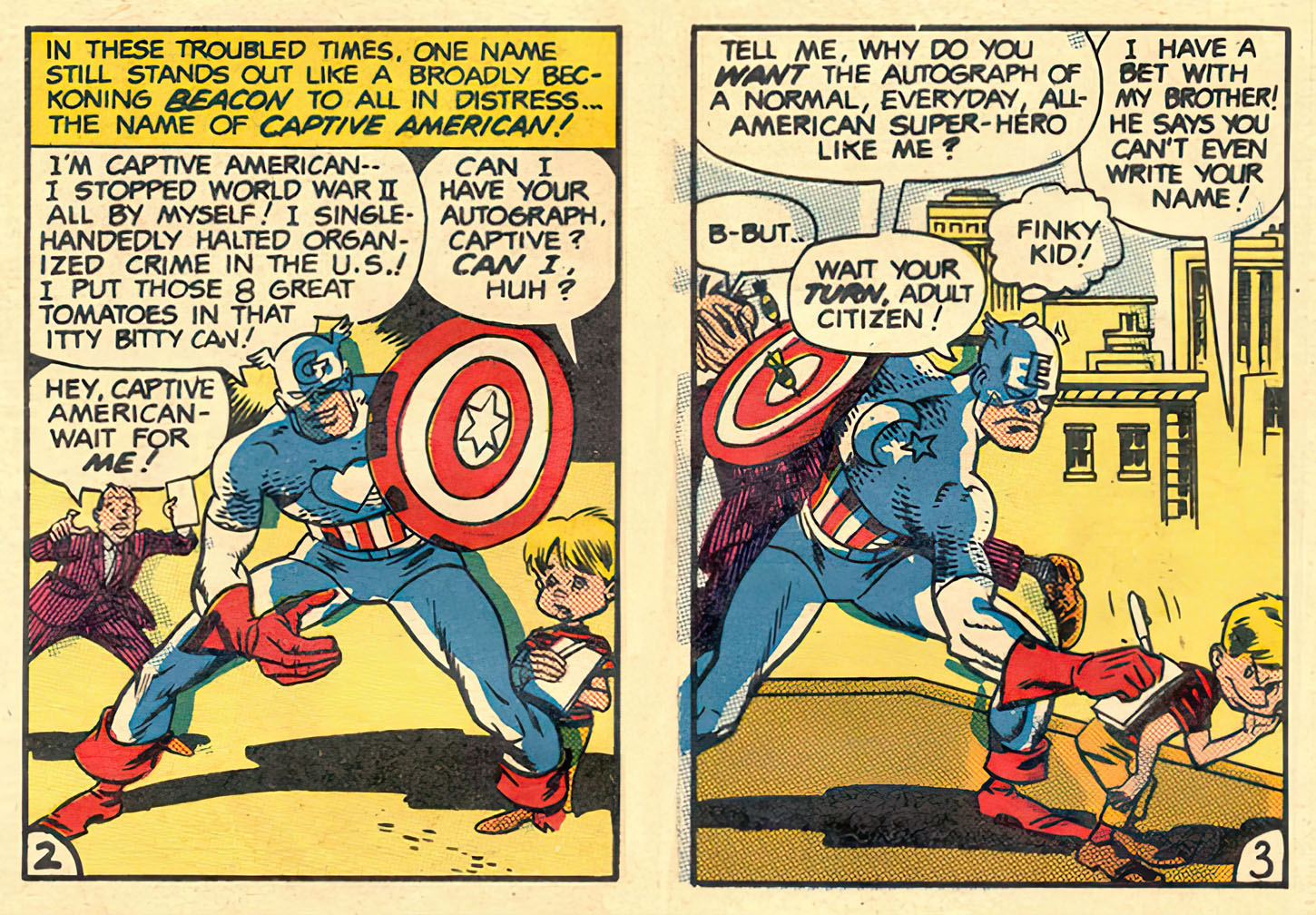
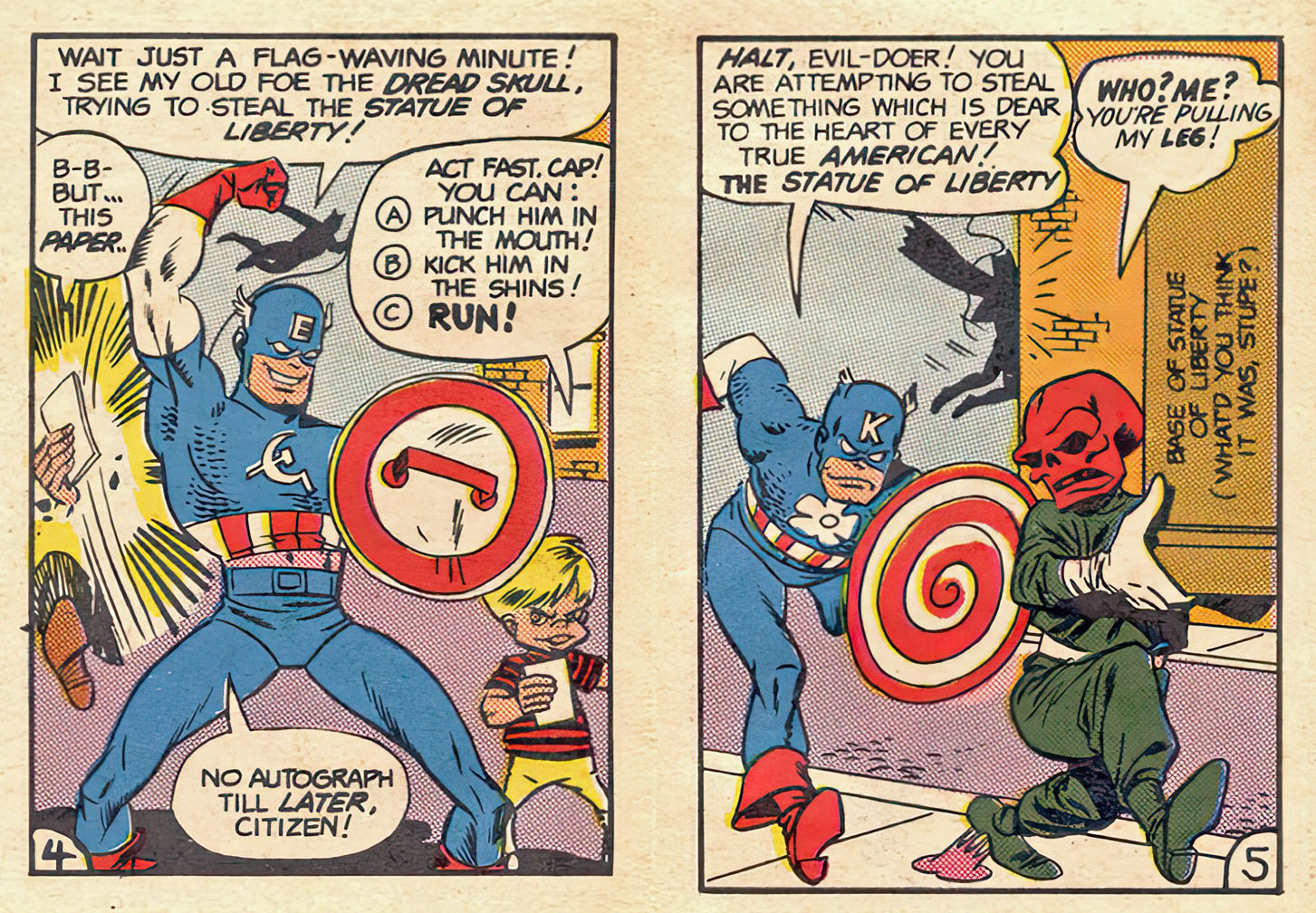
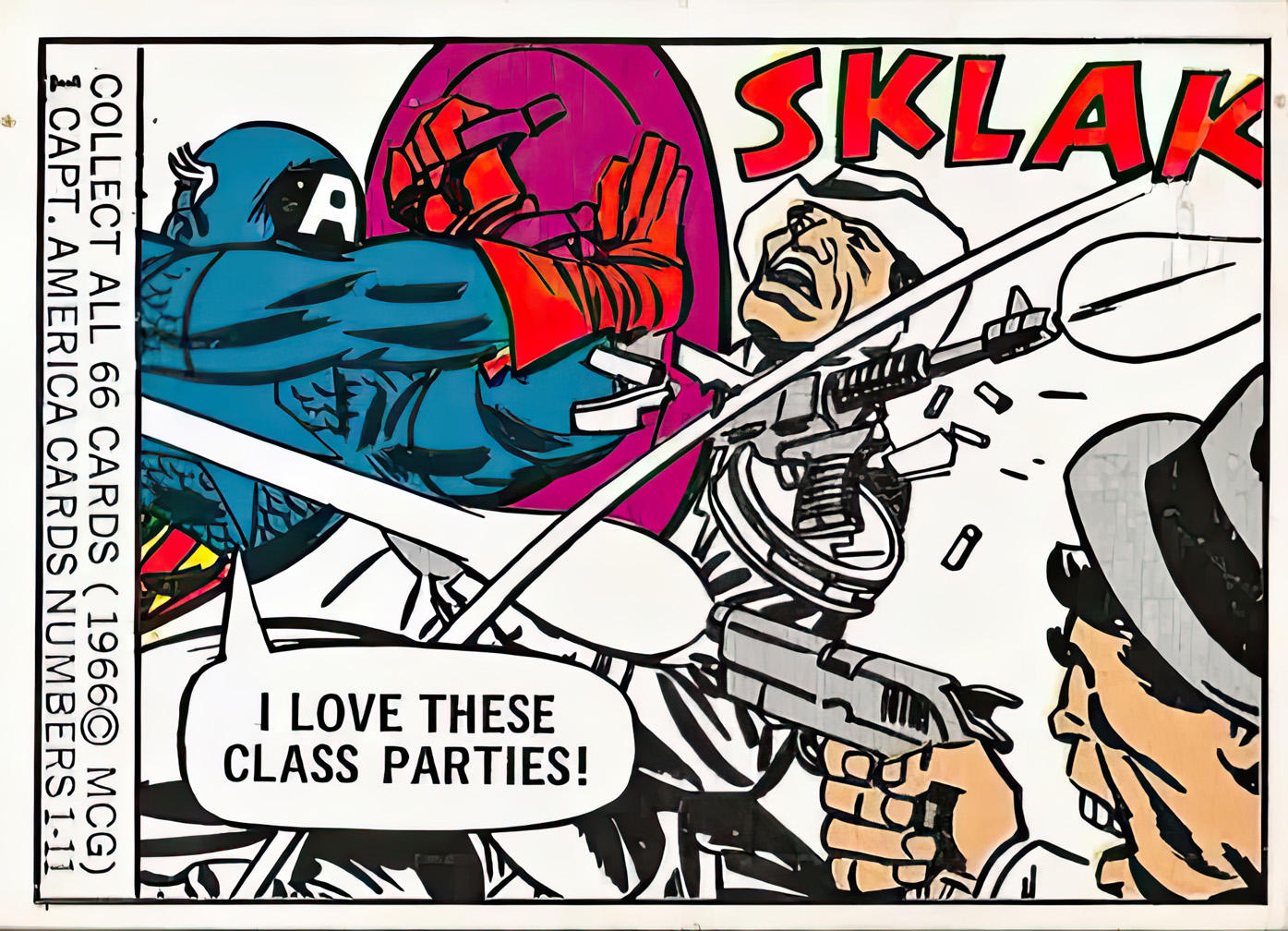
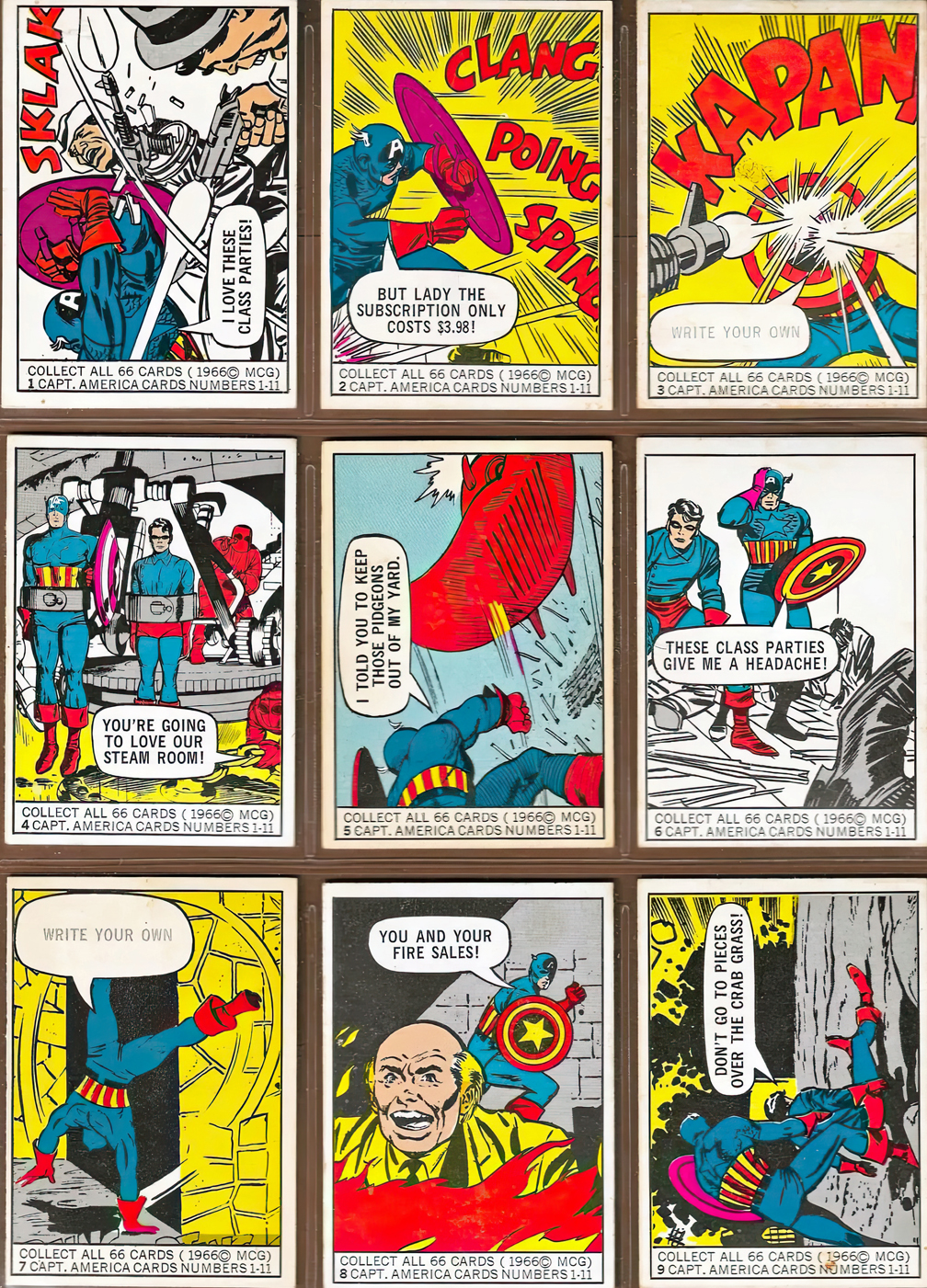
Captain America, Jack Kirby Tribute, August 2024

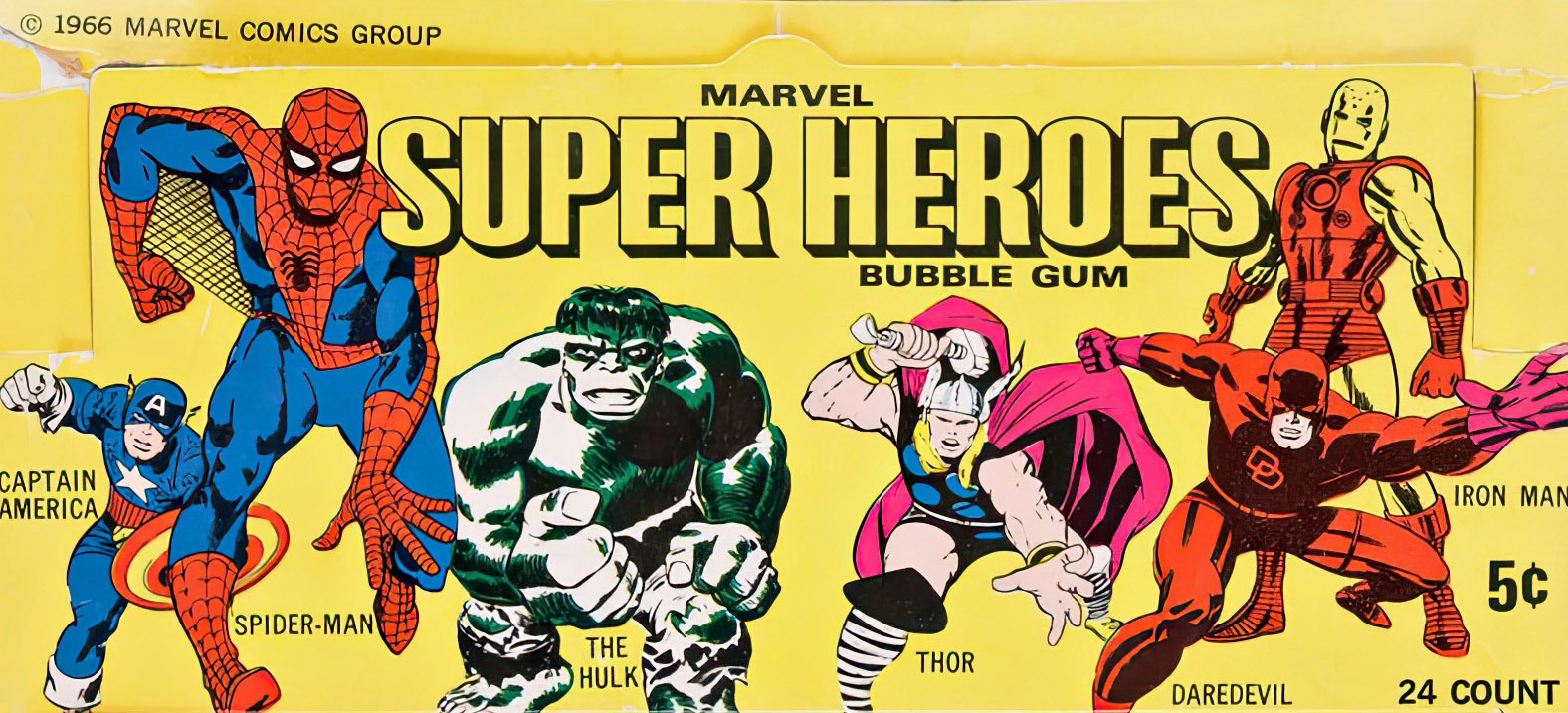
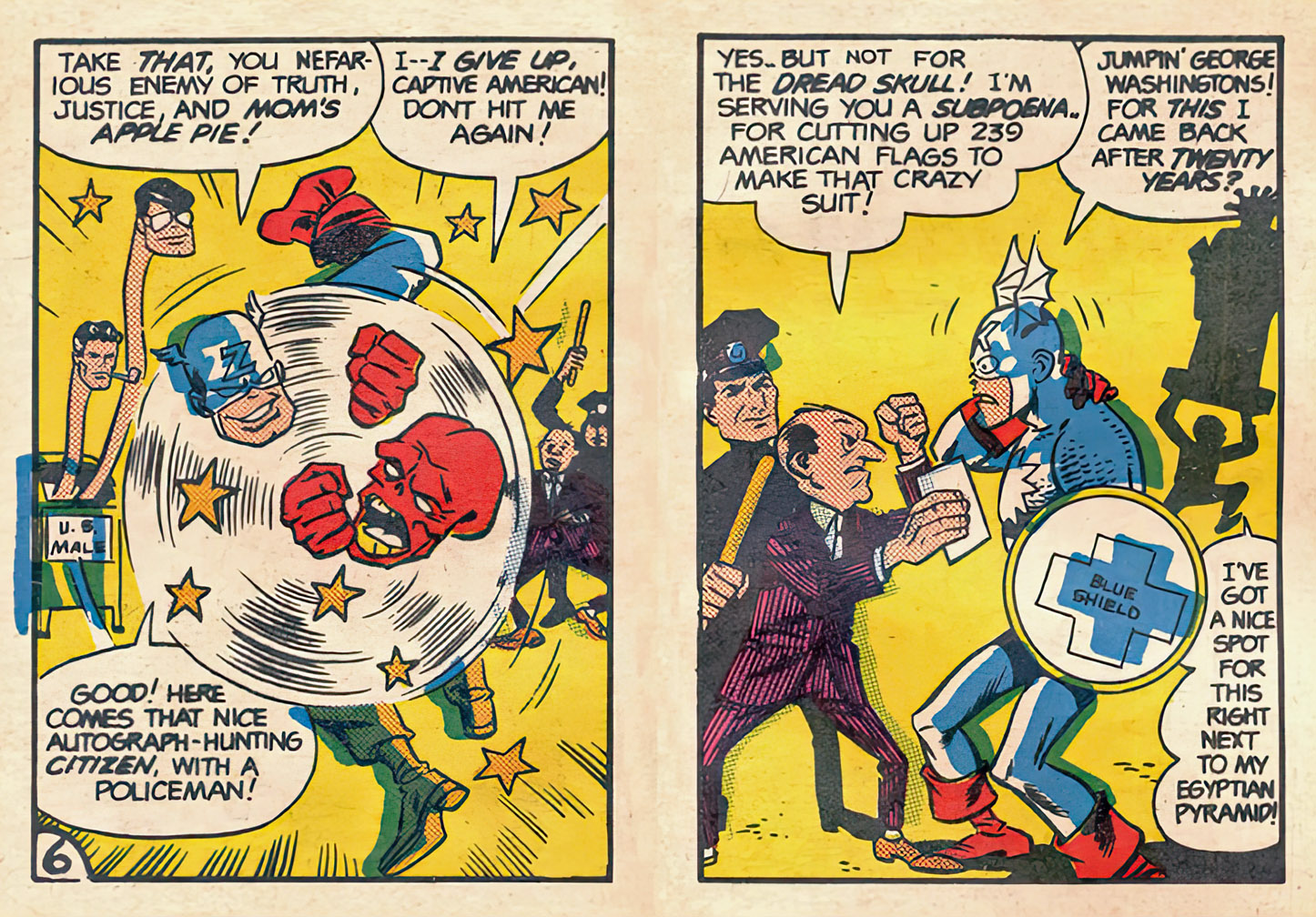
Marvel’s superhero business “blew up” in 1966. A cliché, maybe. But thanks to the Marvel cartoons airing in nationwide syndication that fall, Marvel’s licensing and merchandising business went from pretty much from negligible to ubiquitous, overnight.

I loved those cartoons. I didn’t fully understand that they were pretty much “animating” on the cheap by mostly directly lifting and moving around the actual comic book pages and panels, and at six-years old I didn’t care. (Technically, these cartoons are not much more than primitive motion comics.)

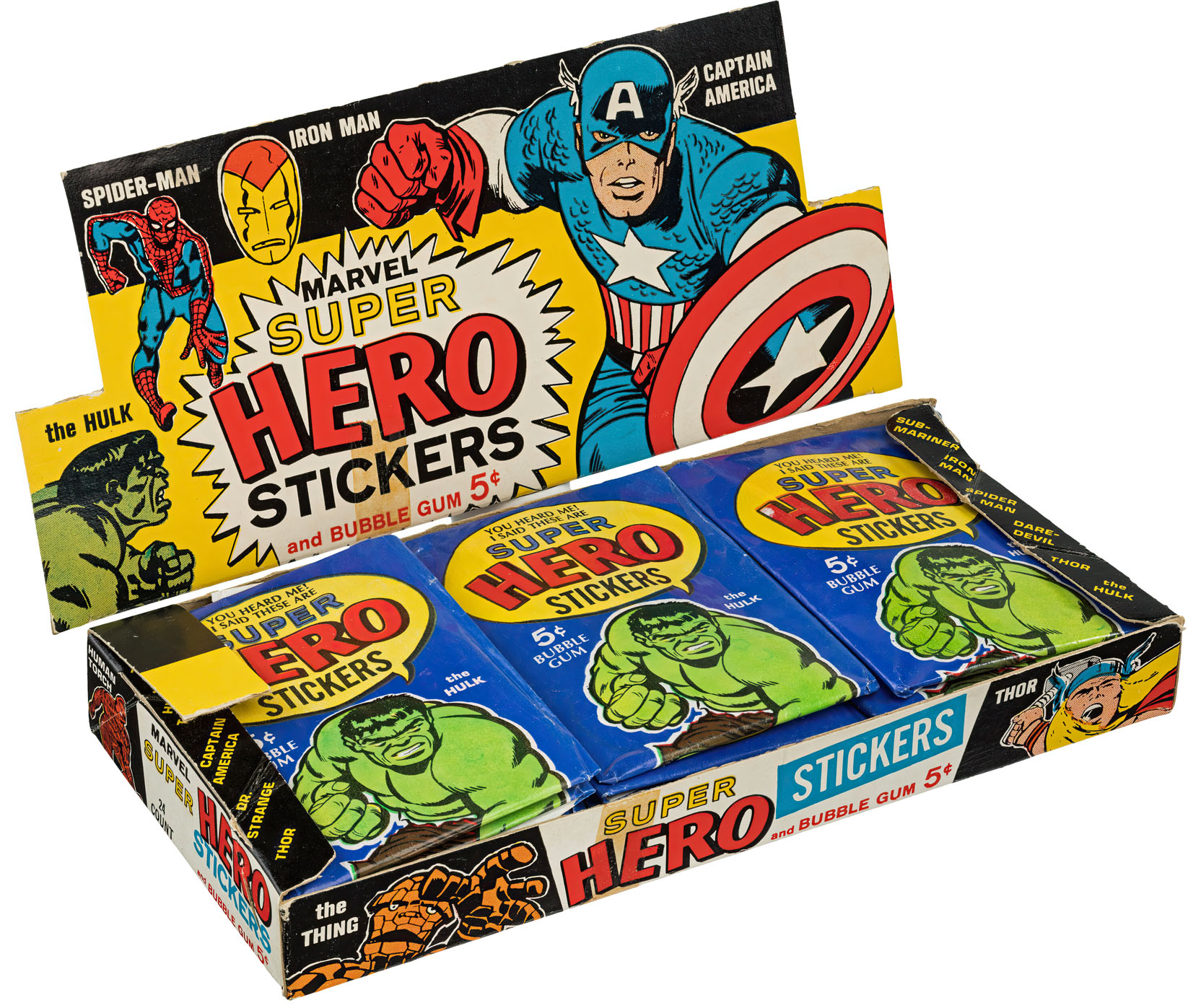
I bought a lot of that merch. The comics of course, were the main thing. But the cards. And the stickers. Dumb gags I admit. But I loved the Jack Kirby, Steve Ditko, et al, art in miniature.

So, when I saw Shaky Kane’s original painted tribute to Marvel “bubblegum” cards at the Jack Kirby art exhibit in LA this past summer, it knocked me out, flooding me with (literally) sweet memories.

Unfortunately, it had already sold. This bummed me out of course, until one of my pals with me that day, the brilliant (and extremely logical) designer Stan Madaloni, said to me:  

“Why don’t you reach out to him see if he’ll make another one for you.”

Uh. Duh.

Shaky agreed, and, although I hate to use another cliché, the rest, is in fact, history.

The second one is now fortunately, and gratefully, in my possession.

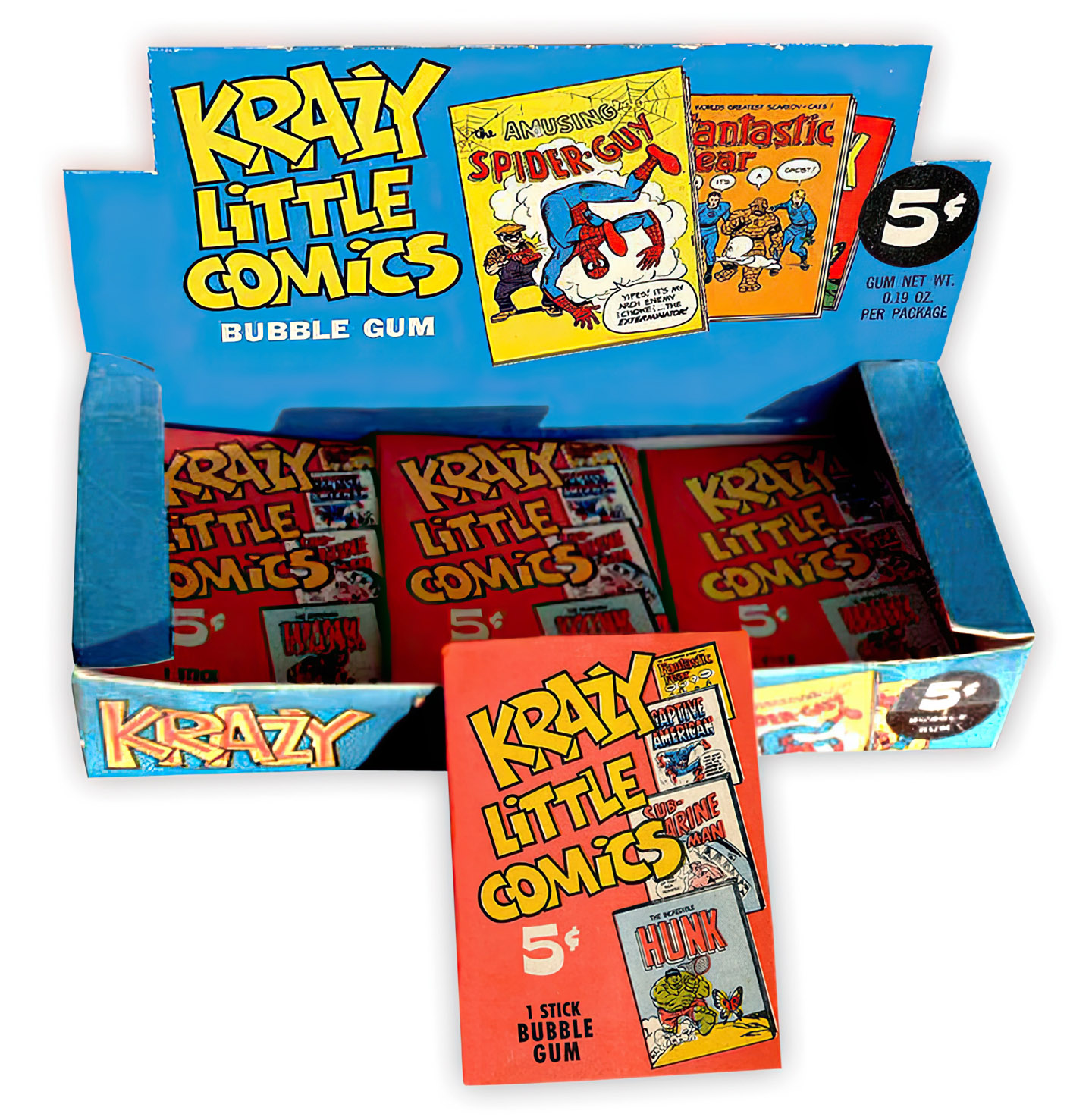
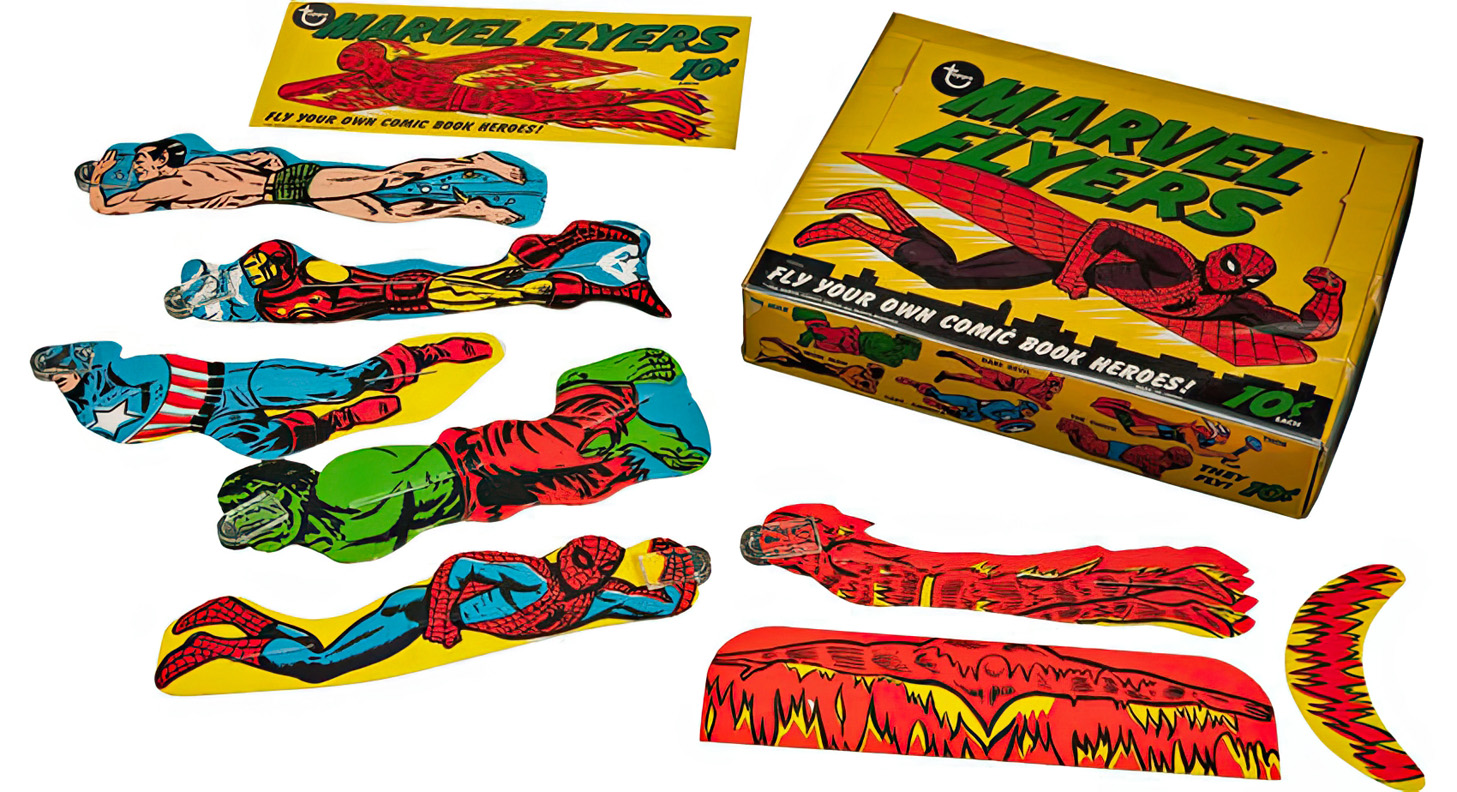
Both Donruss and Philadelphia Gum (“Swell”) beat Topps to the punch in the Marvel business in 1967, with cards and stickers respectively. Topps found a way in with the odd Marvel Flyers collection (designs from Wally Wood’s studio) and the mini-comics satire “Krazy Little Comics”, with art by Wood, Gil Kane and others. (Scripts by Roy Thomas.)

Final thoughts: If I could go back in time and tell seven-year Greg that he would one day work for both Topps AND Marvel, he’d probably tell me I’m nuts and chase me away.

What a trip.

Mike Machlan — Jack Kirby Revisited: Hulk Vs. FF

Commission, Undated

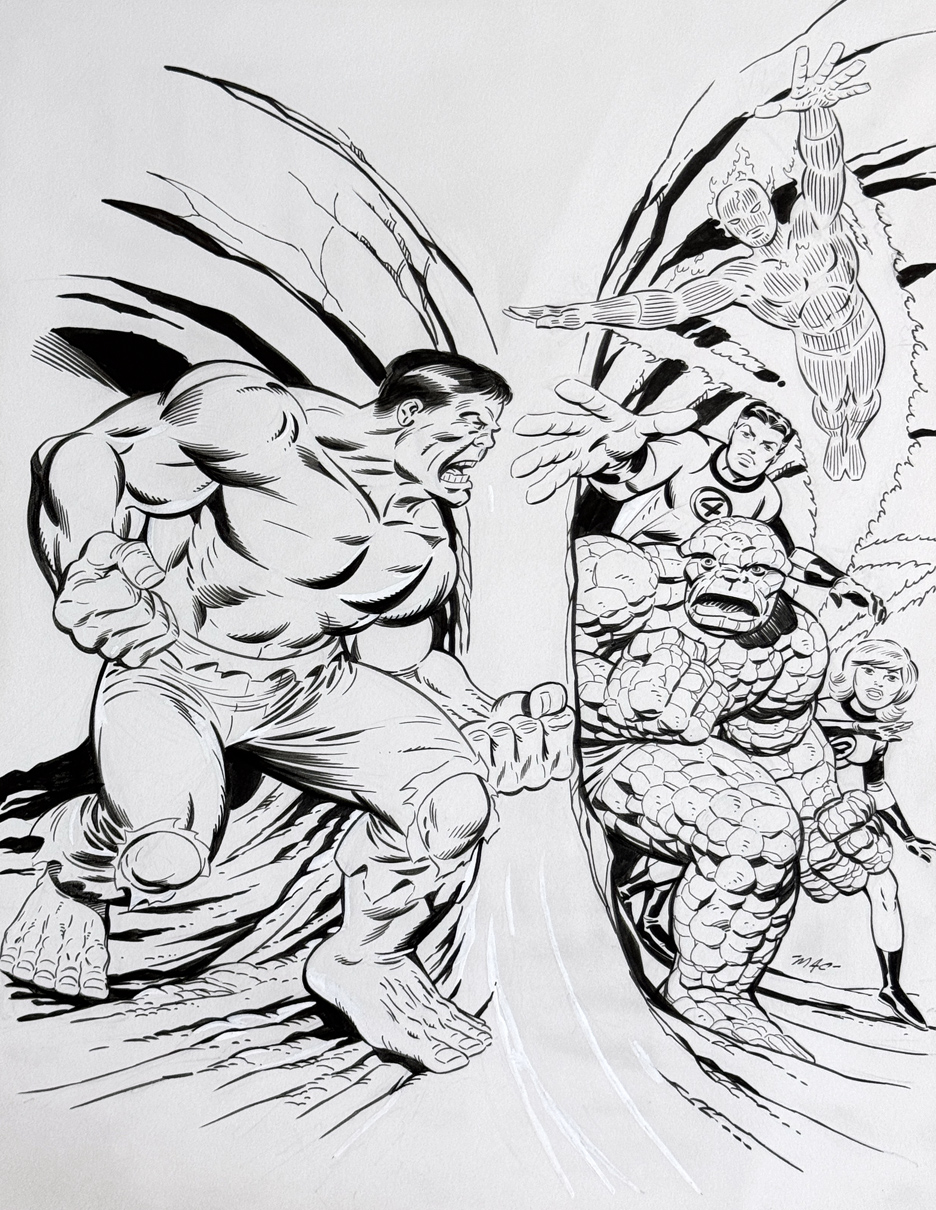
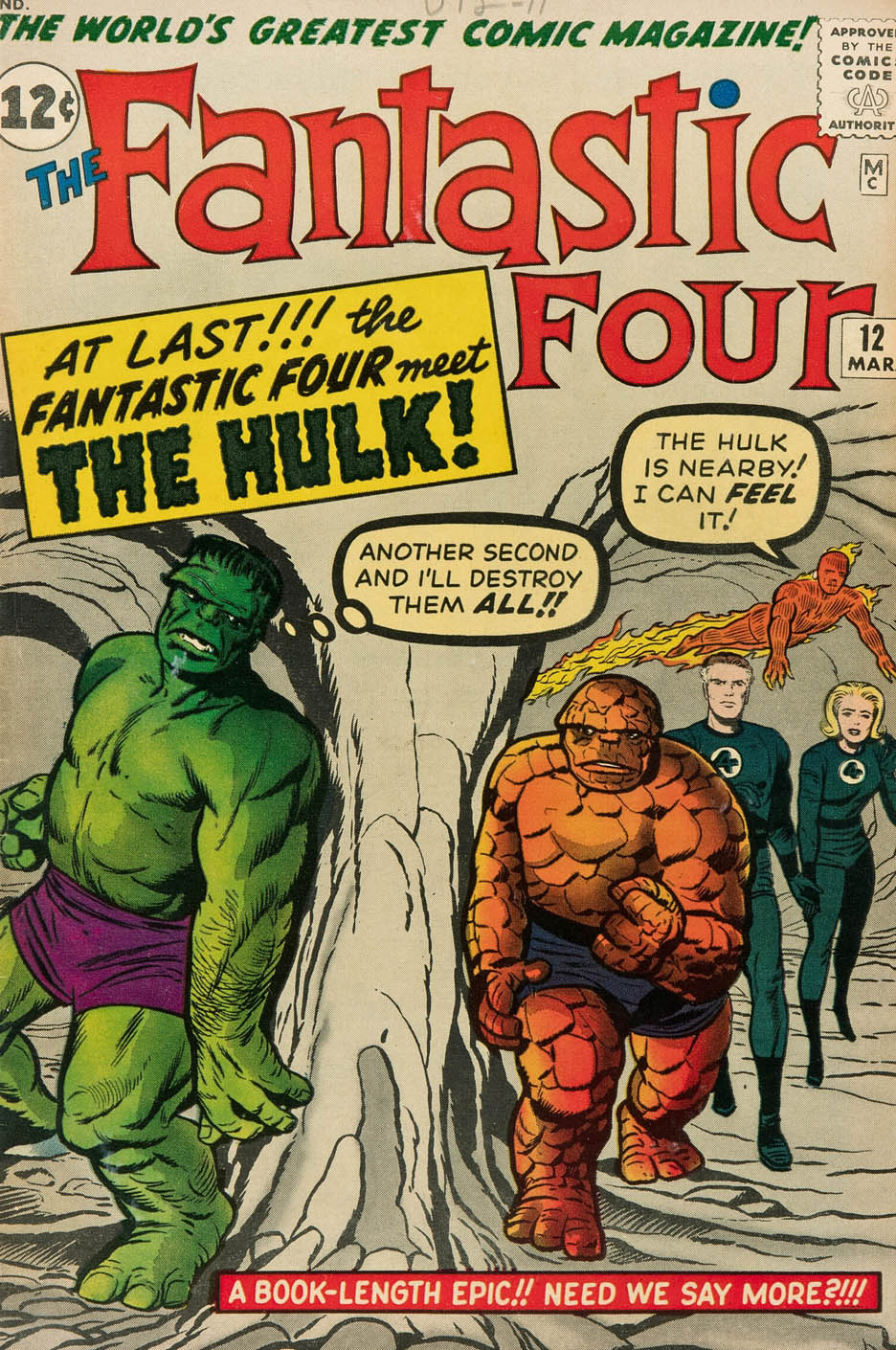
Jack Kirby created this iconic cover of the first meeting between the Hulk and The Fantastic Four in 1963. It would be the first of many, many epic fights between the Thing and The Green Goliath.

The late Mike Machlan takes Jack’s moment in time, and brilliantly adds a second or so to show what happens when the heroes actually come upon each other. One thing is certain — that cave will never be the same.

Machlan loved classic comics, and his recreations and reinterpretations can be found on the Comic Art Fans website and elsewhere. His professional career was much too short.

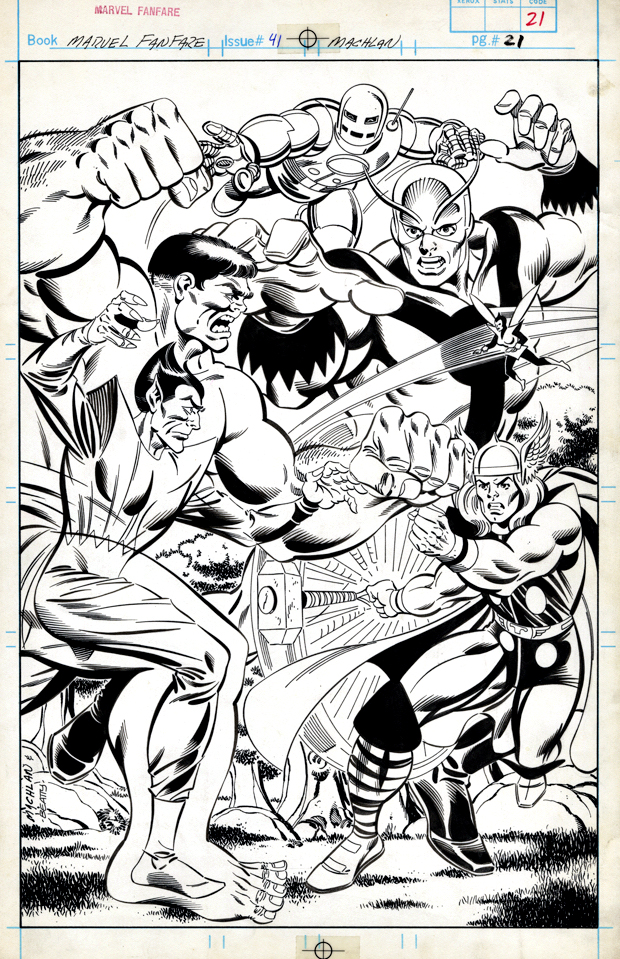
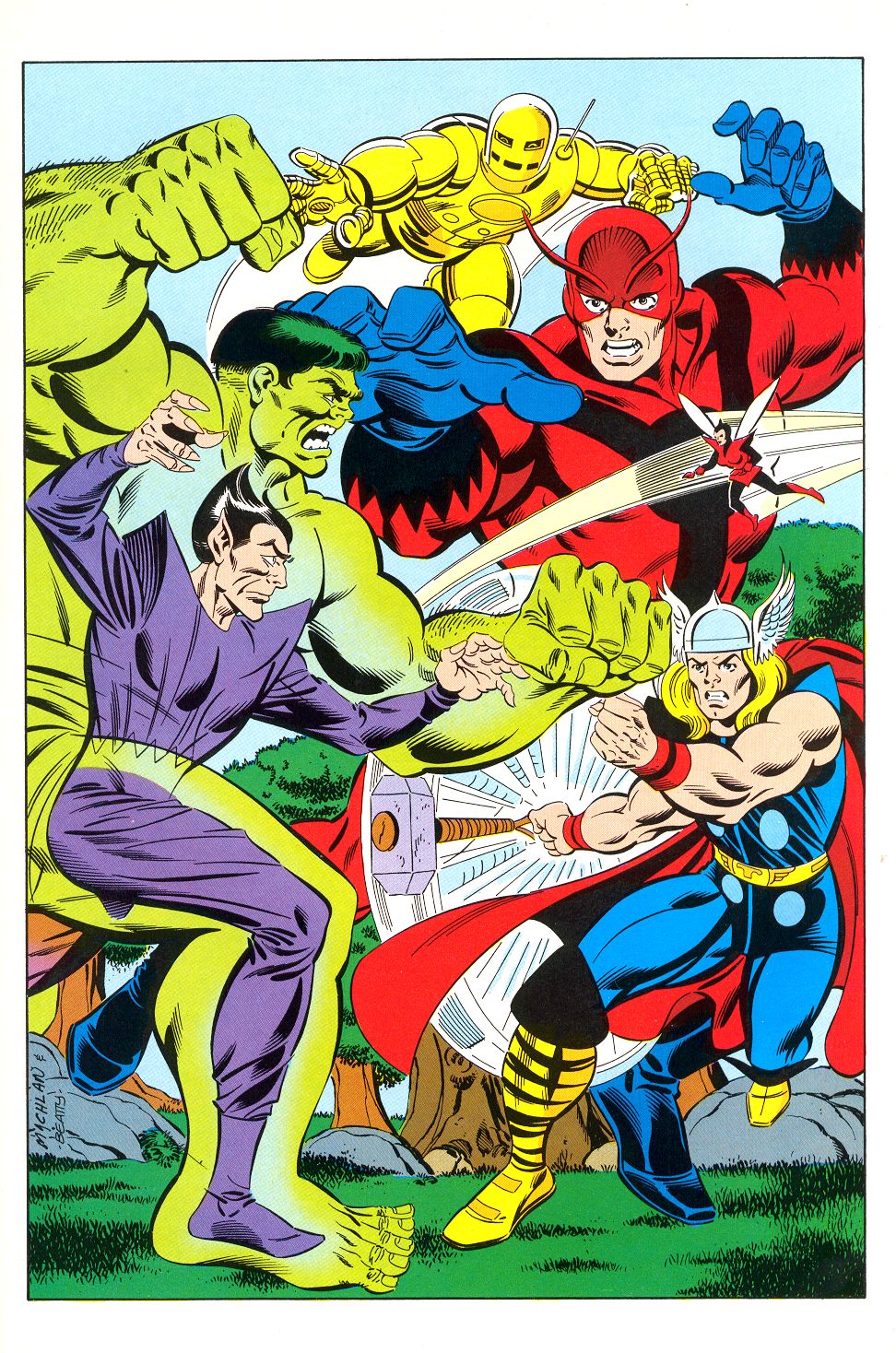
Original Machlan art and published page from Marvel Fanfare #41 as posted previously:

https://greggoldsteincomicartgallery.com/mike-machlan-avengers-2-redux/

Jack Kirby & Gil Kane — Titans, Together

San Diego Comic-Con, July 1993

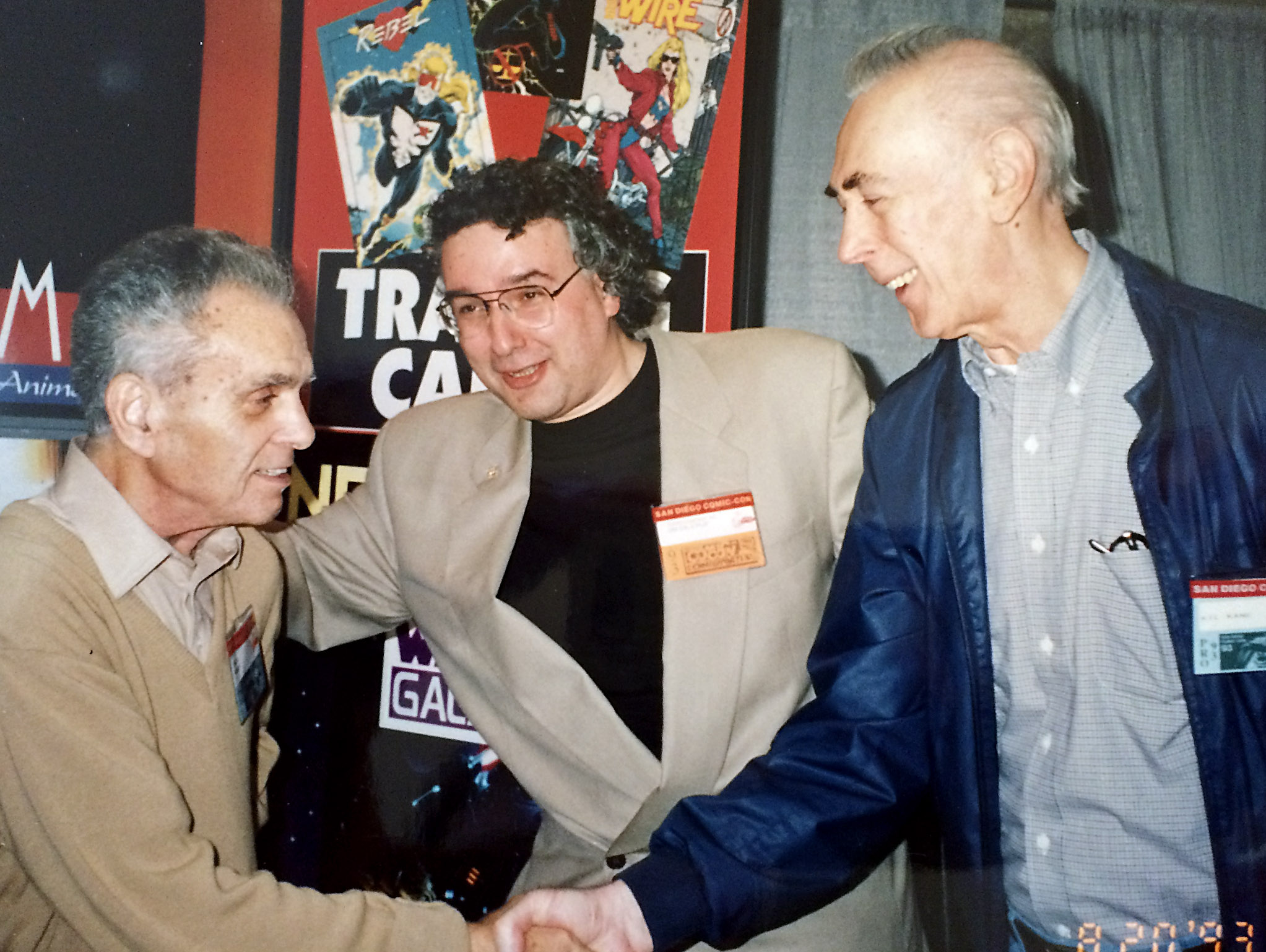
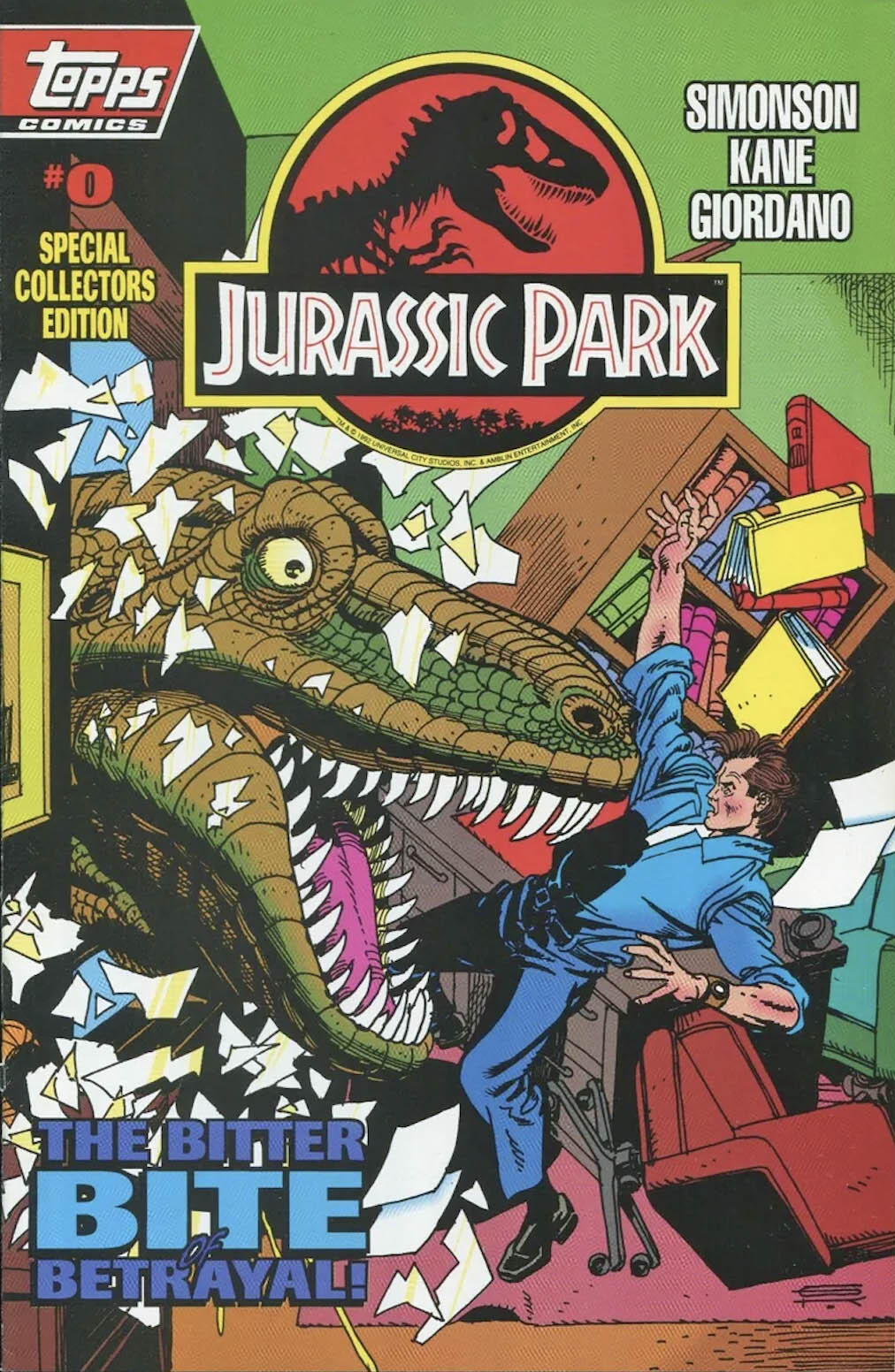
30 years ago, I had the good sense to snap this fantastic photo of Jack Kirby and Gil Kane at the 1993 San Diego Comic-Con. (Jaunty Jim Salicrup, the Topps Comics EIC, is the happy fella in the middle.)

Fantastic, but, as it turned out, bittersweet: This was the final time these two legends had a chance to greet each other. (Jack passed away the following winter.) I’m not sure they were both scheduled at the Topps booth at the same time, so it may have been a very happy coincidence. 

I’ve discussed Topps Comics (and trading cards) numerous times in previous posts — it was a wild ride with many great moments. This was one of my favorites.
And did I say good sense? Hardly. If I did, I would have handed off the disposable camera to someone else and jumped in the photo as well.