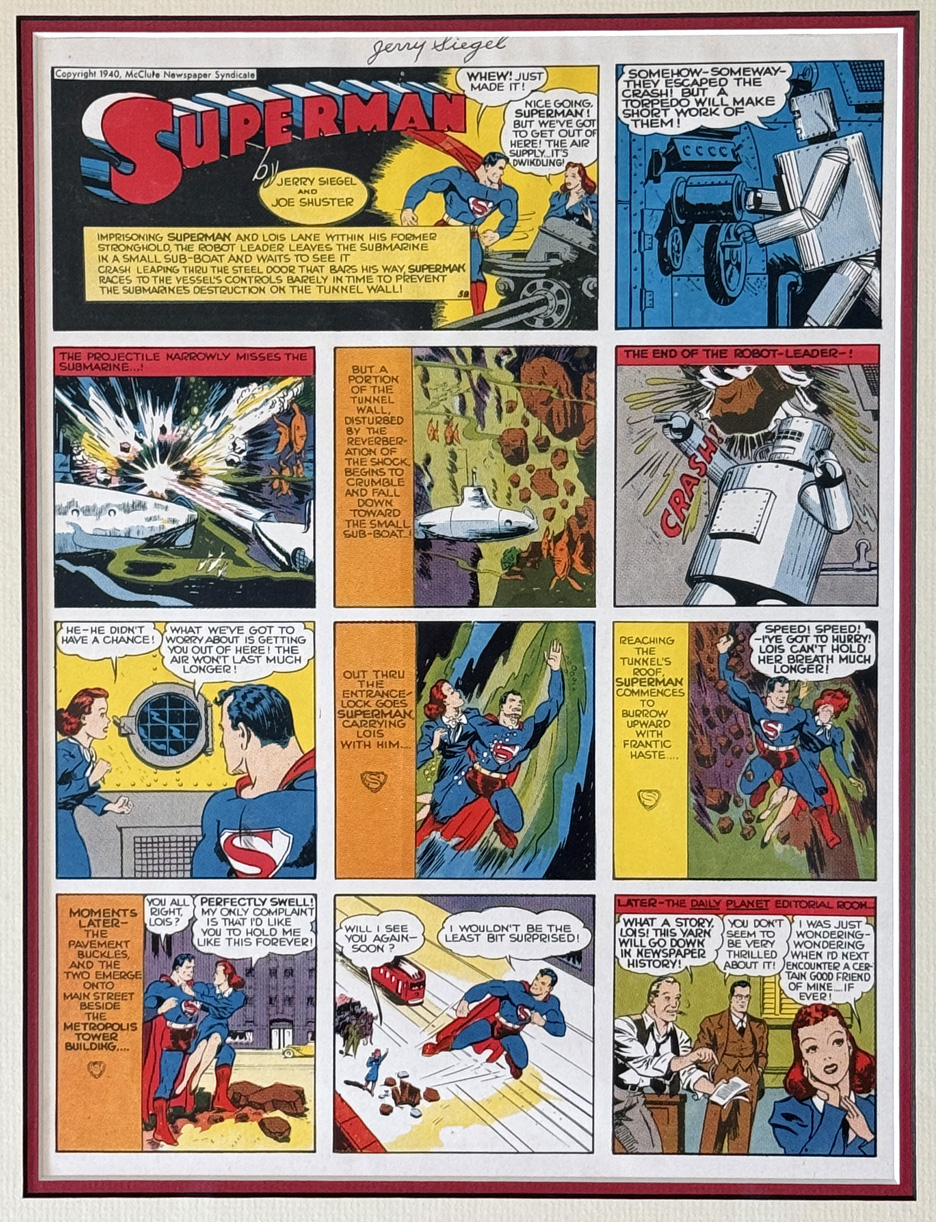
Superman Sunday Strip, (Syndicate Proof Sheet), December 15, 1940
Not quite original art, this is a syndicate proof sheet for the Superman Sunday comic strip, from December 15, 1940. The proof sheets are printed on higher quality paper, and the colors are extremely vivid — which you can see even though I photographed this example under glass.
(For an amplification of how this proofing process worked, see the new edition of Jack Kirby’s Sky Masters Sunday strips, which explains the process in some detail.)
I enjoy these early strips — Shuster’s art here often seems more polished than the comic books, where some of the art suffers from inconsistency. That’s of course not shocking: Superman’s explosive —and nearly instantaneous —popularity meant that Shuster, with the help of assistants and other artists, had to keep up with a prodigious amount of publishing.
This proof came from co-creator Jerry Siegel’s personal collection , and I was fortunate enough to snag one with a giant robot. (Plus, it is signed!)
Superman, Lois AND a giant robot. Seems like a hat trick to me.
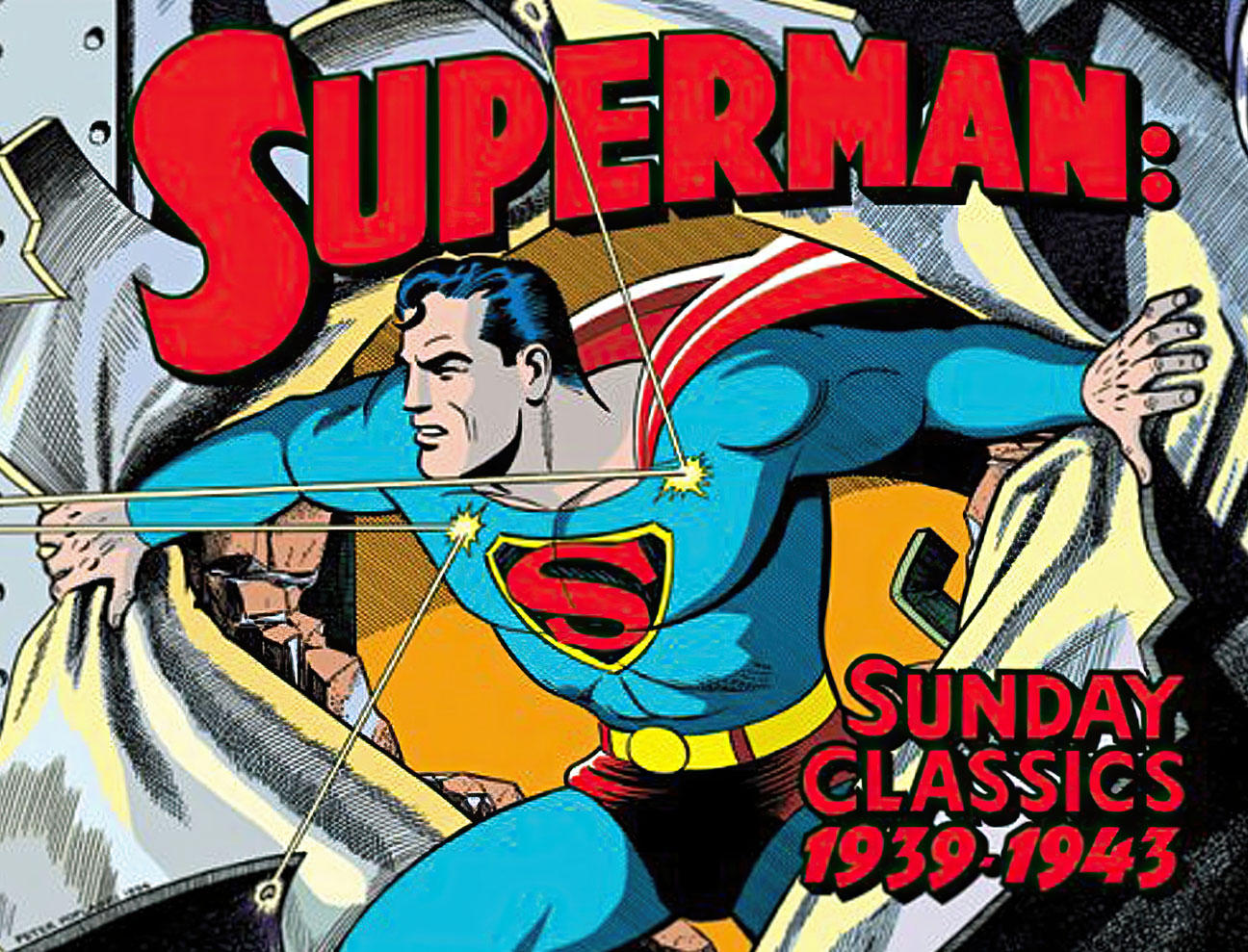
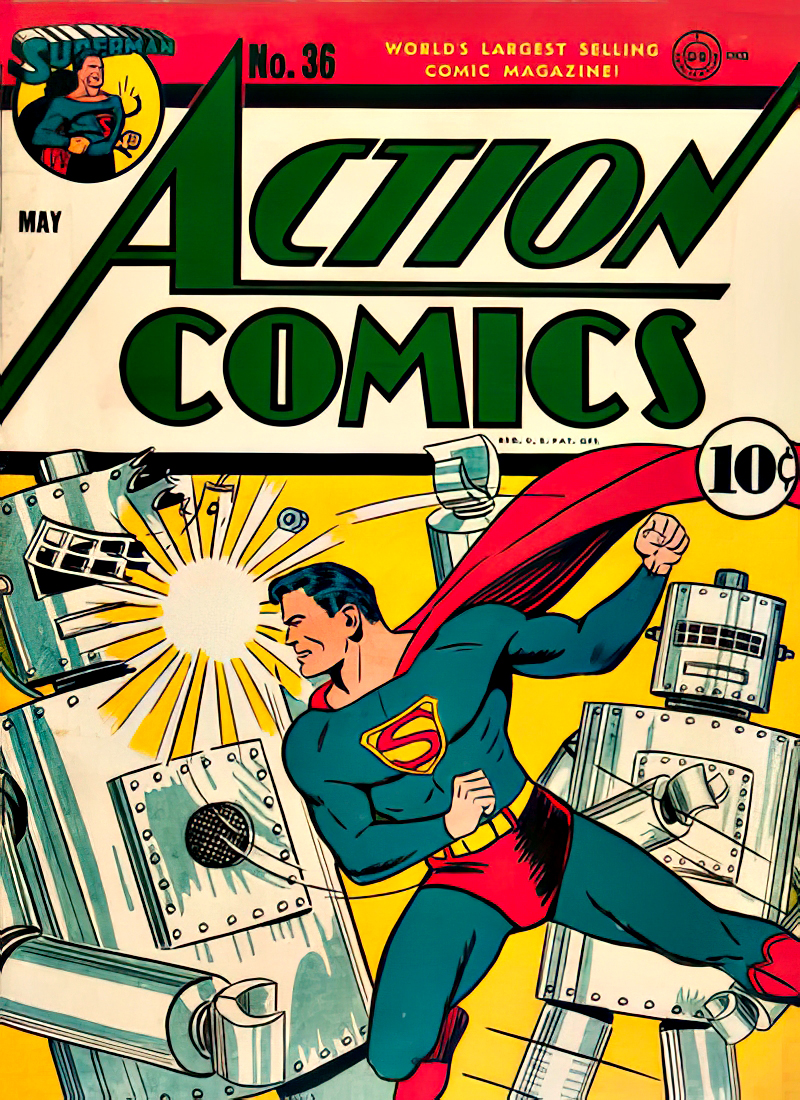
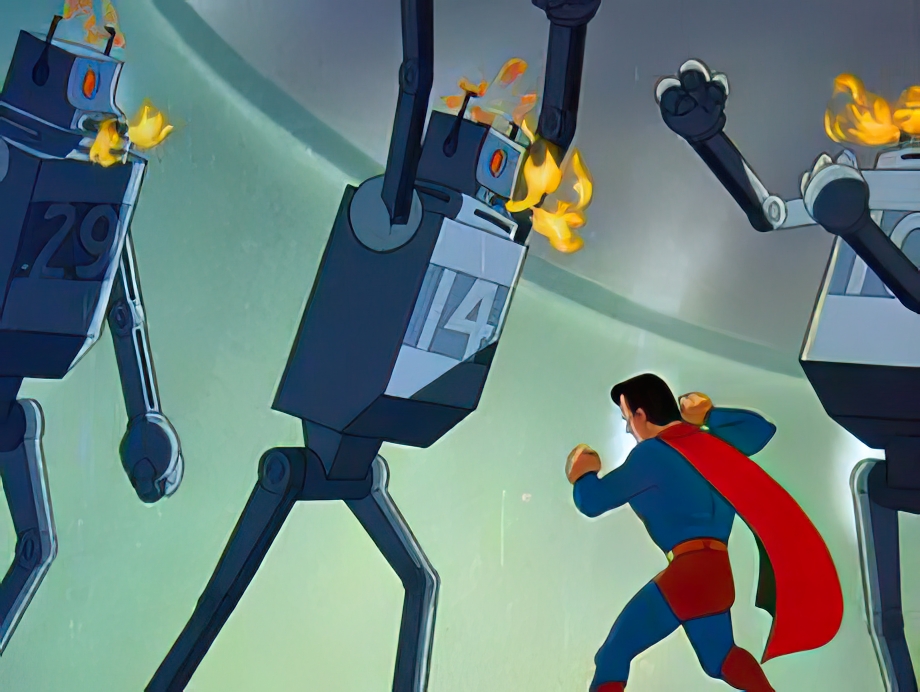
A tear sheet from the Houston Chronicle features the strip in a classic half page format.The original classic Superman strips (first reprinted by Kitchen Sink) are available in at least four different book formats; although they are all technically out of print, most are readily (and inexpensively) available from secondary booksellers. Because they are so easy to obtain, when we launched the Superman reprint program at IDW Publishing in 2013, we started with the next group of strips.Superman fought the “Bandit Robots” a few months later on the cover of Action #36 (great art by Fred Ray.) But… there’s no matching story on the inside!The Man of Steel fights similar (albeit not quite identical) robots in 1941’s “Superman and the Mechanical Monsters,” the classic episode of the wonderful Fleischer animated series of cartoon shorts.
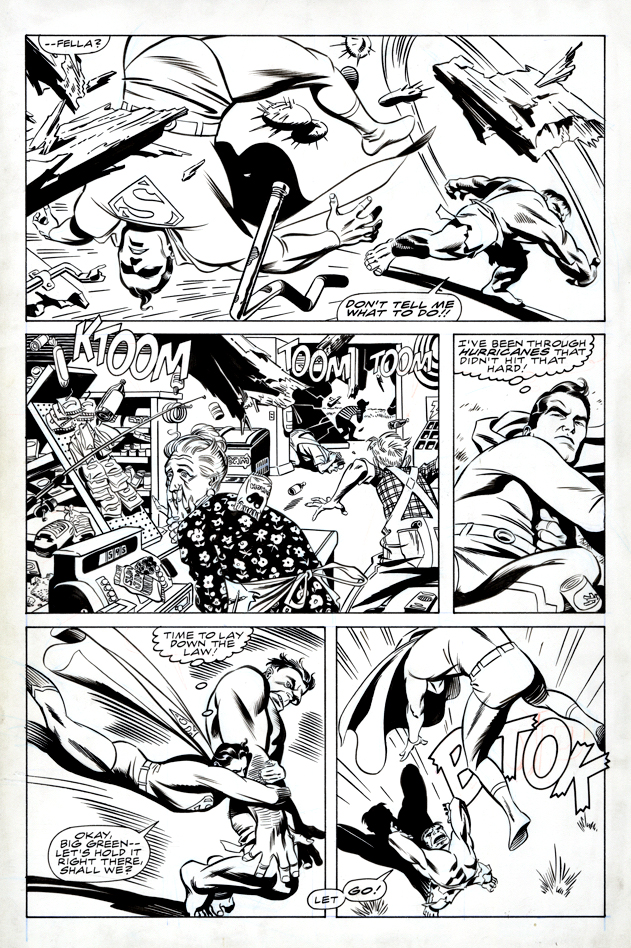
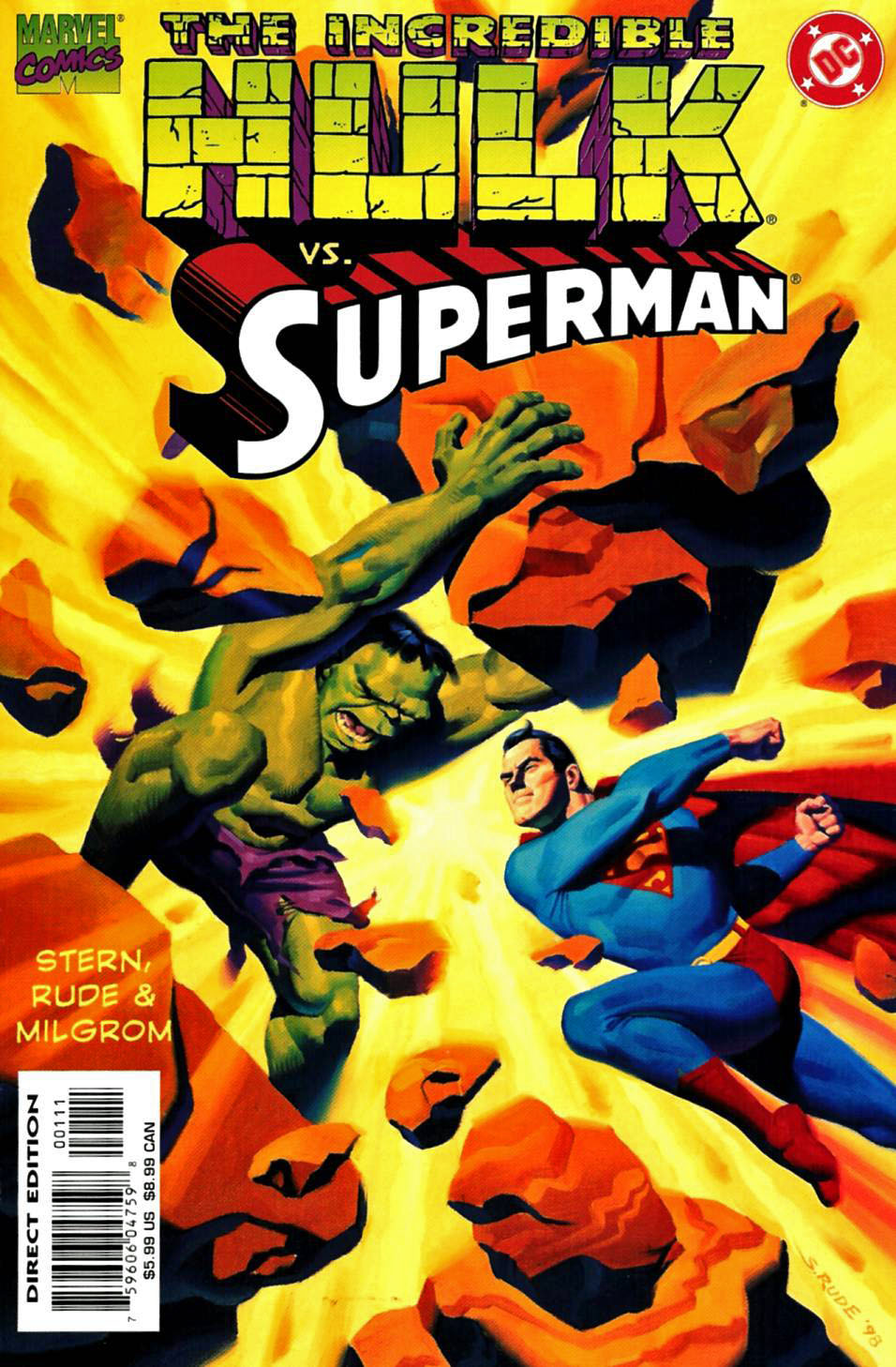
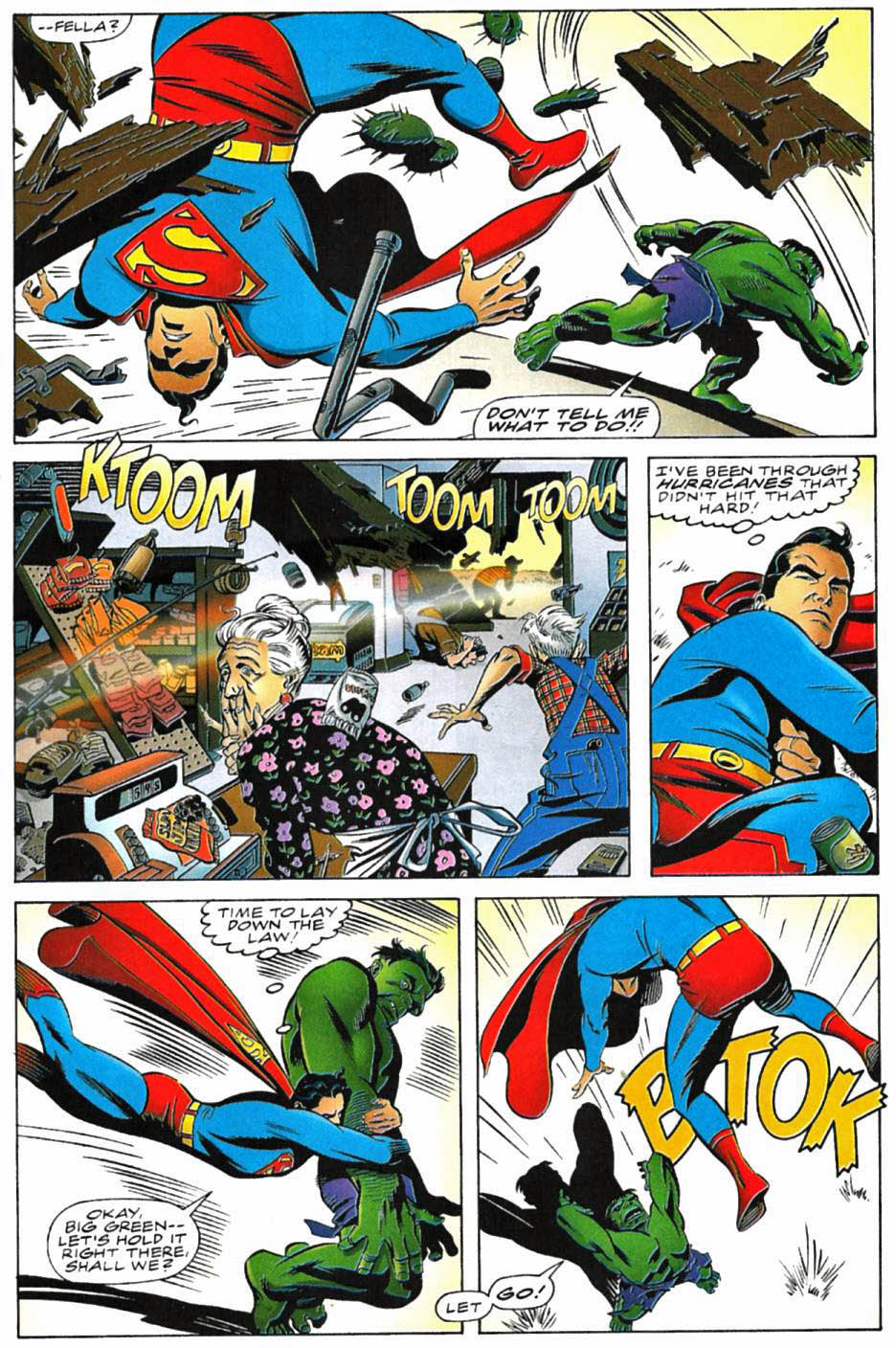
Steve Rude delivers a terrific action page of Superman vs. Hulk, as we continue to pay tribute to Hulk vs. heroes in other universes this week.
Superman vs. Hulk seems quite a bit more logical than Batman vs. Hulk. Theoretically, Superman would ultimately win, but at least he would be winded.
And come to think of it, Golden Age Superman, as originally conceived by Jerry Siegel and Joe Shuster, might still win, but it would be pretty close to a draw.
Early Silver Age Superman, who could move planets around, not so much.
Rude, who worships at the alter of Jack Kirby, and shows reverence for Shuster’s Superman as well, is the perfect artist to illustrate this pairing.
And Granny’s expression in the middle panel? Nothing like a bit of offbeat humor to lighten the mood of a titanic fight, albeit very briefly.
Rude is perfect for that, as well.
Technology gets better (and less expensive), and fans apply their creativity accordingly.
Continuing our series on the roots of the Watchmen characters.
Alan Moore, on his original idea for Watchmen:
“I wanted more average super-heroes, like the Mighty Crusaders line … [the] original idea had started off with the dead body of the Shield being pulled out of a river somewhere.”
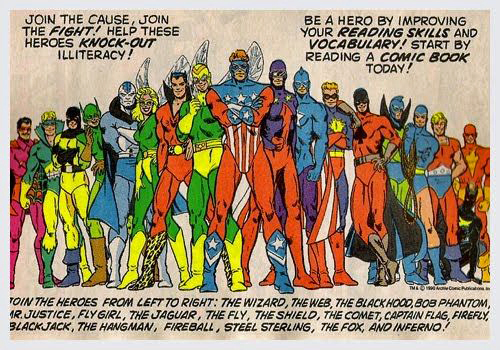
Although the Watchmen eventually morphed out of Charlton heroes instead, elements of the Crusaders and the other MLJ/Archie Superheroes found their way into Watchmen lore. Perhaps most notable is the Hangman, a Golden age Archie character who along with Black Hood, becomes the obvious inspiration for Hooded Justice, a member of the original Golden Age Minutemen in the Watchmen series. (And has a critical role in the Watchmen HBO show.)
Also notable is the Mothman, an obvious derivation of Archie’s (Simon and Kirby’s) Fly / Flyman.
The original MLJ superheroes disappeared into the mists after World War 2, which didn’t impact Archie financially as the title character and his teenage friends transformed the company, including the published actual name which changed from MLJ to Archie in 1946.
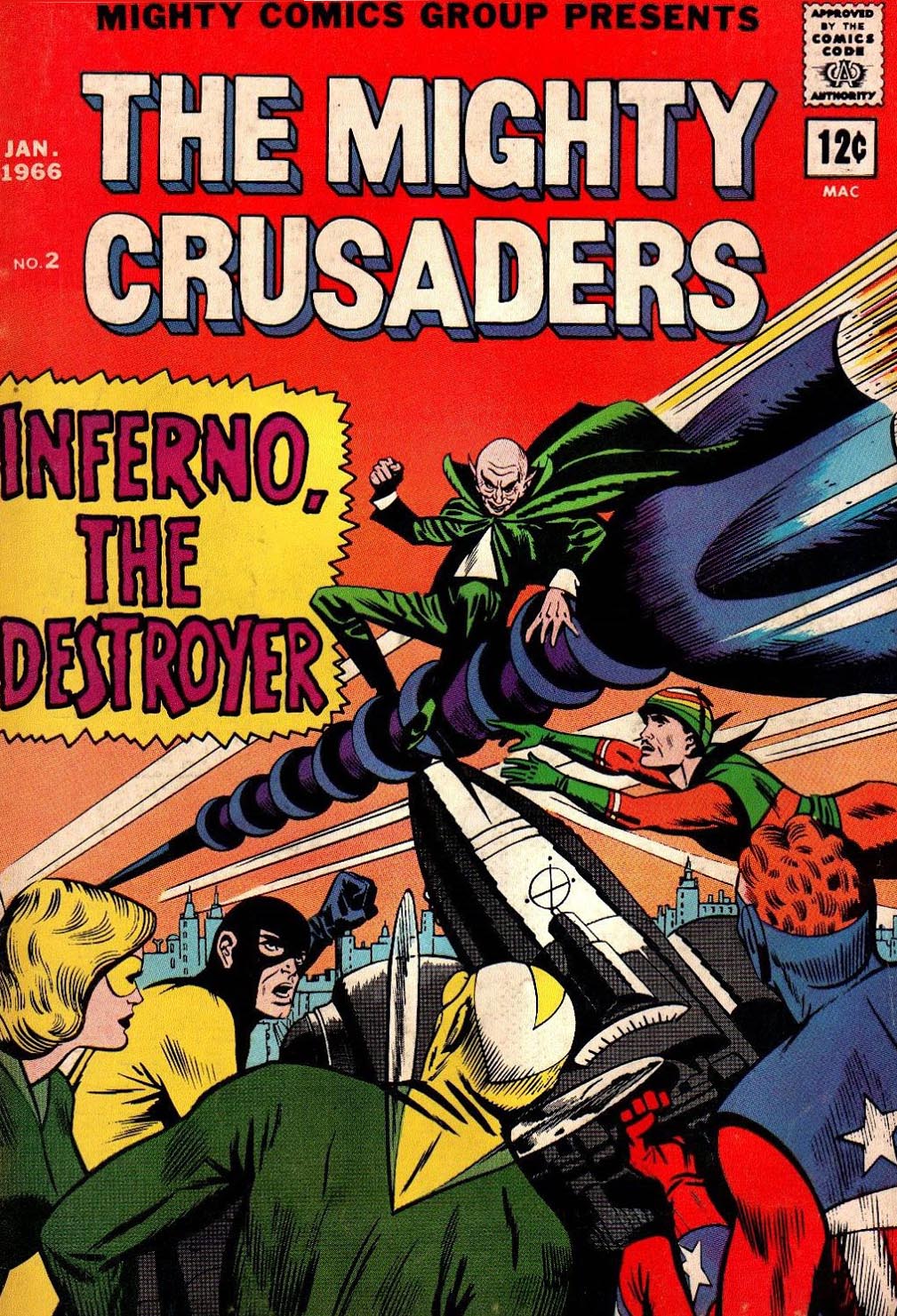
But Archie’s management seeing the giant superhero success down the road at DC and Marvel took another stab starting in 1959 with the Shield and the Fly. Ultimately, many of the golden age characters reappeared, forming a team, the Mighty Crusaders.
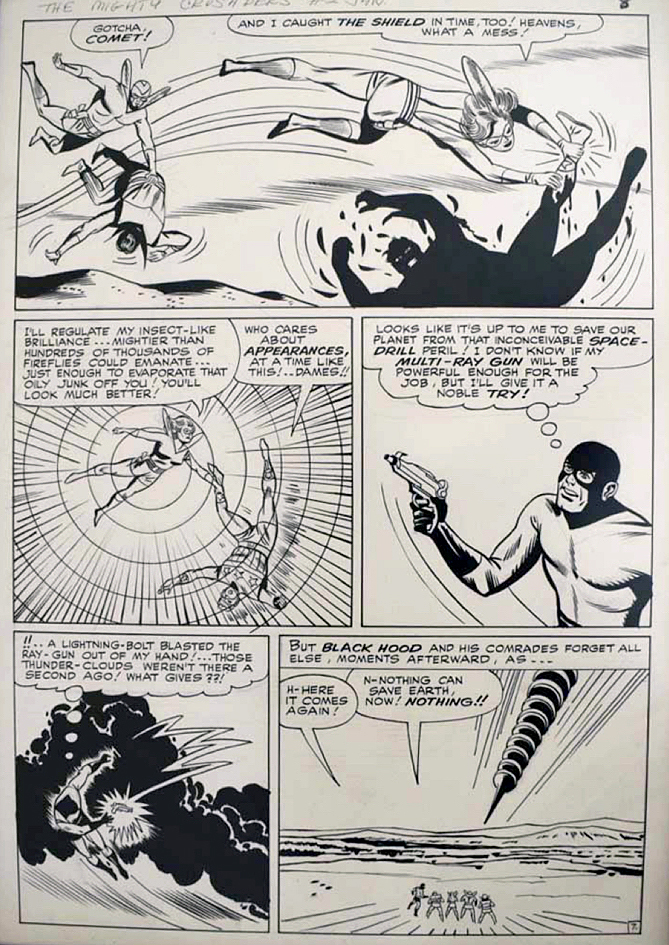
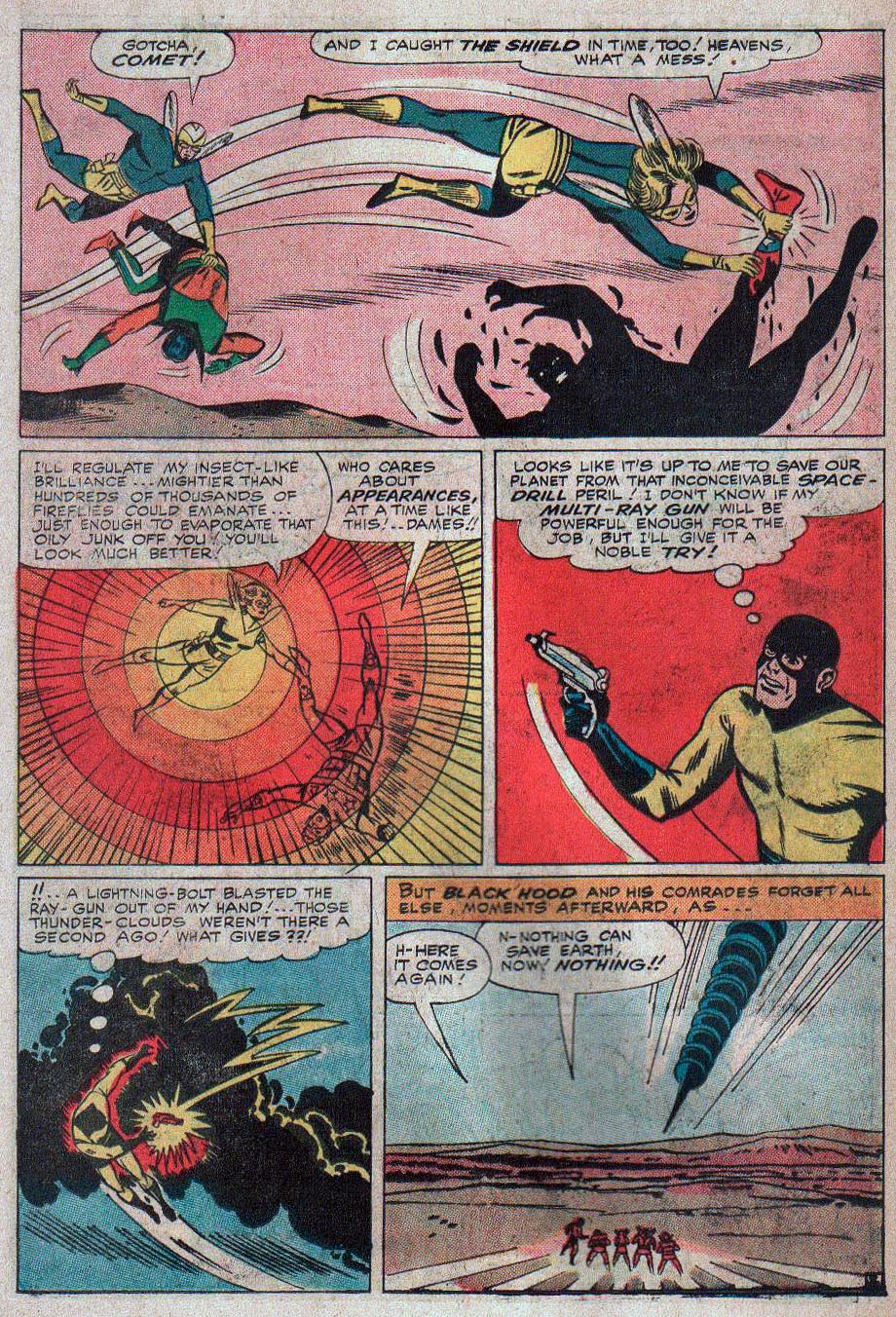
Superhero artist Mike Sekowsky was first a Timely (nee Marvel) staffer and then a long-time DC mainstay. He is perhaps best known for his work on Justice League of America, where he could draw almost any character.
So he is well suited to tackle the Mighty Crusaders, a team-up book developed to compete with Justice League and other superhero team books of the day.
But Jerry Siegel’s (yep, Superman’s creator) writing style had most definitely not kept up with the style of the day, and the book was cancelled after seven issues. In fact, the entire Archie superhero experiment fizzled out by late 1967.
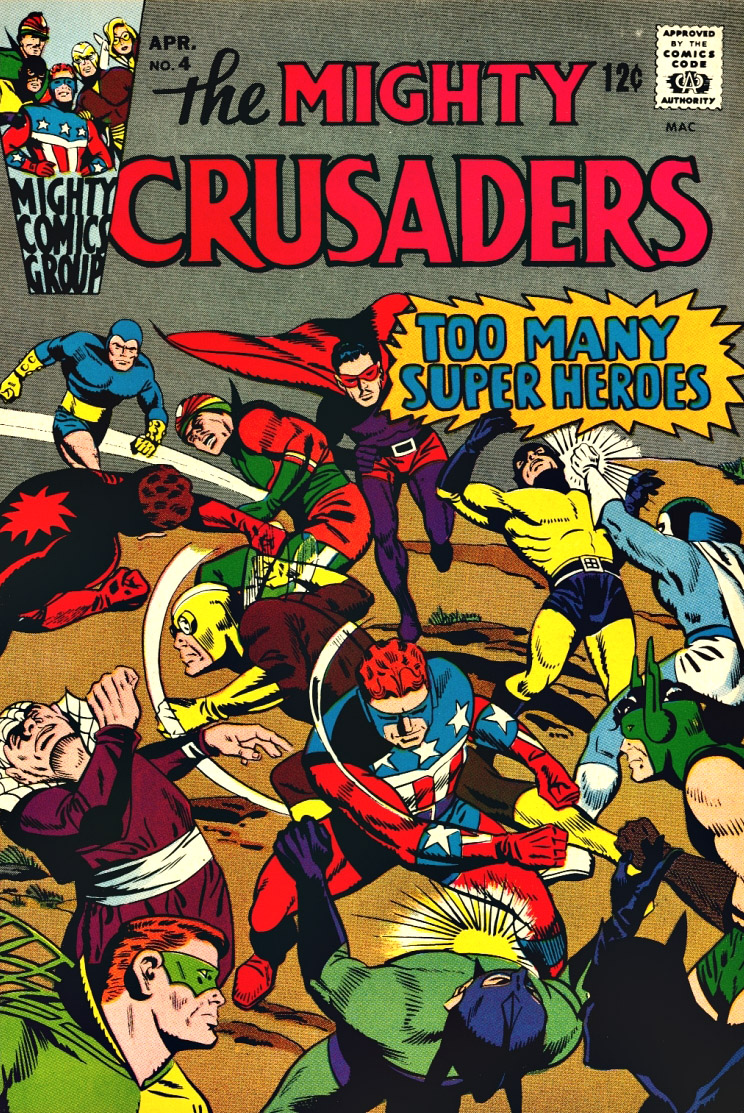
But… not before they managed to bring together nearly all the dusty MLJ heroes and put them in one comic book. Issue #4 of Mighty Crusaders, is a goofy favorite, entitled “Too Many Heroes.”
Too many, perhaps, but certainly enough to reach into for character ideas twenty years later.
Issue #4 of the Mighty Crusaders is a… gas. Pretty much every MLJ/Archie hero (as seen twenty years later in this house ad) mysteriously reappears to apply for membership into the Crusaders. The Crusaders themselves disappear after a short-lived series in 1966, but re-emerge multiple times starting in the 80s.
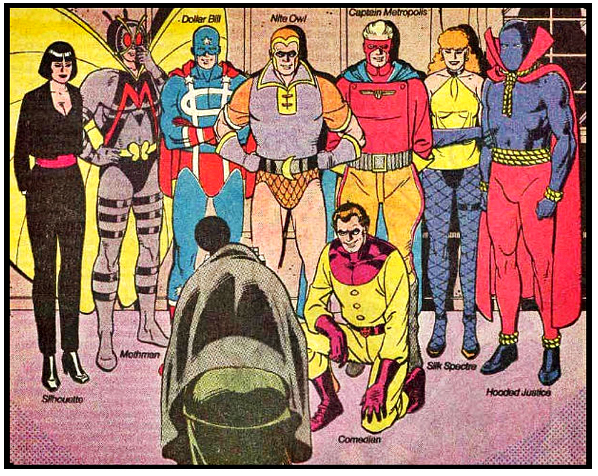
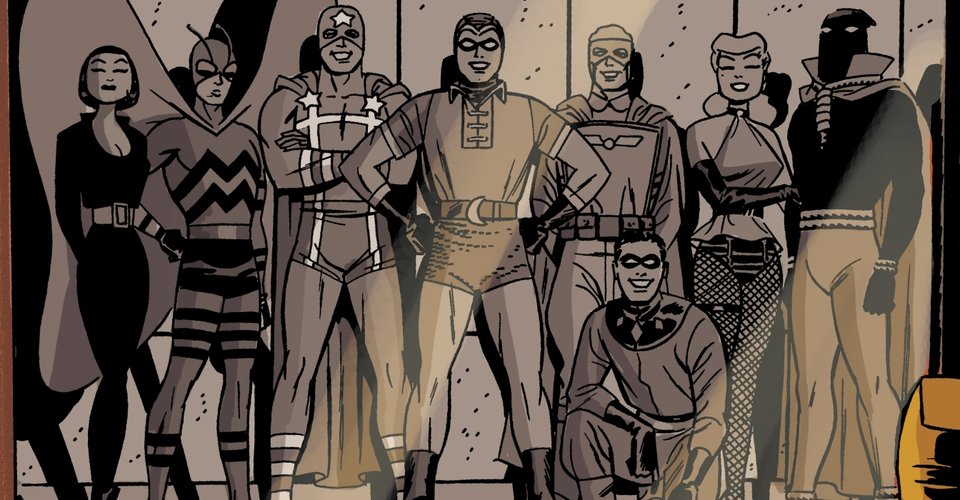
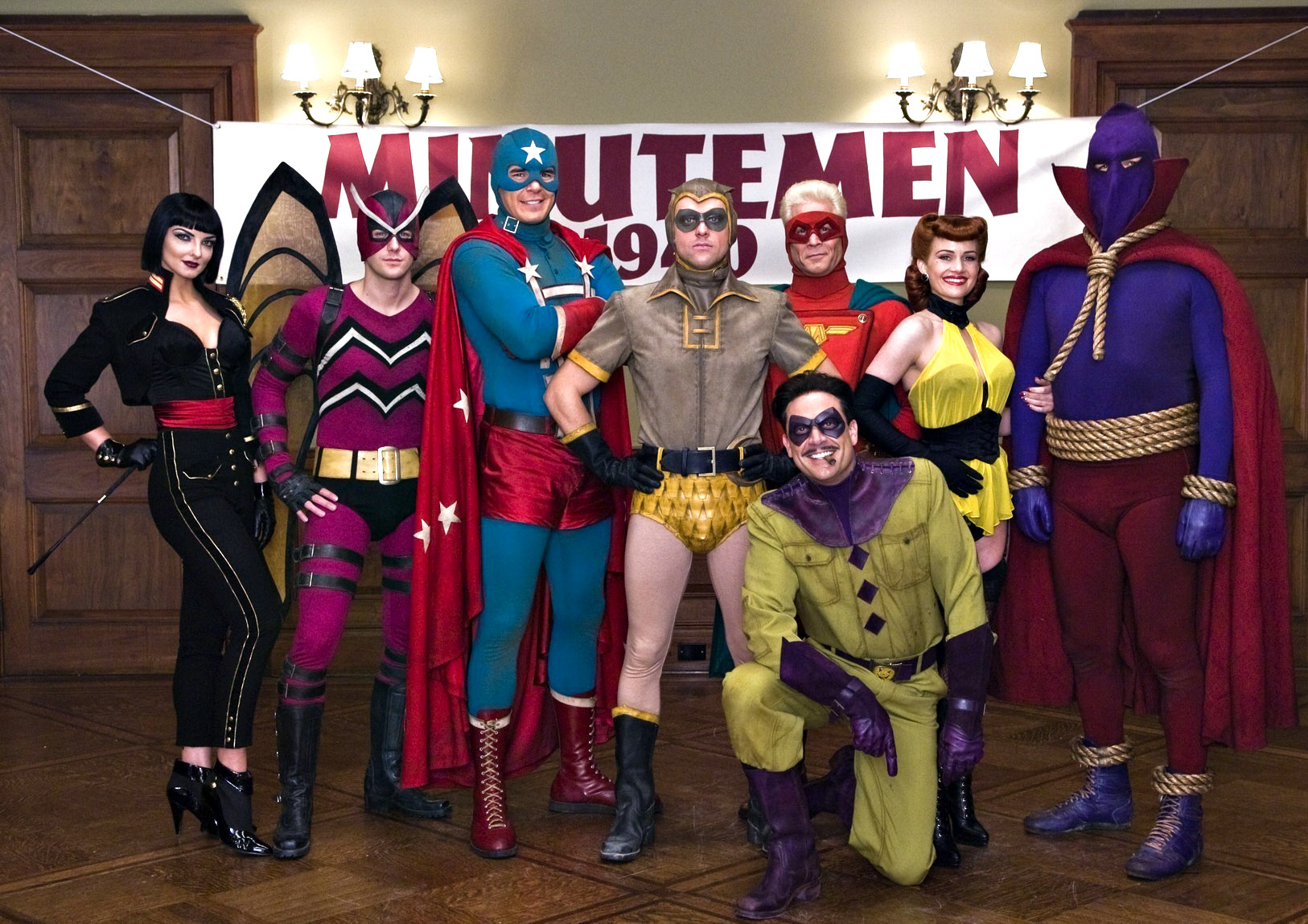
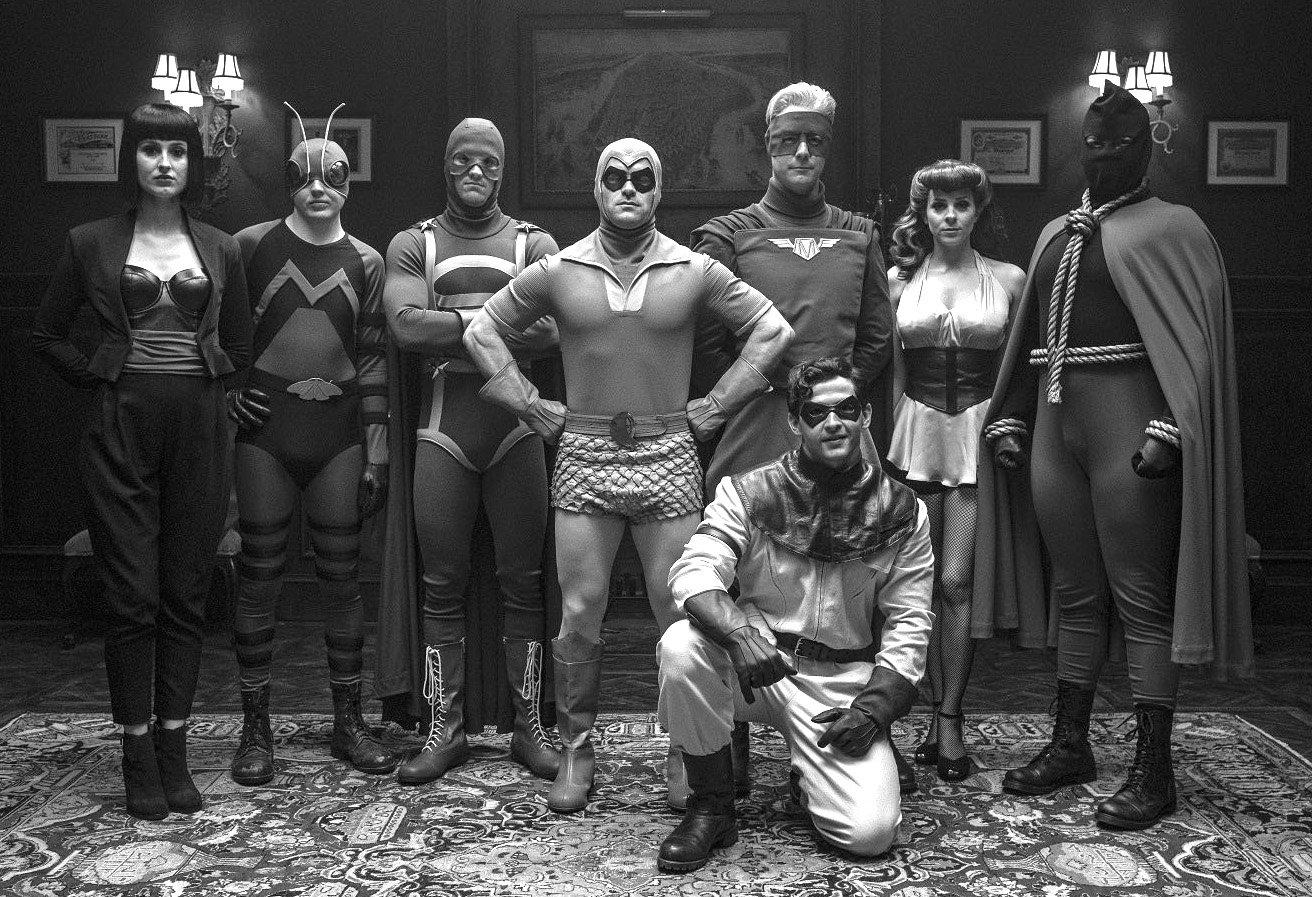
The classic Minutemen team shot as drawn by Dave Gibbons and recreated by the late Darwyn Cooke 25 years later, and the nearly identical PR photos from the 2009 film and 2019 television series.
Final Scorecard — Minutemen and their original counterparts:
Silhouette = Completely unique. (Maybe an amalgam of Black Canary, Black Cat and a female version of the Fox if you want to stretch out the derivations…)
Mothman = Flyman
Dollar Bill = Captain Flag
Nite Owl 1 = Blue Beetle 1 (Dan Garrett)
Captain Metropolis = Shield (with some Steel Sterling thrown in)
Silk Spectre 1 = Phantom Lady (with some Black Canary thrown in)
Hooded Justice = Hangman (with some Black Hood thrown in)
Comedian = Peacemaker (with some Shield thrown in)