Greg Goldstein's Comic Art Gallery

Remembering Len Brown

1941-2026
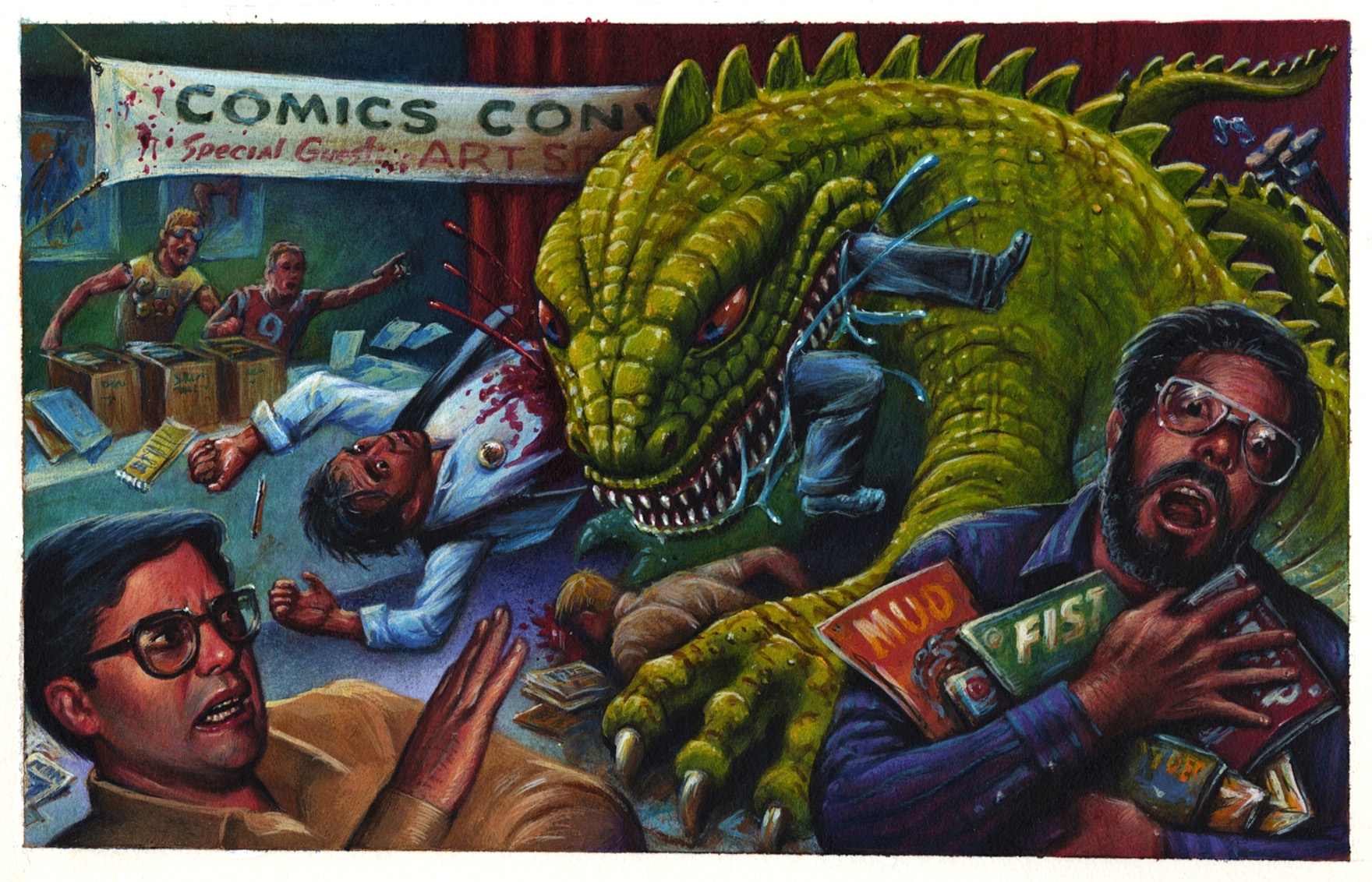
Len Brown has caught the last train out.

And no, he wasn’t eaten by angry, time-hopping dinosaurs, as depicted in one of those wonderfully deranged Topps Dinosaurs Attack! cards (’88) — Len clutching a stack of classic back-issue comics, Mark Newgarden down front, and Art Spiegelman actually being eaten.

He died of considerably more conventional causes on August 11 at age 84.

Len was one of those guys whose career ran somewhat parallel to the comic-book business, but whose influence on it was enormous. At Topps, where he eventually became creative director, he helped shape more than four decades’ worth of non-sports cards and pop-culture projects.

He joined the company in 1959, basically right out of high school, and stayed for 41 years.

Forty-one years.

And during that time, an almost ridiculous amount of talent passed through Topps.

Wally Wood. Jack Davis. Basil Wolverton. Bob Powell. Norm Saunders. Jay Lynch. Art Spiegelman. John Pound.

And that’s hardly the whole list.

Spiegelman basically began his professional career there and eventually became one of the key creative forces behind Wacky Packages. Jay Lynch was another longtime contributor. John Pound became indispensable to Garbage Pail Kids. Shortly before decamping for Haight-Ashbury, Robert Crumb even did a card series for Topps.

All of these people wandering in and out of a chewing-gum company in industrial Brooklyn.

And Len, with a very good eye for talent and ideas, was right in the middle of it.

He developed an astonishing volume of licensed and non-sports card projects — everything from The Beatles and Batman to monsters, movies and TV shows — and for years handled much of it essentially on his own, until Gary Gerani joined him in 1972.

How juggling that many licensors and creators at once didn’t drive him right off a cliff, I have no idea.

Imagine being a kid opening those packs.

Now imagine being one of the guys deciding what went into them.

Pretty good job.

Len was also, at heart, a genuine comics guy, which naturally led Topps into some wonderfully oddball territory.

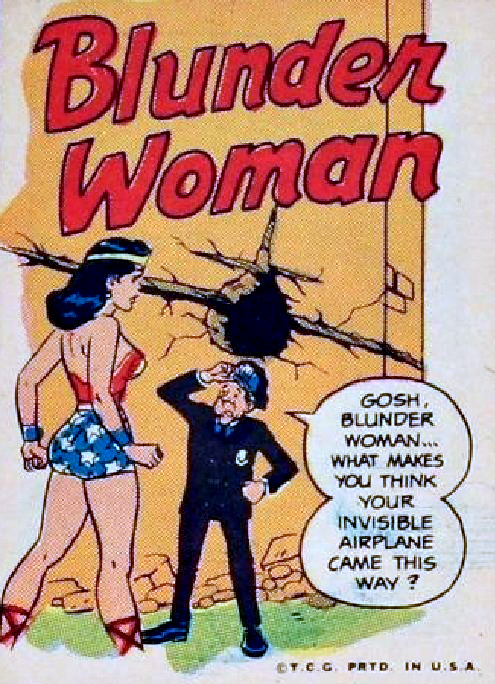
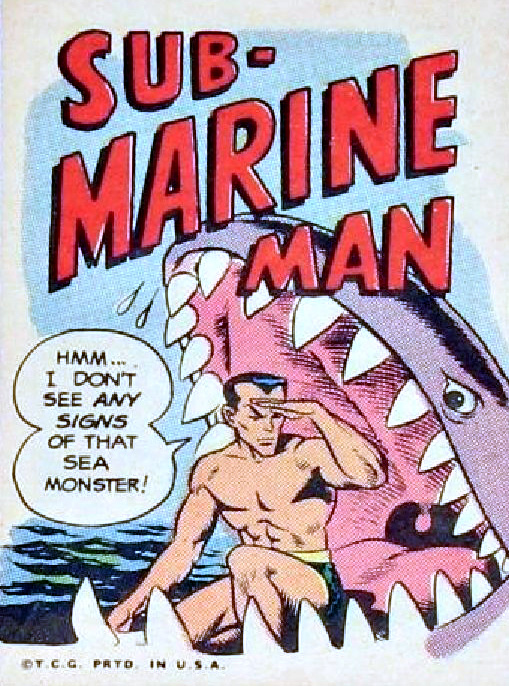
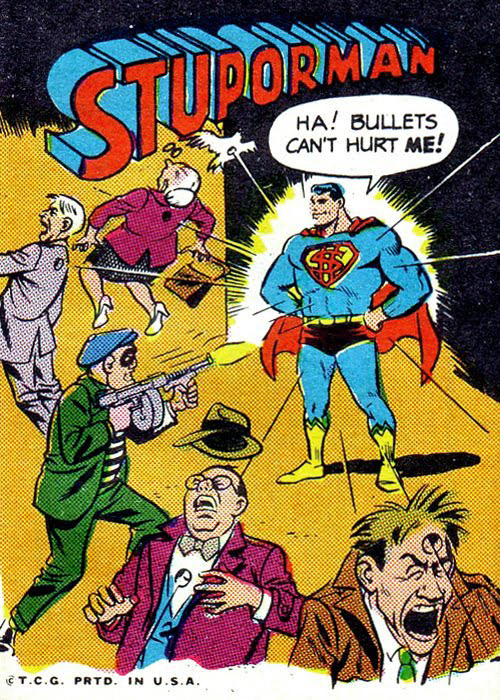
With his one-time roommate Roy Thomas, he was involved with the terrific Krazy Little Comics series — tiny superhero parodies with titles like The Amusing Spider-GuyFantastic Fear and Stupidman, with artwork by Wally Wood and Gil Kane.

Wally Wood and Gil Kane drawing tiny parody comics sold with bubble gum.

Only at Topps.

And then, of course, there was Mars Attacks.

That alone would have been enough.

Len was a lifelong fan of science-fiction movies and EC Comics, and he came up with the idea that became Mars Attacks, working with Woody Gelman to develop the storyline. Wally Wood and Bob Powell helped visualize it, and Norm Saunders painted most of those unforgettable finished cards.

Basically, Len took all the great 1950s science-fiction movie ingredients — bug-eyed aliens, flying saucers, death rays, terrified crowds, destroyed landmarks — and turned the dial way up.

Especially on the gore.

Way, way up.

The result was one of the most memorable trading-card sets ever produced, horrifying parents and making a permanent impression on a generation of bubblegum-chewing boys.

Some of whom never quite recovered.

Len’s comics connection went well beyond Topps.

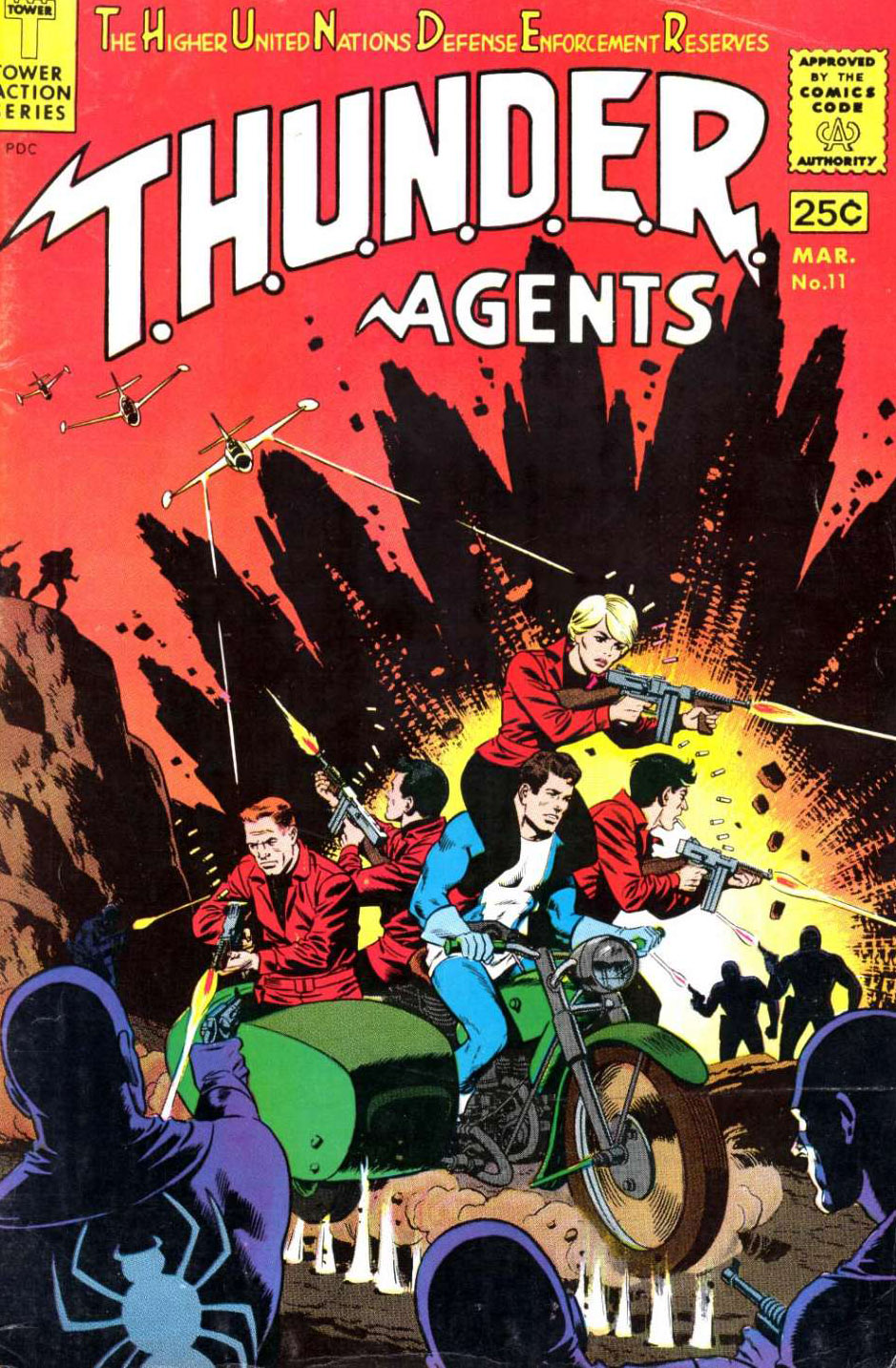
He was involved in the creation of Wally Wood’s T.H.U.N.D.E.R. Agents and wrote the original Dynamo story. Wood returned the favor by giving Dynamo the civilian name Leonard Brown.

Len always seemed a little sheepish about that when it came up.

But really — how many people can say Wally Wood named a superhero after them?

I think it should have been on his business card.

Len was also a very early collector of original comic art, recognizing that this stuff was beautiful and important at a time when hardly anybody was thinking about it that way.

His collection was long gone by the time I knew him, unfortunately dispersed after a difficult divorce. But just hearing Len talk about some of the pieces he once owned was jaw-dropping.

I was lucky enough to work with him for about four years at Topps, during the early ’90s when Topps Comics was launched.

For a lifelong comic-book fan who had spent decades working around the edges of the industry, that had to be pretty satisfying.

And Len was all over it.

I loved talking with him because the conversation could go just about anywhere — comics, cards, old movies, television, original art … and music.

Len was a huge rockabilly and classic-country fan and eventually became a radio DJ as well, hosting shows devoted to the music he loved.

That enthusiasm was genuine.

That was Len.

When I first walked into the old Topps building in Brooklyn in 1992, Len had already been there for more than 30 years.

Thirty years.

The Beatles had formed, conquered the world and broken up. Marvel Comics had created nearly its entire universe. Batman had gone from Shelly Moldoff to Carmine Infantino to Neal Adams to Frank Miller.

And Len Brown was still at Topps.

Still paying attention. Still plugged into what was going on. Still looking for the next big thing — and, more often than most people, finding it.

The funny thing was, he looked ridiculously youthful.

So youthful, in fact, that the first words out of my mouth when I met him were:

“You’re Len Brown?”

I later found out he’d heard that more than once.

Yes.

He was Len Brown.

The one and only.
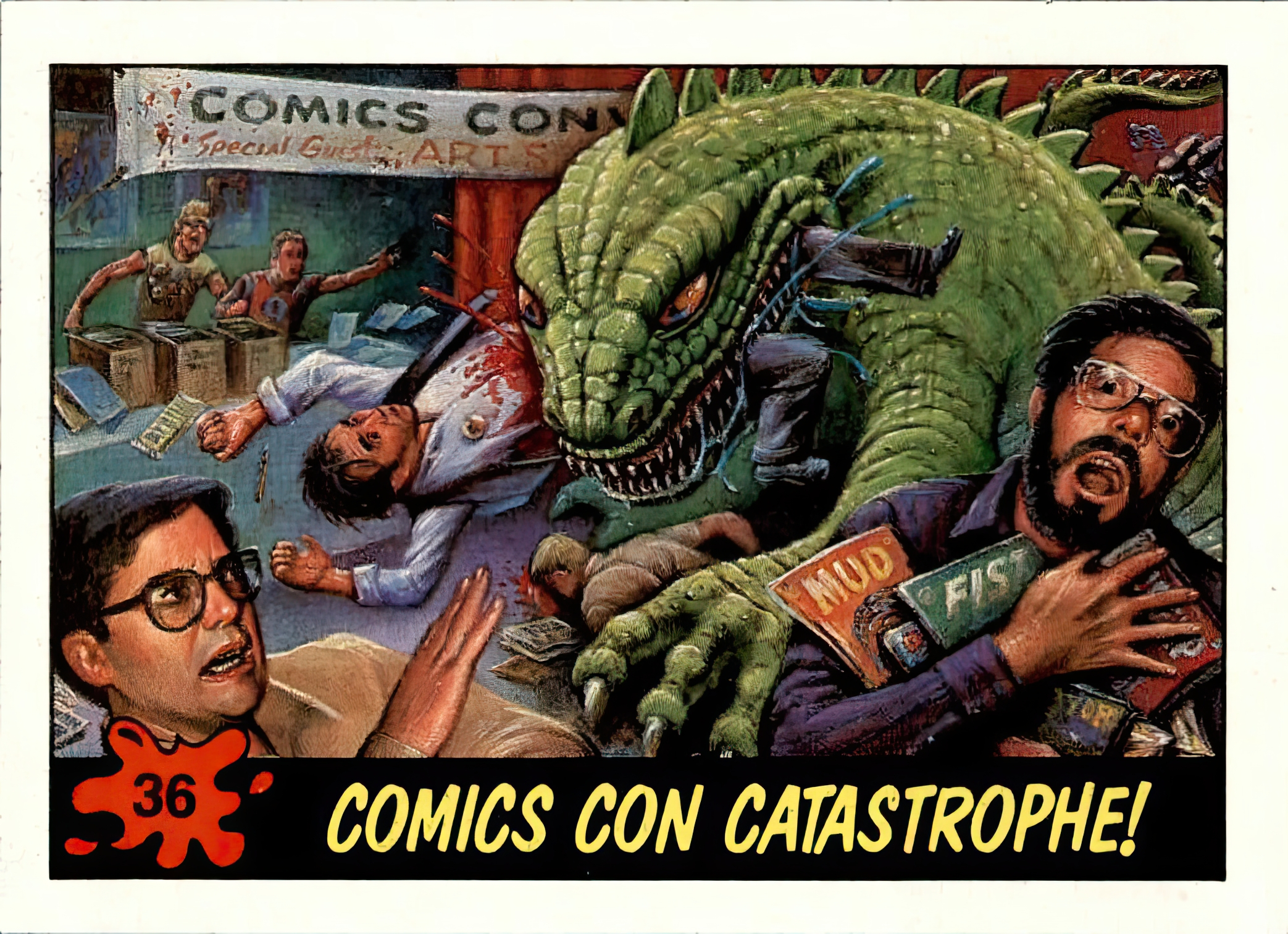
One More Len Brown Story

I mentioned that Len was a very early collector of original comic art, long before most people saw much value in the stuff at all.

Funny thing is, years later I accidentally ended up with something that had once been in his collection.

Around 2009, I spotted this terrific Kurt Schaffenberger Shazam! page online and bought it before I noticed the inscription:

“To Len Brown — Kurt Schaffenberger.”

So I called Len.

I told him what had happened and offered to send the page back.

He passed.

Losing the collection under the circumstances he did wasn’t a particularly happy memory, and by then Len was pretty much done with original art.

But I do think he got a kick out of the fact that, completely by accident, one of his old pages had found its way to me.

And I was pretty happy about it too.

Still am.
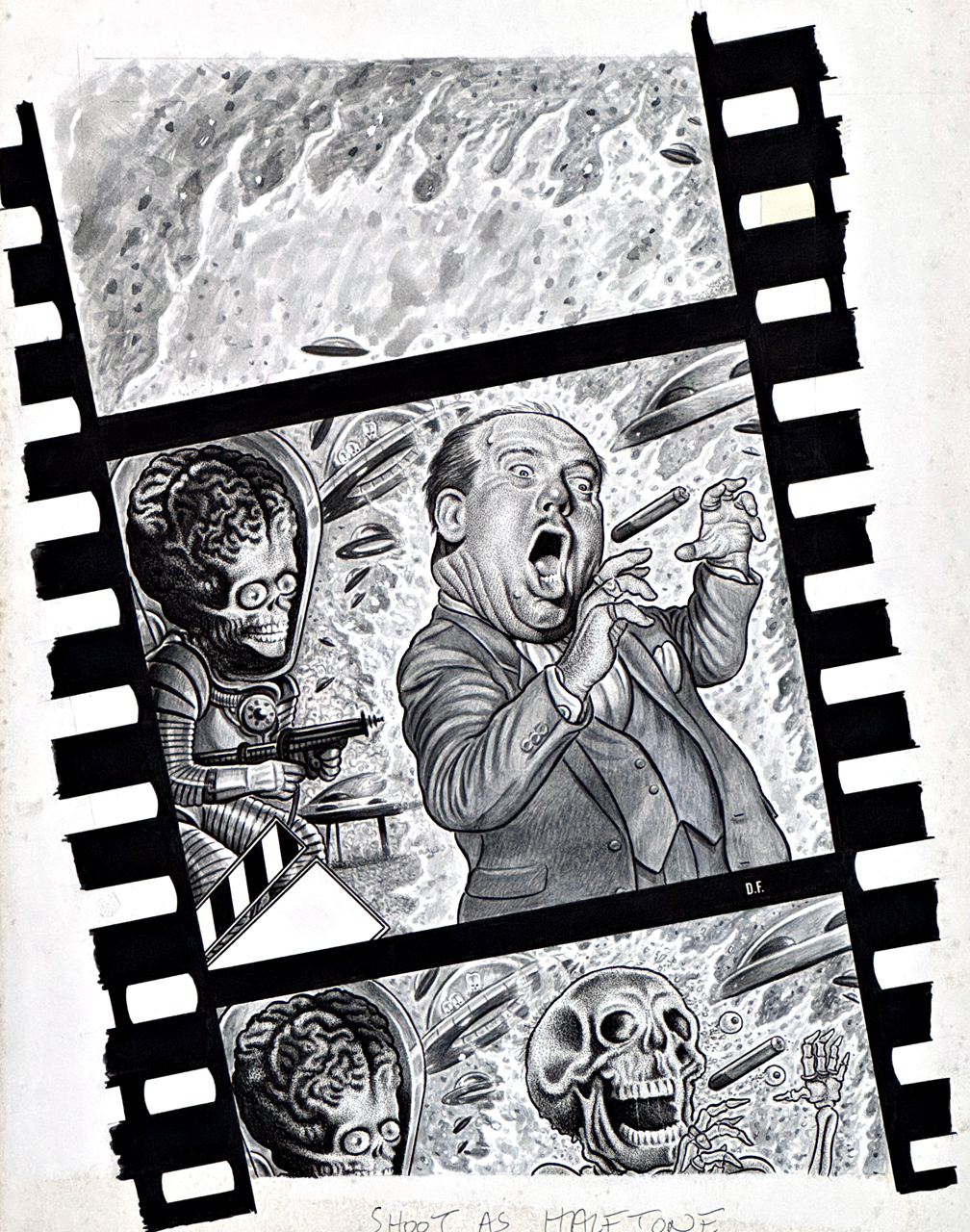
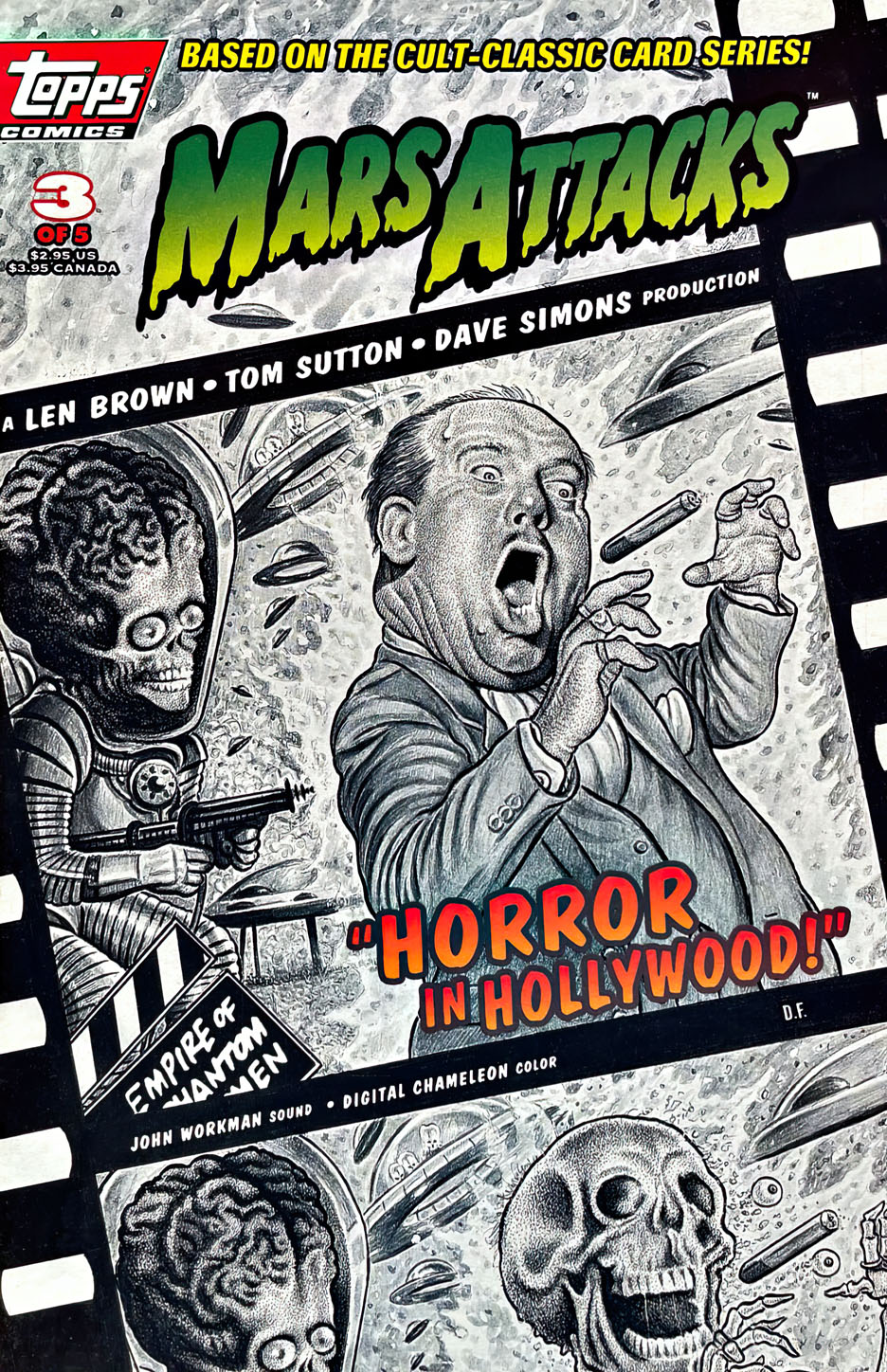
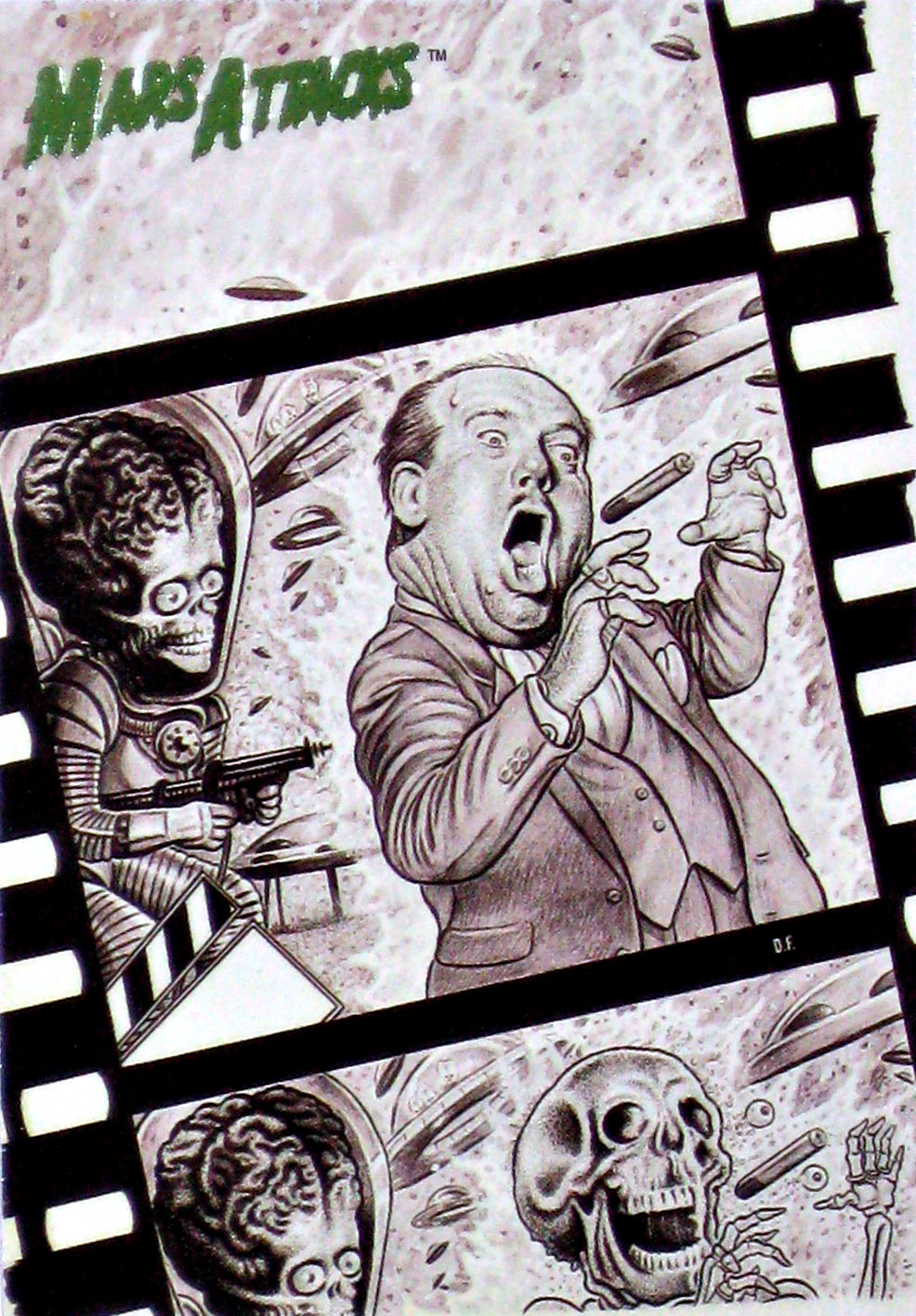
Drew Friedman — Mars Attacks, Live, On Film

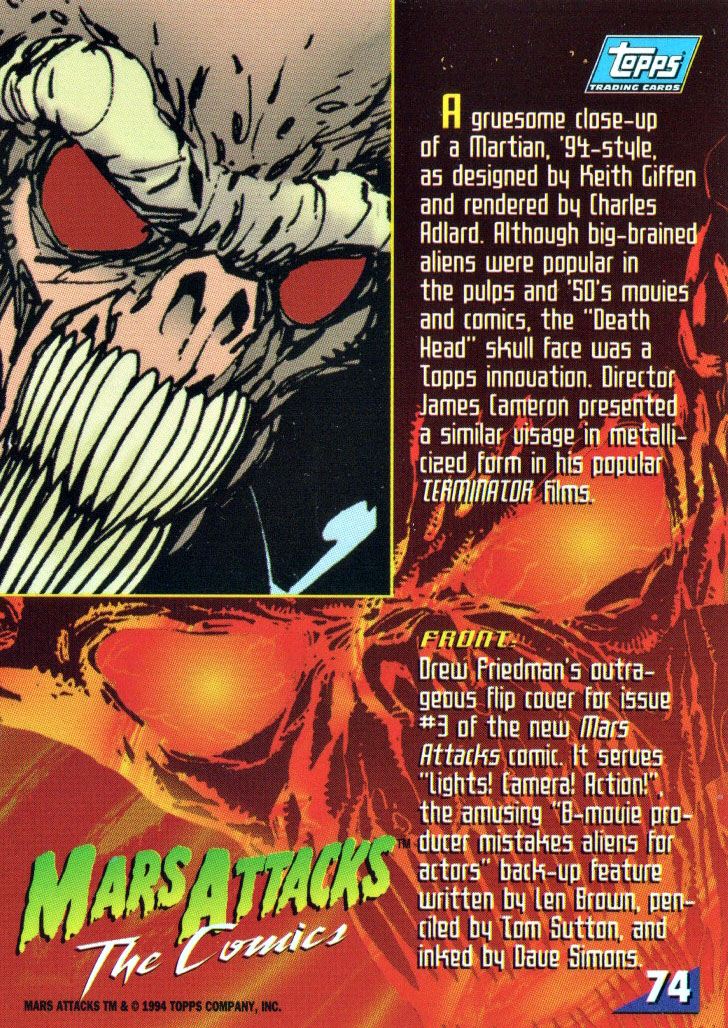
Cover, Mars Attacks #3, 1994 & Trading Card, Mars Attacks Archives, 1994

Wallace Wood. Norm Saunders. Robert Crumb. Basil Wolverton. Jack Davis. Art Spiegelman. Bill Griffith. Gil Kane. Jay Lynch. John Pound. Bob Powell. Tom Sutton. Bhob Stewart.

Topps (staff and freelance alike) artistic line-up of the late 20th century reads like an unbeatable all-star team of talent. (And that’s not even close to a complete list.)

The list of course also includes the incomprable Drew Friedman, who among other assignments, drew the hilarious Toxic High trading card series for Topps, using his trademark stipple effect.

I’ve been looking for a good Friedman original and found this great cover completely by accident browsing in a flat file at Scott Eder’s gallery in New Jersey.  It became a must -have. Scott loves it as well, so it took some heavy duty haggling to pry it away.  But…I published the damn thing, so it must have been fate. Like I said, a “must-have.”

I believe this Mars Attacks cover is the only comic book cover Drew created for us. 

Hey Scott, find out if the Hollywood mogul is based on an actual person. 

I’ll keep it between us.

(Happy Halloween, everyone!)

Mike Ploog — Marvel Goes Ape

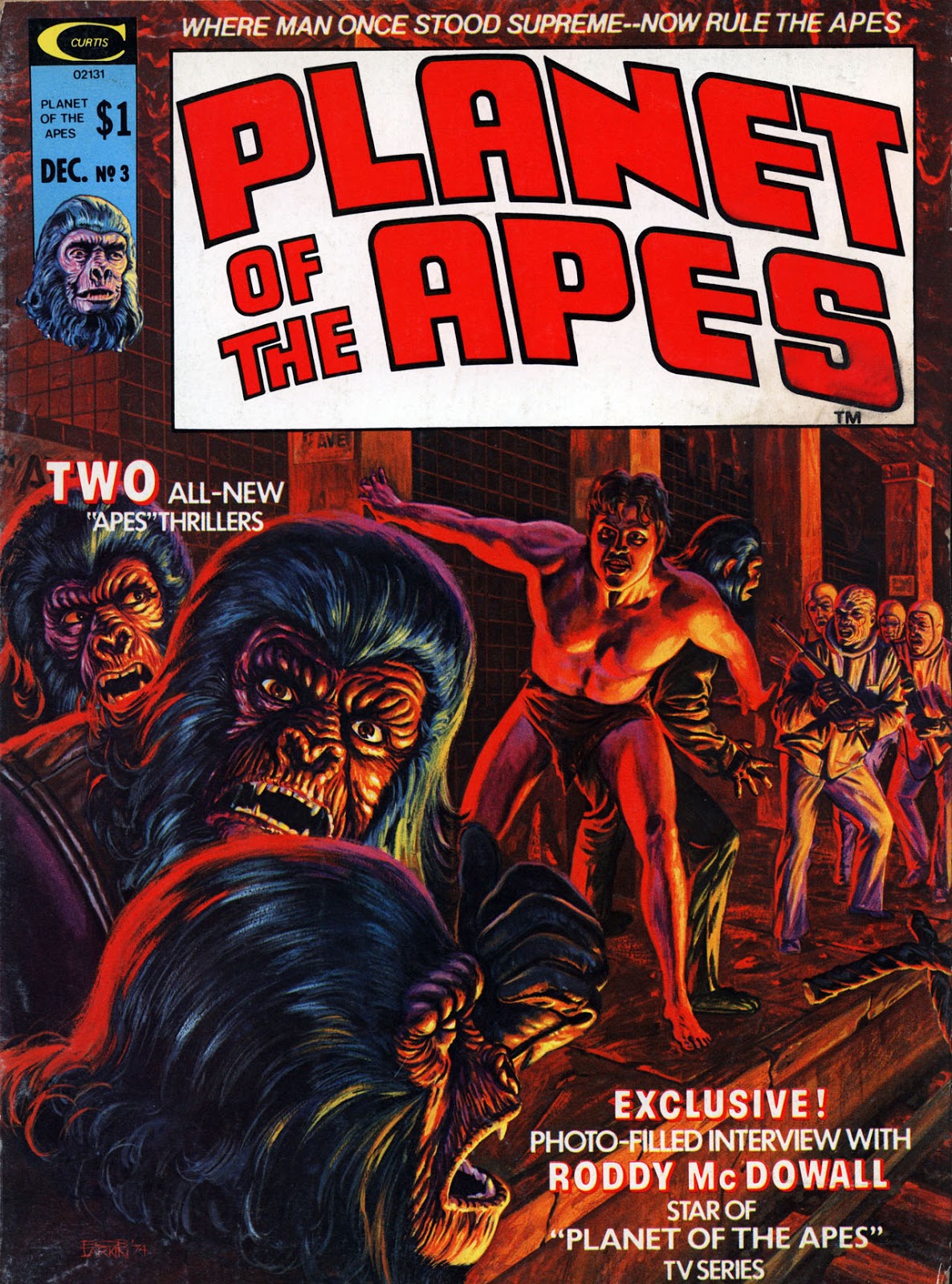
Planet Of The Apes #3, December 1974

Things you learn.

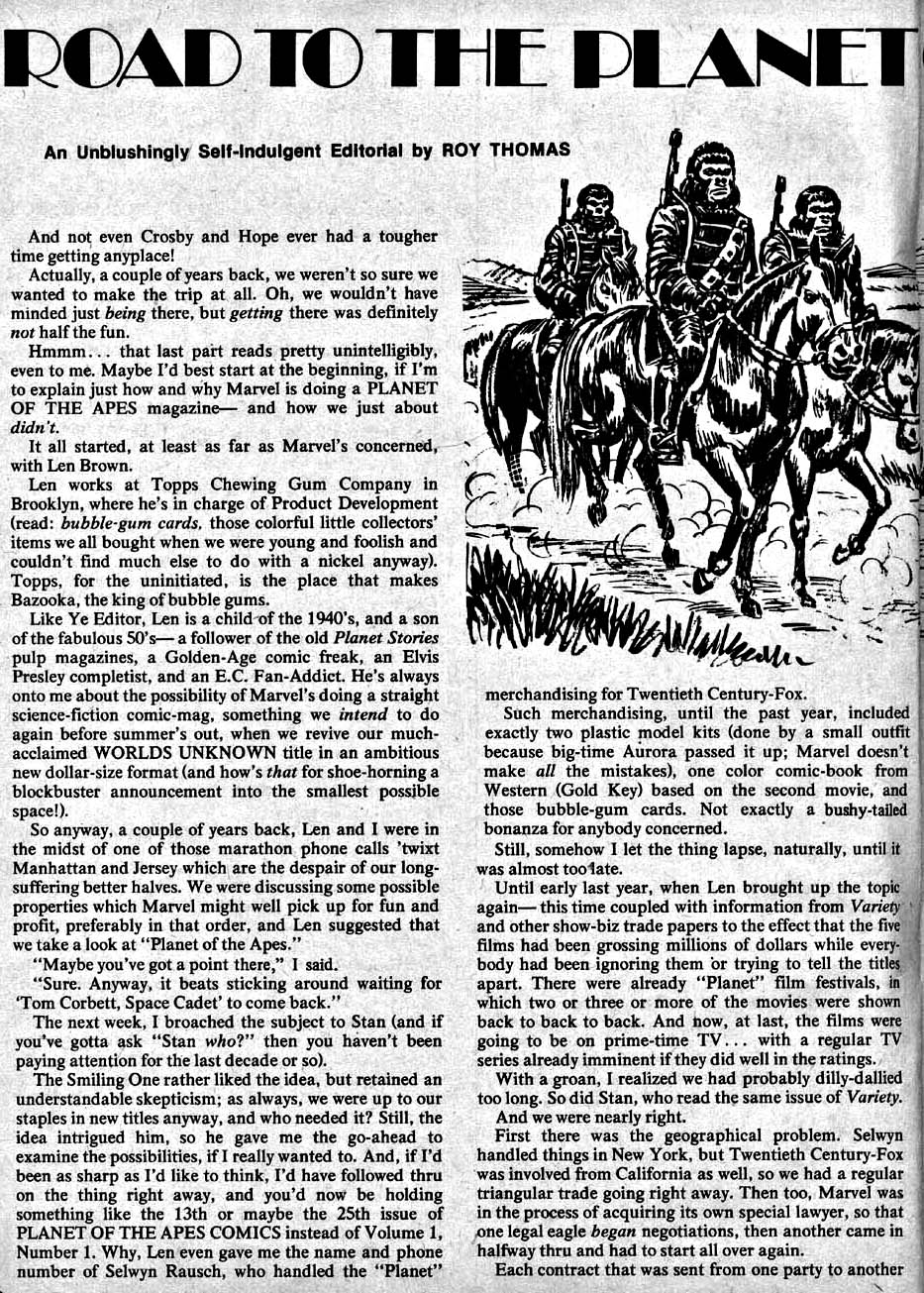
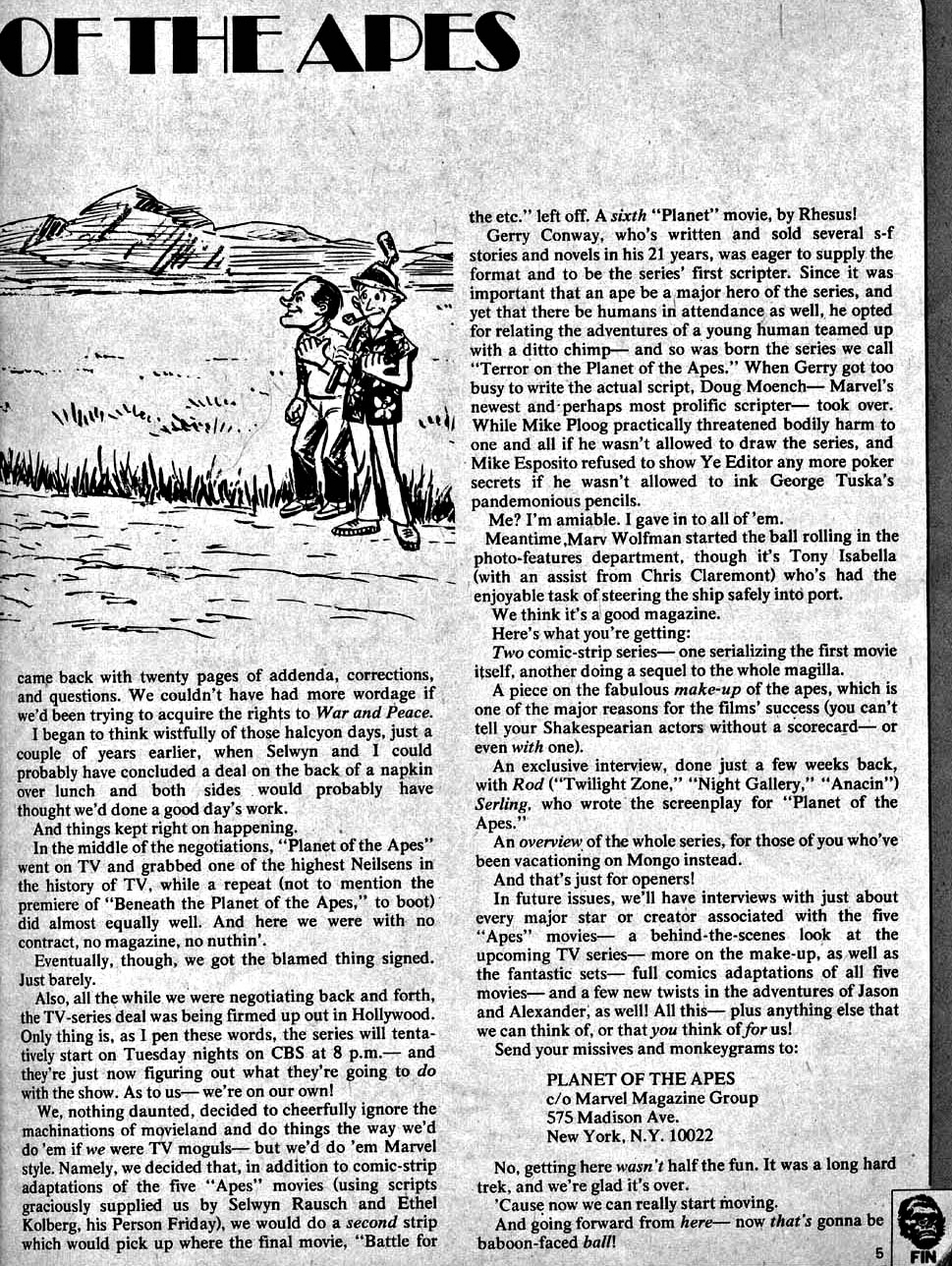
According to Roy Thomas, in an editorial in the first issue of Planet of the Apes magazine, it was my friend and old Topps colleague Len Brown who persuaded Roy — and Marvel — to acquire the POTA license. Roy’s article on that process is worth a read.

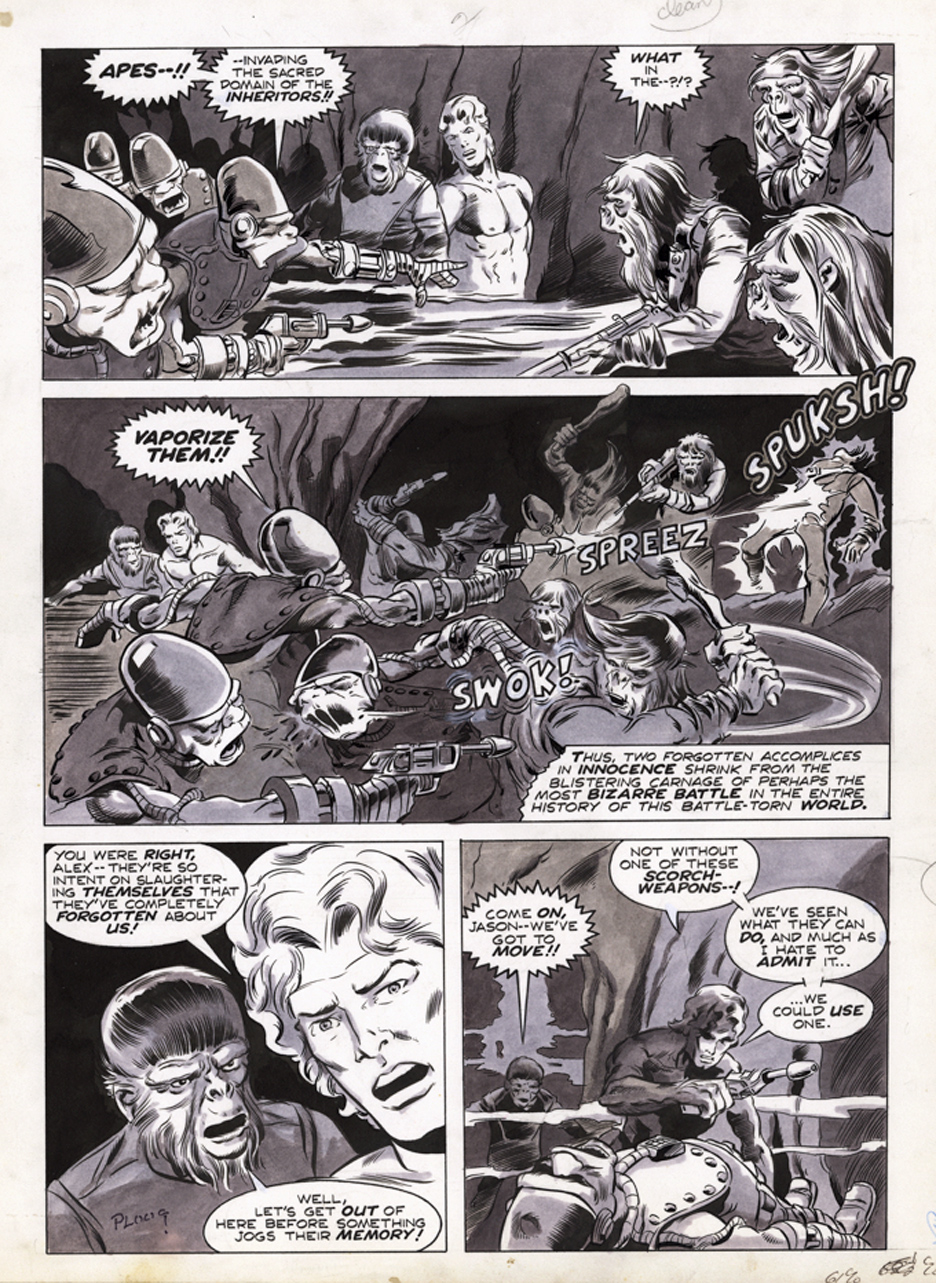
Another fun fact: Mike Ploog insisted he draw the series, which was developed as a sequel to the fifth and final original Apes film, Battle of the Planet of the Apes.

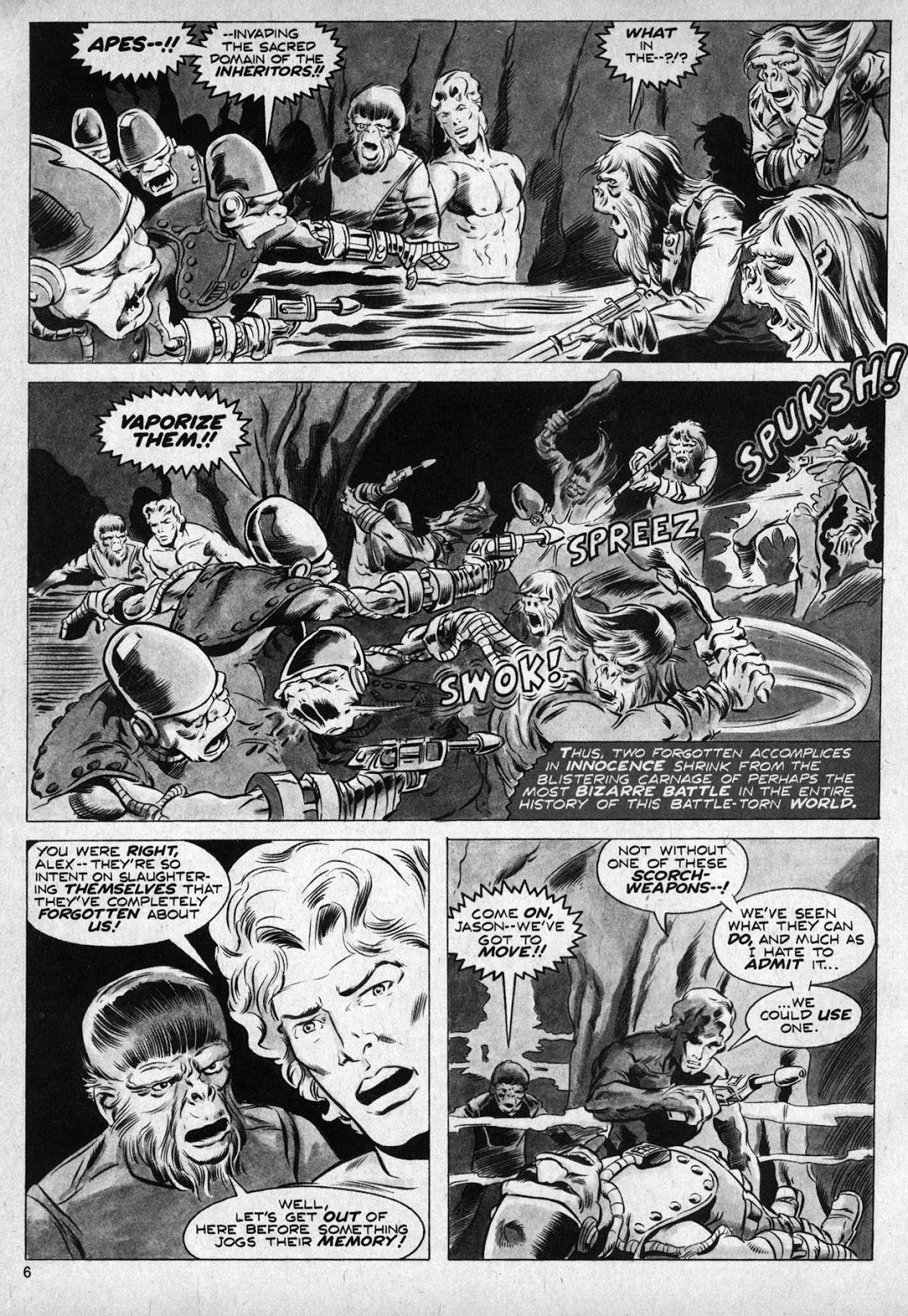
And that’s cool, because Mike provides us with some very lovely artwork throughout, including this terrific page. 

Mutants! Monkeys! Maniacs! What more could you ask for?

(Special note: Pretty much  everyone was late to the party on the POTA license, but when they finally got there in time for the final film and then the TV series, It became, as they say,  “a thing.”) 

Zina Saunders — Vote!

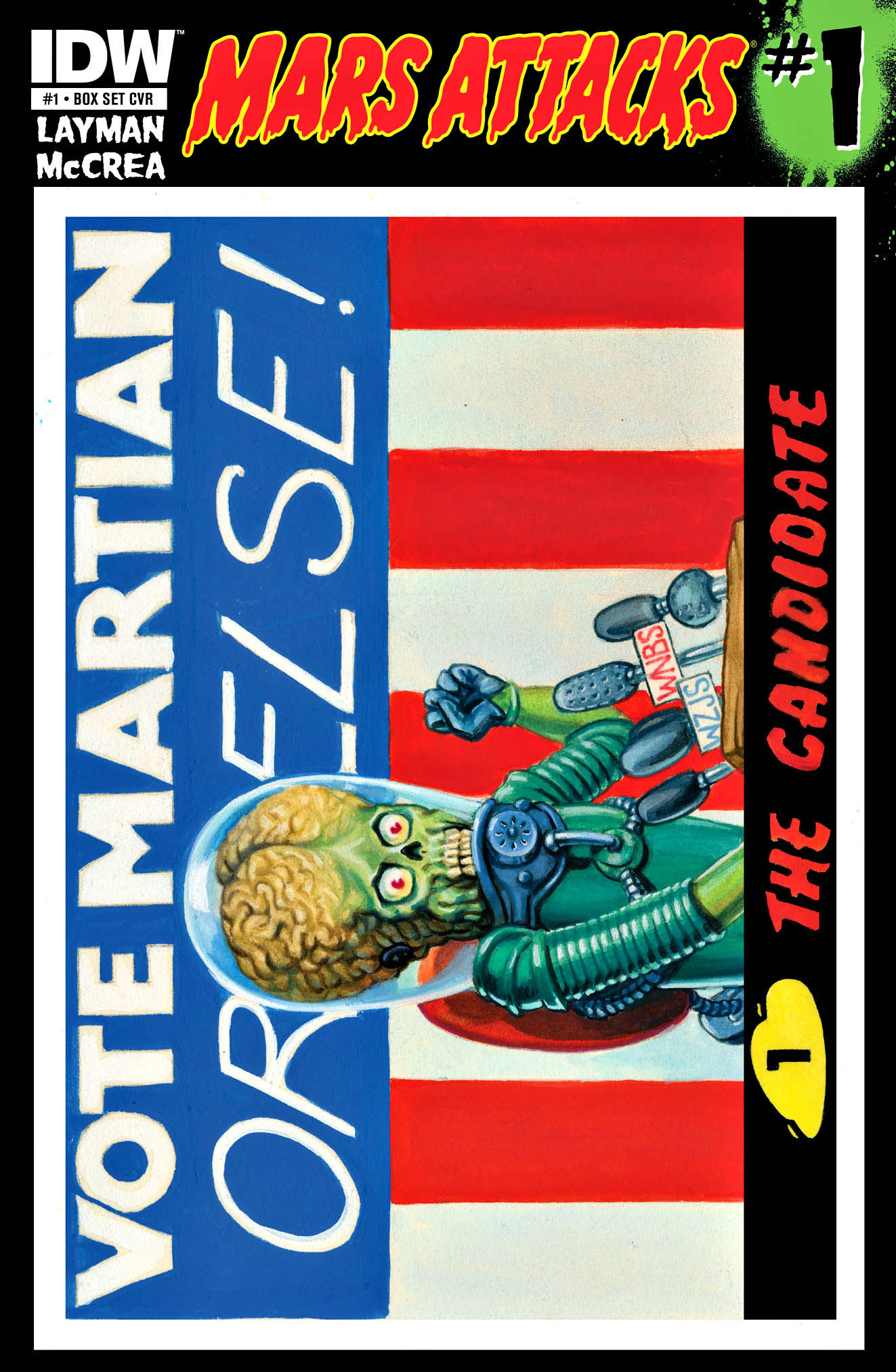
Mars Attacks #1 Cover Variant, 2012

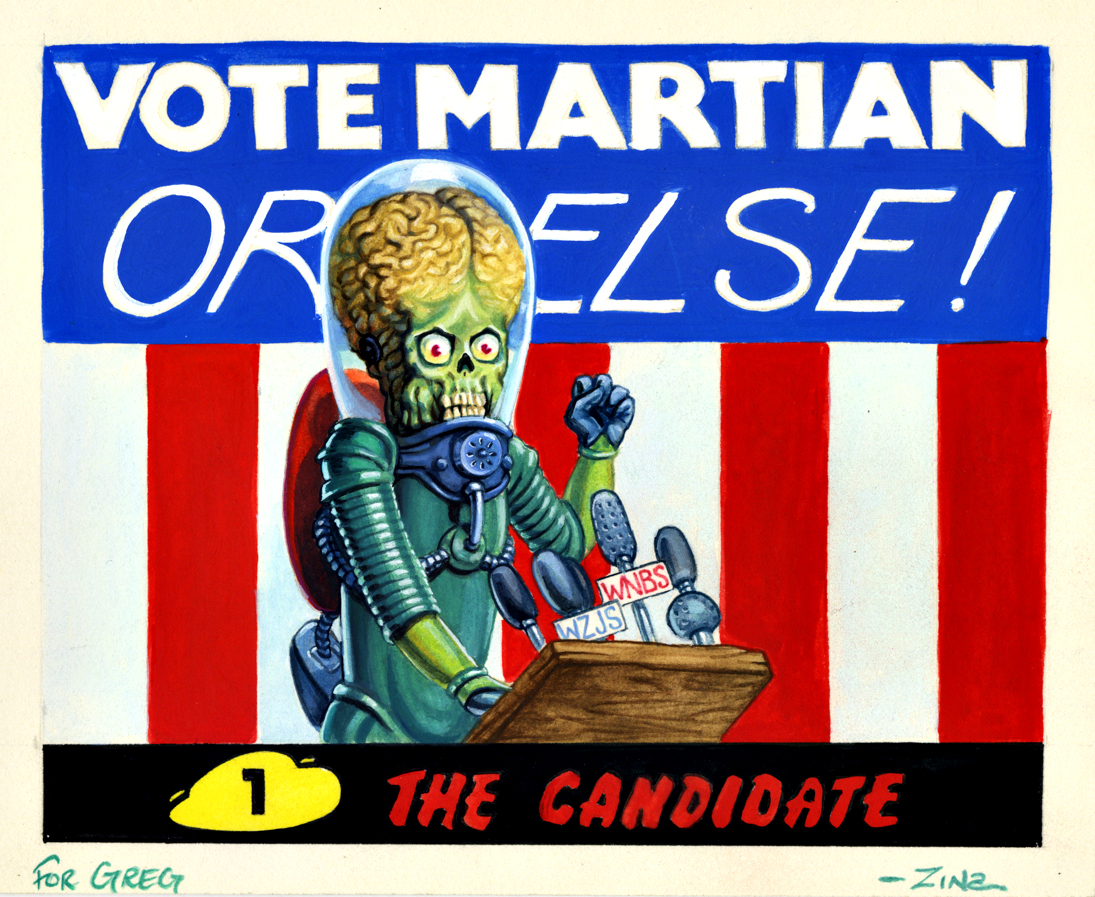
Vote indeed! (Just not for this guy.)

The terrifically talented Zina Saunders — daughter of legendary Mars Attacks painter Norm Saunders — created this card for our 1994 Topps Mars Attacks “sequel” series. So many good cards were created for that set, including many by Zina, that we ran out of room, and this one went unused…

Until 2012, when we acquired the Mars Attacks comic book license at IDW. Legendary comics marketing guru Dirk Wood had this crazy idea: What if we created 55 variant covers, each featuring one of the original 55 cards? Ha-ha. That’s funny.

Then we went ahead and did it.

And we upped the ante: We added an additional variant cover that you could only get if you bought the complete box set of variant covers.

Honestly, I think we all agreed we were nuts  — until some good orders came in. Collectors actually wanted all the covers. It was a novel way to have a complete “set” of the original Mars Attacks.

Maybe those are unrelated thoughts. We might still be nuts.

But I’m not voting the Martian ticket, regardless. Not this year, anyway.

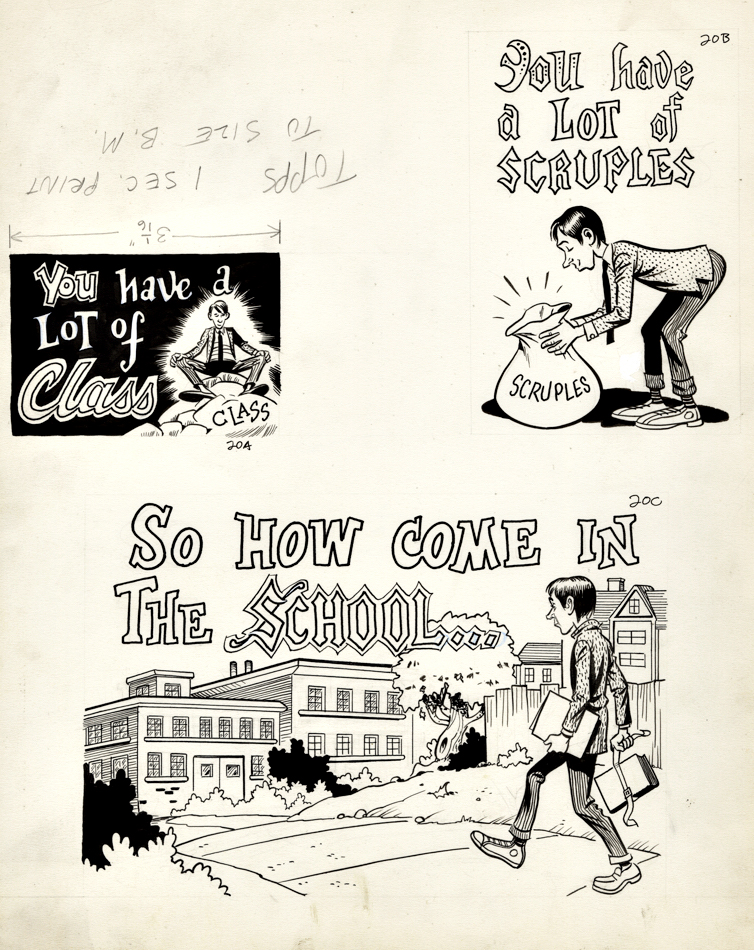
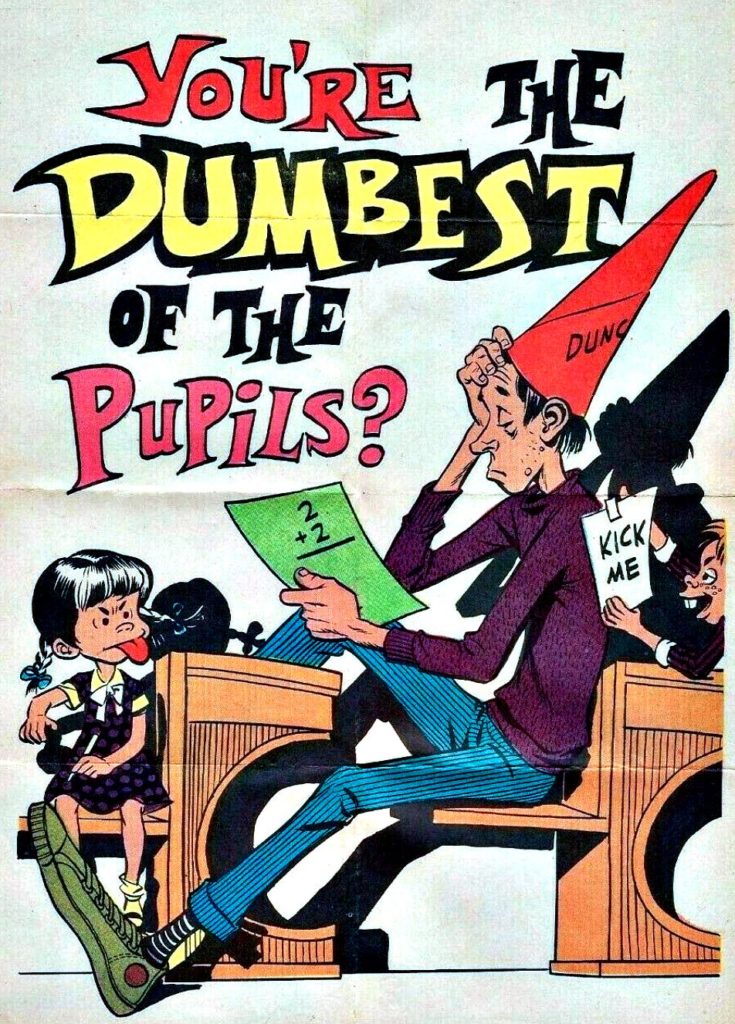
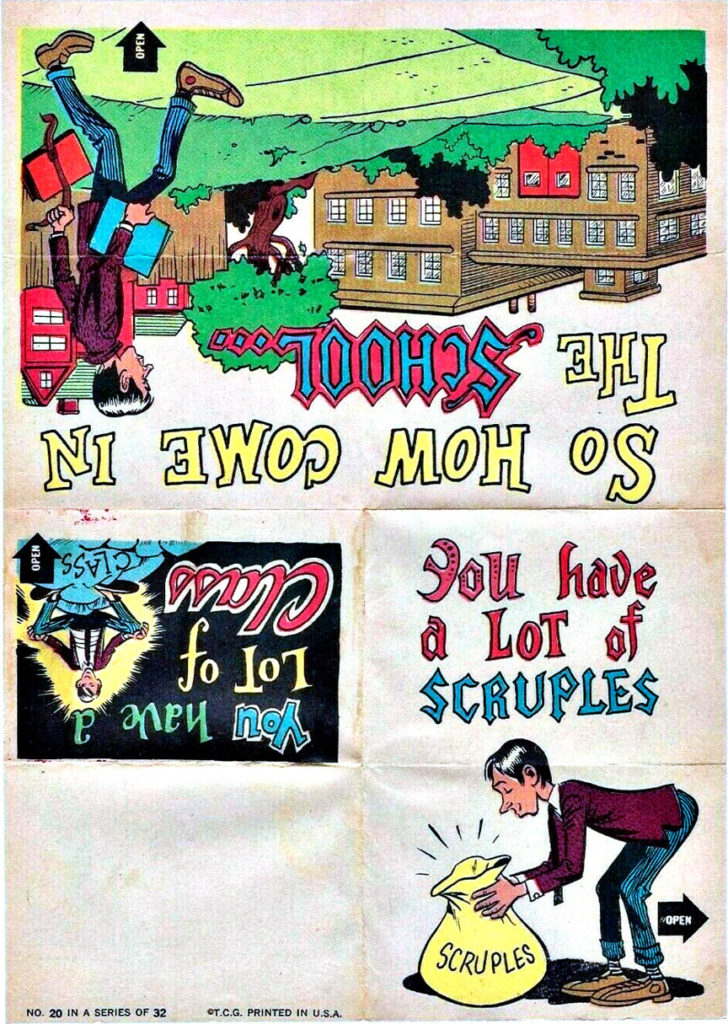
Wallace Wood — Topps In Class

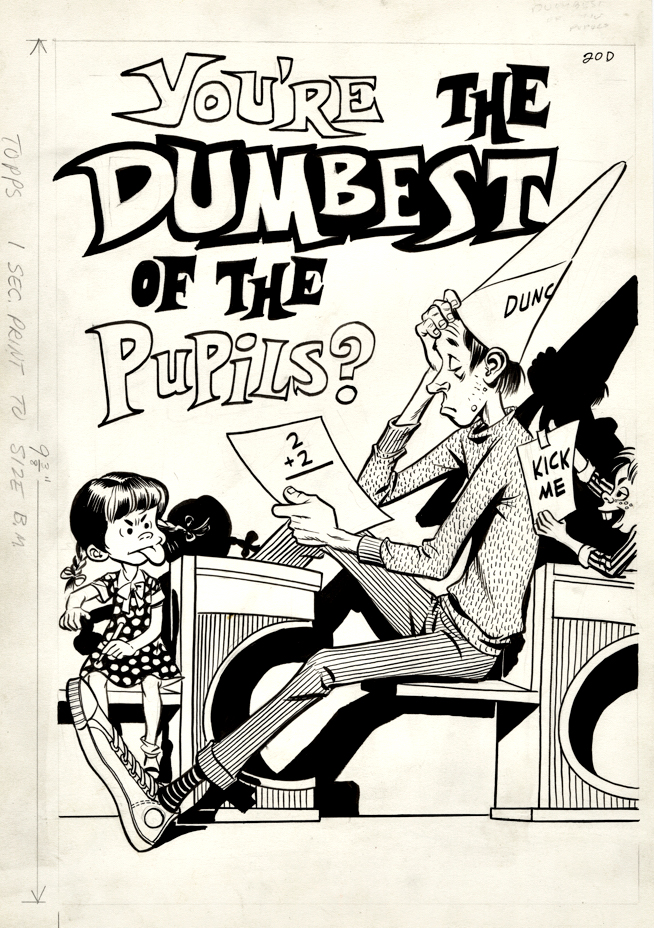
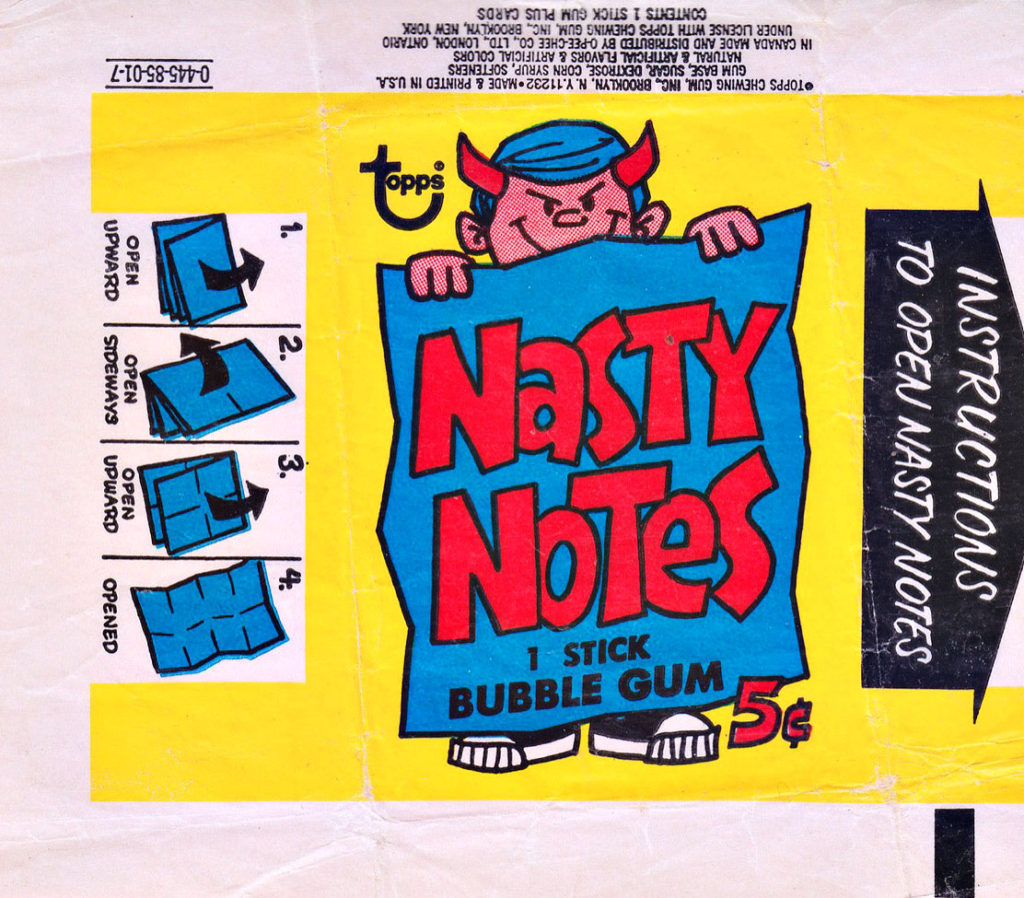
Topps Nasty Notes, 1967

Wallace Wood brings his penchant for humor to Topps with this great looking 1967 series of novelties appropriately entitled “Nasty Notes.”

Why call them novelties instead of trading cards? Because they are actually two-sided posters that are designed to resemble the folded notes you might pass around in class.

Woody did a generous amount of work for Topps in the 60s as he became increasingly frustrated with the mainstream comics houses. Also, he was friends with one of Topps creative directors, Len Brown.

In fact, as noted previously, Len helped shape the creative direction of Wood’s T.H.U.N.D.E.R Agents, and. in return, Woody named the civilian identity of Dynamo, the lead character, “Len Brown.”

Some of the greatest and best-known talents of the comics contributed to Topps creative “Non-Sports” projects. It’s an all-star list that includes Jack Davis, Bob Powell, Basil Wolverton, Robert Crumb, Jay Lynch and Art Spiegelmanamong others.

(And of course, well-know pulp cover painter Norm Saunders was responsible for the finished work on Mars Attacks, Batman, Civil War, and others.)

Wallace Wood — Agent of Change

T.H.U.N.D.E.R. Agents #11, March 1967

Wallace Wood made his move.

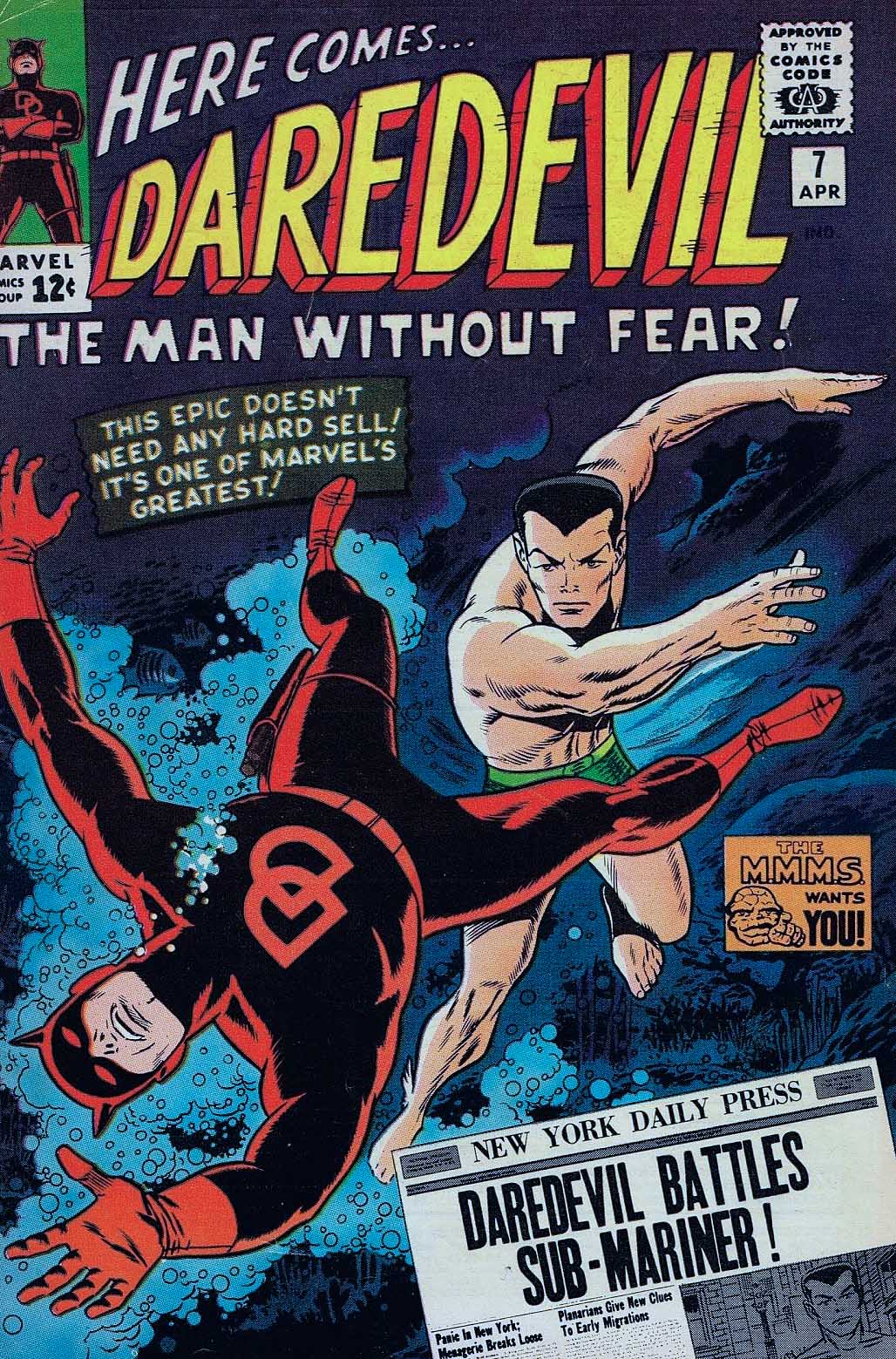
The frustrated artist, working “Marvel style” on Daredevil — plotting AND drawing — but only paid for the art, heard about a new opportunity. Tower, primarily a book publisher, had decided to take a leap of faith into the comics biz, and Woody was ready to help them.

It was the perfect role for Woody, who had carte blanche to develop the comics as hew saw fit. He was artist, storyteller, art director and defacto editor — all rolled into one.

And with the help of friends/colleagues Len Brown (Topps Mars Attacks) and Dan Adkins, T.H.U.N.D.E.R. Agents was born.

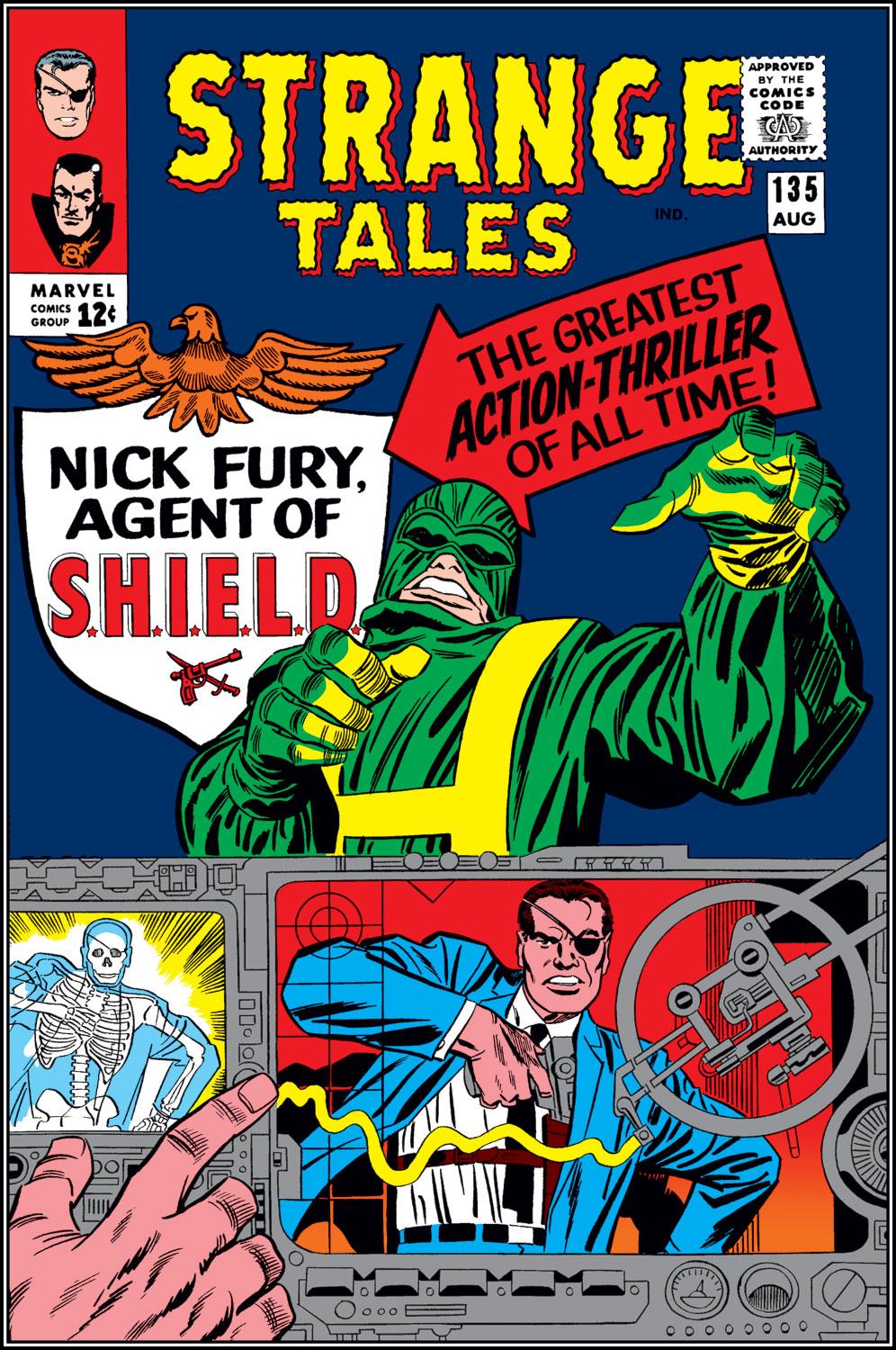
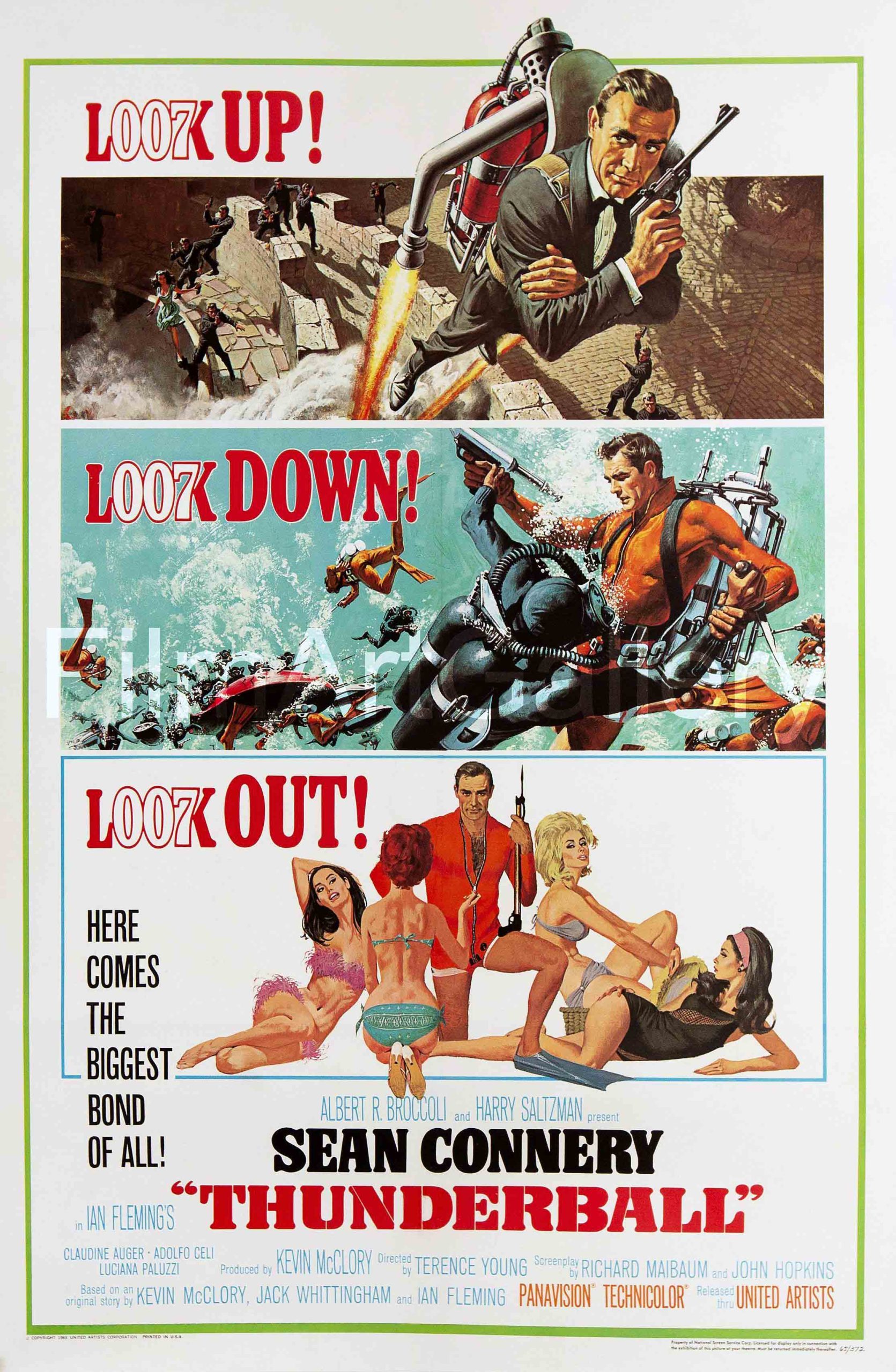
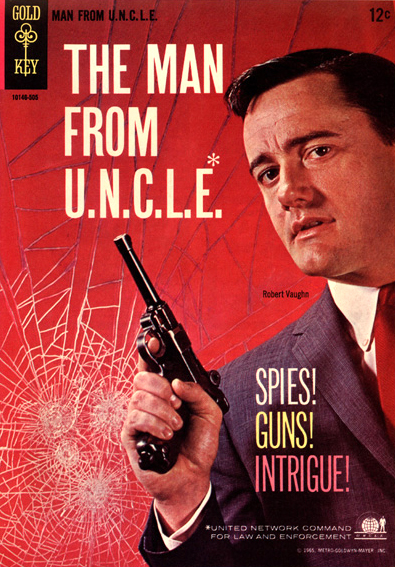
Combining a super powered team (think Justice League) with a secret spy organization (ala S.H.I.E.L.D., which had just launched a few months prior) T.H.U.N.D.E.R. Agents was an effort to capitalize on the secret agent pop culture craze. (James Bond, Man from U.N.C.LE., et al.).

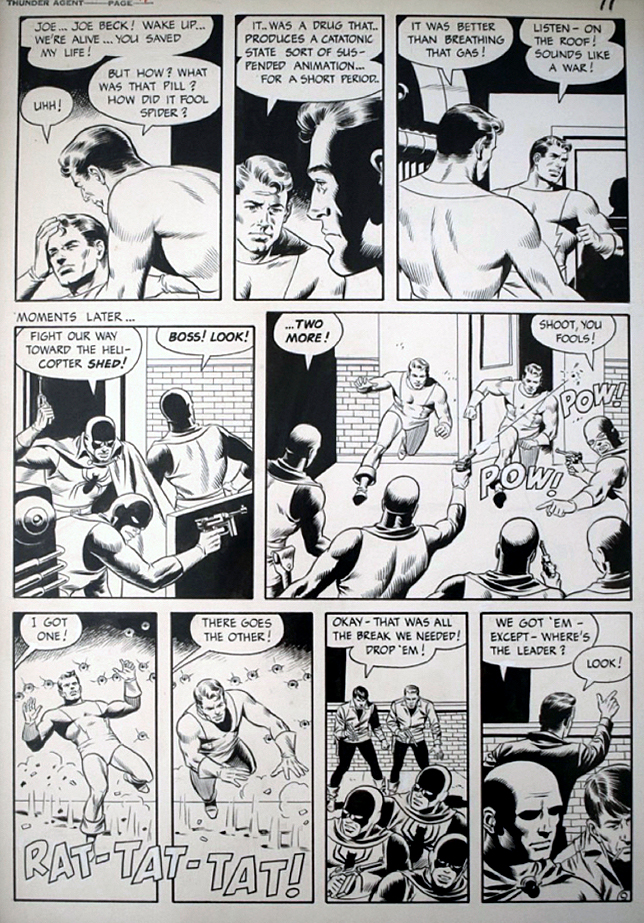
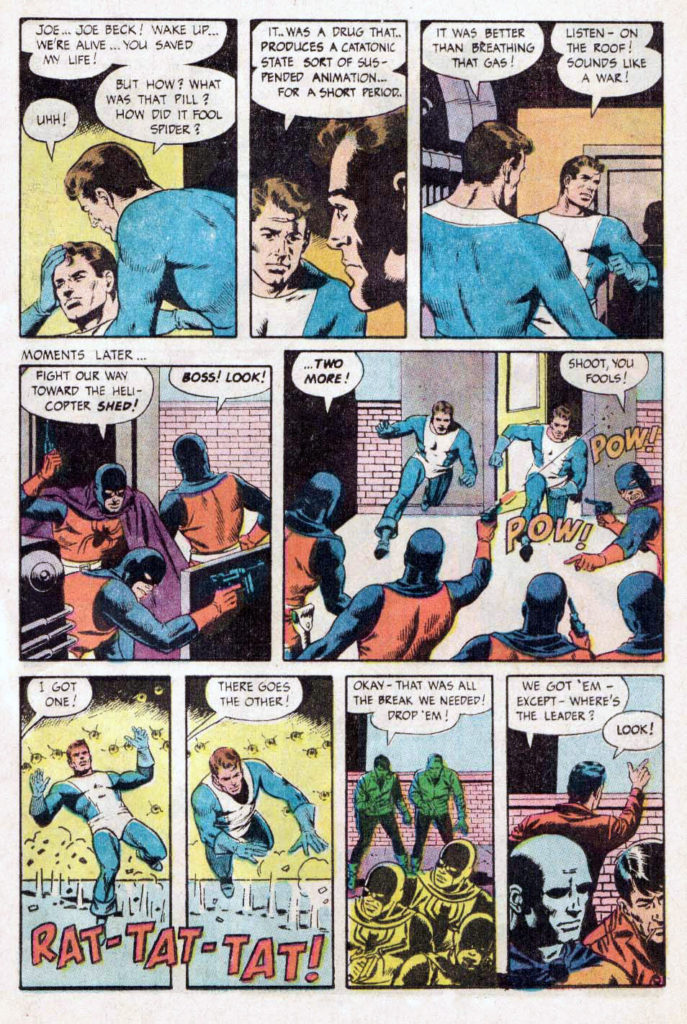
This page is a great example Wood’s crystal clear storytelling and trademark inks.  Adkins is credited in some instances on this story as the penciller, with Wood on inks, and due to the collaborative nature of the creative teams on these stories, it’s often easy to lose the thread of who did what. 

But this looks like pure Wood here, as Dynamo and his “duplicate” (there are actually three Dynamos in this story — don’t ask) are mowed down in a hail of bullets.

I’ve I always wanted to use that phrase.

Who are you going to call?:

T.H.U.N.D.E.R. The Higher United Nations Defense Enforcement Reserves.

U.N.C.LE. United Network Command for Law and Enforcement.

S.H.I.E.L.D: Originally Supreme Headquarters, International Espionage and Law-Enforcement Division and later Strategic Hazard Intervention Espionage Logistics Directorate. In the MCU film and TV Universe, it means Strategic Homeland Intervention, Enforcement and Logistics Division.