Greg Goldstein's Comic Art Gallery

Pete Poplaski — Bat-Blast From The Past

Batman: The Dailies, 1944-1945 (TPB, 1990, Kitchen Sink)

Here’s yet another great piece of art by the extraordinarily talented Pete Poplaski.

Poplaski has been called an “artist’s artist” by many of his peers. He might not have a household name among art buffs, but his talent is formidable and undeniable.

Pete, who broke into comics in the 70s underground movement, ultimately became Kitchen Sink’s art director, and, among many accomplishments helped give some of Robert Crumb’s projects just the right design touch. 

Kitchen had the rights to reprint the DC Batman and Superman Golden Age comic strips in the early 1990s, and Pete created brand new covers that evoked the classic style of those strips.

When we acquired those rights at IDW in 2012, we went back to Pete to see if he would be interested in picking up where he left off, and fortunately he was.

Dick Sprang. Al Plastino. Carmine Infantino. You name it. Pete’s remarkable ability to create brand new material in any and all of these classic styles is astonishing.

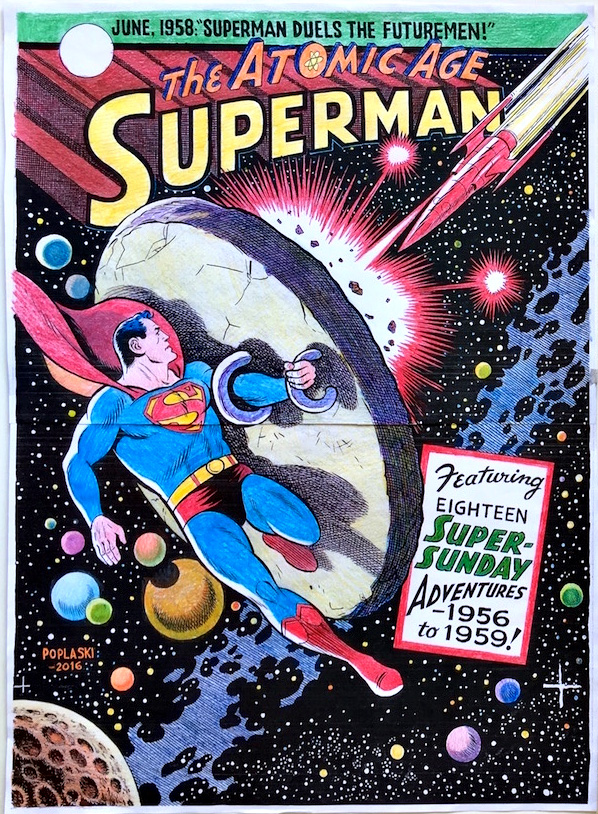
Interestingly enough, many if not most of Pete’s covers (front and back) feature hand drawn lettering, but this one does not. Also, the final crop for the book cover is tighter, so the end result of both of these elements is that there much more art visible on the original than in the final published version.

I’m fortunate enough to own a few of these covers — and many of them are prominently displayed.

Happy Batman Day, 2025

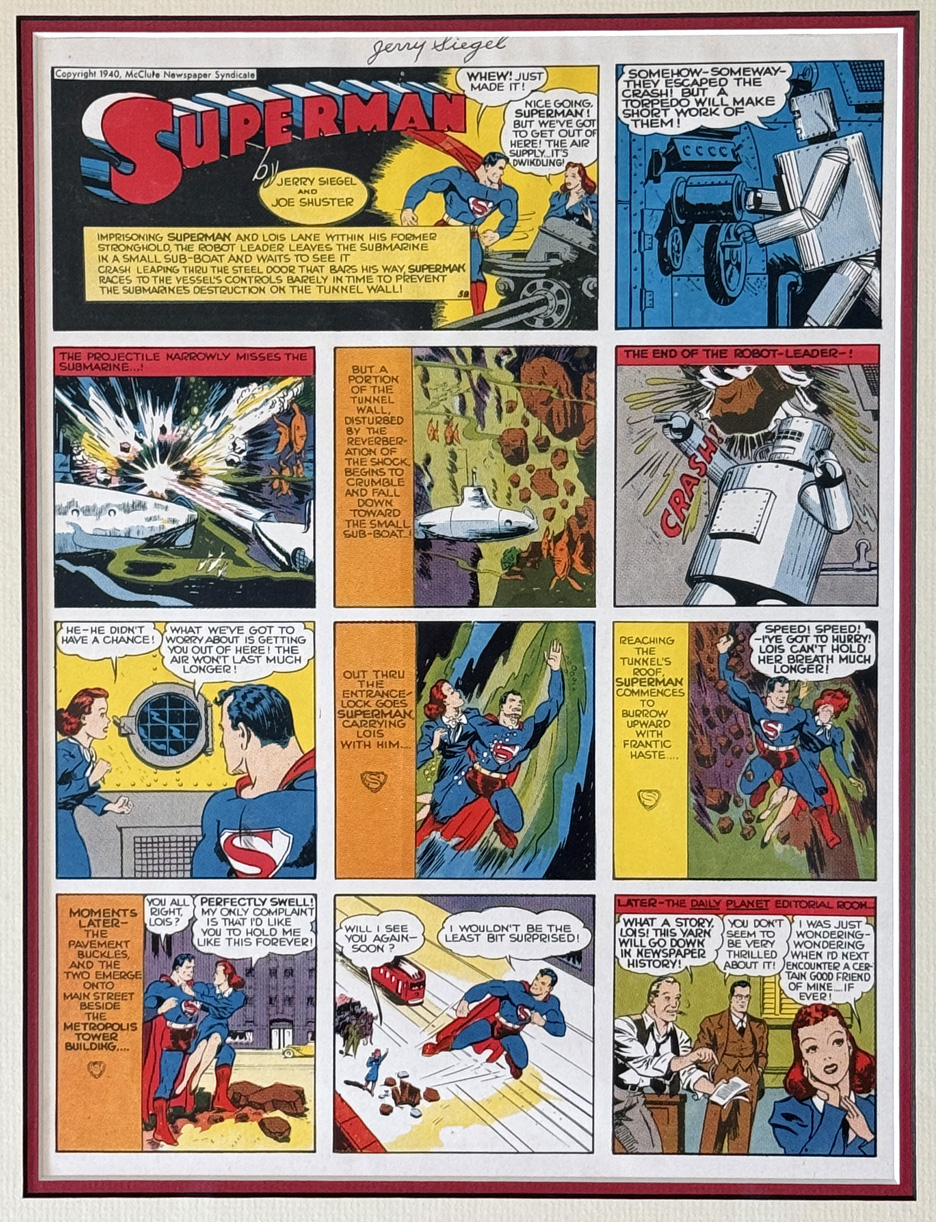
Jerry Siegel & Joe Shuster — Superman & The Bandit Robots

Superman Sunday Strip, (Syndicate Proof Sheet), December 15, 1940

Not quite original art, this is a syndicate proof sheet for the Superman Sunday comic strip, from December 15, 1940. The proof sheets are printed on higher quality paper, and the colors are extremely vivid — which you can see even though I photographed this example under glass.

(For an amplification of how this proofing process worked, see the new edition of Jack Kirby’s Sky Masters Sunday strips, which explains the process in some detail.)

I enjoy these early strips — Shuster’s art here often seems more polished than the comic books, where some of the art suffers from inconsistency. That’s of course not shocking: Superman’s explosive —and nearly instantaneous —popularity meant that Shuster, with the help of assistants and other artists, had to keep up with a prodigious amount of publishing.

This proof came from co-creator Jerry Siegel’s personal collection , and I was fortunate enough to snag one with a giant robot. (Plus, it is signed!)

Superman, Lois AND a giant robot. Seems like a hat trick to me.

Berkeley Breathed — Mixed Emotions

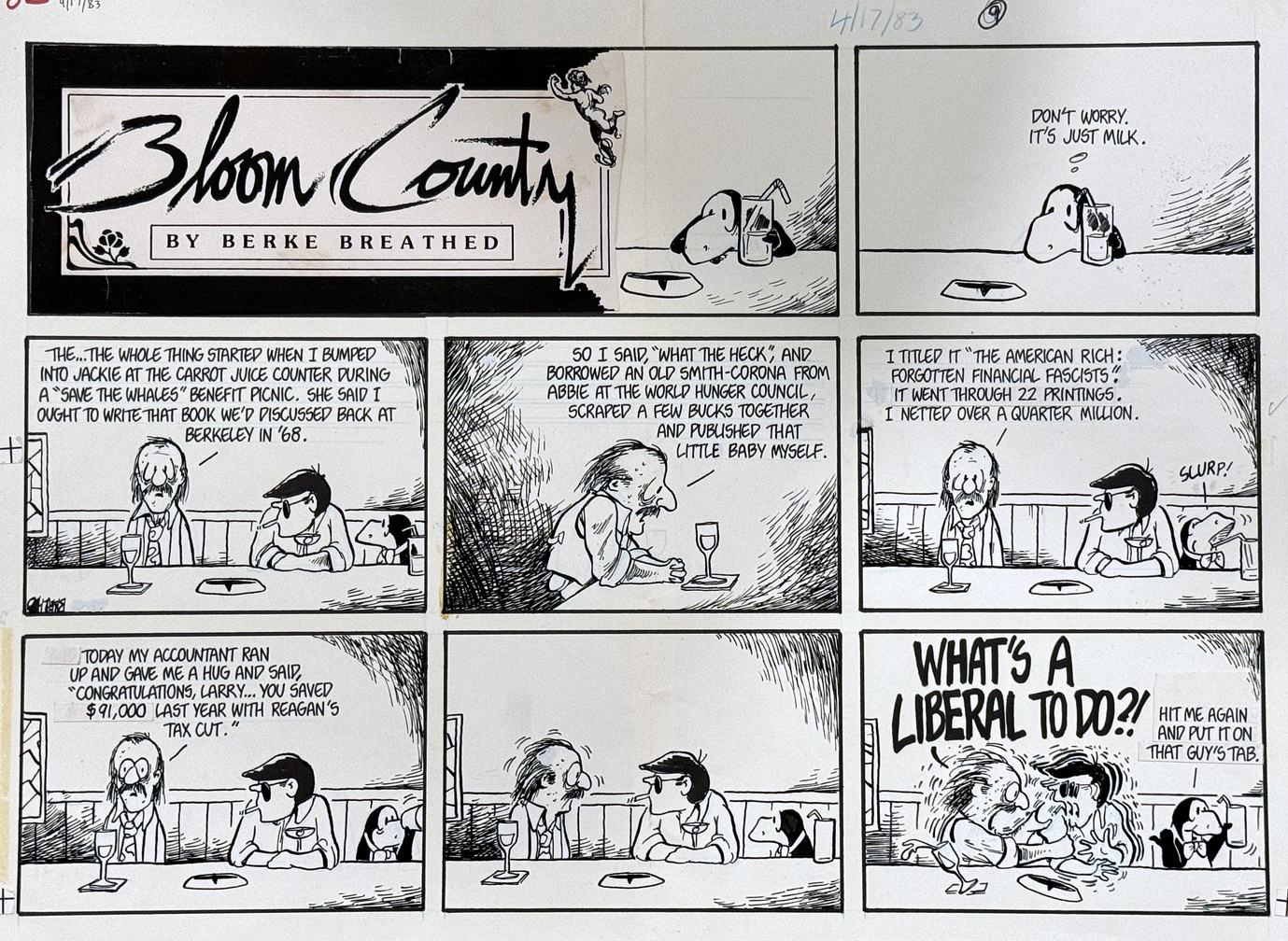
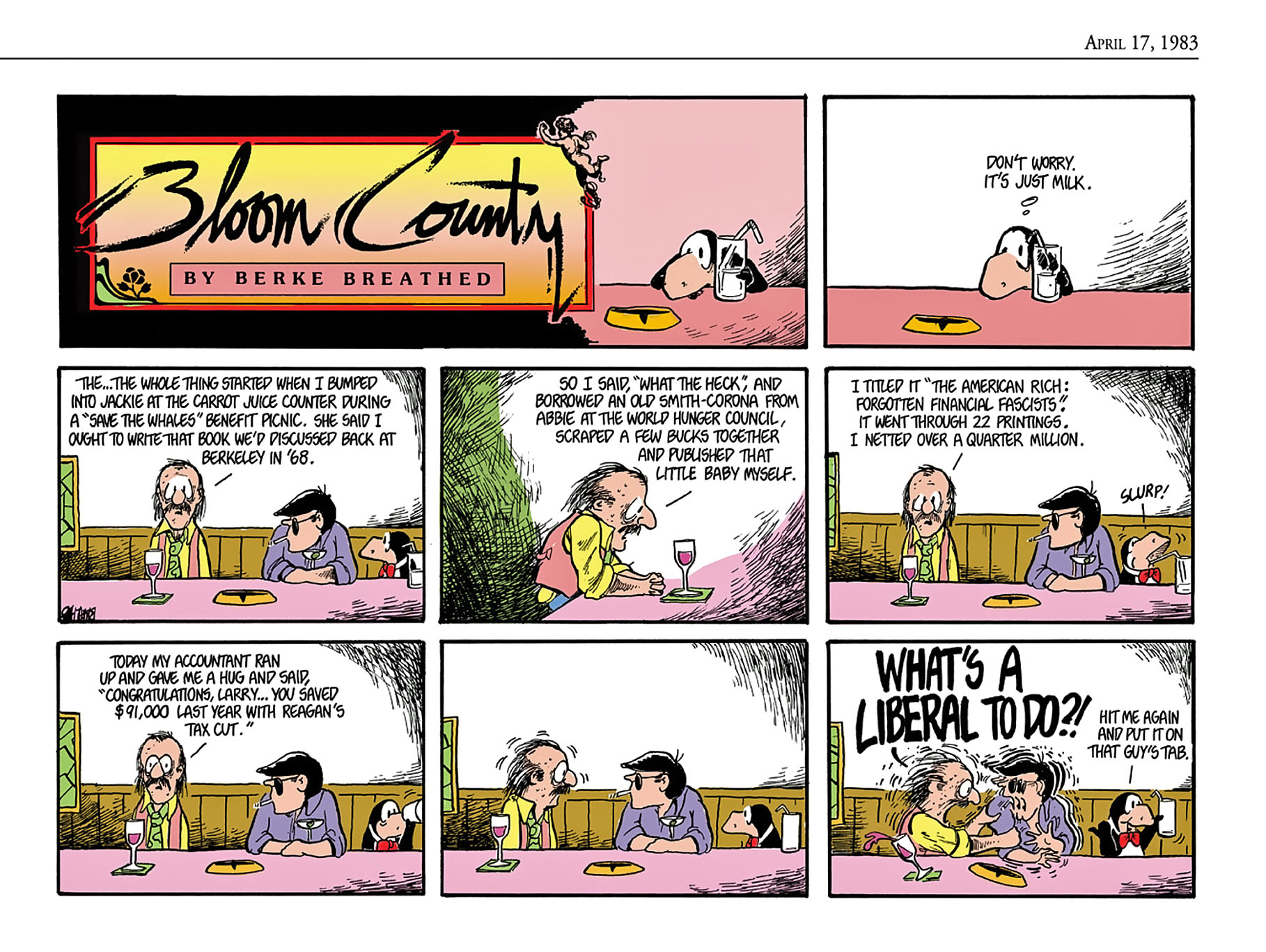
Bloom County Sunday Strip, April 17, 1983

So… You support much of one party’s political platform, and the other guys win, and you somehow benefit from that opposing victory anyway?

Talk about mixed emotions.

This Bloom County Sunday strip appeared in print six weeks before I had my first “real” job — with a salary that certainly that did NOT benefit from any sort of Reagan tax cut. 

And yet this specific strip remained burned in my brain forever. When we (IDW Publishing) added Bloom County reprints to our line-up around 2009, I asked if Berkley still had this specific strip, and if so, would he sell it to me.

He still had it… and he gifted it to me. A gift I treasure, and one that I am indeed very thankful for.

Happy Thanksgiving, everyone.

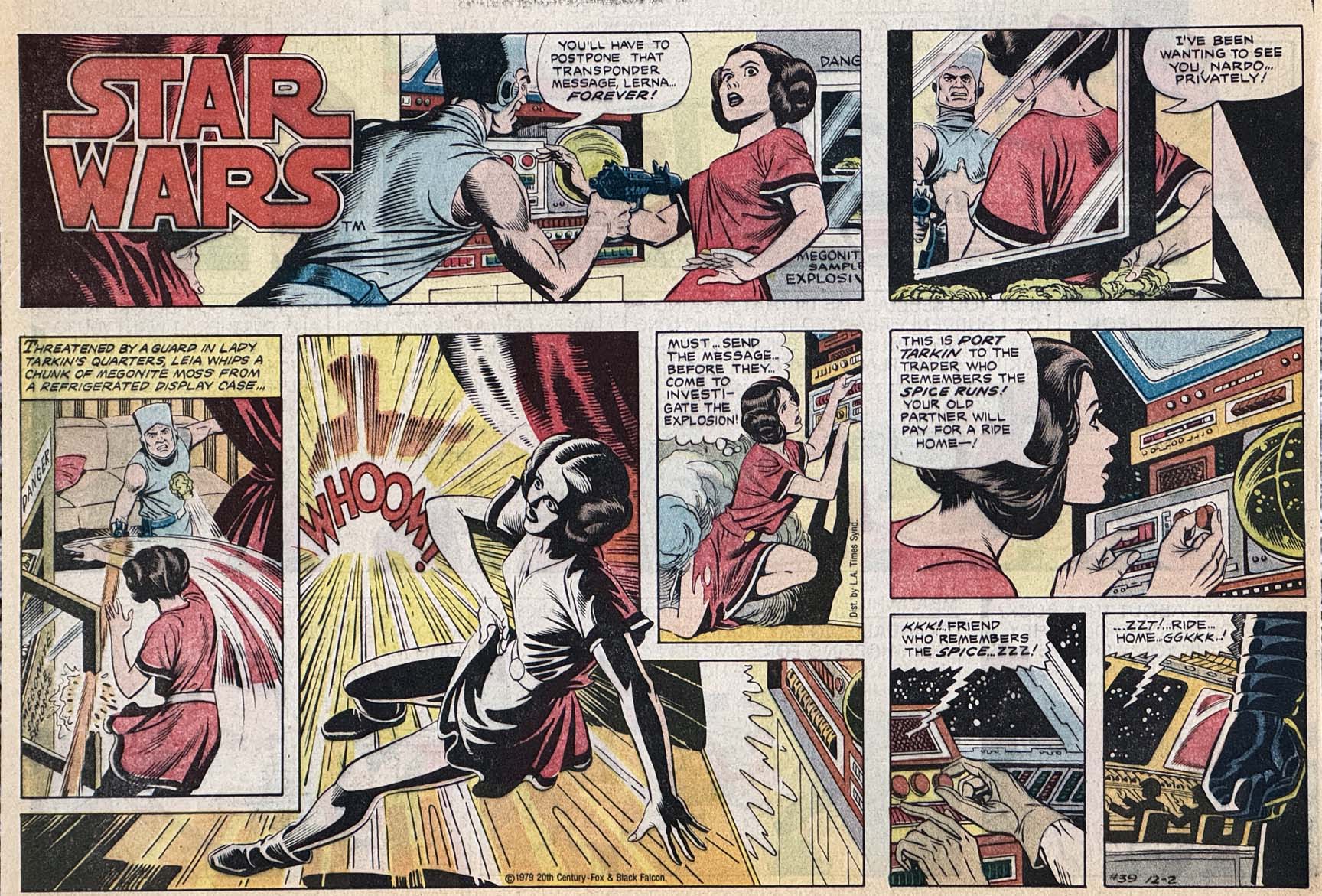
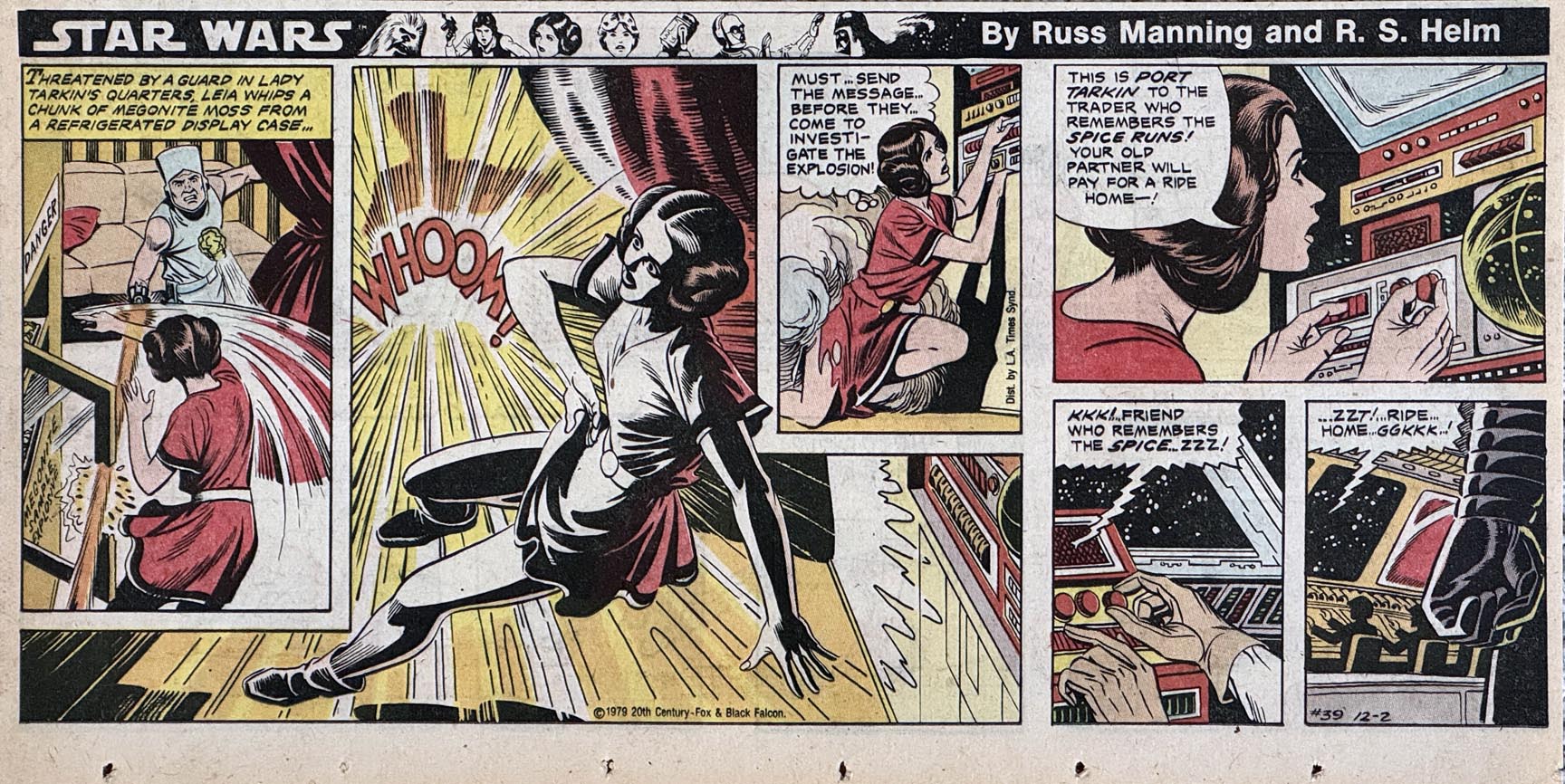
Russ Manning — Star Wars, Sunday Best

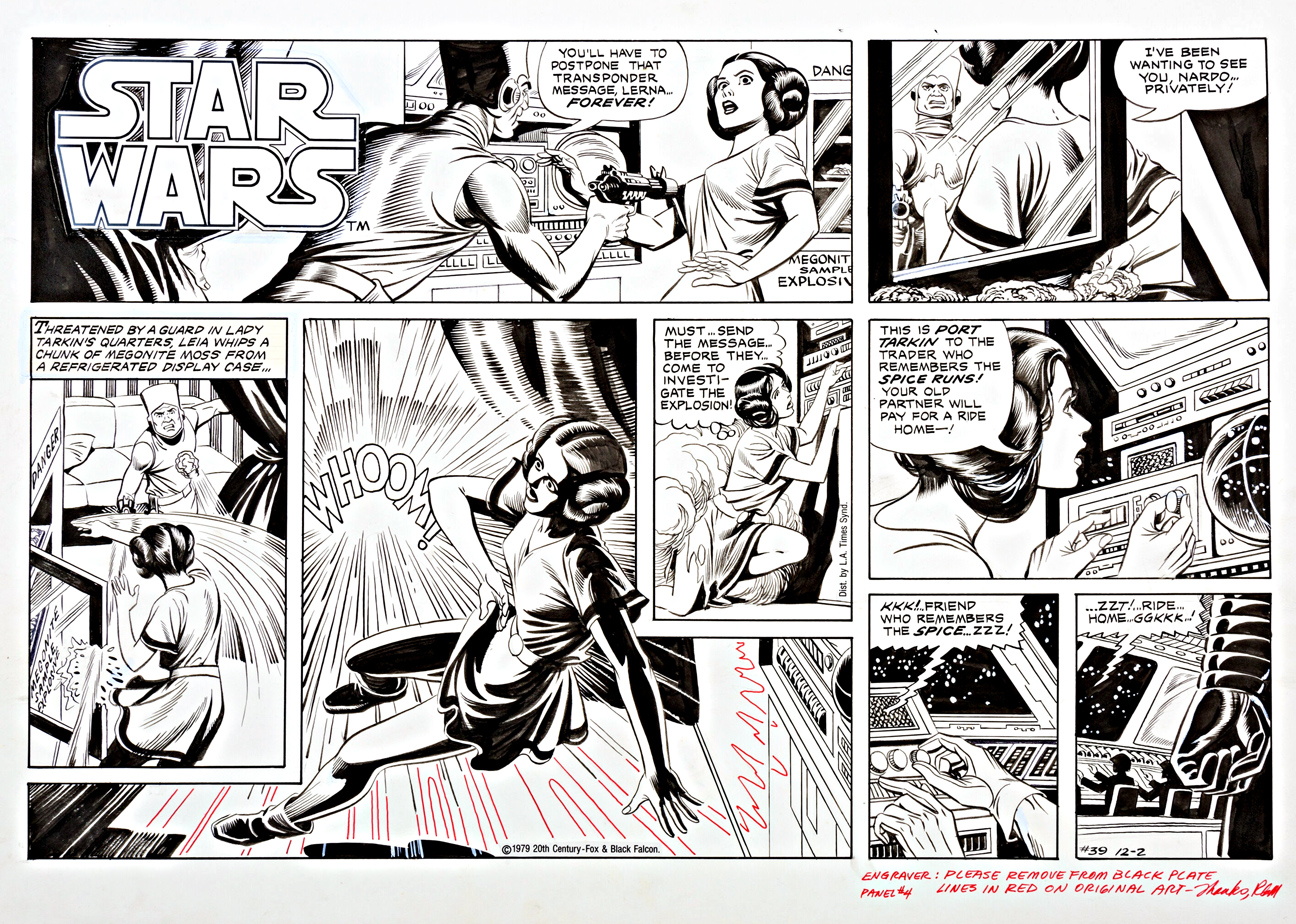
Star Wars Sunday Strip, #39, December 12, 1979

I finally checked off a piece of art from my OA “bucket list” with the acquisition of this terrific Russ Manning Star Wars Sunday strip late last year.

I own some great Star Wars original art, but not much focusing on Leia, so I’m especially pleased I won this strip at auction. Coincidentally, I was the underbidder the previous time it had appeared at auction — second time is the charm, apparently.

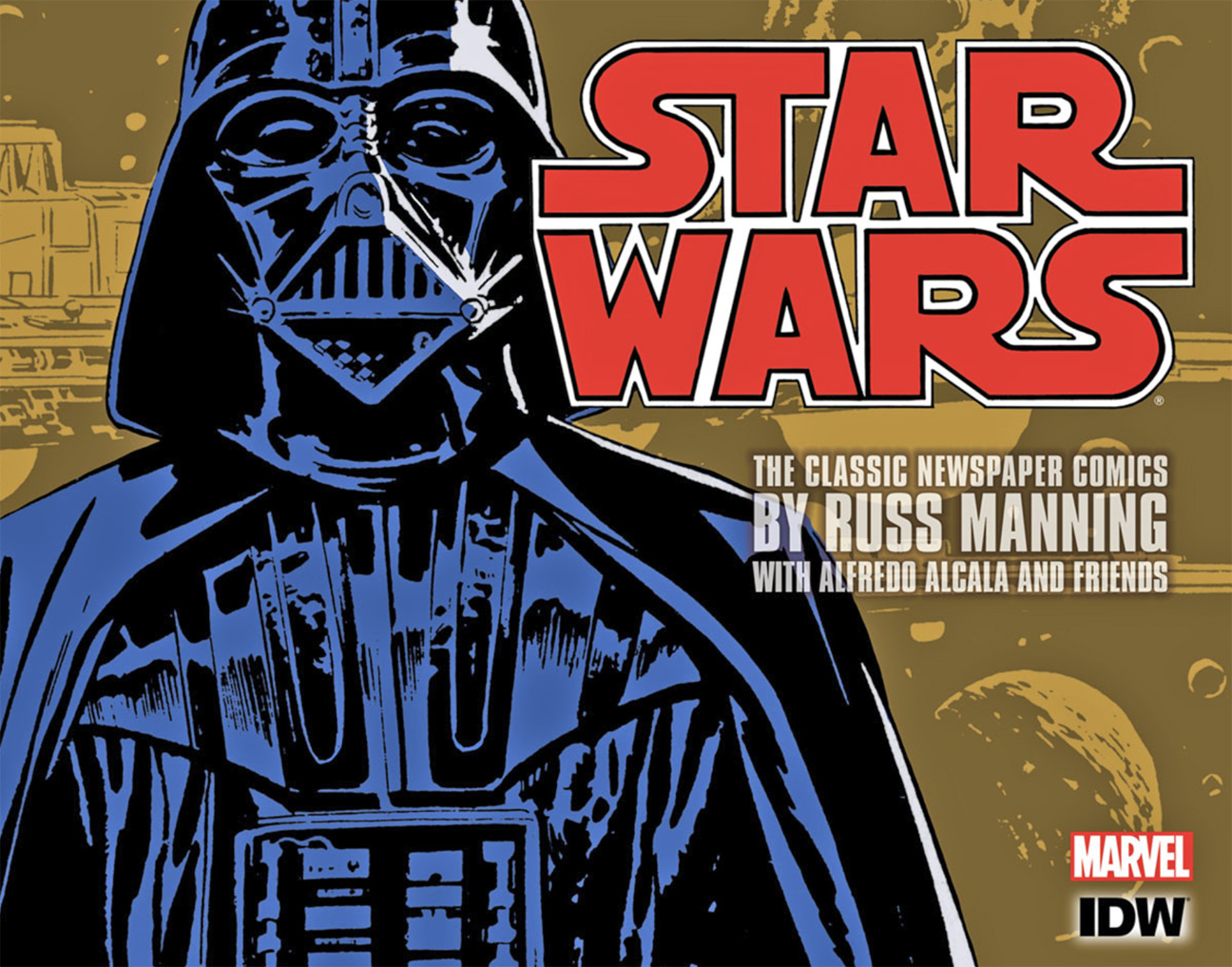
When we had the opportunity to collect the complete Star Wars strip collection at IDW Publishing, it was yet another box checked off from the publishing bucket list. Dean Mullaney and the Library of American Comics (LOAC) crew produced (as always) an amazing three-volume set.

Welcome to Star Wars “month.”  May the force be with you throughout.

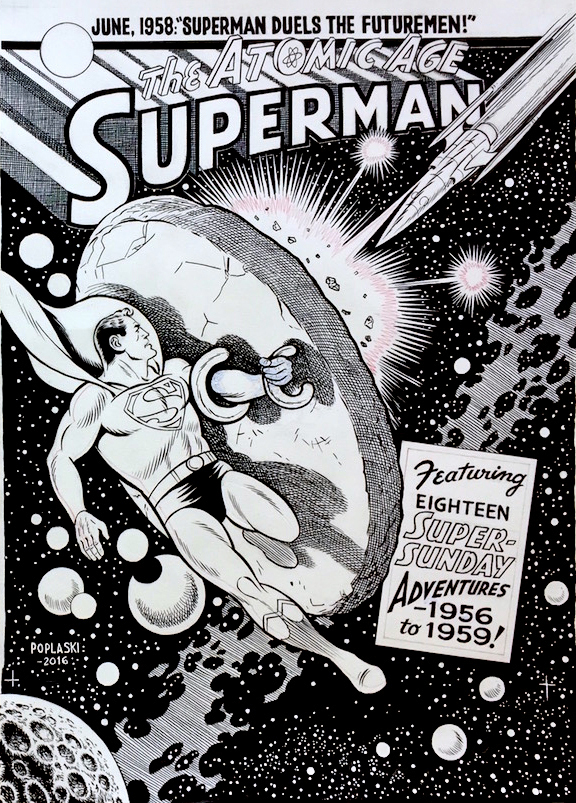
Pete Poplaski — Atomic Age

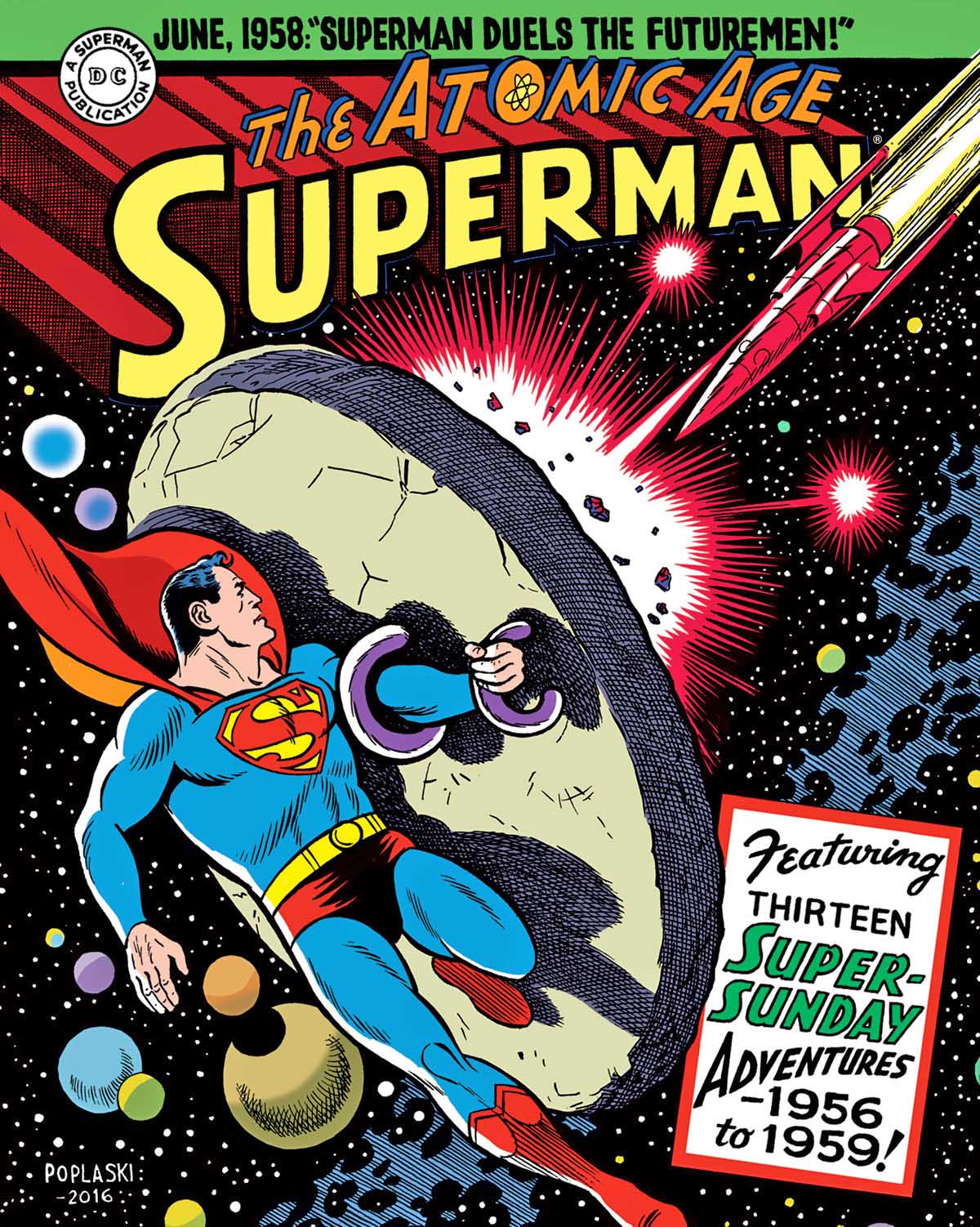
Superman — Atomic Age Sundays Volume 3, December 2017

As described in a earlier post, Pete provided all the terrific covers for our DC superhero strip reprints for The Library of American Comics.

Pictured is a typical great example where Pete emulates legendary artist Wayne Boring — with some Curt Swan thrown in for good measure.

Oversized — and beautiful.

Fun Facts: (From the marketing copy):

Written by Alvin Schwartz and Bill FInger and Illustrated by Wayne Boring

The Man of Steel stars in thirteen classic adventures as the 1950s “Atomic Age” comes to a close. Some of the stories are original to the newspaper strip, while others were alternate versions of tales that were simultaneously published in the regular comic books. One of the featured adaptations is “Superman Versus the Futuremen,” written by Batman co-creator Bill Finger, which retells Superman’s origin. This concluding volume of Superman’s Atomic Age Sundays reprints all strips July 1, 1956 to October 11, 1959.

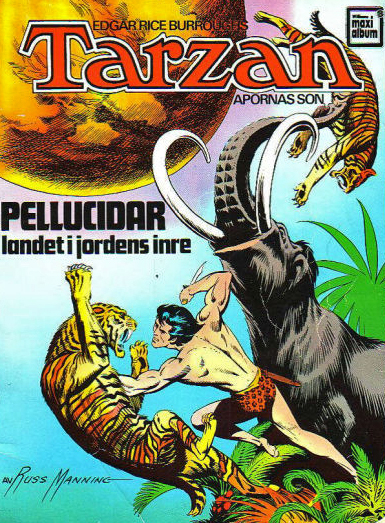
Russ Manning — Tarzan, Revisited

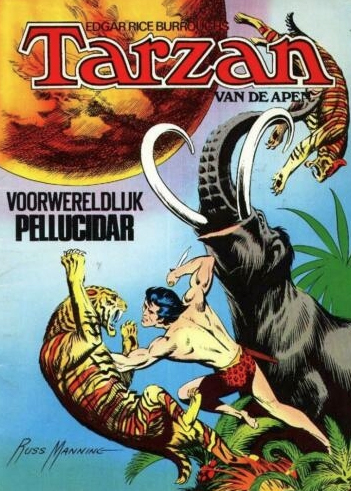
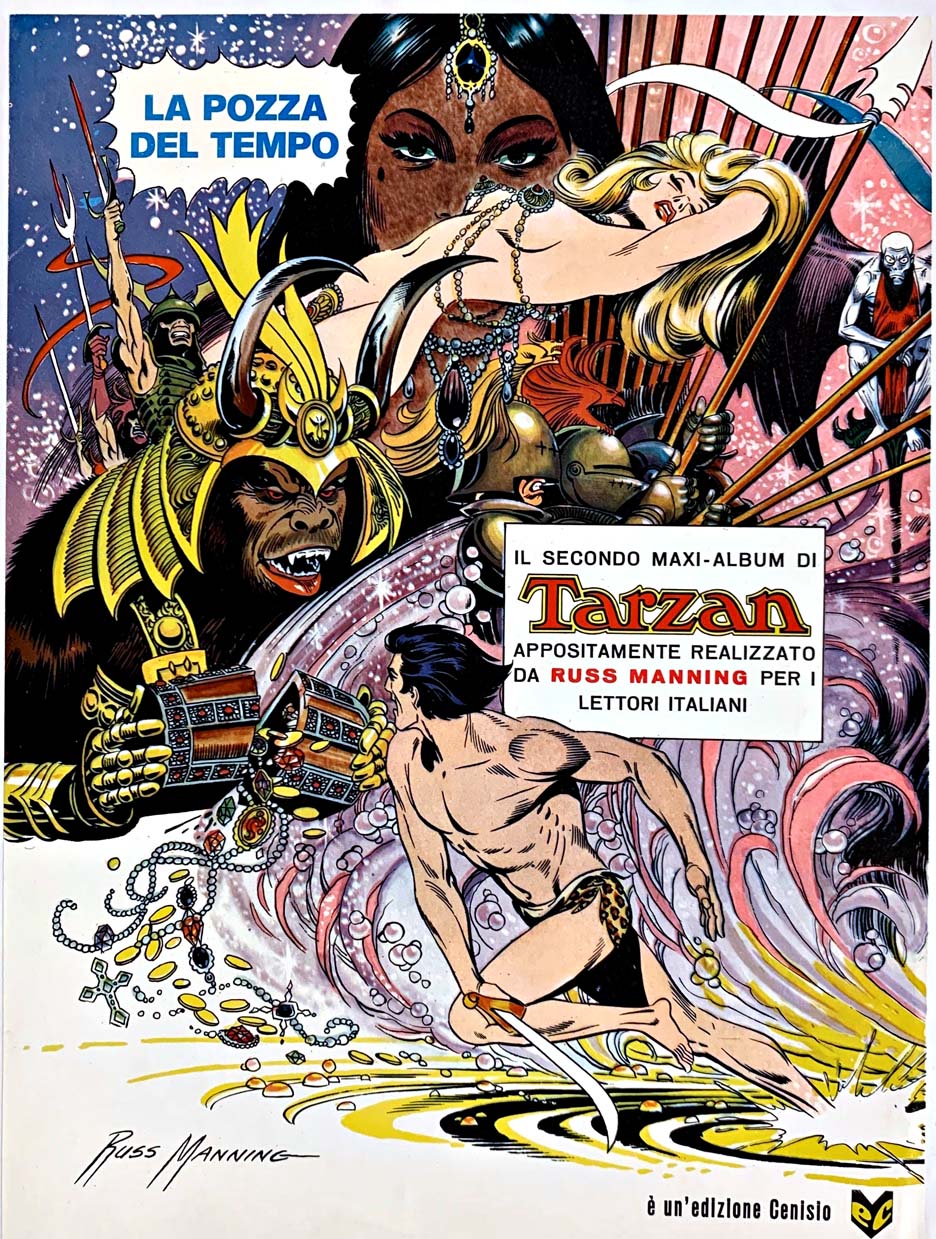
Tarzan In Savage Pellucidar,” Graphic Novel, 1975

This beautiful Russ Manning splash page has never been published in the US, or in English at all, for that matter.

A foreign publisher hired Manning and his team to create a series of graphic albums for the European markets in the mid 70s. Manning, having beautifully illustrated the Tarzan comic strips, as well as some of the Gold Key comics, was a perfect choice.

A few years back, Dark Horse reprinted two of those graphic albums, but I assume sales were not significant to continue. (Unless it simply fell through the cracks. Not a likely scenario, but it does happen occasionally.)

Another original art page from this story appeared in auction last year, and it too is a beauty.

I would really love to see the whole thing. I haven’t been able to find a foreign edition. But I will, eventually. Trust me on this.

Dan DeCarlo — Iconic (Part 1)

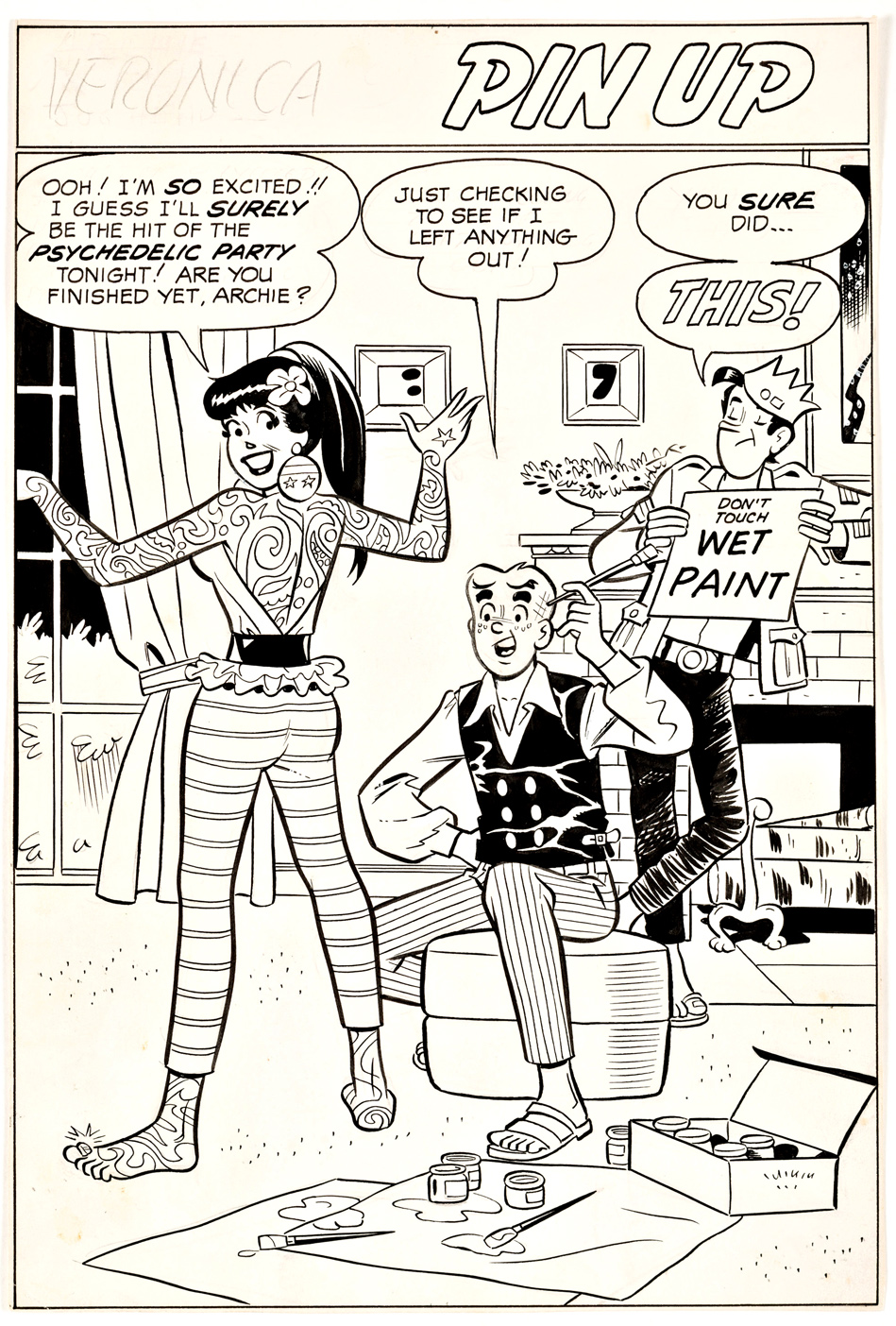
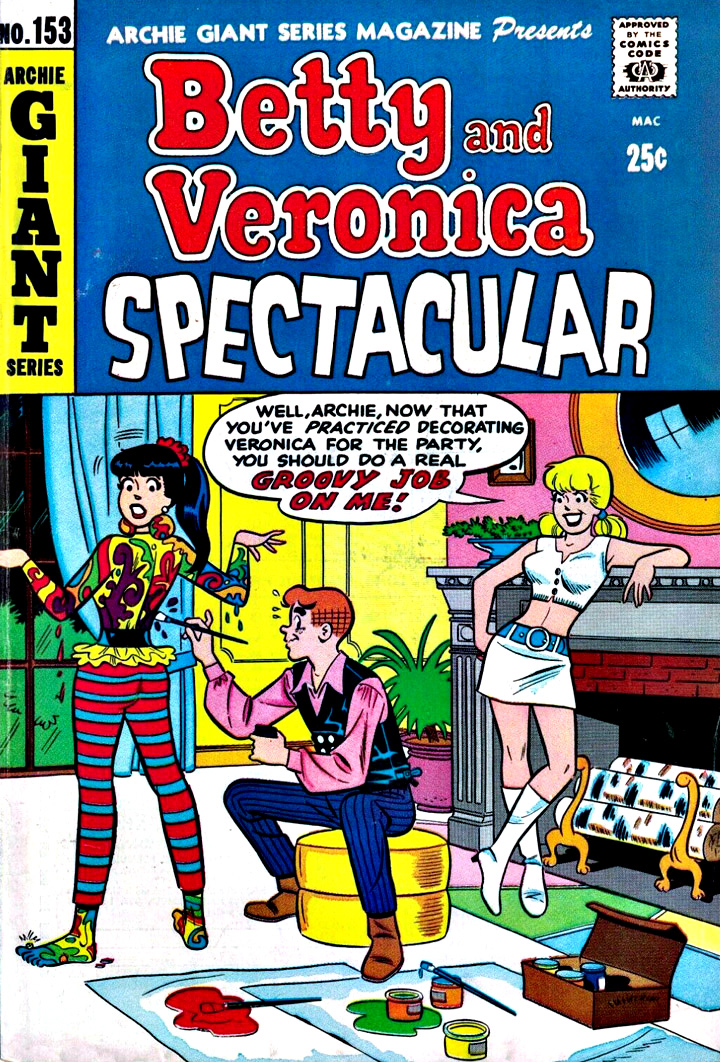
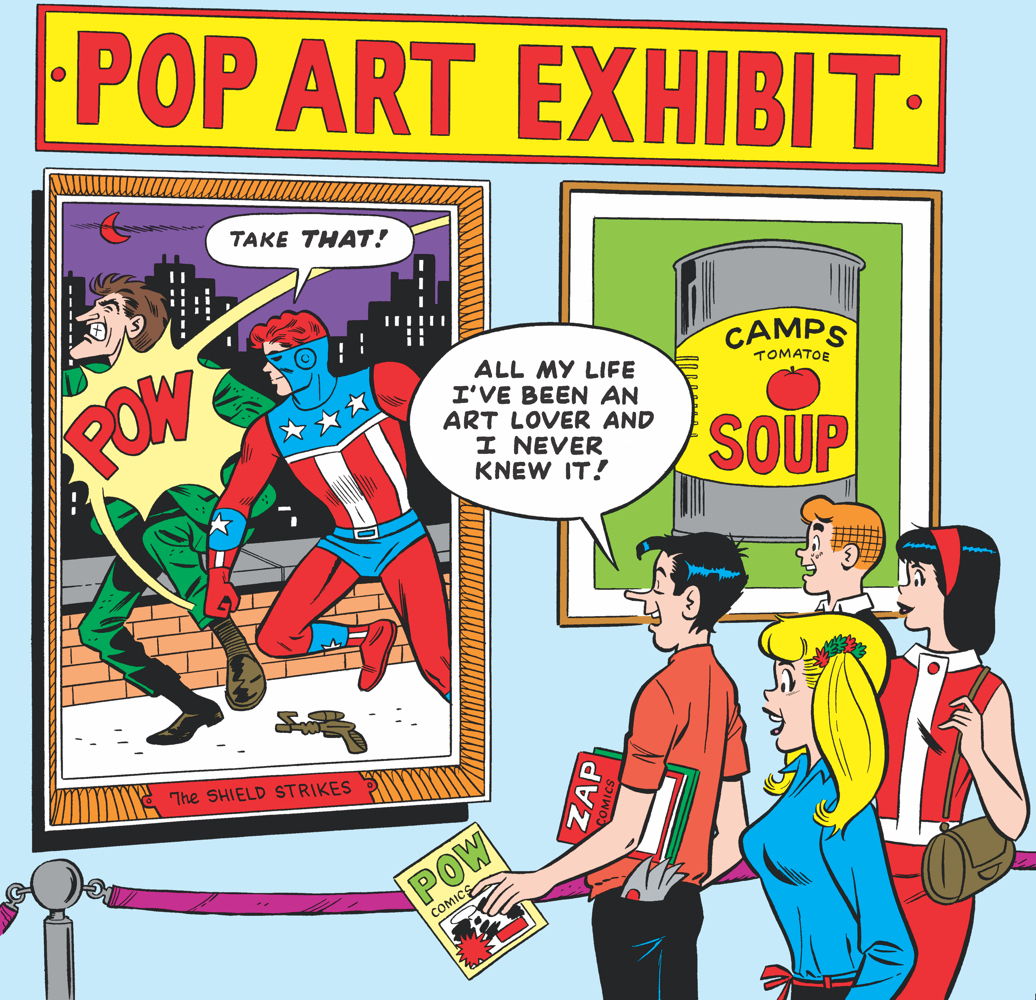
Archie Giant Series #153, Original Pin-up, reworked for cover, June 1968

Archie and his gang fully hit their stride with the baby boom generation, and no one was more responsible for that than cartoonist Dan DeCarlo.

Bob Montana created the original appearance of the gang, and DeCarlo modernized it — and never stopped tweaking the appearance (he had a very keen eye for fashion) and the personalities of the beloved characters for more than forty years. 

I loved Montana’s work — I even edited a hardcover collection of Montana strips — but DeCarlo’s clear and expressive art fully imprinted on my young reading eyes in the 60s and 70s.

So… to continue Archie’s 80thcelebration, we’ll feature just the tip of the iceberg of Dan’s great work this week.

And we will start with a fun anomaly: A gag that was redesigned — and rewritten — before it morphed from a pin-up page to a full cover.

Which one works better? I think I can come up with pros and cons for each, although from a comics code perspective, it’s possible the published cover might be slightly more acceptable than the original. It’s a bit more open to the imagination as to whether Archie is painting Veronica’s shirt — or her actual body.

In the unpublished version, it’s pretty much a no-brainer.

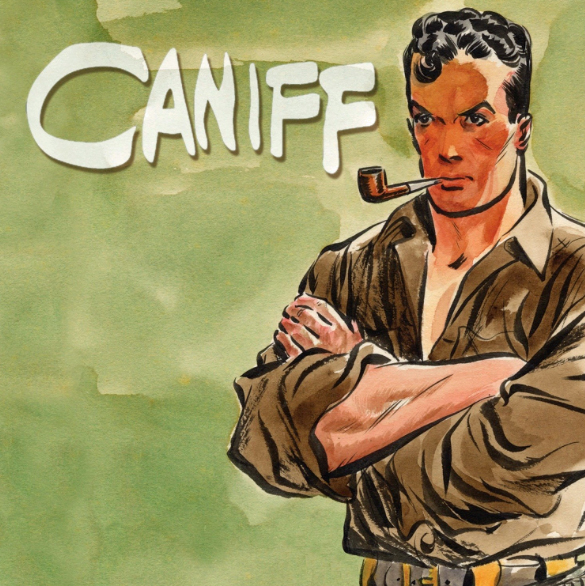
Milton Caniff — Sage For His Age

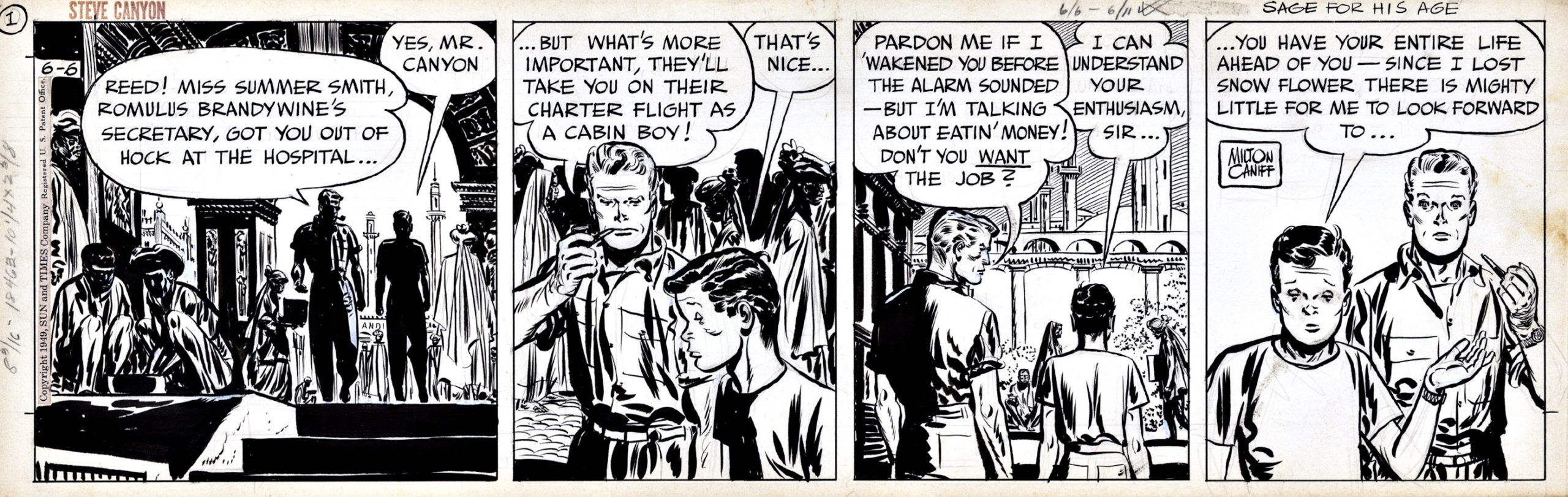
Steve Canyon, Daily Strip, June 6, 1949

How big a deal was it when Milton Caniff left Terry and The Pirates to create Steve Canyon, a new comic strip that he would own exclusively?

It made the cover of Time Magazine. 

Time, the most important news magazine in the world in the mid-20th century, also featured Gandhi, Princess Elizabeth, Eva Peron, The Shah of Iran and Jackie Robinson on its covers that year.

One of America’s best-loved comic strip creators had declared his independence. 

The big newspaper syndicates would no longer control the rights to Caniff’s cartooning. 

In the days when star cartoonists were pretty much rock stars (popular comics helped drive newspaper sales), “The Rembrandt of the Comic Strip” was now fully in charge of his own destiny. 

It was indeed a big deal.

To this day, when you want to reprint Steve Canyon, or chose to produce some lovely retro Canyon merch., you make a deal with the Caniff estate directly.

Milt Caniff — one of the medium’s greatest creators — leaves behind a legacy of independence that hundreds, if not thousands, of cartoonists and storytellers embrace on an ongoing (and not at all risk-free) basis.

Happy Independence Day.

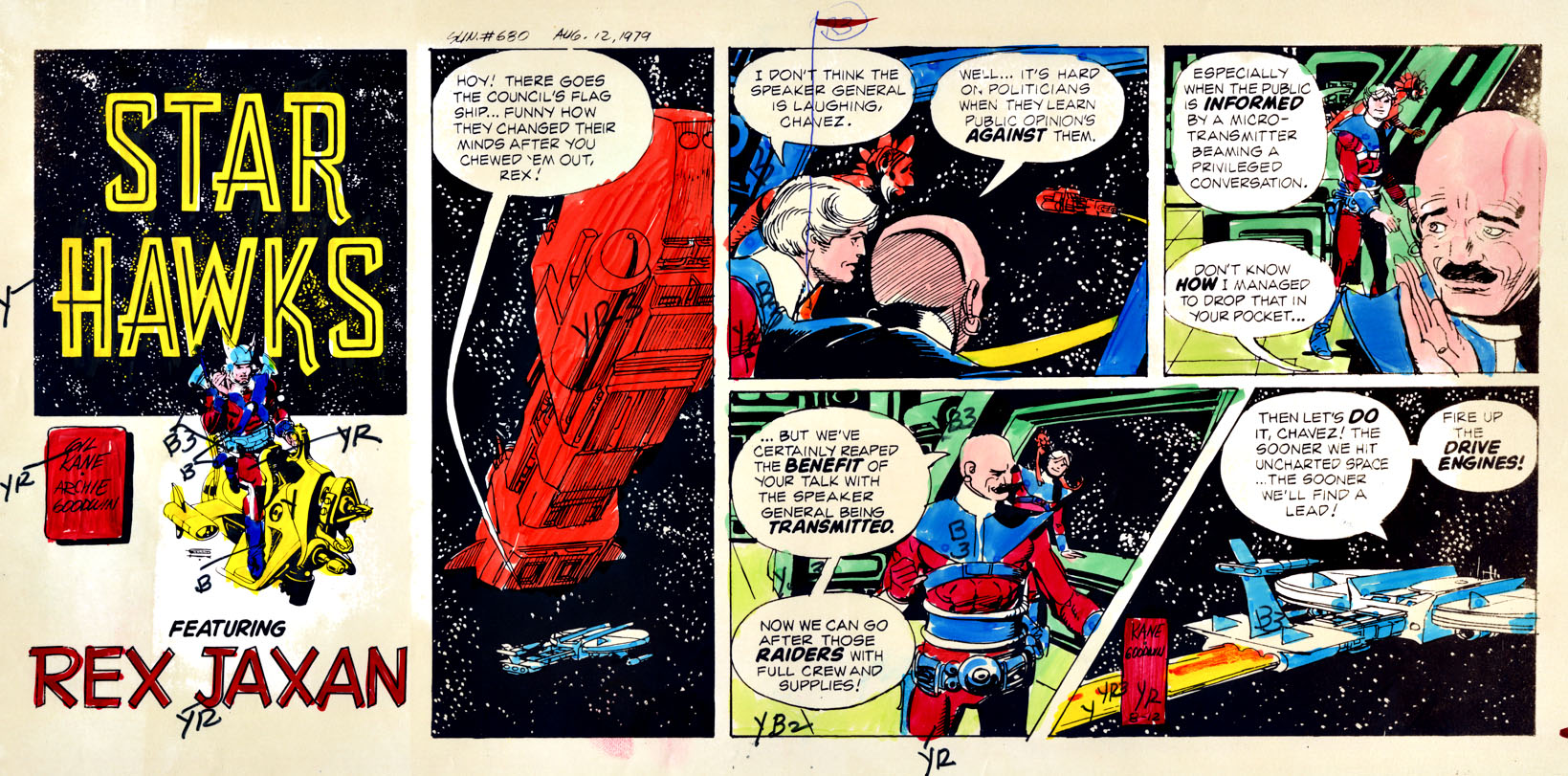
Gil Kane — The Star Wars Effect

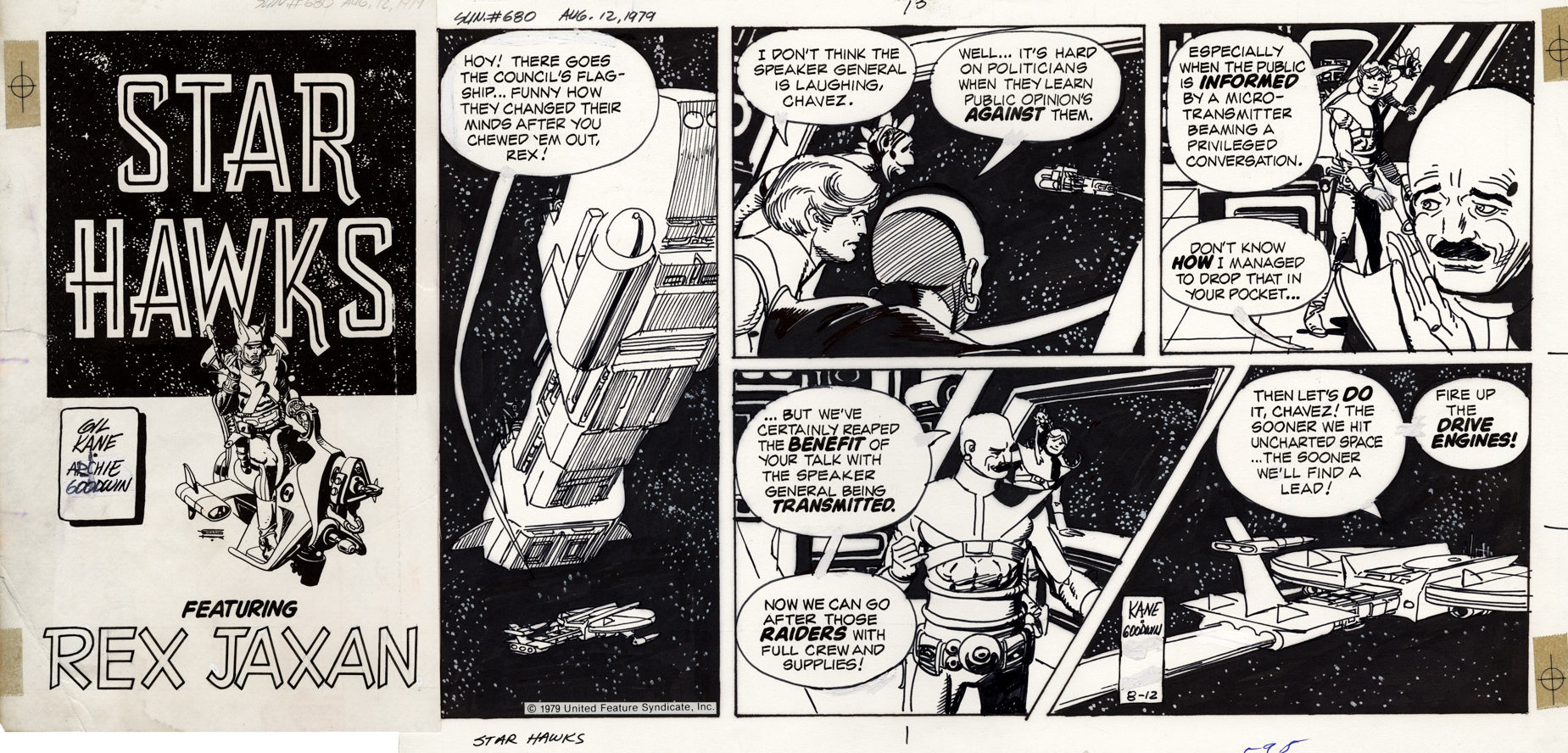
Star Hawks, Sunday Strip, August 12, 1979

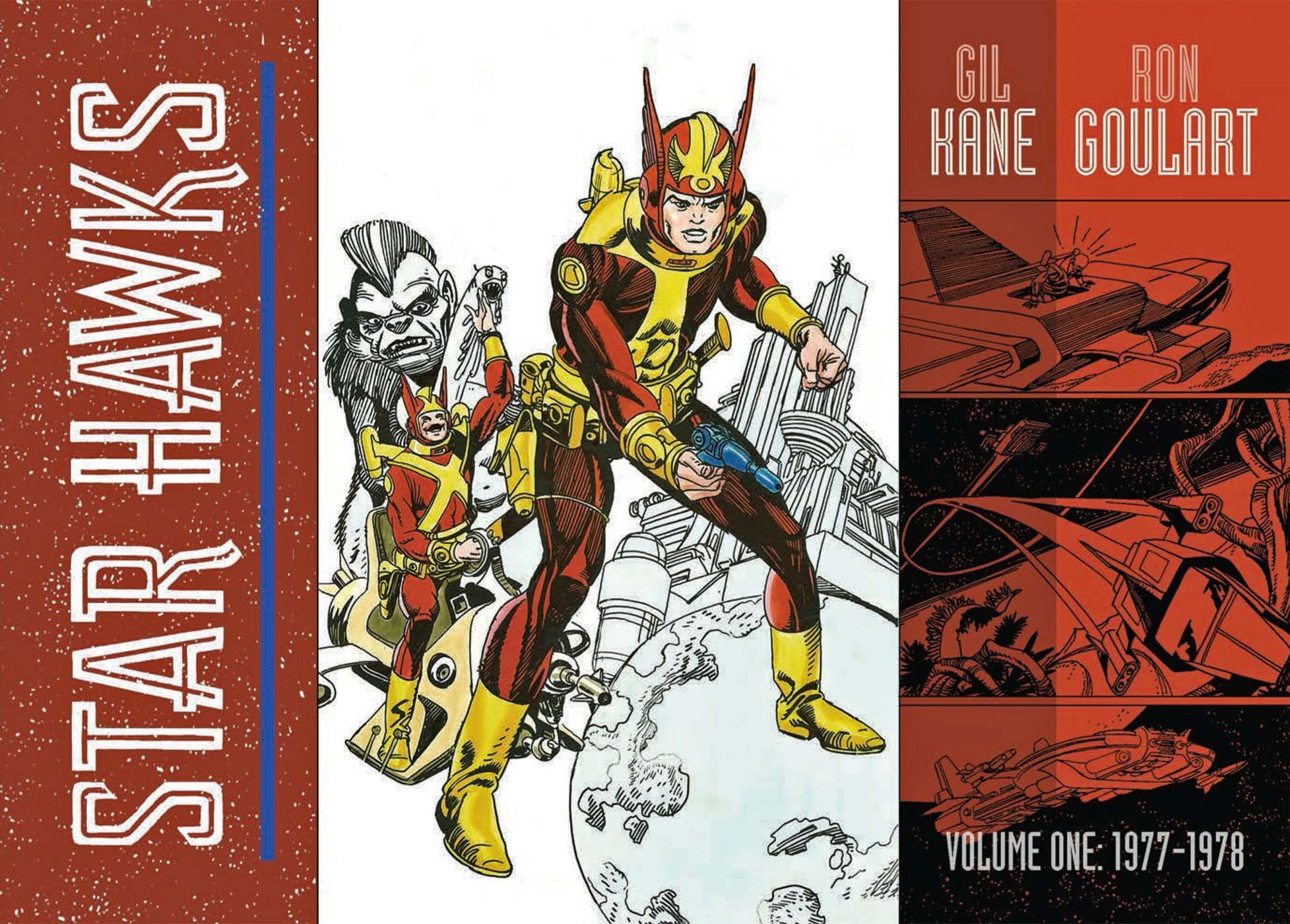
Here is a nice (Sunday) example of Ron Goulart’s and Gil Kane’s Star Hawks, the short-lived SF adventure strip which ran from 1977-1981. (Extra nice in that it includes both the strip header and the color proof.)

“Inspired – as so many things were in the late 70s – by the tremendous success of Star Wars, the newspaper feature syndicate NEA (Newspaper Enterprise Association) got it into their heads that a space opera comic strip that evoked the cosmic high adventure and swashbuckling derring-do of George Lucas’ movie might be a popular addition to the nation’s comics pages.”Christopher Mills

Perhaps most interesting thing about the strip was the that the initial dailies were double tier as well as the Sunday’s — a risky gambit that allowed Kane to showcase his strengths in storytelling and layout. Unfortunately, newspapers weren’t in love with devoting that much real estate to the quirky SF adventure, and it ultimately dropped to the traditional one-tier.

Goulart ultimately left the strip and Kane enlisted frequent collaborator Archie Goodwin, who wrote the one above. He also left after a few arcs, and Roger Mackenzie wrapped things up.

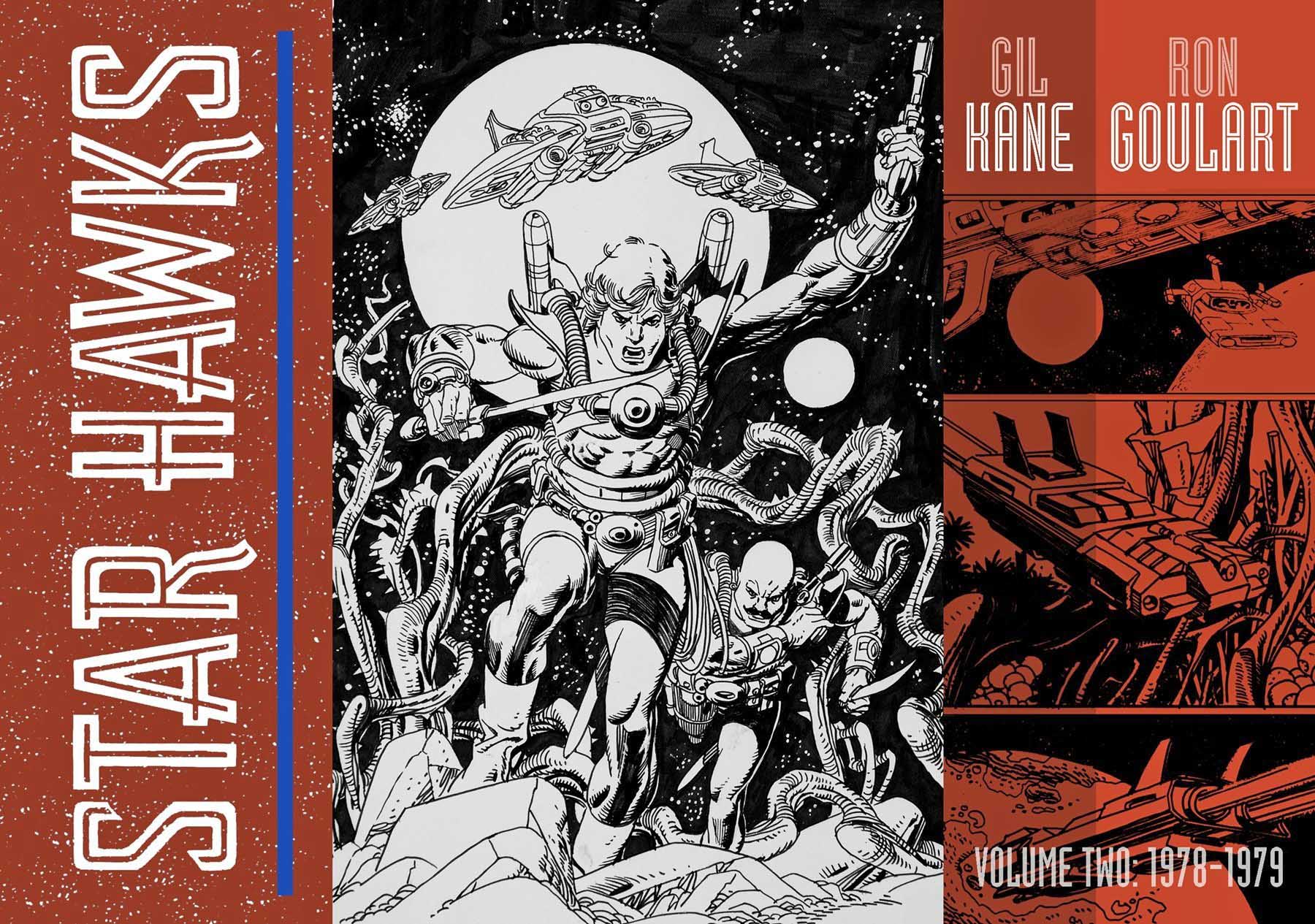
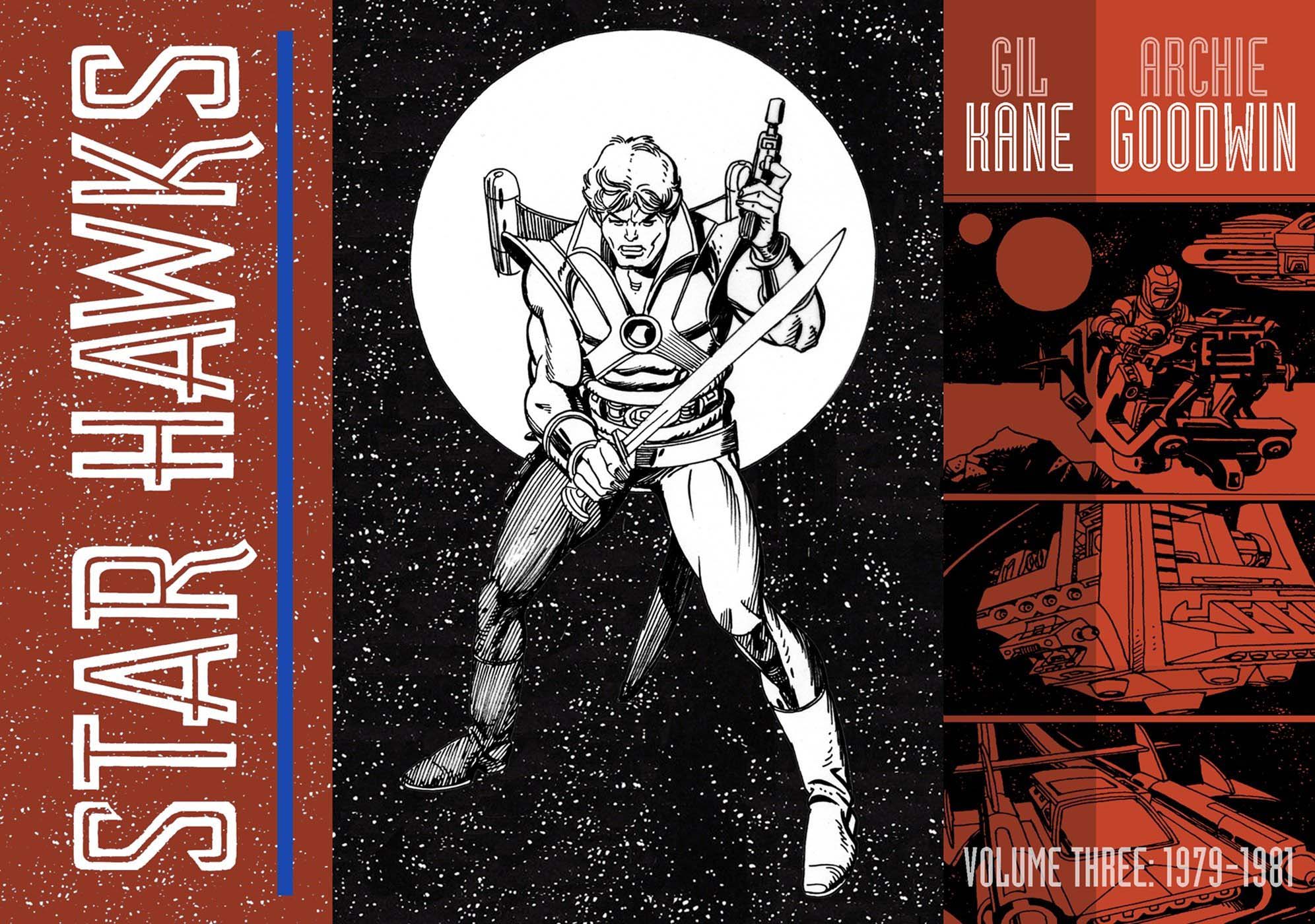
All of the series is available in a three-volume set from The Library of American Comics and IDW Publishing.

Worth every penny, but of course, I’m biased.
Continuing our month long celebration of the great adventure comic strips:
Week 1: Superheroes
Week 2: Detectives
Week 3: SF
Week 4: Comic Book Giants

Al McWilliams — Futurist

Twin Earths, Daily Strip, April 14, 1958

Al (Alden) McWilliams gives us an uncanny glimpse of a cool flip phone — about 40 years ahead of its time.
(Of course, there’s the terrific use of shadows and light to admire as well. But, as always, we digress.)

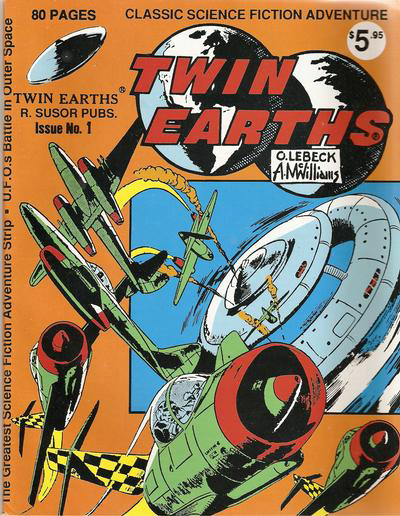
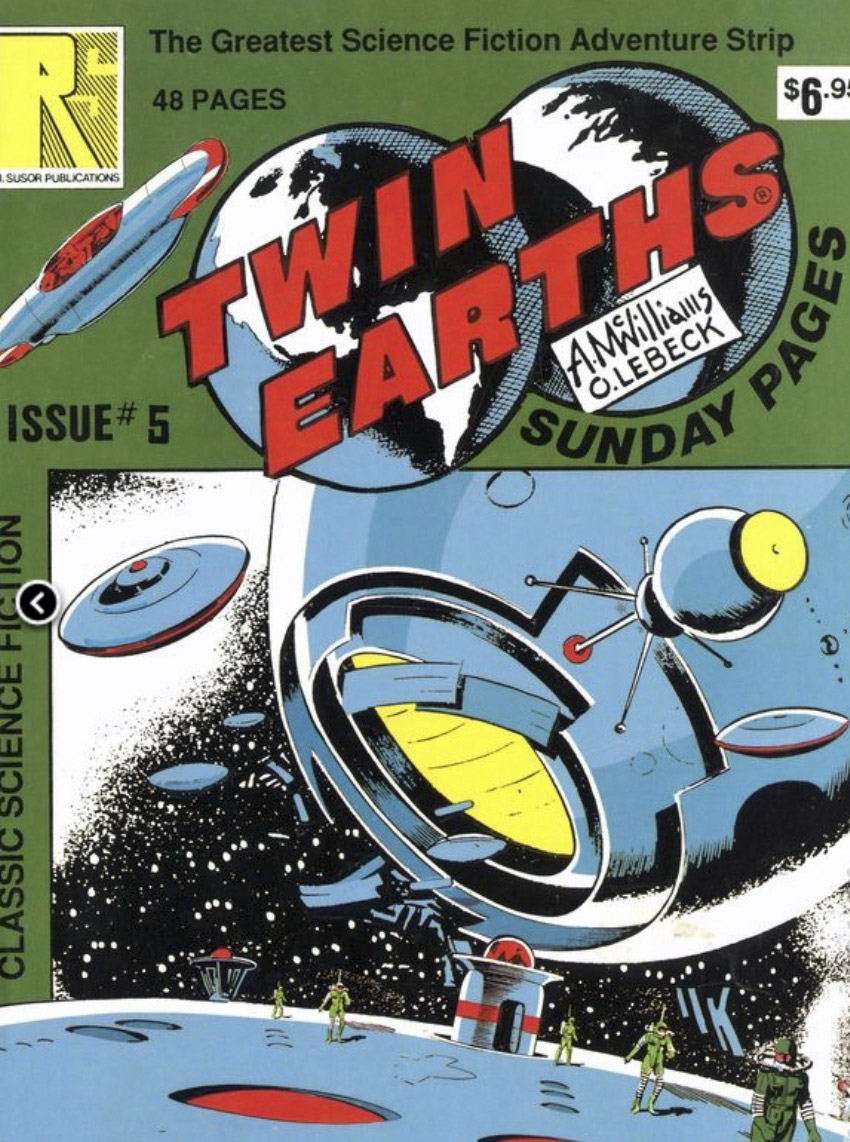
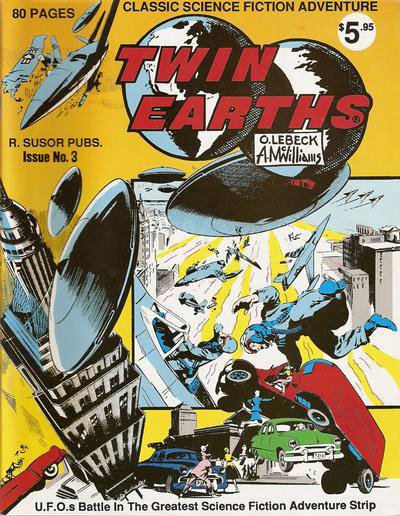
Twin Earths was one of the few strip collections that we could never make happen at IDW and The Library of American Comics. (For reasons involving both rights and availability of materials.) It’s too bad, because it was a fun and well-rendered adventure strip — one of the few that dealt with “flying saucers.” Capatilizing on UFOs in the news headlines, it was part of an overall more realistic trend in SF post World War 2.

Also, McWilliams is a terrific artist who never quite achieved the fame of some of his contemporaries — seemingly never quite being in the right place at the right time.

Continuing our month long celebration of the great adventure comic strips:
Week 1: Superheroes
Week 2: Detectives
Week 3: SF
Week 4: Comic Book Giants