Greg Goldstein's Comic Art Gallery

Wally Wood — Barbarians At The Gate

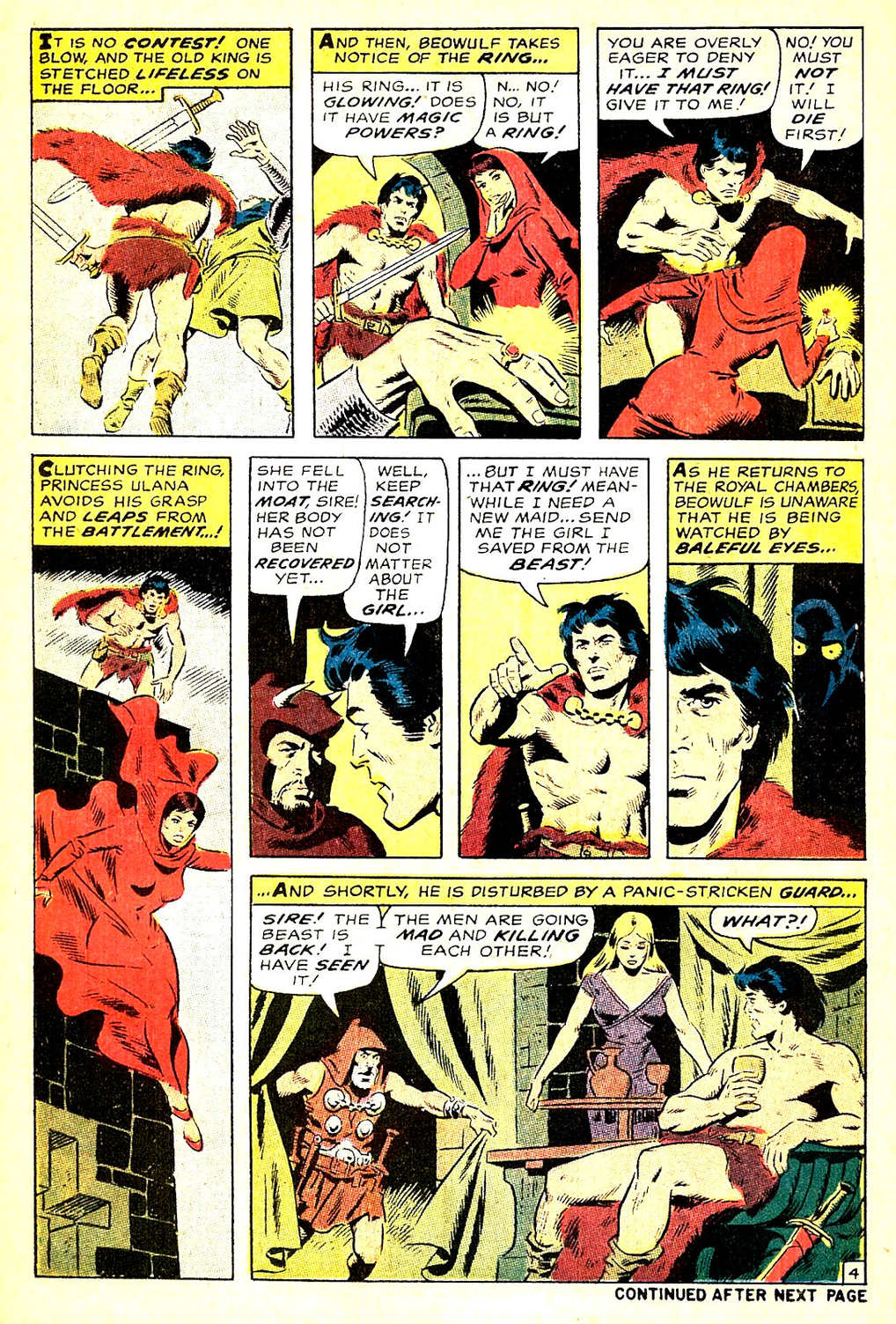
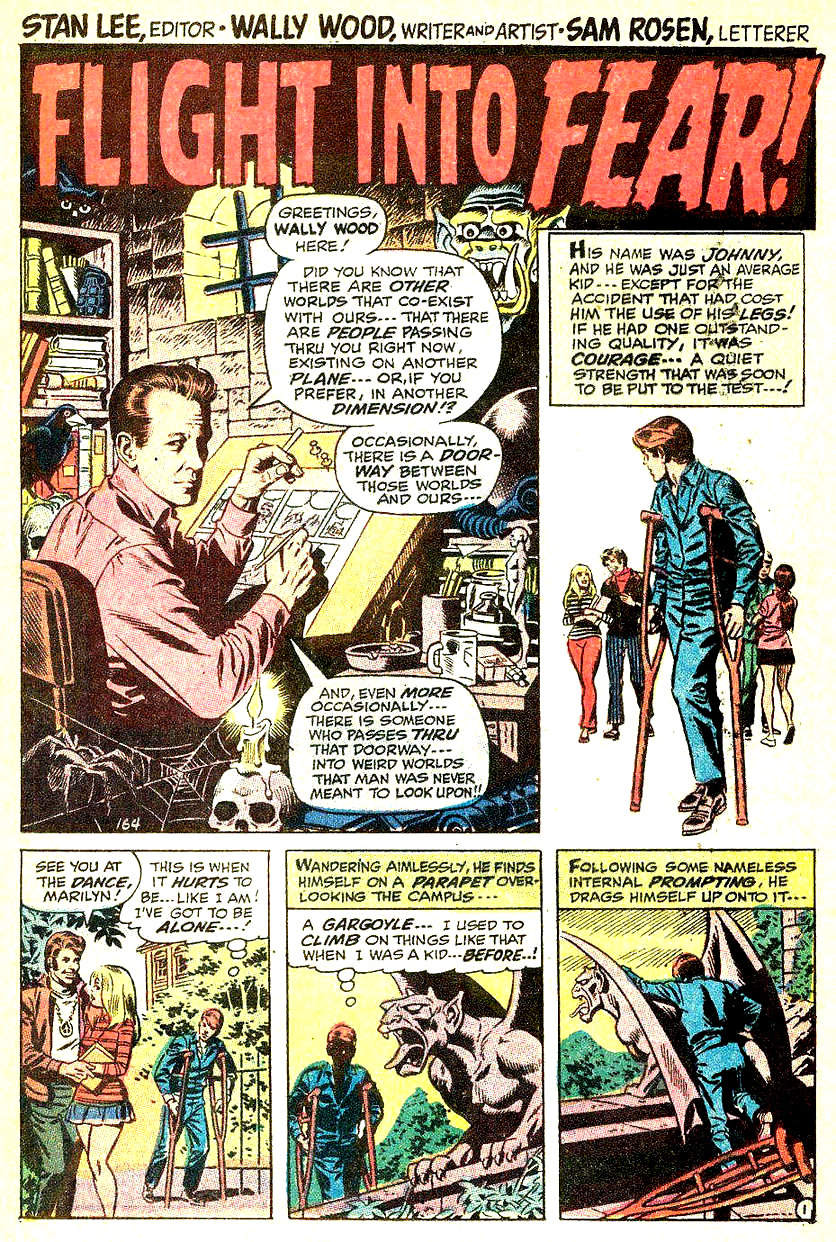
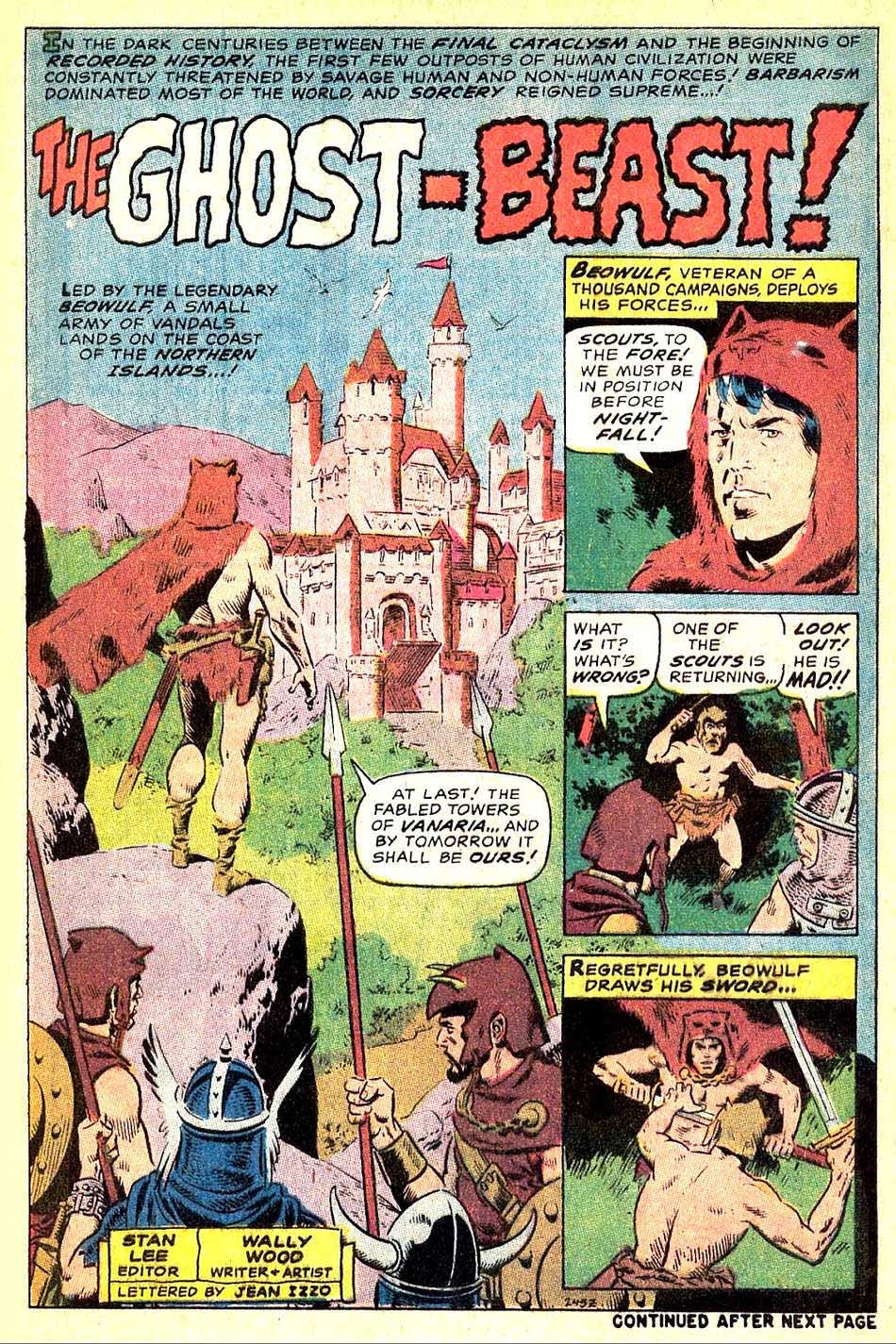
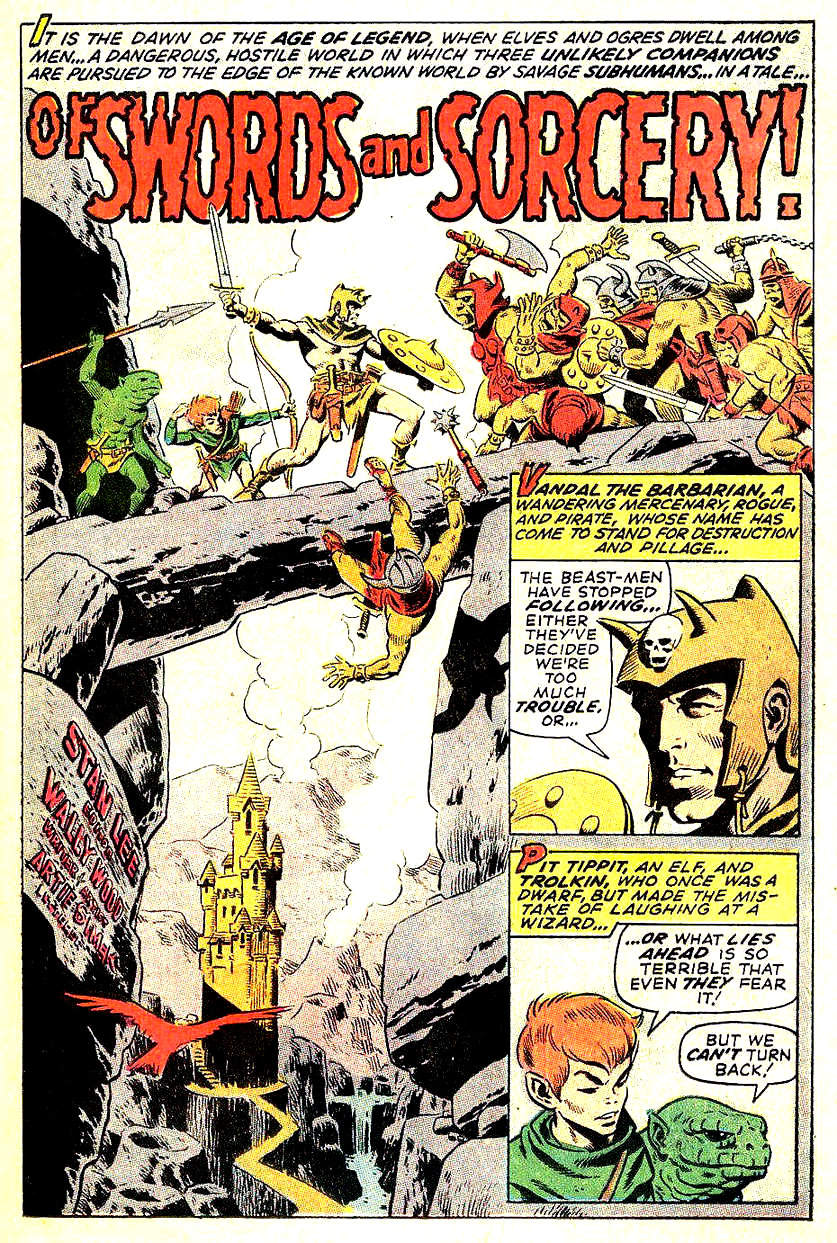
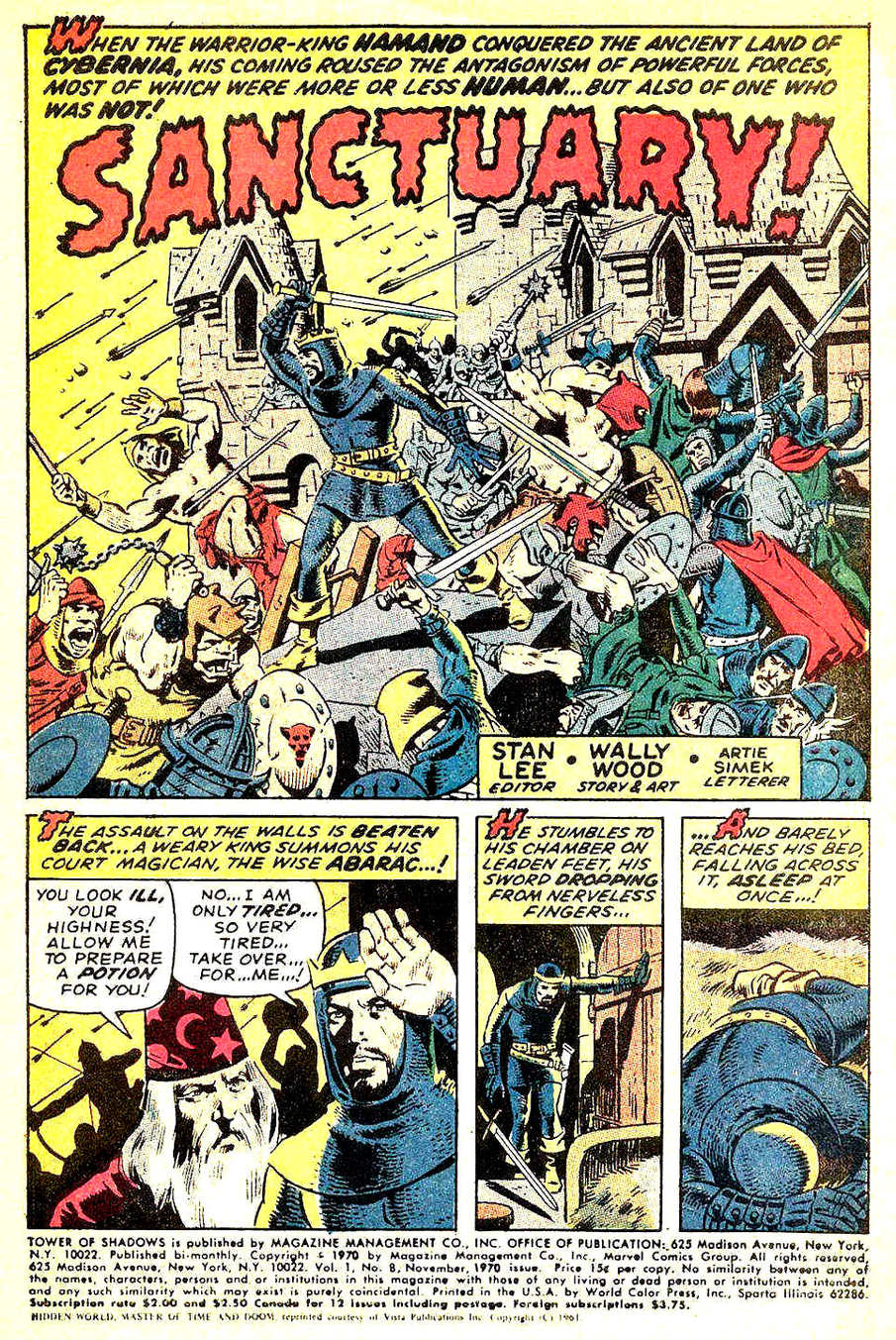
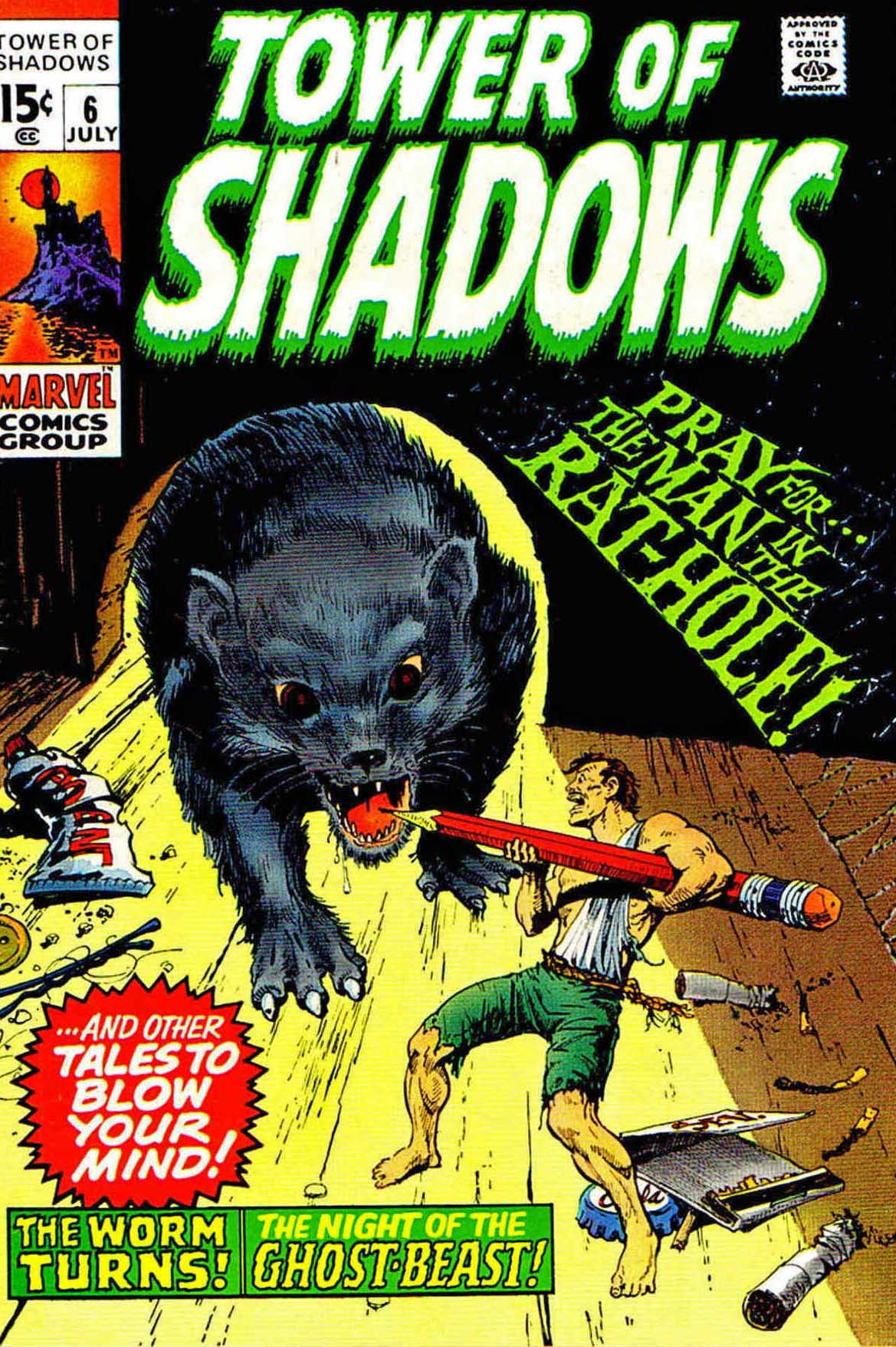
Tower of Shadows #6, July 1970
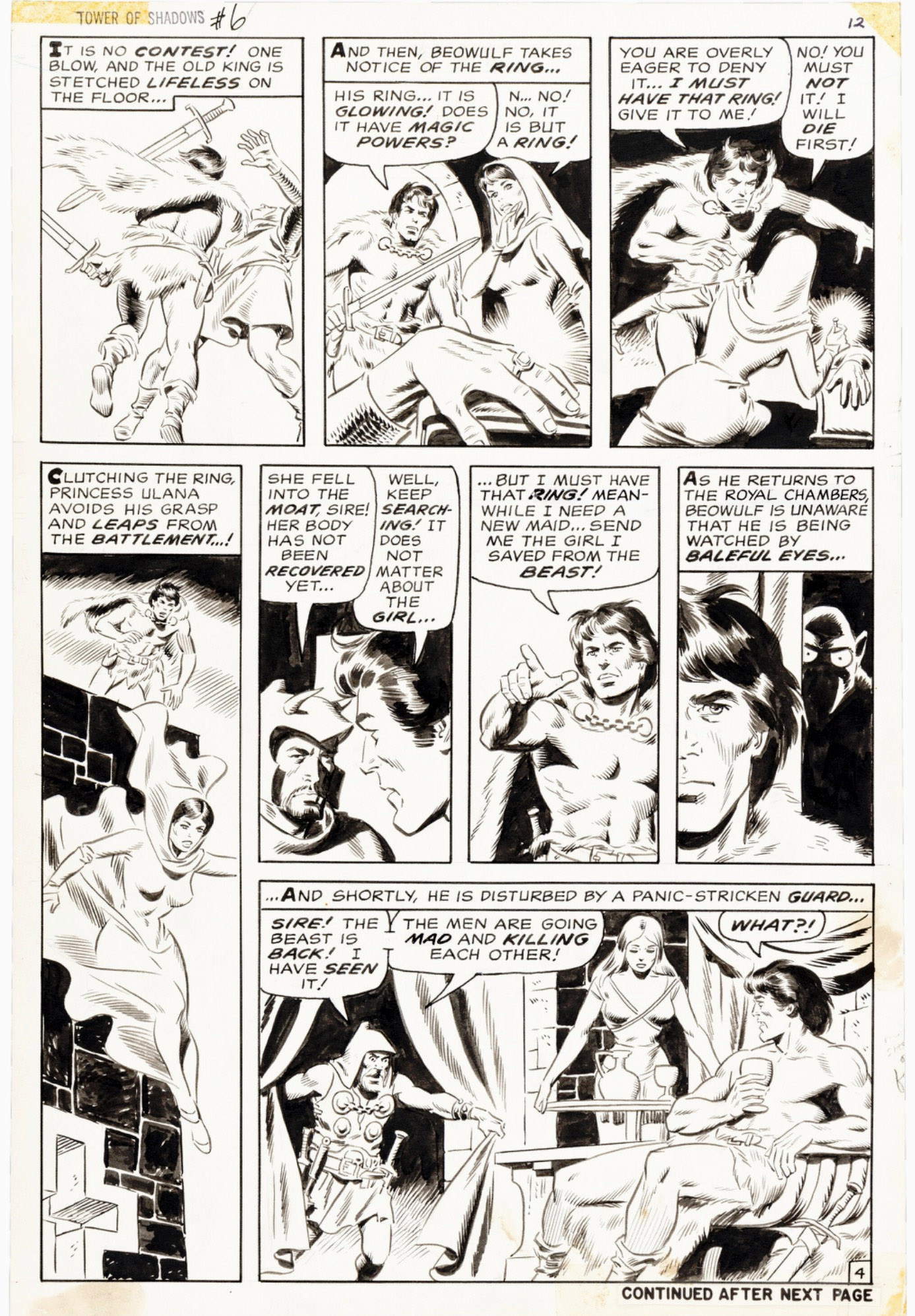
Wallace Wood’s brief return to Marvel in 1970 gave us an early glimpse of the sword-and-sorcery wave that was about to hit like a tidal surge.

If you mostly know Wood from EC or straight-up superhero work, his Tower of Shadows run (#5–8) is a really fun side trip into that territory. This great page comes from the second story, featuring an offbeat take on Beowulf.

He wrote and drew all four shorts, so what we’re getting is pure, undiluted Wood: moody lighting, dramatic staging, and an always-present feeling that everyone’s living one bad decision away from doom.

These aren’t Conan-style epics. They’re more like dark fairy tales from a guy who clearly loved drawing adventurers, monsters — and gorgeous women. The earliest of them — including this one — actually predate Conan #1. Woody was ahead of the curve.

Short stories. Big atmosphere. Fantastic art.

And a preview of what he’d later unleash in his own indie — and decidedly adult — fantasy project, The Wizard King.
WALLY WOOD — MARVEL CHECKLIST (1964–1972)

1964–1965 Run (Primary Period)

☐ Daredevil #5 — Dec 1964
 Pencils, inks
 (Wood’s Marvel debut; defined early DD look)

☐ Daredevil #6 — Feb 1965
 Pencils, inks

☐ Daredevil #7 — Apr 1965
 Pencils, inks; co-plot
 (Red costume redesign)

☐ Fantastic Four #39 — Jun 1965
 Inks (Kirby)

☐ Daredevil #8 — Jun 1965
 Pencils, inks
 (Stilt-Man co-creation)

☐ Strange Tales #134 — Jul 1965
 Inks (Powell) — Torch/Thing

☐ Fantastic Four #40 — Jul 1965
 Inks (Kirby)

☐ Daredevil #9 — Aug 1965
 Inks (Powell)

☐ Avengers #20 — Sep 1965
 Inks (Heck)

☐ Daredevil #10 — Oct 1965
 Inks (Powell); writing

☐ Avengers #21 — Oct 1965
 Inks (Heck)

☐ Tales of Suspense #71 — Nov 1965
 Inks (Heck) — Iron Man

☐ Avengers #22 — Nov 1965
 Inks (Heck)

☐ Daredevil #11 — Dec 1965
 Inks (Powell)

1970–1972 Return Period

☐ Tower of Shadows #5 — May 1970
 Writing, pencils, inks

☐ Captain America #127 — Jul 1970
 Inks (Colan)

☐ Tower of Shadows #6 — Jul 1970
 Writing, pencils, inks

☐ Astonishing Tales #1 — Aug 1970
 Pencils, inks — Doctor Doom

☐ Tower of Shadows #7 — Sep 1970
 Writing, pencils, inks

☐ Astonishing Tales #2 — Oct 1970
 Pencils, inks — Doctor Doom

☐ Tower of Shadows #8 — Nov 1970
 Writing, pencils, inks

☐ Astonishing Tales #3 — Dec 1970
 Pencils, inks — Doctor Doom

☐ Astonishing Tales #4 — Feb 1971
 Pencils, inks — Doctor Doom

☐ Kull the Conqueror #1 — Jun 1971
 Inks (Andru)

☐ Marvel Spotlight #1 — Nov 1971
 Inks (Shores) — Red Wolf

☐ The Cat #1 — Nov 1972
 Inks (Severin)
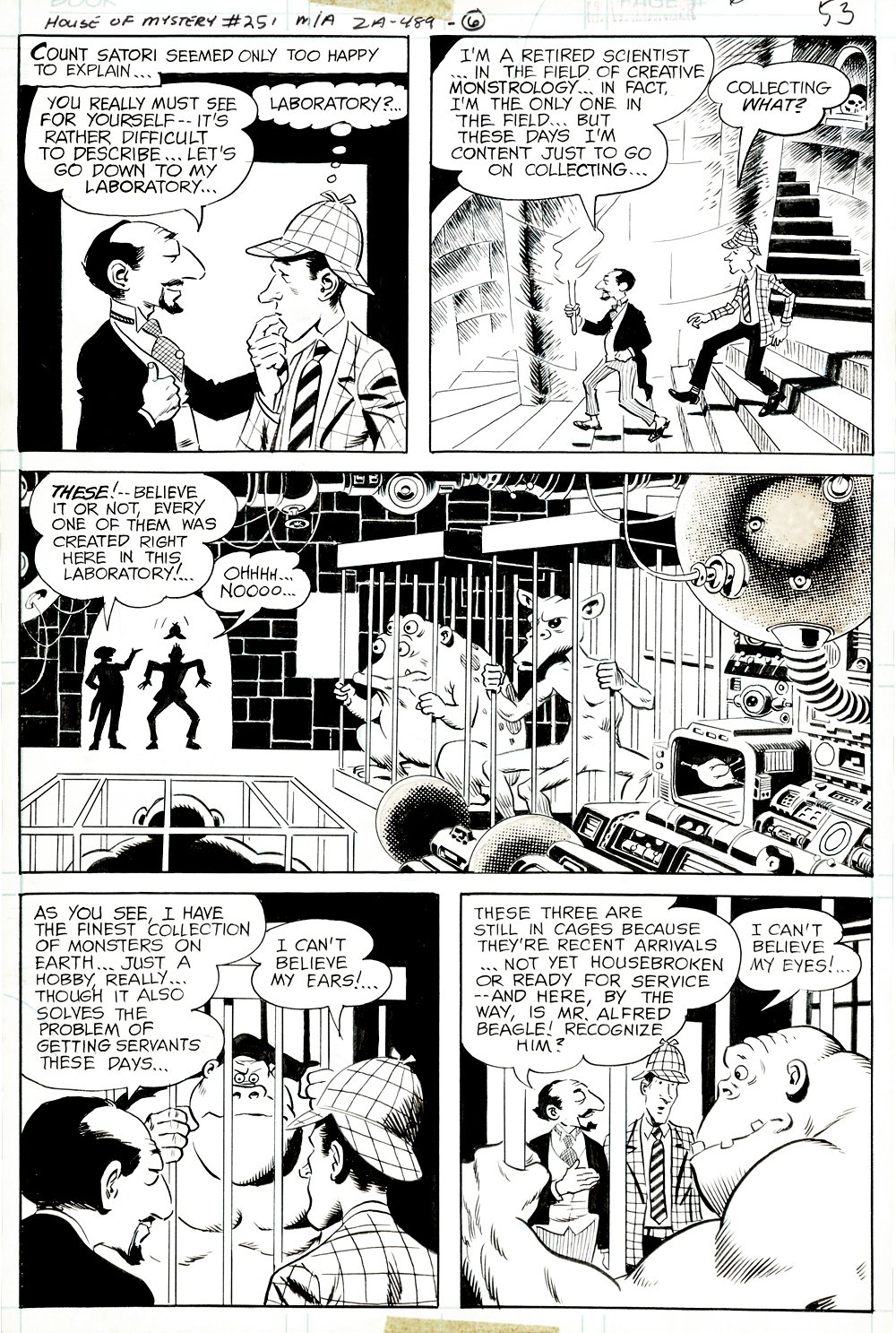
Wallace Wood — Creature Feature

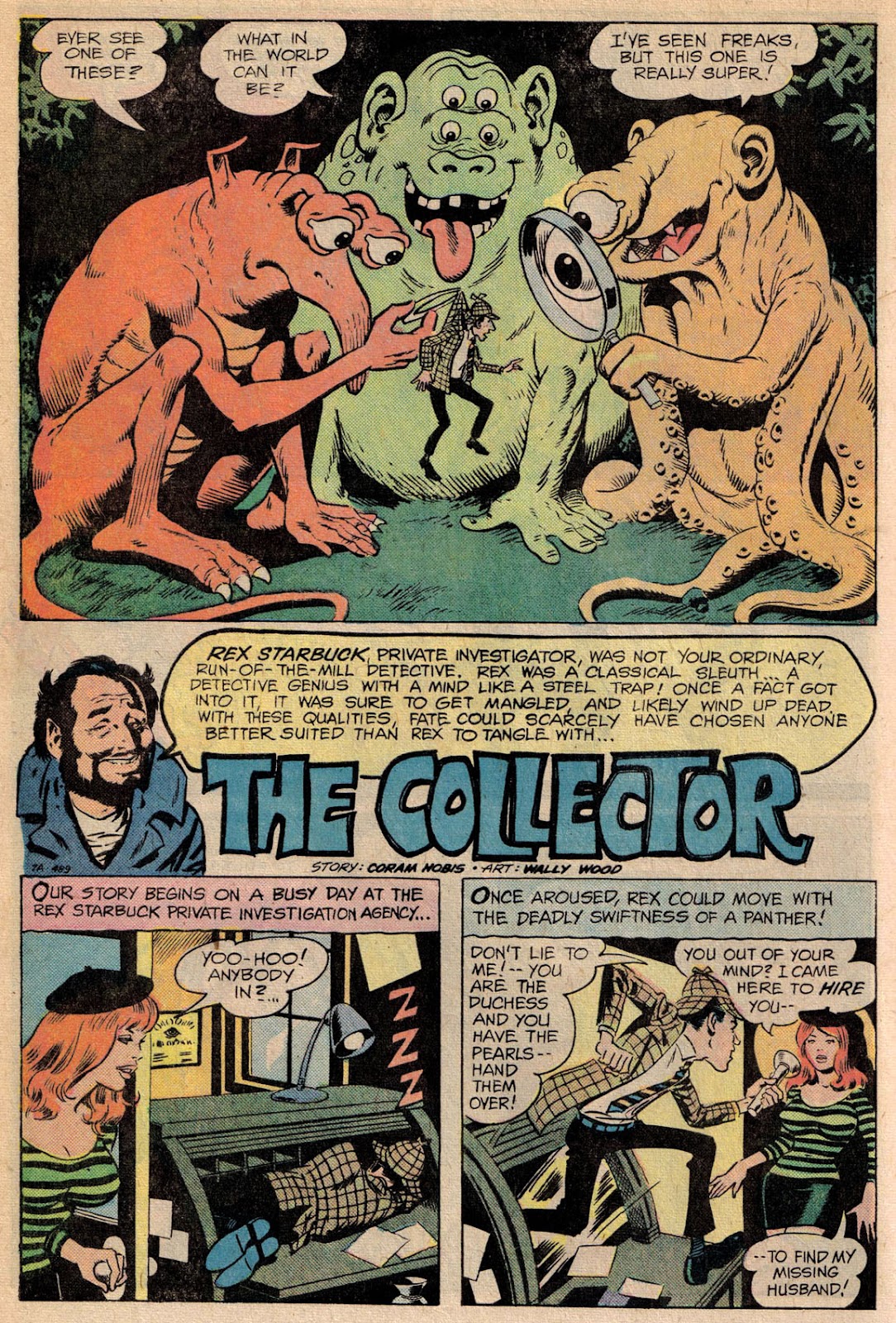
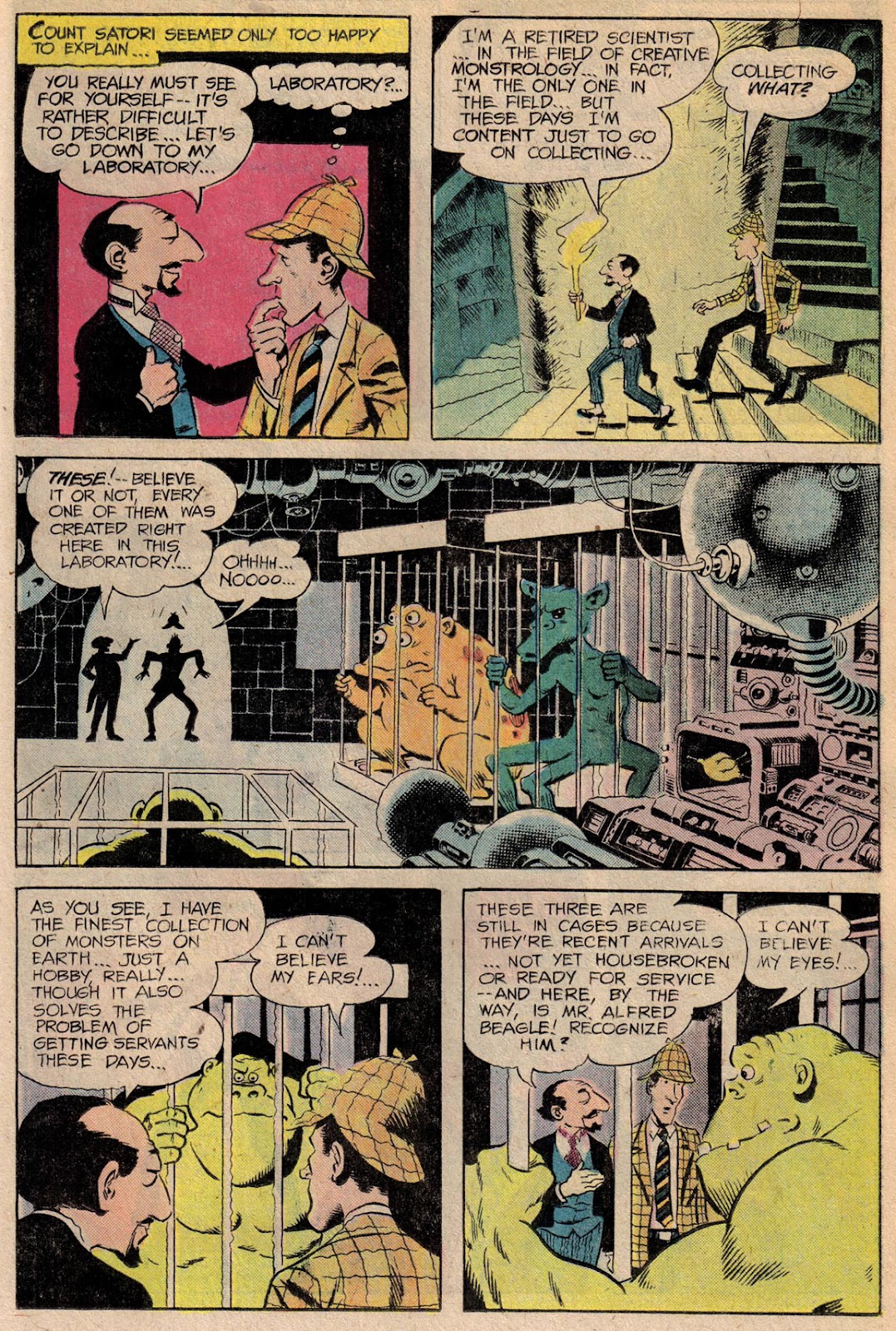
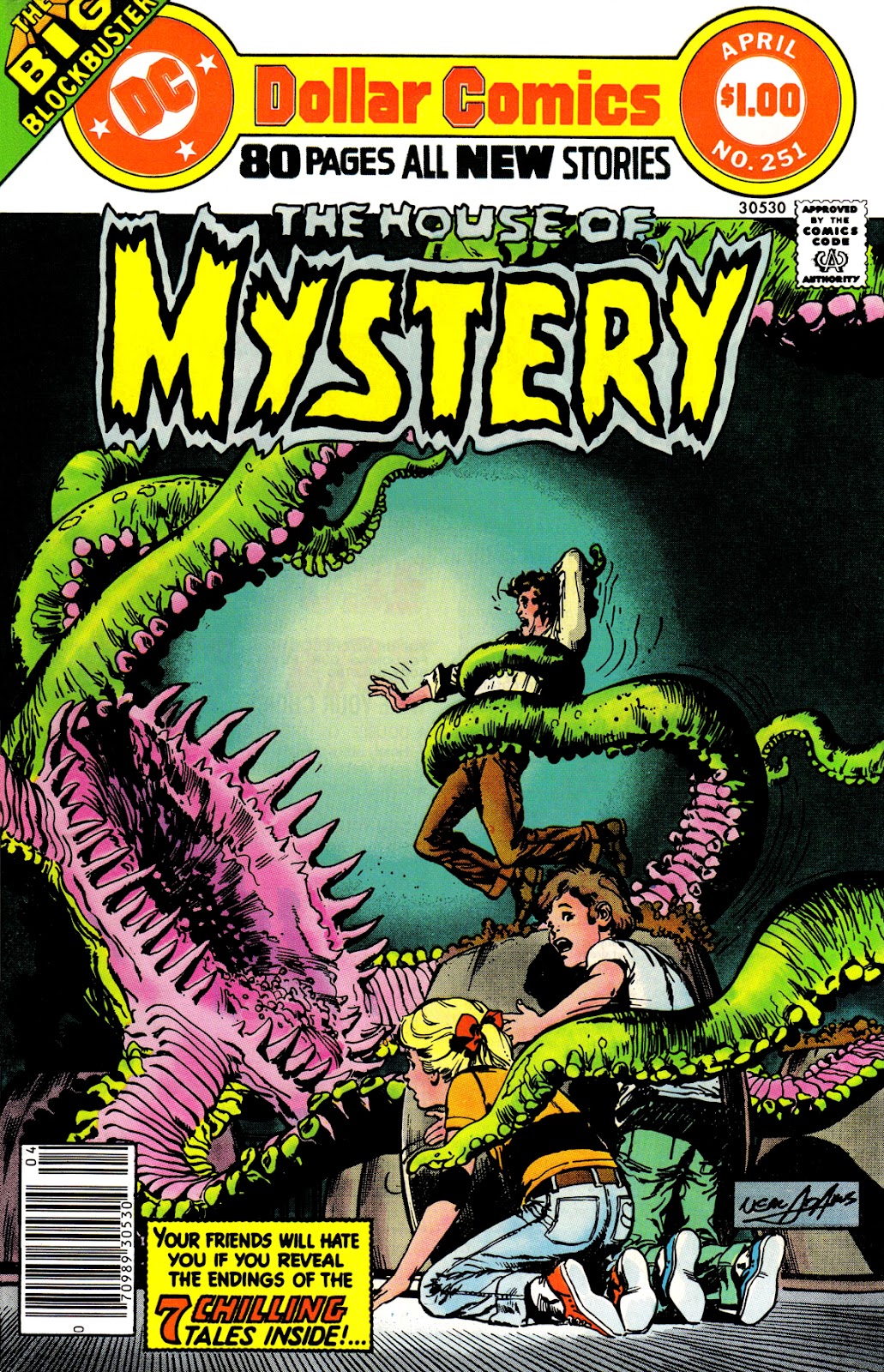
House of Mystery #251, April 1977

Dear DC:

Please collect all the random and misc. (and typically GREAT) stories from the legendary Wallace Wood in one place — omnibus, compendium, DC Finest, whatever. I’m constantly discovering “new” storiesI’ve missed like this one, aptly titled “The Collector.” (Pencils and inks by Woody, blueline breakdowns by Al Sirois.) Reprinted only once, 40 years ago, in a cheapie digest.
Woody deserves better treatment.

Thank you for your attention to this matter.

Yr. Pal,

Greg

PS That middle panel page is such a great throwback to Woody’s classic EC days, isn’t it? The coloring doesn’t quite do it justice.

Gil Kane & Wallace Wood — In Brightest Day…

Green Lantern #69, June 1969

Another checked box on the art bucket list: Green Lantern, pencils by Gil Kane and Inks by Wallace Wood, from the only GL issue (#69) they worked on together.

This dynamic page, created during the latter part of Kane’s run on the series, nicely showcases the artistic chops of both Kane and Wood. Although Woody was often known for completely overshadowing his pencilers, this issue’s collaboration is excellent — Wood adding his sleek polish to Kane’s imaginative storytelling and skillful figure work.

Green Lantern was all over the map during this period — story and art teams were always in flux, and it’s clear the book couldn’t find its footing. Ultimately,  that editorial challenge proved to be a boon to comics and DC specifically, when a half year later, Denny O’neil and Neal Adams took over, added Green Arrow and revamped it all. At that point, what did they have to lose?

The rest, as they say, is history…

Wally Wood — Astonishing, As Always

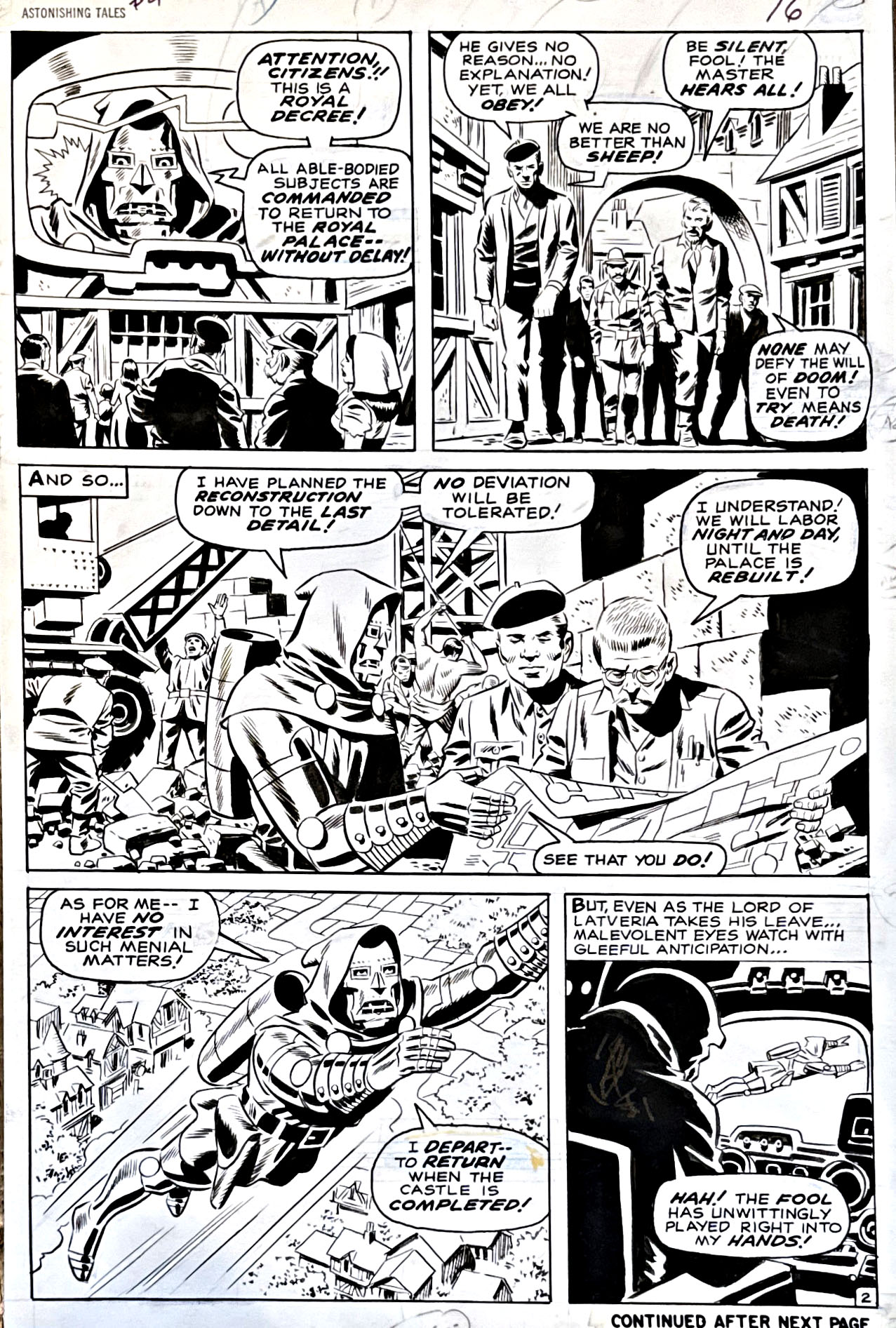
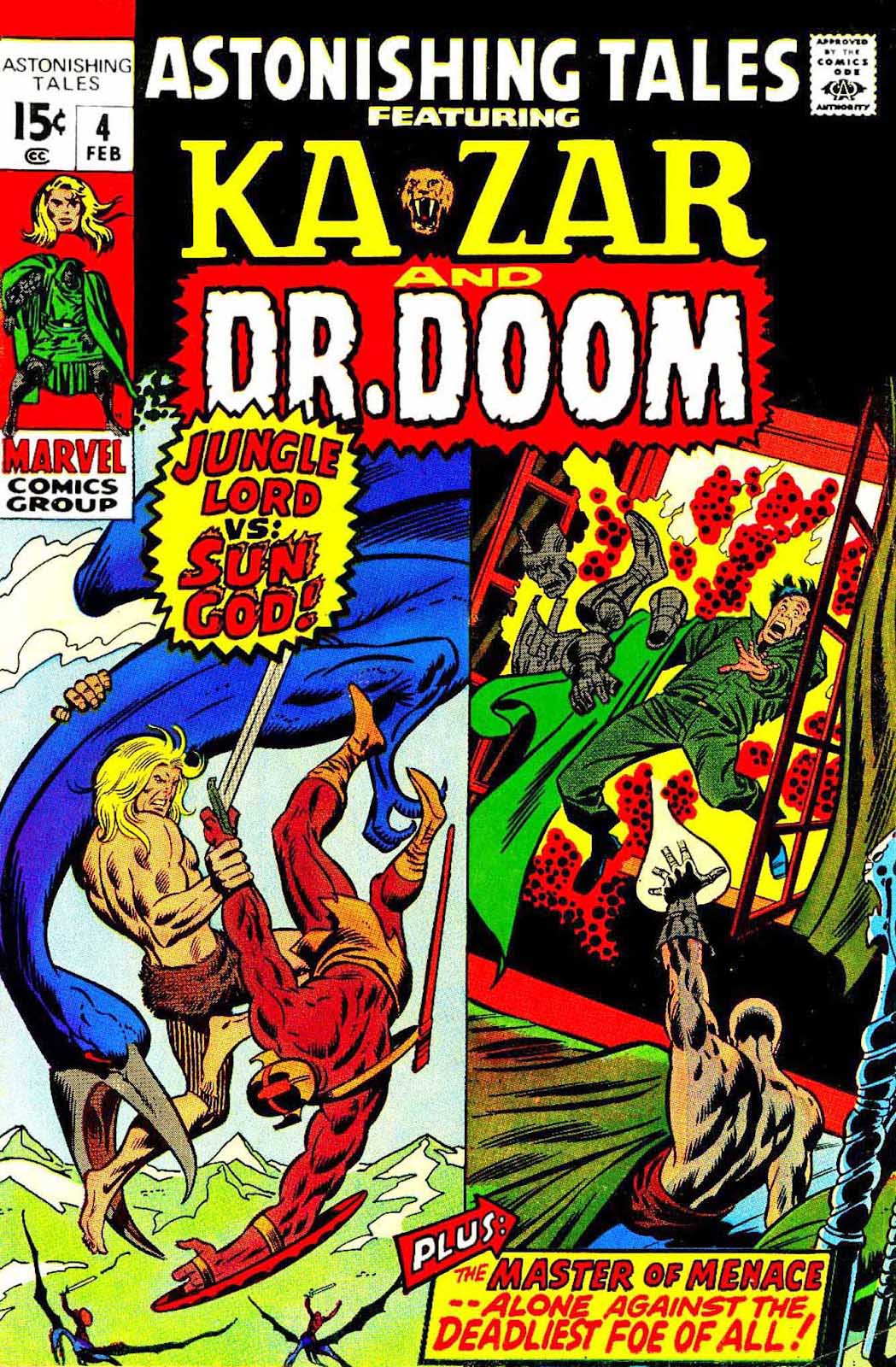
Astonishing Tales #4, February 1971

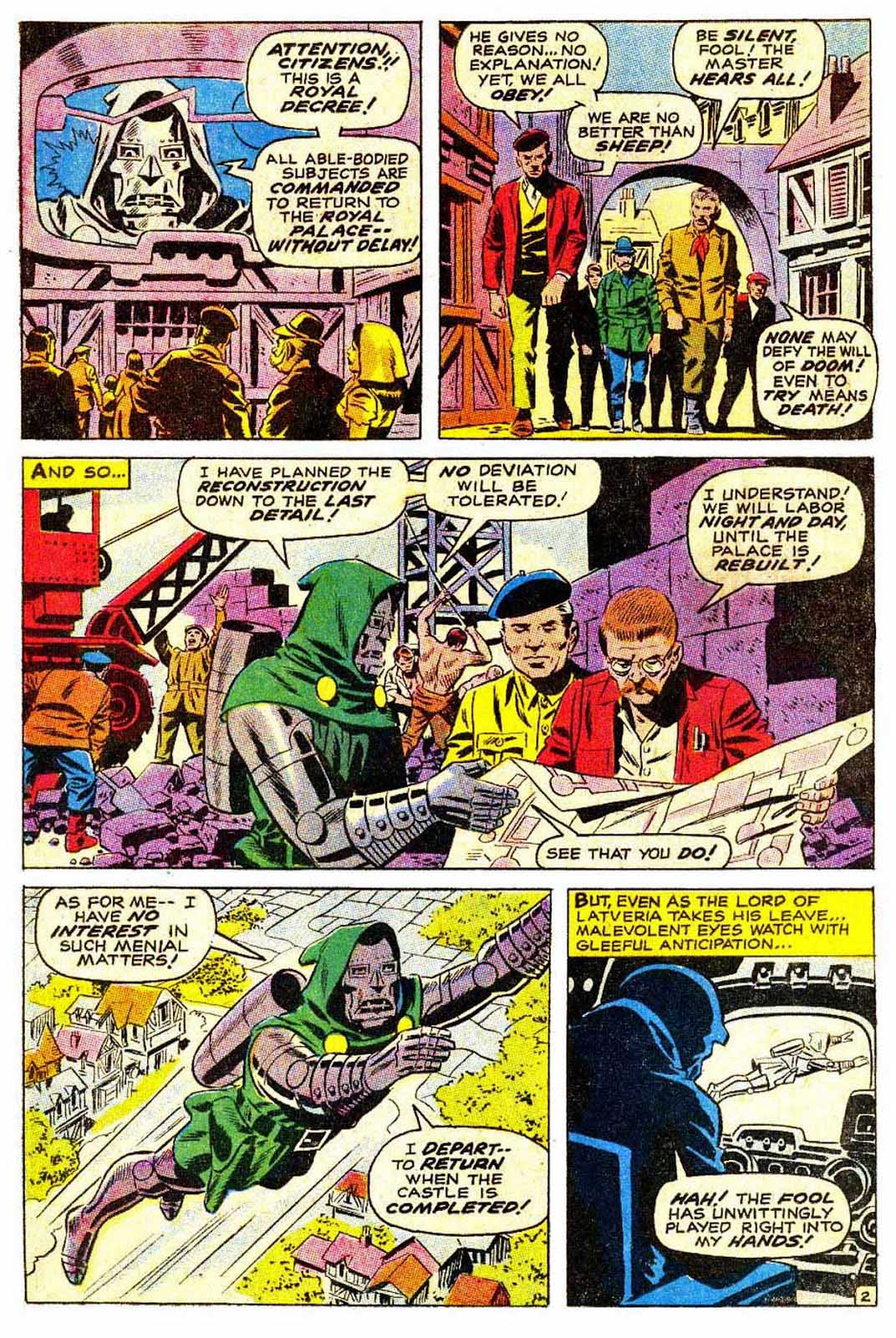
Wally Wood drew four short Doctor Doom stories in Astonishing Tales. This page, from the fourth and final story is, like all of them, a Wood classic.

And yes, that’s the Red Skull lurking in the last panel. After all, what use is a super-villain story without another, even more twisted super-villain as the antagonist?

This would turn out to be Wood’s final output for Marvel Comics.

Took me a long time to pull the trigger on the “right” deal for one of these, and I’m glad to have finally acquired one.

Bob Brown & Wally Wood — Hidden Treasure

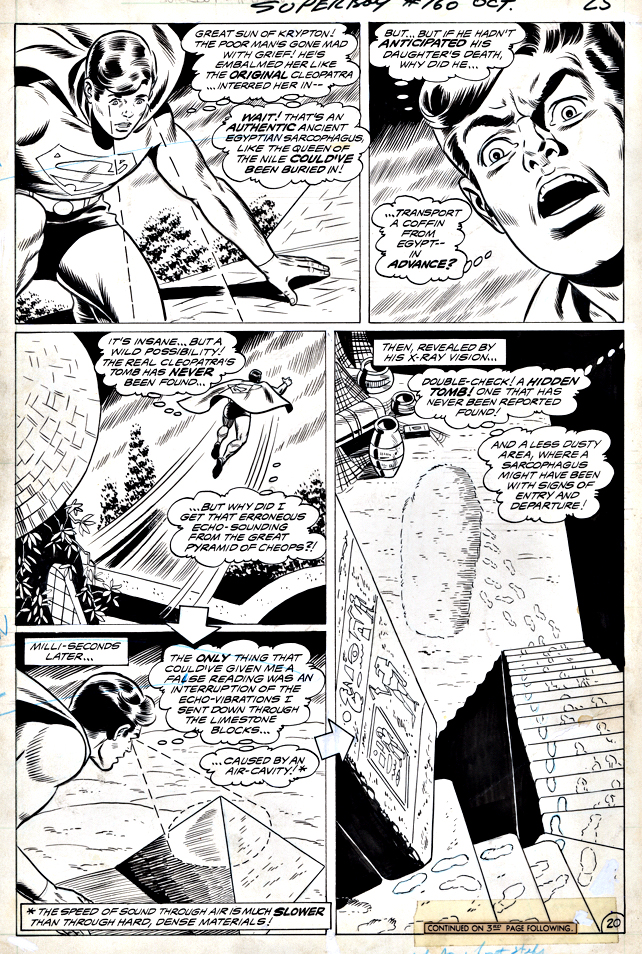
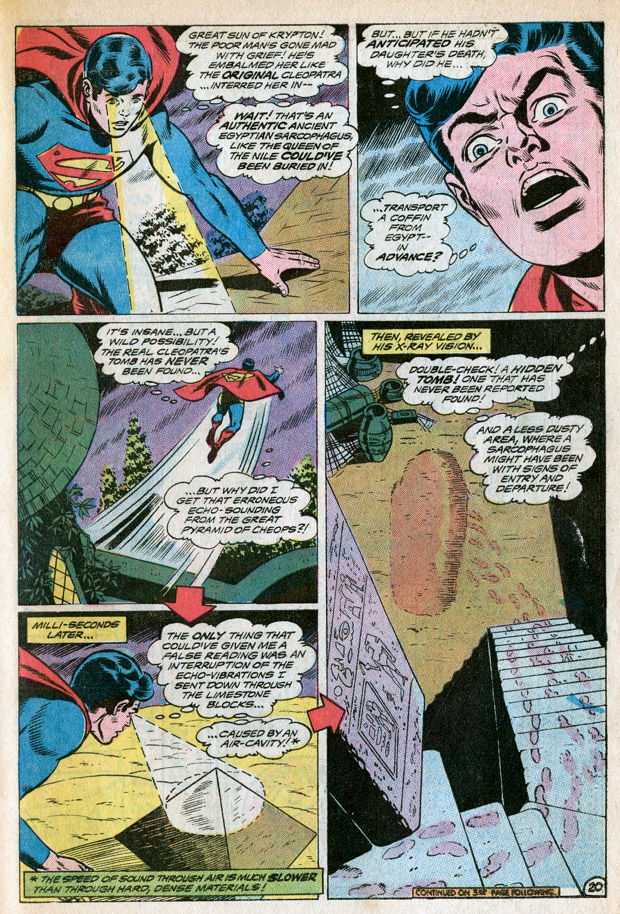
Superboy #160, October 1969

Bob Brown’s Superboy stories were the Superboy stories I read as a kid. 

Wally Wood inks? A very happy bonus. 

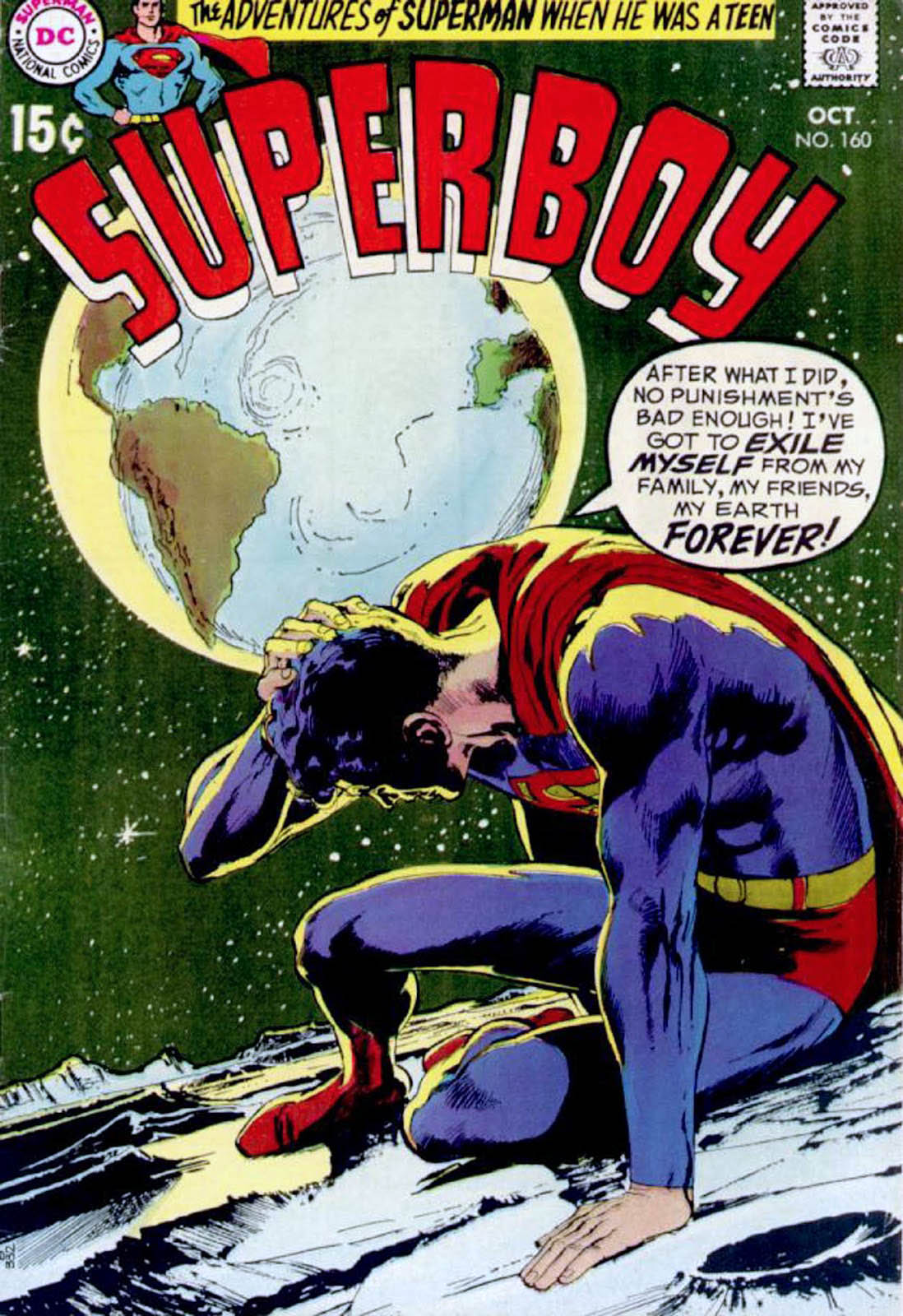
Even though the stories rarely matched the intensity of the typically featured Neal Adams covers, I’d likely buy a collection of this material on the spot if it ever becomes available. Nostalgia is a powerful thing. (It’s shocking how much DC silver age superhero material remains to be printed. But that’s a story for another day.)

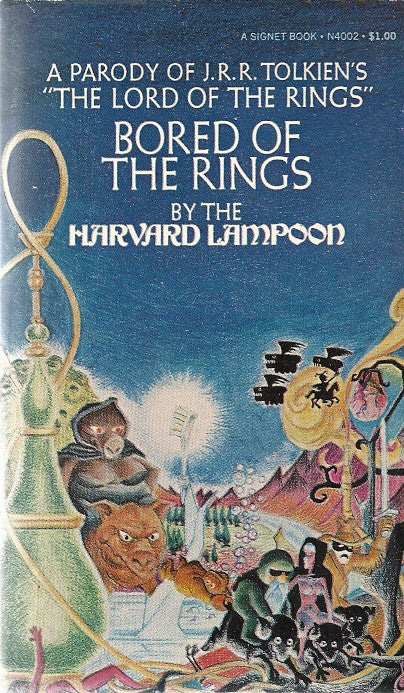
Wallace Wood — Bored Of The Rings

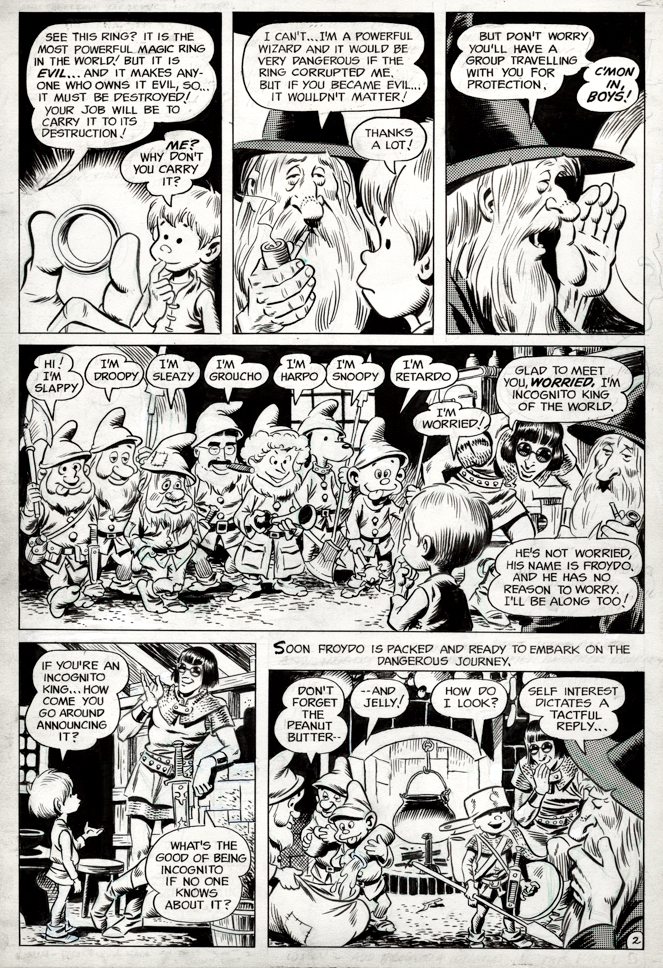
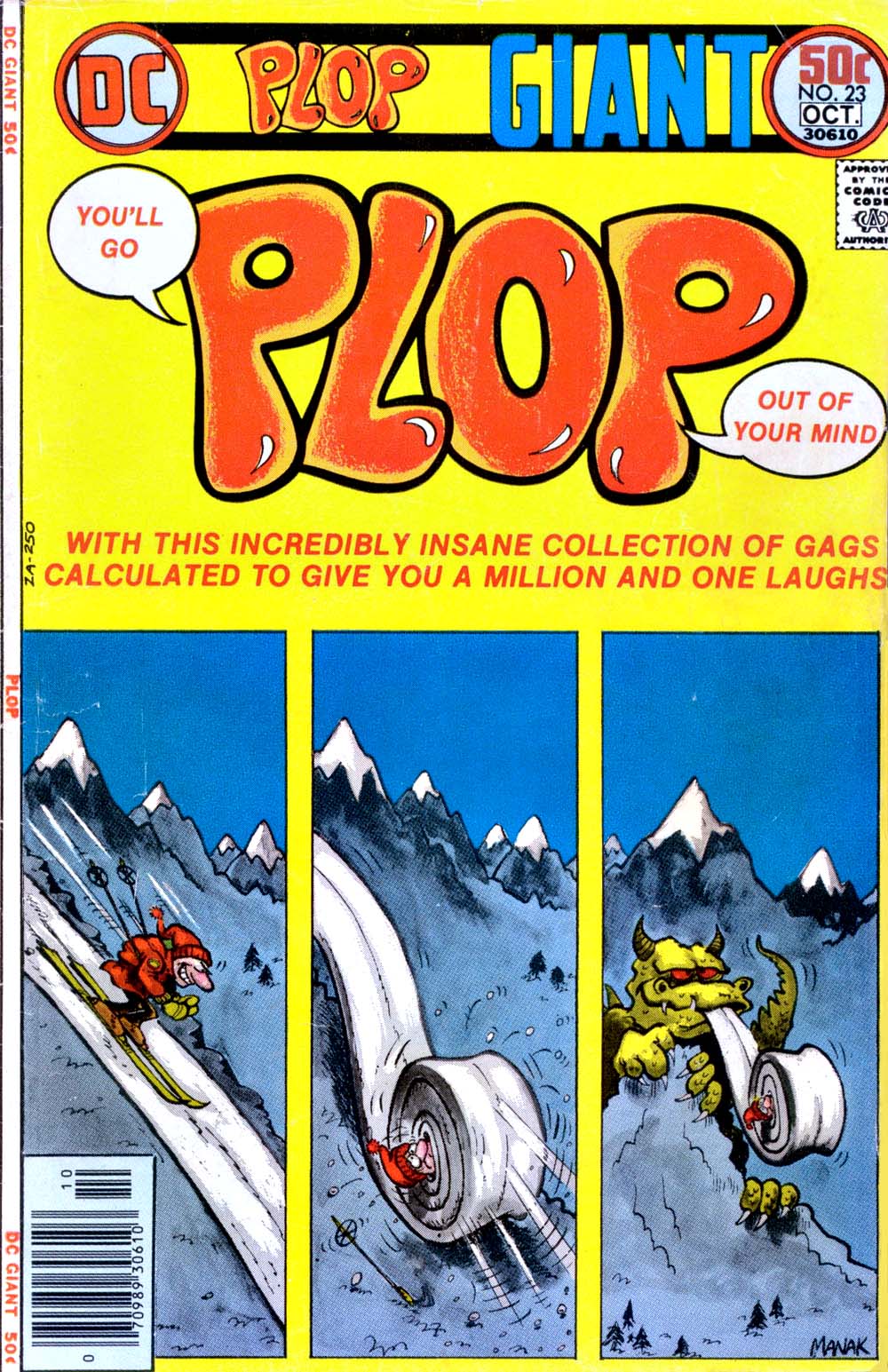
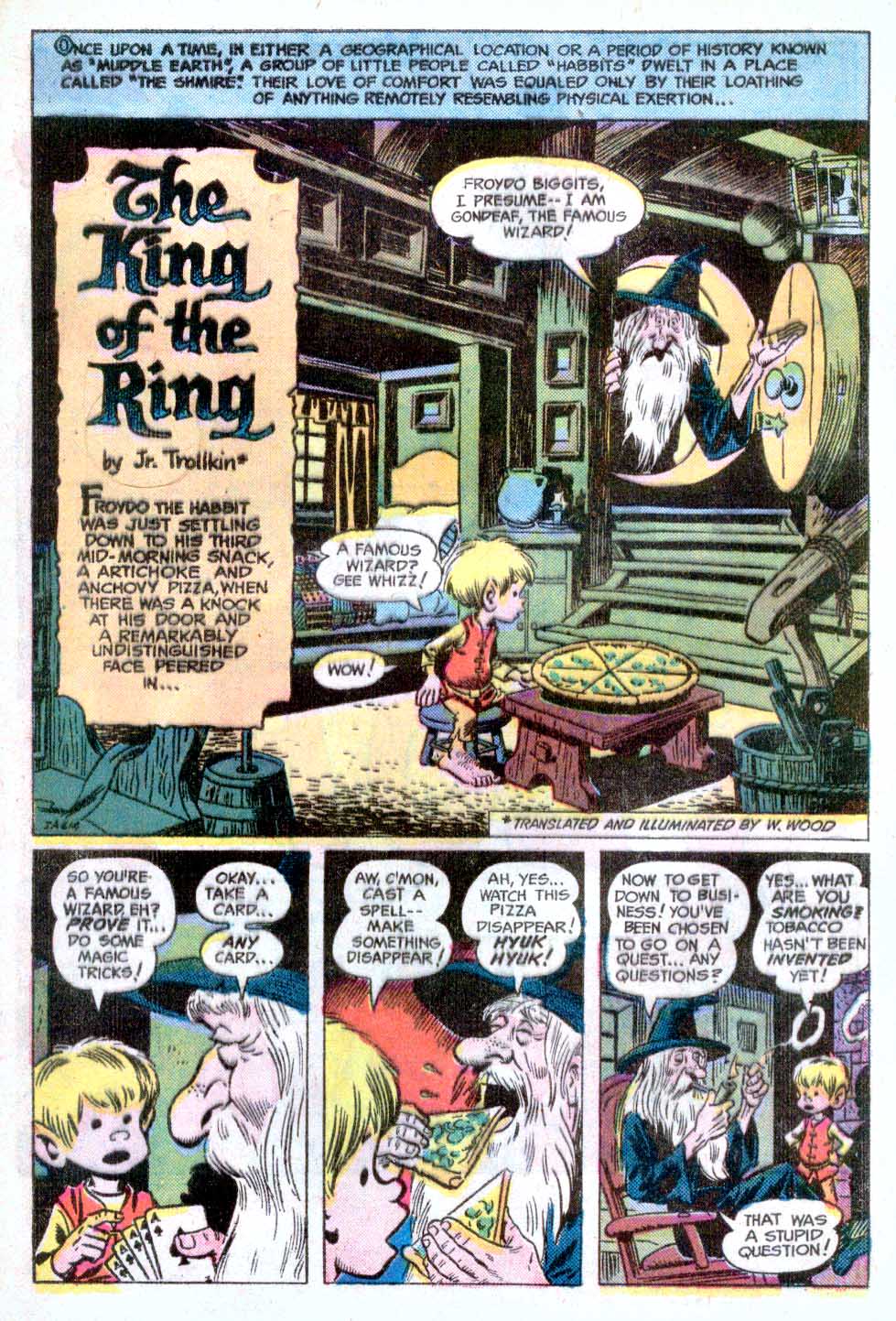
Plop #23, October 1976, “The King Of The Ring”

Wallace Wood revisits his Mad comics chops with this terrific parody of Lord of the Rings.

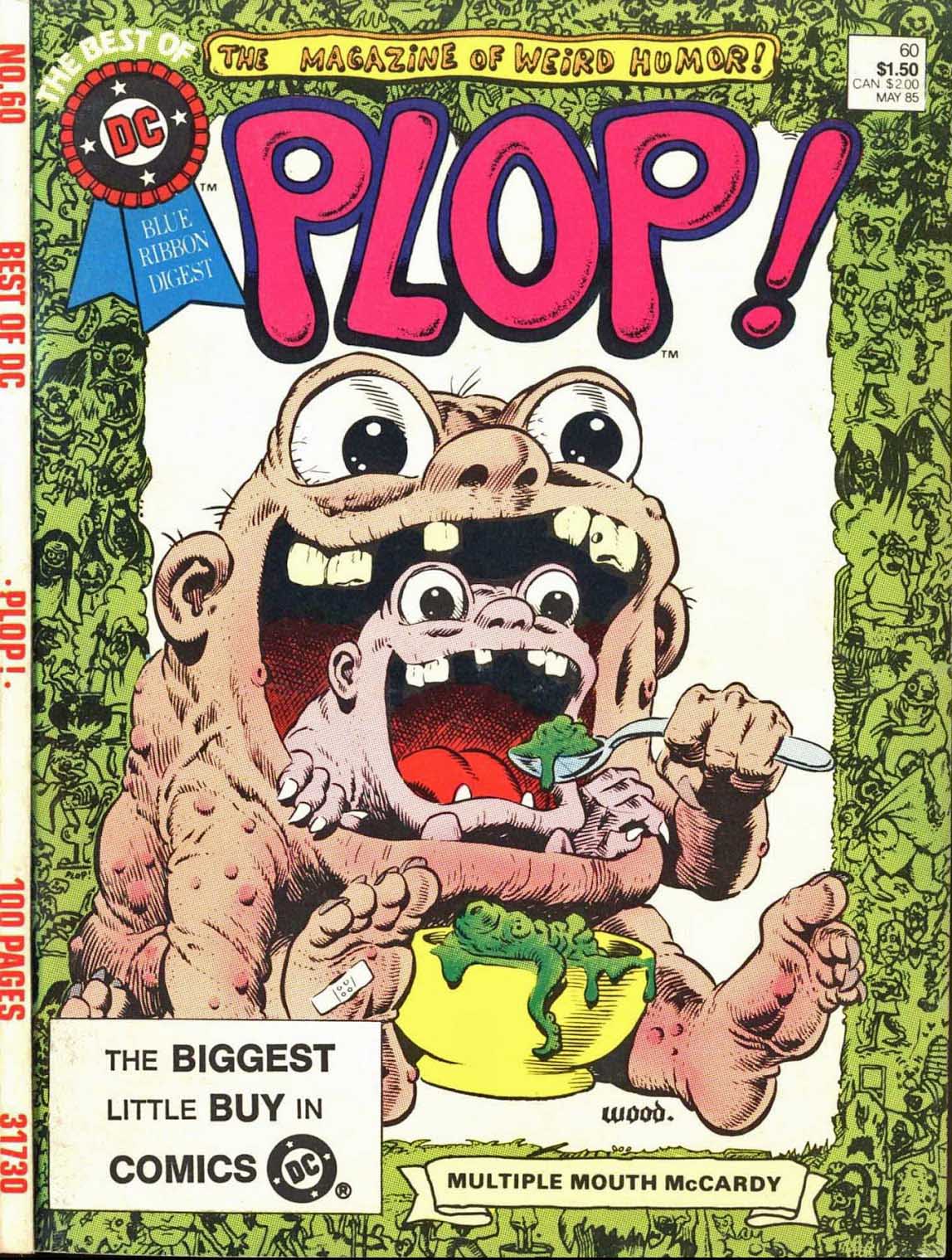
Terrific, but little seen, because it appears in a later issue of Plop, when sales were low, and… it’s only been collected one other time — in digest format — a few years later.

With the exception of (perhaps) the title splash this is the best page in the issue, mashing up gags about hobbits, the seven dwarves and Prince Valiant — all in the distinctive Woody style. (And yes, one word balloon is definitely not PC in the original, but it was nearly 50 years ago, and appears to have been modified.)

Welcome to Day Nine of the 12 DC Days of DeCember.

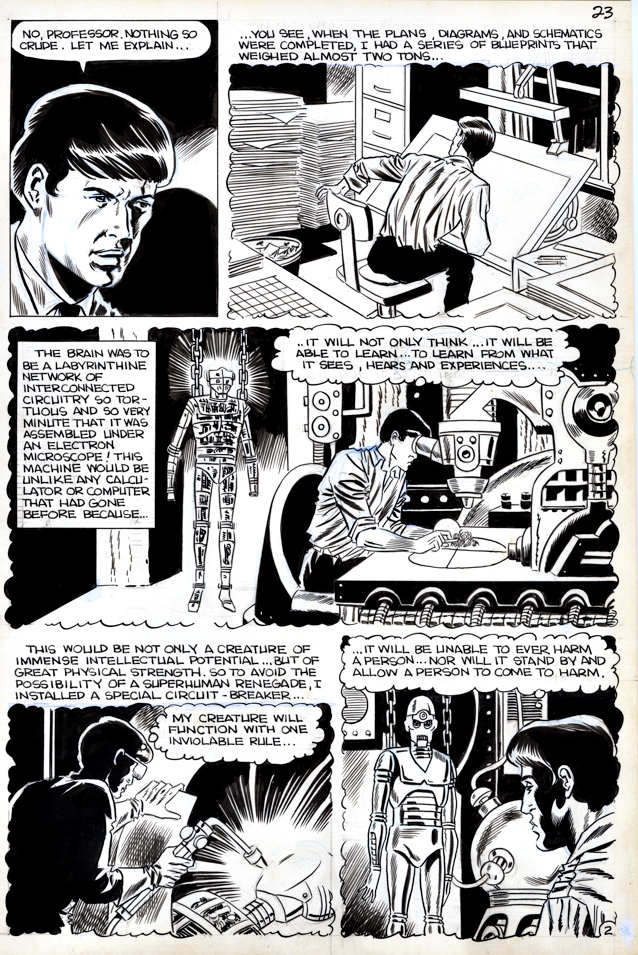
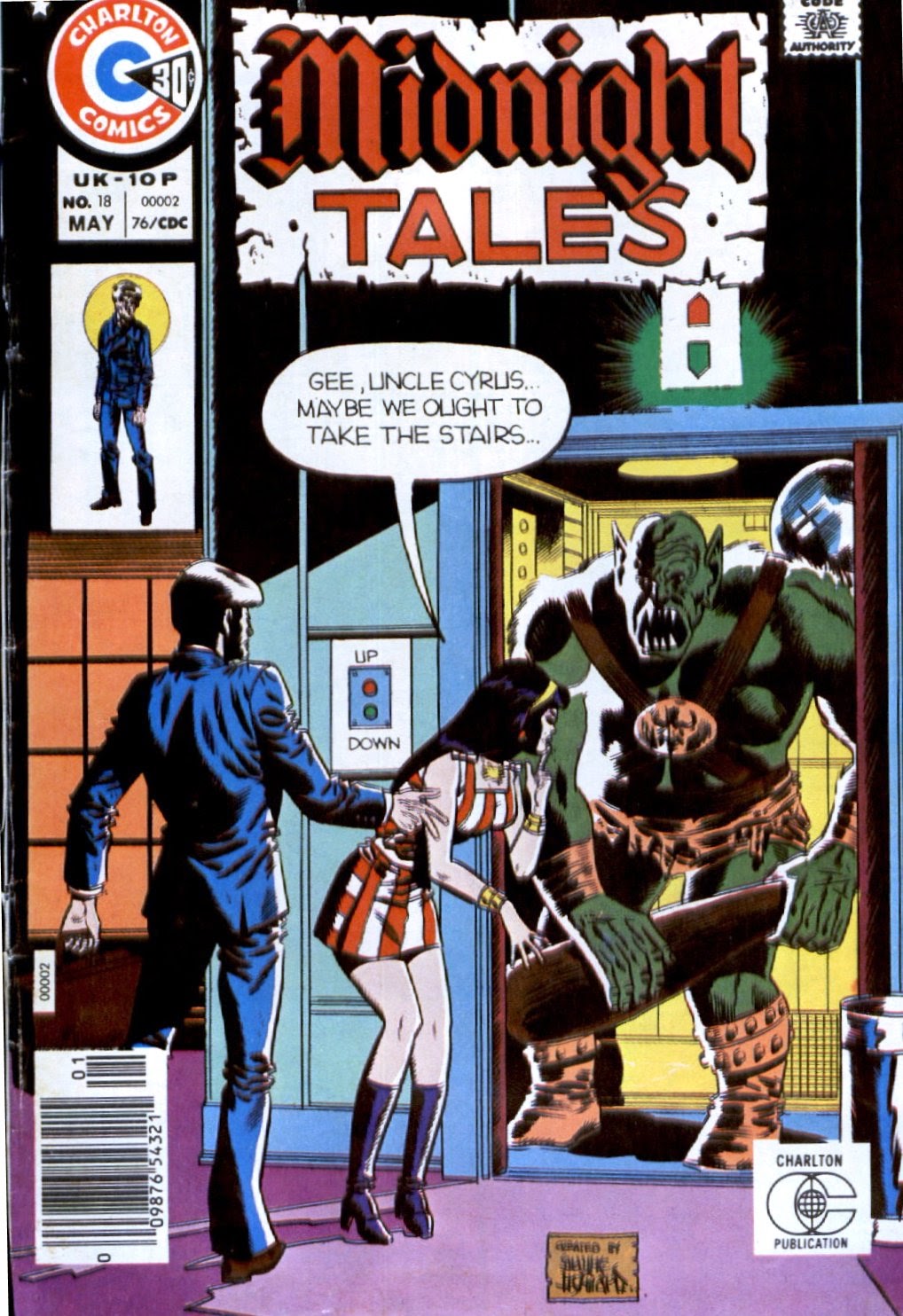
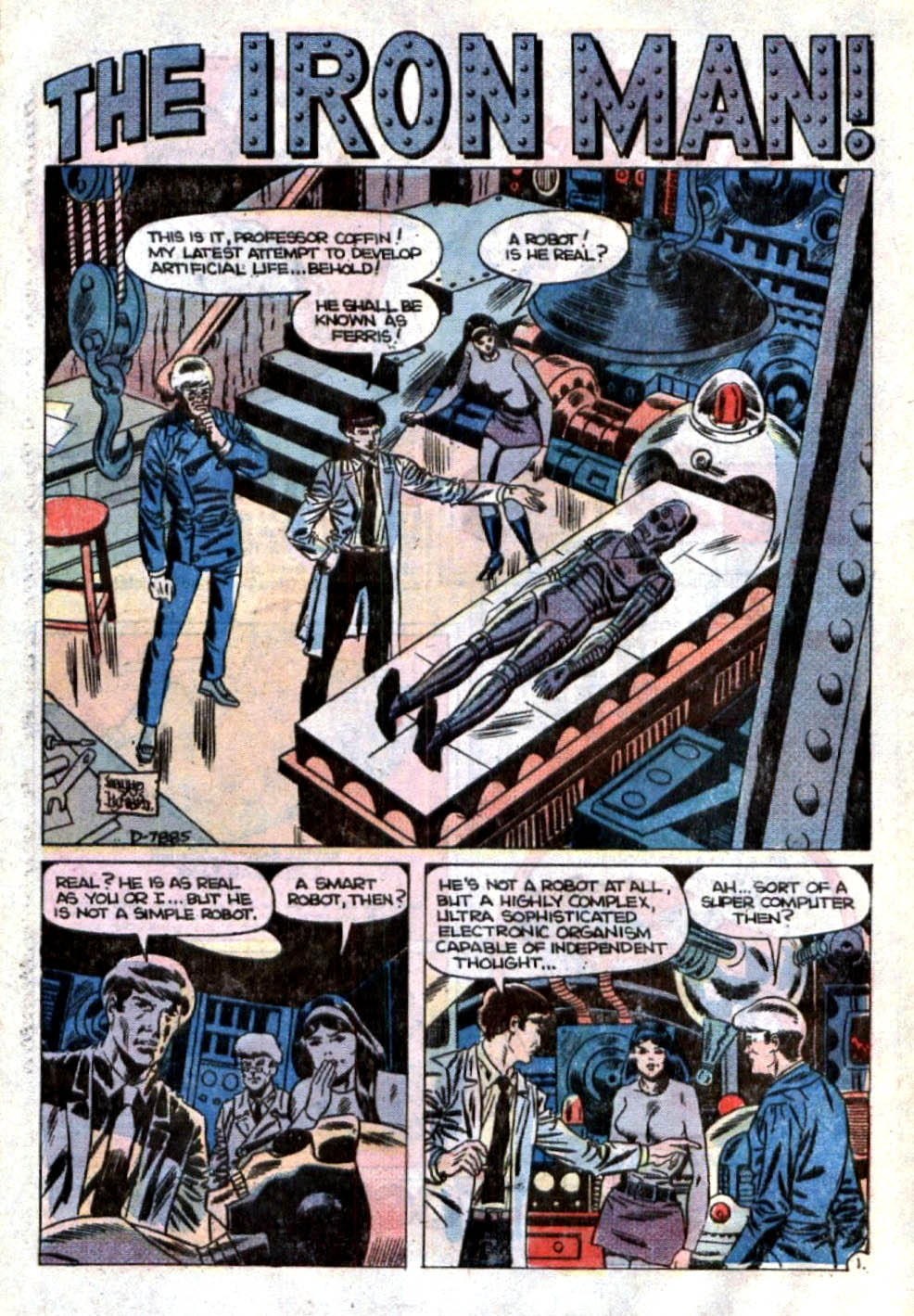
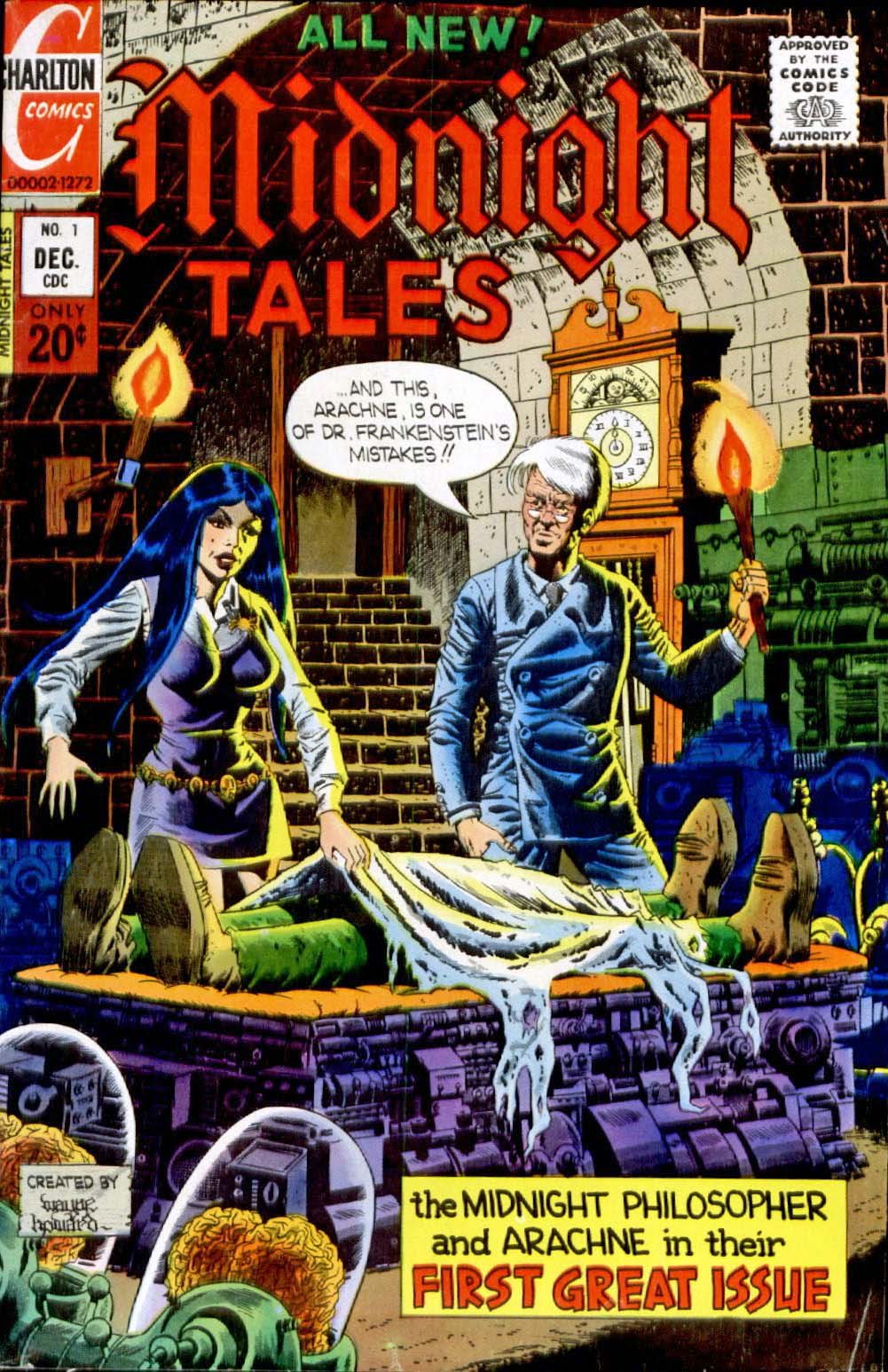
Wayne Howard — The Master’s Disciple

Midnight Tales #18, May 1976

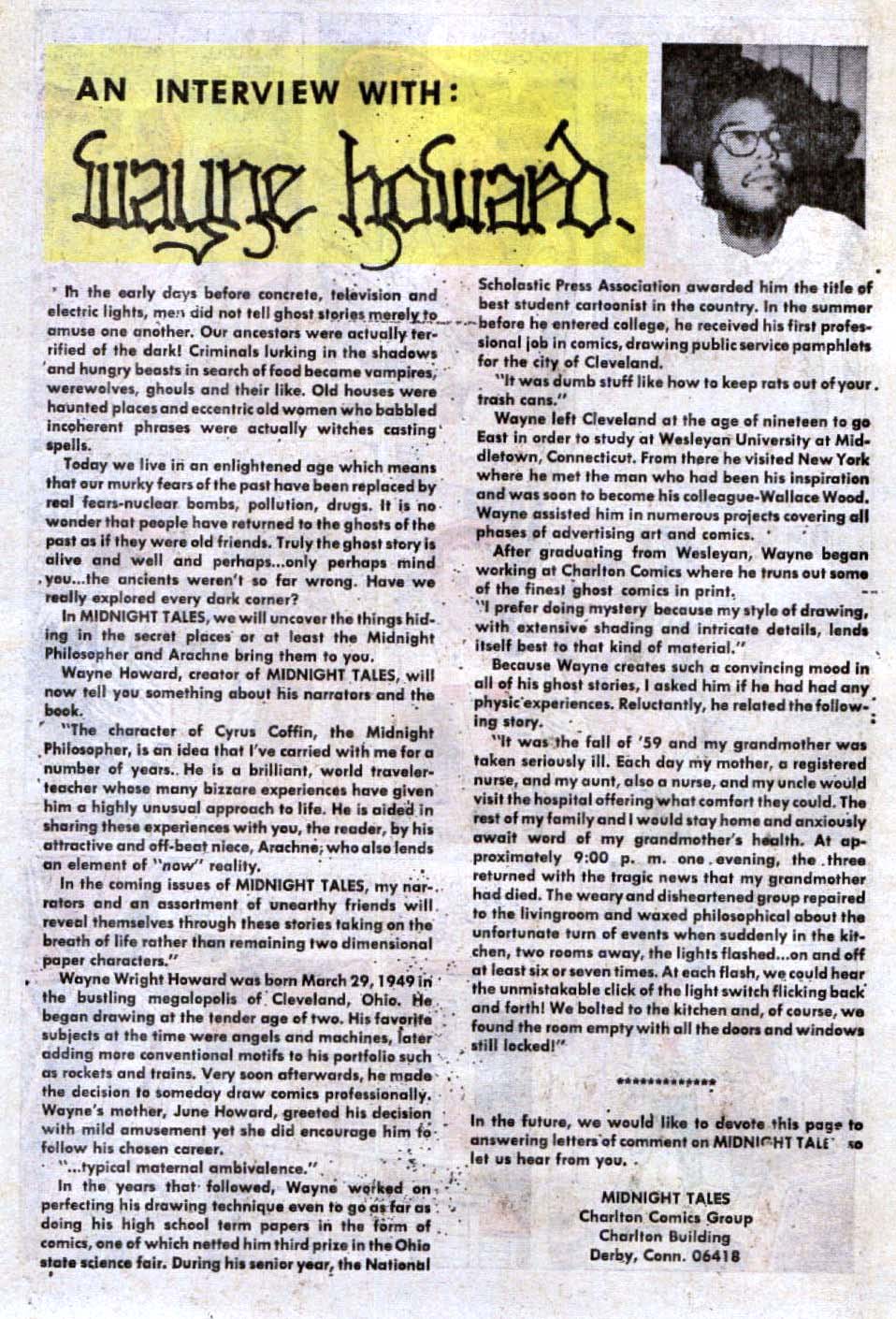
Wayne Howard studied as an assistant under Wally Wood and then went full-on Wood with his creator driven book Midnight Tales which lasted 18 issues in the early mid -70s.

(The Iron Man is the final story in the final issue of the series. No relation to Tony Stark.)

And, of all of Woody’s assistants, Howard made no bones about his referential approach to Wood’s style.

The comic was a unique creation at Charlton (or anywhere, actually) and featured nearly exclusive Howard-drawn stories. Charlton promoted Howard’s concept on the cover — and in the fan press and at conventions.

A young African American in an industry still mostly dominated by (older) white men, Howard himself was a unique member of the comics creative community. He was known to be somewhat shy, and he was also known for conservative views, again a striking contrast to many of his industry peers.

When Howard left comics, he rarely spoke about his work; He passed away at the much too early age of 58 in 2007.

Wallace Wood — Stripped (Part 3 Of 3)

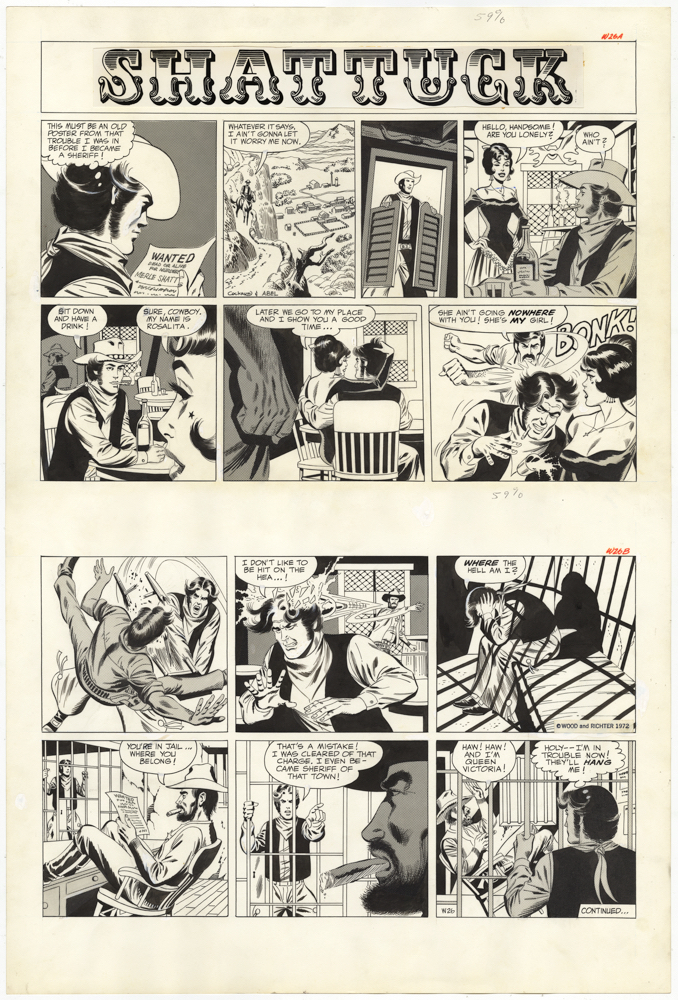
Shattuck #26, 1972

Happy (almost) Independence Day! Welcome to our second annual month-long celebration of the “Independents” — Independent creators and projects that continue to impact the comic book medium. This is our third (and final installment) in a week-long series focused on Wallace Wood.

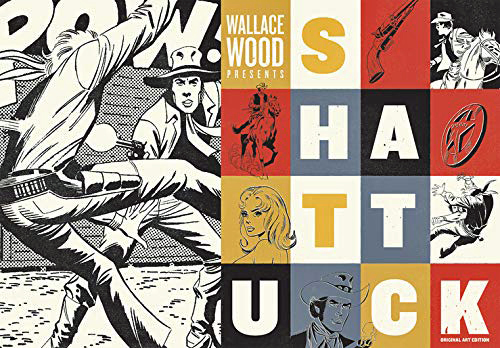
Shattuck is the rarest, the oddest, and the shortest-lived of the Wood Studio strip ventures.

Many collectors had never seen any until Fanatagraphics issued a complete collection a few years ago.

From Frank Plowright on The Slings and Arrows:

“Shattuck is more a collector’s curiosity than a bona fide graphic novel, pulling together the episodes of a short lived Western newspaper strip produced in 1972 for the Overseas Weekly. Wood’s studio had the contract to produce the strip, and as with others for the same market, one of the artists recalled the brief as being to get the women’s clothes off as rapidly as possible. It can’t be said that Wood underestimated his audience…

“Many hands worked on the project… Wood himself might be involved in any episode plotting, laying out, adding inks or correcting, while his chief studio assistant Nicola Cuti also produced plots and layouts using a swipe file. Most of the actual illustration was the first published work of Howard Chaykin, then Dave Cockrum, both usually inked by Jack Abel. Both Wood and Abel have utterly distinctive inking styles, so there’s no difficulty in recognizing which worked on which strip.

This particular example appears to be mostly Cockrum, possibly with some Abel inks and definitely some Wood fixes in places.  It’s “Where’s Woody” instead of “Where’s Waldo” — you have to look carefully to find it.

Wallace Wood — Stripped (Part 2 Of 3)

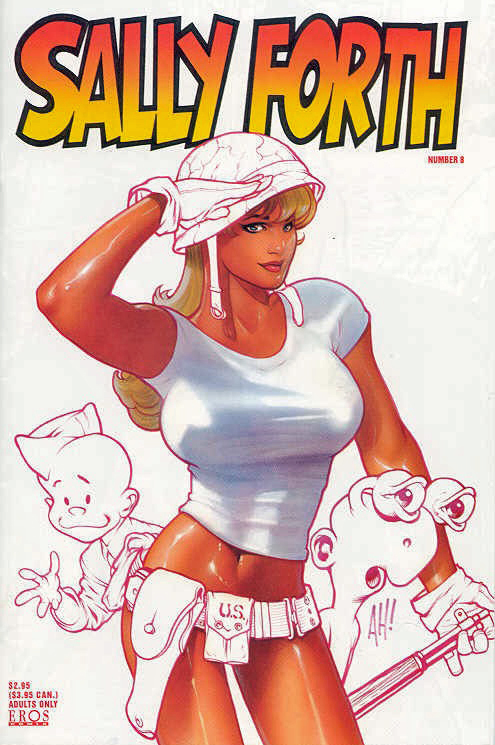
Sally Forth #39, 1972

Happy (almost) Independence Day! Welcome to our second annual month-long celebration of the “Independents” — Independent creators and projects that continue to impact the comic book medium. This is our second part of a week-long series focused on Wallace Wood.

I own possibly the rarest of all Wallace Wood Sally Forth strips: A “PG-13” version (no nudity) and, more importantly, a full showcase of Wood’ talents; Odd creatures, robots, satire, action, and of course, sexy women. (An art dealer who wanted to acquire it from me told me that his married Wood fans could hang it up and not feel “embarrassed.”)

Forth, Wood’s sexy action-adventure character, who is mostly depicted nude in the series, first appeared during June 1968, in Military News, a 16-page tabloid from Armed Forces Diamond Sales. The title is wordplay — “to sally forth,” means to leave or attack from a military encampment.

Sally returned July 26, 1971, in the Overseas Weekly, and ran until 1974.

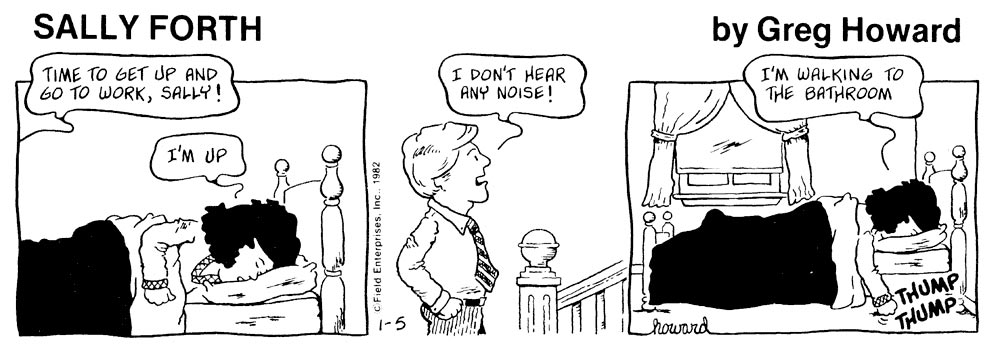
The character is absolutely no relation to the Sally Forth comic strip created by cartoonist Greg Howard. 

But is pretty humorous when people mix the characters up.

Wallace Wood — Stripped (Part 1 Of 3)

Cannon, Strip #61, 1973

Happy (almost) Independence Day! Welcome to our second annual month-long celebration of the “Independents” — Independent creators and projects that continue to impact the comic book medium.

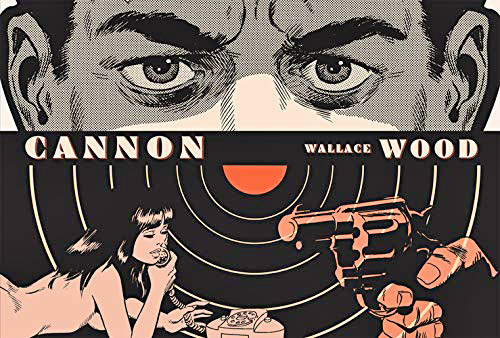
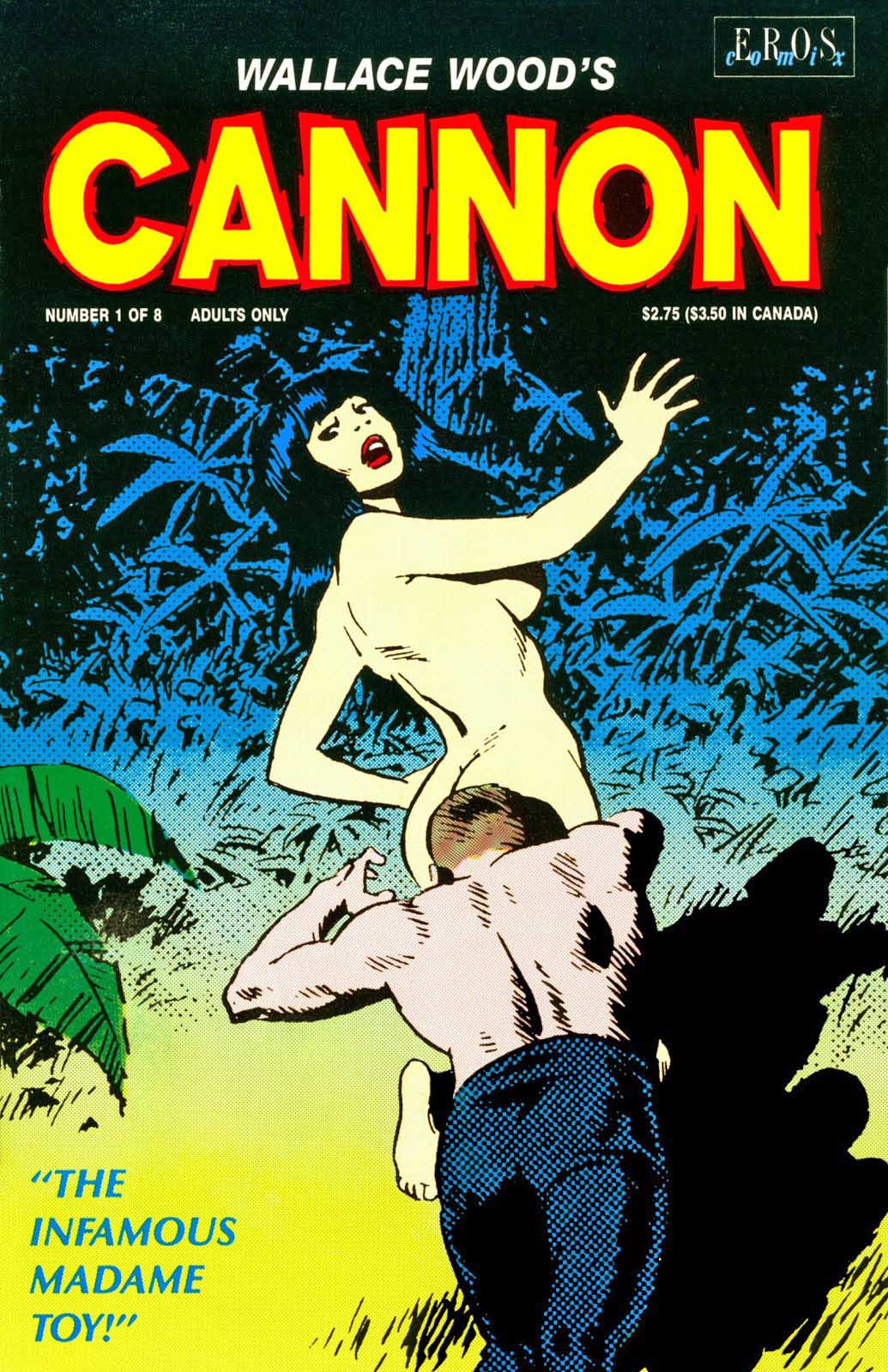
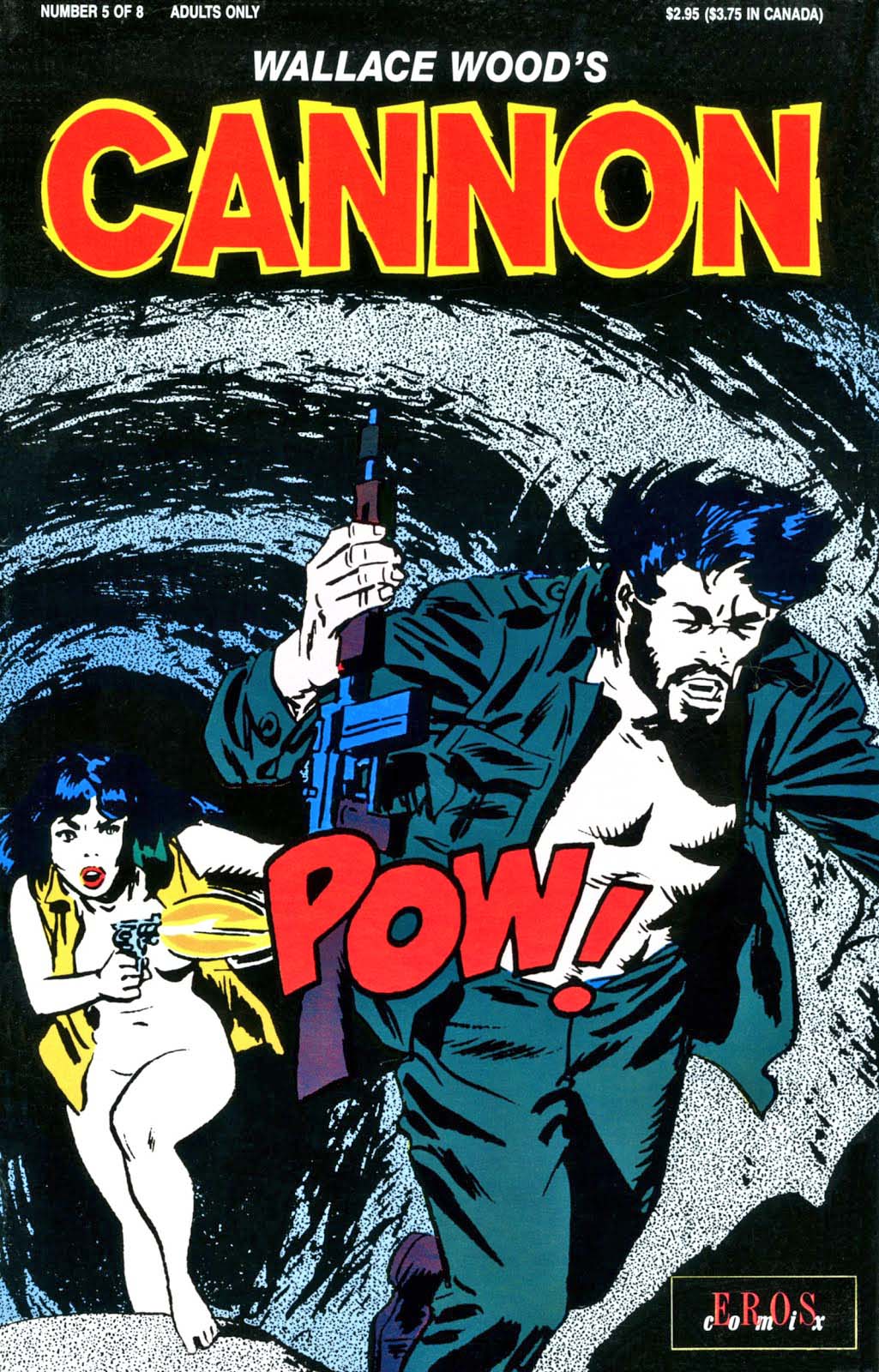
Celebrating both Comic strips AND independent artists and their creations, we present Wallace Wood… and Cannon, an action strip series that is somehow both ludicrously serious and deadly satirical at the same time.

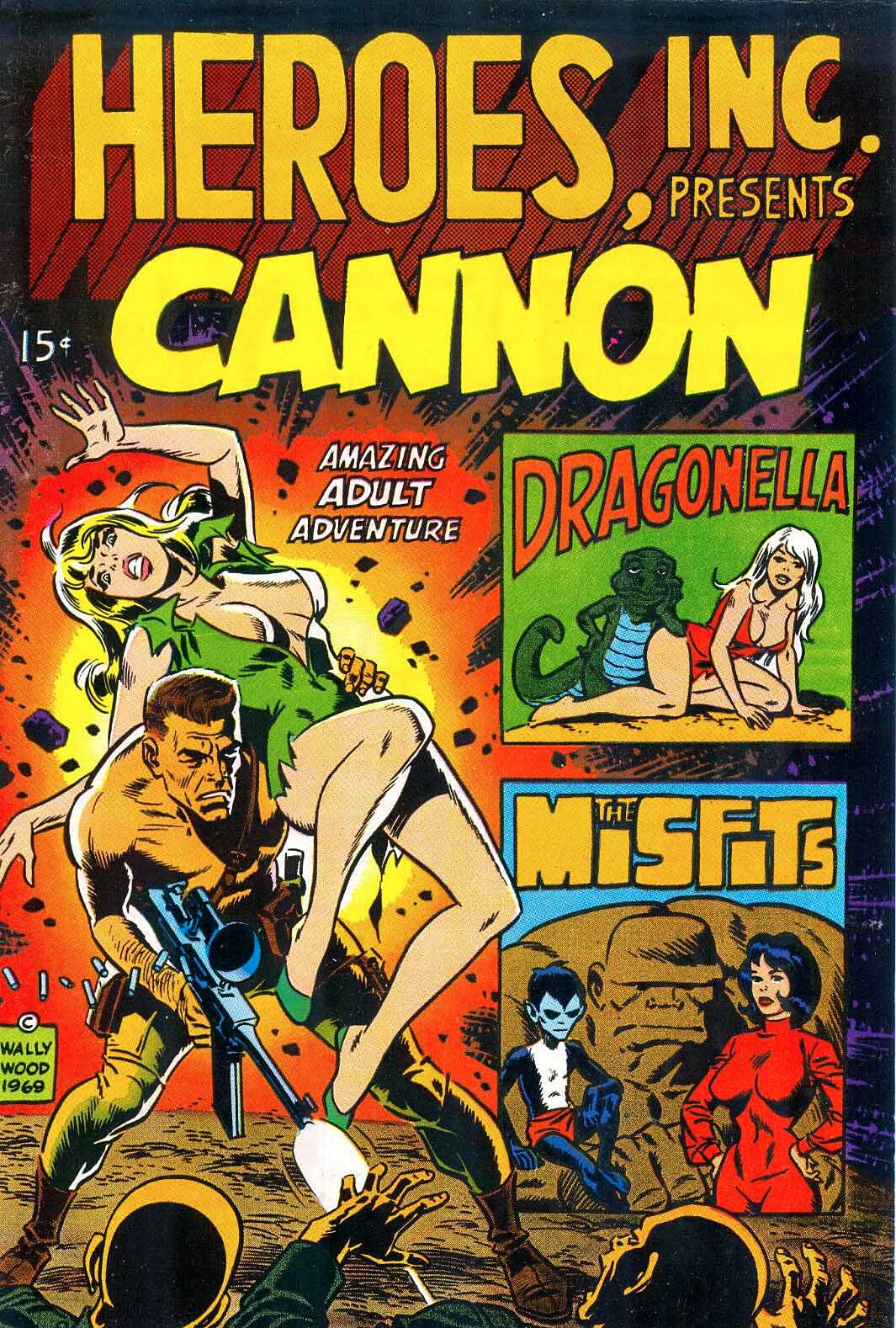
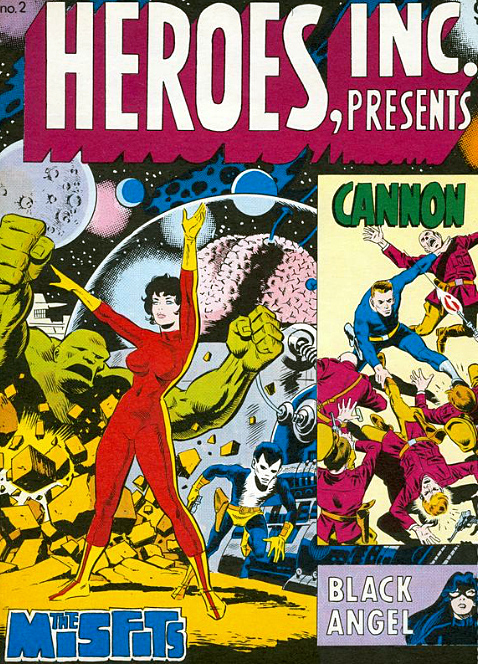
Cannon, first appearing in Wood’s own Heroes Inc. comic book (1969), ran from 1970 to 1973 in Overseas Weekly, a newspaper produced for American servicemen.

The single best overview of the strip I have ever read comes from writer Rocko Jerome via the website Sequart. Excerpts below:

“There’s no greater proof of (Wood’s) mastery than Cannon, which feels like the perfect and most truly, thoroughly “Wallace Wood” product imaginable. In lesser hands, the material could’ve sank into seedy Tijuana Bible territory, but the work is so beautifully rendered and put together that it’s impossible to assail the craft involved. There are those who will call these drawings on paper misogynistic and gratuitously violent, and it’s hard to argue that it is not, but the tightly rendered imagination on display will tell you what you need to know. Wood could make ugly things beautiful and beautiful things gorgeous…

“The jokey animated television series Archer feels like a dumbed down, considerably less risky version of Cannon, which is several decades its senior. Cannon simply doesn’t let up on the throttle, its gloriously illustrated Id running roughshod over its pages.”

Read the entire review — it’s worth every minute of your time.

And my own, succinct review:

This is some great Wood artwork.