One comic book. One grasp (and possibly a final one) at straws for a struggling comic book publishing company.
Sixty years ago today, Fantastic Four #1 hit the newsstands.
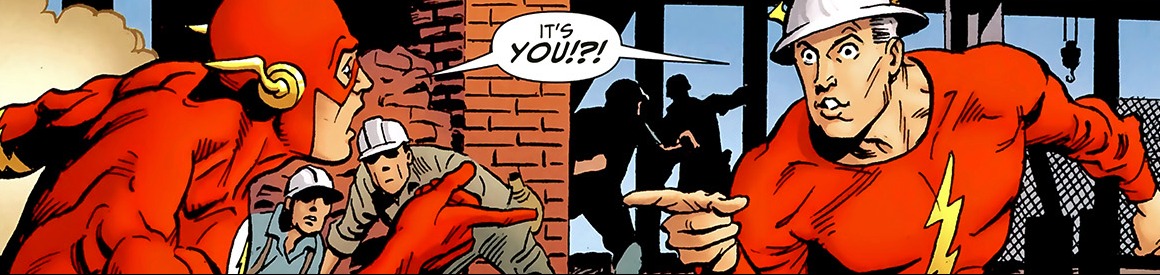
DC had slowly started its own superhero revival five years prior with the appearance of the Silver Age Flash. By the time the FF appeared, DC had establishes enough heroes to create a Justice League team comic book.
Heck, even Archie Comics launched some superhero titles (The Fly, The Shield, etc.) ahead of Marvel.
But Fantastic Four made an impression. Flawed heroes, who barely got along with each other? Fearsome Foes and supporting characters? Continuity, for goodness sakes?
Talk about late to the party — but making an entrance.
Within a few issues, Fantastic Four was the first, and ultimately greatest, soap opera saga in comics. And it didn’t take much longer for Jack Kirby to fully establish himself as the greatest visual storyteller the medium had ever seen, and for Stan Lee to become the greatest showrunner (and, for better or worse, showman) in comics’ history.
The original stories, of course, were much less complex and sophisticated than they are today. (As were the readers.)
Example: This great Steve Epting splash page from issue #586 is from a story that features time travel conundrums and a multiverse gone somewhat amok.
Heady stuff. But you should expect nothing less from Marvel’s First family.
The World’s Greatest Comics Magazine, indeed.
Stan the modest Man: The slogan “Greatest Comic Magazine in the World” became “The World’s Greatest Comic Magazine” in the following issue, and stuck around for more than 30 years.
On Tuesday, August 8, 1961, Fantastic Four #1 hit the newsstands.
The rest, as they say, is history.
As promised back in January, we’re adding a few more Fantastic Four posts to continue the 60th celebration of “The Marvel Age Of Comics.”
And yes, we’re cheating a bit by re-running this great page by Jack from the beginning of the FF’s peak period.
But… no Stan Lee AND Jack Kirby… no Fantastic Four… likely no Marvel Age, period. So, in our mind, worth a repeat.
See you on Sunday.
1980: Jack had left Marvel, again, this time for the world of animation and independent creator-owned comic book projects. Stan was busy in Hollywood woking tirelessly (and mostly unsuccessfully) to make Marvel a brand in entertainment. I never take sides in the endless Lee-Kirby debate, so I say to the photographer who captured this pic (quoting from The Man Who Shot Liberty Valance): “When the legend becomes fact, print the legend.”
It all starts here: Cover and opening page for FF#1.
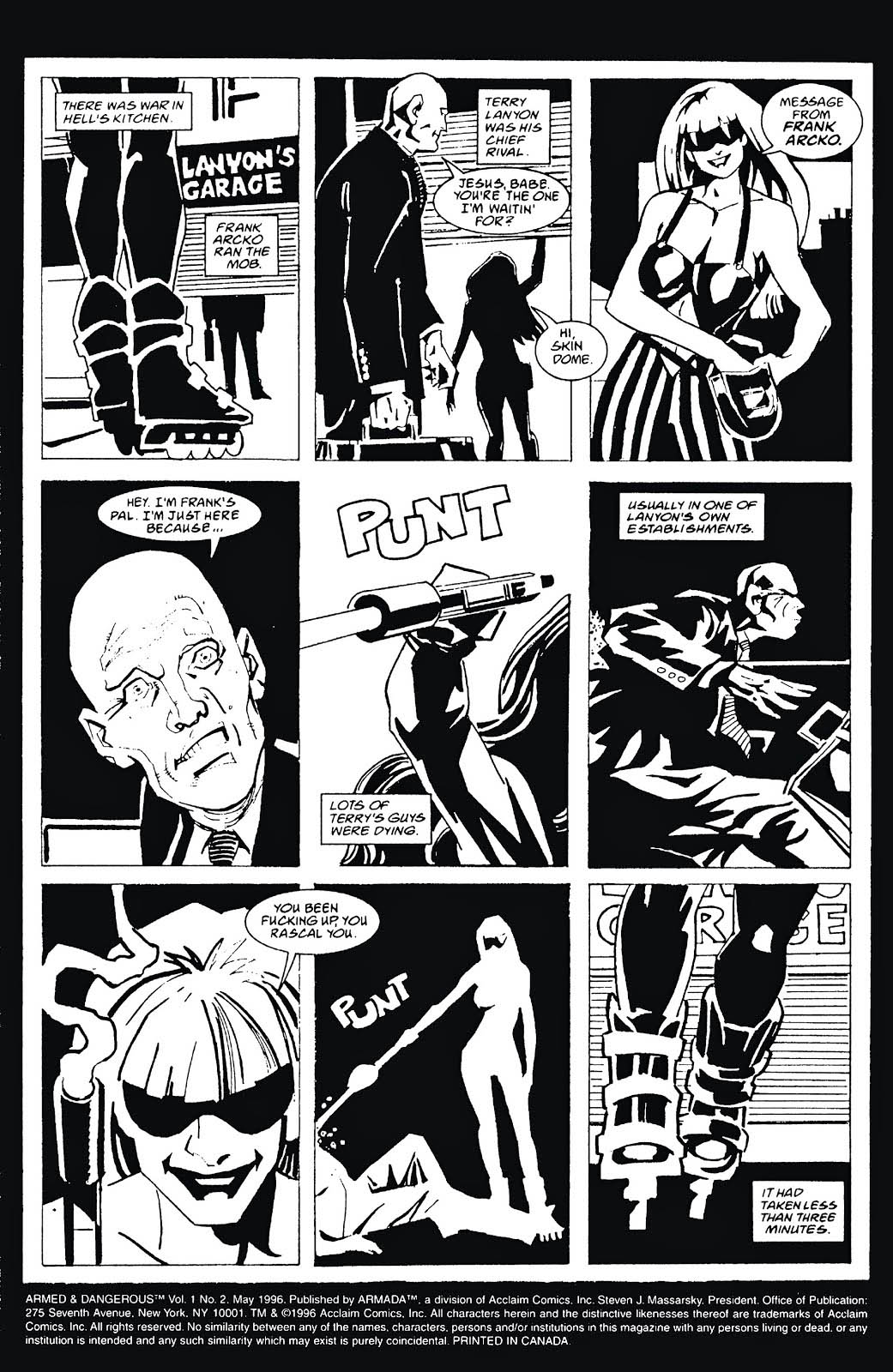
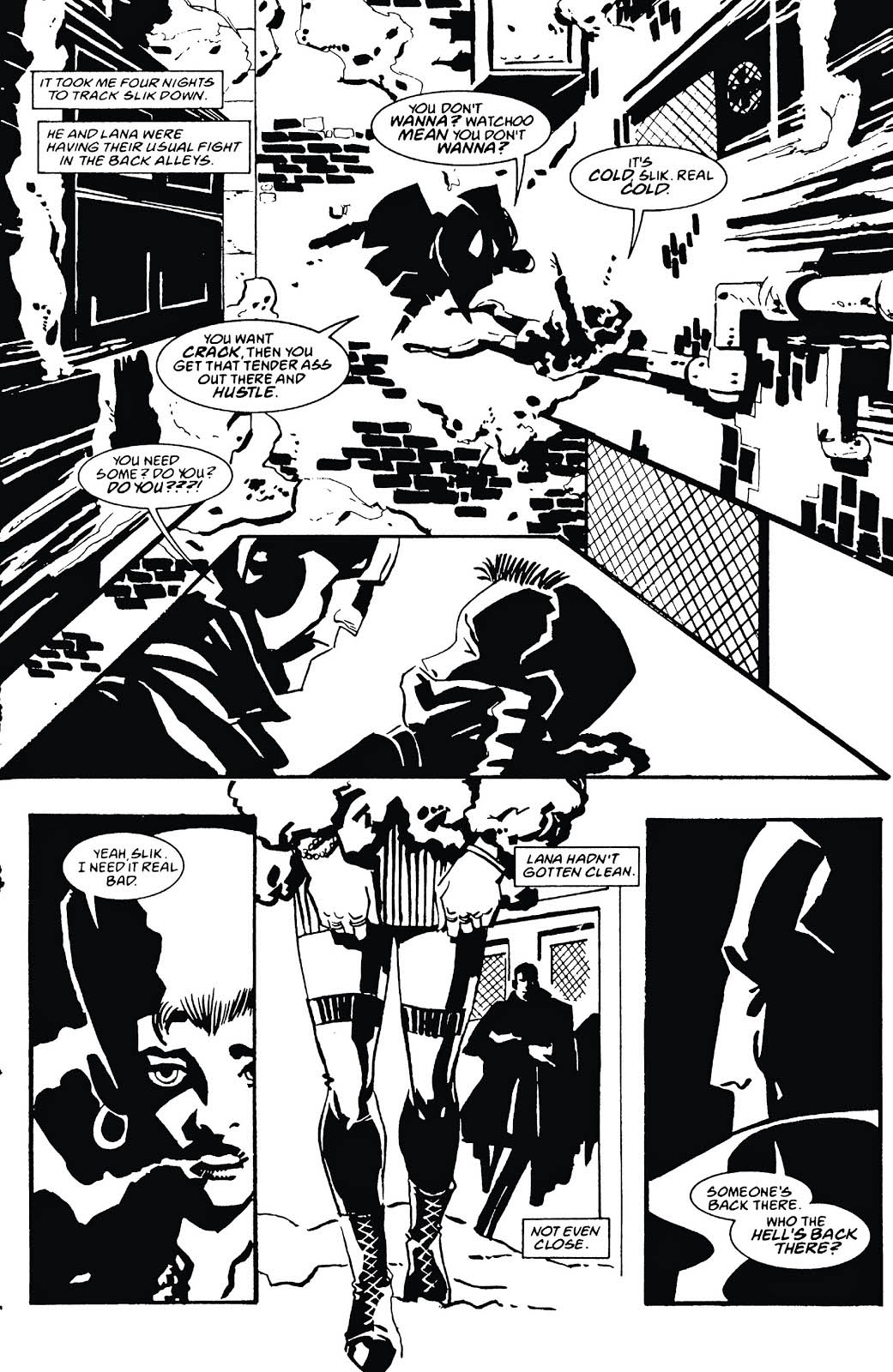
We close our month-long celebration of independent creators with a cool noir-ish page from fan-favorite artist Mike Grell and his mercenary (mostly good guy) Jon Sable. Appropriately, it’s the final page from a two-parter set against the Olympic games.
(1984 was 37 years ago? I need a drink.)
We also close with a great urban legend involving Sable, Pierce Brosnan, and the short-lived (and not great) Sable Televison series.
A number of fans called Jim a “sell-out” at the time, much in the same way they hollered when Jim and Rob Liefeld agreed to reboot some of Marvel’s classic superheroes a short while earlier. (Thank goodness contemporary social media hadn’t appeared yet, but let’s face it, trolls are still trolls.)
The Irony of that criticism? Being independent means making your own choices, on your own terms, whatever those might be.
And ultimately, the winnow swallowed the whale. DC became much more like WildStorm, rather than the other way around. And Jim of course became DC publisher.
As for Max Faraday? It was planned to be a mini-series, and has remained a “one and done” project with a complete collection finally appearing in 2014.
We continue with our month long celebration of the “Independents” — Independent creators and projects that continue to impact the comic book medium.See you back here on Thursday.
Start with a full-size portion of Russ Manning, then add a very generous helping of Jack Kirby.
Mix in in a cup of Alex Toth, a shot of Doug Wildey, and a pinch of Joe Schuster, and… voila, you have yourself a full Steve Rude gourmet meal.
Unfortunately, it’s a one-of-a-kind meal, near impossible to replicate.
Clean and distinctive, Rude is among my favorites of the “modern” artists working in graphic storytelling. (In other words: Old guys who, like me, are not that old.)
Nexus, created by Rude and writer Mike Baron, celebrates its 40th anniversary this year. Pages from early issues featuring the titular character rarely become available, and this great one isn’t going anywhere soon.
We continue with our month long celebration of the “Independents” — Independent creators and projects that continue to impact the comic book medium.We’re back on Tuesday (7/27) with… Jim Lee. Have a great weekend.
We continue with our month long celebration of the “Independents” — independent creators and projects that continue to impact the comic book medium.
Drowning in tar pits seems like a pretty rough way to go.
Then again, this is Frank Miller, and in the hardboiled world of Sin City, that form of murder might be preferable to some alternatives.
(In fairness, our “hero” Dwight ultimately makes it out alive. Sorry if that’s a spoiler, but the Big Fat Kill is from 1995. 25 years seems like a fair amount of time to catch up on these things.)
Big Fat Kill (BFK) is the fourth of Miller’s Sin City sagas, and one of the three stories featured in the first Sin City film. I can’t recall if the tar pit scene made it into the movie or not. Guess it’s a good excuse to watch it again.
As for actually drowning in tar pits? According to my anecdotal research and sources, It’s harder than you might think.
But it makes for one very cool original art page, and, in this case, that’s what counts.
Clive Owen as Dwight McCarthy in the first Sin City film.
We continue with our month long celebration of the “Independents” — Independent creators and projects that continue to impact the comic book medium.
Two independent creations collide in the second issue of Erik Larsen’s Savage Dragon ongoing series in 1993, as the Teenage Mutant Ninja Turtles drop in. Literally.
The large top panel of this fun action page inspired the cover for the issue.
Larsen and TMNT creators Kevin Eastman and Peter Laird share much more than just a passion for all things Jack Kirby. (I would bet that at one time, no one owned more DC Kirby art than the three of them.) They tell their stories with endless energy and panache, something that is often missing from more “mainstream” titles.
Larsen made headlines recently with the announcement that he was relaunching Ant, another Image creator-owned project originally created by Mario Gully. (Larsen purchased the character in 2012, and included her in the Spawn series he wrote shortly thereafter.)
Issue #1 of the new Larsen Ant series launches next month.
Meanwhile, Savage Dragon is now one of the longest running independent creator-owned series of all time. Issue #260 hits the stands in August as well.
Back here next Tuesday (7/20) with Frank Miller. Have a good weekend.
Larsen’s August 2021 releases: Savage Dragon #260 and Ant #1.
We continue with our month long celebration of the “Independents” — independent creators and projects that continue to impact the comic book medium.
Matt Wagner seamlessly fits his independent creation Grendel into the pulpy world of The Shadow in this wonderfully realized mini-series. Grendel — Hunter Rose — is a natural adversary for the famed vigilante in a story set during the Shadow’s classic era, the 1930s.
Not much more to add here, except — I hope they do a sequel one of these days.
Here is a great oversize and dynamic page from the creative team of Tim Truman and Ricardo Villagran on Scout: War Shaman, a sequel to the original Scout series, about an Apache warrior in a fairly grim futuristic USA.
Although the first 16 of 24 original issues have been collected twice, the final eight of the original series have yet to make into a TPB. Nor has any of this series, or two additional mini-series and some one-shots.
Seriously? C’mon people…
We continue our month-long celebration of the Independents! — Independent creators whose work has captivated us as much, or even more, than the traditional commercial product typically coming from the large mainstream publishers.
Frank Brunner pencils and Mike Gustovich inks, along with the Brunner prelims on separate paper.
Guest column from friend of the blog, Mike Gold:
It all started about 31 years ago with Jim Steranko. Or so I’m told.
There was this advertising mad man who became producer/business manager for Chicago’s prestigious Organic Theater (sic) Company run by director Stuart Gordon. His Organic was to theater what Marvel was to comic books circa 1961: in-your-face energy, on-your-feet stories, and actors who might eat the popcorn out of your lap.
Today, Stuart’s ensembles look like a Who’s Who of American entertainment: Among the great many who made their marks at the Organic were actors John Heard, Joe Mantegna, Dennis Franz, William J. Norris, and André De Shields and playwrights David Mamet, Ray Bradbury, and John Ostrander.
That’s heavy street cred. I was an early and constant fanboy.
Among their many soul-conflagrations was a three-part heroic science fiction play called Warp. This was a risk as it went up midway between the cancellation of Star Trek and the release of Star Wars. Warp ran in three-parts, performed in repertory, two episodes each night. After the initial year’s run they closed with a Warpathon: all three in sequence, each act and chapter separated by an exquisite course provided by world-class master chef Louis Szathmary.
I have been privileged to attend four astonishing entertainment events: the original Woodstock Festival, the Comic Relief benefit at Radio City Music hall, the Chicago Blackhawks / Detroit Red Wings outdoor hockey game at Wrigley Field, and both of the Organic Theater Company’s Warpathons. That list wasn’t in order of preference.
My involvement with Stuart went beyond that of a mere fan and patron. We produced a comic book, Weird Organic Tales, as a subscription device for the company. By “we” I mean Joe Staton, Bruce Patterson, Chuck Fiala, Paul Kupperberg, and myself. I believe the print run was somewhere north of 200,000 copies.
So when Warp was revived for what turned out to be another year-long run (ending in the second Warpathon), this time at a larger venue, the aforementioned mad man, Rick Obadiah, contacted me about getting the comic book community to adopt the show and help spread word-of-mouth. I asked Rick how he thought of me, and Rick responded it was Jim Steranko’s recommendation. So Steranko was a grandfather to First Comics.
After the initial Chicago run, the first part of Warp played Broadway for a brief time. The provincial uptights of the 1973 Broadway world couldn’t deal with on-stage heroic fantasy in a science fiction milieu: it was all childish crap to those well-insulated Morlocks. The New York comic book community supported it to the gills, but that wasn’t enough.
I figured those long-suffering comics folk were still lusting to see the second part of Warp, even though it was almost eight years later. Coincidentally, the annual Chicago Comicon, of which I was a sponsor, was going to be happening at the time the second chapter was set to debut. I suggested we hold a special showing for the comic book industry – the writers, artists, editors, and publishers. We supported it with a panel at the convention and all the publicity we could muster, which was considerable. At that time, the Chicago Comicon was almost as large as the San Diego show, which had yet to be discovered by Hollywood.
Rick and I were well aware that, after seeing that second play, he would likely get an offer from Marvel, DC or both for the comics rights. I signed on as Rick’s consultant and, lo and behold, at the post-play reception both DC’s Paul Levitz and Marvel’s Jim Shooter made that very suggestion. Rick agreed to go to New York within the month, and he and I set down to work.
First, pun intended, I told Rick that we would make more money if we did it ourselves. There was no magic to producing a comic book if you can get good talent; Weird Organic Tales proved that. I detailed how the direct sales distribution system worked and revealed the proliferation of dedicated comic book stores across the nation. Rick thought I was nuts. OK, so that wasn’t a particularly original observation. He thought it be best if he were to just license it to people who ostensibly knew what they were doing. I said fine, and I proceeded to show him the business of the comics business.
I suggested he schedule the DC meeting first. “Why?” Rick asked. “Because Jim Shooter is simply going to say he’ll match DC’s offer and up the ante with the truism that they are Marvel Comics so the book would sell better.” Then I outlined ten things to watch out for at his DC meeting.
Obadiah was overwhelmed. He refused to believe what I said. “These are professional businessmen,” Rick declared. “They’ve been in business for decades!” Yes, I responded, but it has a mom’n’pop Depression-era mentality. Mind you, I had already spent a couple years as a marketing executive of DC Comics. Nonetheless, Rick still didn’t believe me. Fine; we proceeded with our efforts and the producer flew out to New York.
Rick called me after his DC meeting.
I told him what happened. I had a lot of friends on DC’s staff, and they had ears, so with barely concealed snark, I asked how close I came with my top ten list. Rick let out a sigh.
“You were nine for ten.” Hmmm. The industry was making a some progress. “I’m going to meet with Marvel tomorrow, but I think we’re going to take your publishing suggestion a lot more seriously.”
When Rick called back he told me Jim said he’d match DC’s offer and he noted the book would sell better at Marvel Comics. We agreed that the meeting we scheduled upon his return to Chicago would now be a much longer meeting.
When Rick came to my office – I was editing a home video magazine that, not coincidently, largely employed comic book writers and artists as its freelance staff – we began our real work. I started with the basics needed to run a comic book company and I noted that even with a minimal staff in order to be profitable we had to publish the maximum number of titles the staff could produce. It made no economic sense to simply publish Warp.
And thus First Comics was born.
I came up with a publishing plan and brought in talented friends who were also visionaries and risk-takers: Joe Staton as both a contributor and our art director, Bruce Patterson as a contributor and production manager, and writers and artists Howard Chaykin, Mike Grell, Martin Pasko, Peter Gillis, Jack C. Harris, and Steve Ditko. Our staff was rounded out with Rick Felber as business manager, Rick Oliver as associate editor (if you wanted a job at First Comics, it helped if your first name was Rick), Kathy Kotsivas as office manager, and Ken Levin and Ralph Musicant as directors and advisors. Production artists and art directors Alex Wald, Doug Rice and Paul Guinan later joined us.
We gave Neal Adams right of first refusal on Warp: he had been involved in the Broadway production, producing the poster and Playbill art and reworking some of Cookie Gluck’s fantastic costumes. Neal was interested but realistic about his work schedule.
Being familiar with Neal’s workload, I already had an idea for the perfect Warp artist. Frank Brunner had recently quit Marvel over typically valid “publisher-treats-freelancer-like-shit” issues, and he had given a cover interview to The Comics Journal about how the business sucked. Frank’s style was perfect for the property, and his concerns were perfectly justified.
Joe’s property E-Man was next, followed by Mike’s Jon Sable Freelance and Howard Chaykin’s American Flagg!. I wanted to introduce some new talent under the cover of an already-established property between Sable and Flagg. Grell had done Starslayer at Pacific Comics and, while he was tied up on Sable he still wanted the property to continue. I brought in my friend of ten years, actor/playwright John Ostrander, and artist Lenin Delsol. Both were exceptional; eventually, Lenin succumbed to a bad case of Dreaded Deadline Doom and was succeeded by a guy I outright stole from TSR, the Dungeons and Dragons people guy; named Timothy Truman. Shortly thereafter, John and Timothy – with some help from Lenin – created GrimJack.
Along the way we picked up Nexus, The Badger, and Whisper and their creator/producers, Mike Baron, Steven Grant, Steve Rude, Jeff Butler and Norm Breyfogle. Then we went tits to the wind and produced our first original project by talent few had heard of: Mars, by Mark Wheatley and Marc Hempel.
Now it’s 30 years later. Damn near everything we did during my tenure at First Comics has been reprinted in album editions, and I remain close to just about everybody involved. It’s been the most gratifying experience of my career.
It all started right here, with Warp, the science fiction play written by Stuart Gordon and Bury St. Edmund, directed by Gordon, and performed by several casts of gifted actors. Doing it was a no-brainer; how could we go wrong?
We can reread the comic book but we can’t recreate that original stage experience. Such is the magic of theater. But Warp and Stuart Gordon turned a lot of comics and science fiction fans into theater fans, including myself. I will be forever grateful.
Mike Gold is a columnist and podcaster for Pop Culture Squad (popculturesquad.com), a political activist, and media metaphysician for arrogantMGMS. An-award winning editor for First Comics and for DC Comics, Gold received the Heroes Alliance Dick Giordano Humanitarian of the Year Award in 2011.
This essay originally appeared in the 30th Anniversary trade paperback edition of Warp, published by 1First Comics and is probably copyrighted by somebody so All Rights Reserved.
Neal Adams art for the Warp Poster and Playbill for the very short-lived New York run. Thanks to a loving Aunt, I managed to see the play during its brief Broadway run. (She was probably either confused or mortified, but she never said a word.)