Greg Goldstein's Comic Art Gallery

Howard Chaykin — Saluting The Flagg, Again

American Flagg #7, April 1983

New art, along with a repost of last year’s Flagg blog:

Remember what is was like to first watch Sopranos or The Wire or some of other great early HBO-produced television shows? You knew it was TV, of course but it was so different… so much better than typical commercial fare, it made you think about what the medium could actually be.

For many fans — myself included — Howard Chaykin’s American Flagg (especially the first dozen issues or so) had a similar impact on comic books in 1983. Part SF, part satire, all adult, Flagg’s dystopia was like nothing else in contemporaneous comic book publishing.

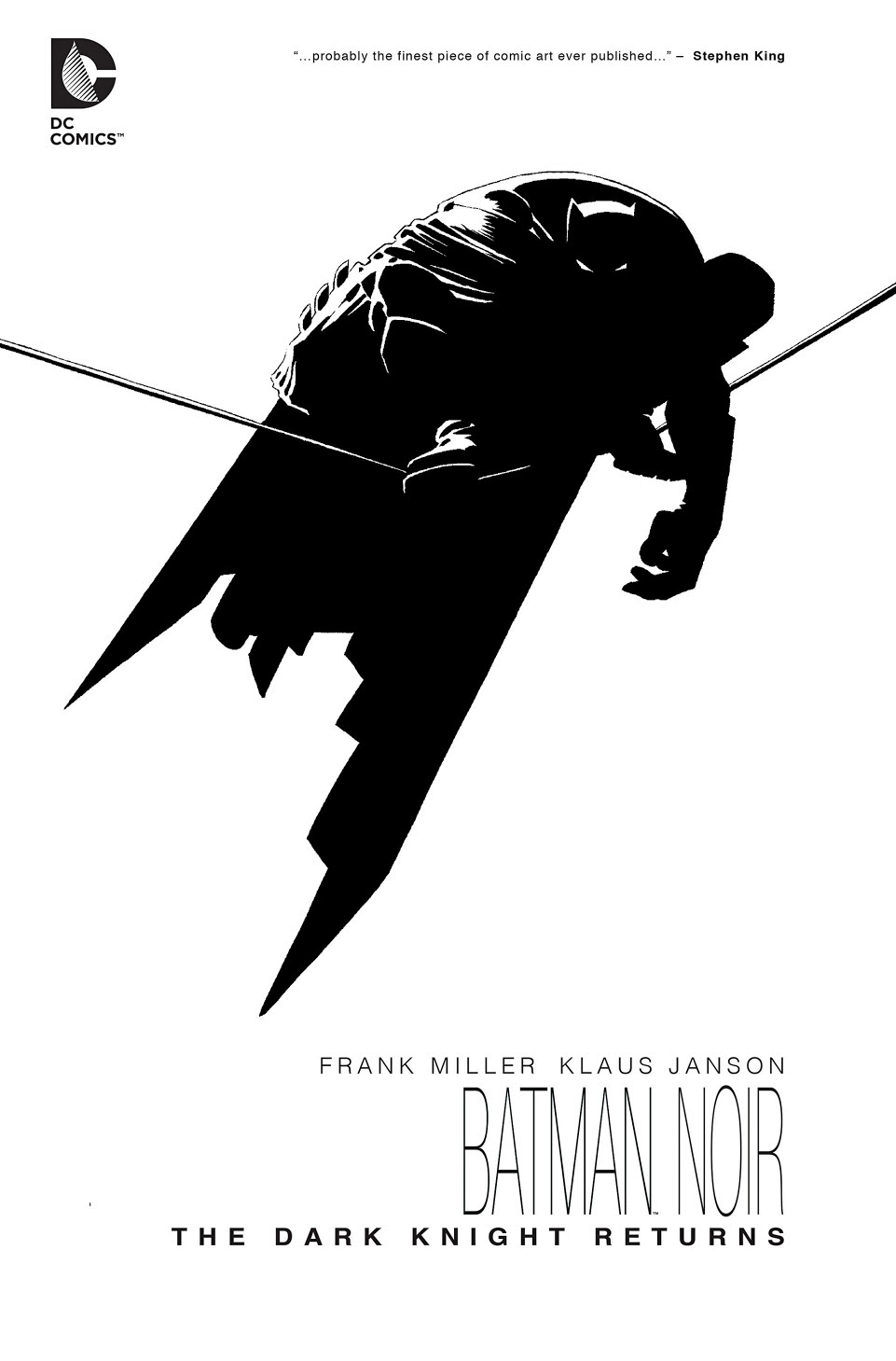
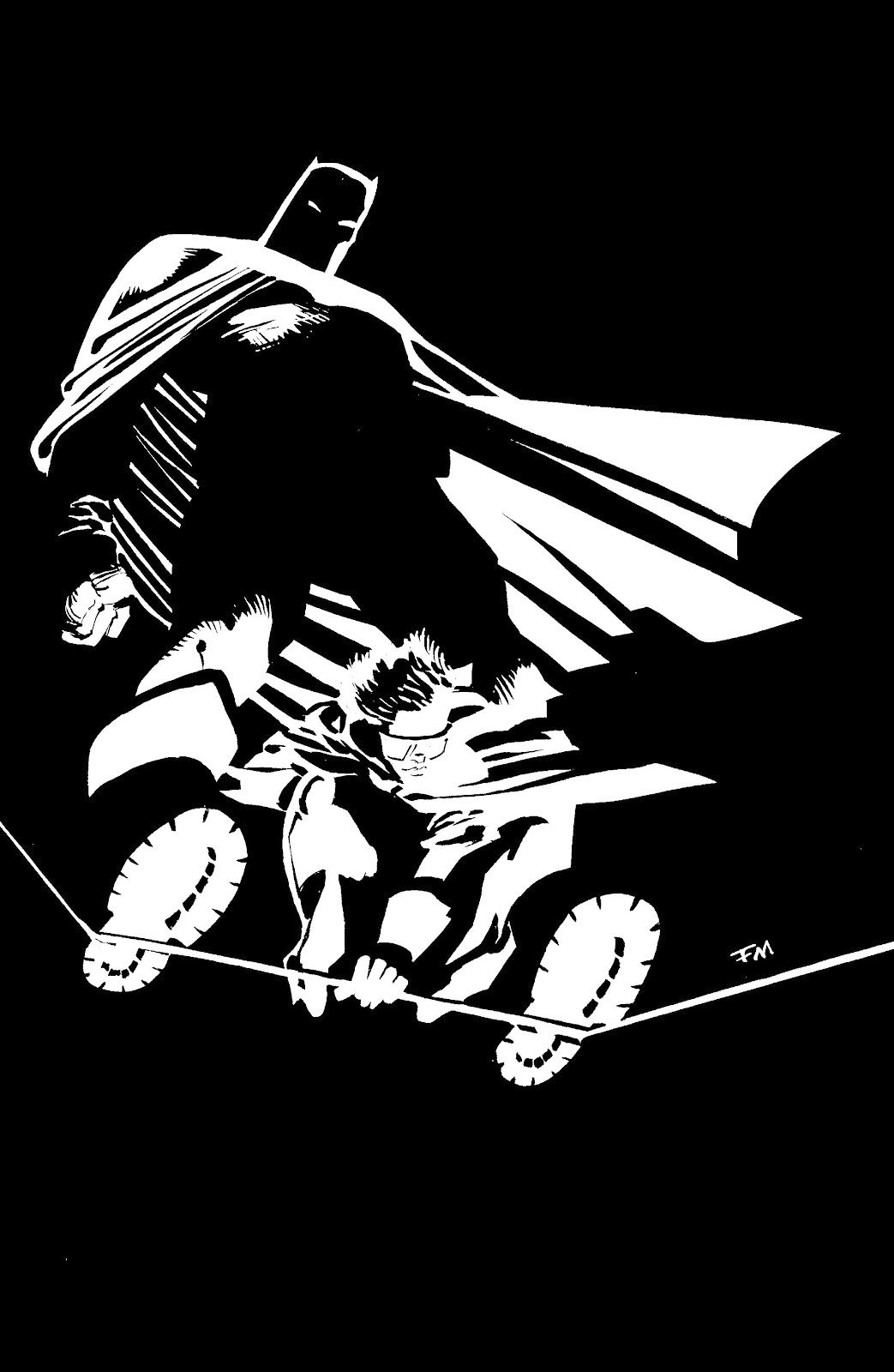
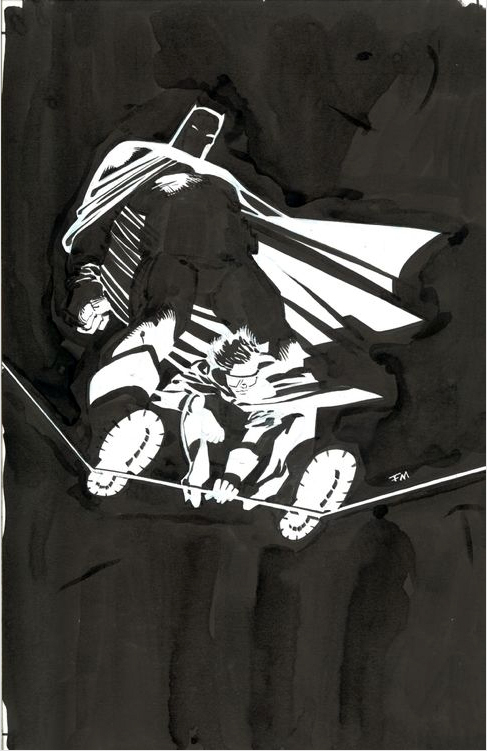
Its inventive storytelling was groundbreaking, an oft-overused word that most definitely applies here.  Need validation? Read those first twelve Flagg issues, and then read The Dark Knight Returns, by Howard’s studiomate Frank Miller, which appeared a few years later.

I’ll wait. 

Or, just trust me on this.

Flagg came from nascent publisher First, and its editorial plan pursued mature, original comics from talented creators.  And Flagg was one of the best of them.

It was obvious that Howard put his heart — and more — into the series. 

In fact, I think there are only two reasons why Flagg isn’t frequently discussed in the same breath as other innovative titles like DKR or Watchmen.

First, it’s because of First. 

Independent comic book publishers almost entirely relied on the direct market. Their reach wasn’t anywhere near as wide the mass market, and even with some newsstand distribution, a top independent comic book would never have the reach of a poor-selling superhero title from Marvel or DC, let alone a smash hit.

In other words, no chance you were going to score an American Flagg Slurpee at 7-Eleven.

The second reason is more frustrating. 

Remarkably, all 50 original issues of Flagg have NEVER been collected. The early issues appear in and out of print from time to time, but it’s a pity that you can’t get the complete series in digital or print, on demand, as they say.
And that’s a conversation I’ve had with Howard many times.  Many, many times.

Trust me on that, too.

Milton Caniff — Sage For His Age

Steve Canyon, Daily Strip, June 6, 1949

How big a deal was it when Milton Caniff left Terry and The Pirates to create Steve Canyon, a new comic strip that he would own exclusively?

It made the cover of Time Magazine. 

Time, the most important news magazine in the world in the mid-20th century, also featured Gandhi, Princess Elizabeth, Eva Peron, The Shah of Iran and Jackie Robinson on its covers that year.

One of America’s best-loved comic strip creators had declared his independence. 

The big newspaper syndicates would no longer control the rights to Caniff’s cartooning. 

In the days when star cartoonists were pretty much rock stars (popular comics helped drive newspaper sales), “The Rembrandt of the Comic Strip” was now fully in charge of his own destiny. 

It was indeed a big deal.

To this day, when you want to reprint Steve Canyon, or chose to produce some lovely retro Canyon merch., you make a deal with the Caniff estate directly.

Milt Caniff — one of the medium’s greatest creators — leaves behind a legacy of independence that hundreds, if not thousands, of cartoonists and storytellers embrace on an ongoing (and not at all risk-free) basis.

Happy Independence Day.

Wallace Wood — Stripped (Part 3 Of 3)

Shattuck #26, 1972

Happy (almost) Independence Day! Welcome to our second annual month-long celebration of the “Independents” — Independent creators and projects that continue to impact the comic book medium. This is our third (and final installment) in a week-long series focused on Wallace Wood.

Shattuck is the rarest, the oddest, and the shortest-lived of the Wood Studio strip ventures.

Many collectors had never seen any until Fanatagraphics issued a complete collection a few years ago.

From Frank Plowright on The Slings and Arrows:

“Shattuck is more a collector’s curiosity than a bona fide graphic novel, pulling together the episodes of a short lived Western newspaper strip produced in 1972 for the Overseas Weekly. Wood’s studio had the contract to produce the strip, and as with others for the same market, one of the artists recalled the brief as being to get the women’s clothes off as rapidly as possible. It can’t be said that Wood underestimated his audience…

“Many hands worked on the project… Wood himself might be involved in any episode plotting, laying out, adding inks or correcting, while his chief studio assistant Nicola Cuti also produced plots and layouts using a swipe file. Most of the actual illustration was the first published work of Howard Chaykin, then Dave Cockrum, both usually inked by Jack Abel. Both Wood and Abel have utterly distinctive inking styles, so there’s no difficulty in recognizing which worked on which strip.

This particular example appears to be mostly Cockrum, possibly with some Abel inks and definitely some Wood fixes in places.  It’s “Where’s Woody” instead of “Where’s Waldo” — you have to look carefully to find it.

Wallace Wood — Stripped (Part 2 Of 3)

Sally Forth #39, 1972

Happy (almost) Independence Day! Welcome to our second annual month-long celebration of the “Independents” — Independent creators and projects that continue to impact the comic book medium. This is our second part of a week-long series focused on Wallace Wood.

I own possibly the rarest of all Wallace Wood Sally Forth strips: A “PG-13” version (no nudity) and, more importantly, a full showcase of Wood’ talents; Odd creatures, robots, satire, action, and of course, sexy women. (An art dealer who wanted to acquire it from me told me that his married Wood fans could hang it up and not feel “embarrassed.”)

Forth, Wood’s sexy action-adventure character, who is mostly depicted nude in the series, first appeared during June 1968, in Military News, a 16-page tabloid from Armed Forces Diamond Sales. The title is wordplay — “to sally forth,” means to leave or attack from a military encampment.

Sally returned July 26, 1971, in the Overseas Weekly, and ran until 1974.

The character is absolutely no relation to the Sally Forth comic strip created by cartoonist Greg Howard. 

But is pretty humorous when people mix the characters up.

Wallace Wood — Stripped (Part 1 Of 3)

Cannon, Strip #61, 1973

Happy (almost) Independence Day! Welcome to our second annual month-long celebration of the “Independents” — Independent creators and projects that continue to impact the comic book medium.

Celebrating both Comic strips AND independent artists and their creations, we present Wallace Wood… and Cannon, an action strip series that is somehow both ludicrously serious and deadly satirical at the same time.

Cannon, first appearing in Wood’s own Heroes Inc. comic book (1969), ran from 1970 to 1973 in Overseas Weekly, a newspaper produced for American servicemen.

The single best overview of the strip I have ever read comes from writer Rocko Jerome via the website Sequart. Excerpts below:

“There’s no greater proof of (Wood’s) mastery than Cannon, which feels like the perfect and most truly, thoroughly “Wallace Wood” product imaginable. In lesser hands, the material could’ve sank into seedy Tijuana Bible territory, but the work is so beautifully rendered and put together that it’s impossible to assail the craft involved. There are those who will call these drawings on paper misogynistic and gratuitously violent, and it’s hard to argue that it is not, but the tightly rendered imagination on display will tell you what you need to know. Wood could make ugly things beautiful and beautiful things gorgeous…

“The jokey animated television series Archer feels like a dumbed down, considerably less risky version of Cannon, which is several decades its senior. Cannon simply doesn’t let up on the throttle, its gloriously illustrated Id running roughshod over its pages.”

Read the entire review — it’s worth every minute of your time.

And my own, succinct review:

This is some great Wood artwork.

Jack Kirby & Wallace Wood — Blastoff

Sky Masters, Daily Strip, June 15, 1959

What if…

Jack Kirby’s 1958 Sky Masters newspaper comic strip — about the nascent space race — had turned into a giant hit for Jack, and partner Dave Wood.

What if…

Kirby had been able to easily solve any financial dispute with DC editor Jack Schiff about the strip’s royalty terms. (The News syndicate had originally approached Schiff about the creation of the strip, and Schiff appears to be the intermediary between the syndicate and writer Dave Wood.)

What if… 

Despite any financial acrimony over the strip, Schiff didn’t fire Kirby from Challengers of the Unknown… and all of DC comics.

You can see where this is going —

Jack continues to draw Sky Masters, fits in some DC comics work whenever possible, and never finds any time to return to Atlas/Marvel.

And “The Marvel Age of Comics” takes a completely different turn, if it even manages to leave the launching pad.

For those interested in the nitty gritty of dispute, Wikipedia has done a good job of assembling an overview (and sources) here.

Writer Jon B. Cooke provides an even more detailed summary, from the Jack Kirby Collector.

Fun fact: For many years, like most fans, I thought the “Wood” on Kirby/Wood signature referred to Wallace Wood as inker. It actually referred to Dave Wood and his brother Dick who co-wrote the strip. This, despite the fact that that Woody actually did ink the strip for about the first year, including the example above. (Dick Ayers eventually came on the strip as inker, and ultimately Jack inked it himself, likely with help of wife Roz.)

Continuing our month long celebration of the great adventure comic strips:
Week 1: Superheroes
Week 2: Detectives
Week 3: SF
Week 4: Comic Book Giants

Gil Kane — The Star Wars Effect

Star Hawks, Sunday Strip, August 12, 1979

Here is a nice (Sunday) example of Ron Goulart’s and Gil Kane’s Star Hawks, the short-lived SF adventure strip which ran from 1977-1981. (Extra nice in that it includes both the strip header and the color proof.)

“Inspired – as so many things were in the late 70s – by the tremendous success of Star Wars, the newspaper feature syndicate NEA (Newspaper Enterprise Association) got it into their heads that a space opera comic strip that evoked the cosmic high adventure and swashbuckling derring-do of George Lucas’ movie might be a popular addition to the nation’s comics pages.”Christopher Mills

Perhaps most interesting thing about the strip was the that the initial dailies were double tier as well as the Sunday’s — a risky gambit that allowed Kane to showcase his strengths in storytelling and layout. Unfortunately, newspapers weren’t in love with devoting that much real estate to the quirky SF adventure, and it ultimately dropped to the traditional one-tier.

Goulart ultimately left the strip and Kane enlisted frequent collaborator Archie Goodwin, who wrote the one above. He also left after a few arcs, and Roger Mackenzie wrapped things up.

All of the series is available in a three-volume set from The Library of American Comics and IDW Publishing.

Worth every penny, but of course, I’m biased.

Continuing our month long celebration of the great adventure comic strips:
Week 1: Superheroes
Week 2: Detectives
Week 3: SF
Week 4: Comic Book Giants

Neal Adams — Happy (Belated) Birthday

Ben Casey, Daily Strip, April 15,1966

Neal Adams turned 80-years old last Tuesday, June 15.

I’ve been planning for months to pay tribute to great strips, and great strip artists, in the month of June.

Had I been able to logically put two and together, this post would have run last week, not today.

In other words, I’m a week late… and a more than a dollar short. Ack.

As for Dr. Ben Casey? From Neal’s own website:

“When charming and talented Neal Adams was just 21, he was awarded the art chores of the comic strip based on the popular TV show Ben Casey staring Vince Edwards. One of the youngest, syndicated strip artists, Neal started his groundbreaking work on November 26, 1962 and the Sunday strip was added on September 20, 1964. Four years later, the strip ended as the television show did, but Neal’s career was just starting.”

I have a lot of “favorite” artists, but the one who had the most impact on me as a youngster was — you guessed it — Neal Adams

And the charming side of him can indeed be charming as hell.

Fun fact: A collection of all Neal’s Casey strips should be considered a holy grail of archival reprints. 

We tried. We really tried. 

Can’t win them all.

Continuing our month long celebration of the great adventure comic strips:
Week 1: Superheroes
Week 2: Detectives
Week 3: SF
Week 4: Comic Book Giants

Mac Raboy — Conquers The Universe

Flash Gordon, Sunday Strip, July 30, 1961

Alex Raymond created Flash Gordon and set the standard for comic strip illustration.

Mac Raboy worshipped Raymond, and created his own impeccable standards for illustration during the Golden Age of comics with his astonishing craftsmanship on Captain Marvel Jr.

And then… serendipity takes a hand, and Raboy becomes the Sunday artist for Flash Gordon.

That Sunday run, started in 1946, and only ending with Raboy’s death in 1967, deserves consideration among the best looking SF strips of all time.

As for Captain Marvel Jr.?  Raboy’s covers are still among the greatest ever to appear in the medium.

George Tuska — In The 25th Century

Buck Rogers Daily Strip, July 5, 1965

George Tuska closes out Buck Rogers’ run as a comic strip — at least the first time around. 

The strip had lasted nearly 40 years, debuting in 1929 and ending in 1967.  The earliest strips have been collected, but it seems doubtful that commercial considerations will allow for the entire run to be reprinted. (I’d like to be wrong about that.)

Ironically, Tuska’s depiction of Rogers is 15 years ahead of its time. Gil Gerard, who played Buck in the 1979 -1981 television series pretty much matches the likeness of Rogers that Tuska employed.

Well, they do say science fiction often becomes science fact.

(When the strip returned to newspapers to capitalize on the TV show in 1979, Tuska was already re-established in comic books. Gray Morrow picked up the illustration chores for that run.)