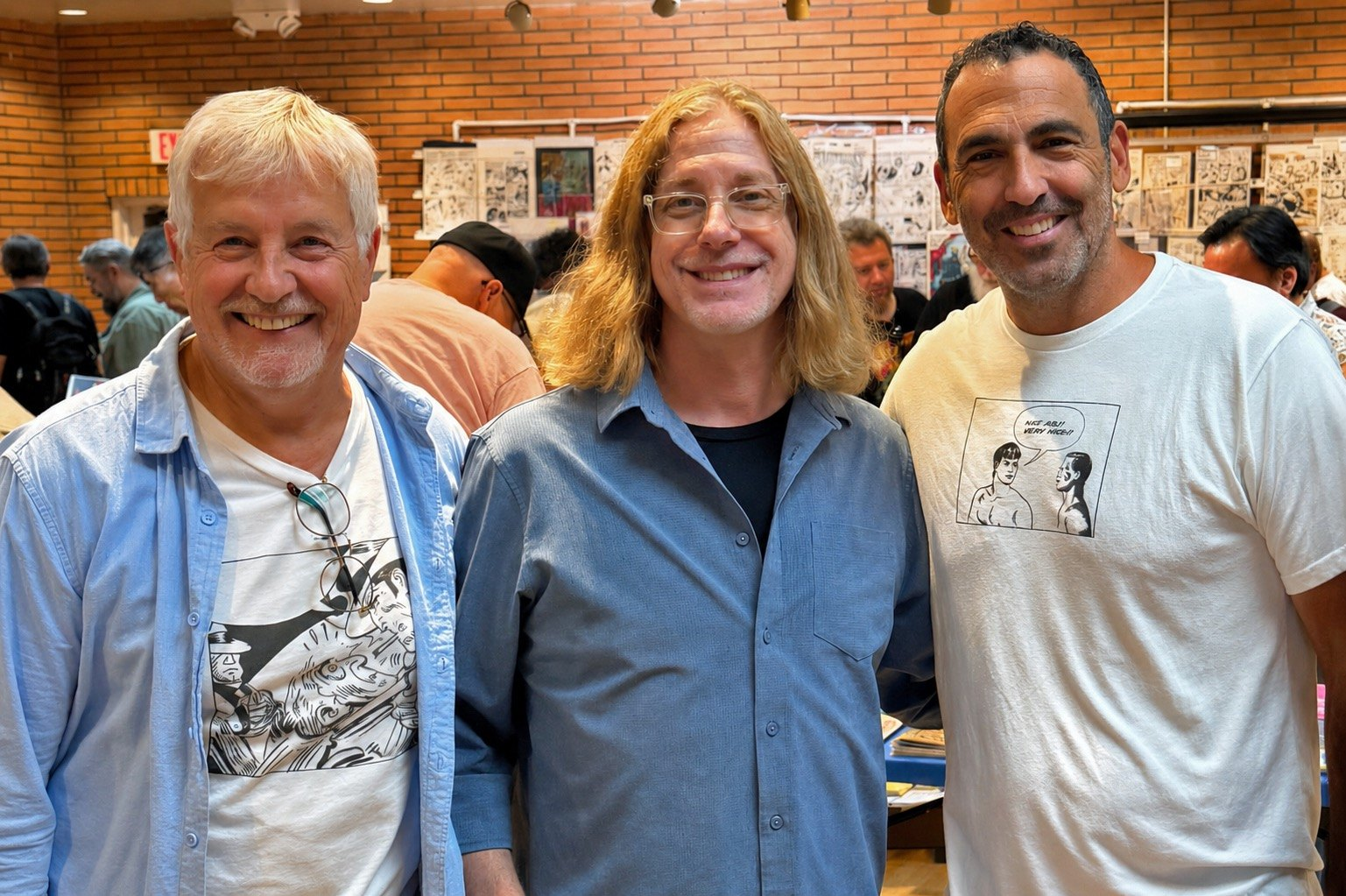
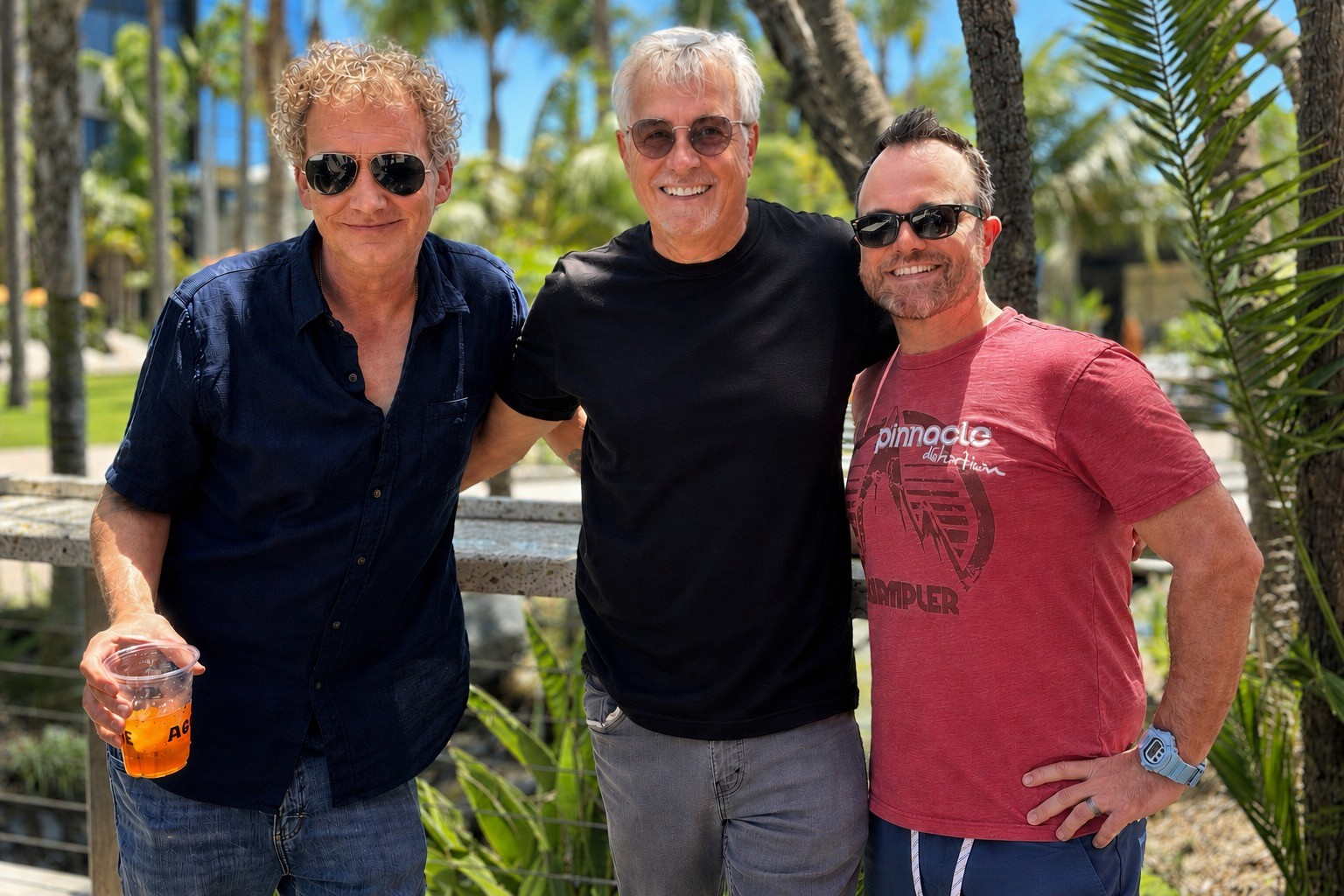
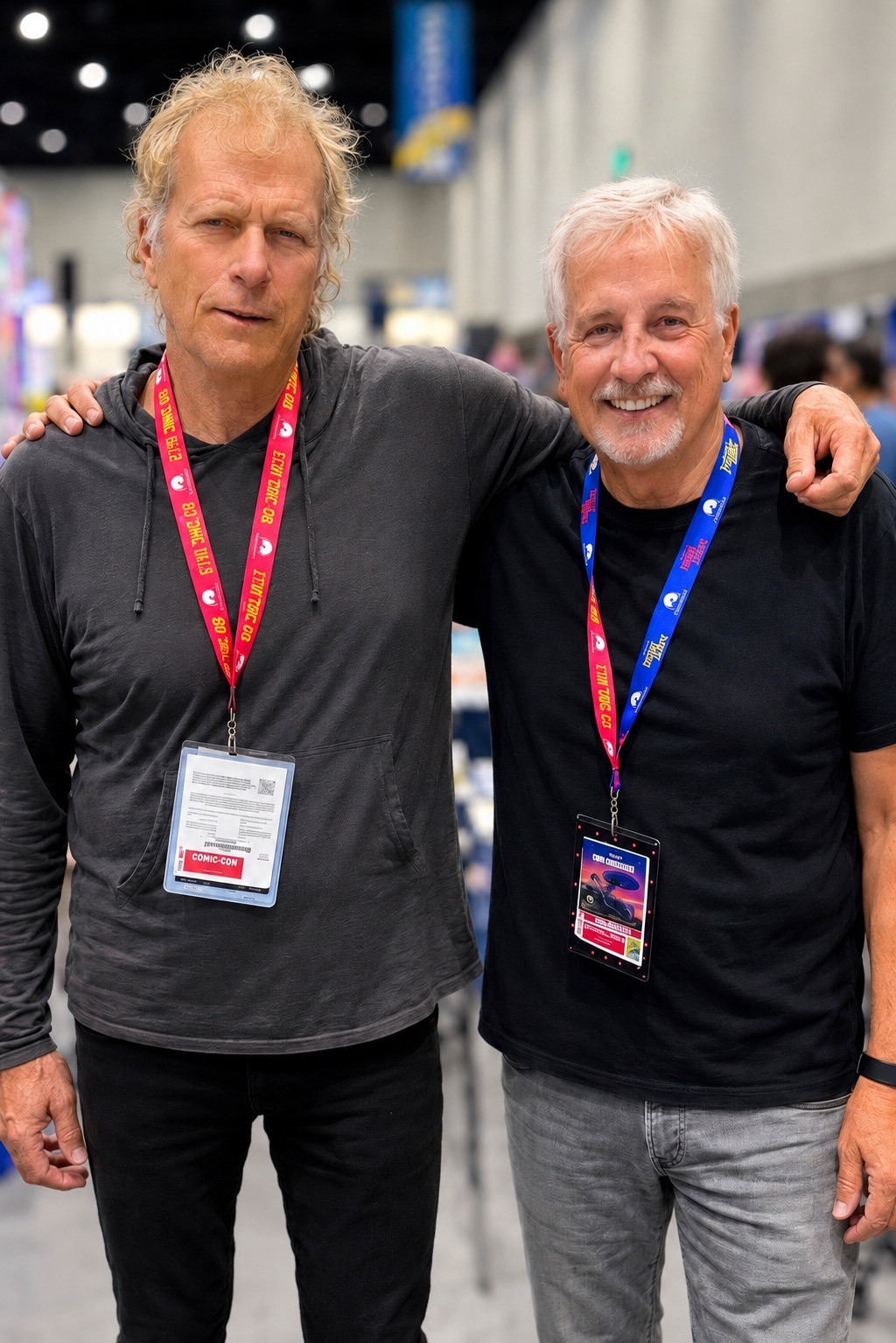
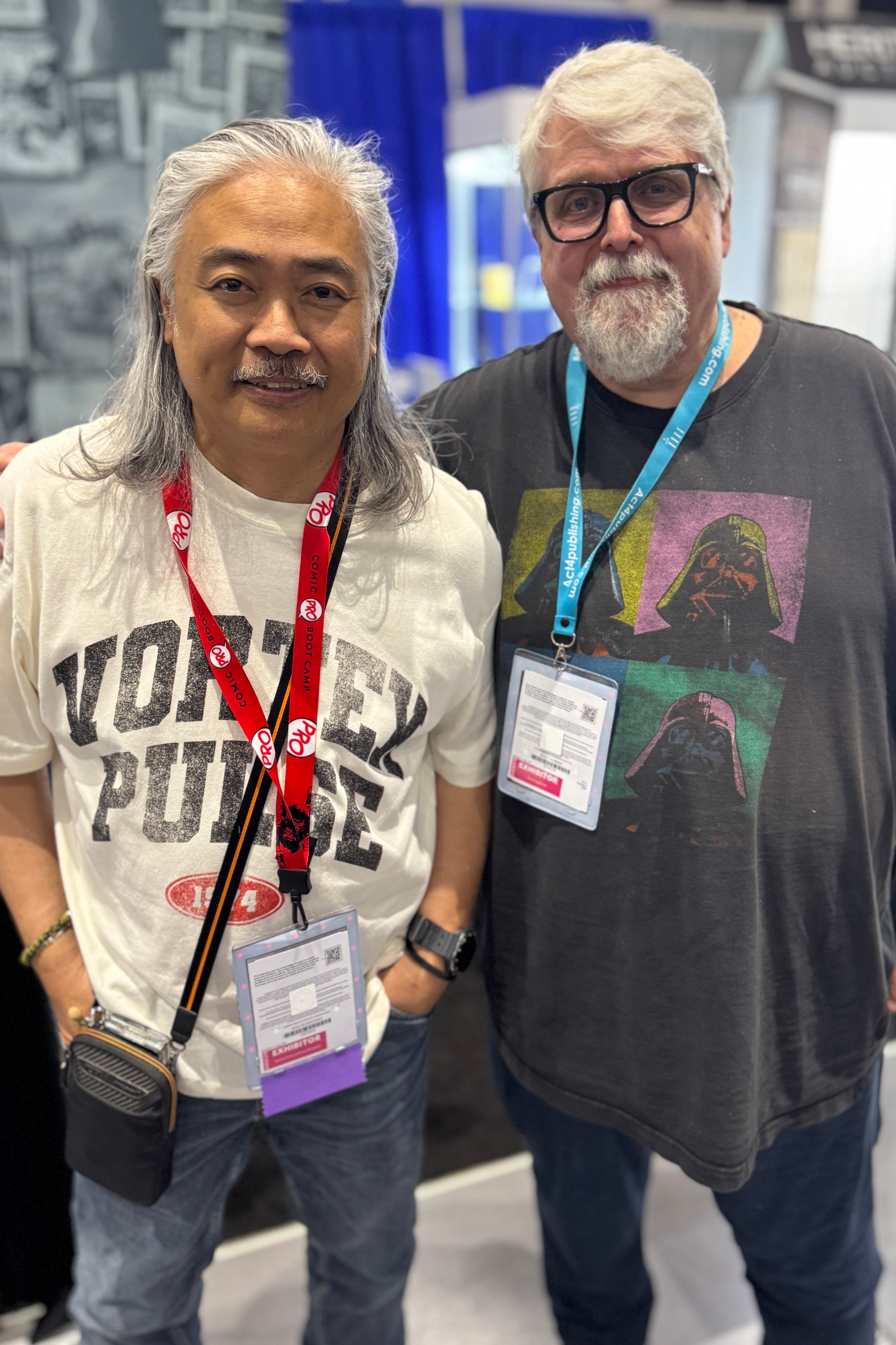
Pro tip: If you want a few decent photos before falling into the inevitable pattern of no sleep and endless hoofing across concrete floors, take them before the convention actually begins.
And yes, the first one—with Bill Cox and Steve Kriozere—is a bit of a cheat. It’s from the Sunday before the show, at a “pre-show” convention in Los Angeles.
But the more “resort-style” photo—with Dirk Wood and Tim Lenaghan—was taken at the Marriott, just moments before the madness began next door at the San Diego Convention Center.
If the entire convention had actually been like that, I would have come home much less tired, with a nice tan—and a few more dollars in my checkbook.
As always, much more to come.
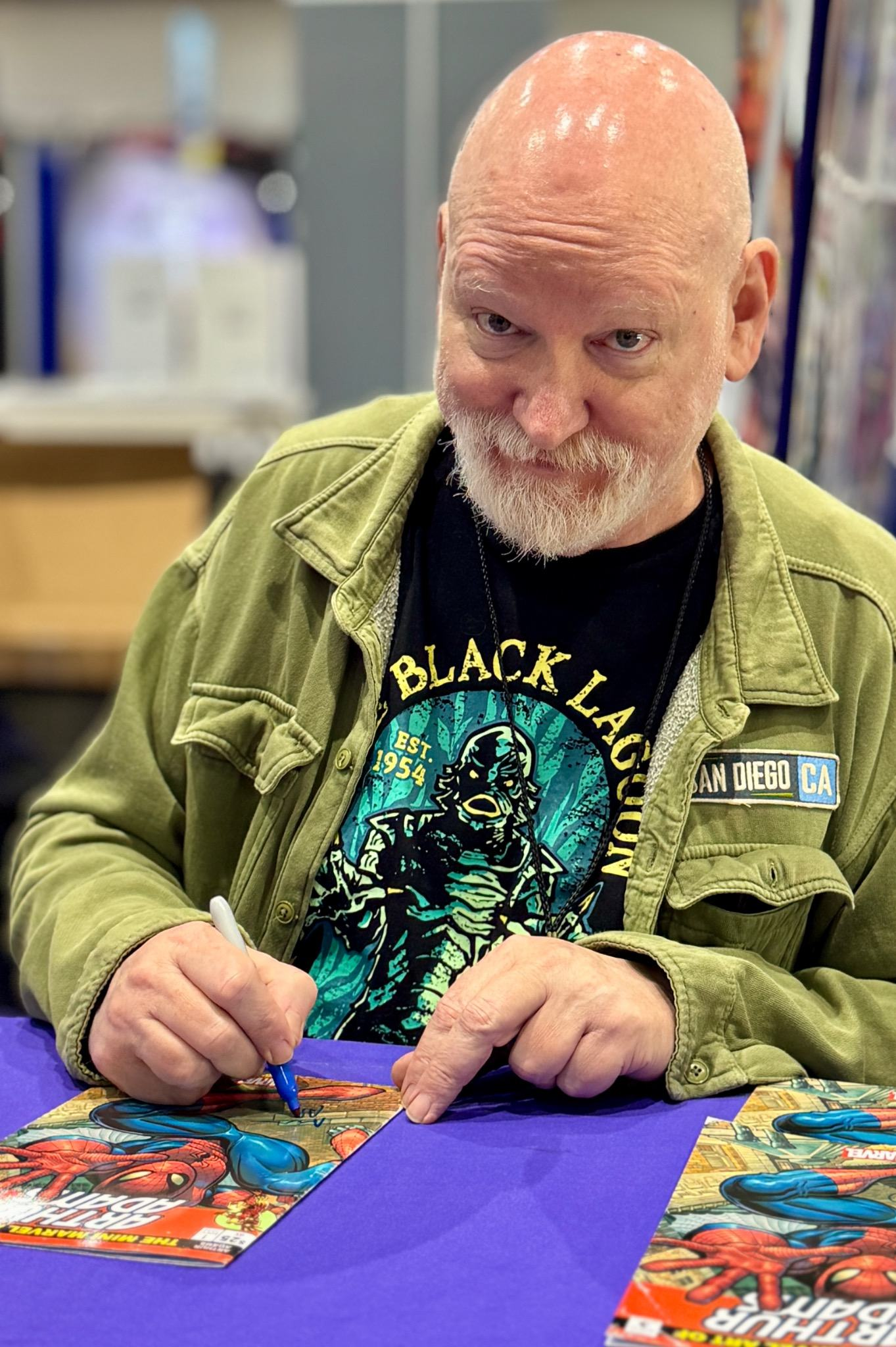
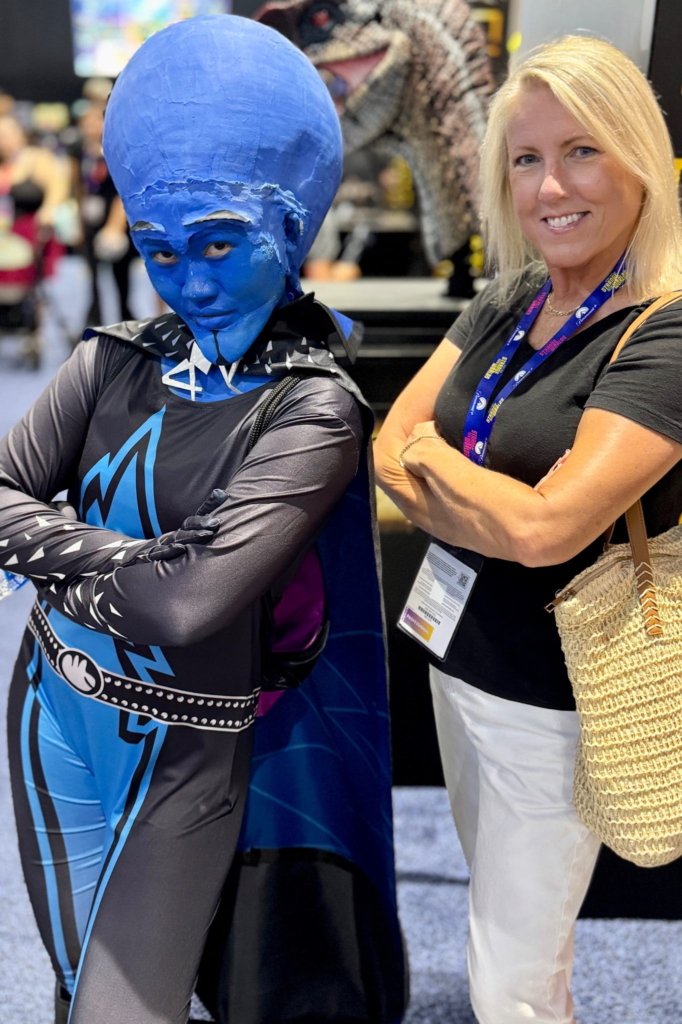
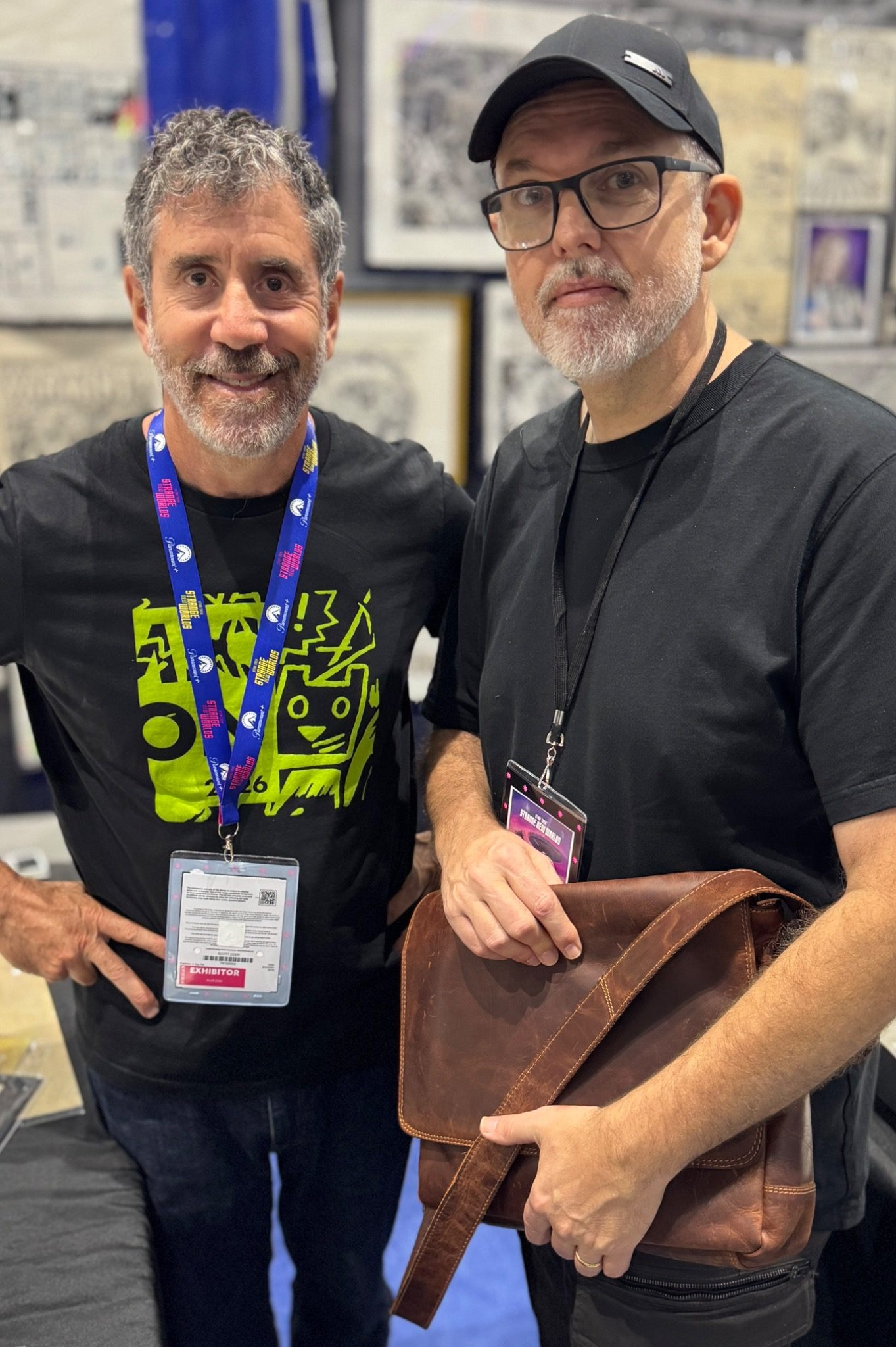
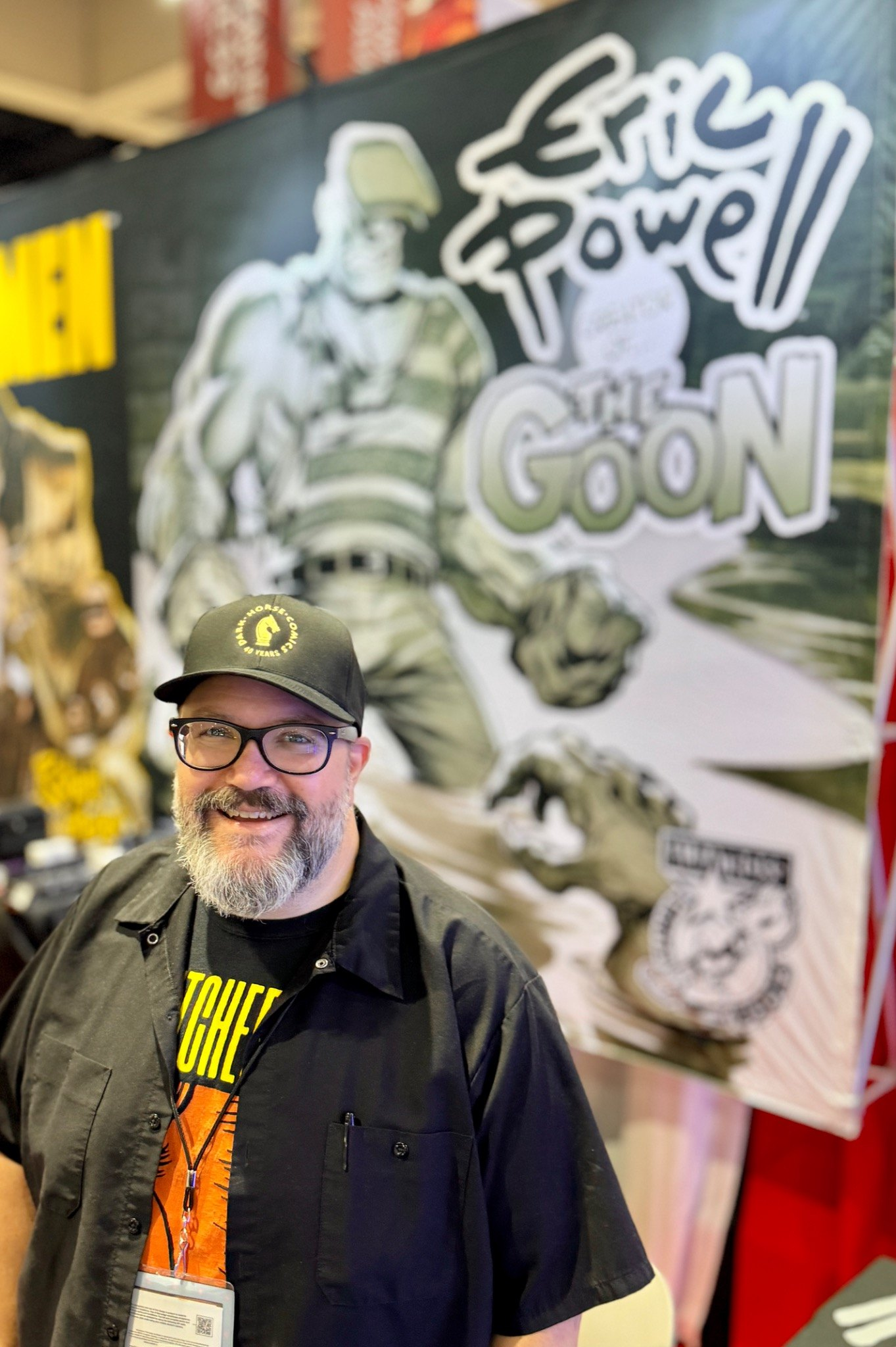
L-R: With Pete Koch, Art Adams, Jane Mitchell (& Other-Worldly Friend), Scott Eder, Ash Wood, Eric Powell, Whilce Portacio and Scott Dunbier.
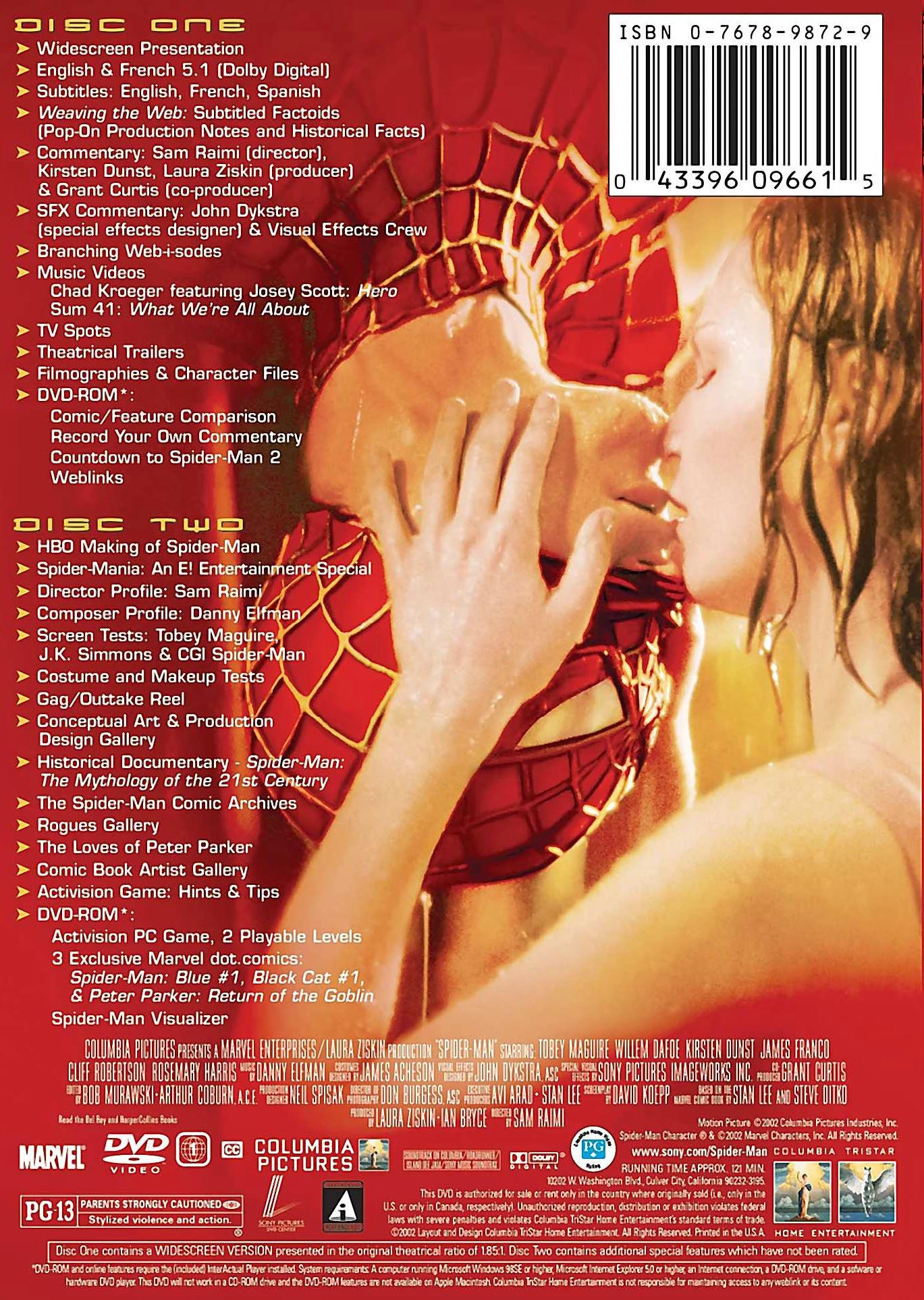
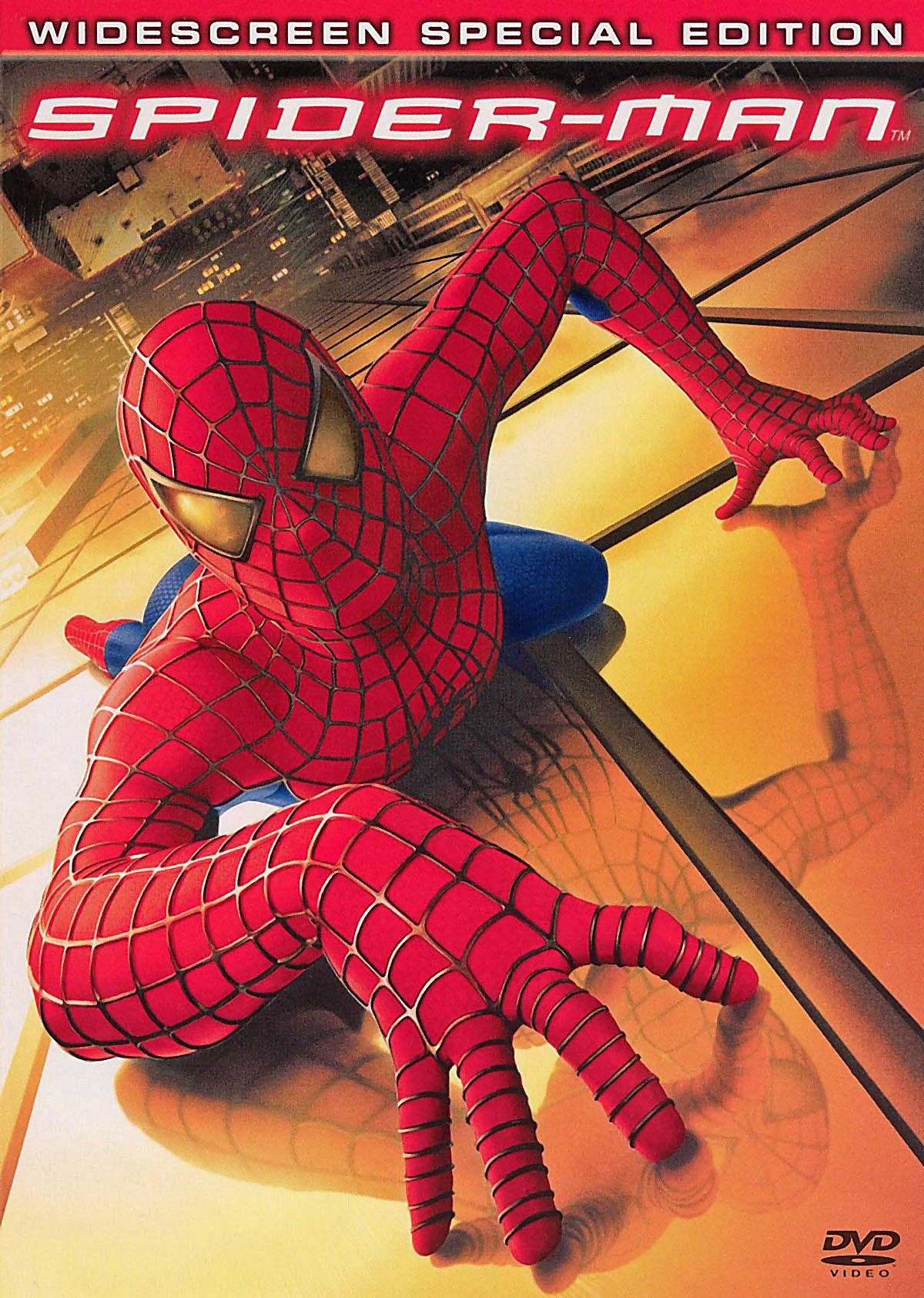
Spider-Man DVD Special Edition, Bonus Art Gallery, 2002
With Great DVDs Come Great Bonus Features:
Remember when DVDs tried really hard?
Okay, so maybe you don’t remember DVDs at all. Sadly, in the age of streaming, that’s entirely possible.
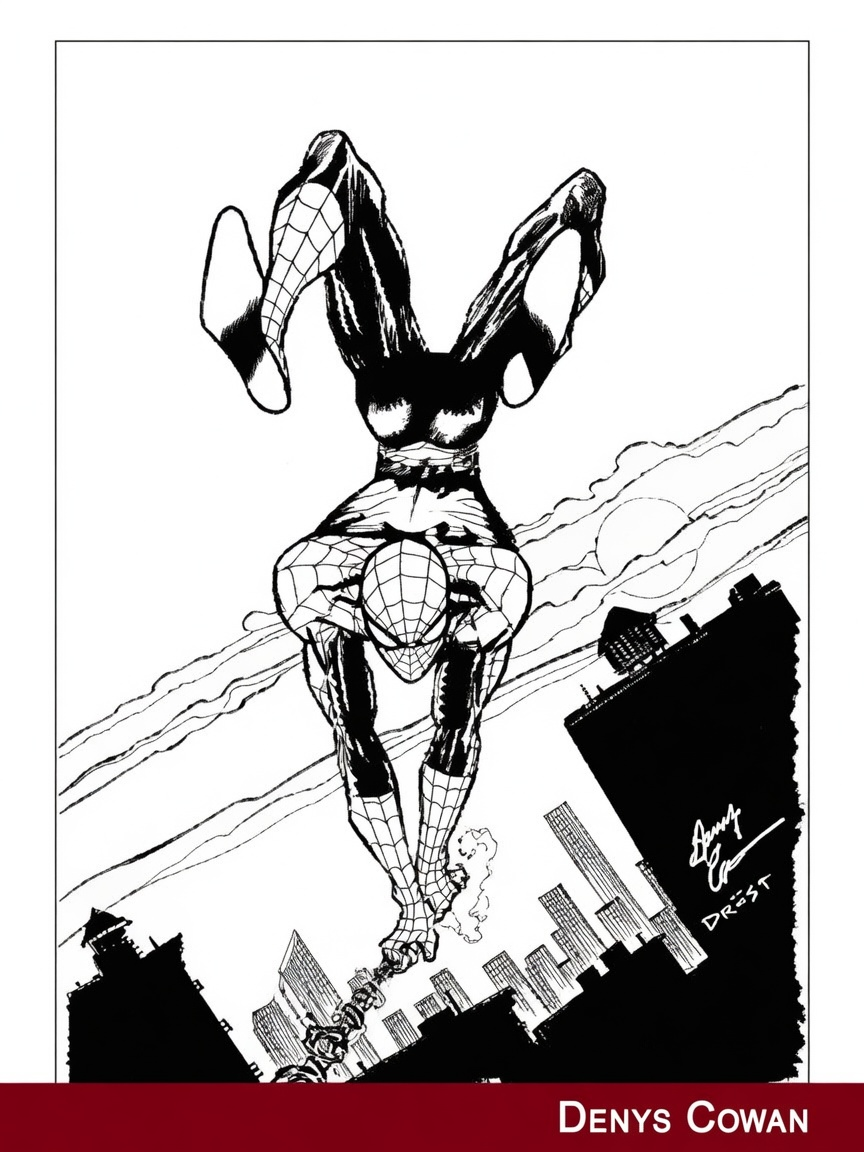
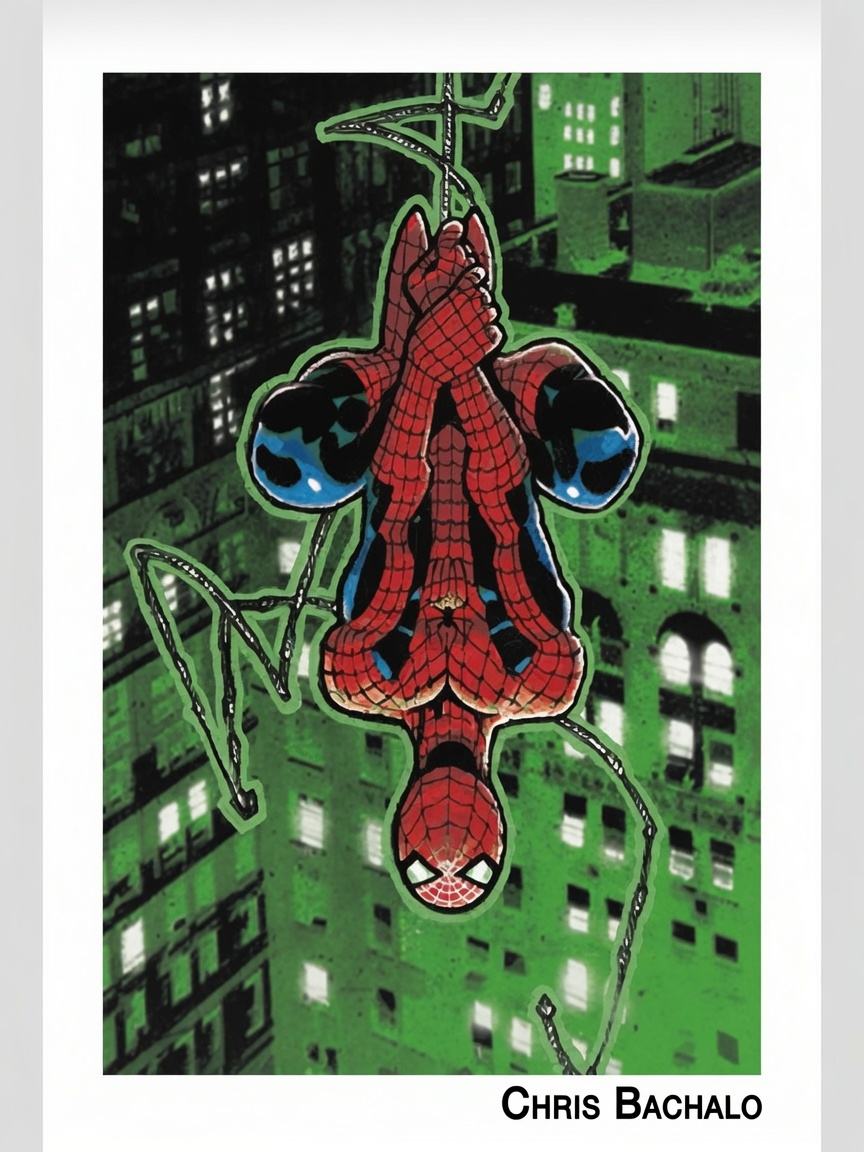
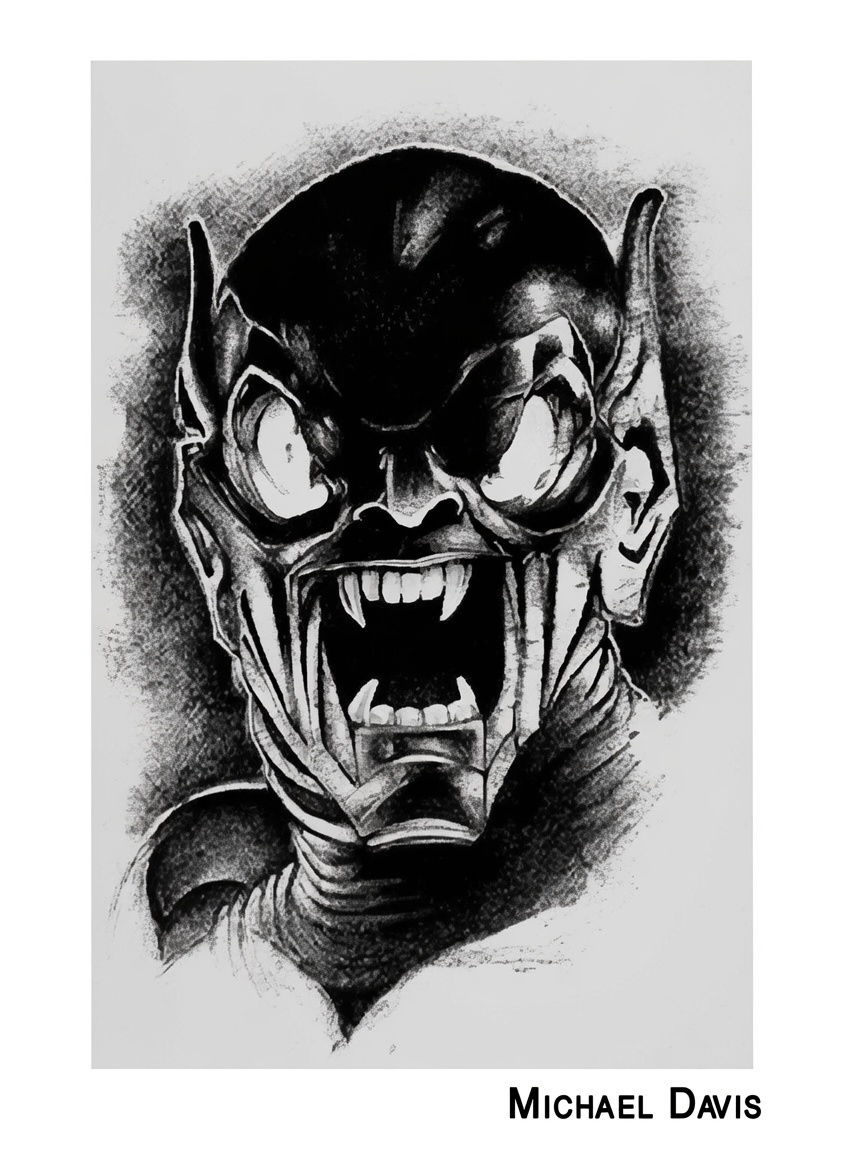
The 2002 Spider-Man Special Edition included the usual commentaries, documentaries and deleted material—but it also featured a gallery of original Spider-Man artwork by 19 different comic artists.
And it’s an impressive group: Chris Bachalo, Jae Lee, David Mack, John Cassaday, Kevin Nowlan, Sean Phillips and plenty more. There’s a complete checklist below.
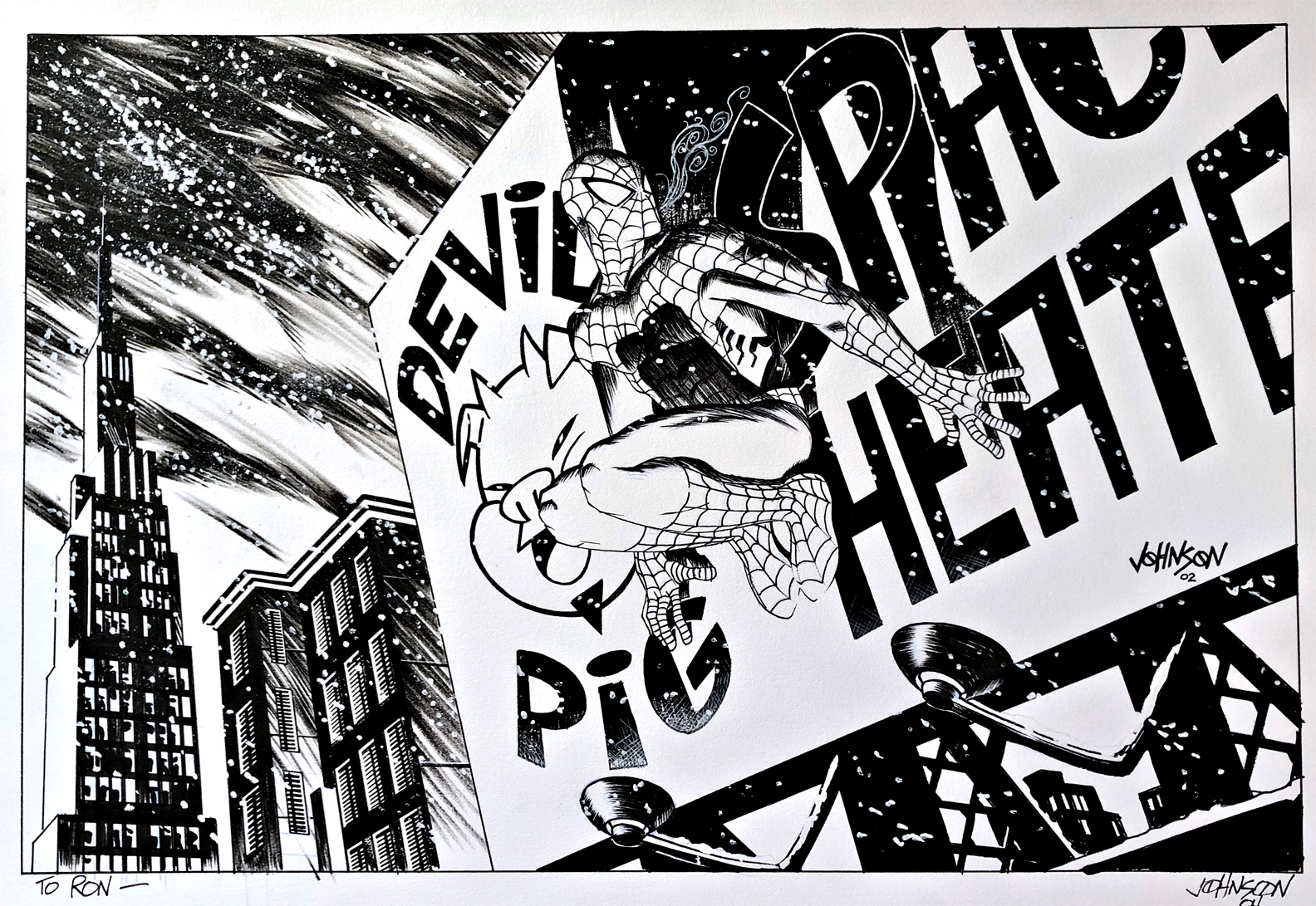
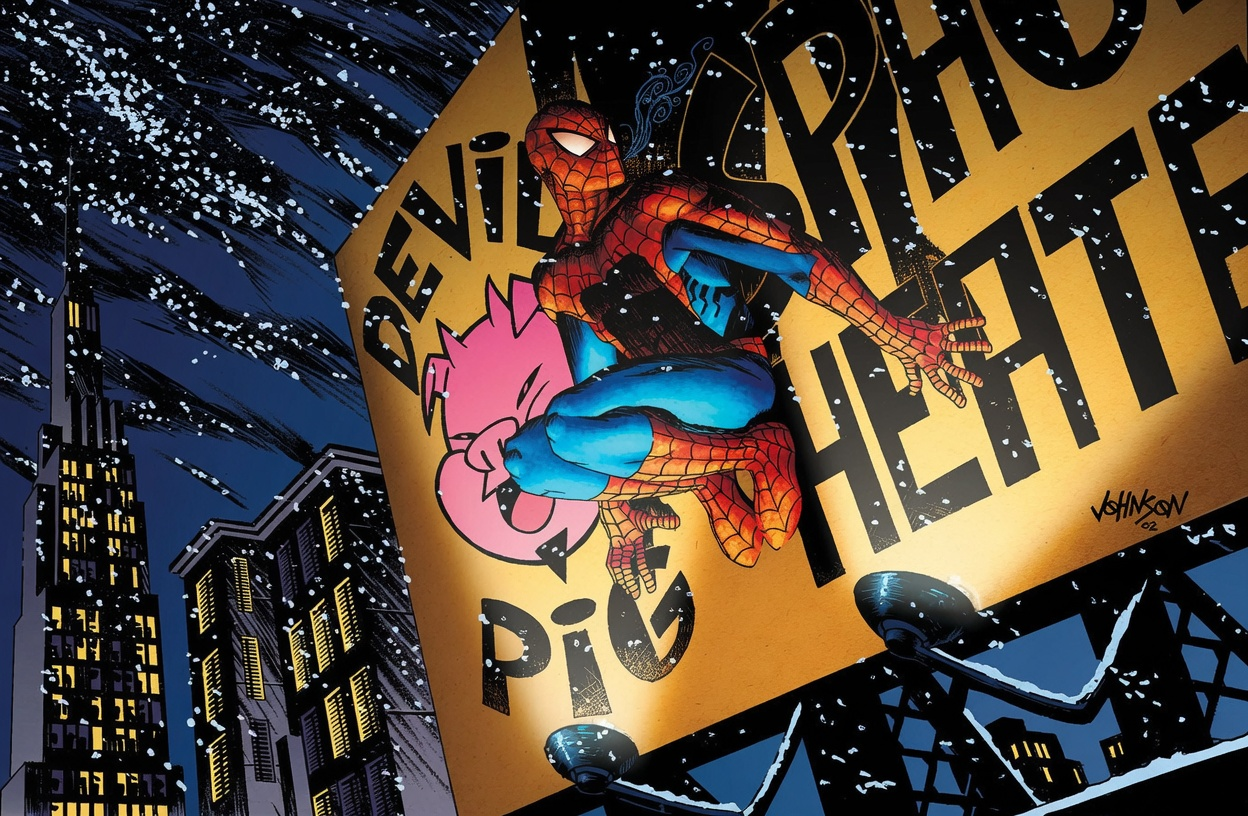
This piece by Dave Johnson is one of my favorites. Interestingly, when an artist supplied a piece in black and white, the DVD left it that way—so for original-art fans, that’s a bonus on top of a bonus. The coloring shown here was created this year by the very talented Frank Cuonzo.
Did the casual movie fan have any idea what they were looking at? That’s pretty much a rhetorical question.
These pieces were commissioned exclusively for the DVD, which means somebody had to contact the artists, negotiate fees, collect the artwork, scan everything—and then hide it several menus deep on the second disc.
That’s a lot of effort for something many viewers probably clicked through once, if at all.
Still, I love that they did it.
The feature connected the movie back to the comics and gave a wonderfully eclectic group of artists a chance to interpret Spider-Man in their own way.
Wasteful? Possibly.
But compared with today’s nearly bonus-free streaming releases, it also feels pretty terrific.
Color by Frank Cuonzo — it’s Black and White in the DVD.
I couldn’t find a checklist of all the DVD “Bonus” Comic Art Images, so I created one. (It’s an all-star list, in order of how they appear when you click through the gallery):
Note: “Color” denotes the only pieces presented in color in the DVD gallery.
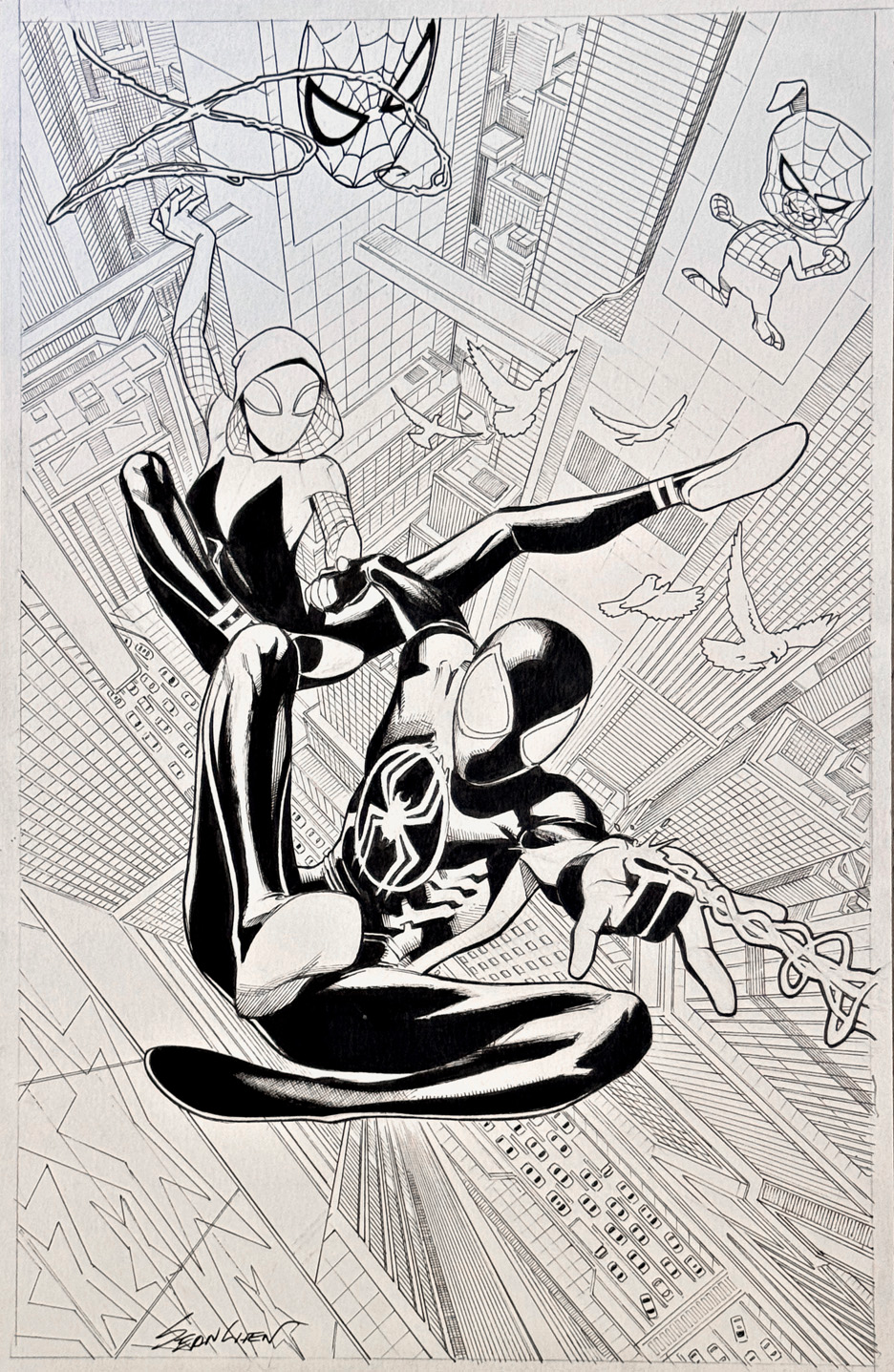
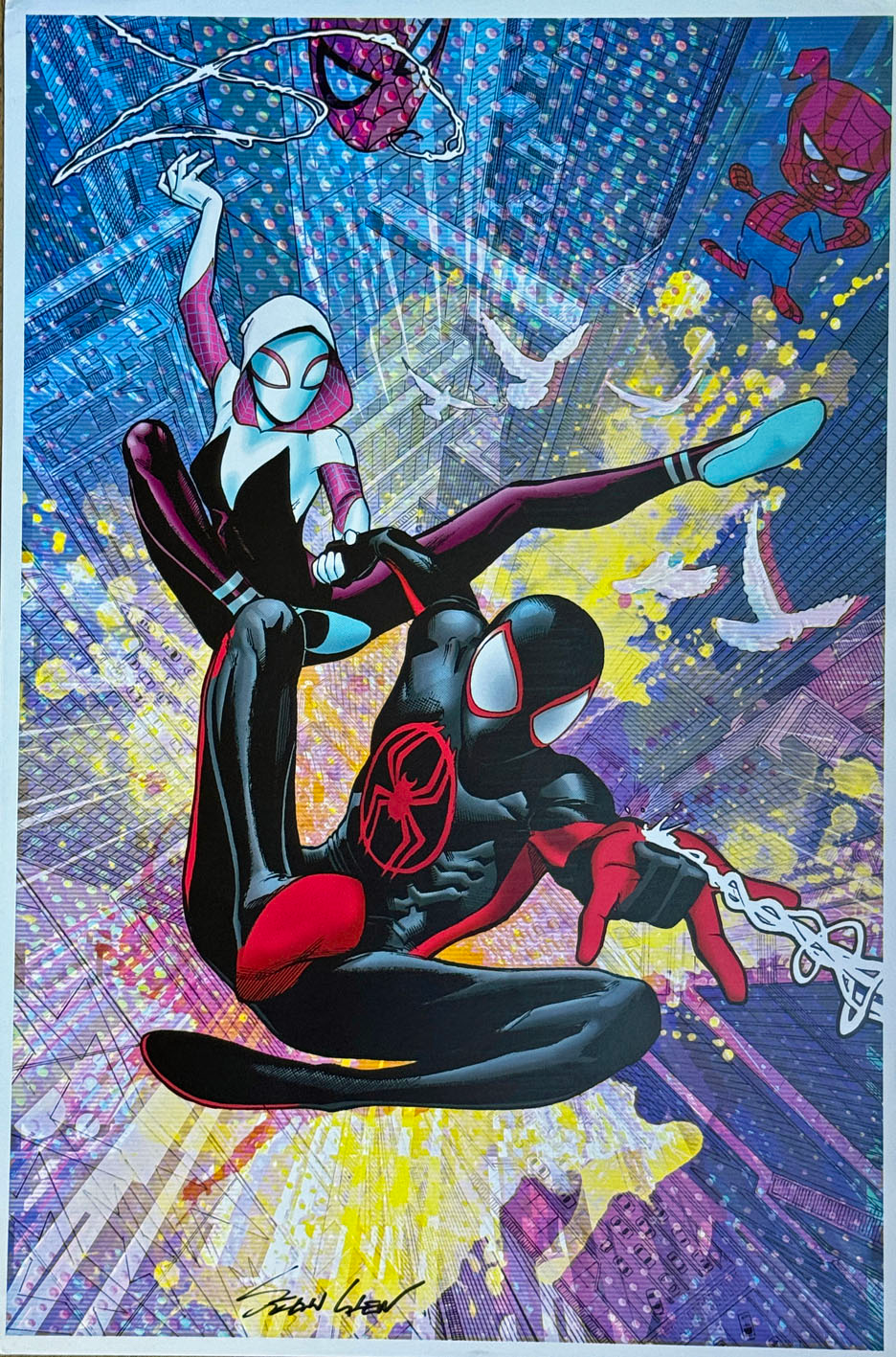
Here is a great Spider-Man original from my pal Sean Chen, featuring Miles Morales front and center, with Spider-Gwen—Ghost-Spider—right behind him.
Peter Parker gets a more casual nod through the classic Spidey image on the side of the building, and “Peter Porker” makes an appearance the same way, just for good measure.
It’s a terrific composition—and whenever Sean draws buildings, the level of detail is outstanding.
Sean originally created the piece for a regional Free Comic Book Day print in 2023, and he also brings a version with him to conventions.
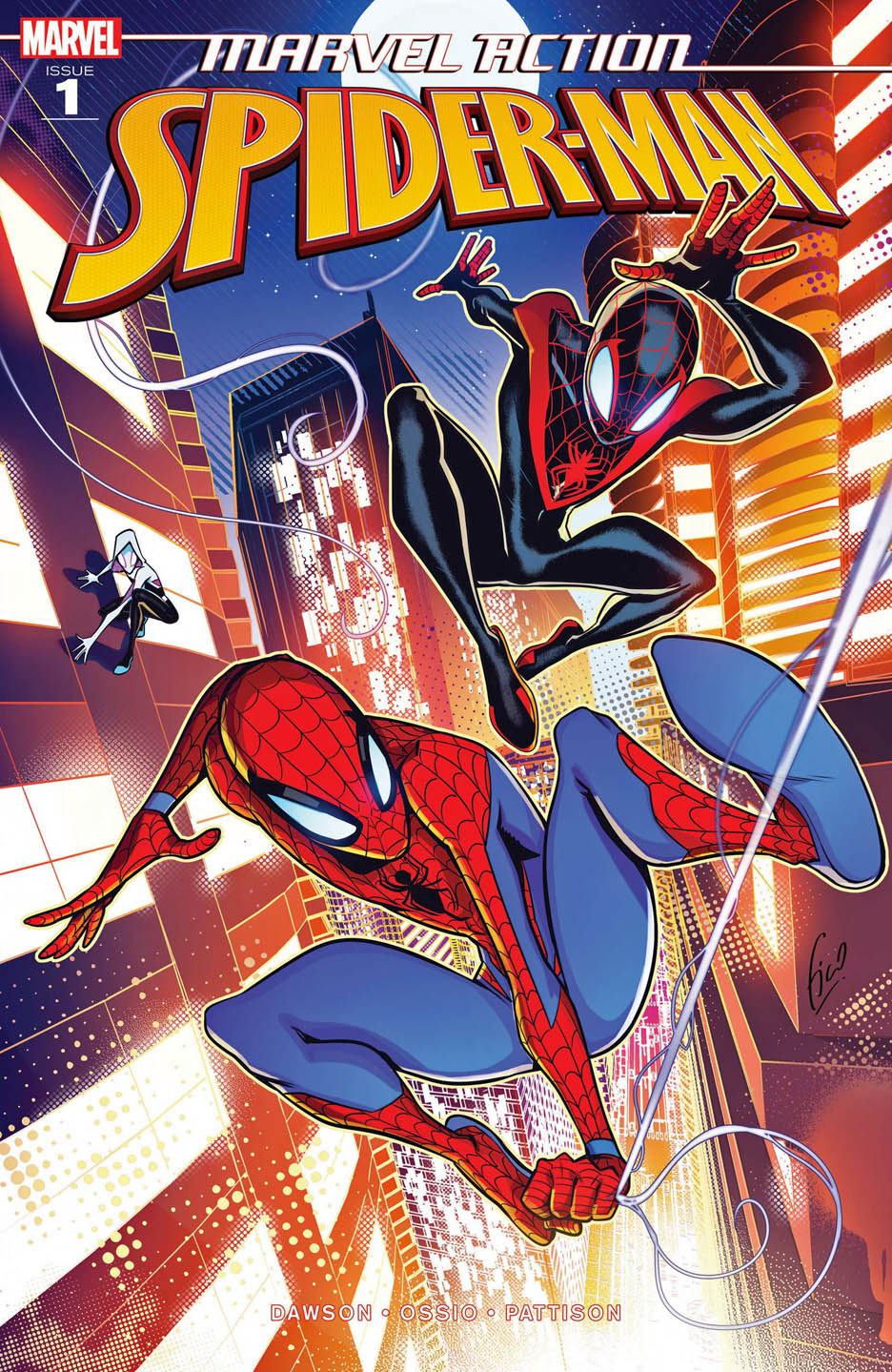
Fun, somewhat tangential fact: Someone started a rumor—at least locally here in California—that the first comic-book team-up of Miles, Gwen and Peter may have appeared in our Marvel Action: Spider-Man series from IDW Publishing.
I have no idea whether that is actually true.
I did see speculators buying copies in bulk at a local show around the time the last Spider-Verse animated film was released, but I don’t think they succeeded in cornering the market. You can still find the books pretty readily at cover price or just slightly higher.
I’m not crazy about the coloring on the published print. It obscures too much of Sean’s terrific detail, and while the palette might seem appropriate for the animated film series it doesn’t feel especially “Spider-Verse” here. But hey—everyone’s a critic, right?
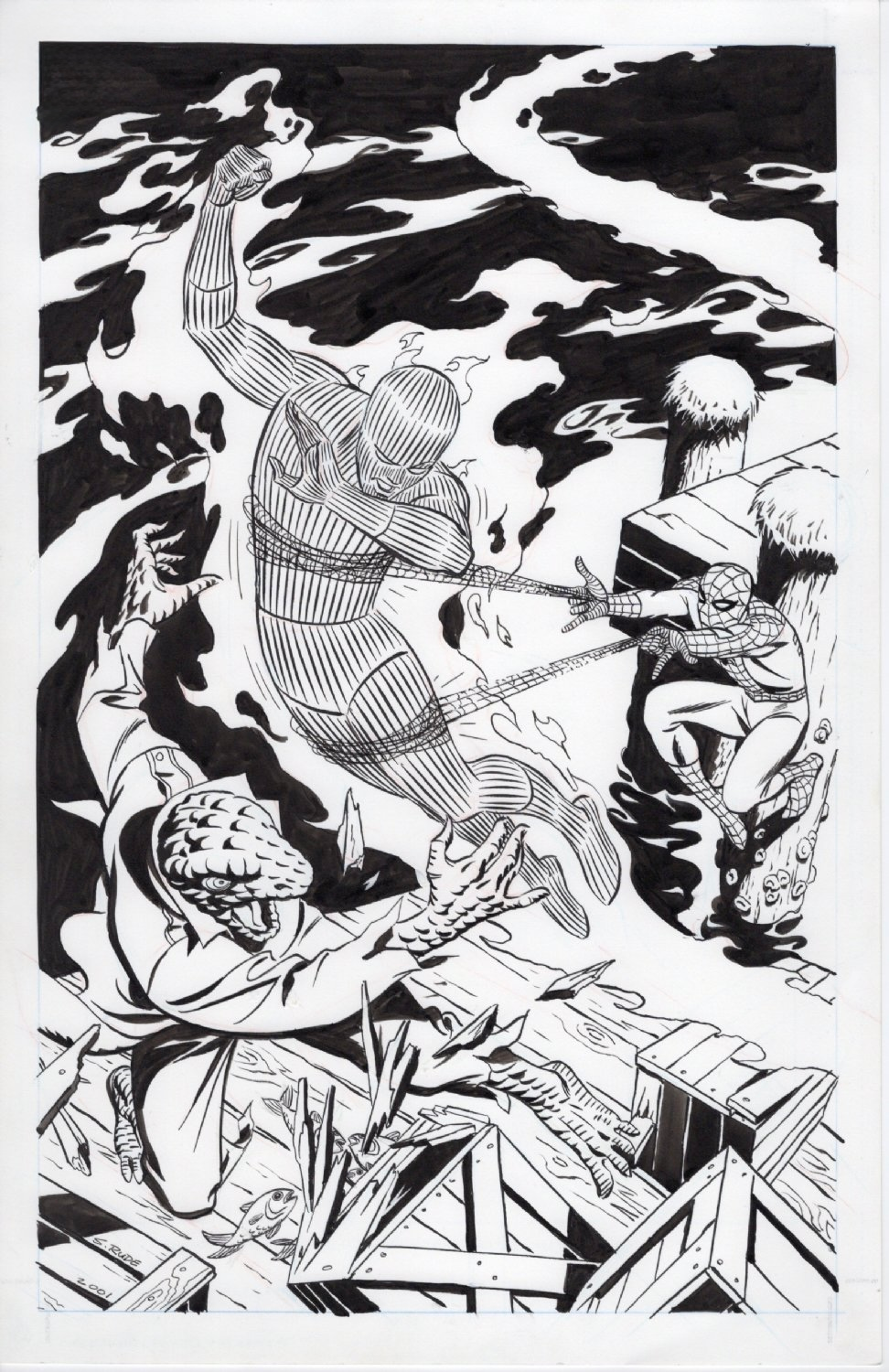
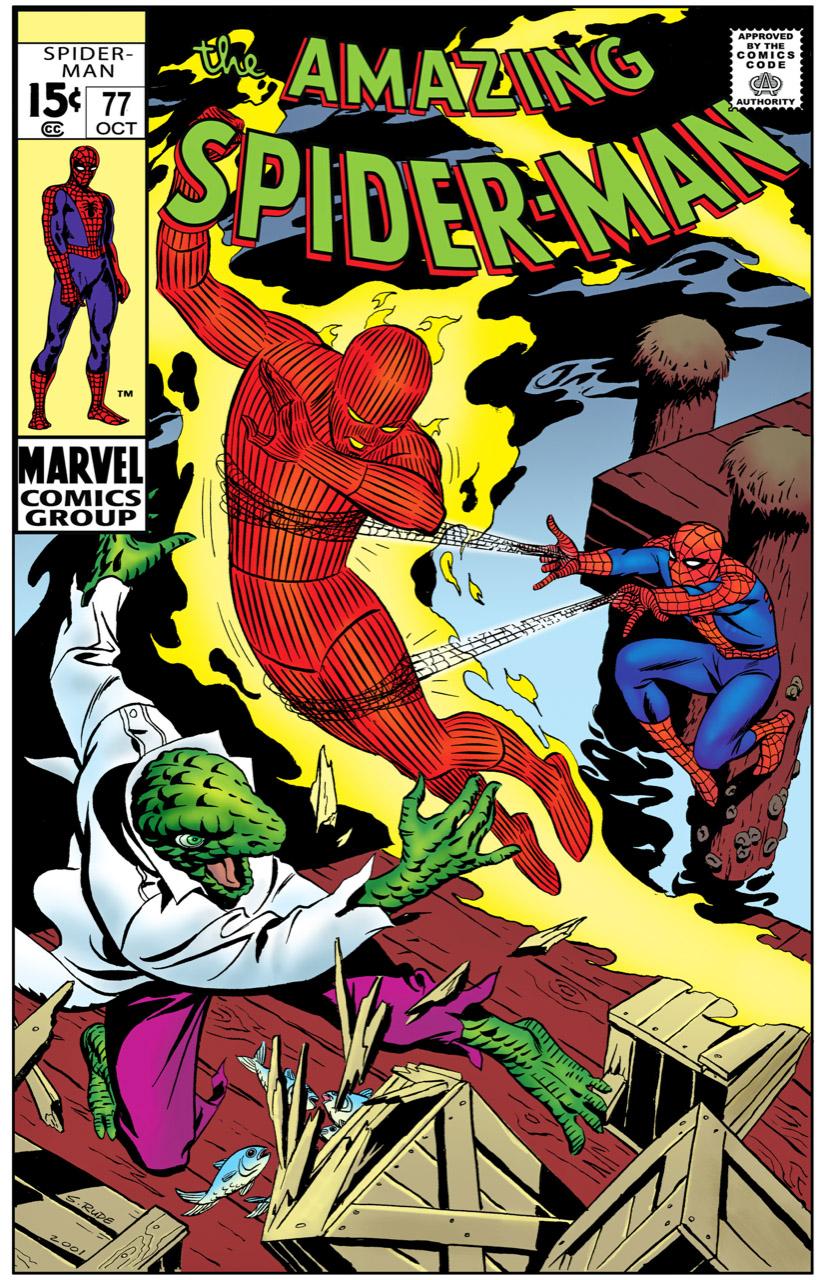
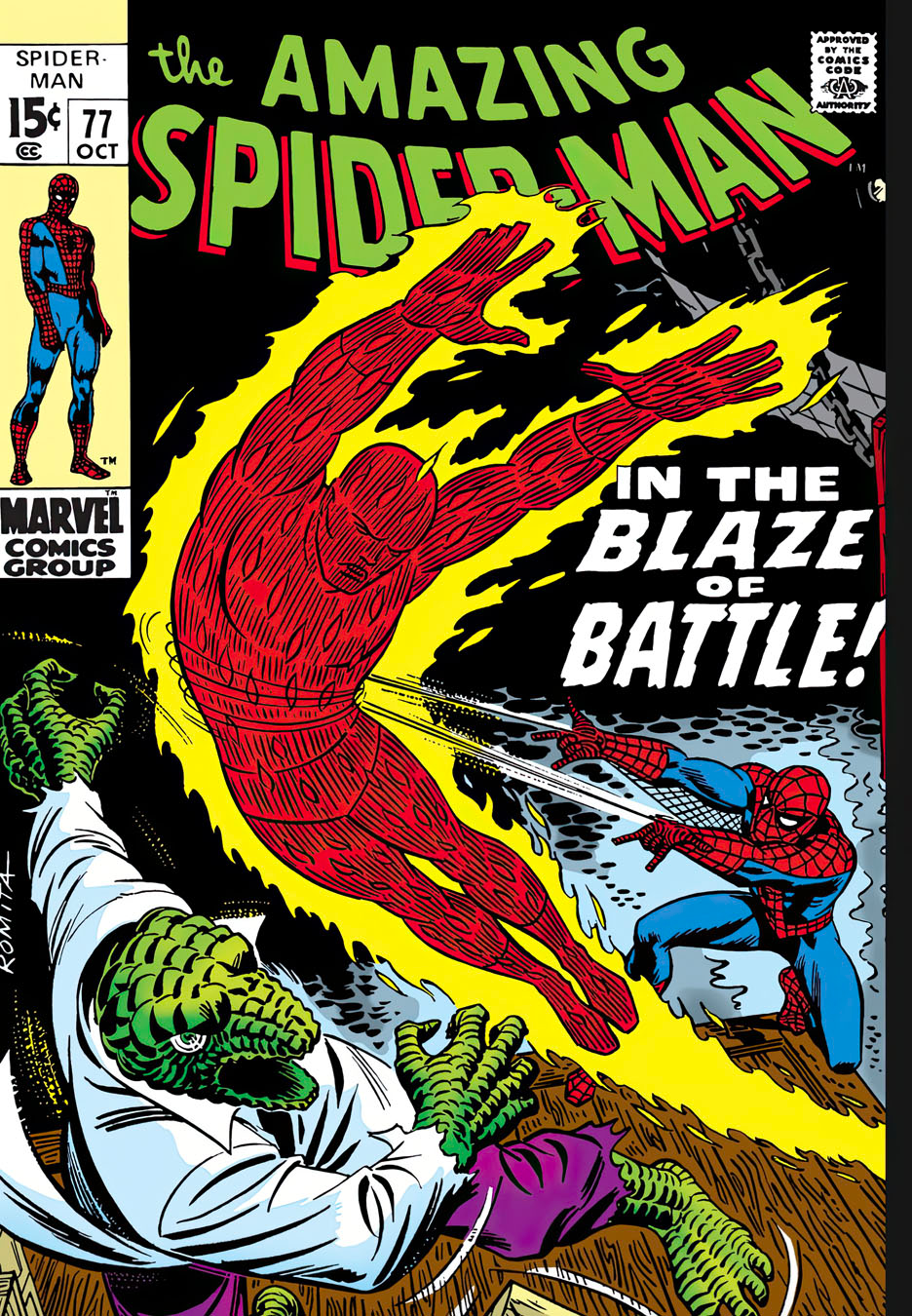
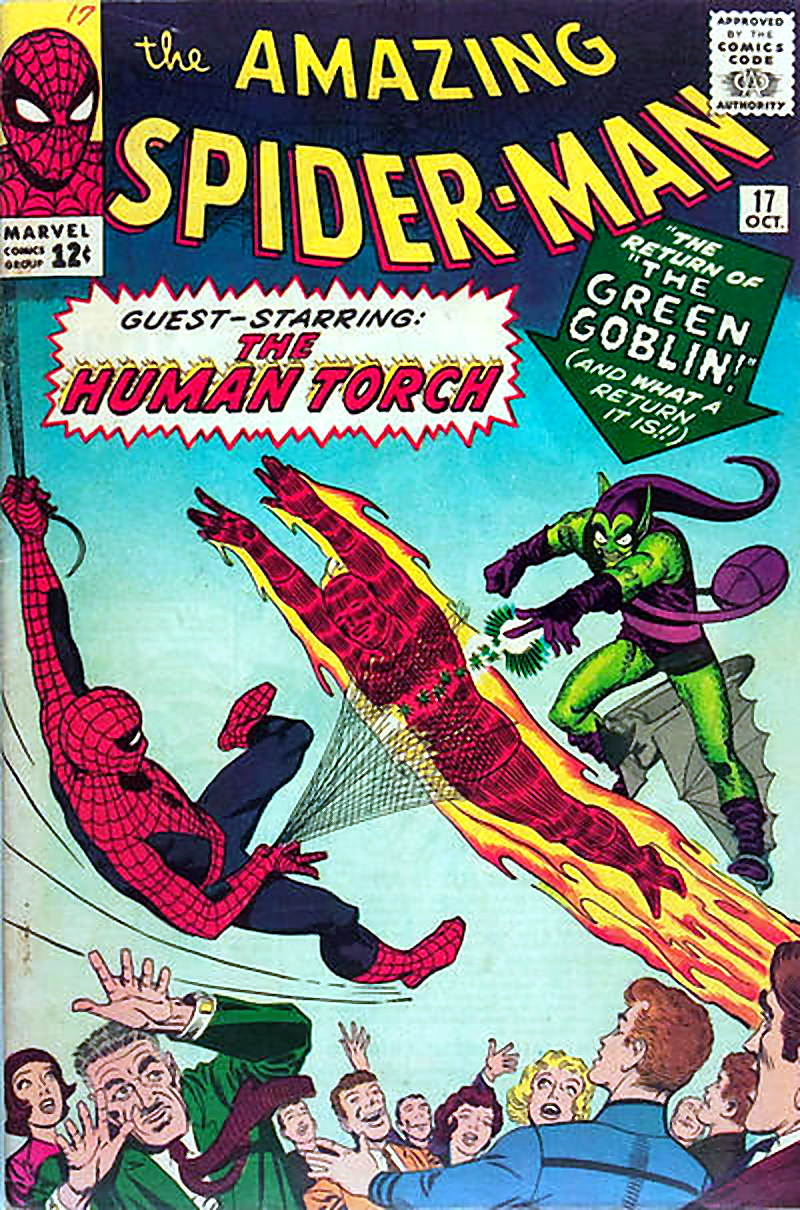
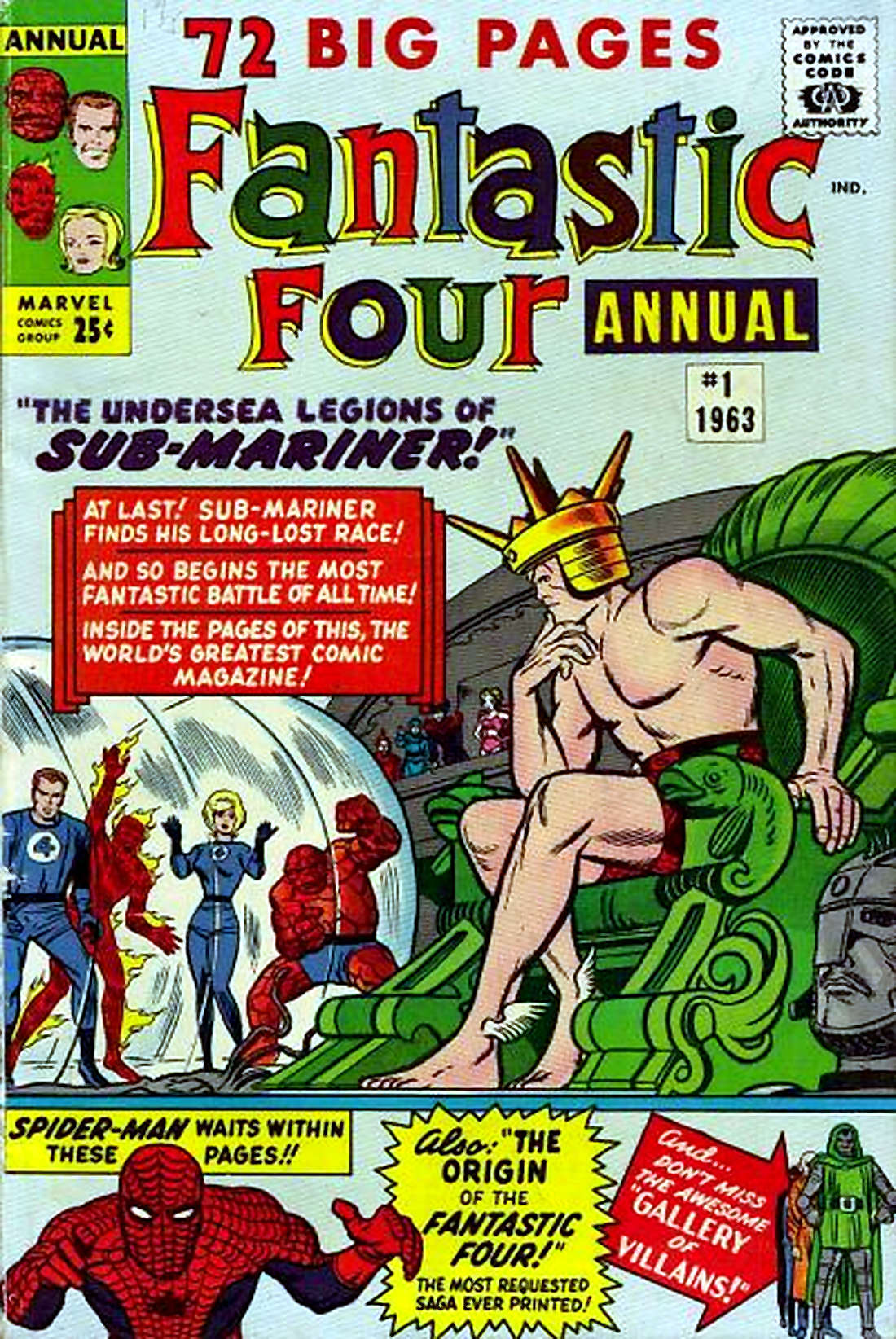
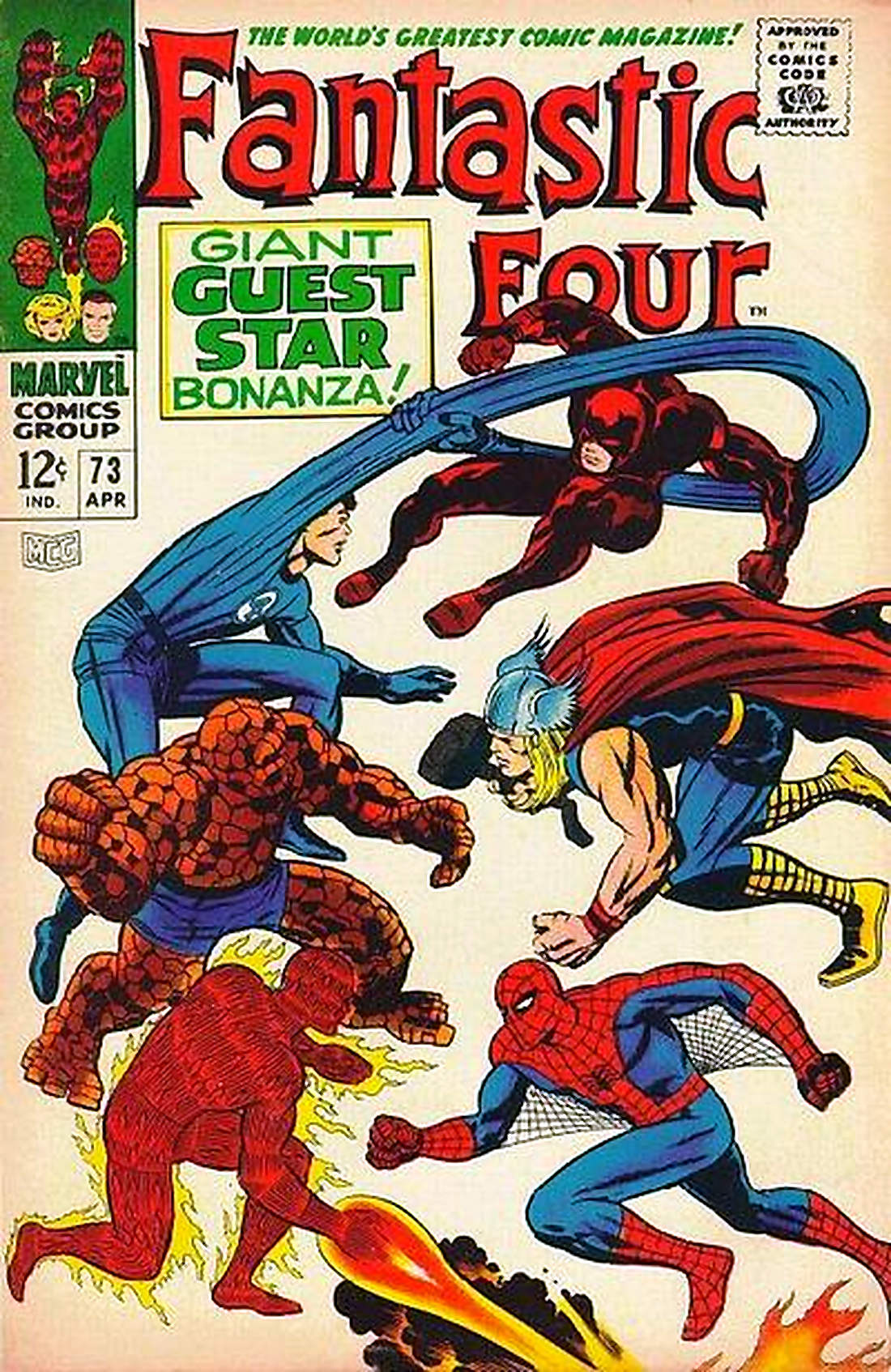
Steve Rude takes on a classic John Romita Spider-Man cover here, and gives it just enough of his own “spin” to make it interesting.
I really like it.
But… I still prefer Romita’s original. His Spidey is more prominent — and, hey, it is Spidey’s book. Torch also gets a little more room to breathe on the published cover.
Plus — nostalgia.
That said, I think Rude’s Torch pose feels more in the moment, especially reacting to Spidey’s webbing — which is fireproof now?
Handy.
Rude also has some fun with the dock setting. The crates, pylons, broken boards, and extra bits make the action feel more like an actual waterfront brawl.
But Romita still wins.
Still, I could afford the Rude reinterpretation. If the Romita ever comes up for sale, I don’t exactly have an extra $250K–$500K lying around.
Which, naturally, is a pity — although I’d probably use that kind of cash for something else.
Unless, of course, I win one of those mega-jackpots with eight figures or more.
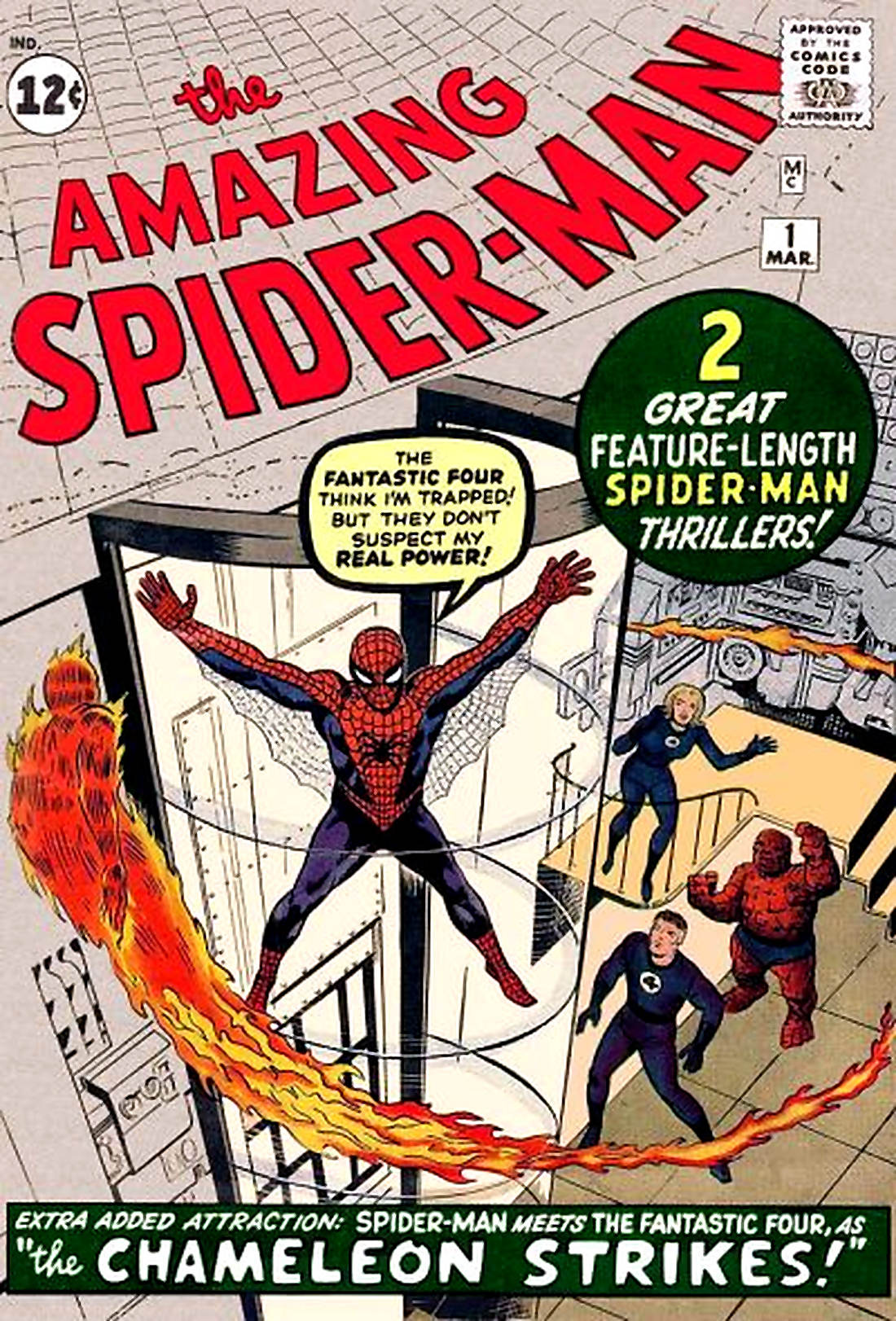
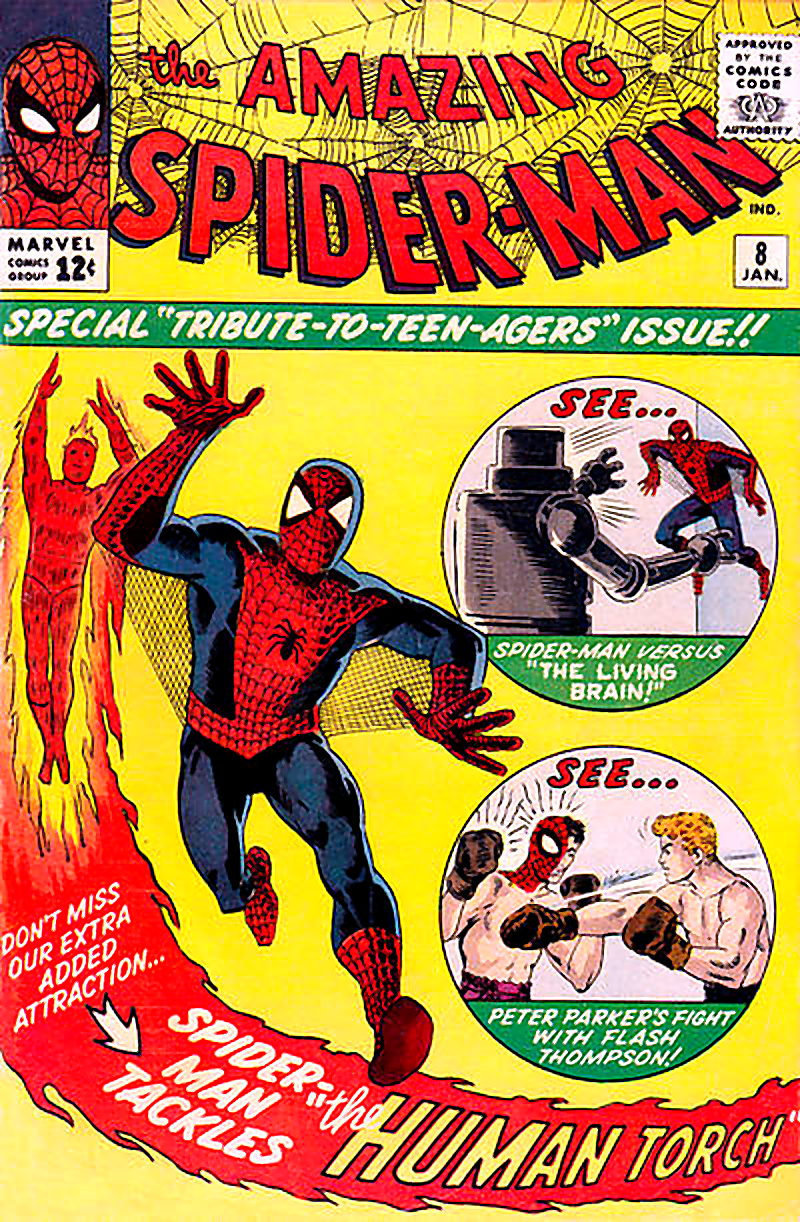
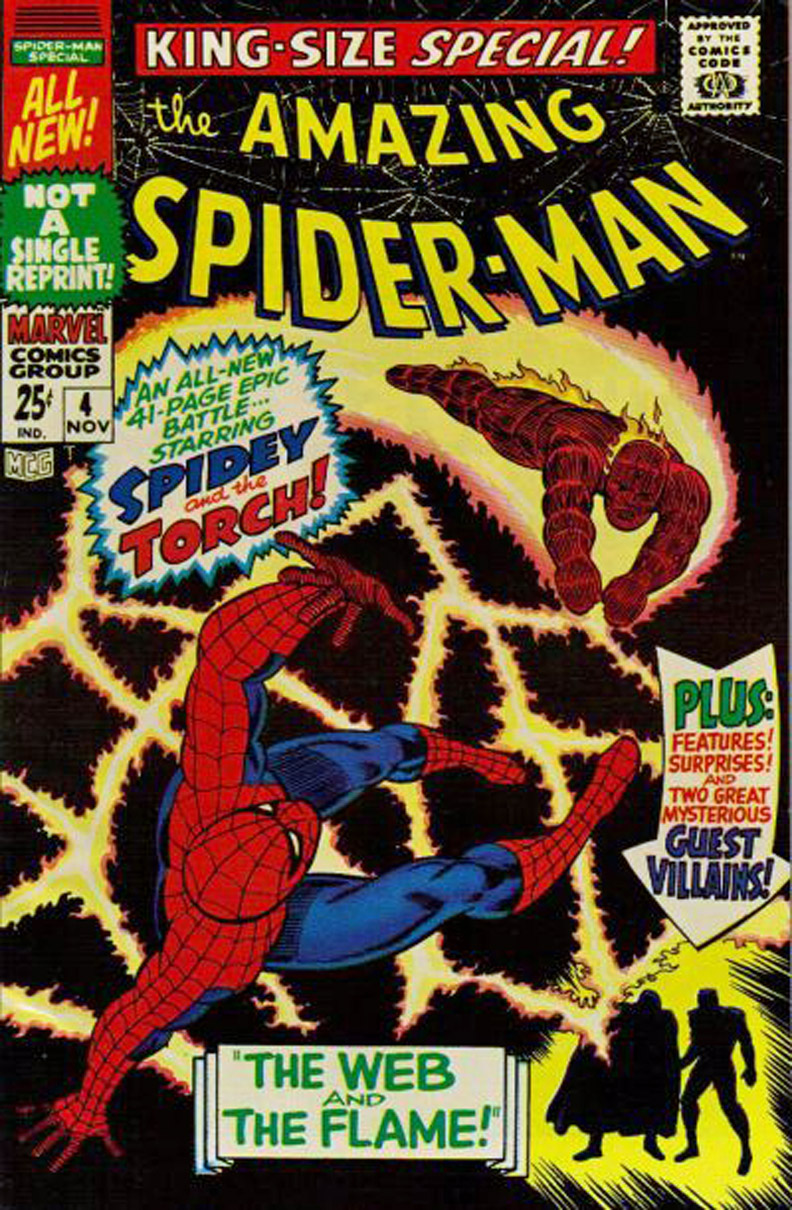
The Human Torch and Spider-Man: peanut butter and chocolate? Or oil and water?
Maybe both.
I’ve always had a soft spot for the pairing of Marvel’s two original teenage superheroes. Peter Parker and Johnny Storm should probably understand each other better than anyone else in the Marvel Universe.
Naturally, they mostly annoy the hell out of each other.
Which is why I enjoy it.
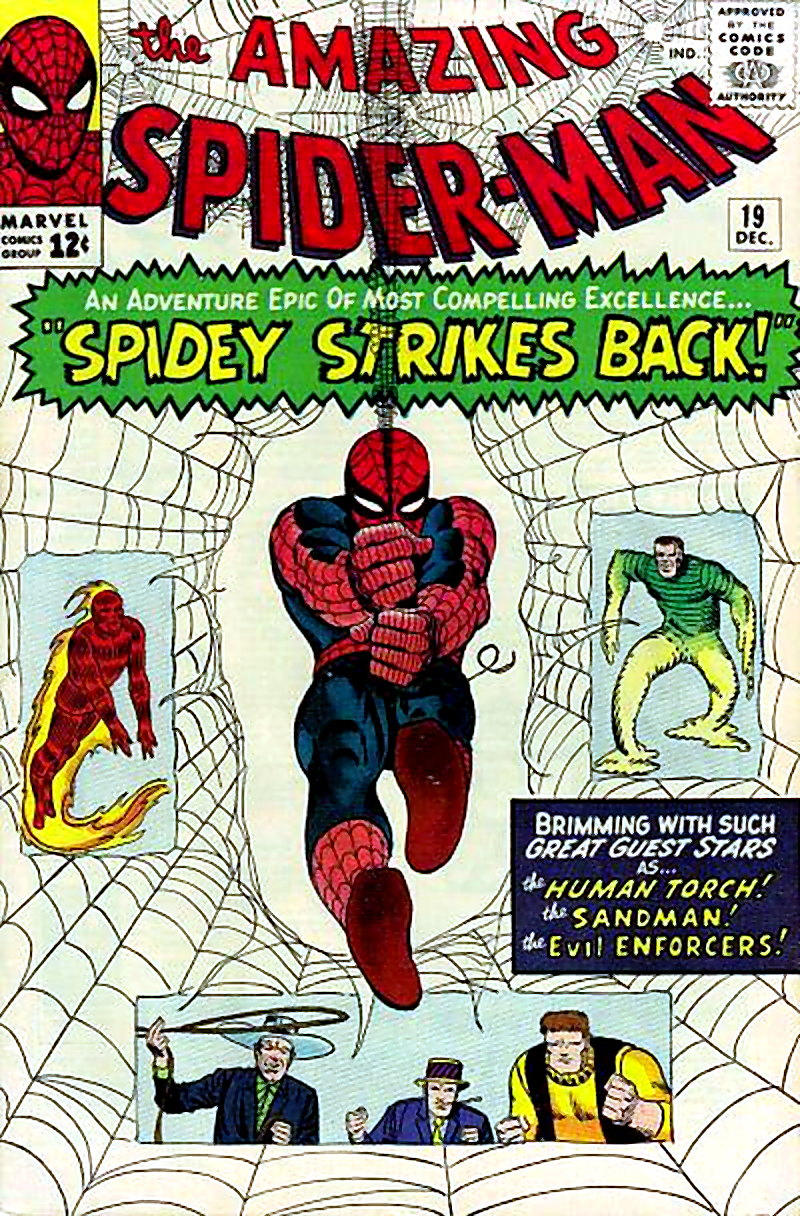
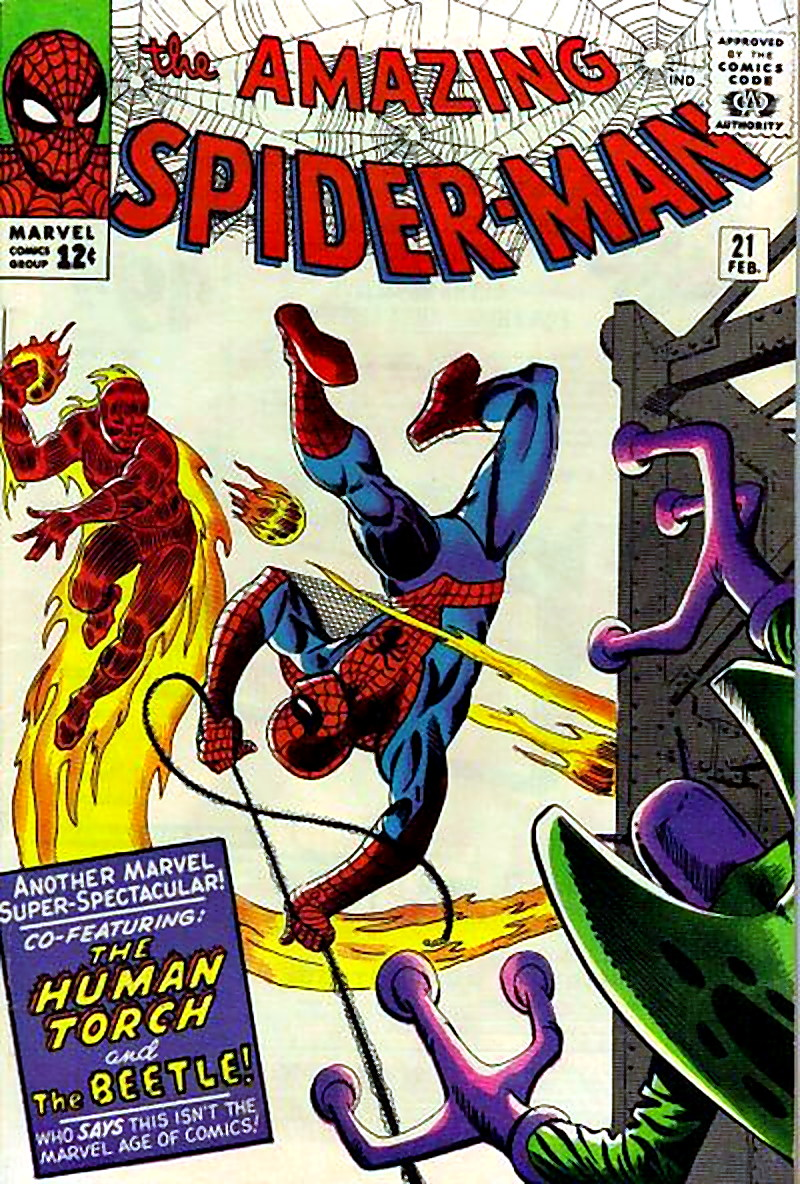
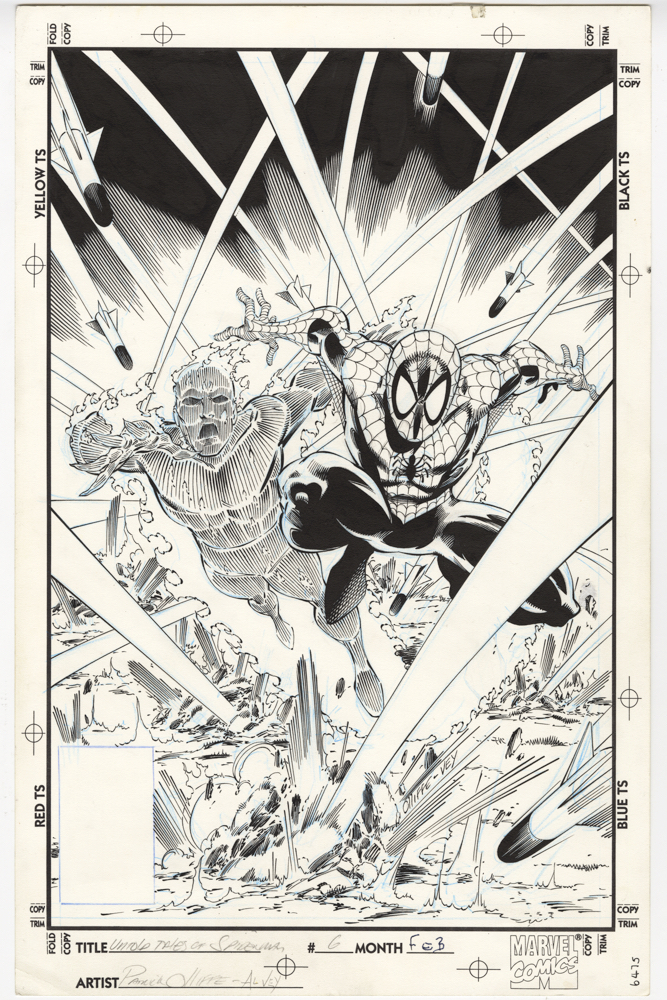
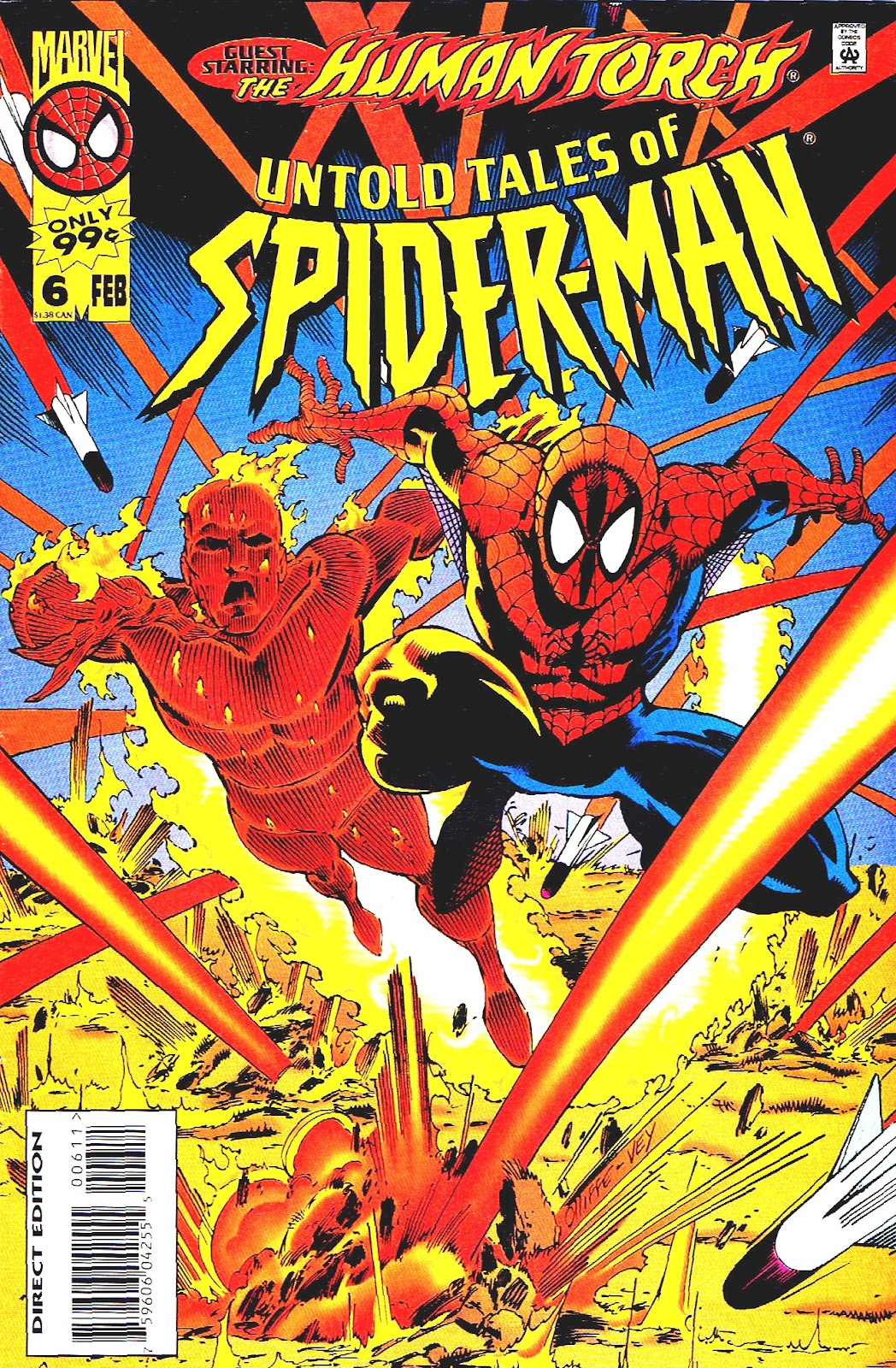
This terrific Pat Olliffe / Al Vey cover comes from Untold Tales of Spider-Man, a modern retro gem of a series that filled in the gaps between Spidey’s earliest Lee/Ditko adventures. The Kurt Busiek-penned book had the tricky job of feeling new without stepping on sacred ground, and typically it pulled it off.
This cover does the same thing.
It feels classic without being phony-retro — just a clean, punchy Marvel image with Spidey and Torch doing what they do best: racing straight into trouble.
And that’s the fun of them together. Torch is all swagger, Spidey is all wisecracks, and they’re usually over their heads before the story even has a chance to get warmed up.
Pun intended.
Fun fact: It’s a “modern” series only if you’re an old-timer. It’s about 30 years old now, which means it’s roughly as far from us as the original Ditko stories were from it.
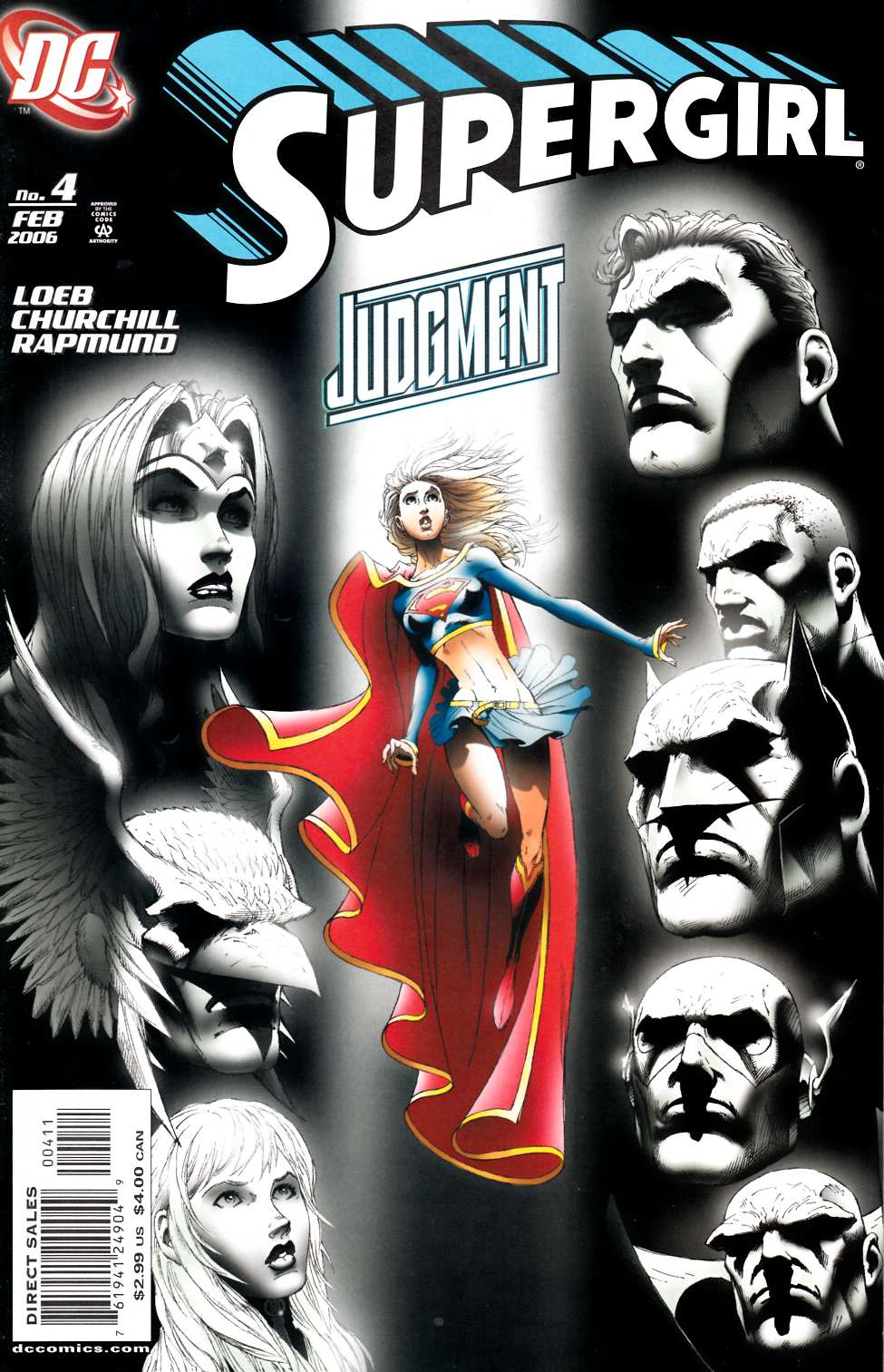
This was one of my earliest blog posts (2019), but with the new Supergirl film arriving in a few days, it felt worth revisiting.
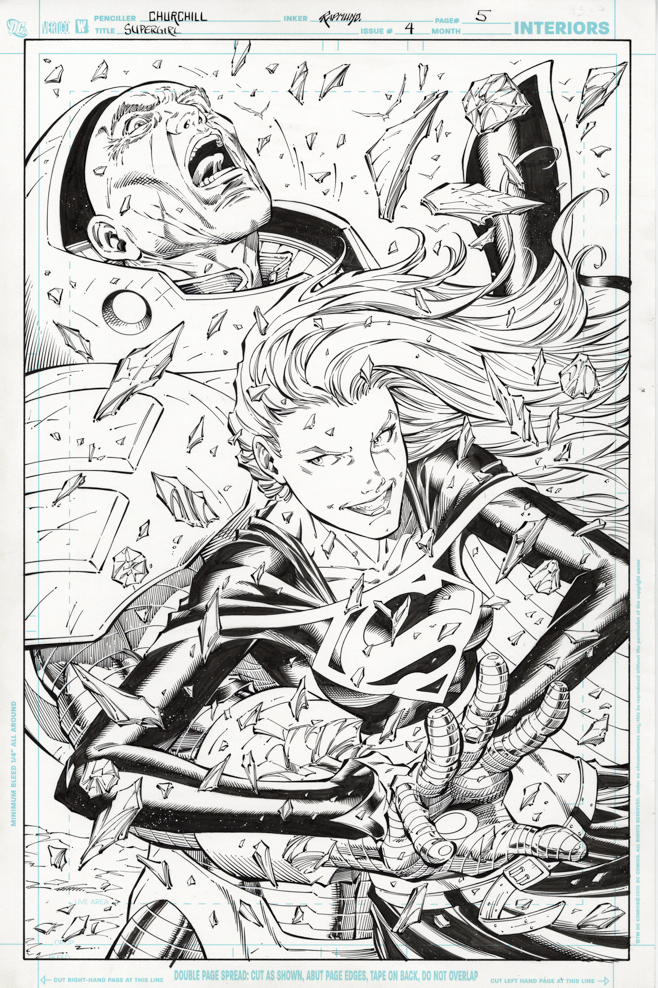
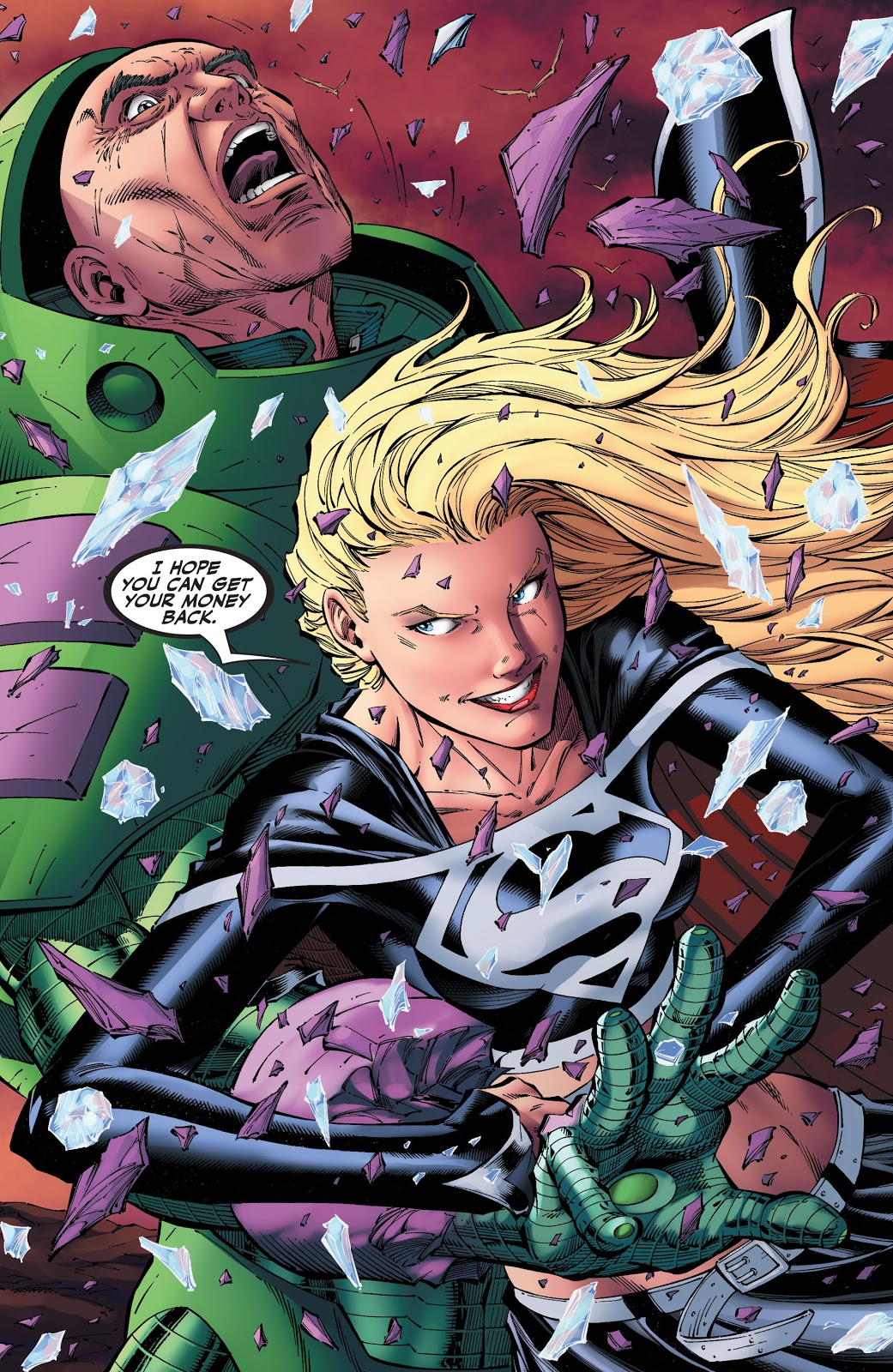
This Ian Churchill and Norm Rapmund splash is a personal favorite—and it comes with a good collecting story.
I had to pry it away from my pal Norm. He quoted me a price so high that I was sure he didn’t really want to sell it.
And he was sure I wouldn’t buy it.
Heh.
Years later, I still love the piece. And after seeing the movie trailers, I can easily imagine the current cinematic version of Supergirl doing exactly this to Lex Luthor—without having to split into two personalities first.
The setup is straightforward enough. Black Kryptonite—making one of its earliest comic-book appearances after debuting on Smallville—splits Kara into separate personalities. Her darker half has little interest in restraint. Here she gleefully tears apart the weaponized arm of Luthor’s war suit, sending shards flying in every direction.
Churchill and Rapmund really sell the moment. The exploding machinery is great, but Luthor’s expression may be the best part. It’s a wonderful mix of shock, panic, and the sudden realization that things are not going according to plan.
The new Supergirl movie opens wide in a few days. Whether it turns out to be a hit, who knows?
But I’ll happily wager this original art that it won’t age quite as badly as the 1984 version.
Sorry, Helen Slater. We adore you, but oof… that film.
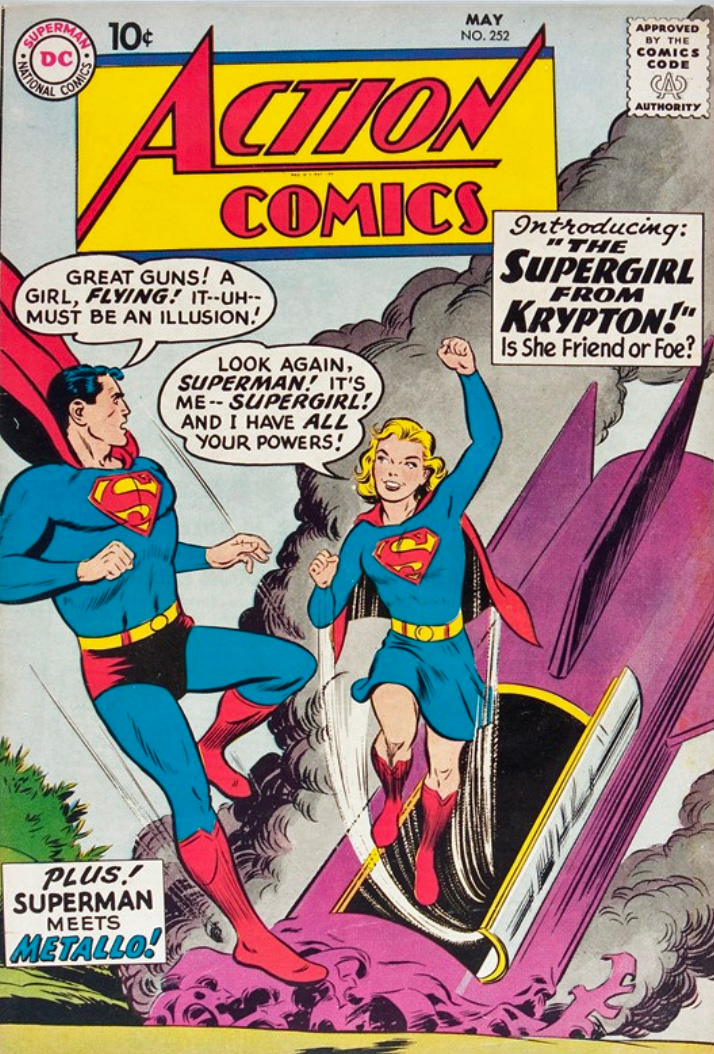
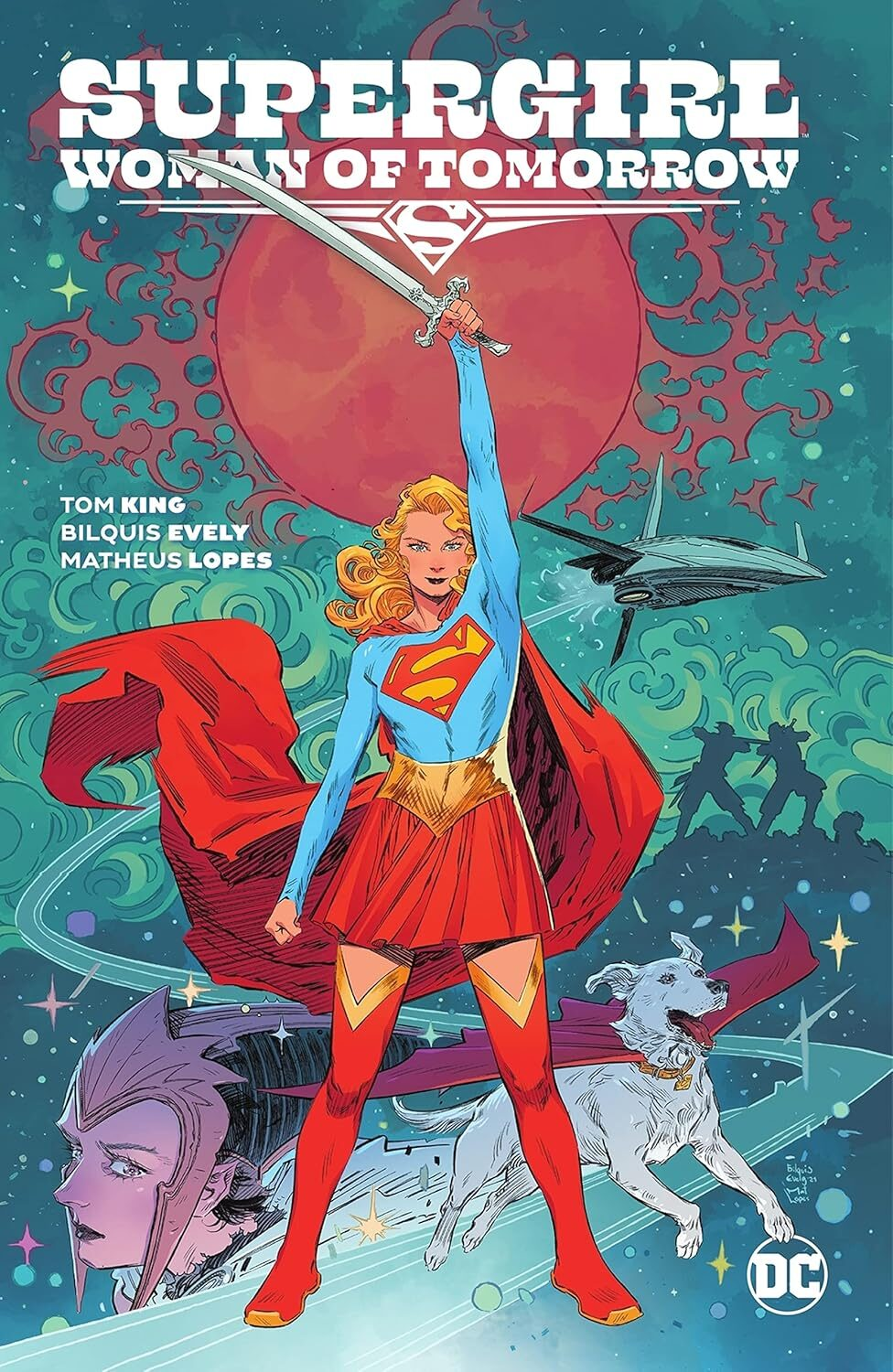
From Supegirl’s first appearance in Action #252 (May 1959) to the contemporary “Woman of Tomorrow” series (2021), which helps provide the storyline for the upcoming film.
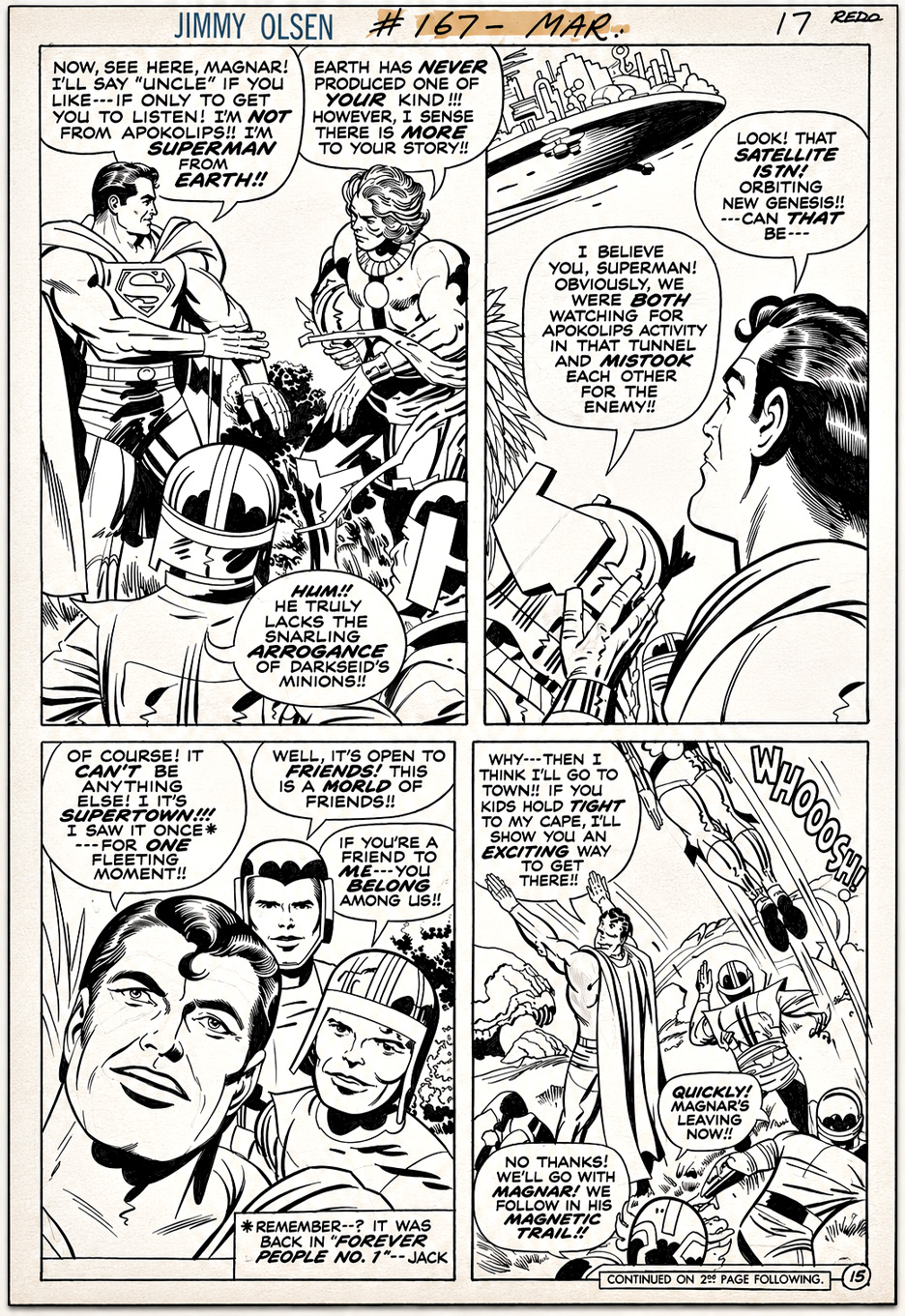
Every so often in Jack Kirby’s offbeat Jimmy Olsen run, you run across something extra special.
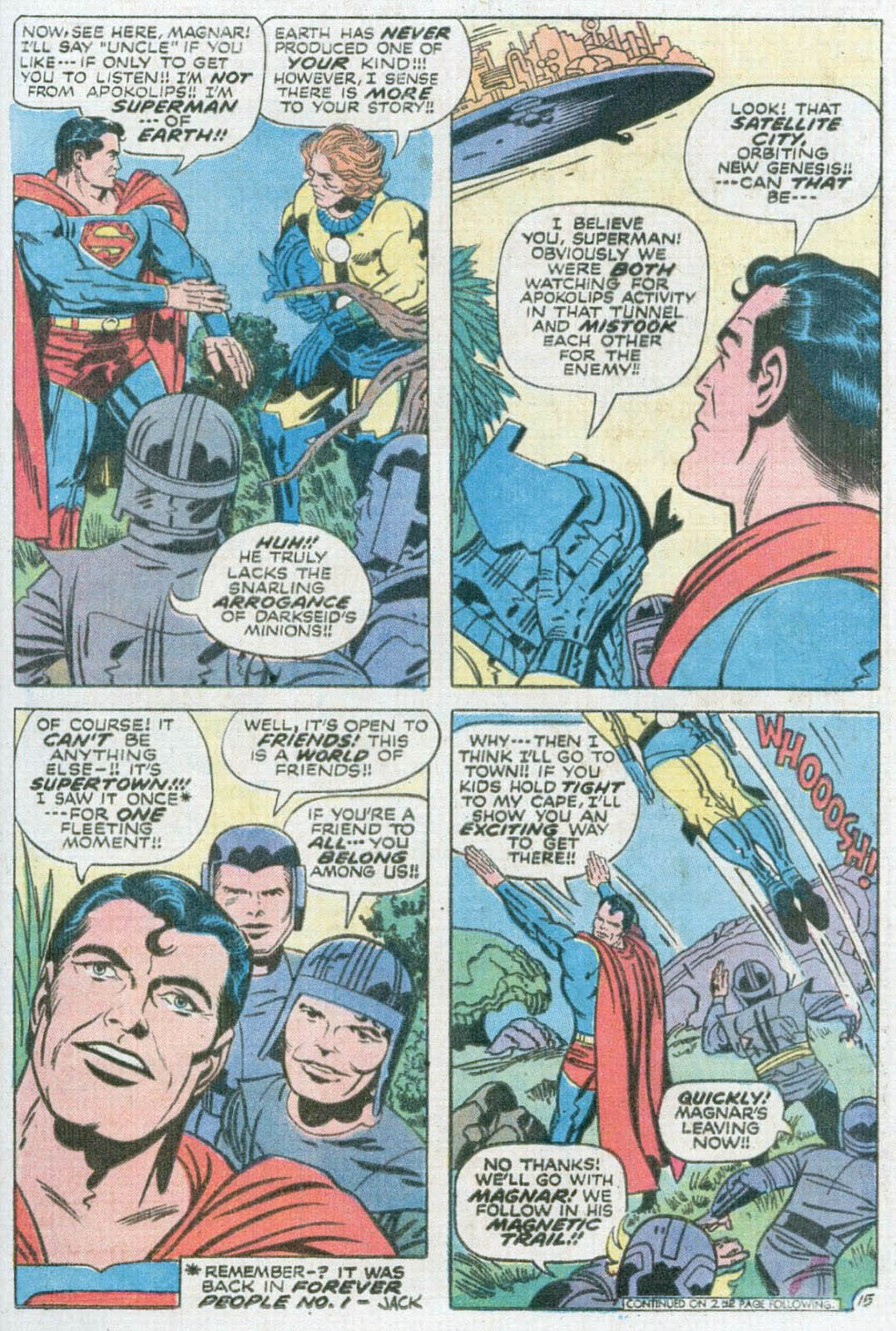
In this case, it’s a ’70s Kirby Superman, refined by Mike Royer, rather than jarringly redrawn by Al Plastino or Murphy Anderson.
And a rare combination at that. This was Royer’s only inking assignment on Jimmy Olsen, coming in Kirby’s second-to-last issue on the title.
DC’s editors famously insisted that Superman conform to the company’s house style. Looking back, it seems short-sighted and cautious. If you’re hiring Jack Kirby, shouldn’t part of the appeal be seeing what his Superman looked like?
Fortunately, Royer’s refinements didn’t cross the line (no pun intended) into a wholesale redraw, leaving us with perhaps the closest thing to Kirby’s unfiltered Superman published during his original DC run.
And what a book Jimmy Olsen was.
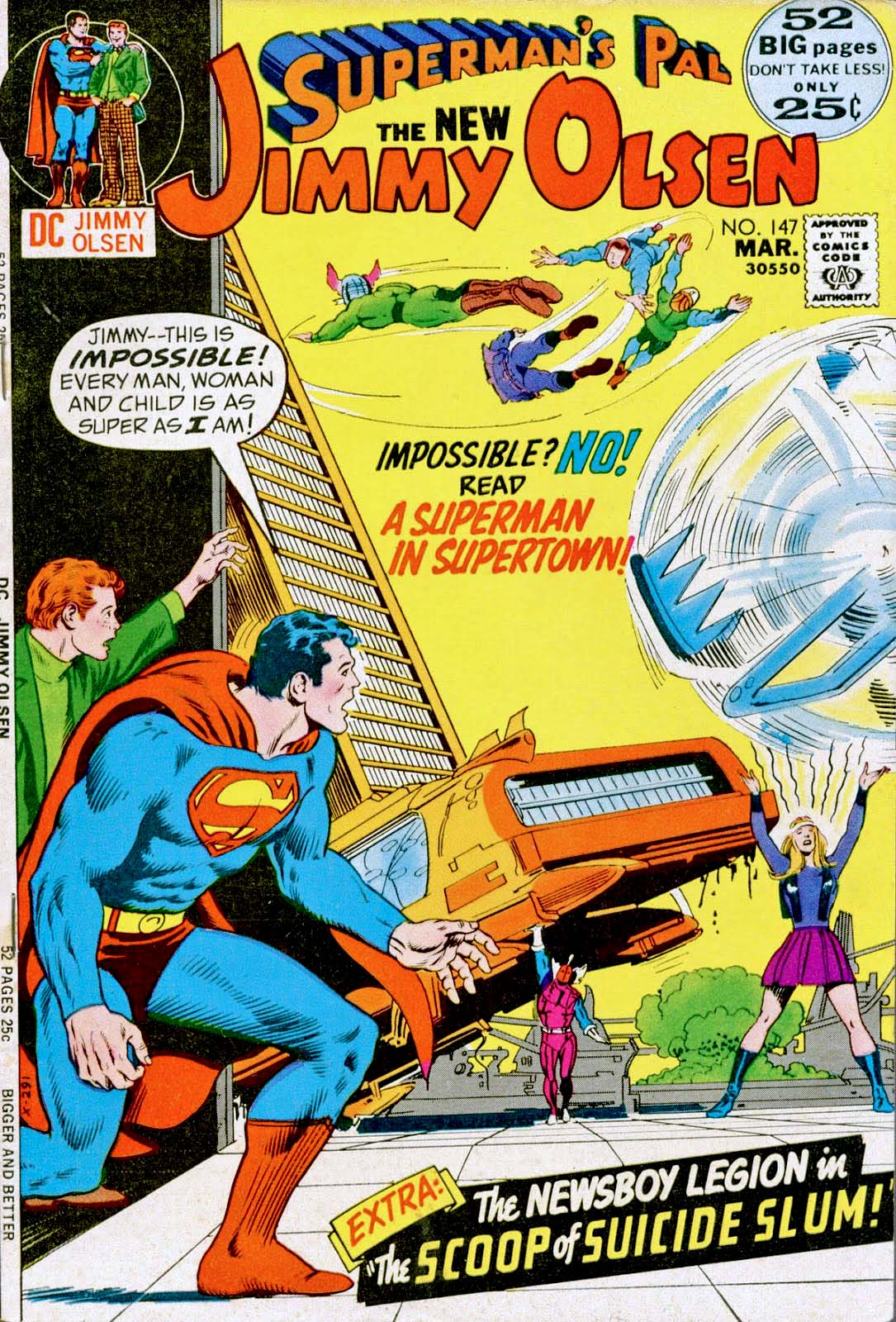
Kirby used a struggling Superman spinoff to launch the Fourth World.
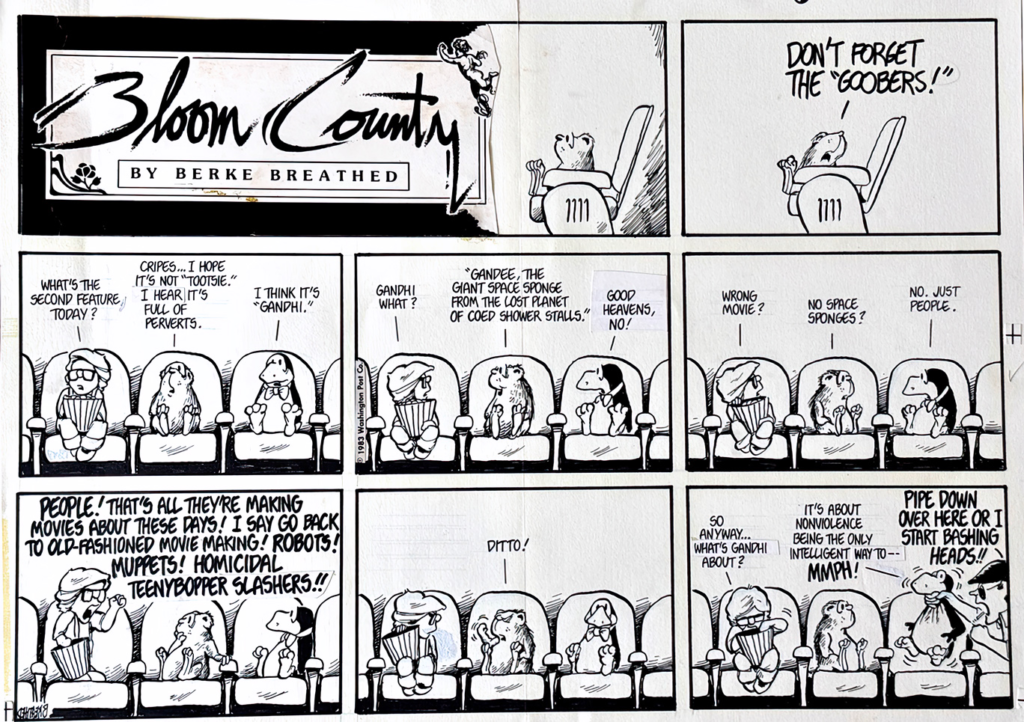
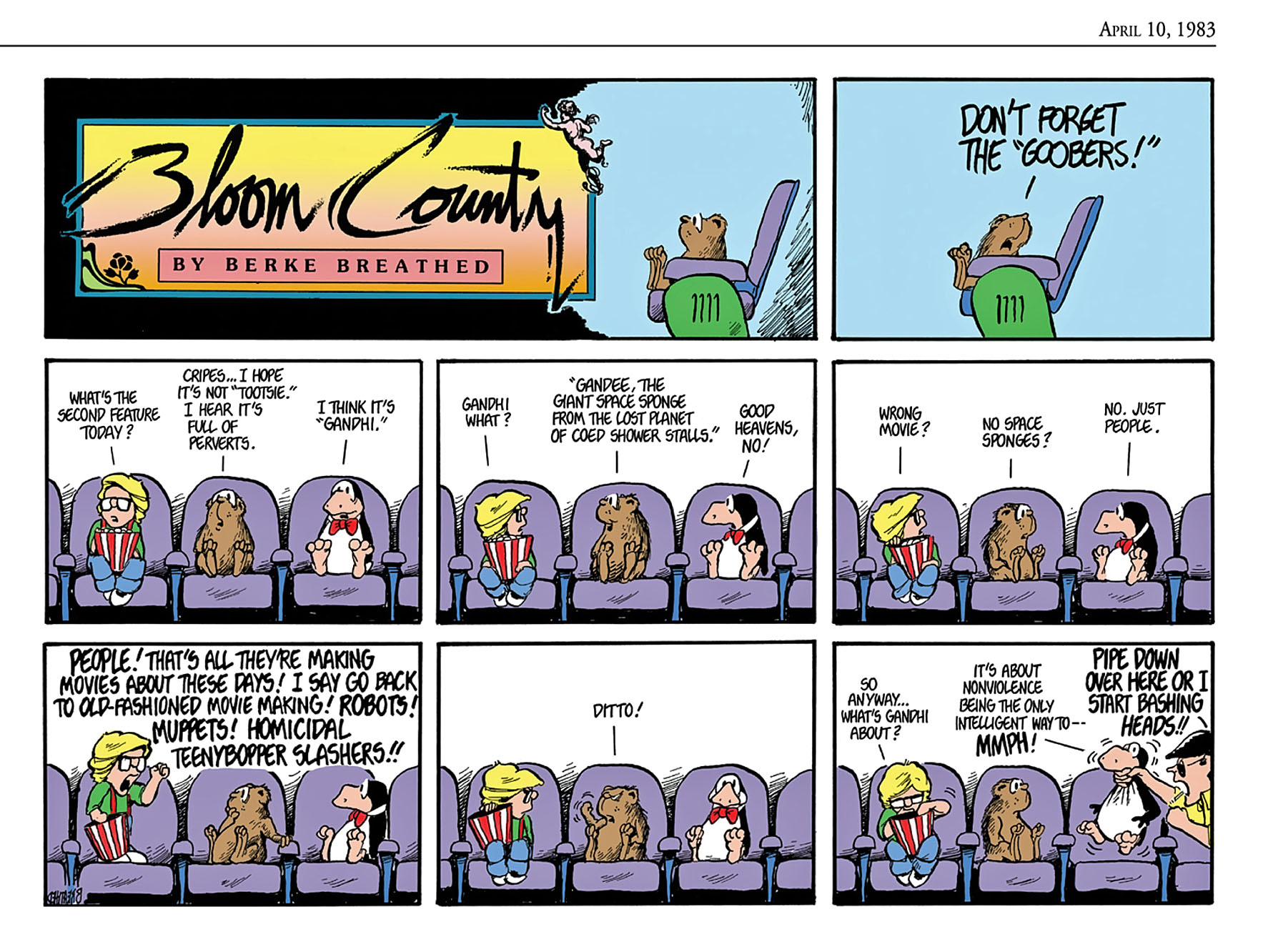
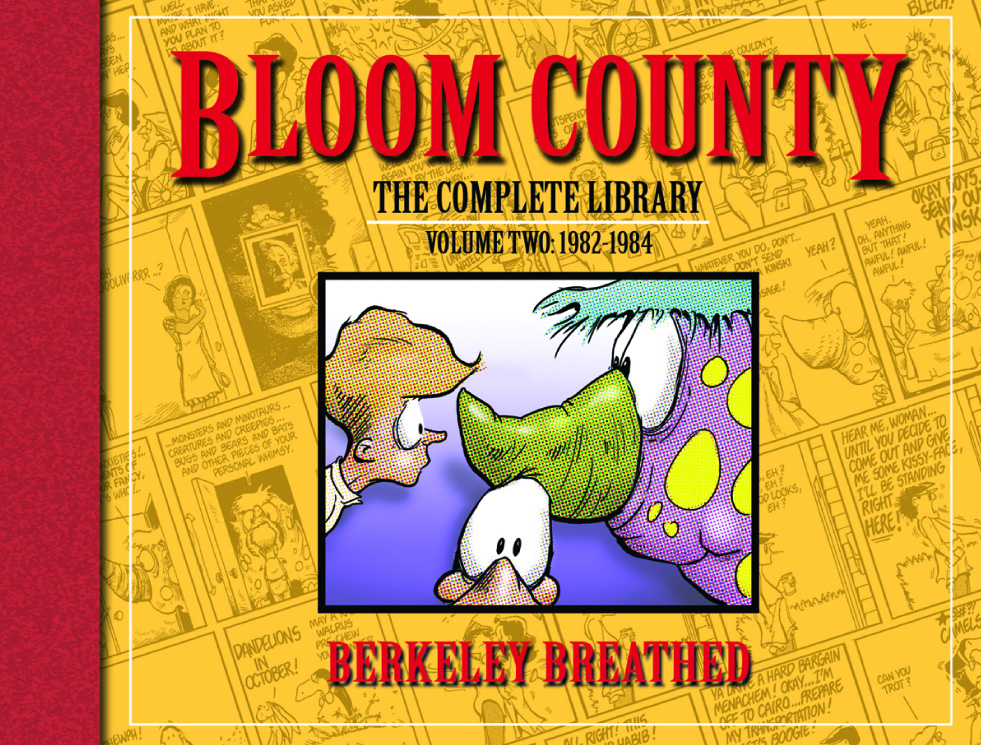
It’s summer movie season, which seems like a good excuse to pull out this great Bloom County Sunday strip by Berkeley Breathed.
Published in 1983, it’s a classic jab at Hollywood’s endless need to recycle formulas and chase the next big thing.
As usual, Breathed’s real gift isn’t just the punchline—it’s the way the dialogue spirals completely off the rails while still sounding oddly believable. Hasn’t everyone had some version of this conversation at one time or another? (Okay, maybe not with a talking penguin.)
Forty-three years later, movie fans are still having the same arguments. The difference is that now a lot of them happen online—or from the couch. With giant TVs, terrific home theater setups, and more streaming options than any sane person could ever watch, it’s easier than ever to skip the theater entirely.
But if you do make it out to one this summer—and you should—
Don’t forget the Goobers.
(I actually do love those.)
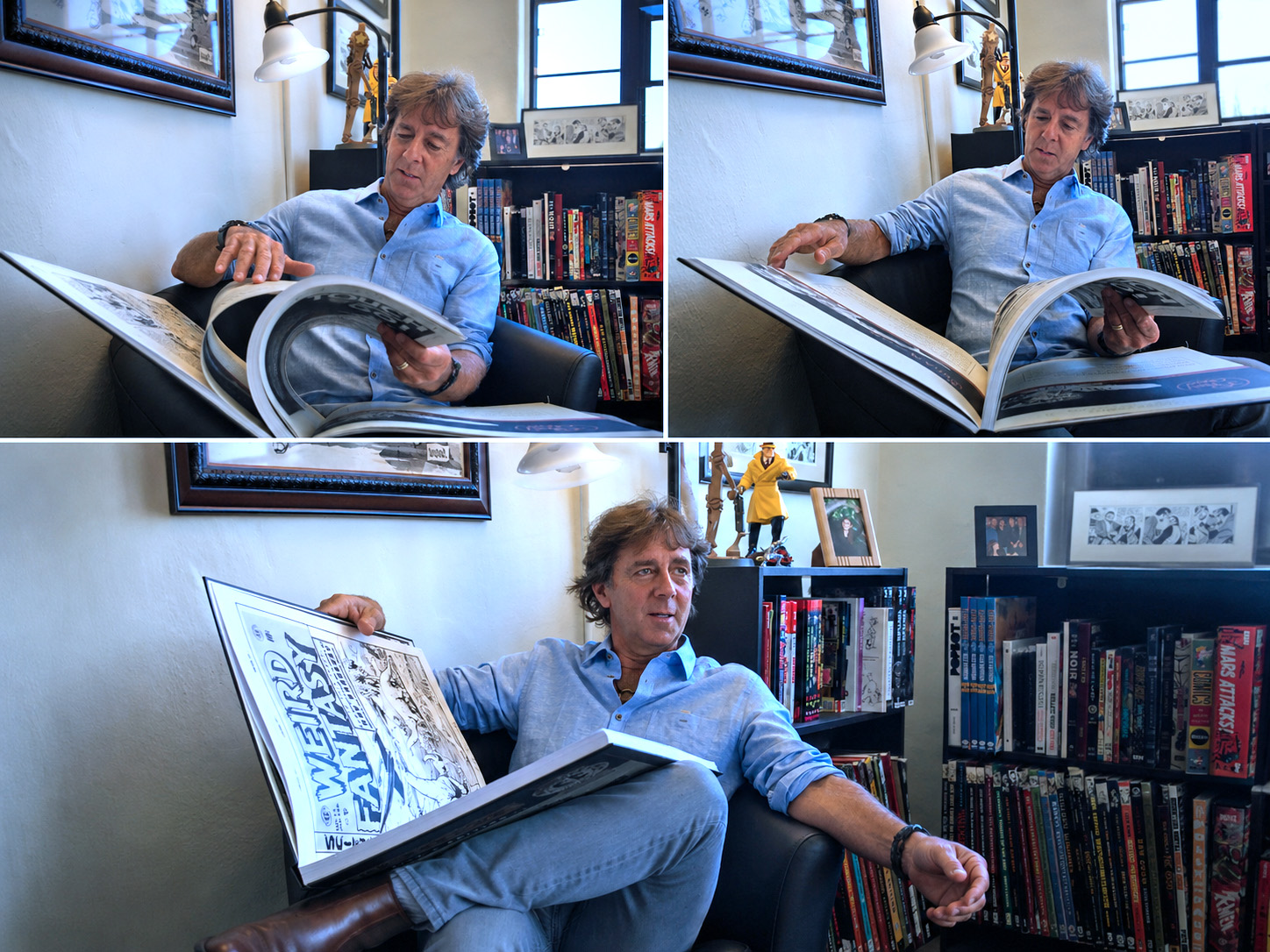
Breathed, enjoying some quality time with the EC Artists Edition at my old IDW Publishing office (Liberty Station, Point Loma, San Diego), circa 2015.
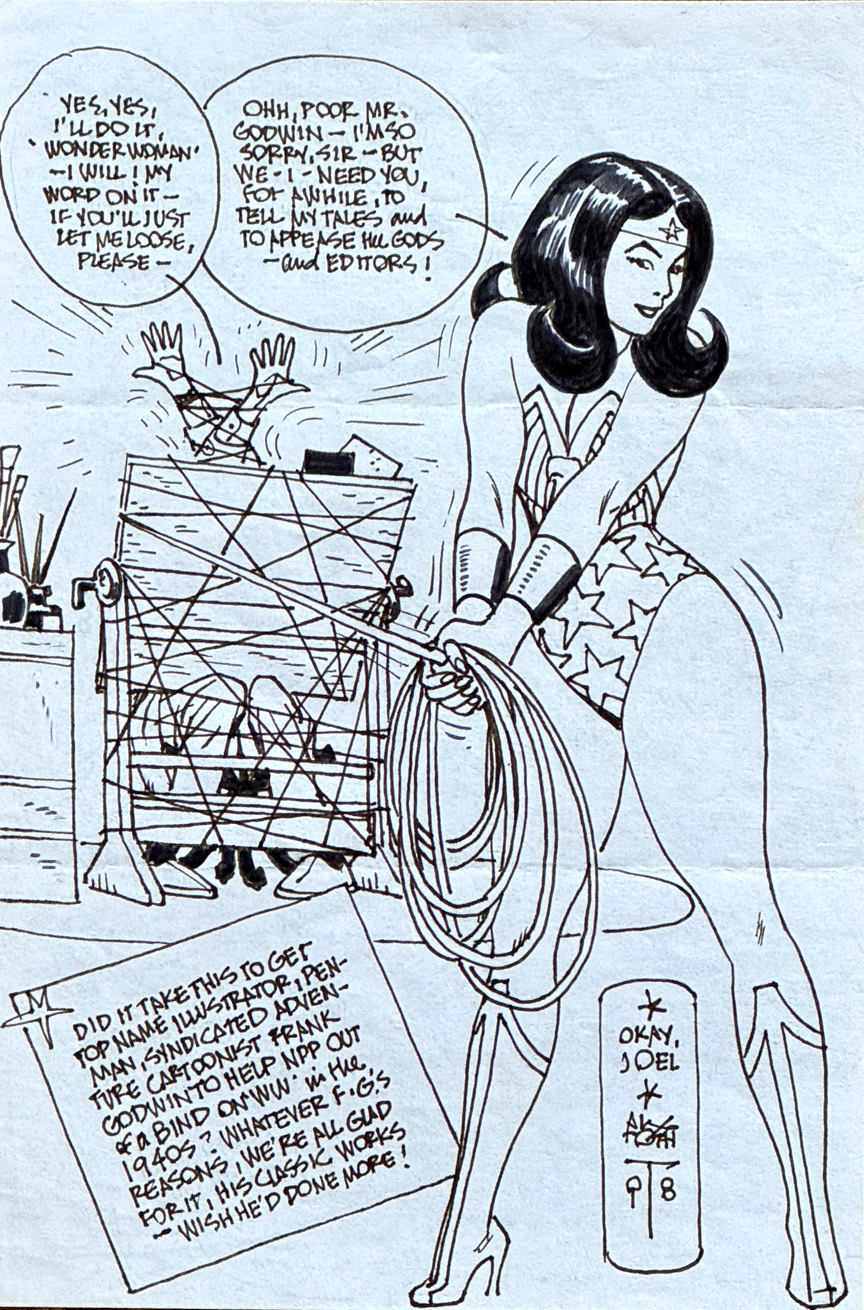
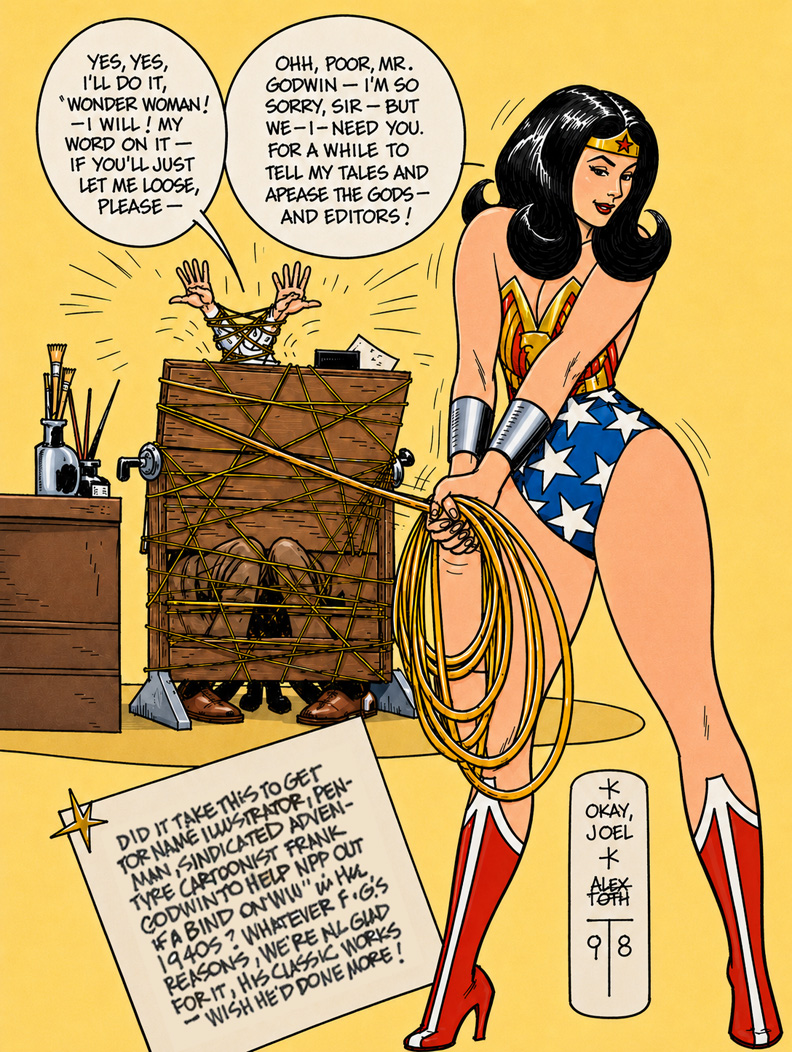
This fun little Alex Toth commission really shows off every side of his cartooning ability—draftsmanship, storytelling, humor, design sense, and of course that instantly recognizable lettering style that somehow always looked effortless.
Typically, it’s drawn on a simple 6×9 sketchpad sheet, folds and all—you can even see how Toth mailed it off to “Joel,” which only adds to the charm.
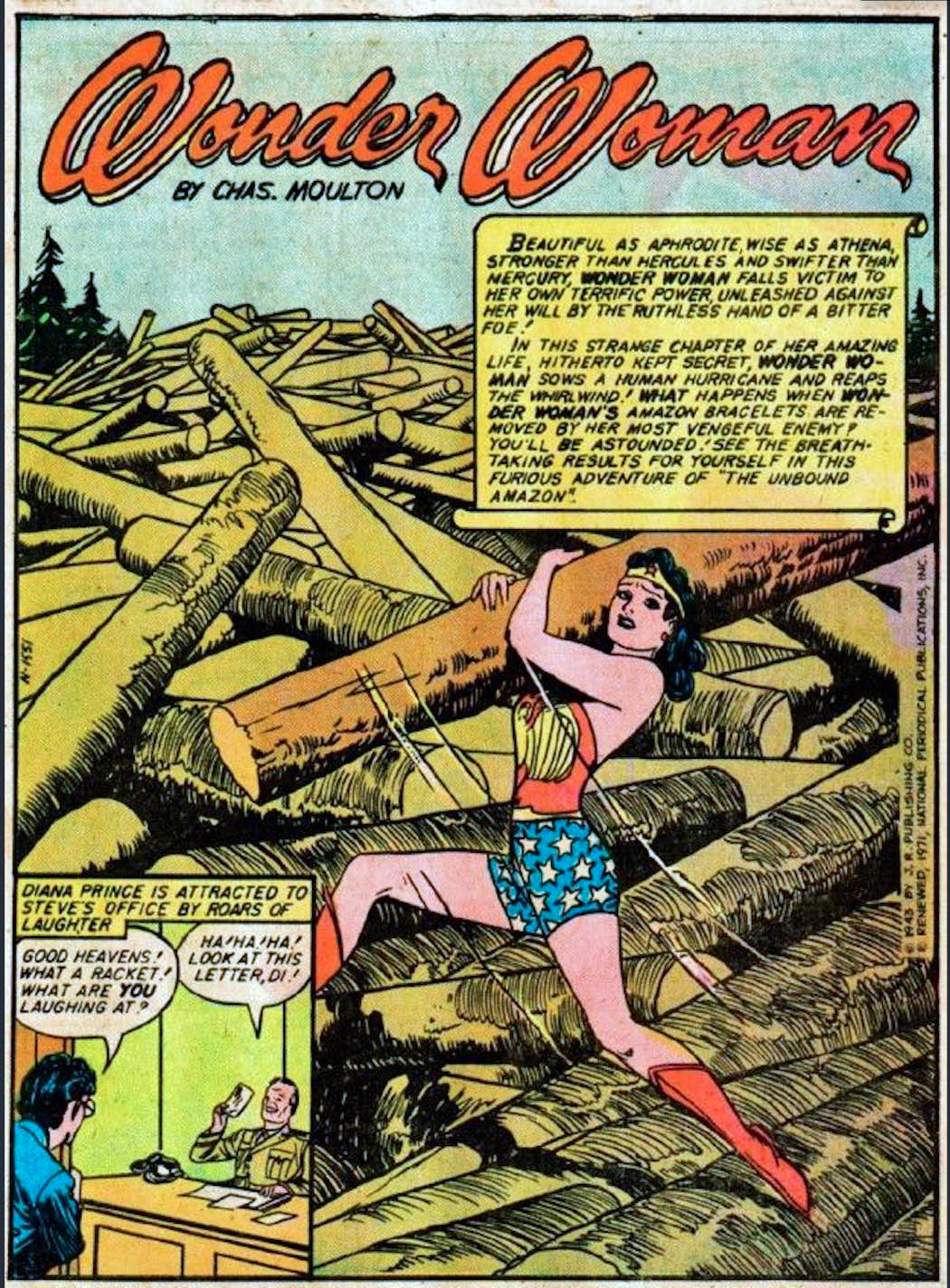
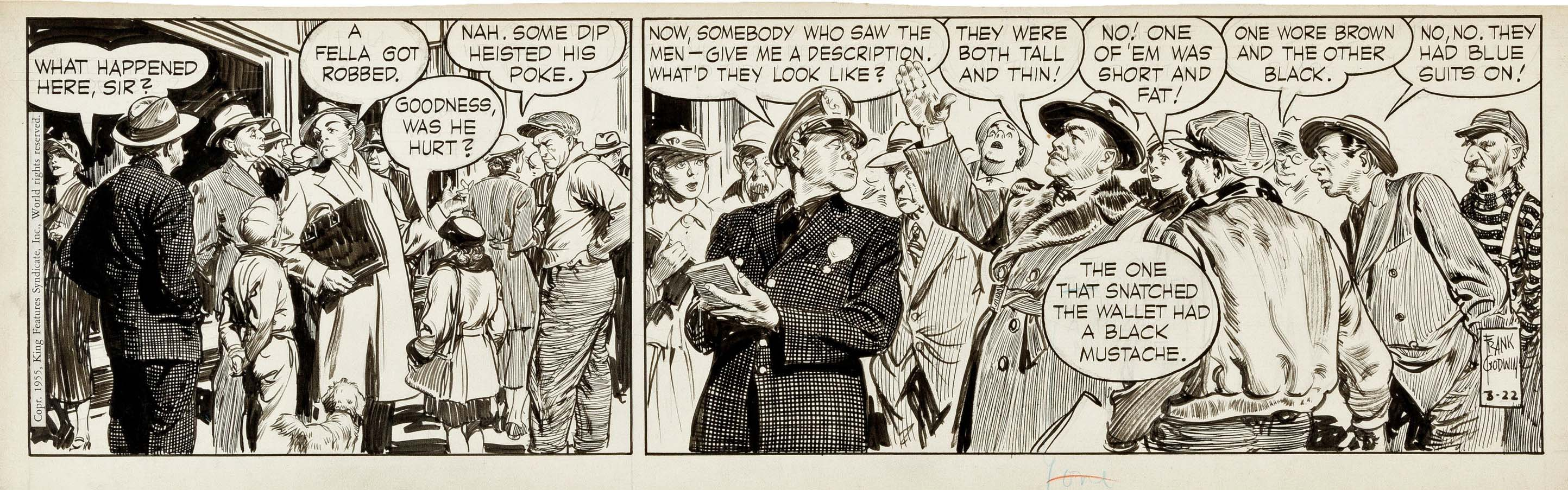
The gag is terrific: poor Frank Godwin (best known for Rusty Riley and some stunning adventure-strip work) has been literally hogtied by Wonder Woman and forced to help DC (then National Periodical Publications) out of a bind by drawing a few Wonder Woman stories in the 1940s.
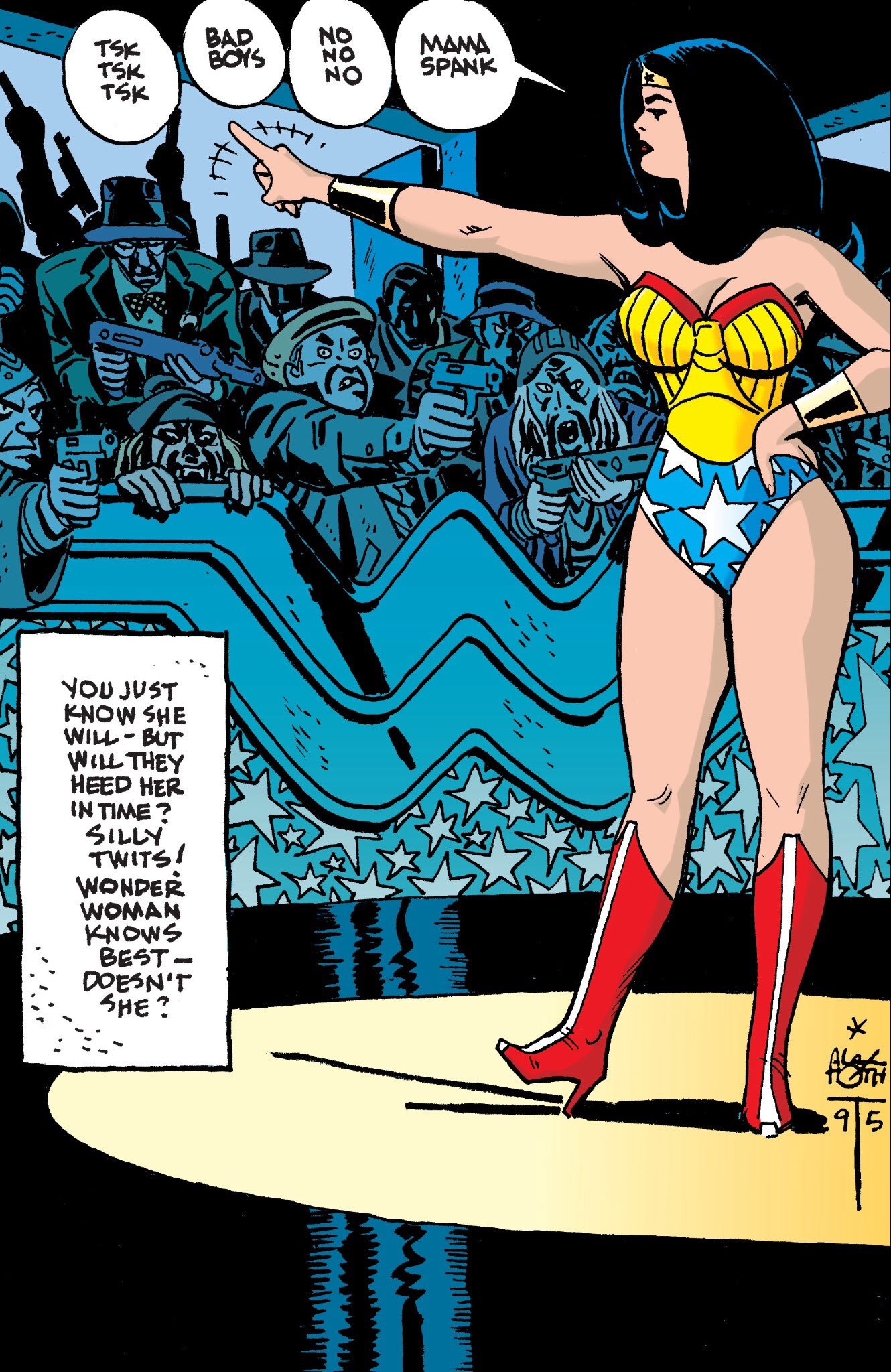
I’ve always loved Toth’s Wonder Woman commissions because they never feel overly reverent. He understood the character visually, sure—but he also understood that comics are supposed to be fun.
Even fooling around on sketchpad paper, Toth still couldn’t help making great comics.
From one of the Godwin-ghosted stories: “Amazon Unbound” from Sensation Comics #19, May 1943A typical stunning example of Godwin’s draftsmanship on the “Rusty Riley” strip.
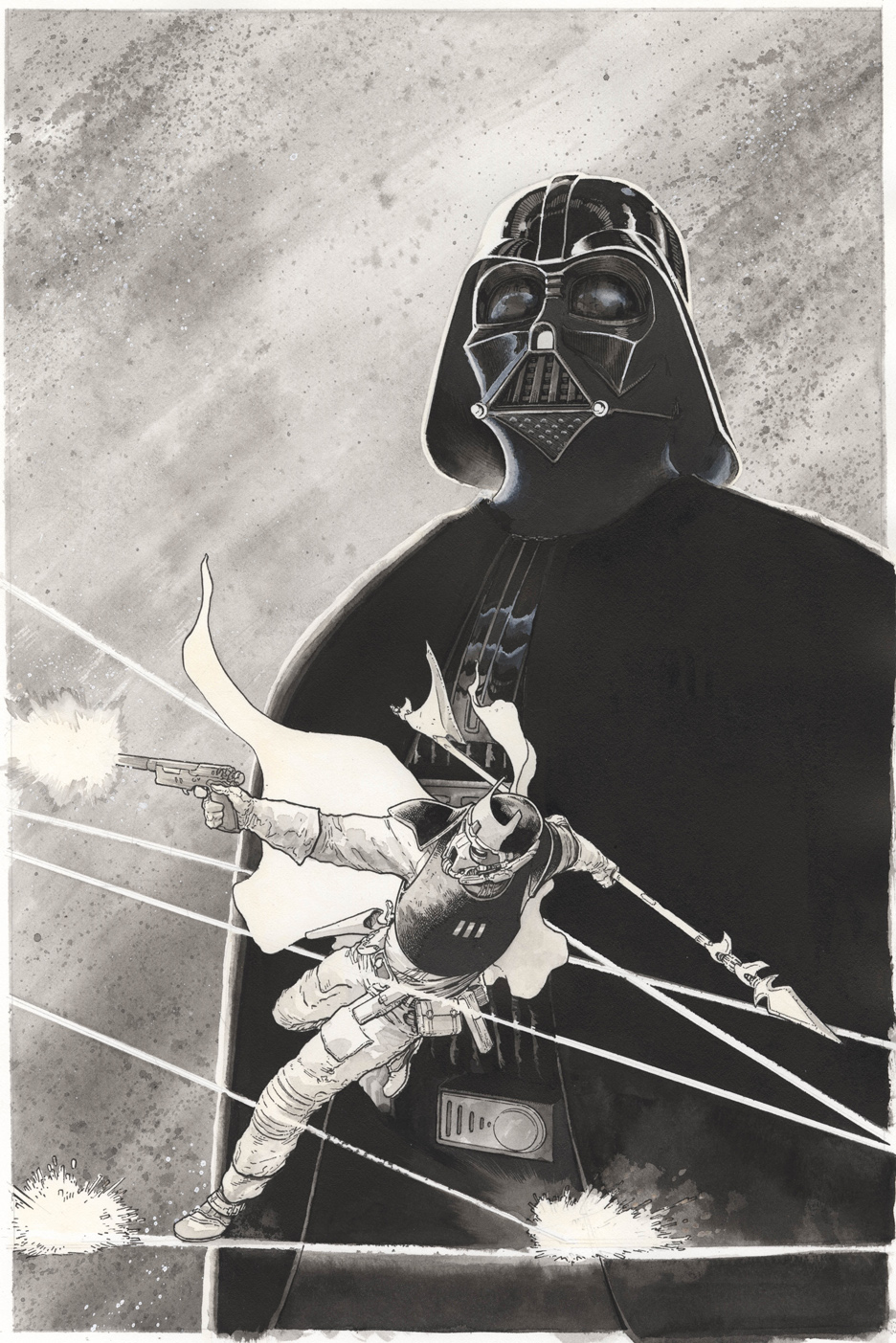
Here’s a Star Wars original cover that really stands on its own.
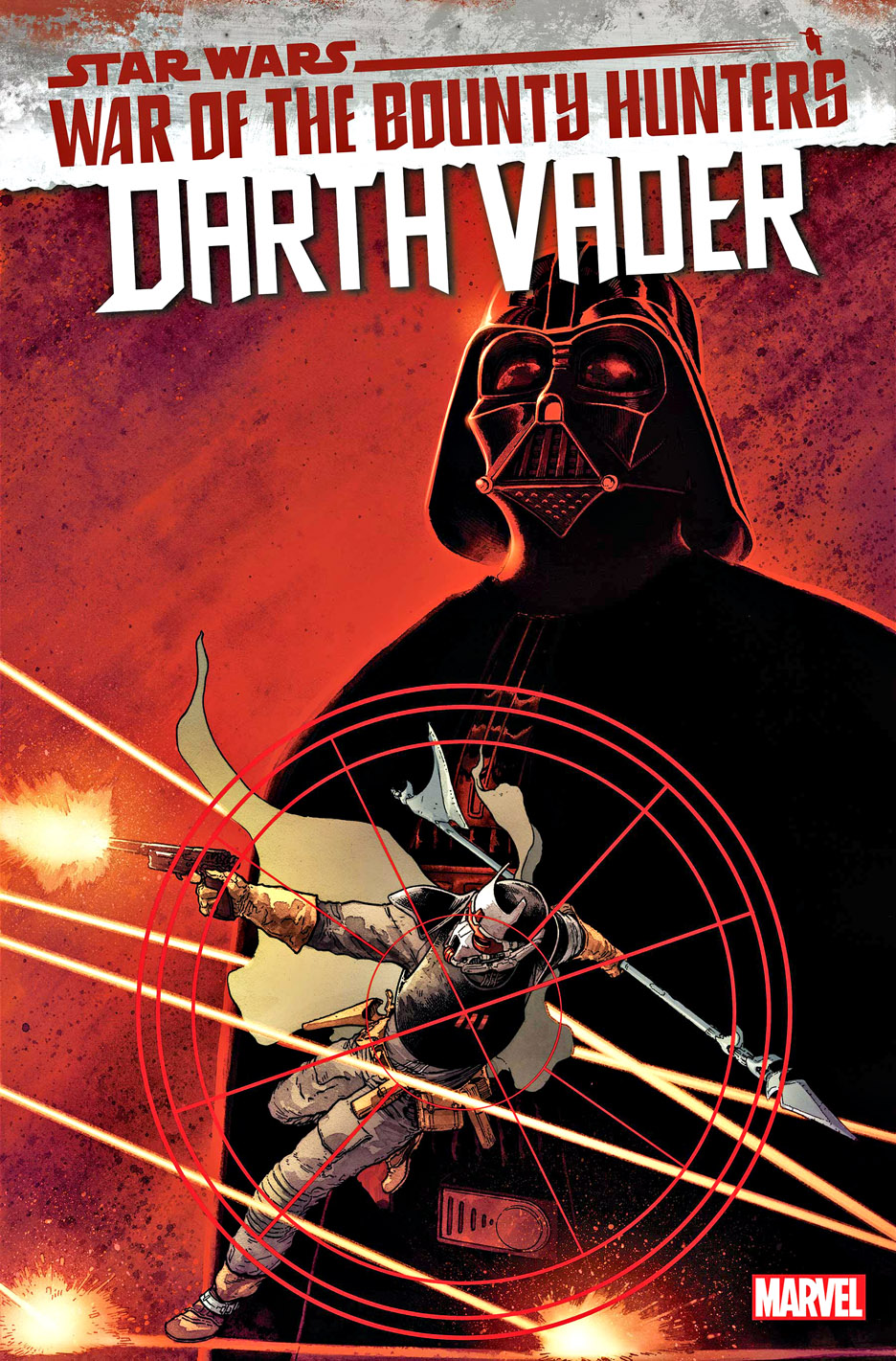
With modern comics, so much texture and atmosphere can be added digitally during production that the original art can sometimes end up looking pretty stripped down compared with the published cover.
Not here.
Aaron Kuder really finished this piece. The grey wash, splatter effects, lighting, and overall mood are already sitting on the board. The color certainly adds another dimension, but the original already feels complete, which makes the OA a knockout in person.
I don’t collect a ton of modern comic art, but every now and then something just clicks and breaks through my usual collecting habits.
And of course—I’ve always had a soft spot for Darth Vader.