Greg Goldstein's Comic Art Gallery

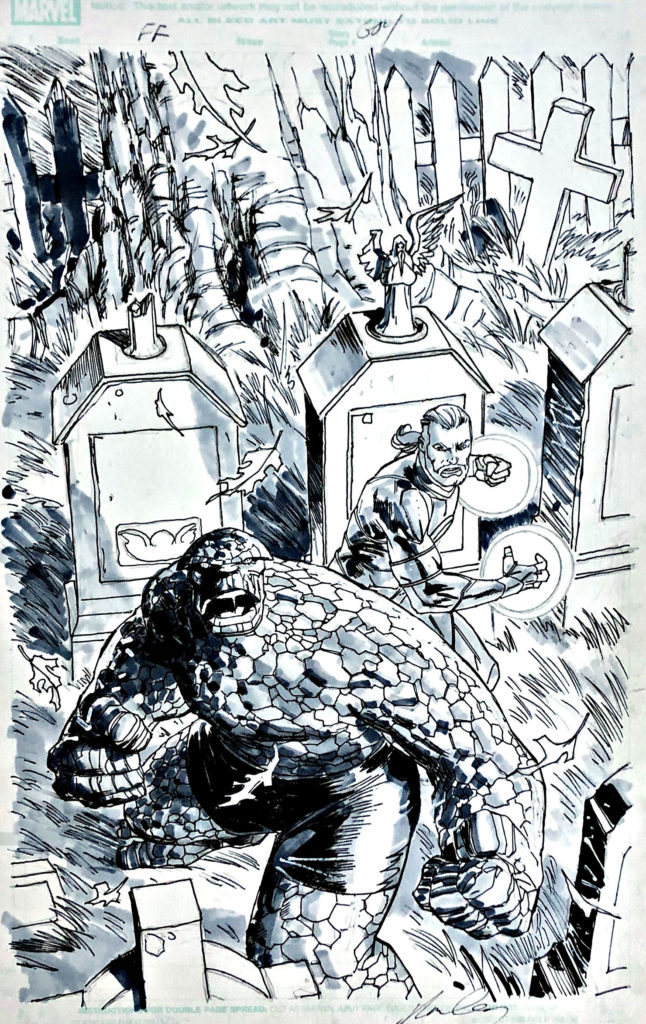
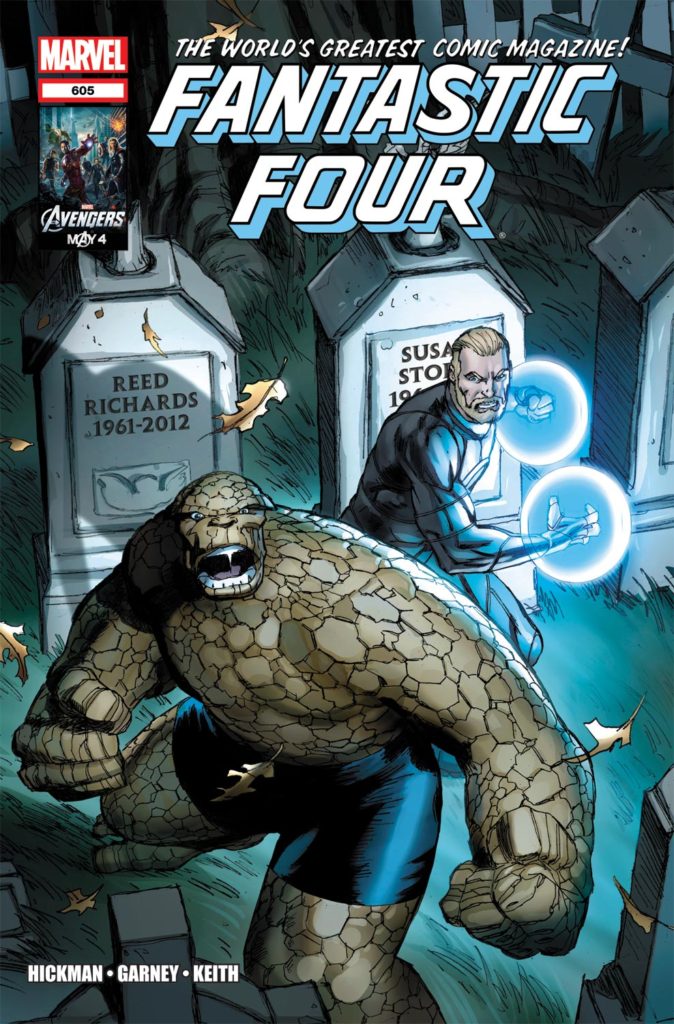
Ron Garney — Time’s Up

Fantastic Four #605, June 2012

Continuing our celebration of the 60th anniversary of the debut of Fantastic Four #1. (August 8, 1961)

Ron Garney — with the help of Jason Keith — delivers a dramatic cover of Ben Grimm and Franklin Richards preparing for a last stand against an unseen foe in a cemetery, indicating the rest of the team is dead.

It’s a time travel story, and a sentimental one at that  — as it explores The Thing’s near-immortal life span. In fact, Jonathan Hickman’s one-shot story itself feels like it would be right at home in a Superman comic.

If I have any small gripe — and I think it has happened elsewhere— is that the older Franklin Richards (Reed’s son) often looks too much like a younger Nathaniel Richards (Reed’s dad) in some of the time travel or multiverse stories. Confusing from time to time. (That pun was not intended. Seriously.)

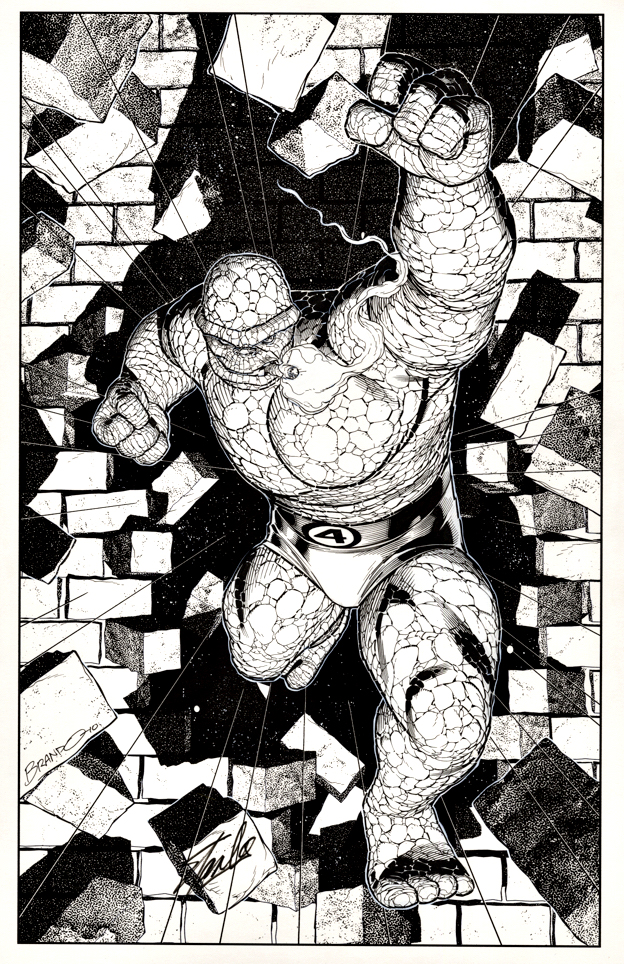
Brandon Peterson — It’s Clobberin’ Time

Commission, 2010

Continuing our celebration of the 60th anniversary of the debut of Fantastic Four #1. (August 8, 1961)

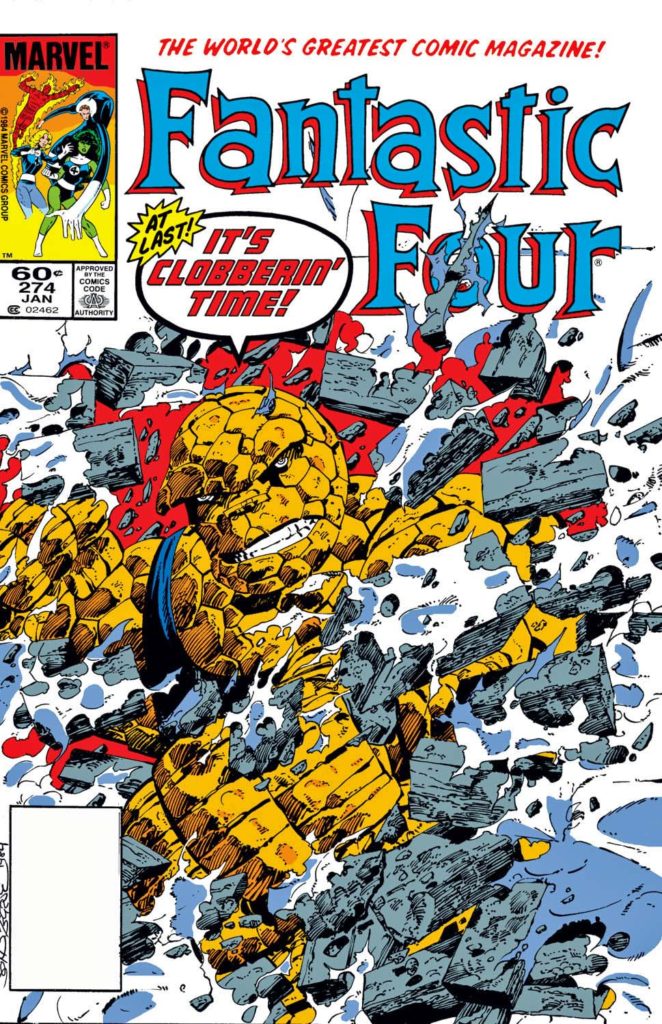
How many brick walls has the Thing crashed through? That’s not some sort of rhetorical question — I have no idea what the answer is.

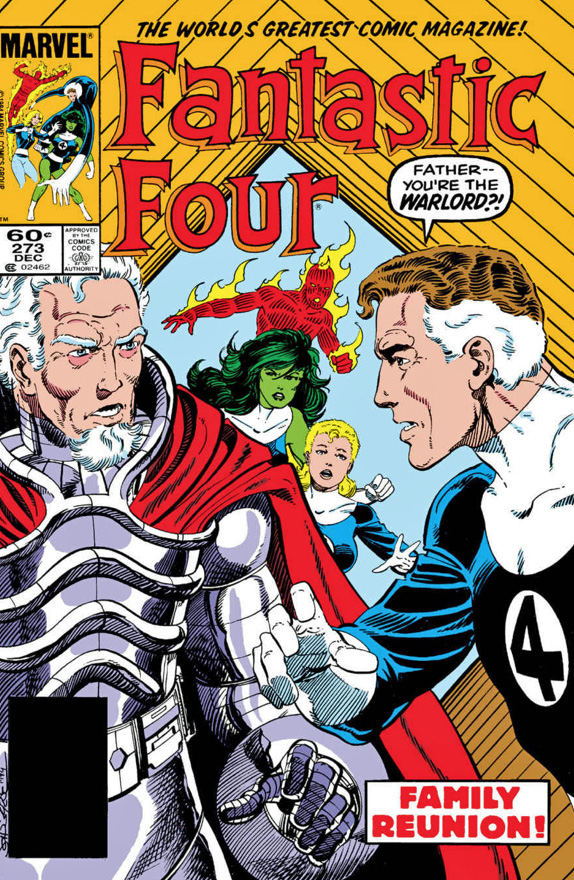
I do know, when I saw this cool commission, it reminded me in high concept (minus the silly tank top) of John Byrne’s great cover of the ever-lovin’ Thing’s return in Fantastic Four #274.

The Thing. Breaking through a wall. And smoking a cigar.

Works for me.

Nuff said.

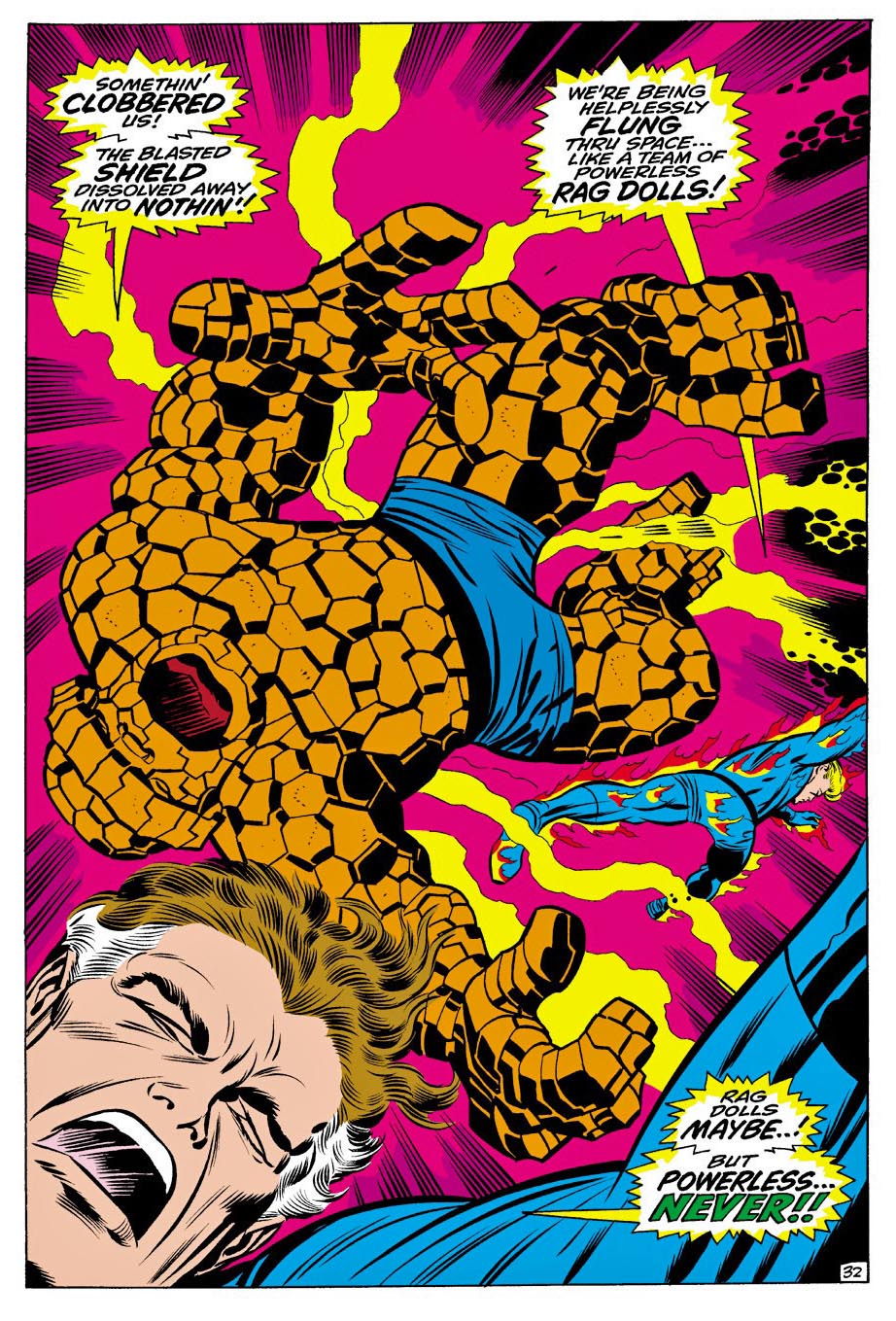
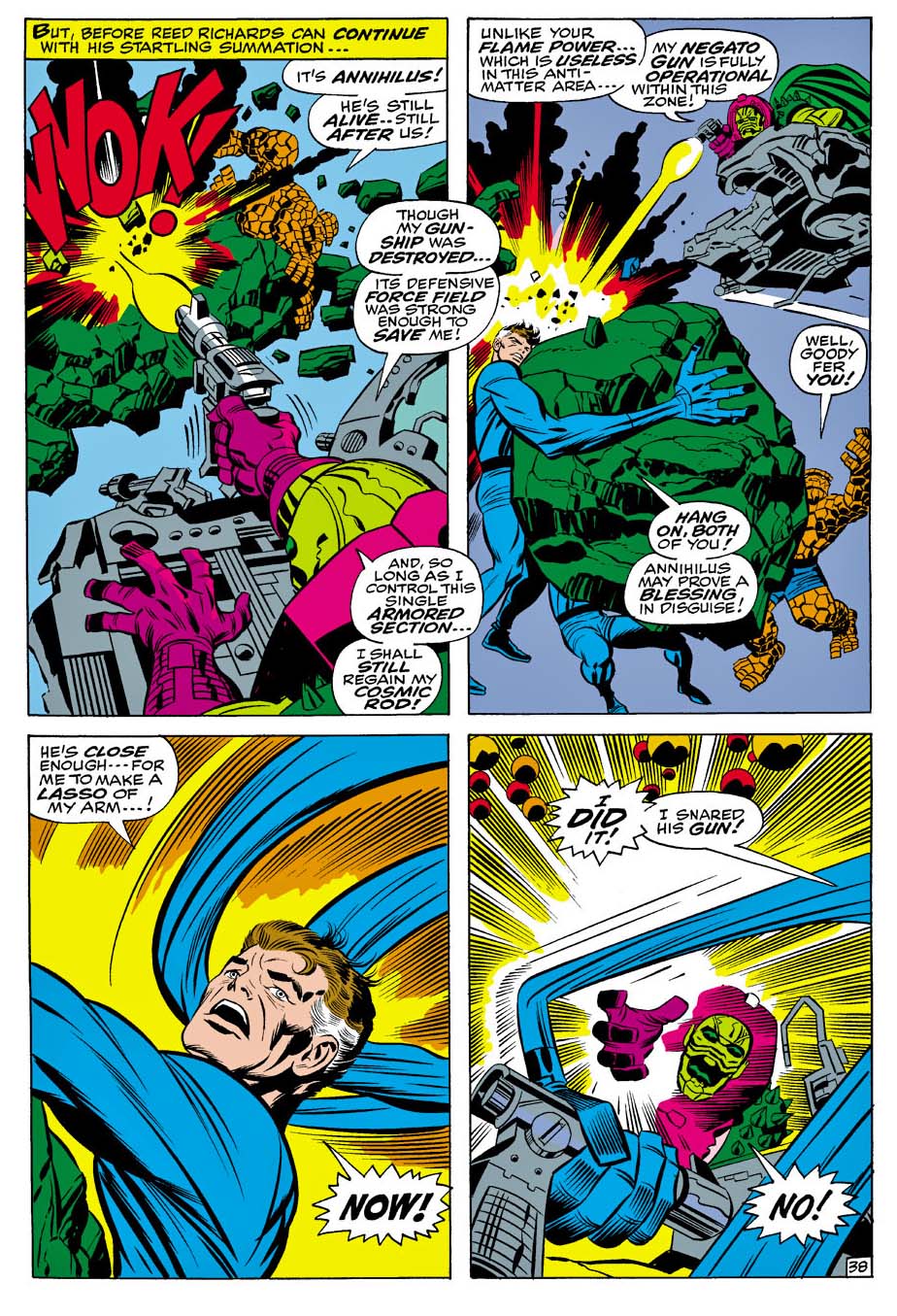
Giorgio Comolo — World’s Greatest Comics Annual

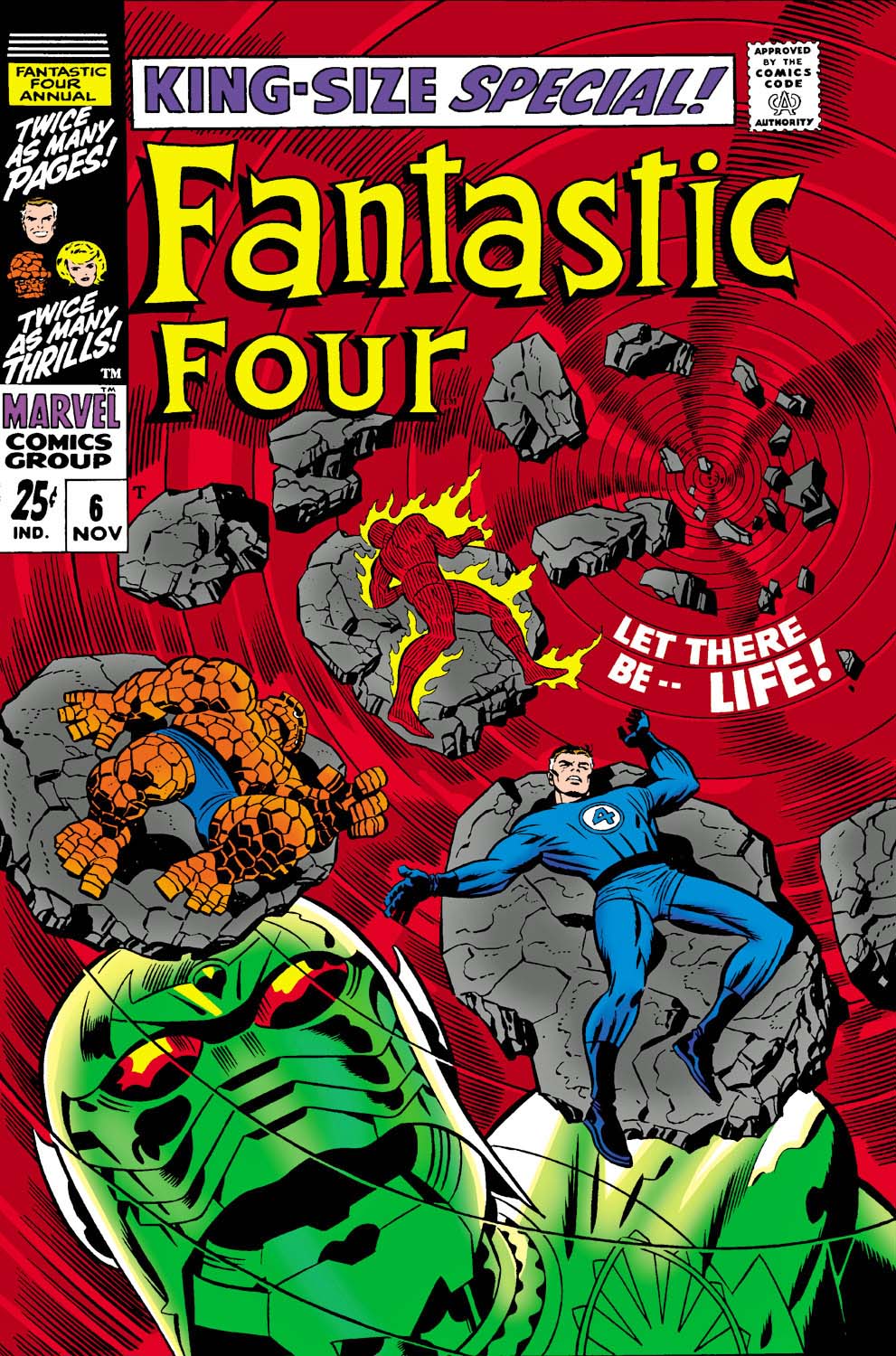
Jack Kirby Homage, 2002 Cover Re-imagination, Fantastic Four Annual #6, November 1968

Continuing our celebration of the 60th anniversary of the debut of Fantastic Four #1. (August 8, 1961)

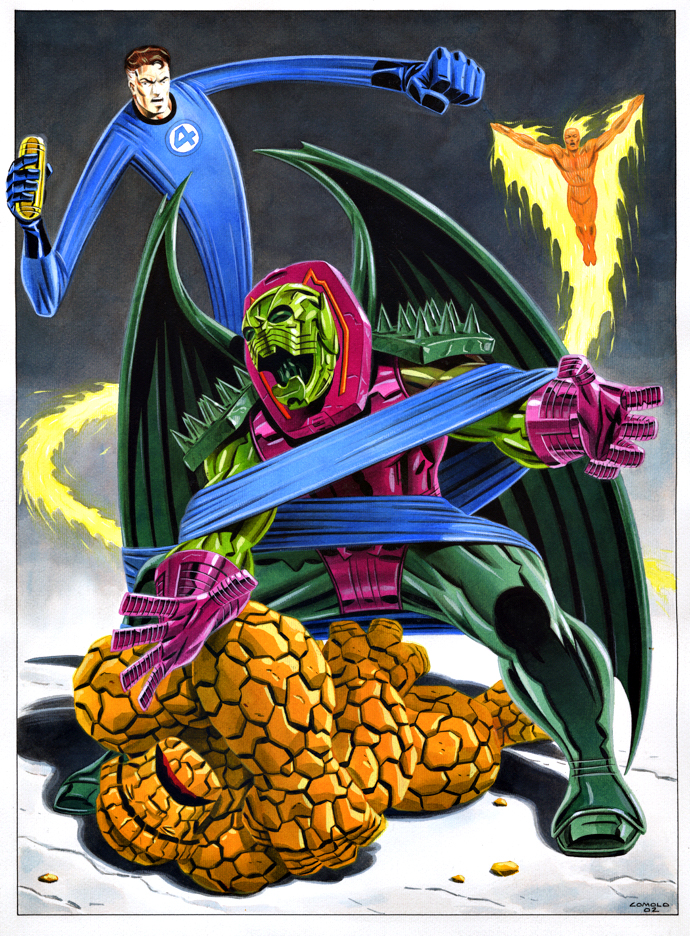
The great Italian artist Giorgio Comolo, a Jack Kirby fanatic, creates a terrific alternate cover for Fantastic Four Annual #6, one of the best solo FF stories to appear during the Lee and Kirby run.

Ironically, despite the acknowledged greatness of the issue, the published cover feels a bit lifeless. Comolo’s take is certainly a much more dramatic representation of the issue’s key moment.

As for that vial? Well, for a spoiler, you can read Marvel’s marketing copy below. Let’s just say its importance is yet another reason why we refer to Fantastic Four as the world’s greatest superhero soap opera.

For a look at some other Comolo Kirby homages, click here

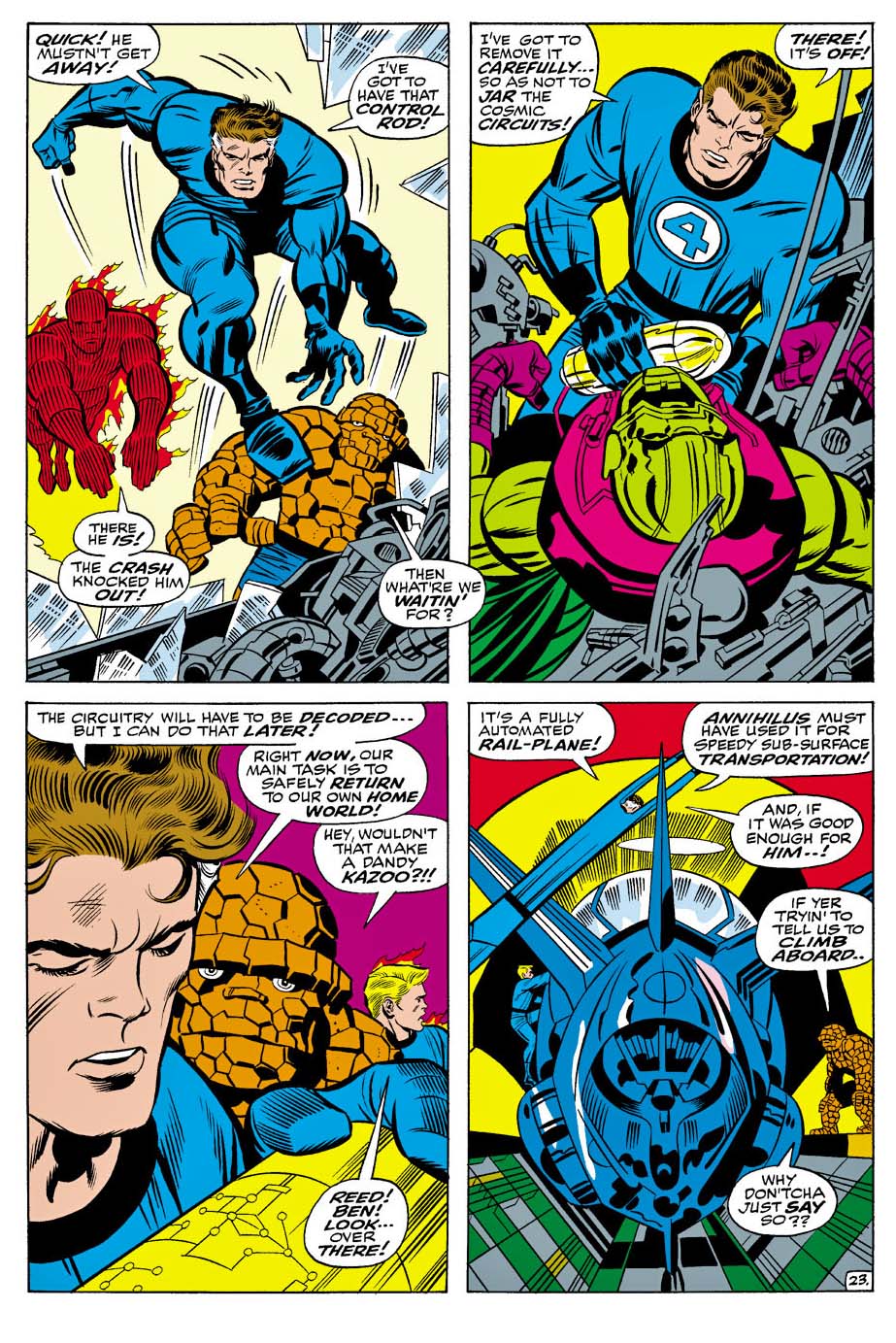
Issue synopsis: The baby is coming! With Sue going into labor, Reed must make a perilous journey to obtain Element X, the only thing that can keep the baby safe from the cosmic rays in Sue’s body. The bad news – it can only be found in the Negative Zone! The WORSE news? It’s in the hands of one of the deadliest beings in any universe – ANNIHILUS!

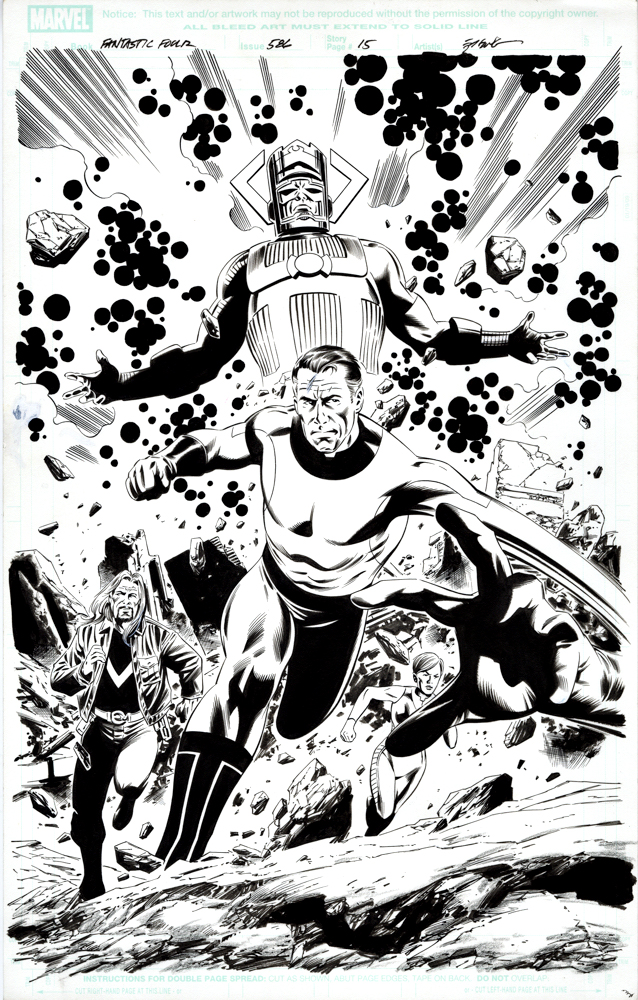
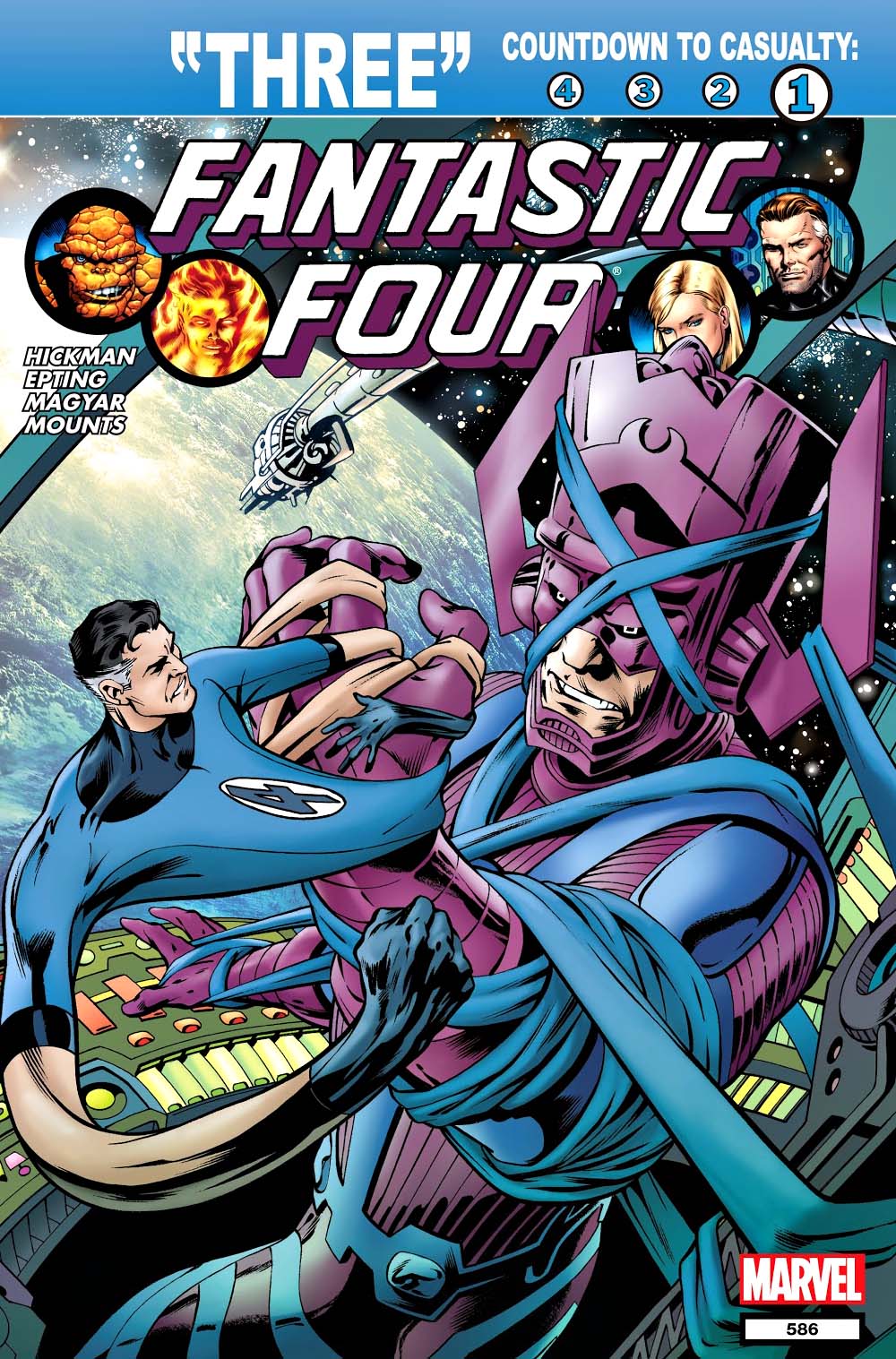
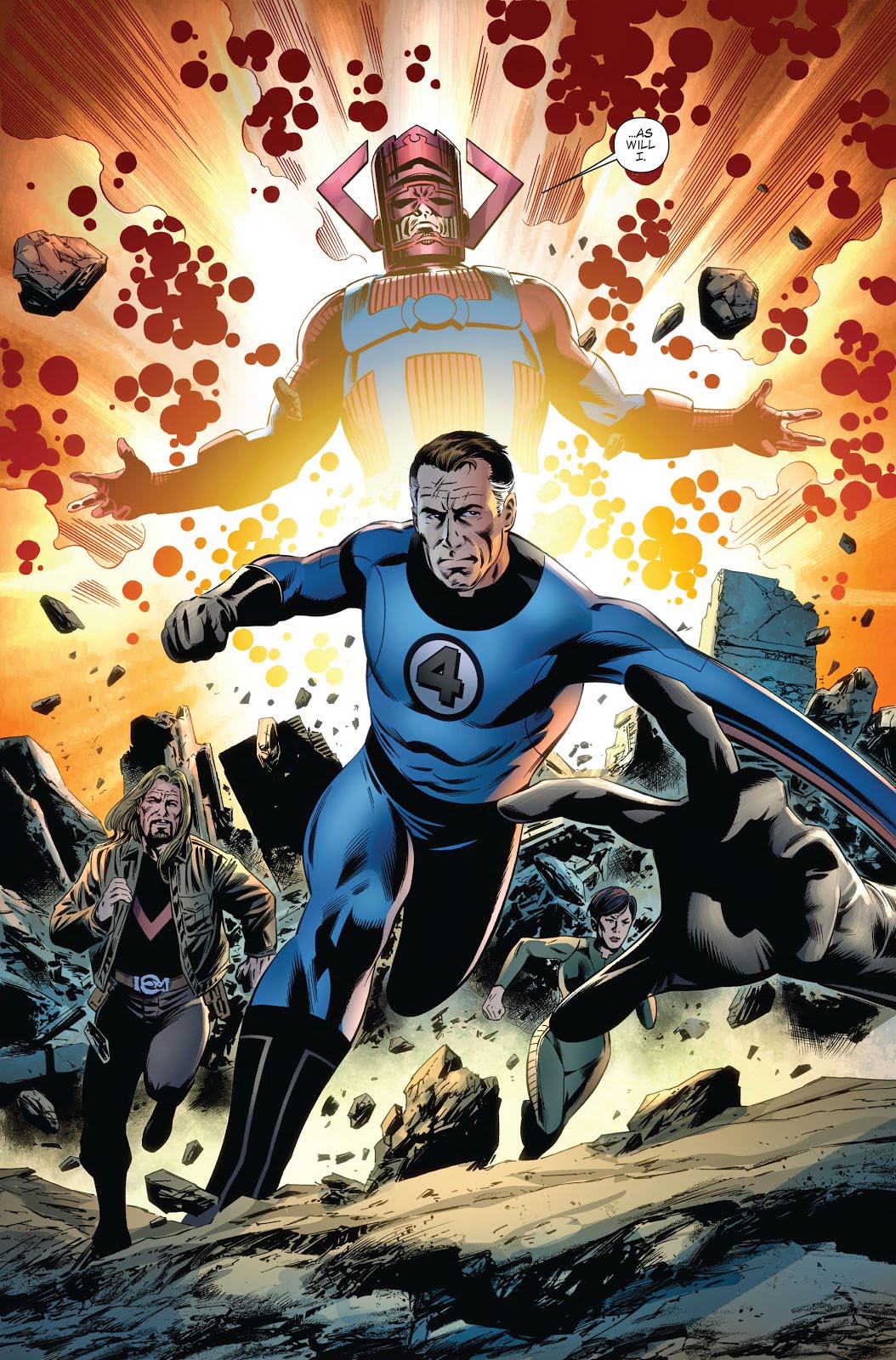
Steve Epting — It Was Sixty Years Ago Today…

Fantastic Four #586, February 2011

One comic book. One grasp (and possibly a final one) at straws for a struggling comic book publishing company.

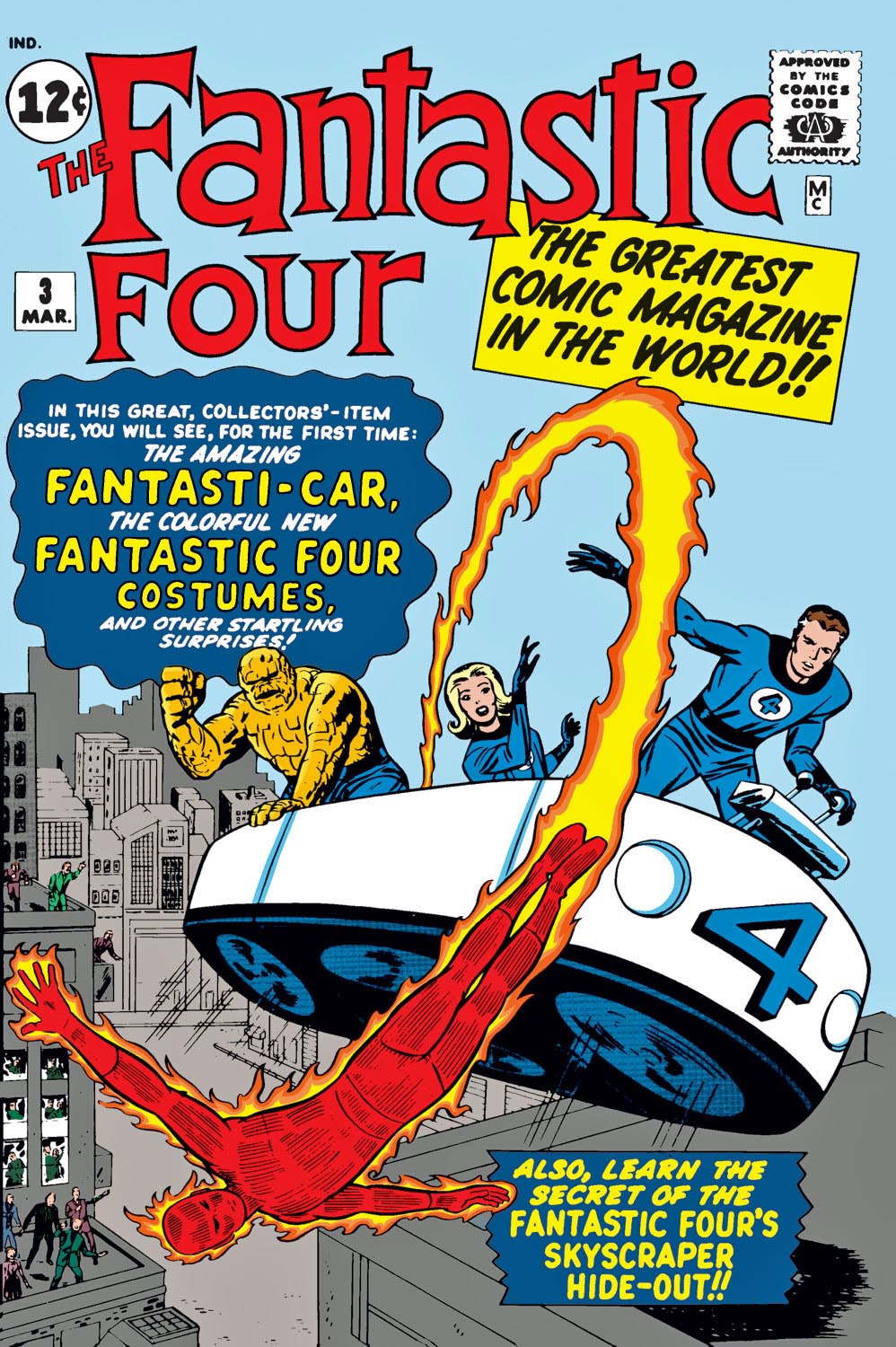
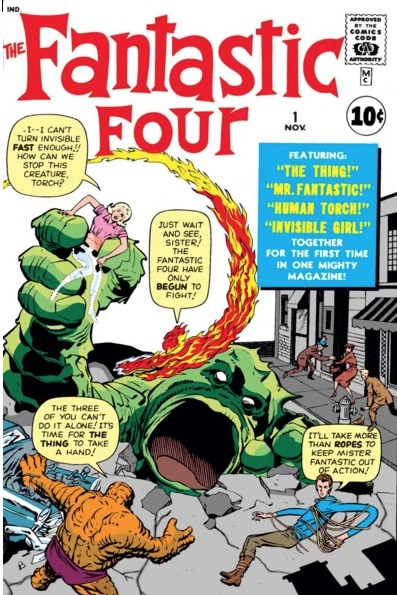
Sixty years ago today, Fantastic Four #1 hit the newsstands.

DC had slowly started its own superhero revival five years prior with the appearance of the Silver Age Flash. By the time the FF appeared, DC had establishes enough heroes to create a Justice League team comic book.

Heck, even Archie Comics launched some superhero titles (The Fly, The Shield, etc.) ahead of Marvel.

But Fantastic Four made an impression. Flawed heroes, who barely got along with each other? Fearsome Foes and supporting characters? Continuity, for goodness sakes? 

Talk about late to the party — but making an entrance. 

Within a few issues, Fantastic Four was the first, and ultimately greatest, soap opera saga in comics. And it didn’t take much longer for Jack Kirby to fully establish himself as the greatest visual storyteller the medium had ever seen, and for Stan Lee to become the greatest showrunner (and, for better or worse, showman) in comics’ history.

The original stories, of course, were much less complex and sophisticated than they are today. (As were the readers.)
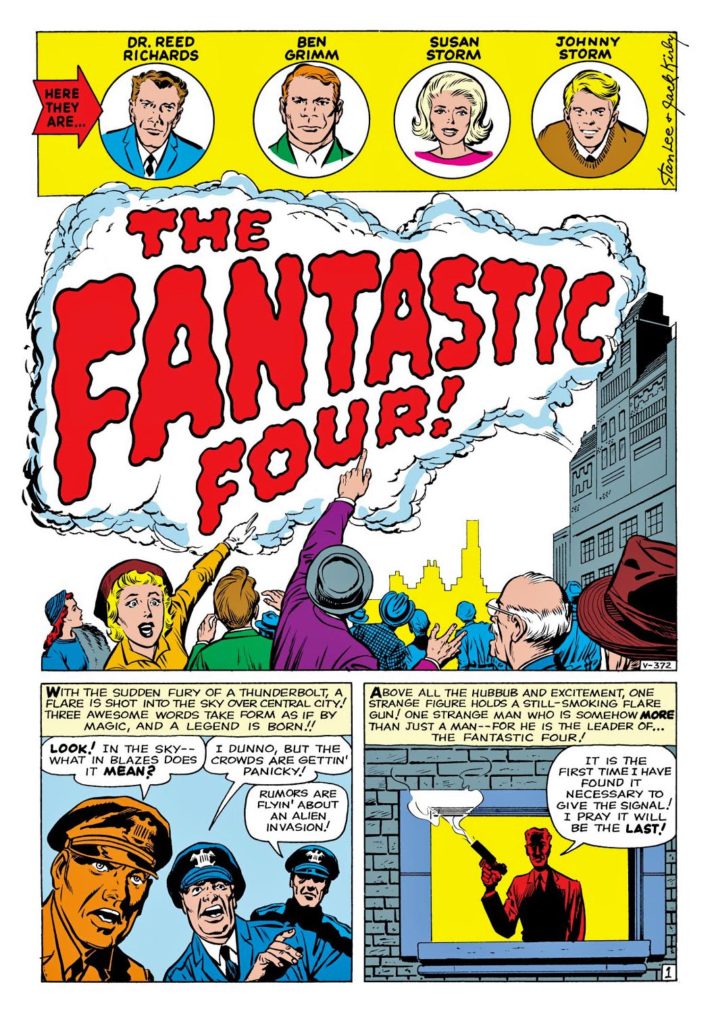
Example: This great Steve Epting splash page from issue #586 is from a story that features time travel conundrums and a multiverse gone somewhat amok.

Heady stuff. But you should expect nothing less from Marvel’s First family.
The World’s Greatest Comics Magazine, indeed.
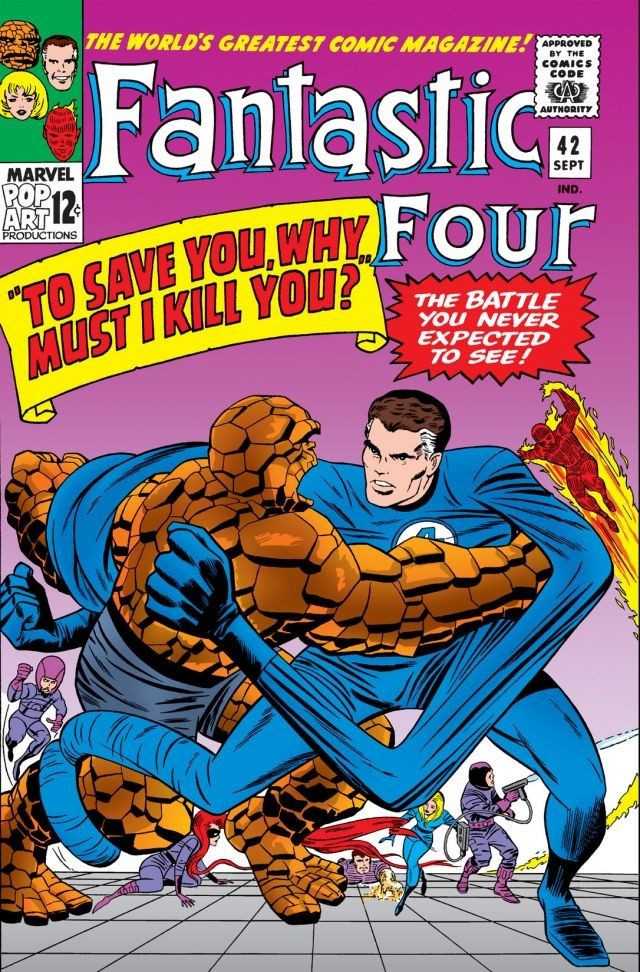
Jack Kirby — Happy 60th, “The Marvel Age Of Comics”

Fantastic Four #42, September 1965

On Tuesday, August 8, 1961, Fantastic Four #1 hit the newsstands.

The rest, as they say, is history.

As promised back in January, we’re adding a few more Fantastic Four posts to continue the 60th celebration of “The Marvel Age Of Comics.”

And yes, we’re cheating a bit by re-running this great page by Jack from the beginning of the FF’s peak period.

But… no Stan Lee AND Jack Kirby… no Fantastic Four… likely no Marvel Age, period. So, in our mind, worth a repeat.

See you on Sunday.

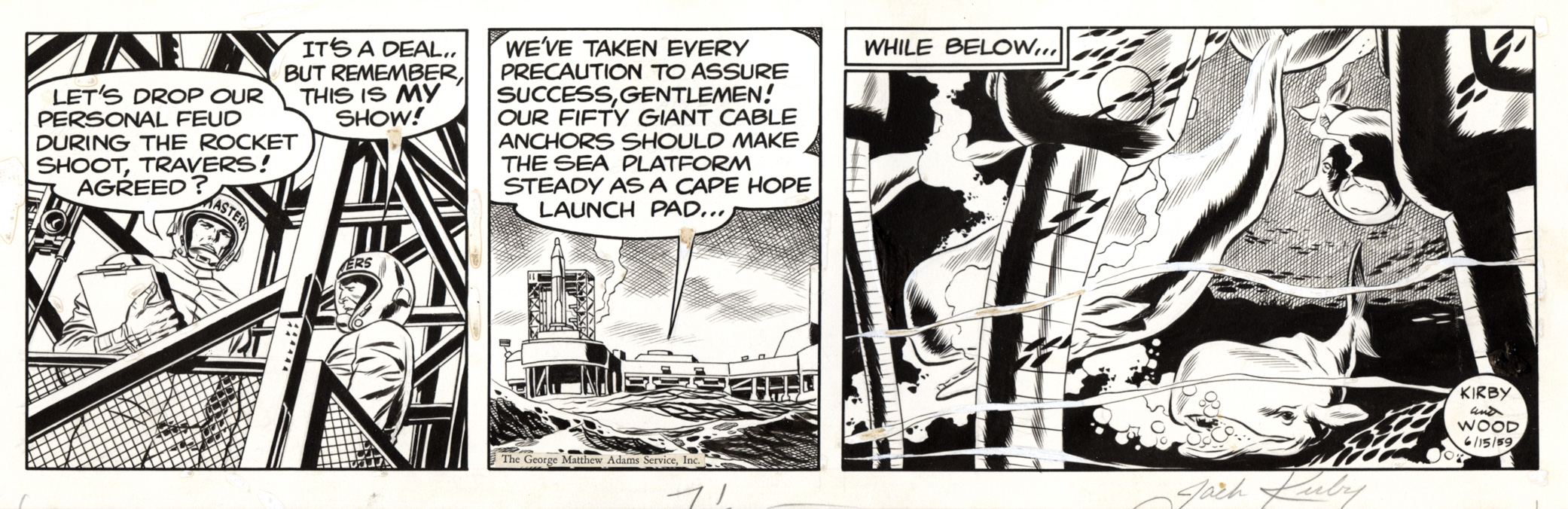
Jack Kirby & Wallace Wood — Blastoff

Sky Masters, Daily Strip, June 15, 1959

What if…

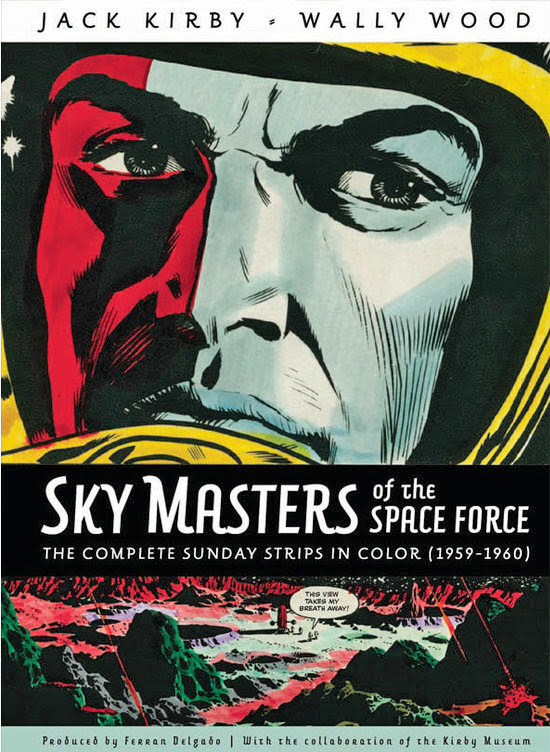
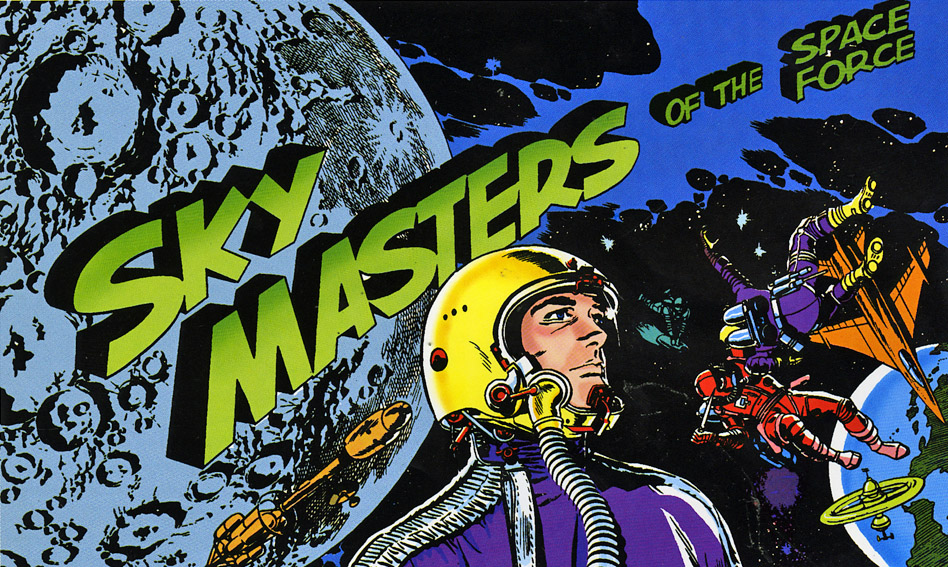
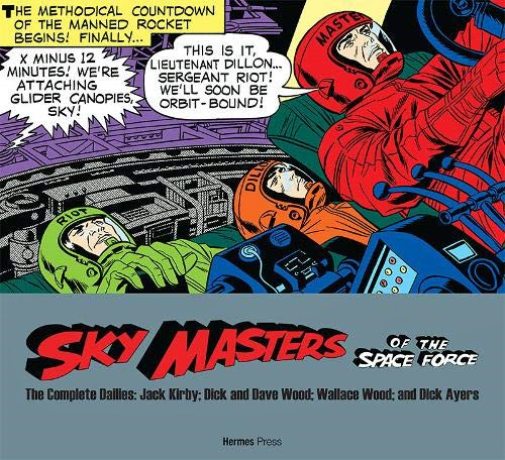
Jack Kirby’s 1958 Sky Masters newspaper comic strip — about the nascent space race — had turned into a giant hit for Jack, and partner Dave Wood.

What if…

Kirby had been able to easily solve any financial dispute with DC editor Jack Schiff about the strip’s royalty terms. (The News syndicate had originally approached Schiff about the creation of the strip, and Schiff appears to be the intermediary between the syndicate and writer Dave Wood.)

What if… 

Despite any financial acrimony over the strip, Schiff didn’t fire Kirby from Challengers of the Unknown… and all of DC comics.

You can see where this is going —

Jack continues to draw Sky Masters, fits in some DC comics work whenever possible, and never finds any time to return to Atlas/Marvel.

And “The Marvel Age of Comics” takes a completely different turn, if it even manages to leave the launching pad.

For those interested in the nitty gritty of dispute, Wikipedia has done a good job of assembling an overview (and sources) here.

Writer Jon B. Cooke provides an even more detailed summary, from the Jack Kirby Collector.

Fun fact: For many years, like most fans, I thought the “Wood” on Kirby/Wood signature referred to Wallace Wood as inker. It actually referred to Dave Wood and his brother Dick who co-wrote the strip. This, despite the fact that that Woody actually did ink the strip for about the first year, including the example above. (Dick Ayers eventually came on the strip as inker, and ultimately Jack inked it himself, likely with help of wife Roz.)

Continuing our month long celebration of the great adventure comic strips:
Week 1: Superheroes
Week 2: Detectives
Week 3: SF
Week 4: Comic Book Giants

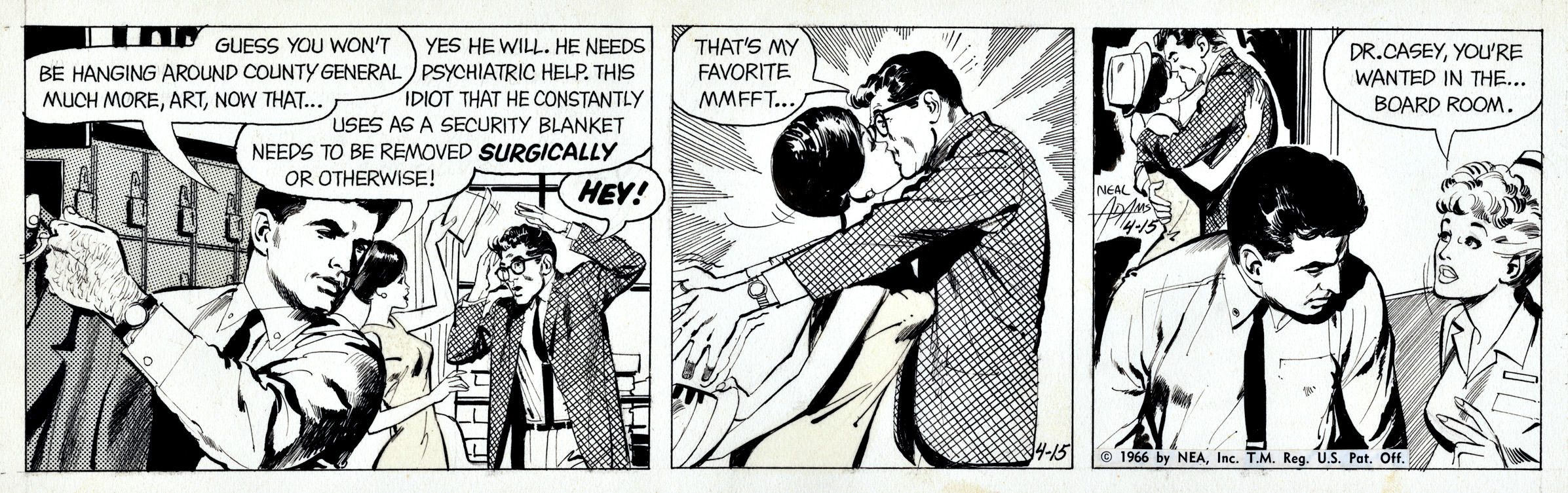
Neal Adams — Happy (Belated) Birthday

Ben Casey, Daily Strip, April 15,1966

Neal Adams turned 80-years old last Tuesday, June 15.

I’ve been planning for months to pay tribute to great strips, and great strip artists, in the month of June.

Had I been able to logically put two and together, this post would have run last week, not today.

In other words, I’m a week late… and a more than a dollar short. Ack.

As for Dr. Ben Casey? From Neal’s own website:

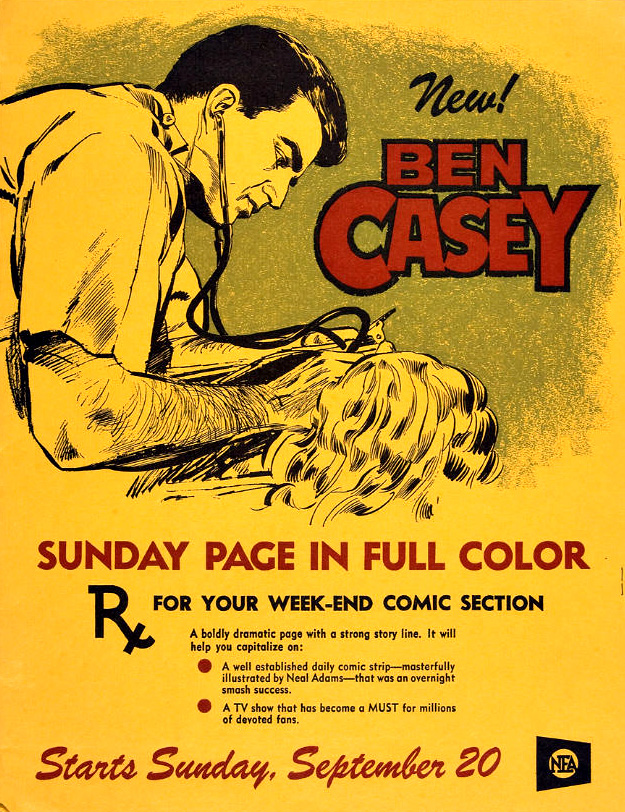
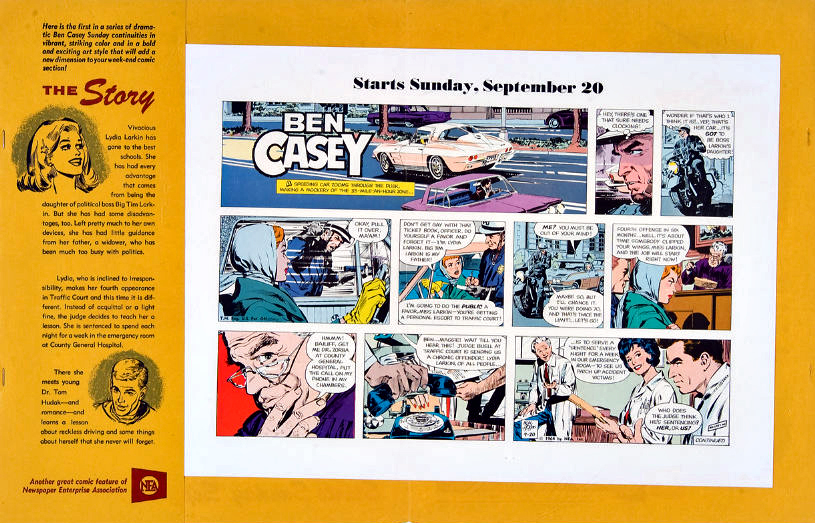
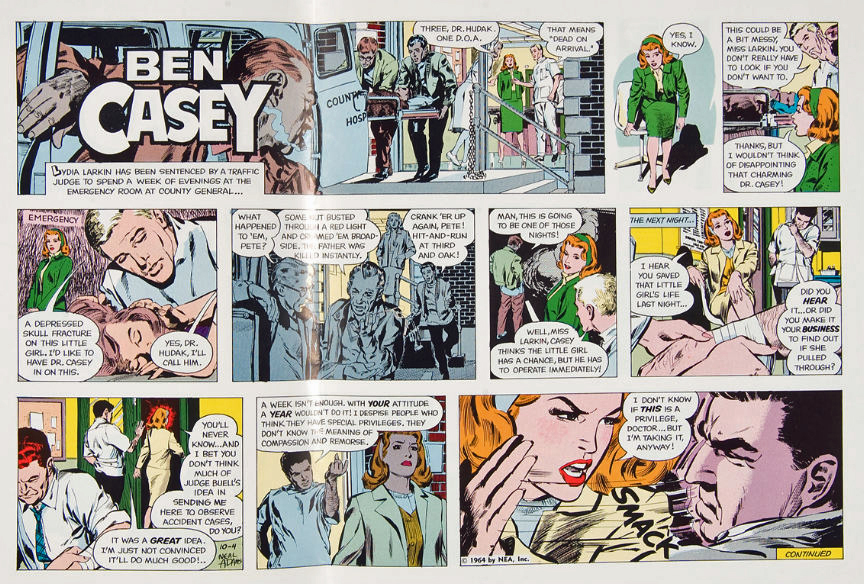
“When charming and talented Neal Adams was just 21, he was awarded the art chores of the comic strip based on the popular TV show Ben Casey staring Vince Edwards. One of the youngest, syndicated strip artists, Neal started his groundbreaking work on November 26, 1962 and the Sunday strip was added on September 20, 1964. Four years later, the strip ended as the television show did, but Neal’s career was just starting.”

I have a lot of “favorite” artists, but the one who had the most impact on me as a youngster was — you guessed it — Neal Adams

And the charming side of him can indeed be charming as hell.

Fun fact: A collection of all Neal’s Casey strips should be considered a holy grail of archival reprints. 

We tried. We really tried. 

Can’t win them all.

Continuing our month long celebration of the great adventure comic strips:
Week 1: Superheroes
Week 2: Detectives
Week 3: SF
Week 4: Comic Book Giants

Alex Saviuk — Spider-Man’s Amazing Friends

Newspaper Strip, Sunday, January 20, 2008

Pencils: Alex Saviuk. 

Inks: Joe Sinnott

Letters: Stan Sakai.

Story: Stan Lee. (With ghostwriting help likely from Roy Thomas.)

It’s an all-star team of creators contributing to this Sunday Spider-Man strip, and signed by everyone.

(Well almost. If I’m correct about Roy, I hope I can get his John Hancock at a convention. Whenever conventions become the norm again, that is.)

Fun Fact: I acquired this Sunday directly from Alex, who was kind enough to Remarque it for me to distinguish from the few others that had all four autographs. A talented artist and a super nice guy.

Nuff said.

(*You can read about Stan Lee and the legend of “Nuff Said” here and here.)

Dick Ayers (w/Joe Kubert) — One-Armed Soldier

Sgt. Rock #348, January 1981

When I acquired this great looking page years back, I remarked (to no one in particular): “Gee, who knew Dick Ayers could draw like Joe Kubert?”

Duh. Thanks to the amazing Grand Comics Database (GCD), and an interview with inker Ron Randall, I find out that there’s an excellent reason for the look and feel of the draftsmanship: Kubert drew some of the art as well. (And Ron is a graduate of the Kubert School.)

Official credits in the printed issue belong Ayers and Randall, inker, but given the many retouches and corrections on the page (and likely throughout the entire story) it should have been a bit more obvious to me that Joe had a hand in the art. From the Randall interview:

“My first comics work was a few short stories in the back of the old Sgt. Rock. Many, many years ago. What I most remember was the rare and priceless opportunity to work one-on-one with Joe Kubert himself as he took me through the steps of layouts, pencils and inks on these short tales. It was getting personal attention from a master. And the lessons I learned from those jobs have shaped my views on comics and storytelling to this day.” — Ron Randall

I’ve seen Ron at quite a few conventions over the years, so when cons come back, I can potentially put the rest of the puzzle pieces of this particular story together. (Like how Dick Ayers actually fits into this.) If Ron remembers, that is. 

(I know I seem remember things from 40 years ago. I just can’t remember what I had for lunch yesterday.)

John Byrne — WandaVision

West Coast Avengers #42, March 1989

John Byrne takes over The West Coast Avengers with a storyline entitled “Vision Quest.” The Vision is missing — the government is secretly reverse engineering him — and when it’s all done, we witness the introduction of the “White Vision.”

Sound familiar? Many of these ideas and threads (and of course many, many others) appear in Disney’s WandaVision.

Byrne makes the visual most of an exposition page here. (The dreaded “talking heads” scenario.) Nearly all of the Avengers are represented, and John uses multiple angles (medium vs. close-up shots) and characters’ points of view to keep the page visually interseting.

Nice detailed inks from Mike Machlan, who used a very fine line — much easier to discern in the original art than in the printed page.

I don’t recall how often we caught a glimpse of the full exterior of the West Coast headquarters, but it reminds me of a Santa Monica luxury hotel. 

California Dreamin,’ indeed.

Can’t imagine that the entire comics-loving’ world hasn’t already seen this, but just in case…