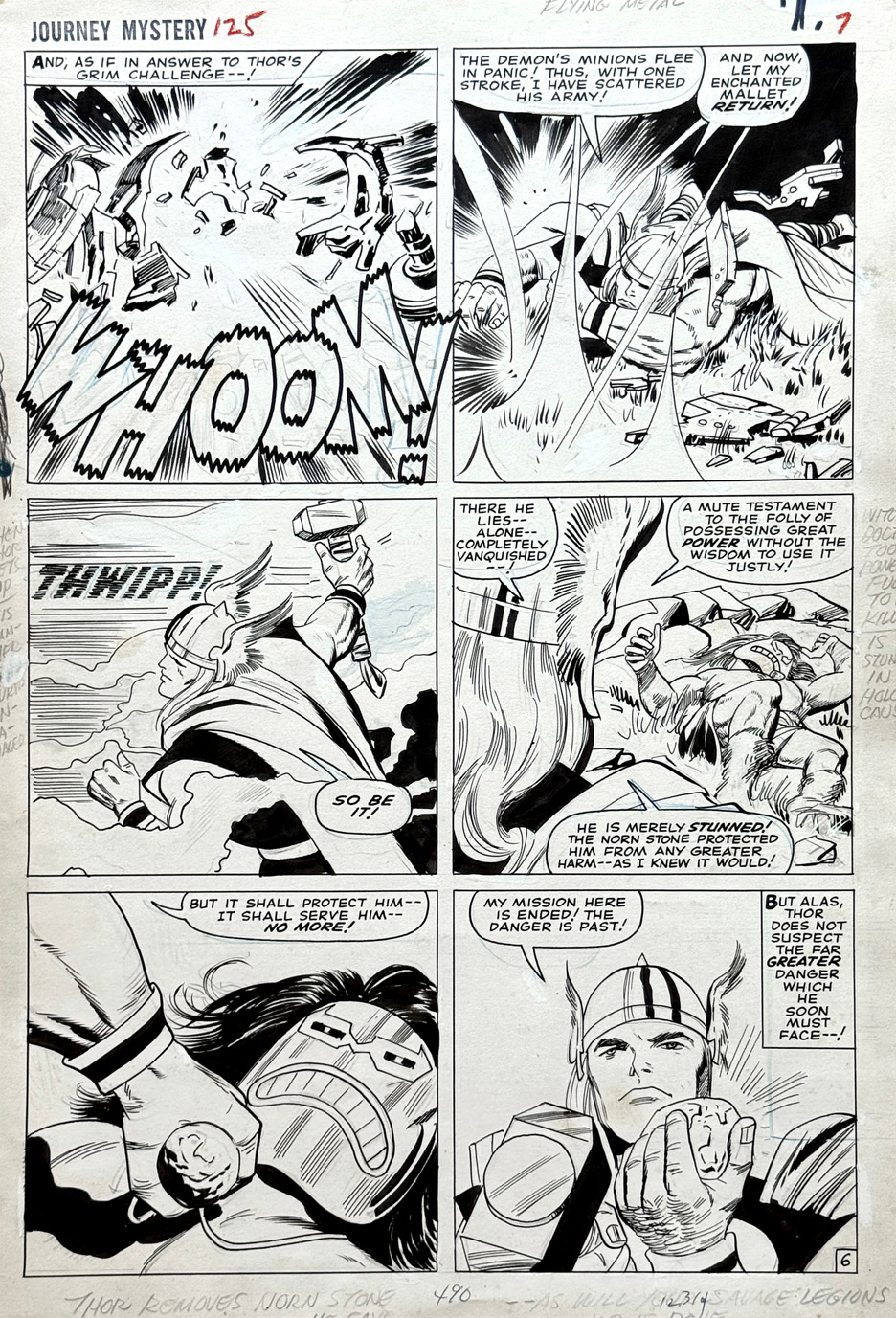
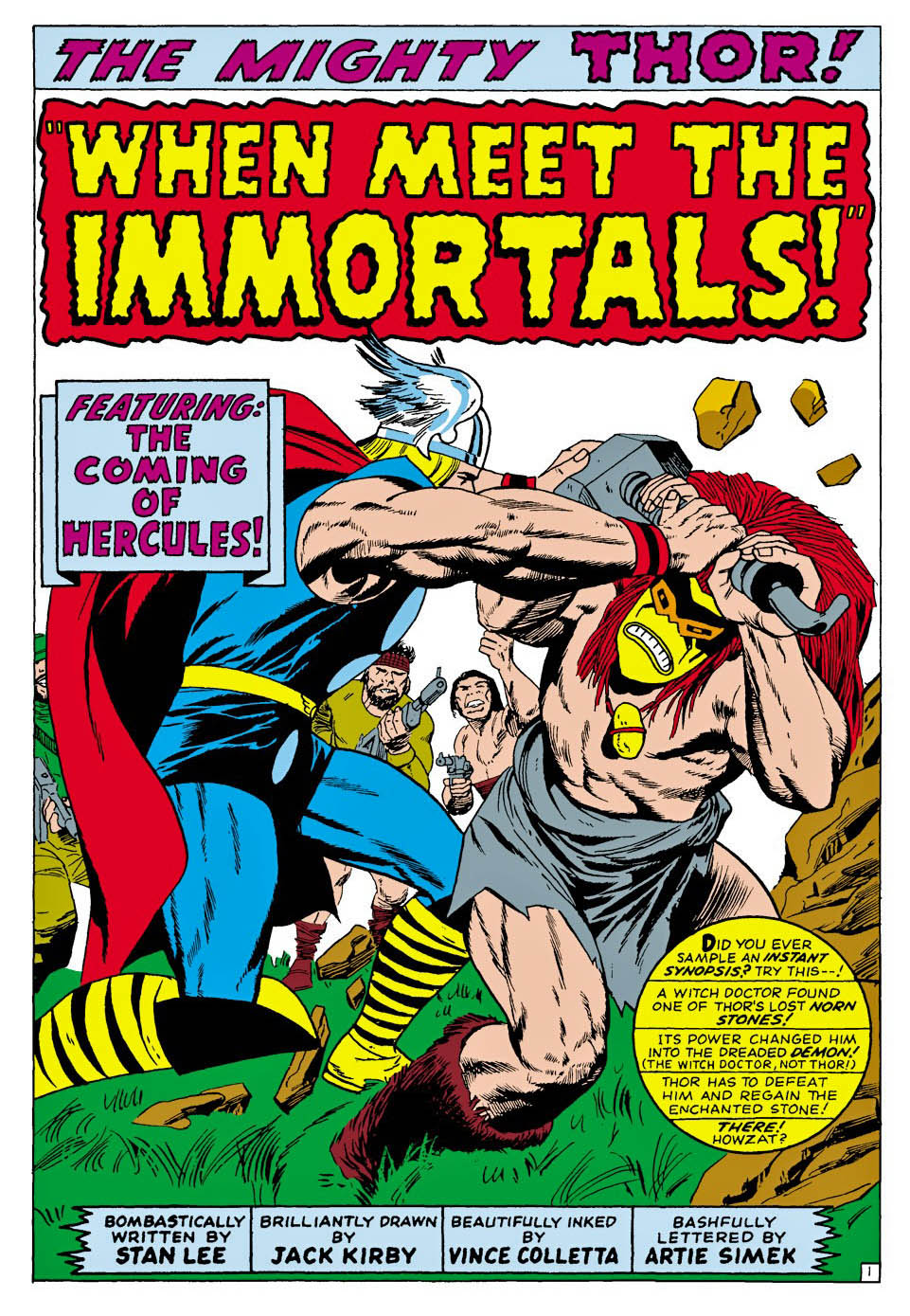
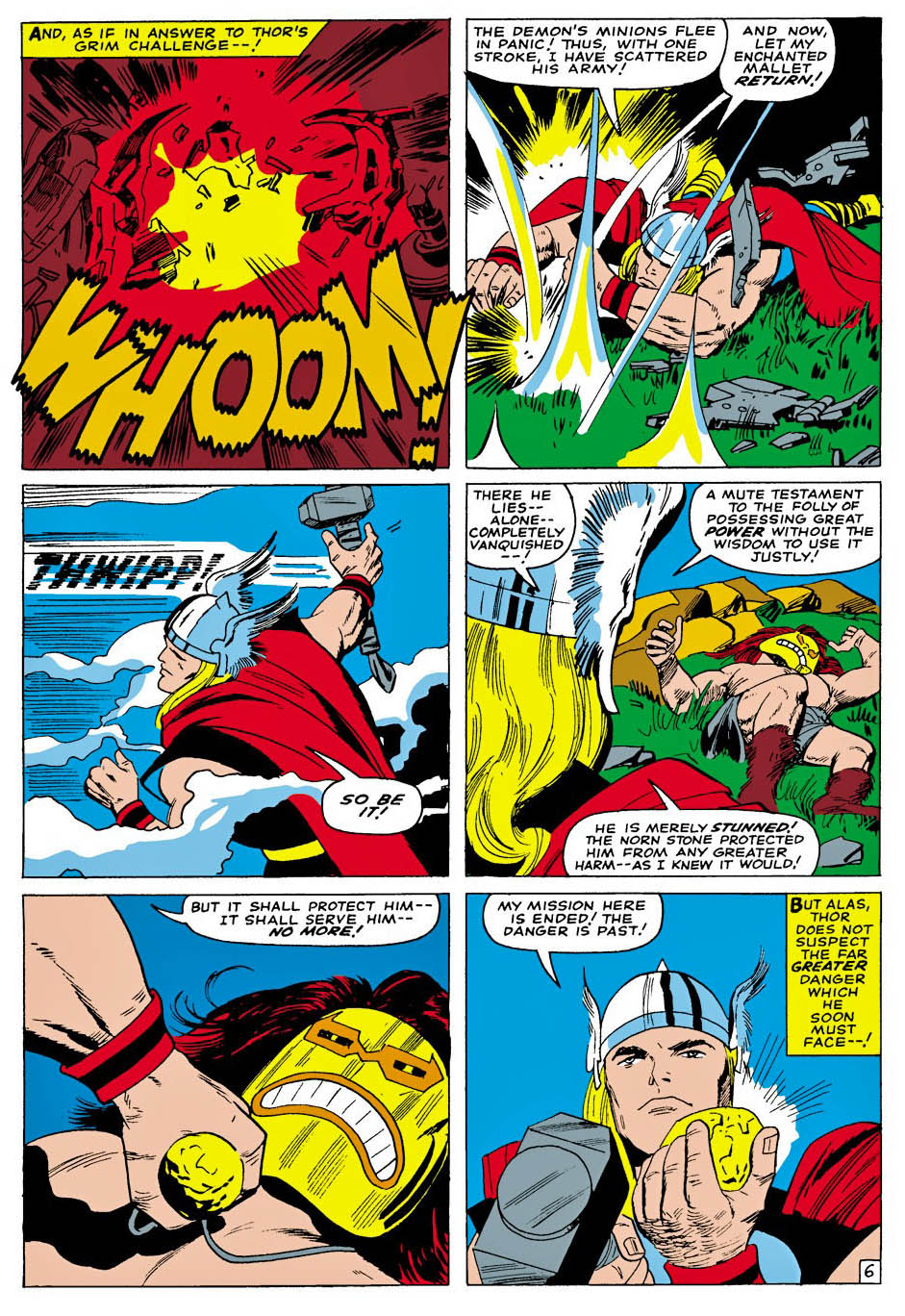
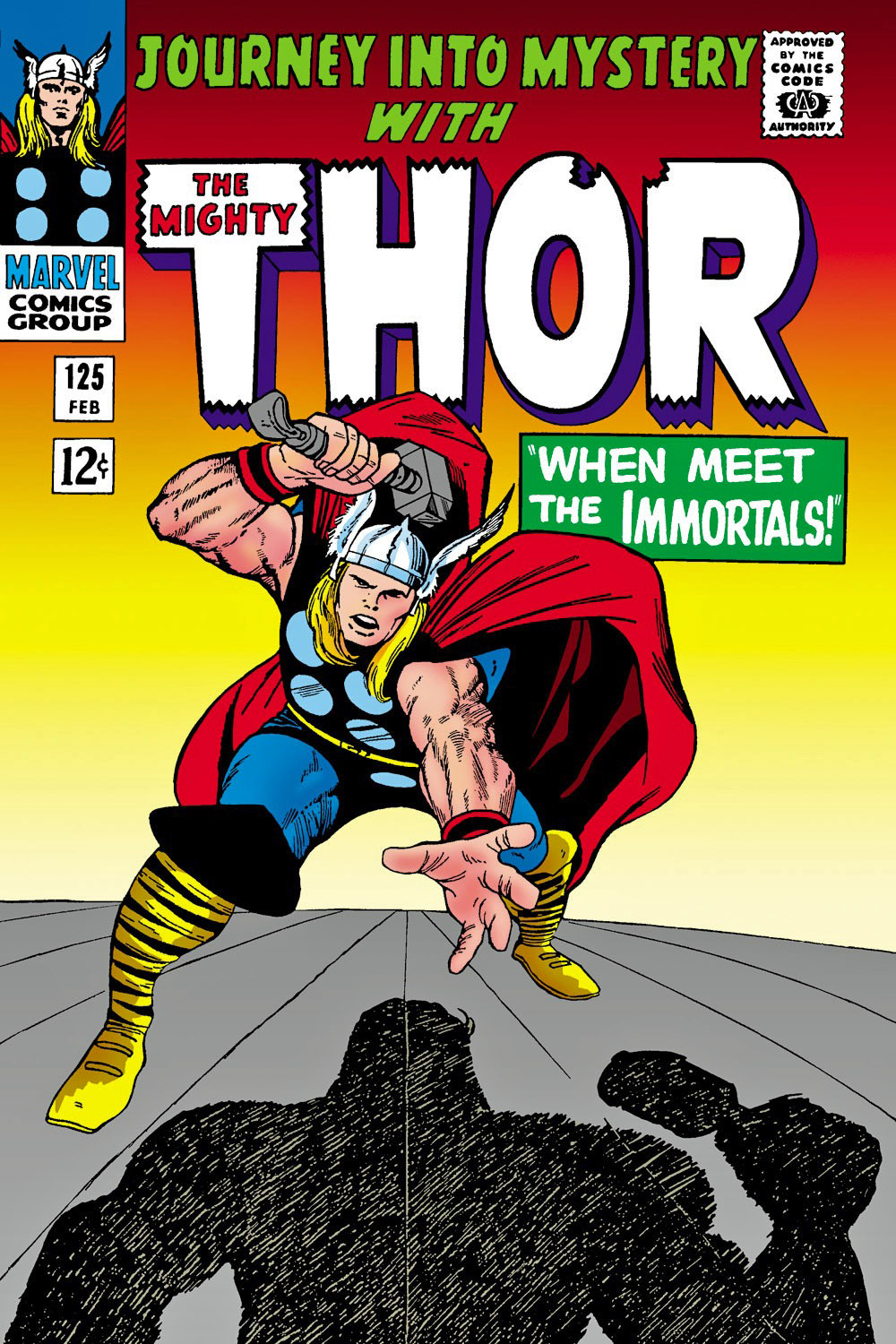
Here’s a great action page from Journey into Mystery #125 — the “final” issue before the book simply became Thor with #126.
It had been a long time coming. Monsters, aliens and demons had once filled Marvel’s story lineup, but by 1966 they’d pretty much been pushed aside — unless, as here, they were turning up as antagonists in the superhero books. Kirby, of course, never really stopped drawing monsters. Now they just had Thor to deal with.
Nothing new has been said about inker Vince Colletta in about 50 years, so I don’t have much to add to that conversation. I will say that I’m finally hearing more fans acknowledge that his Thor work, as evidenced here, isn’t bad at all — and in places, it’s quite good.
Colletta may have been an imperfect match for Kirby, but on Thor he often brought something that worked: a lighter, more decorative touch that suited the fantasy setting. And he certainly knew how to make the Asgardians look pretty and regal. (All that work on those romance titles paid off.)
But, as always, Kirby supplies the heart of the story — the movement, the scale, the impact. And, in this case, a reminder that Marvel’s monsters hadn’t really gone away. They’d just found themselves in a different kind of comic book.
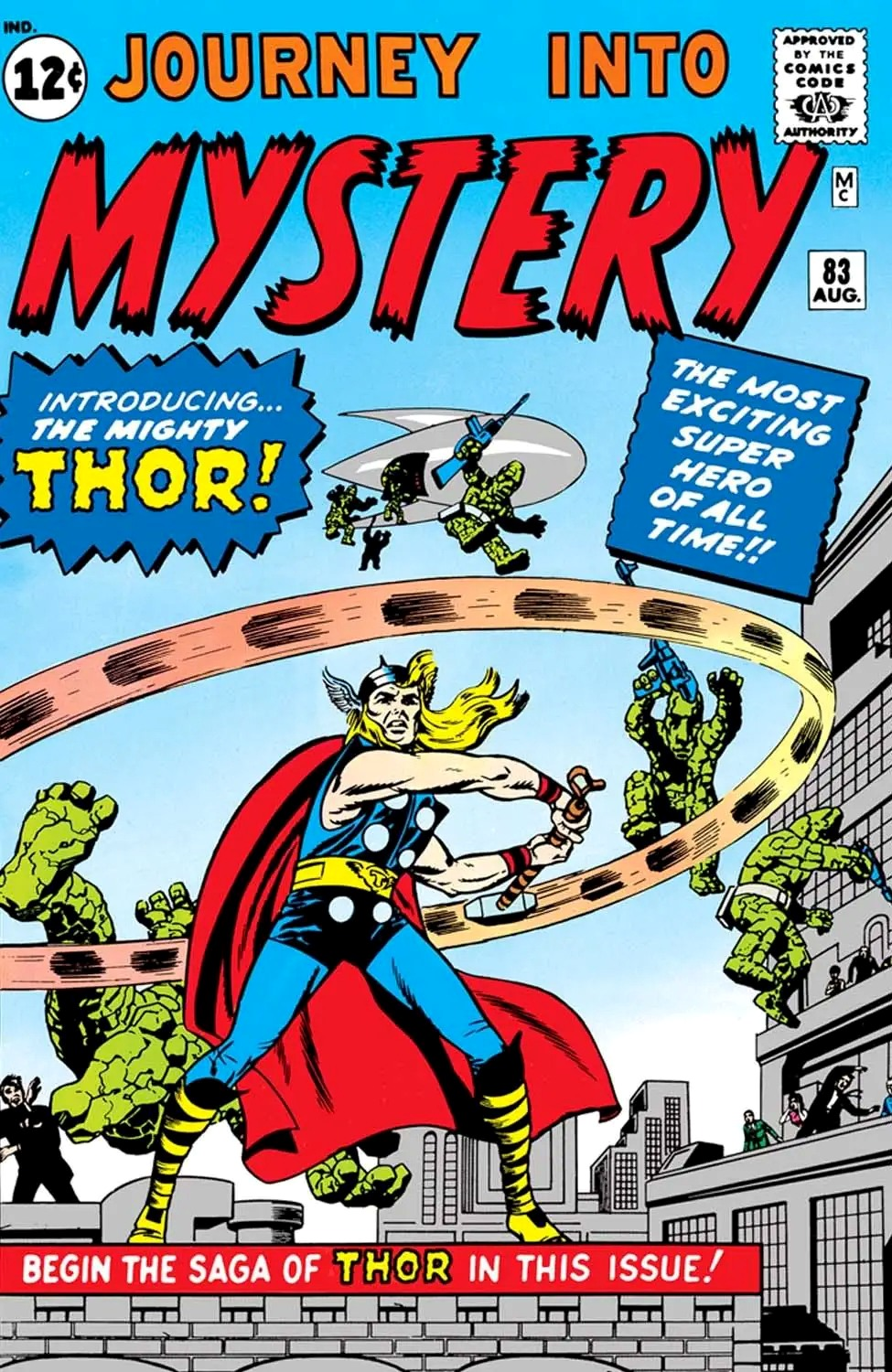
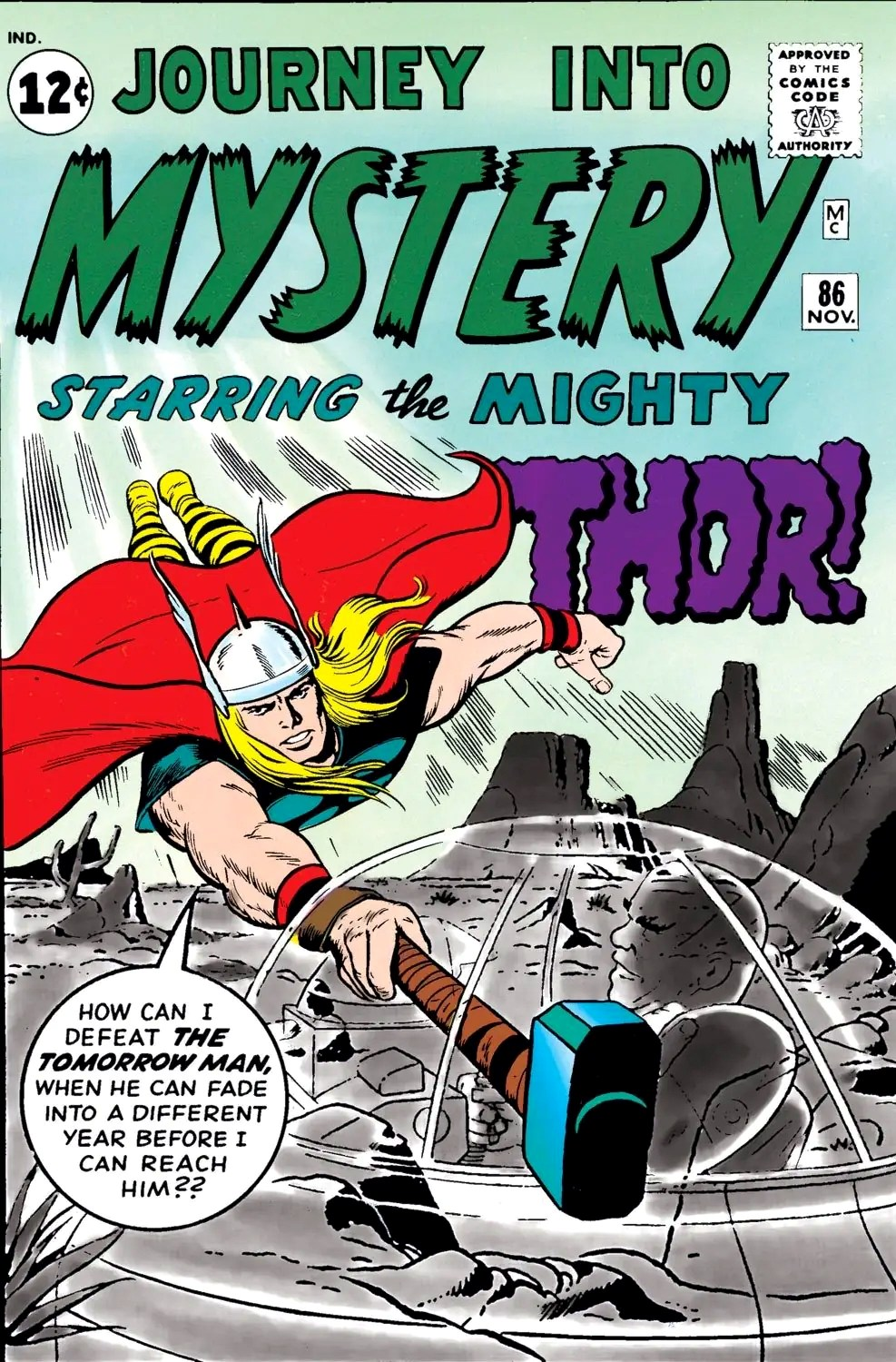
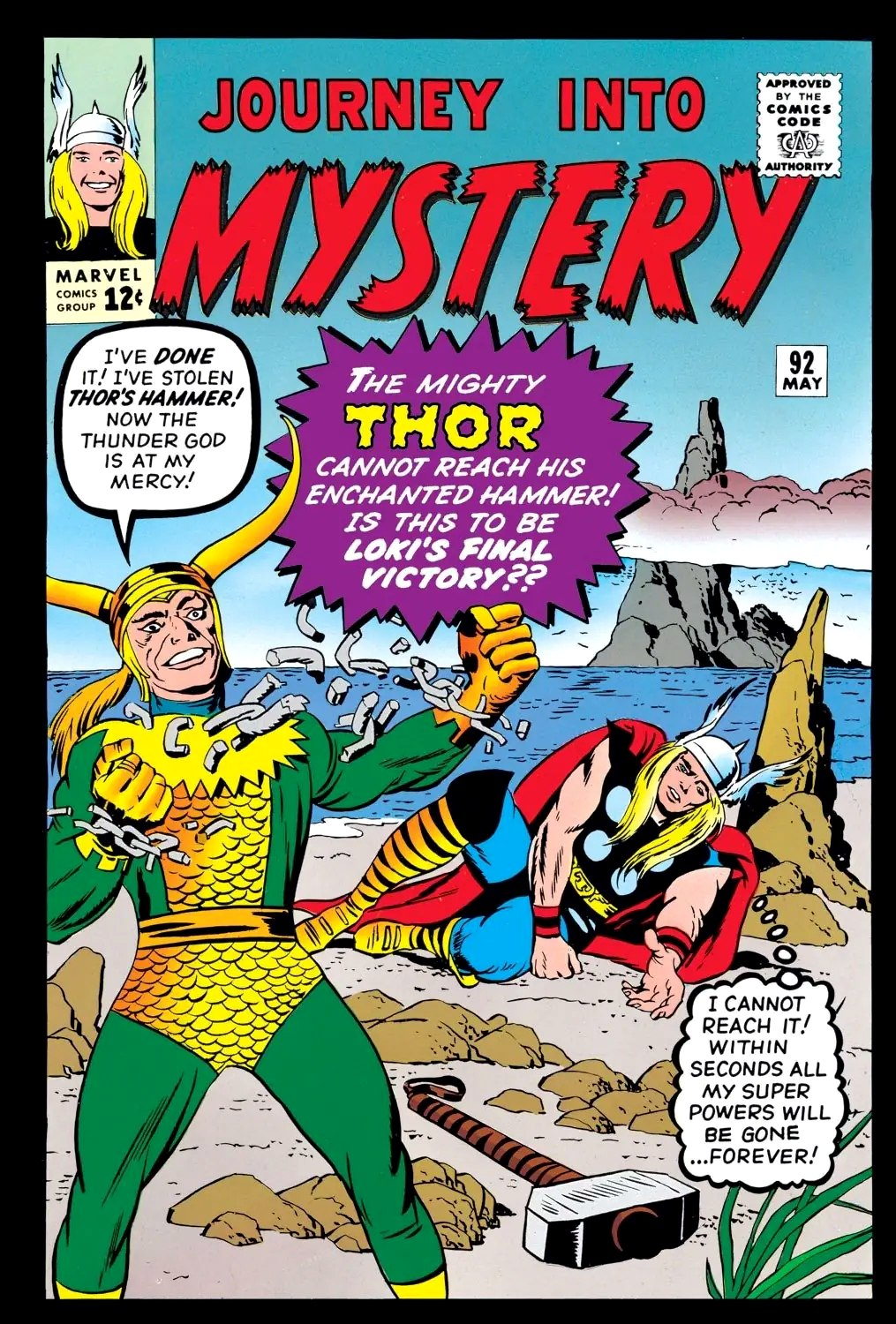
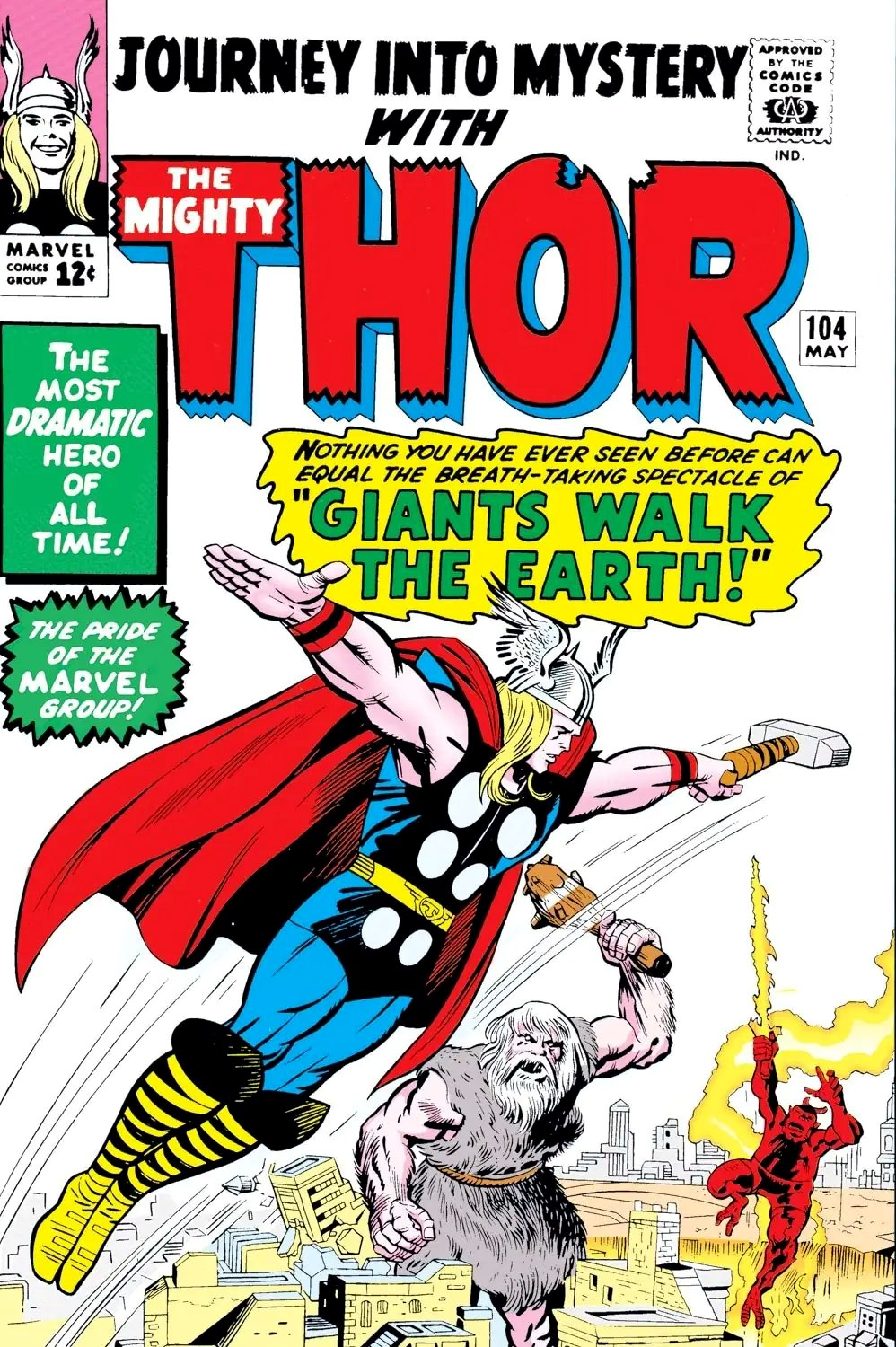
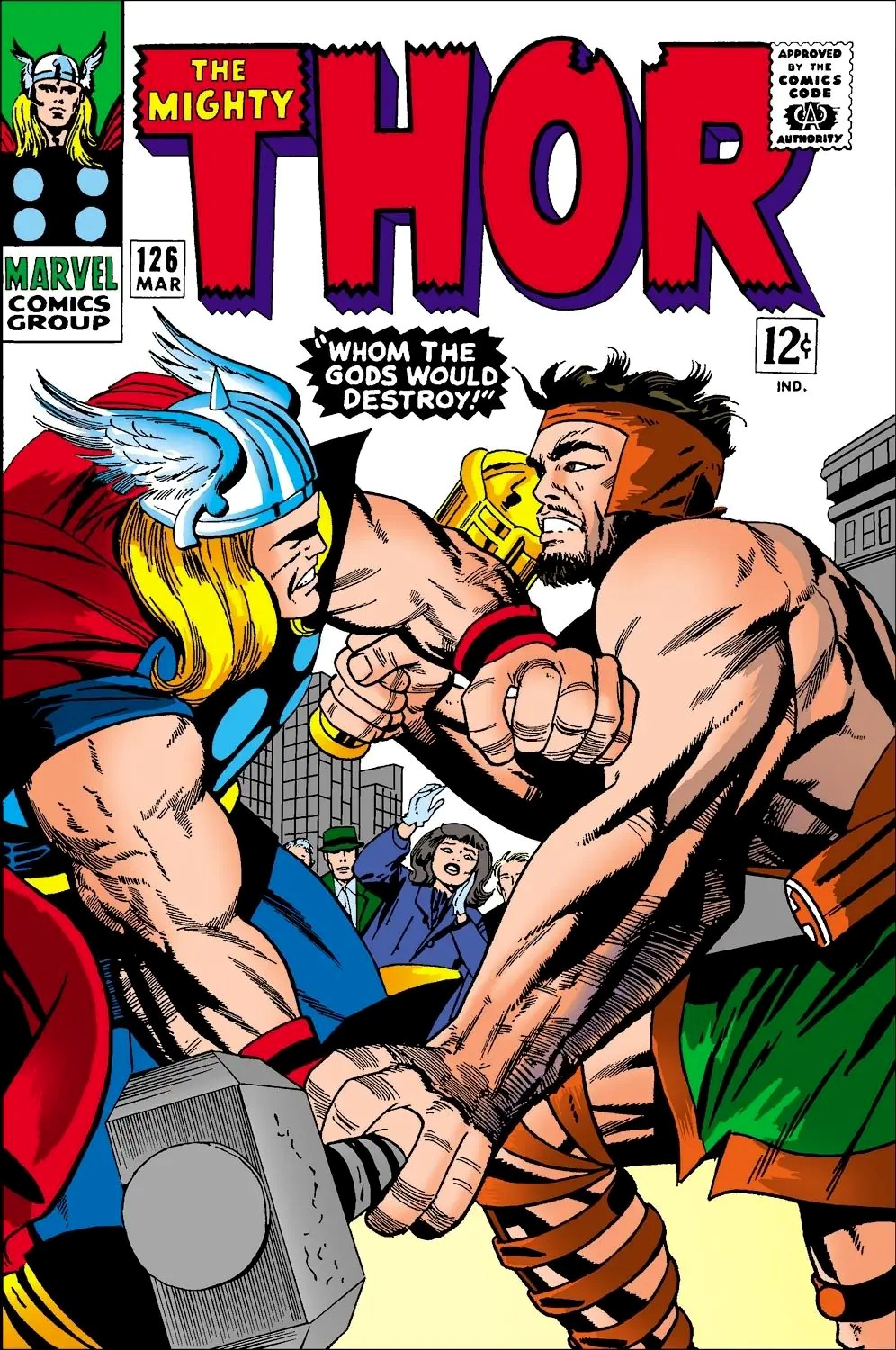
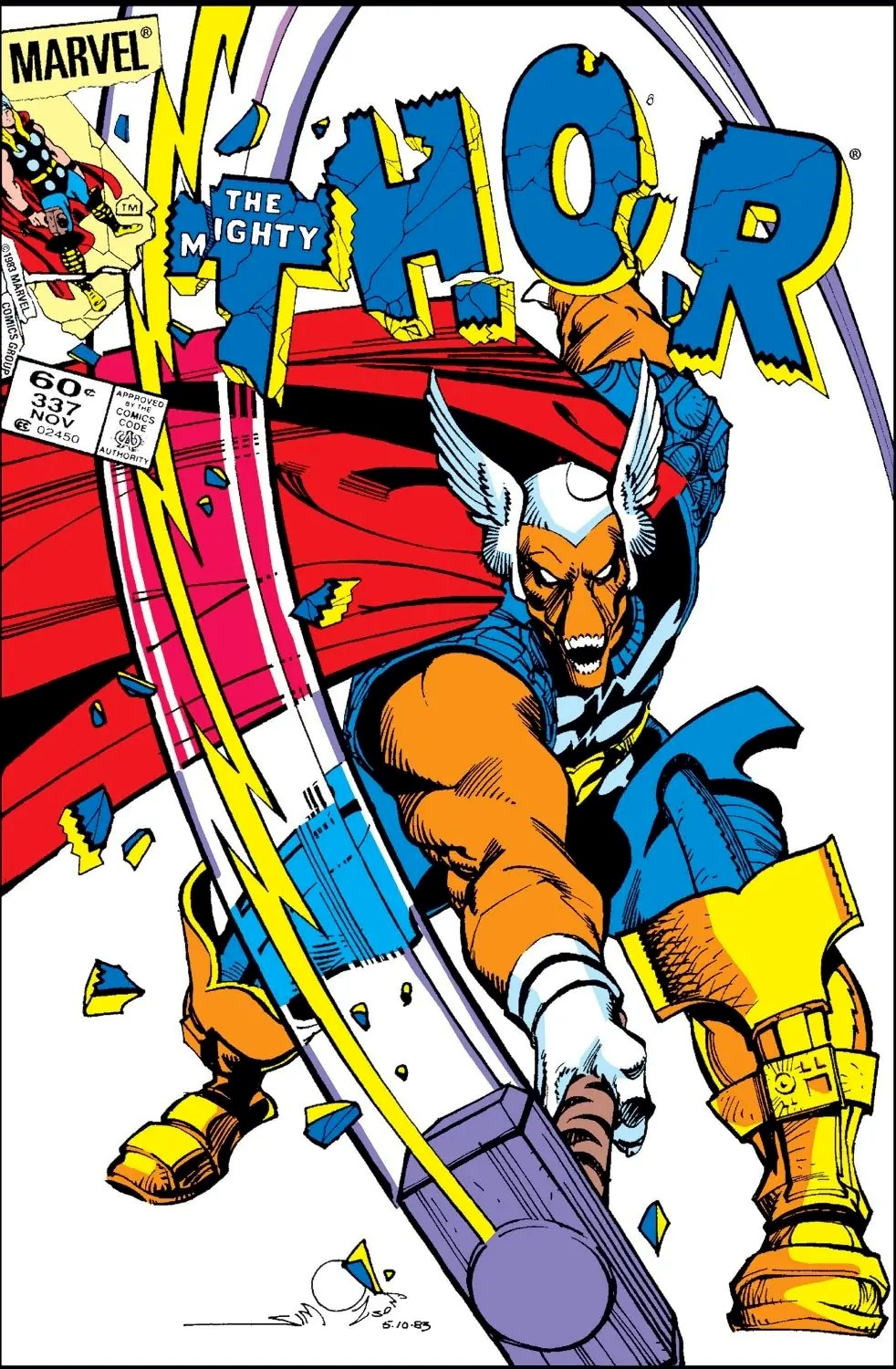
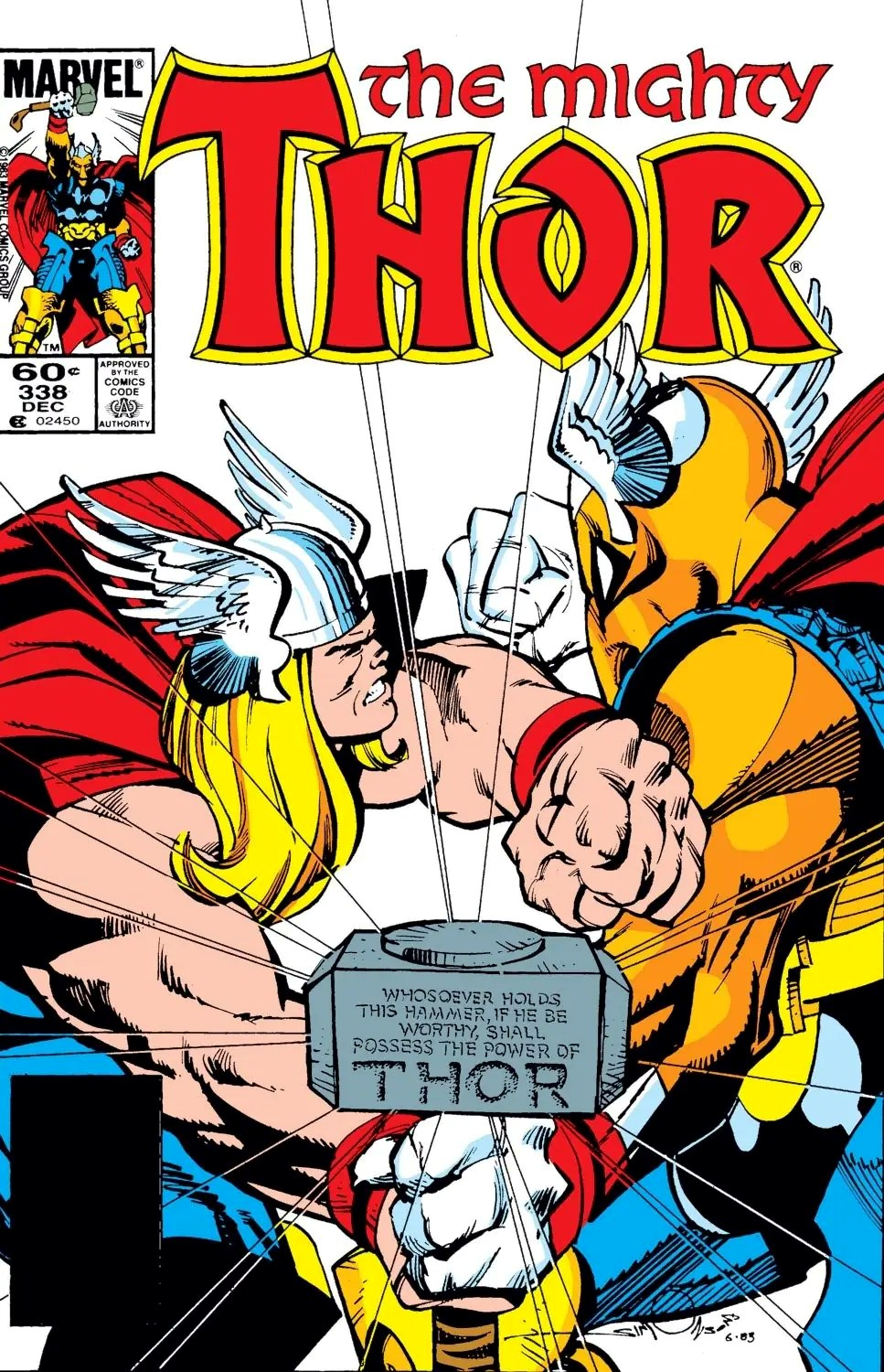
Trade dress in progress — Thor slowly took over Journey Into Mystery until it was just Thor, and then the cover logo stayed the same for about 17 years until Walter Simonson’s Beta Rey Bill took it apart.
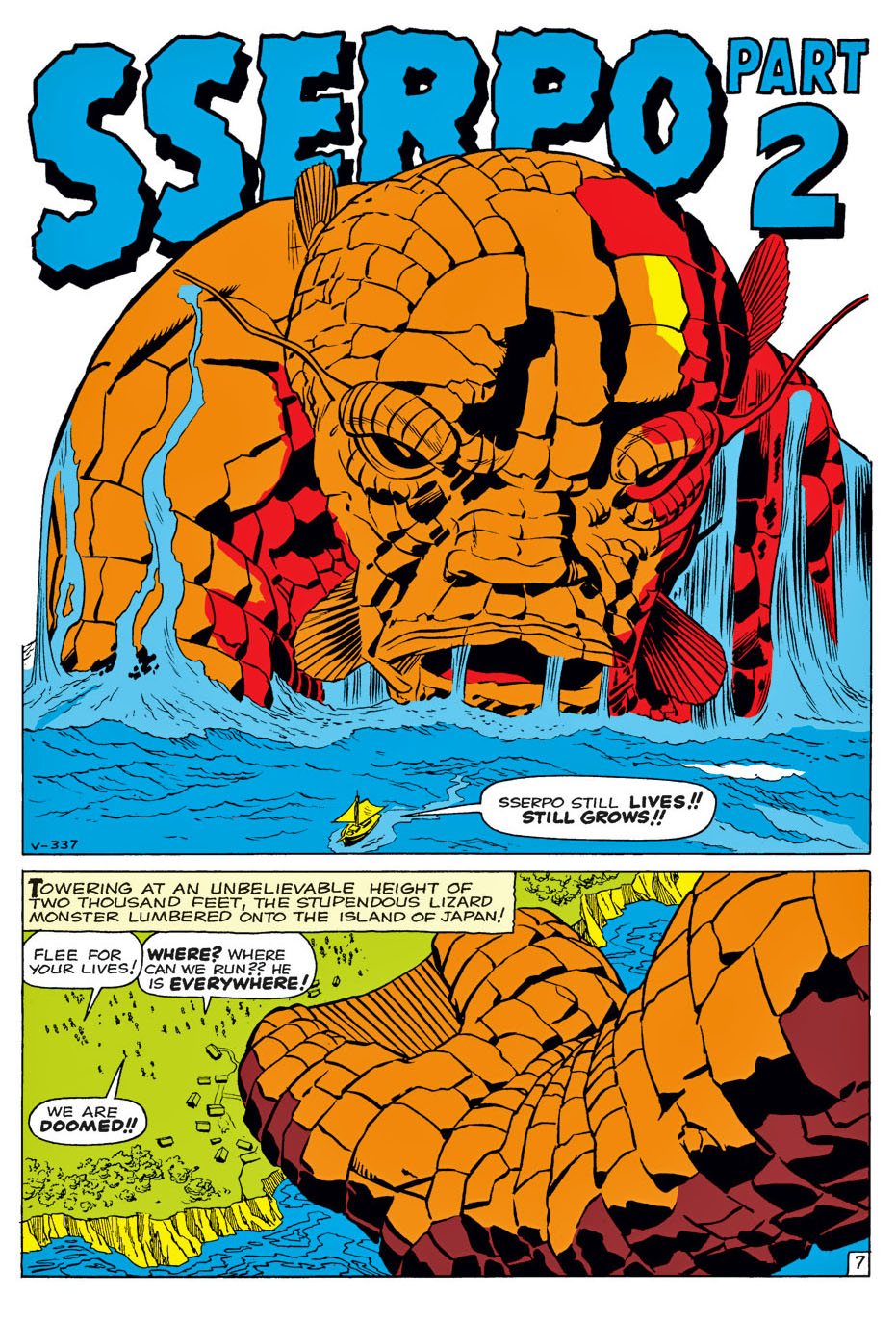
Jack Kirby would have turned 109 this month, which seems like the perfect excuse to celebrate one of his wonderfully ridiculous pre-Marvel monsters.
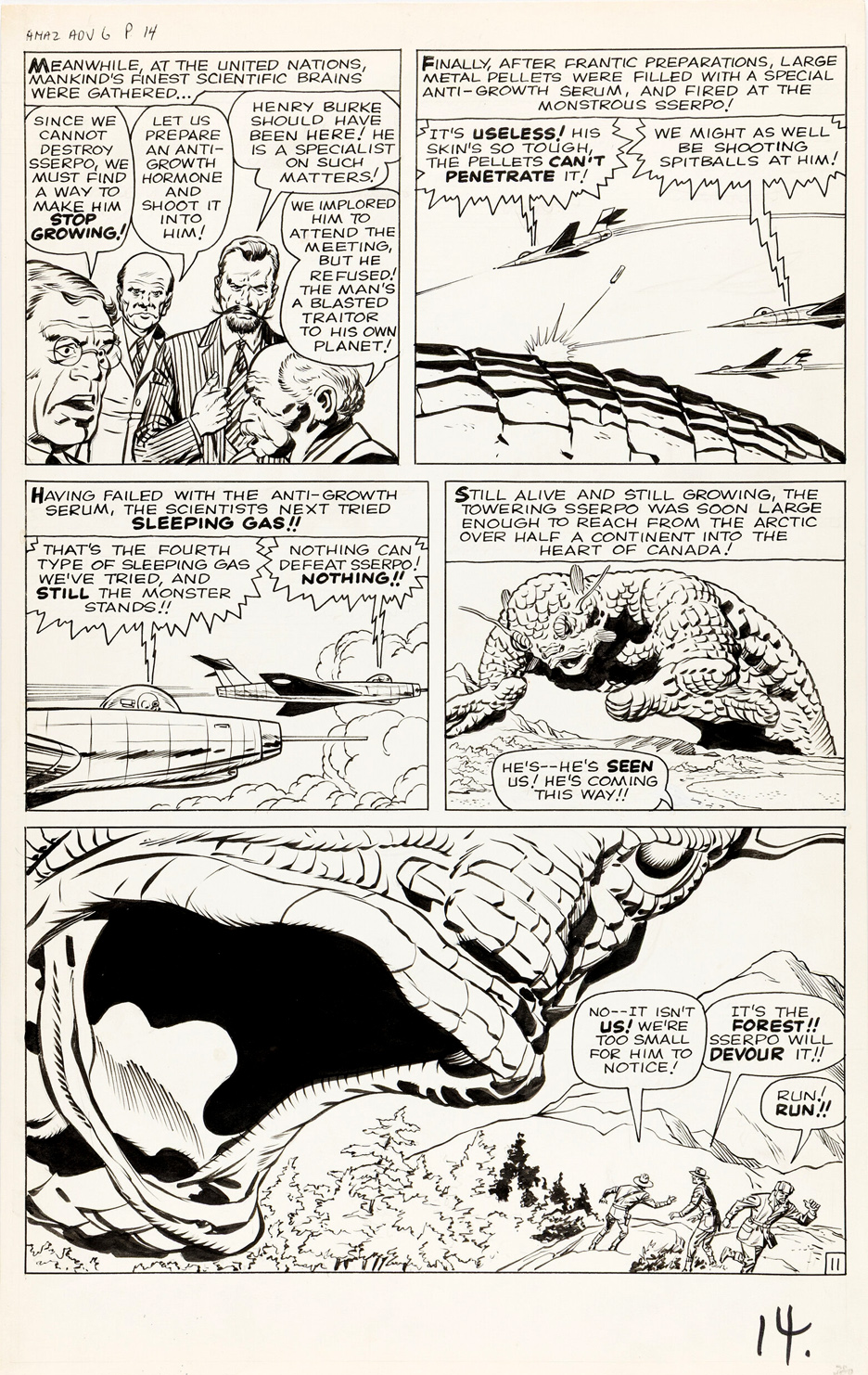
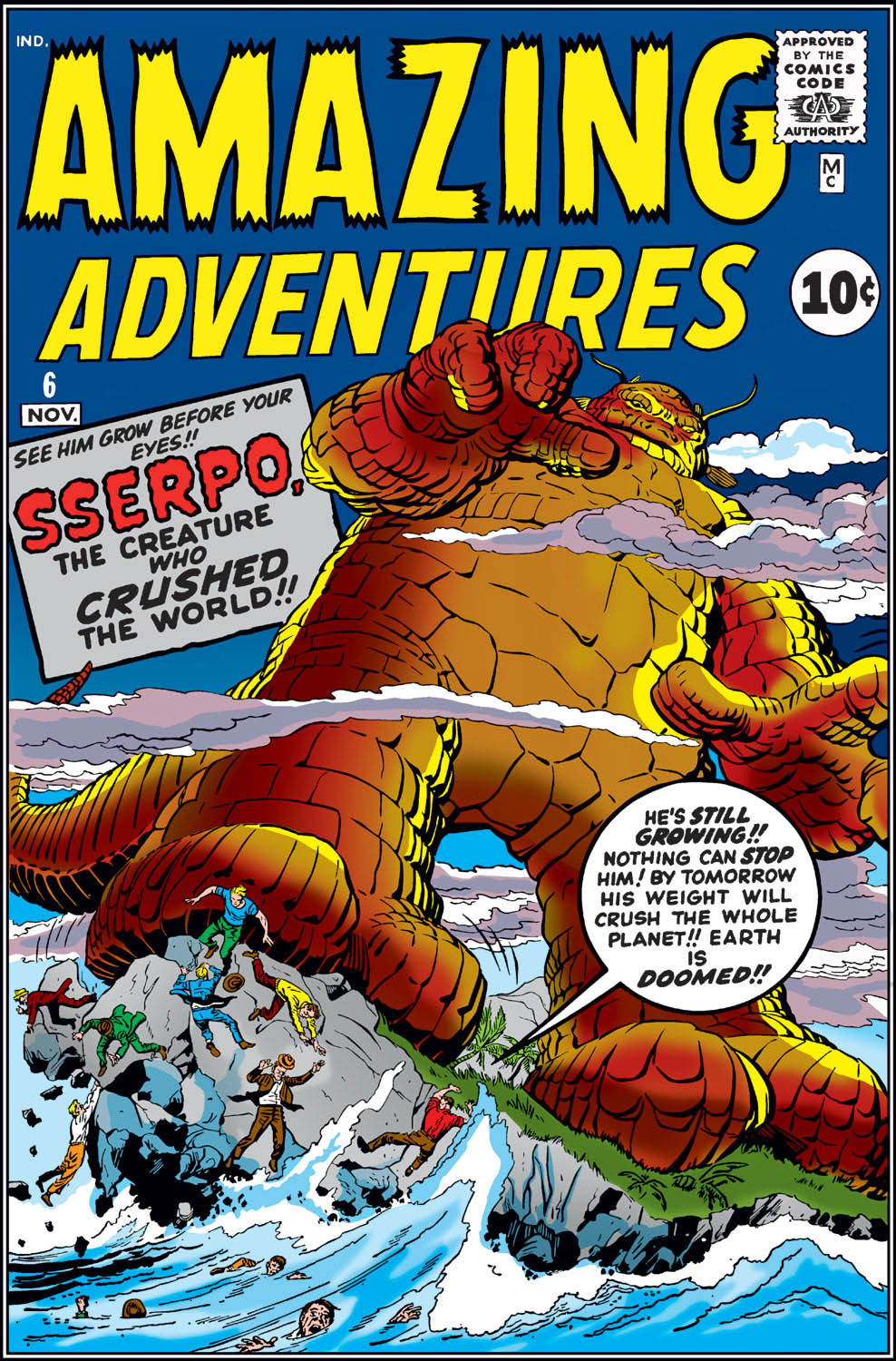
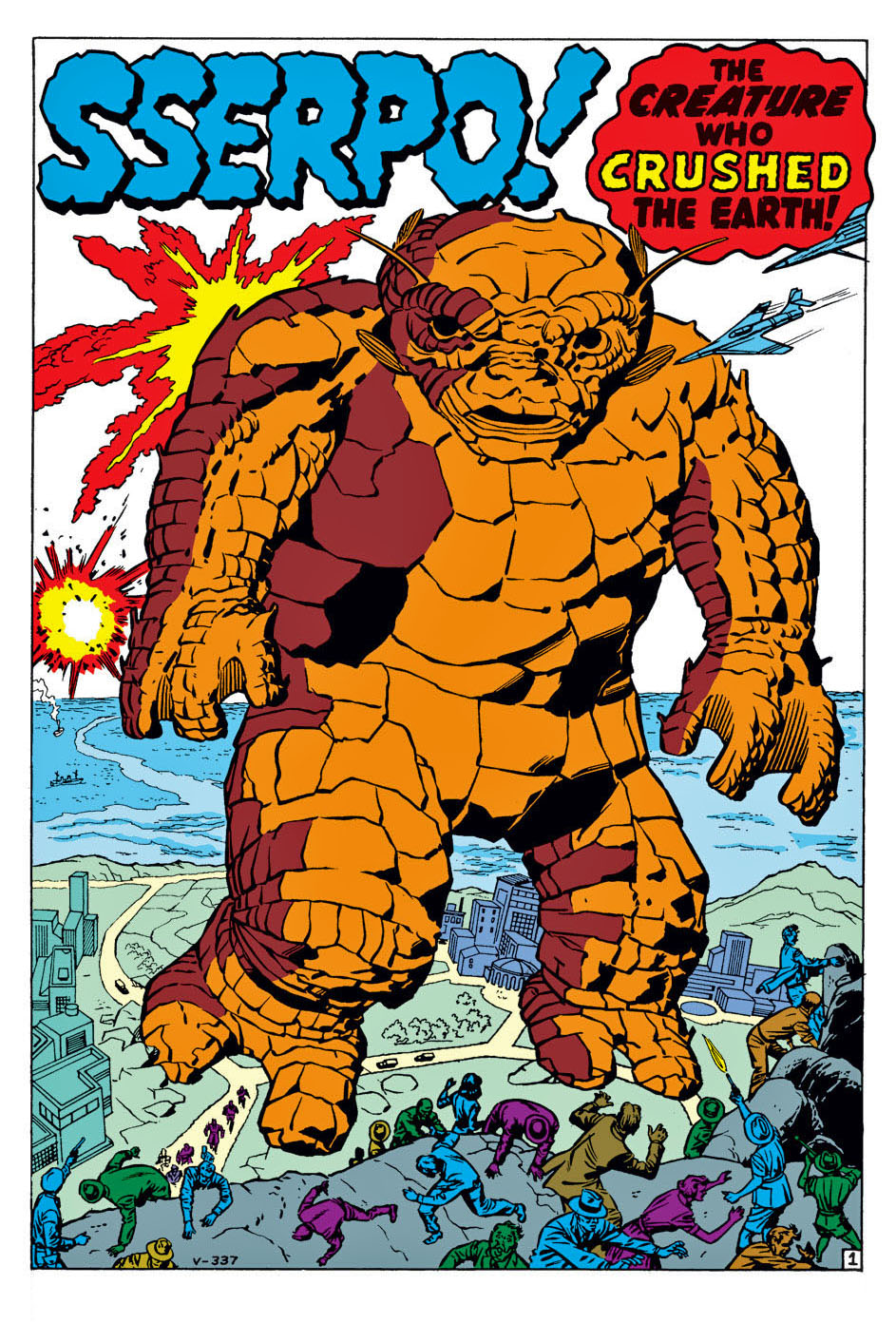
Meet Sserpo: a big, dumb creature with an even dumber spelling, brought to you by Kirby and Stan Lee in the first week of August 1961.
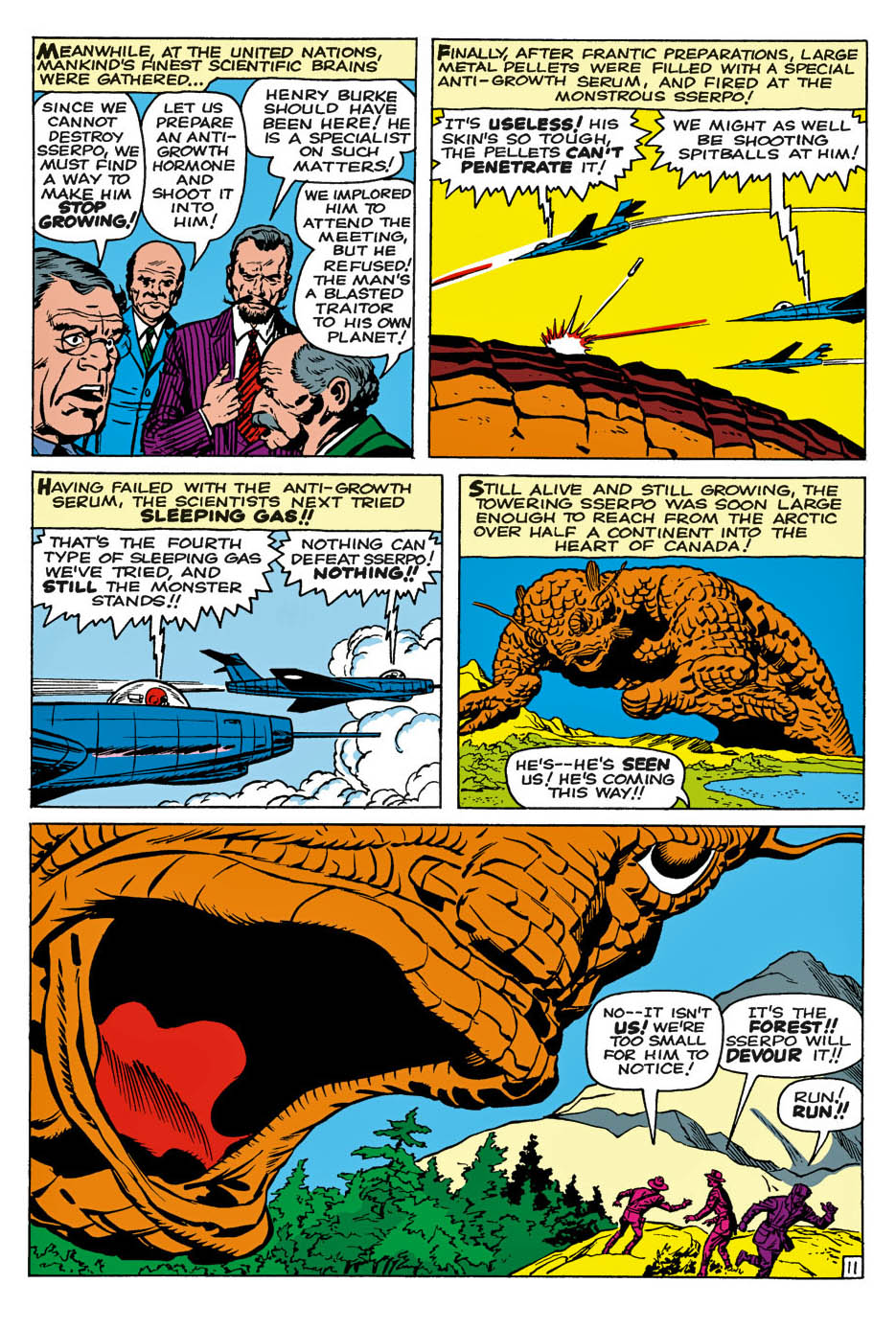
And what a great Kirby page this is.
Scientists shouting. Jets firing uselessly. Sserpo stomping across Canada. And then that enormous final panel, with Kirby pushing the monster so far into the foreground that he practically takes over the page.
Big, bold, absurd—and completely irresistible.
But Sserpo is more than just another giant monster.
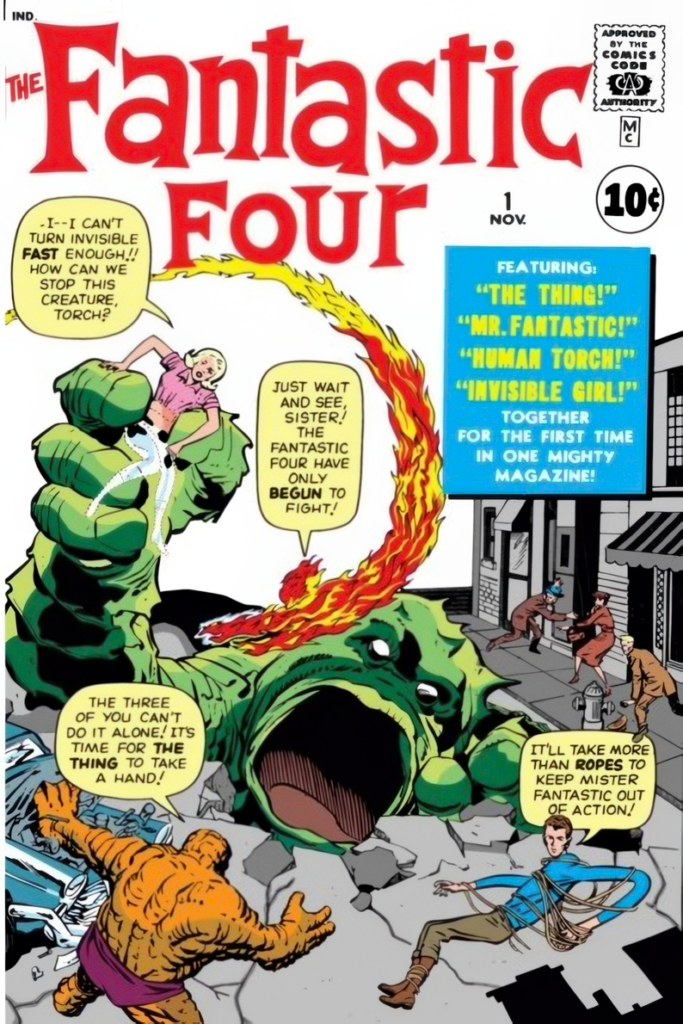
Because one week later, Stan and Jack would unleash another one. Only this time, they brought along the Fantastic Four to fight him.
And just like that, everything changed.
One week separated the fading days of Marvel’s monster era from the beginning of the Marvel Universe—and, ultimately, the rebirth of an entire industry.
Of course, no one knew it at the time.
Not Stan. Not Jack. And certainly not the thousands of readers who had been happily gobbling up these stories for the previous four years.
To them, Sserpo was just another monster at the newsstand.
A week later, it was a whole new ballgame.
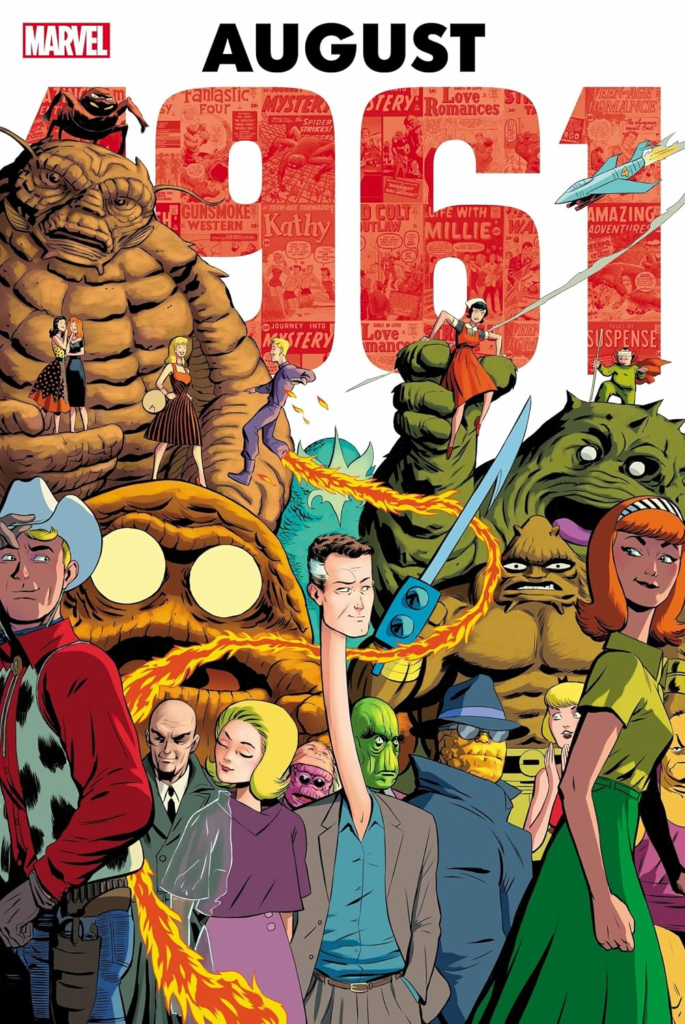
Sserpo seems to have changed his look from Part One to Part Two.If you want to see evrything Marvel produced in August 1961, grab a copy of this omnibus. Its a snapshot of the comic book world just priorate the “Marvel Age of Comics. ” That appears to be SSerpo in the top left.
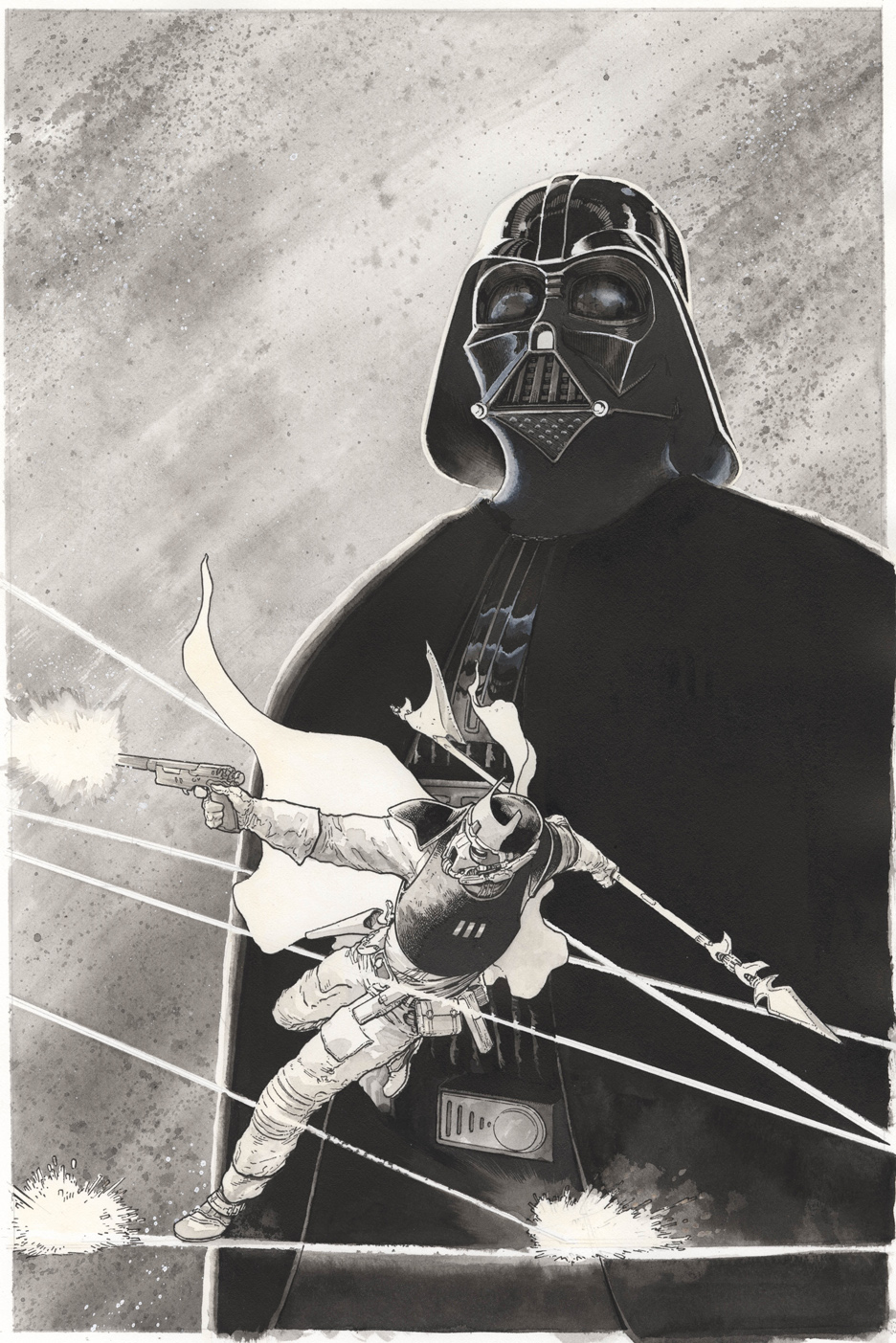
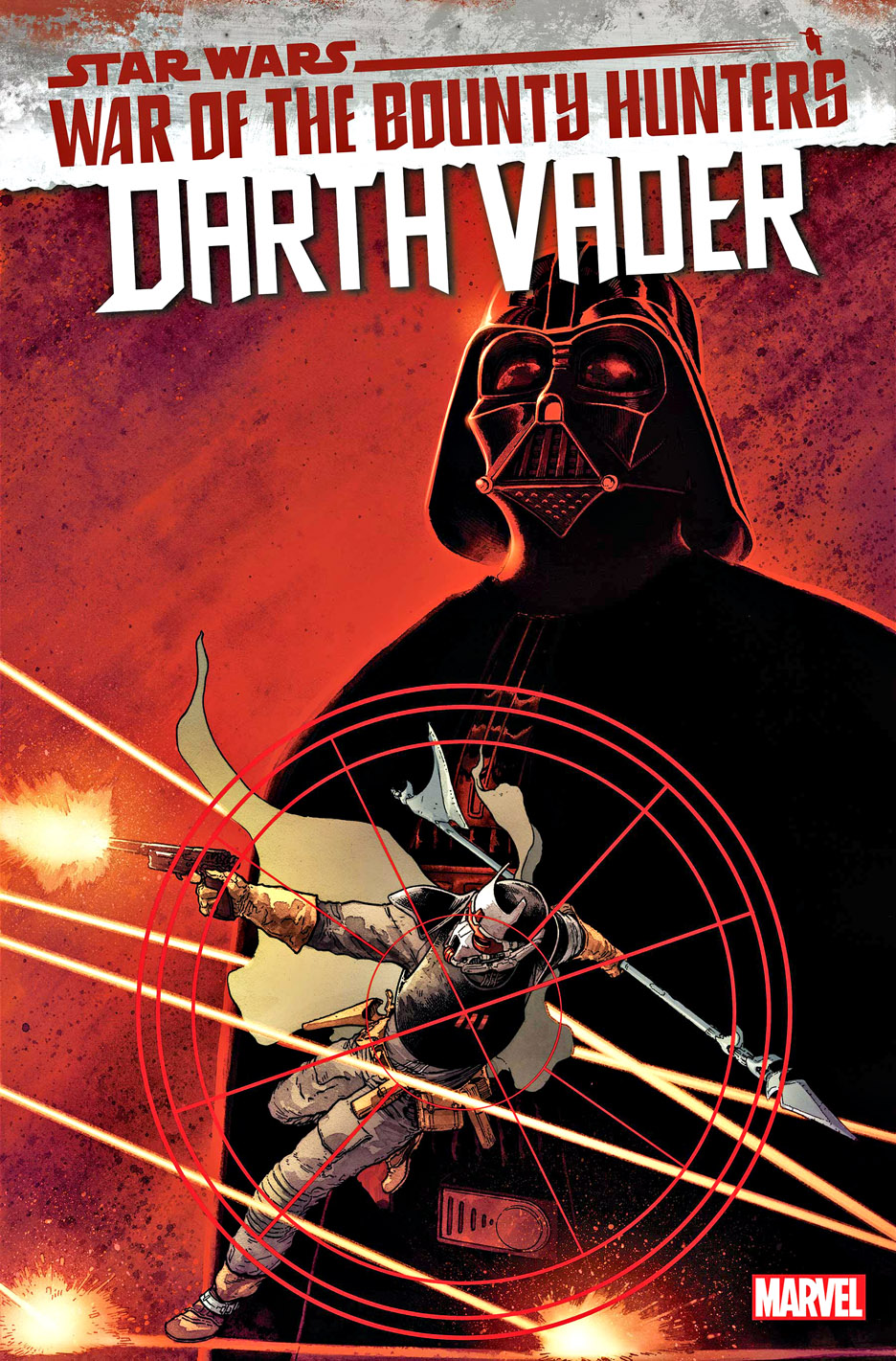
Here’s a Star Wars original cover that really stands on its own.
With modern comics, so much texture and atmosphere can be added digitally during production that the original art can sometimes end up looking pretty stripped down compared with the published cover.
Not here.
Aaron Kuder really finished this piece. The grey wash, splatter effects, lighting, and overall mood are already sitting on the board. The color certainly adds another dimension, but the original already feels complete, which makes the OA a knockout in person.
I don’t collect a ton of modern comic art, but every now and then something just clicks and breaks through my usual collecting habits.
And of course—I’ve always had a soft spot for Darth Vader.
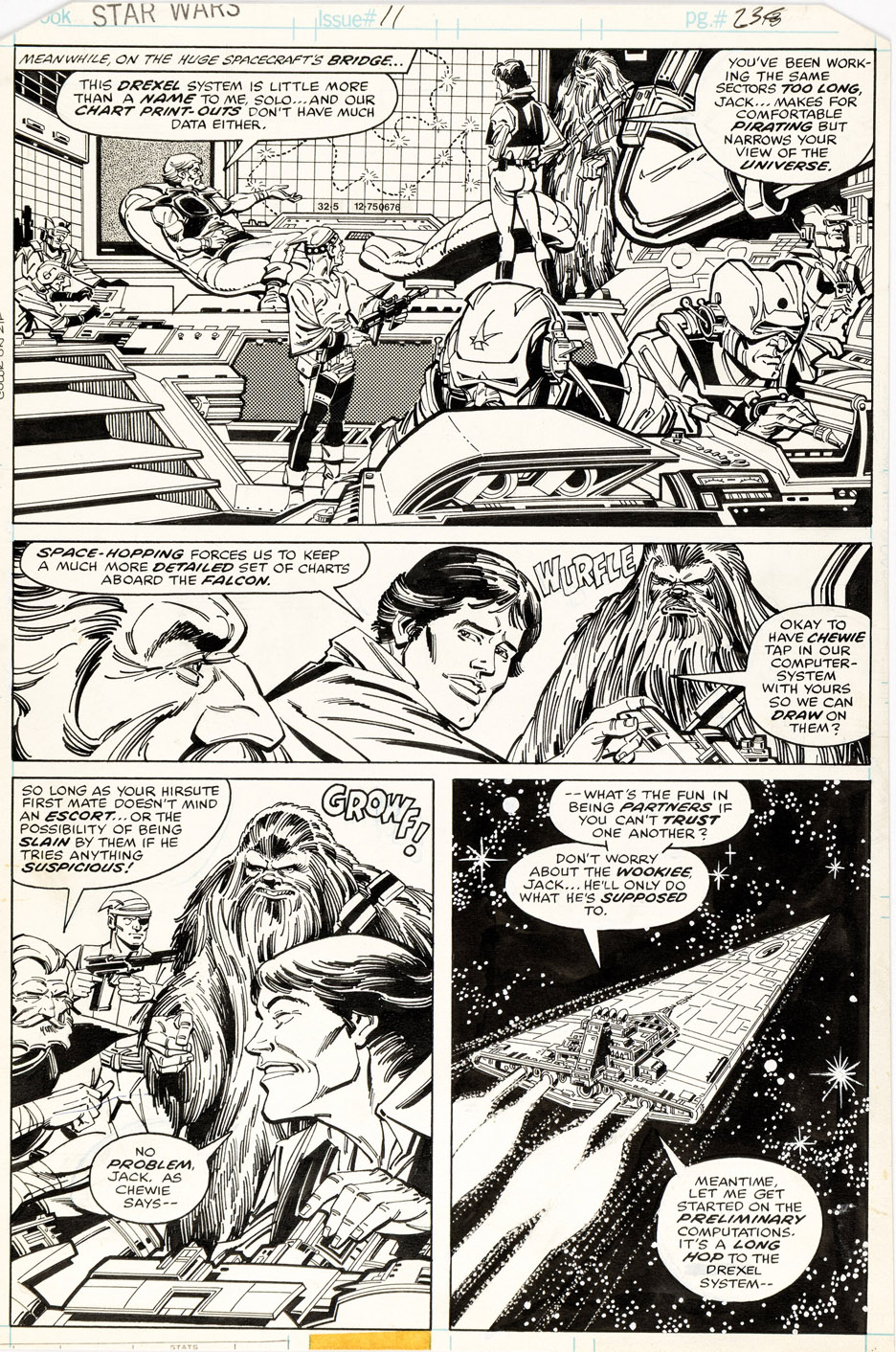
It took me a minute to get used to Carmine Infantino making the jump from DC Comics to Marvel Comics. He was such a DC institution.
And honestly, he wouldn’t have been my first choice for Star Wars—especially coming right on the heels of those first ten issues by Howard Chaykin. I probably would’ve gone with someone a little hipper, a little edgier.
But… I came around.
There’s something about Infantino’s take on Star Wars that just works for me. The quirks, the slightly offbeat energy… it all starts to click once you settle into it. Even the occasionally odd likenesses* became part of the charm. I figured if they were good enough for Lucasfilm, they were good enough for me.
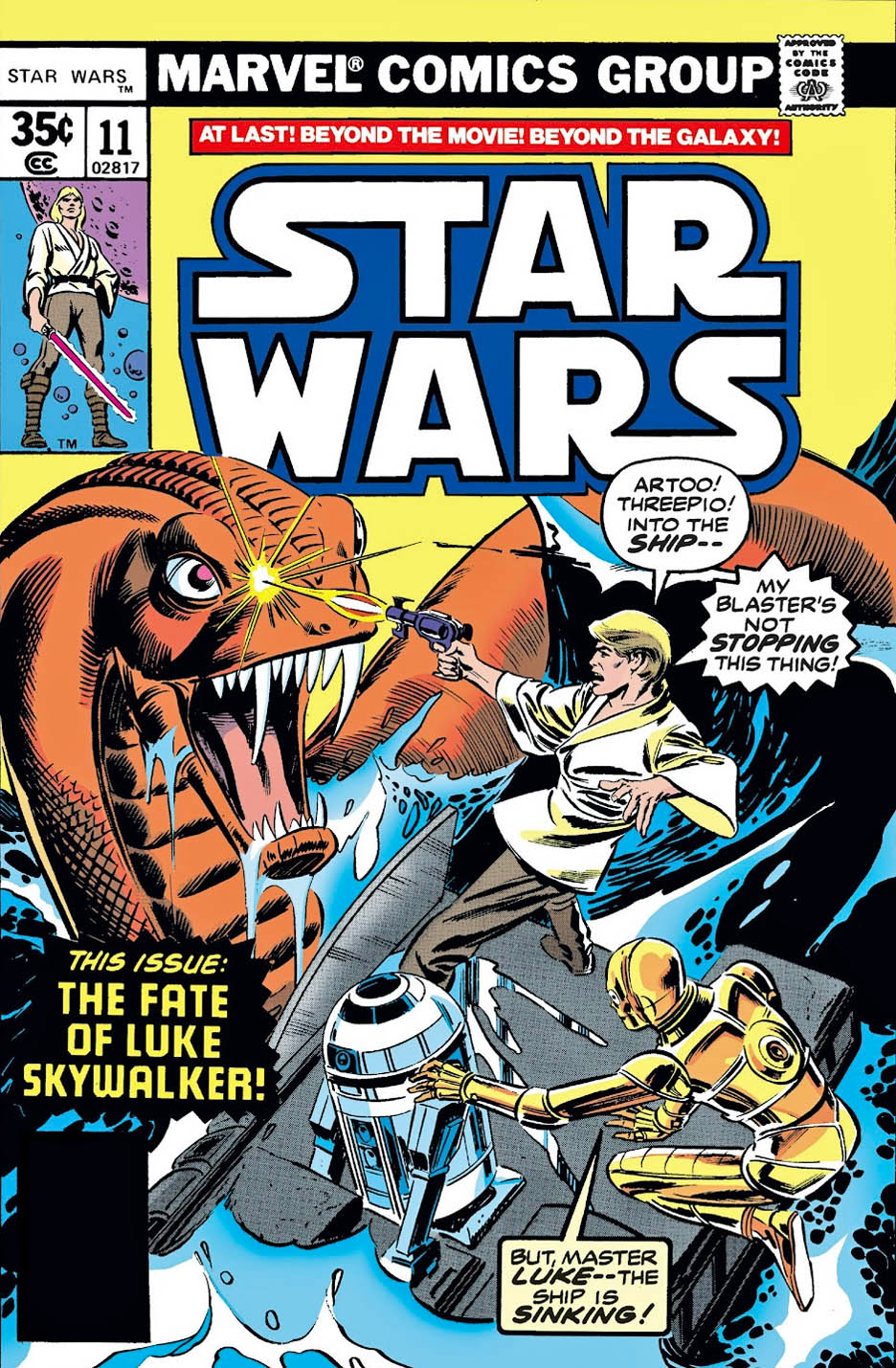
This page is from his very first Star Wars issue (Terry Austin on inks), and about a year ago I somehow found myself in a bidding war over it. No grand strategy—just pure emotion, adrenaline, and collector impulse.
Still… it’s a very cool page, and I’m glad I ended up with it.
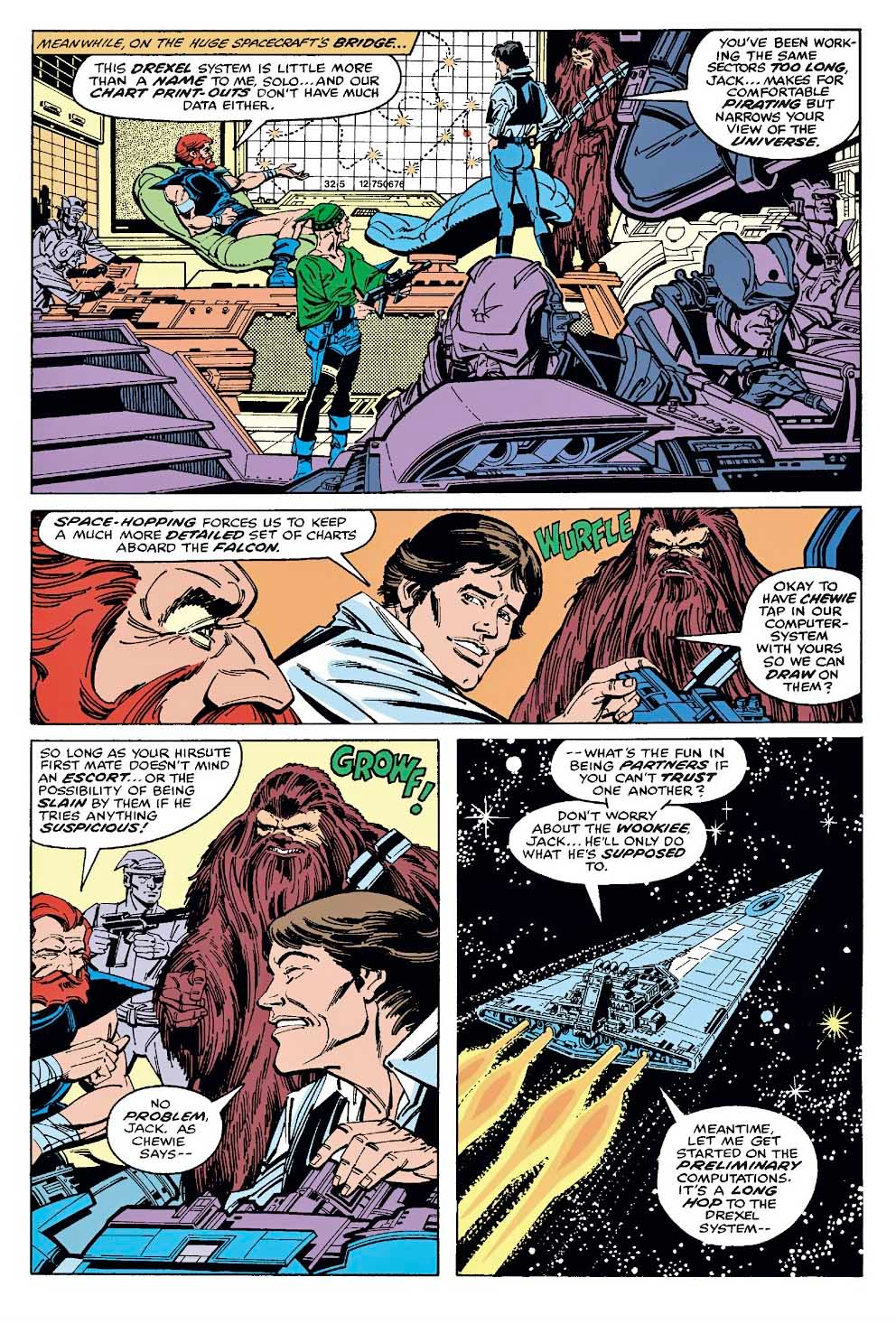
*That said… Chewbacca looks absolutely ridiculous here. I mean, come on, this wasn’t issue #1. Had Carmine even seen the film? Or at least flipped through a magazine?
And based on the published colors, Janice Cohen—normally terrific—may have needed a screening or two herself.
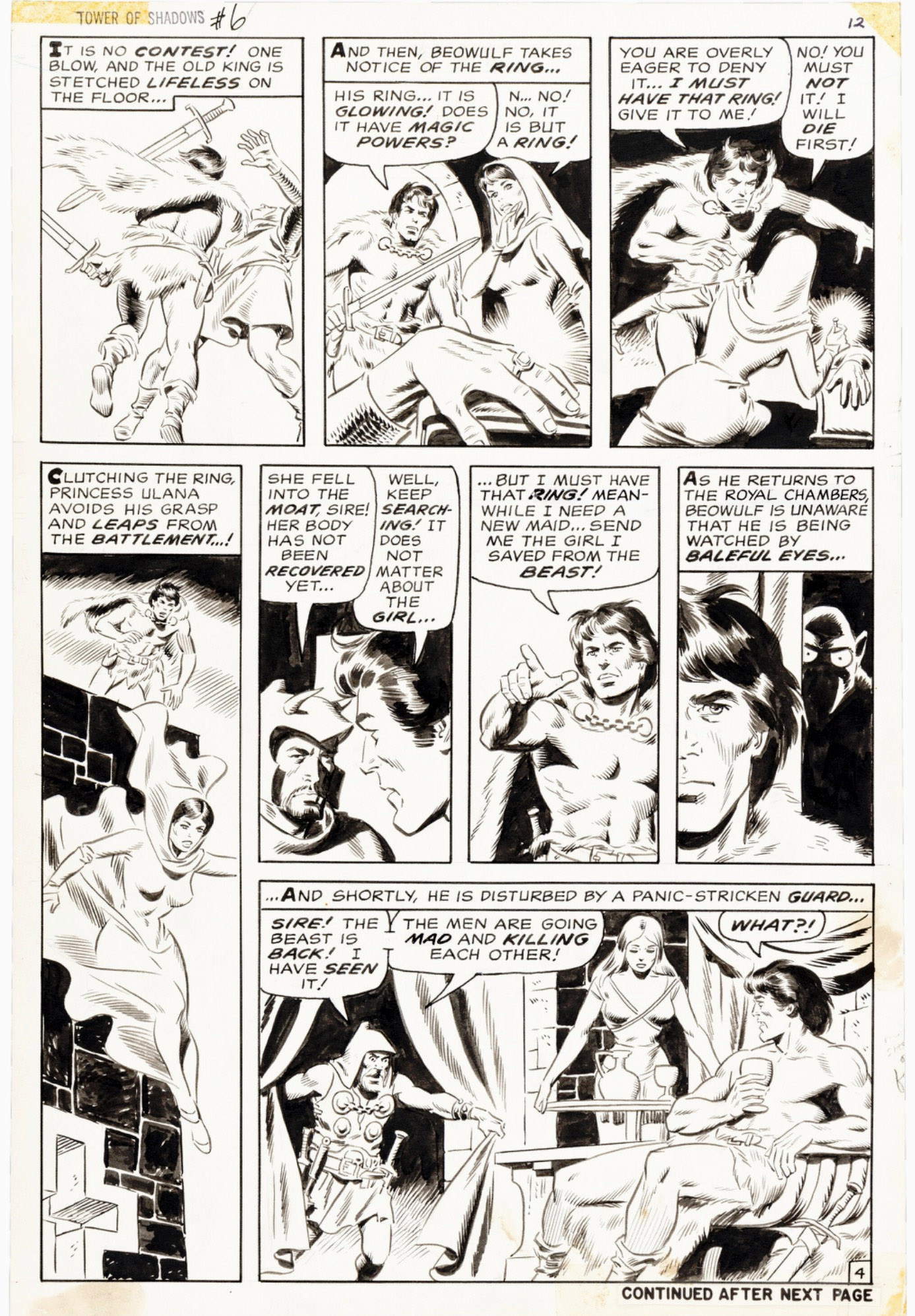
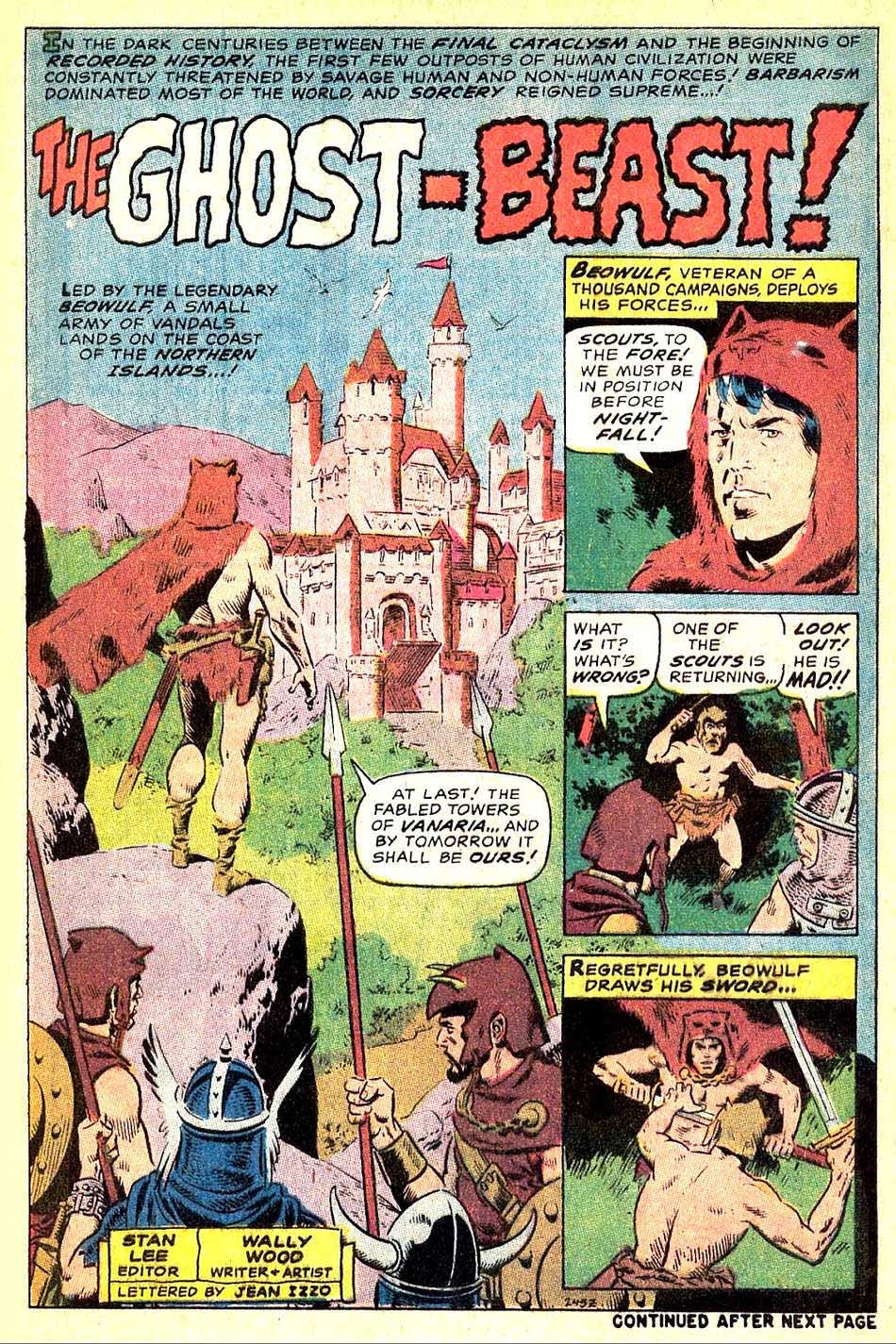
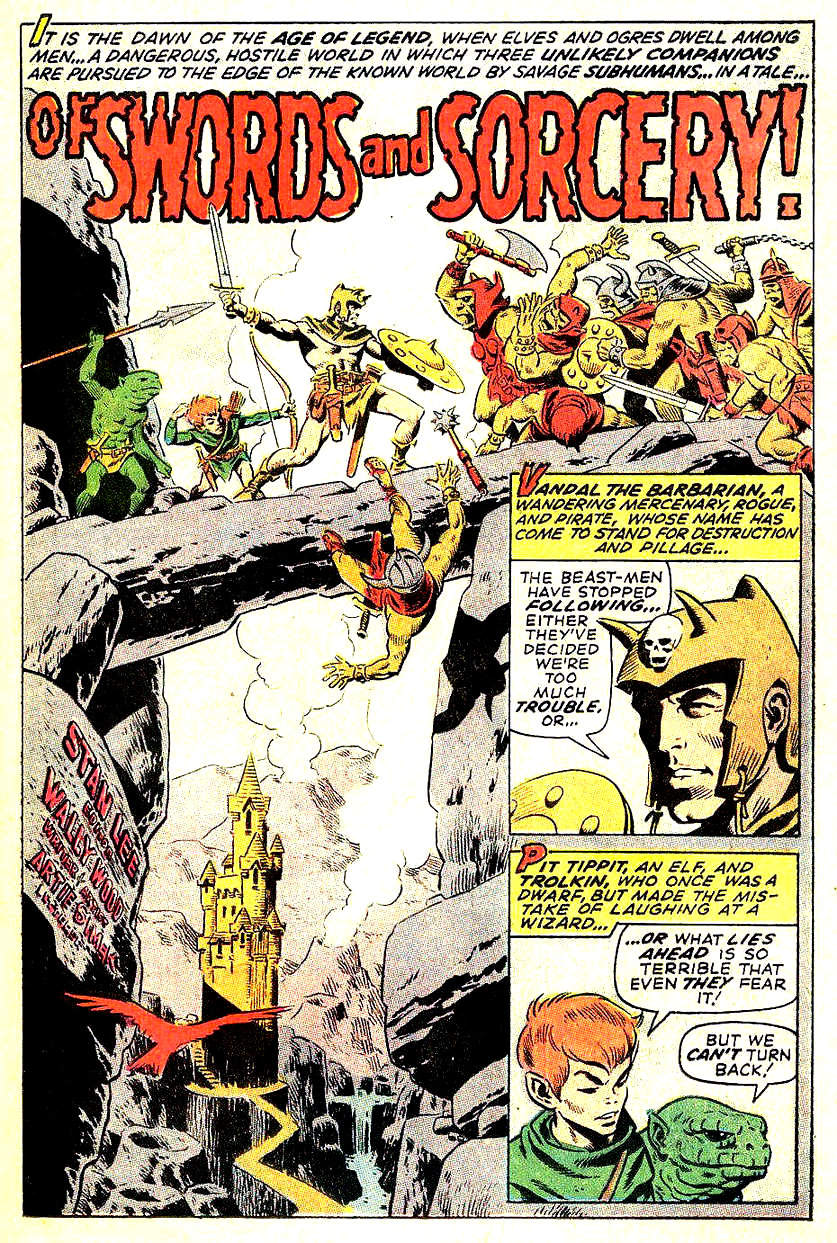
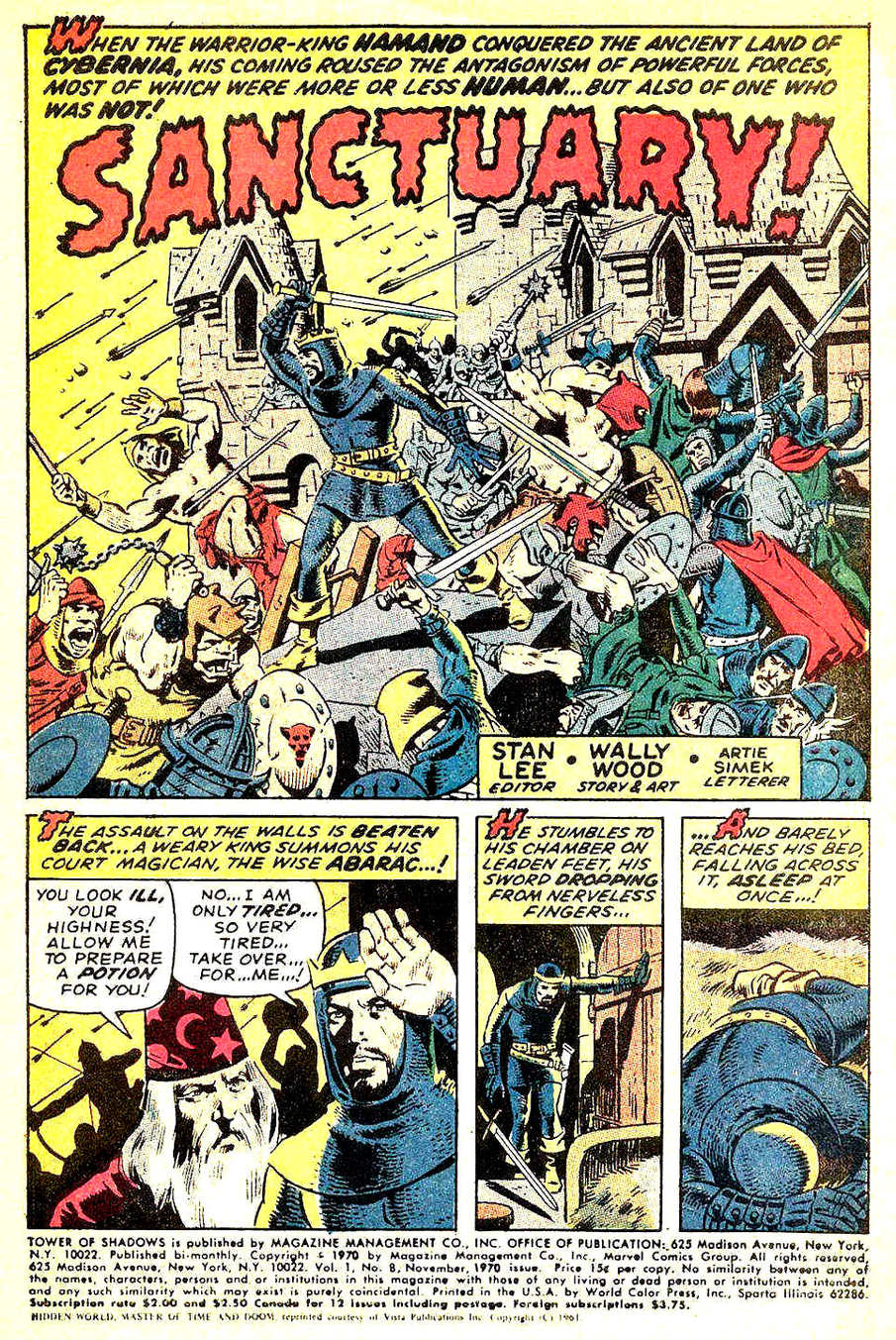
Wallace Wood’s brief return to Marvel in 1970 gave us an early glimpse of the sword-and-sorcery wave that was about to hit like a tidal surge.
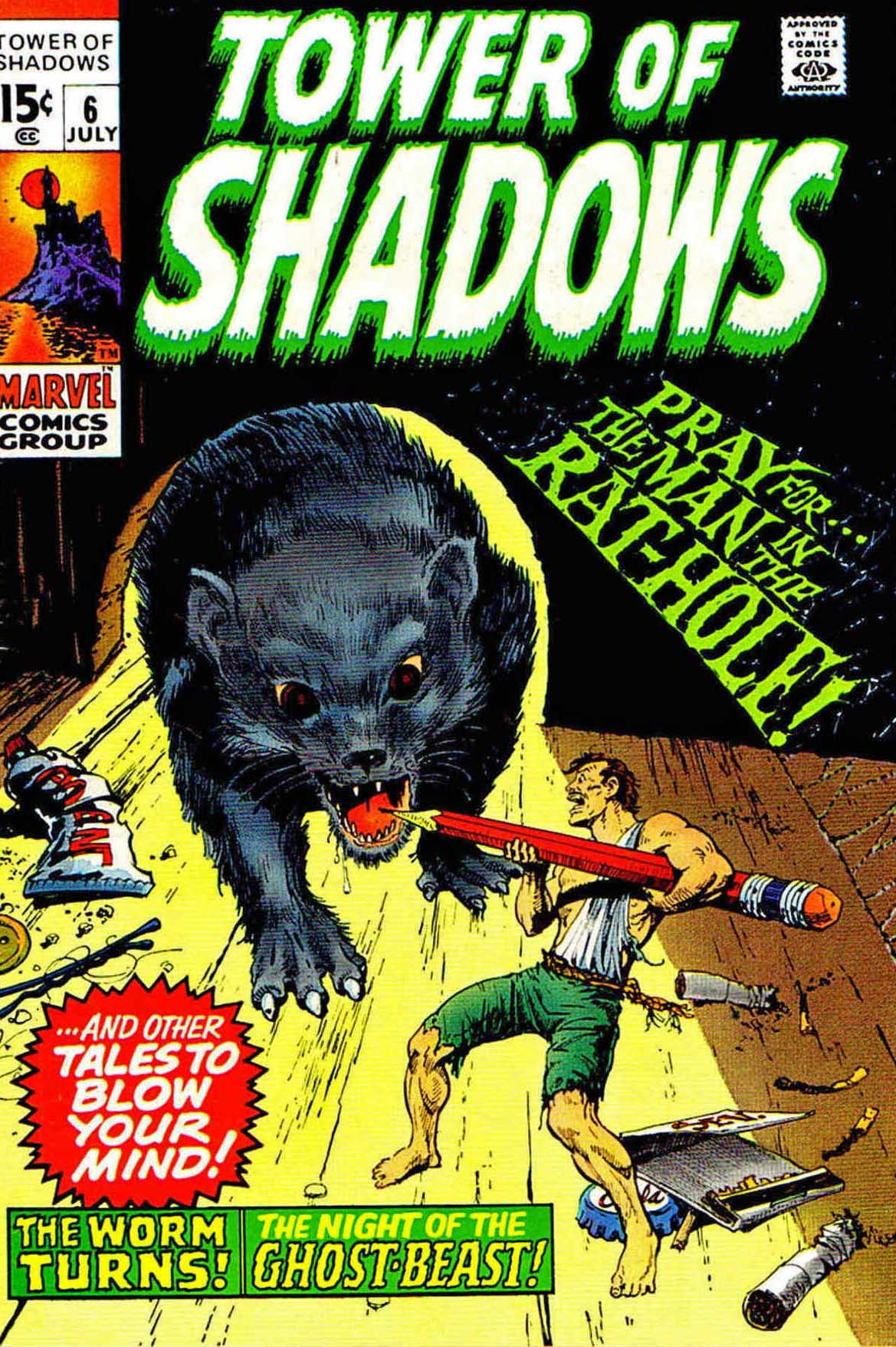
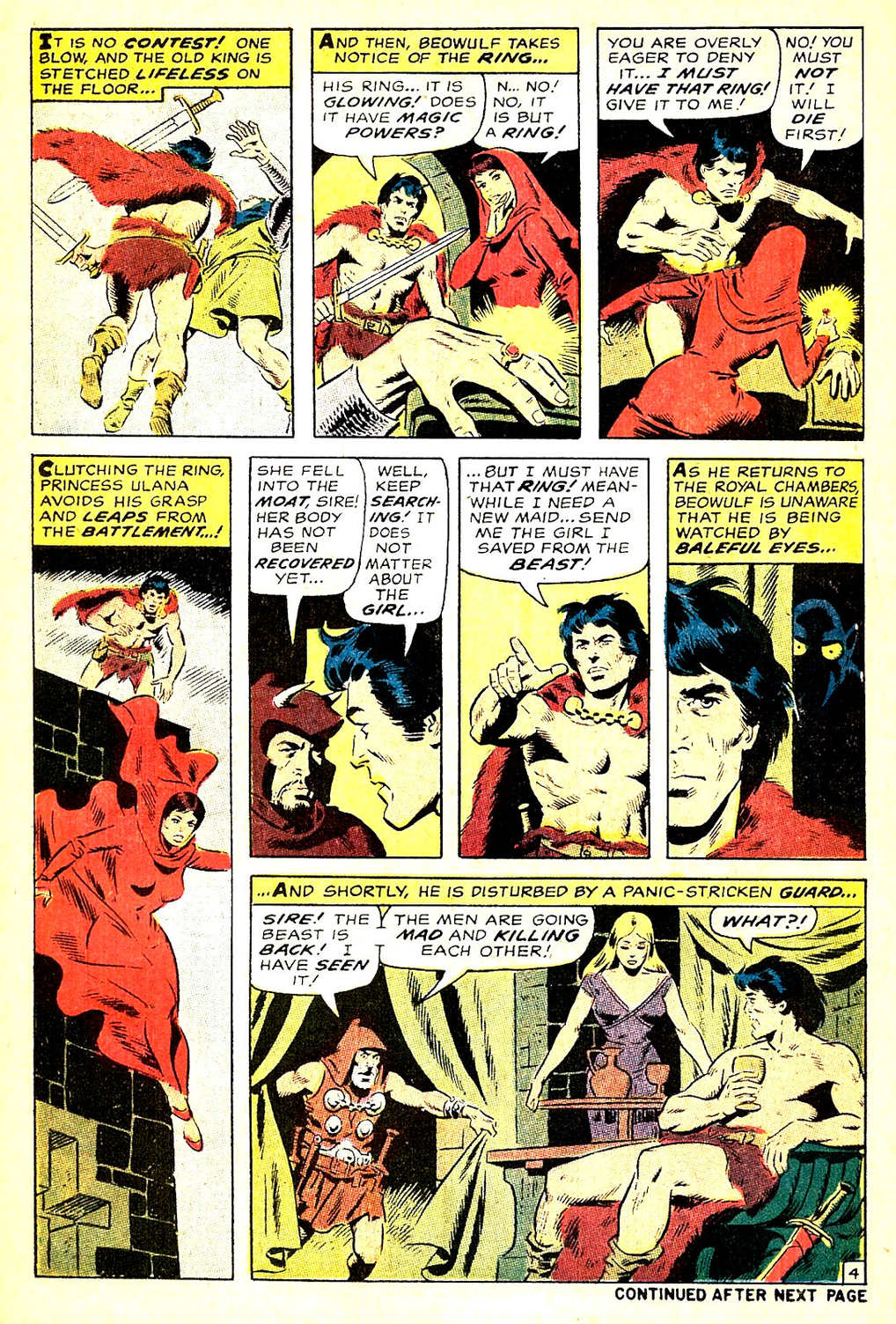
If you mostly know Wood from EC or straight-up superhero work, his Tower of Shadows run (#5–8) is a really fun side trip into that territory. This great page comes from the second story, featuring an offbeat take on Beowulf.
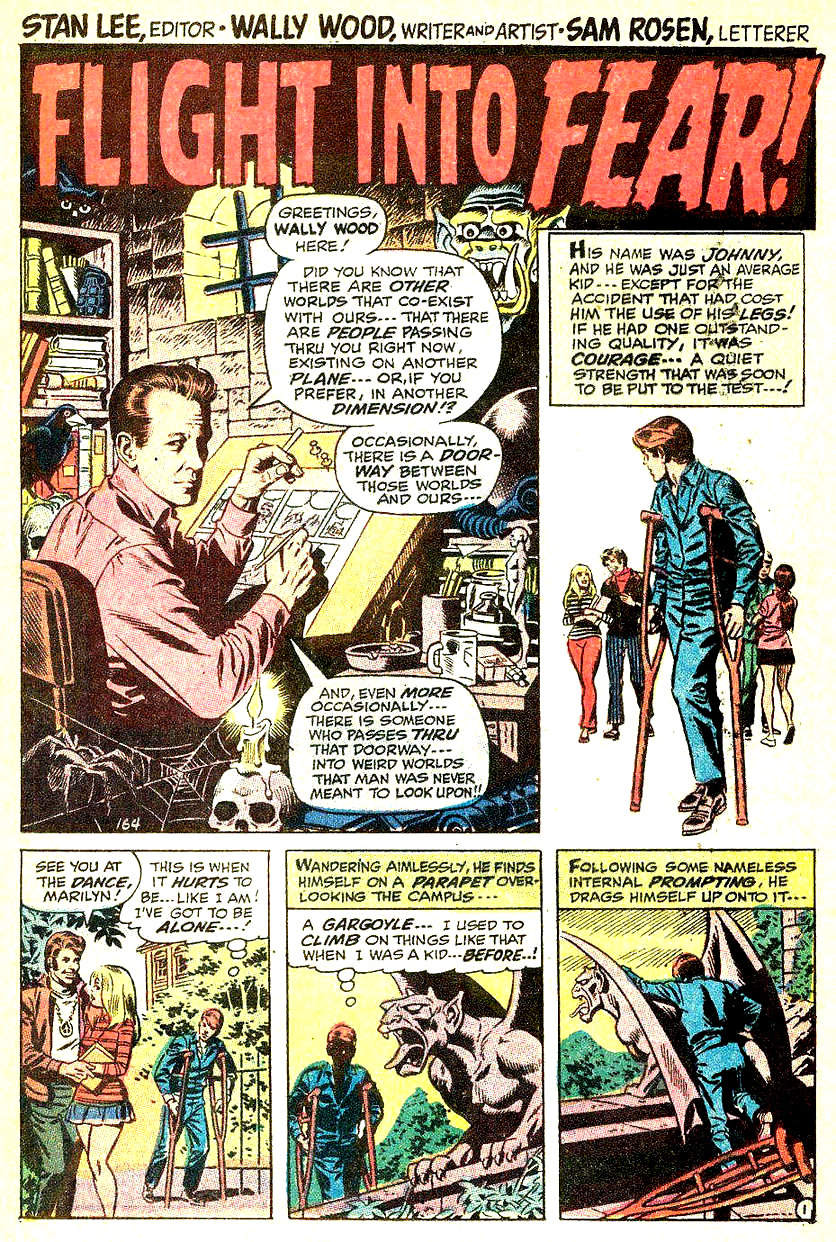
He wrote and drew all four shorts, so what we’re getting is pure, undiluted Wood: moody lighting, dramatic staging, and an always-present feeling that everyone’s living one bad decision away from doom.
These aren’t Conan-style epics. They’re more like dark fairy tales from a guy who clearly loved drawing adventurers, monsters — and gorgeous women. The earliest of them — including this one — actually predate Conan #1. Woody was ahead of the curve.
Short stories. Big atmosphere. Fantastic art.
And a preview of what he’d later unleash in his own indie — and decidedly adult — fantasy project, The Wizard King.
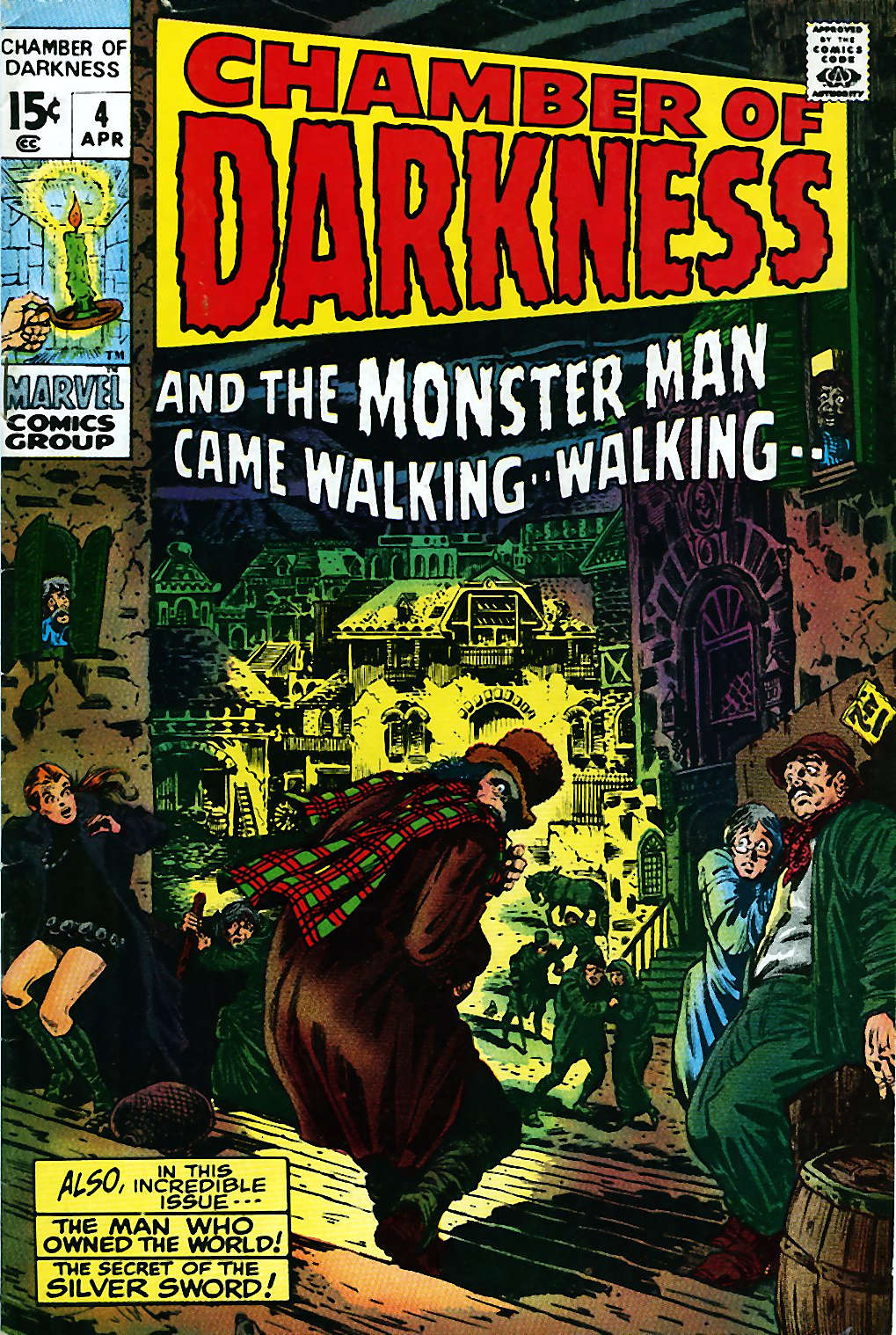
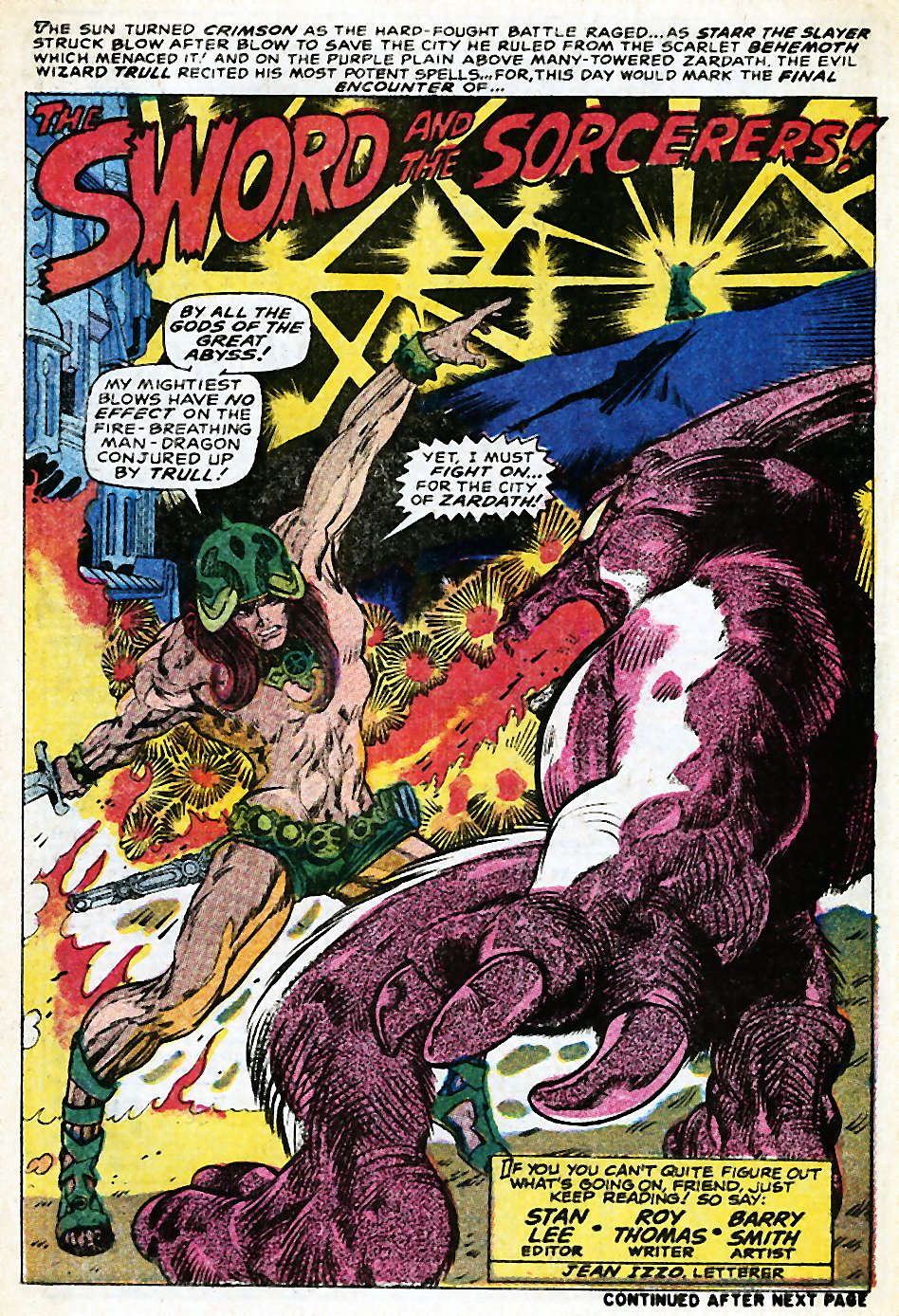
Four stories, four great title pagesAlso before Conan the Barbarian #1, Roy Thomas and Barry Smith tested the waters with a prototype Conan-like hero—Starr the Slayer—in Chamber of Darkness, the sister title to Tower of Shadows.
WALLY WOOD — MARVEL CHECKLIST (1964–1972)
1964–1965 Run (Primary Period)
☐ Daredevil #5 — Dec 1964 Pencils, inks (Wood’s Marvel debut; defined early DD look)
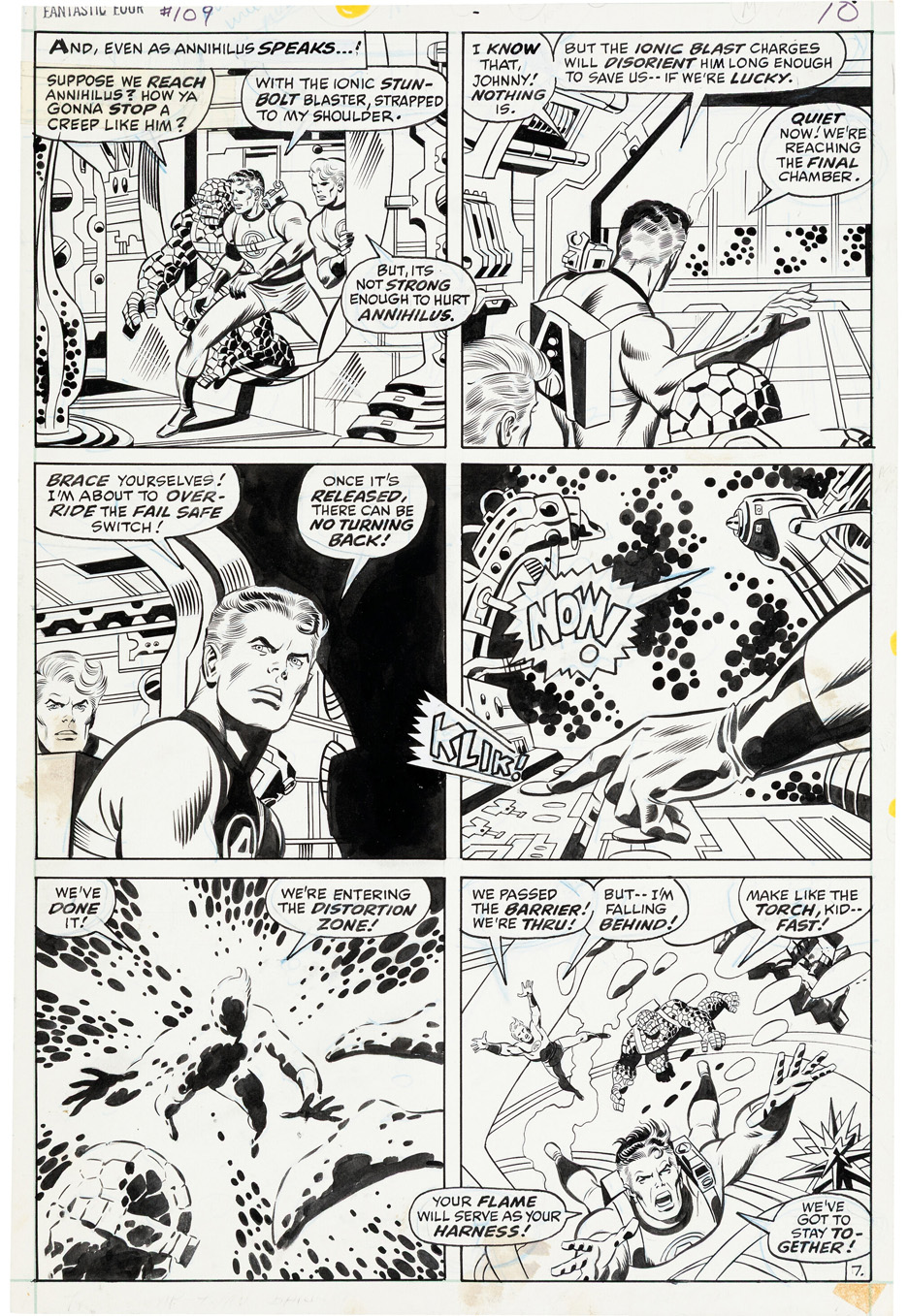
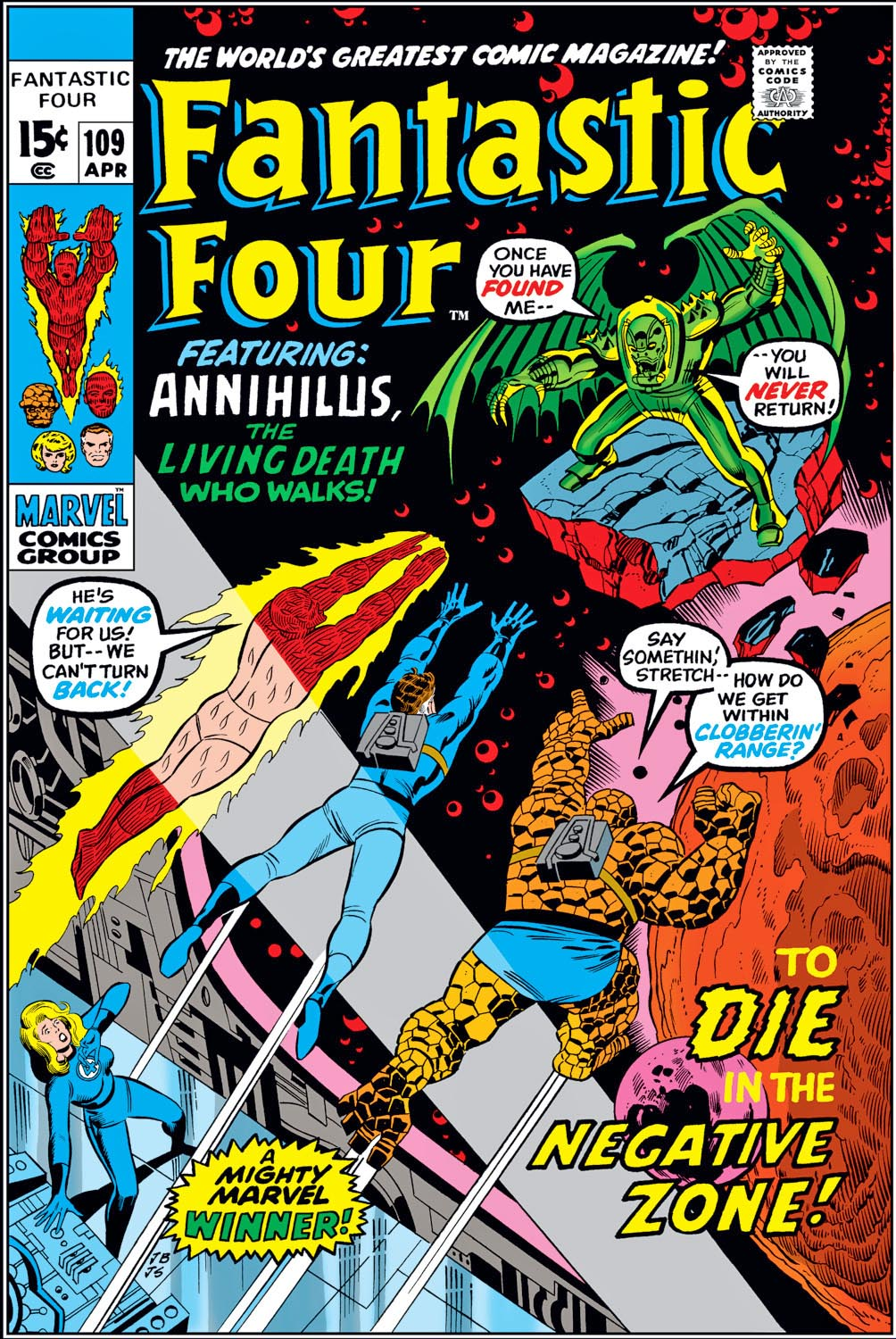
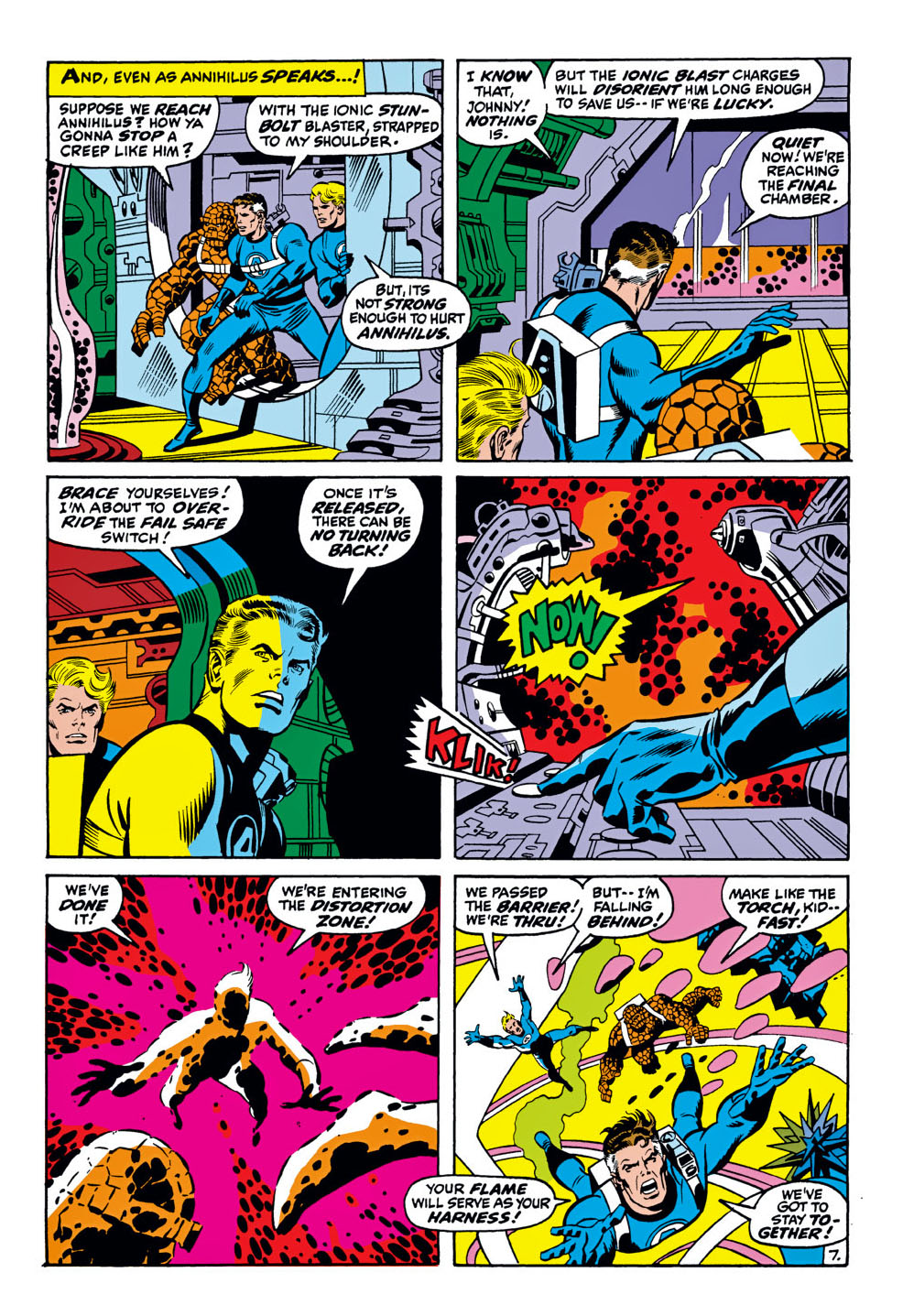
If Jack Kirby built the Marvel Universe by flooring the gas pedal, John Buscema is the artist who proved it could keep moving at speed without flying off the road. This page from The Fantastic Four #109 doesn’t feel like a reset after Kirby—it feels like a smooth handoff. (Especially with the amazing Joe Sinnott continuing on as co-pilot.)
Nearly everything that defines the FF is here: impossible tech, last-second switches, and reality bending under pressure. Kirby detonates ideas; Buscema directs them. The action is clean, the staging is crystal clear, and even as the team tumbles through the “Distortion Zone,” you always know where everyone is—and what’s about to go wrong.
That’s why Buscema was the perfect artist to follow Kirby. He didn’t try to out-Kirby Kirby; he translated the chaos into confident, cinematic storytelling.
Fantastic Four #109 lands squarely in my prime spinner-rack era—back when the future arrived every month for 15 cents a pop. Owning this page feels like closing a long loop—from Wurman’s candy store (Long Beach, NY) back to the original art board, without losing any of the wonder.
In fact, it gains even more.
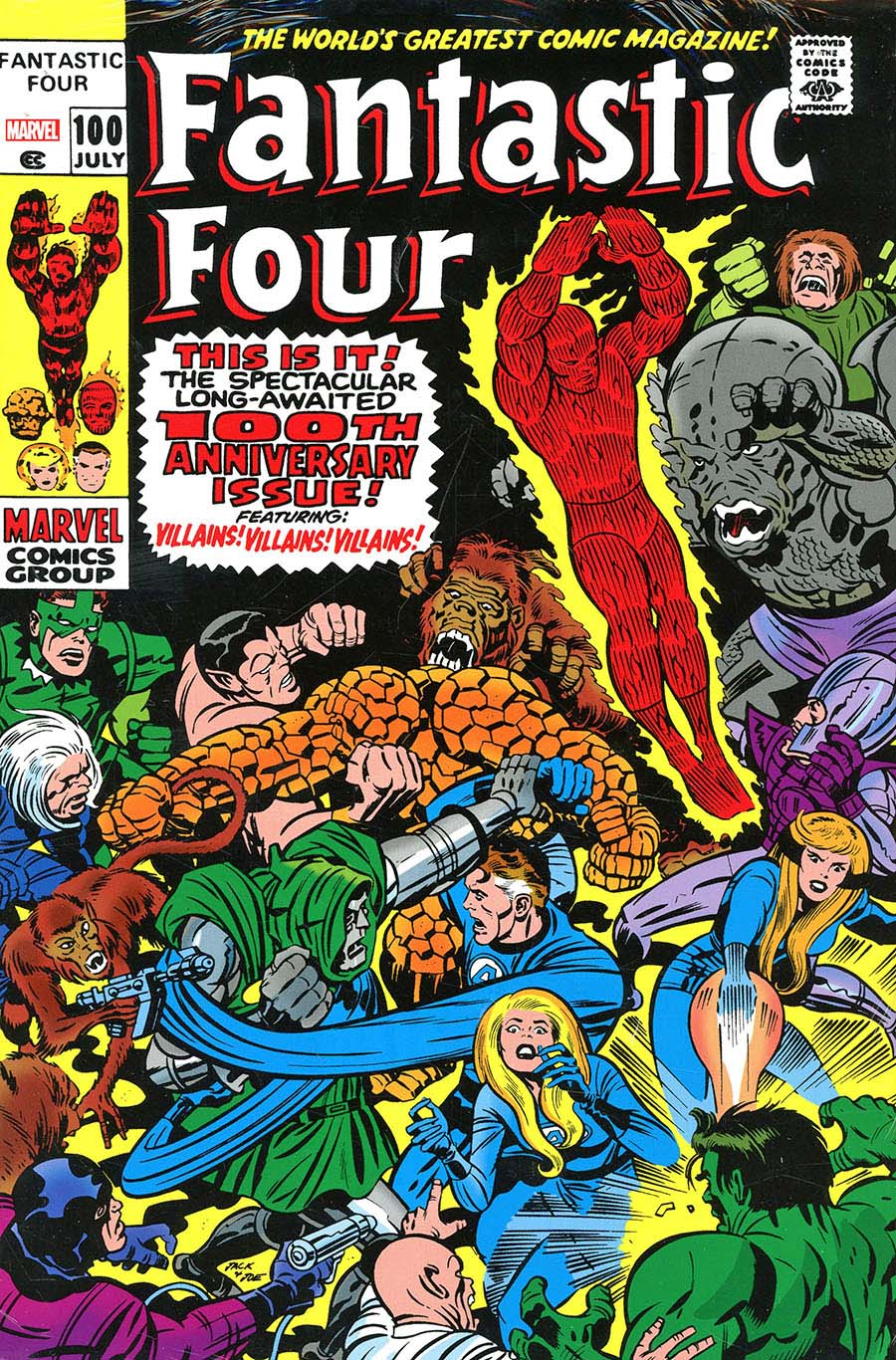
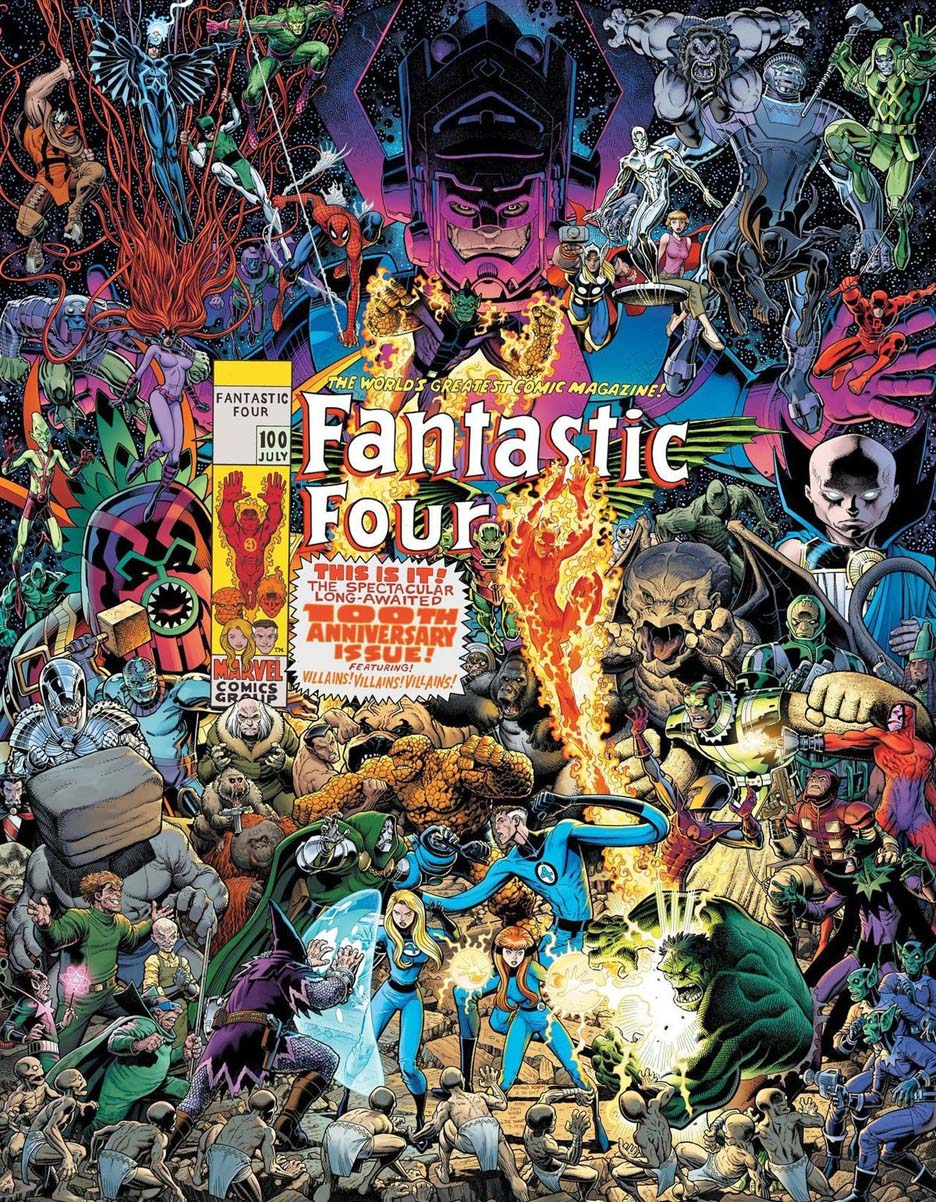
The early Buscema stories (plus some late Kirby and the fill-in Romita stories) can be found in the FF omnibus #4, with either the Kirby #100 cover — or the astonishing homage by Arthur Adams.
Sixty-five years on, The Fantastic Four still feels like Marvel figuring itself out in real time—and getting it spectacularly right. These weren’t heroes born in alleys or back rooms; they were a product of the early ’60s, when the Space Race filled the headlines and the future felt thrilling, reckless, and inevitable. Rockets were launching, limits were being tested, and the question wasn’t should we go farther—it was how fast can we get there. Marvel’s cosmic imagination starts right here, with four people charging into the unknown.
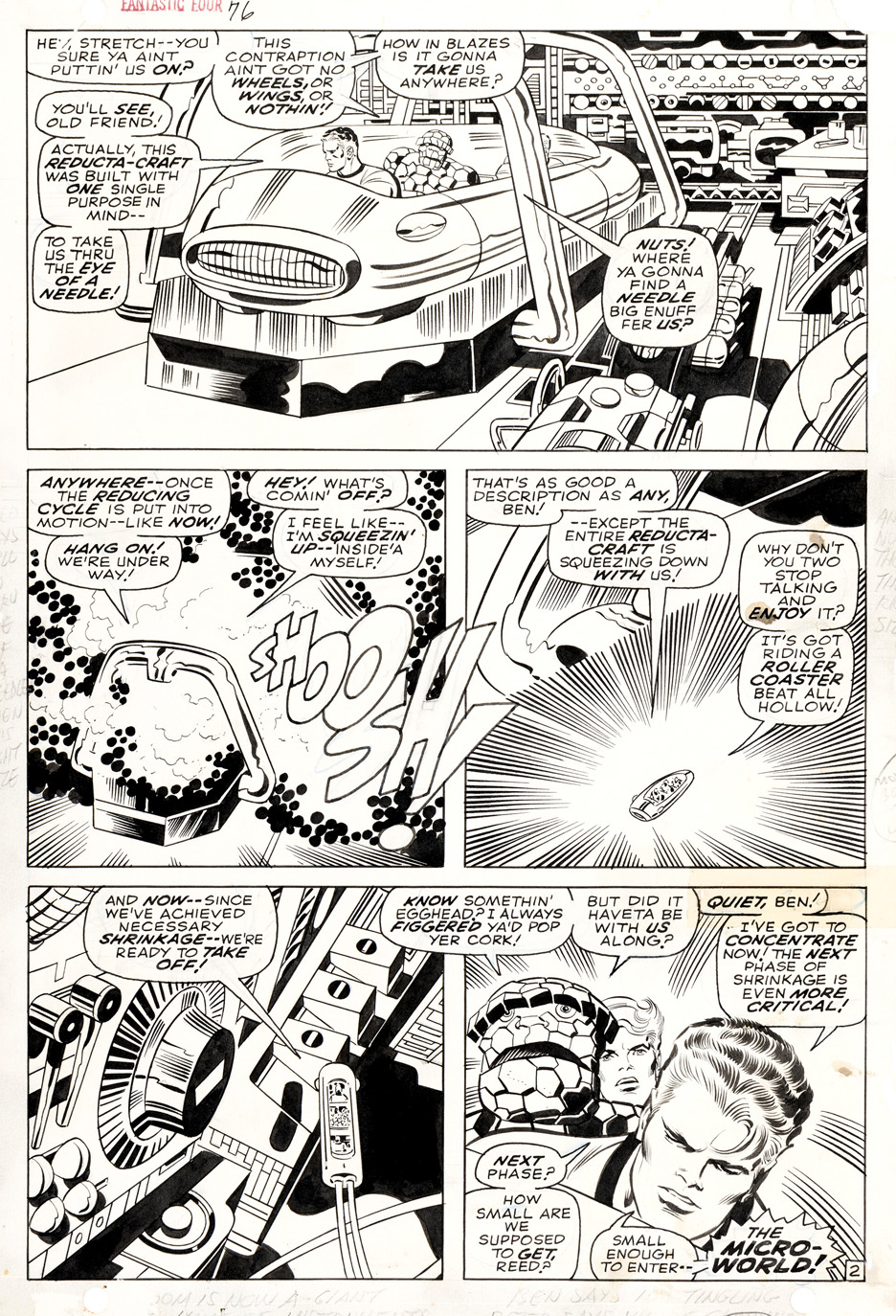
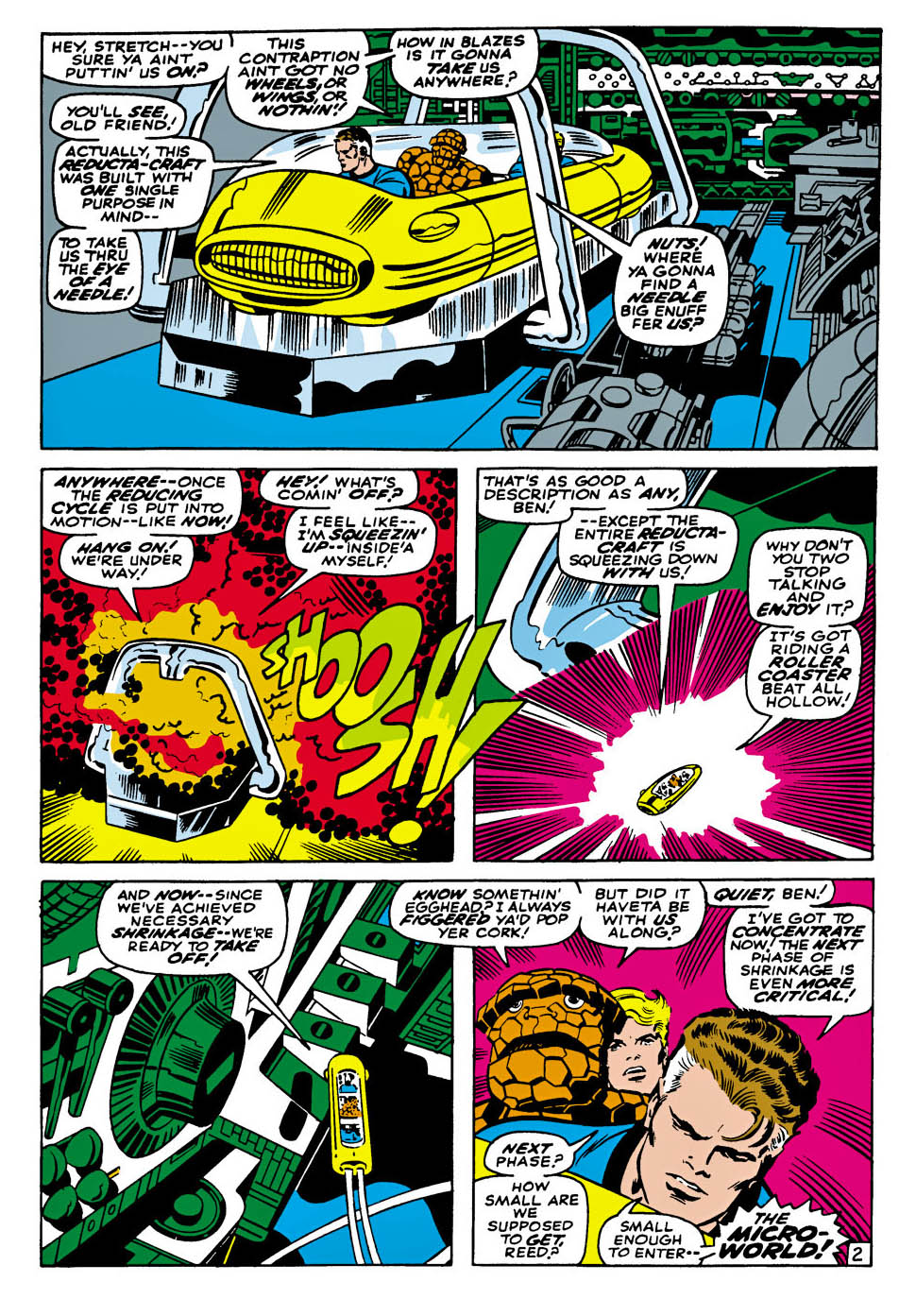
And speaking of charging ahead—just look at this page by Jack Kirby, beautifully locked down by Joe Sinnott. This isn’t just a shrinking sequence; it’s Kirby inventing scale. Machines loom like alien vistas, panels crackle with motion, and your eye doesn’t just read the page—it gets pulled inside it. Sinnott’s inks keep all that chaos crisp, clear, and impossibly confident.
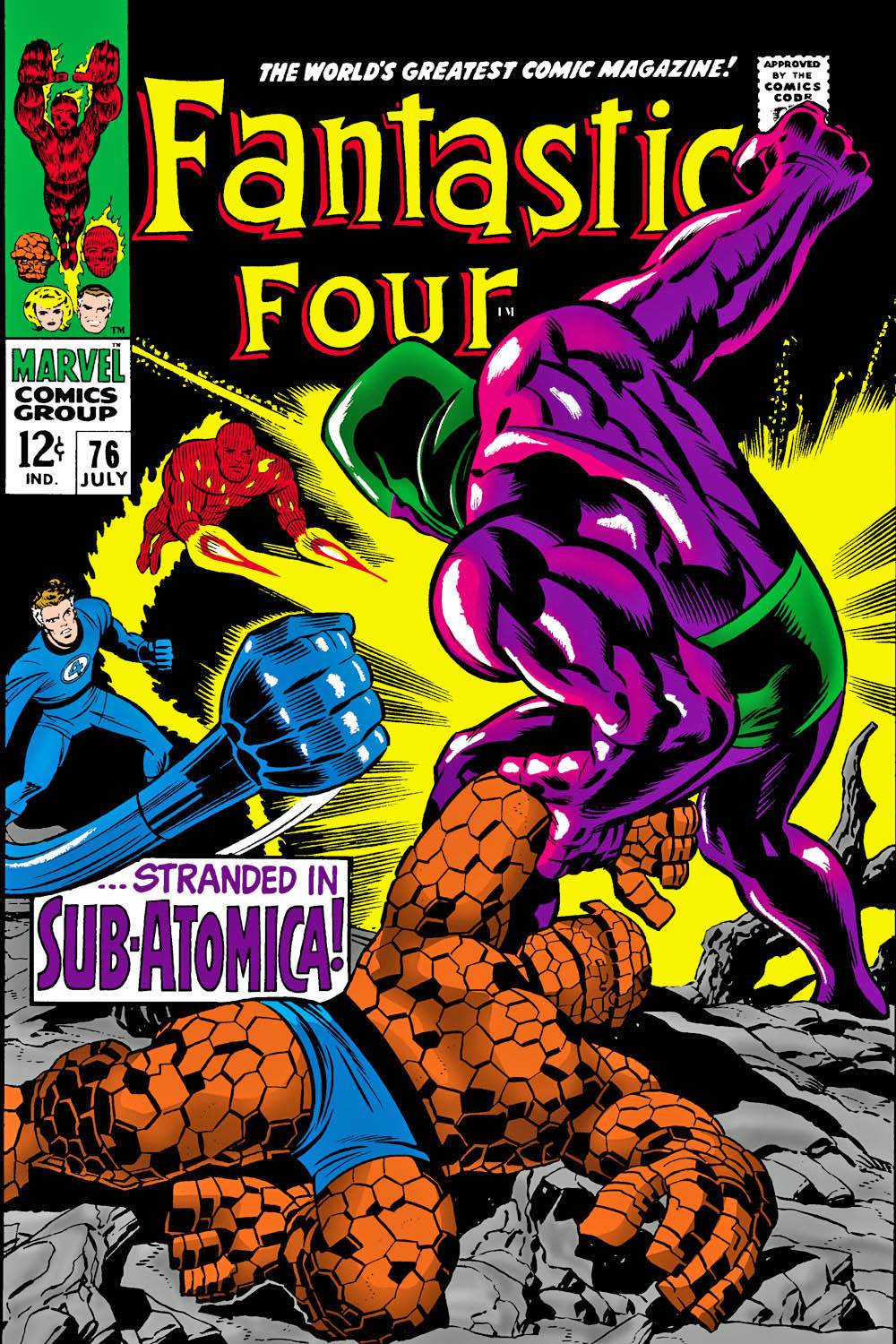
I continue to believe the first 100 issues (and especially the marvelous three-year stretch from about issues #39–76) of The Fantastic Four rank among the most important runs in comic-book history—one long creative hot streak where the ideas redefined pretty much everything that came before.
I’m never going to referee who did what between Kirby and Stan Lee, but one thing is pretty obvious: Lee contributed much of the personality, friction, and soap-opera snap that made the cosmic feel personal. The Fantastic Four bicker, joke, and melt down while rewriting reality—and that mix of big ideas and human irritation became Marvel’s calling card.
Happy 65th to the Fantastic Four: Marvel’s original first family, and a wondrous revolution in comic books.
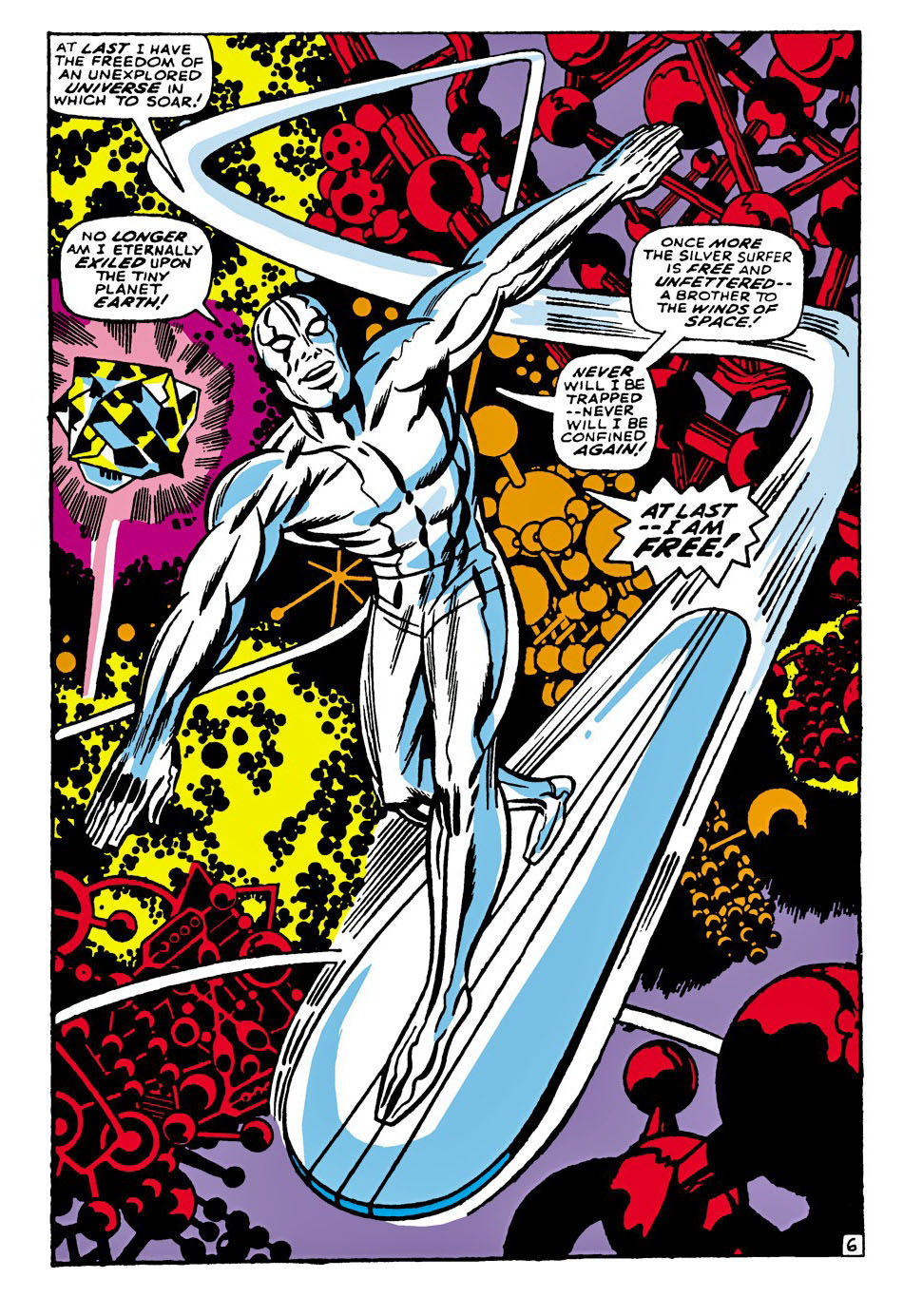
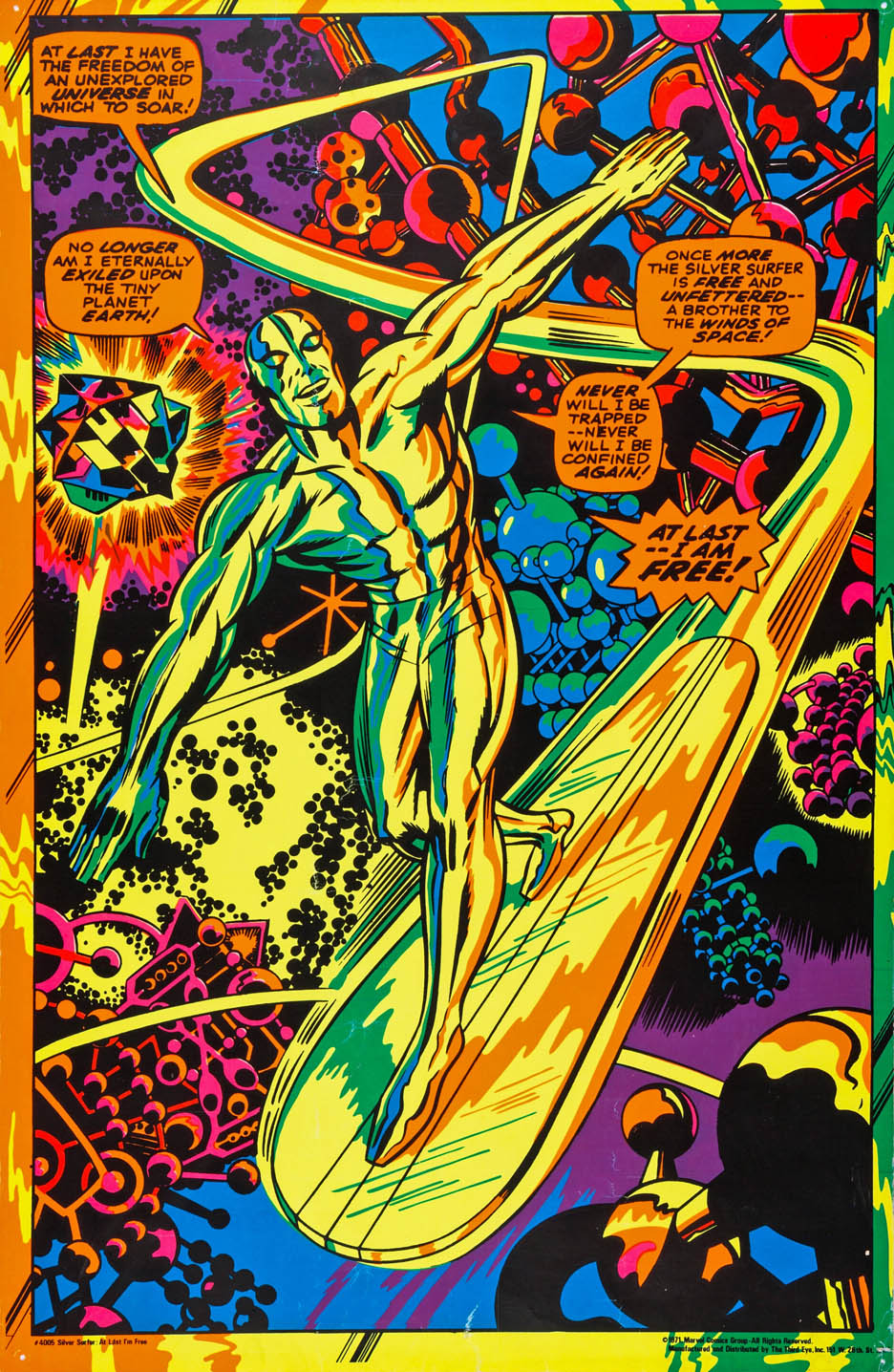
The Silver Surfer splash from this issue is so striking and iconic that it was later selected as one of Marvel’s classic licensed blacklight posters.
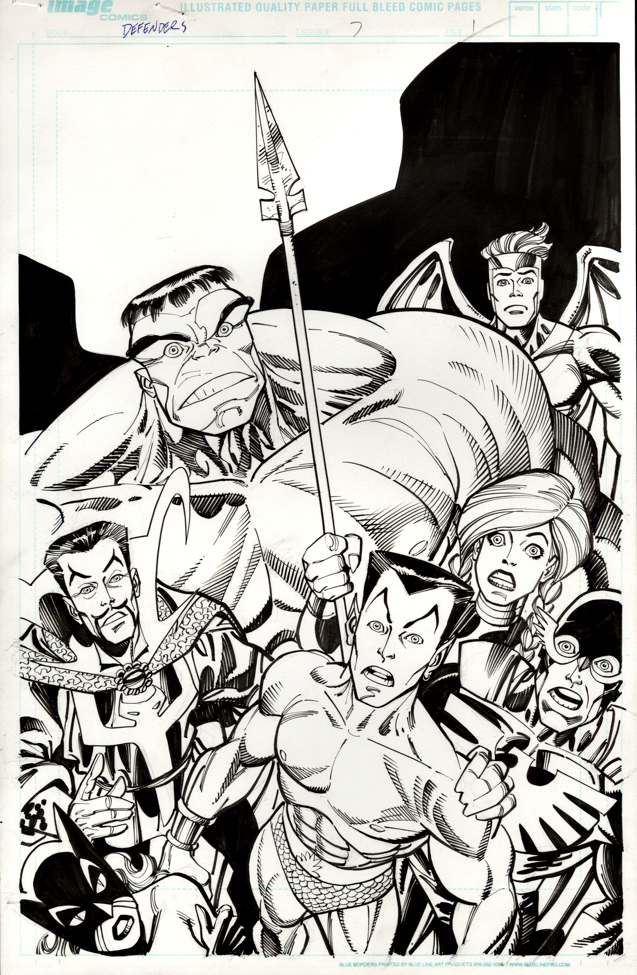
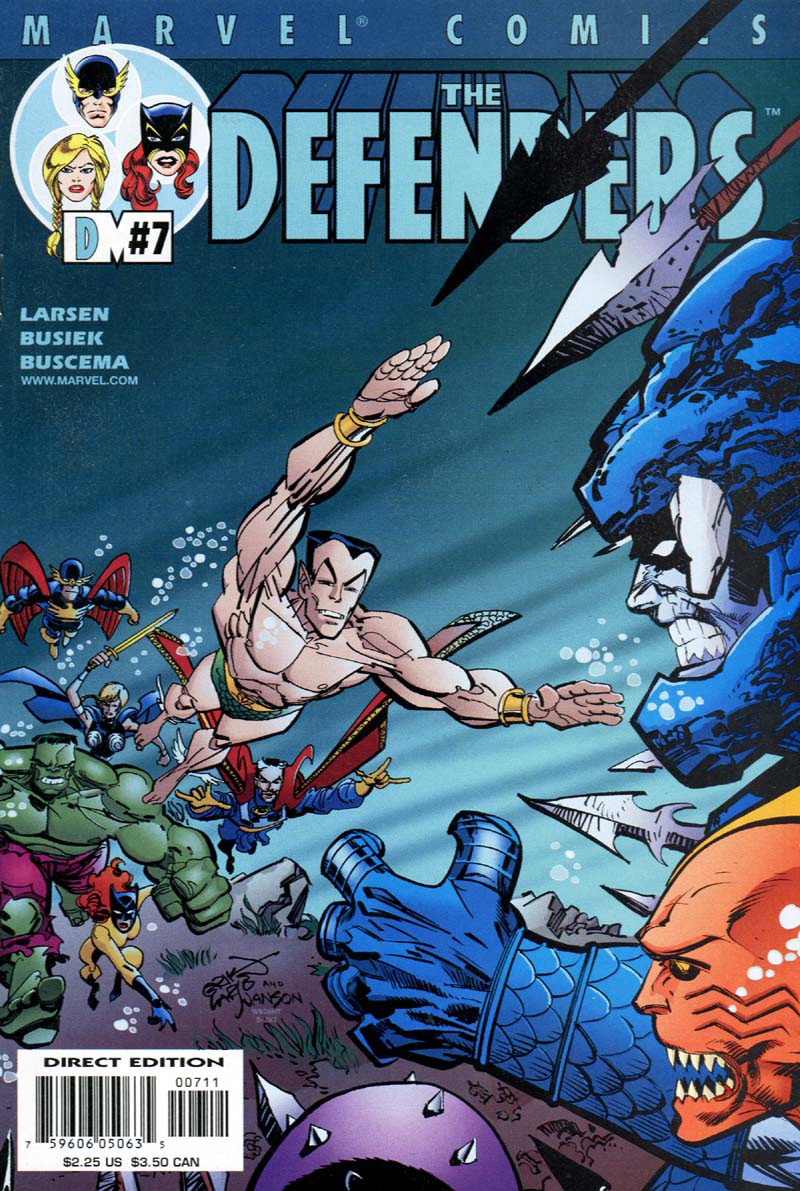
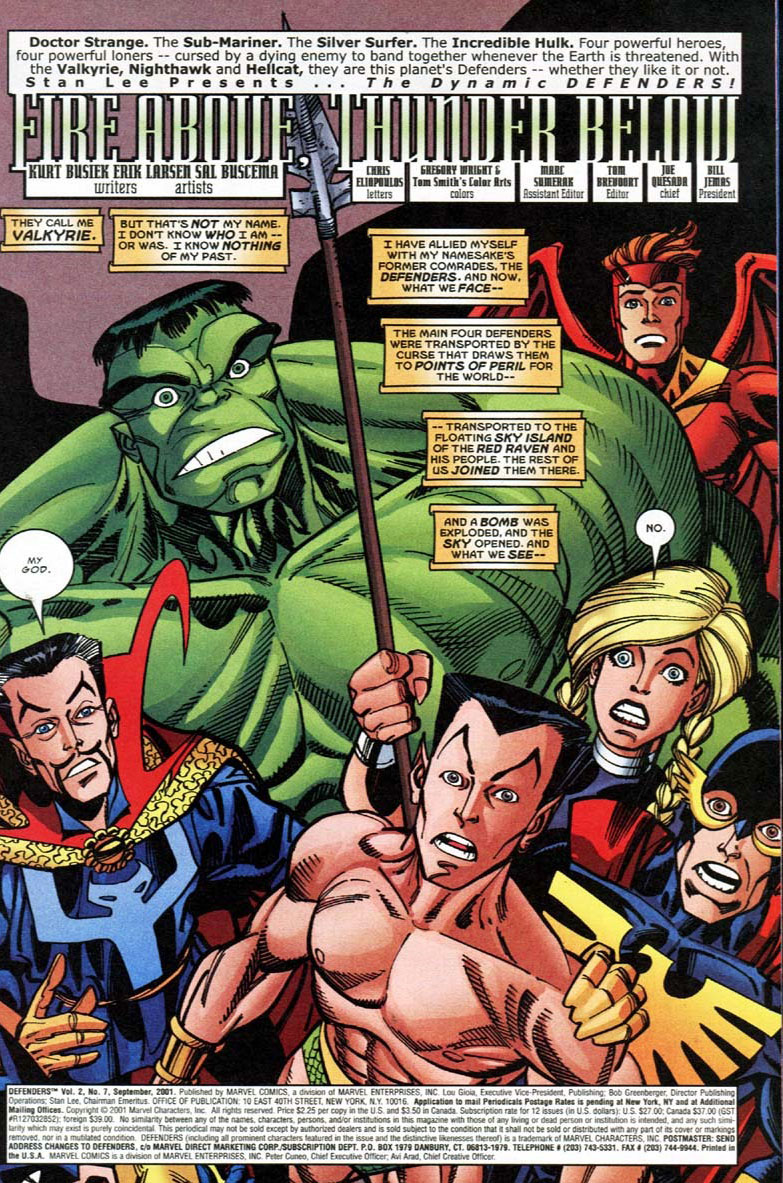
Here’s a fun title page from the great Erik Larsen, inked by the always-amazing Sal Buscema. If you like the Defenders, how can you not love this?
Larsen packs the composition as if he’s cramming an entire issue into a single image—a glorious jumble of big personalities and startled reactions, with a barely contained Hulk dominating the page and everyone else looking like they’ve wandered into the wrong cosmic crisis.
Loud, funny, and bursting with life, this Defenders run—written by Larsen with Kurt Busiek nearly 25 years ago—is pure, entertaining chaos. These heroes are powerful and iconic, sure, but also an endearingly oddball bunch who often seem annoyed to be sharing the same space.
Come for the heroics. Stay for the dysfunctional group dynamics.
Thanks for stopping by in 2025 — see you next year!
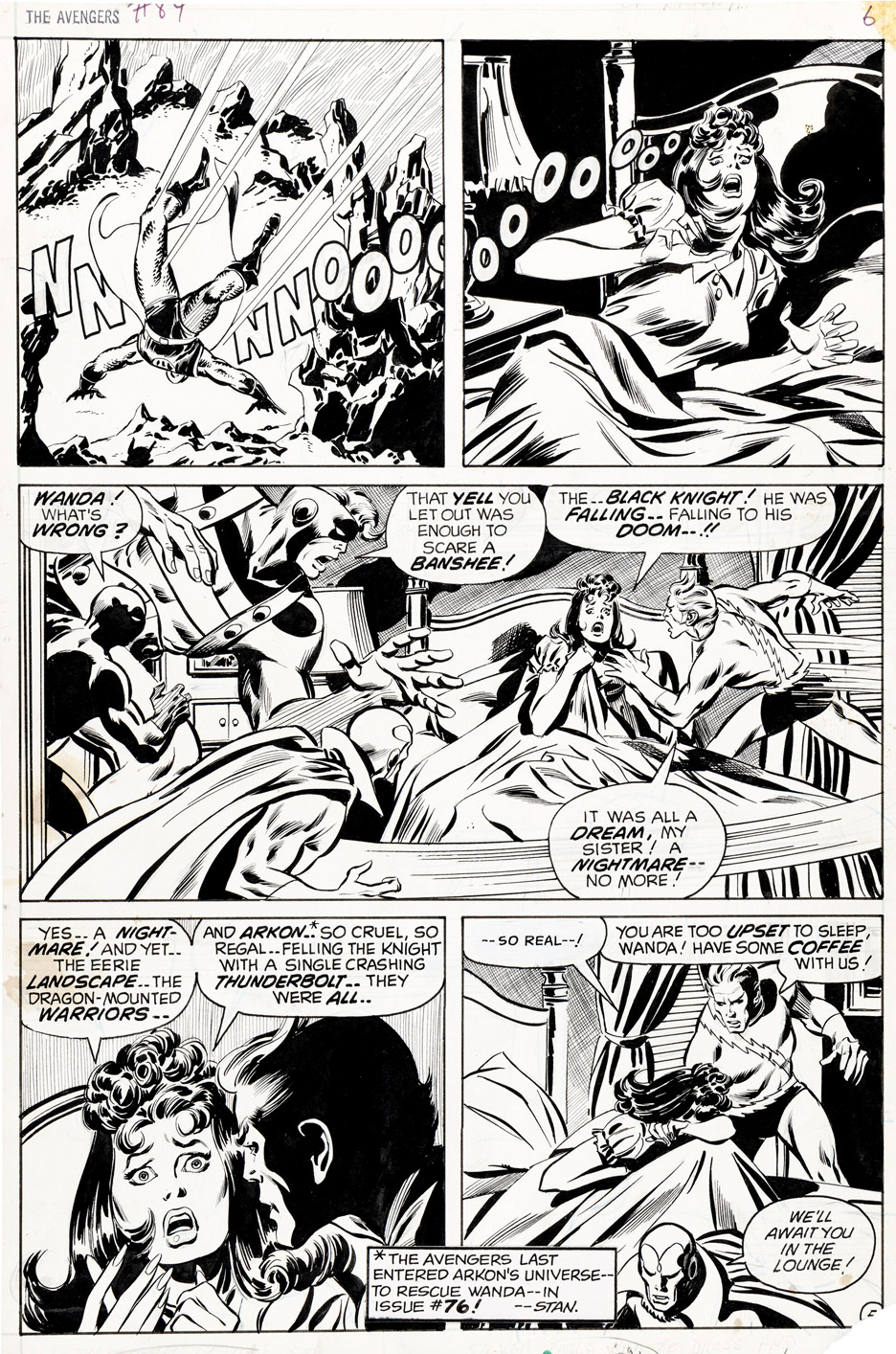
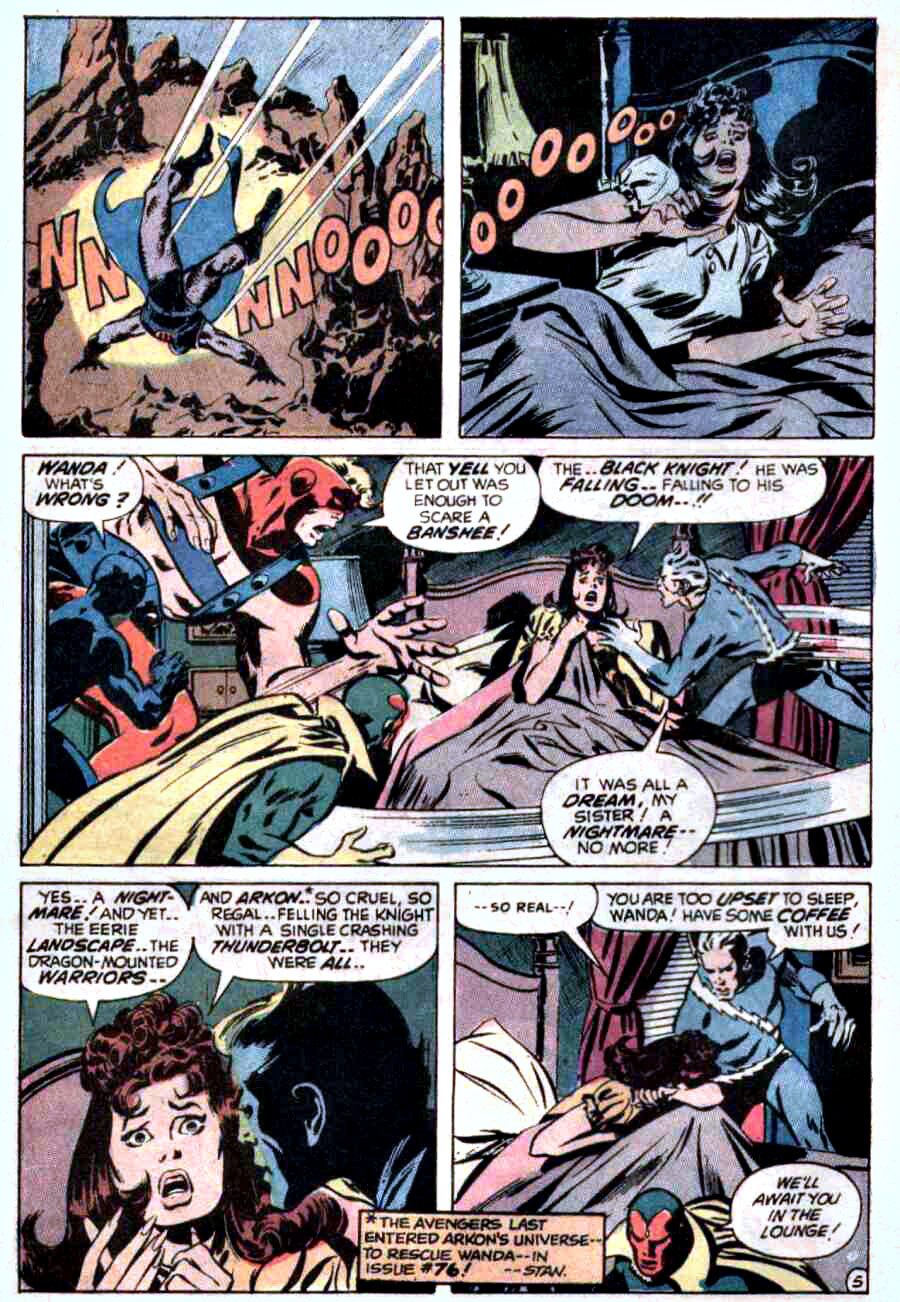
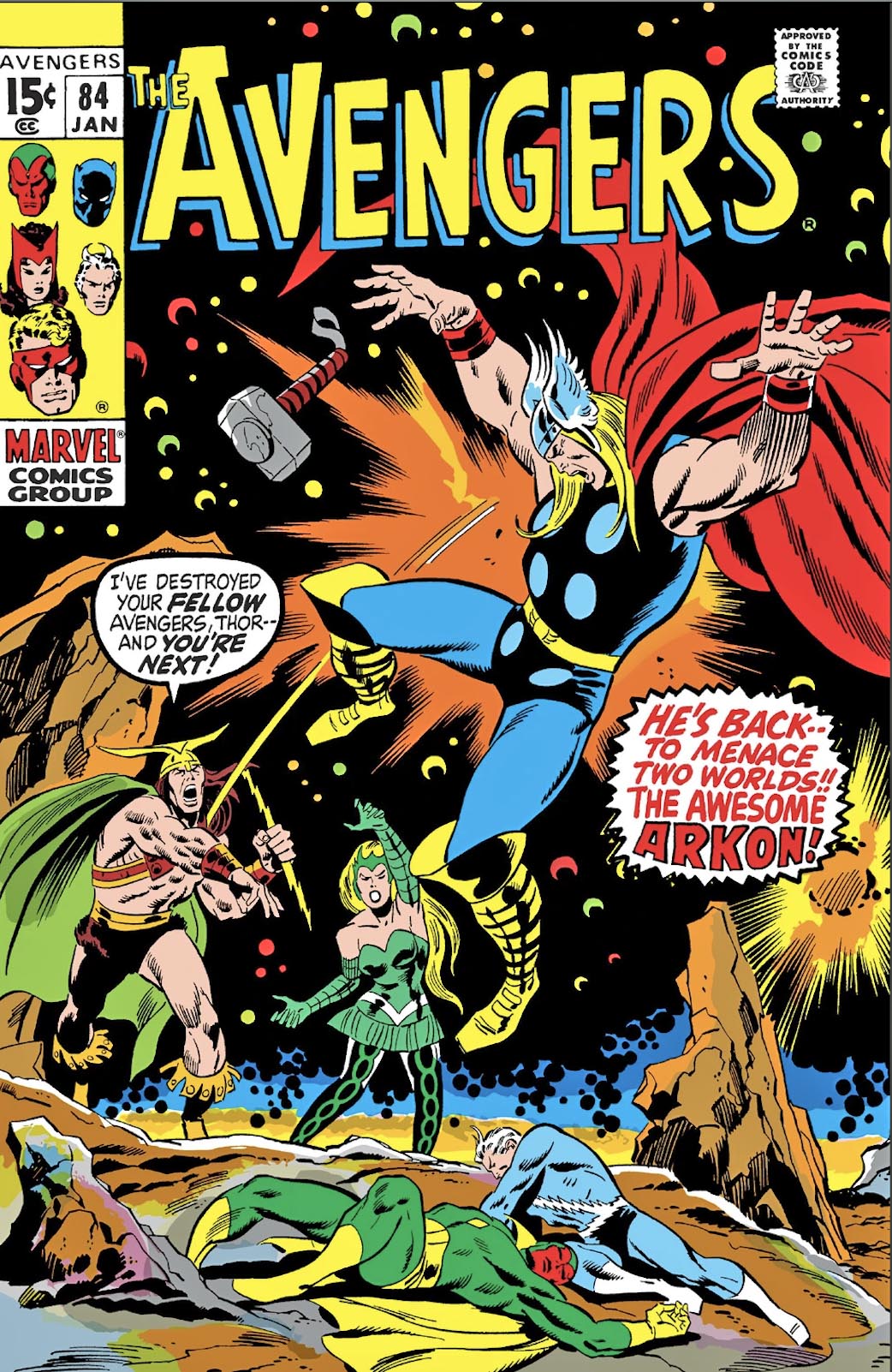
John Buscema was the Avengers artist of the late ’60s and early ’70s—despite famously claiming he didn’t much care for superheroes.
Every panel feels like it could’ve been pulled from a widescreen adventure film, even when the scene is nothing more than a nightmare and a jolting wake-up. That was his magic: Buscema could make anything feel epic.
This page shows exactly how he defined the Avengers in that era. Grace, power, and cinematic clarity are baked into every beat, transforming a bad dream into something memorable—and unmistakably Avengers.
Behind the scenes, Marvel was running hot. Kirby had just left for DC, schedules were tightening, pages were due, and assignments were shifting fast. You can feel a stronger Tom Palmer inking presence here than in some earlier issues, suggesting John may have supplied looser pencils as deadline pressure mounted and the machine kept moving.
Marvel may have been in motion, but Buscema’s vision was locked in.
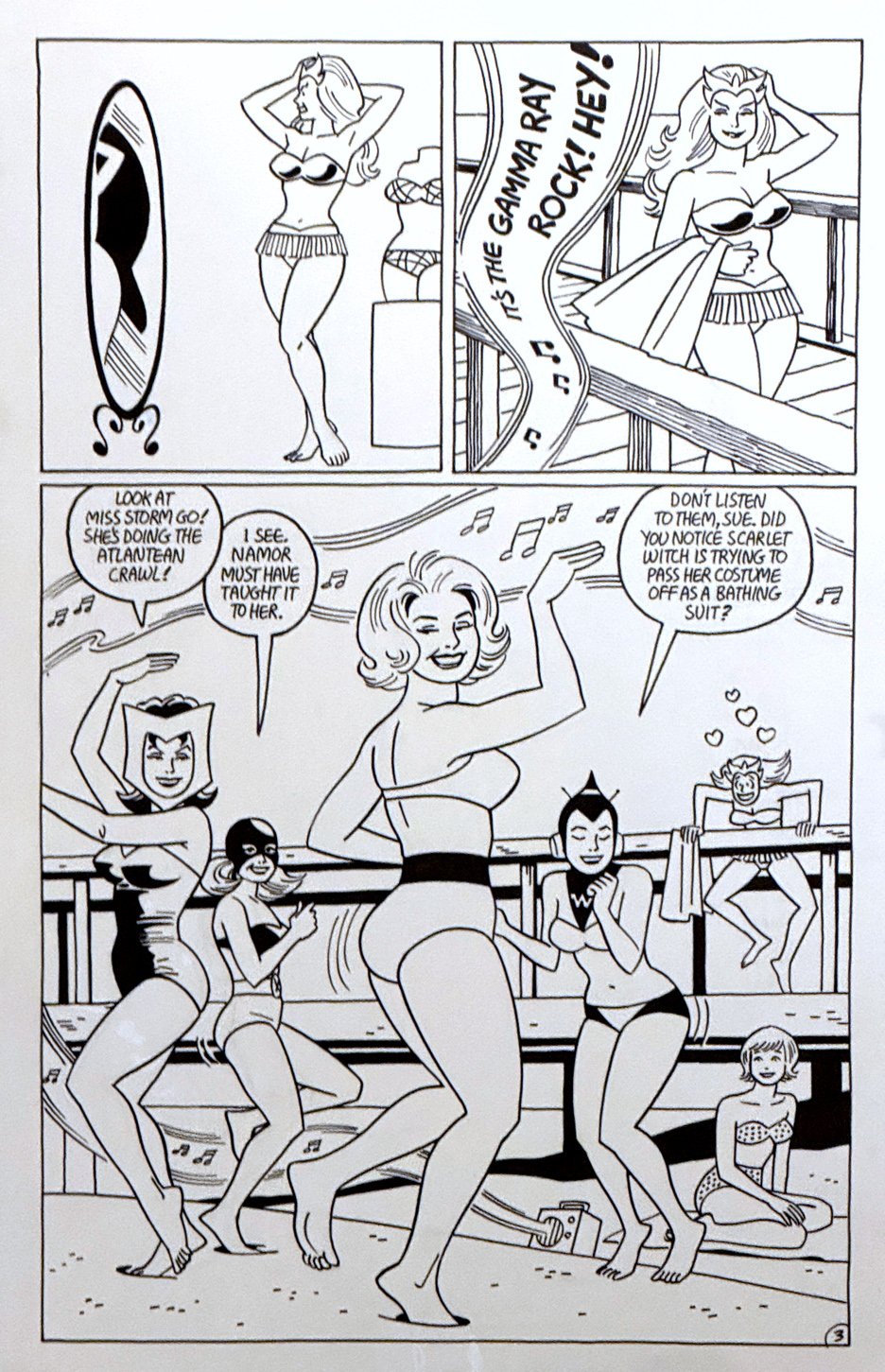
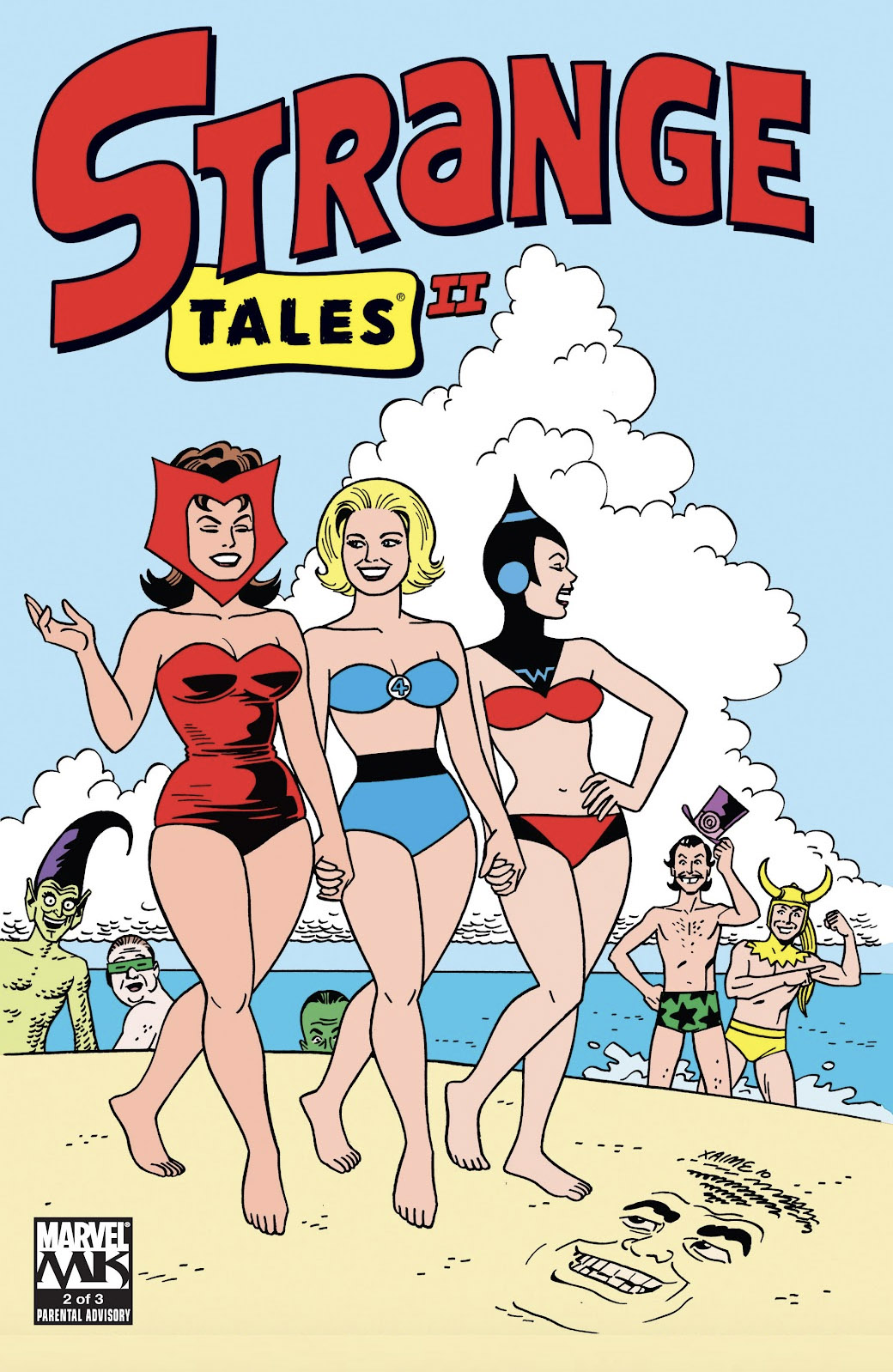
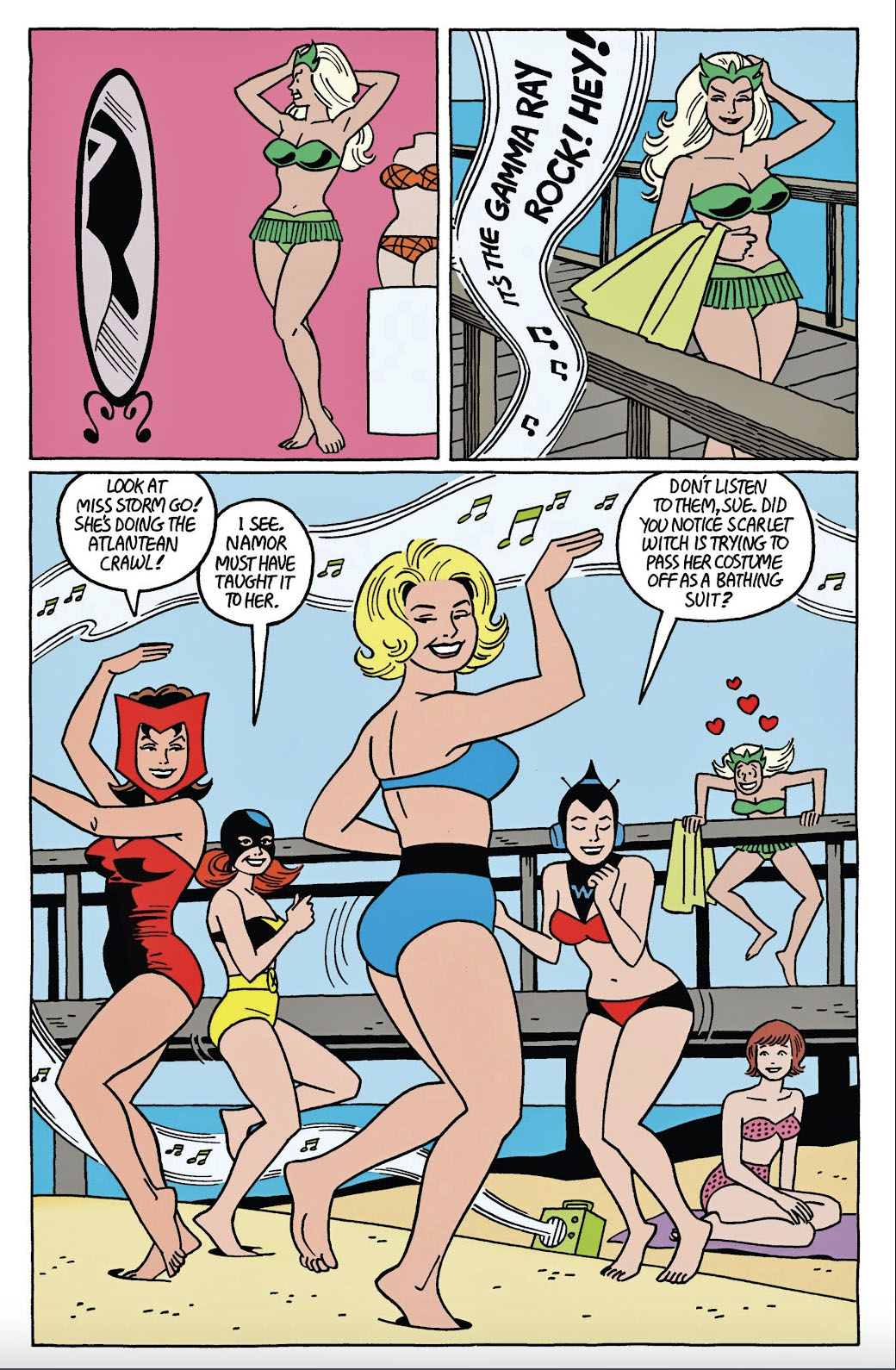
“Love and the Space Phantom,”Strange Tales II #2, January 2011
Jaime Hernandez writing and drawing a light-hearted story with the women of Marvel? In their beach best? How did I miss this one?
Scott Eder broke up the originals to the complete short story back in this past Spring and I happened to see it just as it became available.
All the pages are fun, and the cover (with the goofy supervillains lurking in the background) is naturally terrific —and priced accordingly — but I think I did pretty well with this great one-of-a-kind splash.
Extra dividend: The published story features spot-on coloring by the uber-talented Laura Allred.