Greg Goldstein's Comic Art Gallery

Alex Saviuk — Spider-Man’s Sinister Villains

Convention Illustration Program, 2013

Continuing our month-long celebration of Spider-Man’s upcoming 60th anniversary.

Alex Saviuk delivers a dynamic action scene of Spider-Man battling the super-villain team, The Sinister Six. (As much as I love Spidey, I’m pretty sure even he’ going to get creamed 10 seconds later.)

Here’s why good notes are important: My pal Alex drew this for a 2013 Comic Book Convention program. The only problem is, he can’t recall which convention.
If any sharp-eyed fans have seen the published piece, and can remember where it’s from, we’d love to hear from you.
Fun Fact: Our friends at Wikipedia have listed 16 numbered versions of the “Sinister Six,” along with additional lineups from alternate realities, etc. This version is close to the original team (except swap Kraven for the Lizard). Or version #10 (the “Superior Six”) from 2013. In that case, you only have to swap the minds of Spidey and Doc Ock.

Ah, comics.

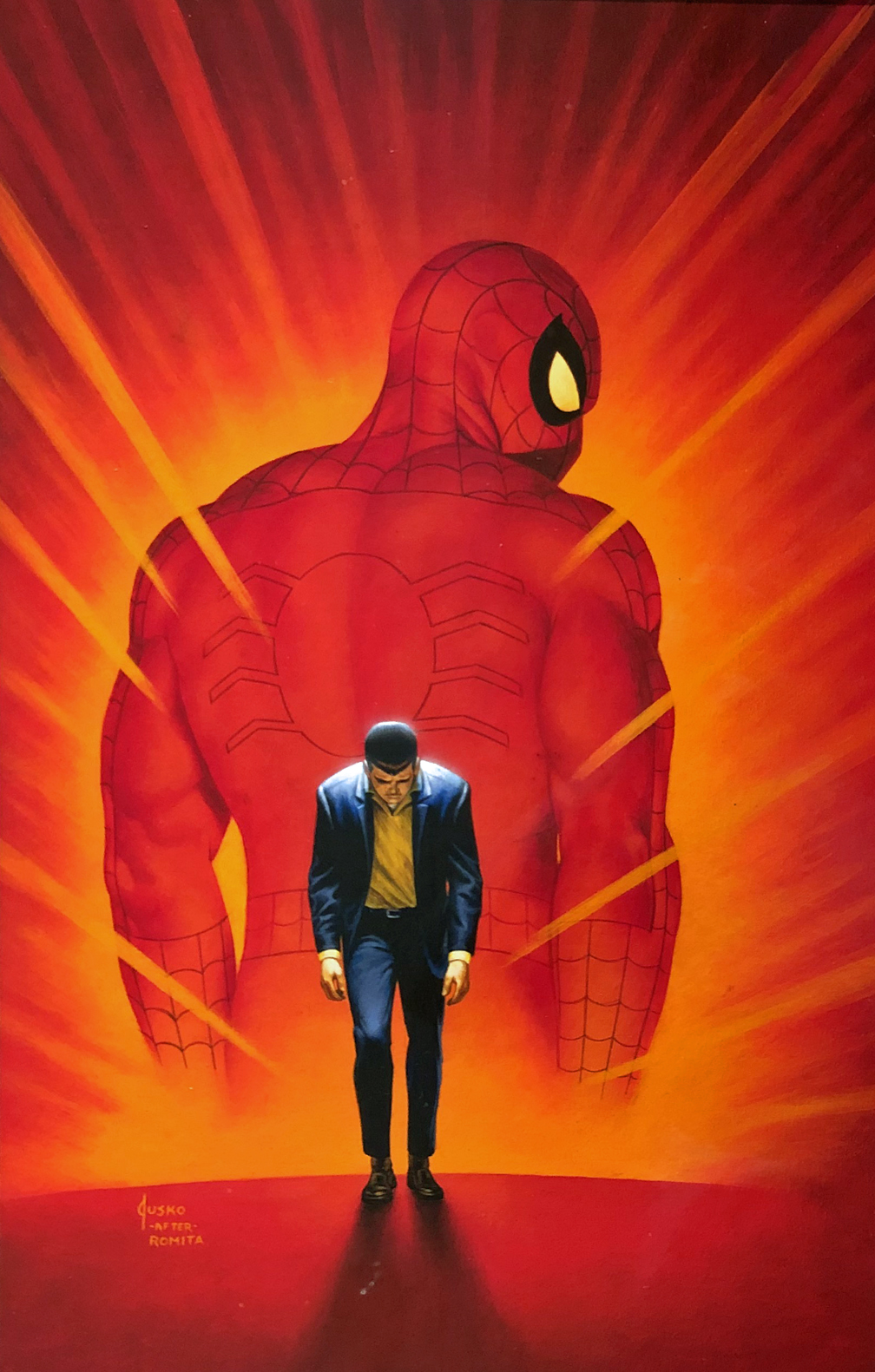
Joe Jusko — Spider-Icon

Variant Cover, Art of Joe Jusko, 2013

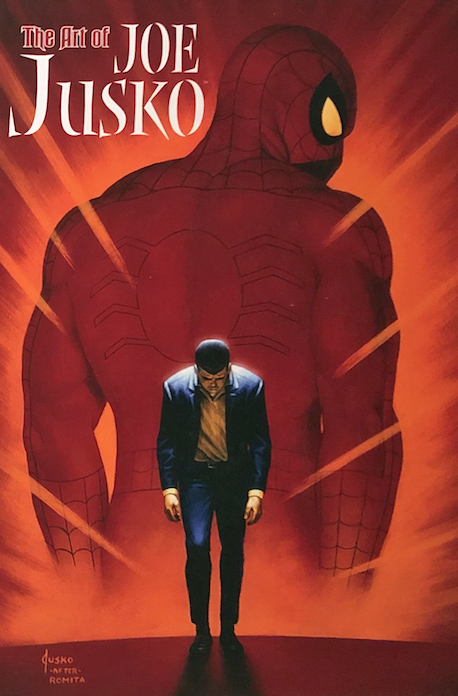
A short history of a beautiful painting:

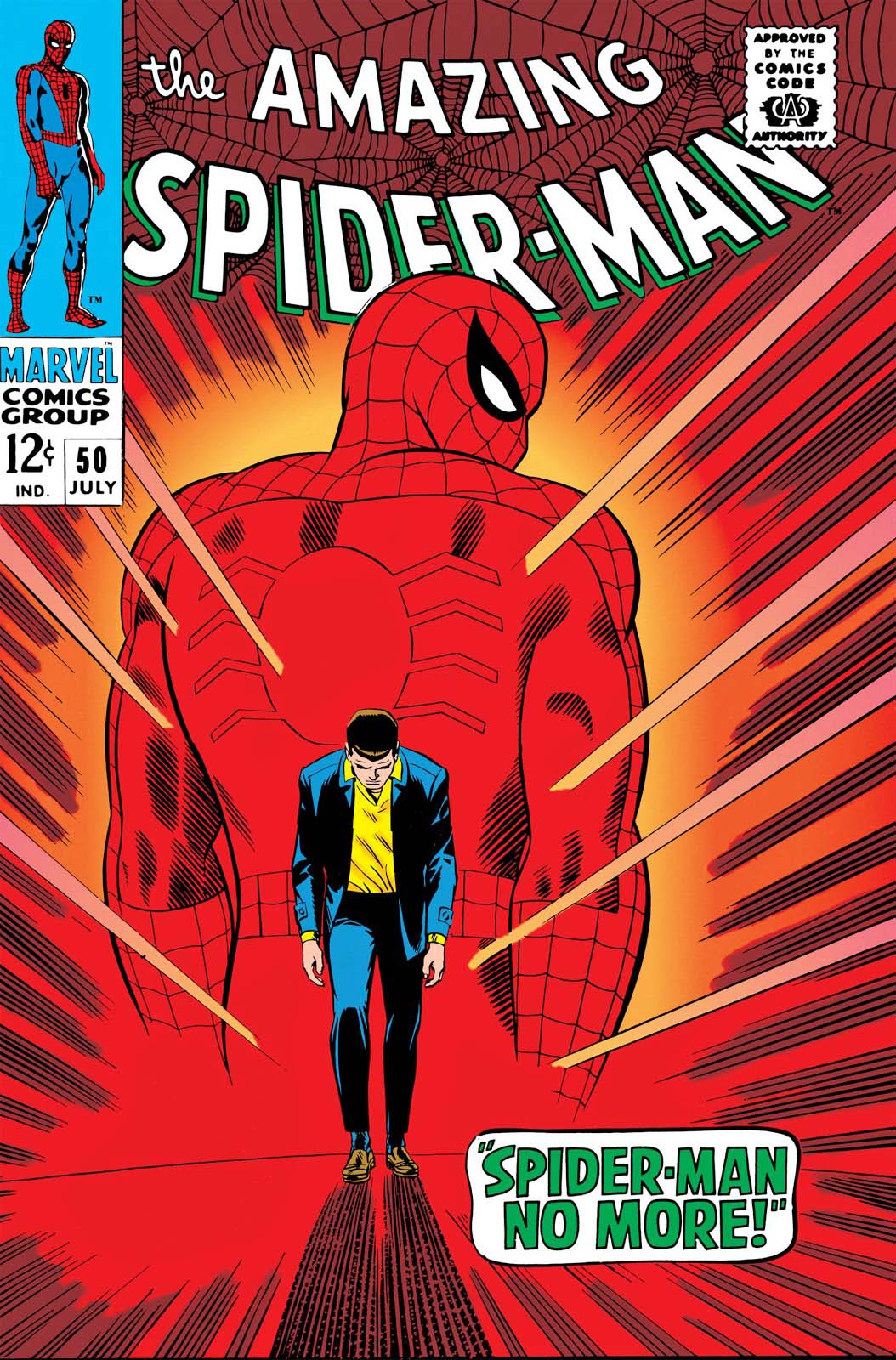
Joe Jusko originally created this homage to this classic and iconic John Romita Spider-Man cover (#50, 1967) for a project that ultimately didn’t reach fruition.

I was fortunate enough to see the original — and not mull, noodle, or otherwise hesitate before purchasing it — when it was first offered for sale back in 2007. 

As serendipity would have it, a few years later I was at IDW, and we landed Desperado Press as an imprint. Part of that deal included bringing Desperado’s Joe Jusko art book back into print.

Not wanting to miss potential opportunity for Joe or IDW, I asked Marvel if we could license the Spider-Man image for the cover of an exclusive limited edition version of the book. They said yes, told me the fee, and, after some smelling salts revived me, I said yes as well.

We (deliberately) only made 100 copies, and, on a per capita basis, it remains the most expensive licensing deal I have ever made.

But it’s a stunning piece that absolutely deserved to be a cover. (And, importantly, everyone would make a bit of money, so there’s that.)

And what did John Romita himself think about Joe’s painting?

“I had this piece on display at a Baltimore Con one year and who walks by my table and sees it, but John, “ says Jusko. 

“He studied it for a while and then told me how much he liked it. A lot of guys would say that just to be nice, but John never said what he didn’t mean. For the rest of the show I had people coming over to my table saying John sent them over, telling them they had to see the painting. I’ve seldom been more flattered!”

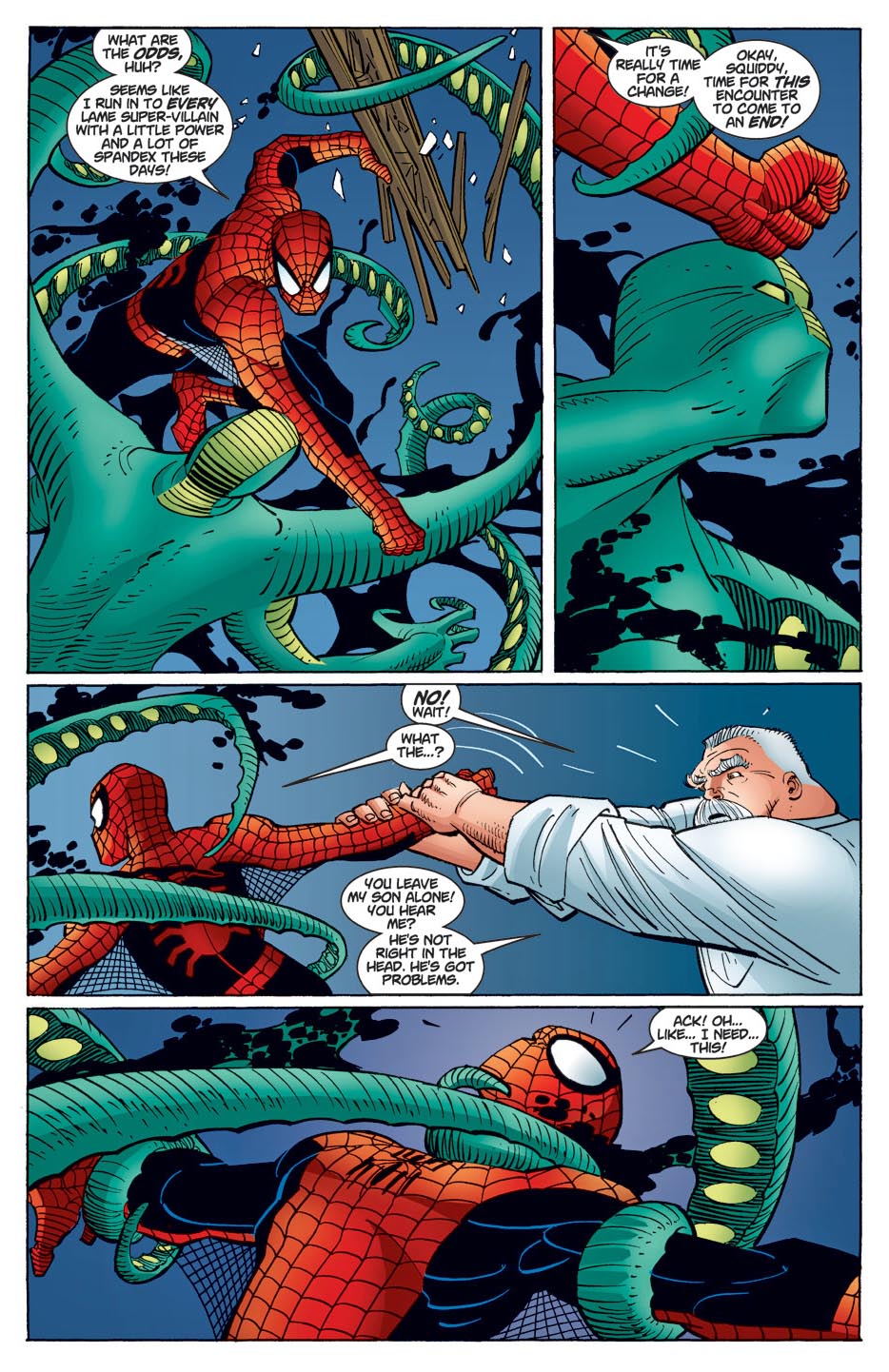
John Romita Jr. — Spider-Legacy

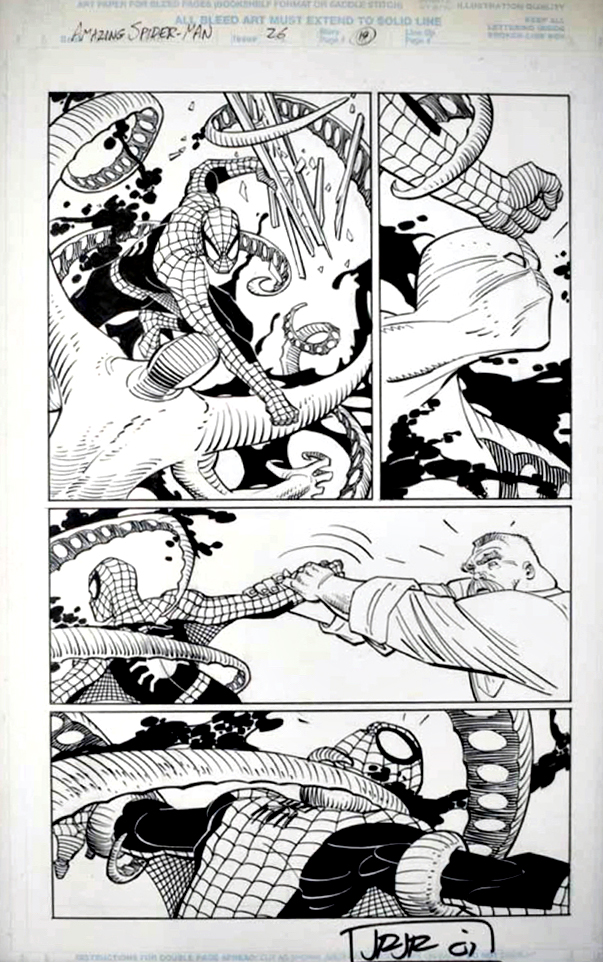
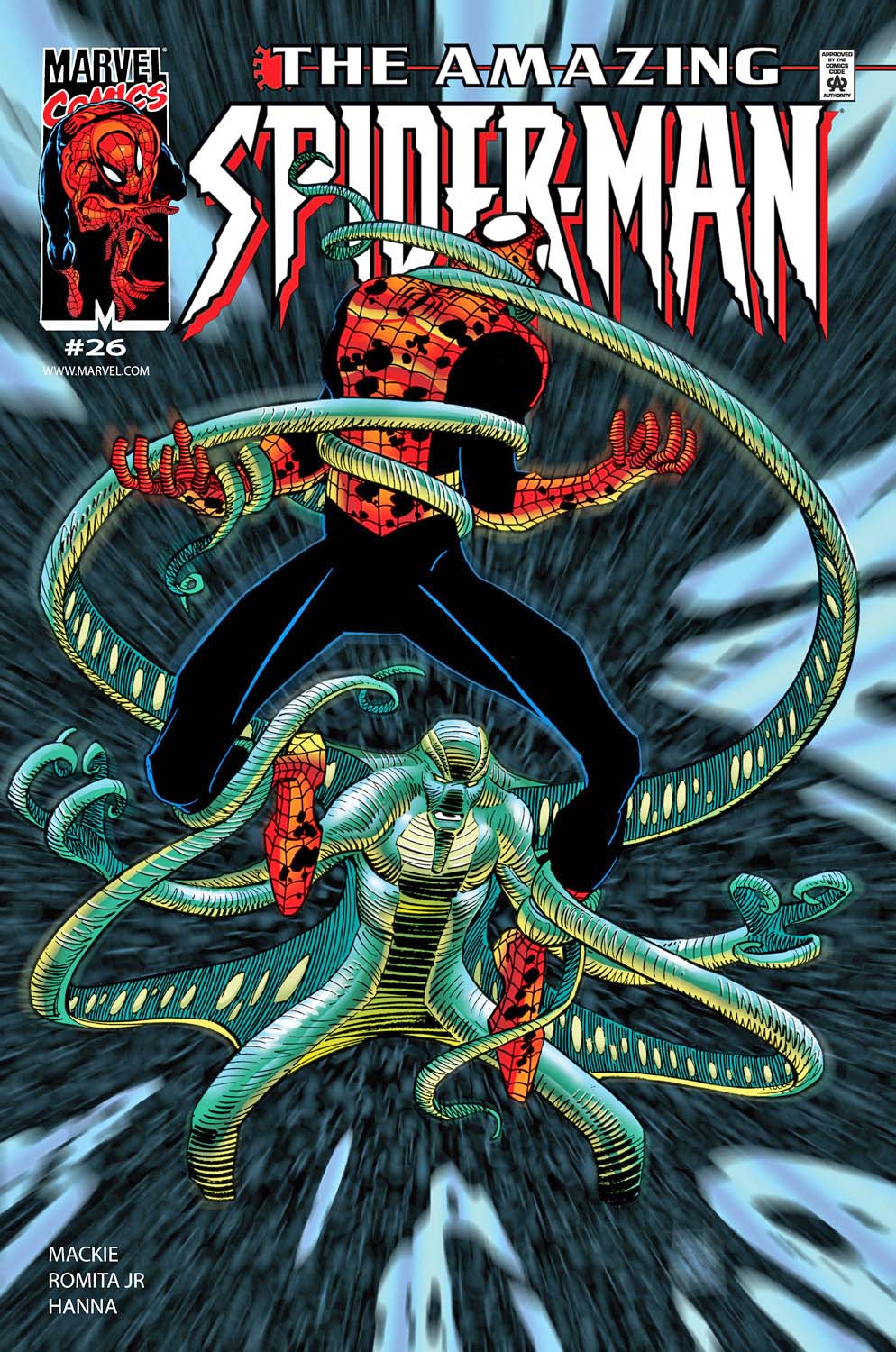
Amazing Spider-Man #26, February 2001

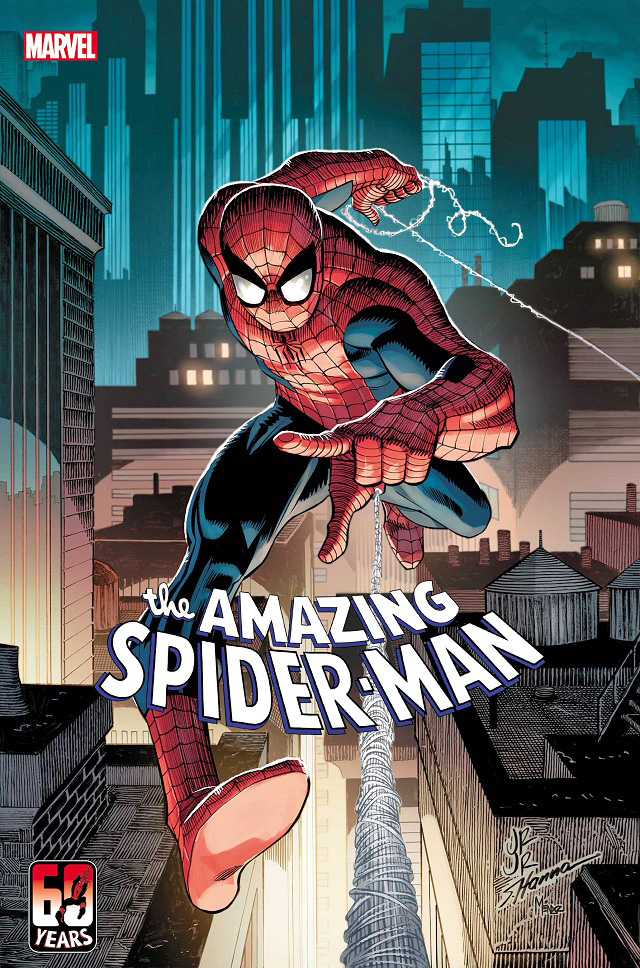
Marvel announced only last month that John Romita Jr. will celebrate Spider-Man’s 60th Anniversary with… a return to drawing Spider-Man.

To quote Matthew Jackson on SyFy Wire:

“Romita Jr. made a name for himself as a key Marvel artist thanks in large part to his work on Spider-Man. He first drew the character in 1977, as the rising star son of the legendary John Romita Sr., and went on to become one of the definitive pencillers to ever work on the character… Now, he’s back in full force at his original superhero home, and he’s teaming up with one of the 21st century great Spider-Man writers for a whole new era on the character.”

For an overview of some of Romita’s greatest Marvel work, see the article at Comicbook.com:https://comicbook.com/news/10-greatest-john-romita-jr-creative-runs/


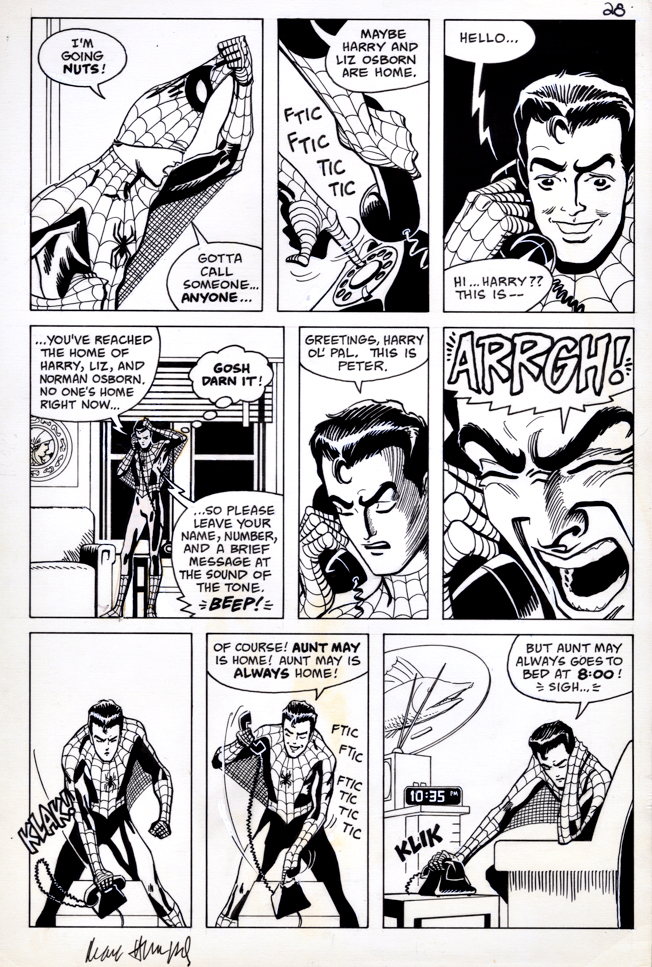
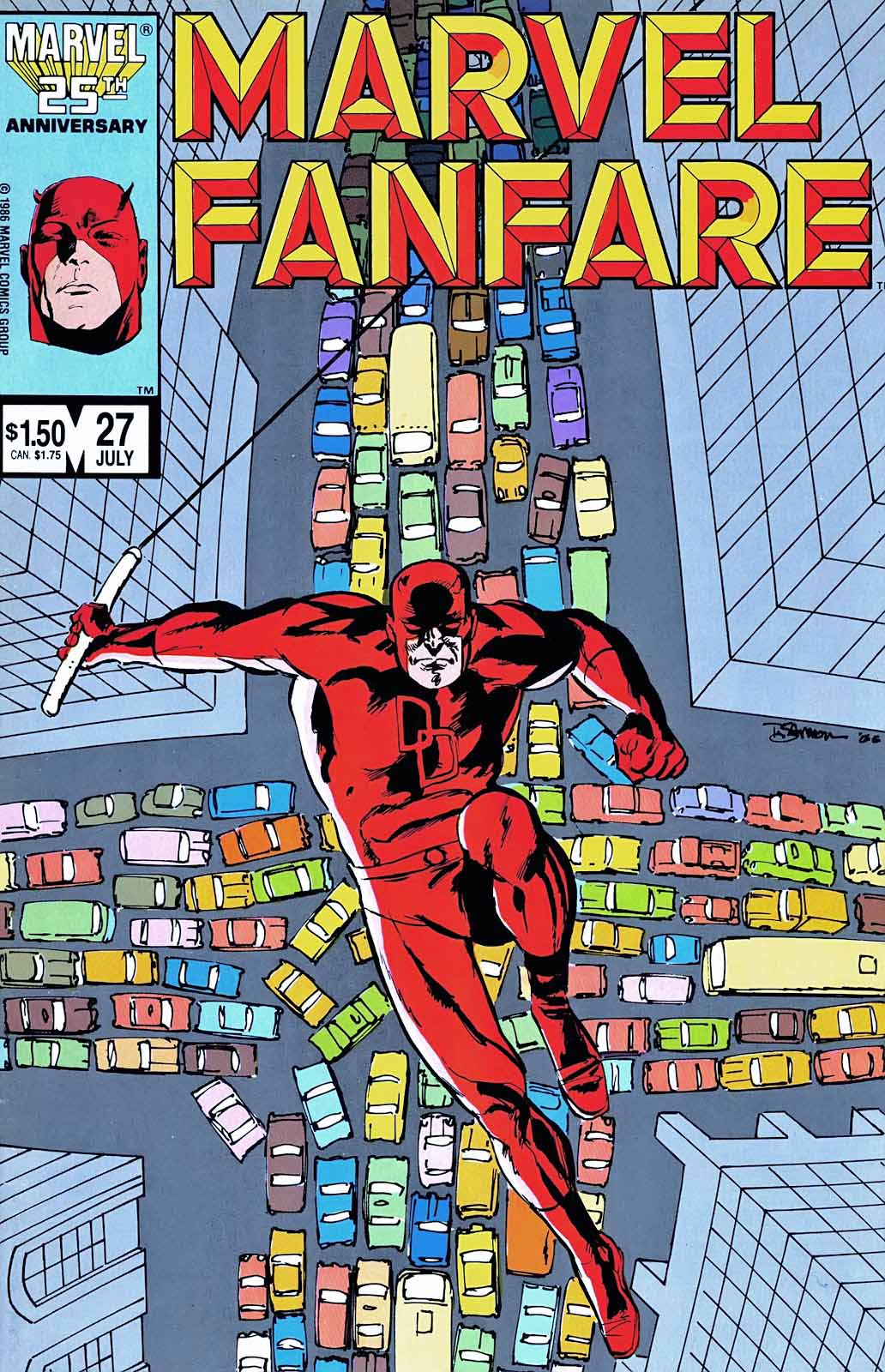
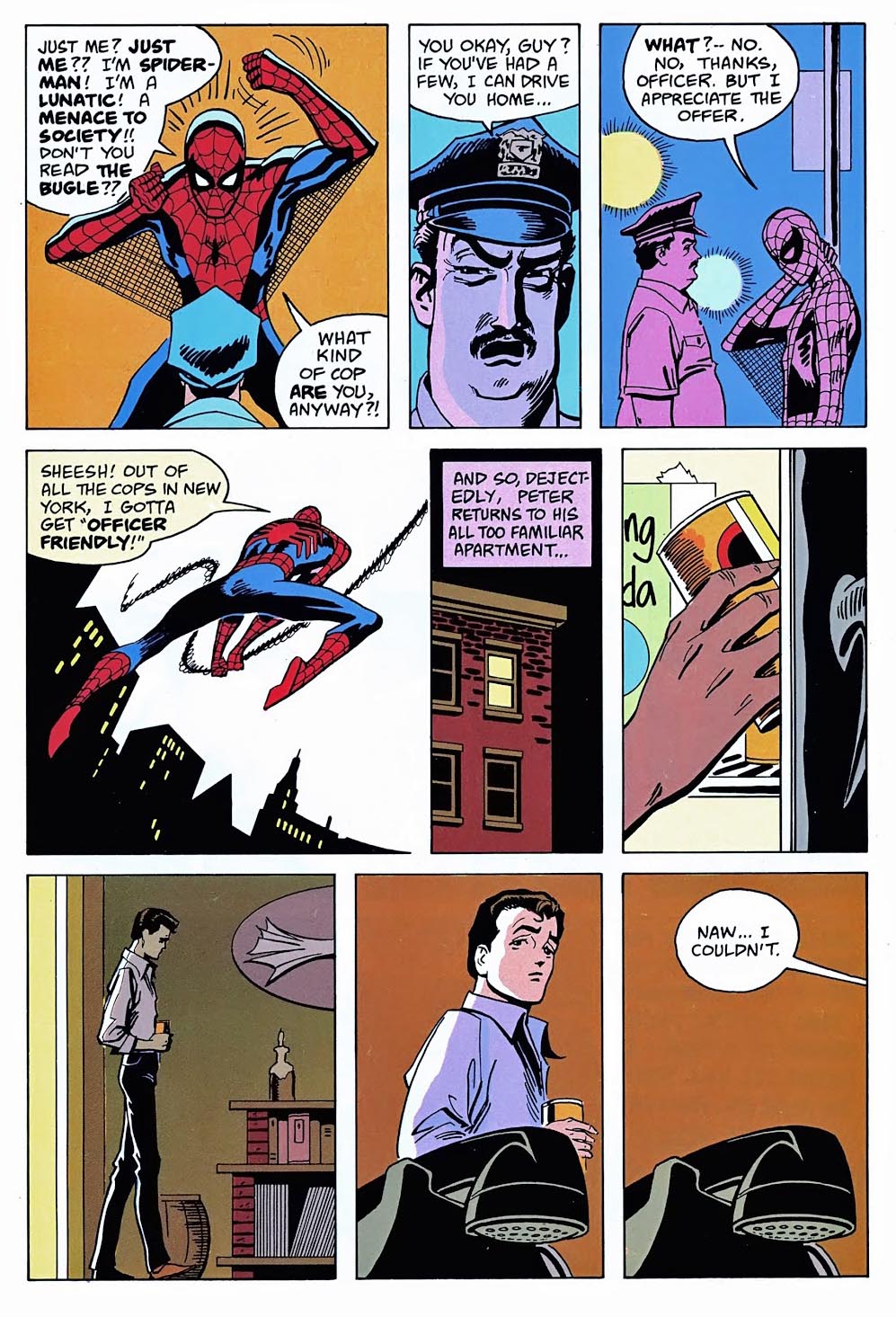
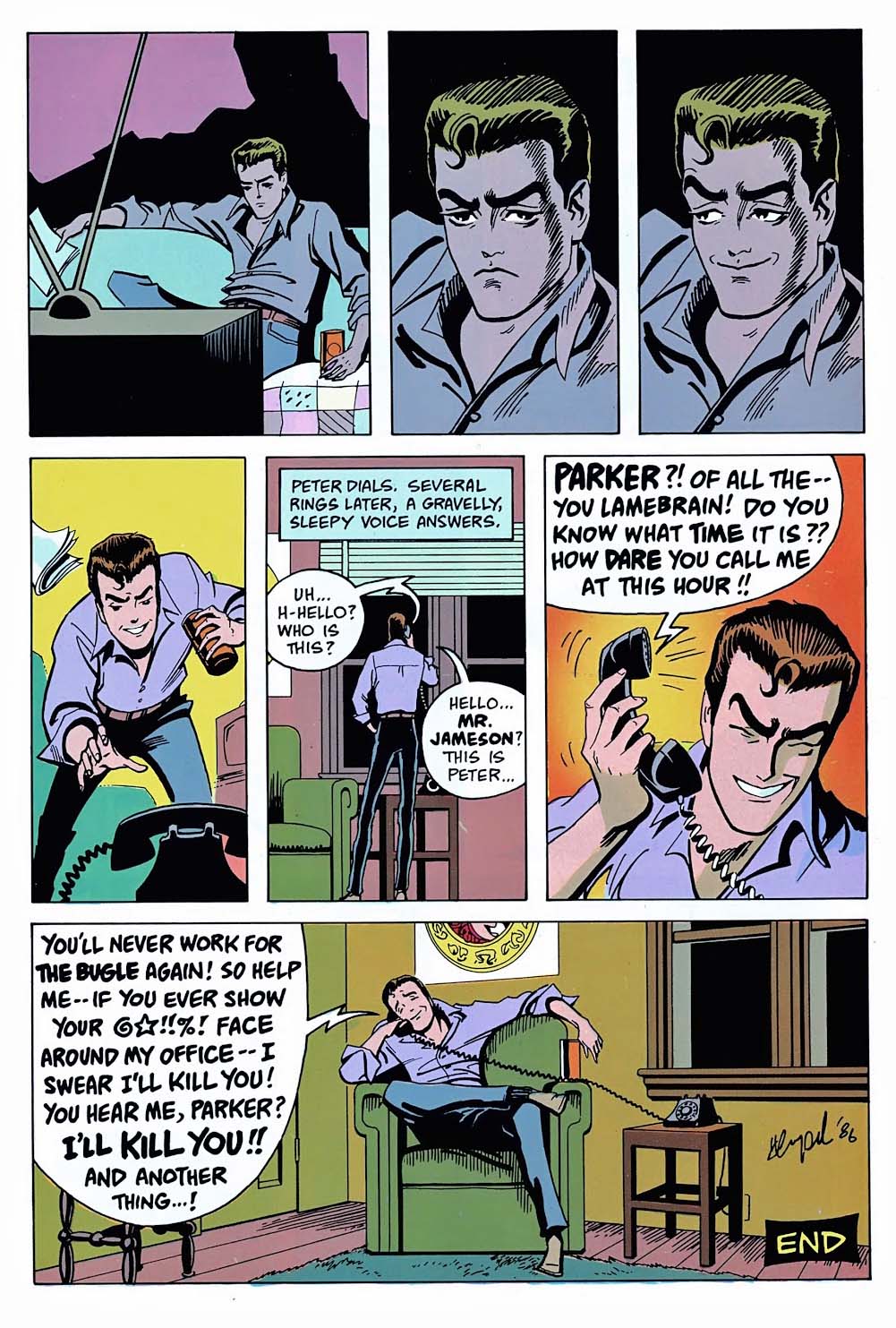
Marc Hempel — Spidey’s Bad Night

Marvel Fanfare #27, July 1986

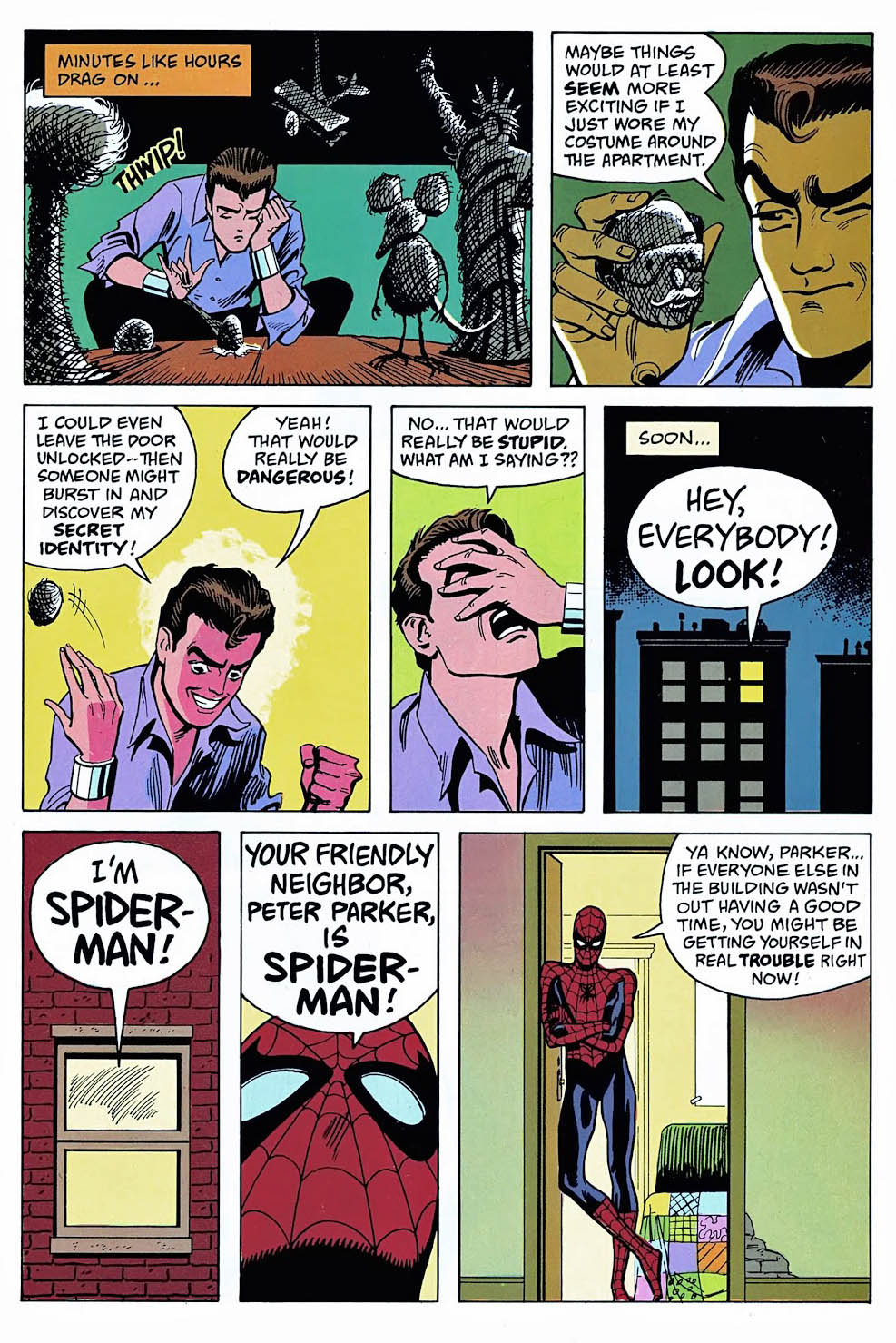
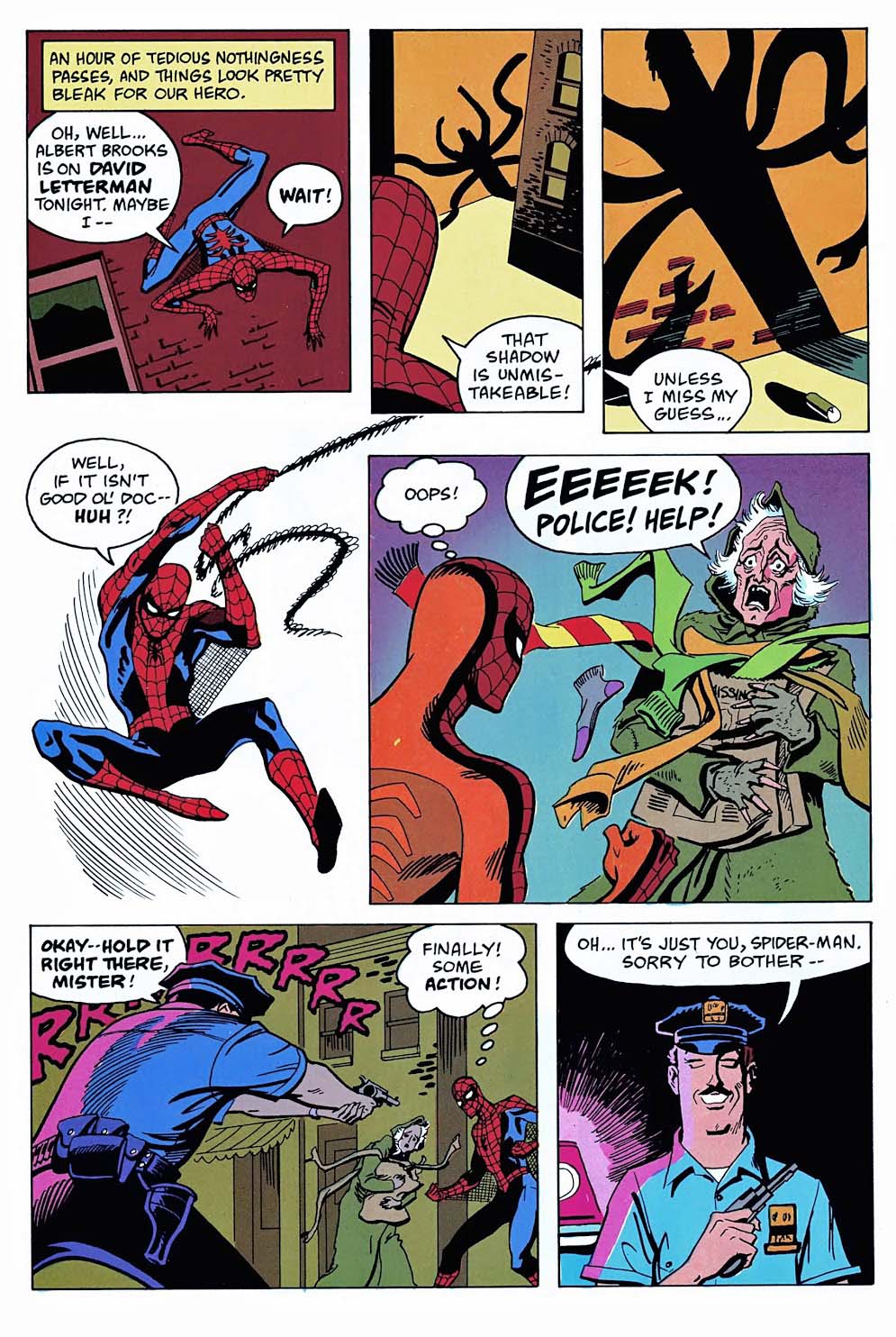
Marc Hempel showcases his witty sense of storytelling in an amusing short Spidey story from 1986. Hempel, best know for his work on Sandman, brings some welcome lightheartedness to the character without devolving into Not Brand Echh mode.

Stylistically, think Steve Ditko meets Los Hernandez Brothers.

I didn’t acquire a Ditko Spider-man original art page back when they were simply “very expensive,” and now that prices have soared into the stratosphere, it feels even more unlikely. Homages and tributes will have to do.

And that’s perfectly ok.

(Complete story presented below. As far as I can tell, It’s never been reprinted.)

Planet Money — The Spider-Man Problem

Podcast, January 28, 2022

Kismet.

I’m prepping a series of posts to celebrate the Spider-Man’s upcoming 60th anniversary, and my favorite podcast series, Planet Money, airs an episode on the complex Spidey film partnership between Sony and Marvel.

It’s a great episode, and covers a ton of round in under a half an hour. If I noticed anything “missing,” it’s the drama that happened a few years ago when we heard posturing (bloviating, actually) about Sony and Disney not reaching a new agreement to keep Spidey in the MCU.

Really?

The last Sony Spider-Man film not in the MCU, Amazing Spider-Man 2, grossed about $700 million worldwide. Not shabby, but no where near expectations.

The current Spidey film, No Way Home, has grossed about $1.7 billion globally, and counting. That’s an extra BILLION dollars.

Think about that. It doesn’t matter how that negotiation ultimately played out, everyone made a TON of money. At least on the film side.

On the comic book side? That’s a tale for another day.

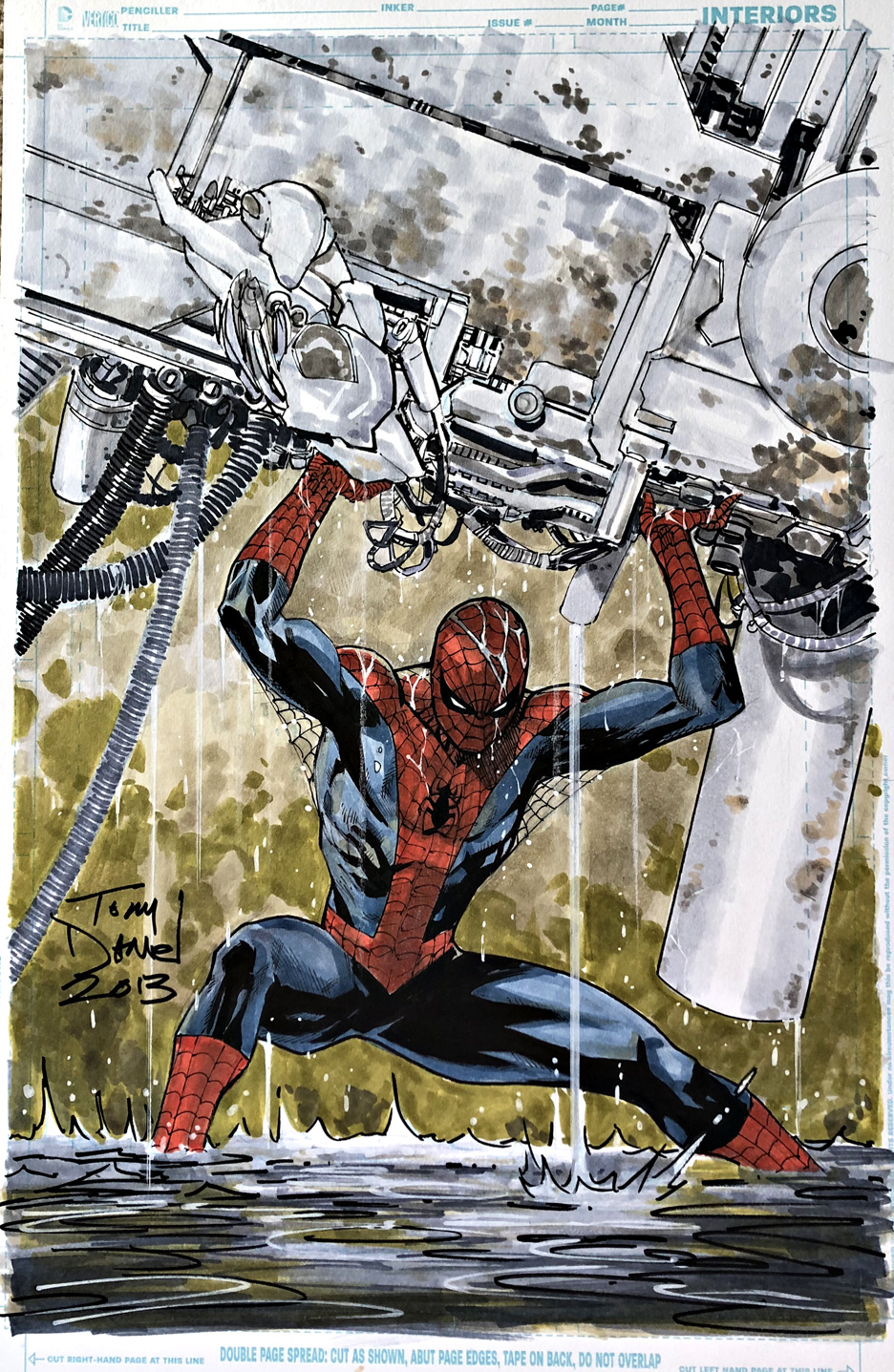
Tony Daniel — Spider-Man’s Amazing Feat

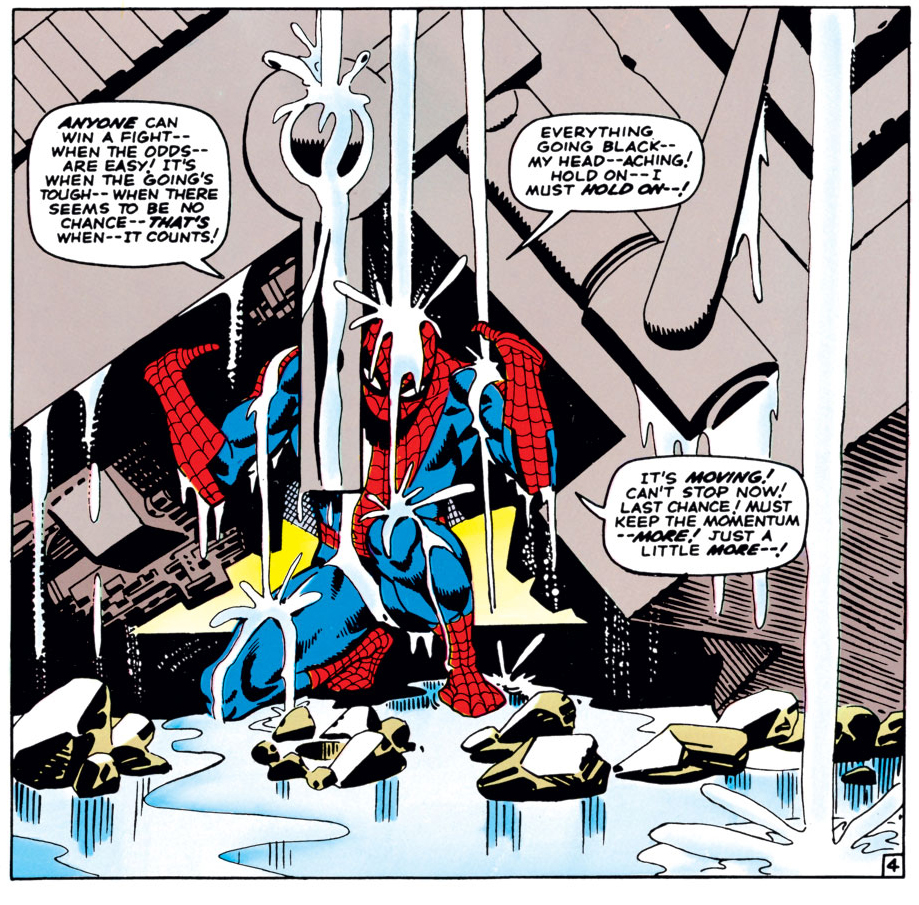
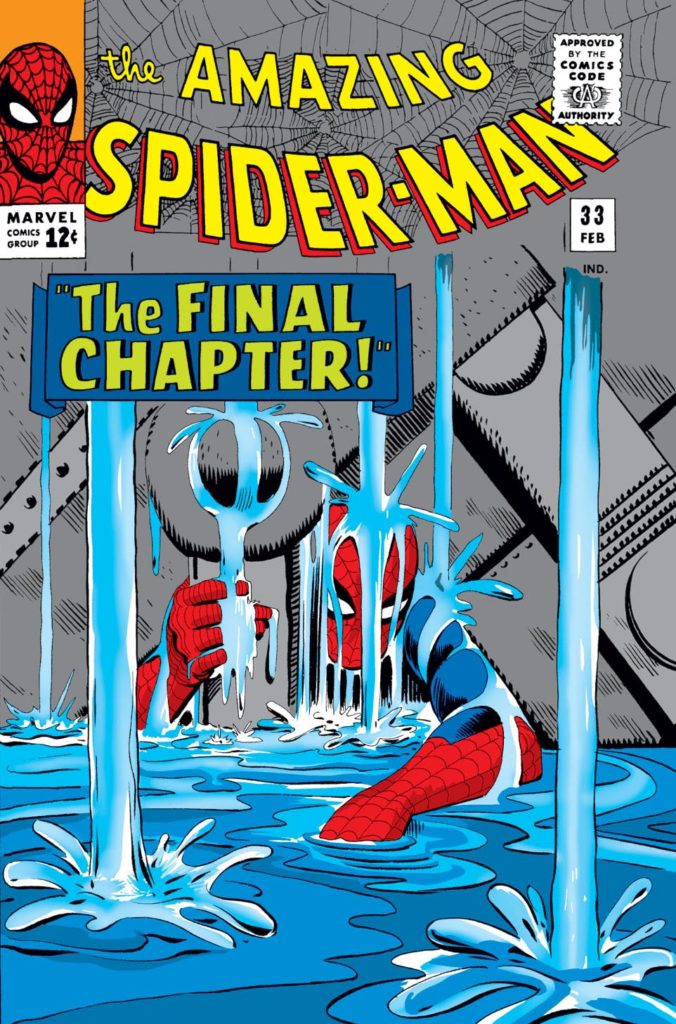
Commission (Based On Steve Ditko, Amazing Spider-Man #33, November 1965), 2013

Amazing. Spectacular. Sensational.

It doesn’t matter what adjective you put in front of Spider-Man’s name, his actual popularity dwarfs them all.

And he celebrates his 60th anniversary later this year.

So why not celebrate the world’s most famous web-slinger with a whole month of Spider-Man art.

Why not indeed?

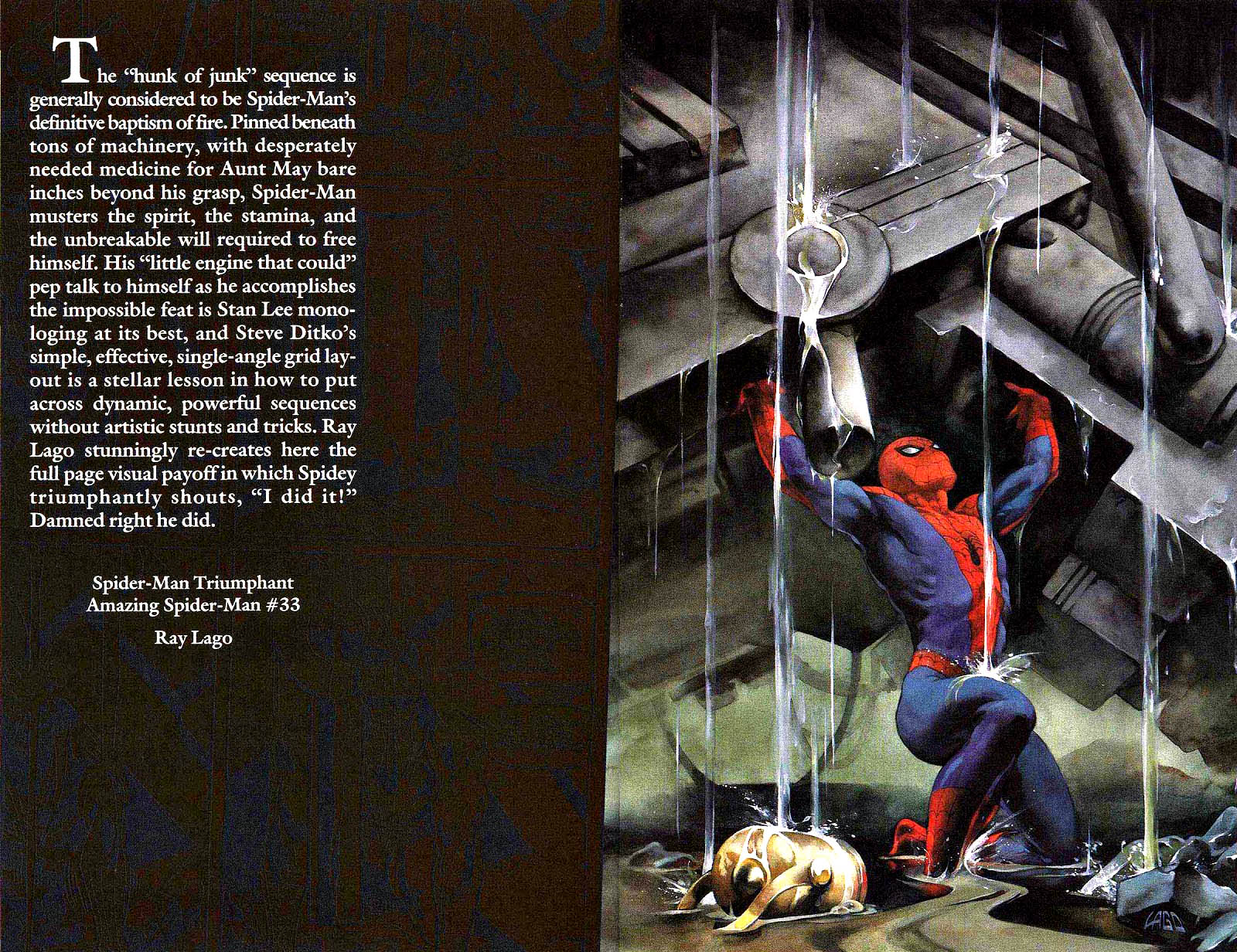
First up — Tony Daniel’s terrific tribute to Stan Lee and Steve Ditko’s most iconic issue of the original series, Amazing Spider-Man #33.  

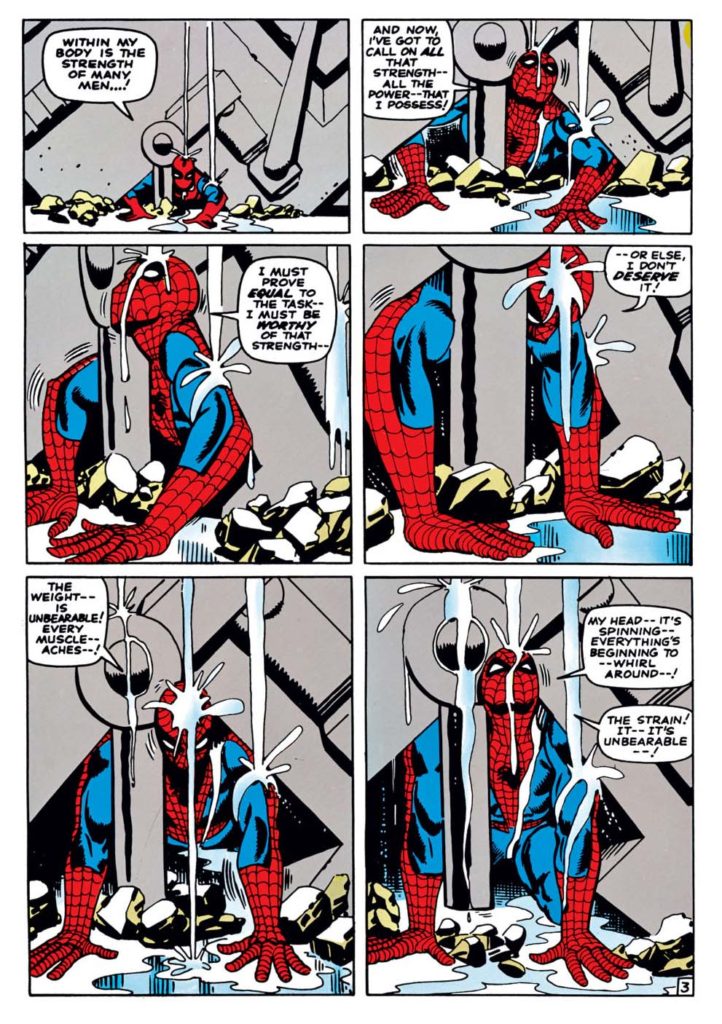
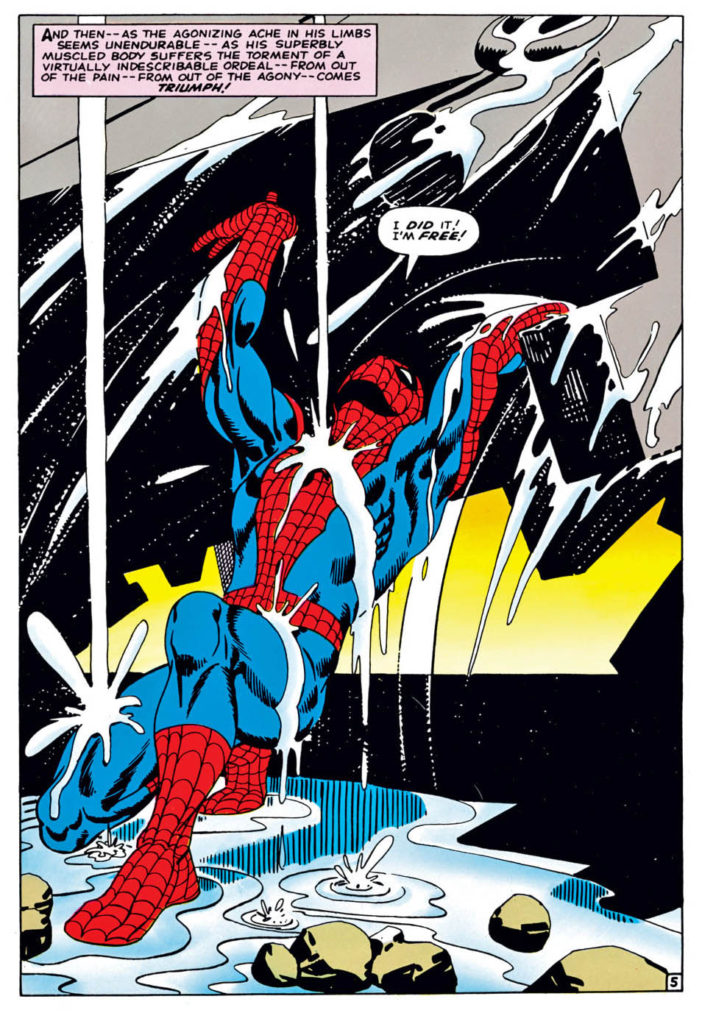
It’s not that Spider-Man wouldn’t be saved (Heck, even a little kid knows that.) But in that classic story, Ditko masterfully conveyed Spidey’s struggle and necessary force of will to find the strength to lift tons of machinery and save himself. 

No Iron Man or Thor to the rescue. This is all about Spider-Man’s personal will to survive — so that he himself can rescue Aunt May.

It’s likely the most powerful three-page comic book sequence of the era.

Harris is not the first creator to pay tribute to the scene, but he does it masterfully, creating an image that exists somewhere seconds before page three of Ditko’s original sequence.

Additionally, Harris uses a muted color palate, perfect for the art. I don’t typically pursue color art, but this piece grabbed me the moment I saw it.

Amazing indeed.

Alex Saviuk — Spider-Man’s Amazing Friends

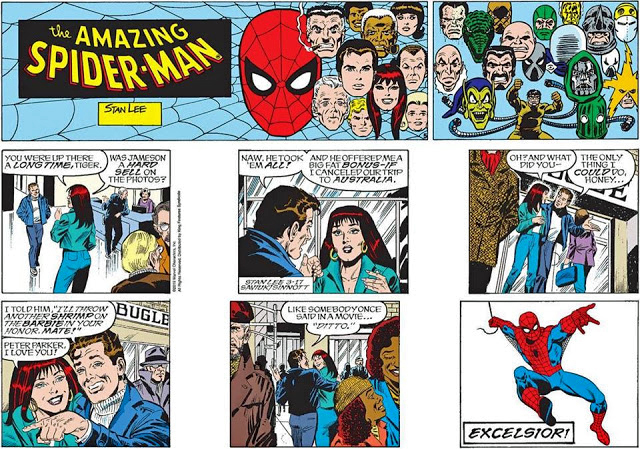
Newspaper Strip, Sunday, January 20, 2008

Pencils: Alex Saviuk. 

Inks: Joe Sinnott

Letters: Stan Sakai.

Story: Stan Lee. (With ghostwriting help likely from Roy Thomas.)

It’s an all-star team of creators contributing to this Sunday Spider-Man strip, and signed by everyone.

(Well almost. If I’m correct about Roy, I hope I can get his John Hancock at a convention. Whenever conventions become the norm again, that is.)

Fun Fact: I acquired this Sunday directly from Alex, who was kind enough to Remarque it for me to distinguish from the few others that had all four autographs. A talented artist and a super nice guy.

Nuff said.

(*You can read about Stan Lee and the legend of “Nuff Said” here and here.)

George Perez — Infinity… And Beyond

Infinity Gauntlet #3, September 1991

George Perez delivers what George Perez does best: Multiple characters with terrific detail, and imaginative “camera angles” on this great page from the original Infinity Gauntlet mini-series.

It’s almost impossible to believe that this week marks the 2-year anniversary of Avengers Endgame, which wrapped up the Gauntlet saga, and the “early” phases of the MCU. Except for the December 2019 Spider-Man: Far from Home flick (which although in the greater MCU, is a SONY production) no Marvel films in two years just seems… wrong. Thanks, pandemic.

The good news is that we’ve had two quality TV series in recent months, with another one launching in a month.  And if my math is correct, because of delays and rescheduling, there are four Marvel films to debut this year, and four more scheduled for next year.

Whew.

The bad news — if there is any — is that Marvel is setting up so many potential storylines at this point that we are going to have to keep a character encyclopedia and Gantt chart with us at all times.

Dark Avengers?

Thunderbolts?

Young Avengers?

House of M?

Kree Skrull War?

Secret Invasion?

A Multiverse thread in both Spider-Man and Doctor Strange, at a minimum.

Plus, Kang as the next “big bad?”

Like I said… whew.

It’s one thing to accomplish all of this in 80 or so monthly comic books. It’s another to do it in filmed media. But if anyone can, I think Marvel and Disney might pull it off.

Fasten your seat belts…

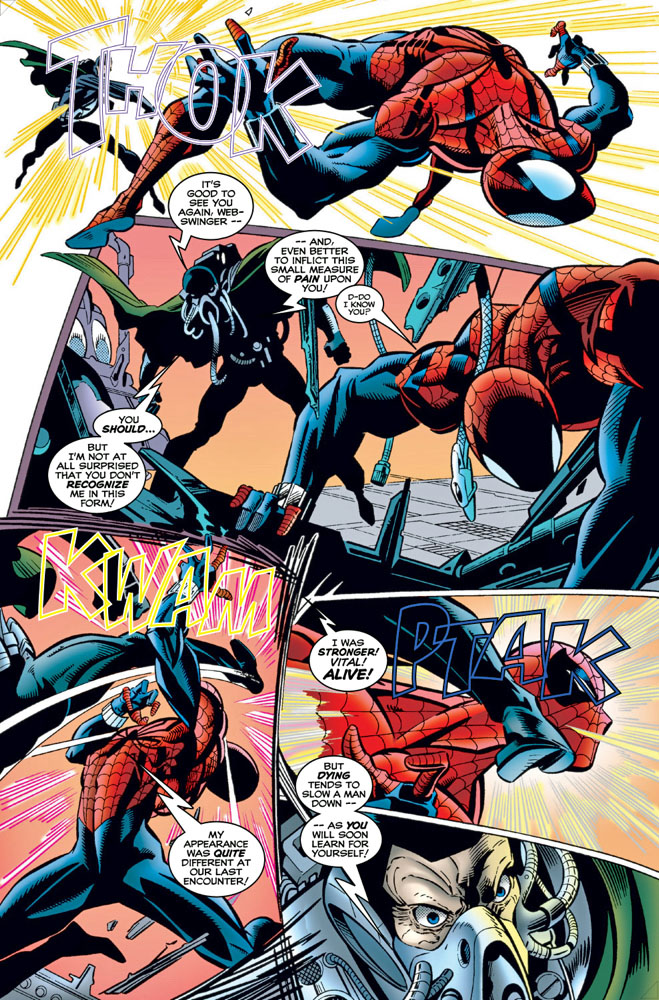
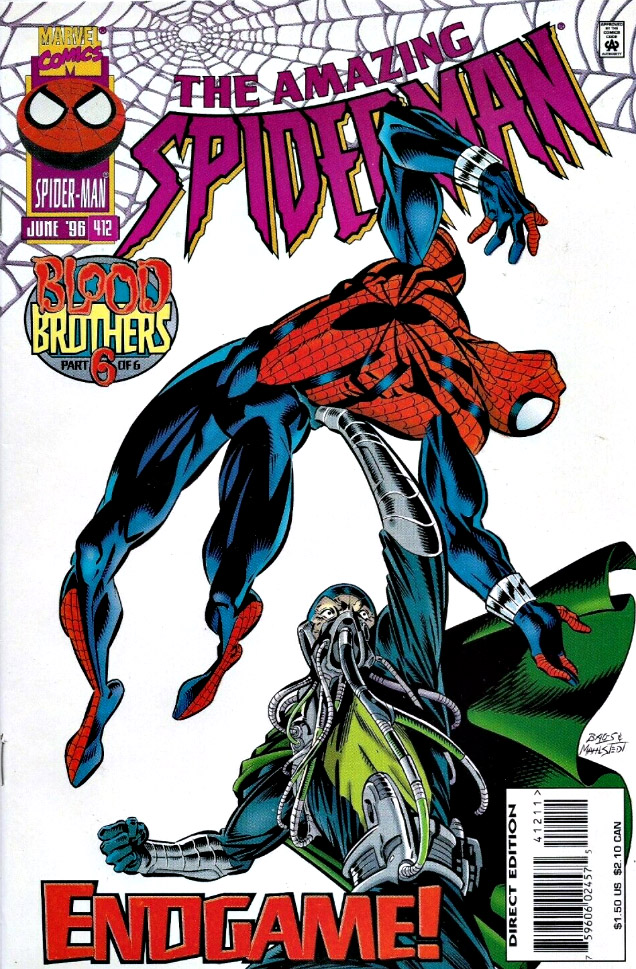
Sal Buscema & Jimmy Palmiotti — Send In The Clones

Spectacular Spider-Man #232, March 1996

Ben Reilly is Peter Parker’s clone. Ben Reilly died, Peter Parker lived. 

No, wait. Ben Reilly lived; it was actually Parker that died.

Scratch that. Ben Reilly thought he was Peter Parker, but he actually WAS Peter Parker, who thought he was Ben Reilly.

No, wait, that’s not right either…

The clone saga is one of Marvel’s most controversial storylines from the 90s. I remember having a very spirited conversation about the subject with Tom Defalco back in 1995 or so at SDCC when it seemed like it was going to go on forever and ever. I’m sure I wasn’t the only one.

In this issue of Spectacular Spider-Man, this is actually Ben Reilly fighting as Spider-man, (theoretically) while Peter Parker is in brief retirement with the very pregnant Mary Jane.

Regardless, Sal Buscema draws a knockout cover, with inks by Jimmy Palmiotti, as Spidey (real or Memorex) faces Lady Octopus in mortal combat. 

And where did that crazy moon go from original art to final colored, published version? I have no idea. Although I almost titled this post, “Goodnight Moon.”