Greg Goldstein's Comic Art Gallery

Erik Larsen, Paul Ryan & Al Milgrom — Fantastic Encore

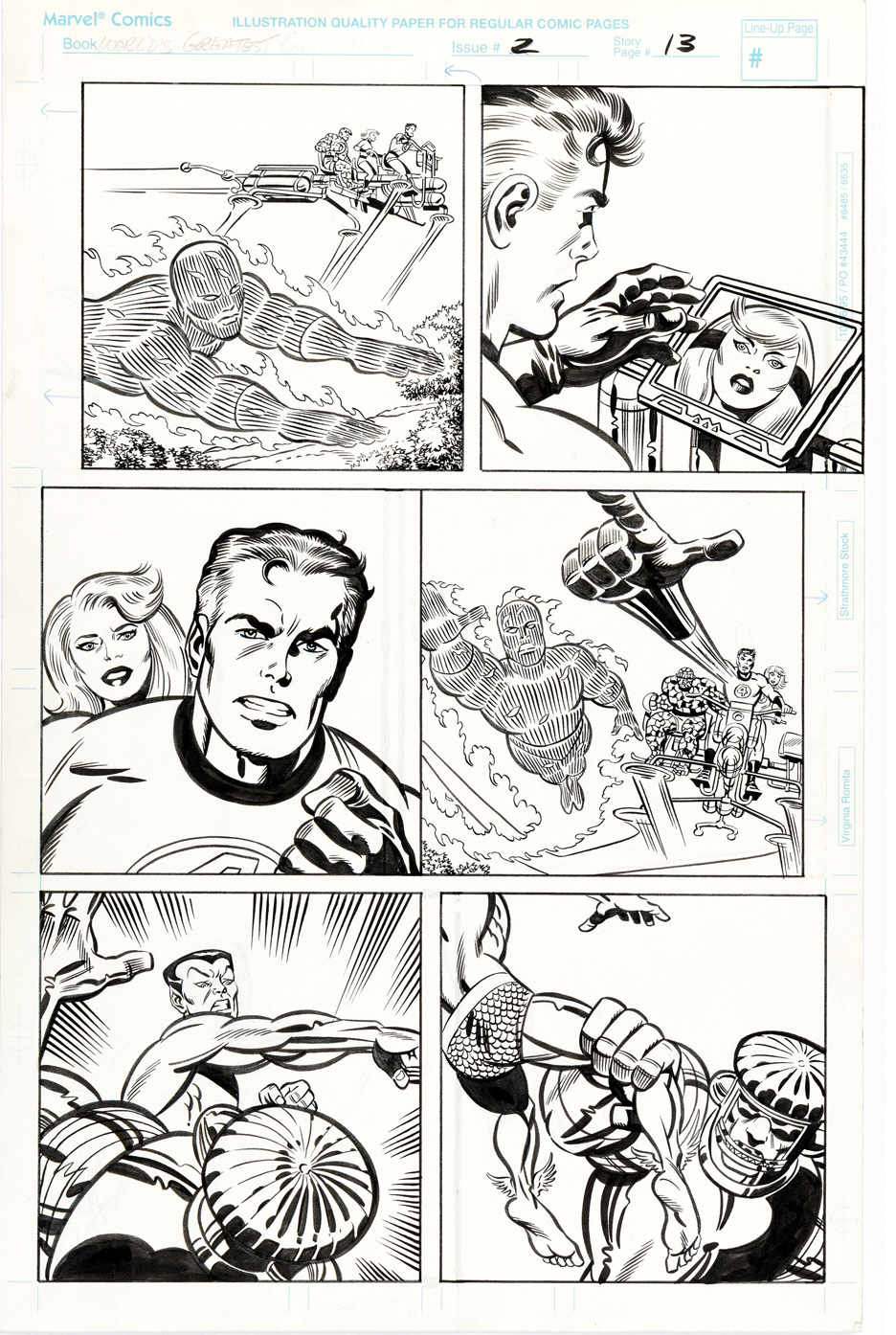
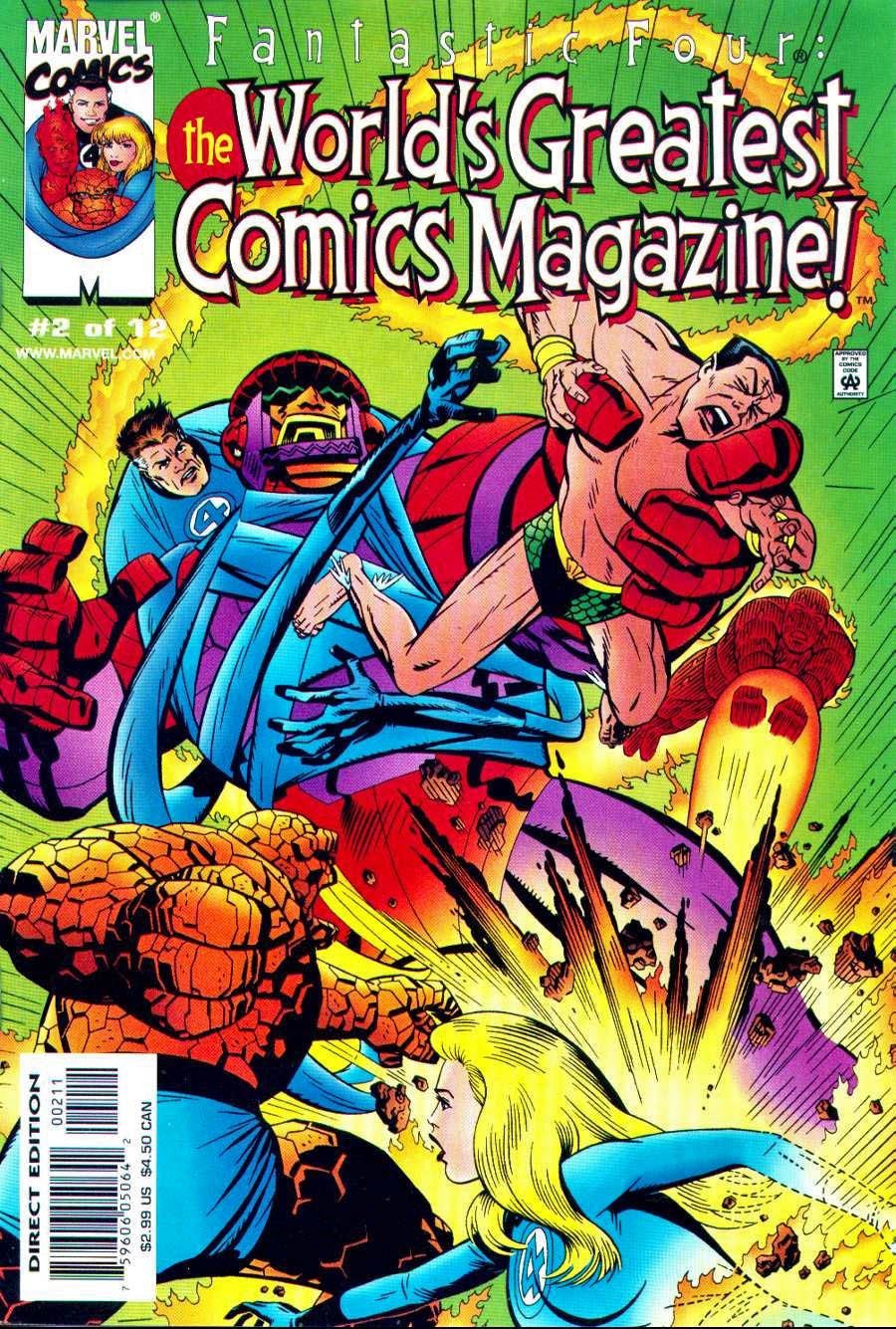
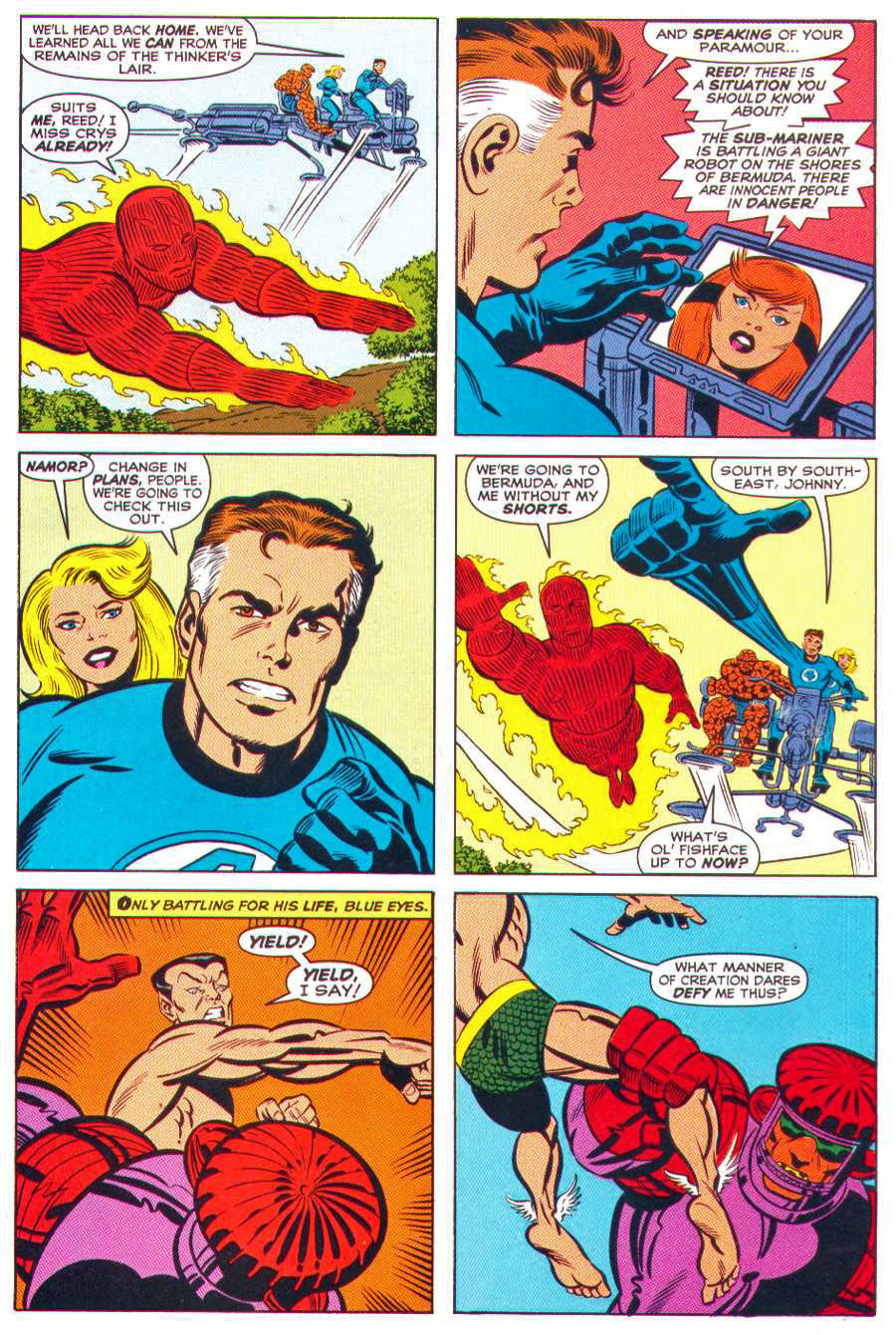
Fantastic Four: World’s Greatest Comics Magazine #2, March 2001
Fantastic Four: World’s Greatest Comics Magazine isn’t like a sequel to Lee and Kirby’s original run—it is one. Same premise, same mission: pick up the world’s greatest comic right after issue #100 and keep the engine humming.

This mini-series exists because a generation of creators grew up fluent in Kirby’s visual language and wanted to continue it, not reinterpret it. No grim updating. No clever winks. Just more Fantastic Four.

This page nails that idea perfectly. Erik Larsen provides the layouts, setting up classic, confident storytelling. Paul Ryan delivers clean, readable draftsmanship. Al Milgrom locks it all together with classic Marvel authority. You get the full team, Crystal, and Namor battling the Sentry—all in one terrific page of original art.

Across the series, the creative roster reads like a roll call of die-hard Kirby believers. Other contributors included Bruce TimmRon FrenzKeith Giffen, and Rick Veitch—artists who didn’t just admire Kirby, they revered him and understood what made the Fantastic Four tick.

What makes World’s Greatest Comics Magazine special is its confidence. It doesn’t explain itself. It assumes the Fantastic Four never stopped being the future. In that sense, it isn’t nostalgia—it’s continuity of imagination. And that’s about as Fantastic Four as it gets.
Jack Kirby & Joe Sinnott — Fantastic, 4ever

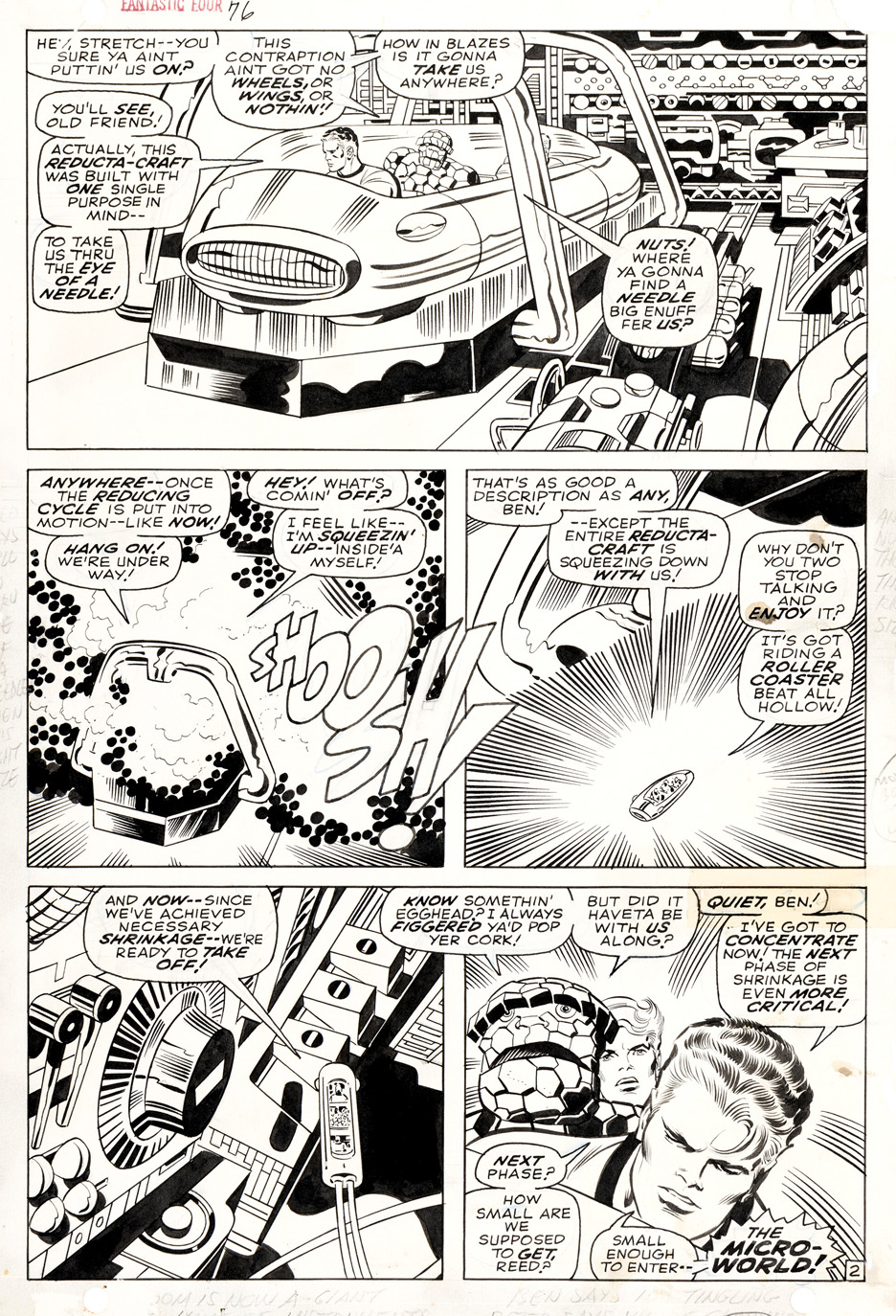
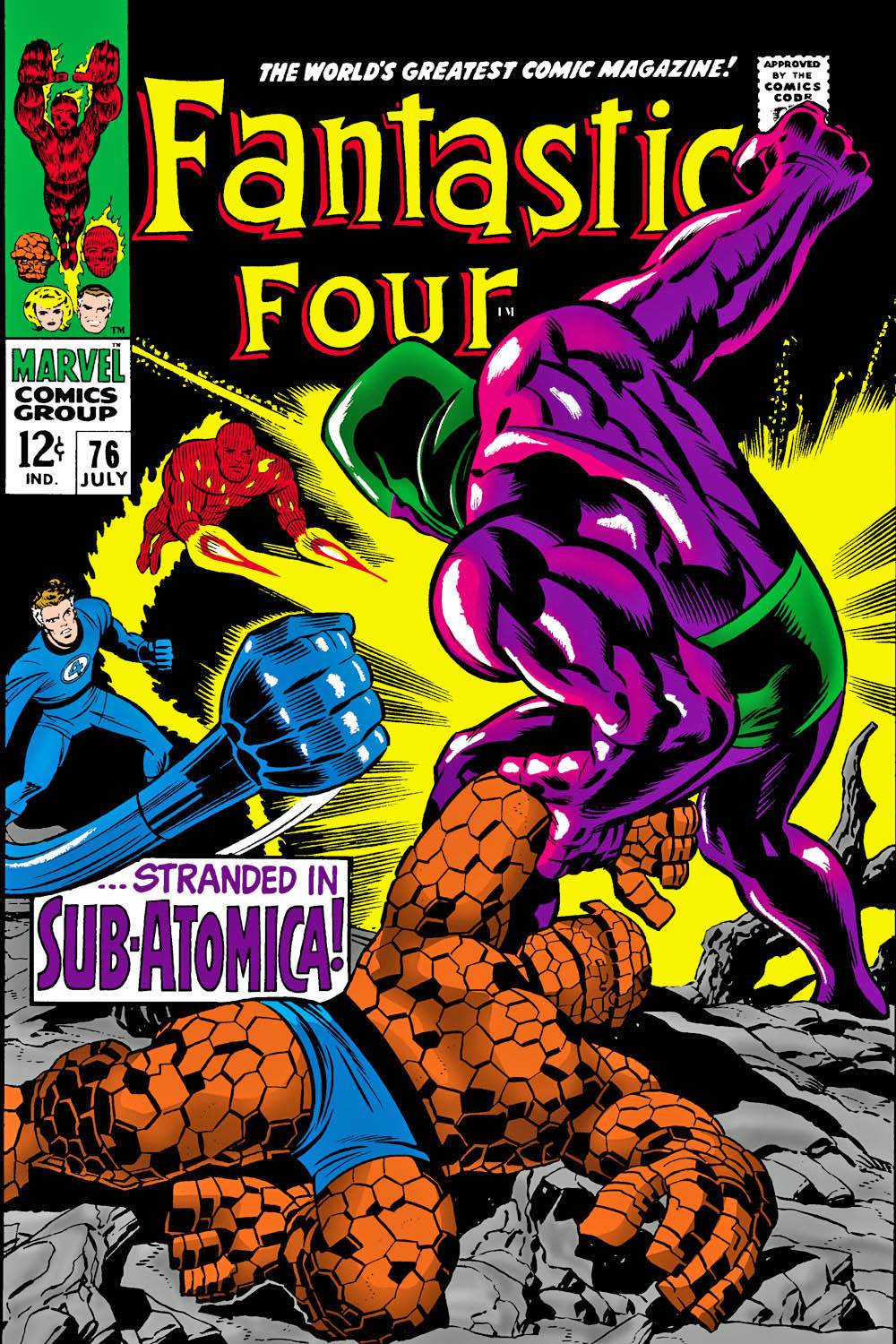
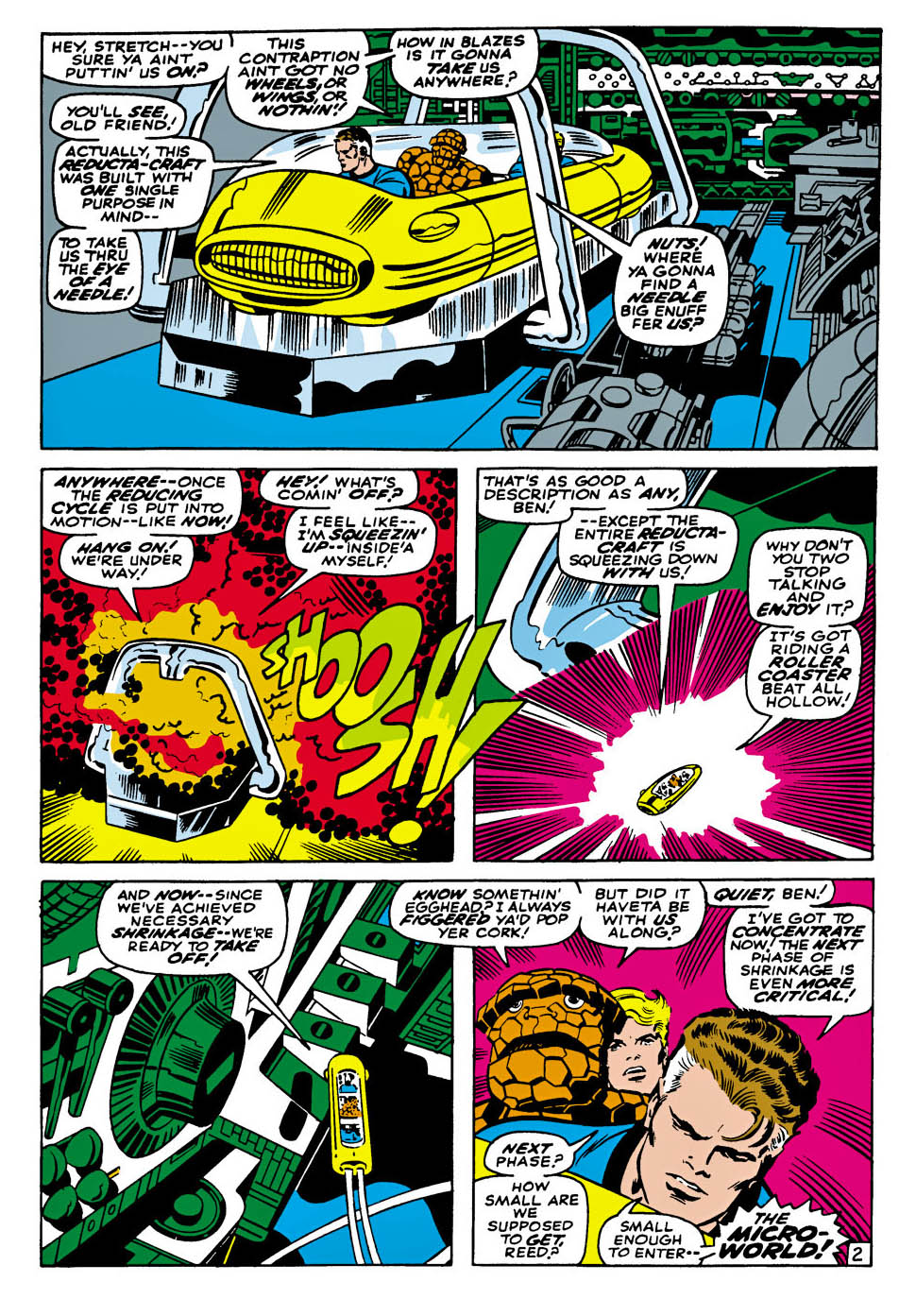
Fantastic Four #76, July 1968

Sixty-five years on, The Fantastic Four still feels like Marvel figuring itself out in real time—and getting it spectacularly right. These weren’t heroes born in alleys or back rooms; they were a product of the early ’60s, when the Space Race filled the headlines and the future felt thrilling, reckless, and inevitable. Rockets were launching, limits were being tested, and the question wasn’t should we go farther—it was how fast can we get there. Marvel’s cosmic imagination starts right here, with four people charging into the unknown.

And speaking of charging ahead—just look at this page by Jack Kirby, beautifully locked down by Joe Sinnott. This isn’t just a shrinking sequence; it’s Kirby inventing scale. Machines loom like alien vistas, panels crackle with motion, and your eye doesn’t just read the page—it gets pulled inside it. Sinnott’s inks keep all that chaos crisp, clear, and impossibly confident.

I continue to believe the first 100 issues (and especially the marvelous three-year stretch from about issues #39–76) of The Fantastic Four rank among the most important runs in comic-book history—one long creative hot streak where the ideas redefined pretty much everything that came before.

I’m never going to referee who did what between Kirby and Stan Lee, but one thing is pretty obvious: Lee contributed much of the personality, friction, and soap-opera snap that made the cosmic feel personal. The Fantastic Four bicker, joke, and melt down while rewriting reality—and that mix of big ideas and human irritation became Marvel’s calling card.

Happy 65th to the Fantastic Four: Marvel’s original first family, and a wondrous revolution in comic books.
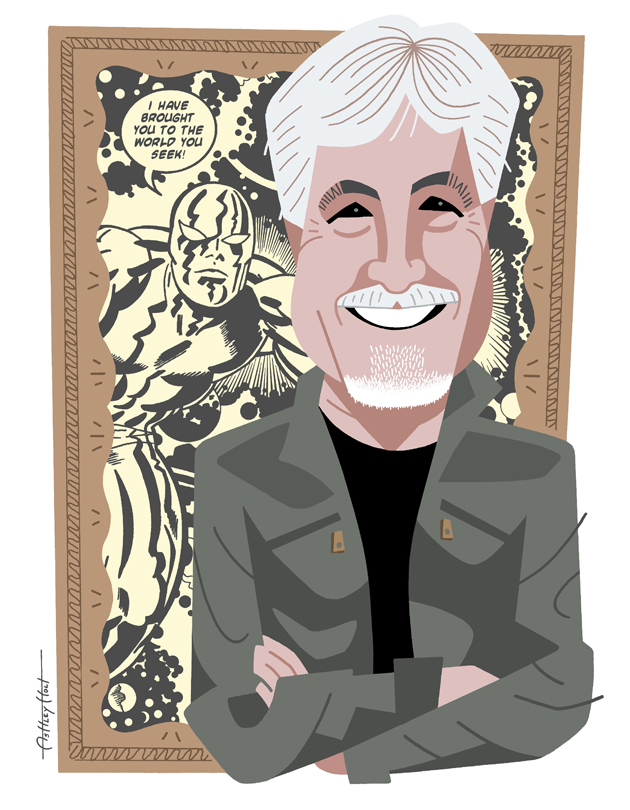
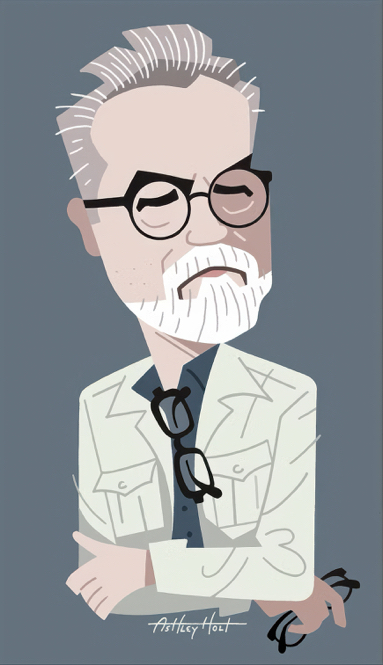
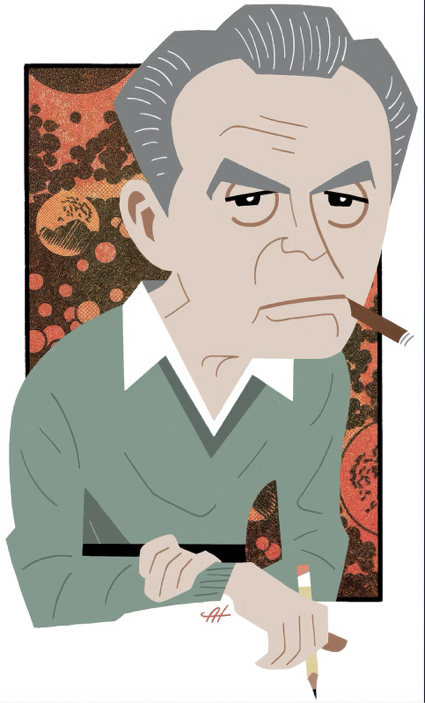
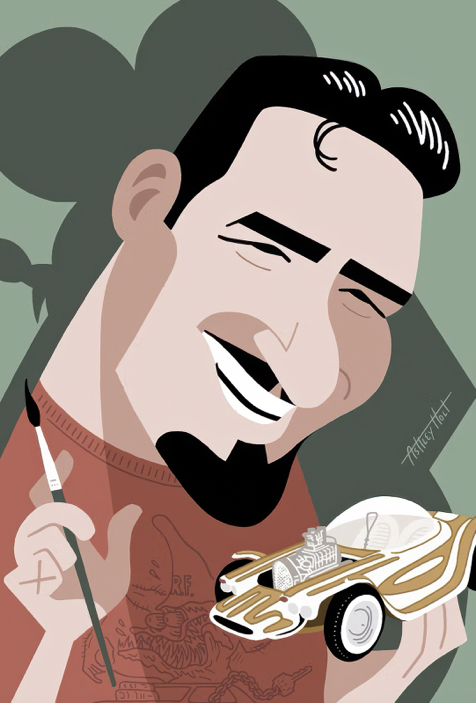
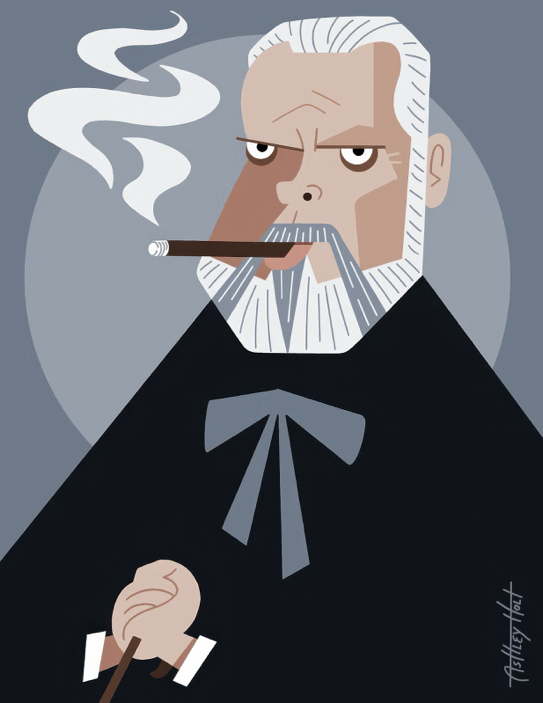
Ashley Holt — In Good Company

Commission, April 2024

I discovered Ashley Holt’s terrific portrait illustrations a few years ago — via Howard Chaykin — and became an ardent admirer from day one. He’s depicted some of our favorite people in colorful and instantly recognizable form.
Now, I’ve joined the club.

Ashley is a pleasure to deal with. He sells prints and books, takes commissions, and has a lovely website that makes it easy to admire or acquire his art. 

Additionally, he has a well-written Substack column (“The Symptoms”), where he employs a lively — and occasionally biting — style that matches the spirit of his art. 

Follow / subscribe to everything he offers, and you won’t be disappointed.

Trust me on this.

As for Ash’s note about this illustration of yours truly?:

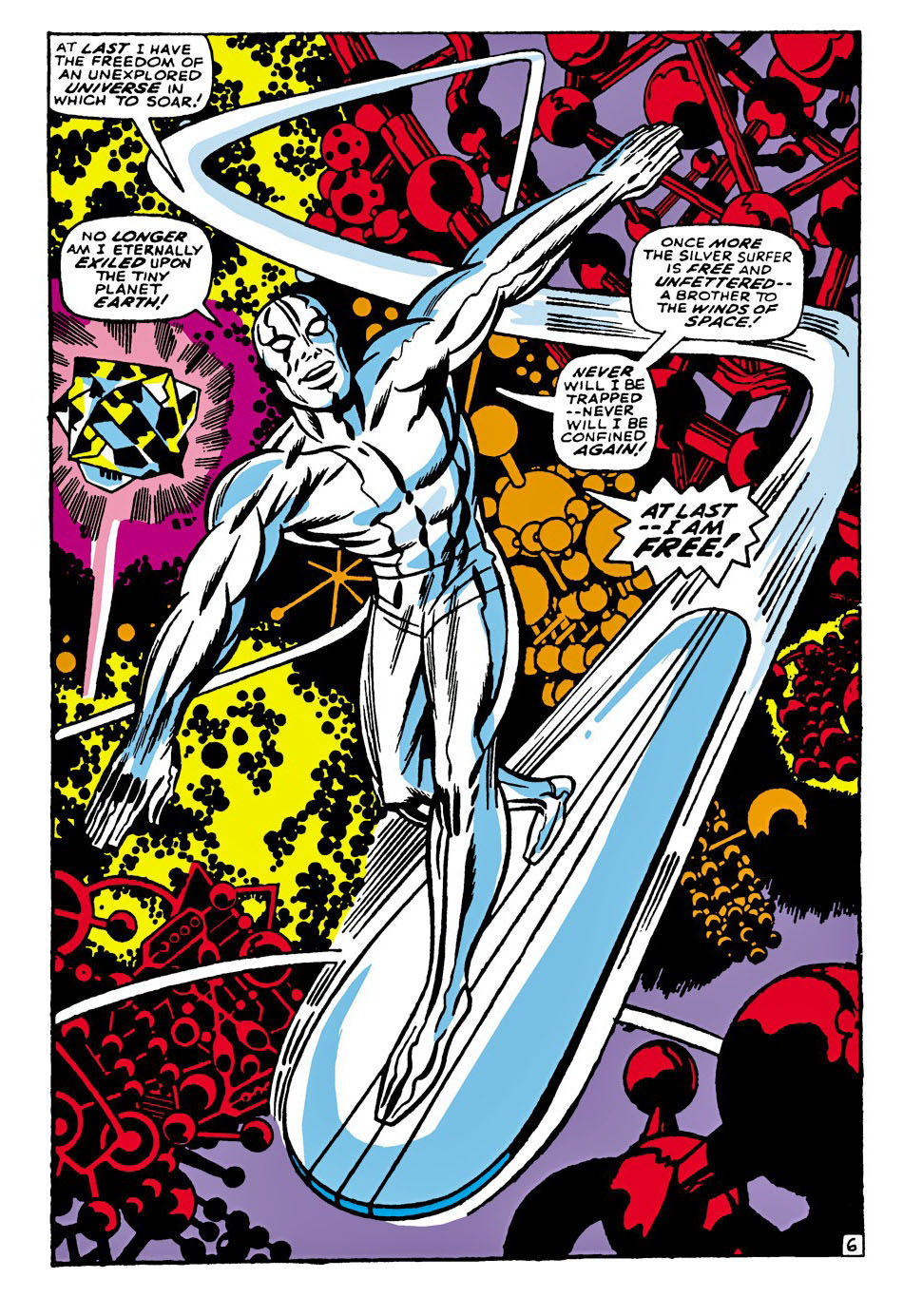
“Greg Goldstein, comics art connoisseur and former CEO of IDW Publishing, posing in front of a Jack Kirby drawing of a comics character who shall not be named for reasons of trademark law but who is definitely not riding a surfboard of any kind.”

Find Ashley here —

https://www.ashleyholt.com

https://thesymptoms.substack.com

Doug Wildey — Wildey Wild West

Gunsmoke Western #57, March 1960

How much of a perfectionist was the great Doug Wildey? He knew there was no chance the printed comic books of 1960 could capture the fine details in his draftsmanship, but he drew them anyway.

This is the second Wildey Atlas western title splash I’ve managed to acquire, and like the first, it’s a beauty. In fact, even more stunning.

By chance, this page was only display and offered for sale a few moments during last year’s San Diego Comic Con when I happened on it. I’m sure it would have been gone had I come by an hour or more later.

As I noted previously, Doug Wildey was an amazing storyteller and draftsman. Don’t just take my word for it — ask Stan Lee.

Back in about 2010, we visited Stan in his Beverly Hills office to get some pages signed for the first John Romita Spider-Man Artists Edition from IDW Publishing. Stan’s “people” were kind enough to let us bring some personal items to get signed as well, so I brought a few pages of original art with me. 

Stan, who was telling stories and singing while he was signing (Yes, singing, not a typo for signing. Story for another day.) stopped dead in his tracks when he saw this page of art. 

He stared at it quietly for a few moments — given the speedy pace of our morning, it seemed like an eternity — and you could see pleasant memories wash over his face. And then the big Stan Lee smile:

“Doug Wildey. Wow. He was great. So terrific. I loved his stuff. I wish we had a chance to do more together.” 

He handed the page back to me, still beaming, still examining it up and down as he slowly passed it back.  I had seen Stan sign thousands of items; many of them with fond remembrances, but nothing quite like this.

I’m sure he would have had the same reaction to this page as well.

John Buscema — Man On Fire

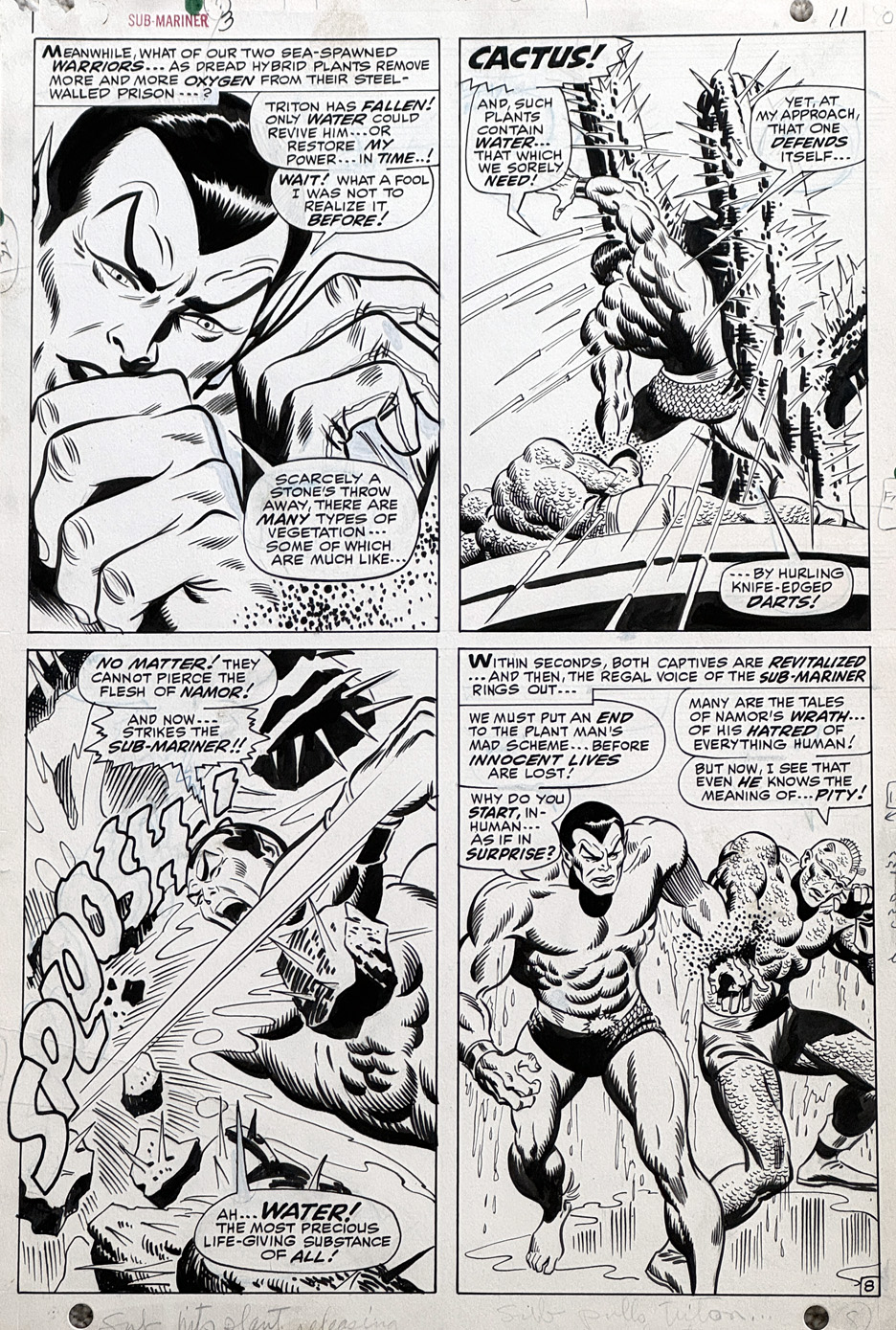
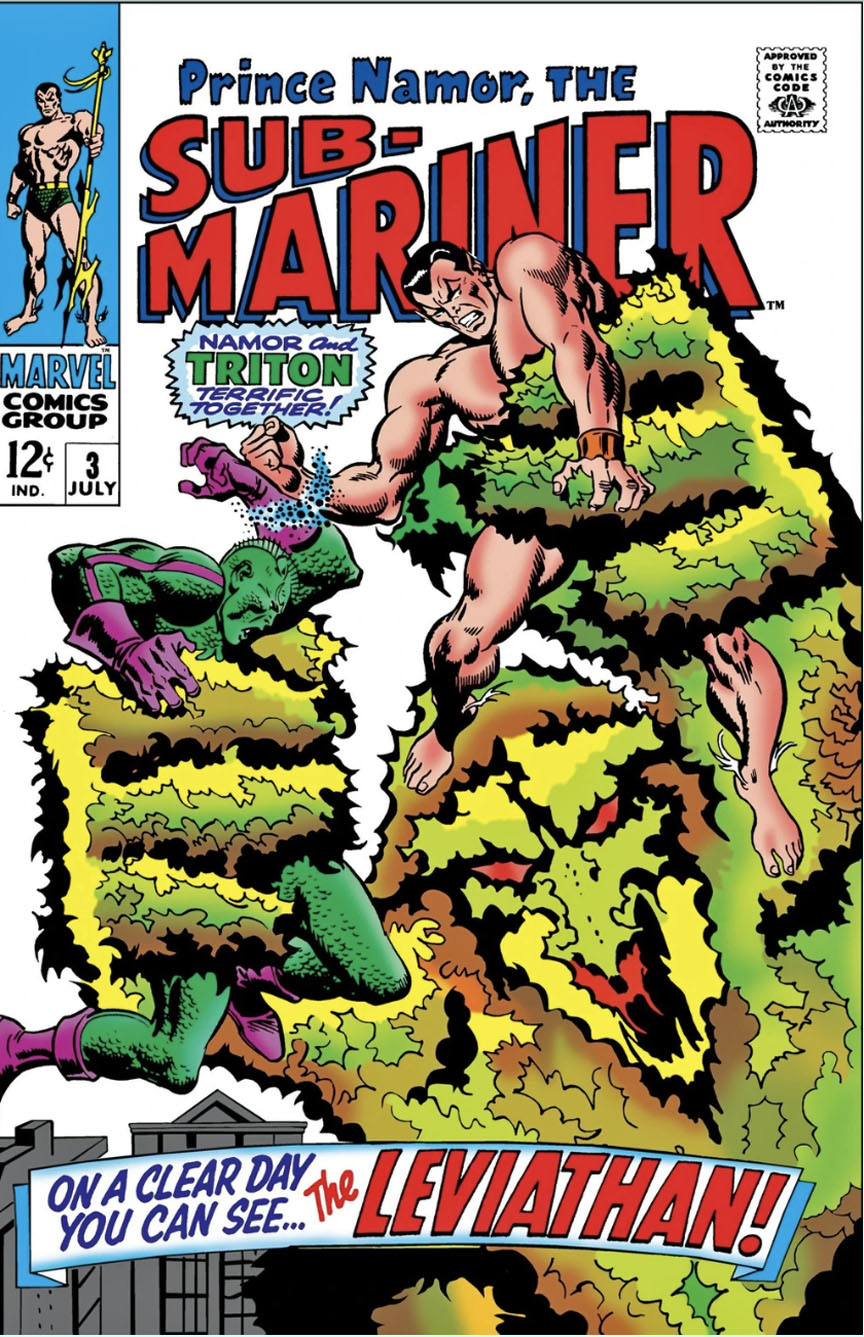
Sub-Mariner #3, June 1968

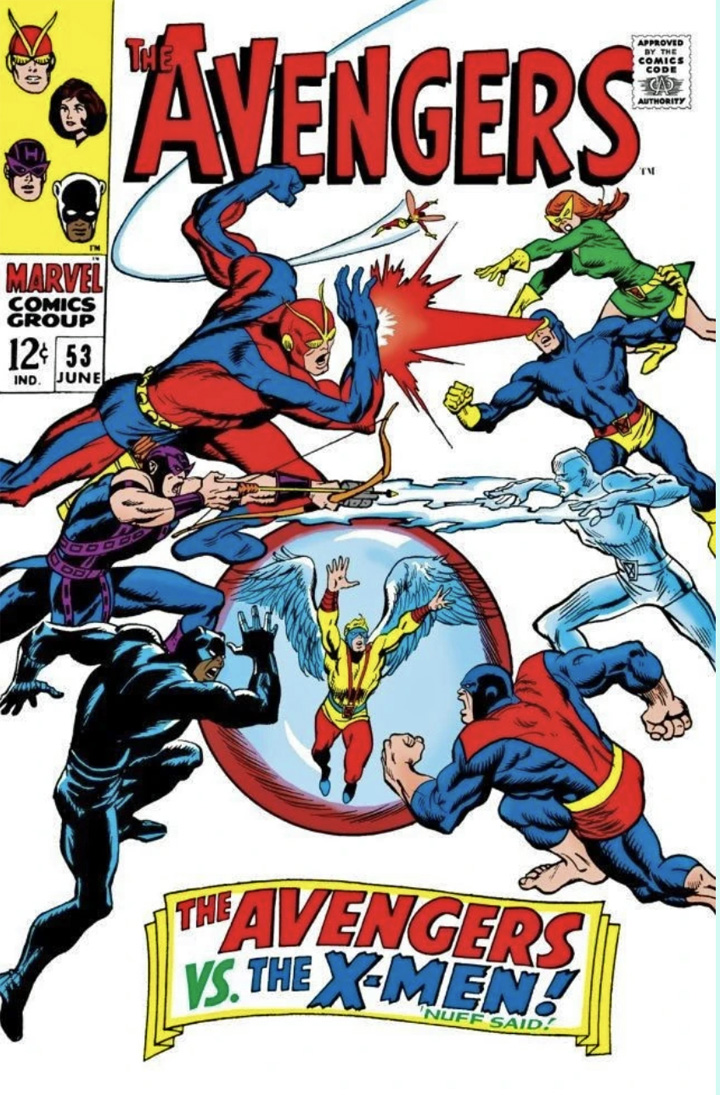
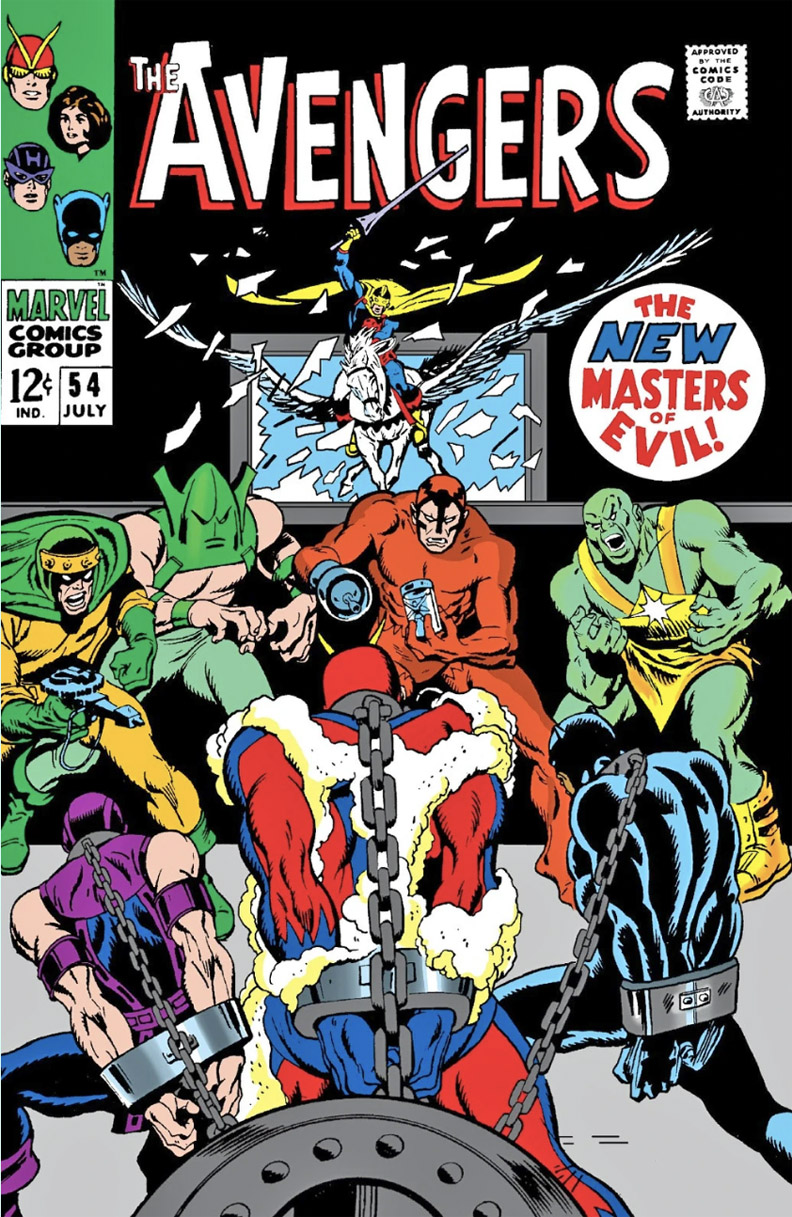
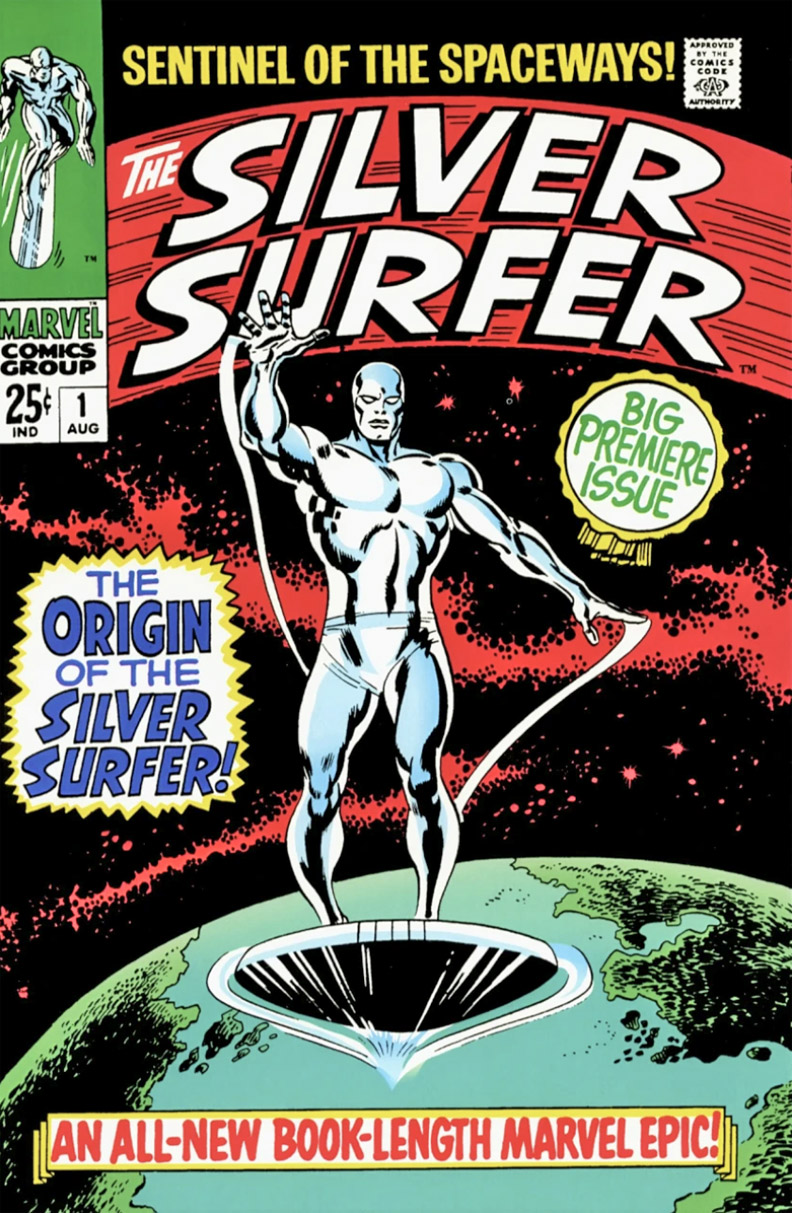
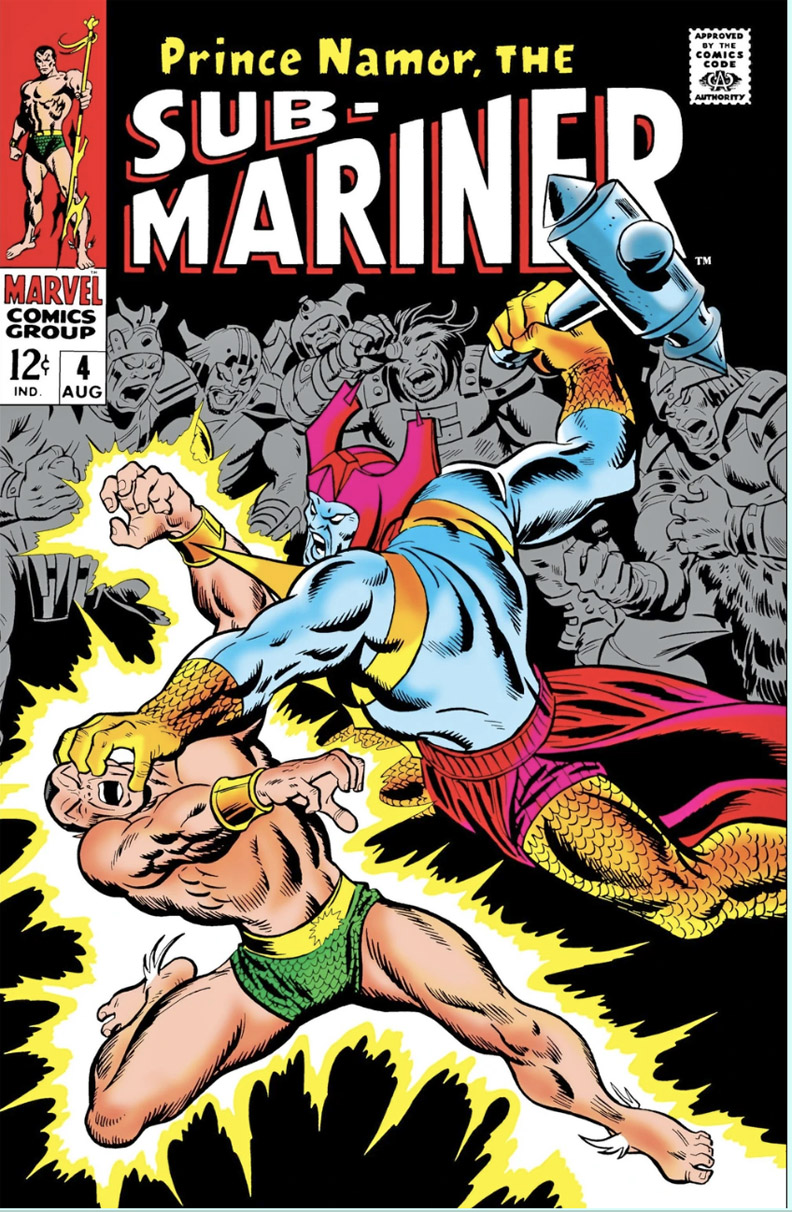
Five straight weeks in the Spring of 1968. Five comic book issues drawn by the legendary John Buscema:

Sub-Mariner #3

Avengers #53

Sub-Mariner #4

Avengers #54

Silver Surfer #1 (38 pages)

Gems. Every single one. (And yes, I might be biased, because these comics are from my newsstand-era sweet spot — 1967-1973 — but I’m not wrong.) My guess is that only Jack Kirby ever had an achievement similar, or greater.

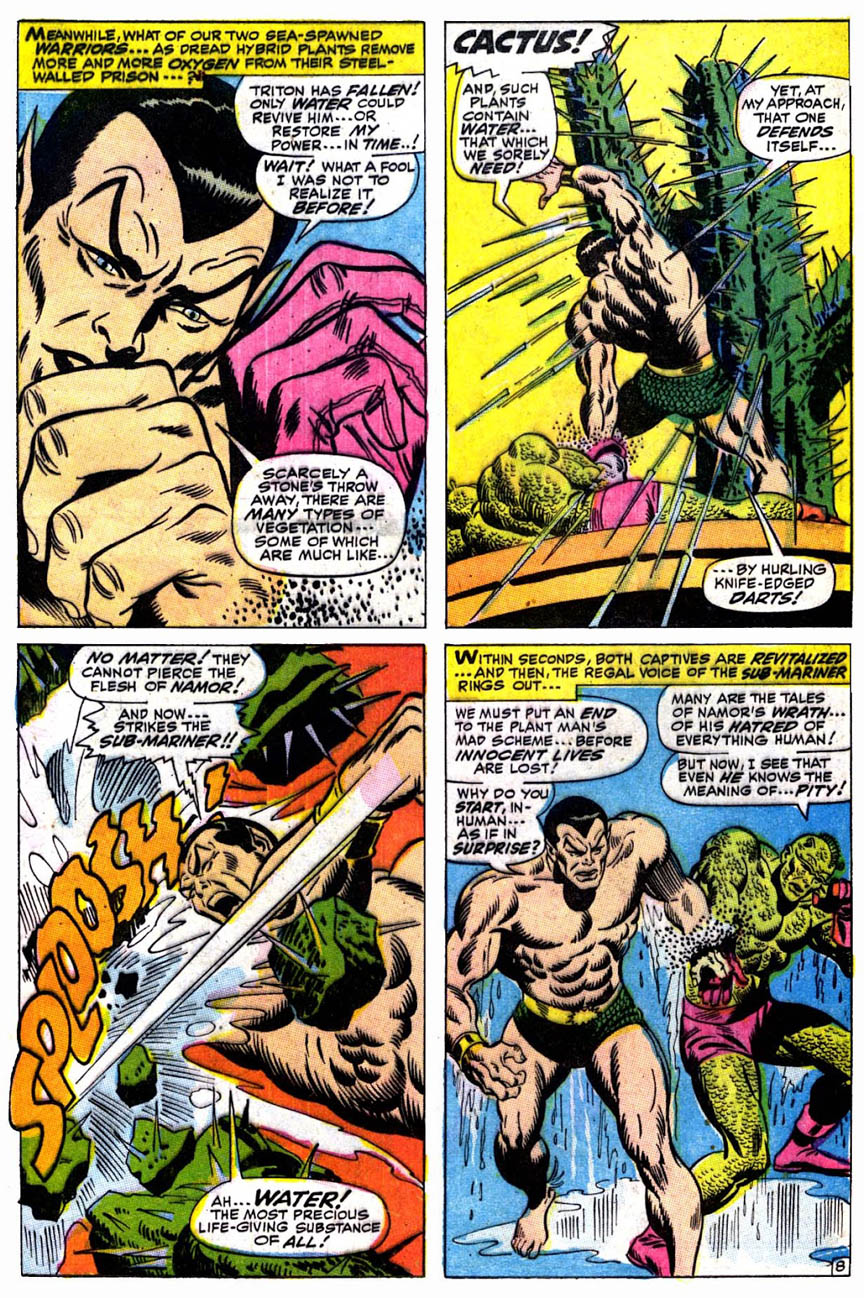
This Sub-Mariner page featuring Namor and Triton is the best Buscema superhero page I’ve ever owned, and unless an amazing opportunity comes my way, will likely remain that way. 

Dynamic inks from one of John’s favorite inkers, Frank Giacoia.

All action. 

Just terrific.

Mike Machlan — Avengers #2, Redux

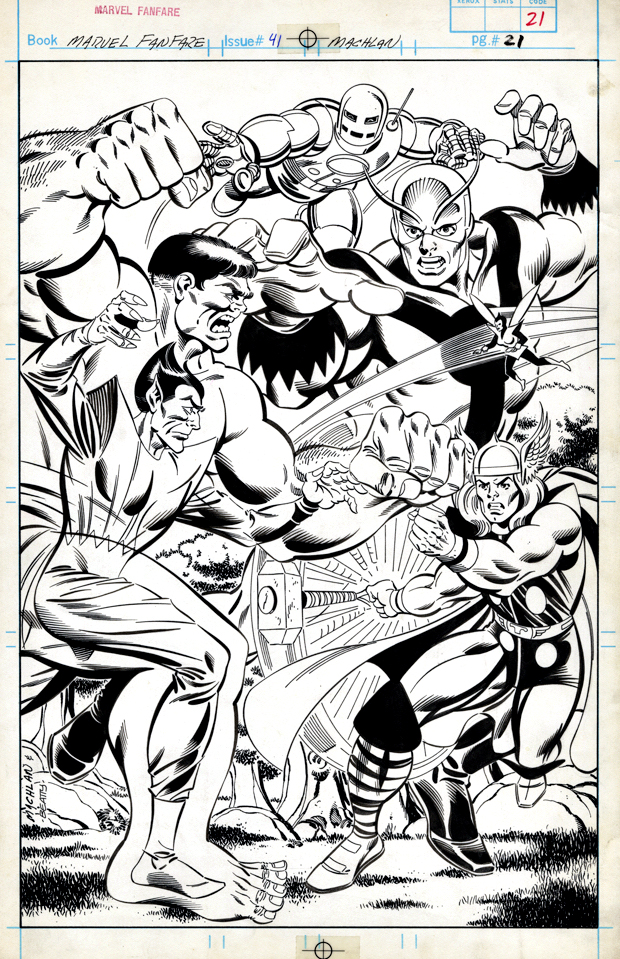
Marvel Fanfare #41, December 1988

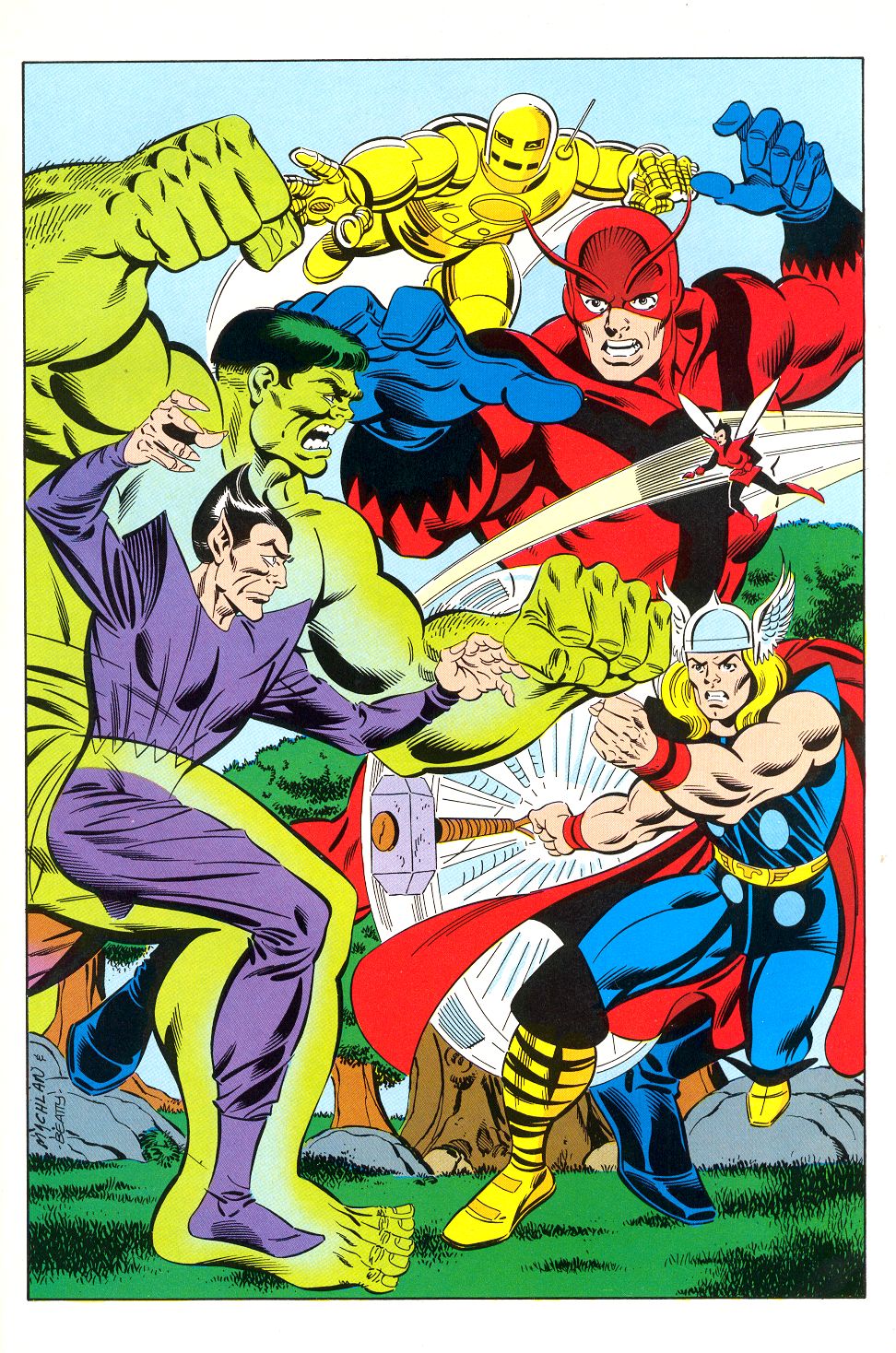
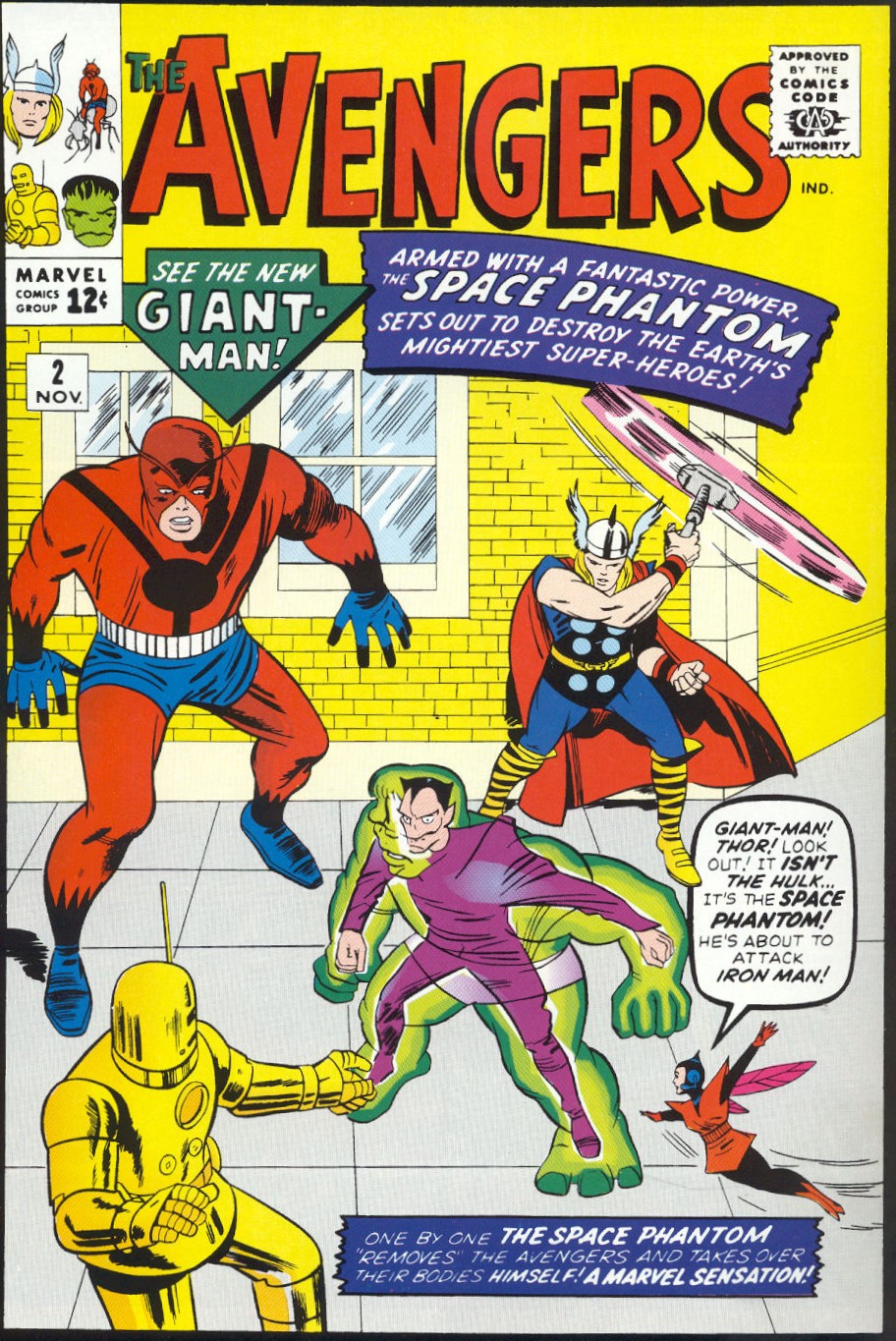
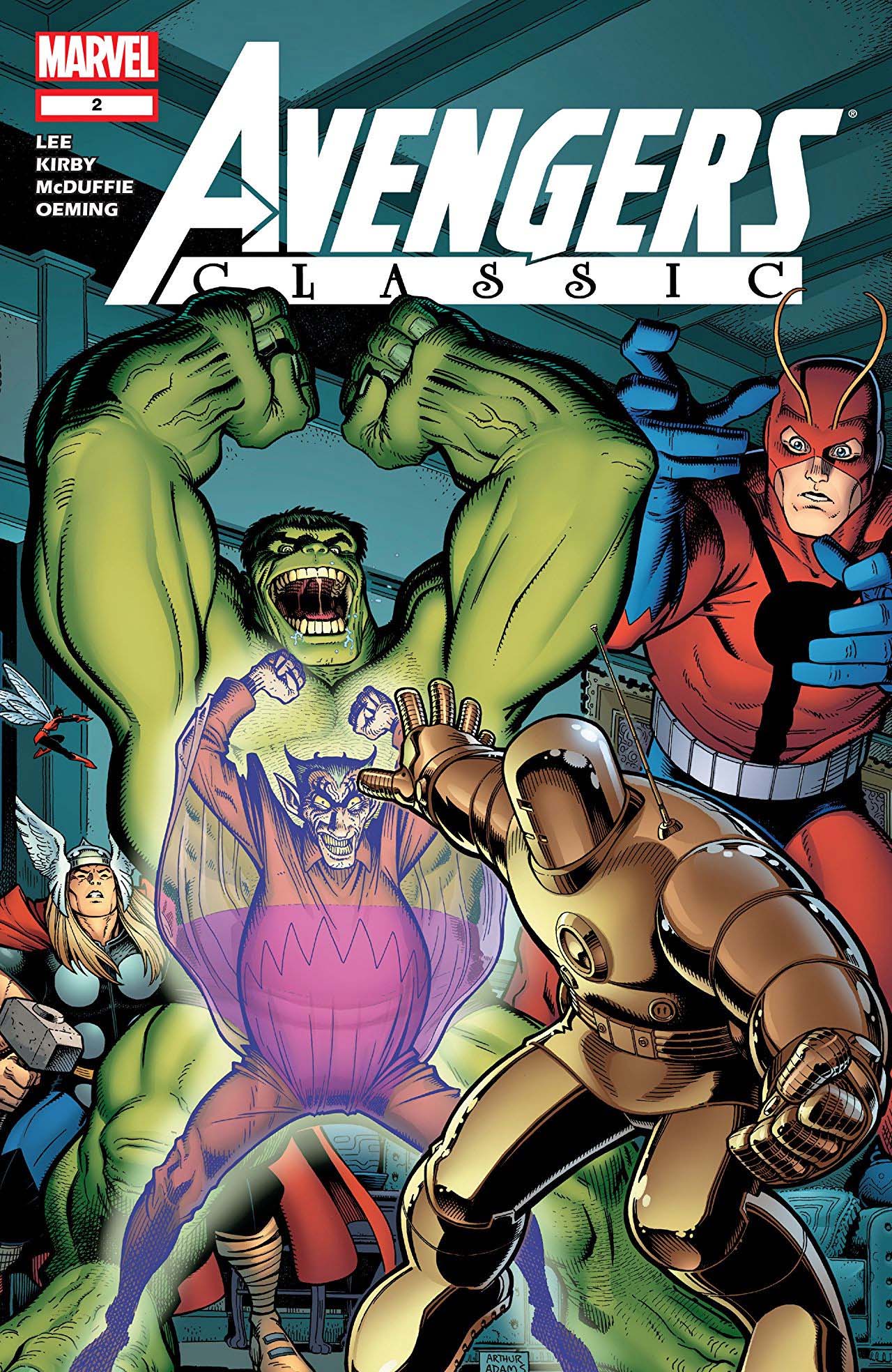
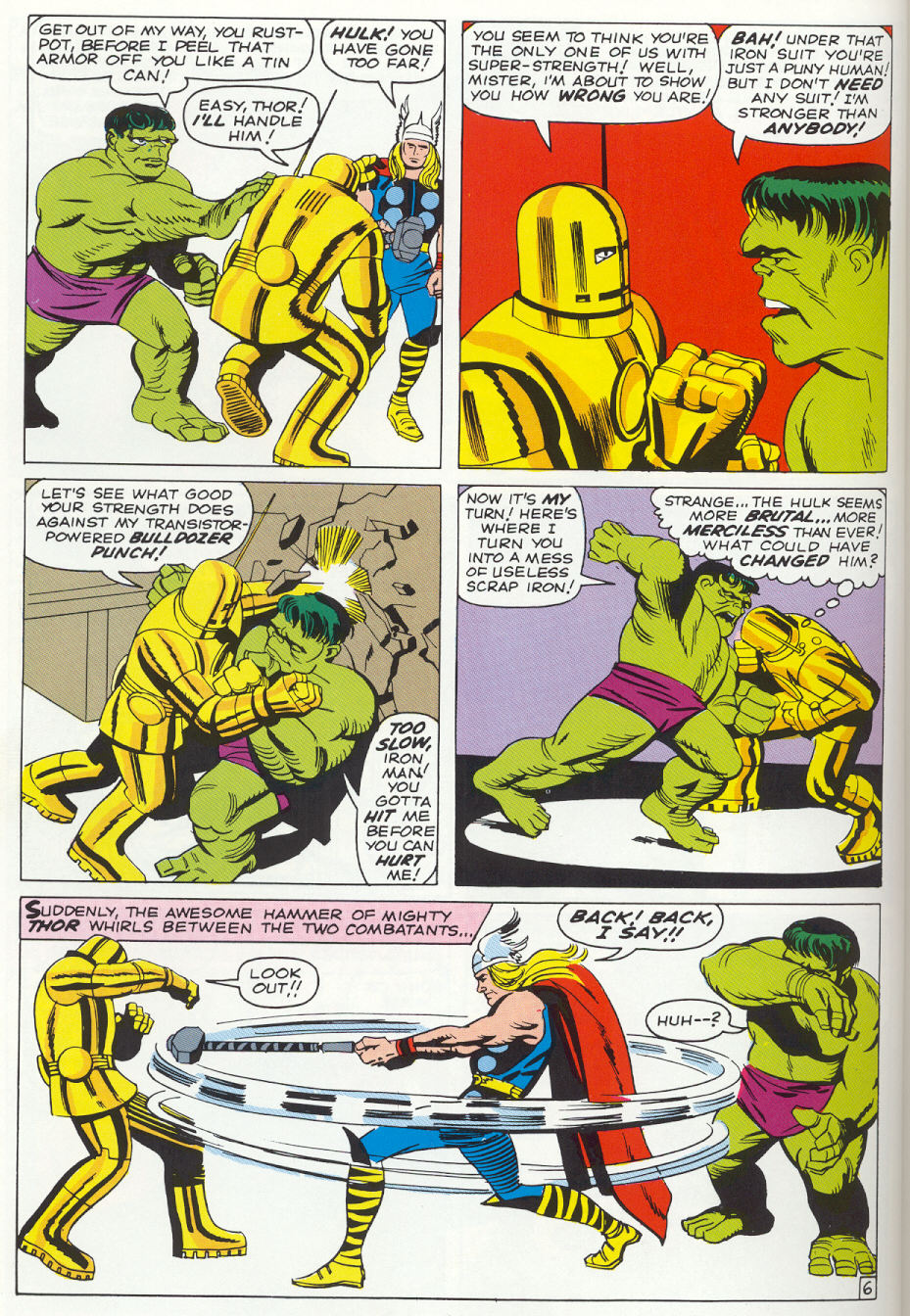
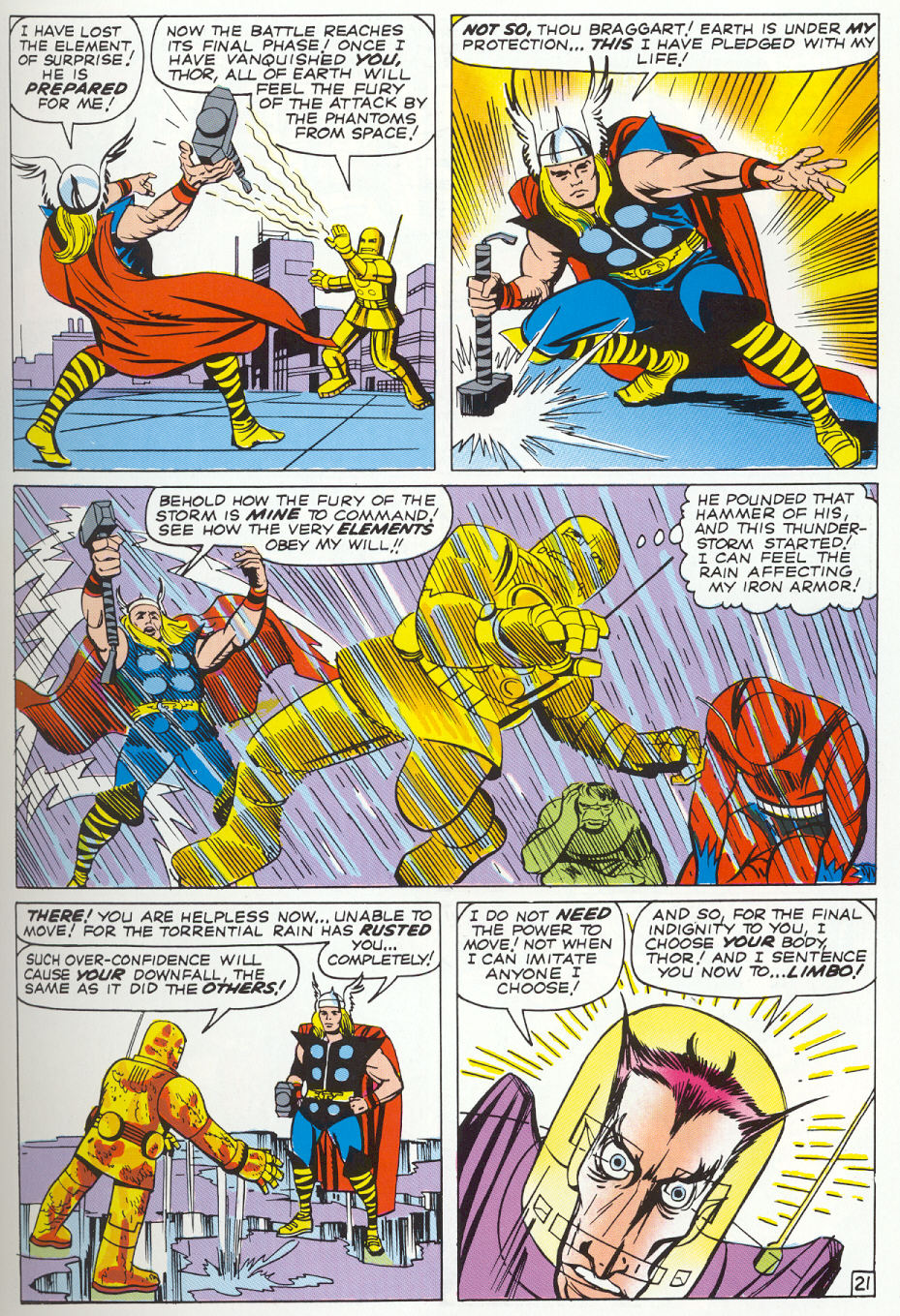
Mike Machlan adds his own flavor to the classic match-up of The Avengers vs. the Space Phantom (Avengers #2) in this published pin-up from Marvel fanfare #41. Mike did a few of these classic interpretations as a portfolio in this issue, each with a different inker. (John Beatty provides finishes here.)

I’ve always enjoyed Machlan’s art. I understand that health reasons cut his career short, which, goes without saying, is a terrible shame.

Separately, I’ve gone on record saying that the first four issues of the Avengers are the craziest (in a positive way) and most colorful start to any series in the Silver Age — if not ever:

Issue #1 —The Avengers (Ant-man, Wasp, Thor Iron Man, Hulk) form to fight Loki, and despite Hulk’s reticence they agree to become a team. Wasp provides the name “Avengers.”

Issue #2 — Ant-Man is now Giant-Man, and this time the Space Phantom (instead of Loki) manipulates the Hulk (and the rest of the group) — and after a big fight, ol’ greenskin gets angry and runs-off.

Issue #3 – The remaining Avengers chase after the Hulk and run into the Namor the Sub-Mariner along the way. Iron Man wears new armor, everyone gets into a big fight, and the Hulk runs off. Again. Namor escapes to the sea. Cameos by Spider-man, The X-Men and The Fantastic Four.

Issue #4 — Namor, now really, really angry, starts hurling some icebergs around, and it turns out Captain America is frozen in one of them, although Subby swims off before he can discover that. The Avengers revive Cap (good thing they have a submarine), and after they tussle, and he comprehends he’s been in suspended animation for 20 years, he joins them.

Whew.

Don Heck — Giants (& Ants) Among Us

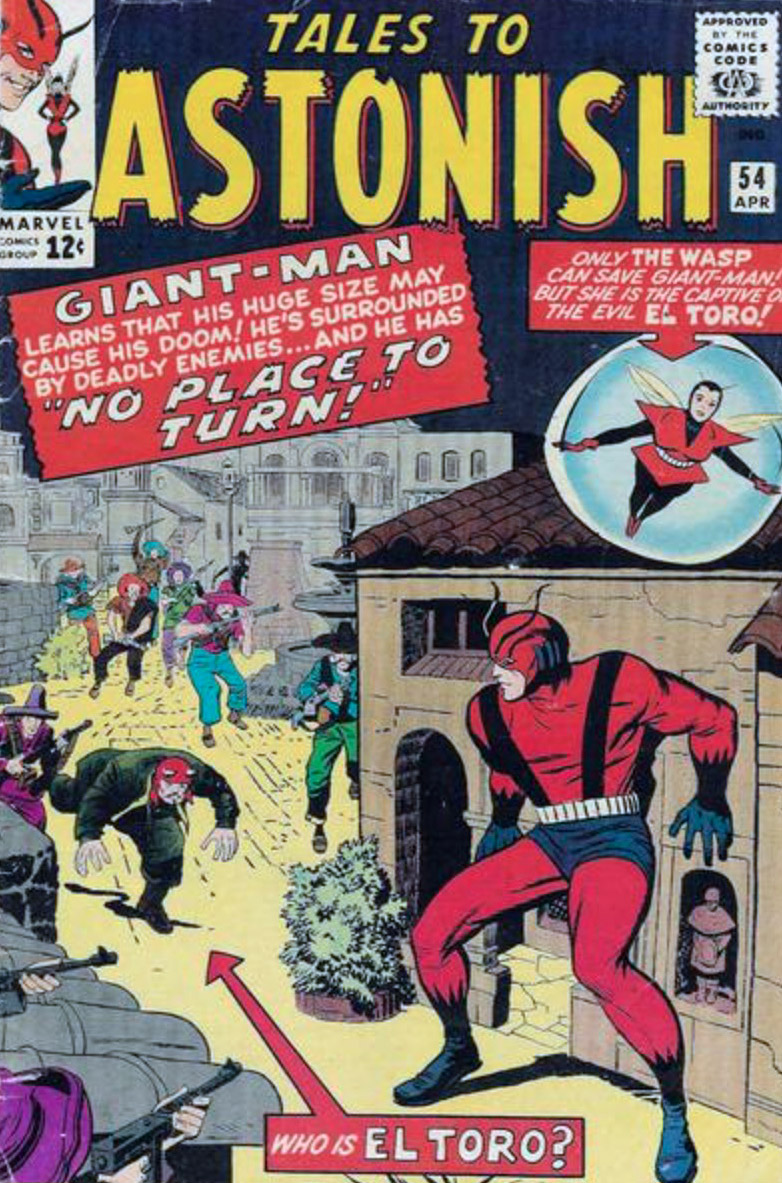
Tales to Astonish # 54, April1964

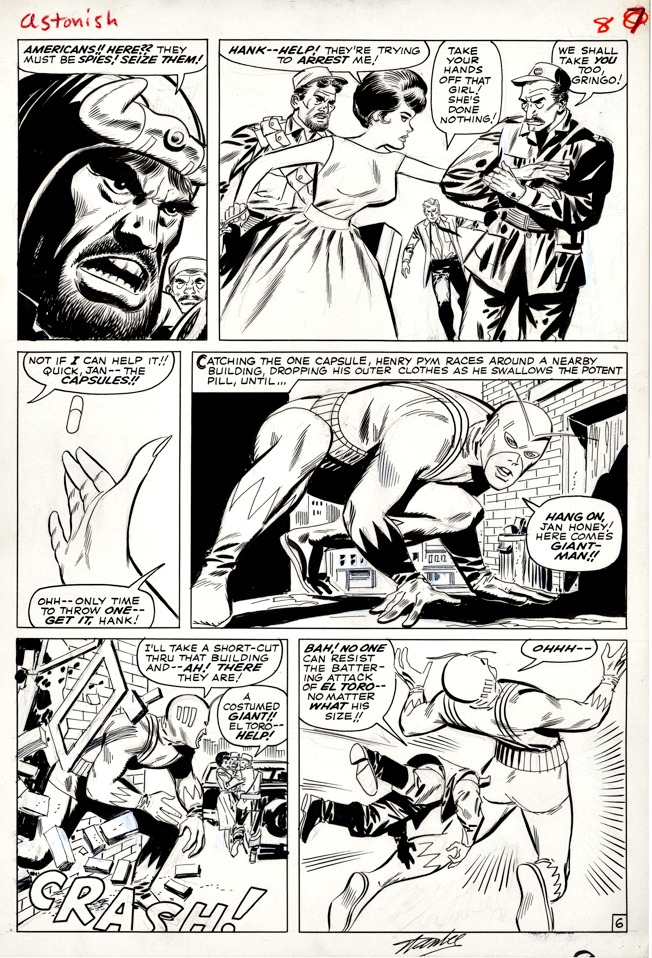
2022 is the 60th anniversary of Marvel’s shrinking and enlarging superhero Ant-Man (Giant-Man), sometimes hyphenated, sometimes not. Either way, we’ve got a cool page from Dandy Don Heck to lead off a mini-anniversary celebration.

That middle right panel has big (pun actually not intended) appeal to me — it appears that Giant-Man is about to break right through it, as he grows o his larger size.

Plus we have he lovely Janet Van Dyke (Wasp) and the ridiculous villain El Toro to boot.

What’s not to like?

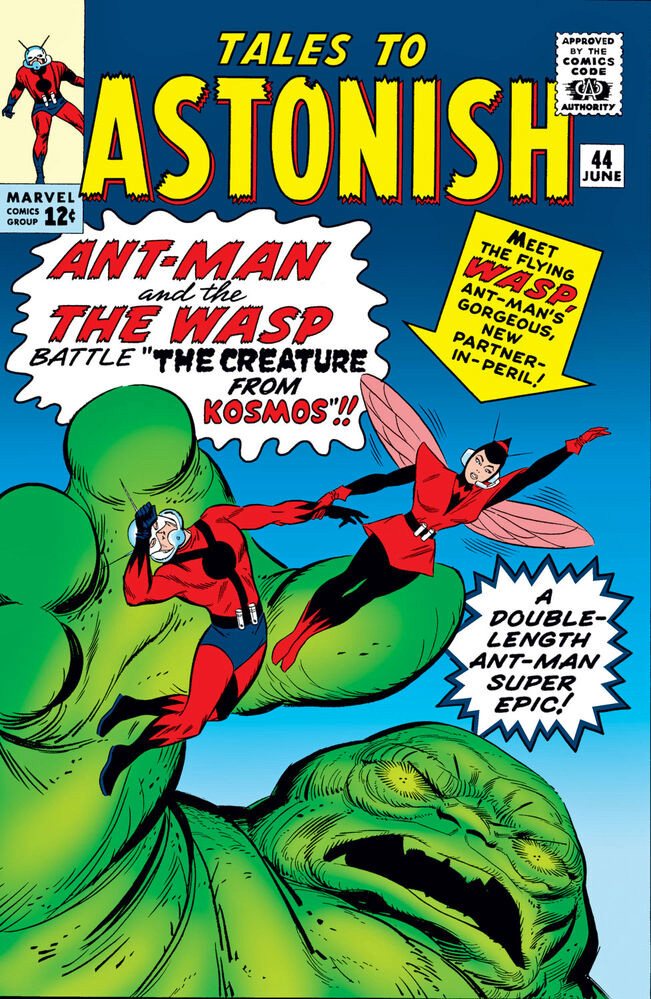
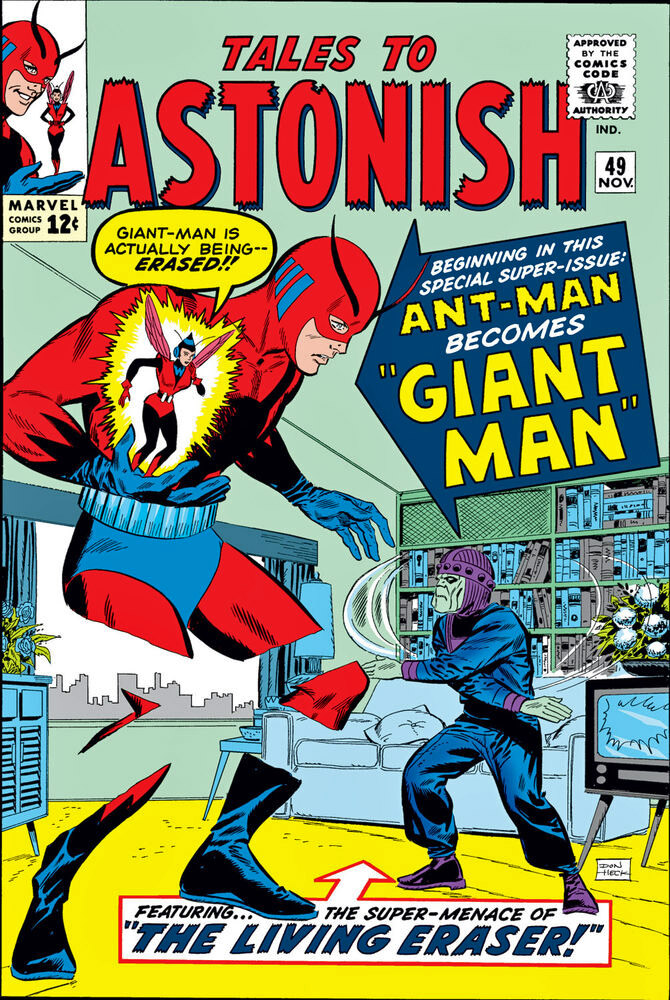
Fun Fact(s): Henry (Hank) Pym invents his shrinking serum in Tales to Astonish #27, cover dated January 1962, but actually appearing on newsstands that previous September. But he doesn’t actually become the Ant-Man character until his second appearance in issue #35. The Wasp appears first in #44, and Pym becomes Giant-Man in #49. Whew.

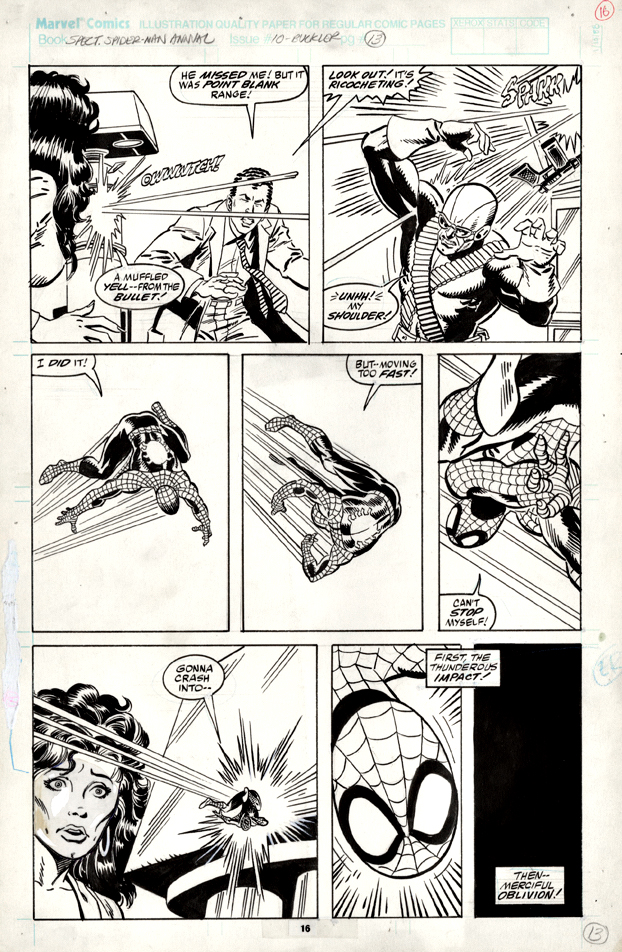
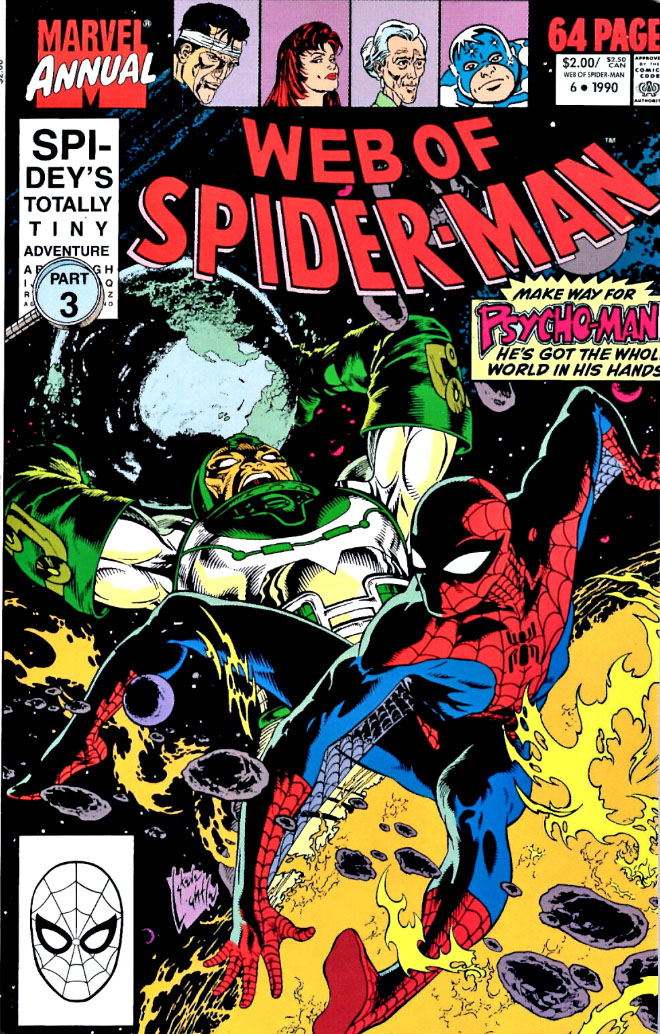
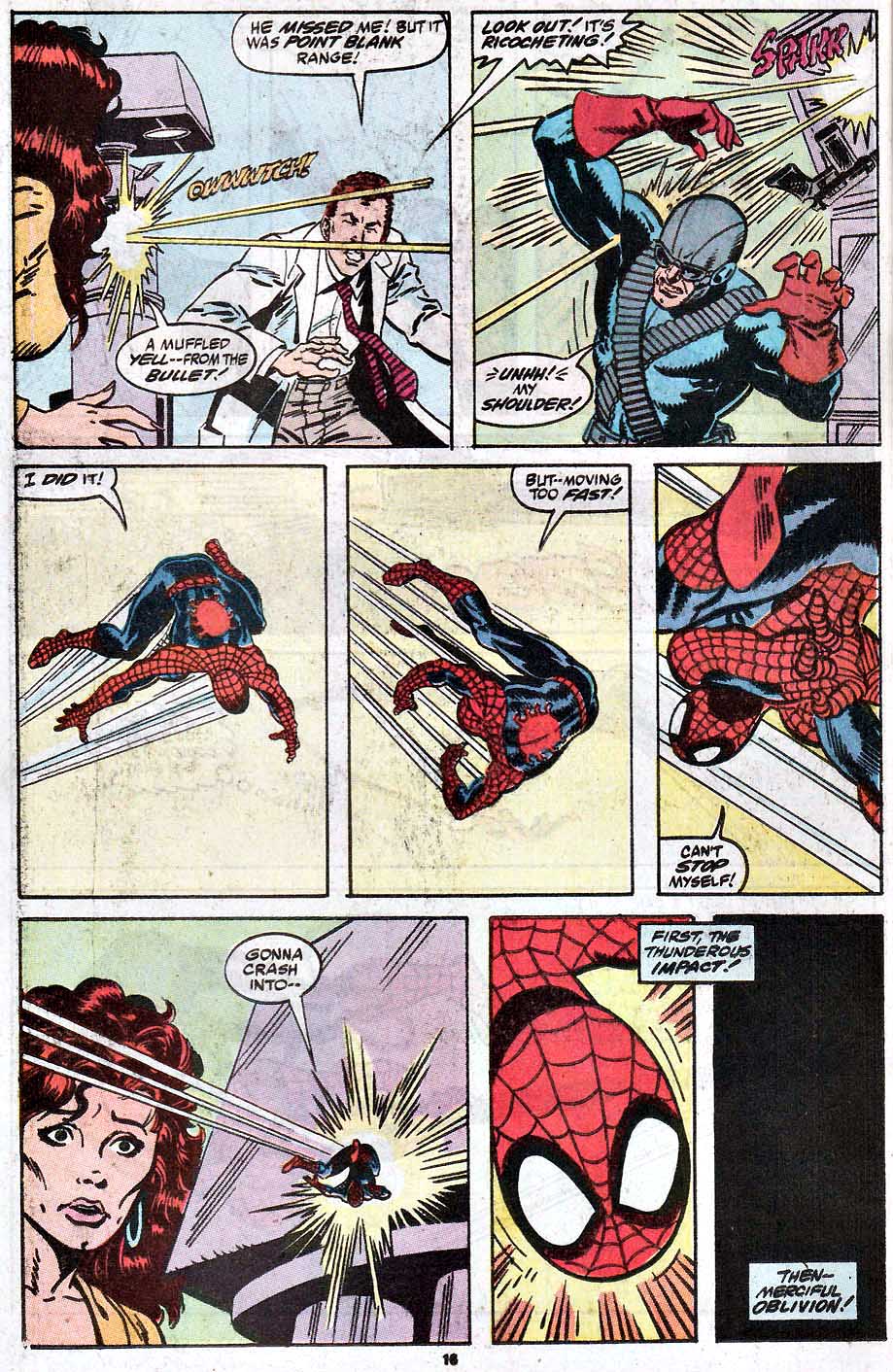
Gil Kane / Rich Buckler — Spider-Problems, Big & Small

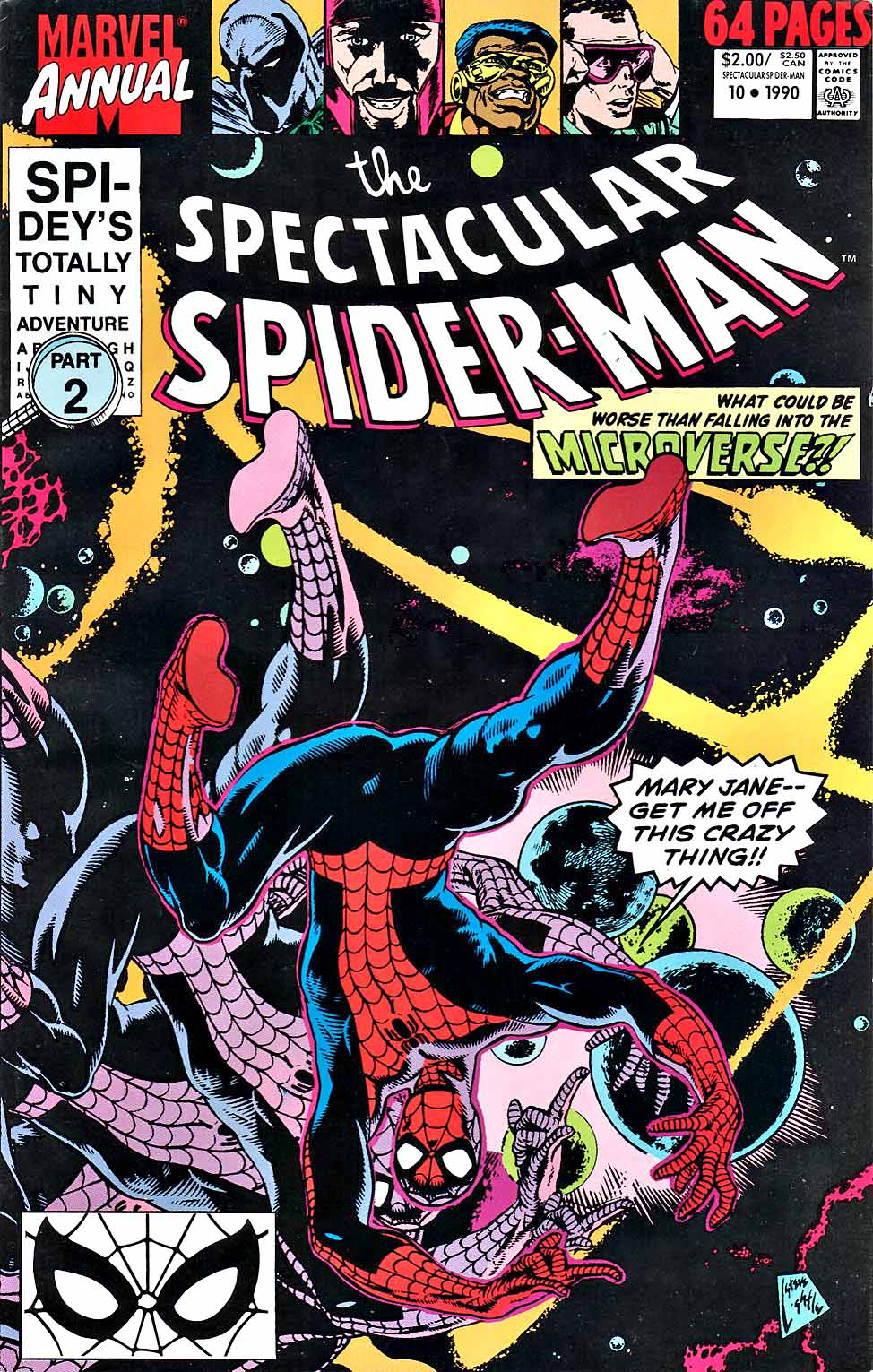
Spectacular Spider-Man Annual #10 and Web of Spider-Man Annual #6, 1990

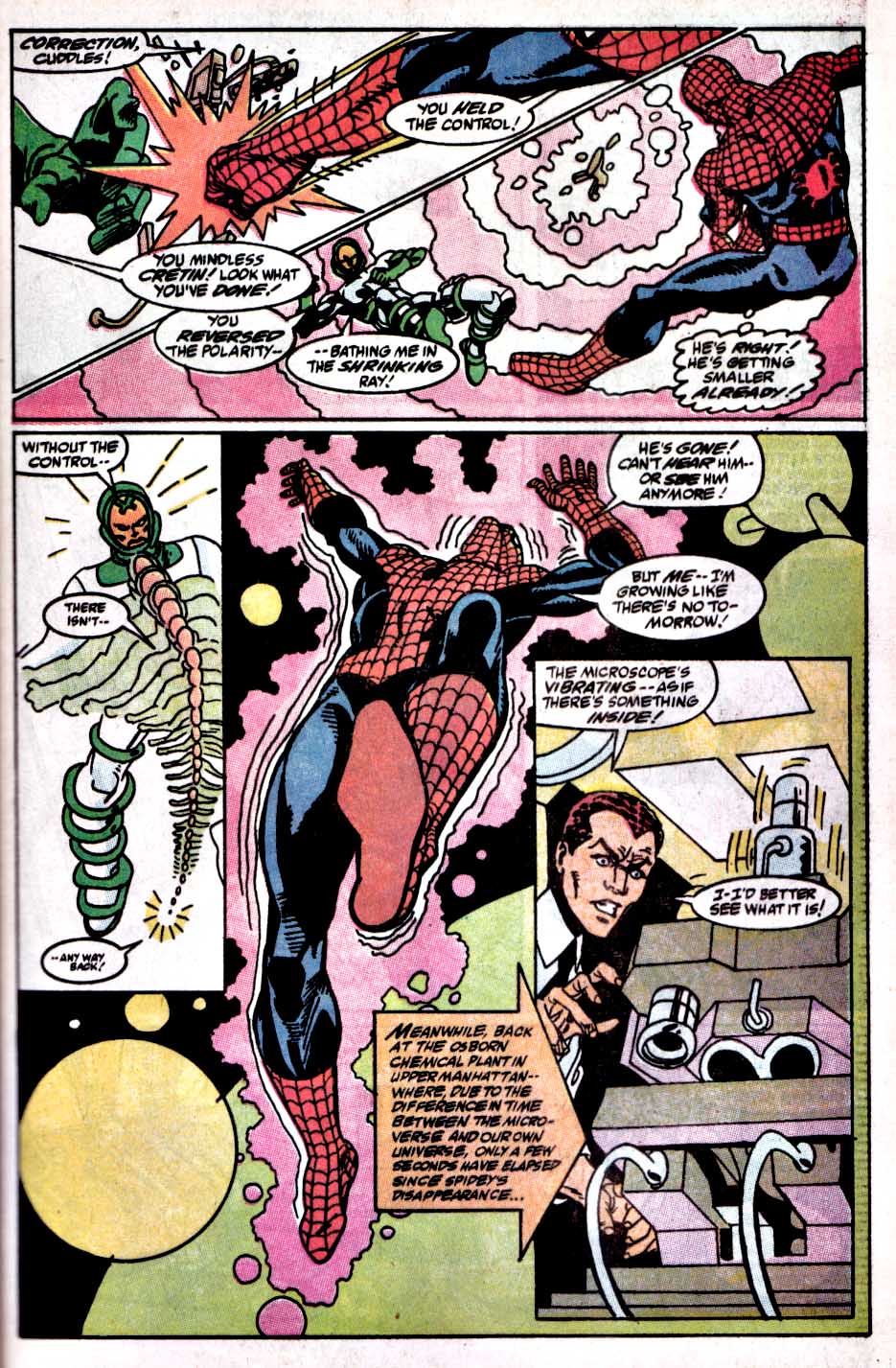
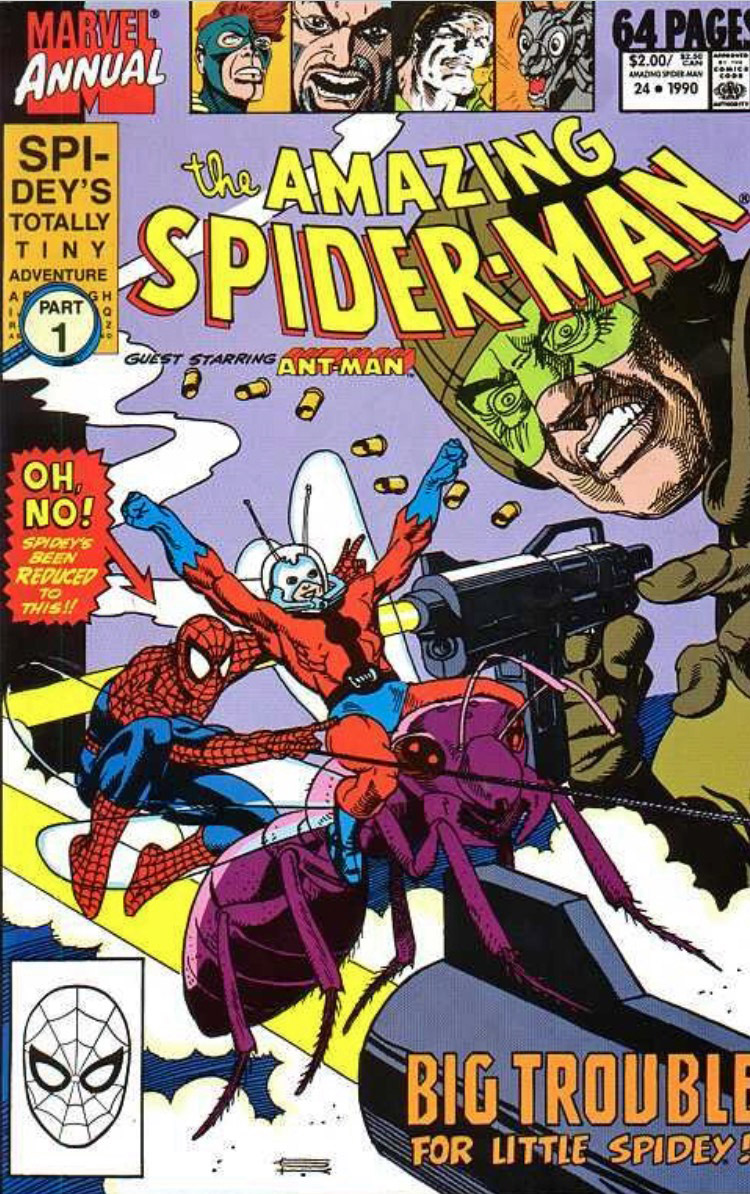
Described (tongue in cheek, hopefully) as a “micro-crossover,” Spidey’s Totally Tiny Adventure is a three-part story from 1990, running in the summer annuals. (Amazing Spider-Man Annual #24, The Spectacular Spider-Man Annual #10, The Web of Spider-Man Annual #6).

The story, as you might guess, features Spider-Man shrinking down to Ant-Man size and beyond. It’s definitely a bit light-hearted without devolving into straight camp. (Our friends at Pulp and Dagger have a full review here.)

Gil Kane drew chapters one and three, and Rich Buckler tackled chapter two. And a trivia note: Stan Lee scripted both chapters two and three, marking a rare return to the keyboard for the Spidey’s co-creator.

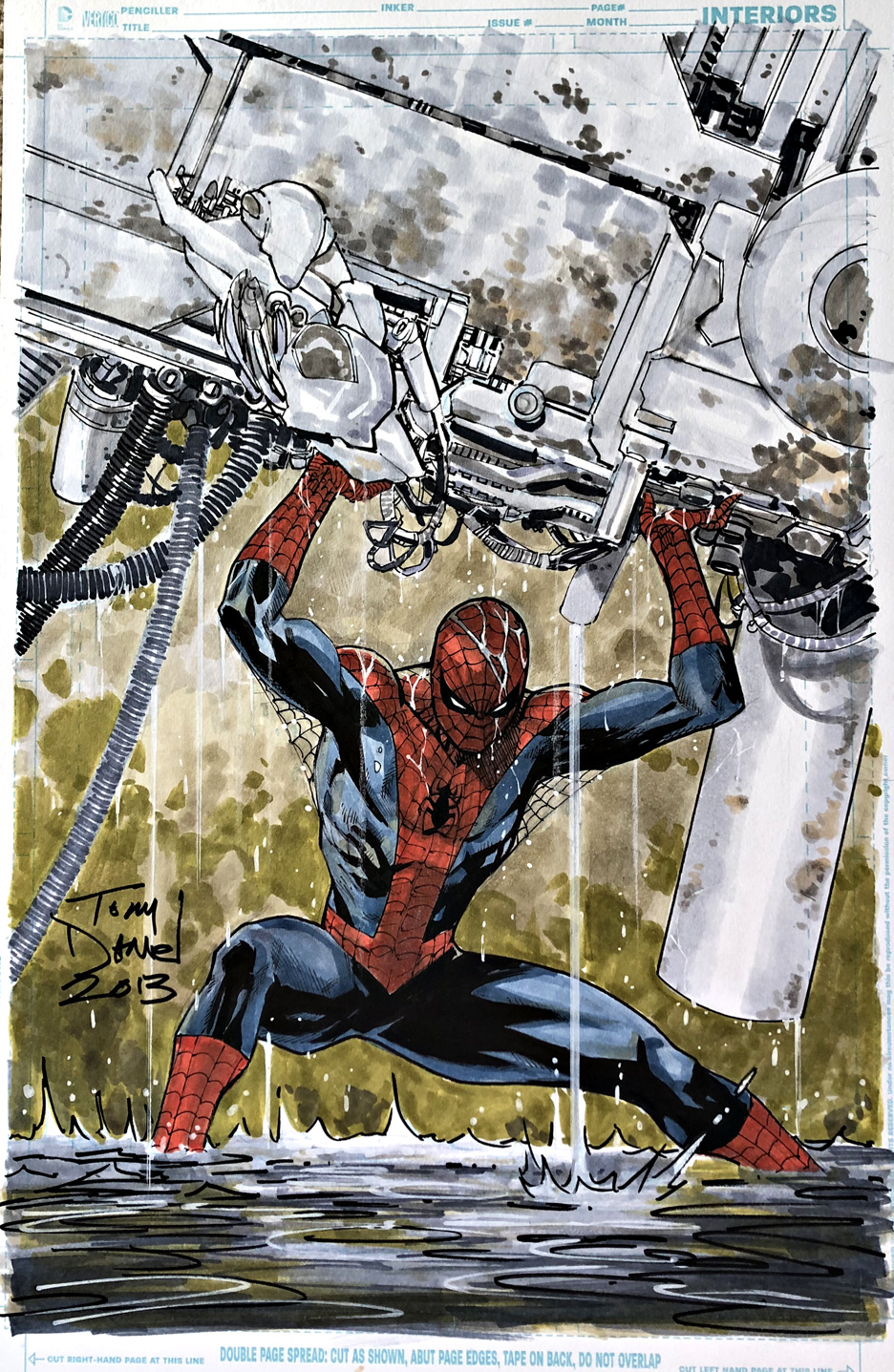
Tony Daniel — Spider-Man’s Amazing Feat

Commission (Based On Steve Ditko, Amazing Spider-Man #33, November 1965), 2013

Amazing. Spectacular. Sensational.

It doesn’t matter what adjective you put in front of Spider-Man’s name, his actual popularity dwarfs them all.

And he celebrates his 60th anniversary later this year.

So why not celebrate the world’s most famous web-slinger with a whole month of Spider-Man art.

Why not indeed?

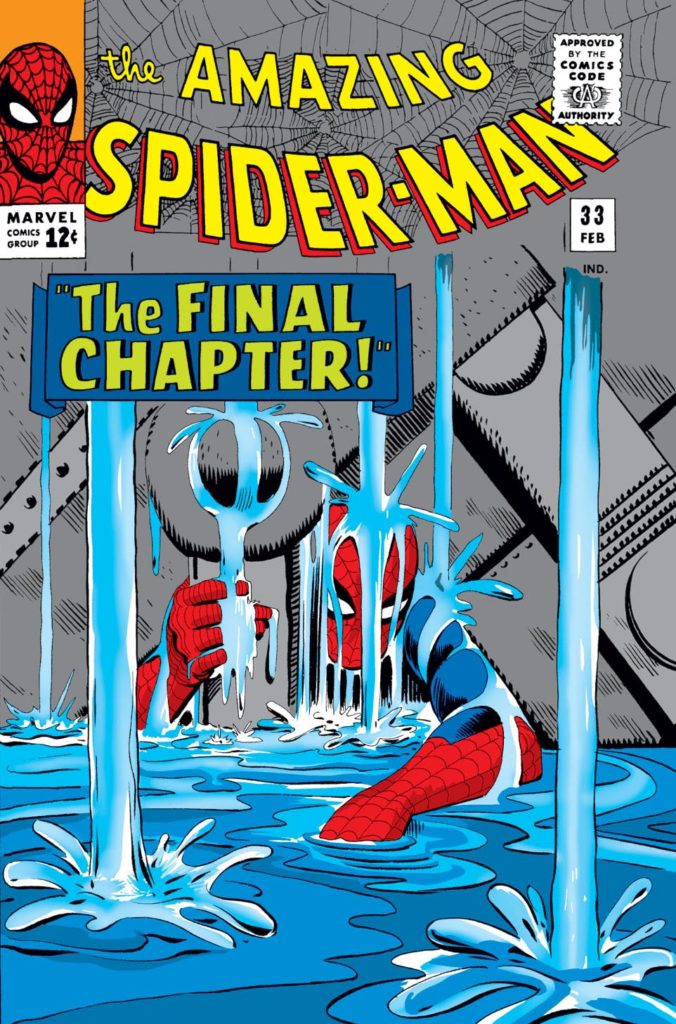
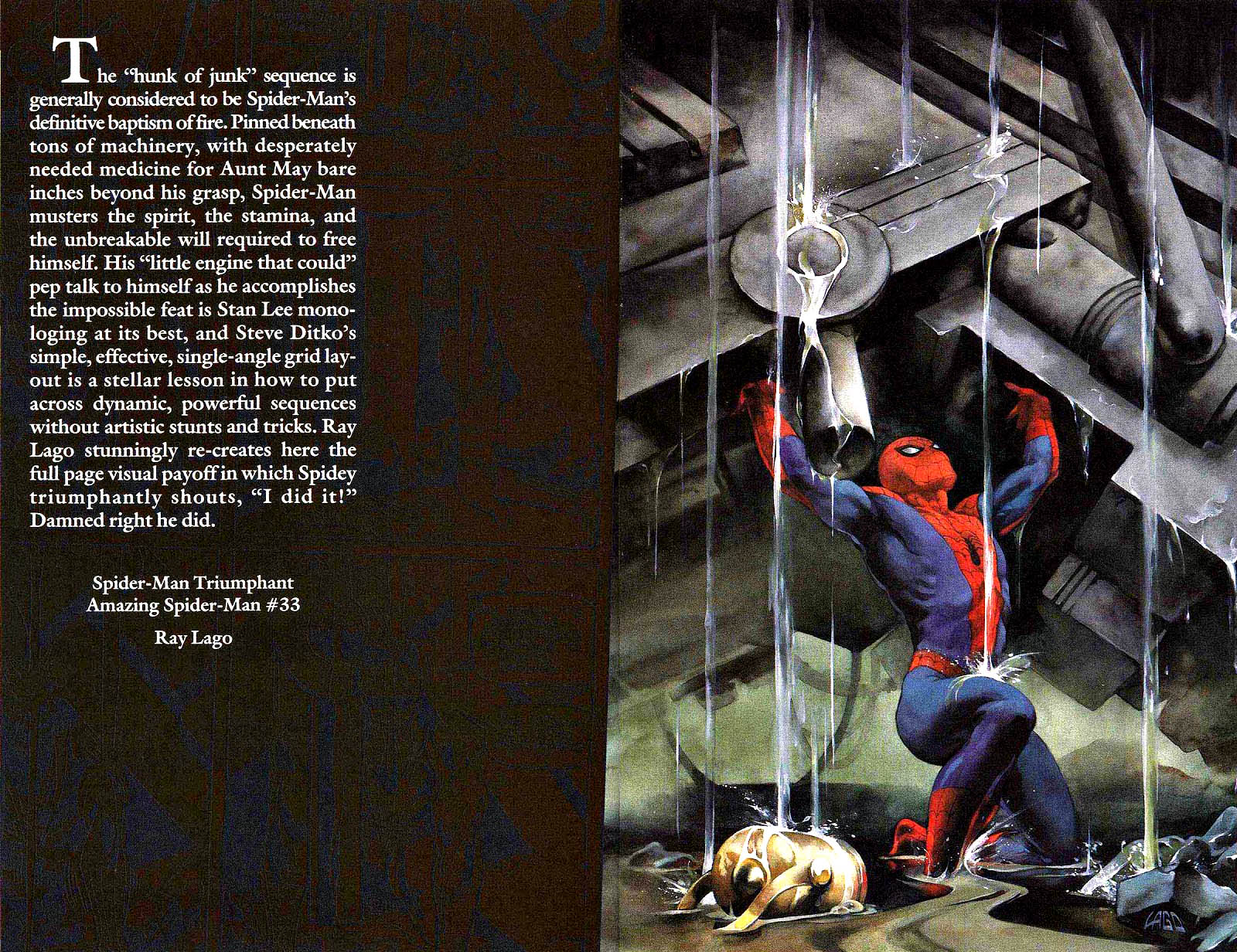
First up — Tony Daniel’s terrific tribute to Stan Lee and Steve Ditko’s most iconic issue of the original series, Amazing Spider-Man #33.  

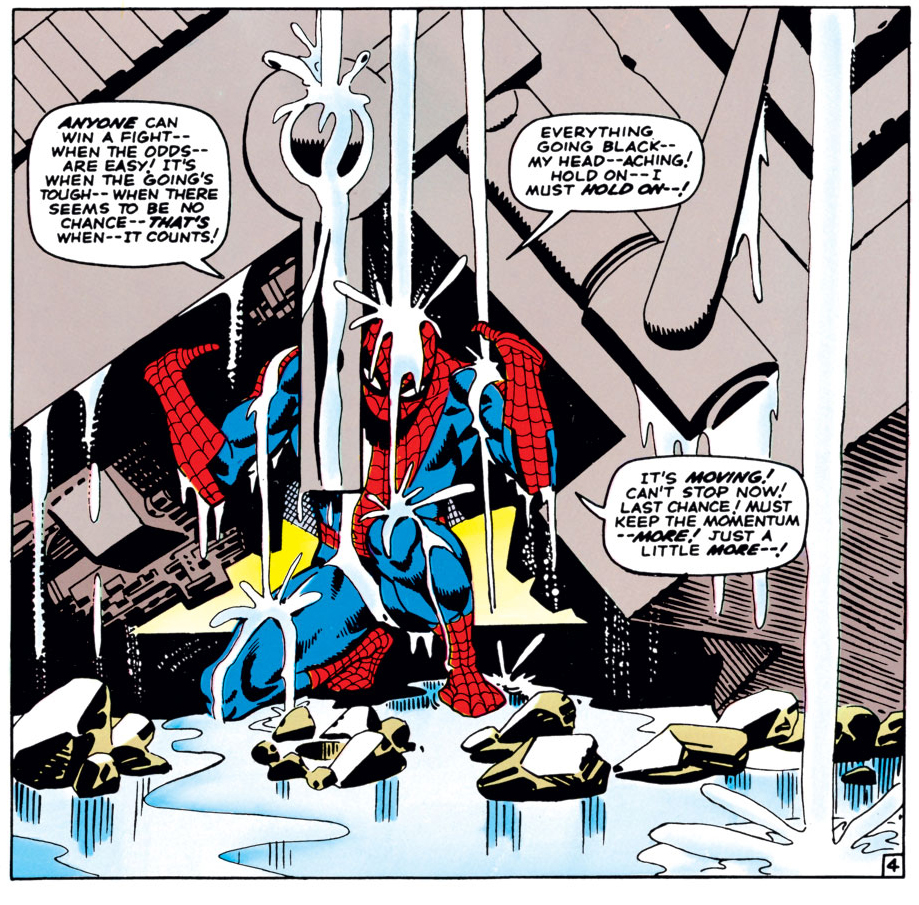
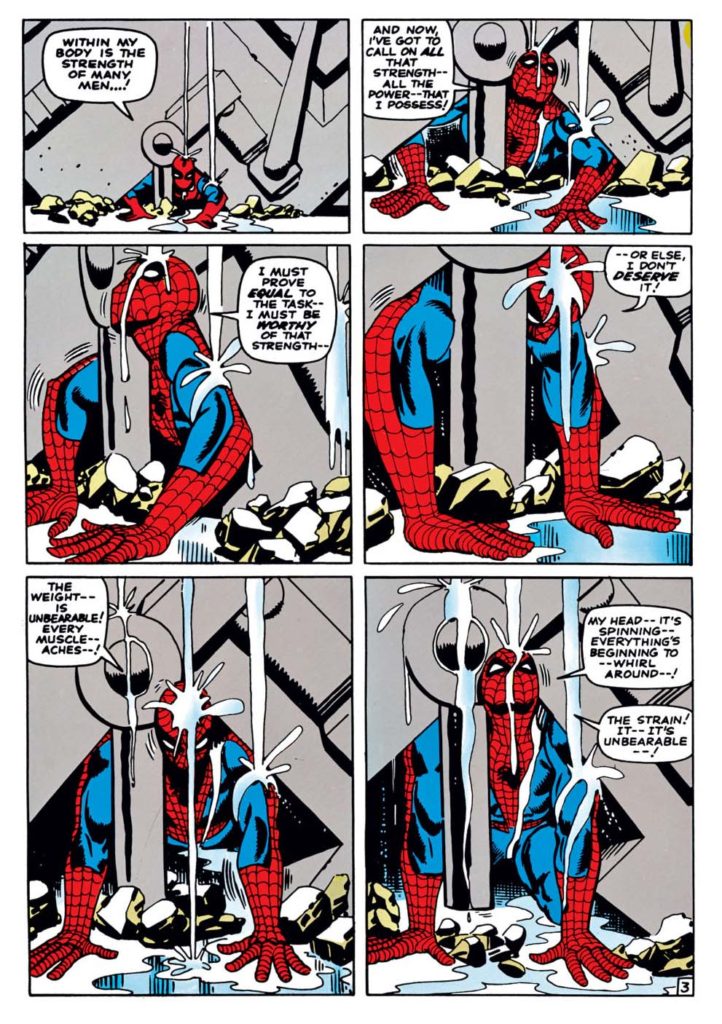
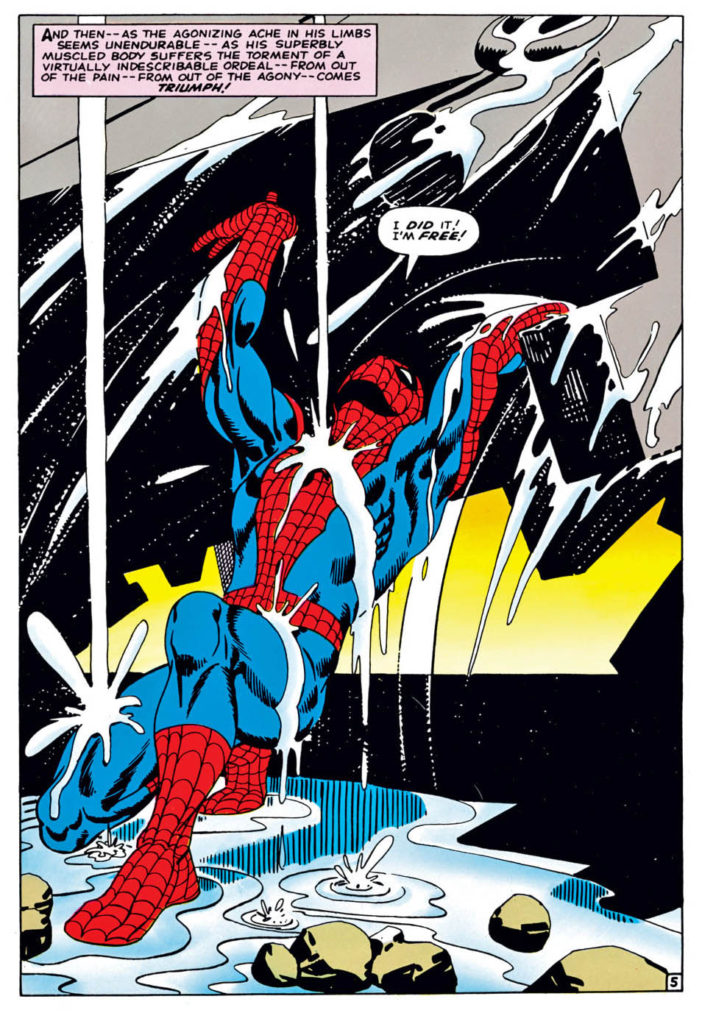
It’s not that Spider-Man wouldn’t be saved (Heck, even a little kid knows that.) But in that classic story, Ditko masterfully conveyed Spidey’s struggle and necessary force of will to find the strength to lift tons of machinery and save himself. 

No Iron Man or Thor to the rescue. This is all about Spider-Man’s personal will to survive — so that he himself can rescue Aunt May.

It’s likely the most powerful three-page comic book sequence of the era.

Harris is not the first creator to pay tribute to the scene, but he does it masterfully, creating an image that exists somewhere seconds before page three of Ditko’s original sequence.

Additionally, Harris uses a muted color palate, perfect for the art. I don’t typically pursue color art, but this piece grabbed me the moment I saw it.

Amazing indeed.

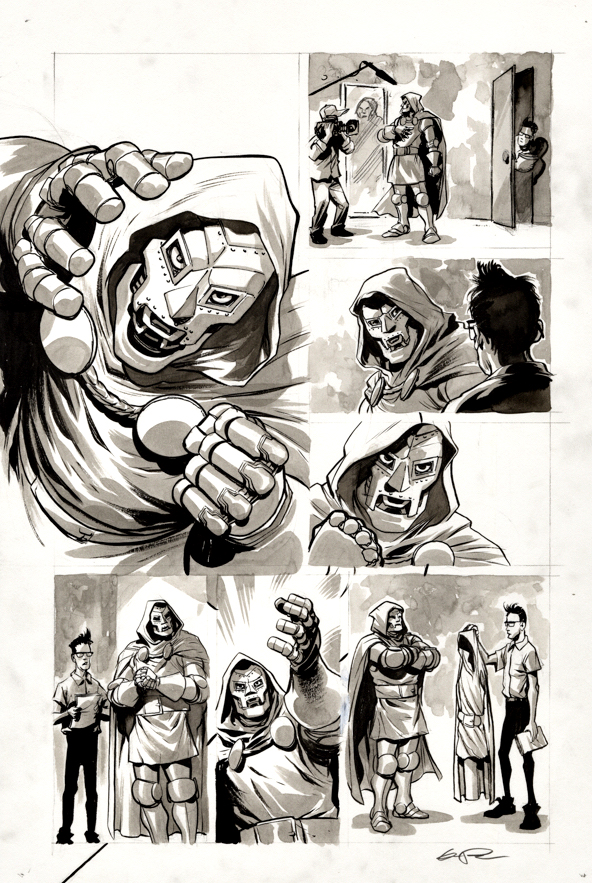
Eric Powell — I’d Like To Meet His Tailor

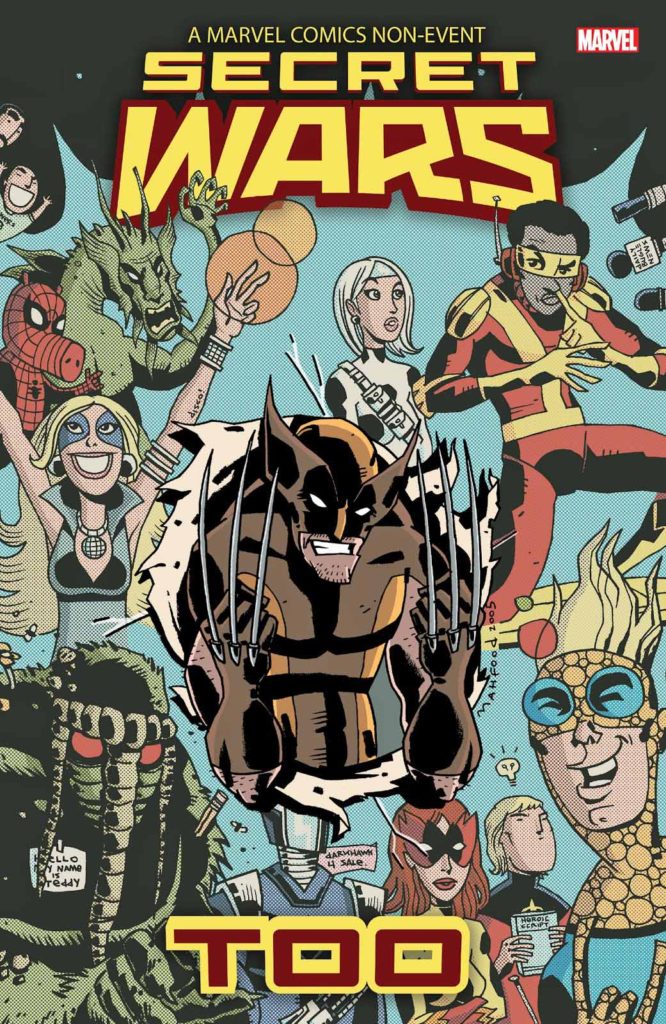
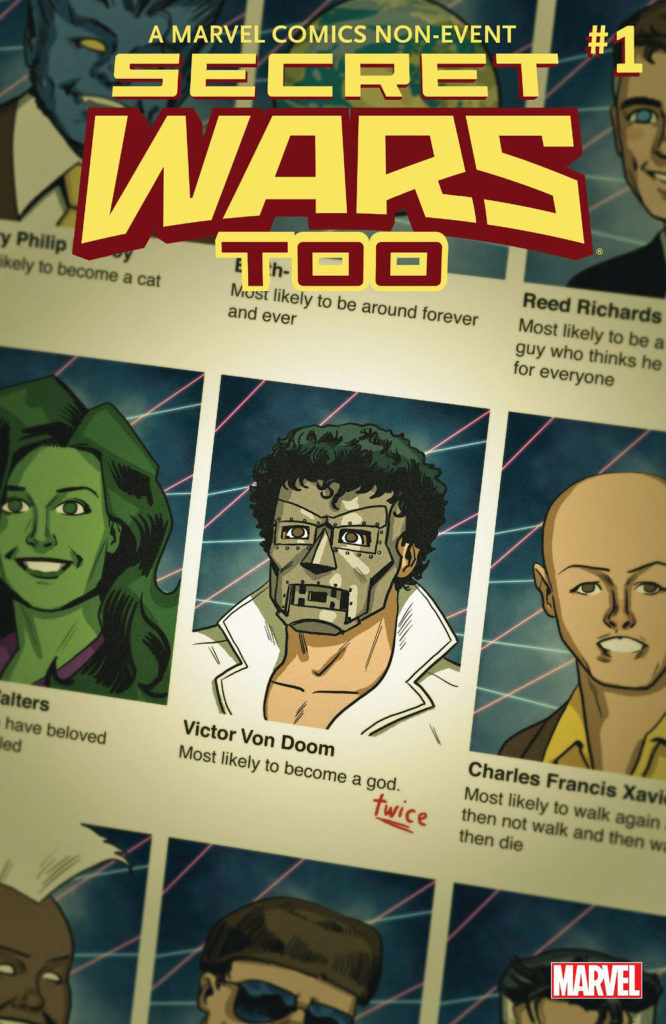
Secret Wars Too, #1, January 2016

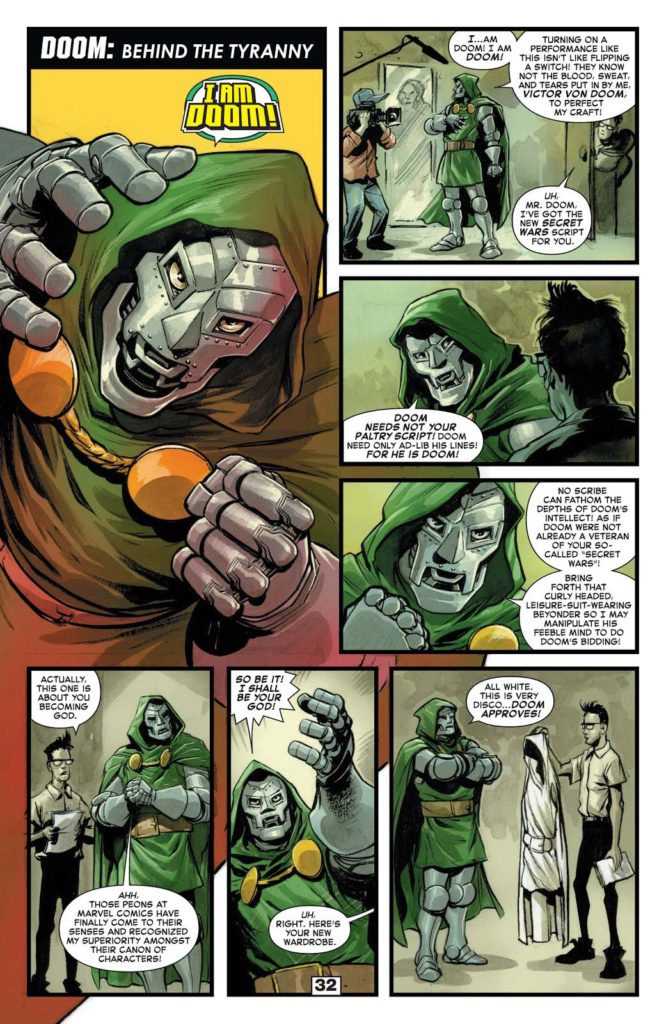
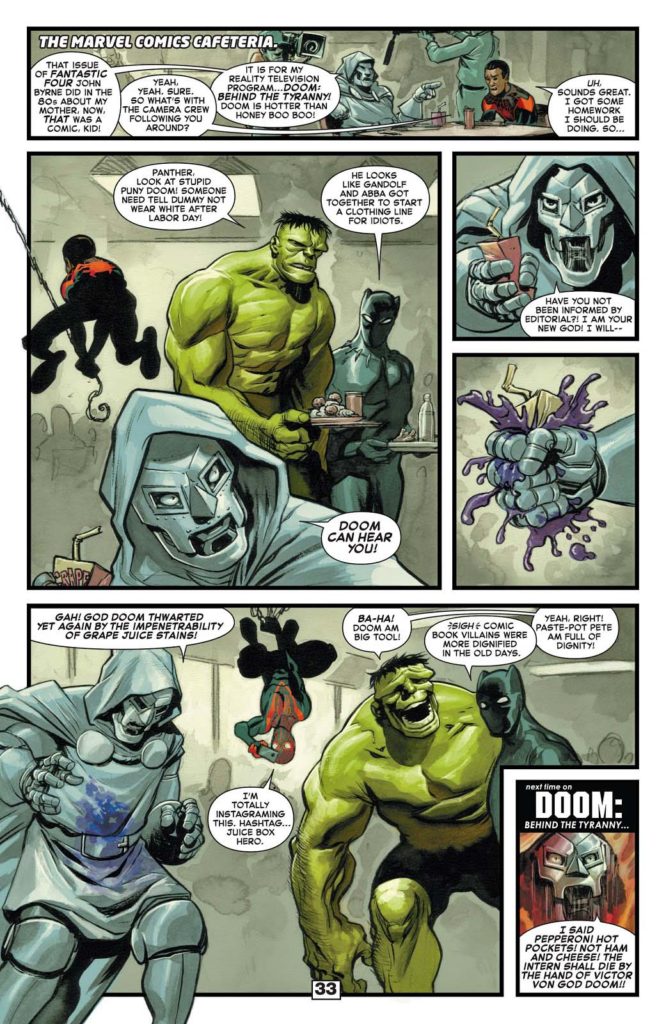
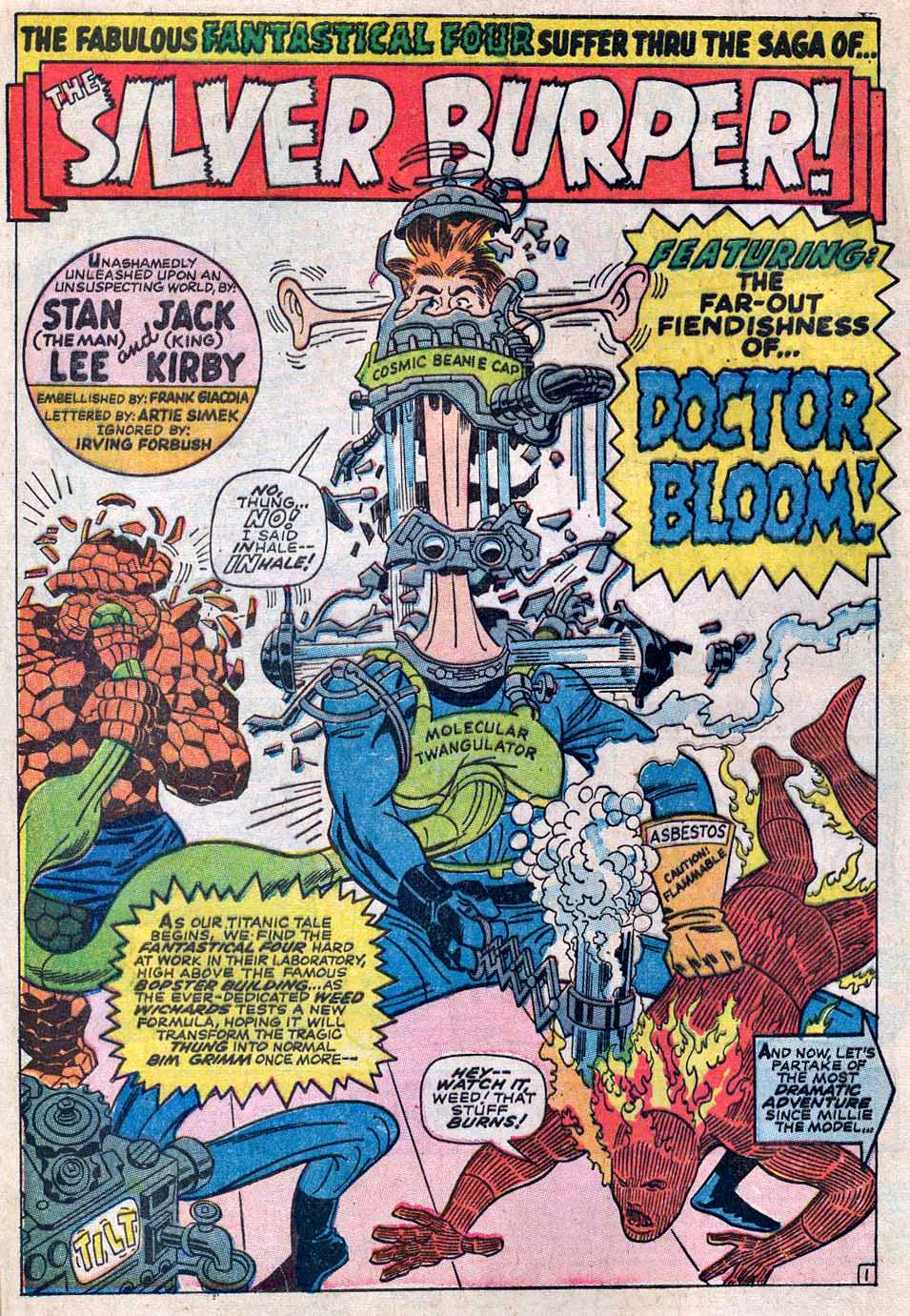
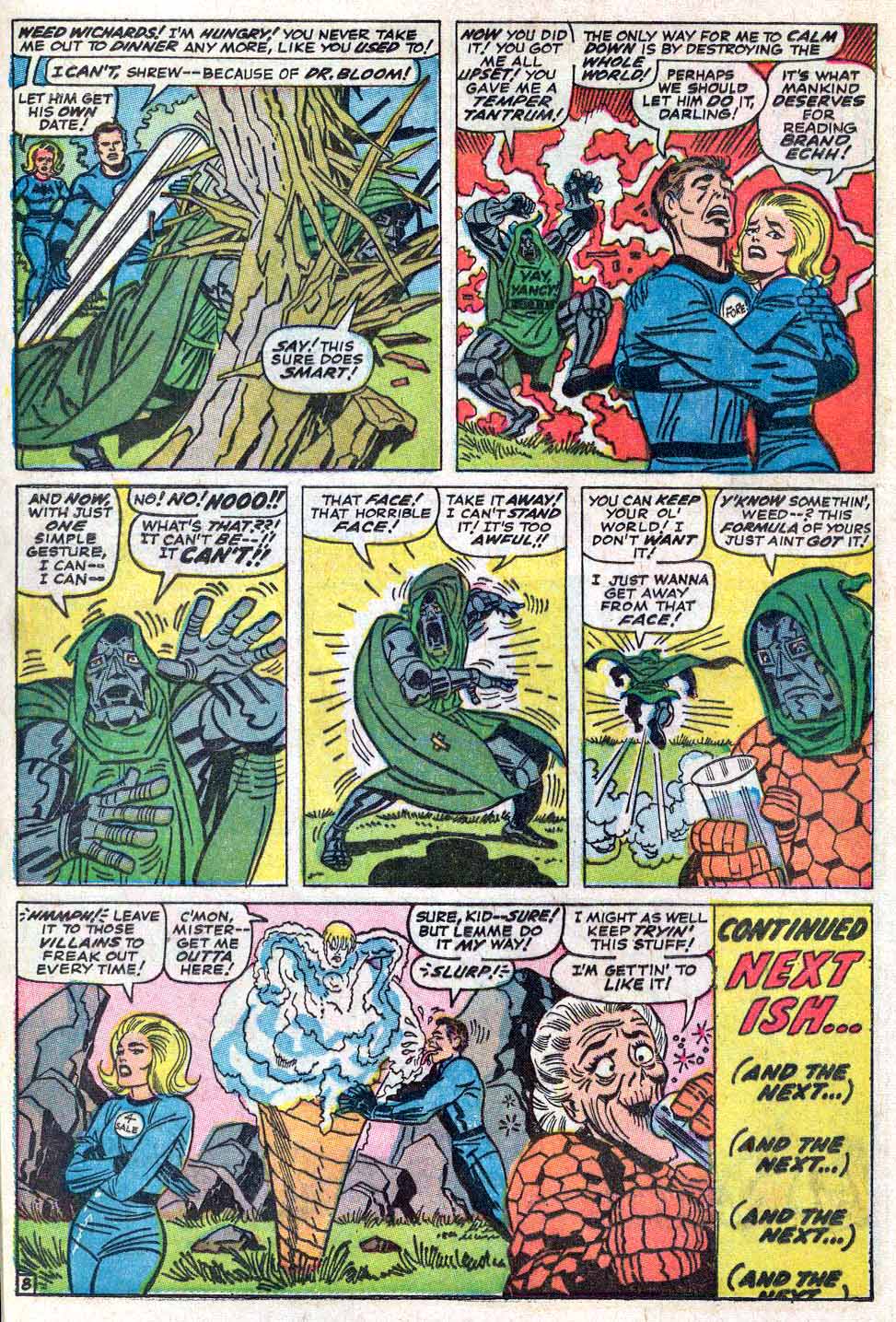
Eric Powell brings his offbeat sensibility to the good doctor in this two-page gag story featured in a Secret Wars parody comic.

I acquired this page directly from Eric at SDCC a few years back, and apparently the other page had just sold to another lucky purchaser.

Missed it by that much.

(Full two-pager presented below.)