Ultimate Avengers #3, December 2009, and Avengers Assemble Season 2 (Marvel Universe) #4, 2015
Continuing our tribute to Captain America’s 80th anniversary.
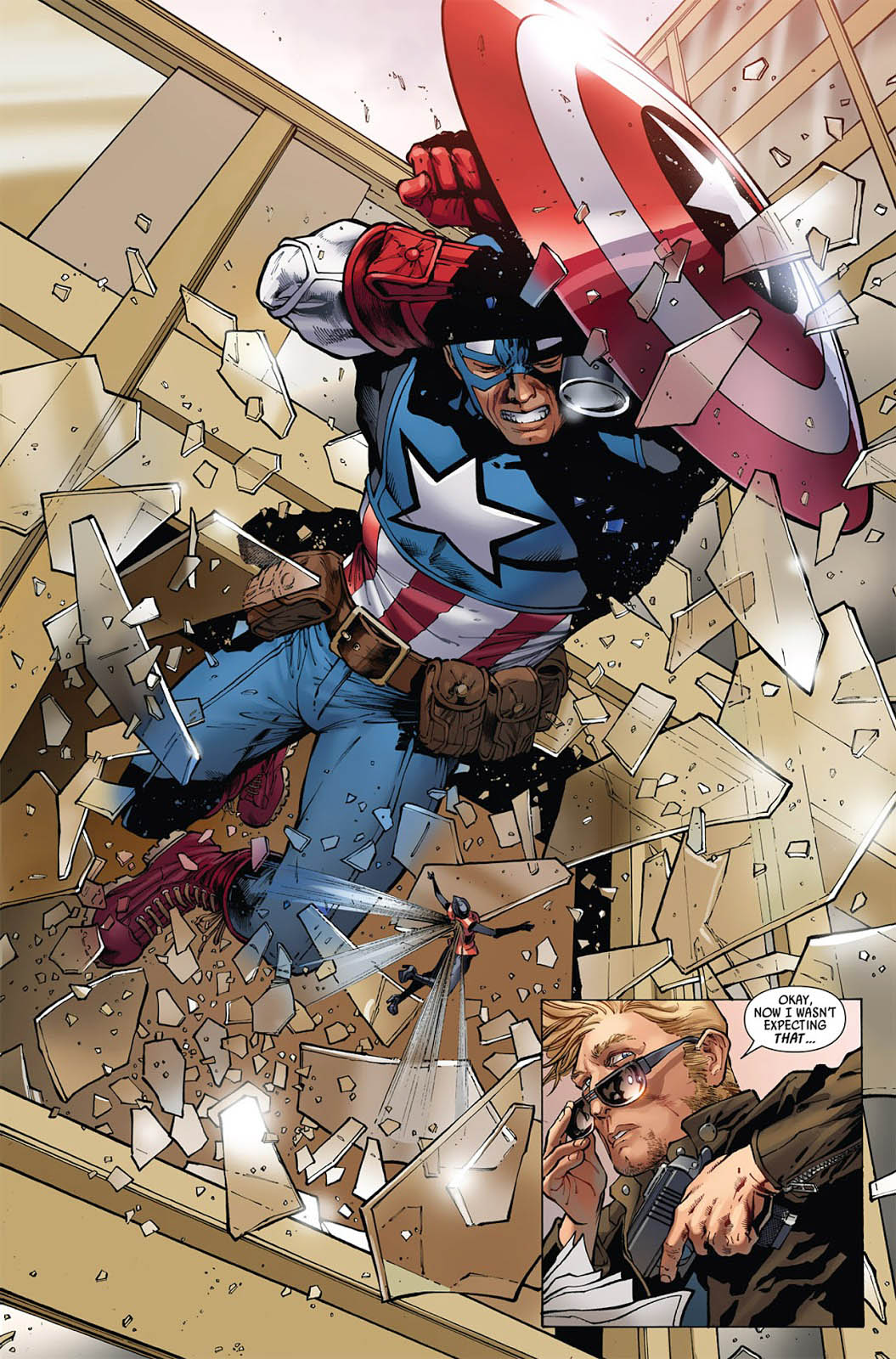
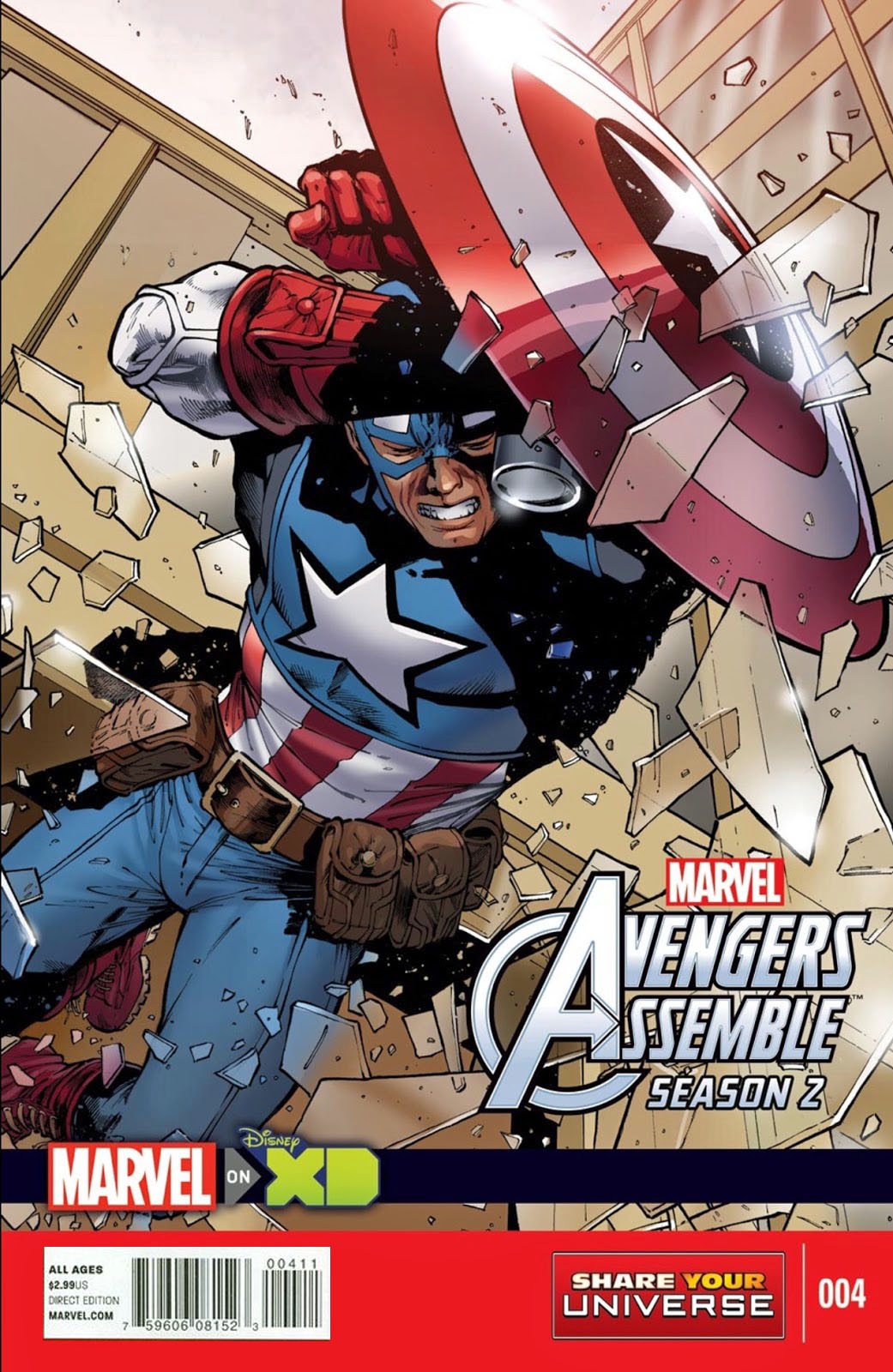
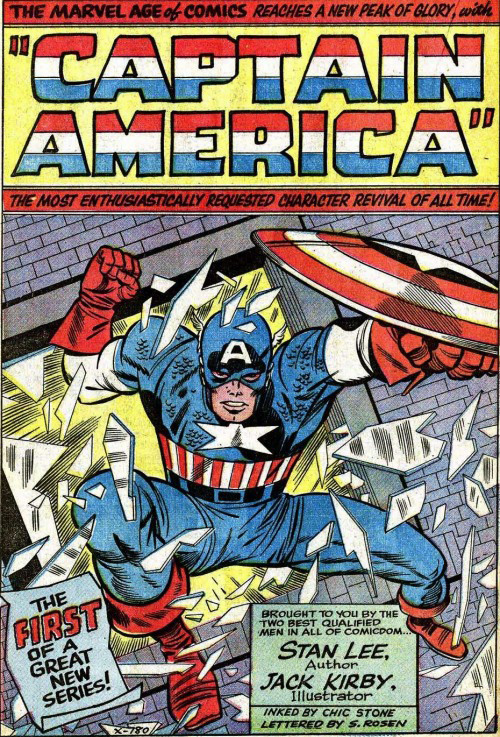
Captain America breaks a lot of a glass. In his very first solo appearance in the Silver Age, (Tales of Suspense #59) Jack Kirby has him jumping directly at the reader, shattering a window as he does.
Maybe that shield gives him a sense of security. After all, the super soldier serum made him super strong, but not invulnerable. And Batman and the other “ordinary” (no enhanced super-powers) heroes tend to break a bit less glass.
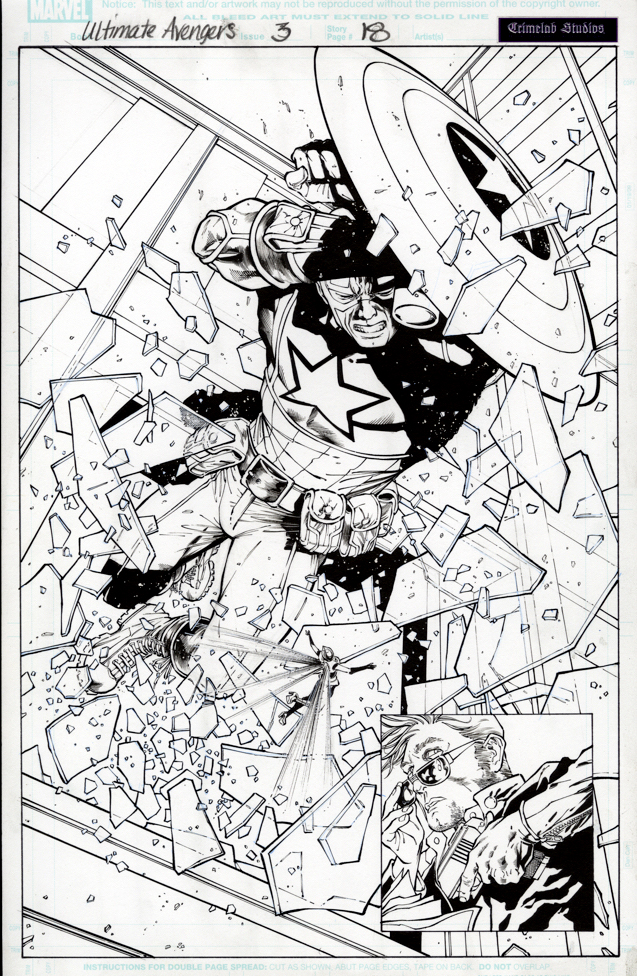
This great splash page features rouge Captain America doing the glass bit with tremendous drama and detail by the terrific Carlos Pacheco.
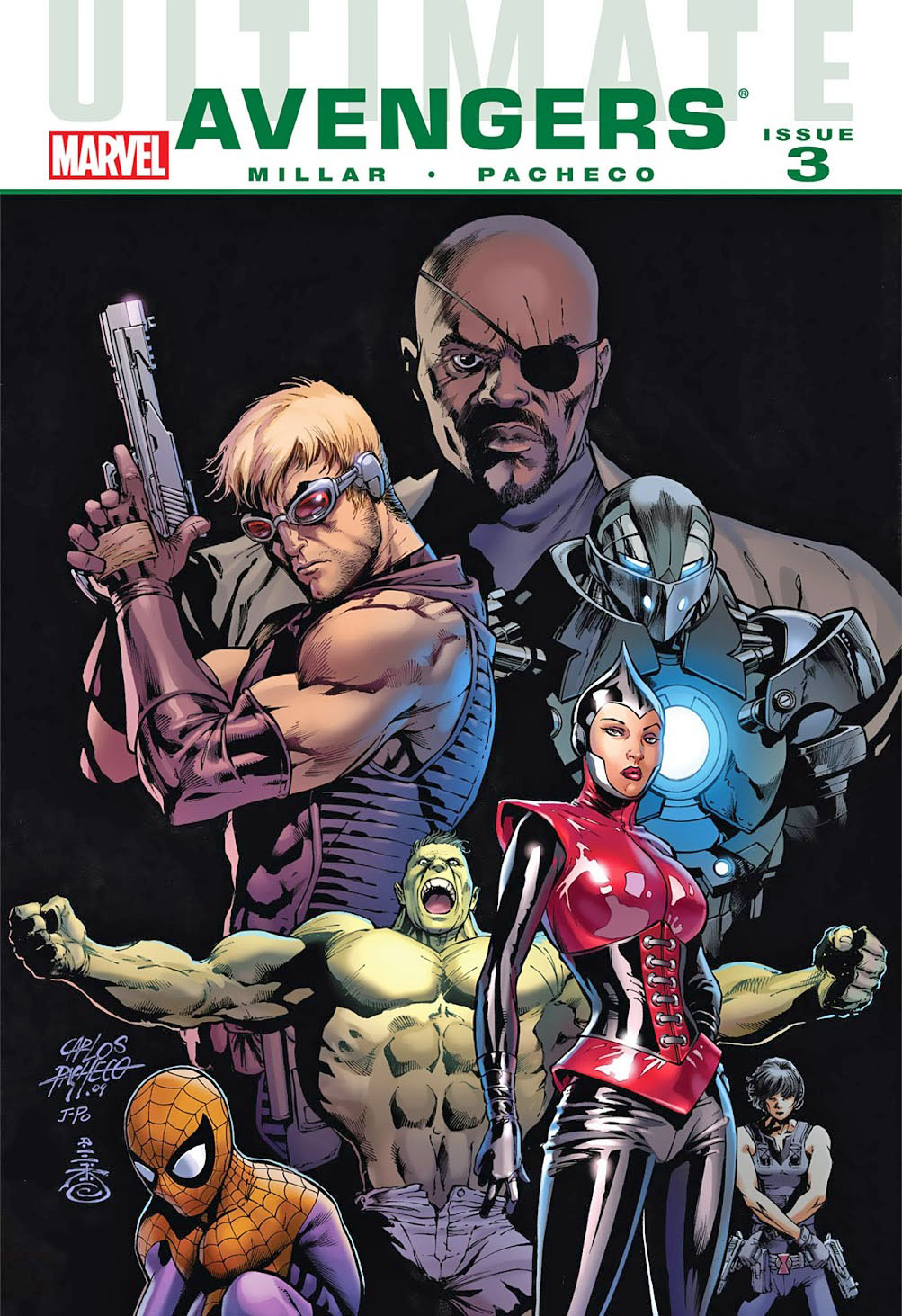
And the art is so dynamic that Marvel used again six years later as a cover for an animated series cover.
That’s pretty cool —it could have been used as a cover the first time around, but second time’s the charm apparently.
The splash becomes a cover a few years later.
Stan Lee and Jack Kirby break the glass in Captain America’s very first Silver Age solo appearance.
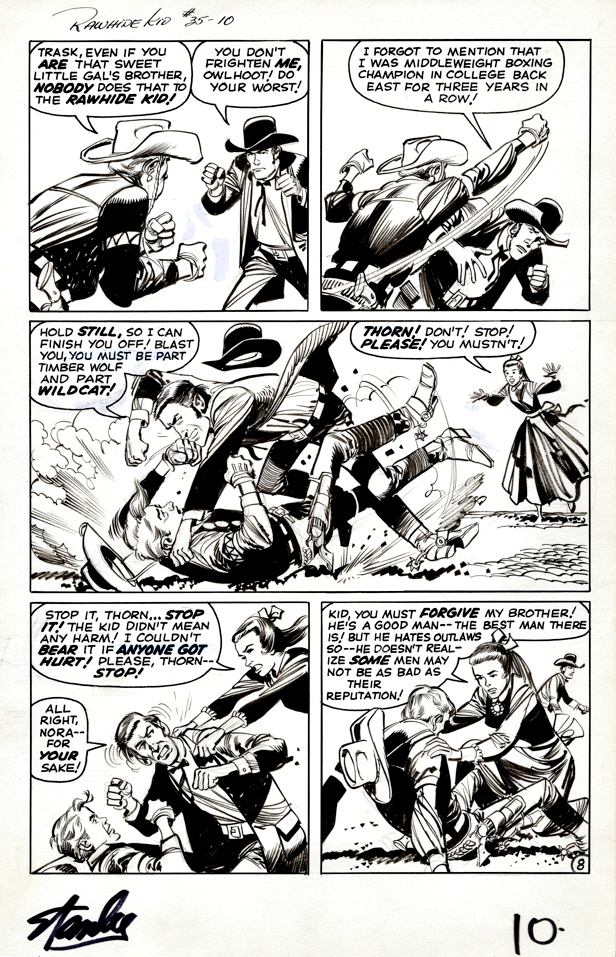
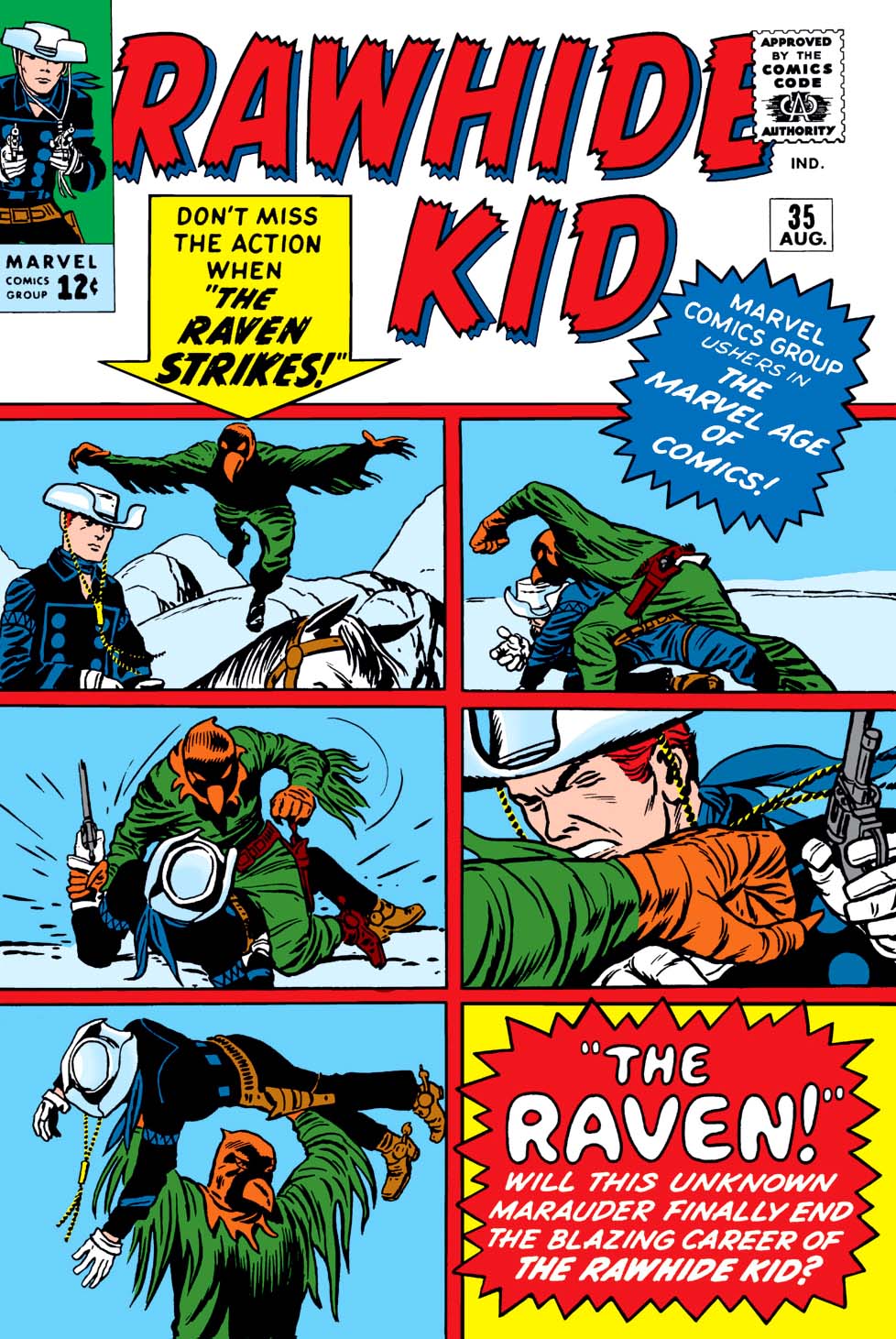
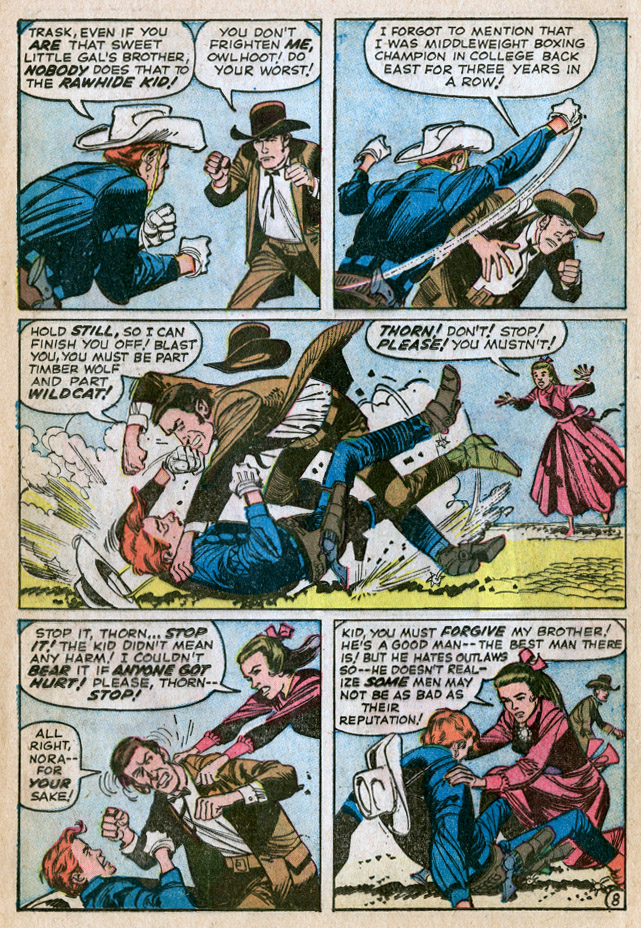
Jack Davis and Stan Lee only worked together a handful of times. Jack drew six Rawhide Kid stories at the dawn of the “Marvel Age,” after Jack Kirby became too busy designing and developing Marvel’s earliest superheroes.
Davis’ cartoony style is unmistakable, and definitely a departure from the typical Marvel western art line-up that included Kirby, Dick Ayers and Larry Lieber, among others.
These Davis Western stories are some of the final color comic book stories to he ever drew. Shortly after their publication, Davis returned to Mad Magazine and became a Mad mainstay for more than 20 years.
And of course, we can’t forget the Time Magazine covers. The TV Guide covers. The film posters. The advertising work. Trading cards for Topps. Etc.
Just a few things to occupy the drawing board of one of America’s most talented and recognizable commercial illustrators.
Too bad Stan couldn’t persuade Davis for a bit more work. I’m not sure how it would have worked out on the traditional superhero stories * but a few short pieces for Not Brand Echh would have been right on the nose.
(*Well, actually I’m certain it would have been jarring to see Jack on “straight” superhero stories…)
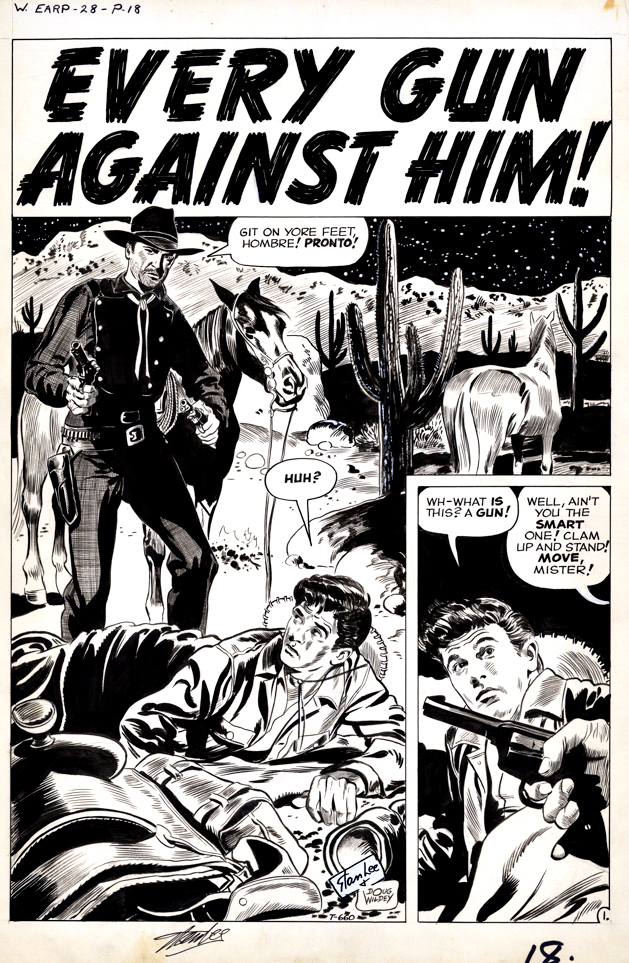
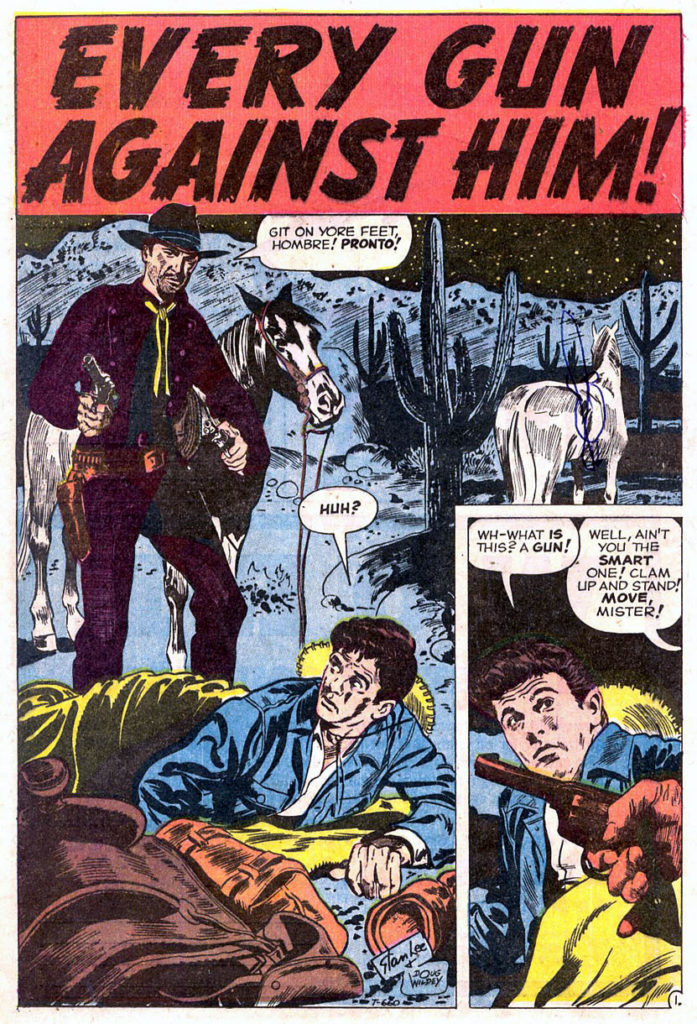
Here’s a dramatic title page by the legendary Doug Wildey from 1960.
My reaction to the page, however, pales in comparison to the one from the story’s co-creator, Stan Lee.
Back in about 2010, we visited Stan in his Beverly Hills office to get some signature plates signed for the first John Romita Spider-Man Artists Edition. Stan’s “people” were kind enough to let us bring some personal items to get signed as well, so I brought a few pages of original art with me.
Stan, who was telling stories and singing while he was signing (Yes, singing, not a typo for signing. Story for another day.) stopped dead in his tracks when he saw this page of art.
He stared at it quietly for a few moments — given the speedy pace of our morning, it seemed like an eternity — and you could see pleasant memories wash over his face. And then the big Stan Lee smile:
“Doug Wildey. Wow. He was great. So terrific. I loved his stuff. I wish we had a chance to do more together.”
He handed the page back to me, still beaming, still examining it up and down as he slowly passed it back. I had seen Stan sign thousands of items; many of them with fond remembrances, but nothing quite like this.
A great page, certainly. But perhaps an even greater memorable moment — for the two of us.
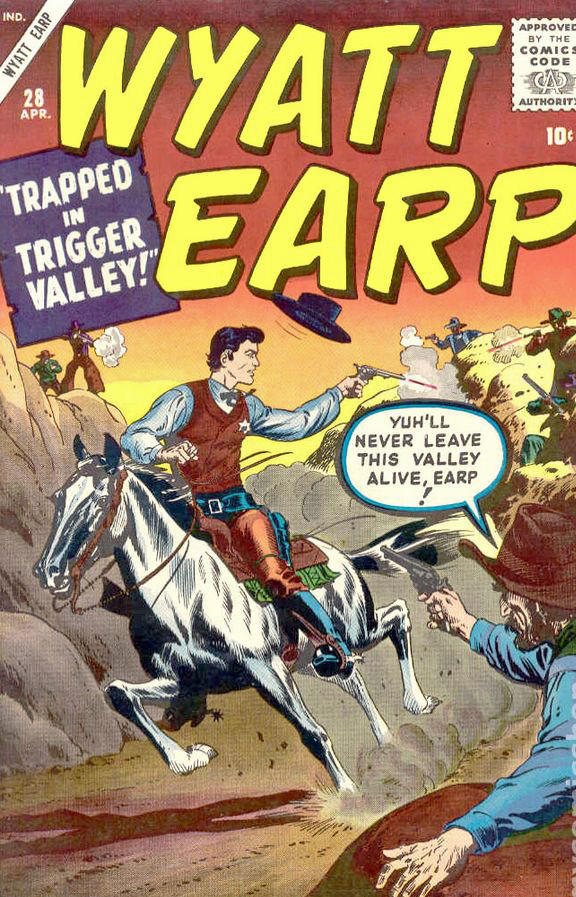
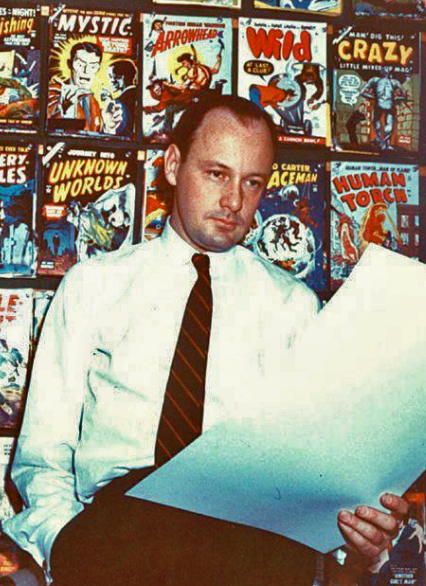
Stan in the Timely / Atlas / Marvel offices in 1954, just a few years prior to the publication of the Earp story.
Happy Birthday to the great Steve Ditko, who would have turned 93 today.
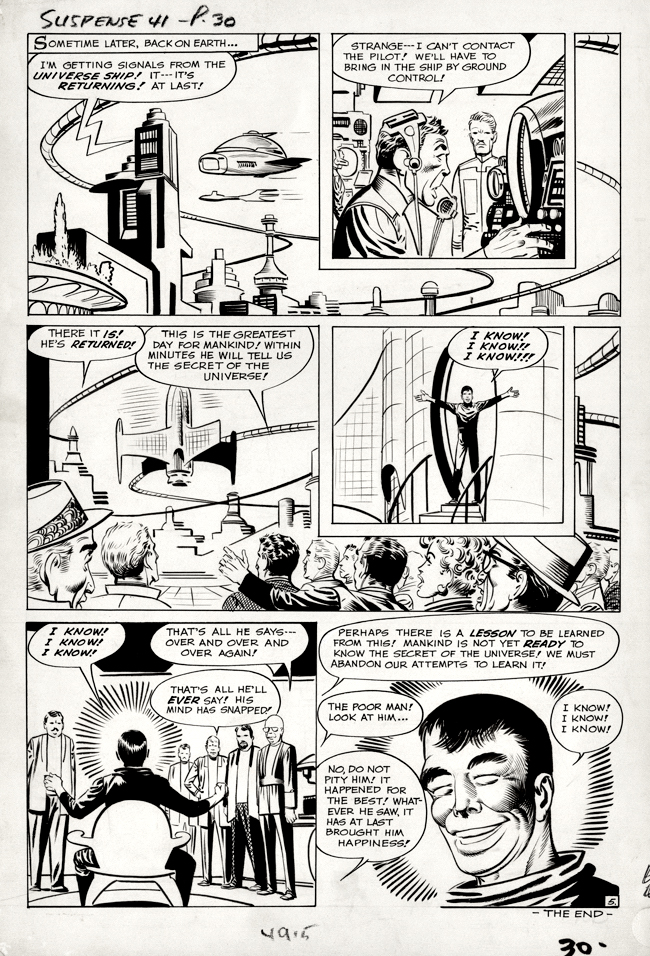
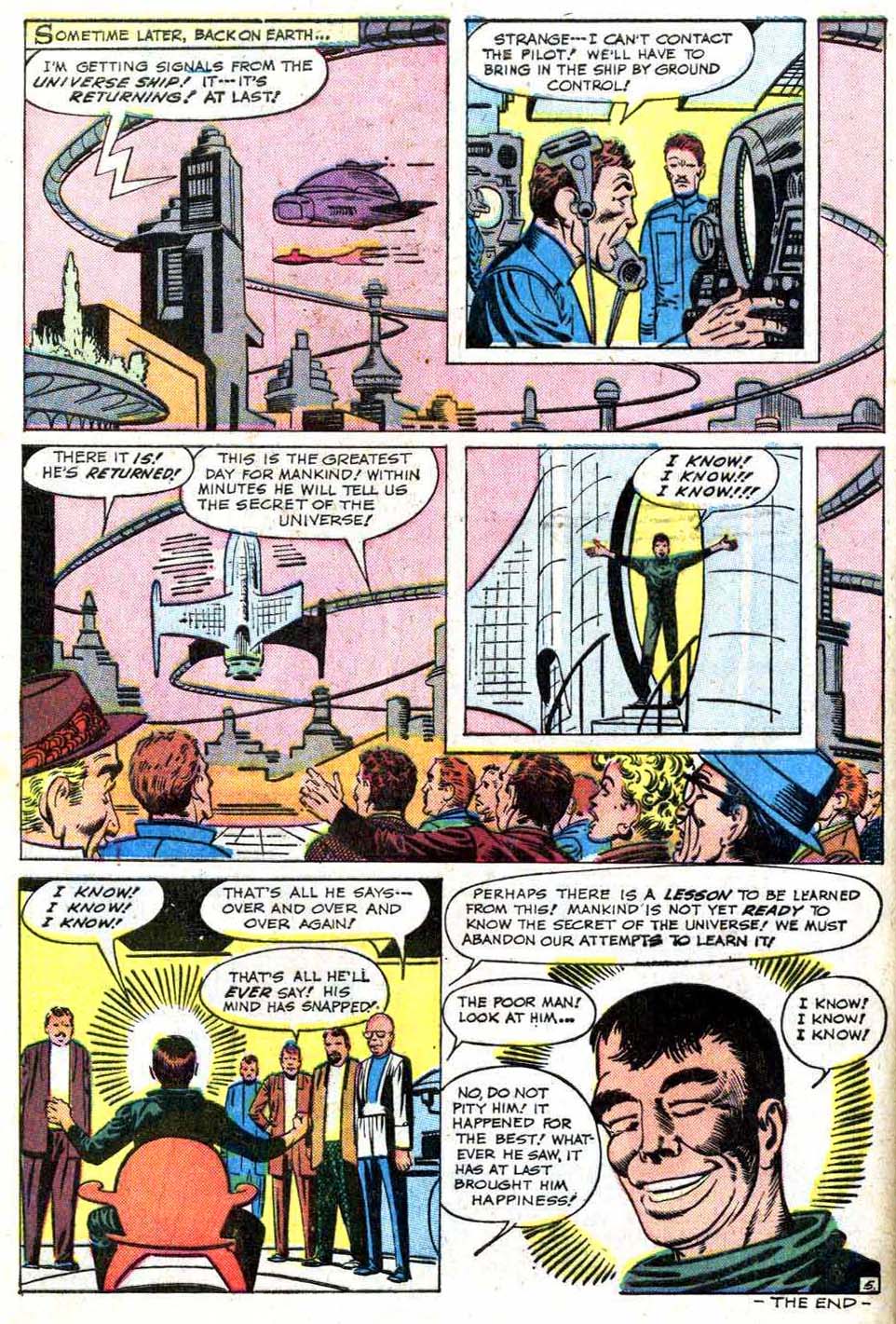
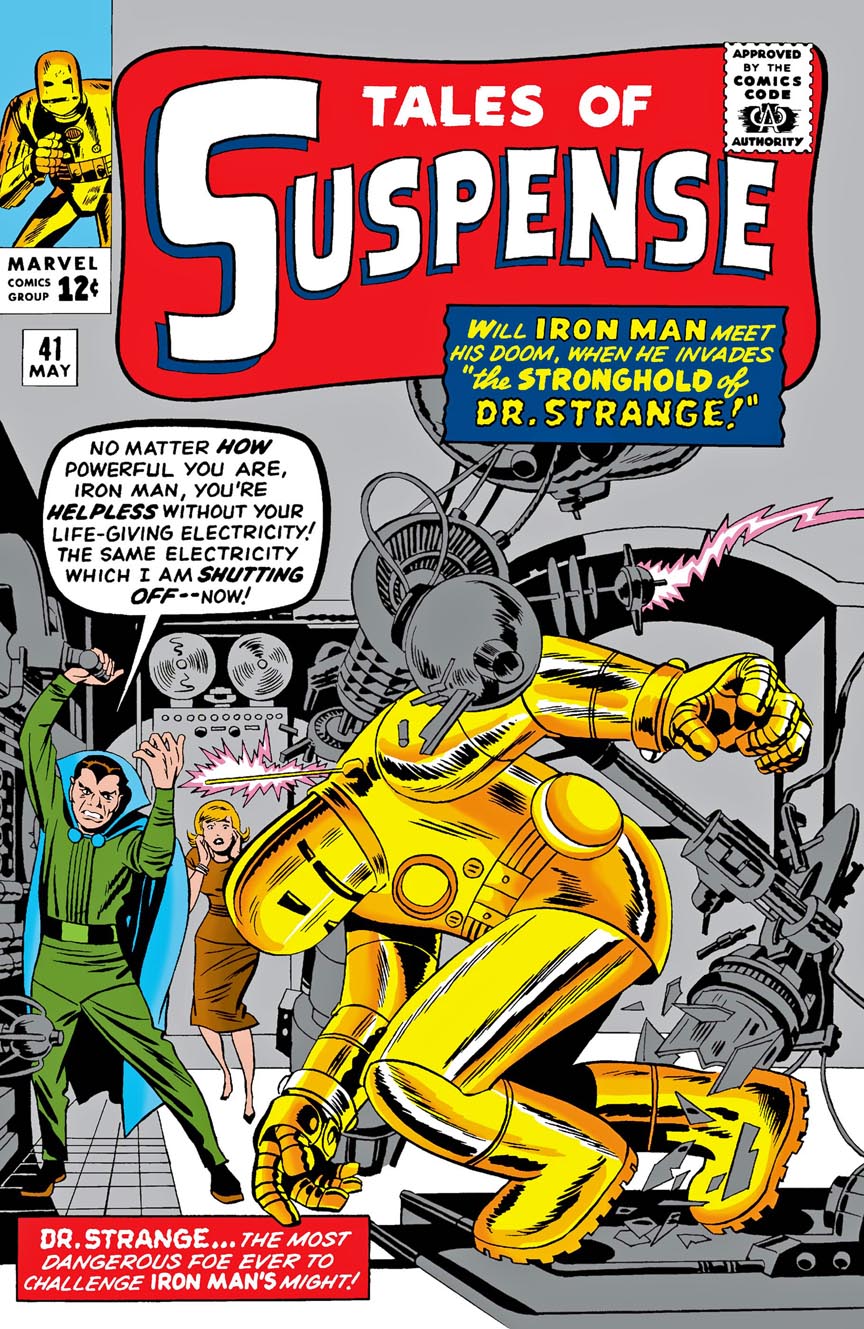
Ditko drew — and possibly wrote (Stan Lee on credits, but that sometimes is overstated) — this neat little science fiction back-up story in the third issue of Iron Man.
These SF and horror stories would soon become rarities as publisher Martin Goodman and Editor Lee replaced them with a new line-up of superheroes, including a certain web-crawler that would bring Ditko more notoriety than anything else he would create.
The Amazing Spiderman #1 had just hit the newsstands. The rest as they say…
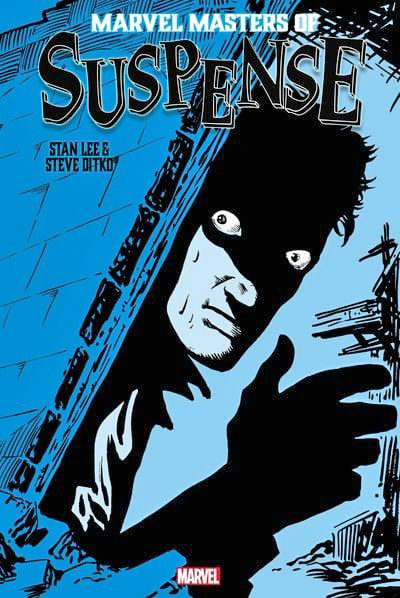
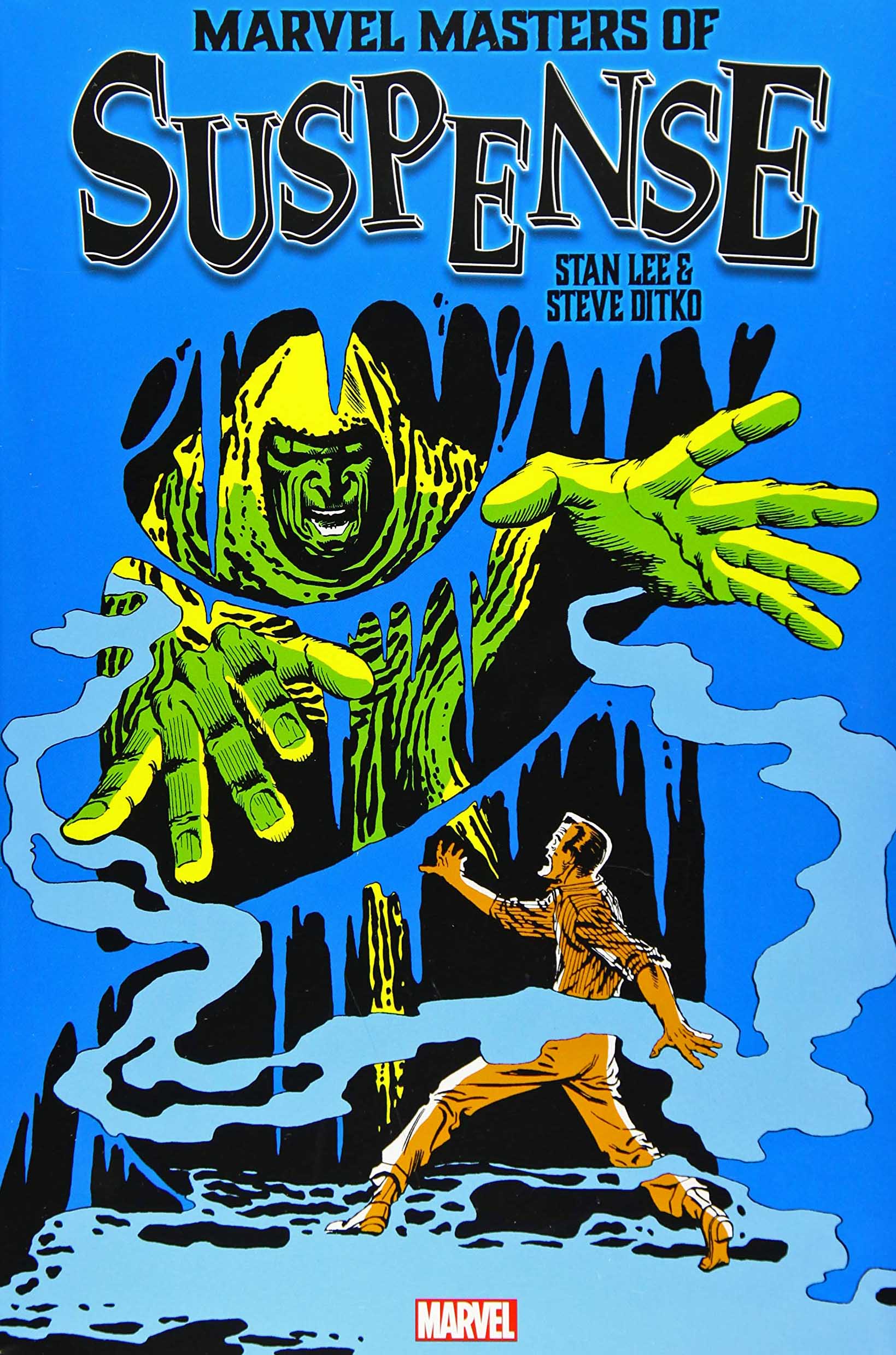
Marvel did a nice job reprinting all of Stan Lee’s and Steve Ditko’s horror and SF stories in this two-volume series.
Pin-up, Rocket’s Blast and Comic Collector (RBCC) #4, 2003
Kraven the Hunter, a classic Spider-Man nemesis, is getting his own film?
Er… ok.
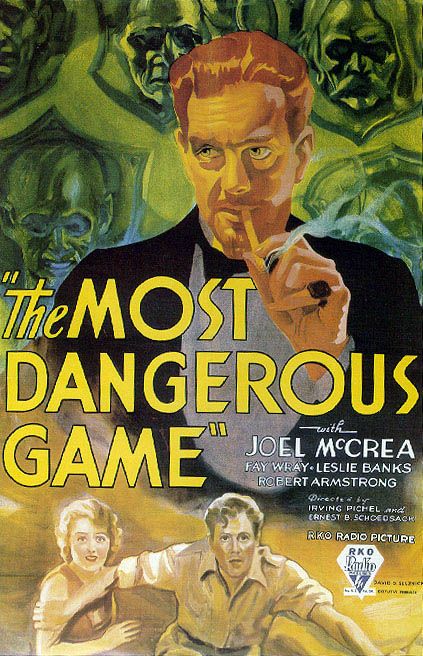
I like the character, especially since I’ve been a fan of the legendary Richard Connell short story “The Most Dangerous Game” since, well, forever.
But… Kraven without Spider-Man is useless to me. Actually all of the Spider-man villains are pointless without the main protagonist.
What, exactly, was the point of the Venom film. A bad guy we root for? Especially one who looks like a monstrous version of… Spider-Man. Huh? What? Tom Hardy was fine as Eddie Brock as the title character, and the film looks great, but it is ultimately pointless. No Spider-Man, no Venom, as far as I’m concerned.
Of course, none of this apparently bothered mass audiences whatsoever. Venom grossed more than $800 million worldwide.
And so, back to Kraven. I would love to see him, even as cameo in Spider-Man 3, before we get to a feature length Kraven film.
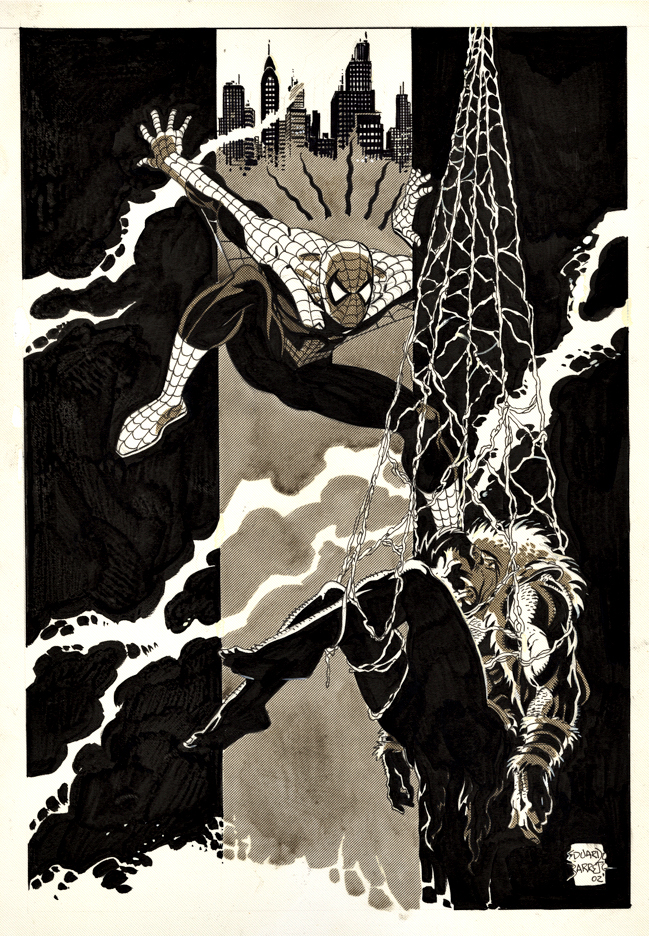
In the meantime, the late Eduardo Barreto delivers a terrific splash of Spider-Man capturing Kraven with terrific tonal quality throughout. It appeared in Rockets Blast and Comic Collector #4, the final issue of the short-lived revival of the famous comics zine.
The one question I have is…. Why does Spider-Man look surprised? Did another wall-crawler grab Kraven first? Is this an early and prescient look at the Spider-verse?
But I digress.
Barreto, a Uruguayan artist who passed away at the too young age of 57, was better known for some excellent work at DC (New Teen Titans, Batman, Superman, et al), but his first actual US assignment was in fact Spider-Man, inking Marvel Team-Up #88, featuring Spidey and The Invisible Girl.
As for the actual Spider-Man 3 villains? Start with Scorpion, who is in the Easter egg at the end of Spidey 1, along with possibly the Vulture (ditto), and head down the rabbit hole from there…
And you never know… maybe Kraven after all.
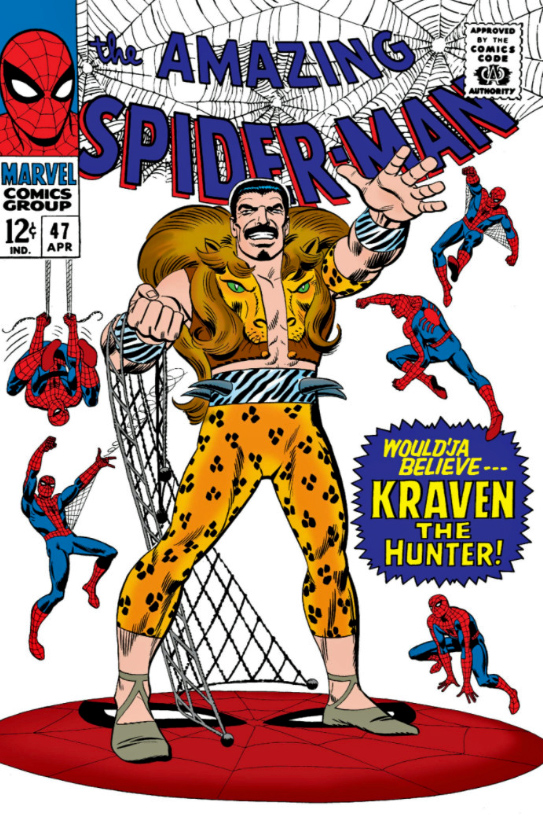
Kraven First appeared in Amazing Spider-Man #15, and returns about a month later with a few “friends” in ASM Annual #1.
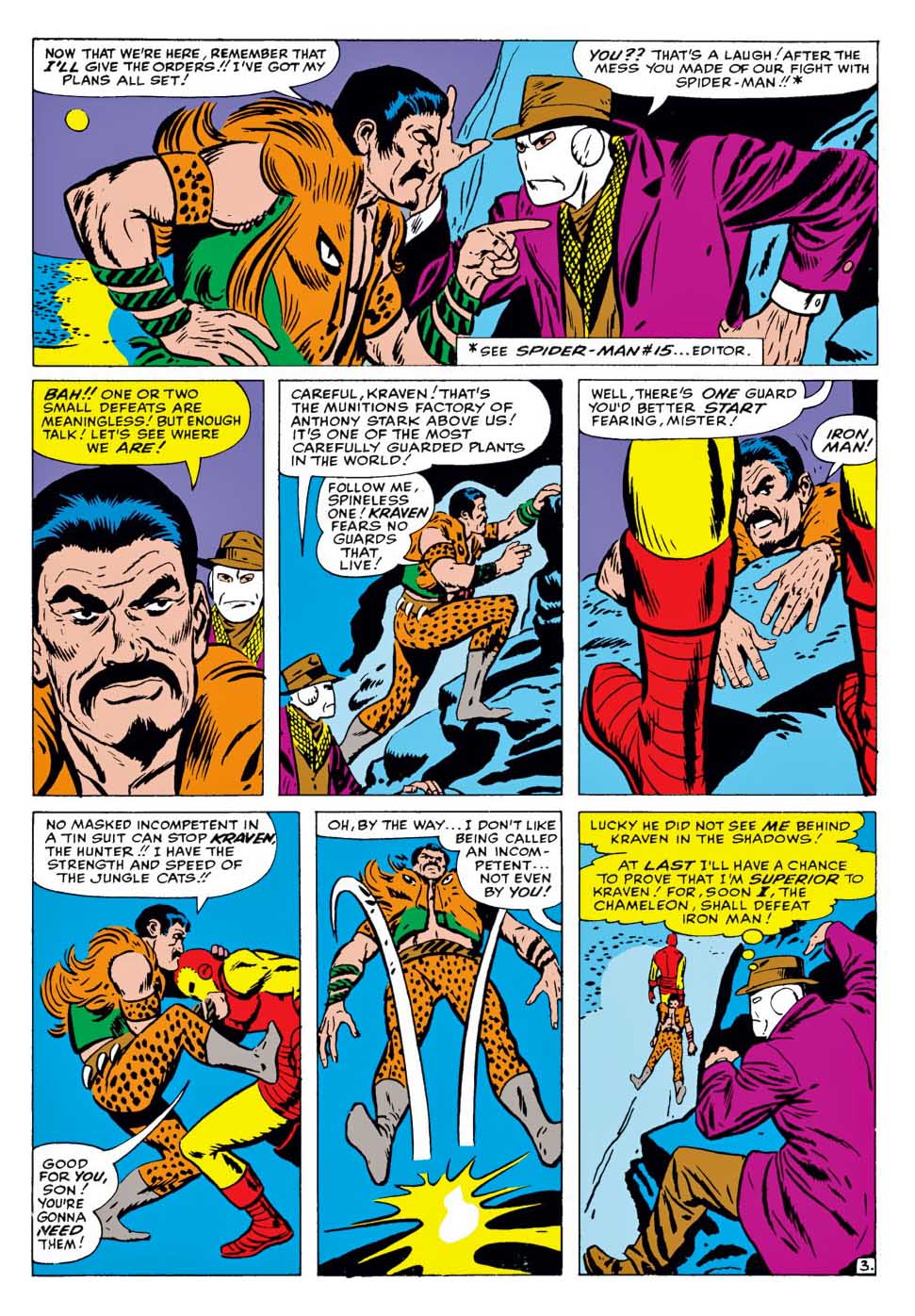
The shortest — and possibly most lopsided — hero vs. villain fight in history. Iron man takes care of Kraven in three panels to support narrative involving The Chameleon posing as Captain America. Convoluted, but hilarious.
Some of the earliest Marvel Comics I purchased at the candy store as a kid, and coincidentally about the time where John Romita comes into his own as Spider-Man’s artist. Compared to everything DC and the other companies were doing, this was heady stuff.
Kraven is the villain in one of the most beloved and critically Spider-Man stories of all time, “Kraven’s Last Hunt”. Also pictured: RBCC #4 where the Barreto pin-up appears, and the film poster for the first adaption of Most Dangerous Game, an obvious inspiration for the Kraven concept.
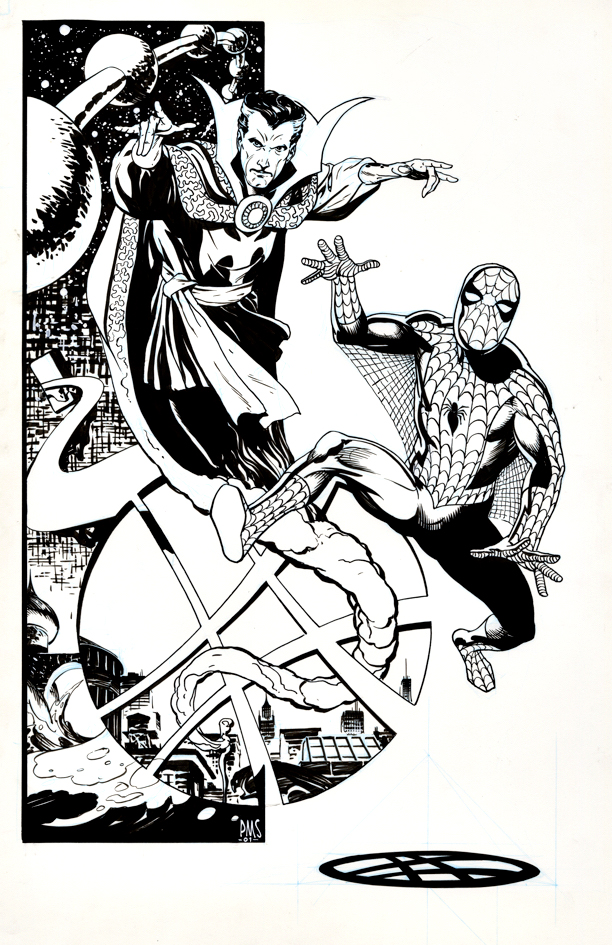
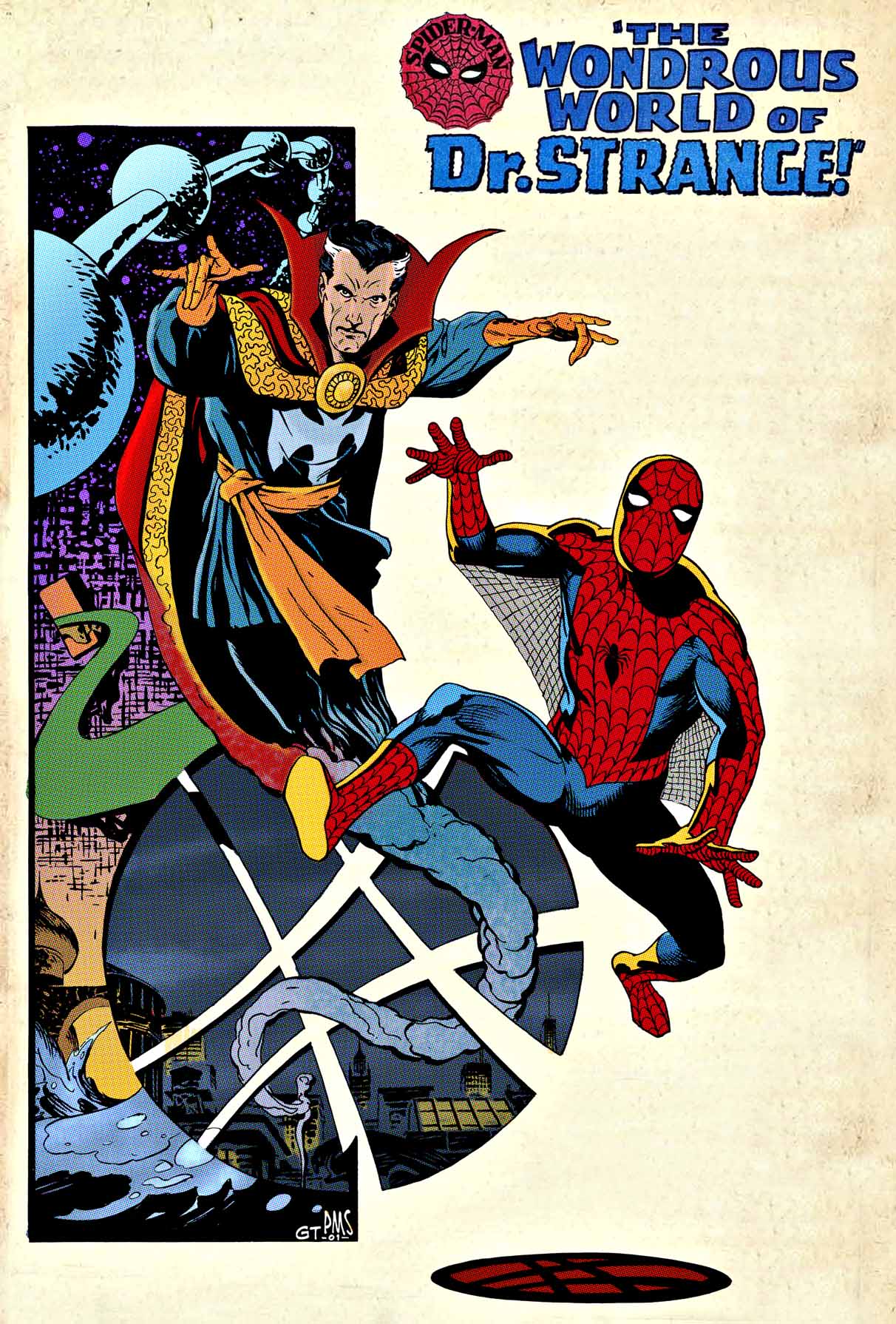
Paul Smith, Pin-up tribute to Steve Ditko, ASM Annual #2 (1965), 2001
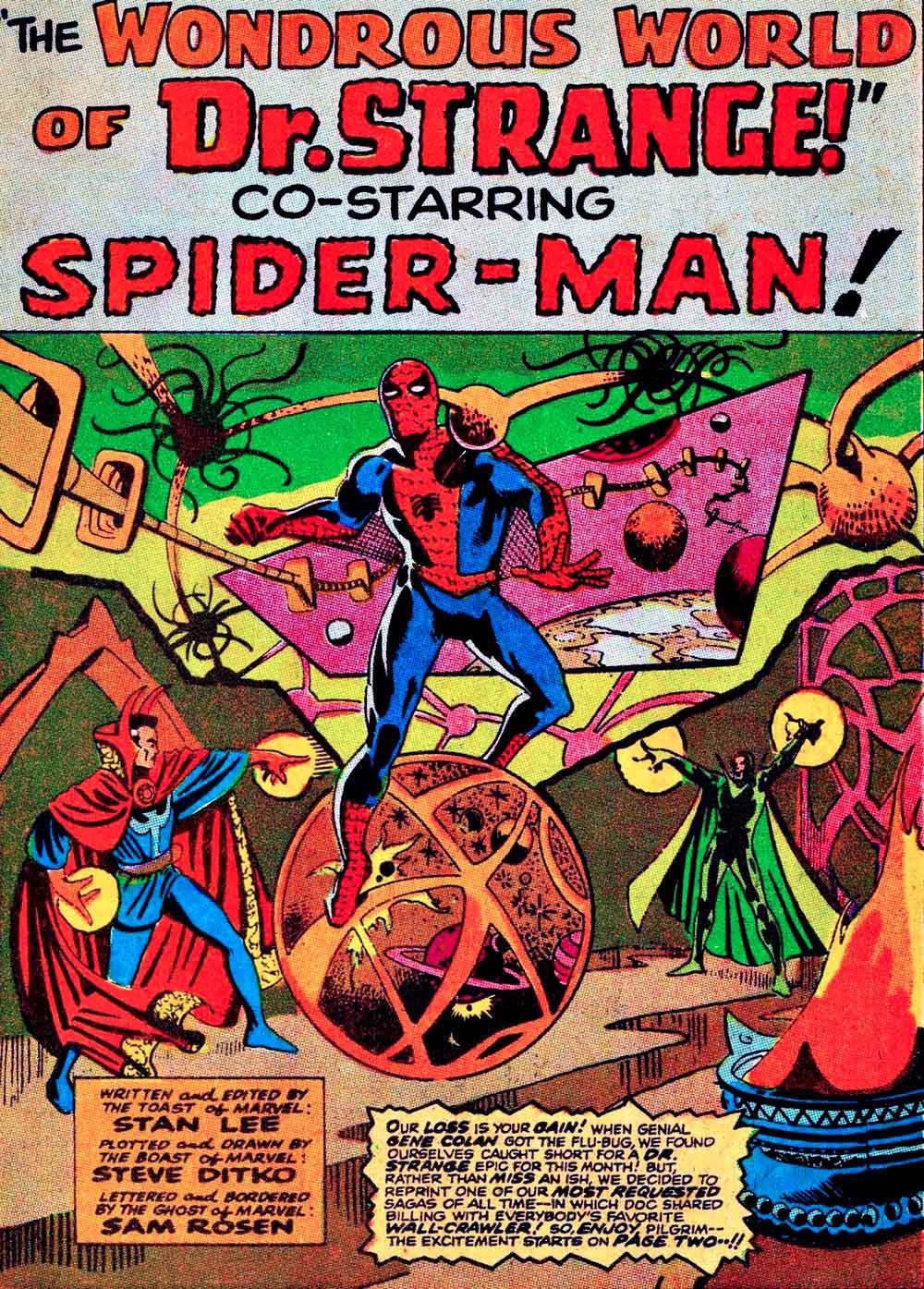
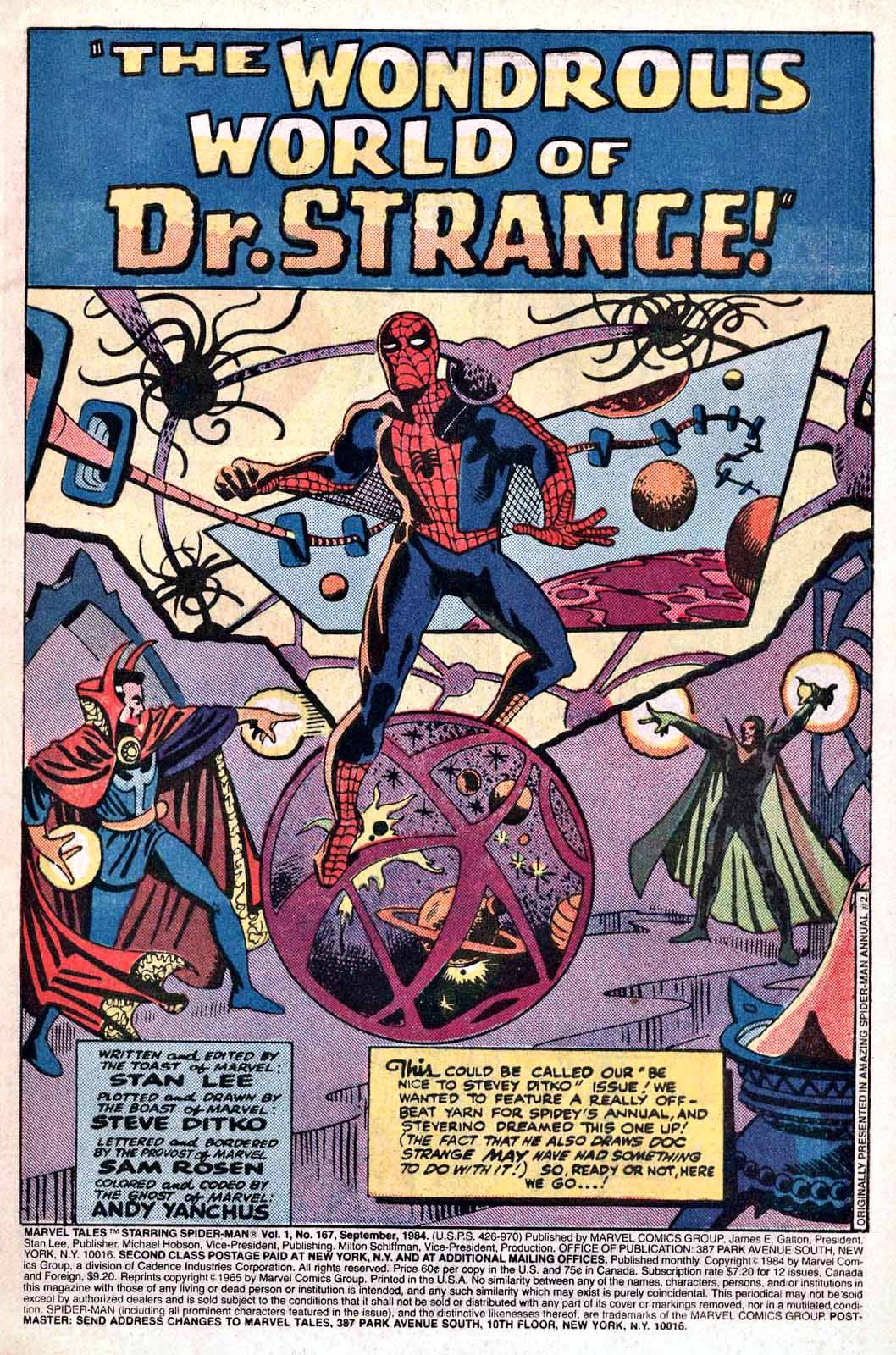
Elegant, clean and striking: The definitive Paul Smith style captures Steve Ditko’s classic (and only) pairing of Spider-Man and Doctor Strange in Amazing Spider-man Annual #2 from September 1965.
Seeing the pairing of these now iconic Marvel cinematic characters creates some wistfulness here.
Last week, Disney postponed the feature film Black Widow once again. It’s now scheduled for May 2021, a full year behind schedule. 2020 will be the first year without a film in The MCU since 2009.
And, even when the films were less frequent in the early days, a Fox or Sony Marvel film typically filled in the gaps.
(No, I’m not going to act as if the recent New Mutants counts. More people have probably seen the officially unreleased Roger Corman Fantastic Four film than New Mutants.)
Now of course, Covid has thrown the entire upcoming film schedule into disarray. Eternals and Shang-Chi also moved, and swapped positions in the queue — for now.
After that, it’s a bit of a wild card.
The next three films should be Spider-Man 3, Doctor Strange 2, and Thor 4… but, we’ve seen differing revised release dates for those just in the last week.
Then, the schedule becomes even hazier, but let’s put off that discussion until next week.
Meanwhile, up next this coming week on the blog:
Spidey, Doc, and of course… Thor. See you soon.
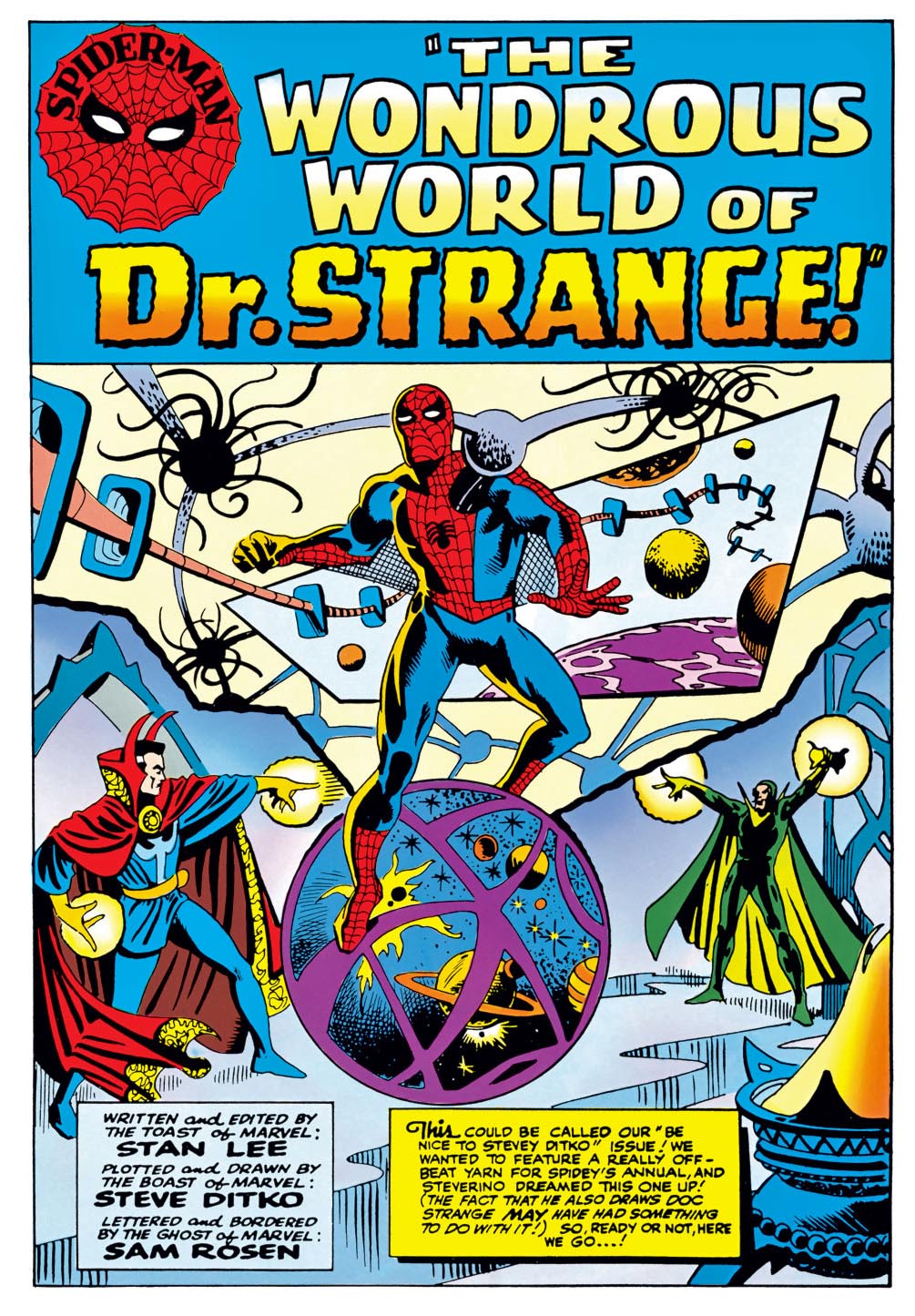
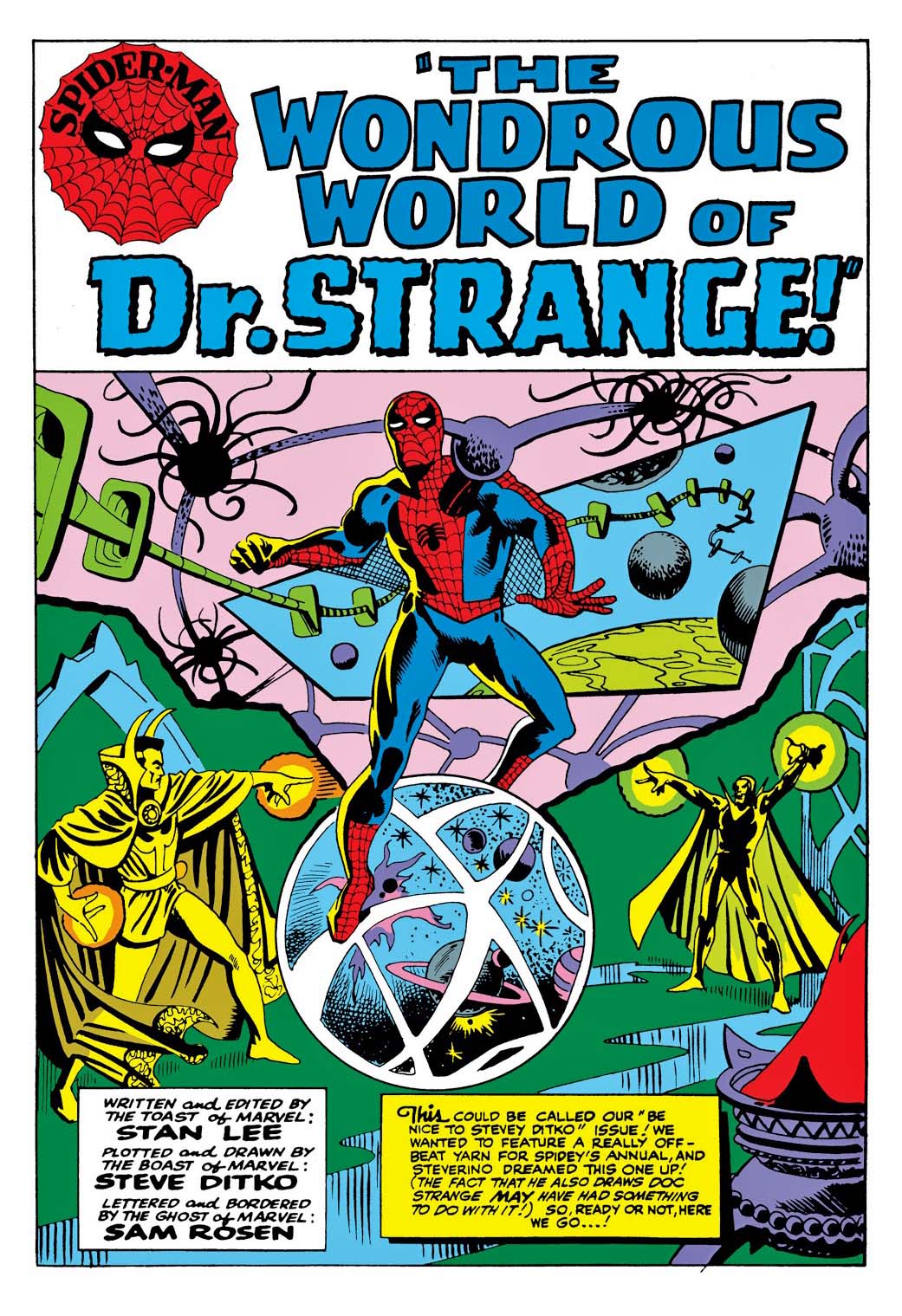
The current digital version of the original splash from Amazing Spider-Man Annual #2 in 1965.
Many reprints, many colors, and a few layout and production changes, too. From left to right, the original annual coloring re-mastered for digital, the coloring and other changes from the “emergency” reprint in Doctor Strange #179, and the re-colored (again) reprint from Marvel Tales.
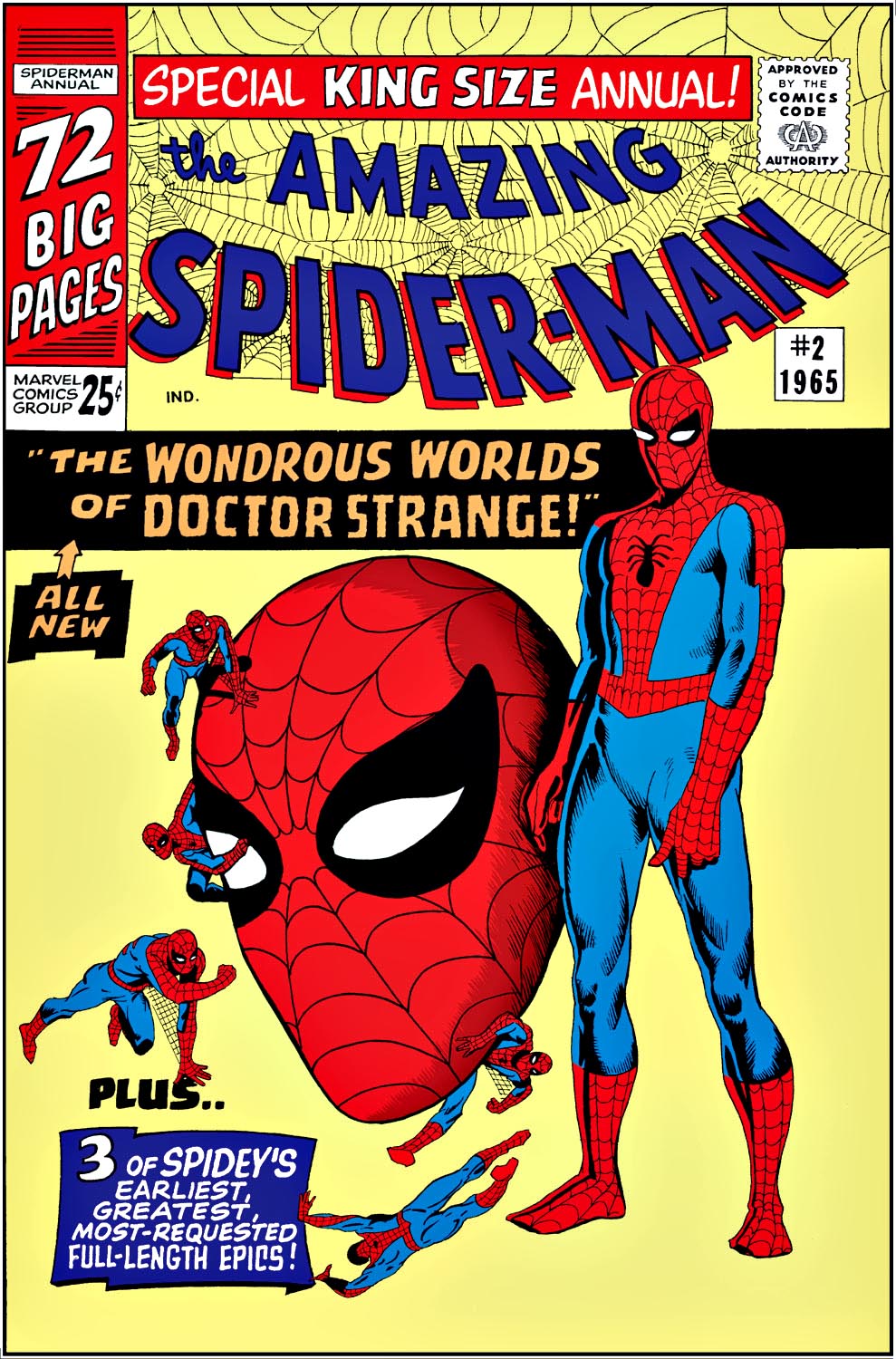
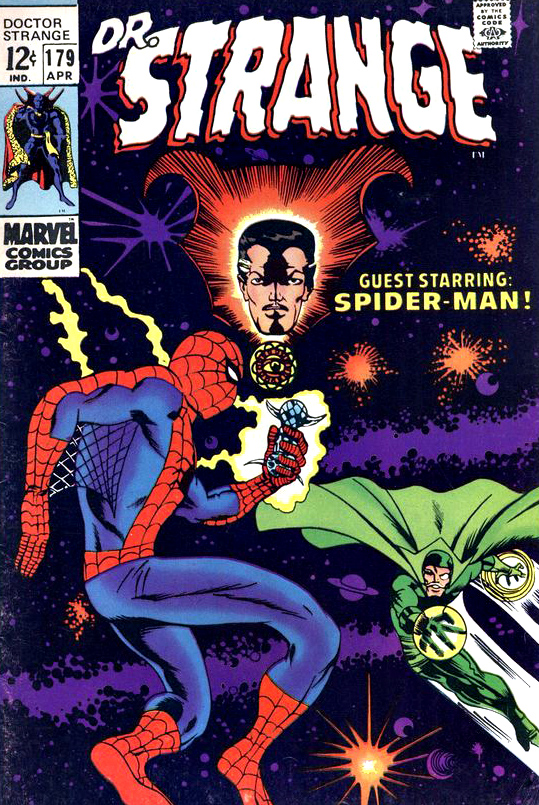
Here’s a bet: Ditko drew the cover for ASM Annual #2 well before he and Stan knew what the story would be. Otherwise… you’d probably see Doctor Strange actually on the cover. A few years later, and a deadline blown, Barry Smith was called on to provide a new cover for the story which was reprinted completely out of continuity in Doctor Strange #179.
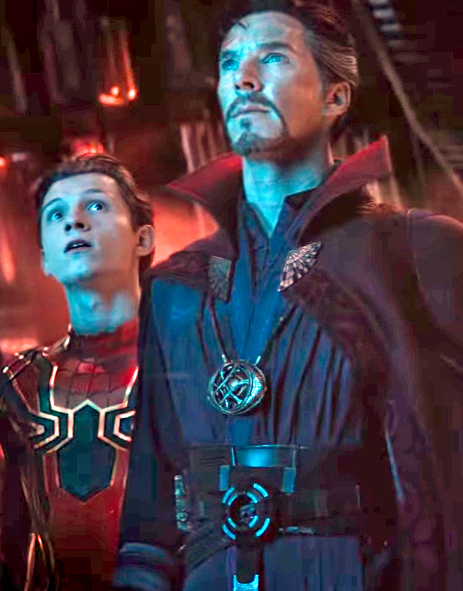
Digital colors by Gerry Turnbull, and, in the MCU, Spidey and Doc work together to try to defeat Thanos in Avengers Infinity War. It doesn’t go well… at first.
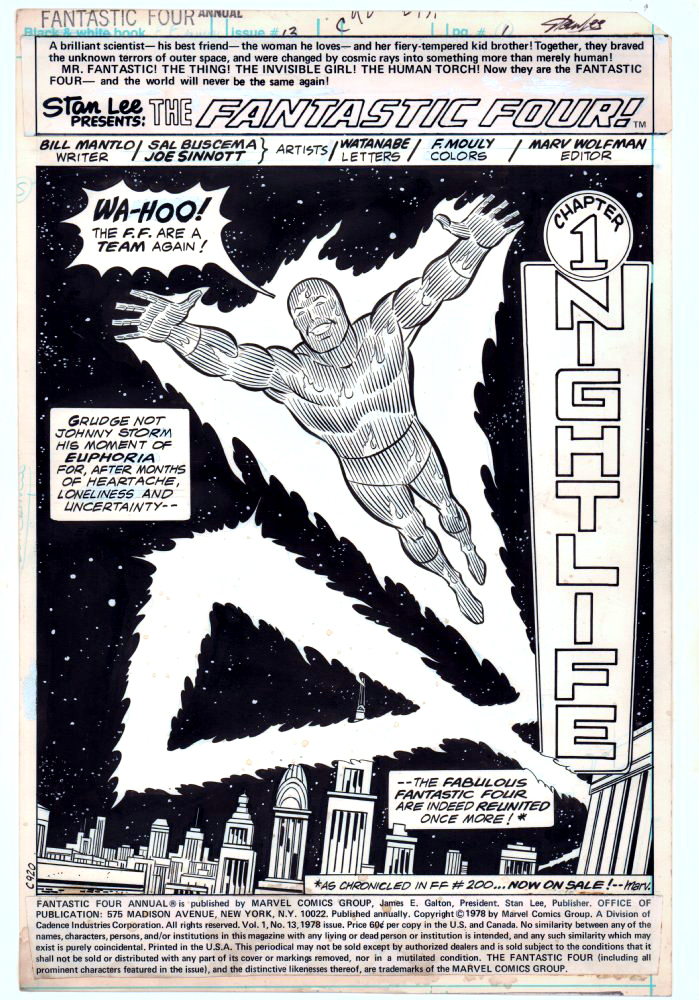
Joe Sinnott, easily one of the greatest comic book inkers of all time, and a terrific person to boot, passed away a few days ago. He was 93.
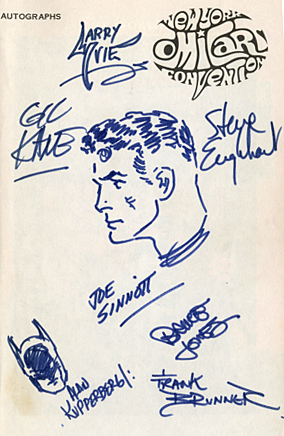
Joe drew the very first sketch I ever owned (and still do, BTW) in my convention program at my very first NYCC, 1972.
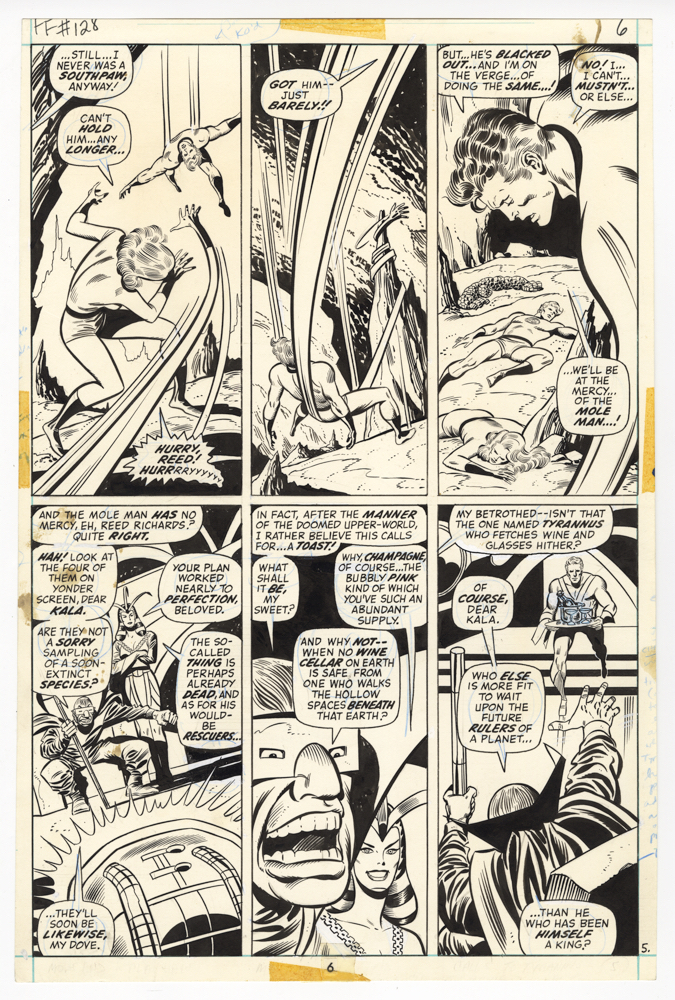
Reed Richards — Mr. Fantastic — was an appropriate choice, because Joe’s legendary inks on both Kirby and then John Buscema (and ultimately others) provided a polished, consistent look for “The World’s Greatest Comic Magazine.”
I own other art inked by him, but this one is extra special.
RIP Joe. Many thanks and salutes from all of us for your astonishing career.
Concluding our look at SHIELD on the eve of its 55th anniversary.
Gene Colan was a polarizing storyteller when it came to artistic style.
Fans either really loved his work (count me in that group) or didn’t like it at all. I could never figure that out. Of course his work didn’t look anything like the rest of Marvel Bullpen, but that was cool; his dynamic storytelling and extraordinary use of light and shadows was astonishing. To me, at least.
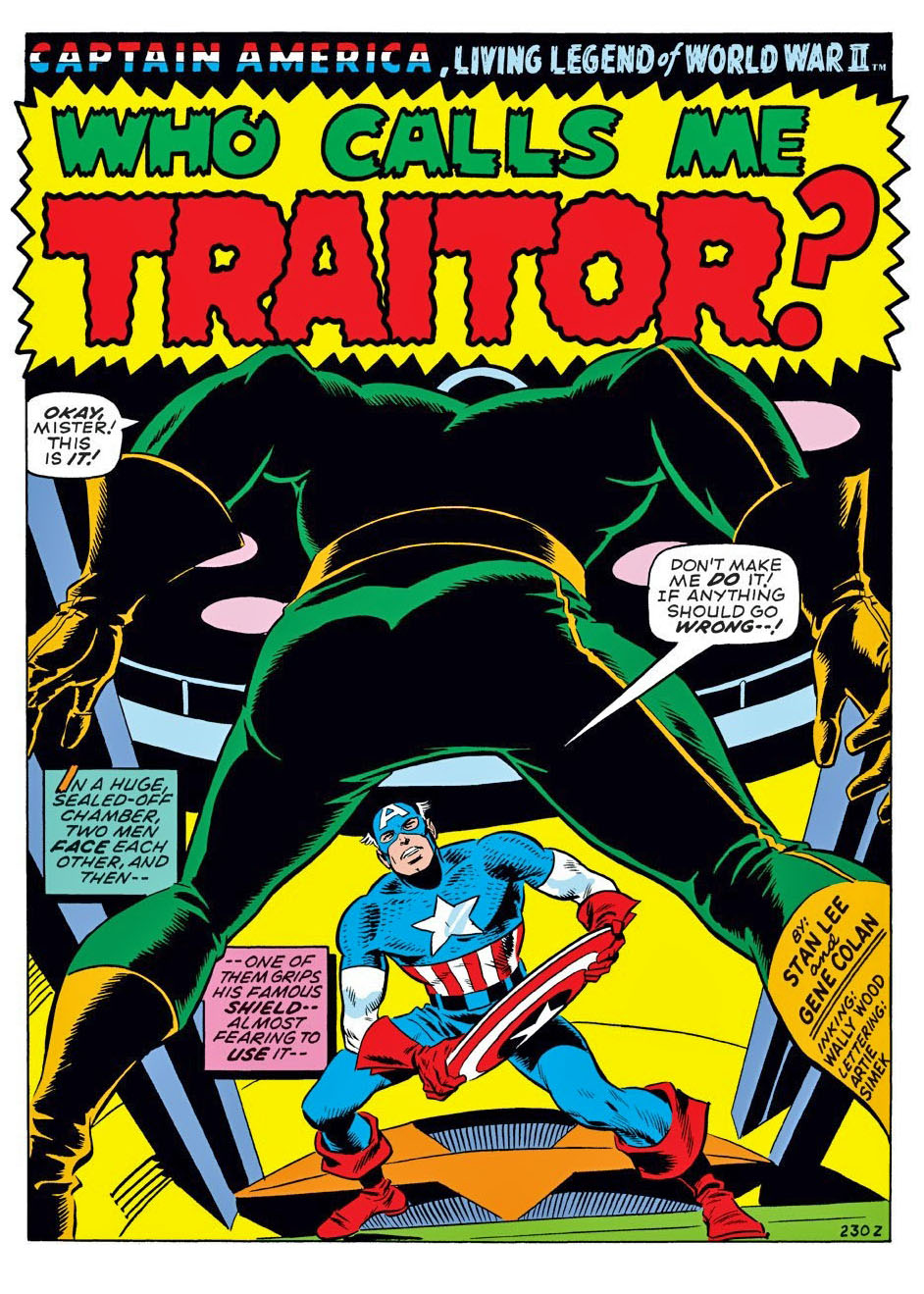
Colan’s run on Captain America came after both Kirby and Steranko, and that was a definite change of pace. But Gene’s reality-defying physics felt like a perfect fit for Cap, Marvel’s own reality-defying super powered acrobat.
Inking Gene Colan was one of the most challenging assignments in comics, but the legendary Joe Sinnott delivers here.
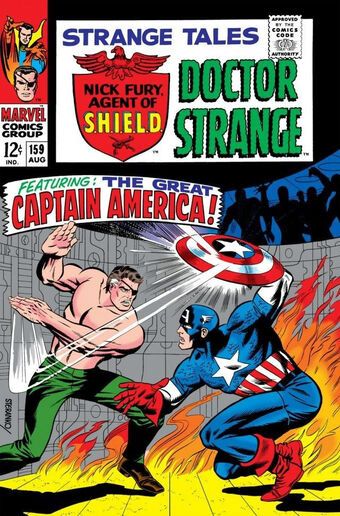
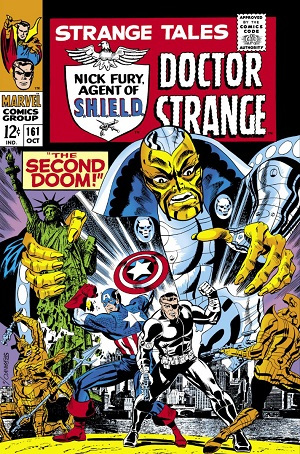
Nick Fury, of course, is the most important supporting character in the Marvel Universe. After Kirby and Steranko’s run was completed, the character couldn’t sustain his own title, but SHIELD was an important part of the entire Marvel Universe, primarily with Captain America in the latter part of the Silver Age.
And of course that dynamic repeats — brilliantly — in the Marvel Cinematic Universe.
And for the record, even though it appears Fury’s up to absolutely no good by hypnotizing Steve Rogers in this scene, he actually did have a higher purpose in mind.
Ultimately it didn’t work. The man is Captain America, after all.
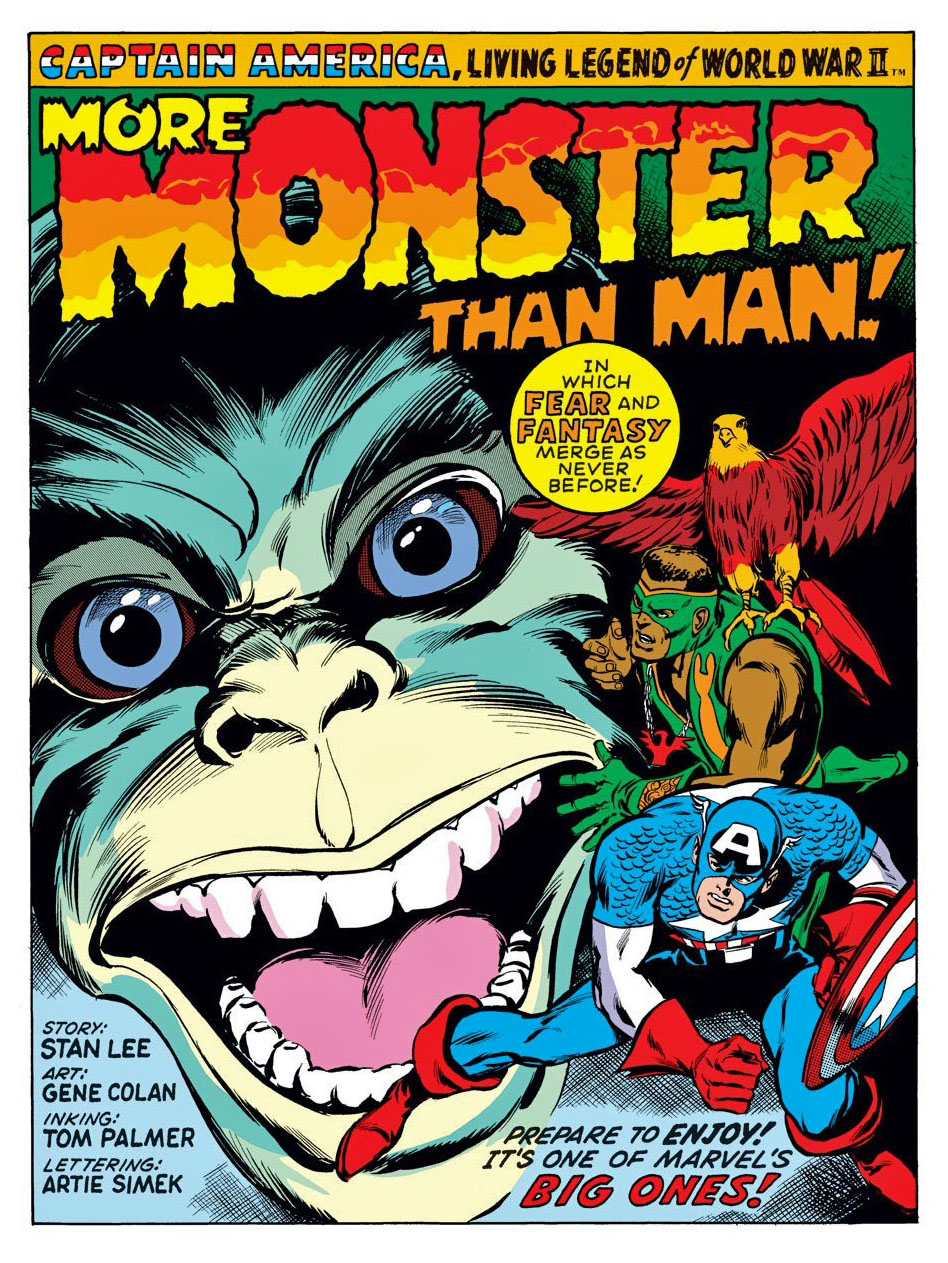
Inking Gene Colan was one of the most challenging assignments in comics, but these two issues stand out: Issue #127, inks by Wally Wood, and #135, inked by Tom Palmer. The Palmer splash is a wonderful harbinger of monstrous things to come on the Wolfman/Colan/Palmer Tomb of Dracula series, while the Wood issue is simply spectacular looking from start to finish.
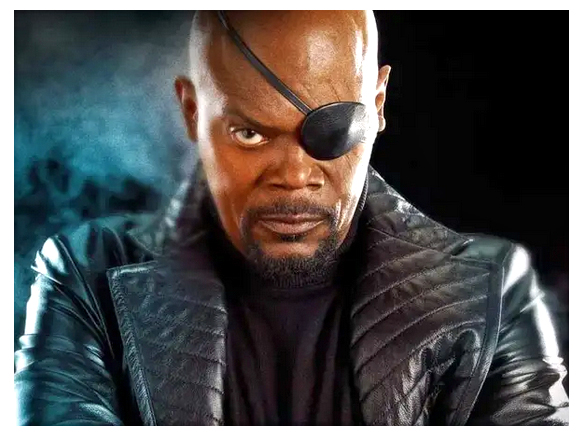
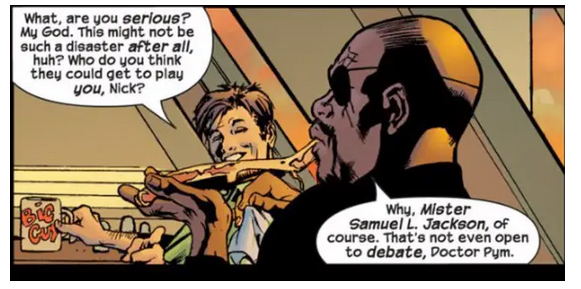
Meta Fury: Fury is retooled as a black character in the Ultimate Marvel line in the early 2000s, and writer Mark Millar ultimately utilizes the likeness of Samuel Jackson for the role — neglecting to tell him that. But Jackson held no grudge — ultimately playing the character in 11 films and counting.
Fury and Cap share a special bond early on, as discussed here.
By now, we should be in the next phase of the Marvel Cinematic Universe, but unfortunately, we have a six-month delay. So, for the first time in a dozen years, no Marvel film to launch the summer movie-going season.
But, we won’t let that delay slow us down here — let’s take a look at some of characters from the next three scheduled films this week.
From the trailer(s) for the Black Widow film, now releasing this November, it appears that many elements from Natasha Romanoff’s 55-year comic book backstory will make into the film. (No surprise, as that has been the Marvel M.O. since day one).
Of course, an exception will be her relationship with Daredevil, which lasted a few years in the original comics. Not sure what the entertainment rights status is for Daredevil and the other Netflix Marvel characters (now since cancelled), but I’d fall right out of my seat if any of them showed up in the cinematic universe in the near future.
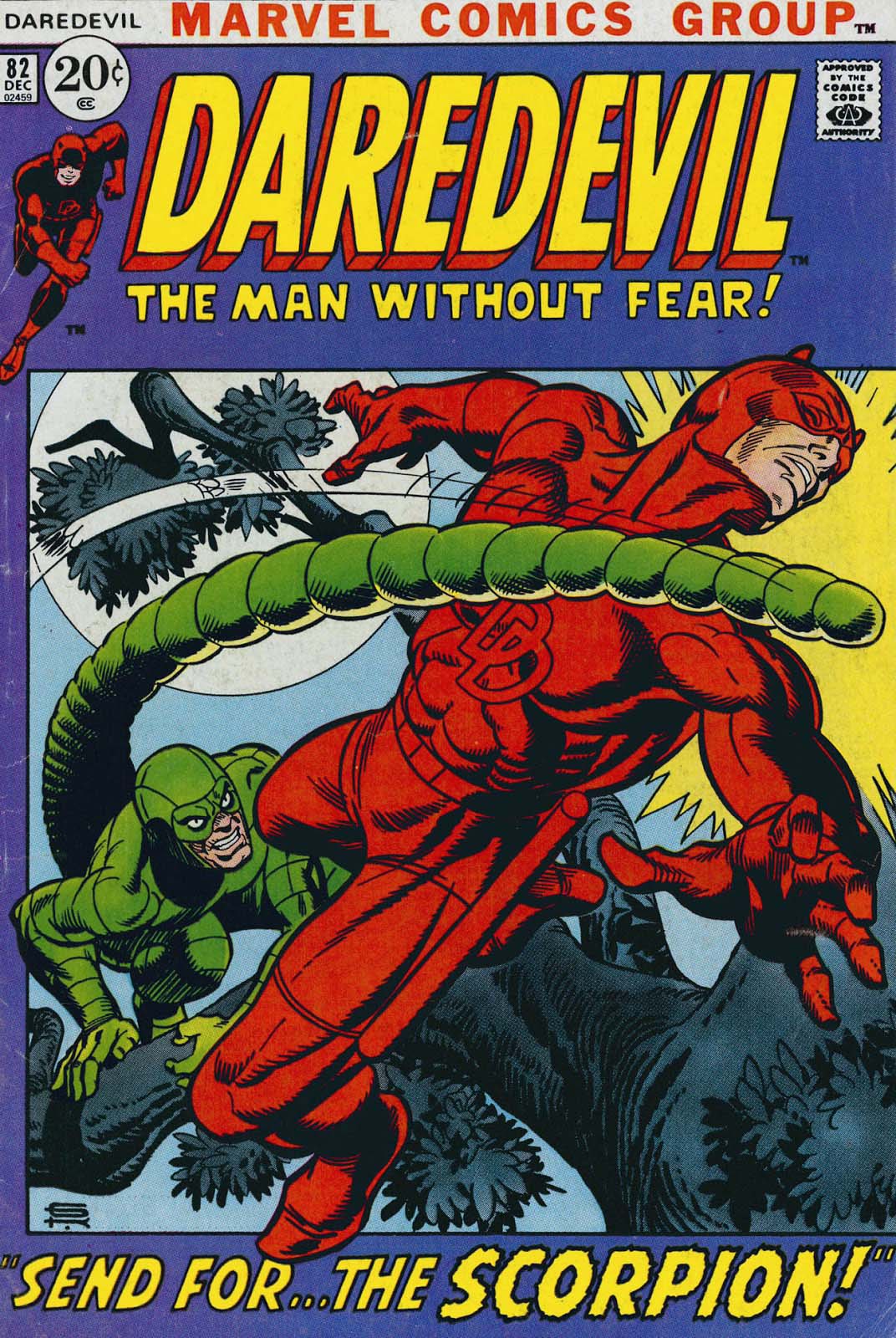
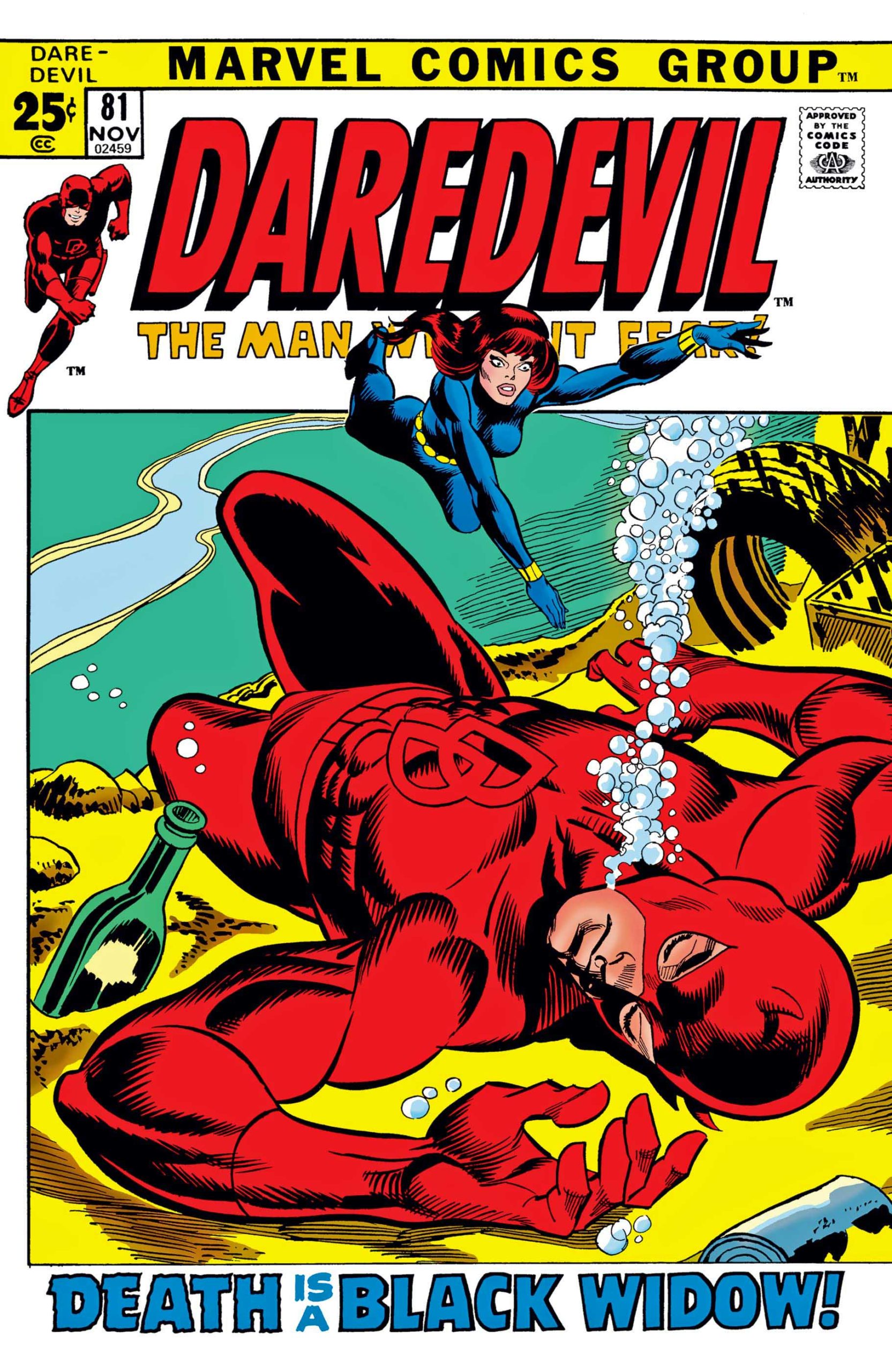
This very cool Daredevil page from the great Gene Colan comes from early in the relationship between DD and the Widow; in fact they don’t actually have a relationship at this point in the chronology, but they soon will, and ultimately team-up and move to San Francisco together.
In fact, the comic book changes its cover nameplate to Daredevil and The Black Widow for more than a year.
Let’s see: Matt Murdock suddenly ups and moves to Frisco. Daredevil — suddenly — is now fighting in the Bay Area. No one figures the connection out? Really?
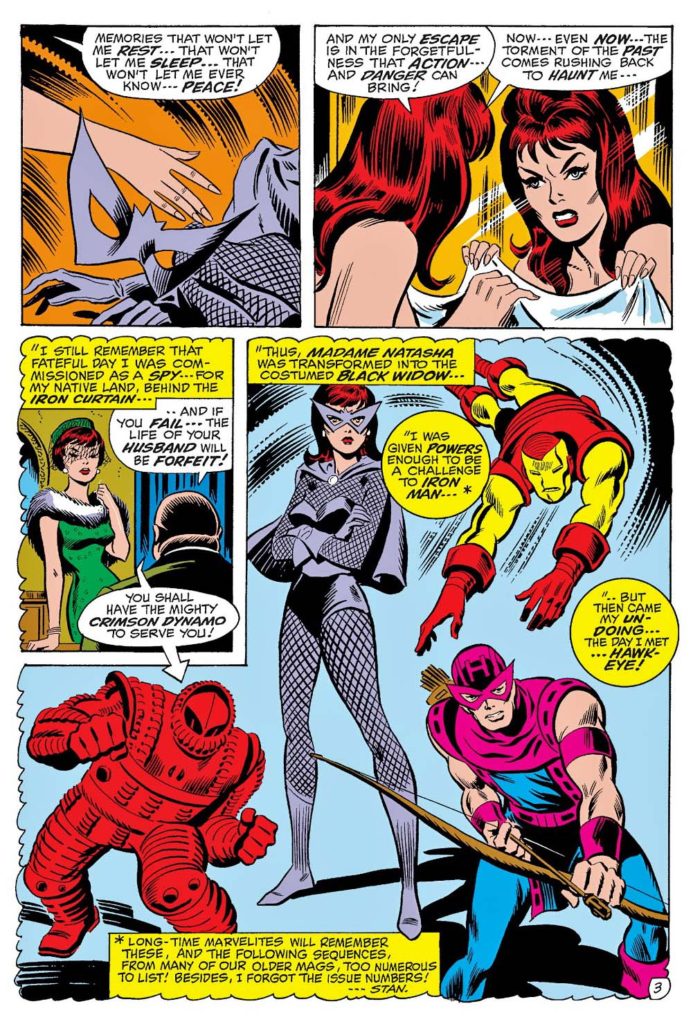
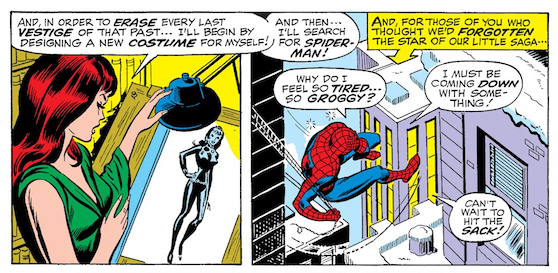
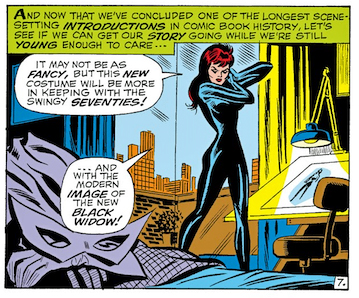
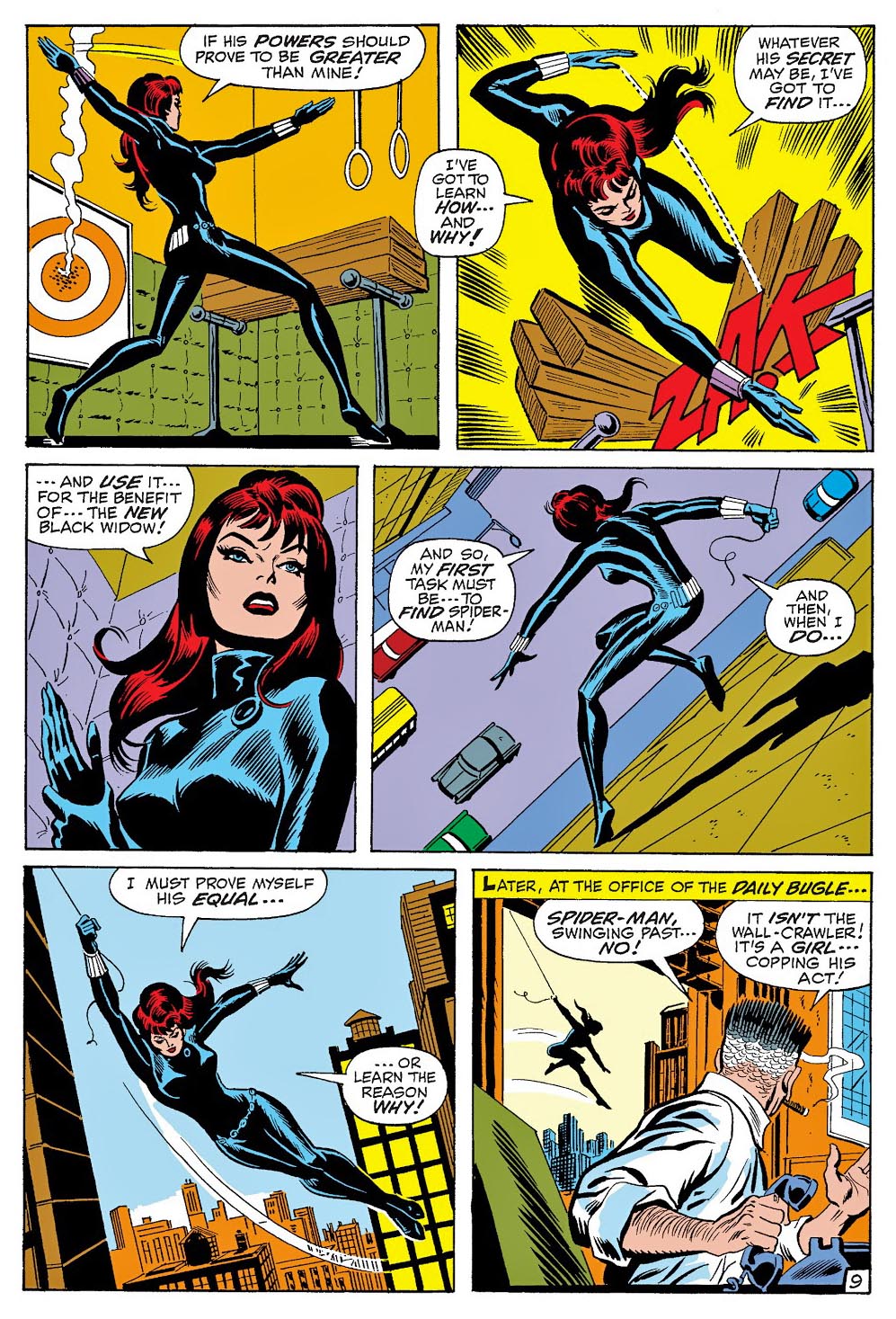
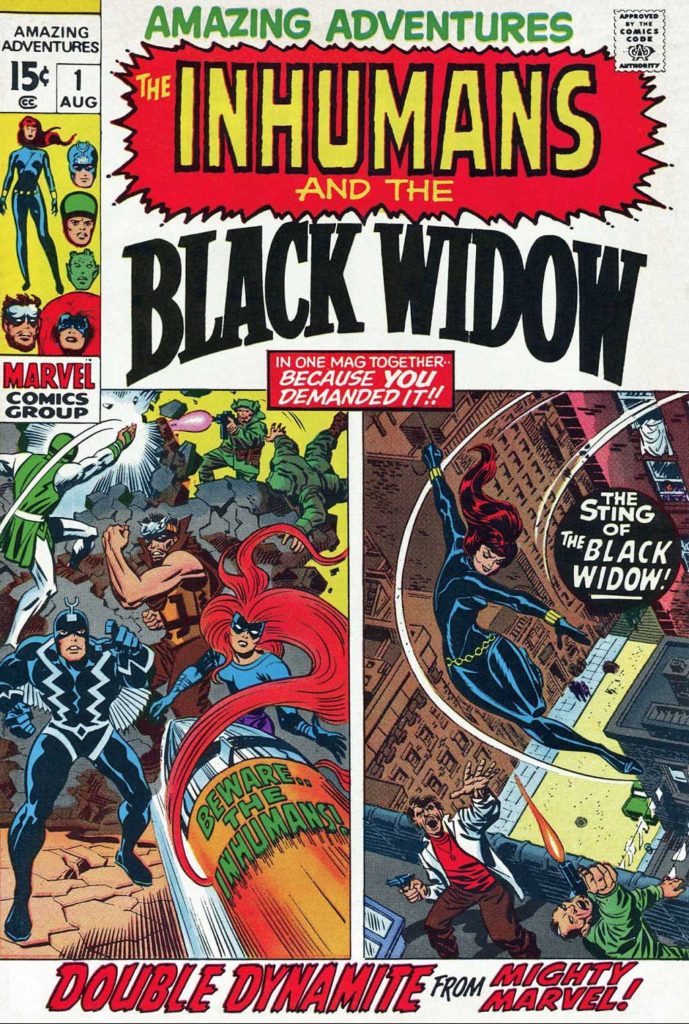
Amazing Spider-Man #86 serves as a “#0” recap and revamp issue (before they had those) for Natasha’s short-lived solo series in Amazing Adventures.Words and pictures by Stan Lee and John Romita.
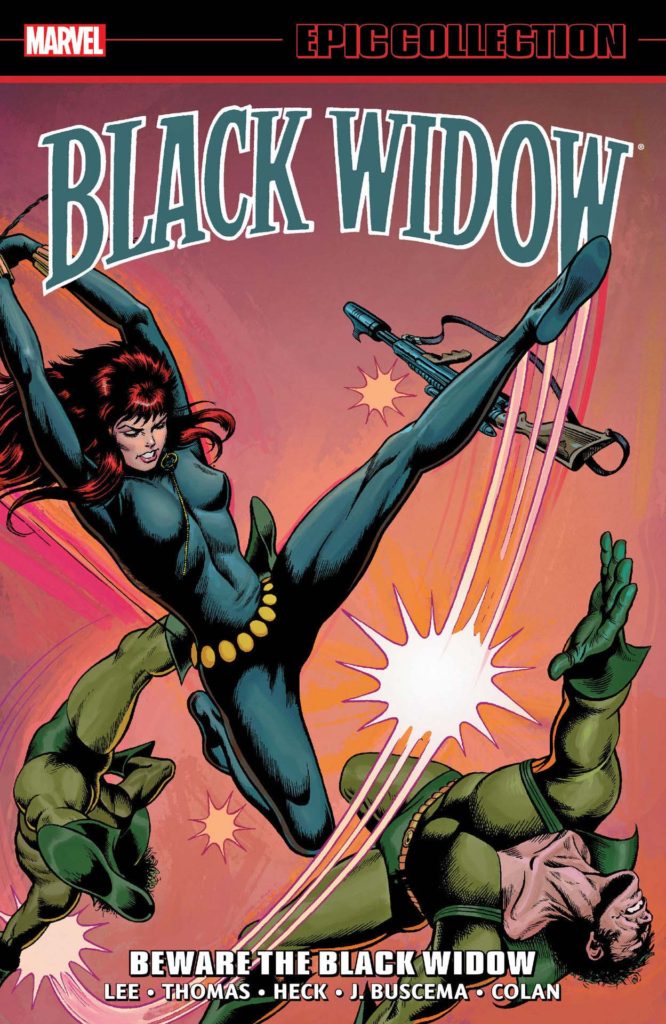
Black Widow’s first solo series, her first appearance in Daredevil, and a recent collection of her earliest appearances — with a recolored cover drawn by the legendary Bill Everett.
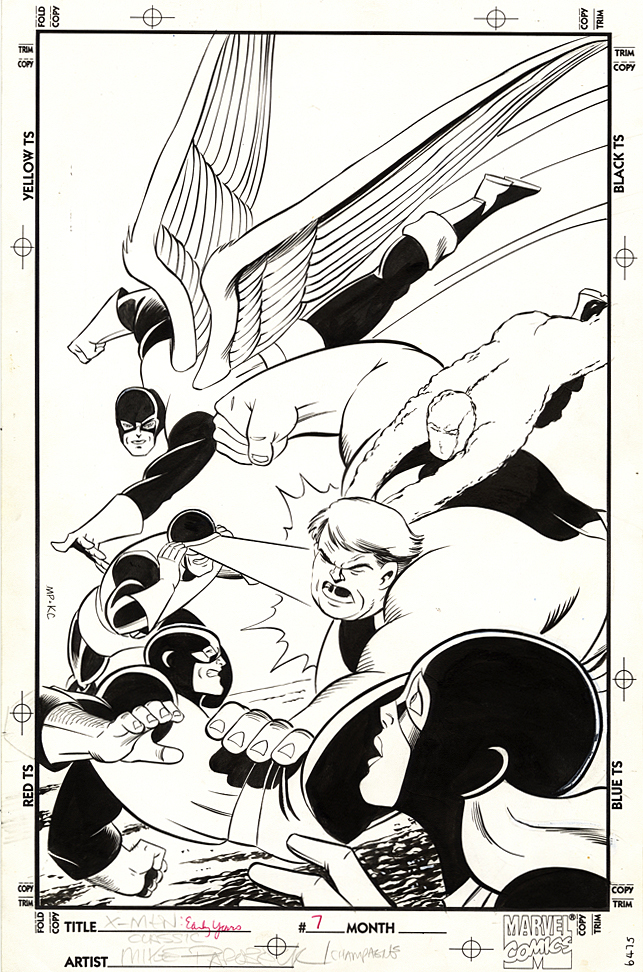
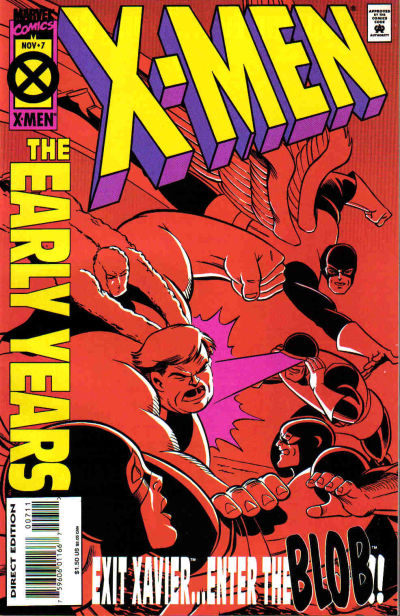
Case in point, Mike Parobeck’s cover of X-Men: Early Years #7, which reprints the original X-Men #7.
Jack’s original cover (below) is overloaded, and a composition mish-mash. Ok, I know it’s by Jack Kirby, and some fans will bristle about anything negative about the King’s work, but sorry, there’s no real comparison between the original and the reprint.
Jack’s original has way too many characters all over the map, with the X-men oddly positioned in the background and The Brotherhood of Evil Mutants voyeuristically up front, awkwardly. Are they watching from a window? Or on a TV screen? A magical portal? Why the heck are they even on this cover? This is a selling point?
Now, just to be clear, this may not be at all Jack’s fault. Maybe Stan Lee art directed it. And overwrote the cover blurbs to death. (Now, the Stan haters can come out of the woodwork.)
As I’ve said on the record many times, I’m a fan of both Stan
and Jack, so let’s all calm down. However this original cover developed, it’s simply
not a great one. Even legends drop the ball once in a while.
Mike’s solves the problem thirty years later by focusing only on the X-men coordinating — or attempting to — an attack on the Blob.
Simple. Clear. Clean. Powerful. Typical of Parobeck’s work.
But… On the published version, the trade dress is a bit
heavy handed, so some of the art is obscured — and the entire image had to be
flipped to accommodate said trade dress. And, to add to this litany, why the monochrome
coloring? Ah Hell, who knows.
Anyway, the original art is great and Mike’s Marvel work is
pretty rare; he is best known for some great looking art on the Batman Animated
comic books. I was also a big fan of his Justice Society run.
He unfortunately passed away MUCH too early at the age of 31
(from Diabetes) in 1996.