Greg Goldstein's Comic Art Gallery

Jack Davis — Snack Time

Jell-O Storybard, 70s

Concluding our brief series on the start of a new school year.

What’s a school day without an after school snack? In fact, I probably started thinking about my after school snack a few minutes after lunch period ended.

The prolific and terrific Jack Davis did quite a few storyboards for advertising campaigns and commercials. Apparently he did quite a few for JellO

Which is definitely appropriate in my neighborhood, as it seemed all my friend had Jell-O or instant pudding for snack or desert.

Jell-O did not make it high on my list at that point, but Jack Davis is always high on my list, so I’m pleased to own this close-up of a kid about to dive into his gelatin.

Not sure if these boards were ever actually used or not —- Madison Avenue commissioned a lot of (expensive) material that never saw the light of day — but I will bet Jack understood that part of the business.

And it doesn’t matter to me much, because either way, it’s a fun piece of color Davis art I can enjoy.

Wallace Wood — Topps In Class

Topps Nasty Notes, 1967

Wallace Wood brings his penchant for humor to Topps with this great looking 1967 series of novelties appropriately entitled “Nasty Notes.”

Why call them novelties instead of trading cards? Because they are actually two-sided posters that are designed to resemble the folded notes you might pass around in class.

Woody did a generous amount of work for Topps in the 60s as he became increasingly frustrated with the mainstream comics houses. Also, he was friends with one of Topps creative directors, Len Brown.

In fact, as noted previously, Len helped shape the creative direction of Wood’s T.H.U.N.D.E.R Agents, and. in return, Woody named the civilian identity of Dynamo, the lead character, “Len Brown.”

Some of the greatest and best-known talents of the comics contributed to Topps creative “Non-Sports” projects. It’s an all-star list that includes Jack Davis, Bob Powell, Basil Wolverton, Robert Crumb, Jay Lynch and Art Spiegelmanamong others.

(And of course, well-know pulp cover painter Norm Saunders was responsible for the finished work on Mars Attacks, Batman, Civil War, and others.)

Bob White — School Daze

Archie’s Joke Book #18, September 1955

Whether in a classroom, or stuck at home in front of a computer, the school year is indeed upon millions of kids and their folks.

And lets face it, when you’re a kid, the school calendar is much more important than the “yearly” calendar.

Archie comics was one of the few publishers that frequently employed the calendar to its advantage. New stories (or reprints for that matter) were typically timed to Christmas Vacation, Summer Vacation, camp time, and of course, school years. 
In hindsight, Archie’s publishing schedule was similar to the merchandise planning of a department store. You have to stay ahead of the seasons.
And since the Archie gang were teens, school played an oversized role in the storytelling and gags.

Appropriately, here is a great one pager by Bob White. Sure the gags are corny, but 65 years ago they were probably the bee’s knees. (Actually, they were probably groaners then, too.)

But we grinned. And the cartooning is terrific.  

(White credit confirmed by my friend, the late, great, Victor Gorelick, Archie’s EIC, who passed away earlier this year. Damn you, 2020.)

George Perez — Rebirth

New Teen Titans #24, October 1982

When Marv Wolfman and George Perez took on The New Teen Titans in 1980, they were aiming to rival Marvel’s immensely popular X-Men. Right off the bat, the team created one of the greatest villains in the DC Universe in Deathstroke, aka Slade Wilson. In addition, Perez and Wolfman were responsible for resurrecting the Titans and assembling the now-iconic team of Robin, Beast Boy, Cyborg, Starfire, and Raven. -Dana Forsythe, SyFy Wire, 2019

I came into Teen Titans reboot a few issues late. It hit stores during my college years, when my comic book purchasing was inconsistent, mostly sporadic actually, especially on mainstream titles. Somehow I missed the buzz — or the buzz missed me. (And the original Titan series had some great art from time to time, but the writing was all over the map.)

Fortunately, my college roommate had caught on from the beginning, and I borrowed his early issues. I was hooked. (I really should return those one of these days.)

I was in love with Perez’s astonishing detail on his Marvel titles (FF, Avengers, etc.), and this was superb work, perhaps even a notch greater.

When I returned to collecting original art about a dozen years ago or so, acquiring a Teen Titans page was an early priority.

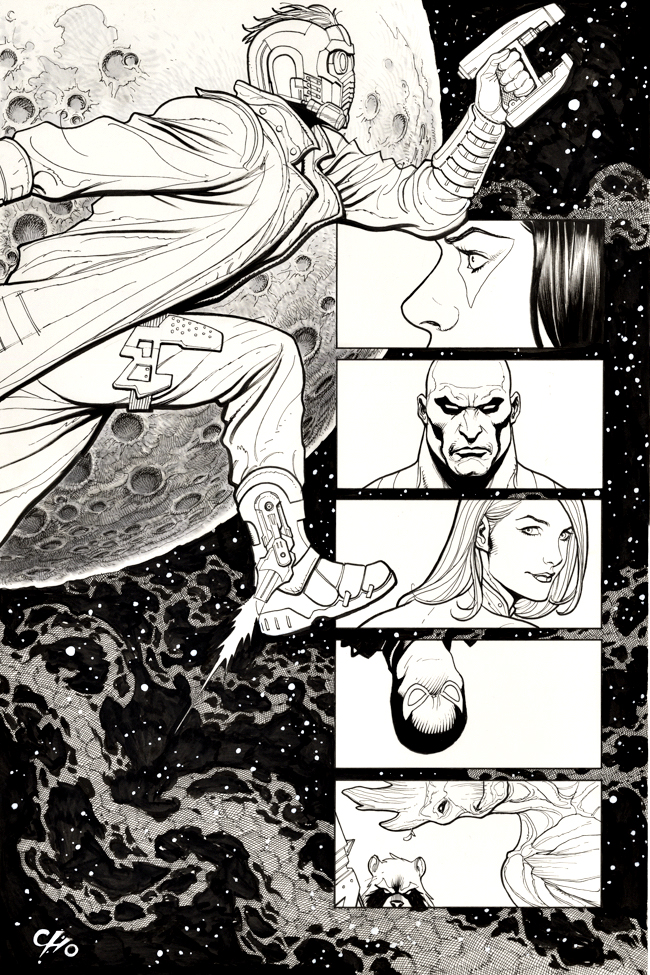
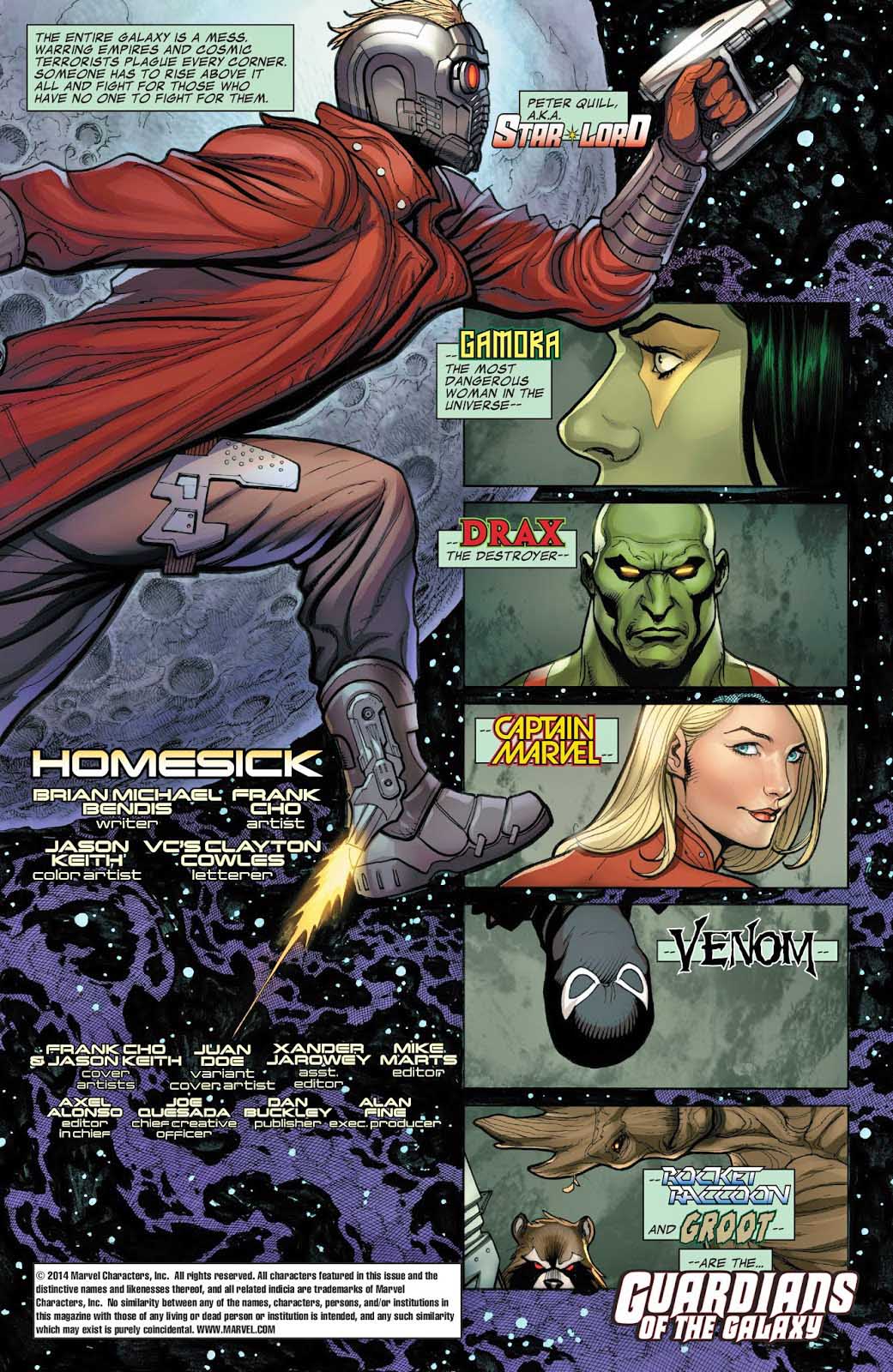
The Titans join with the Omega Men in this issue, and we get some of both in this classic Perez layout. No one else could do narrow panels like this, with this much detail, and frankly few tried.

Gil Kane and Nick Cardy — Team Up

Teen Titans #24, December 1969

Late 1969 was apparently a great time for assassins on skis.

Making the biggest splash on the slopes were the bad guys in the latest James Bond flick, On Her Majesty’s Secret Service (OHMSS.)

In fact, the skiing action scenes were considered the best thing about the Bond film, the first — and only — featuring George Lazenby as 007. (Replacing Sean Connery.)

Meanwhile, on the newsstand, The Teen Titans have the same problem, among others.

I’m not saying writer Bob Haney borrowed the idea from the OHMSS marketing, which likely had appeared prior to script deadline time. More likely an amusing coincidence.

Either way, the art team of Gil Kane and Nick Cardy delivered some exciting storytelling on the script they had on hand. Glancing through the entire issue, Nick added some nice polish to Gil’s pencils, without turning the entire issue into Cardy instead of Kane.

That’s a bit of a balancing act, especially since Cardy was a terrific and well-established penciller himself.

But I can’t confirm that he skied.

José Luis García-López — Titans Forever

Teen Titans #100, August 2011

2020 is the 55thanniversary of the Teen Titans.

Well, technically, anyway. 

The “Teen Titans” did in fact launch in 1965, quickly moving from tryouts in The Brave and Bold and Showcase to their own series at the end of the year.

But, in 1964, three of the Titans actually appeared in an earlier issue of The Brave and Bold. No team name, just Robin, Aqualad, and Kid Flash appearing in an all sidekicks story.

They only became the “Teen Titans” the following year with the addition of Wonder Girl.

Wonder Girl of course is not actually Wonder Woman’s sidekick. She is actually… Wonder Woman as a teen, ala Superboy. But continuity be damned, she was retconned and re-retconned and… oh boy. (Screenrant has a good overview of this silliness here.)

We know the fine folks at DC were reading Marvel comics to see what all the fuss was about, but it’s obvious it wasn’t resonating in the continuity department.

Anyway…

Jose Luis Garcia-Lopez, one of the most talented artists to ever work at DC — or anywhere — here creates the definitive image of the classic group. (Speedy joined in issue #19 and Aqualad came in and out at that point, so these five are the core team.)

The pin-up initially appeared in issue #100 of a modern series, and shortly thereafter became the back cover of the 50th anniversary book of the team.

It will eventually appear elsewhere. Probably as a front cover of some silver age collection.

Trust me. It’s just too good to not be re-used.

Chris Sprouse — Hauled Away

Daredevil #601, April 2018

Daredevil, beaten and bruised, is hauled away by the NYPD in this cool cover by Chris Sprouse and Karl Story.

It’s an apt metaphor for the part of the Marvel Cinematic Universe that briefly resided on Netflix.

Daredevil, along with Jessica Jones, Luke Cage, Iron Fist and Punisher anchored an ultra-violent “Marvel Knights” style universe on the steamer for three years. Pretty good television shows, ultimately victims to the battles between the giant entertainment behemoths.

Daredevil was my personal favorite of the group, leaning very much into Frank Miller’s work on the “Man Without Fear” and “Born Again” story arcs. Terrific cast, well-written scripts, and a definitive, stunning performance by Vincent D’Onofrio as Wilson Fisk / Kingpin.

In about six months, the moratorium on rights reversion ends, so Marvel will be free themselves to use the characters in the MCU. In fact, there is a dedicated group of fans campaigning for the cast, if not the entire show, to return in some form under the Marvel banner.

A long shot of course, but the group has worked tirelessly to make its opinion known. Fingers crossed.

Meanwhile this cover is an oddity in that it highlights a scene that took place in the previousissue. Just in case you missed it, I guess.

Doesn’t matter from an art standpoint of course. It is a striking image. Regardless. And as mentioned in a previous post, I’m always happy to see Sprouse and Story on… pretty much anything.

Frank Miller, John Romita Jr., Al Williamson — Fearless

Daredevil: Man Without Fear #1, October 1993

Frank Miller returns to Daredevil and brings an all-star art team with him in the origin story, “Man Without Fear.”

Ok, easy to call “all-star” an oft-overused cliché, but in this case, no exaggeration. The artistic team of John Romita Jr. and Al Williamson is a stunning compliment to Frank’s storytelling. 

This is Romita’s best work up until this point in his career, and Al certainly still had his inking chops as well.

I’m guessing (and strictlyguessing) that Miller provided a full script or close to it, because the layouts and storytelling are so “Milleresque.” Either that, or Romita Jr. channeled his inner Miller.

Probably a combination of both.

In this page, young Matt Murdoch discovers his true powers for the first time in a sink or swim training session provided by his tutor, the mysterious “Stick.”

The page layout cleverly and beautifully uses the nine-panel grid to show the development of Matt’s reaction time to Stick’s attack.

A great page from one of the all-time great limited series.

David Mazzucchelli — Devil Noir

Daredevil #217, April 1984

55 years ago, Wallace Wood emphasized the “devil” in Daredevil with a dramatic costume change for the character in issue #7. The series, which had floundered early on, started to gain some traction with Woody’s work just a few issues prior. Issue #7, featuring Daredevil hopelessly outmatched by the Sub-Mariner, is considered a silver-age classic.

Our next three posts celebrate this anniversary with a look at the “modern” man without fear.

I love classic film noir. Dark streets, shady characters, two-faced femme fatales, dimly lit apartments, et al. All great. 

At one point, there was not a sign of comic art in my office — just classic noir posters.

So it’s no surprise that that some of my favorite takes on Daredevil are those same noir tropes applied to comics by outstanding storytellers like David Mazzucchelli.

And great pages like this one, featuring Daredevil in every panel, playing the (blind, but super-powered) detective. Mazzucchelli’s use of cinematic camera angles and shadows and light creates a deeply moody page, especially when seen in its original form.

Mazzucchelli keeps nearly all of his original art, and he both penciled and inked this page, so it’s a fantastic rarity as well. Only a handful of Daredevil pages that he is fully responsible for have appeared for sale on the secondary market.

Scott Kolins — Fearsome

Wonder Woman #600, June 2010

Concluding for now our celebration of Wonder Woman, in anticipation of the much anticipated (and delayed) superhero film, Wonder Woman 1984.

Scott Kolins creates a fierce “in-action” pin-up of Wonder Woman using only graphite. (The page is colored and published directly from the pencils.)

DC has created some terrific celebratory issues and this one is no exception. Plenty of other pinups in the oversized issue from 2010, featuring art by Adam Hughes, Jock, Ivan Reis and many more.

We will back with one more Wonder Woman post, whenever the film finally opens.

Whenever.