Category: Original Art and The Artists
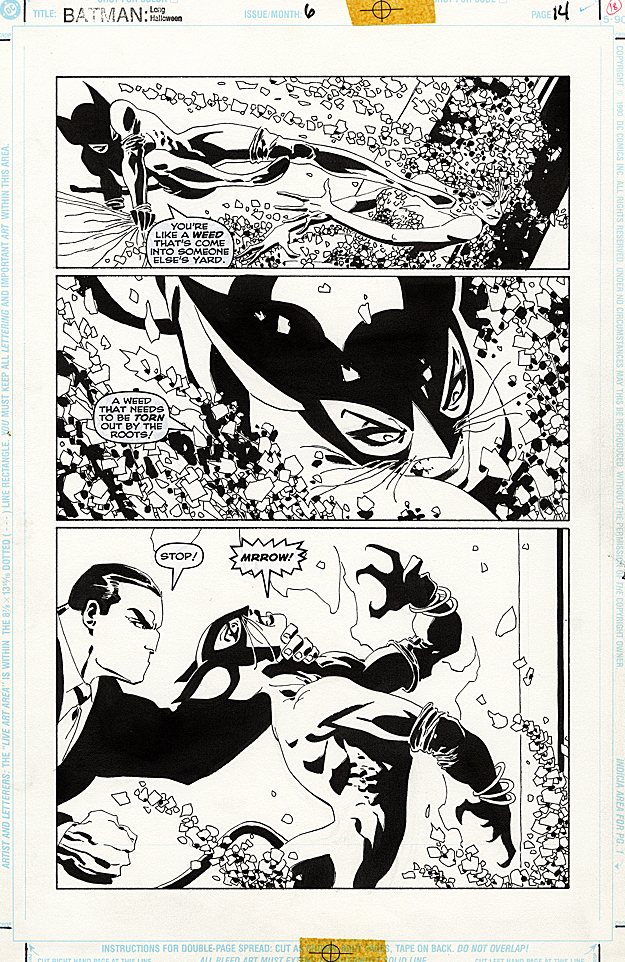
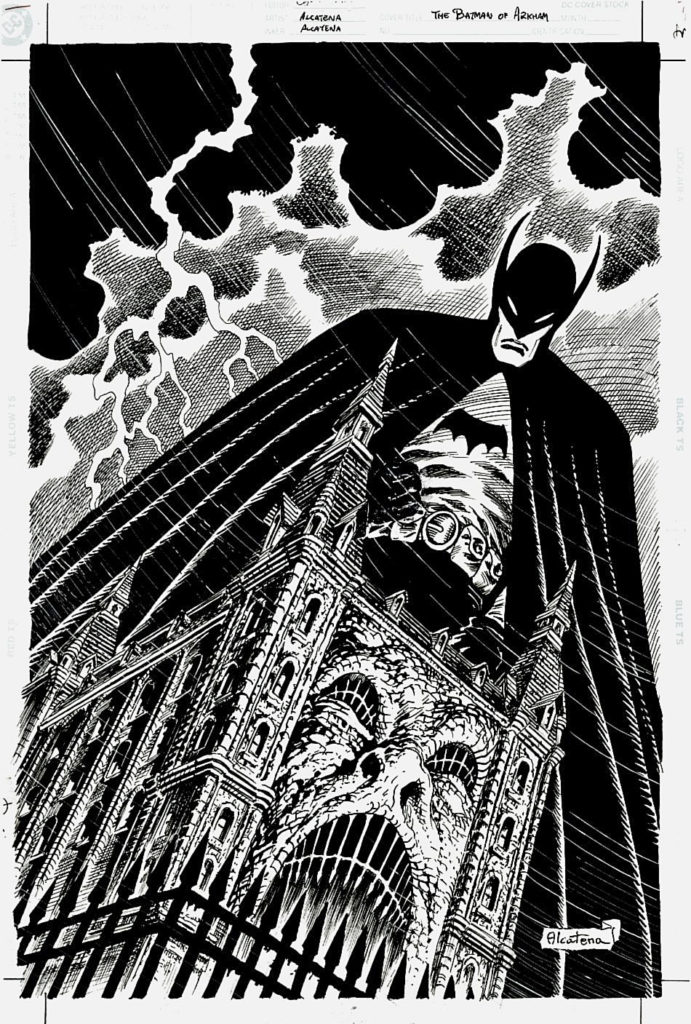
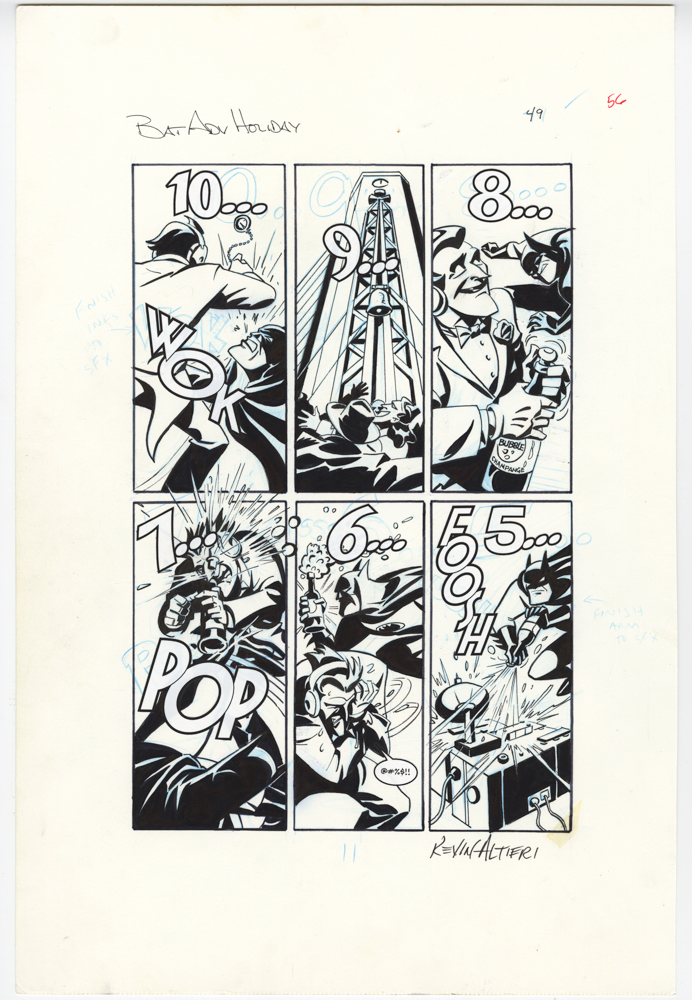
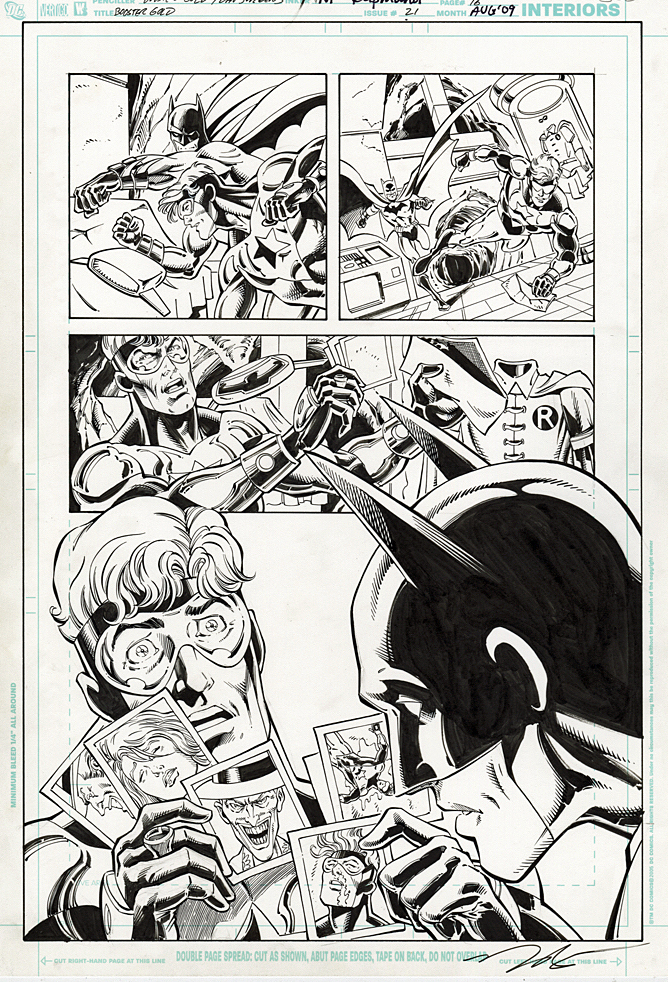
Graham Nolan — Widescreen
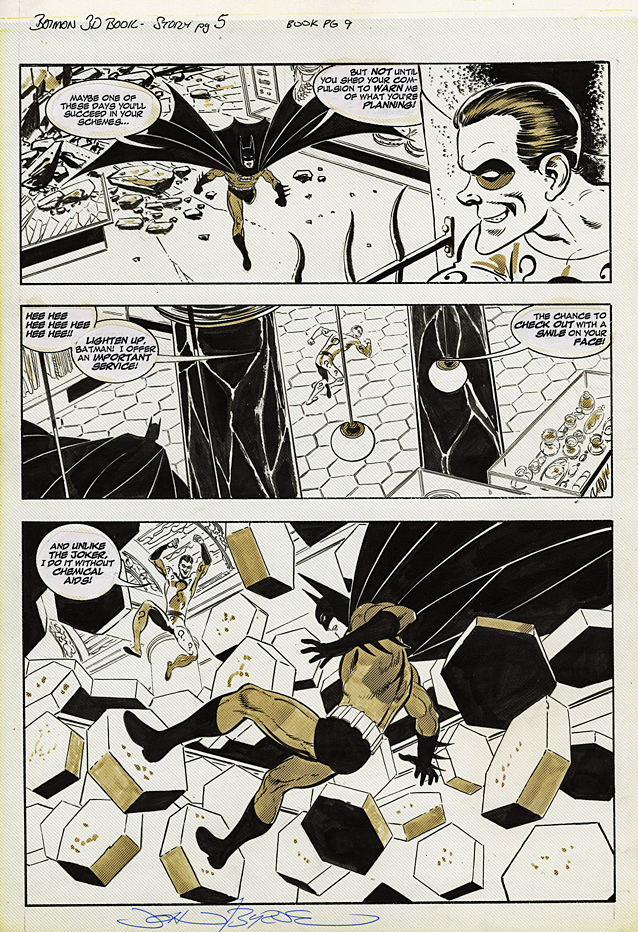
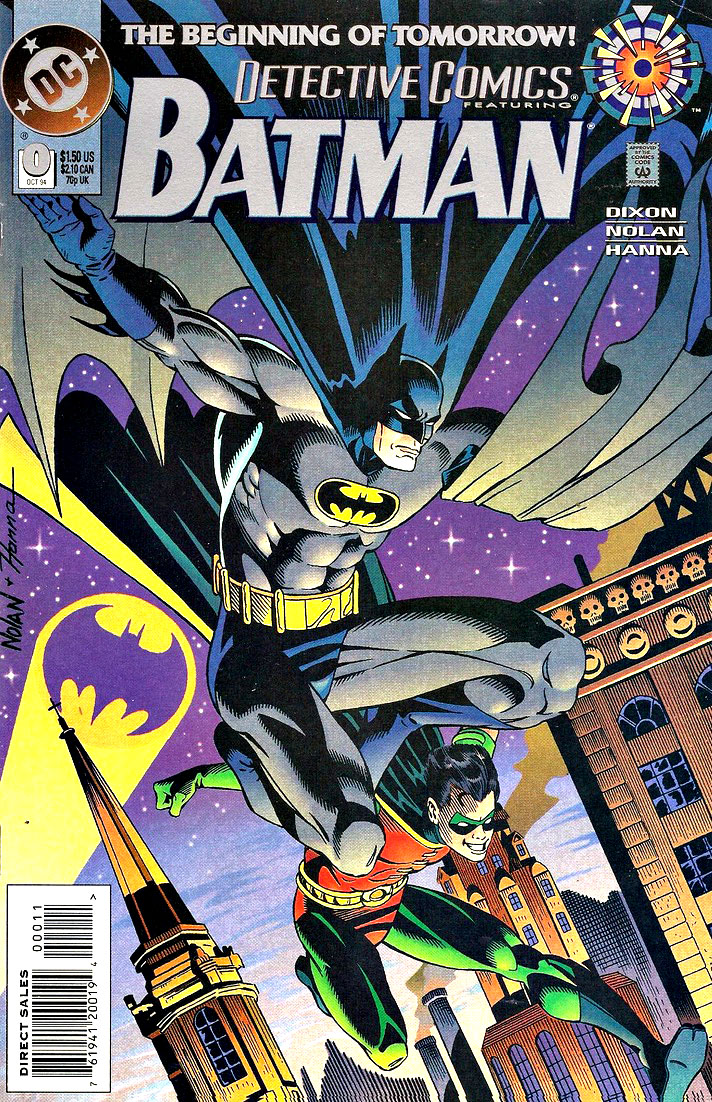
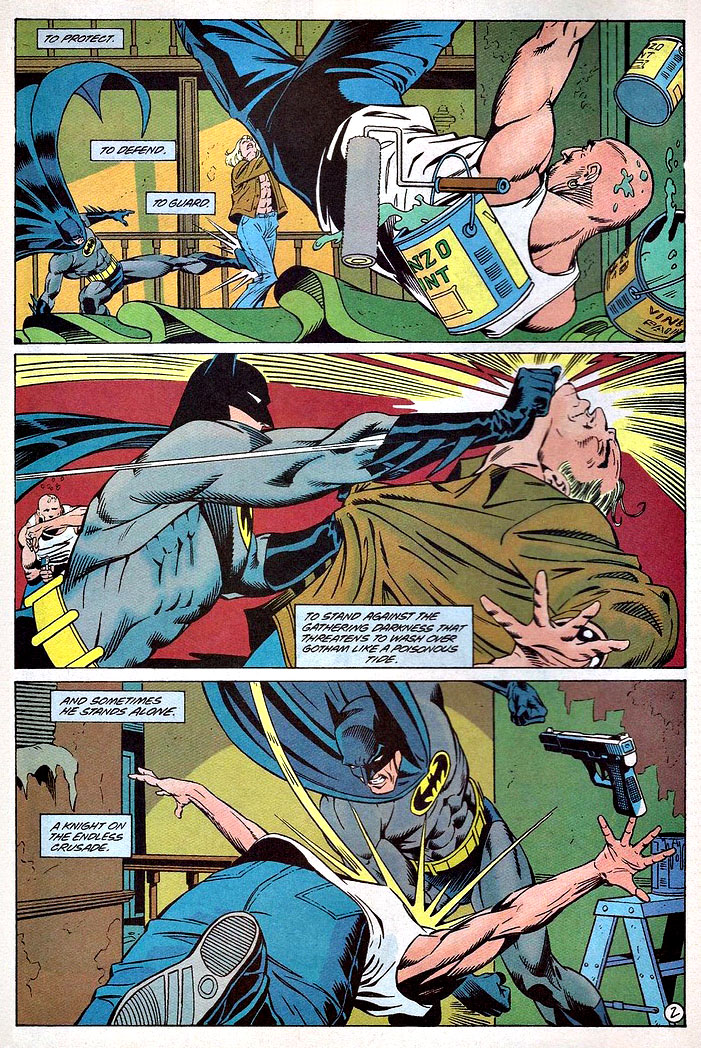
Detective Comics #0, October 1994
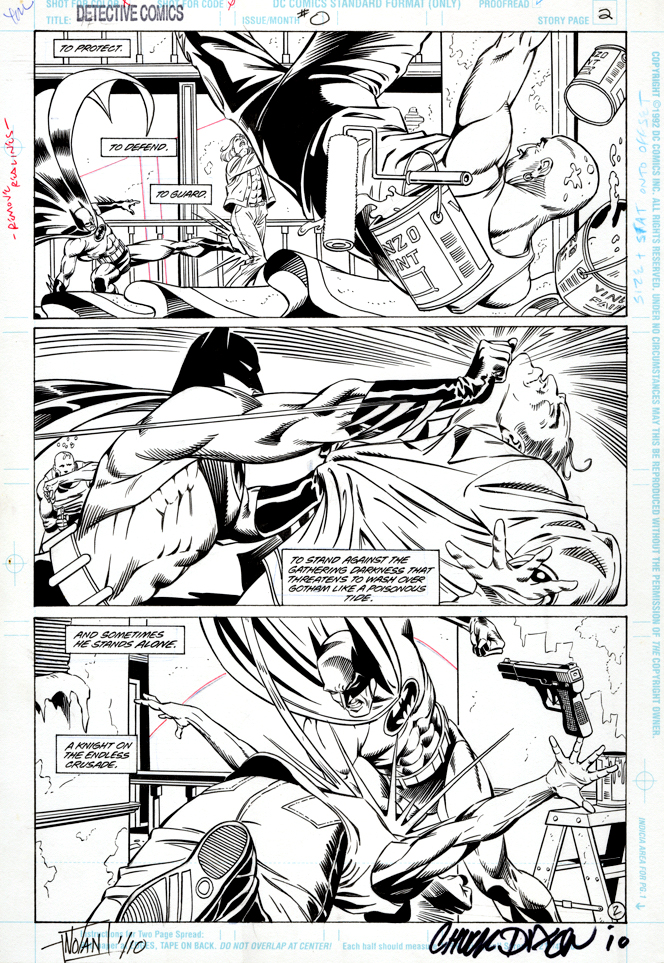
Graham Nolan delivers an action-packed three-panel page from the peak period of the his and Chuck Dixon’ Batman run in the early 90s. This is of course the same dynamic duo that brought us the supervillain Bane a year earlier.
(I still break into a cold sweat from that page where Bane breaks Batman’s back. But I digress.)
I’m fascinated that 100 percent horizontal panel layouts took such a long time to become more commonplace, especially given the frequent storytelling relationship between comic books and film. Although Hollywood introduced widescreen in the 50s (a marketing ploy primarily to lure audiences away from their TV sets) the square format panel was standard for many years.
Now of course the horizontal panel layout is ubiquitous, but even in 1993 it stood out among the crowd. And this one specifically is a dynamic example of how it can enhance the action.
(All The Batman books had “Zero” issues as part of the broader Zero Hour DC crossover event.)
Fun fact #1:
The first bar I ever (illegally) hung out at as a kid in my Long Island hometown was built by Graham’s grandfather — who had sold it by then. (Pub still there, by the way, hopefully it will survive Covid.)
Fun fact #2:
My pal Joey Cavalieri and I both had an English HS teacher who was a classic barfly at said bar. (Good teacher though).
But these are stories for another day.
Neal Adams — Jailbreak
Brave and Bold #81, January 1969
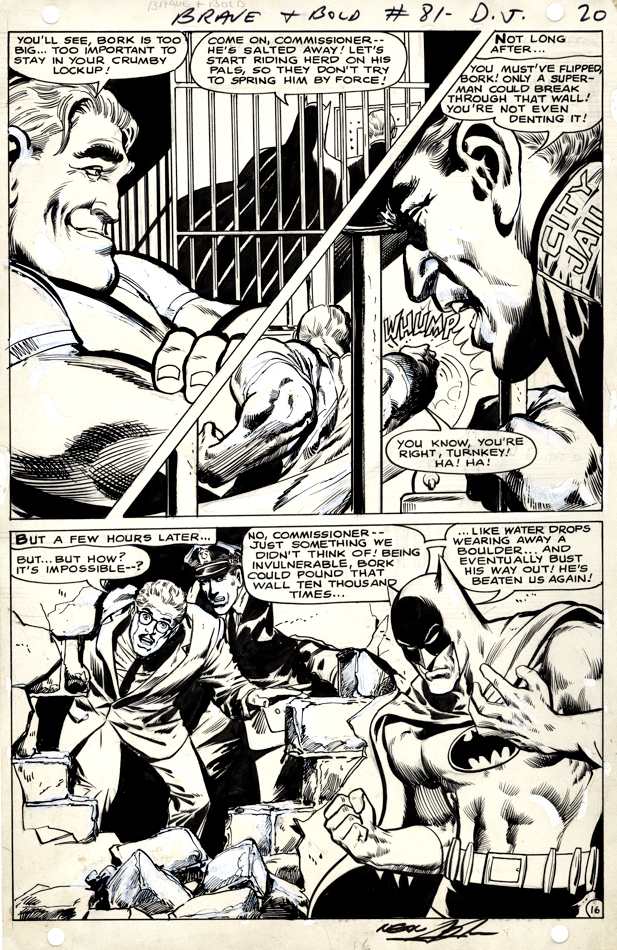
Here’s a splashy Neal Adams page from his fourth overall Batman story.
As always, Neal’s facial emotions are spot on. I love Bork’s smug face, Commissioner Gordon’s shocked expression, and Batman’s frustration with the entire situation. The body language on all the characters on the page also adds drama to the storytelling.
Vince Colletta was the first inker on the story, and Neal wasn’t happy with the results so he and Dick Giordano re-inked some of it. You can see some corrections on this page, and others in the story, when viewing scans of the original art.
Neal Adams Batman from the Silver Age — Definitely pleased to own this one.
A little whiteout never hurt anyone.
Darwyn Cooke — Detective Duo
Detective Comics # 338 and #356 Mashup Re-imagination, 2010
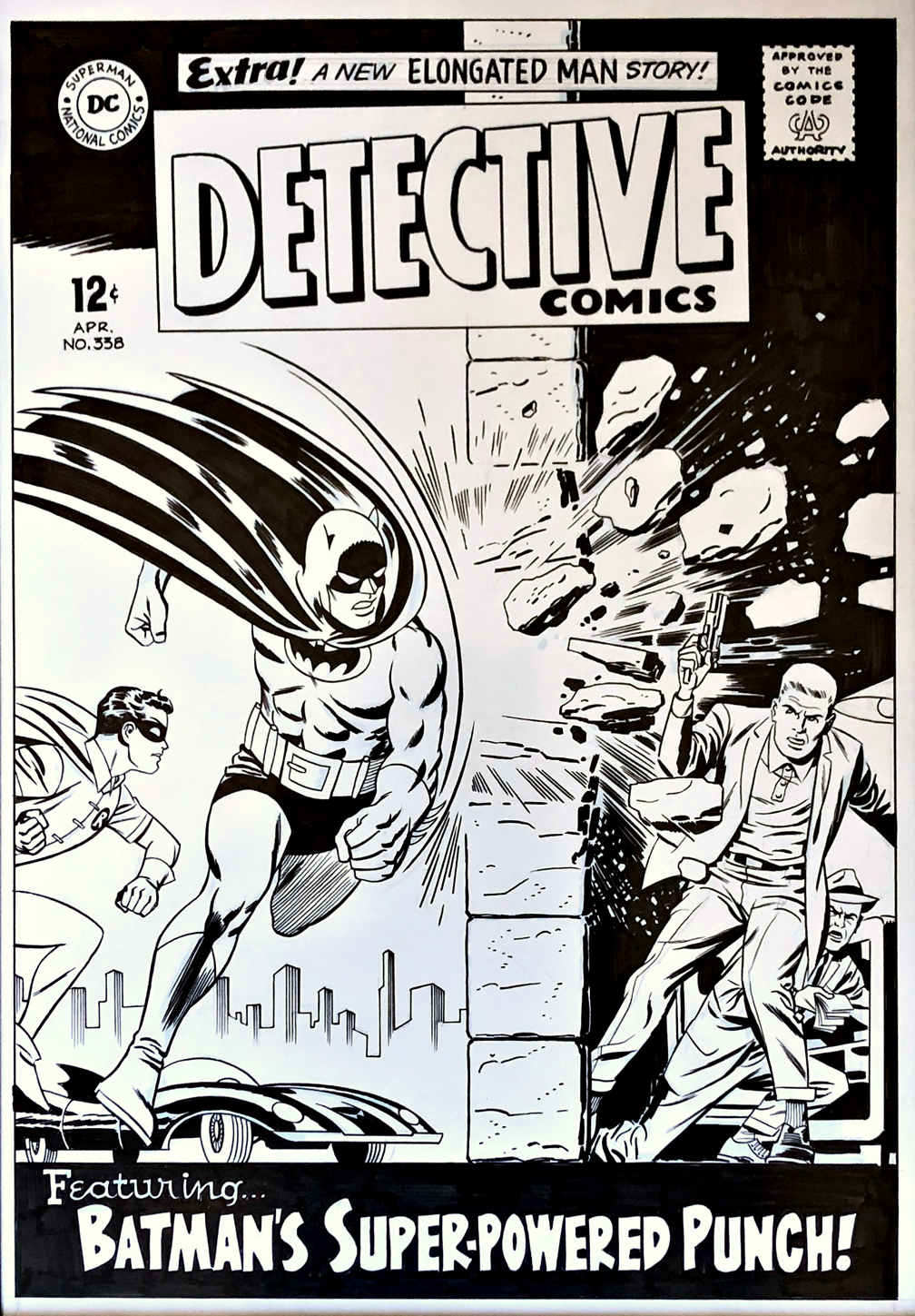
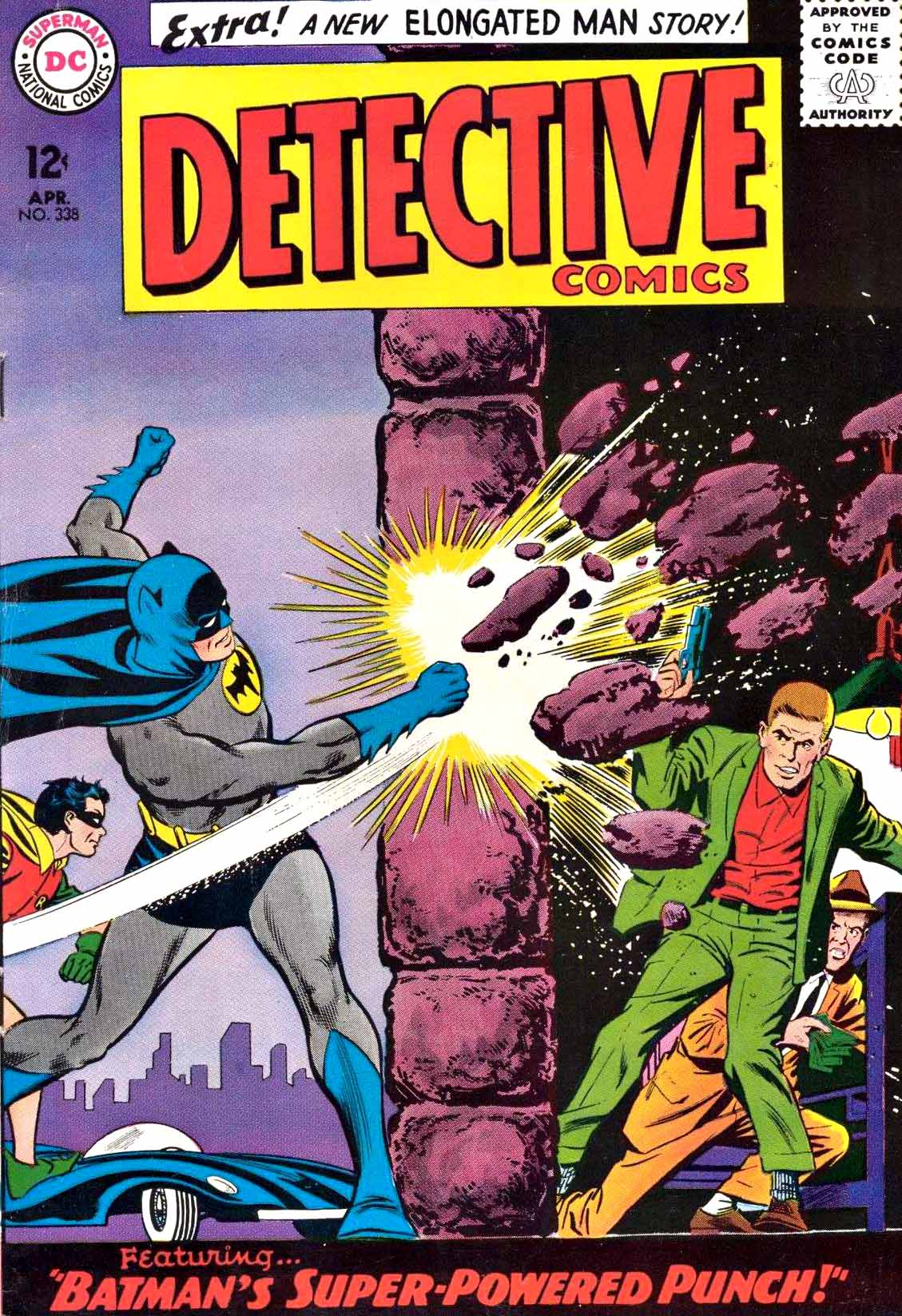
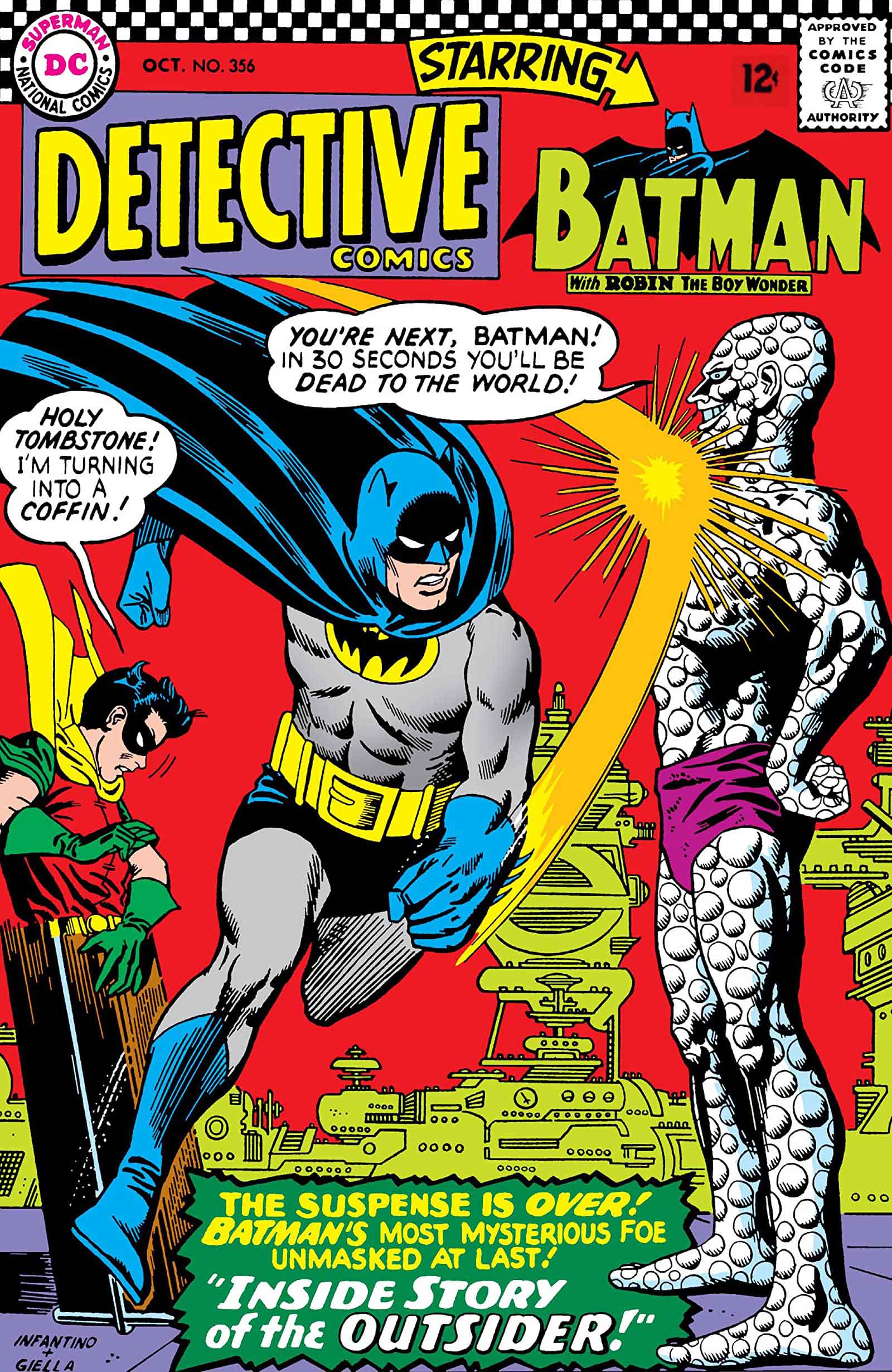
As noted last year, the late, great Darwyn Cooke produced a number of these reinterpretations and homages of classics during his all too short lifetime.
In this dynamic drawing, Darwyn combined two classic covers into one, taking the iconic “punch scene” from Detective #356 and fitting into the #338 layout. Carmine Infantino (pencils) and Joe Giella (inks) created both of the memorable original covers.
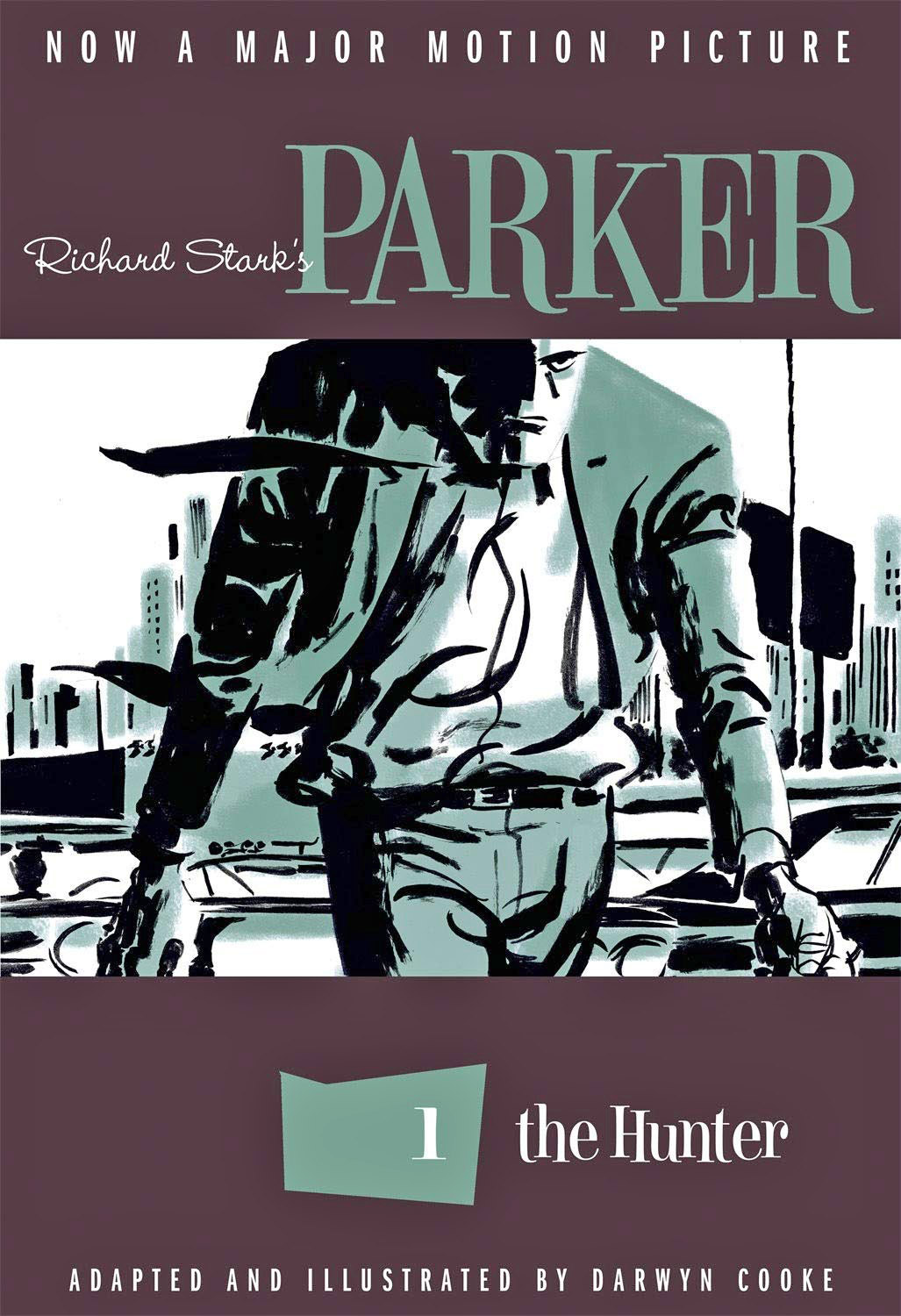
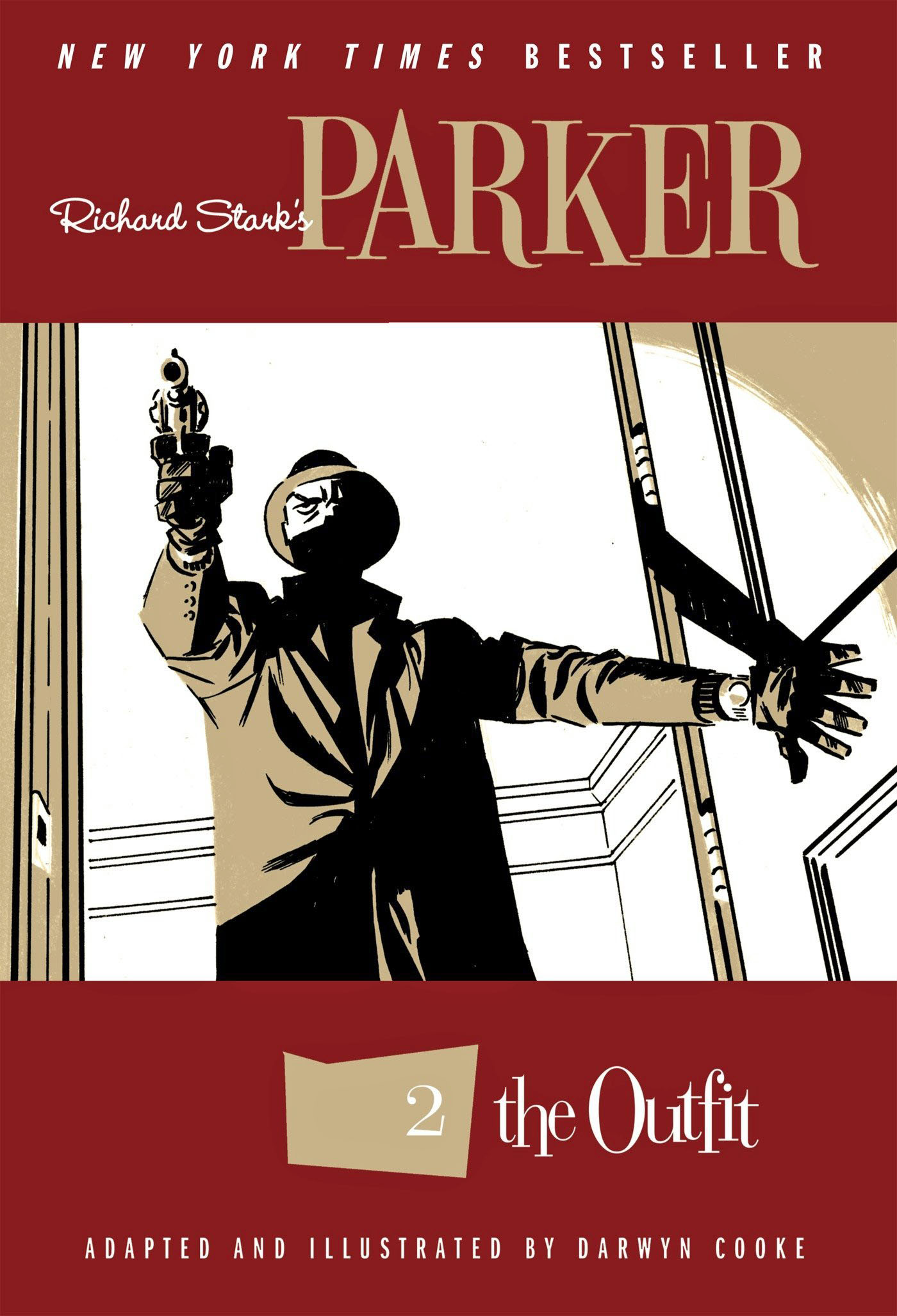
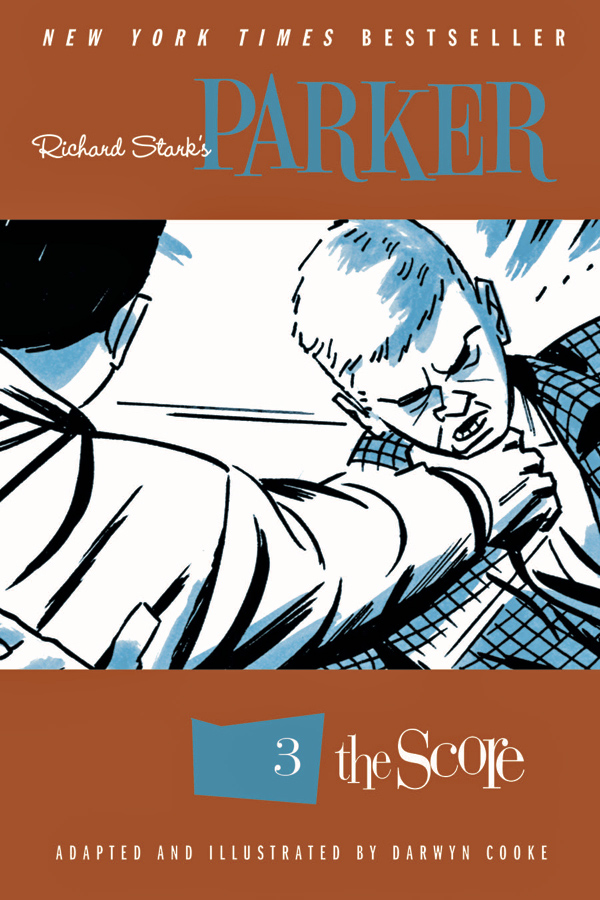
When you dive the detail of the re-imagination, you might notice that the crooks in the right frame now more closely resemble the hoods that populate the Darwyn’s astonishing Parker graphic novel series that we published at IDW. It’s a wonderful touch.
Definition of a comics geek?
When I saw this piece offered for sale, I recognized what Darwyn had done — without it being specifically noted in the item description. Issue #356 was one of the first Batman comics I remembered reading as a kid.
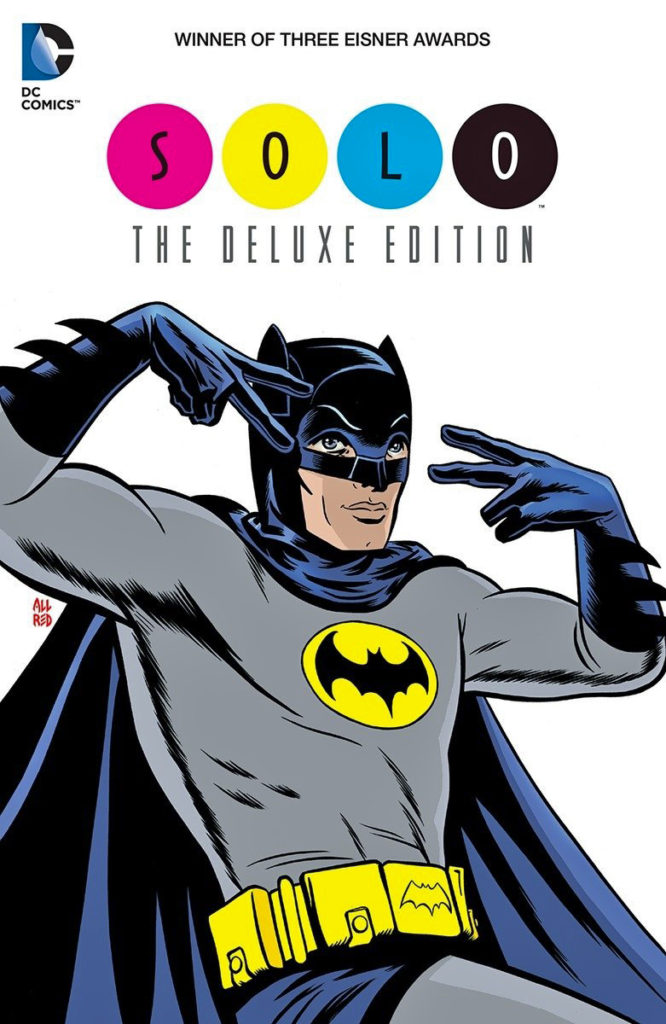
Mike Allred — Batusi?
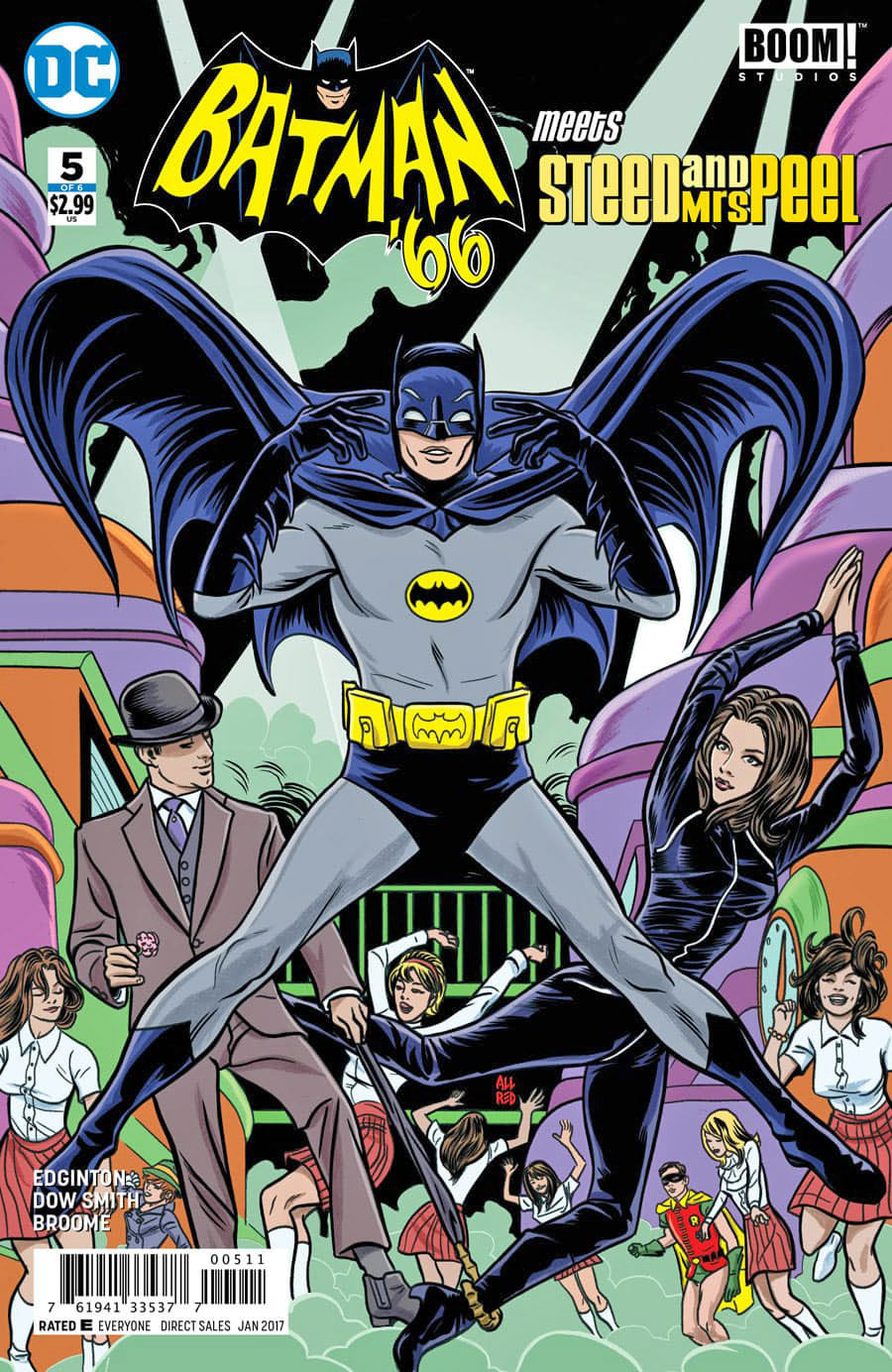
Batman ’66 Meets Steed and Mrs. Peel #5, January 2017

I’ve expressed my appreciation for Mike Allred way back when I started this blog. (Here and here.) His style is lively, clear, clean and “retro” — absolutely perfect for some great covers on DC’s Batman ’66 publishing program.
Batman ’66 seems to have now gone the way of all defunct universes, but before they wrapped up creating new content, they created quite a few fun crossovers with other similarly adventourous 60s TV shows, including The Green Hornet, Man From U.N.C.L.E., and the British TV favorite “The Avengers.”
DC couldn’t call them that of course, so its Batman ’66 meets Steed and Mrs. Peel.
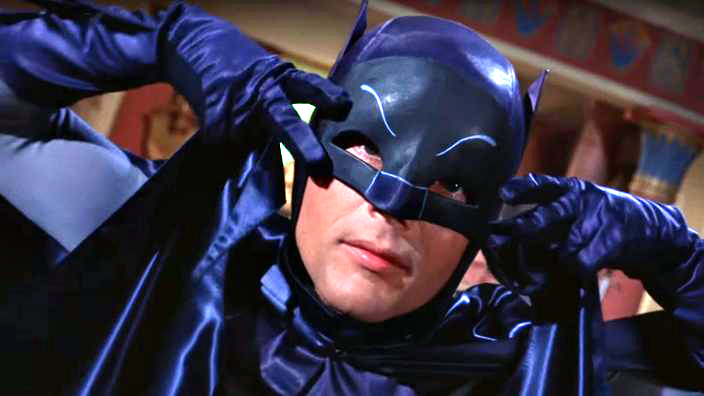
Whatever you want to call them, a full cover Adam West Batman and cast hypnotically doing the Batusi seems like a great addition to a collection.
The Batusi? Well, in 1966, you just had to be there I guess.
The Batusi is performed by making a horizontal V-sign with one’s index and middle fingers of both hands, and drawing them across in front of the eyes, away from the center of the face simultaneously, with the eyes roughly between the fingers. This is performed in time with the music, and is improved upon by continuing to dance with the lower half of the body, simultaneously. — From Wikipedia


Pete Poplaski — Family Affair
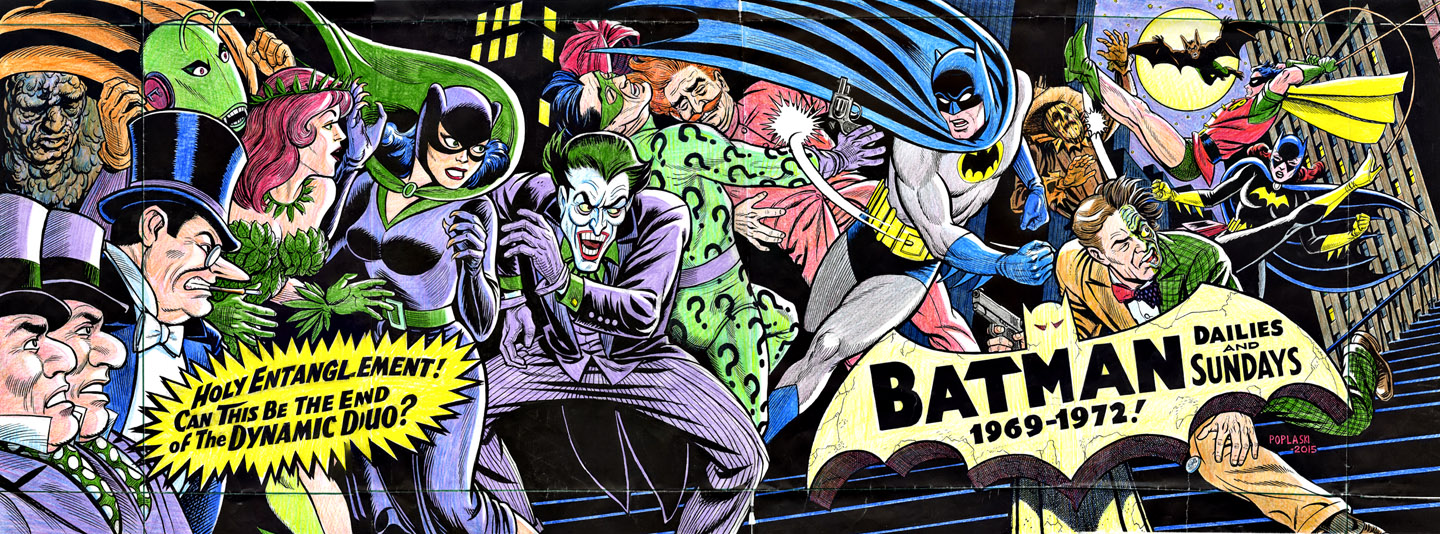
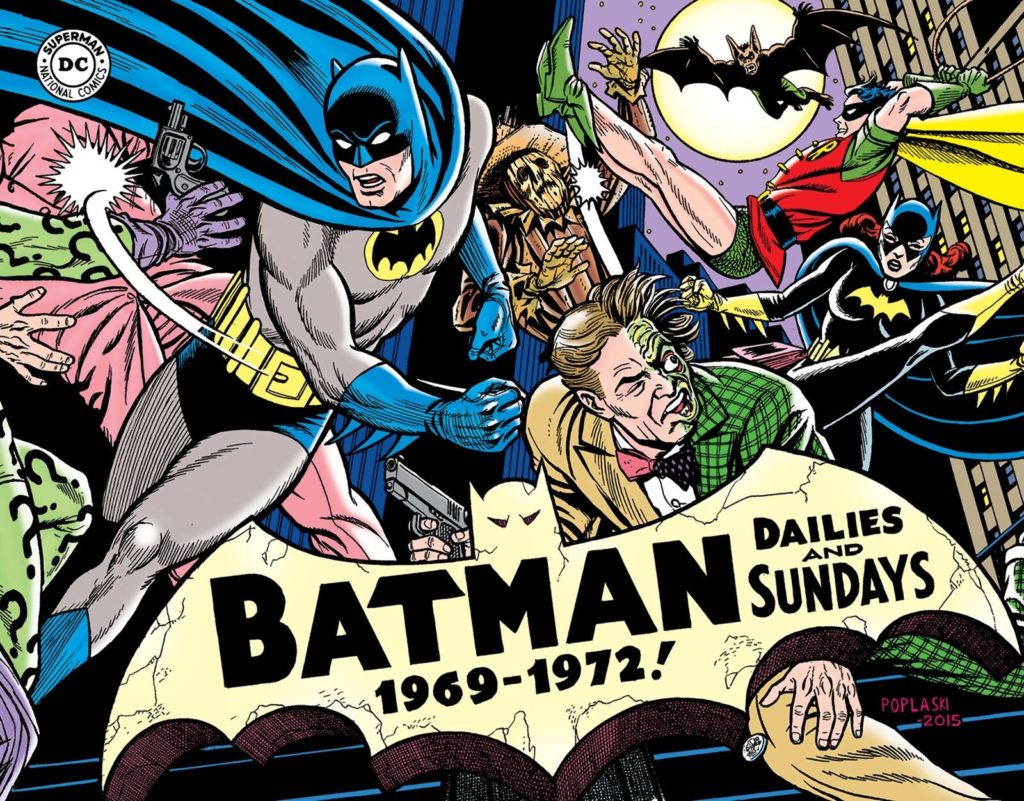
Batman: The Silver Age Newspaper Comics Vol. 3 (1969-1972), November 2016
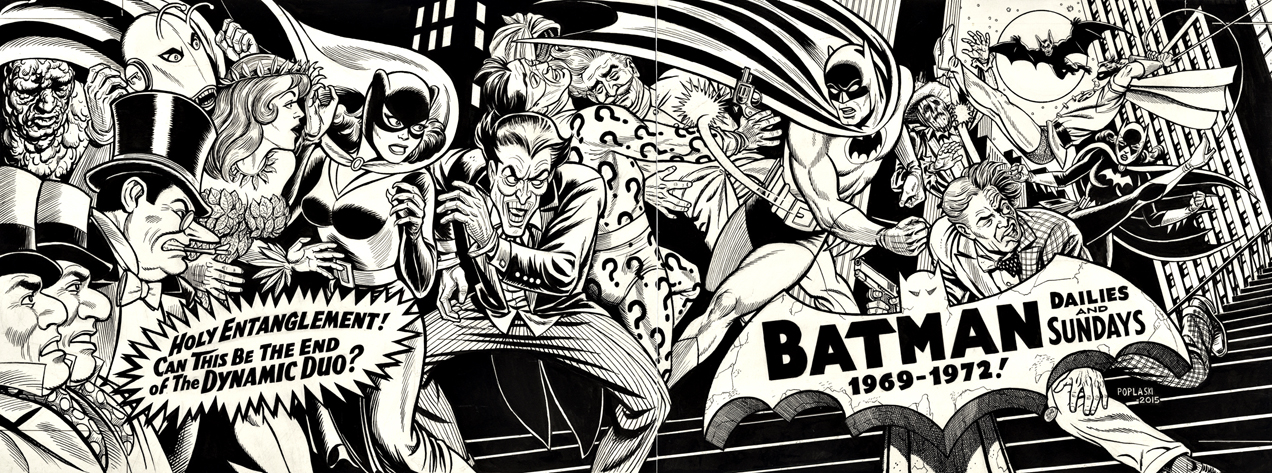
Pete Poplaski has been called an “artist’s artist” by many creators. His name might not be known as well as other artists, but his talent is unquestionable.
Pete, who broke into comics in the 70s underground community, ultimately became Kitchen Sink Press’ art director, and among many accomplishments helped give some of Robert Crumb’s projects just the right design touch.
Kitchen had the rights to reprint the DC Batman and Superman comic strips in the early 1990s, and Pete created brand new covers that evoked the classic style of those strips.
When we acquired those reprint rights at IDW in 2012, we went back to Pete to see if he would be interested in picking up where he left off, and fortunately he was.
Wayne Boring. Dick Sprang. Al Plastino. Carmine Infantino. You name a classic artist, and Pete can replicate the style.
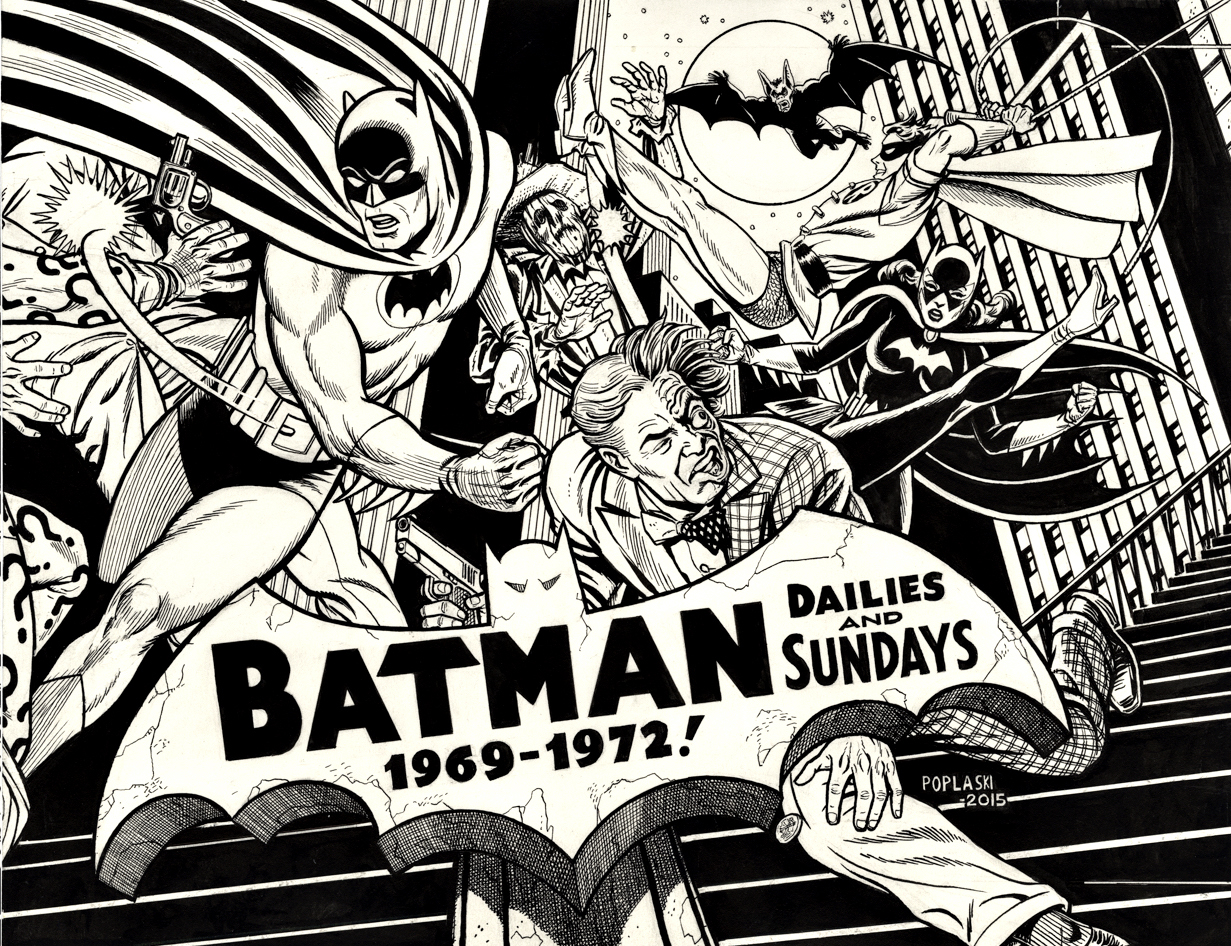
And perhaps most astonishing of all is this giant wraparound cover for Batman Silver Age Volume 3. Featured on these covers are nearly everyone in the Bat family from that era. Good guys and villains alike. All the type is hand lettered.
And when I say giant, I’m not kidding. When combined, the two pieces are nearly four-feet wide.
I’ve never seen another piece of comic art quite like it.
September 19 is “Batman Day,” so we’re going to ride the Bat-train for a few weeks and post some additional theme-appropriate art. No “Bam or “Pow” included.
Jack Davis — Snack Time
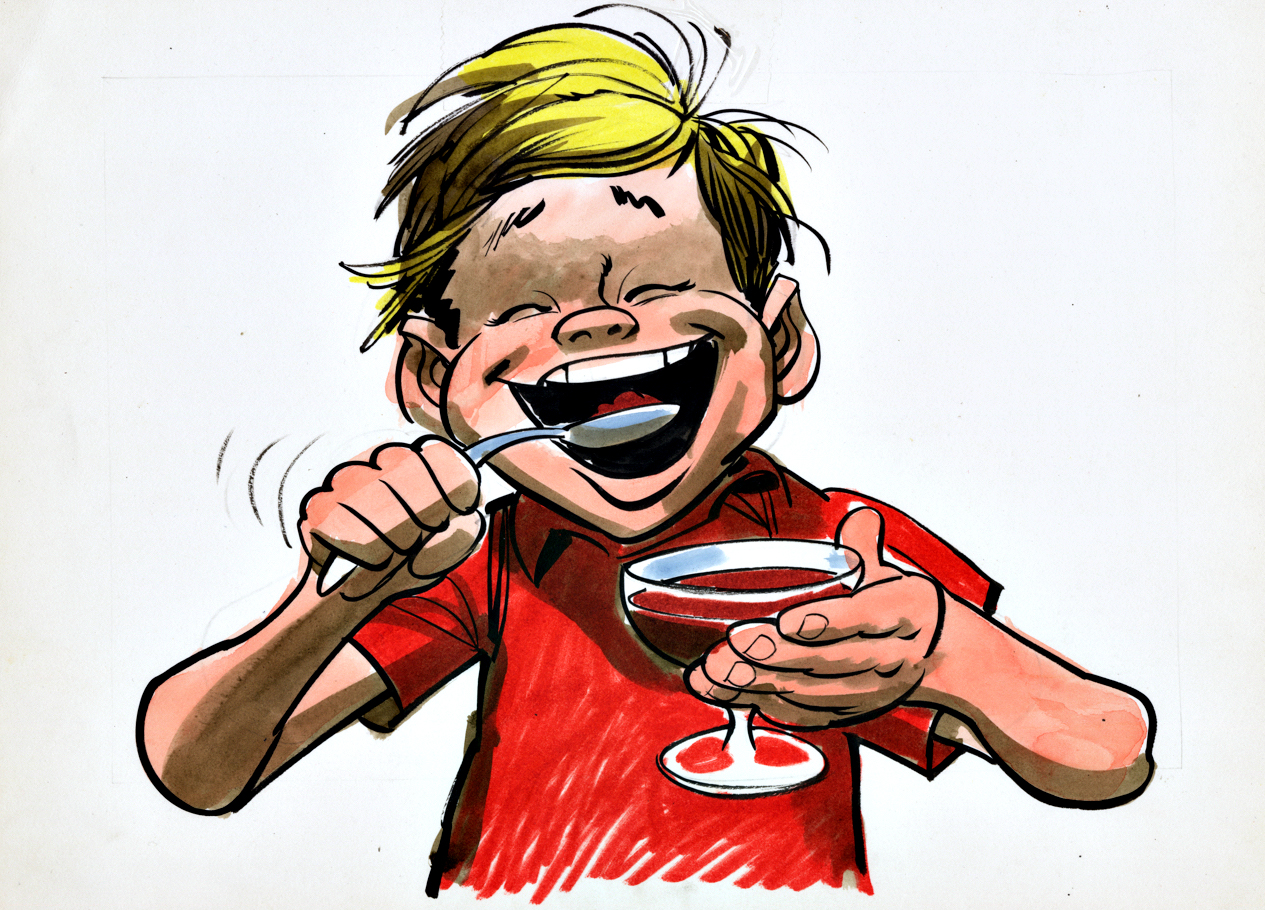
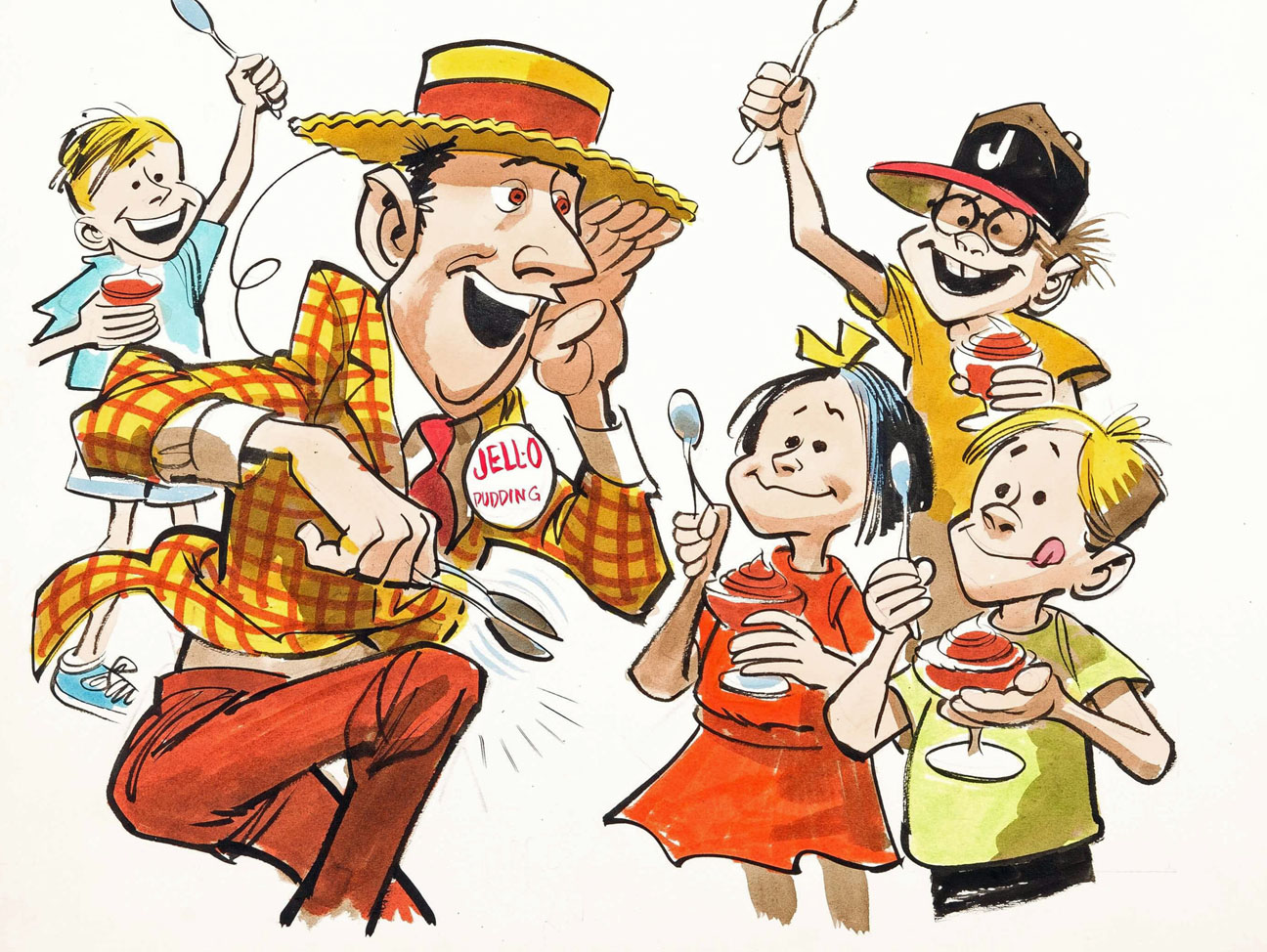
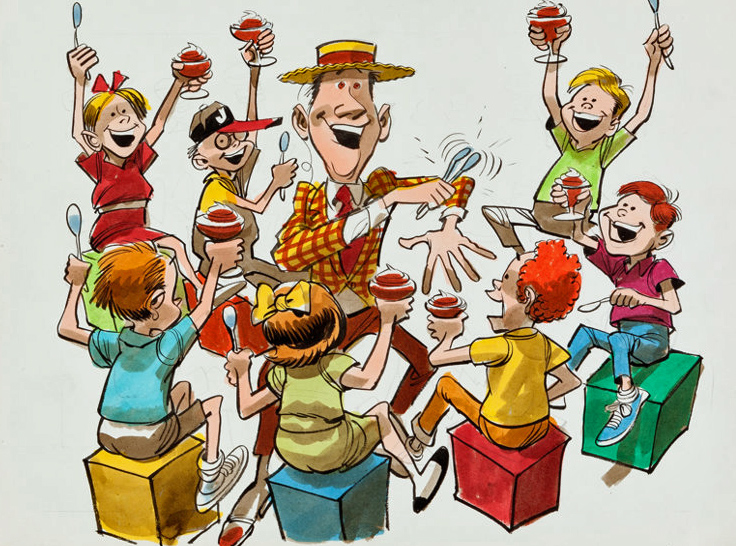
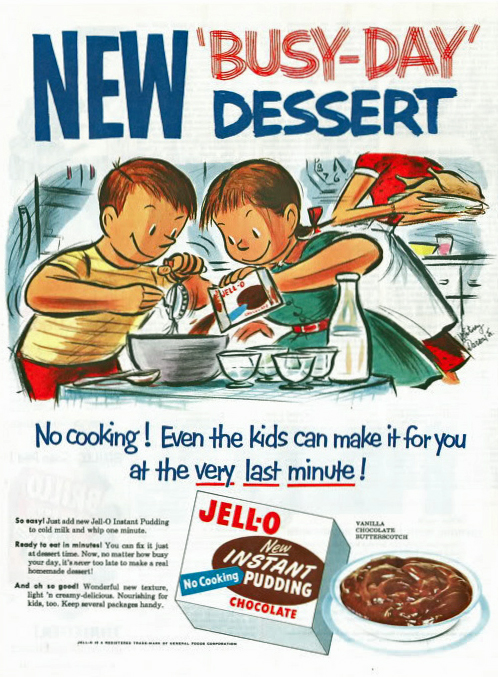
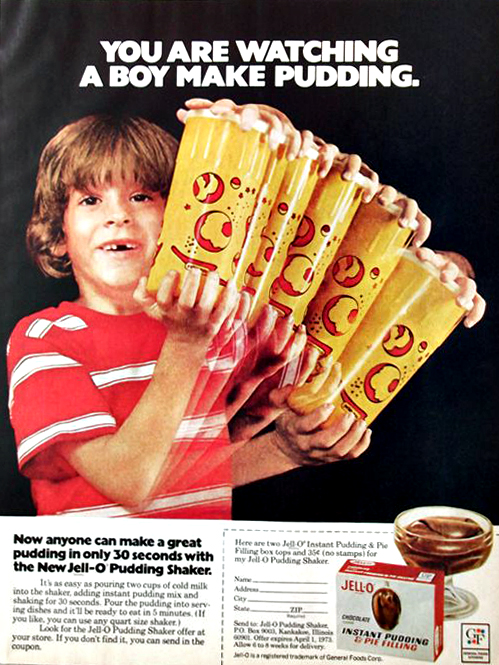
Jell-O Storybard, 70s
Concluding our brief series on the start of a new school year.
What’s a school day without an after school snack? In fact, I probably started thinking about my after school snack a few minutes after lunch period ended.
The prolific and terrific Jack Davis did quite a few storyboards for advertising campaigns and commercials. Apparently he did quite a few for Jell–O
Which is definitely appropriate in my neighborhood, as it seemed all my friend had Jell-O or instant pudding for snack or desert.
Jell-O did not make it high on my list at that point, but Jack Davis is always high on my list, so I’m pleased to own this close-up of a kid about to dive into his gelatin.
Not sure if these boards were ever actually used or not —- Madison Avenue commissioned a lot of (expensive) material that never saw the light of day — but I will bet Jack understood that part of the business.
And it doesn’t matter to me much, because either way, it’s a fun piece of color Davis art I can enjoy.
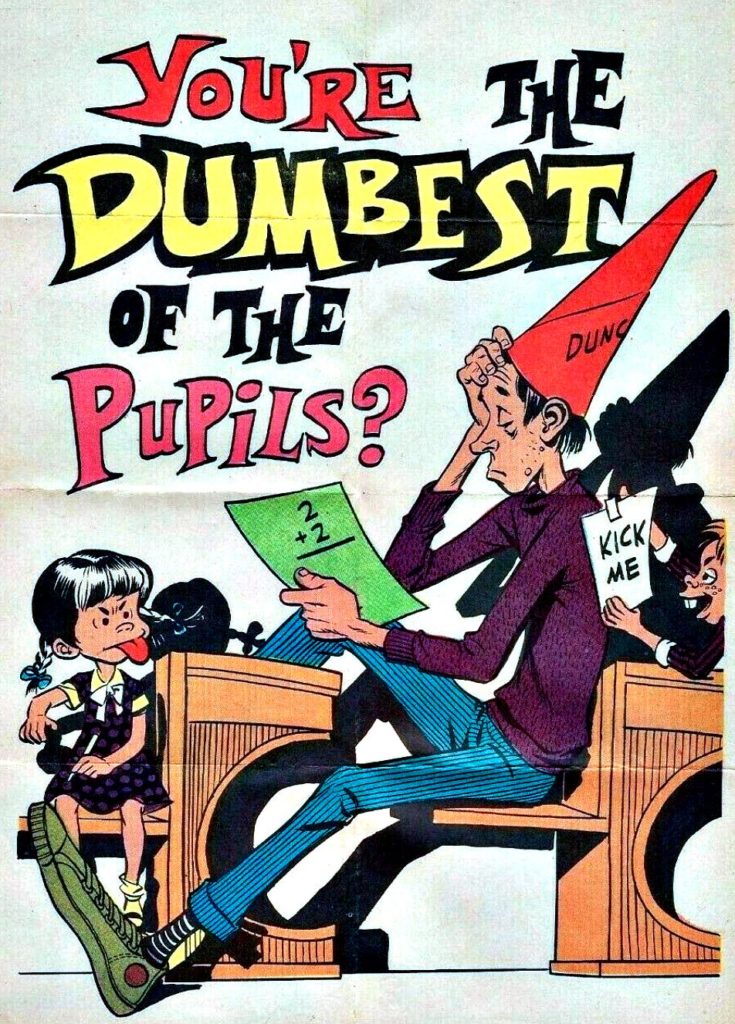
Wallace Wood — Topps In Class
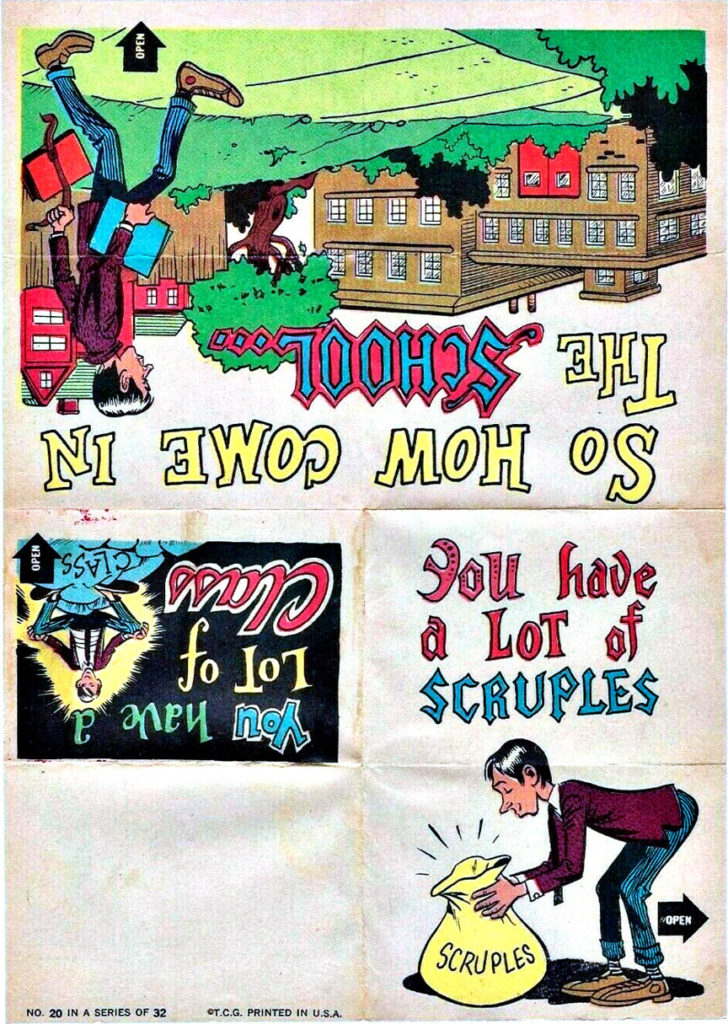
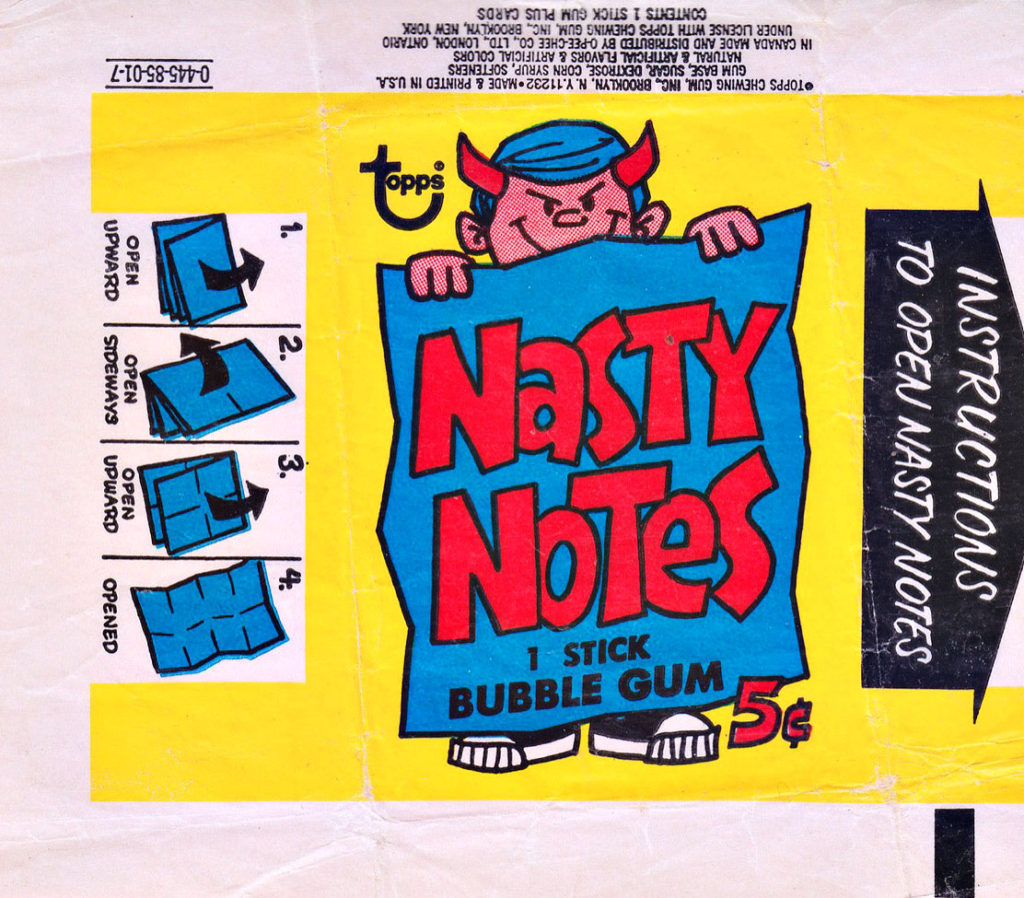
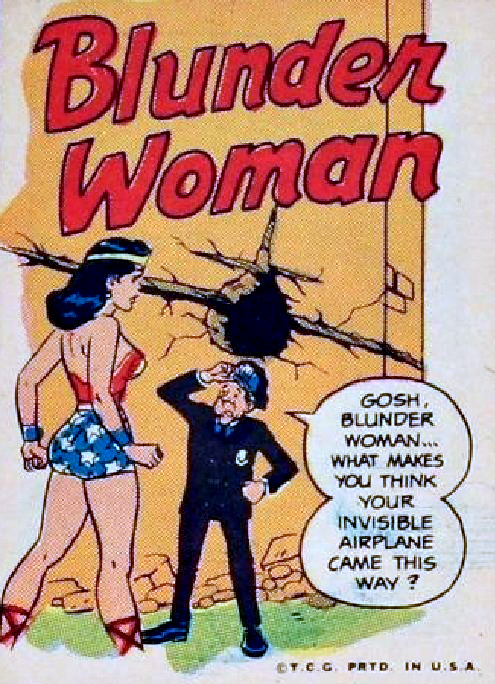
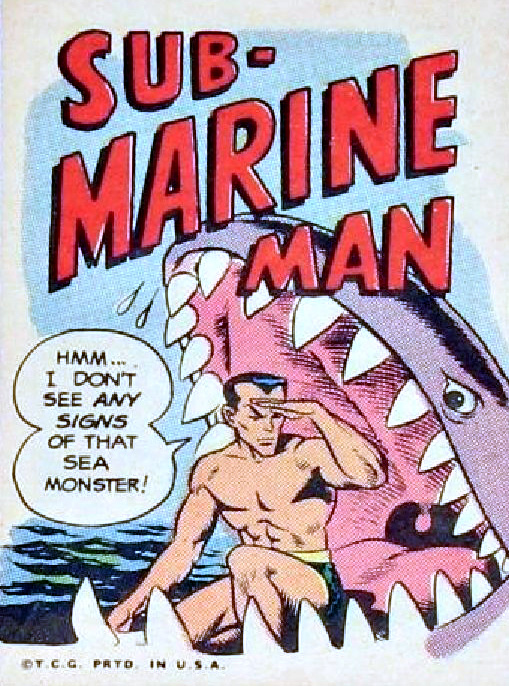
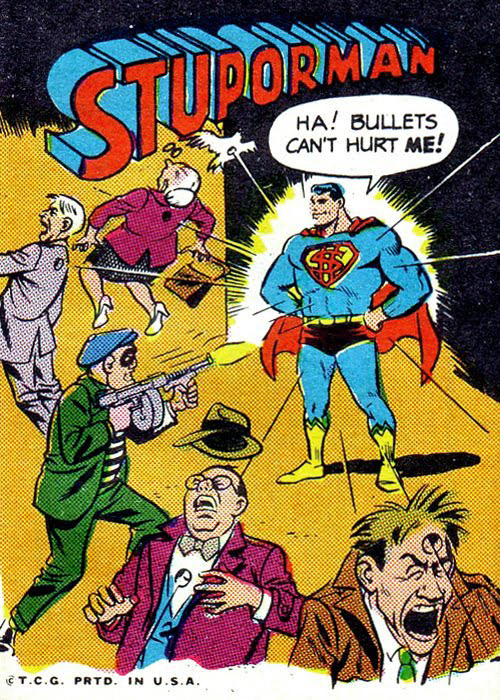
Topps Nasty Notes, 1967
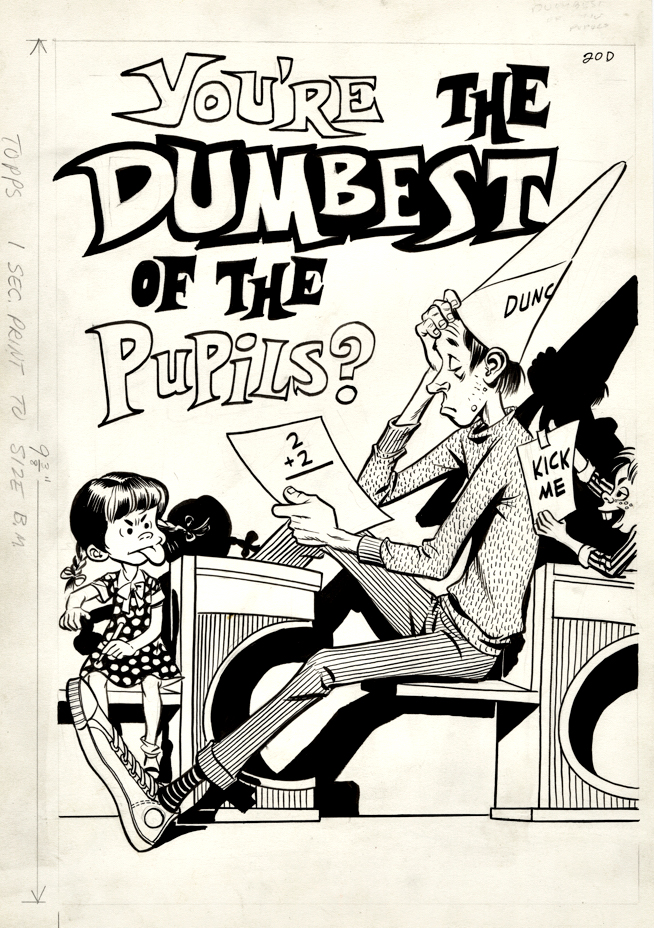
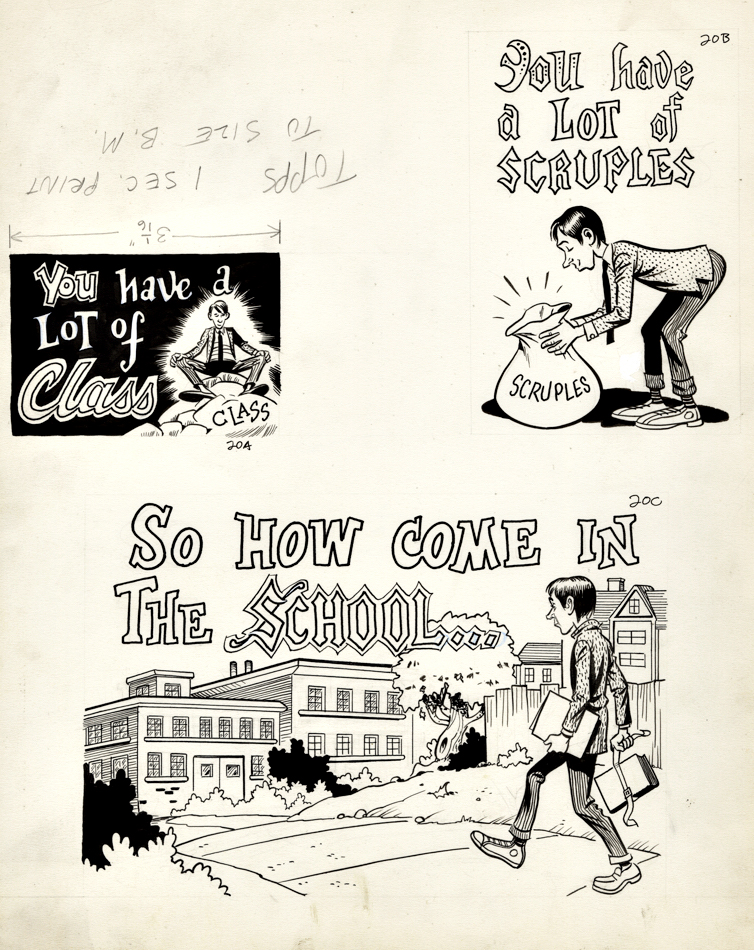
Wallace Wood brings his penchant for humor to Topps with this great looking 1967 series of novelties appropriately entitled “Nasty Notes.”
Why call them novelties instead of trading cards? Because they are actually two-sided posters that are designed to resemble the folded notes you might pass around in class.
Woody did a generous amount of work for Topps in the 60s as he became increasingly frustrated with the mainstream comics houses. Also, he was friends with one of Topps creative directors, Len Brown.
In fact, as noted previously, Len helped shape the creative direction of Wood’s T.H.U.N.D.E.R Agents, and. in return, Woody named the civilian identity of Dynamo, the lead character, “Len Brown.”
Some of the greatest and best-known talents of the comics contributed to Topps creative “Non-Sports” projects. It’s an all-star list that includes Jack Davis, Bob Powell, Basil Wolverton, Robert Crumb, Jay Lynch and Art Spiegelmanamong others.
(And of course, well-know pulp cover painter Norm Saunders was responsible for the finished work on Mars Attacks, Batman, Civil War, and others.)
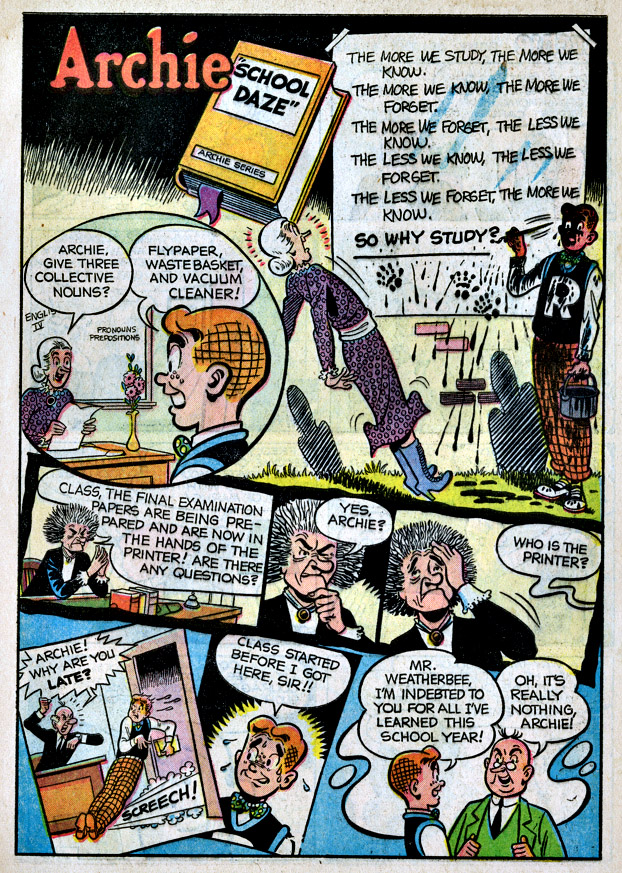
Bob White — School Daze
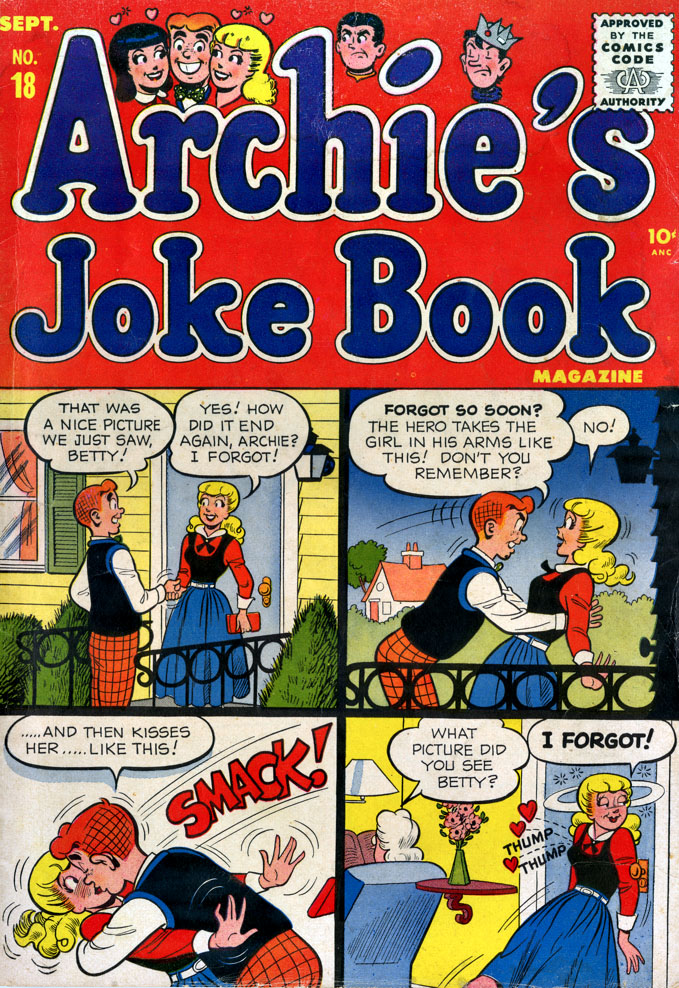
Archie’s Joke Book #18, September 1955
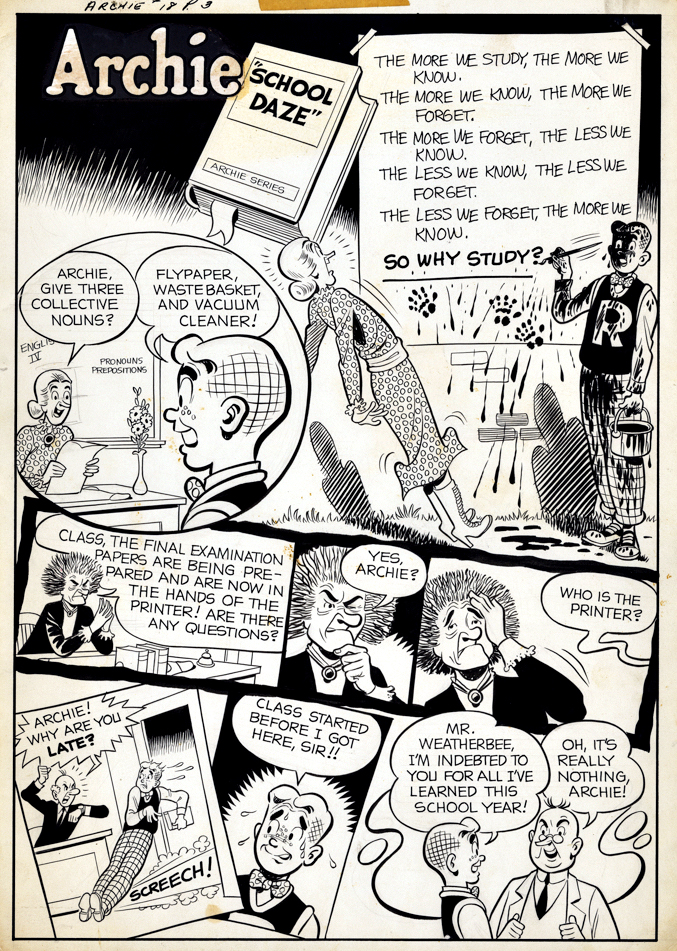
Whether in a classroom, or stuck at home in front of a computer, the school year is indeed upon millions of kids and their folks.
And lets face it, when you’re a kid, the school calendar is much more important than the “yearly” calendar.
Archie comics was one of the few publishers that frequently employed the calendar to its advantage. New stories (or reprints for that matter) were typically timed to Christmas Vacation, Summer Vacation, camp time, and of course, school years.
In hindsight, Archie’s publishing schedule was similar to the merchandise planning of a department store. You have to stay ahead of the seasons.
And since the Archie gang were teens, school played an oversized role in the storytelling and gags.
Appropriately, here is a great one pager by Bob White. Sure the gags are corny, but 65 years ago they were probably the bee’s knees. (Actually, they were probably groaners then, too.)
But we grinned. And the cartooning is terrific.
(White credit confirmed by my friend, the late, great, Victor Gorelick, Archie’s EIC, who passed away earlier this year. Damn you, 2020.)
George Perez — Rebirth
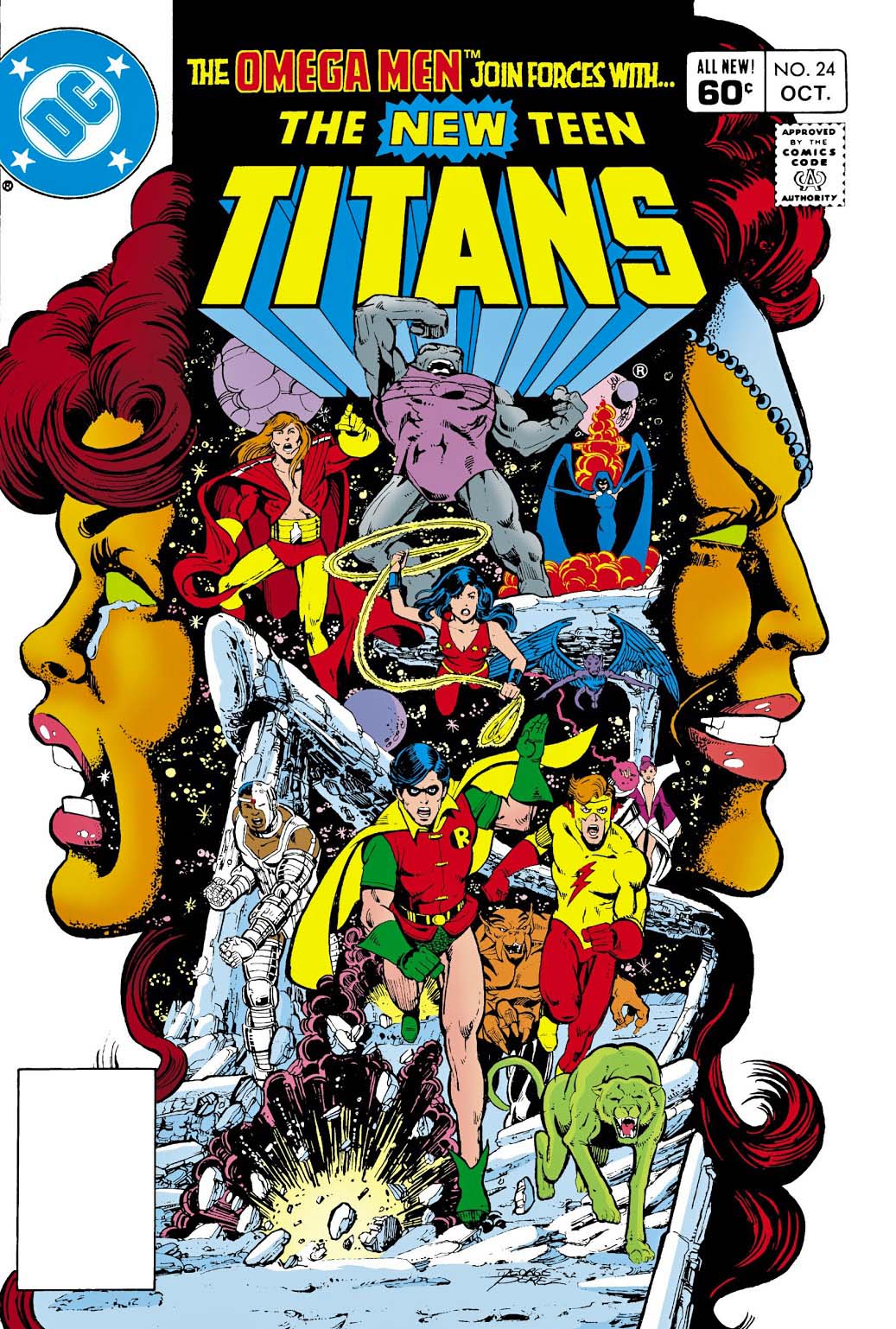
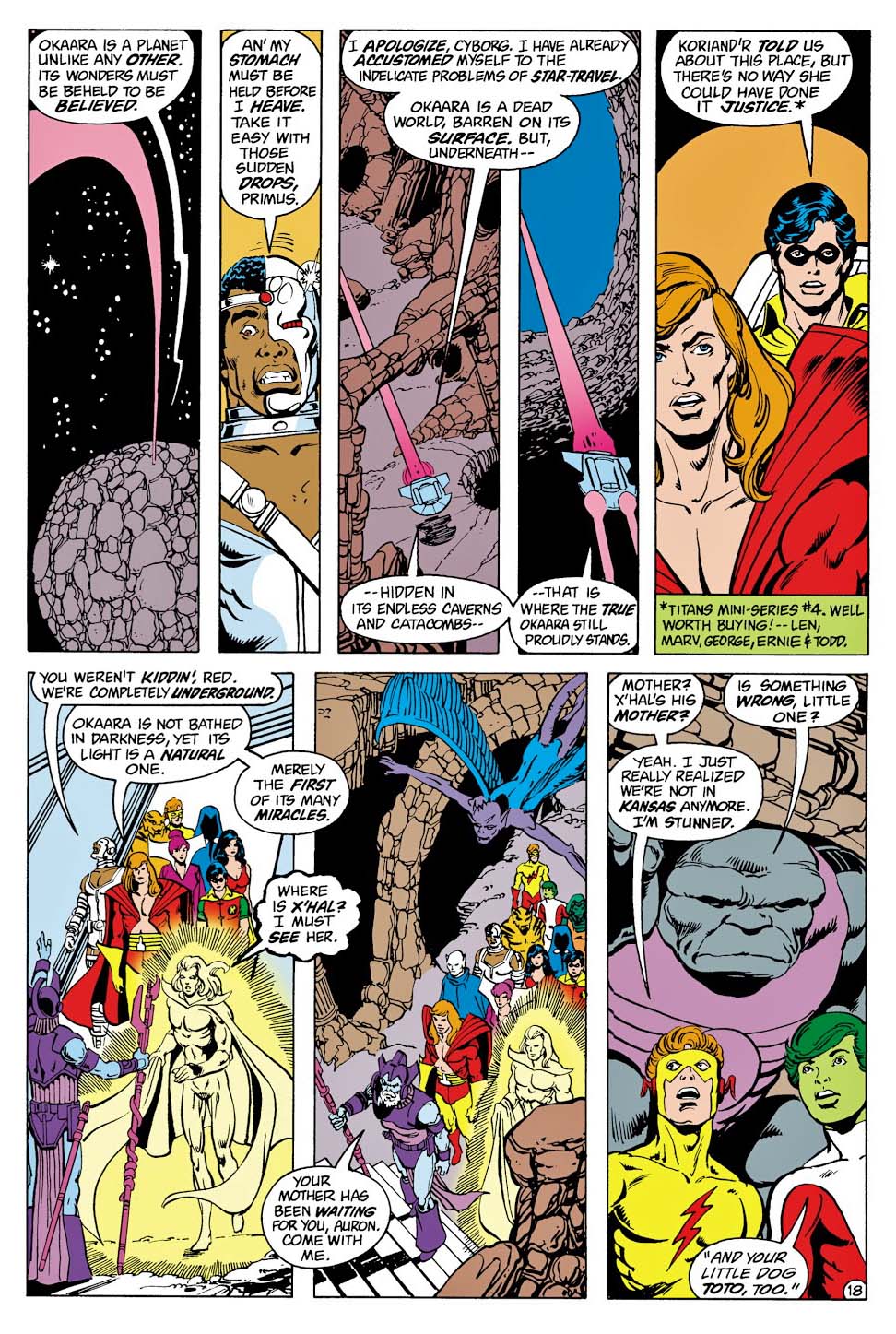
New Teen Titans #24, October 1982
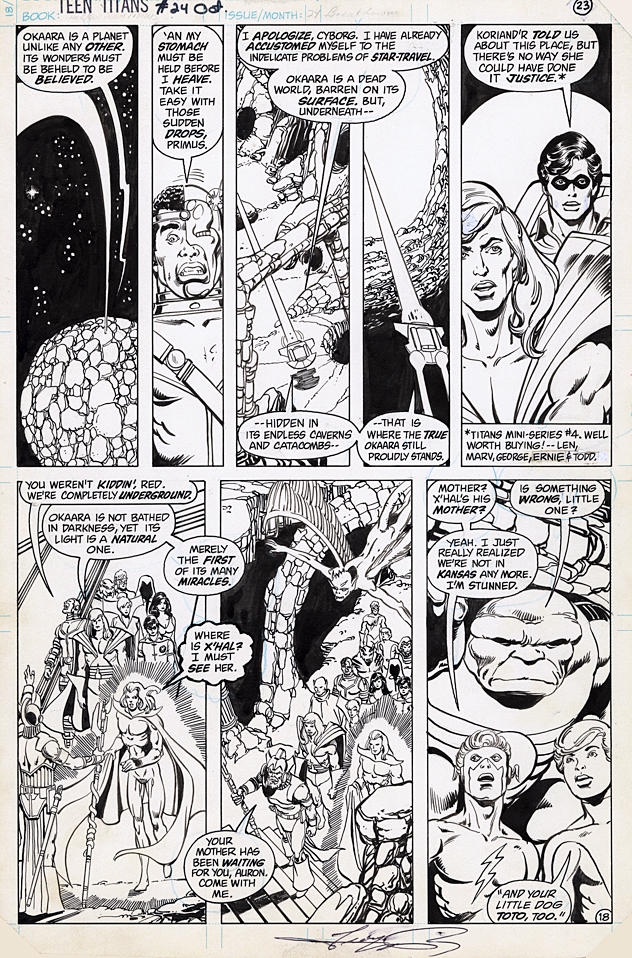
When Marv Wolfman and George Perez took on The New Teen Titans in 1980, they were aiming to rival Marvel’s immensely popular X-Men. Right off the bat, the team created one of the greatest villains in the DC Universe in Deathstroke, aka Slade Wilson. In addition, Perez and Wolfman were responsible for resurrecting the Titans and assembling the now-iconic team of Robin, Beast Boy, Cyborg, Starfire, and Raven. -Dana Forsythe, SyFy Wire, 2019
I came into Teen Titans reboot a few issues late. It hit stores during my college years, when my comic book purchasing was inconsistent, mostly sporadic actually, especially on mainstream titles. Somehow I missed the buzz — or the buzz missed me. (And the original Titan series had some great art from time to time, but the writing was all over the map.)
Fortunately, my college roommate had caught on from the beginning, and I borrowed his early issues. I was hooked. (I really should return those one of these days.)
I was in love with Perez’s astonishing detail on his Marvel titles (FF, Avengers, etc.), and this was superb work, perhaps even a notch greater.
When I returned to collecting original art about a dozen years ago or so, acquiring a Teen Titans page was an early priority.
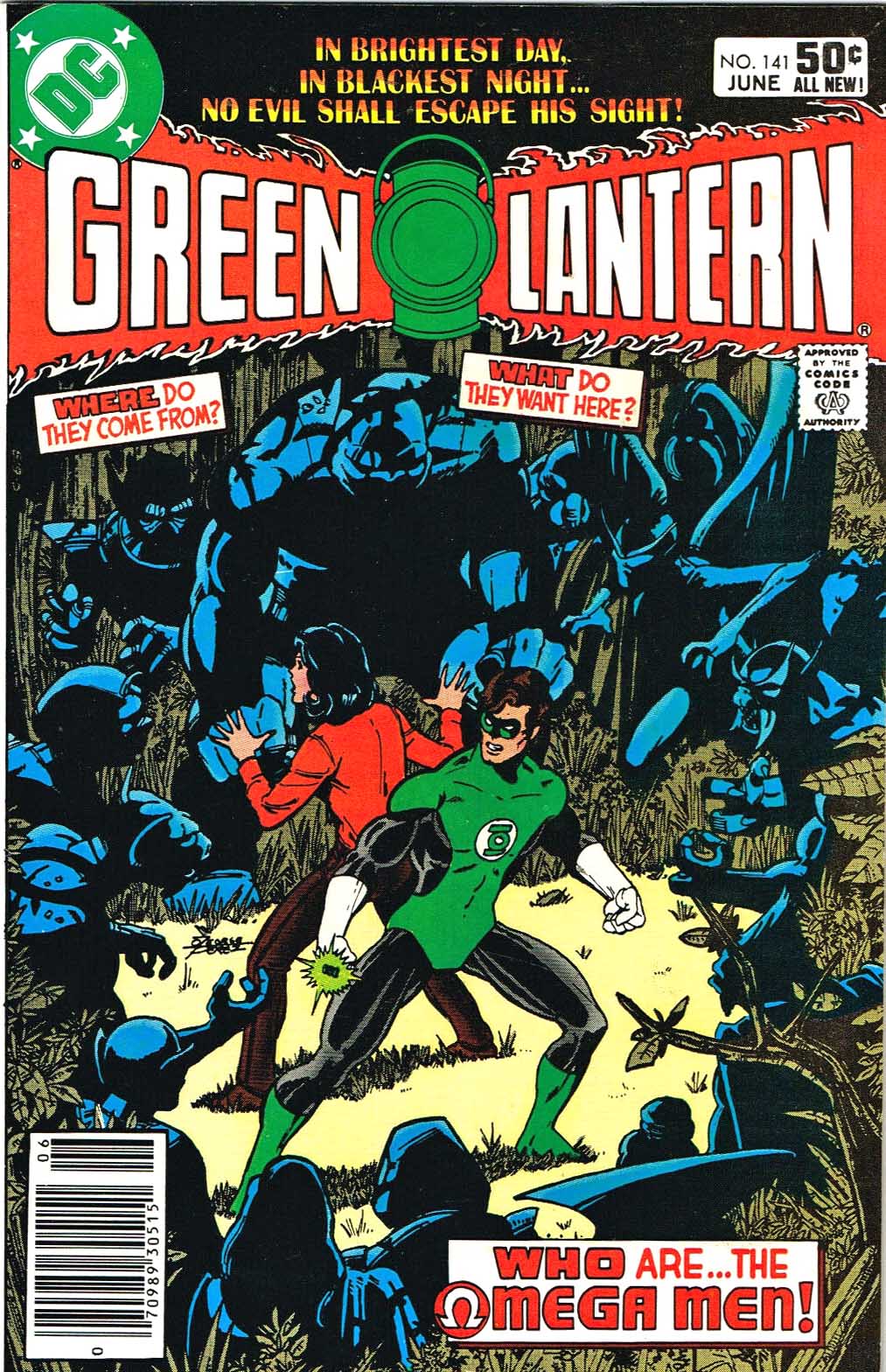
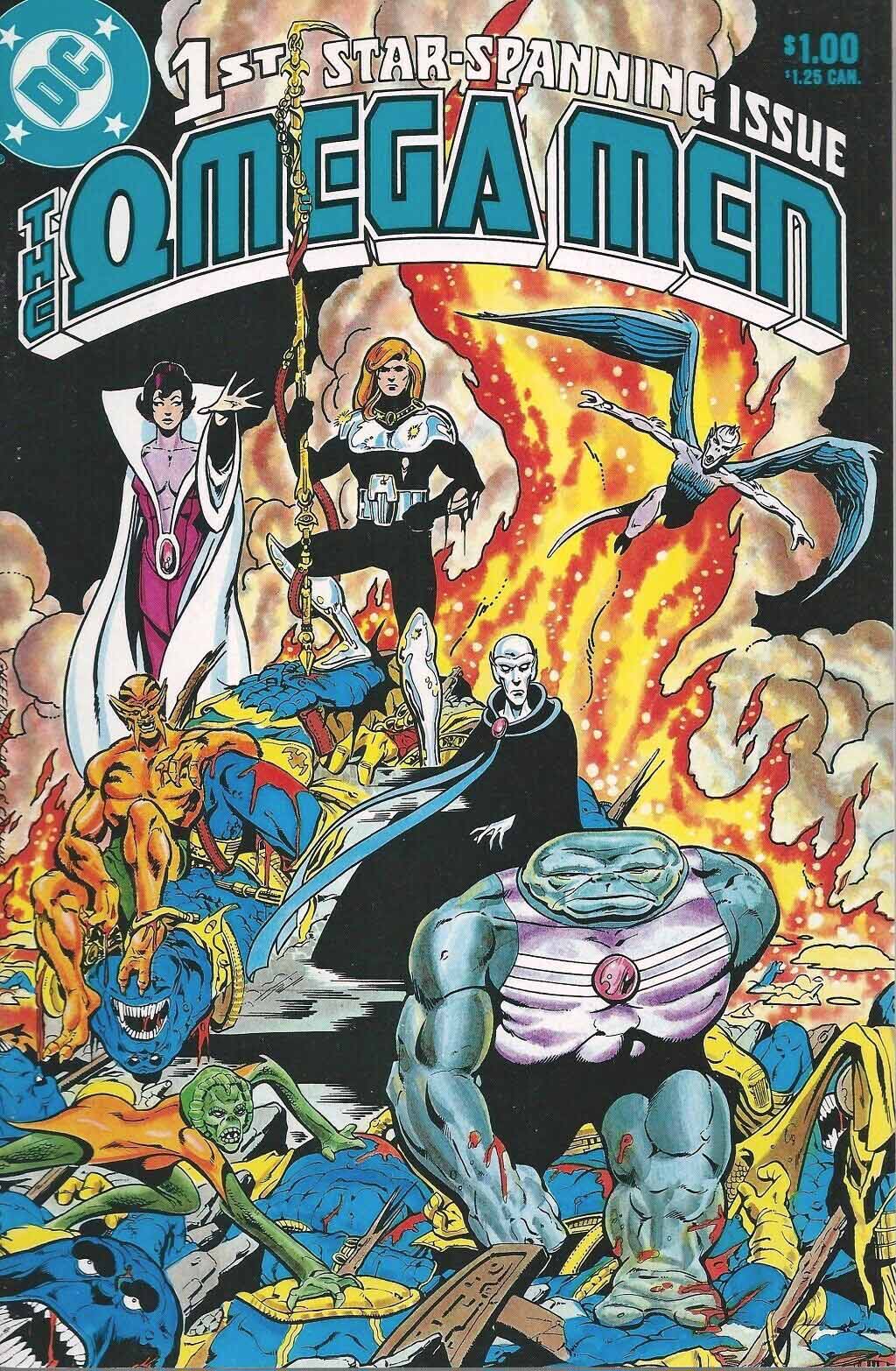
The Titans join with the Omega Men in this issue, and we get some of both in this classic Perez layout. No one else could do narrow panels like this, with this much detail, and frankly few tried.