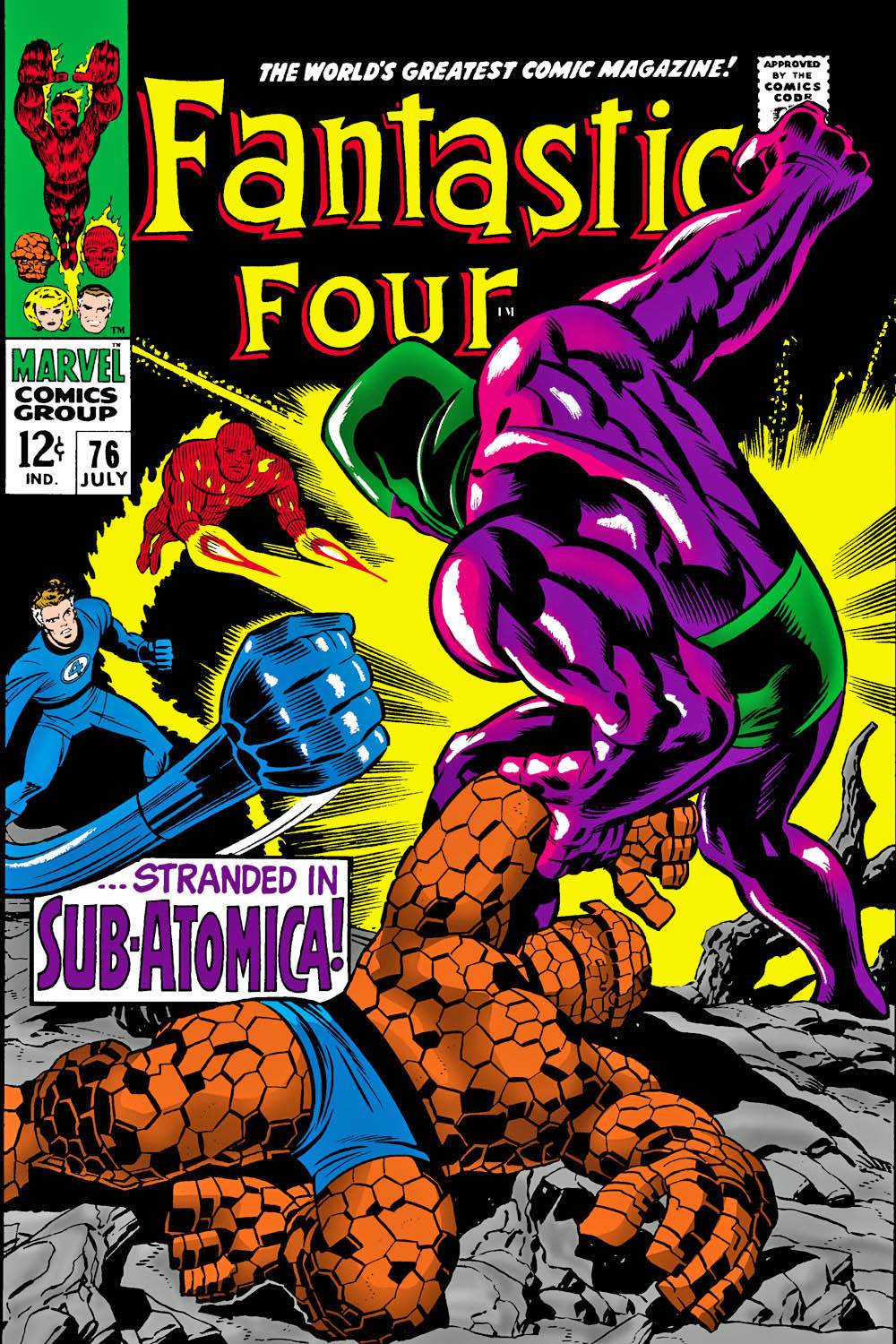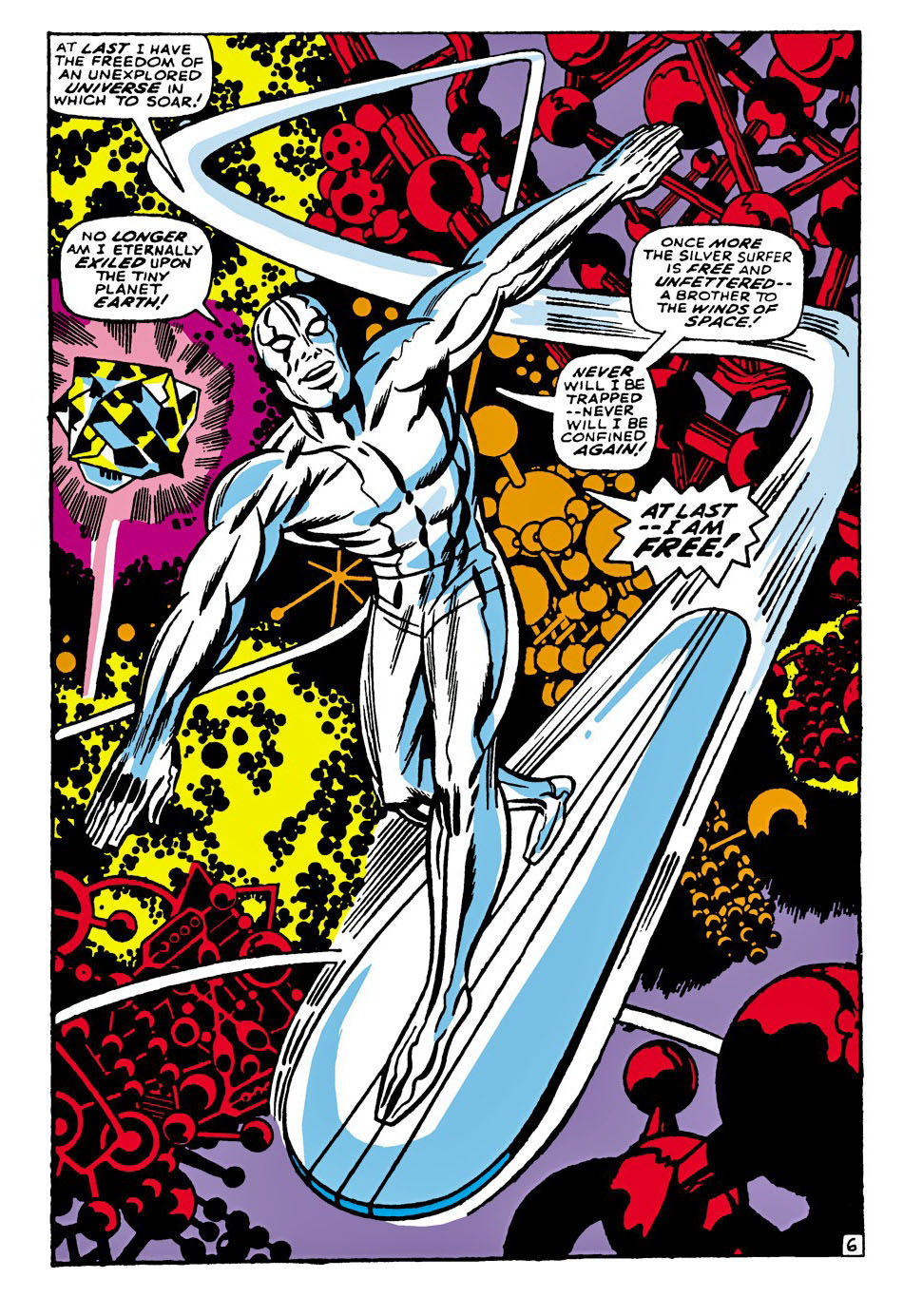
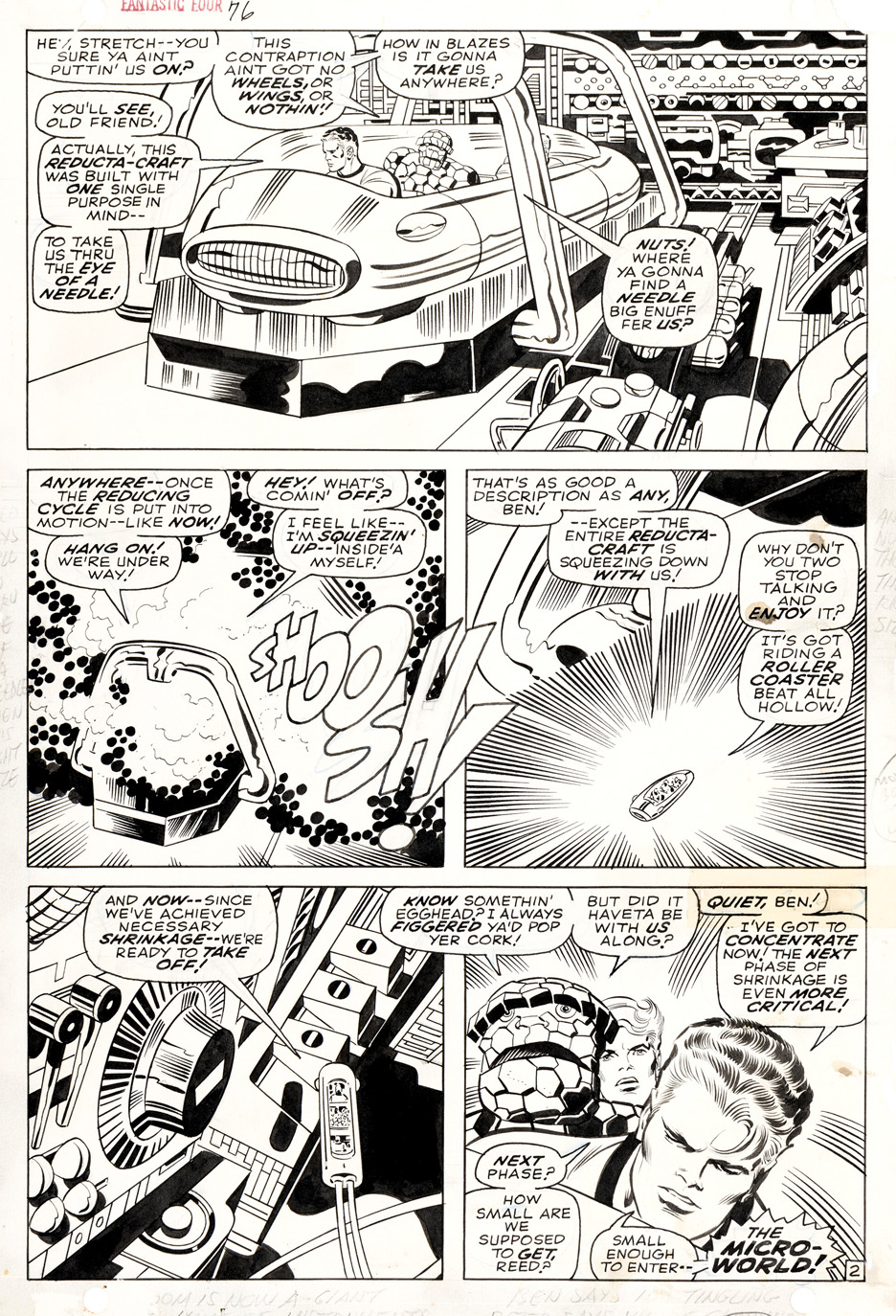
Fantastic Four #76, July 1968
Sixty-five years on, The Fantastic Four still feels like Marvel figuring itself out in real time—and getting it spectacularly right. These weren’t heroes born in alleys or back rooms; they were a product of the early ’60s, when the Space Race filled the headlines and the future felt thrilling, reckless, and inevitable. Rockets were launching, limits were being tested, and the question wasn’t should we go farther—it was how fast can we get there. Marvel’s cosmic imagination starts right here, with four people charging into the unknown.
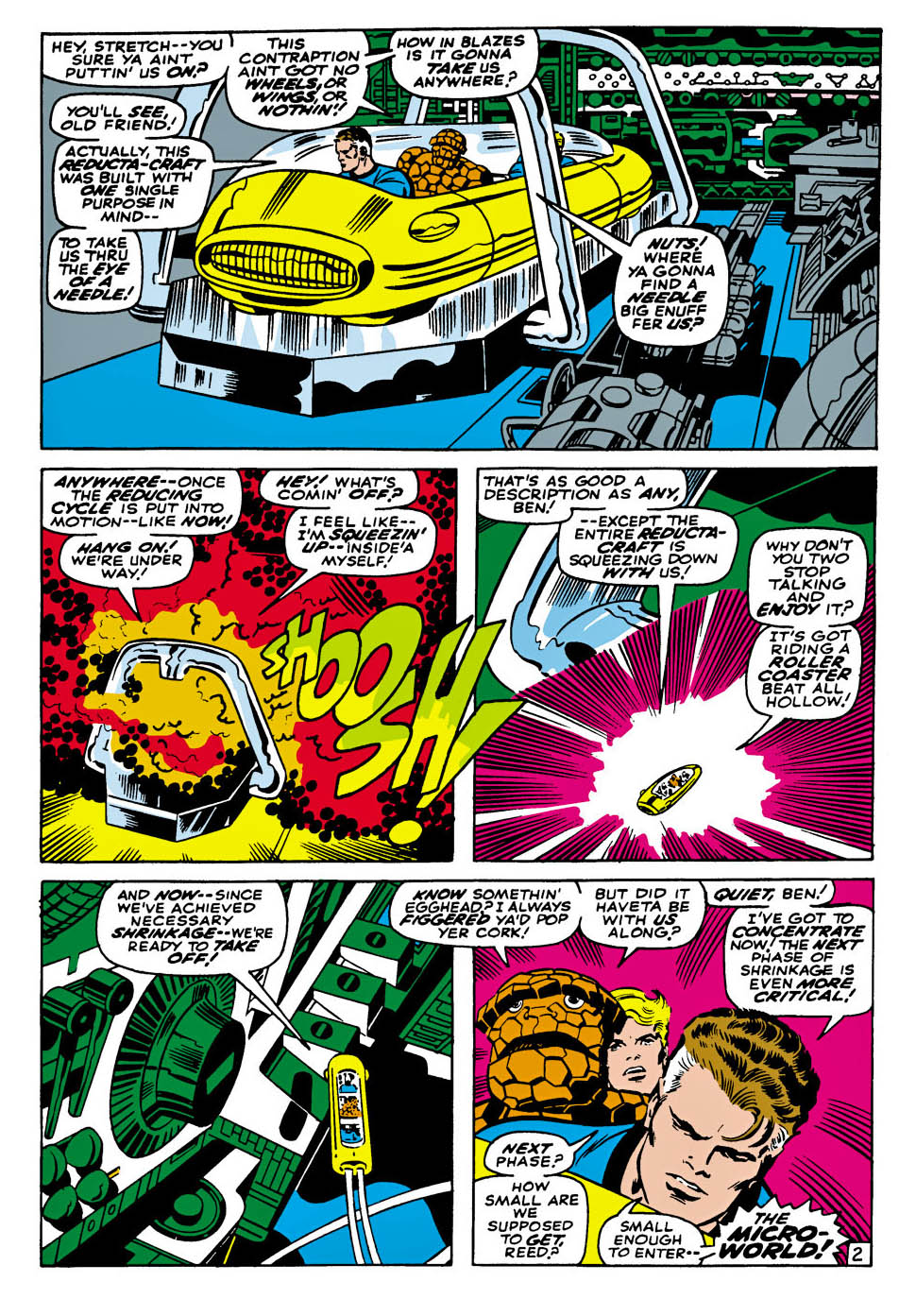
And speaking of charging ahead—just look at this page by Jack Kirby, beautifully locked down by Joe Sinnott. This isn’t just a shrinking sequence; it’s Kirby inventing scale. Machines loom like alien vistas, panels crackle with motion, and your eye doesn’t just read the page—it gets pulled inside it. Sinnott’s inks keep all that chaos crisp, clear, and impossibly confident.
I continue to believe the first 100 issues (and especially the marvelous three-year stretch from about issues #39–76) of The Fantastic Four rank among the most important runs in comic-book history—one long creative hot streak where the ideas redefined pretty much everything that came before.
I’m never going to referee who did what between Kirby and Stan Lee, but one thing is pretty obvious: Lee contributed much of the personality, friction, and soap-opera snap that made the cosmic feel personal. The Fantastic Four bicker, joke, and melt down while rewriting reality—and that mix of big ideas and human irritation became Marvel’s calling card.
Happy 65th to the Fantastic Four: Marvel’s original first family, and a wondrous revolution in comic books.