Greg Goldstein's Comic Art Gallery

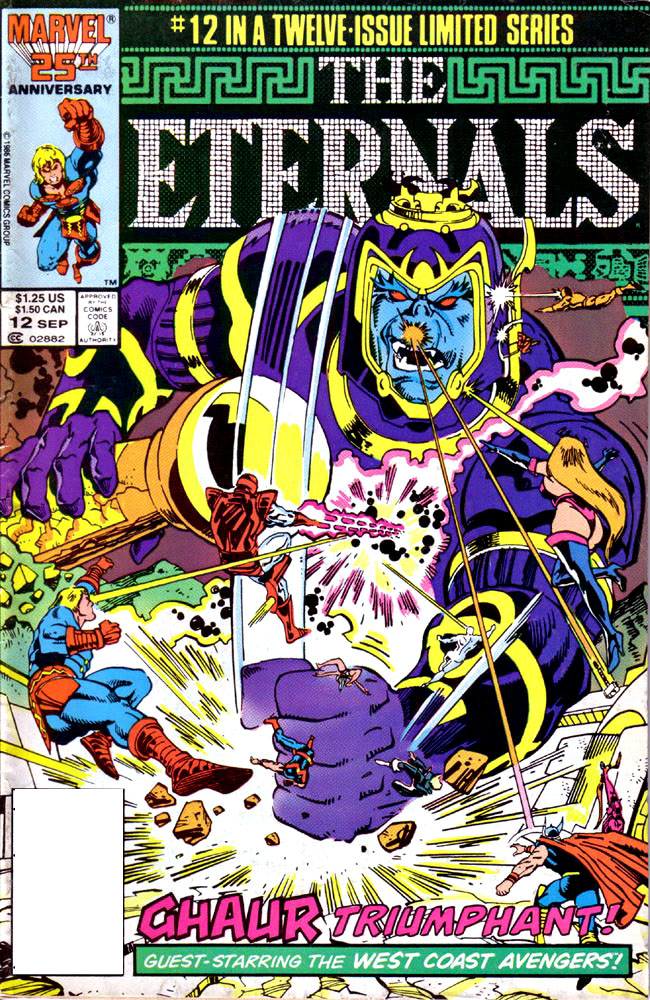
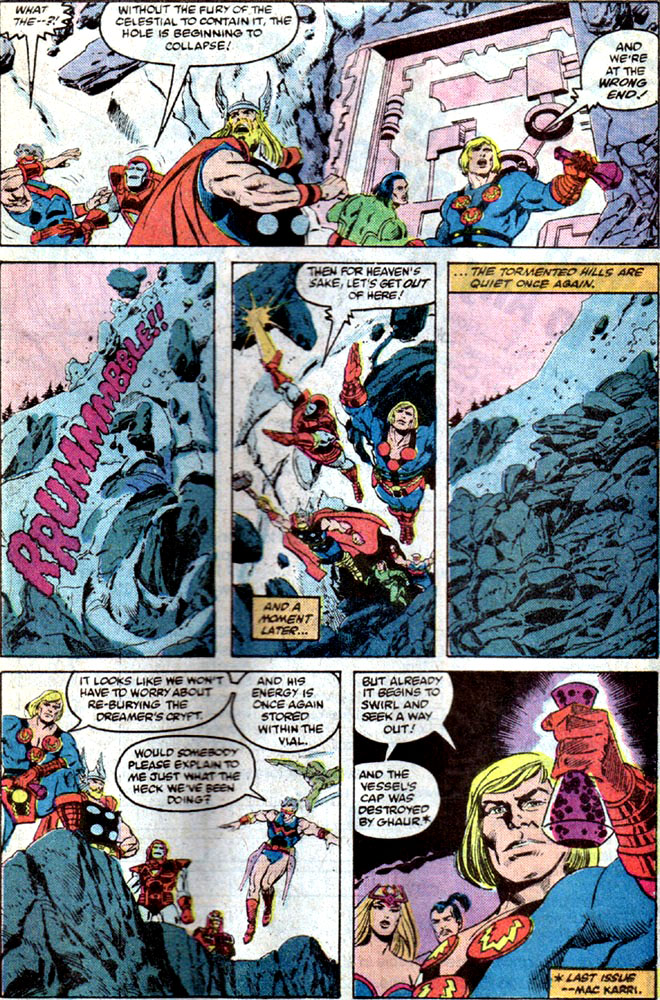
Paul Ryan & Al Williamson — Eternals, Avengers, Oh My!

Eternals #12, September, 1986
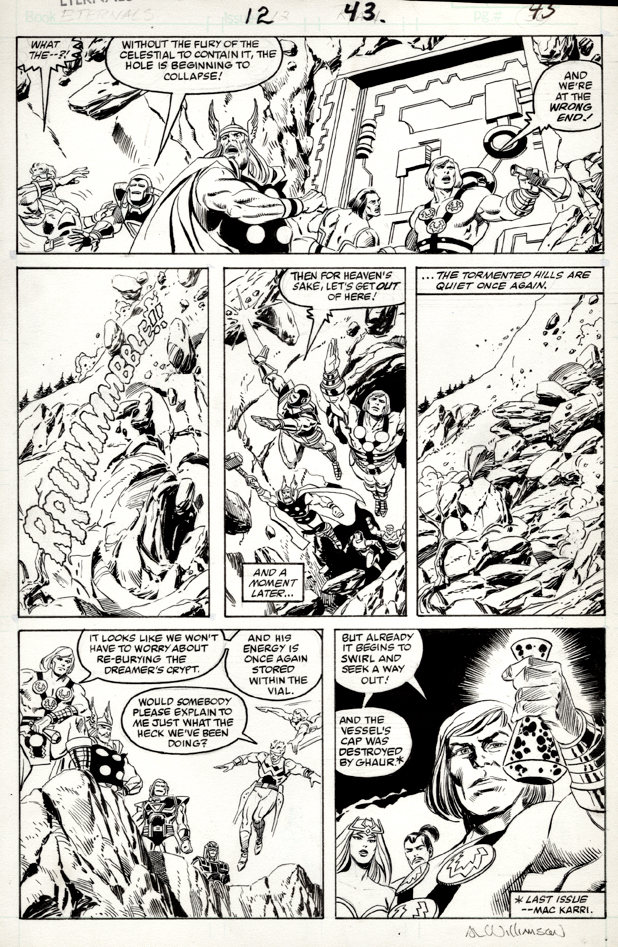
This “sequel” Eternals series couldn’t have gone quite as planned.  

Peter Gillis launches as writer, but Walter Simonson takes over mid–stream. Sal Buscema starts us off on pencils, (ands in some case, inks) but the art team shifts a few times too with a variety of Bullpen artists from the era, until we finally get here, the double-sized last issue, with pencils by Paul Ryan and inks (mostly) by Al Williamson, with assists fromSam de la Rosa.

All pretty odd stuff for a limited-series.

That aside, this is dynamic page featuring Eternals and Avengers working together to defeat their common foe. And hey, based on the film trailers alone, it’s obvious the Eternals exist in the greater MCU, so a crossover like this down the road is not the craziest idea you’re going to hear today. (It’s still early, so trust me on this.)

Eternals opens in theaters on Friday. (Well, technically tonight in many locations.)
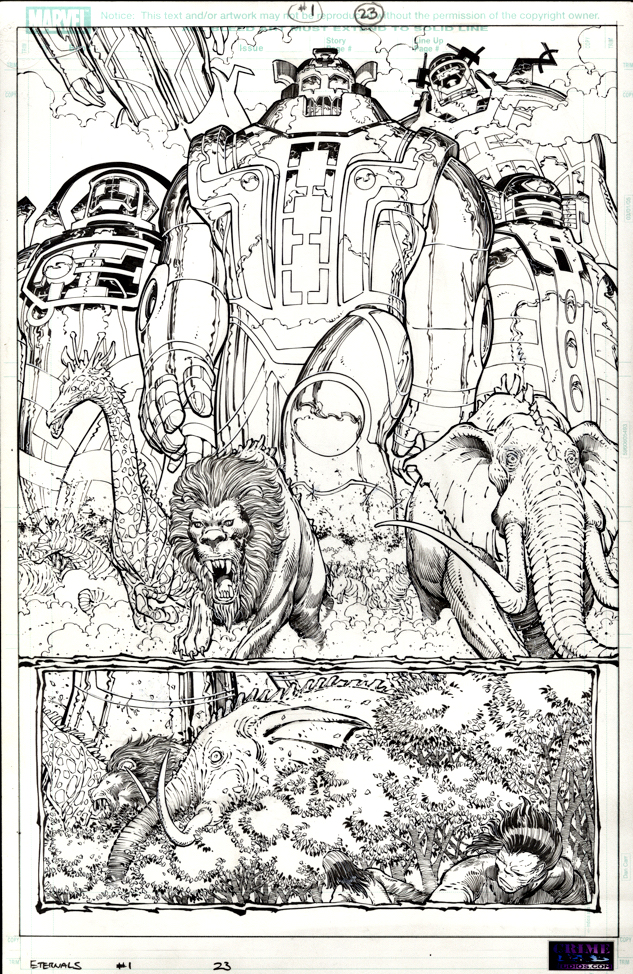
John Romita Jr. — The Coming Of The Celestials

Eternals #1, August 2006

Jack Kirby’s Celestials walk the earth, courtesy of Neil Gaiman and John Romita’s 2007 mini-series, as detailed previously here.

And finally, after a year or so of pandemic-related delays, they (presumably) walk on the big screen this Friday.

Early buzz on the film is quite good, but if I’m guessing, regardless of story and cast performance, Kirby fans will judge the film on whether the cinematic realization of the Celestials matches — or even amplifies — Jack’s giant vision.

In a few days, we will all see for ourselves

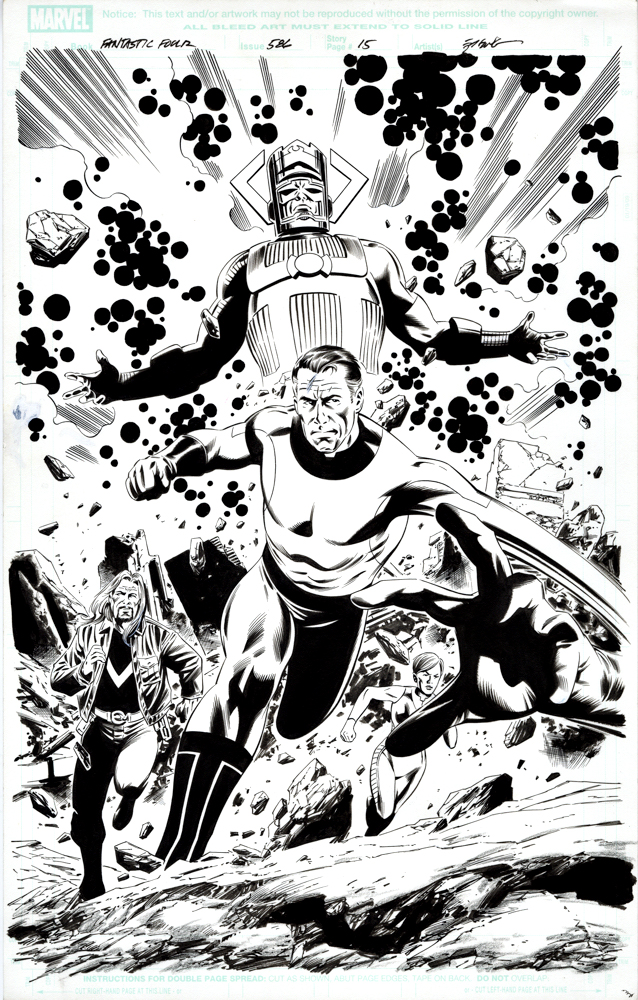
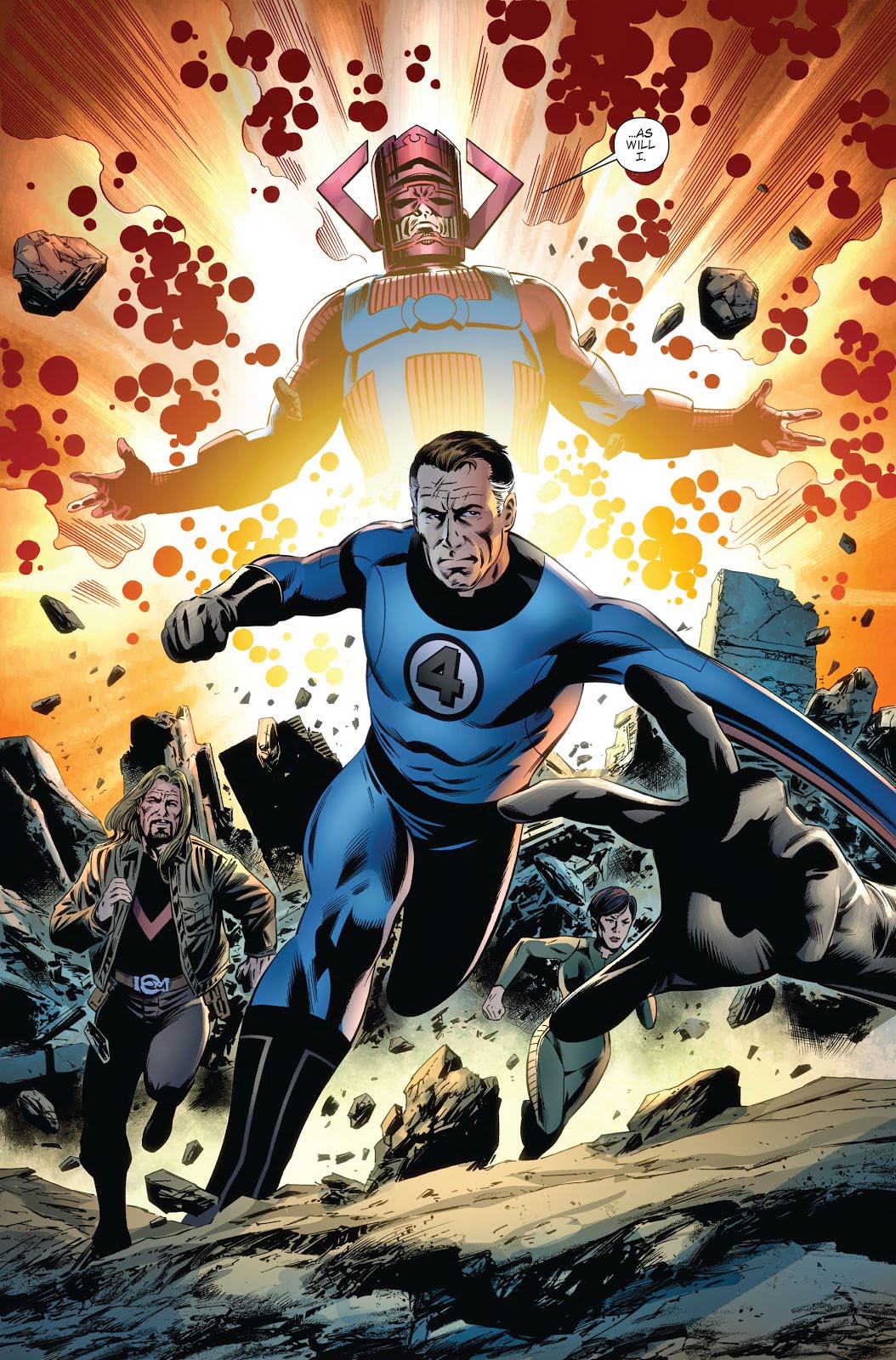
Steve Epting — It Was Sixty Years Ago Today…

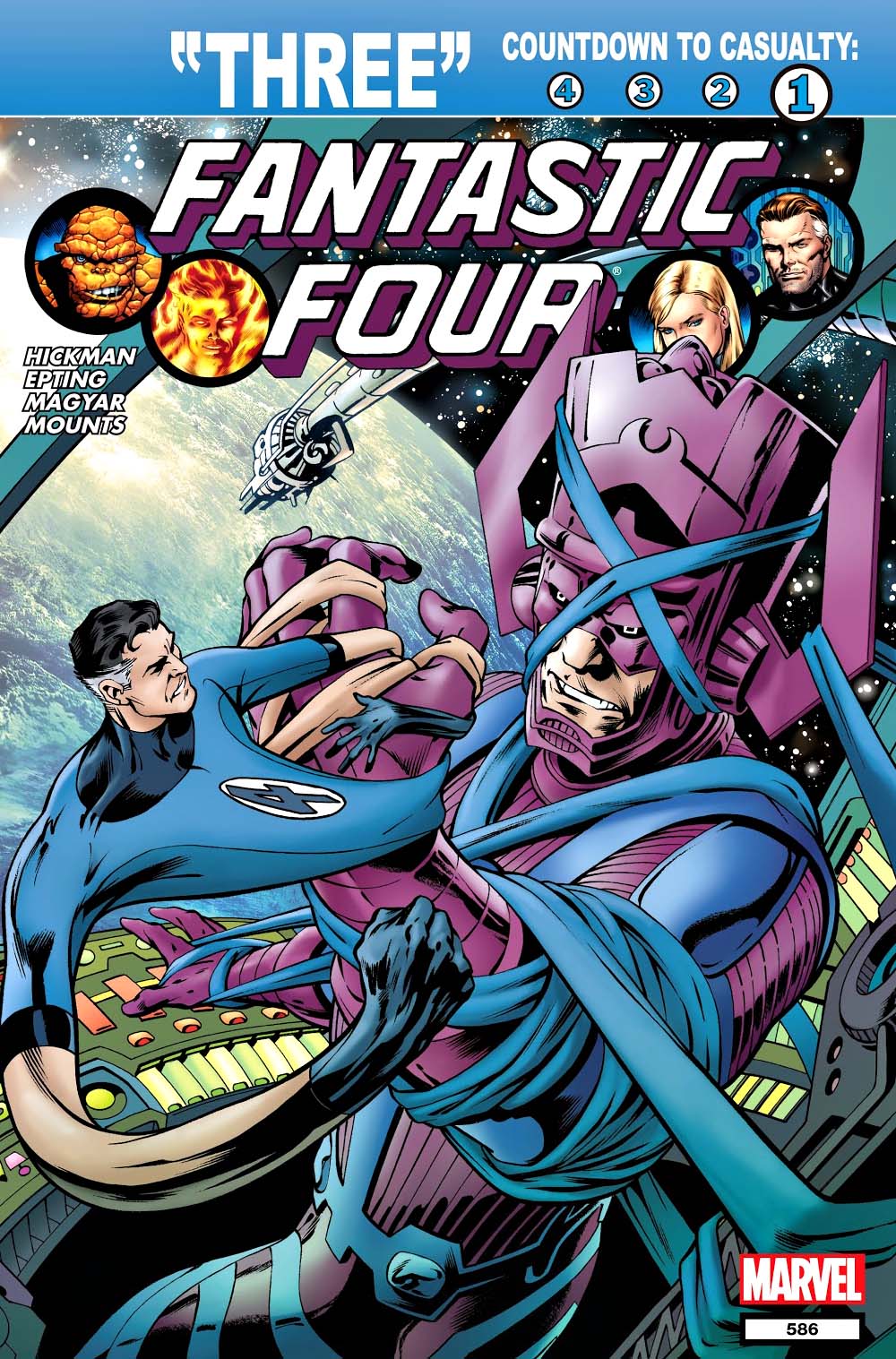
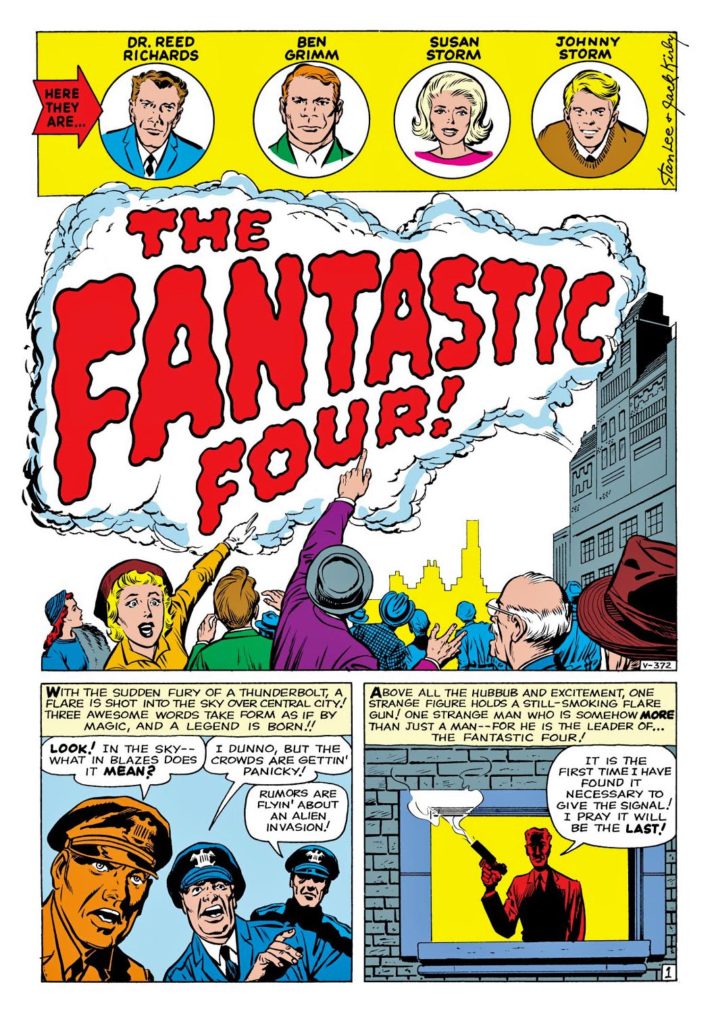
Fantastic Four #586, February 2011

One comic book. One grasp (and possibly a final one) at straws for a struggling comic book publishing company.

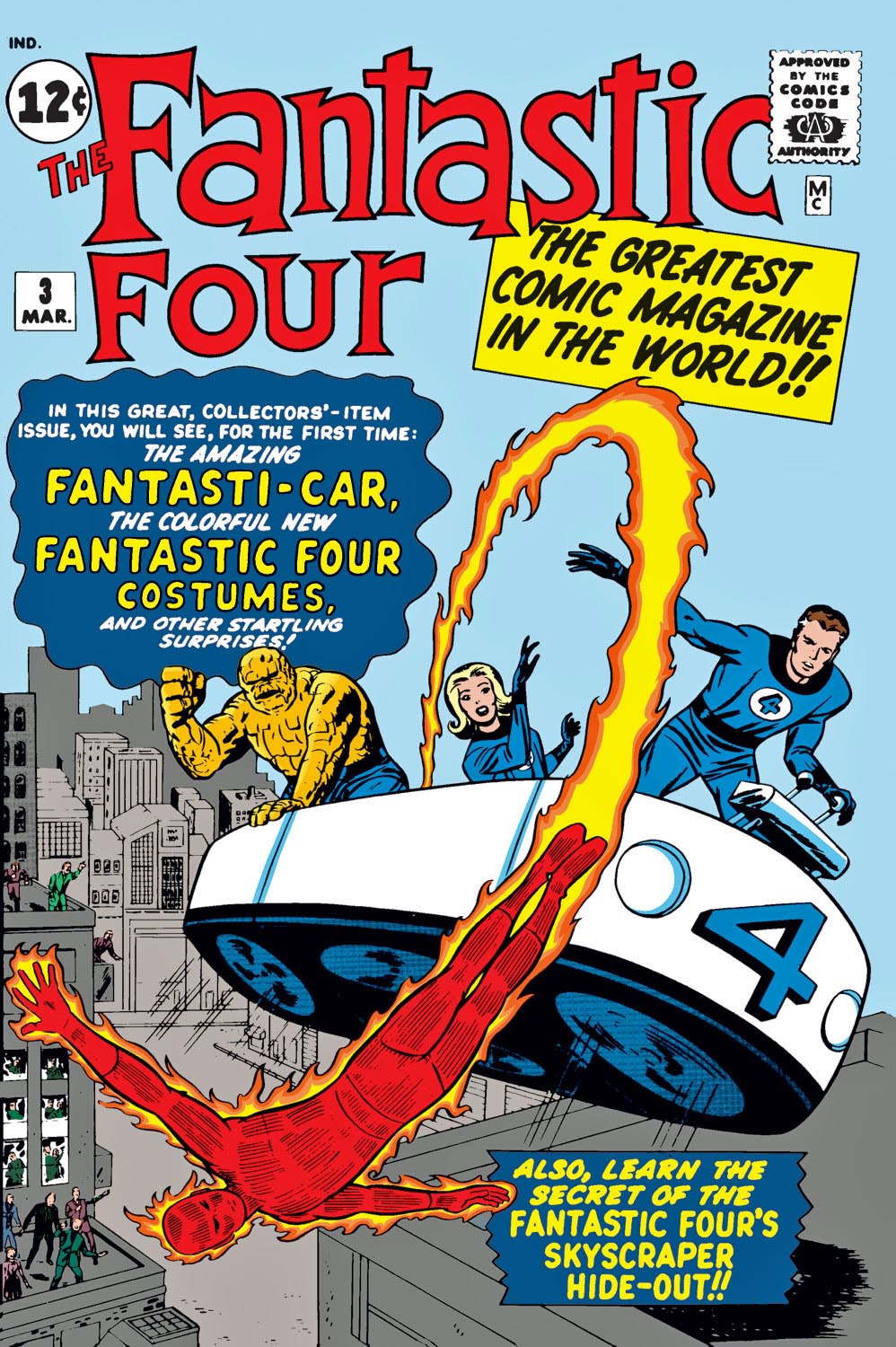
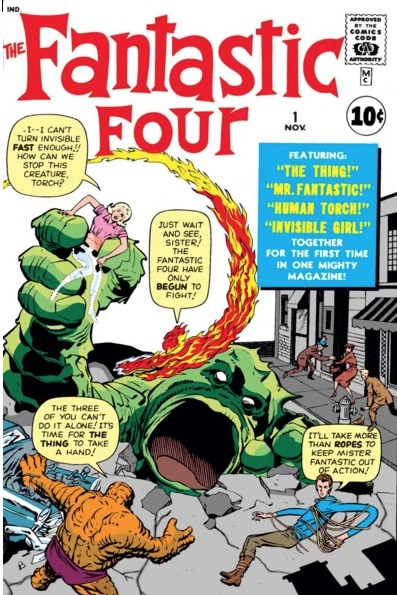
Sixty years ago today, Fantastic Four #1 hit the newsstands.

DC had slowly started its own superhero revival five years prior with the appearance of the Silver Age Flash. By the time the FF appeared, DC had establishes enough heroes to create a Justice League team comic book.

Heck, even Archie Comics launched some superhero titles (The Fly, The Shield, etc.) ahead of Marvel.

But Fantastic Four made an impression. Flawed heroes, who barely got along with each other? Fearsome Foes and supporting characters? Continuity, for goodness sakes? 

Talk about late to the party — but making an entrance. 

Within a few issues, Fantastic Four was the first, and ultimately greatest, soap opera saga in comics. And it didn’t take much longer for Jack Kirby to fully establish himself as the greatest visual storyteller the medium had ever seen, and for Stan Lee to become the greatest showrunner (and, for better or worse, showman) in comics’ history.

The original stories, of course, were much less complex and sophisticated than they are today. (As were the readers.)

Example: This great Steve Epting splash page from issue #586 is from a story that features time travel conundrums and a multiverse gone somewhat amok.

Heady stuff. But you should expect nothing less from Marvel’s First family.

The World’s Greatest Comics Magazine, indeed.

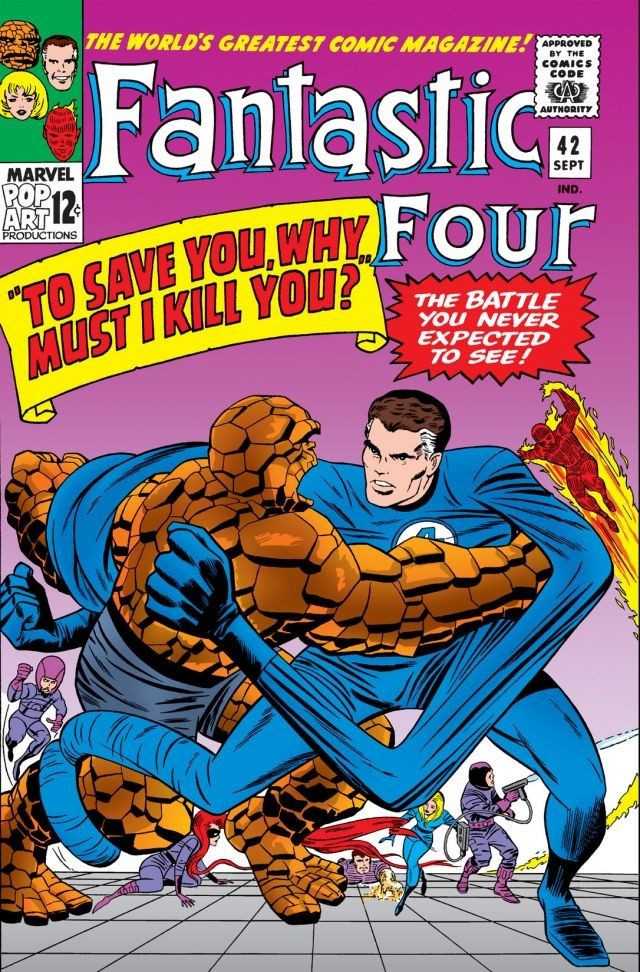
Jack Kirby — Happy 60th, “The Marvel Age Of Comics”

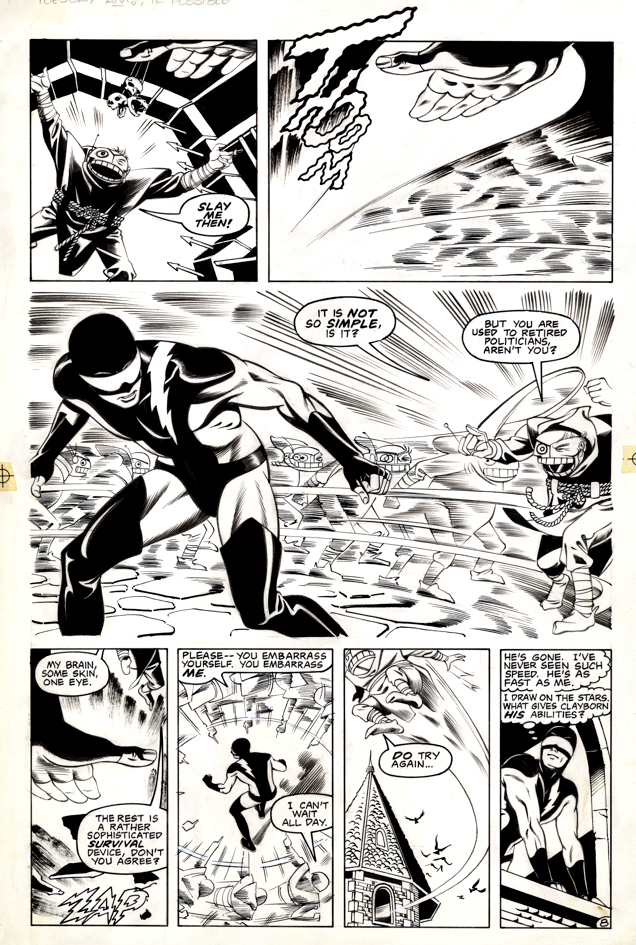
Fantastic Four #42, September 1965

On Tuesday, August 8, 1961, Fantastic Four #1 hit the newsstands.

The rest, as they say, is history.

As promised back in January, we’re adding a few more Fantastic Four posts to continue the 60th celebration of “The Marvel Age Of Comics.”

And yes, we’re cheating a bit by re-running this great page by Jack from the beginning of the FF’s peak period.

But… no Stan Lee AND Jack Kirby… no Fantastic Four… likely no Marvel Age, period. So, in our mind, worth a repeat.

See you on Sunday.

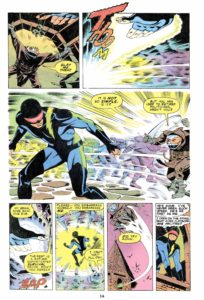
Steve Rude — What Is That Thing?

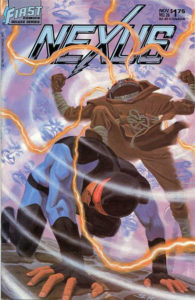
Nexus #26, November 1986

Recipe for a Steve “The Dude” Rude artist dish:

Start with a full-size portion of Russ Manning, then add a very generous helping of Jack Kirby. 

Mix in in a cup of Alex Toth, a shot of Doug Wildey, and a pinch of Joe Schuster, and… voila, you have yourself a full Steve Rude gourmet meal.

Unfortunately, it’s a one-of-a-kind meal, near impossible to replicate.

Clean and distinctive, Rude is among my favorites of the “modern” artists working in graphic storytelling. (In other words: Old guys who, like me, are not that old.)
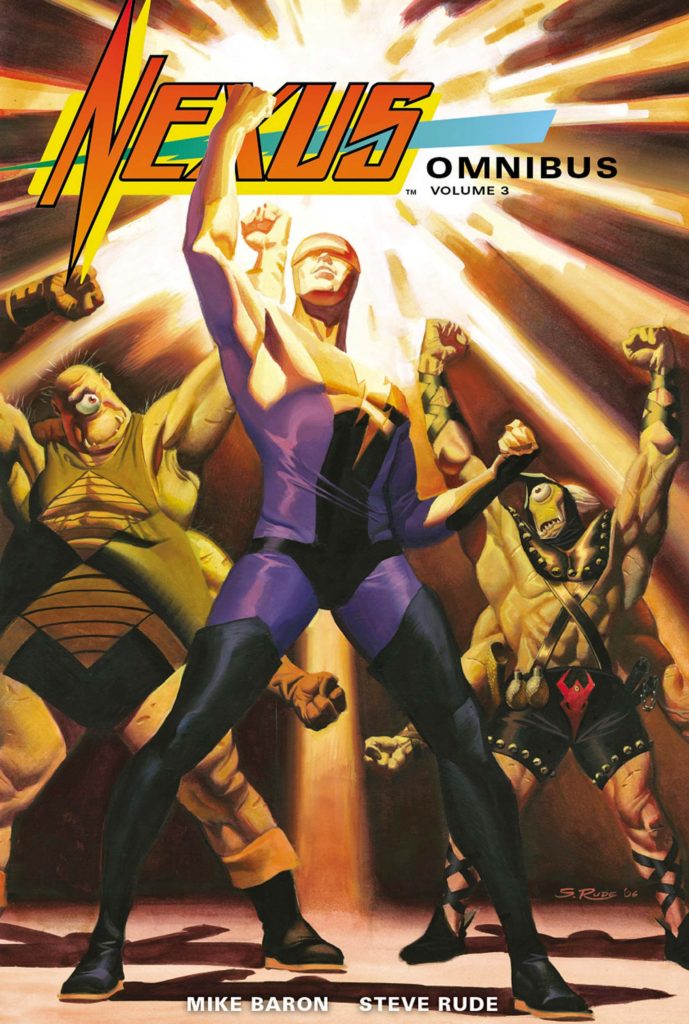
Nexus, created by Rude and writer Mike Baron, celebrates its 40th anniversary this year.  Pages from early issues featuring the titular character rarely become available, and this great one isn’t going anywhere soon.

We continue with our month long celebration of the “Independents” — Independent creators and projects that continue to impact the comic book medium. We’re back on Tuesday (7/27) with… Jim Lee. Have a great weekend.
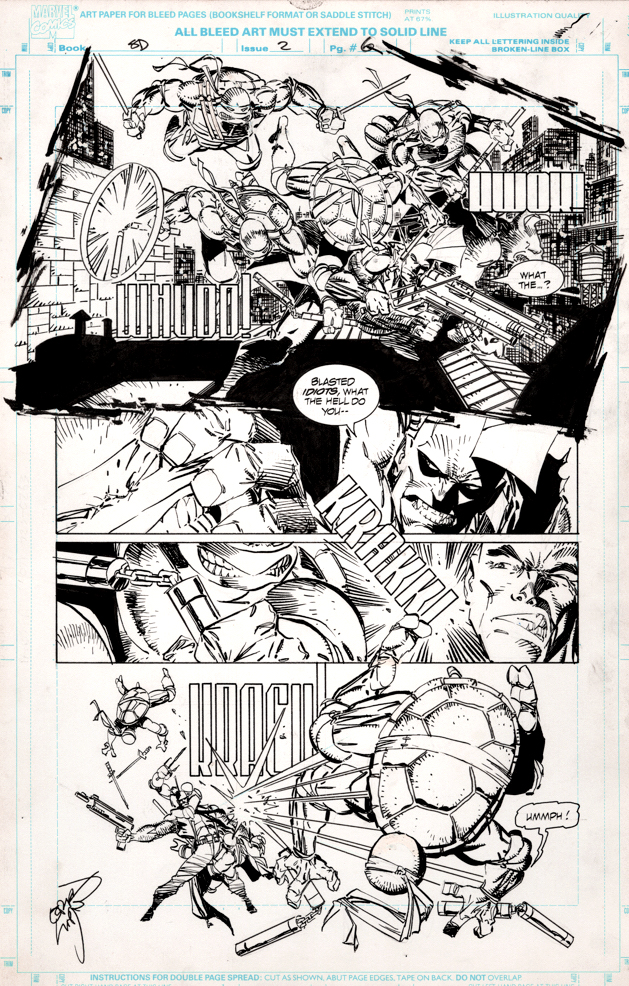
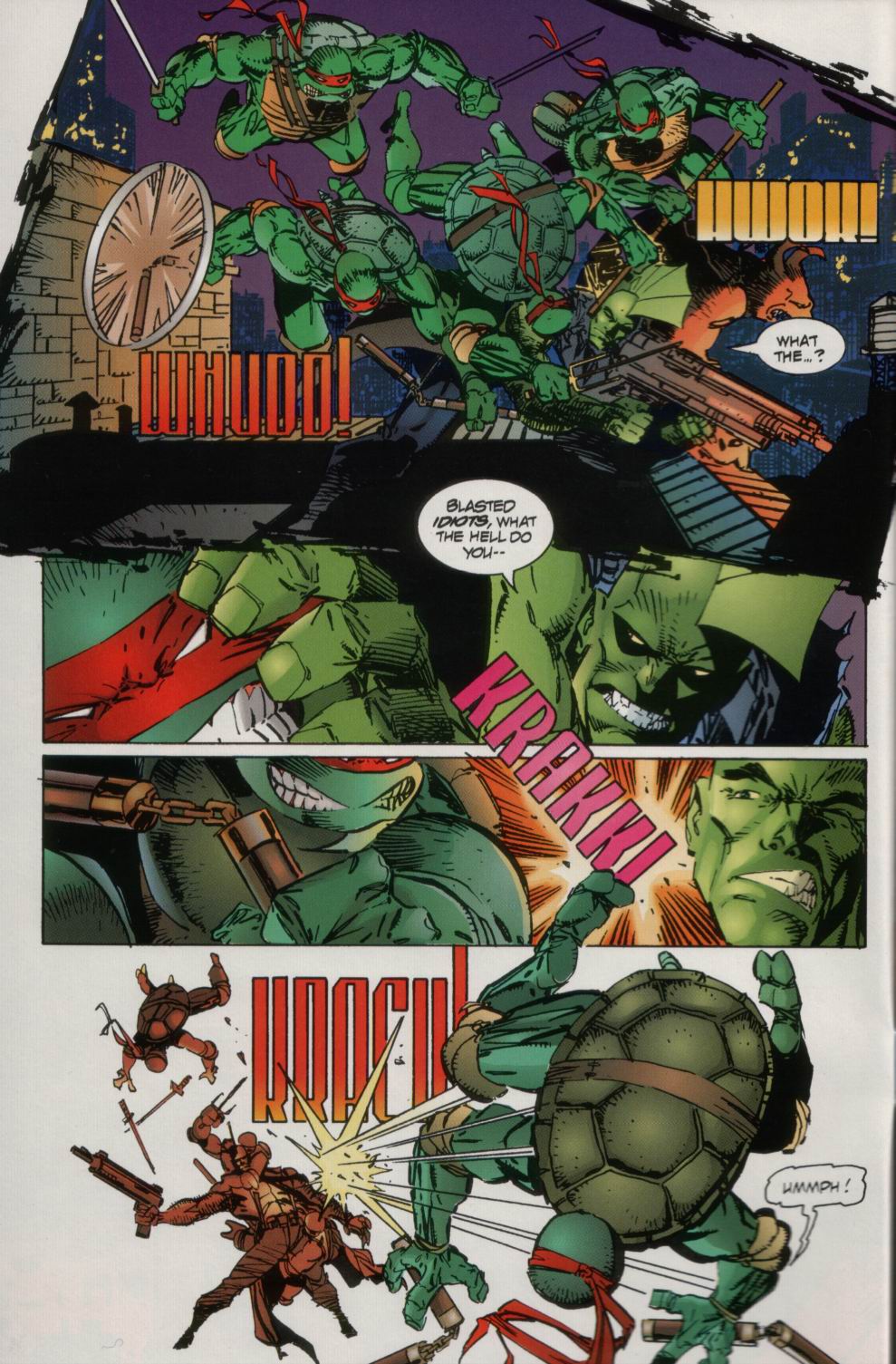
Erik Larsen — Blasted Idiots

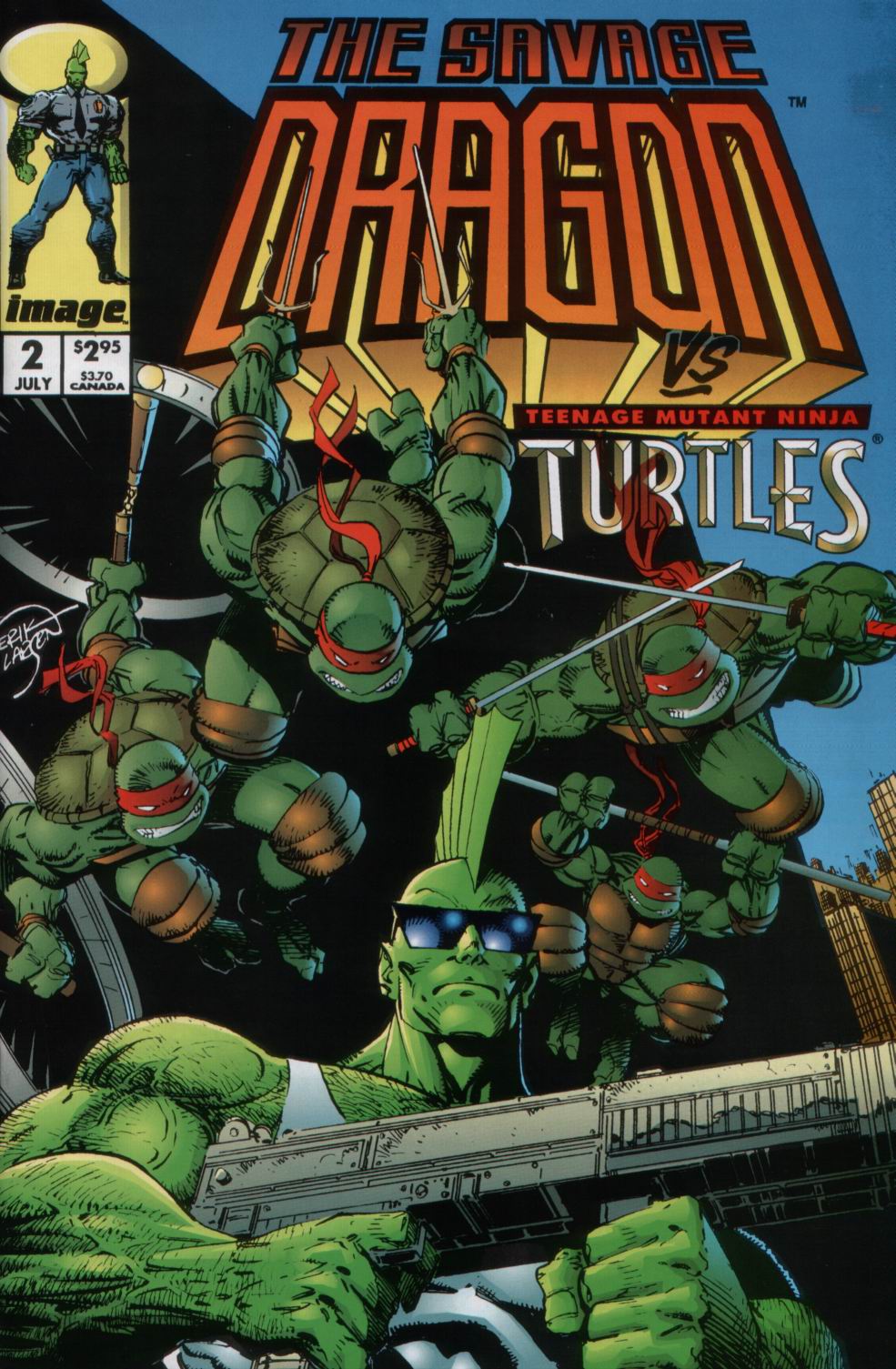
Savage Dragon #2, July 1993

We continue with our month long celebration of the “Independents” — Independent creators and projects that continue to impact the comic book medium.

Two independent creations collide in the second issue of Erik Larsen’s Savage Dragon ongoing series in 1993, as the Teenage Mutant Ninja Turtles drop in. Literally.

The large top panel of this fun action page inspired the cover for the issue.

Larsen and TMNT creators Kevin Eastman and Peter Laird share much more than just a passion for all things Jack Kirby. (I would bet that at one time, no one owned more DC Kirby art than the three of them.) They tell their stories with endless energy and panache, something that is often missing from more “mainstream” titles.

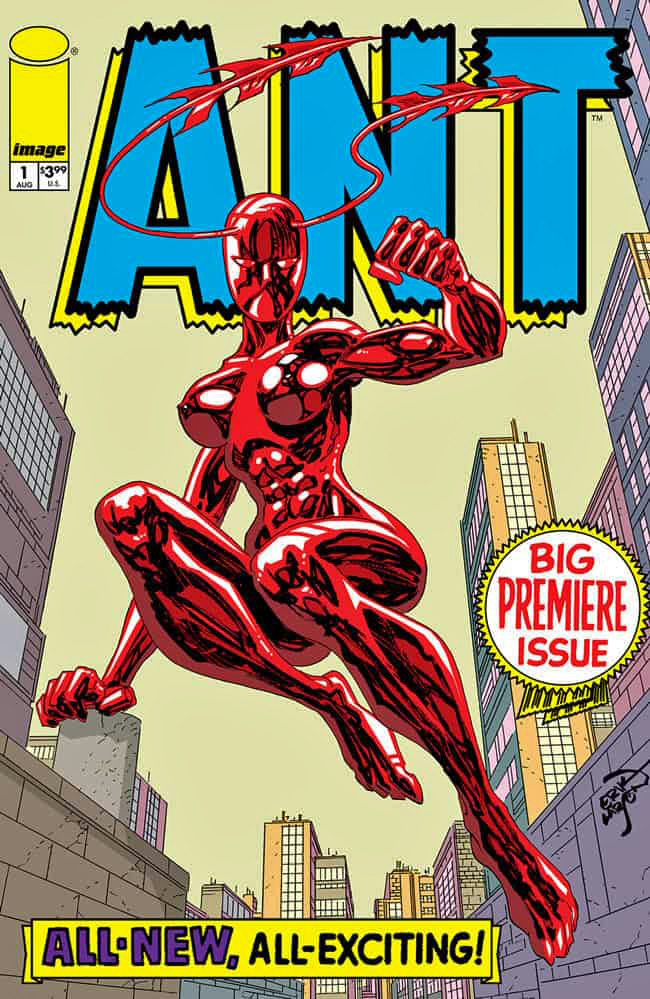
Larsen made headlines recently with the announcement that he was relaunching Ant, another Image creator-owned project originally created by Mario Gully. (Larsen purchased the character in 2012, and included her in the Spawn series he wrote shortly thereafter.)

Issue #1 of the new Larsen Ant series launches next month.

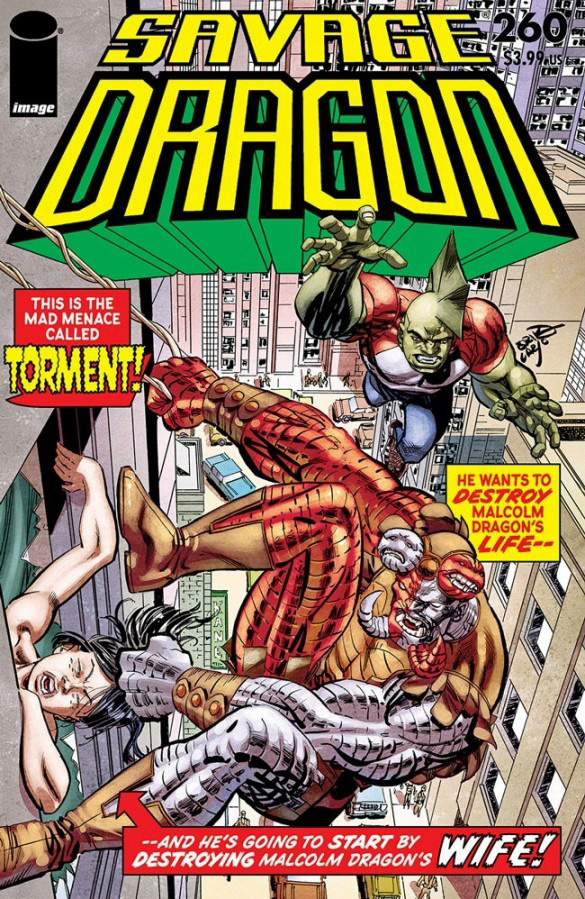
Meanwhile, Savage Dragon is now one of the longest running independent creator-owned series of all time. Issue #260 hits the stands in August as well.

Back here next Tuesday (7/20) with Frank Miller. Have a good weekend.

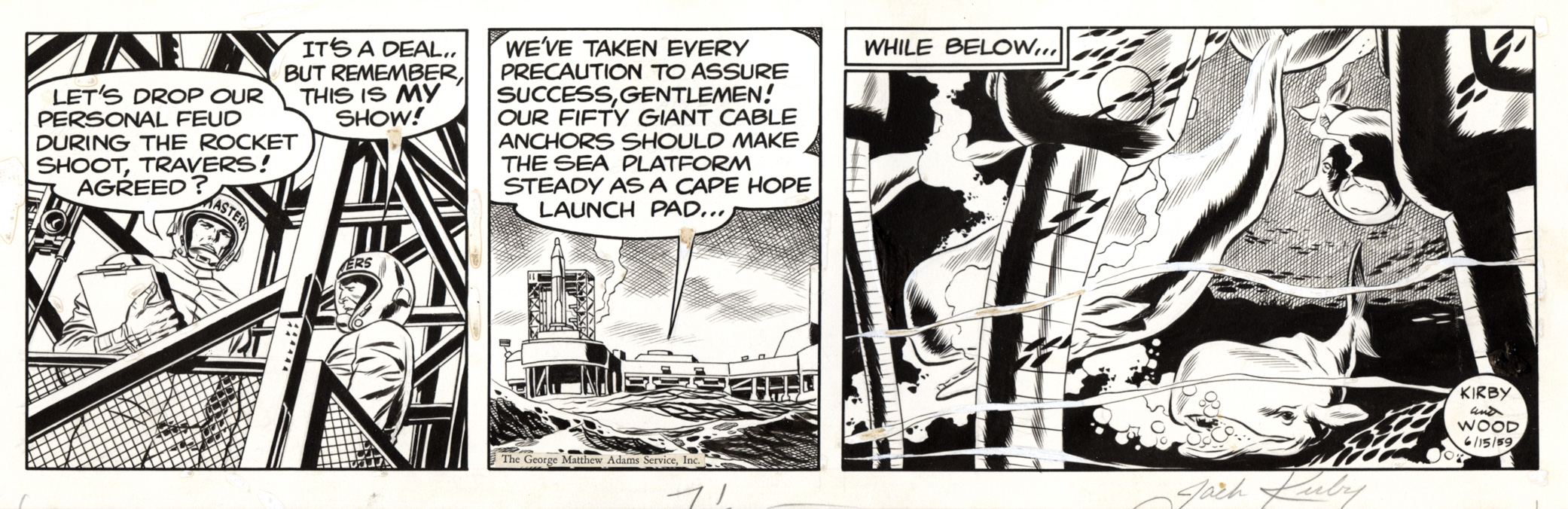
Jack Kirby & Wallace Wood — Blastoff

Sky Masters, Daily Strip, June 15, 1959

What if…

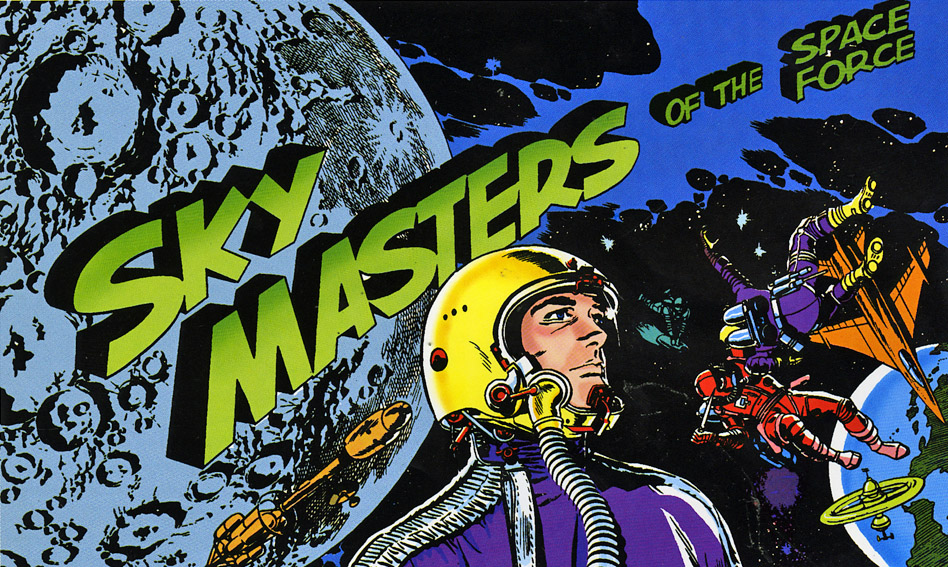
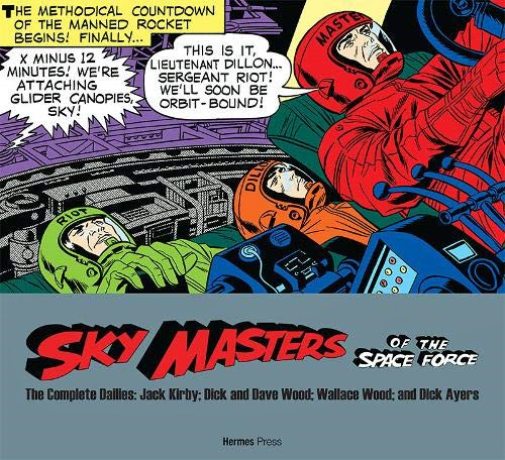
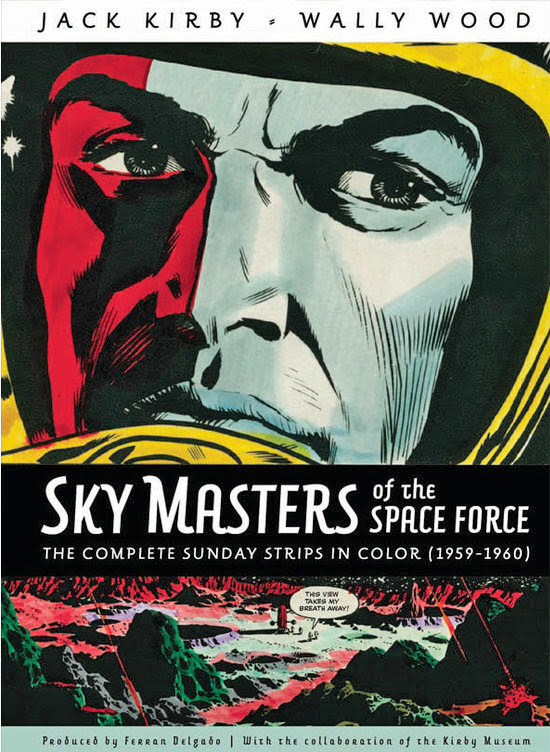
Jack Kirby’s 1958 Sky Masters newspaper comic strip — about the nascent space race — had turned into a giant hit for Jack, and partner Dave Wood.

What if…

Kirby had been able to easily solve any financial dispute with DC editor Jack Schiff about the strip’s royalty terms. (The News syndicate had originally approached Schiff about the creation of the strip, and Schiff appears to be the intermediary between the syndicate and writer Dave Wood.)

What if… 

Despite any financial acrimony over the strip, Schiff didn’t fire Kirby from Challengers of the Unknown… and all of DC comics.

You can see where this is going —

Jack continues to draw Sky Masters, fits in some DC comics work whenever possible, and never finds any time to return to Atlas/Marvel.

And “The Marvel Age of Comics” takes a completely different turn, if it even manages to leave the launching pad.

For those interested in the nitty gritty of dispute, Wikipedia has done a good job of assembling an overview (and sources) here.

Writer Jon B. Cooke provides an even more detailed summary, from the Jack Kirby Collector.

Fun fact: For many years, like most fans, I thought the “Wood” on Kirby/Wood signature referred to Wallace Wood as inker. It actually referred to Dave Wood and his brother Dick who co-wrote the strip. This, despite the fact that that Woody actually did ink the strip for about the first year, including the example above. (Dick Ayers eventually came on the strip as inker, and ultimately Jack inked it himself, likely with help of wife Roz.)

Continuing our month long celebration of the great adventure comic strips:
Week 1: Superheroes
Week 2: Detectives
Week 3: SF
Week 4: Comic Book Giants

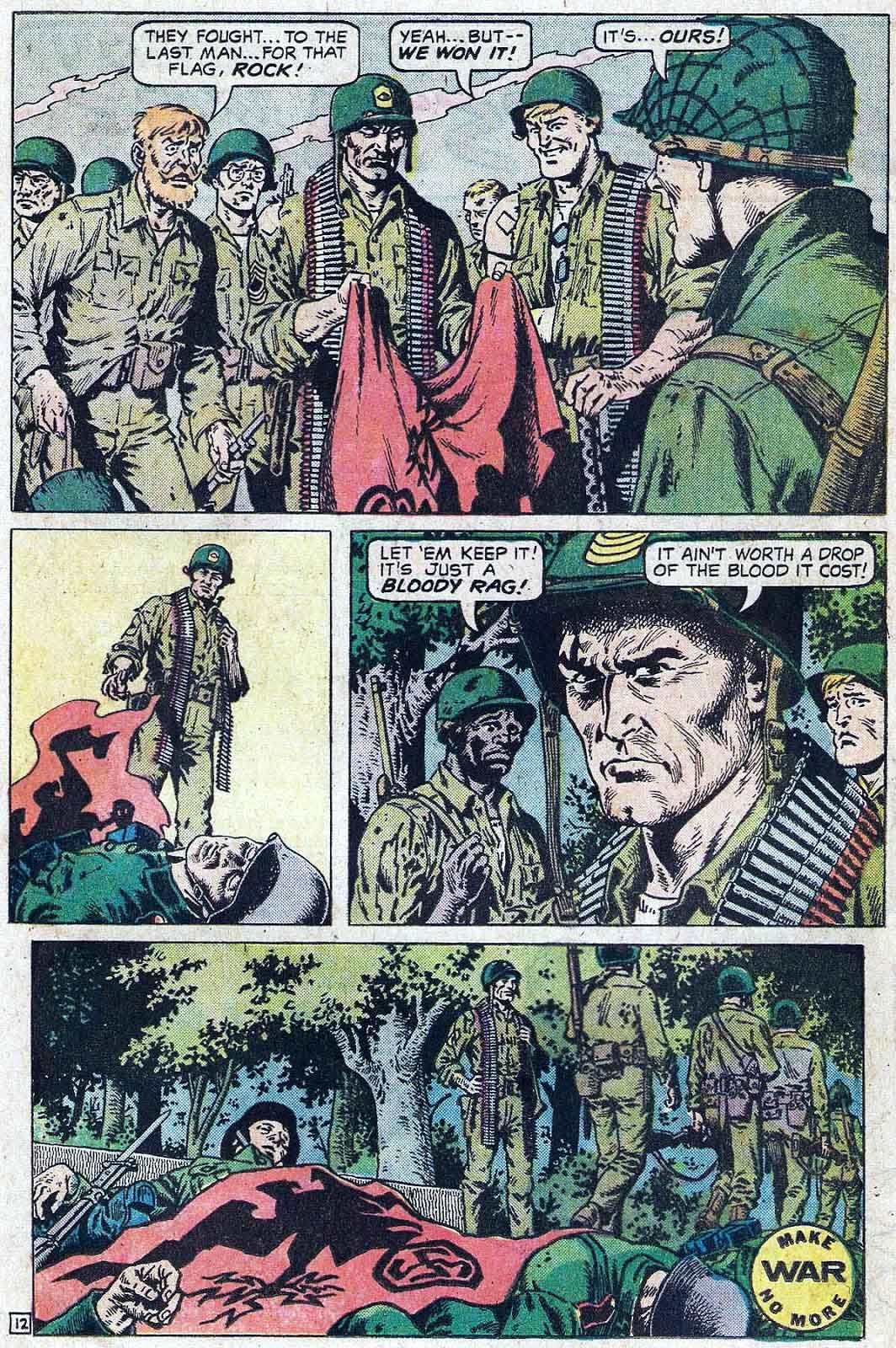
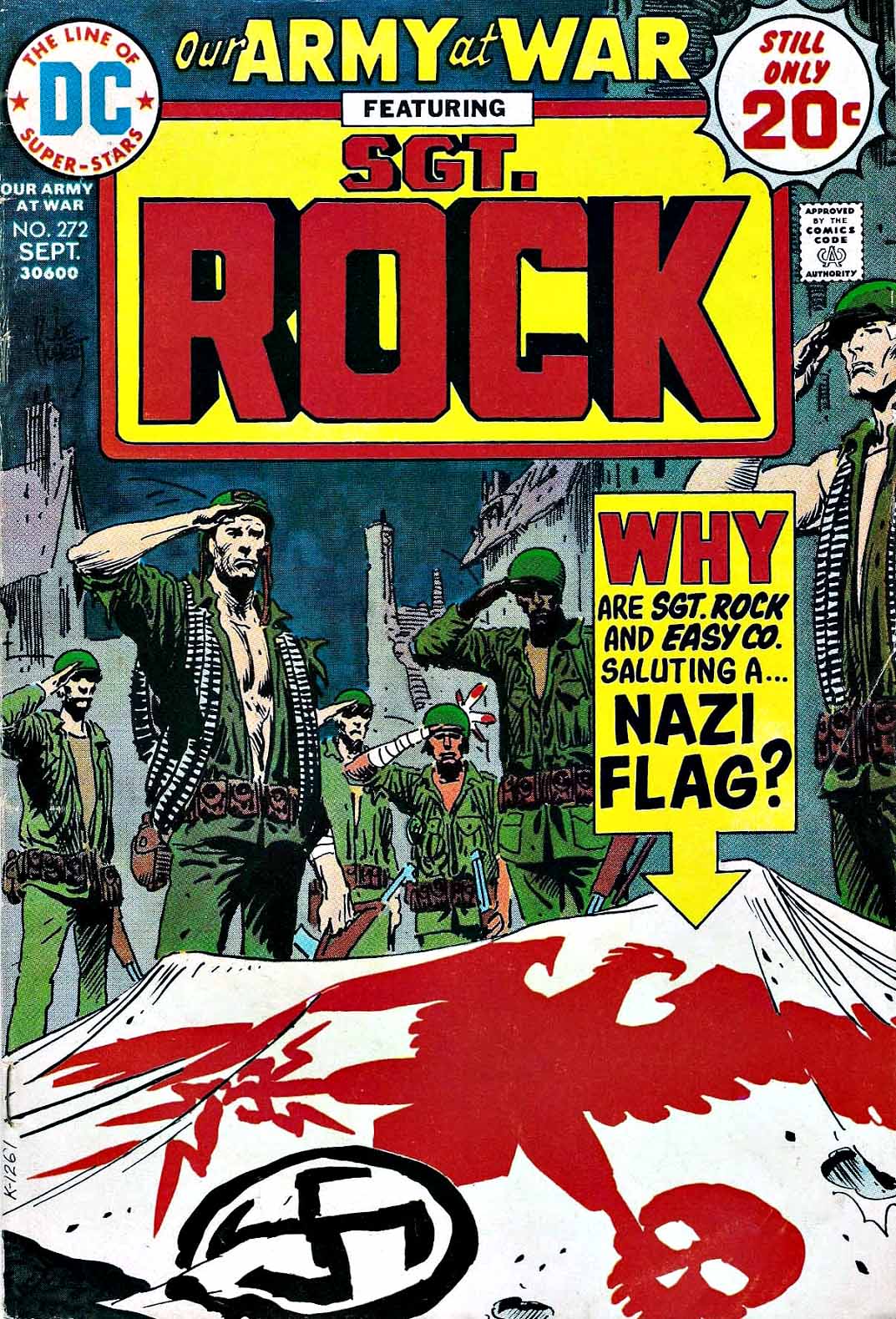
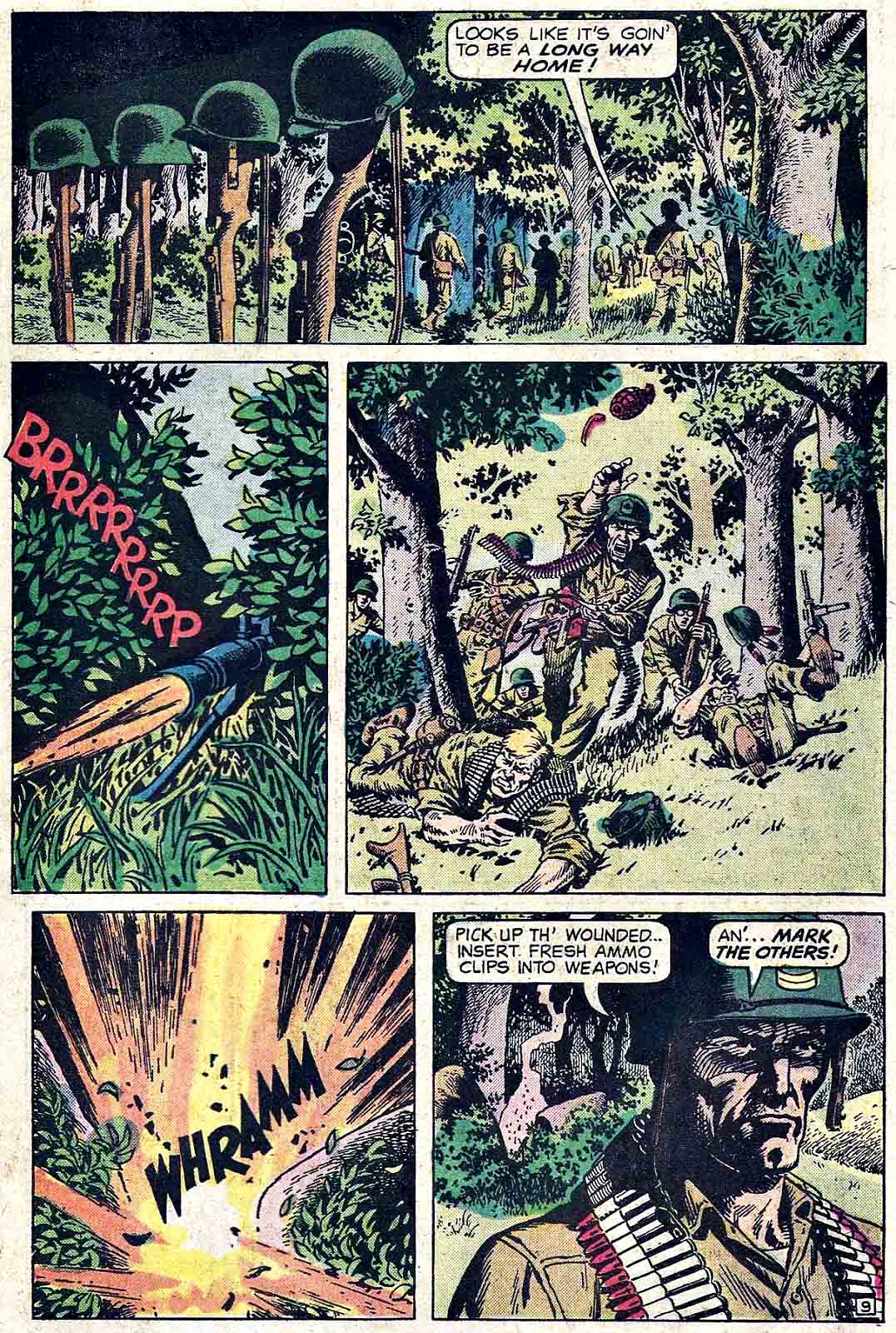
John Severin — The Bloody Flag

Our Army At War #272, September 1974

The single greatest compliment I ever heard abut John Severin’s art — and there were many others — came from Jack Kirby, via Mark Evanier:

“Jack used to say that when he had to research some historical costume or weapon for a story, it was just as good to use a John Severin drawing as it was to find a photo of the real thing.”

Severin’s lavish attention to detail caught my eye early. The line-work was so precise and polished. It was amazing stuff, especially considering that those details needed to reproduce on cheap, pulpy newsprint running on industrial web presses.

As a kid, especially remember his pitch-perfect inking on Herb Trimpe’s pencils for The Incredible Hulk. I also loved John’s pairing with sister Marie Severin on some of the earliest issues of Kull. John’s had one weakness was that occasionally his realistic line work could come off as stiff and inking Marie’s more dynamic layouts solved that issue.

Severin was best known for three non-superhero genres:  Westerns, humor, and war. He was a pro at all three, and everything else he touched as well.

As Evanier wrote, “They don’t make ’em like that anymore.” 

Indeed they don’t.

(These two pages, along with others, were especially selected for the exhibit “War No More” at the Words & Pictures Museum in Northampton, Mass. in 1993.)

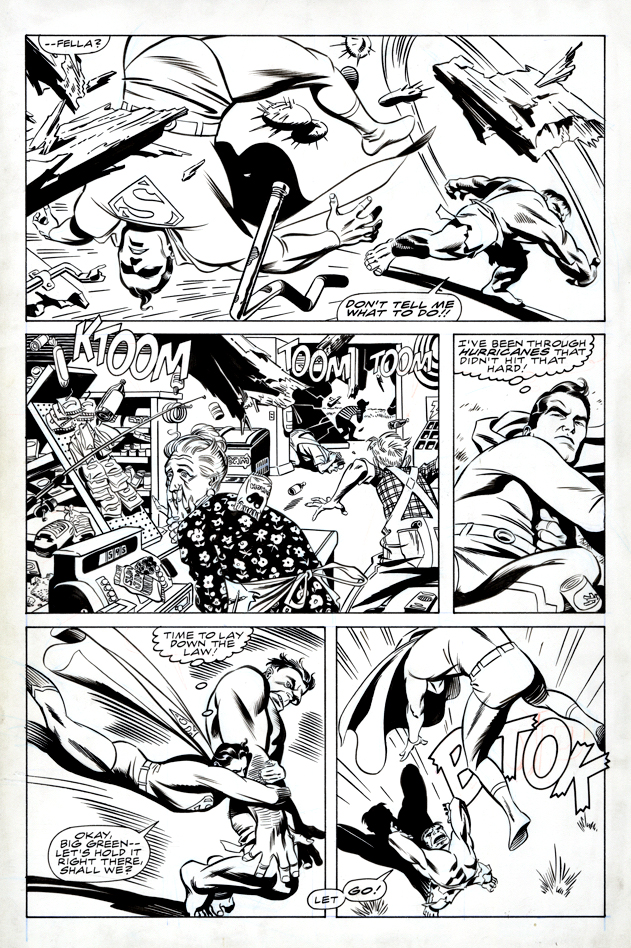
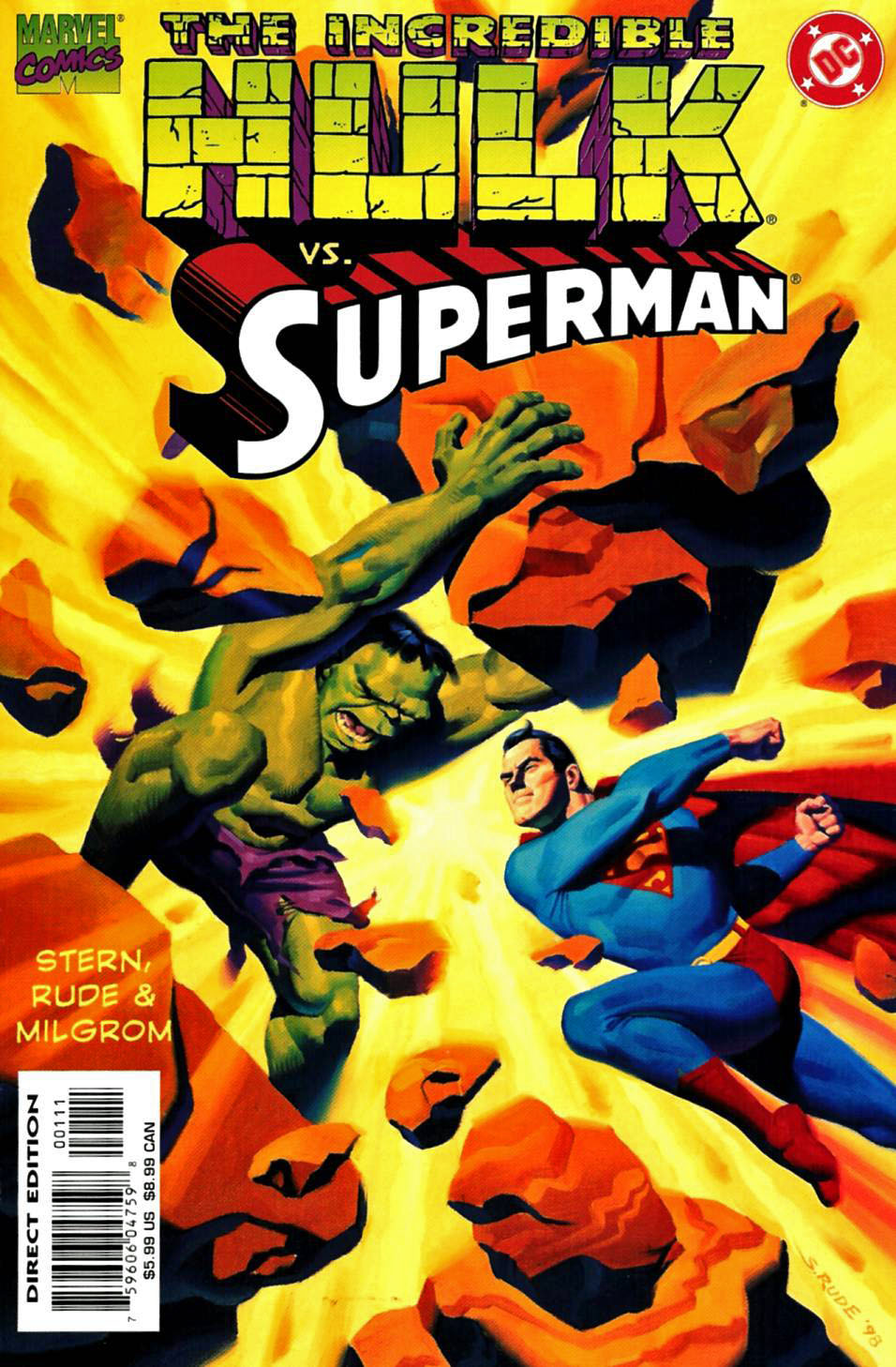
Steve Rude — Hulk Vs… Superman

Incredible Hulk vs. Superman, July 1999

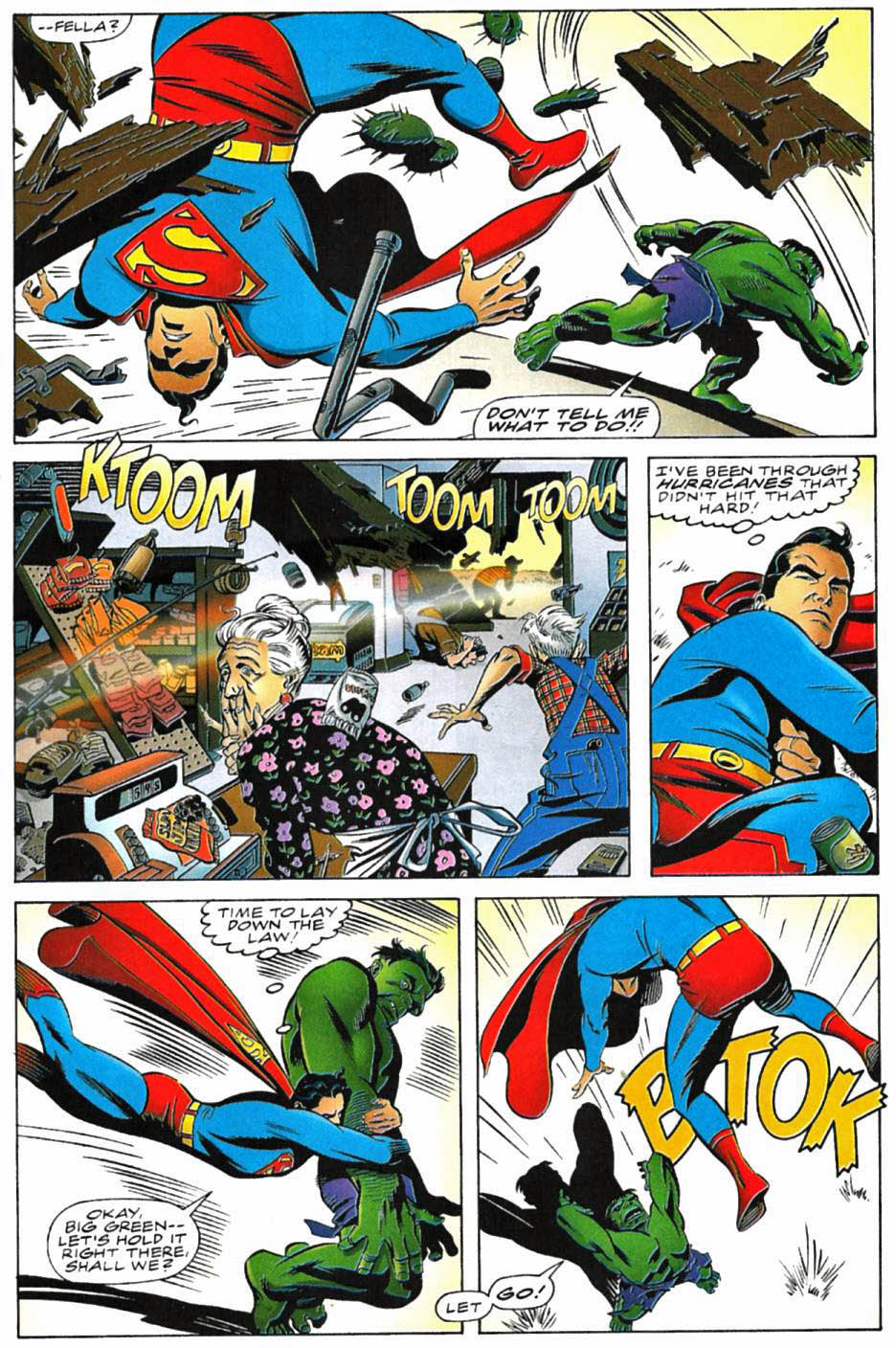
Steve Rude delivers a terrific action page of Superman vs. Hulk, as we continue to pay tribute to Hulk vs. heroes in other universes this week.

Superman vs. Hulk seems quite a bit more logical than Batman vs. Hulk.  Theoretically, Superman would ultimately win, but at least he would be winded.

And come to think of it, Golden Age Superman, as originally conceived by Jerry Siegel and Joe Shuster, might still win, but it would be pretty close to a draw.

Early Silver Age Superman, who could move planets around, not so much.

Rude, who worships at the alter of Jack Kirby, and shows reverence for Shuster’s Superman as well, is the perfect artist to illustrate this pairing.

And Granny’s expression in the middle panel? Nothing like a bit of offbeat humor to lighten the mood of a titanic fight, albeit very briefly.

Rude is perfect for that, as well.

Technology gets better (and less expensive), and fans apply their creativity accordingly.

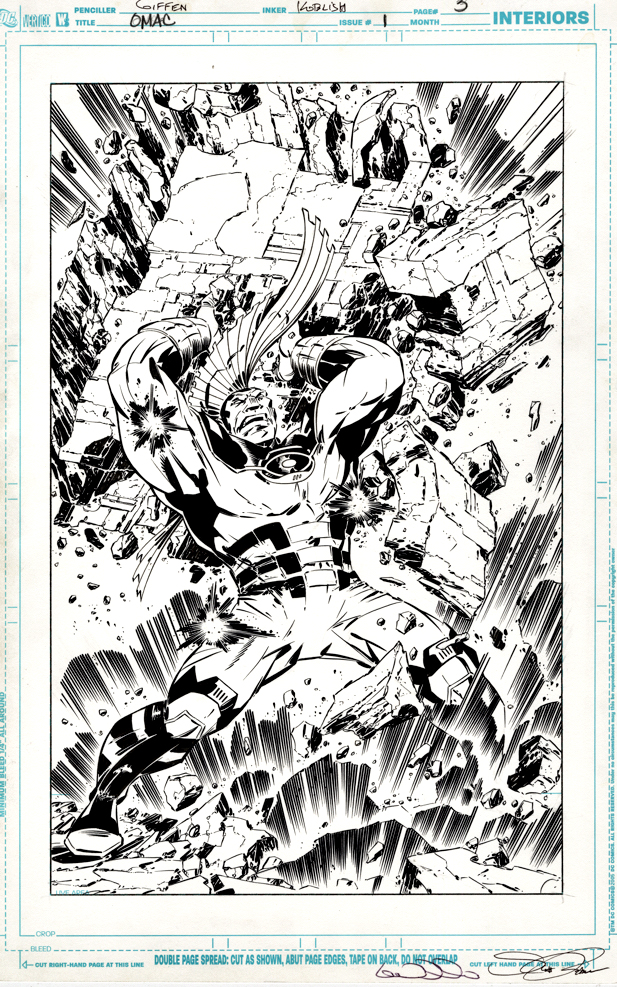
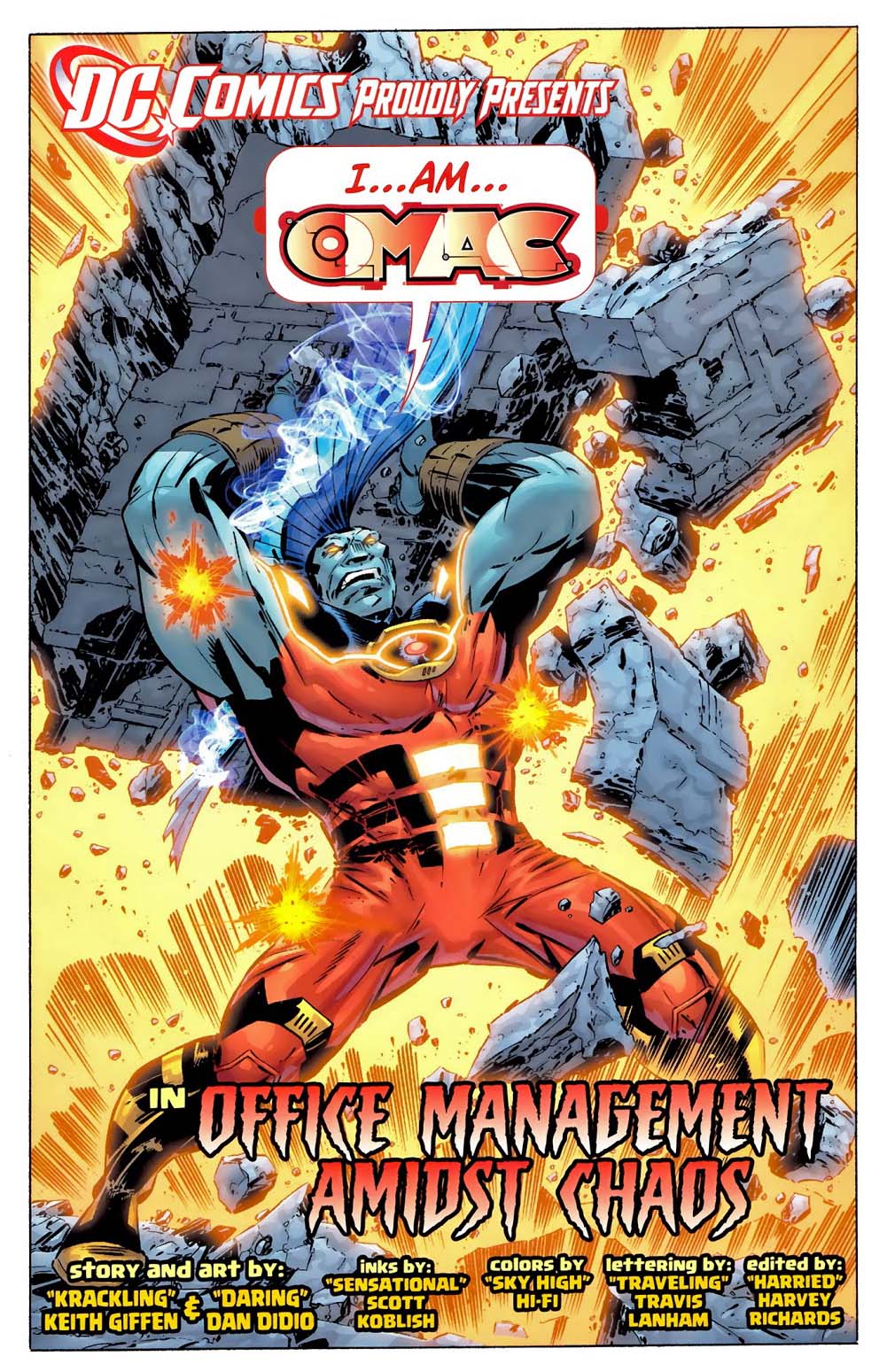
Keith Giffen — Beyond The Fourth World

O.M.A.C. #1, November 2011

We conclude our celebration of Jack Kirby’s legacy at DC Comics with one more look at Jack’s characters and concepts as envisioned by other creators. 

Keith Giffen gets an opportunity to play in the DC Kirbyverse with O.M.A.C., based on Jack’s short-lived series at DC about a future that was closer than we realized. Critically acclaimed, it was cancelled after just eight issues. (Coincidentally, Jack’s original series was cancelled after eight issues as well.)

“OMAC was my favorite title of DC’s initial New 52 relaunch, but being based on a Jack Kirby character that’s more obscure than Kamandi and Devil Dinosaur combined probably didn’t help when it came time for DC to trim its first wave of underperforming titles. The fact that it was written by fan rage magnet DiDio made for marketplace kryptonite. You could’ve lined the interior of the book with 20-dollar bills and nobody would’ve bought it.”Tom Scioli, writer, artist and author of Jack Kirby: The Epic Life Of The King Of Comics.

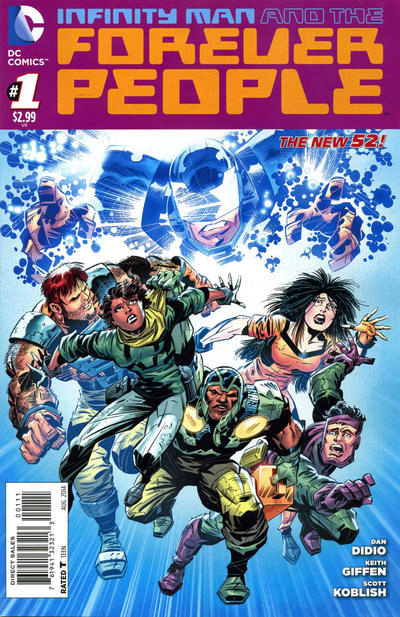
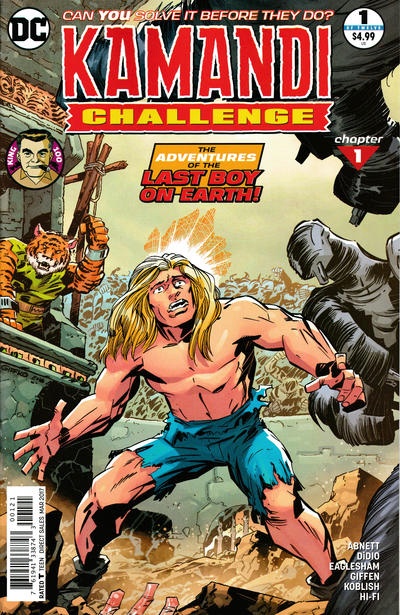
Giffen, a legendary Kirby fanatic, also wrote and drew a Forever People series and the first issue of the Kamandi Challenge, all with co-conspirator DiDio, who happened to be DC’s publisher at the time.

*Purists will note that some of the characters and titles actually made it onto newsstands before the close of 1970, but the fully integrated series (Jimmy Olsen, Forever People, New Gods, and Mister Miracle) — doesn’t fully materialize until the following year.