Greg Goldstein's Comic Art Gallery

Gil Kane — Conan The Triumphant

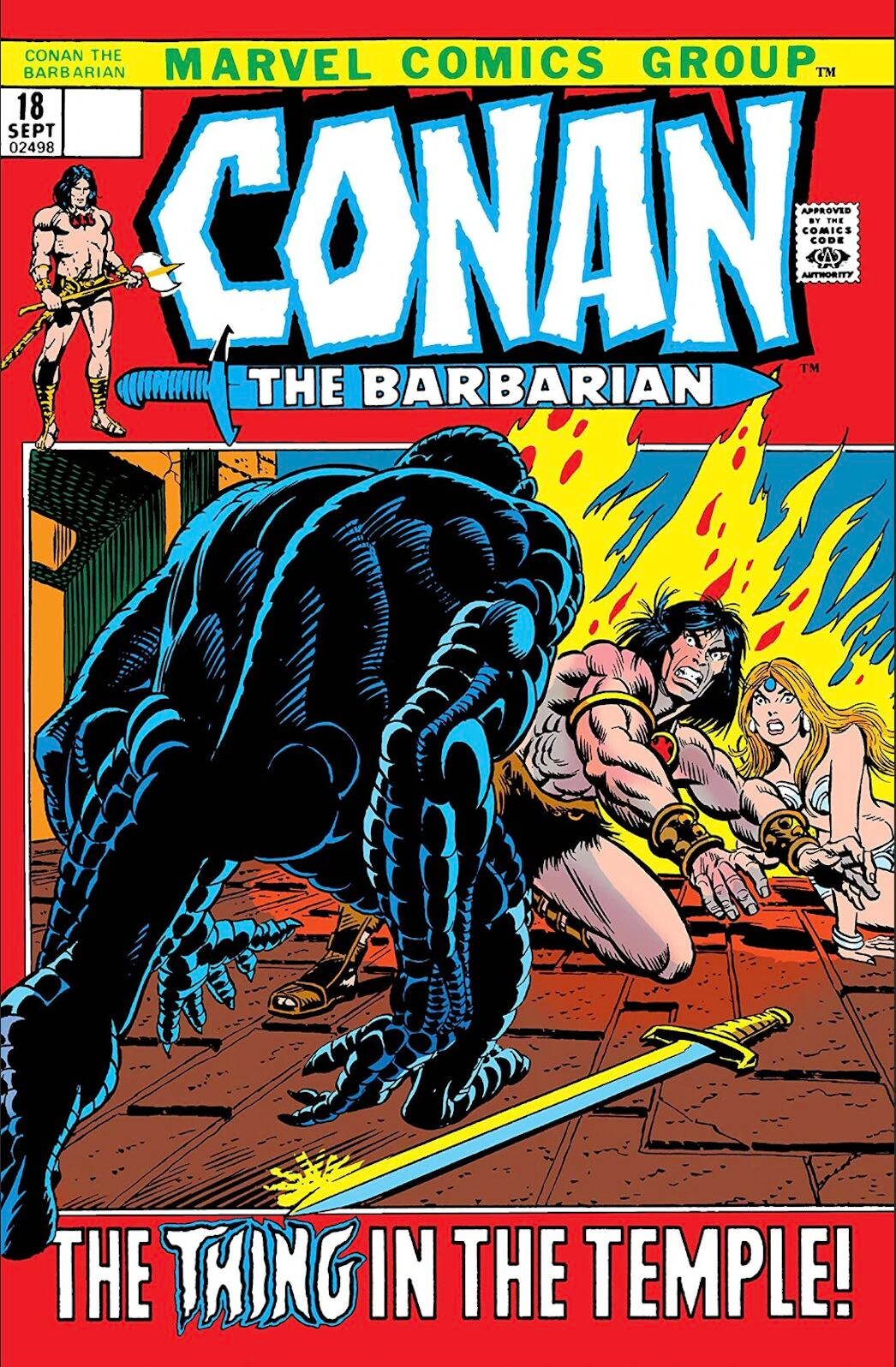
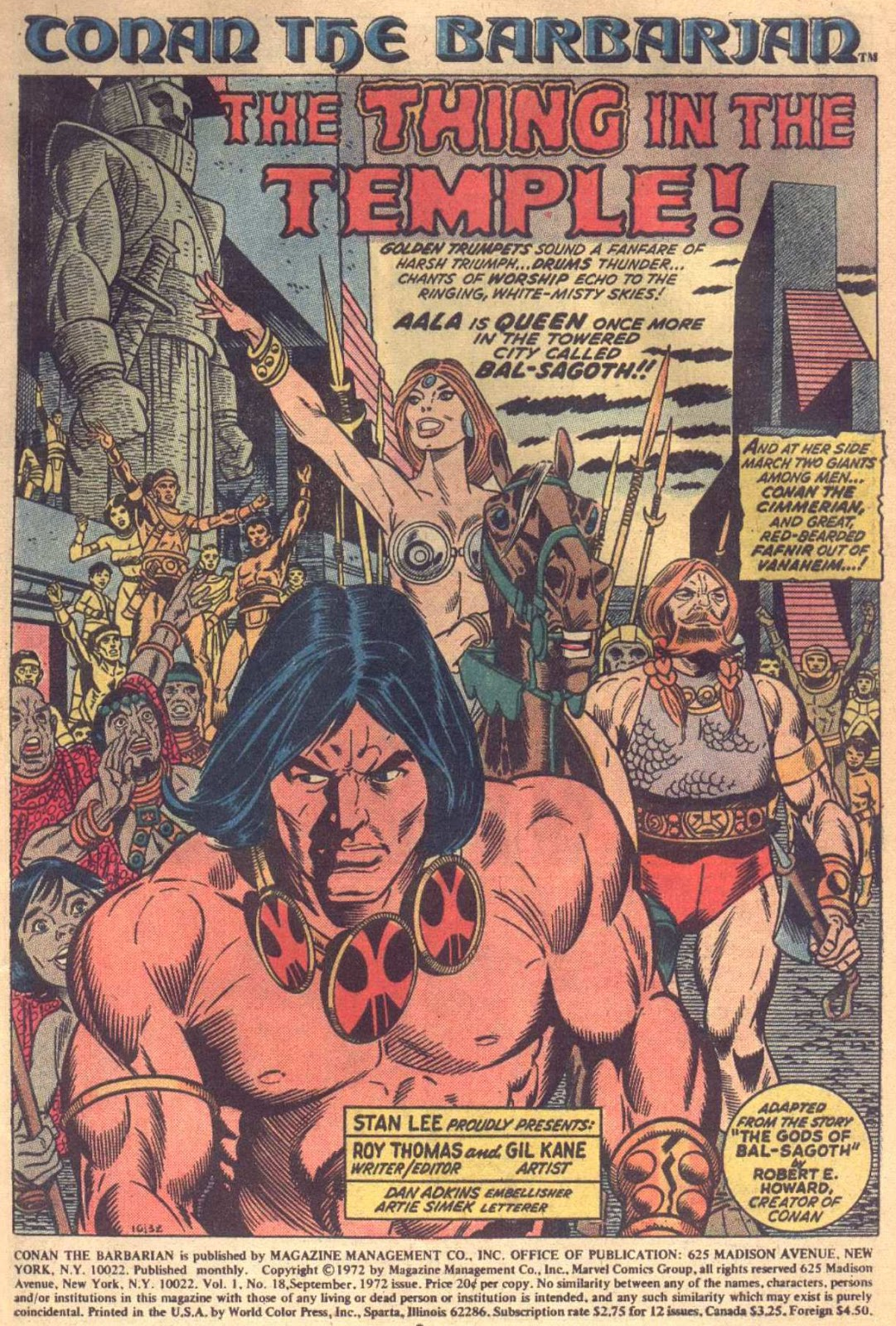
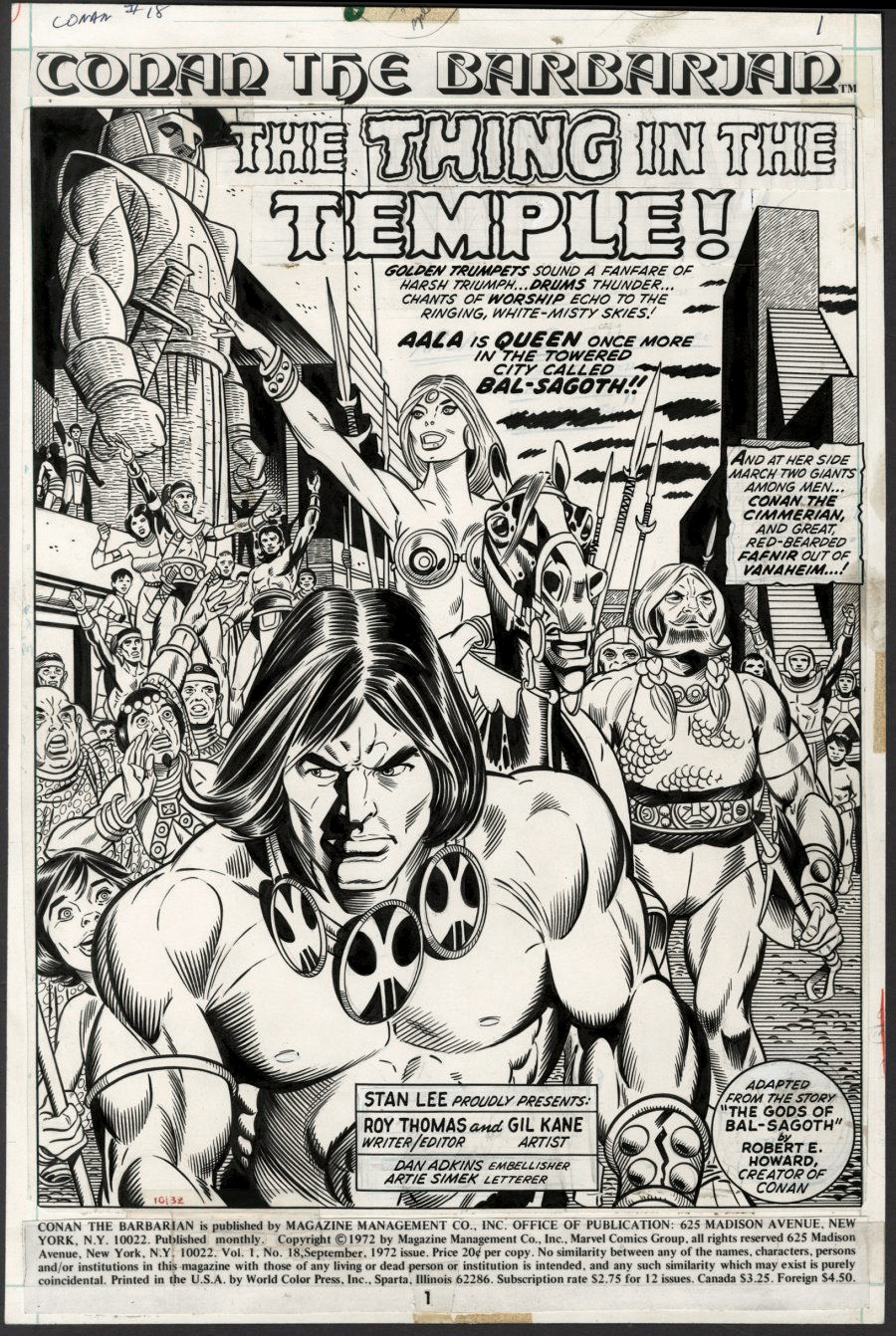
Conan #18, September 1972
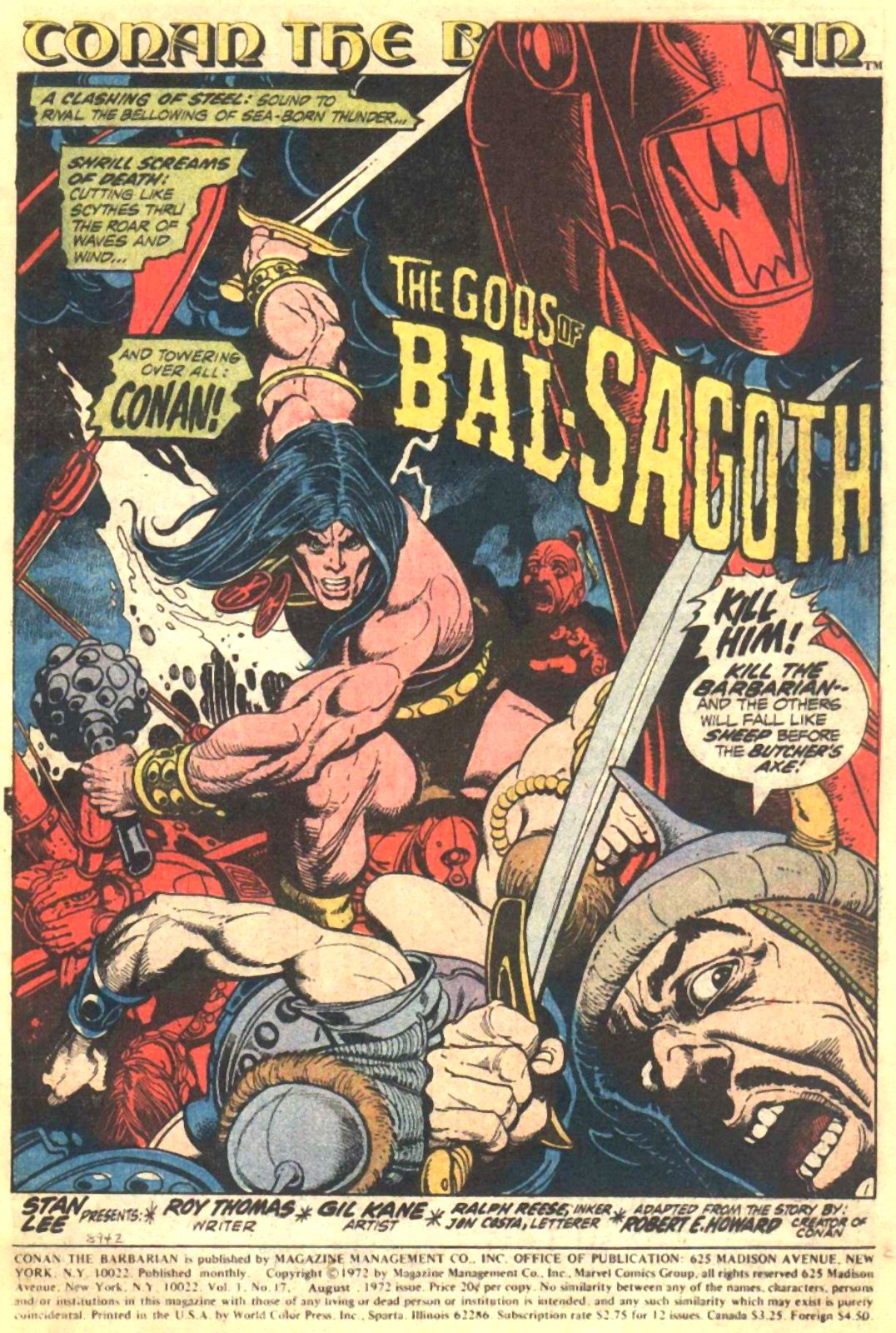
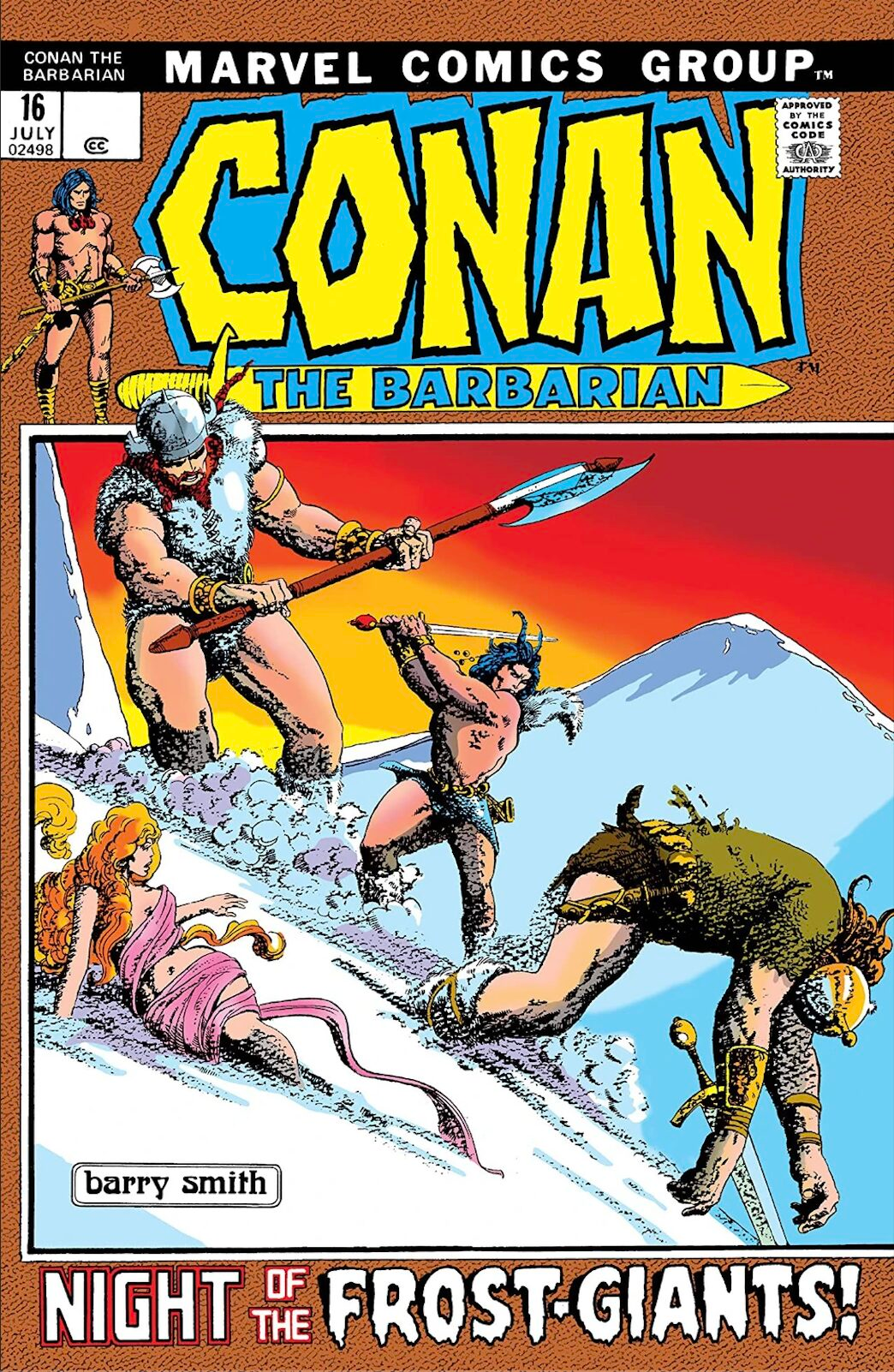
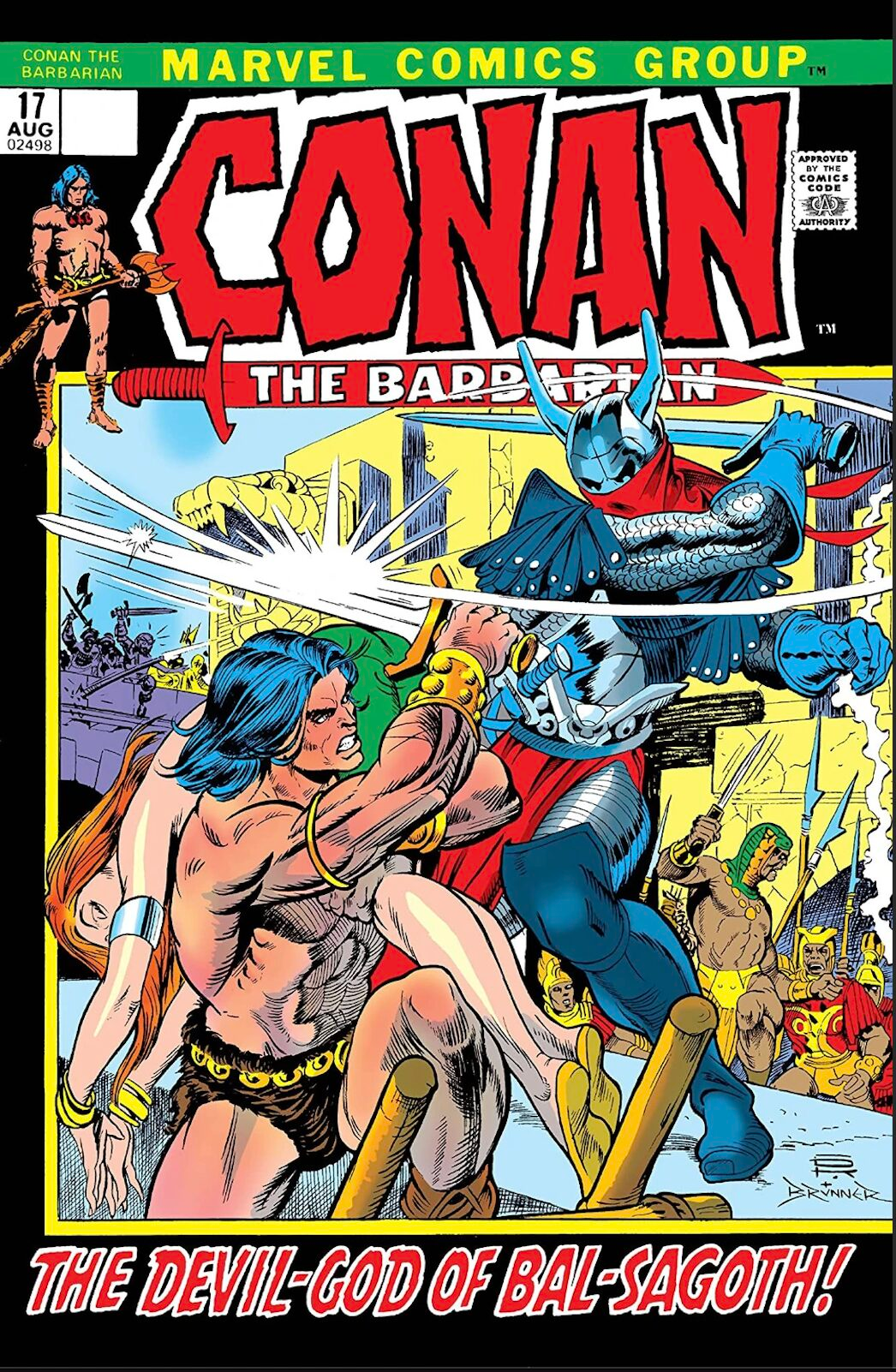
I’m guessing that if Roy Thomas had a mulligan, he might swap the opening art direction of Conan #17 and #18.

Conan the Barbarian #17 opens with a wild Gil Kane action splash — pure velocity. Limbs and weapons whipping across the page. Classic Kane. I’d frame it in a second.

But coming straight off sixteen issues of Barry Windsor-Smith — all that delicacy and atmosphere— it’s an abrupt shift. Not wrong. Just abrupt. (Especially after #16’s beautiful “Frost Giant’s Daughter.”)

The splash in #18 lands softer, more transitional. Kane pulls back: more ceremony, more posture, more air. The composition settles instead of punches.

Dan Adkins helps. Having inked both Smith and Kane, he gets the difference — and keeps the line refined enough that the book doesn’t feel like it wandered into another genre.

Seventeen announces the change. Loudly.
Eighteen eases you in.

Flip the order and the handoff might’ve felt less jarring.

Don’t get me wrong — I love plenty of Gil’s work. Still, I was relieved when Barry came back for a short stretch before bowing out for good.
Erik Larsen, Paul Ryan & Al Milgrom — Fantastic Encore

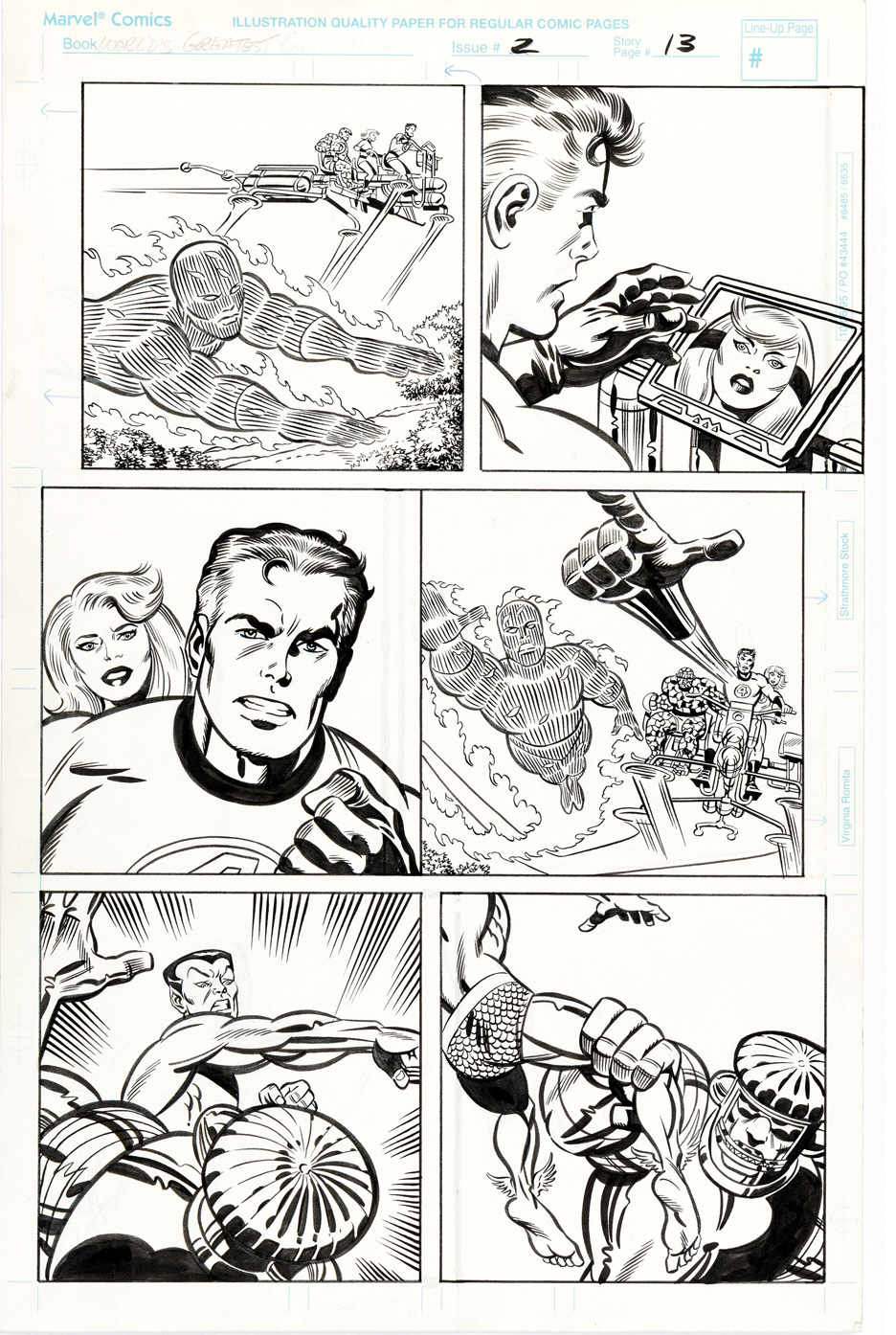
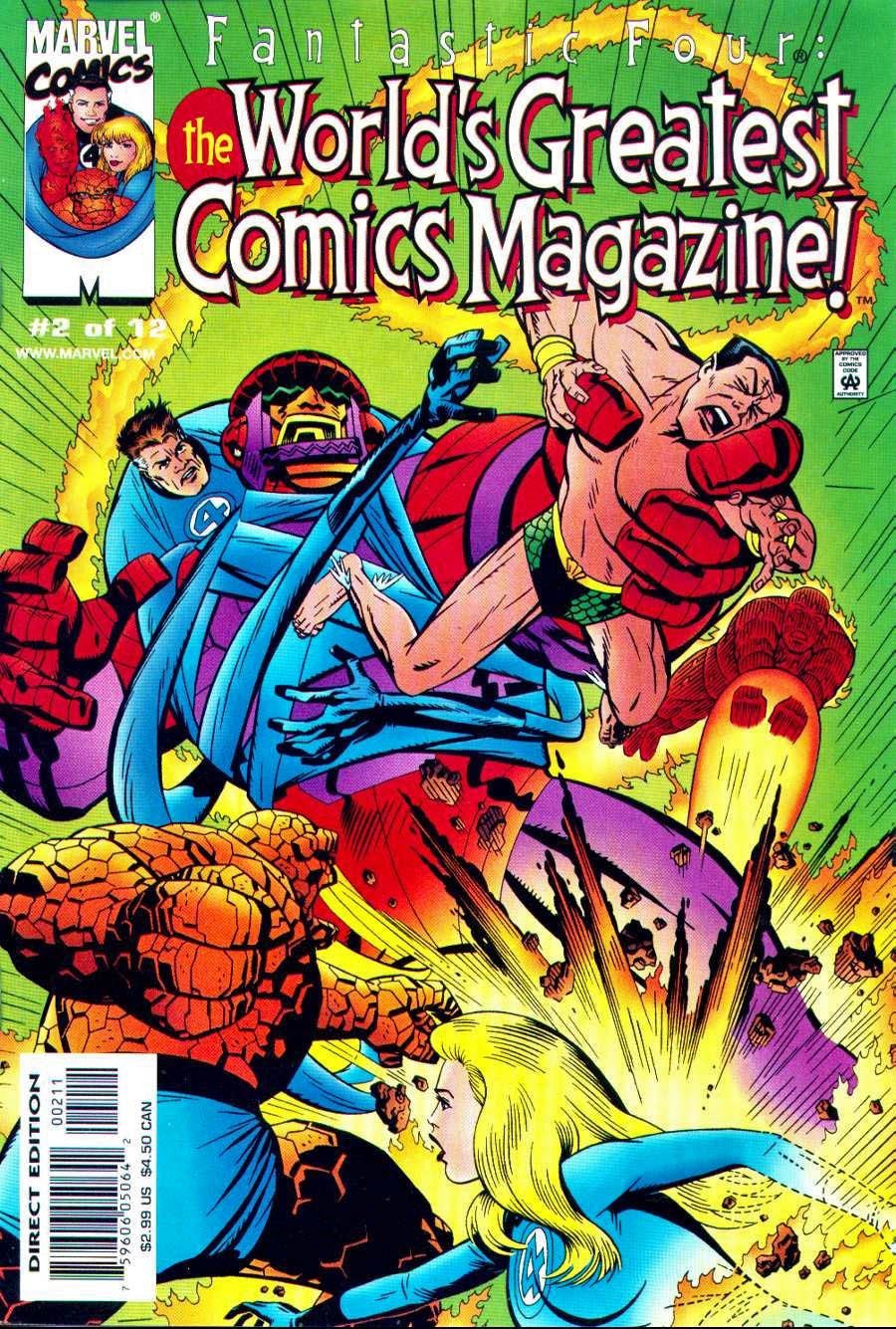
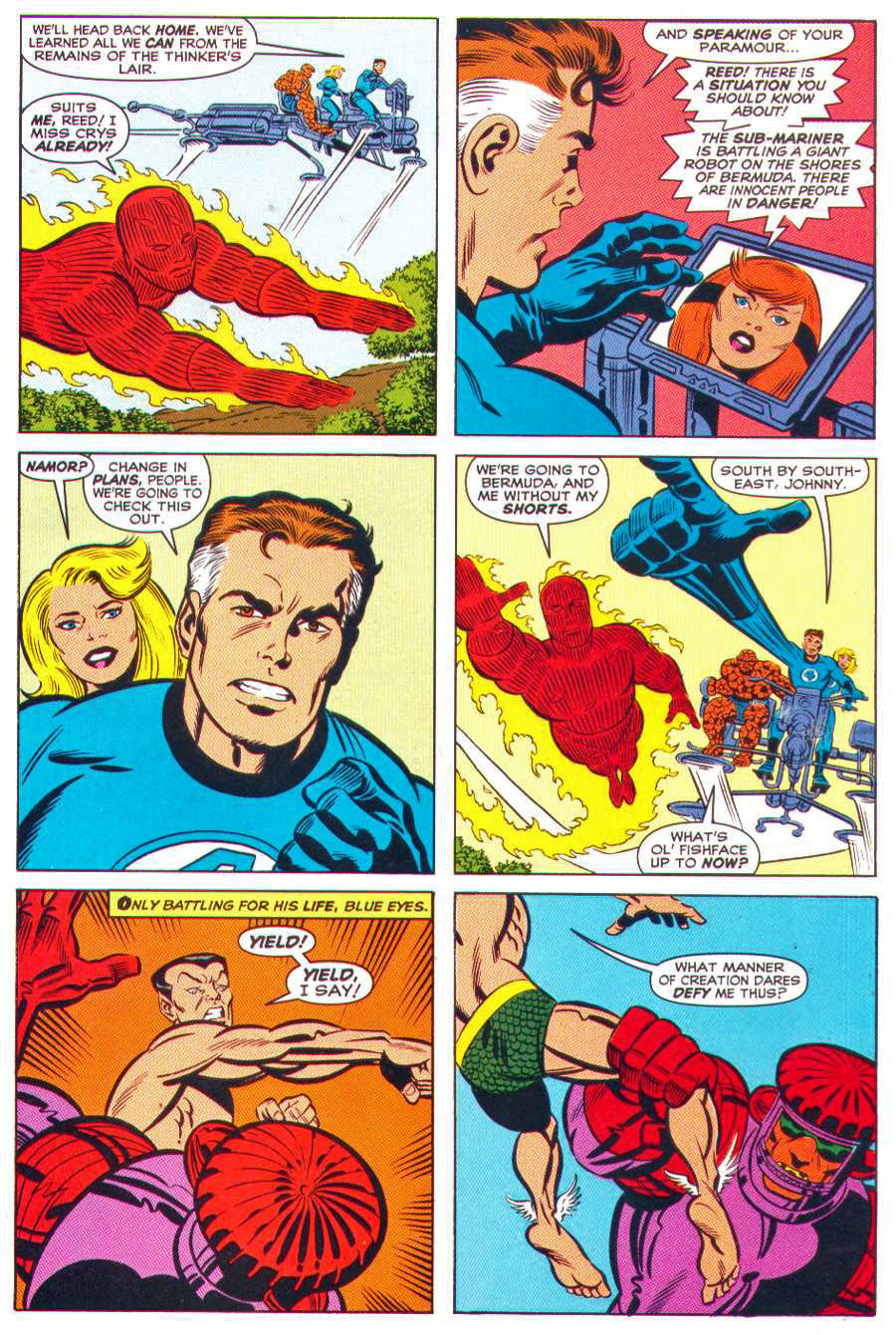
Fantastic Four: World’s Greatest Comics Magazine #2, March 2001

Fantastic Four: World’s Greatest Comics Magazine isn’t like a sequel to Lee and Kirby’s original run—it is one. Same premise, same mission: pick up the world’s greatest comic right after issue #100 and keep the engine humming.

This mini-series exists because a generation of creators grew up fluent in Kirby’s visual language and wanted to continue it, not reinterpret it. No grim updating. No clever winks. Just more Fantastic Four.

This page nails that idea perfectly. Erik Larsen provides the layouts, setting up classic, confident storytelling. Paul Ryan delivers clean, readable draftsmanship. Al Milgrom locks it all together with classic Marvel authority. You get the full team, Crystal, and Namor battling the Sentry—all in one terrific page of original art.

Across the series, the creative roster reads like a roll call of die-hard Kirby believers. Other contributors included Bruce TimmRon FrenzKeith Giffen, and Rick Veitch—artists who didn’t just admire Kirby, they revered him and understood what made the Fantastic Four tick.

What makes World’s Greatest Comics Magazine special is its confidence. It doesn’t explain itself. It assumes the Fantastic Four never stopped being the future. In that sense, it isn’t nostalgia—it’s continuity of imagination. And that’s about as Fantastic Four as it gets.

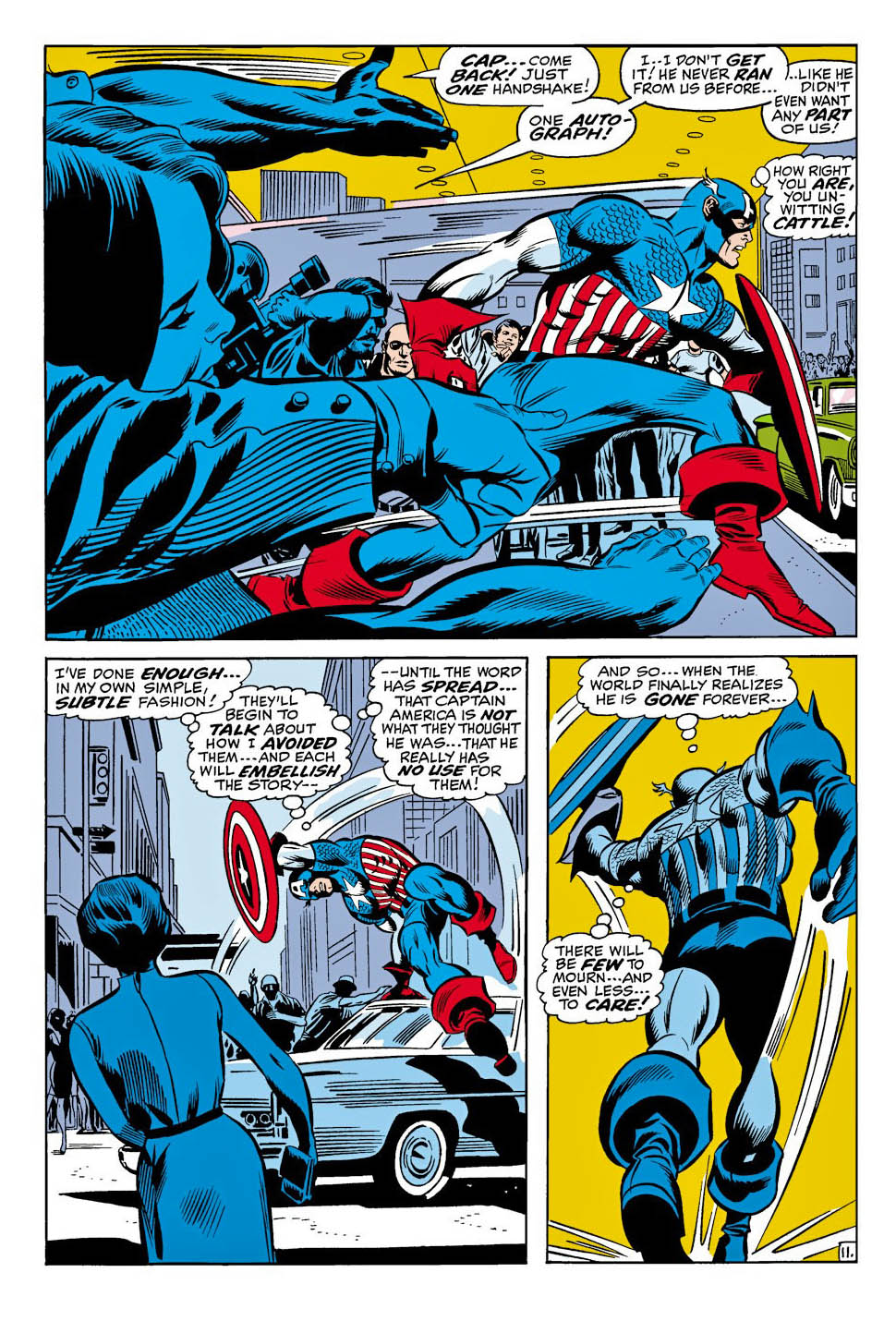
Gene Colan & Joe Sinnott— The “Superior” Captain America

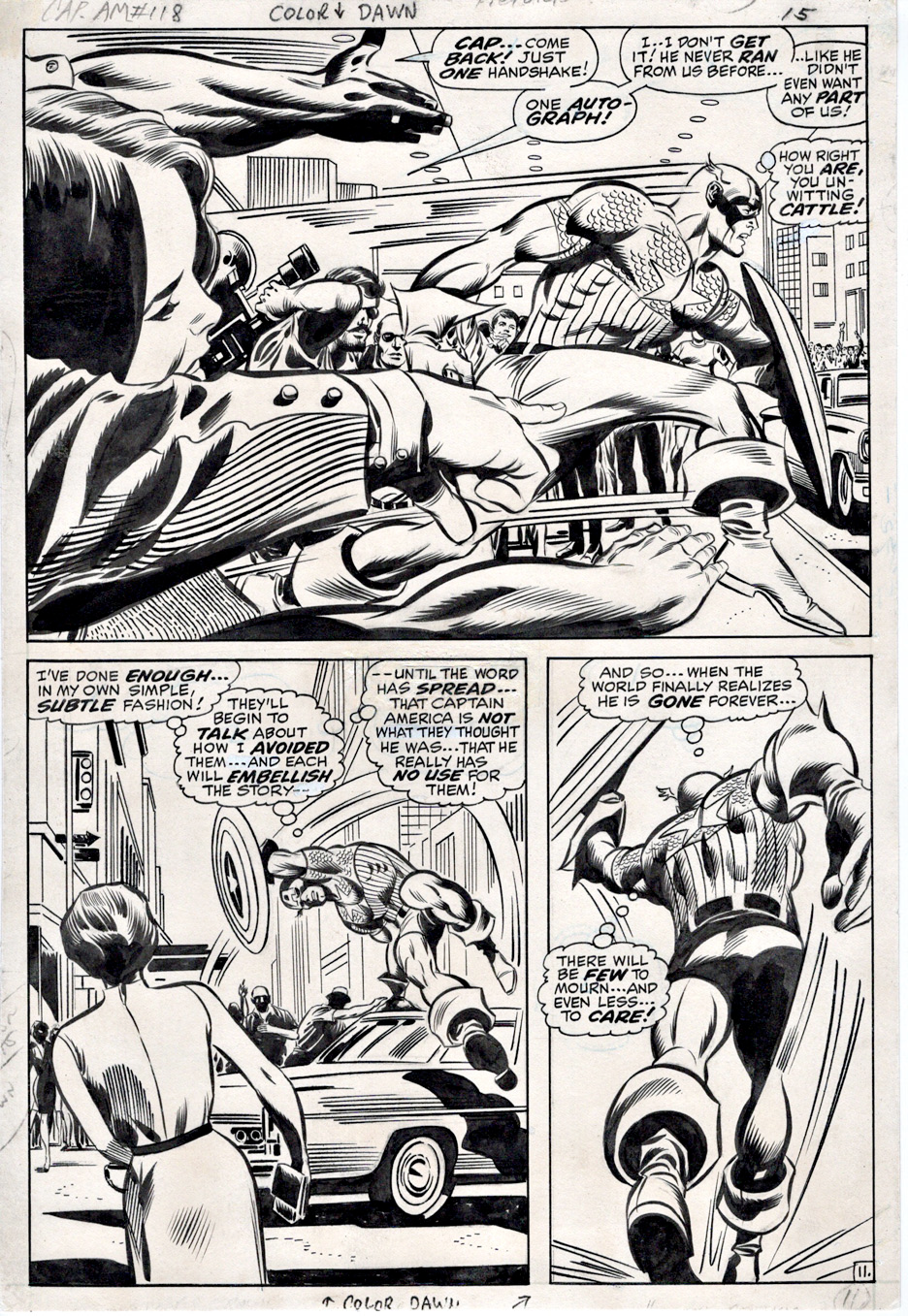
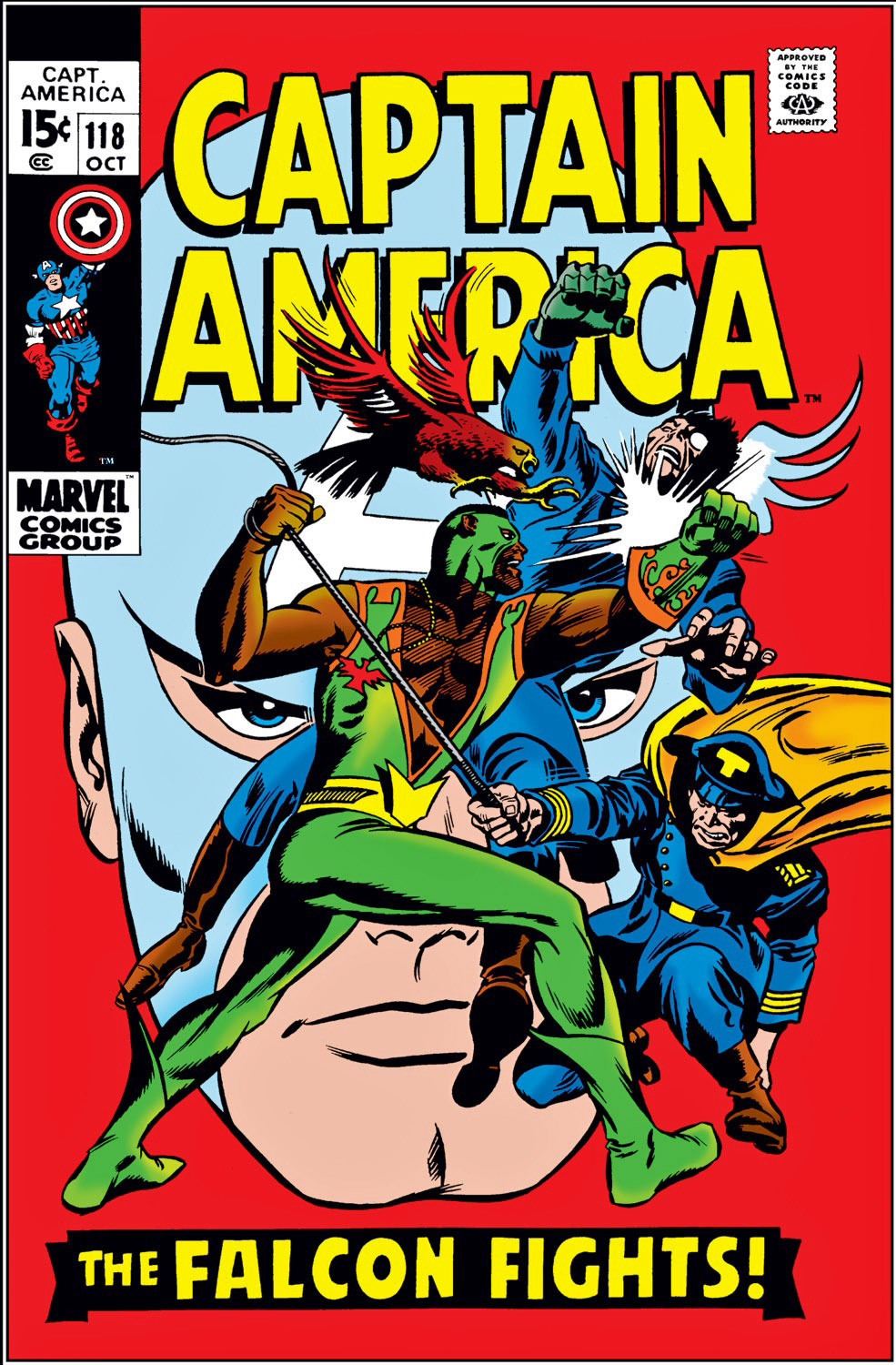
Captain America #118, October 1969

This page from Captain America #118 is Gene Colan doing exactly what Gene Colan did best. From the first panel, Cap isn’t just moving—he’s practically sliding across the page like someone leaned on the fast-forward button. Colan drew superheroes like actors caught mid-scene, all shifting weight and fluid motion.

And that crowd! That outstretched arm is peak Colan—bold, intrusive, unapologetically cinematic. It shoves you right into the scene. It feels like a real city having a very weird day.

Then come those deep, moody shadows he loved so much. He could drop a black shape over half a figure and somehow make it more expressive, not less.

Colan never cared about matching the “house style,” and he certainly didn’t draw superheroes who looked like they’d just ironed their costumes. Shadows, posture, movement—those were his tools. You either vibed with it or you didn’t. I loved it. Some of my friends… not so much. (Especially when some of his other inkers couldn’t quite figure out what Gene was doing… or why.)

But even the skeptics had to admit — nobody, before or since, has drawn comics quite like Gene Colan.

Why is Cap running from the crowded thinking vindictive thoughts? I’m glad you asked. Because, thanks to the cosmic cube, the Red Skull has taken control of Cap, and things are about to take a turn…

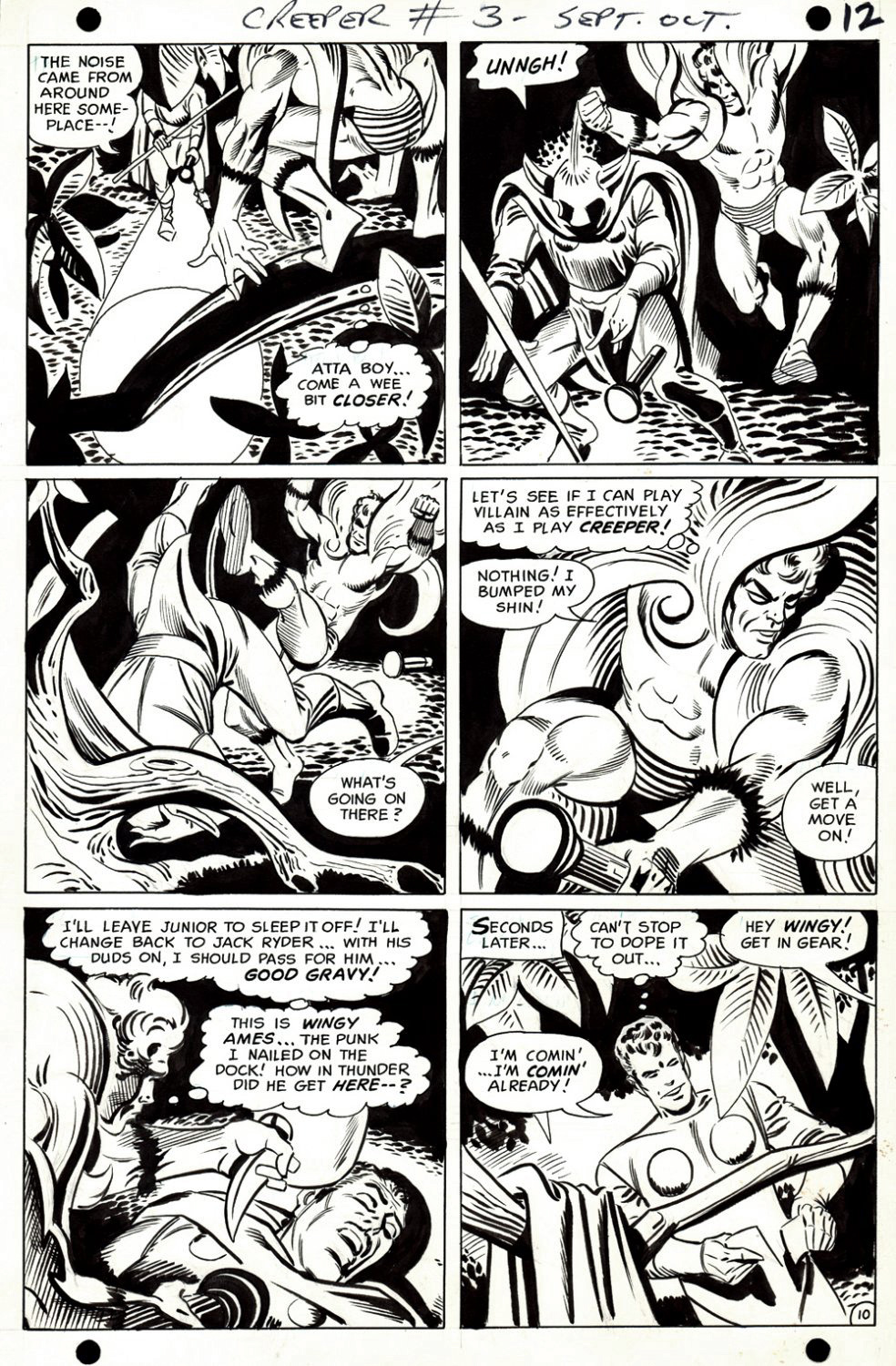
Steve Ditko — Beware The Creeper (& DC’s Publishing Strategy)

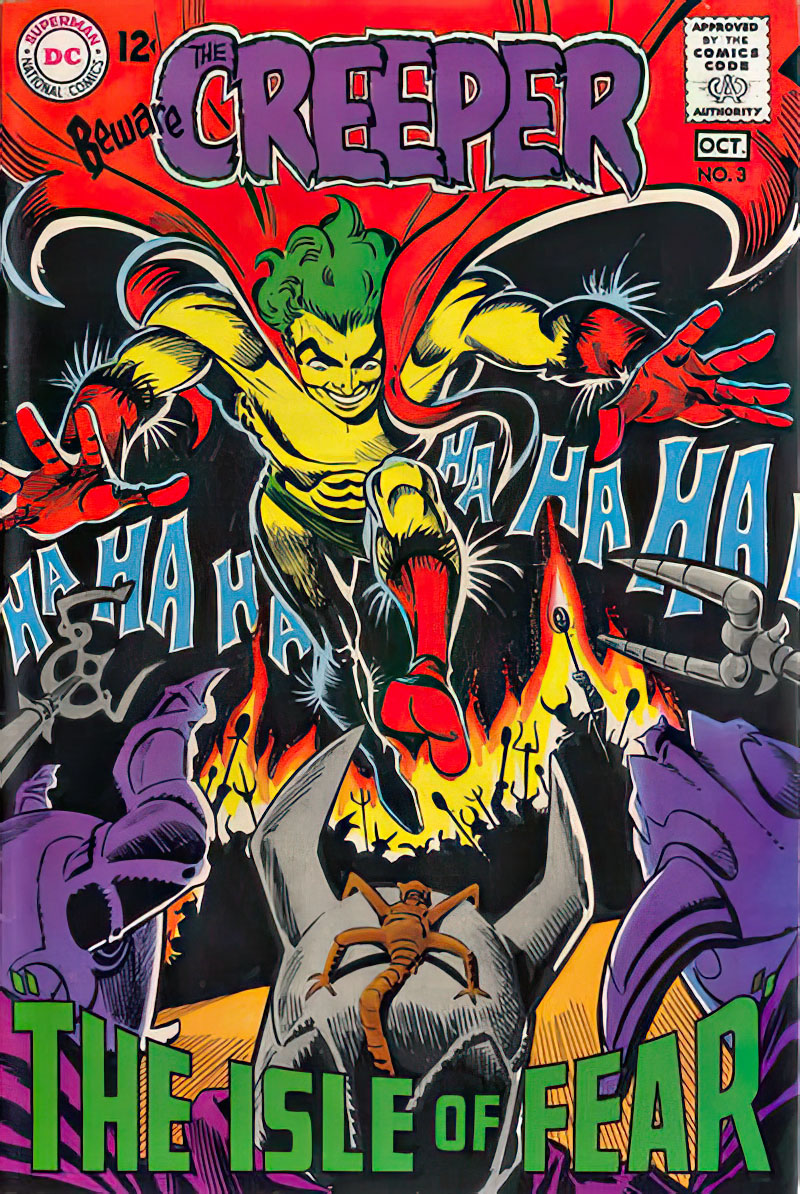
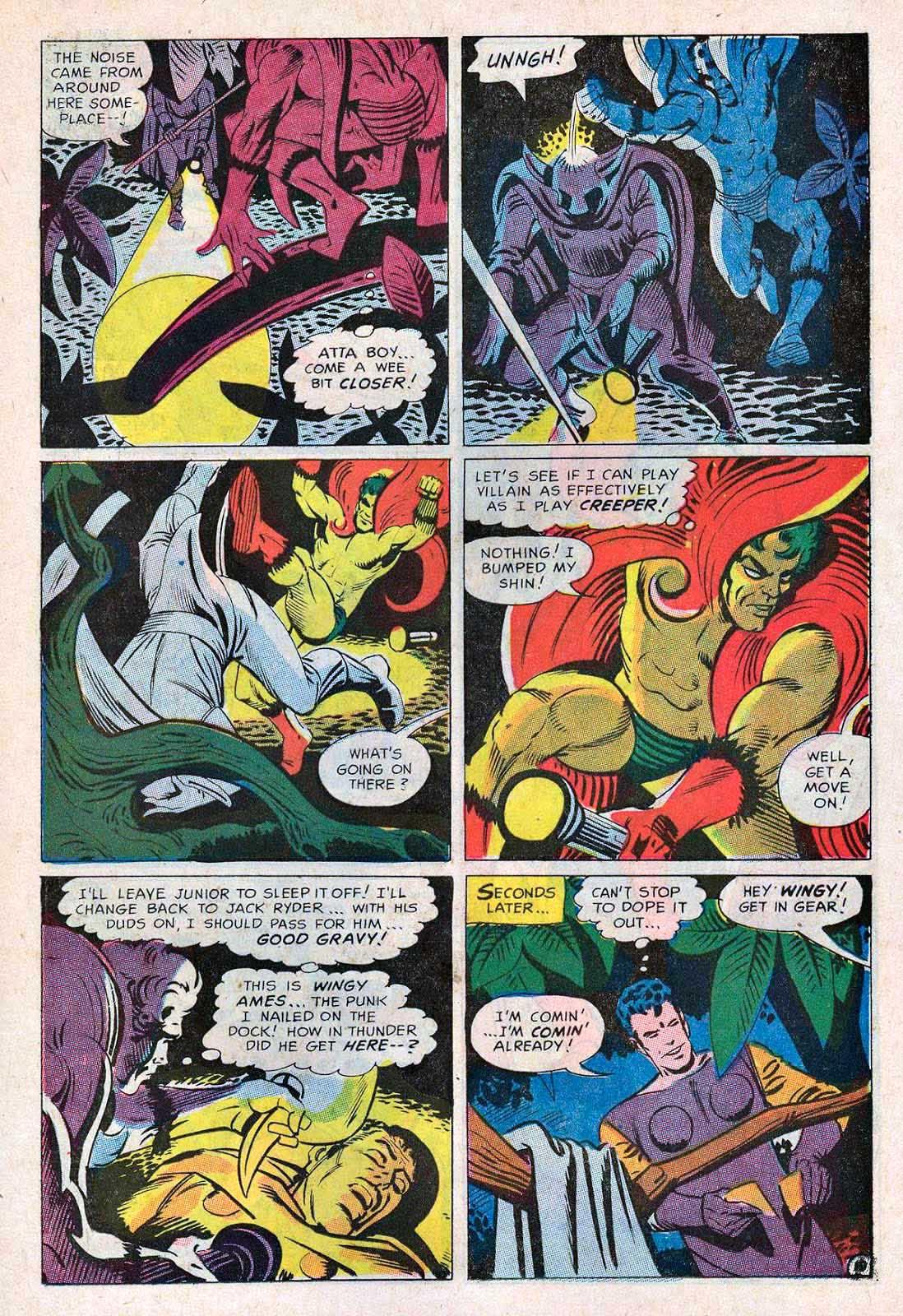
Beware The Creeper #3, October 1968

Here’s a great Beware The Creeper page from issue #3. The Creeper (Jack Ryder) in every panel with classic Steve Ditko action and composition.

The Creeper was Ditko’s first superhero work for DC— just ahead of Hawk and Dove —and even as a kid, I recognized its offbeat genius. I had already admired Ditko’s talents from the Spider-Man reprints in Marvel Tales, and also in his Charlton work on Captain Atom, Blue Beetle, and The Question. 

But this quirky title definitely found a sweet spot for me.

In the late 60s, DC didn’t stick with any title that didn’t find an immediate audience — so naturally, it only lasted six issues. 

Sigh. 

Funny thing about this specific art page: If I recall correctly, I almost owned it about a dozen years ago in a purchase/trade that went south at the last minute.

Second time is a charm, I guess. Better late than never. (Two cliches for the price of one!)

As for DC’s publishing strategy:

I’m sure someone has compiled a comprehensive list of all the titles that DC launched in the late 1960s and early 70s and lasted less than a dozen issues.

Without thinking too hard, I came up with these:

The Spectre; Secret Six; Inferior 5; Anthro; Brother Power The Geek; Plastic Man; Hawk and Dove and Angel and The Ape.  (Not to mention Jacky Kirby’s New Gods and Forever People, et al.) And, if you include licensed books, add in Captain Action and Hot Wheels.

That was a lot of work for few, if any, meaningful results.

Good thing the Superman and Batman titles were money machines.

Kyle Baker — Take Hulk Out OF The Ballgame

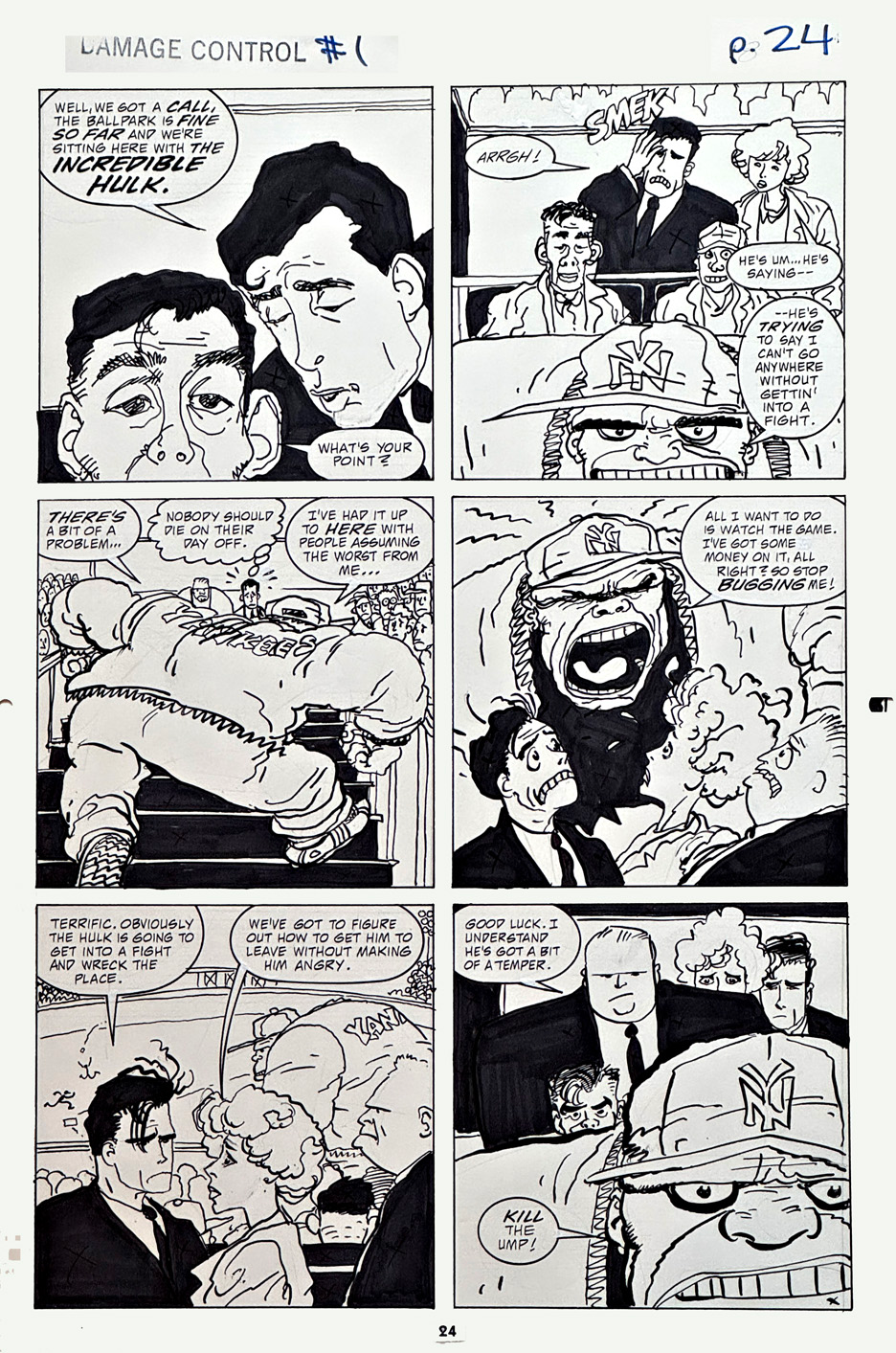
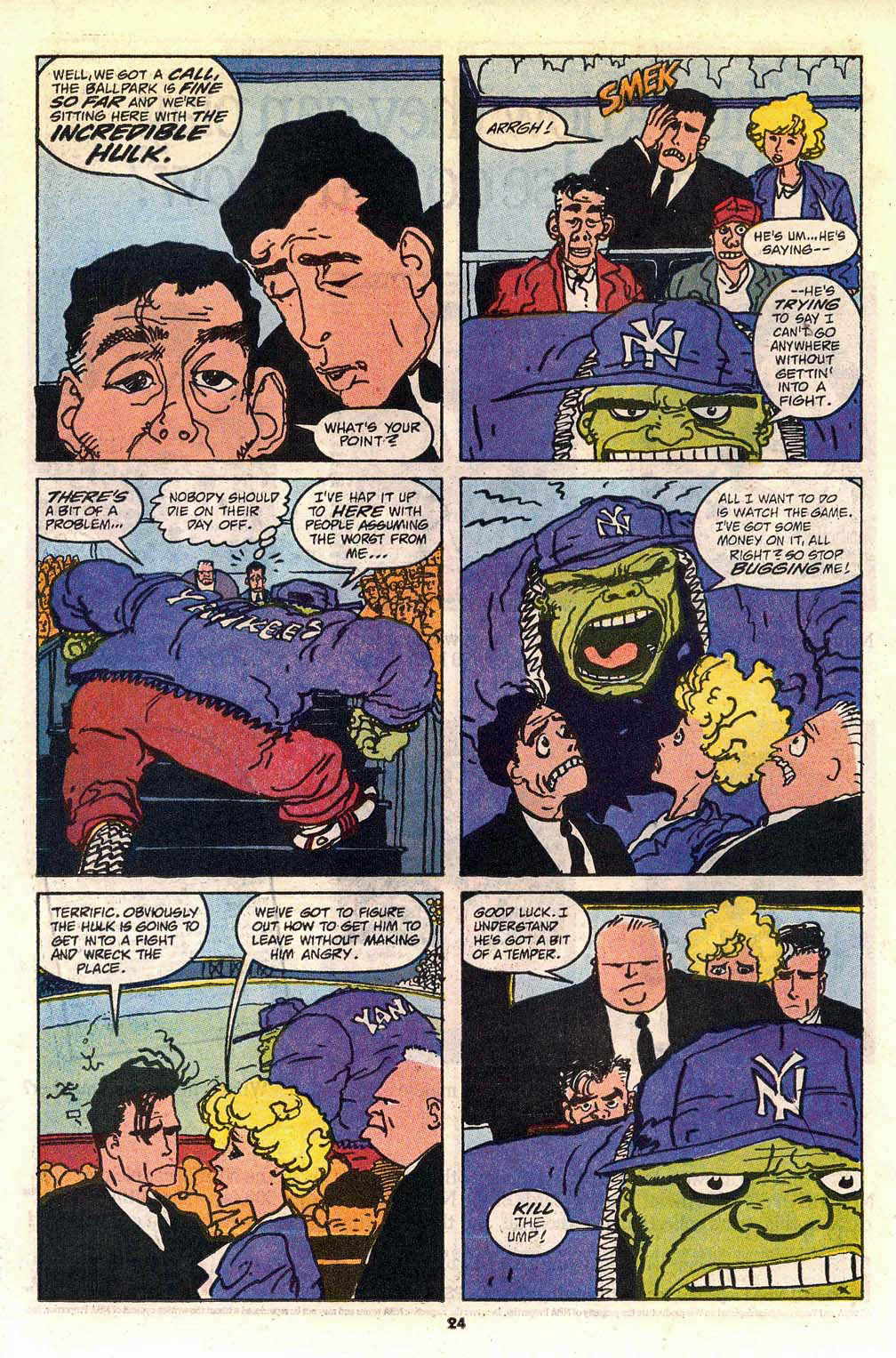
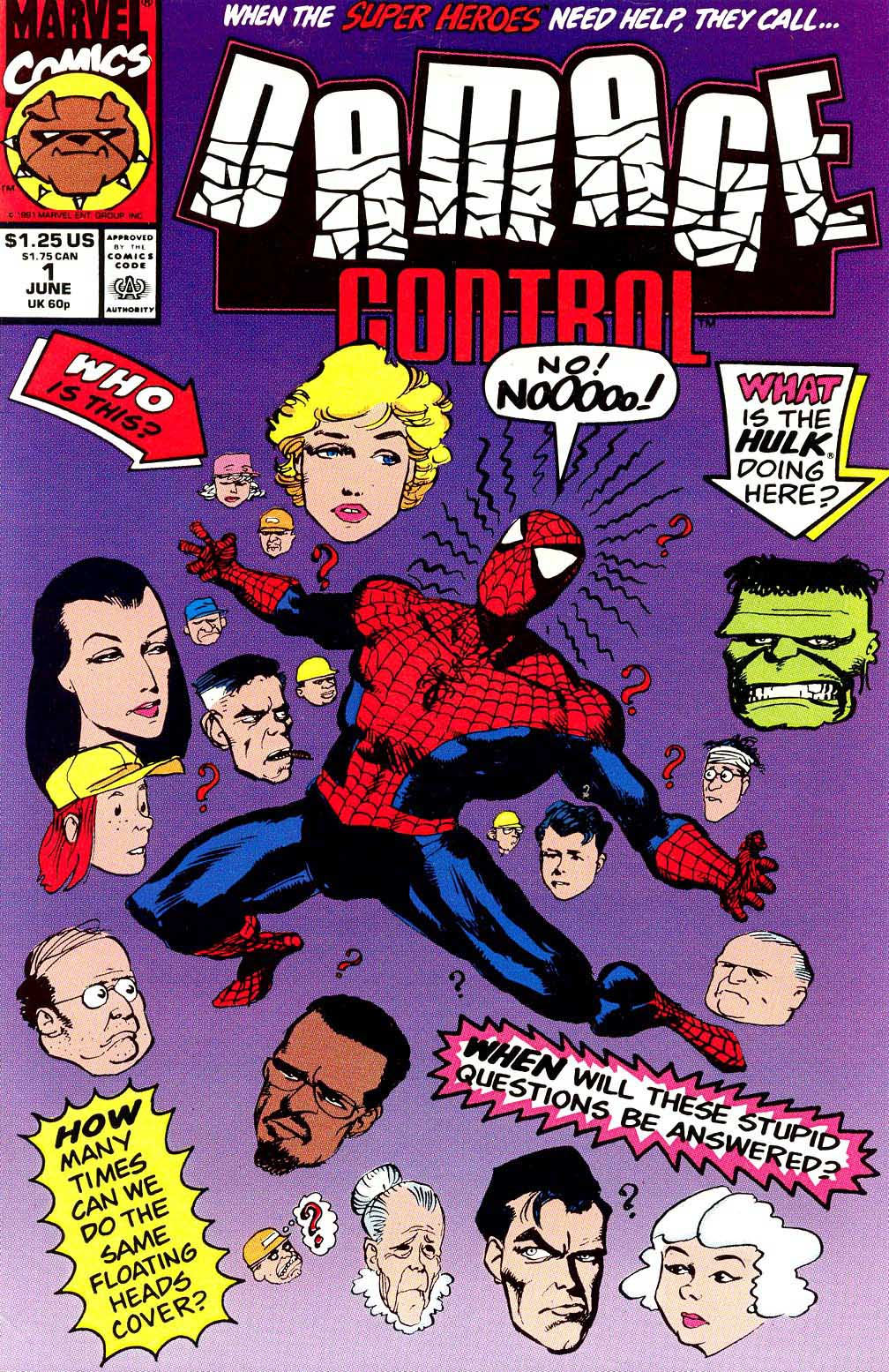
Damage Control III, #1, June 1991

Damage Control is such a fun high concept; Someone needs to clean up after a big hero and villain melee lays waste to parts of a city. Why not a murky government agency with an apparently unlimited budget? The idea so good in fact, that it’s been well incorporated into the MCU, albeit with some changes along the away. 

Kyle Baker drew (pencils and inks) the final mini-series of the original three, and his art style was a perfect fit for the quirky, humorous nature of the stories.

And the things you learn from comics: Turns out the Incredible Hulk is a Yankees fan.

The Yankees should sign him up. He’s probably the only one who could consistently give Shohei Ohtani a run for his money as the most extraordinarily dominant player in the Major Leagues.

Then again, maybe not. For all we know, Otani is a mutant. Or an alien. He’s definitely other-worldly.

Fun fact: About 25 years ago, just as realistic “destructible environments” became reality in videogames, TQ Jefferson and I passionately tried to convince our colleagues at Activision that Damage Control would be a perfectly fun way to incorporate as many Marvel characters into one game as possible. 

Alas, executive management thought we were bonkers — a story for another day.

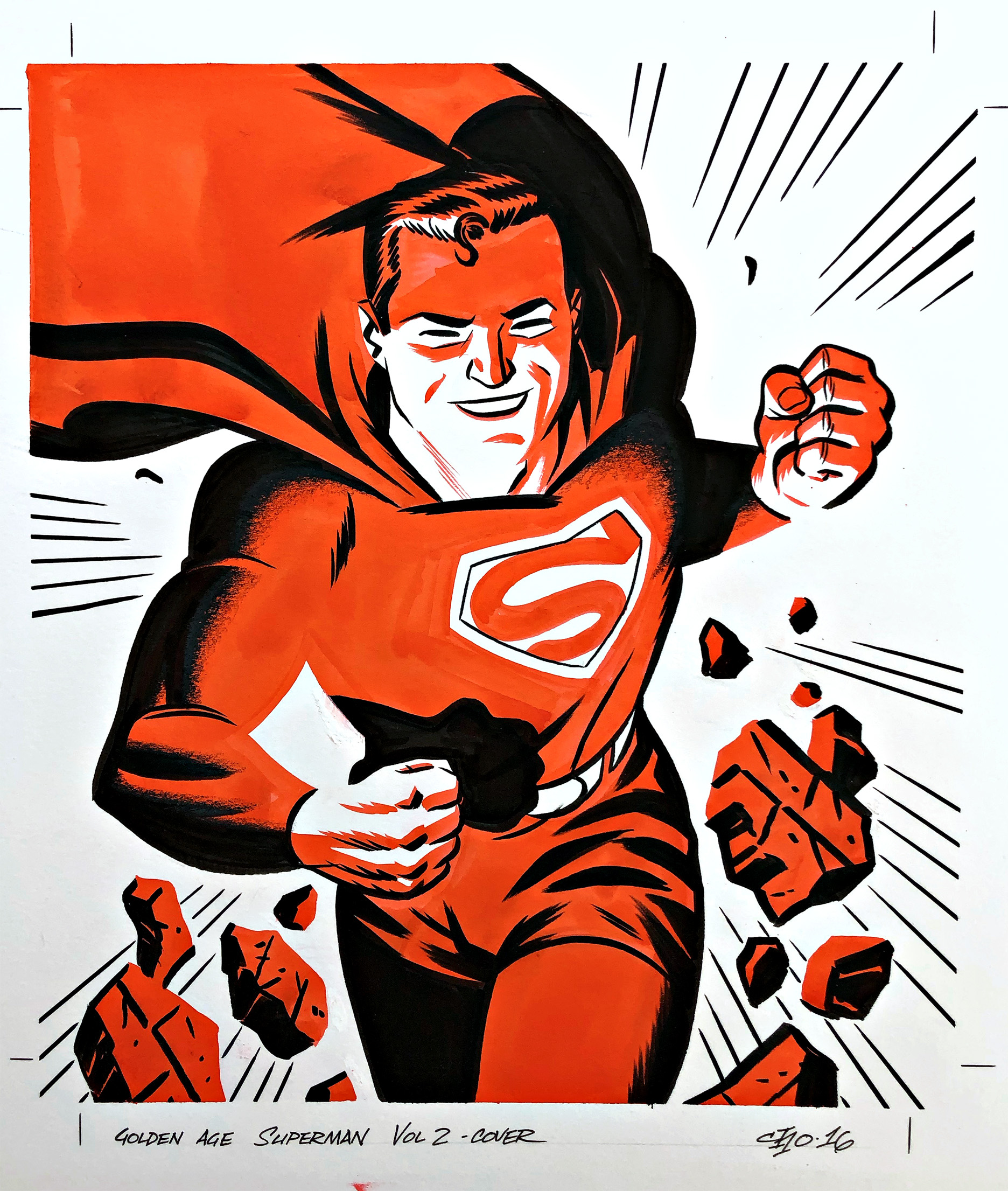
Superman & The Fantastic Four — Double Feature

Superman & Fantastic Four Art Pages, Various

Who would’ve thought that Superman — the true beginning of the DC Universe, and the ignition for the fire that became the world of modern superheroes— AND The Fantastic Four — the first superheroes in the modern Marvel Universe — would hit the silver screen with major reboots at the same time? Definitely an unlikely coincidence.

So…

Here are all the Superman posts on the blog the last five years…

https://greggoldsteincomicartgallery.com/?s=superman

…and here are all the Fantastic Four posts from the same period.

https://greggoldsteincomicartgallery.com/?s=%22fantastic+four%22

Enjoy! I’m off to SDCC; let the madness begin!

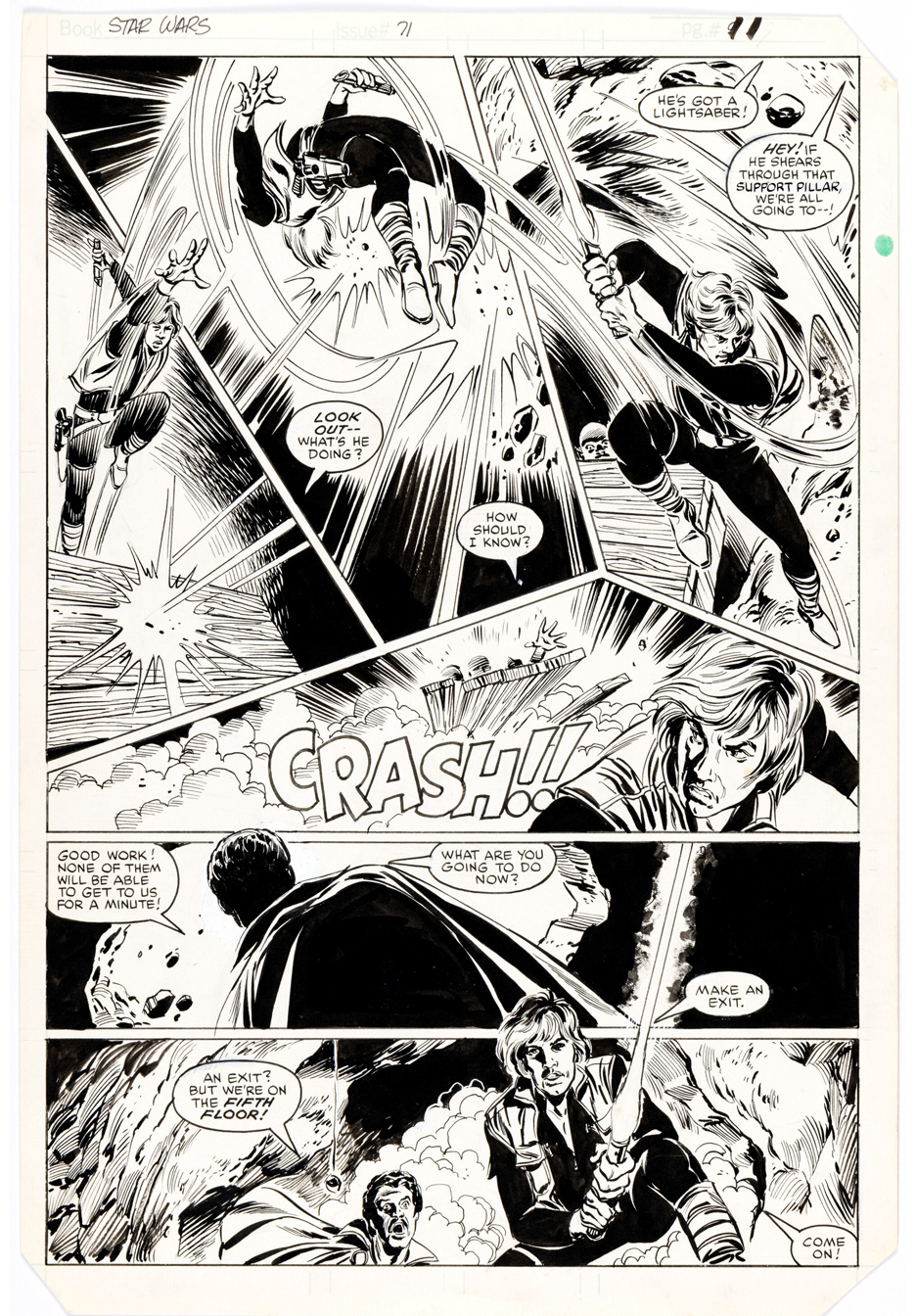
Ron Frenz & Tom Palmer — “He’s Got A Lightsaber!”

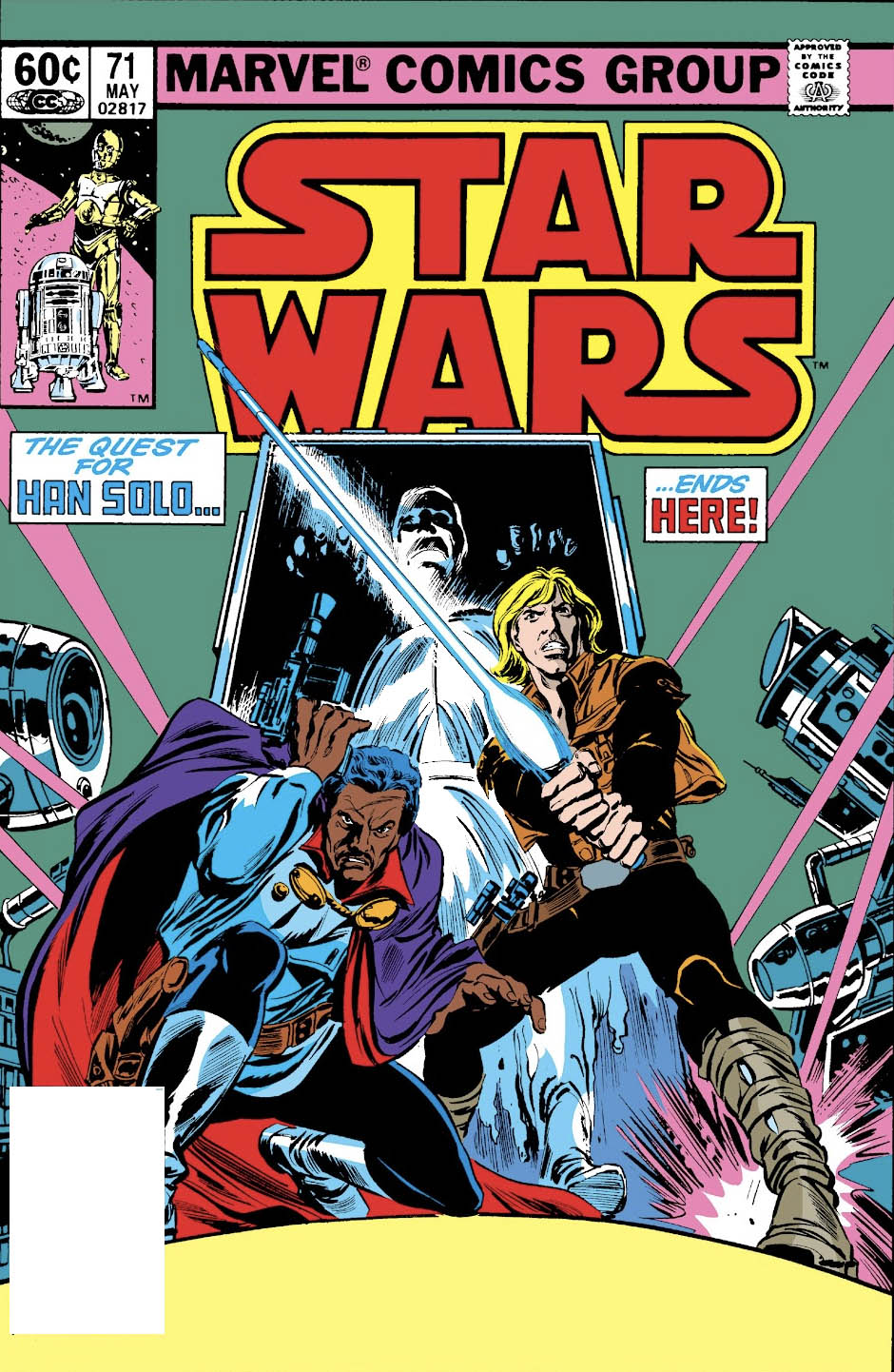
Star Wars #71, May 1983

Here is a very dynamic page from a very dynamic art duo (sorry, couldn’t resist) of Ron Frenz and Tom Plamer. Following the terrific run by Walter Simonson and a few fill-in issues from Gene Day, Frenz took over as regular penciller; Palmer stayed on as inker, once again providing a smooth consistency to the art.

As for the story? Don’t let the cover blurb fool you. The quest For Han Solo most definitely did not end here; he wasn’t able to return to Marvel’s Star Wars series until a few months after the release of Return of The Jedi. (Issue #81, to be precise.) And again, Marvel’s creative team did a heckuva job with the little information they had ahead of ROTJ.

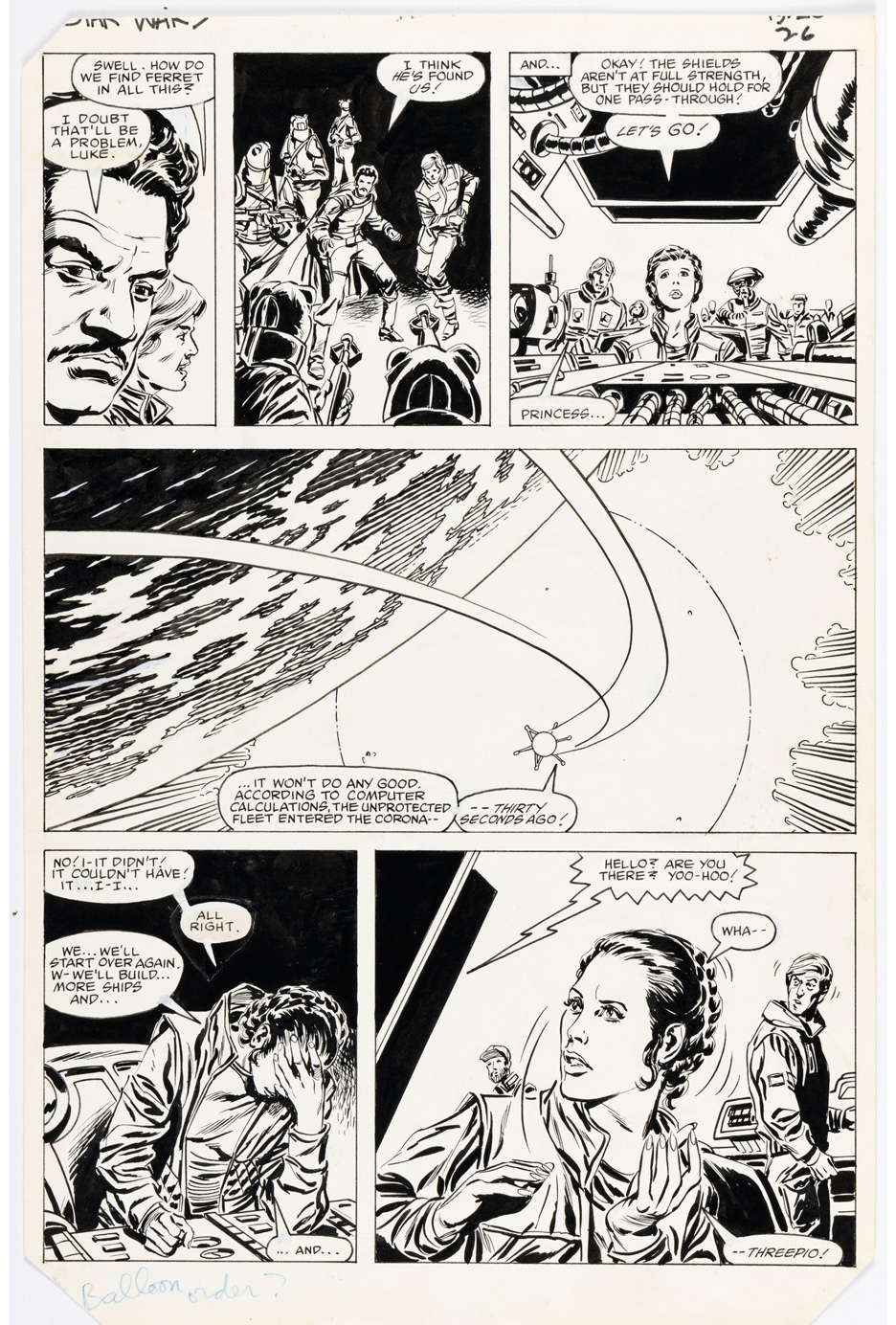
Walter Simonson & Tom Palmer — Yoo-Hoo!

Star Wars #58, April 1982

Ah, to have been a fly on the wall at a Marvel Comics- Lucasfilm meeting, about 9 months or so before the release of Empire Strikes Back in 1980:

Lucas: “So, guys, let us tell you— the next film is going to end quite dramatically: Han Solo will be in suspended animation, in the ship of a bounty hunter, on his way to the clutches of Jabba The Hutt. Chewie, and a new character, Lando, will appear to be going after them, and Luke, clearly not a Jedi yet, will remain with Leia and the droids in the rebel fleet.

Marvel: “Great, what happens next?”

Lucas: “That’s it, that’s the end of the film. It’s a cliffhanger.”

Marvel: “And we don’t know what transpires until the next film?”
Lucas: “Correct.”

Marvel: “For three years?

Lucas: “Also correct.”

Marvel: “Ok. That’s about 36 issues. You’ll give us the broad strokes of how the next film opens so we can create scenarios and plots with the remaining characters accordingly?”

Lucas: “Er, we don’t have all the details yet, but we will figure it out.”

All credit to Louise Simonson, Archie Goodwin, Walter Simonson, David Michelinie and an hefty all-star group of talent for somehow making the challenge work.

And, of course, extra credit to Tom palmer, who, as always, made it visually come together, regardless of who penciled the book: Simonson, Ron Frenz, Gene Day, Kerry Gammill, et al.

Oh, and they recycled an unused Carmine Infantino John Carter of Mars story during this period as well.

Seriously, look it up.

Doug Wildey — Wildey Wild West

Gunsmoke Western #57, March 1960

How much of a perfectionist was the great Doug Wildey? He knew there was no chance the printed comic books of 1960 could capture the fine details in his draftsmanship, but he drew them anyway.

This is the second Wildey Atlas western title splash I’ve managed to acquire, and like the first, it’s a beauty. In fact, even more stunning.

By chance, this page was only display and offered for sale a few moments during last year’s San Diego Comic Con when I happened on it. I’m sure it would have been gone had I come by an hour or more later.

As I noted previously, Doug Wildey was an amazing storyteller and draftsman. Don’t just take my word for it — ask Stan Lee.

Back in about 2010, we visited Stan in his Beverly Hills office to get some pages signed for the first John Romita Spider-Man Artists Edition from IDW Publishing. Stan’s “people” were kind enough to let us bring some personal items to get signed as well, so I brought a few pages of original art with me. 

Stan, who was telling stories and singing while he was signing (Yes, singing, not a typo for signing. Story for another day.) stopped dead in his tracks when he saw this page of art. 

He stared at it quietly for a few moments — given the speedy pace of our morning, it seemed like an eternity — and you could see pleasant memories wash over his face. And then the big Stan Lee smile:

“Doug Wildey. Wow. He was great. So terrific. I loved his stuff. I wish we had a chance to do more together.” 

He handed the page back to me, still beaming, still examining it up and down as he slowly passed it back.  I had seen Stan sign thousands of items; many of them with fond remembrances, but nothing quite like this.

I’m sure he would have had the same reaction to this page as well.

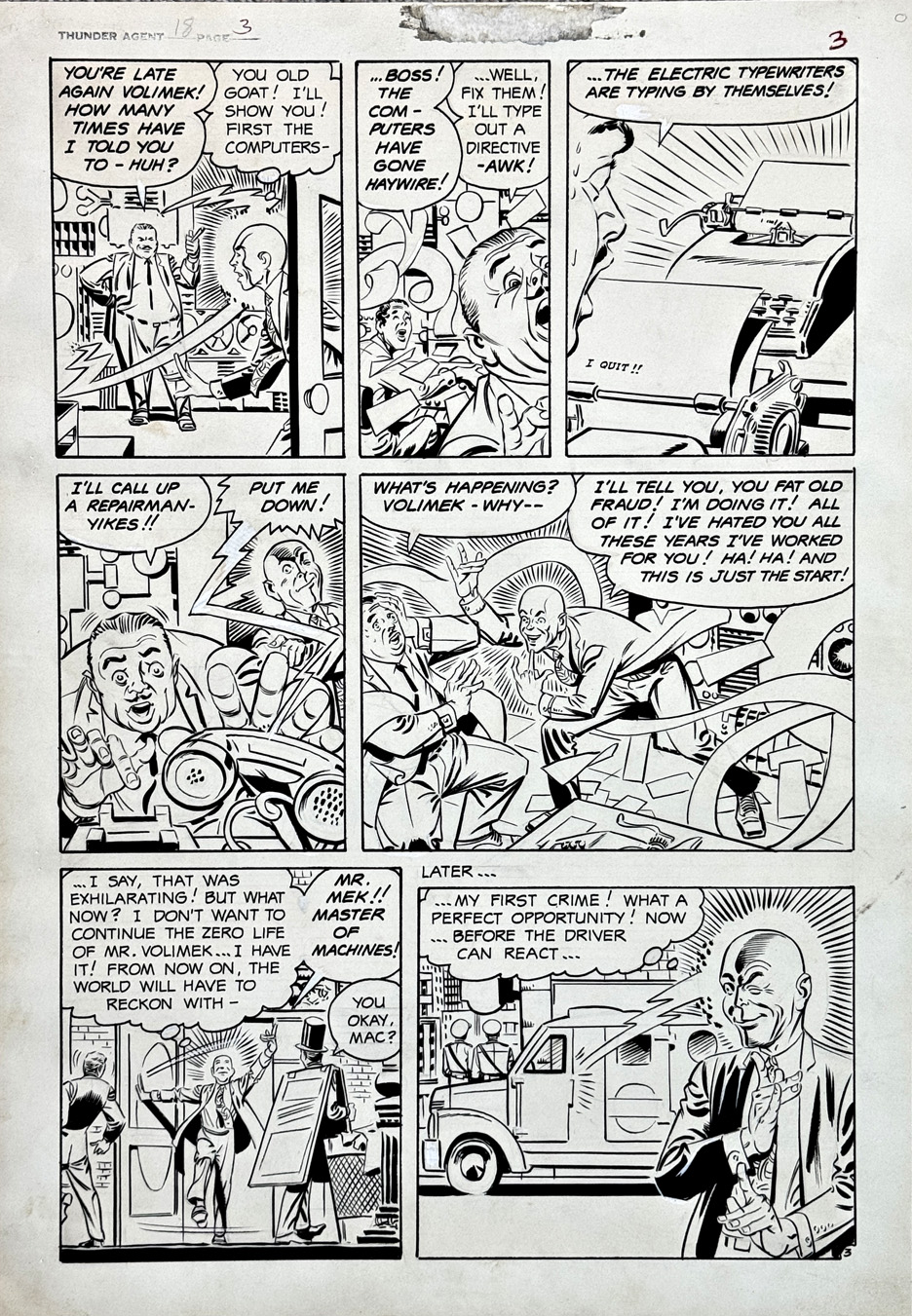
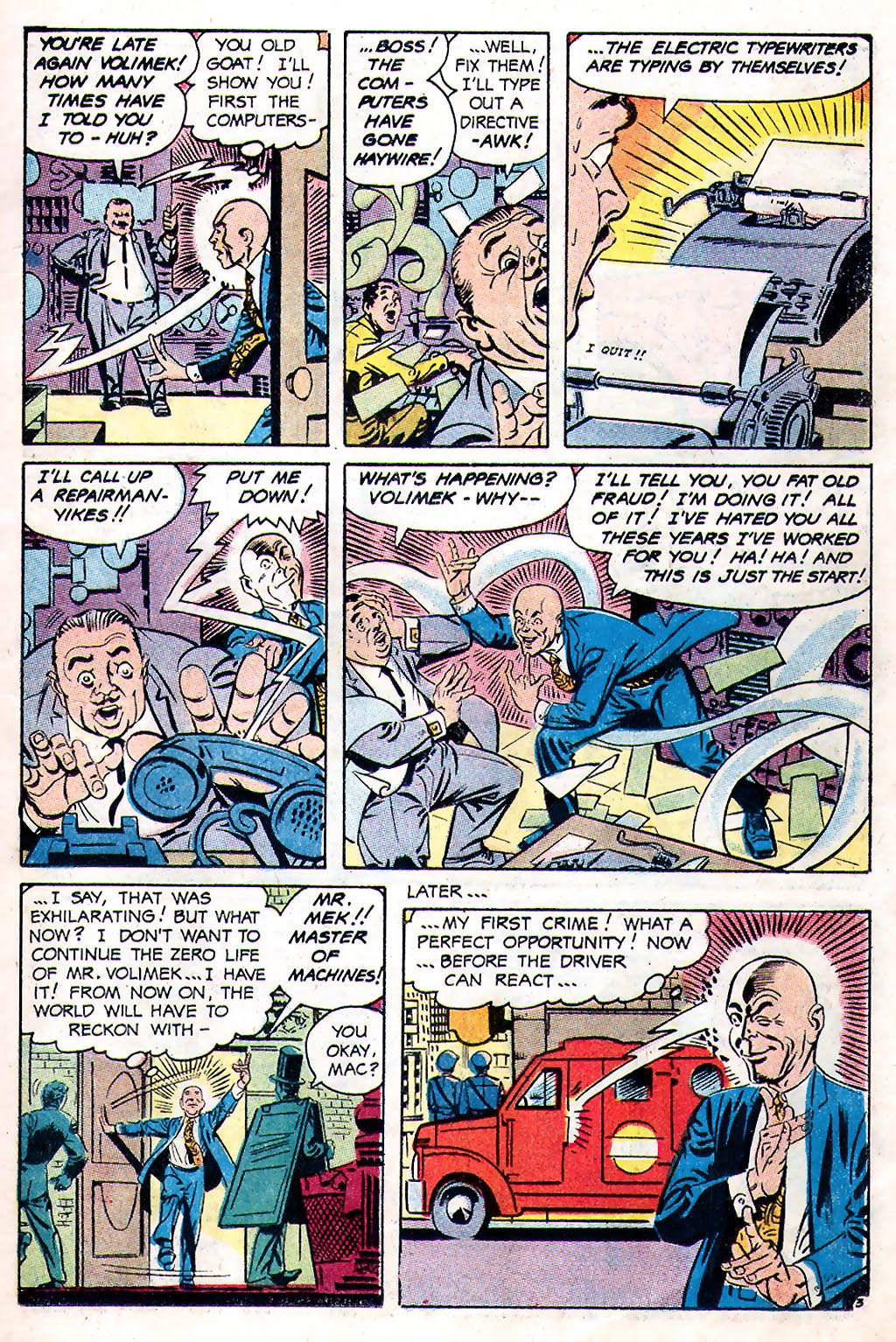
Steve Ditko — Master Of Machines… & Mayhem

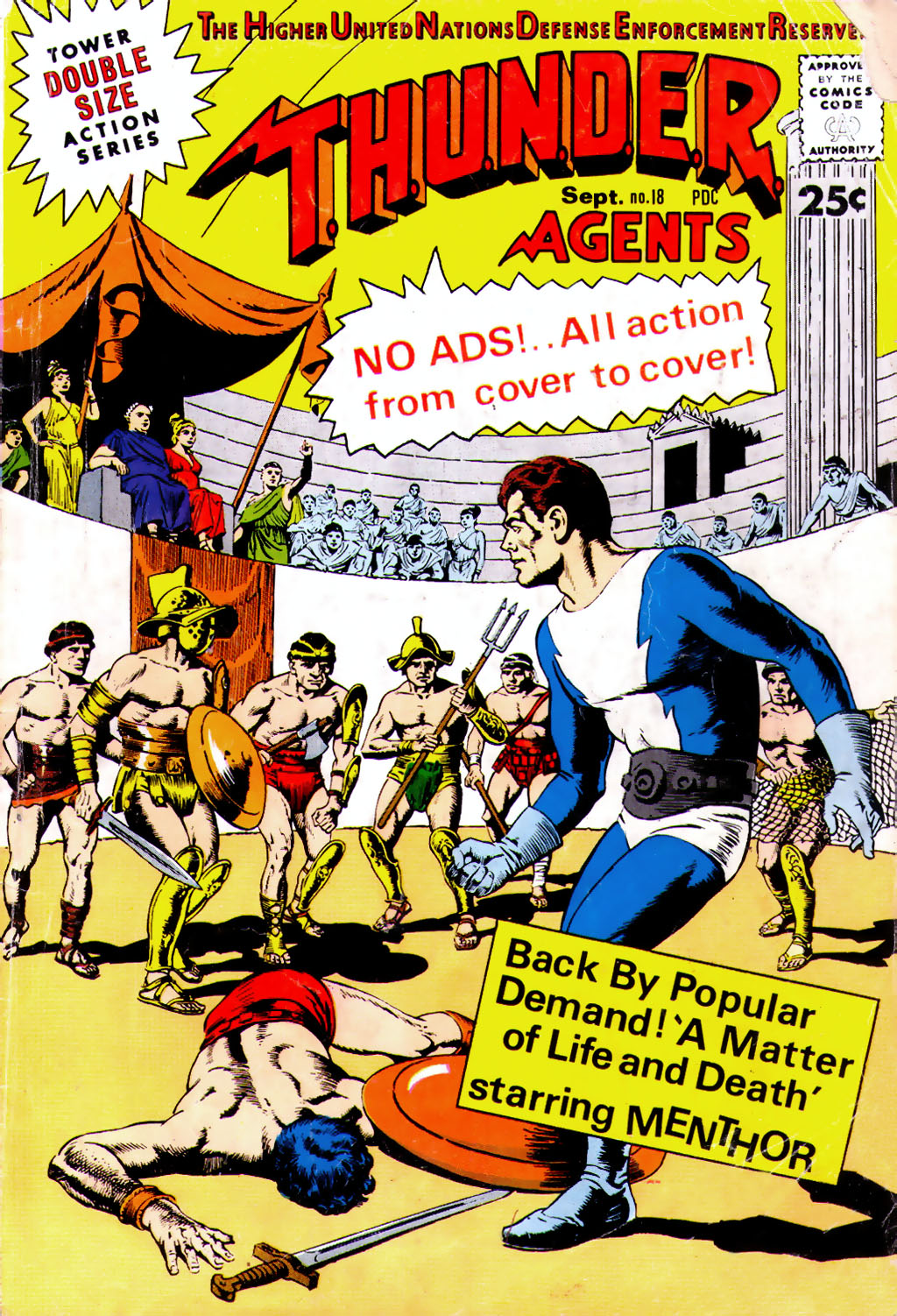
T.H.U.N.D.E.R Agents #18, September 1968

Classic Steve Ditko art (pencils and inks), from a story completed just two years after the iconic (and somewhat iconoclastic) artist left Spider-Man and Marvel for… reasons.

No “superheroes” here, just a supervillain who looks like he came from Spidey central casting. The energy and whimsy on this page are terrific, and Steve clearly is enjoying himself in his storytelling. (Ralph Reese is the credited writer, but my guess is that he gave Ditko a plot/treatment and told him to run with it.)

Despite a hefty price tag (even with a trade), this outstanding artwork definitely spoke to me. Of course, if it actually was a Spidey page, It would have been marked about 10-15 times higher, so there’s some consolation for my wallet.