Greg Goldstein's Comic Art Gallery

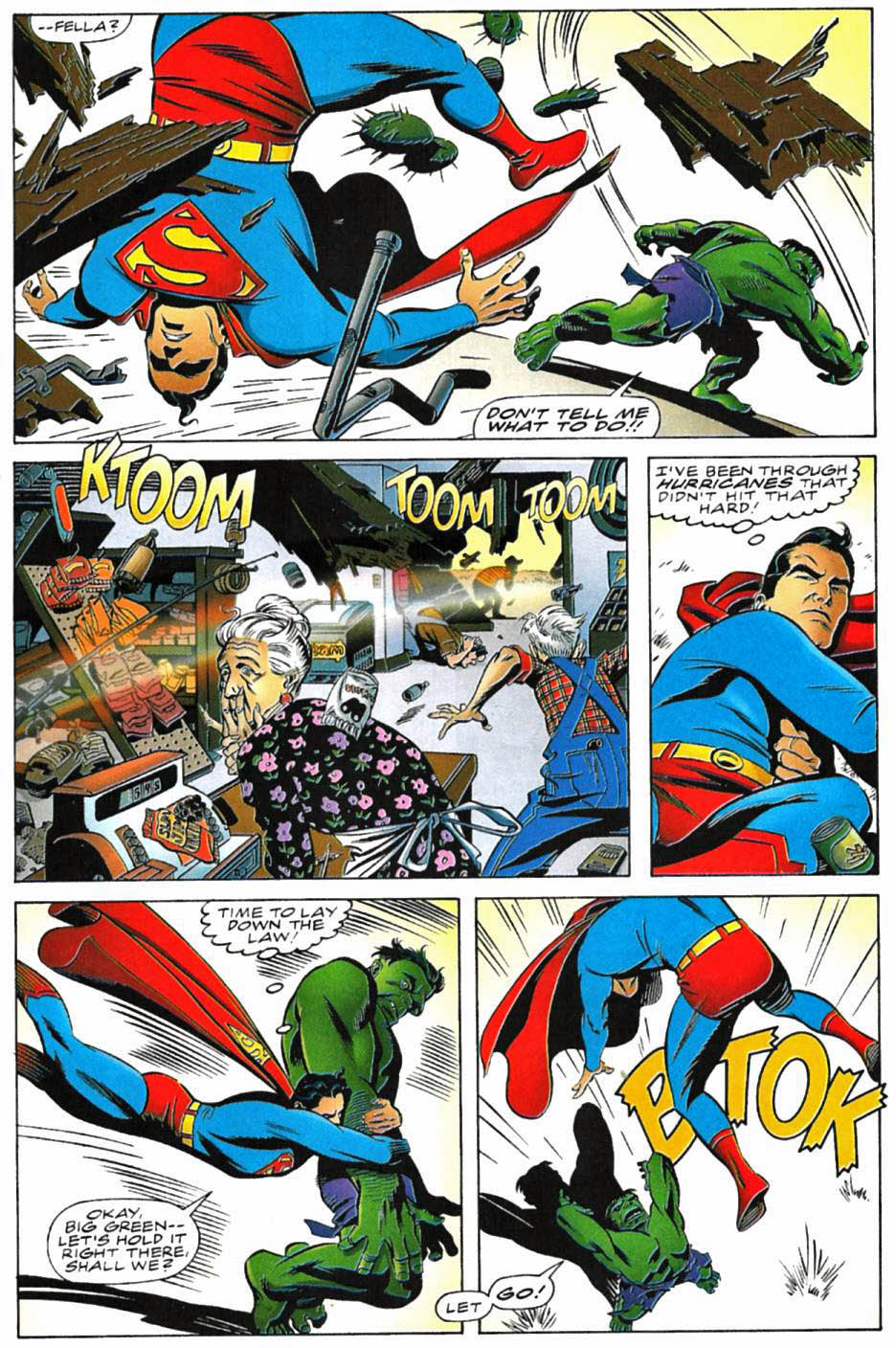
Steve Rude — Hulk Vs… Superman

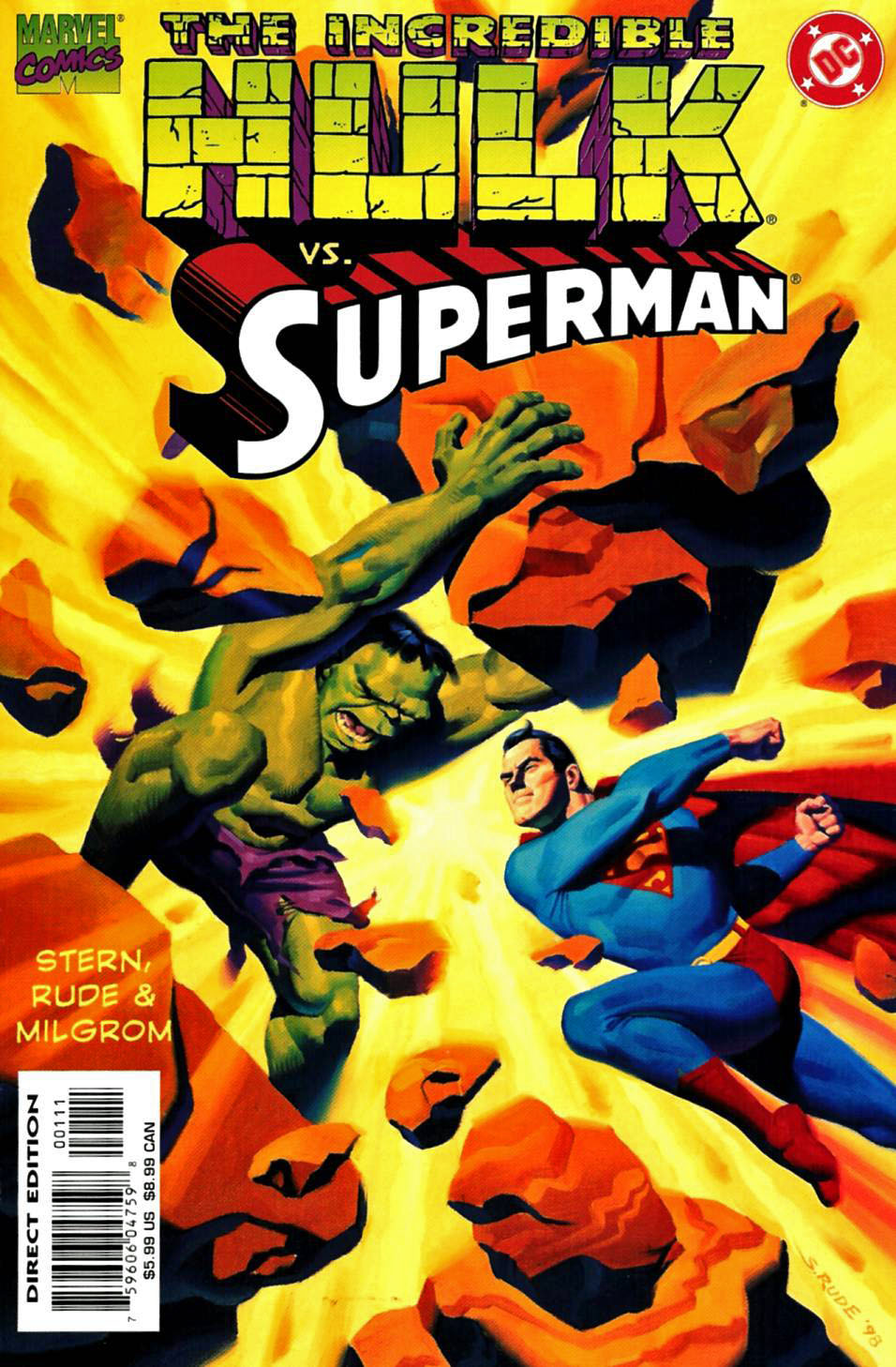
Incredible Hulk vs. Superman, July 1999

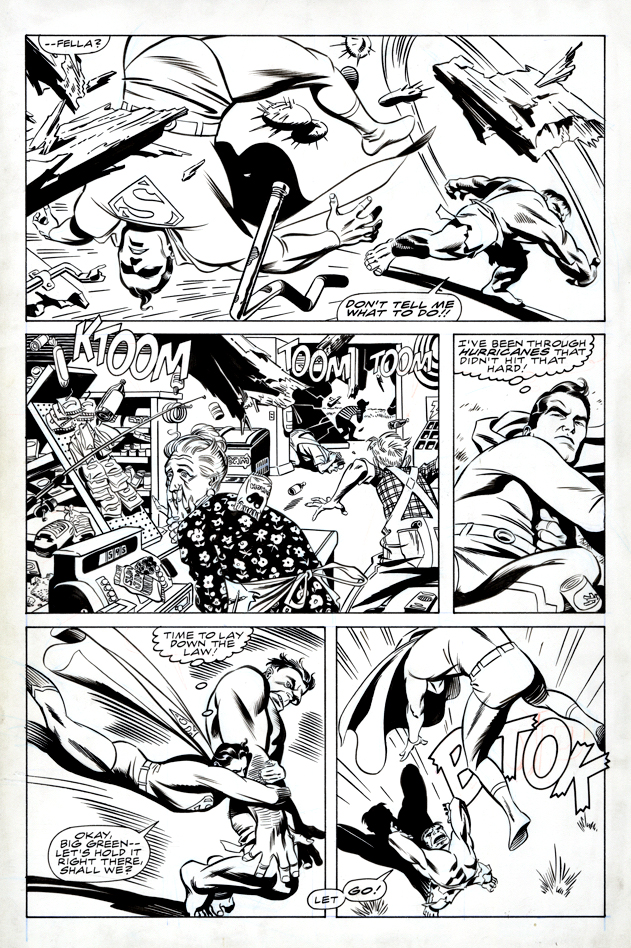
Steve Rude delivers a terrific action page of Superman vs. Hulk, as we continue to pay tribute to Hulk vs. heroes in other universes this week.

Superman vs. Hulk seems quite a bit more logical than Batman vs. Hulk.  Theoretically, Superman would ultimately win, but at least he would be winded.

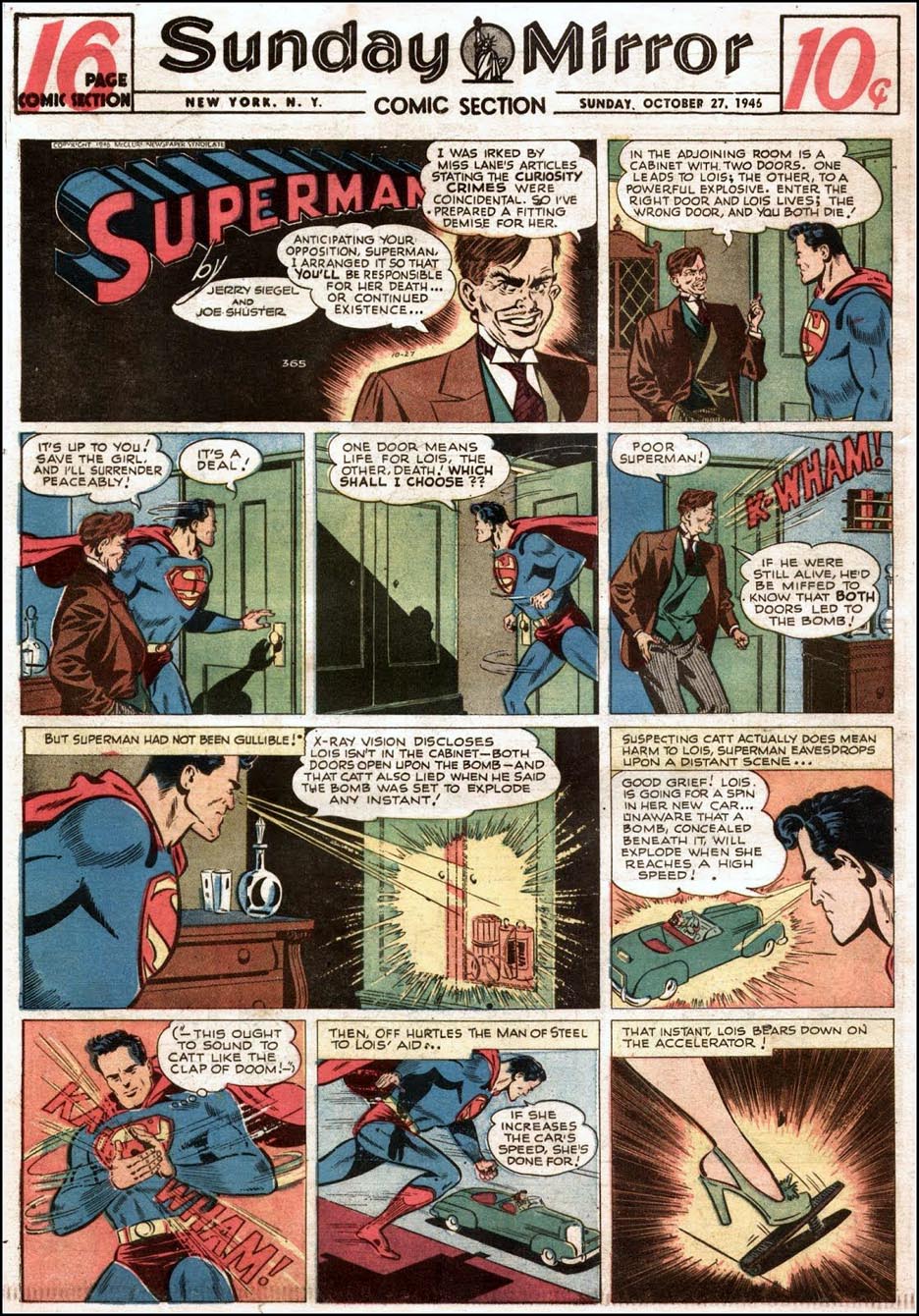
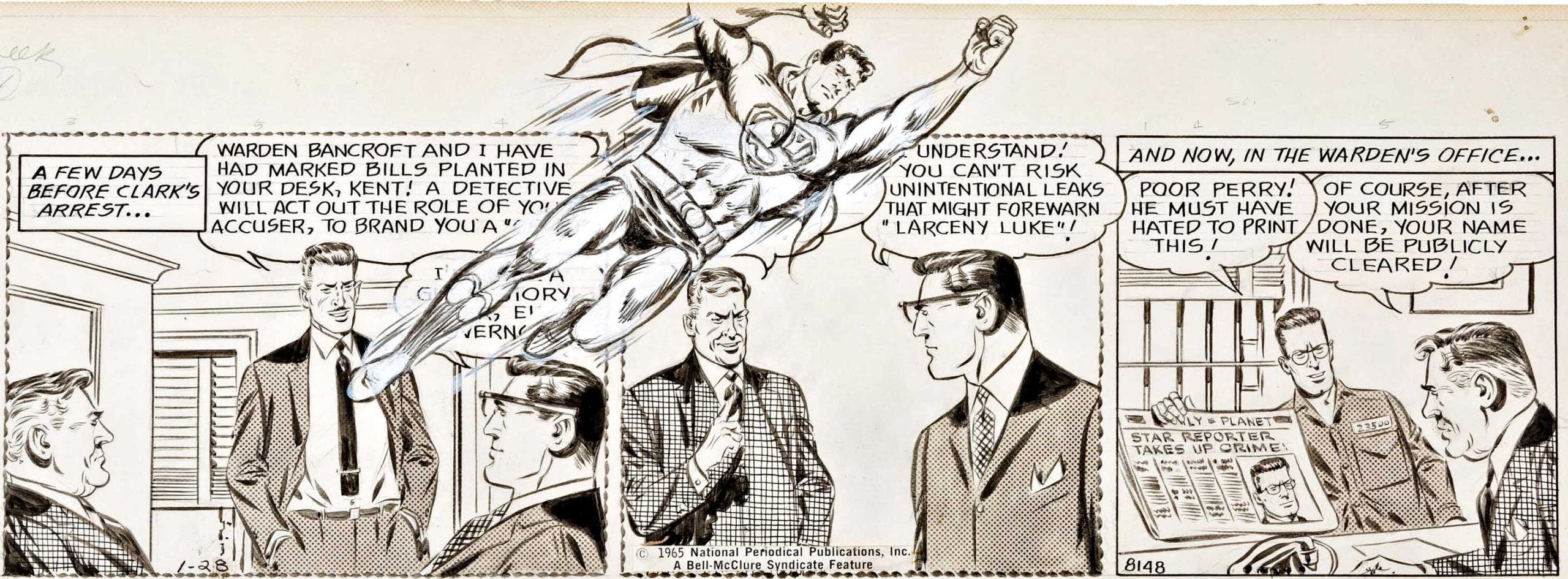
And come to think of it, Golden Age Superman, as originally conceived by Jerry Siegel and Joe Shuster, might still win, but it would be pretty close to a draw.

Early Silver Age Superman, who could move planets around, not so much.

Rude, who worships at the alter of Jack Kirby, and shows reverence for Shuster’s Superman as well, is the perfect artist to illustrate this pairing.

And Granny’s expression in the middle panel? Nothing like a bit of offbeat humor to lighten the mood of a titanic fight, albeit very briefly.

Rude is perfect for that, as well.

Technology gets better (and less expensive), and fans apply their creativity accordingly.

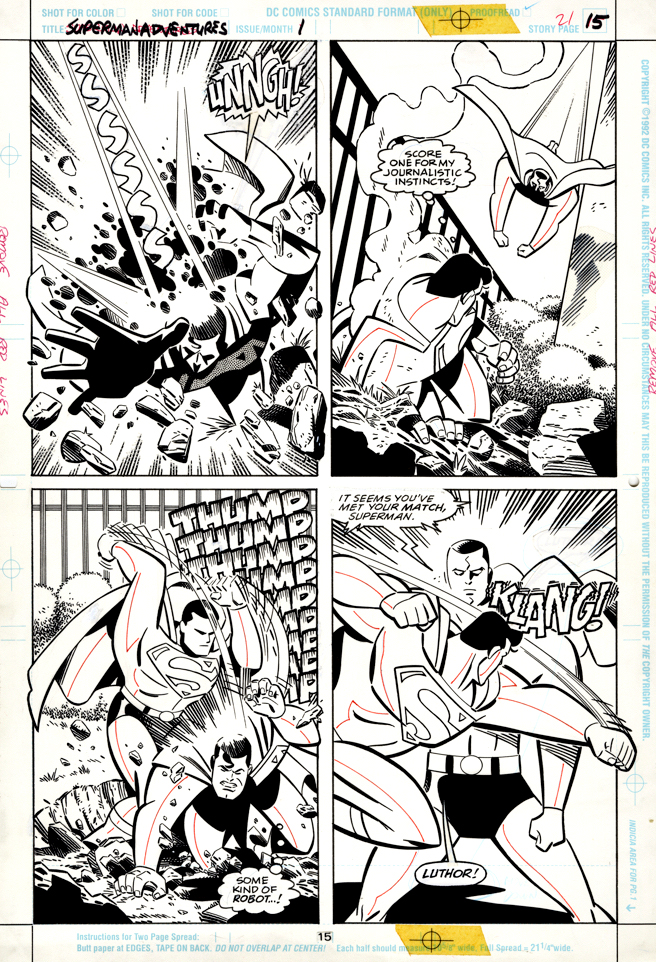
Rich Burchett — Mechanical Monsters

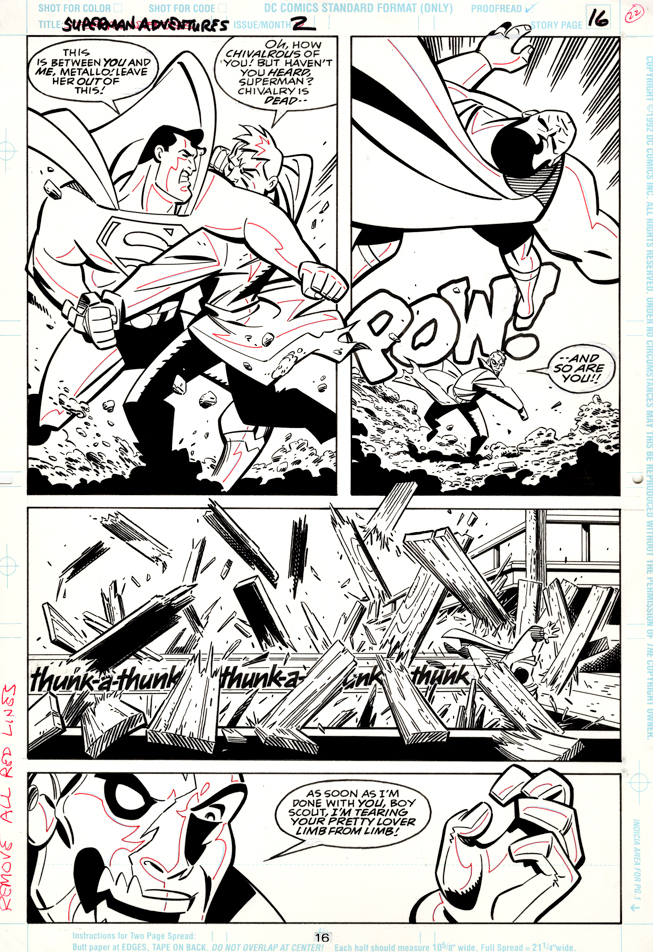
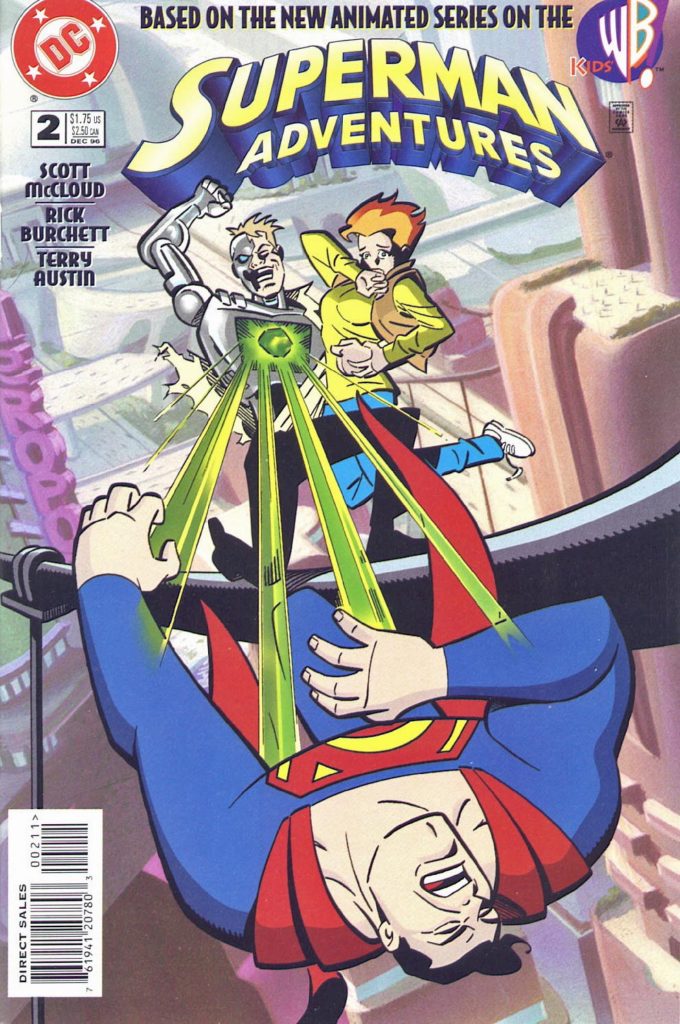
Superman Adventures #1, November 1996

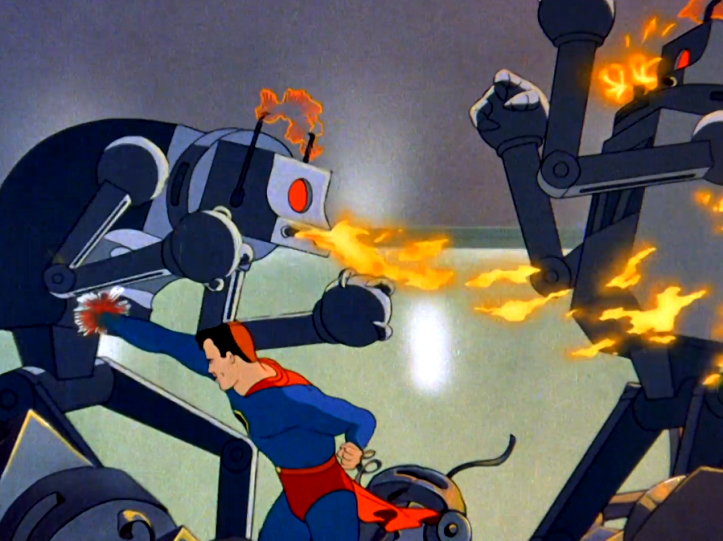
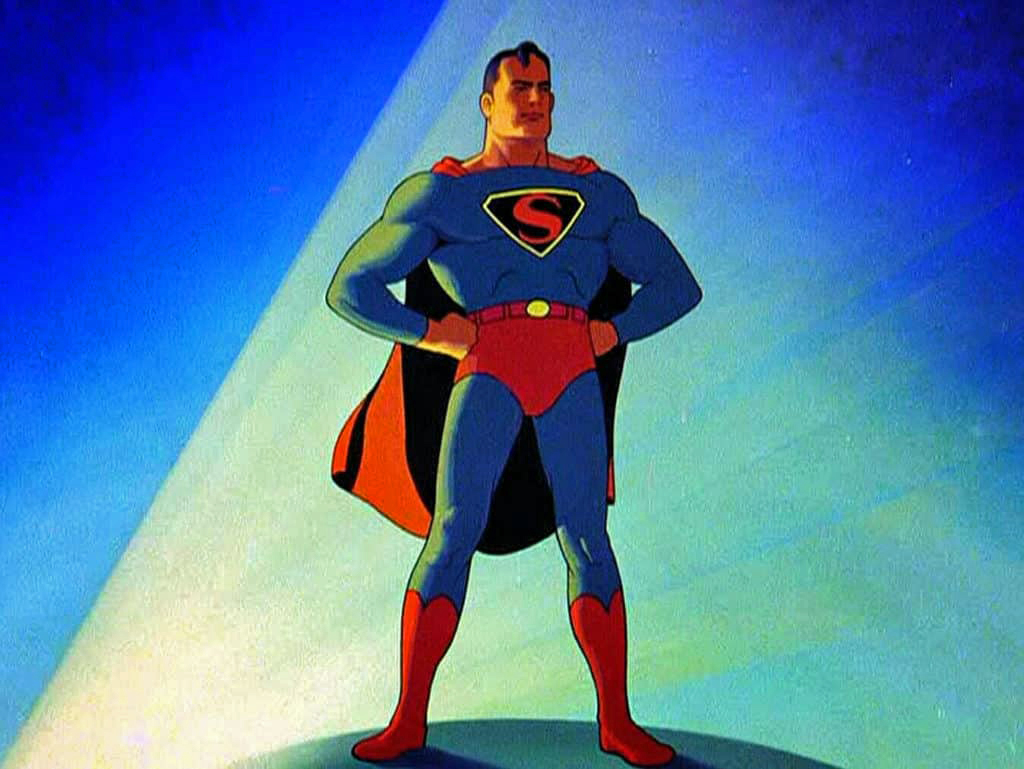
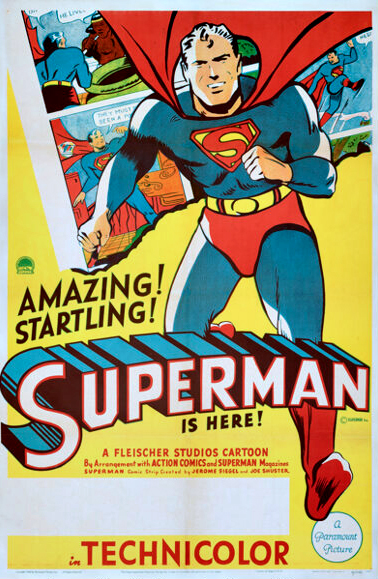
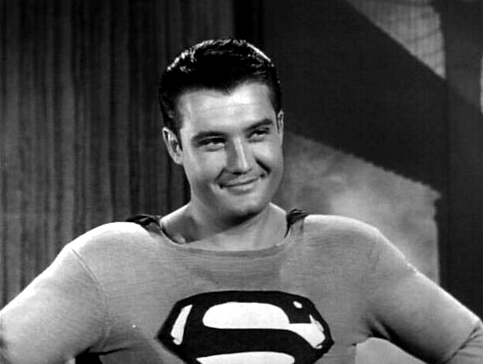
The Fleischer Studio Superman Cartoons — the very first time Superman appeared on the big screen — continue to be regarded as animation legends.

Watching them today, 80 years later, they appear more astonishing than ever. This is especially true when you realize how much the studio was able to accomplish with the technology of the day.

The best known — and perhaps highest regarded — of these 8 original Fleischer shorts is the second one, “The Mechanical Monsters.”

Superman vs. an army of robots?

What’s not to love?

So it’s only fitting that the first issue of Superman Adventures, adapting the contemporary (1996) animated series, features Superman battling… an army of robots.

Writer Paul Dini and artists Rich Burchett and Terry Austin provide us with an action-packed “all ages” adventure, which includes Superman fighting a fairly powerful Superman robot.

Superman vs. Superman?

What’s not to love?

Side note: Superman The Animated Series, coming in the shadow of the phenomenal Batman animated series, doesn’t get enough love. My daughter and I watched them all. It’s a terrific version of Superman. Trust us on this.

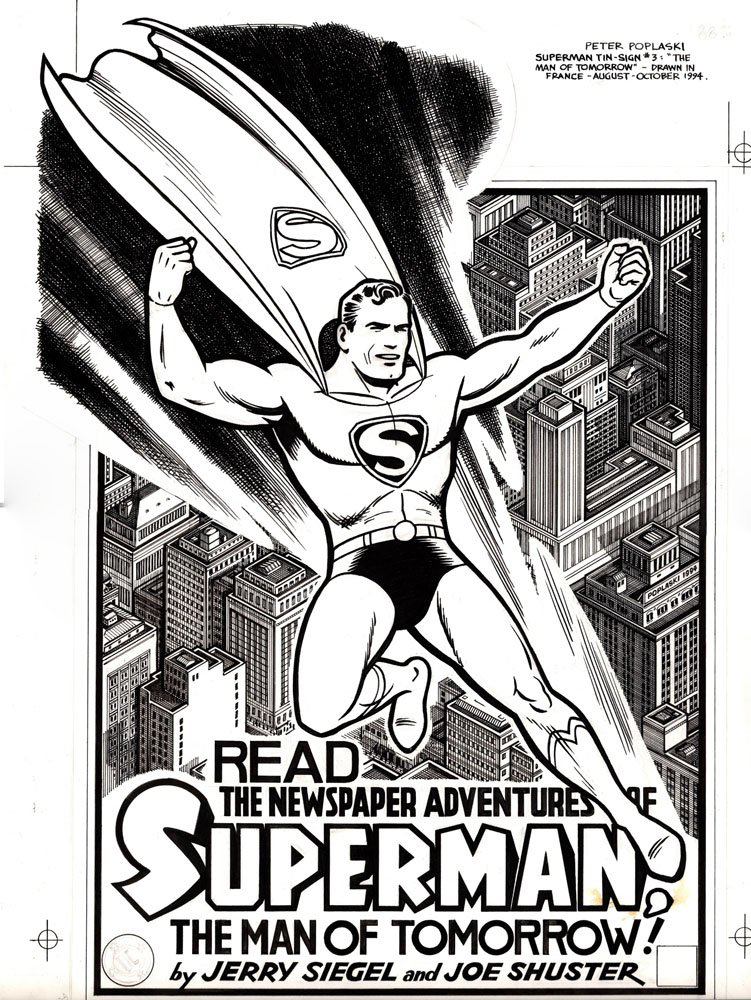
Pete Poplaski — Superman’s Golden Age

Superman Retro Advertising Tin Sign, 1994

Nostalgic collectible tin advertising signs became all the rage in the 1990s.

At first, “reprints” of authentic signs started popping up at flea markets and street fairs. Many were classic brands and logos, some long defunct.

Shortly thereafter, inventive entrepreneurs created new signs designed to emulate the retro look and feel of the classics. You can still find many of these at shops and vendors that specialize in nostalgic candy, soda, etc.

Kitchen Sink, publisher at the time of the Superman and Batman newspaper strip reprint collections, issued two very cool Superman “advertising” tins designed and illustrated by the amazing Pete Poplaski. (This one is marked #3, but I’ve only seen two, so I’m assuming at least one design was tabled.)

As with nearly all of Pete’s illustrations, everything you see, including the lettering, is fully hand drawn. (The line detail on the buildings alone is astonishing.)

And no one captures classic comic art styles like Pete. (Well, maybe the equally amazing Paul Mavrides, but that’s a tale for another day.)

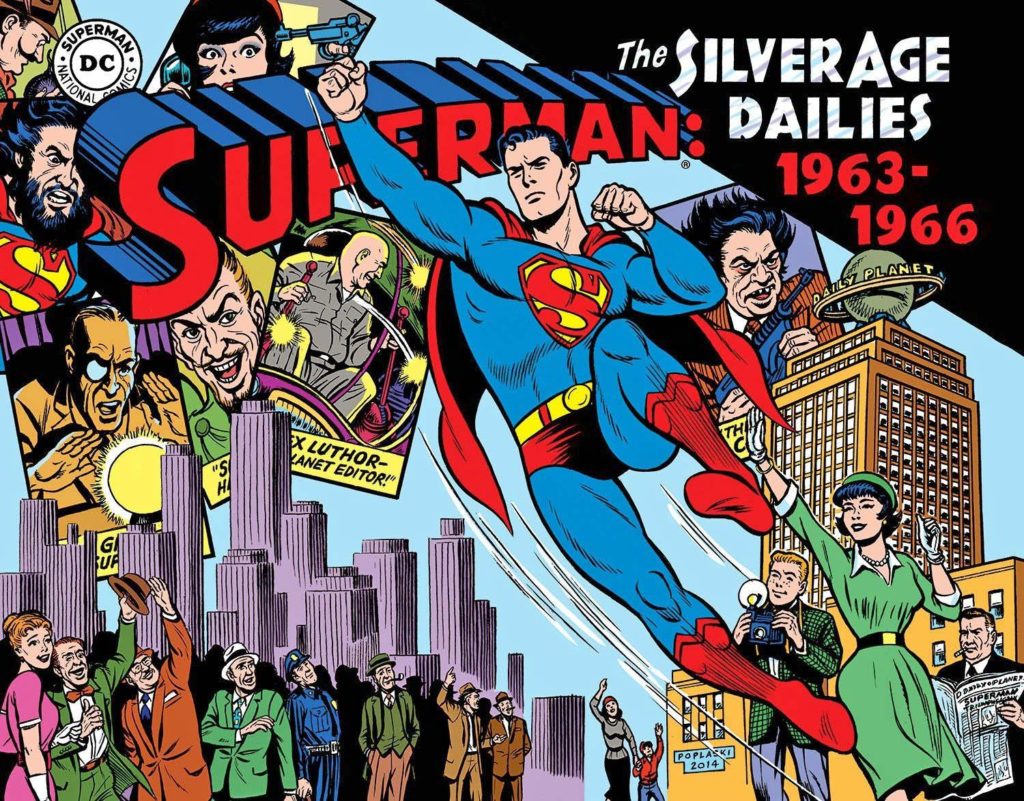
As mentioned previously, when we picked the DC strip reprint rights at IDW in 2013, Pete was our first choice to create all the cover material. 

And, as always, he knocked it out of the park.

Michael Cho — Happy Days

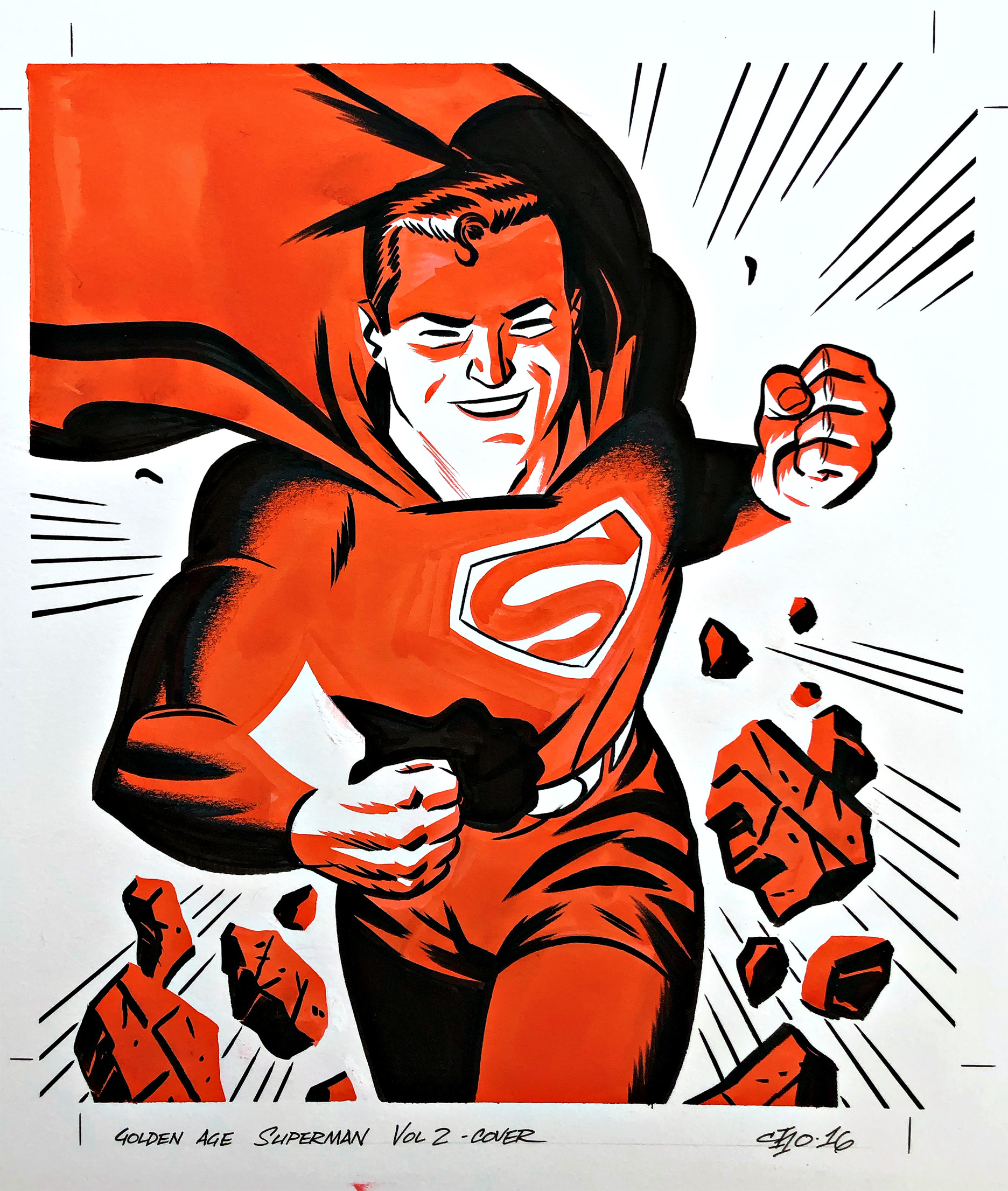
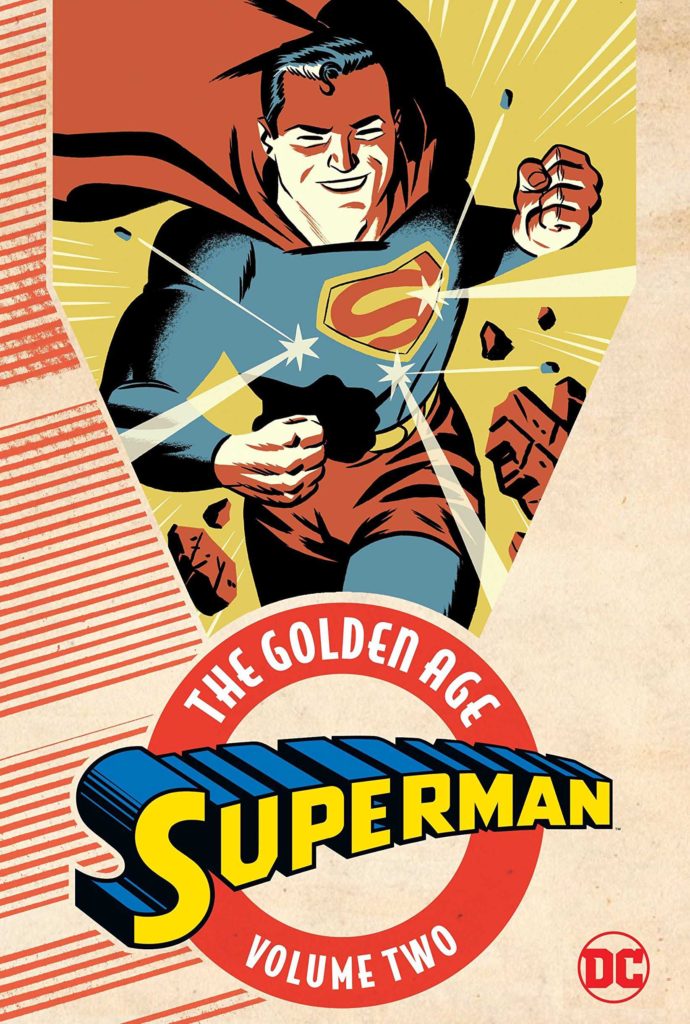
Superman: The Golden Age, Volume 2, Fall 2016

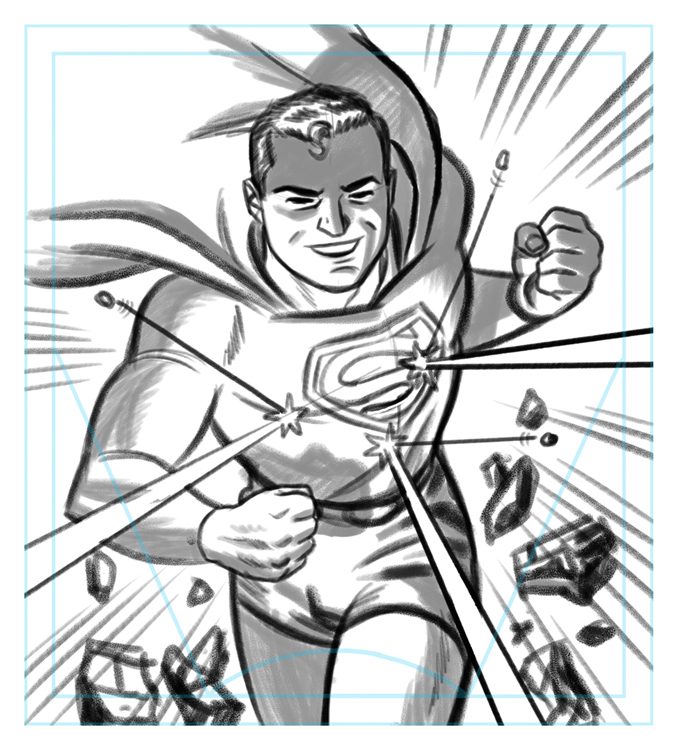
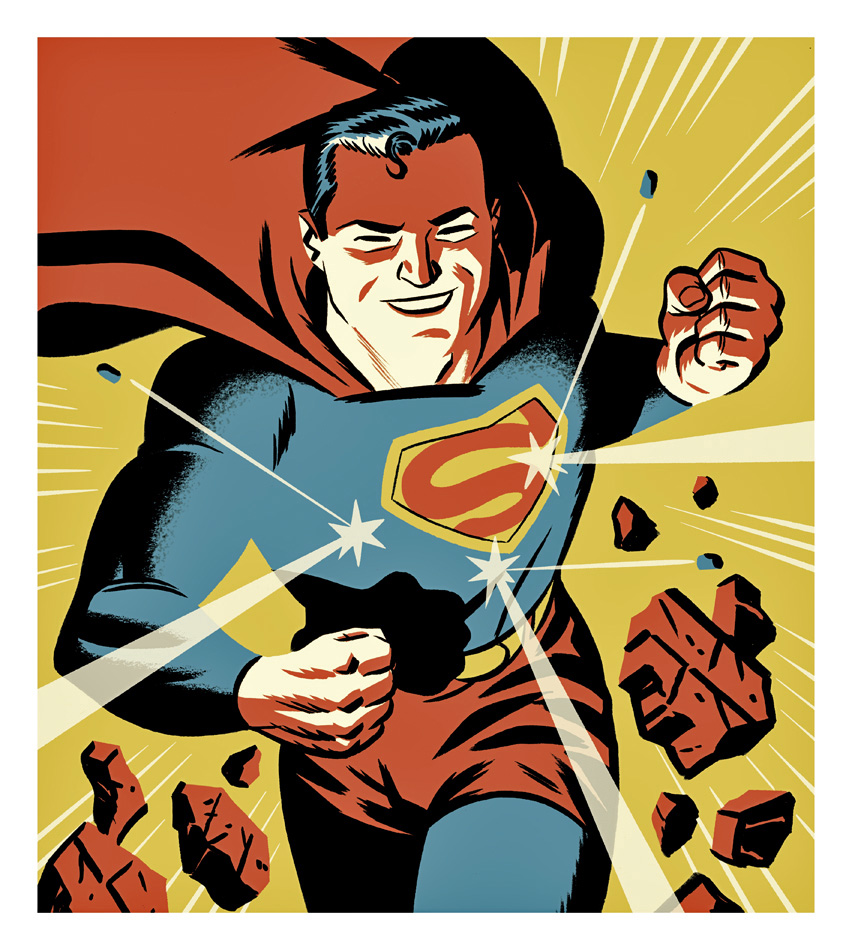
Michael Cho delivers one of the best images this century of the Golden Age Superman.  

Superman. In action. Happy and upbeat.

You’d be happy too if you were the most powerful human on earth — even if you had some serious crime to fight.

I’ve gone on the record that a grim and gritty, introspective (even mopey) Superman is not for me. In other words, most of the modern versions of the character.

Call me old school.

Michael says this early era of Superman is his favorite. It’s certainly among mine as well.

It’s a Superman week here on the blog as we celebrate the 80th anniversary of the debut of the amazing Paramount Fleischer Studios Superman cartoons. Those wonderfully produced animated shorts were the very first time Superman hit the big screen.

In a few days, the most recent filmed version of the character will appear in the re-edited “Snyder cut” of Justice League on HBO.

Don’t take any bets on which version I prefer.

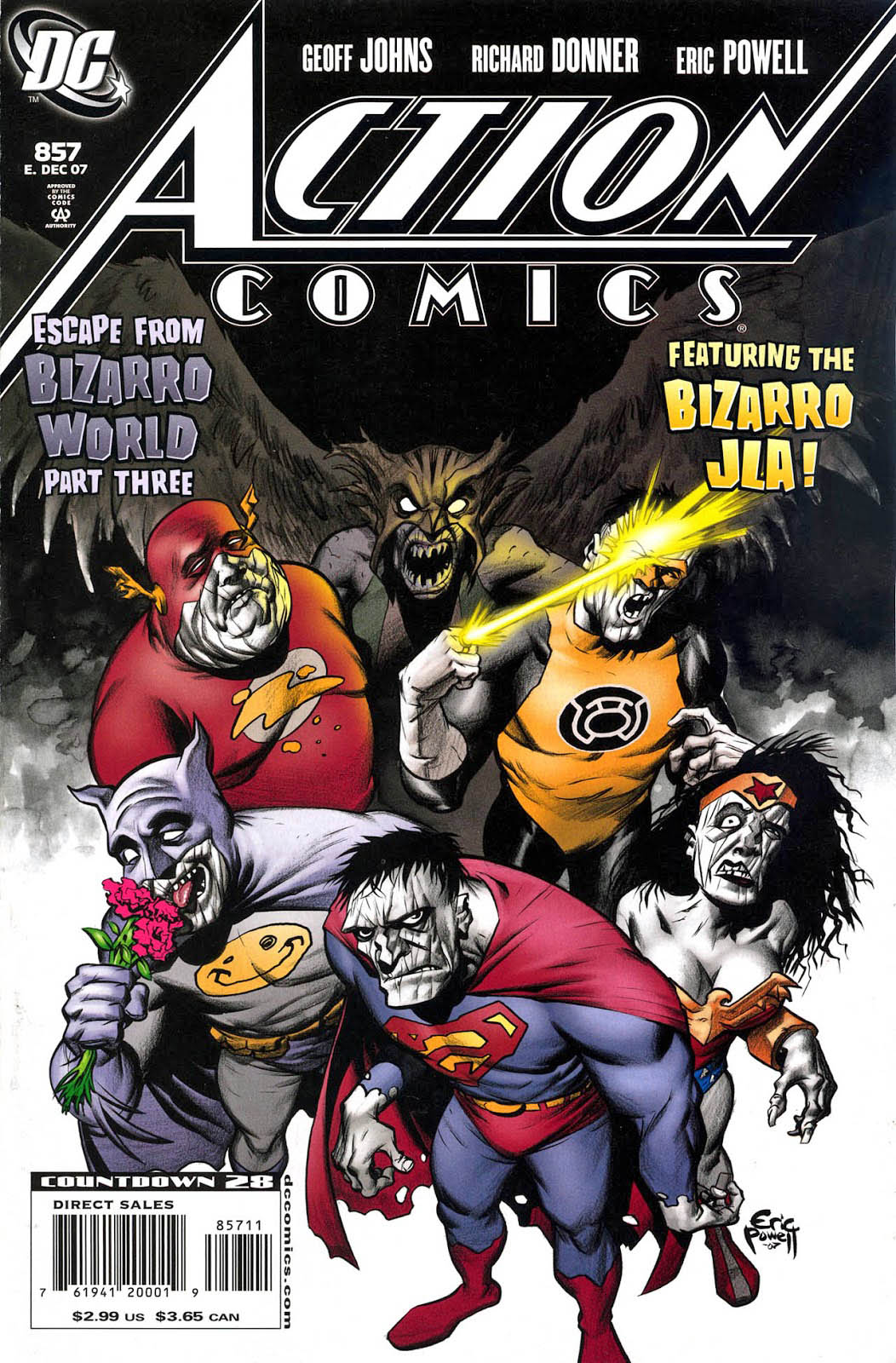
Eric Powell — Justice League Of Bizarros

Action Comics #857, December 2007

Our ode to Halloween and the creatures that often inhabit the comic book pages continues…

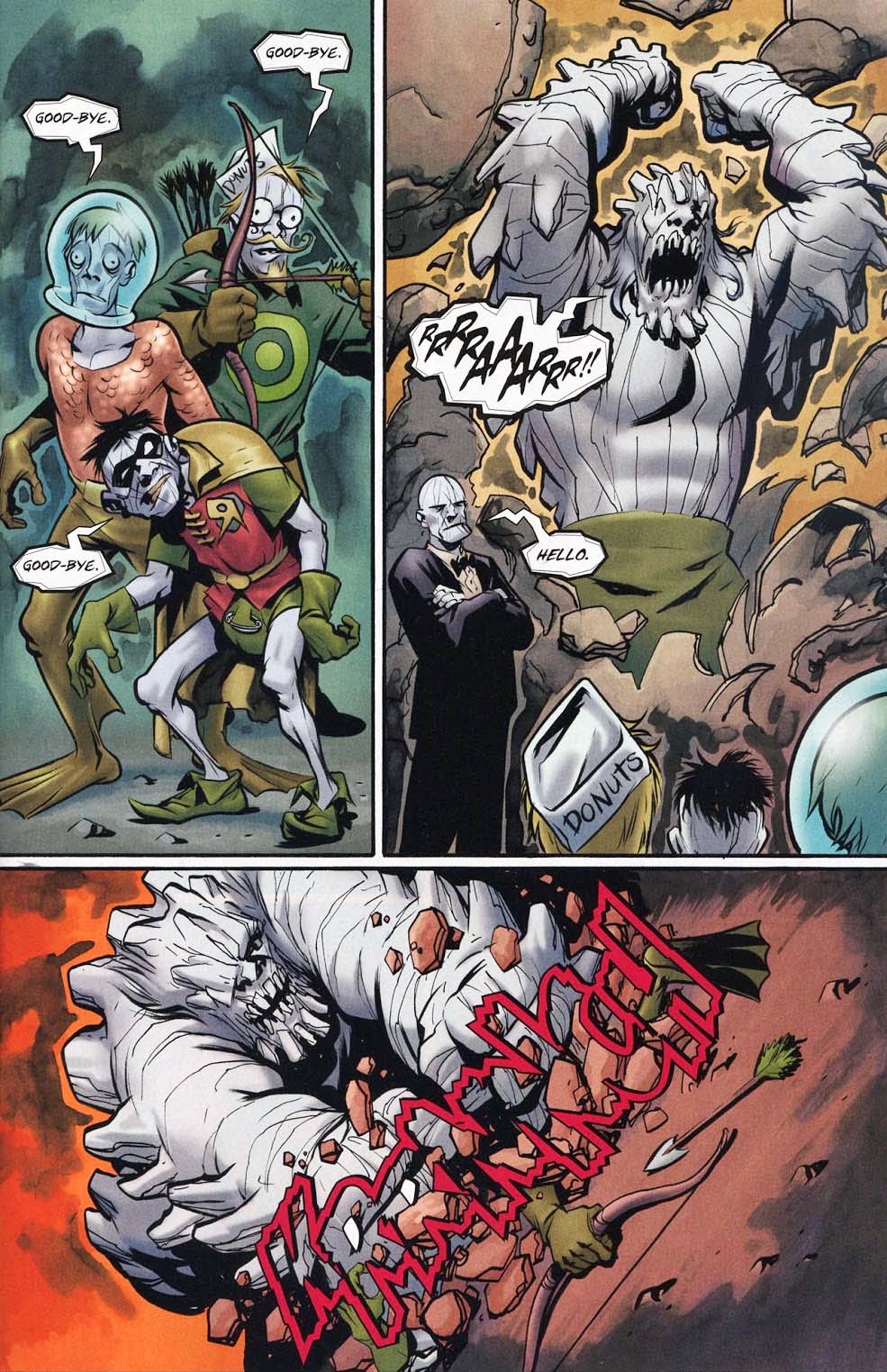
Bizarro Doomsday, at the bidding of Bizarro Lex Luthor, destroys the newly created members of the Bizarro Justice League.

Huh?

Trust me, it’s a wild ride. You just have to read it for yourself. Written by Geoff Johns and Richard Donner (Yes, that Richard Donner), the three-part story unravels (er, unfolds) in graphite, ink and wash-tone in perfect fashion by Eric Powell.

Donuts not included.

Jim Lee — Rescue

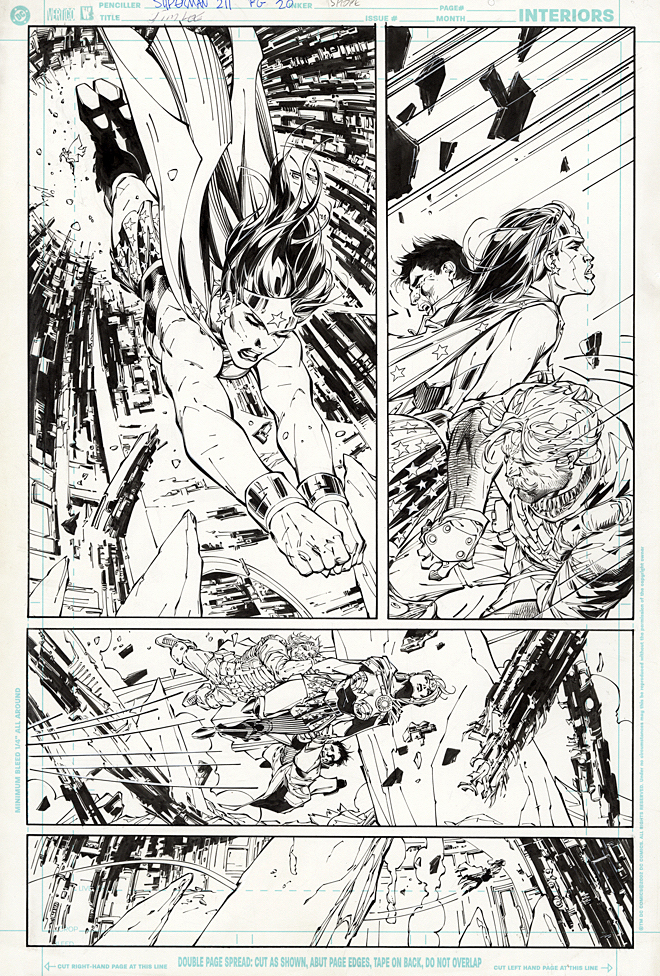
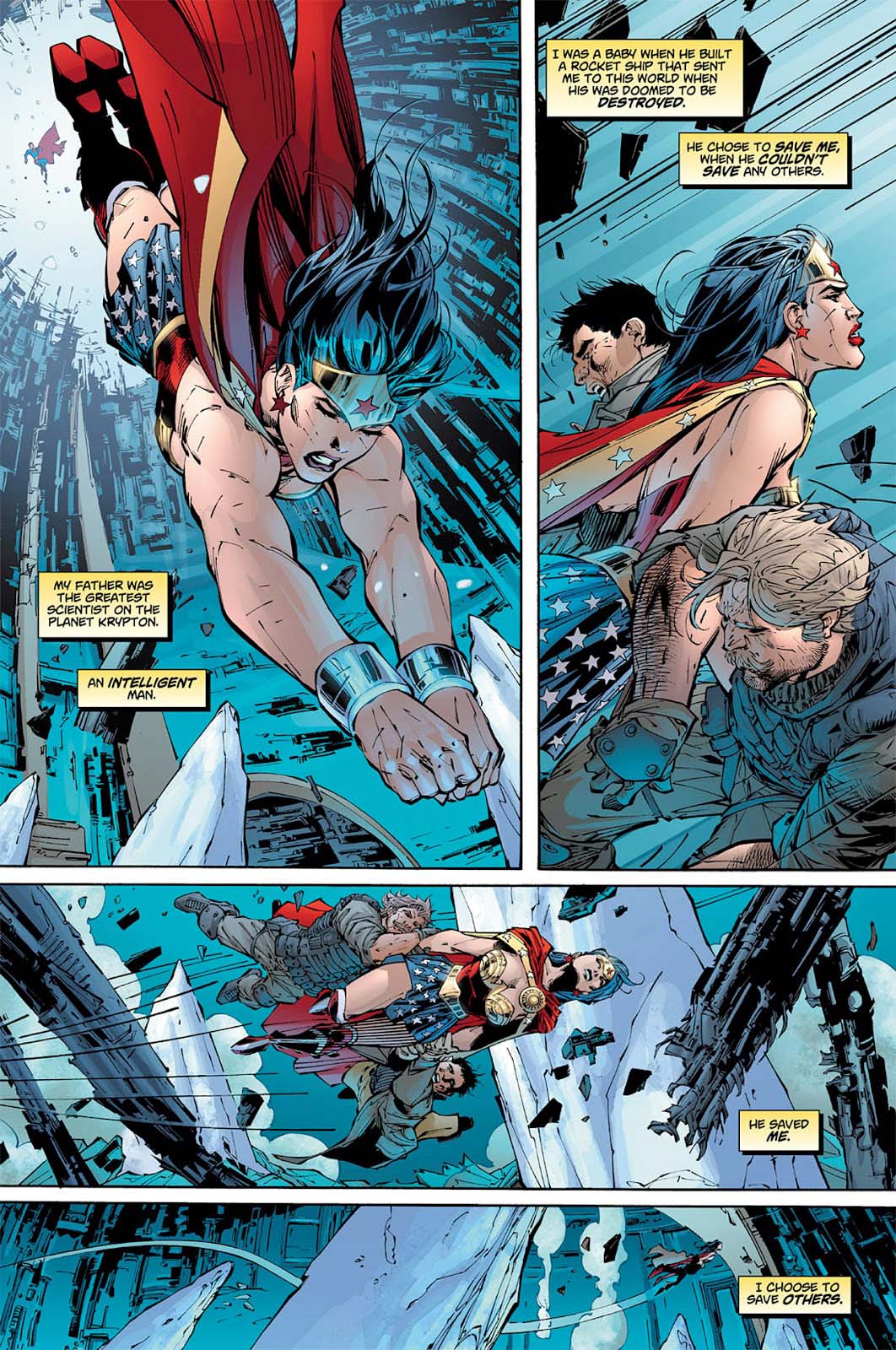
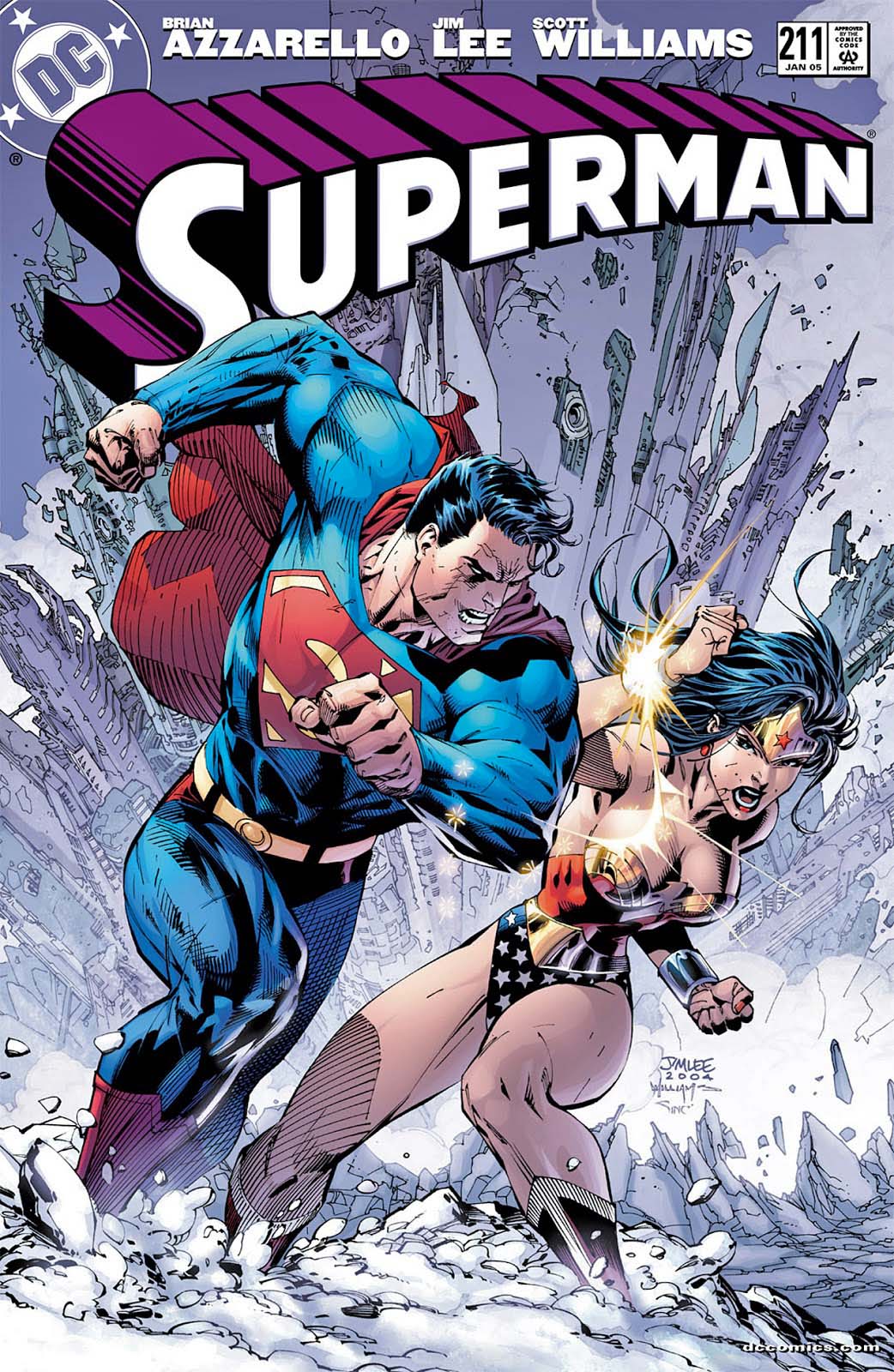
Superman #211, January 2005

Continuing our celebration of Wonder Woman for the next few weeks — no matter when the new film finally releases.

Jim Lee’s 12-issue run on Superman, “For Tomorrow”, is classic. Even though the story itself is not as highly regarded as his Batman “Hush” storyline, the art and storytelling start off pretty great and quickly proceed to spectacular.

Comic Book Resources summed it up:

“Superman: For Tomorrow” is an uneasy mixture of introspection, lamentation, and explosive action (think “Hamlet” mixed with “Godzilla”), Lee’s art only increases in spectacle as the story unfolds.”

Case in point, this issue featuring Wonder Woman: Epic action, glorious detail, creative and dynamic storytelling. Do you get the sense I like the art?

Inks on this page are provided by the talented Sandra Hope, filling in for Scott Williams. Based on high quality of the finished story, I’m certain there were some deadline struggles along the way.

Re-reading the entire story today, it’s also better than I realized the first time around. That said, the Absolute Edition is definitely worth owning for the art alone.

Kevin Maguire — Heroes and Villains

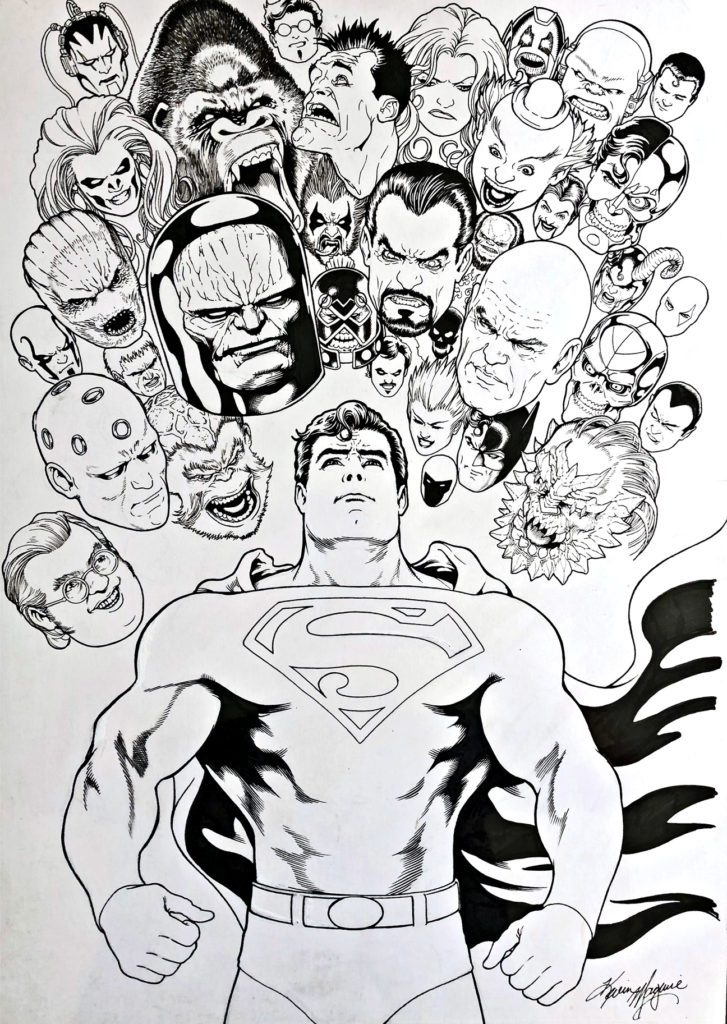
Superman Poster, 2017

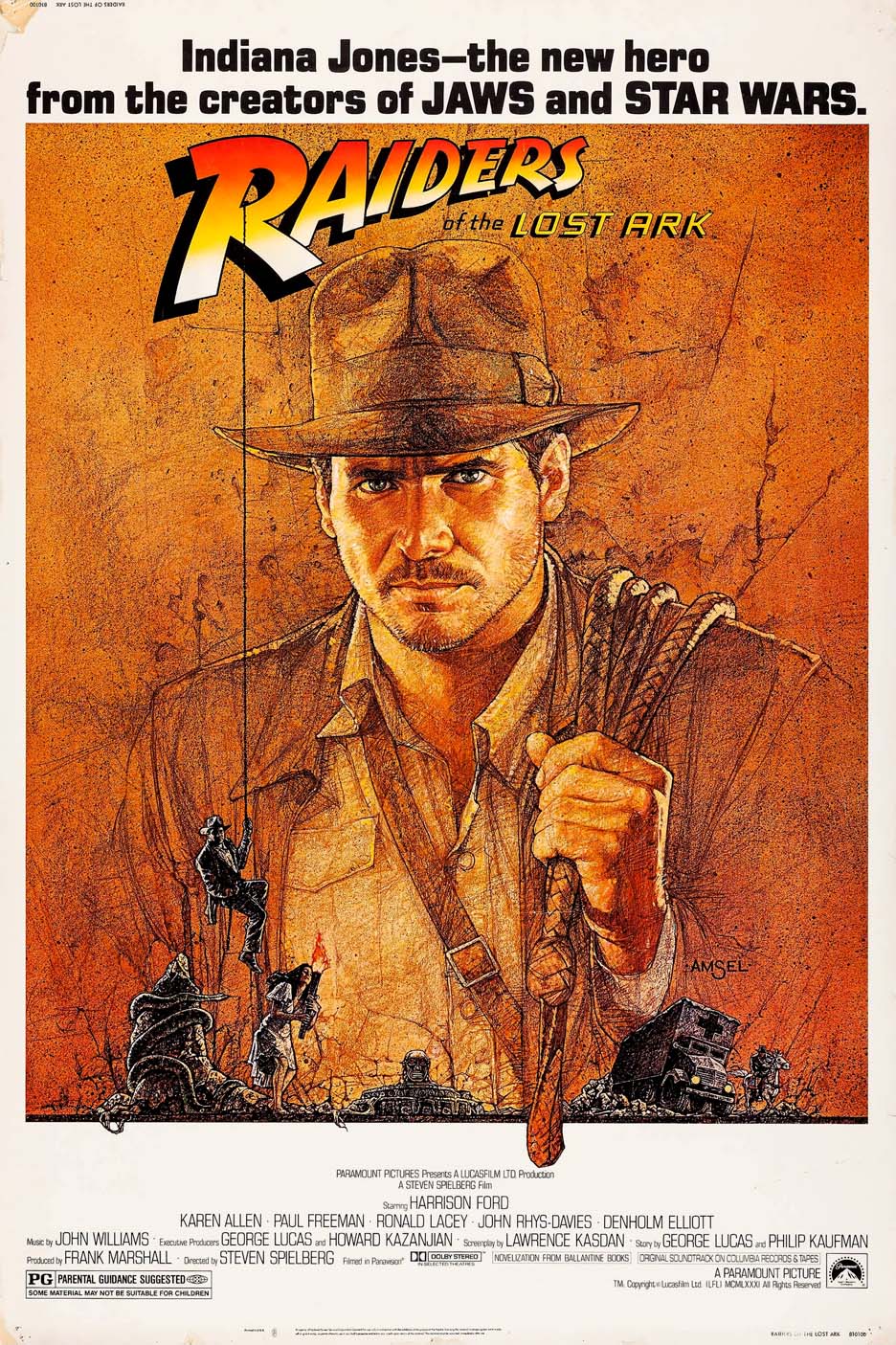
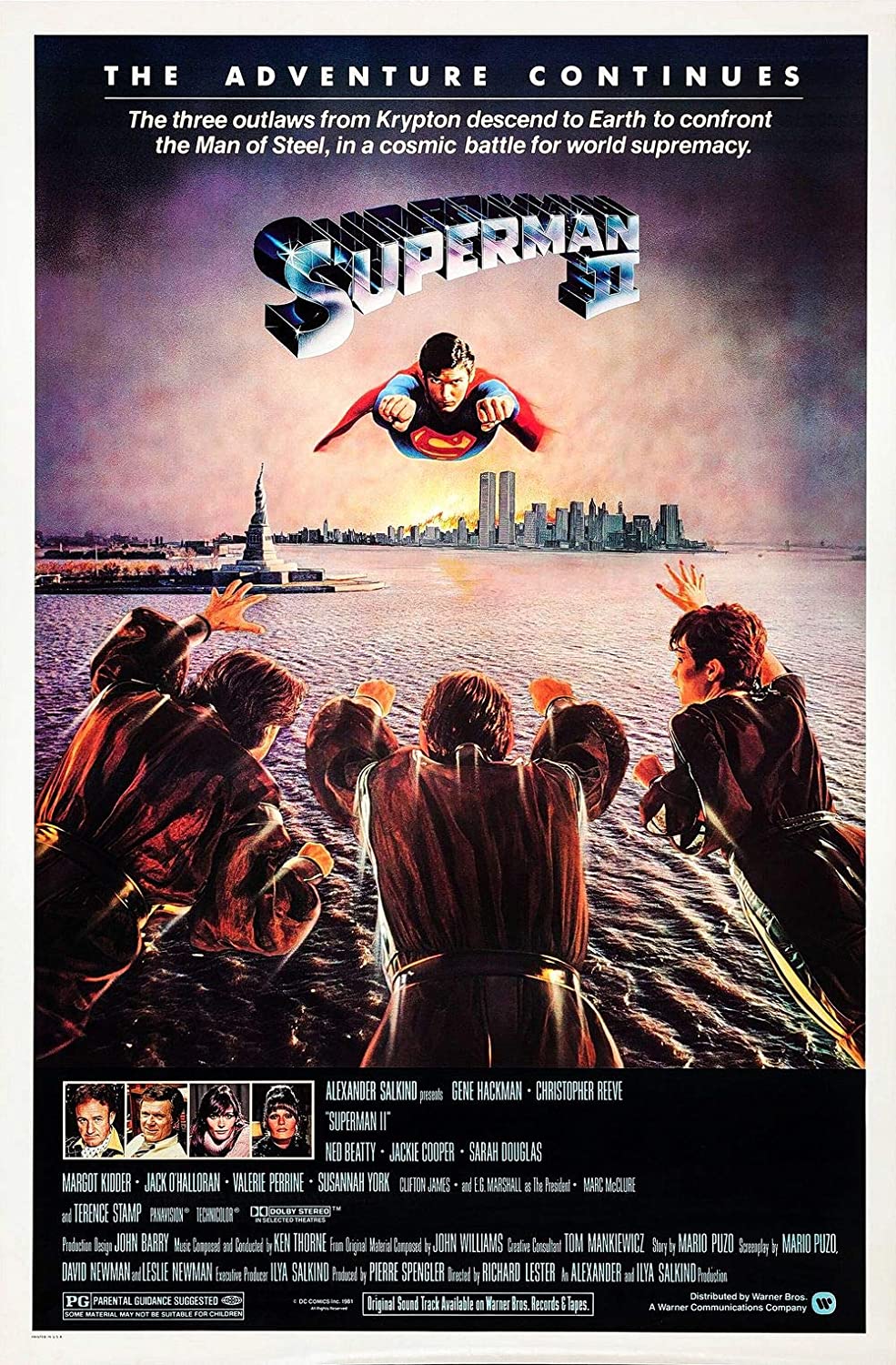
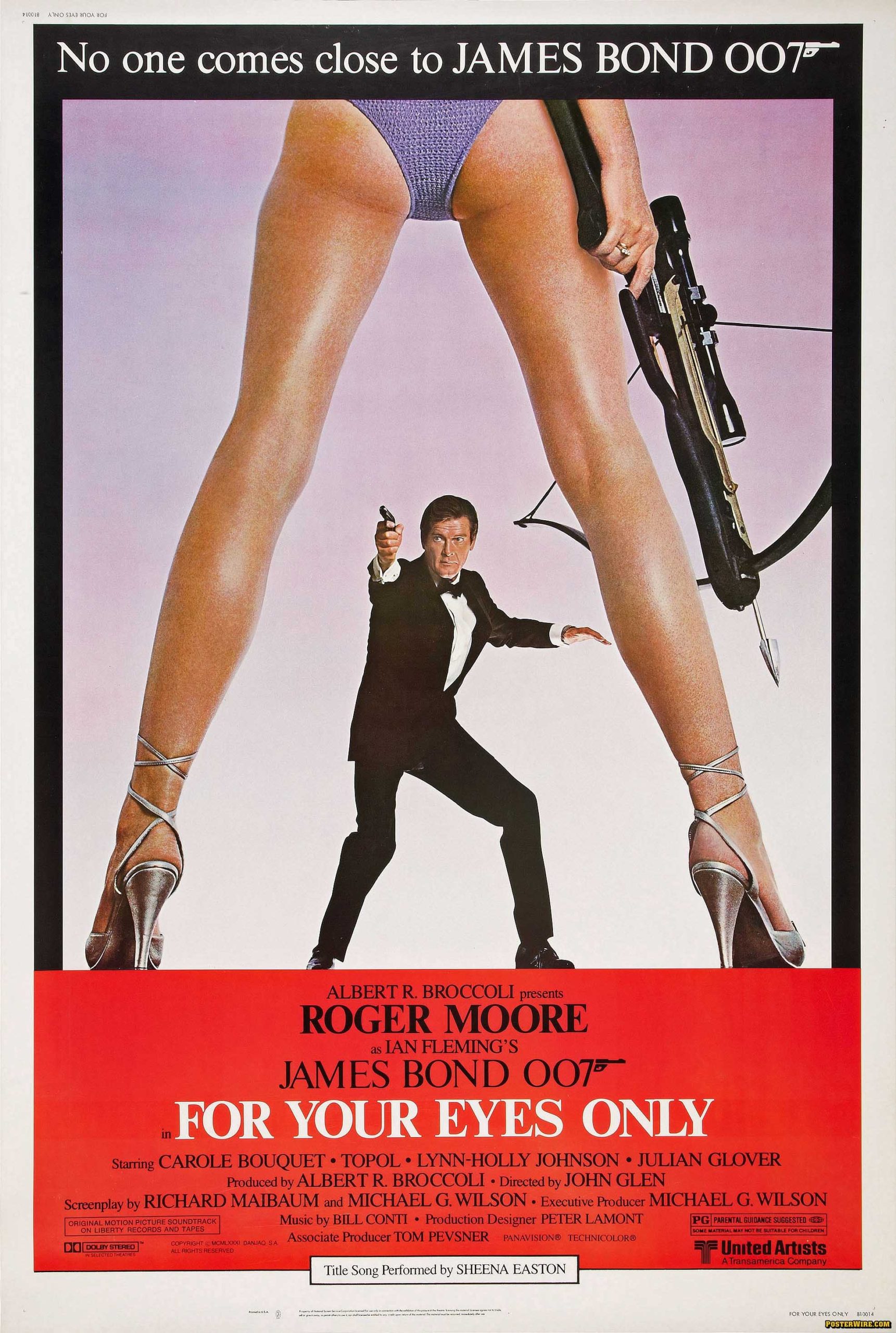
For those movie buffs who think that the action blockbuster crowding out other films is a modern phenomena, let’s discuss June 1981.

6/12 — Raiders of the Lost Ark opens.

6/26 — James Bond: For Your Eyes Only opens.

And the week in between?

6/19 — Superman 2 opens.

All three pretty good, and one certifiably one of the greatest adventure films ever made. (I don’t have to say which one, do I?) That’s pretty much the entire summer, right there.

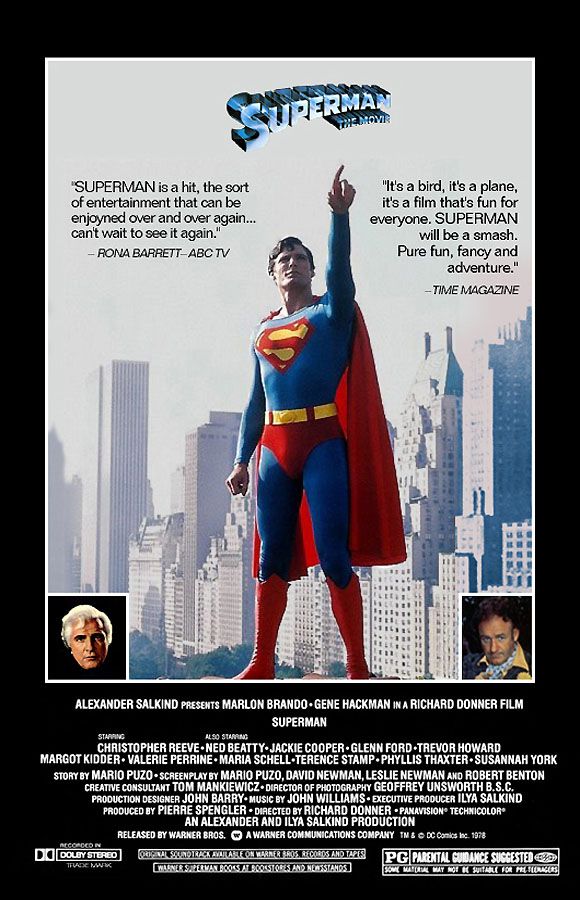
I’ve always had mixed emotions about the first two Superman films. (No mixed opinions about films 3 and 4. They are terrible.)

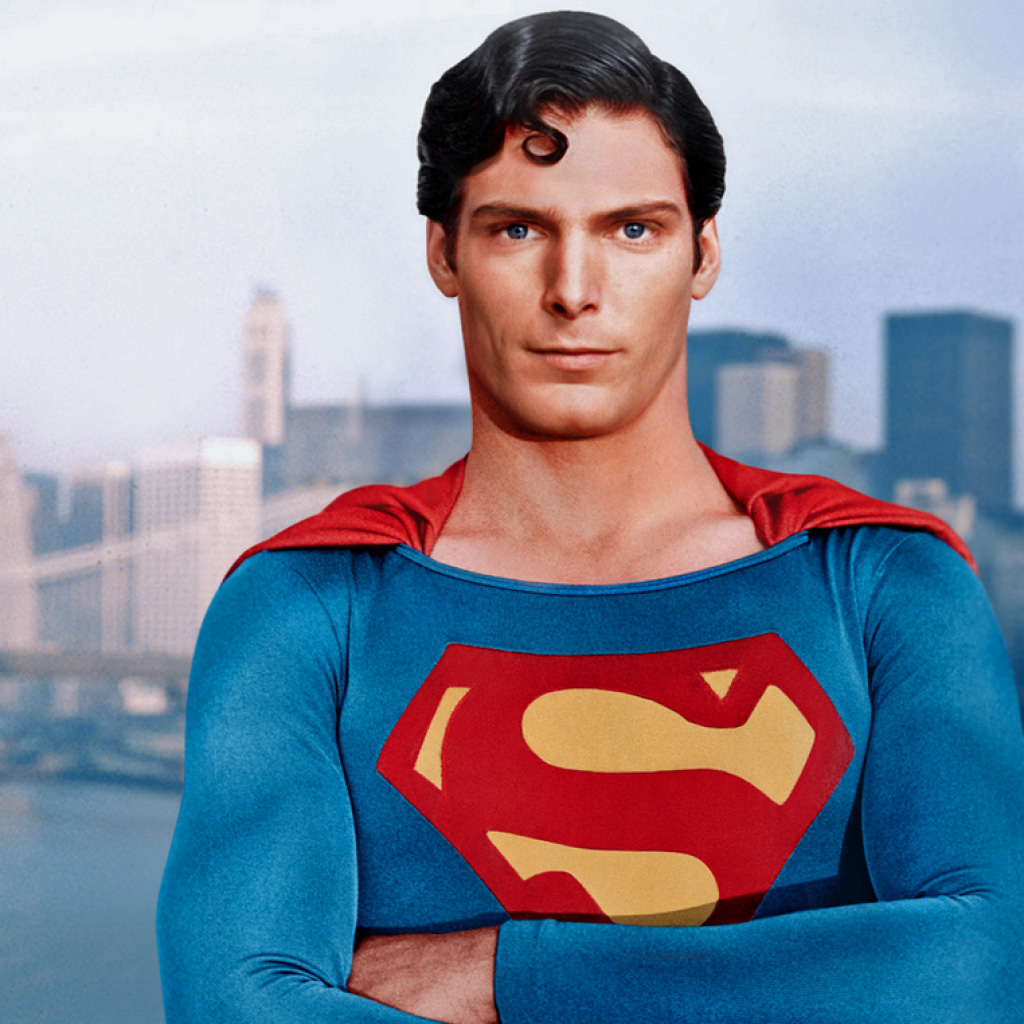
Christopher Reeve as Superman AND Clark Kent, is terrific of course, and some of the action sequences and effects are great in both. And, as a dyed-in-the-wool New Yorker, I enjoyed the location filming, especially the actual Daily News building standing in for the Daily Planet. Plus, Lex Luthor and the Phantom Zone criminals. (I loved the Phantom Zone.)

Some of it, however, is pretty cheesy. Even by 1978/1981 standards. If these films were meant to cleanse the palate of the completely camp 1966-68 Batman TV series, they didn’t completely accomplish it.  There are definitely some groaners in here. (Miss Teschmacher!)

But…  Would I rather watch these films as say compared to the modern film versions of Superman? Ha. Easy choice. It’s not nostalgia clouding my judgment when I say that.

The first two films capture the spirit of the Superman character in a joyous way. And although character has often been terrifically well-represented television since then (Superman Animated, anyone?) the recent films are mostly… ugh. Just ugh.

Someday, a reboot will fix that. You can’t keep a good Superman down.

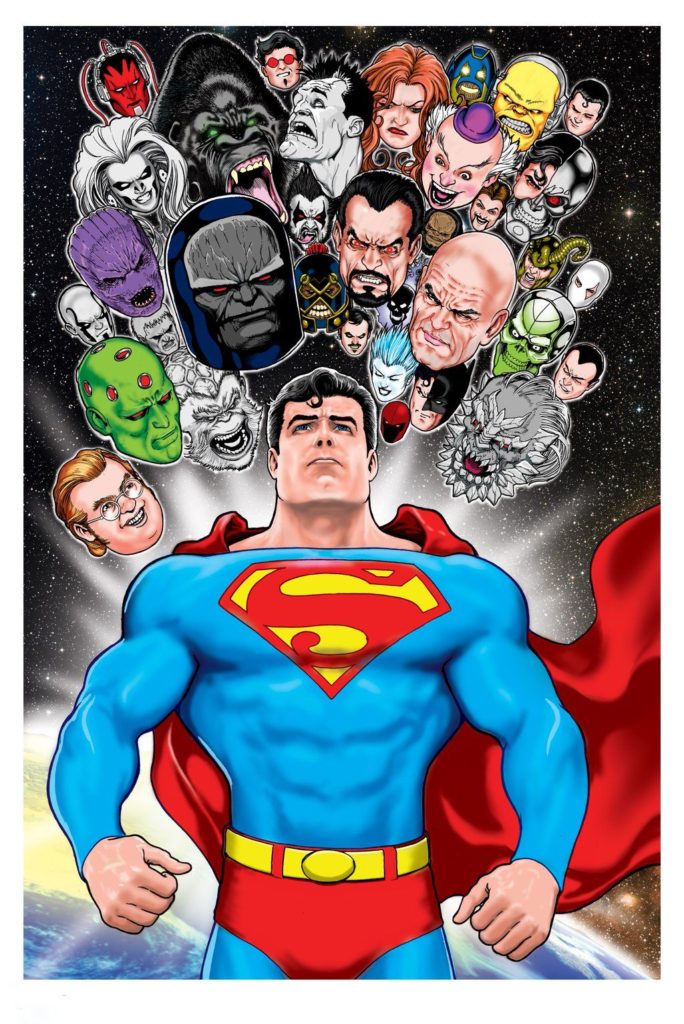
Until that time, we will always have art, including this magnificent poster by Kevin Maguire featuring Supes and most of his key villains. Love the art, dislike the coloring. Over-rendered, and not well executed, specifically on Superman’s facial features. (Almost looks like a completely different face.)  Modern coloring is like film CGI. Less is usually more.

Great art, though. Who said everything looks worse in black and white?

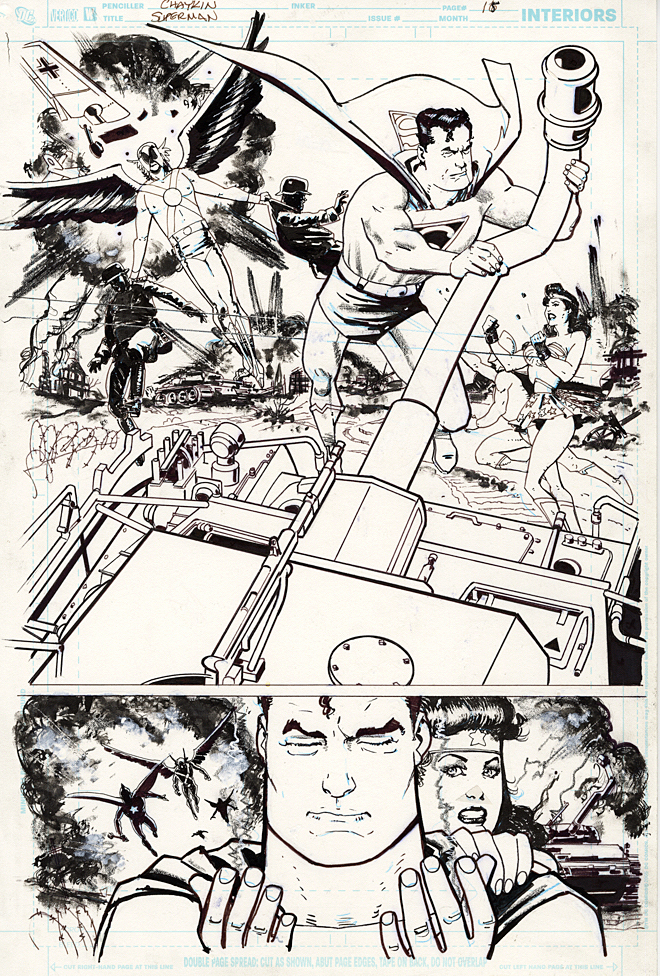
Howard Chaykin — JSA At War

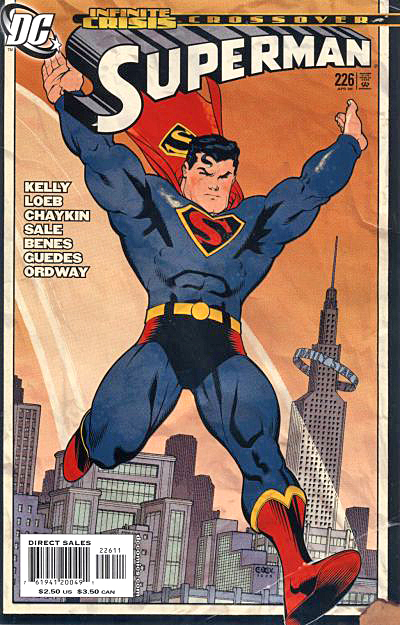
Superman #226, April 2006

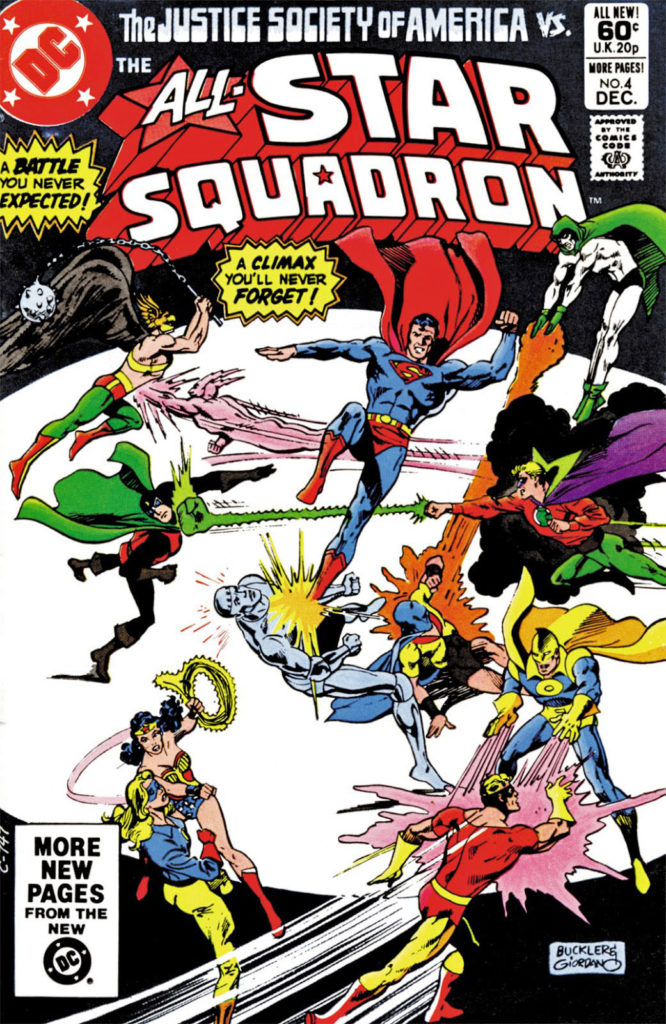
Continuing our multi-week celebration of the 80thanniversary of the Justice Society of America.

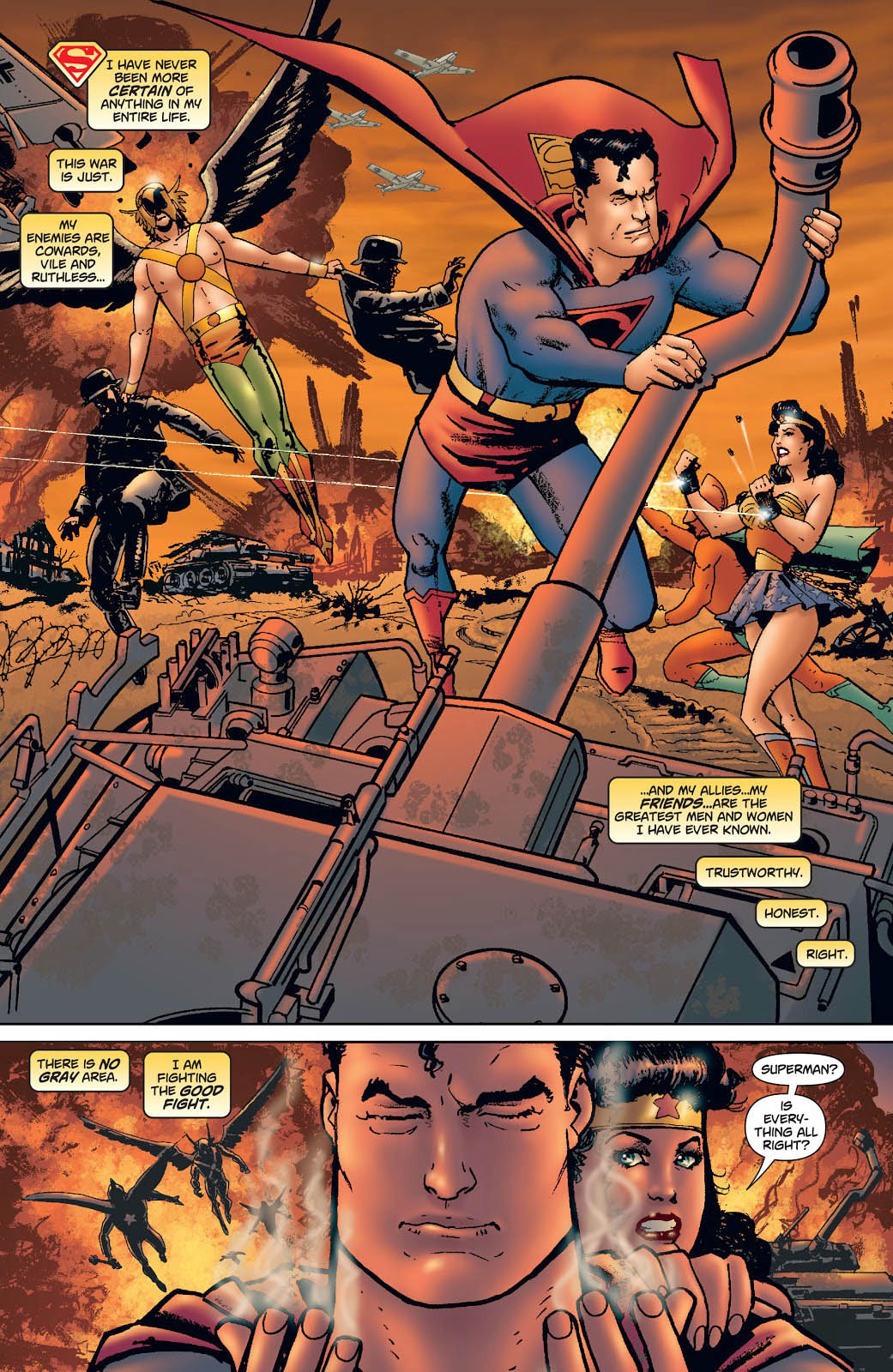
This is great action splash from Howard Chaykin, and a rare treat to see him illustrate classic superheroes.

As part of the Infinite Crisis storyline, Supermen from two different universes clash, each one living the life the other. When one goes to halt the Nazi atrocities of World War 2, he learns the difficult truth about Hitler’s super stalemate courtesy of the Spear of Destiny.

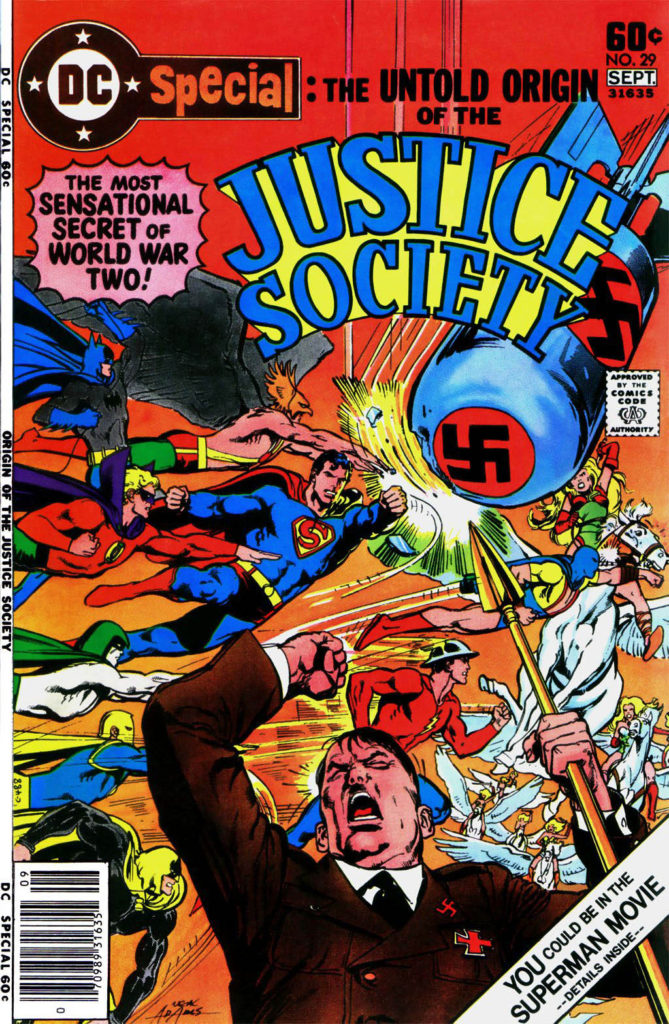
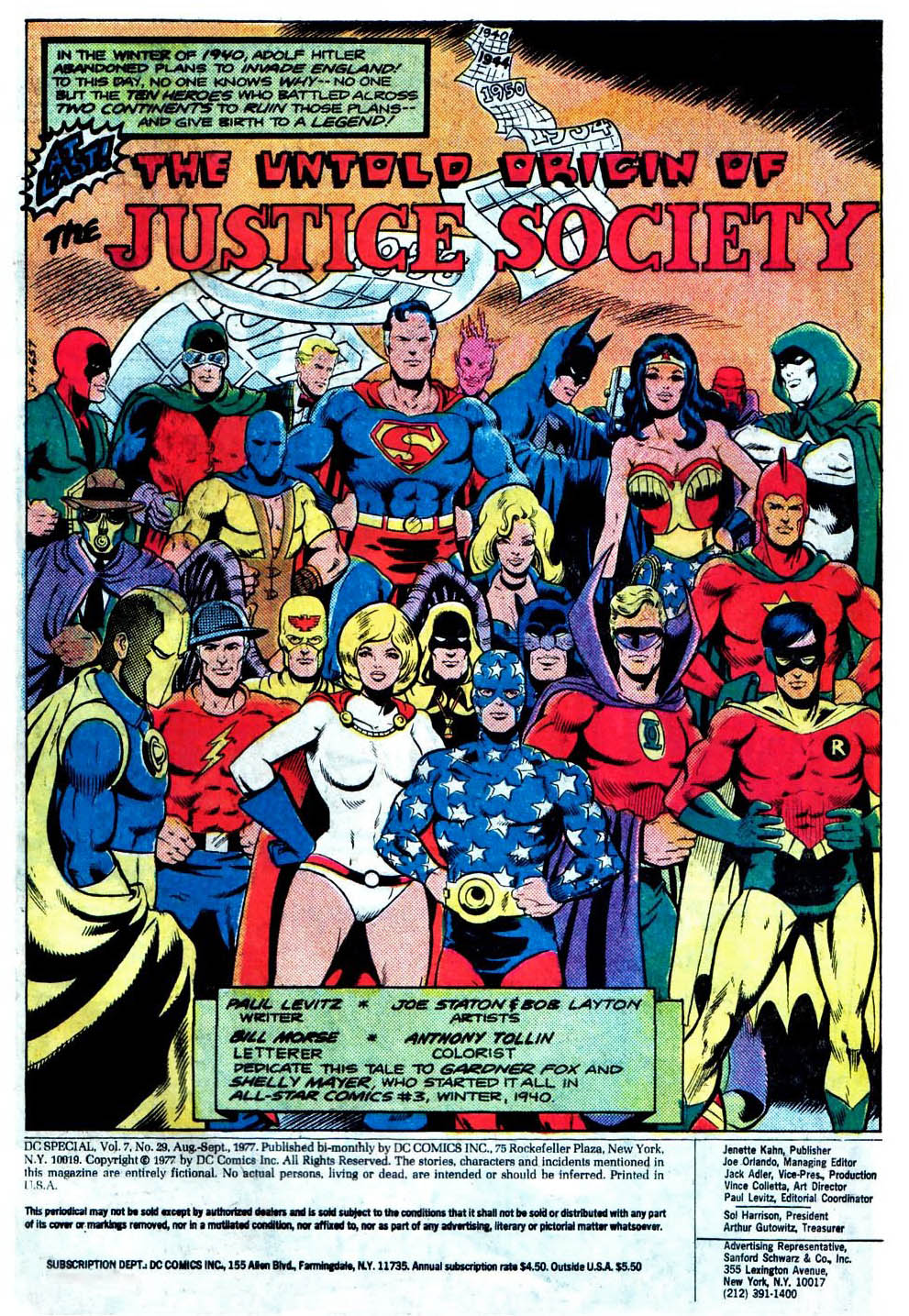
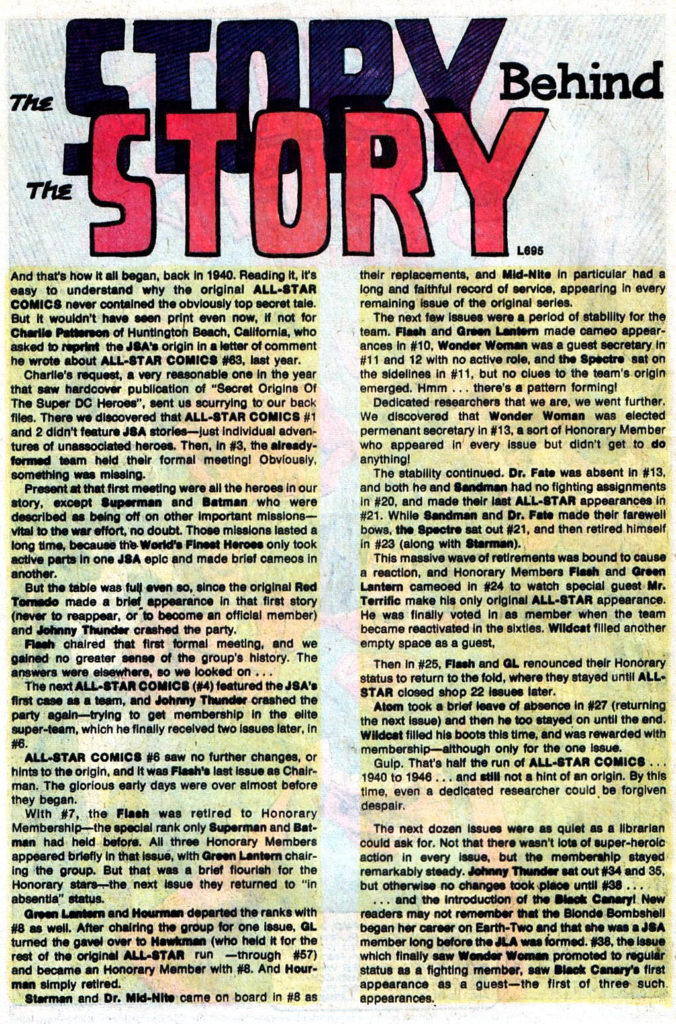
It took more than 35 years to tell the origin of the Society, and Paul Levitz created a plausible scenario that explained why America’s heroes simply didn’t use their powers to end the war in favor of the Allies quickly and decisively. Spoiler alert: It involves magic. 

Roy Thomas and other writers ultimately ran with (and expanded) the concept, and writer Joe Kelly incorporates this premise into this Crisis Crossover.

This is the final issue of this specific volume of Superman, launched nearly 20 years prior, as part of the “John Byrne reboot.”

Dan Jurgens — Unfair Fight

Booster Gold #8, June 2008

Continuing our celebration of the 80th anniversary of the Justice Society of America, with each new post featuring a different classic JSA character.

Today’s riddle: What do comic art collectors miss the most that comic book editors and publishers miss the least?:

A: Word balloons on the art board themselves.

Digital lettering is an amazing boon for comic book production, and a disappointment for many art collectors, myself included.

If you work in the editorial department, of course, no one misses the endless FedEx packages trafficking from penciller to letterer to inker, and back. Ugh.

But… the art boards themselves feel less complete without them. These are, after all, comic book pages. Comic books are pictures AND words.

Modern comic book original pages are analogous to silent films. If the visuals communicate well enough, you can interpret the storytelling without words. (And there shouldn’t be too much of that anyway. But I digress.)

Which finally gets us to this page by the great Dan Jurgens and Norm Rapmund. Superman is about to break the neck of  fellow hero Wildcat, while Maxwell Lord looks on gleefully.

Pretty easy to figure out that Superman is either under some sort of mind control — or he’s not Superman at all. (Spoiler alert, it’s the former, and Wildcat survives.)

This is a great splash from a great art team on a great series. As mentioned in a previous post, I’m definitely a fan of this run of Booster Gold, which ended perhaps a bit prematurely because of “The New 52” reboot in 2010.
Wallace Wood — All Star

All Star Comics #59, 1976

All Star Comics, featuring The Justice Society, returned for the first time in 25 years, and the legendary Wallace Wood returned to superheroes for the early issues as well.

“Return” for Woody is a bit of an overstatement, since outside of his own creation, T.H.U.N.D.E.R. Agents, Wood’s work in superheroes was limited. Ironically his most lauded superhero work in the DC universe is Superduperman, an EC Mad Comics parody from 1953.

In All Star, editor Joe Orlando (and Wood’s former protégé at EC) provided Woody the chance to play with many of DC’s classic characters, including Superman, and he was given a chance to help set the look and feel of at least one enduring new one, Power Girl, the “Supergirl” of Earth Two. On this great battle page, we have Hawkman, The Star-Spangled Kid, and Doctor Mid-Nite in all out action.

As demonstrated by the art itself, Wood is responsible for the pencils and inks on this “second” issue, with Rick Estrada providing rough breakdowns and receiving credit as “designer” on this issue.

Woody left the title after less than a year’s worth of issues, but the work he left was behind was definitely “all star” material.

Fun fact: Hawkman was the only original member of the JSA to appear in every issue of the original All Star comics as part of the team.

Fun fact: Despite the fact that All Star had originally continued as All Star Western in 1951, DC re-started the series using the Golden Age numbering.  Today it would be  #1 issue with more than a few variant covers…

Fun fact: “Super Squad” is just… ugh.