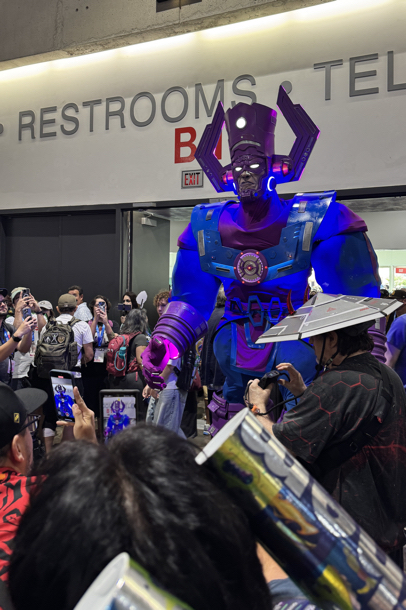
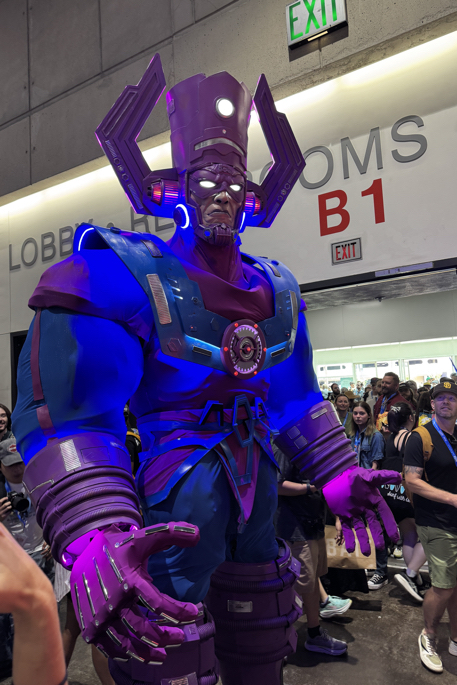
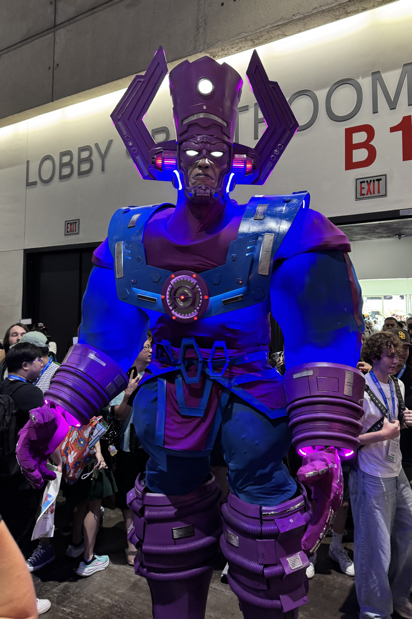
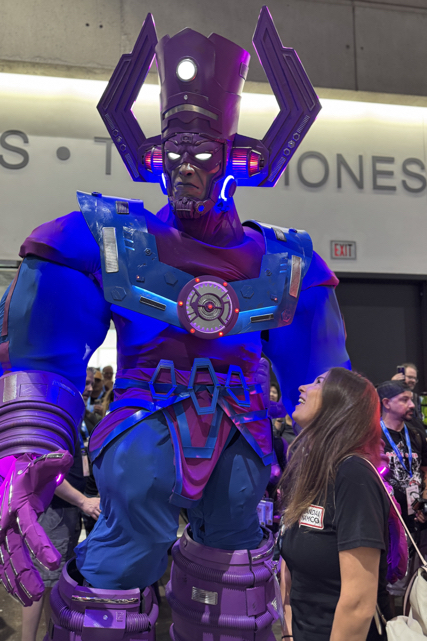
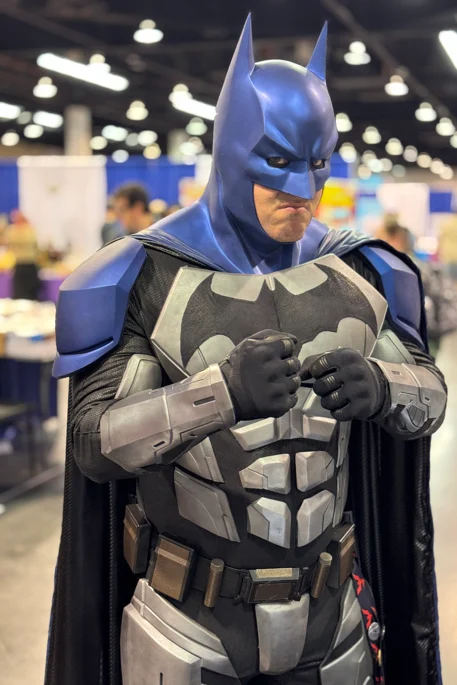
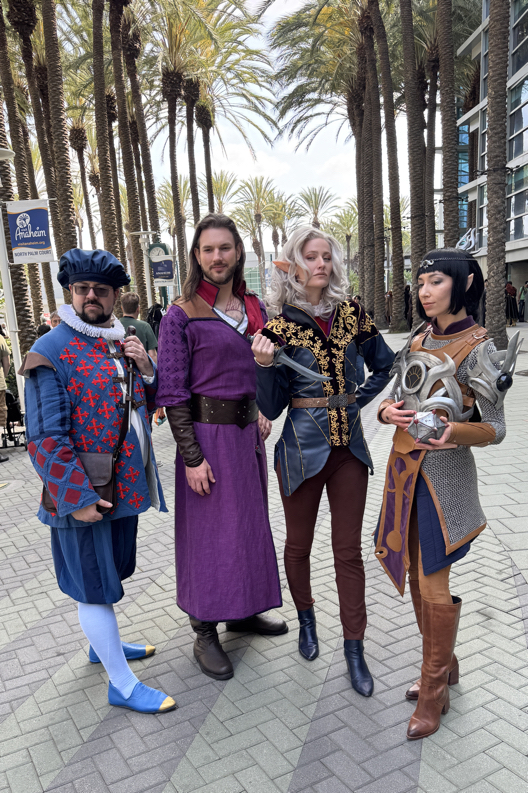
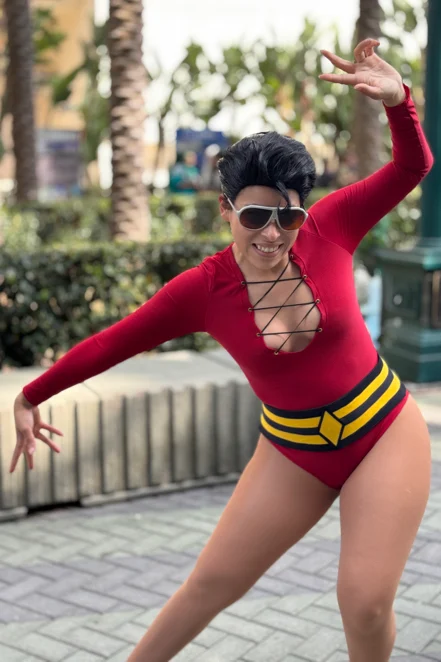
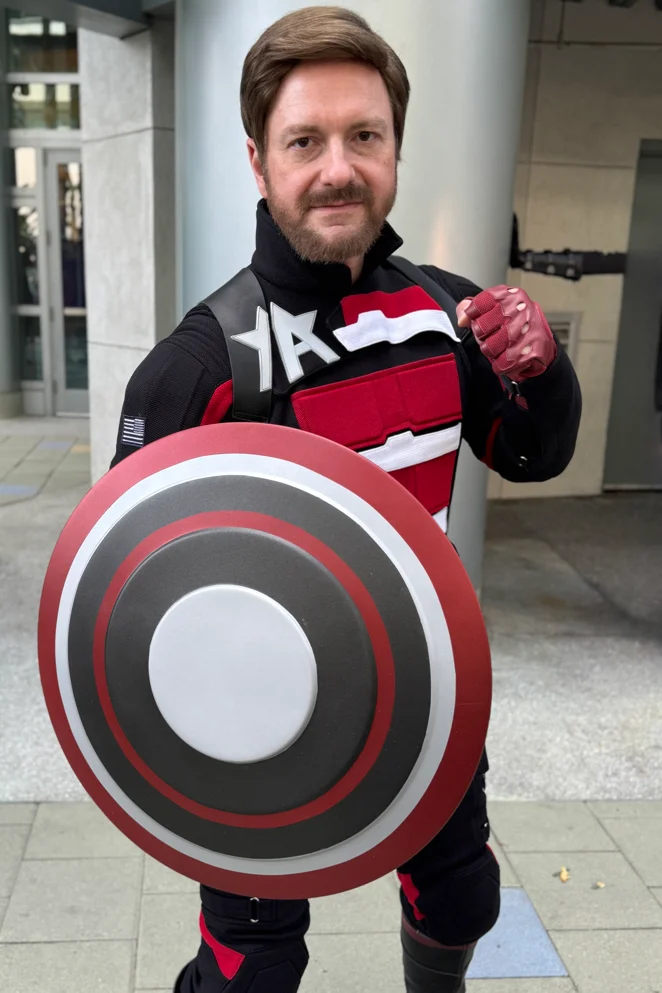
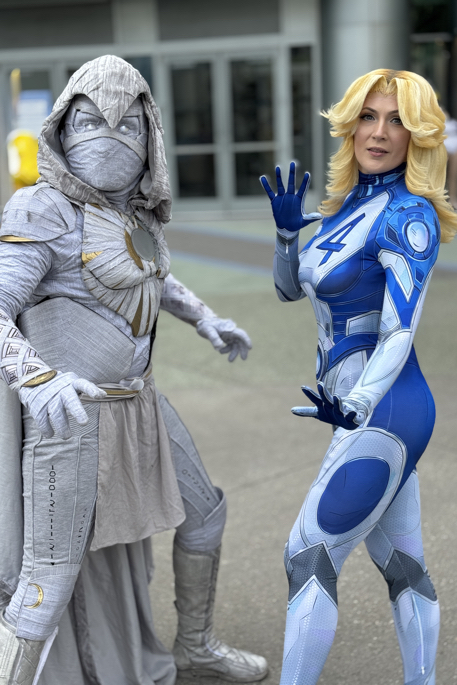
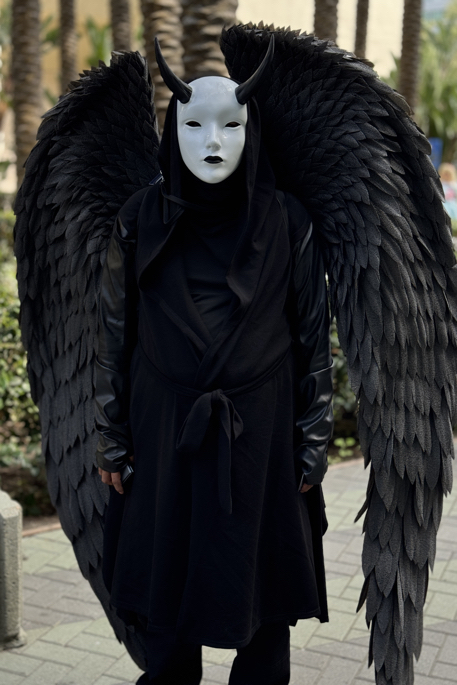
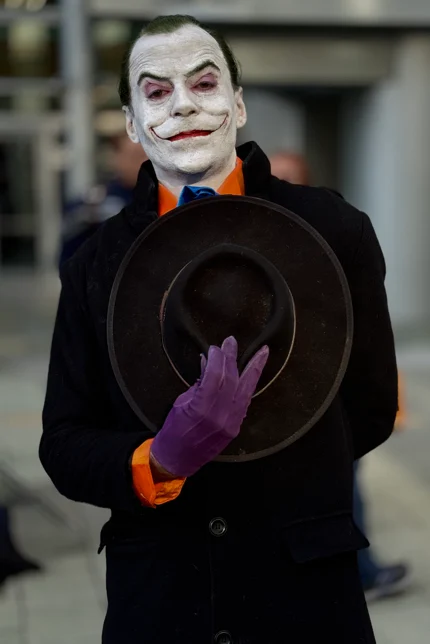
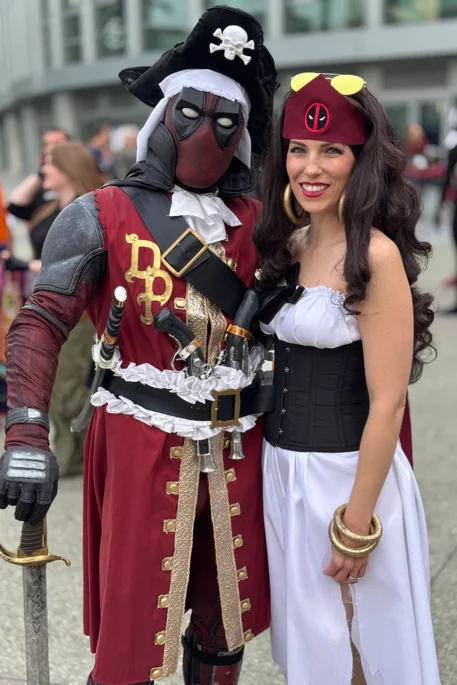
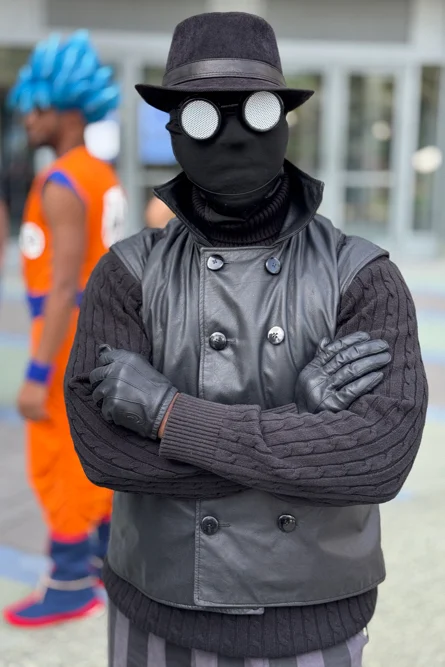
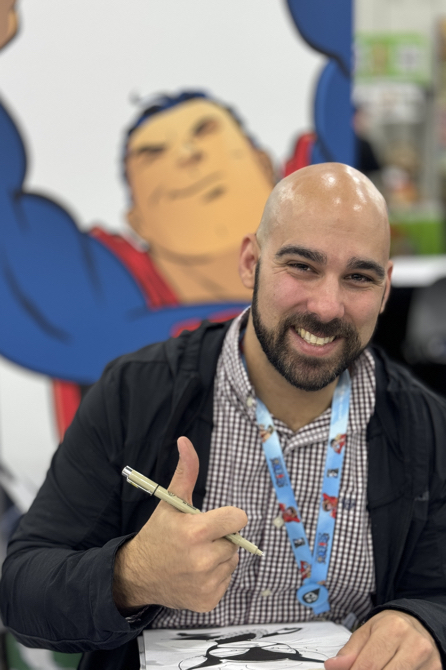
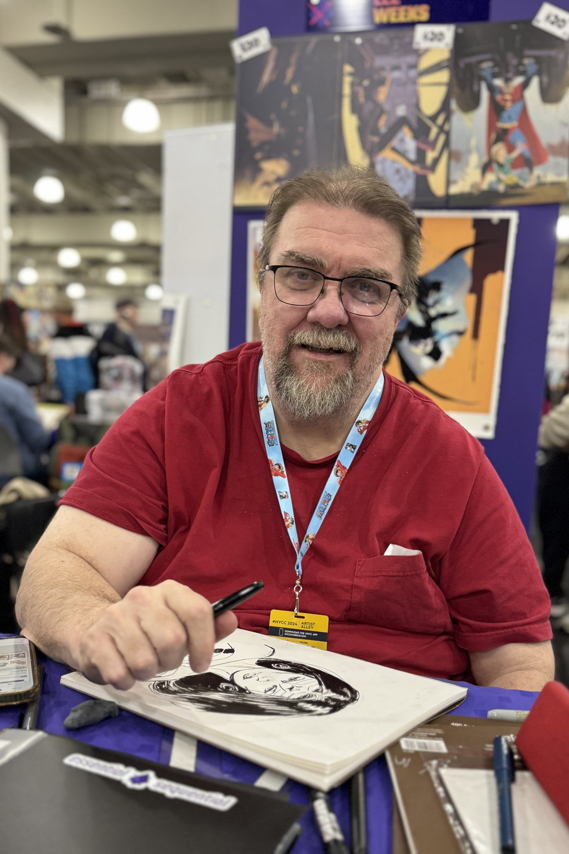
Once again, another San Diego Comic-Con is I the books. I’ll be posting some photos in the next few days, but in the meantime… Here is Galactus entering the main room for the first time on Thursday I believe; 10-12 feet of one of the greatest costume designs and executions I’ve ever seen.
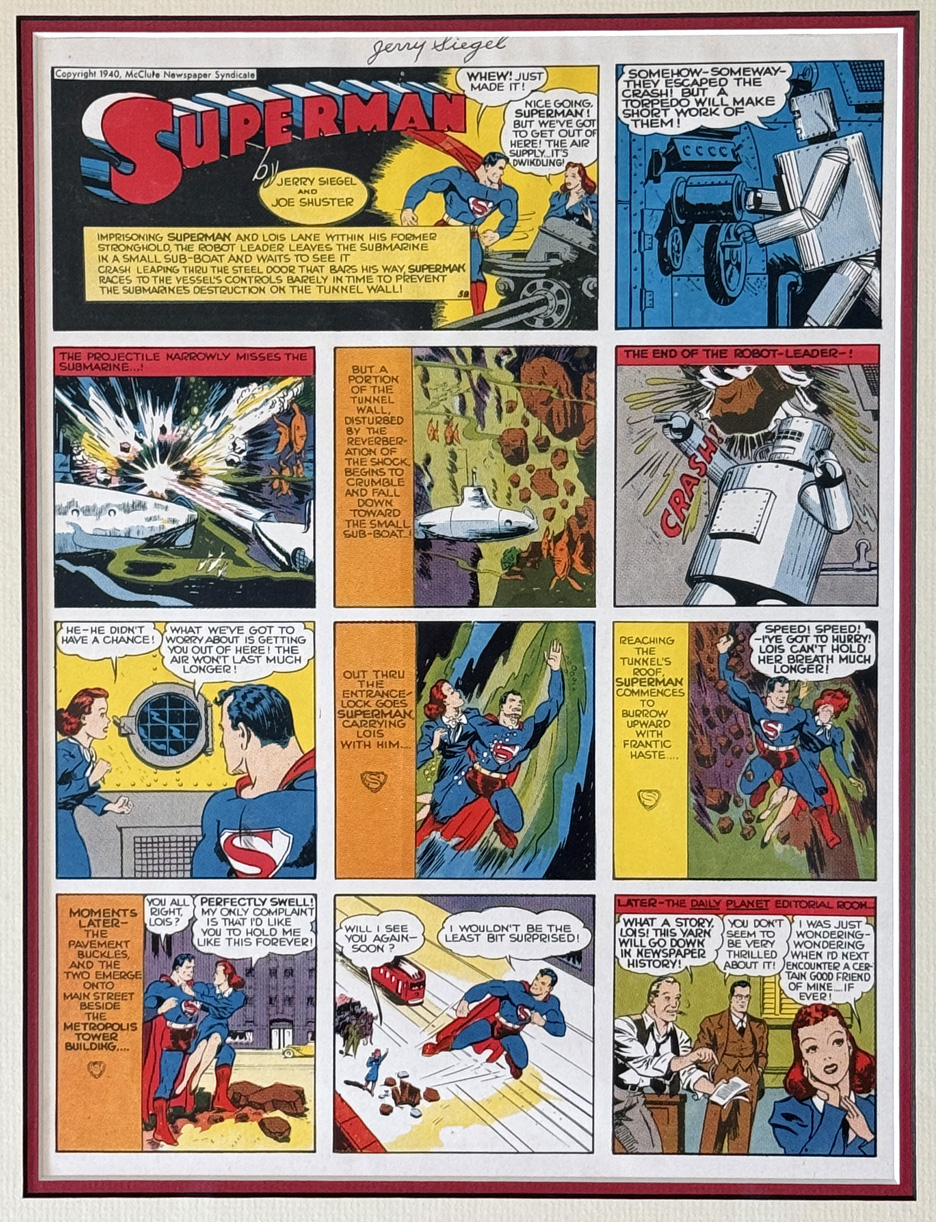
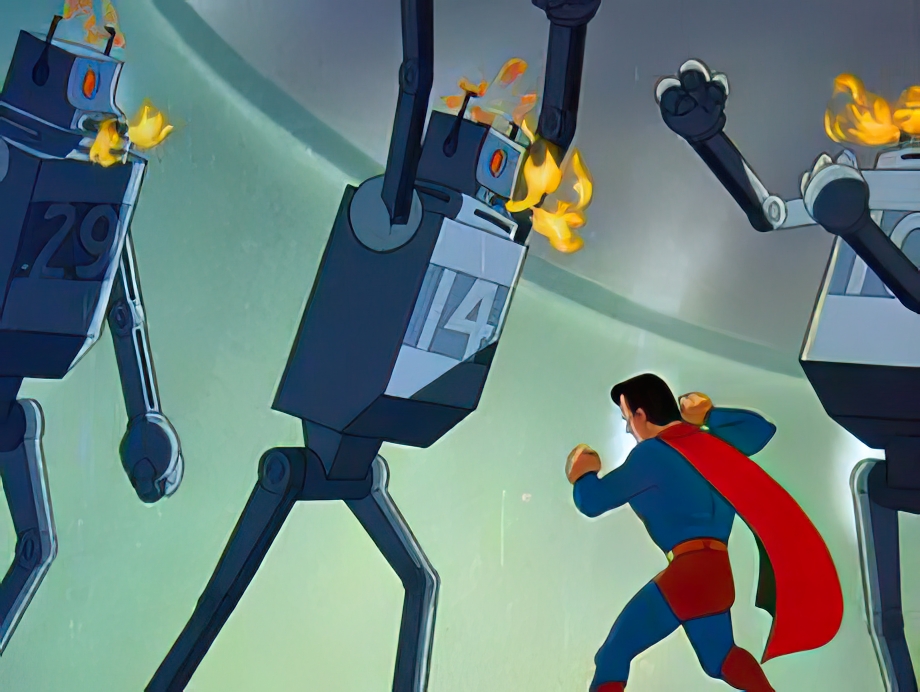
Superman Sunday Strip, (Syndicate Proof Sheet), December 15, 1940
Not quite original art, this is a syndicate proof sheet for the Superman Sunday comic strip, from December 15, 1940. The proof sheets are printed on higher quality paper, and the colors are extremely vivid — which you can see even though I photographed this example under glass.
(For an amplification of how this proofing process worked, see the new edition of Jack Kirby’s Sky Masters Sunday strips, which explains the process in some detail.)
I enjoy these early strips — Shuster’s art here often seems more polished than the comic books, where some of the art suffers from inconsistency. That’s of course not shocking: Superman’s explosive —and nearly instantaneous —popularity meant that Shuster, with the help of assistants and other artists, had to keep up with a prodigious amount of publishing.
This proof came from co-creator Jerry Siegel’s personal collection , and I was fortunate enough to snag one with a giant robot. (Plus, it is signed!)
Superman, Lois AND a giant robot. Seems like a hat trick to me.
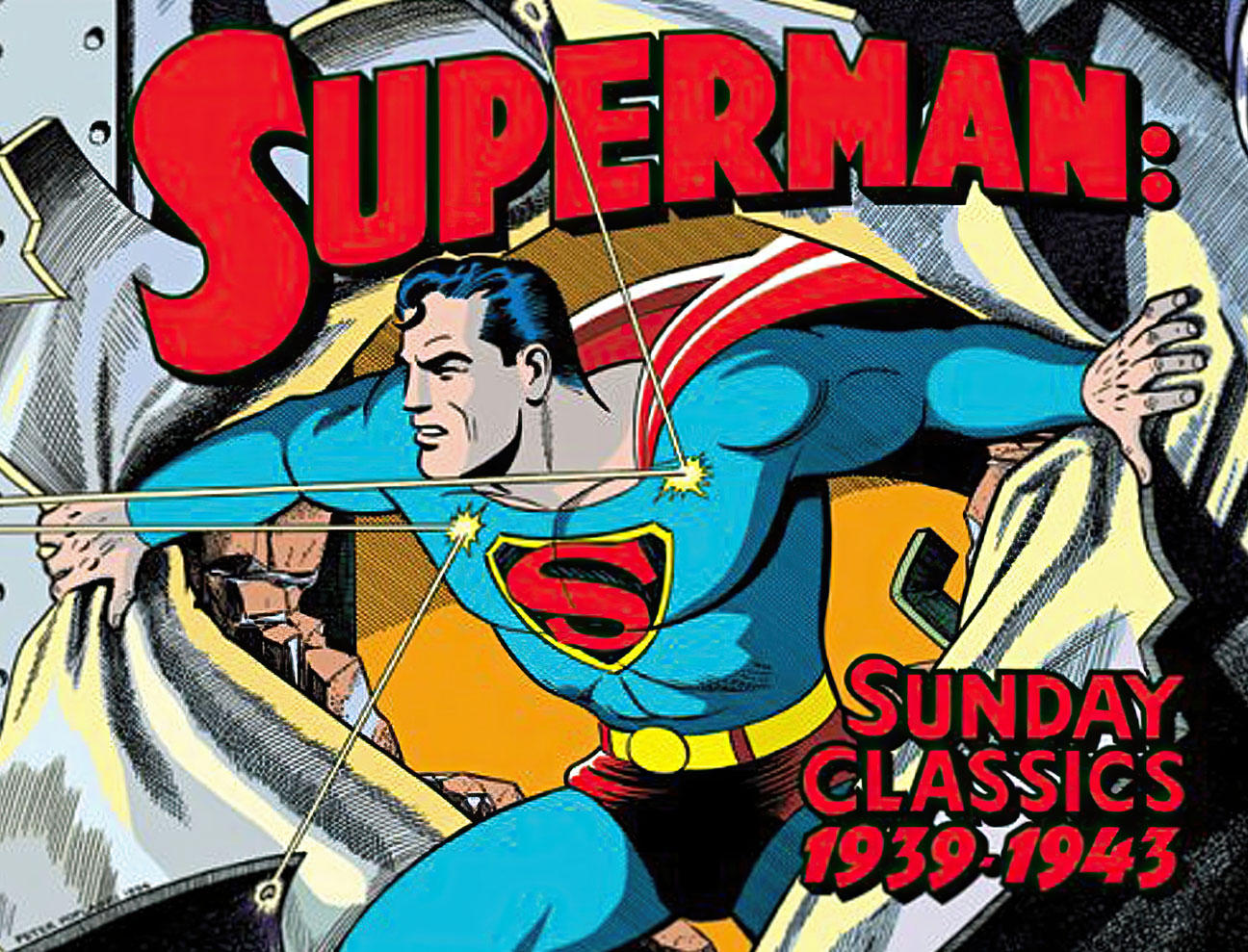
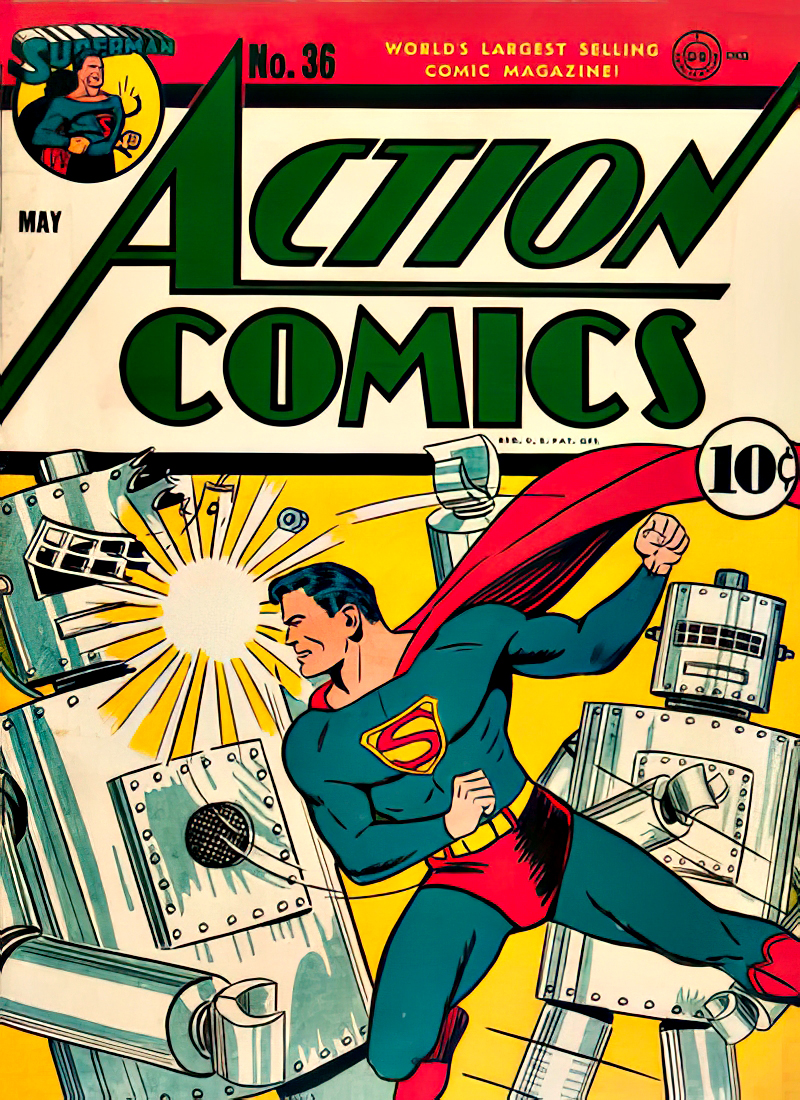
A tear sheet from the Houston Chronicle features the strip in a classic half page format.The original classic Superman strips (first reprinted by Kitchen Sink) are available in at least four different book formats; although they are all technically out of print, most are readily (and inexpensively) available from secondary booksellers. Because they are so easy to obtain, when we launched the Superman reprint program at IDW Publishing in 2013, we started with the next group of strips.Superman fought the “Bandit Robots” a few months later on the cover of Action #36 (great art by Fred Ray.) But… there’s no matching story on the inside!The Man of Steel fights similar (albeit not quite identical) robots in 1941’s “Superman and the Mechanical Monsters,” the classic episode of the wonderful Fleischer animated series of cartoon shorts.
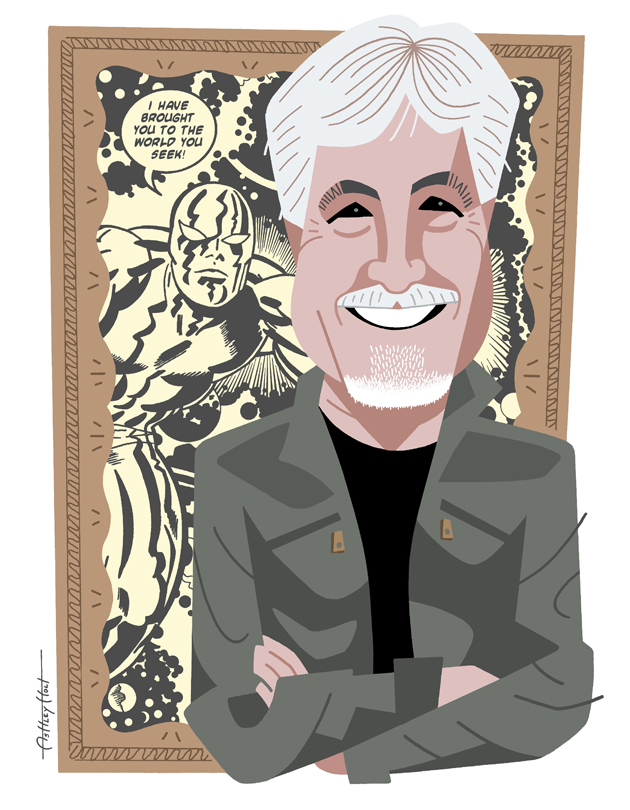
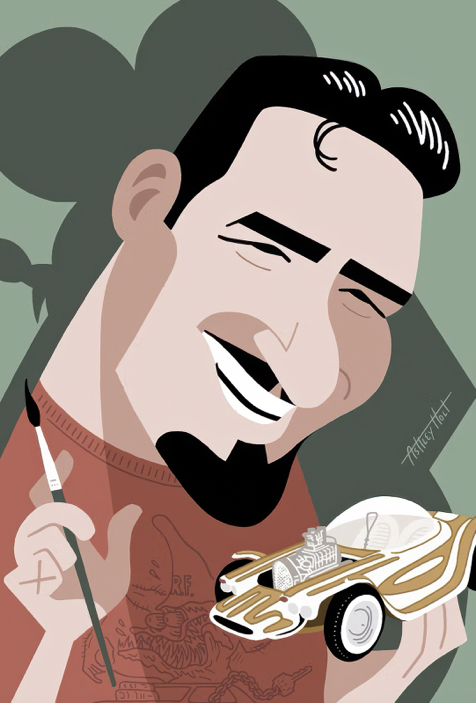
The art and the artist: Greg Goldstein and Ashley Holt
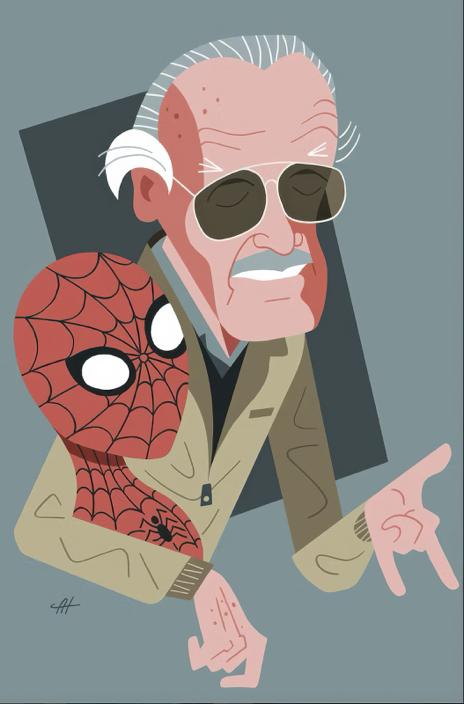
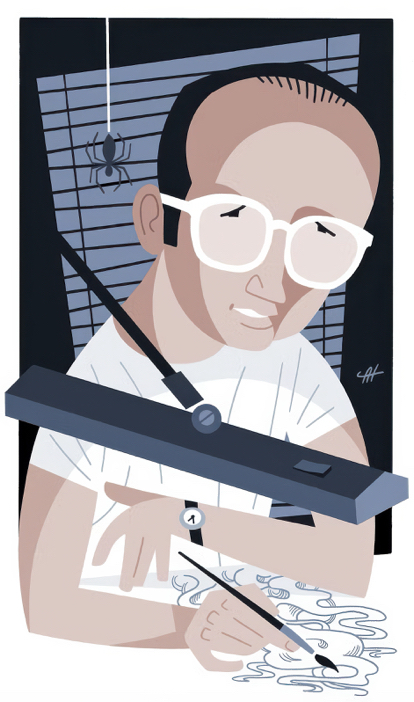
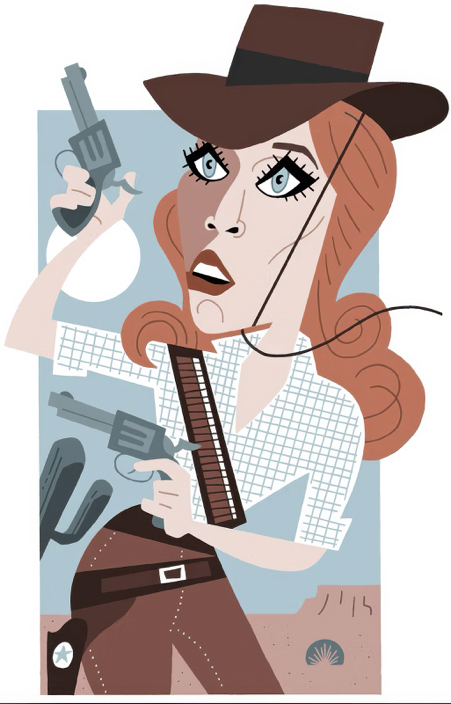
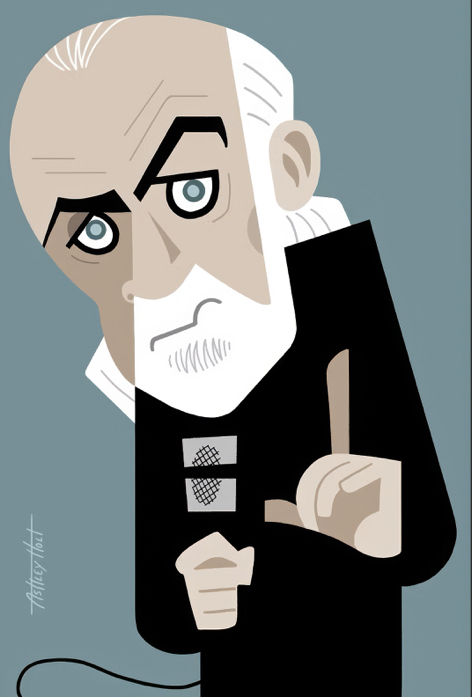
I discovered Ashley Holt’s terrific portrait illustrations a few years ago — via Howard Chaykin — and became an ardent admirer from day one. He’s depicted some of our favorite people in colorful and instantly recognizable form.
Now, I’ve joined the club.
Ashley is a pleasure to deal with. He sells prints and books, takes commissions, and has a lovely website that makes it easy to admire or acquire his art.
Additionally, he has a well-written Substack column (“The Symptoms”), where he employs a lively — and occasionally biting — style that matches the spirit of his art.
Follow / subscribe to everything he offers, and you won’t be disappointed.
Trust me on this.
As for Ash’s note about this illustration of yours truly?:
“Greg Goldstein, comics art connoisseur and former CEO of IDW Publishing, posing in front of a Jack Kirby drawing of a comics character who shall not be named for reasons of trademark law but who is definitely not riding a surfboard of any kind.”
How much of a perfectionist was the great Doug Wildey? He knew there was no chance the printed comic books of 1960 could capture the fine details in his draftsmanship, but he drew them anyway.
This is the second Wildey Atlas western title splash I’ve managed to acquire, and like the first, it’s a beauty. In fact, even more stunning.
By chance, this page was only display and offered for sale a few moments during last year’s San Diego Comic Con when I happened on it. I’m sure it would have been gone had I come by an hour or more later.
As I noted previously, Doug Wildey was an amazing storyteller and draftsman. Don’t just take my word for it — ask Stan Lee.
Back in about 2010, we visited Stan in his Beverly Hills office to get some pages signed for the first John Romita Spider-Man Artists Edition from IDW Publishing. Stan’s “people” were kind enough to let us bring some personal items to get signed as well, so I brought a few pages of original art with me.
Stan, who was telling stories and singing while he was signing (Yes, singing, not a typo for signing. Story for another day.) stopped dead in his tracks when he saw this page of art.
He stared at it quietly for a few moments — given the speedy pace of our morning, it seemed like an eternity — and you could see pleasant memories wash over his face. And then the big Stan Lee smile:
“Doug Wildey. Wow. He was great. So terrific. I loved his stuff. I wish we had a chance to do more together.”
He handed the page back to me, still beaming, still examining it up and down as he slowly passed it back. I had seen Stan sign thousands of items; many of them with fond remembrances, but nothing quite like this.
I’m sure he would have had the same reaction to this page as well.
Bye bye details in the sheriff’s face, shirt, et al. Wildey had to know the cheaply-printed page would lose all the great detail and craftsmanship, but he included it in his original anyway.
RIP Jim Silke, the multi-talented artist / art director/ writer who died last week at the age of 93. A great century (ok, nearly) indeed.
One of my favorite facts from Silke’s career is that he essentially started his “new” career as a comic book artist / writer in his early 60s.
Repeat: He started in his early 60s.
I acquired this wonderful painted cover late last year, part of a series he created for Vertigo’s American Century title.
A retro classic.
And readers of this blog, especially any who visited me at the late Liberty Station IDW Publishing offices, know I definitely have a thing for old newsstands. (FYI, that’s Action Comics #183 from 1953, bottom right.)
ScreenshotJust some of the “good girl” / “bad girl” covers from Silke’s portfolio.One of Silke’s four Grammy-nominated album covers. He actually won for a Judy Garland cover, but frankly this is a personal favorite of mine, because I don’t think I have ever looked as relaxed as Sinatra does here. I consider it aspirational.
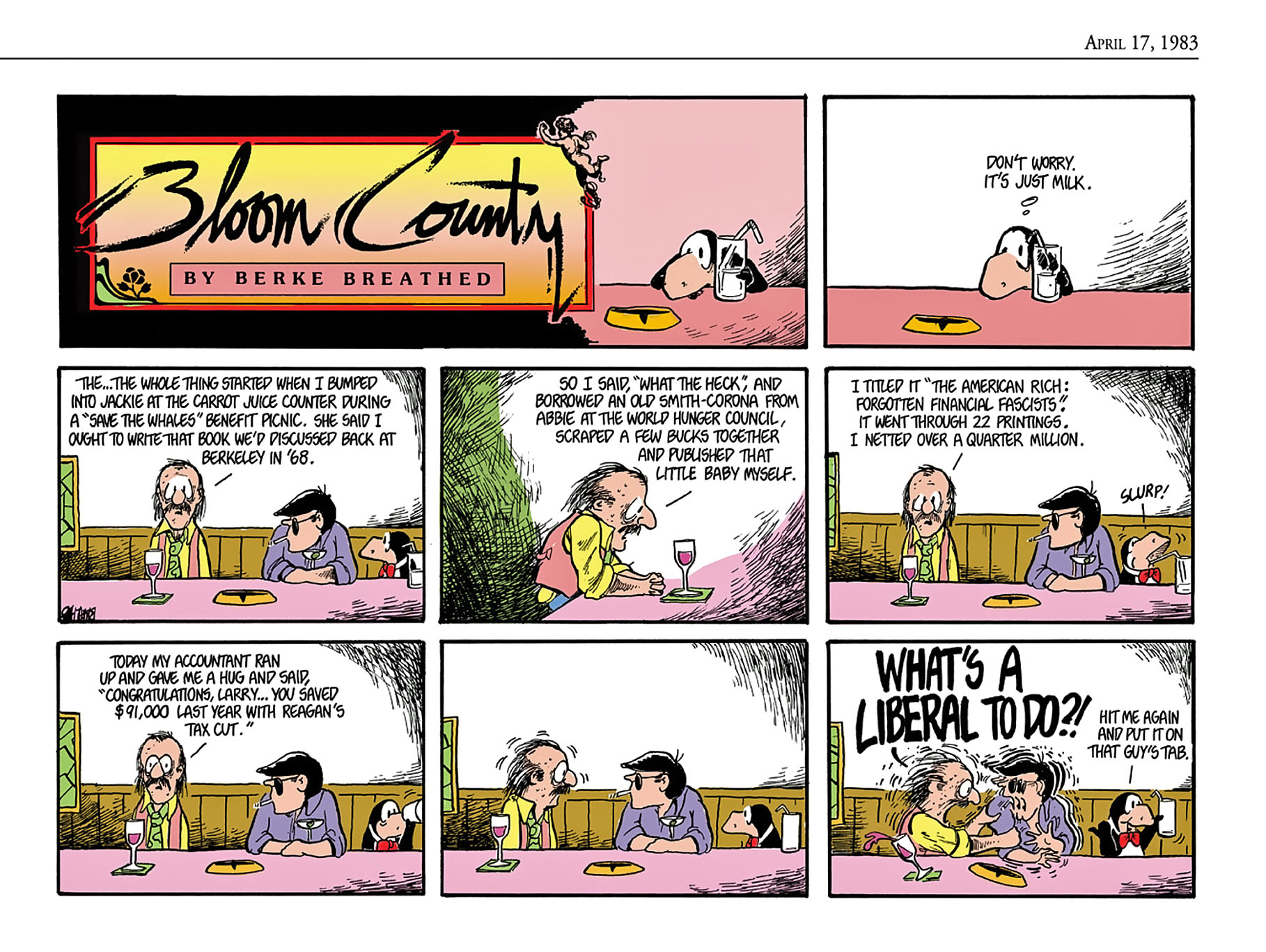
So… You support much of one party’s political platform, and the other guys win, and you somehow benefit from that opposing victory anyway?
Talk about mixed emotions.
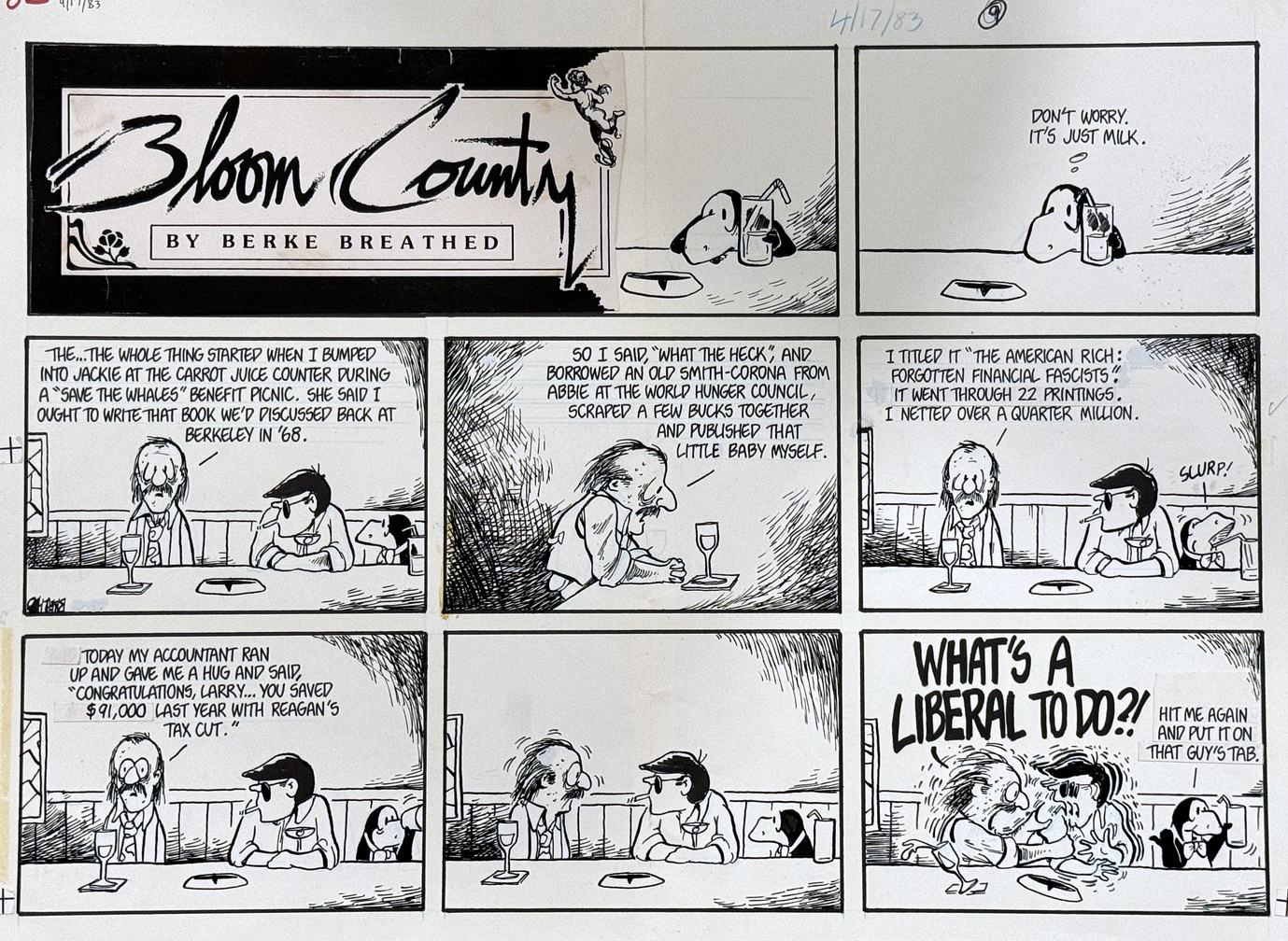
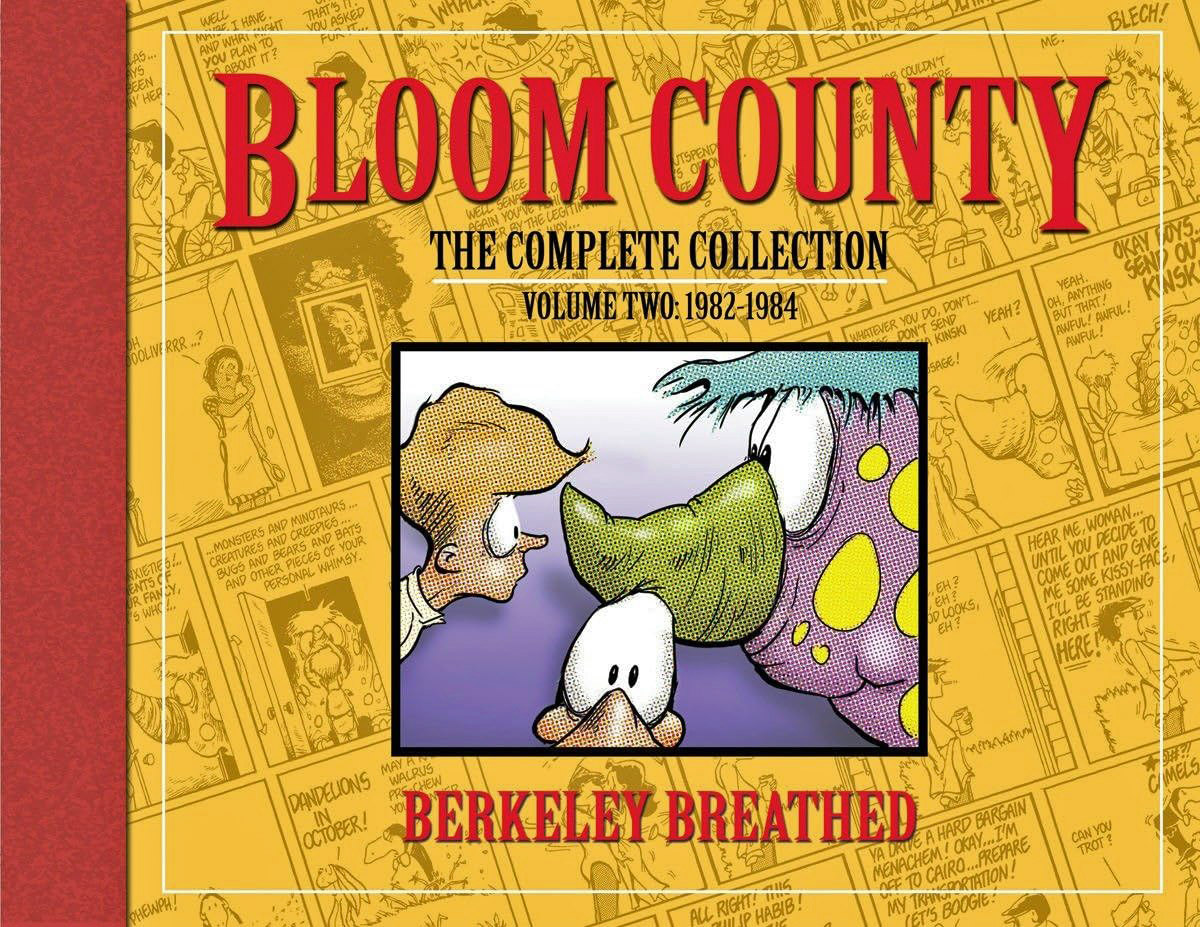
This Bloom County Sunday strip appeared in print six weeks before I had my first “real” job — with a salary that certainly that did NOT benefit from any sort of Reagan tax cut.
And yet this specific strip remained burned in my brain forever. When we (IDW Publishing) added Bloom County reprints to our line-up around 2009, I asked if Berkley still had this specific strip, and if so, would he sell it to me.
He still had it… and he gifted it to me. A gift I treasure, and one that I am indeed very thankful for.
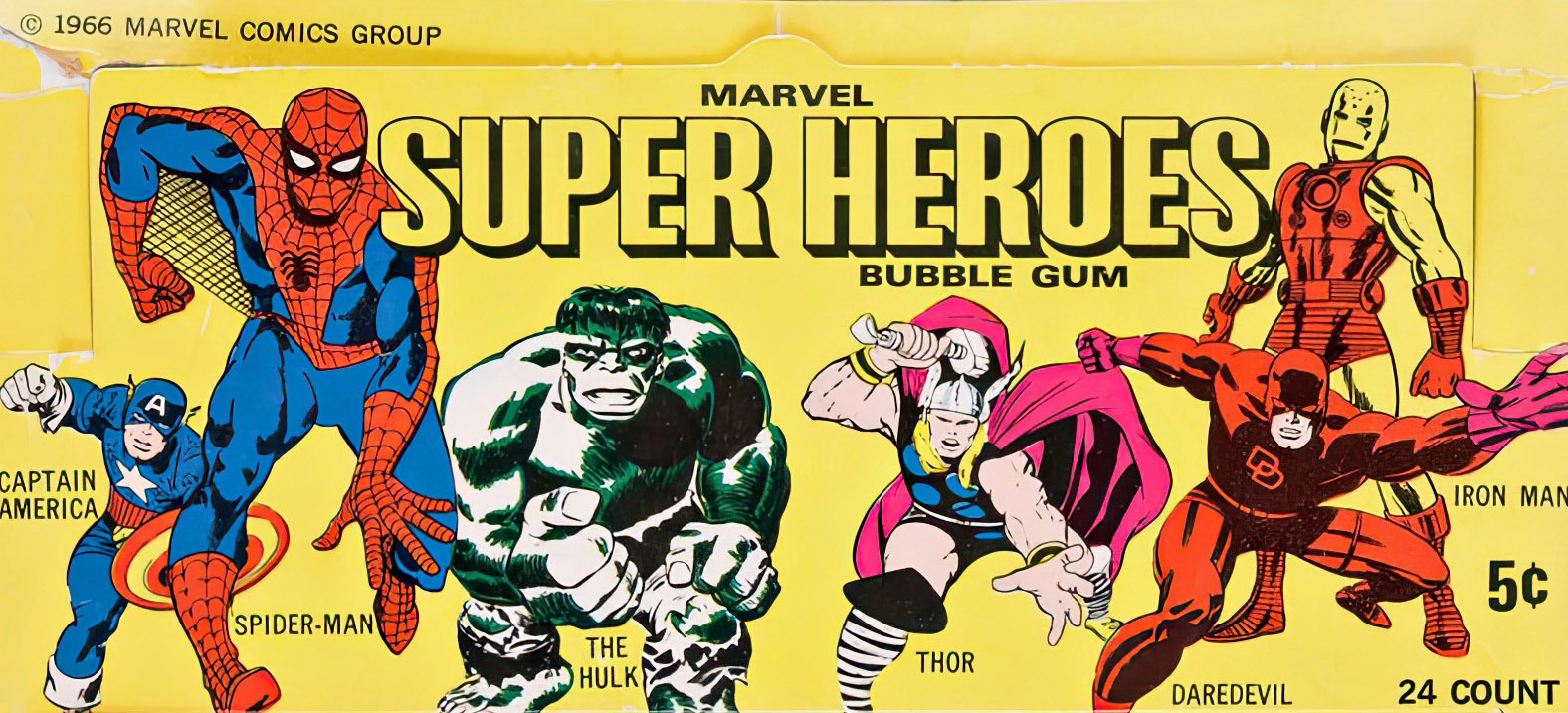
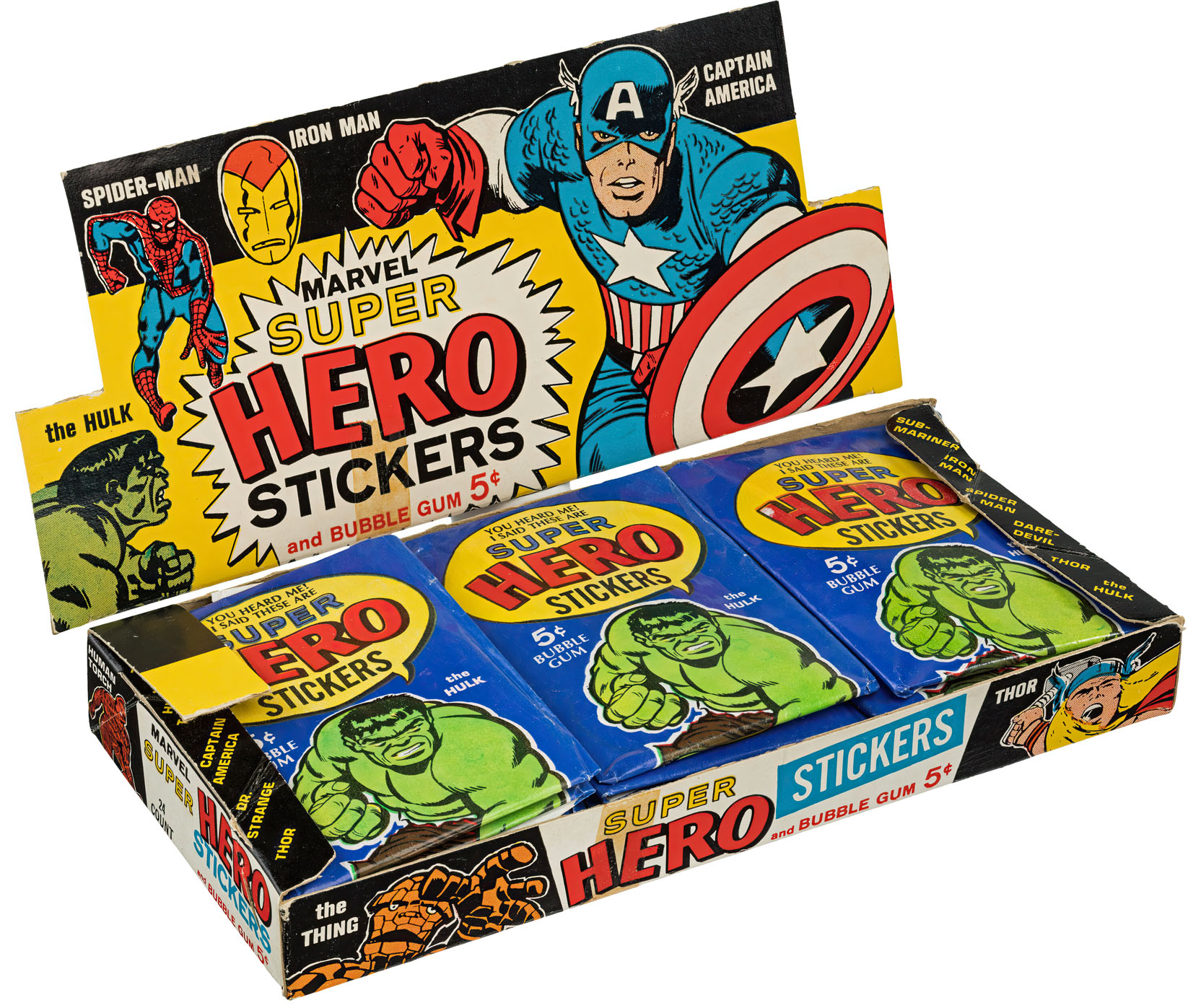
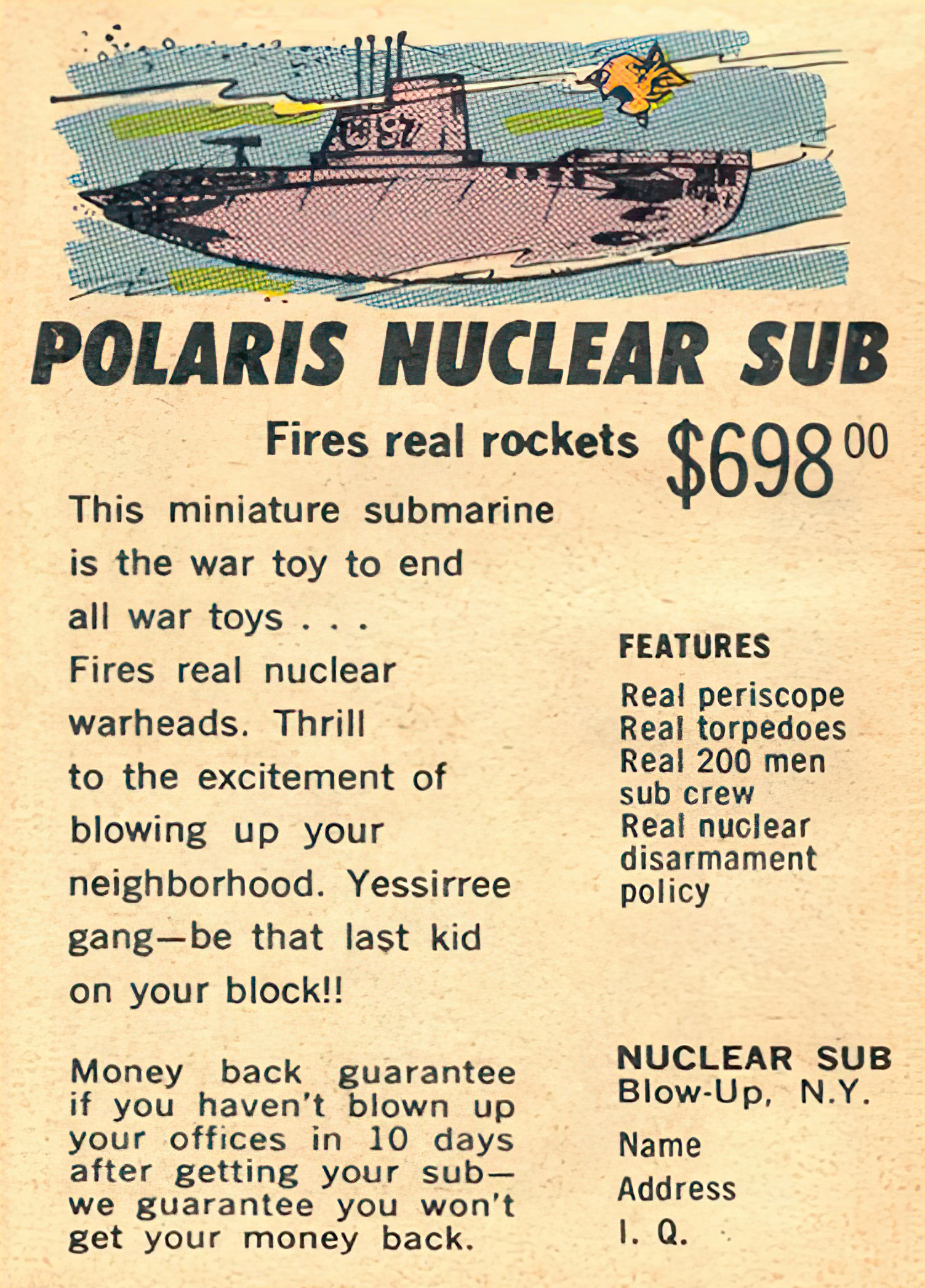
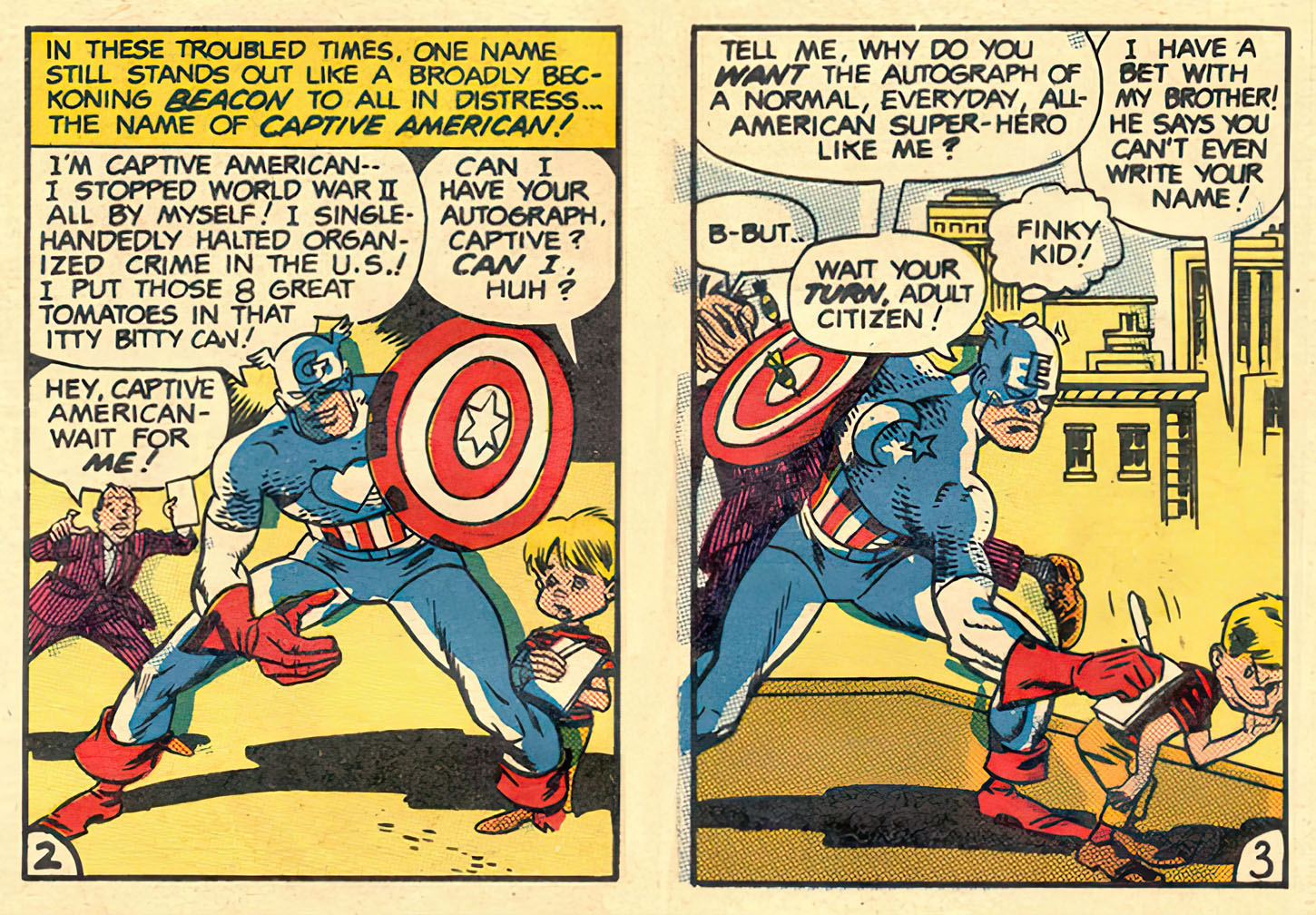
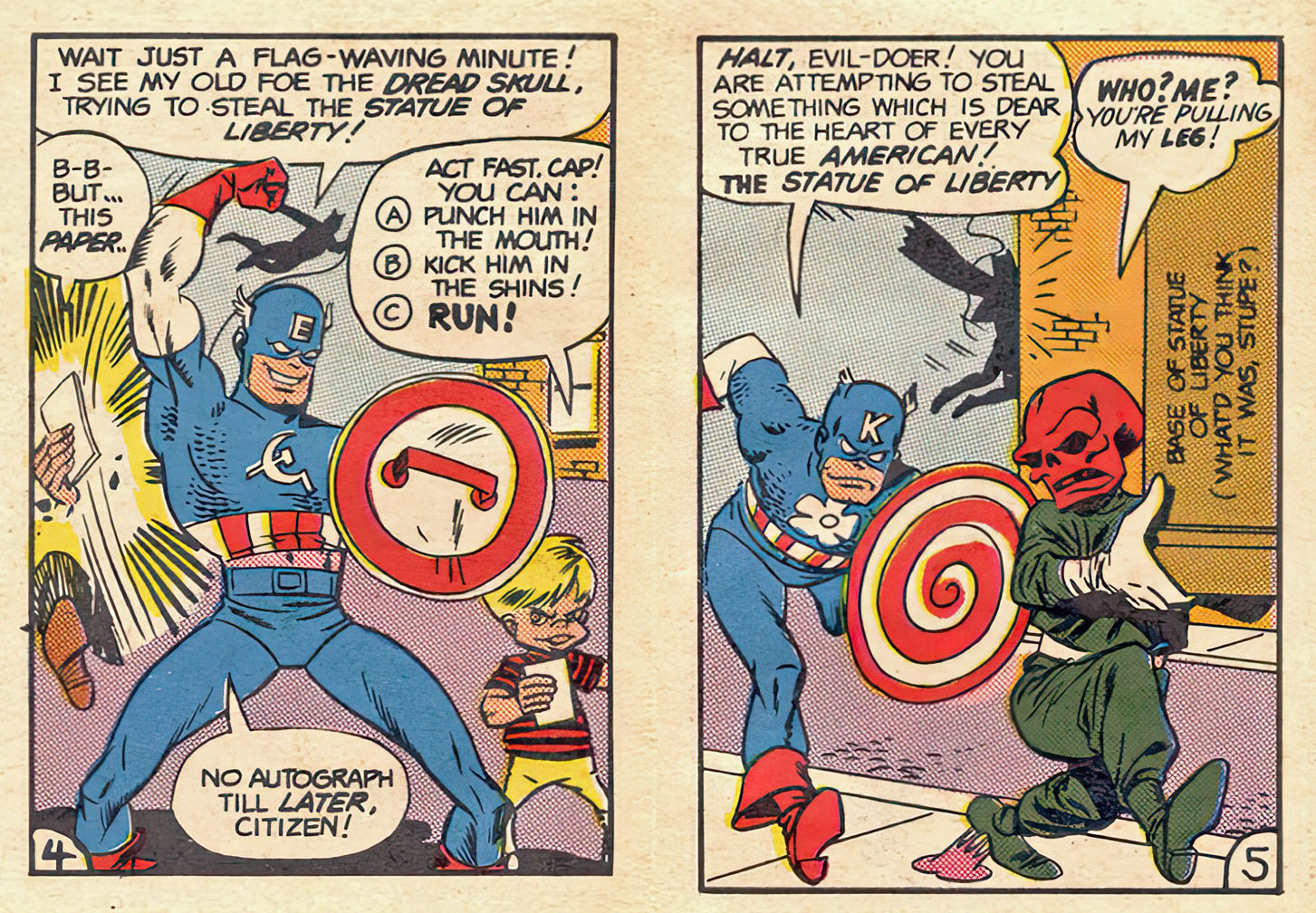
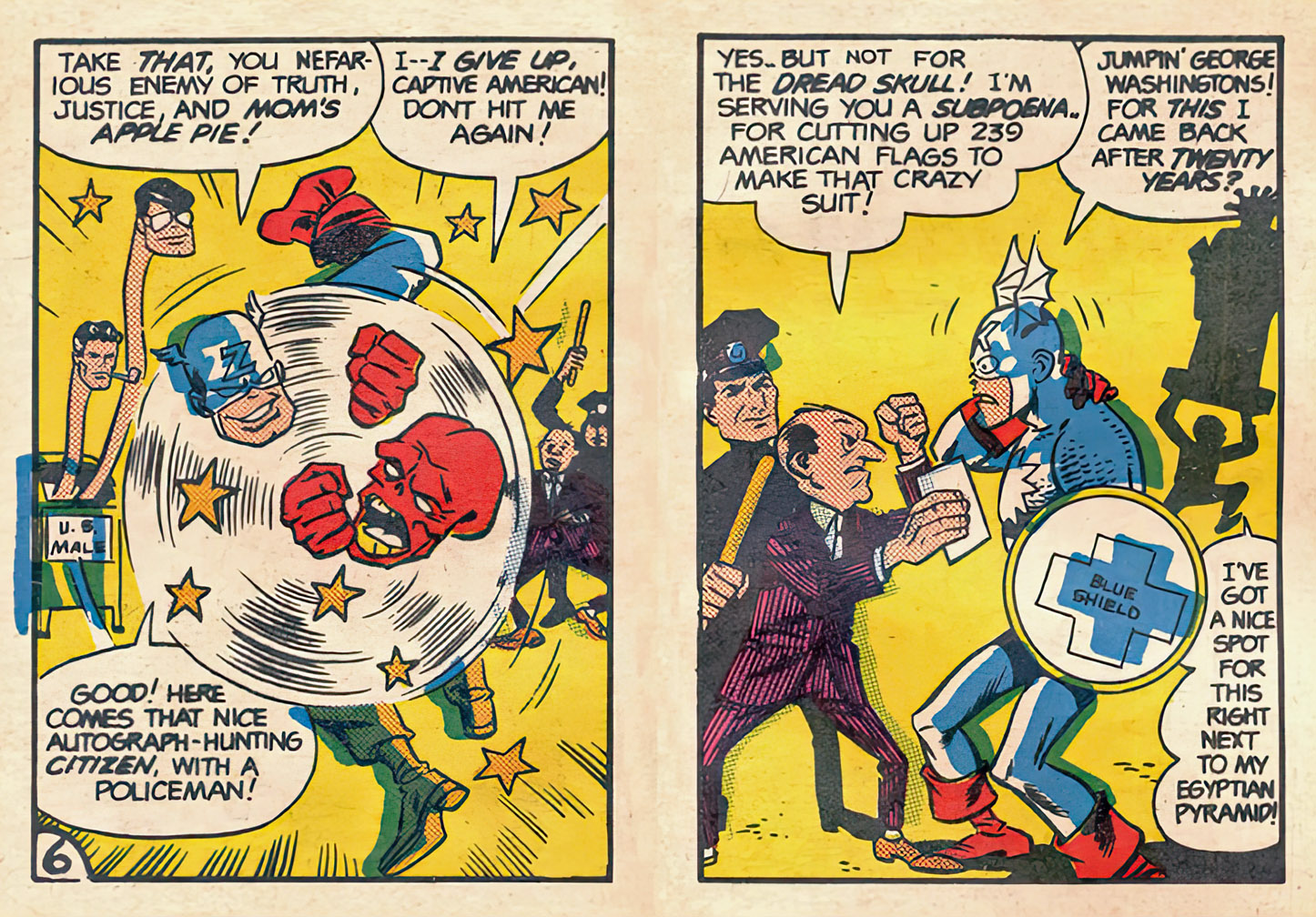
Marvel’s superhero business “blew up” in 1966. A cliché, maybe. But thanks to the Marvel cartoons airing in nationwide syndication that fall, Marvel’s licensing and merchandising business went from pretty much from negligible to ubiquitous, overnight.
I loved those cartoons. I didn’t fully understand that they were pretty much “animating” on the cheap by mostly directly lifting and moving around the actual comic book pages and panels, and at six-years old I didn’t care. (Technically, these cartoons are not much more than primitive motion comics.)
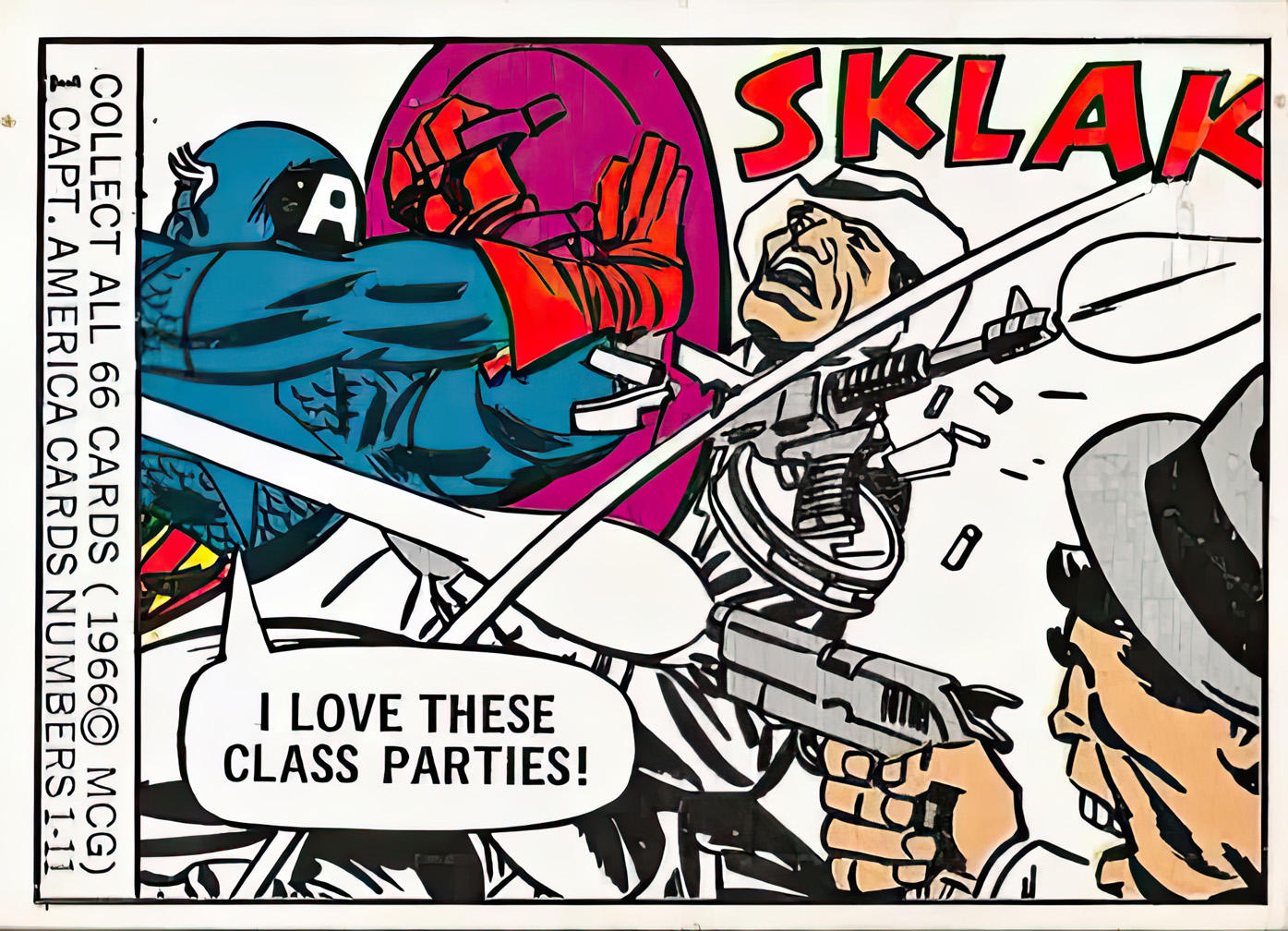
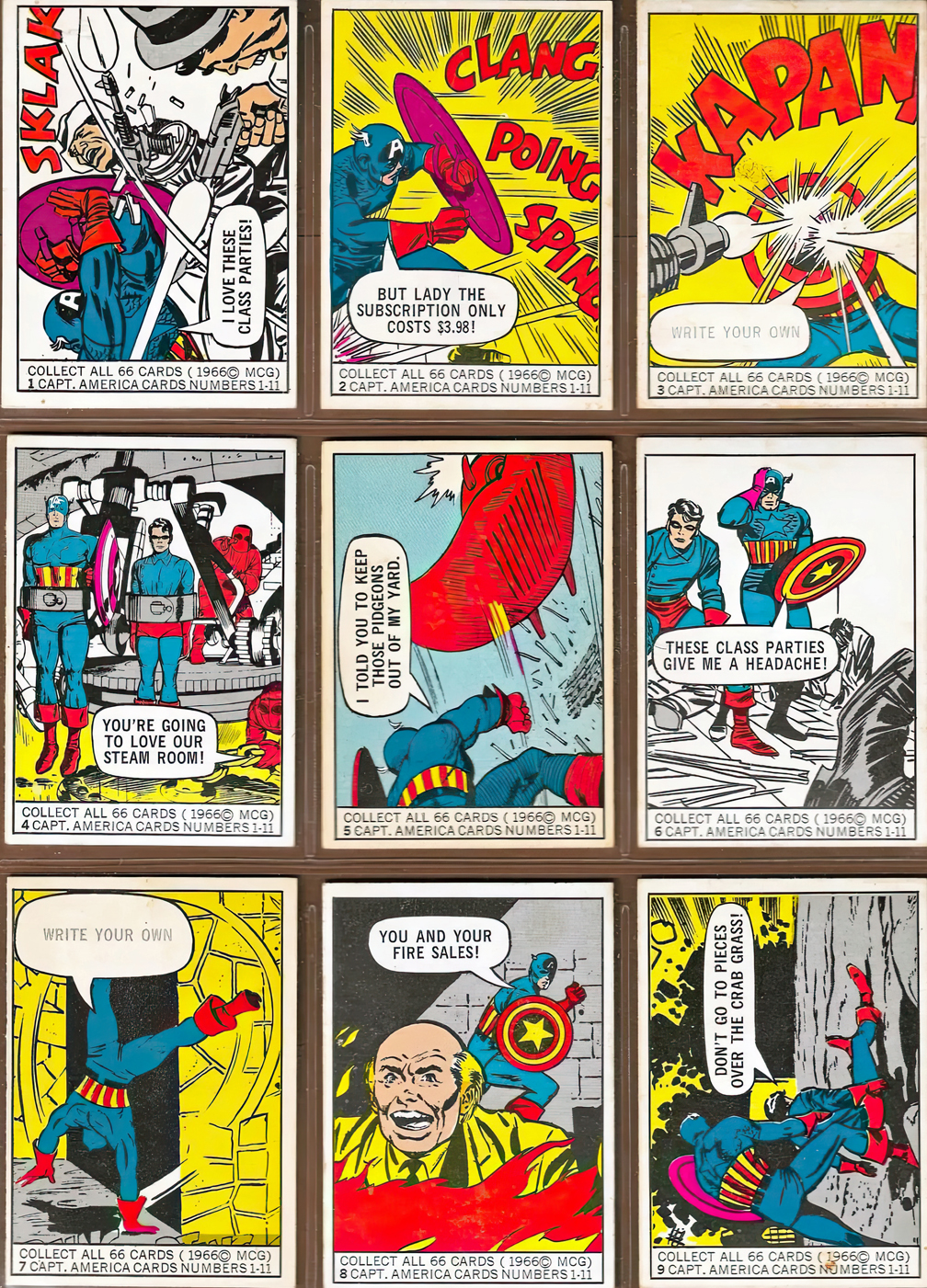
I bought a lot of that merch. The comics of course, were the main thing. But the cards. And the stickers. Dumb gags I admit. But I loved the Jack Kirby, Steve Ditko, et al, art in miniature.
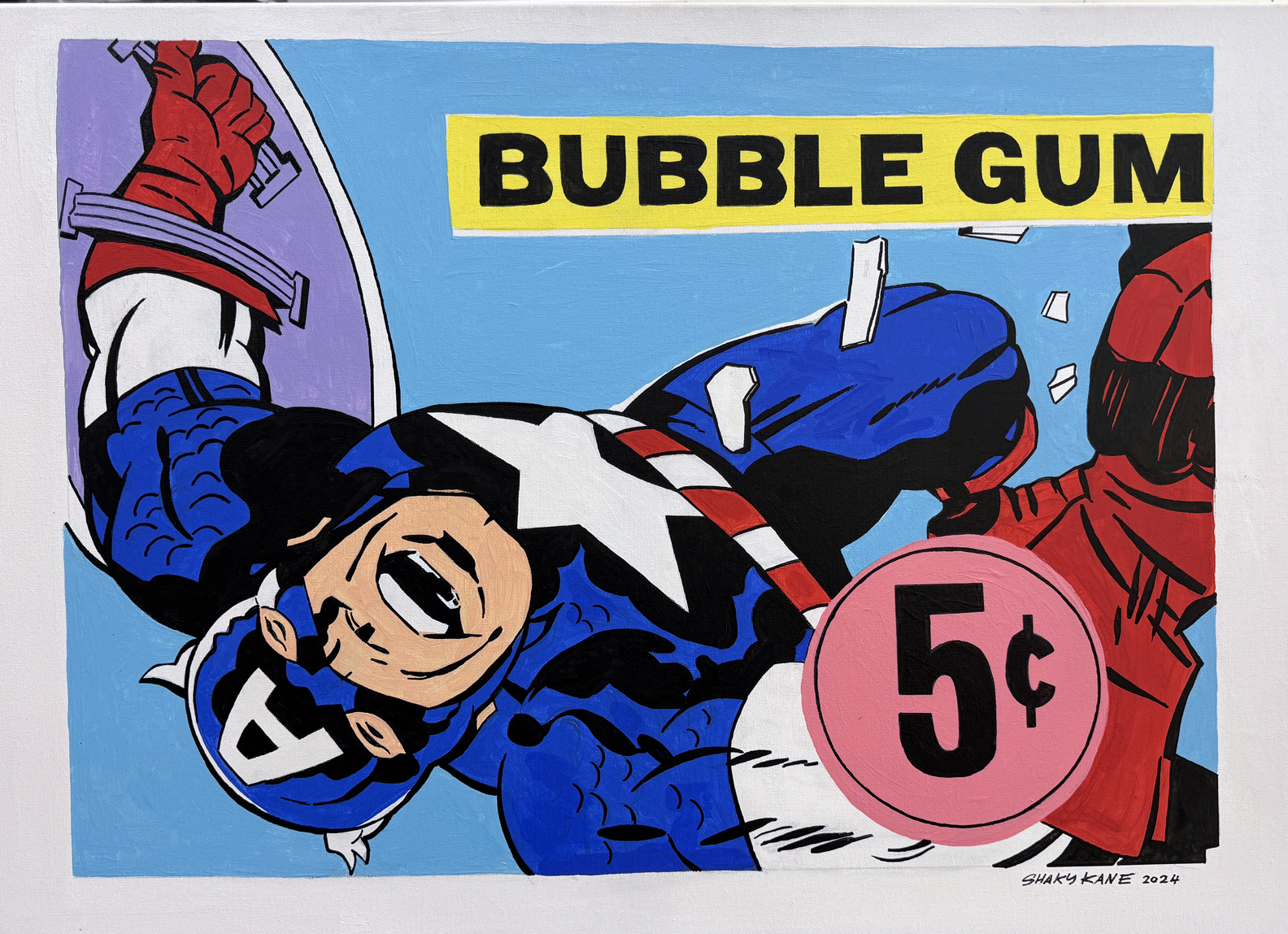
So, when I saw Shaky Kane’s original painted tribute to Marvel “bubblegum” cards at the Jack Kirby art exhibit in LA this past summer, it knocked me out, flooding me with (literally) sweet memories.
Unfortunately, it had already sold. This bummed me out of course, until one of my pals with me that day, the brilliant (and extremely logical) designer Stan Madaloni, said to me:
“Why don’t you reach out to him see if he’ll make another one for you.”
Uh. Duh.
Shaky agreed, and, although I hate to use another cliché, the rest, is in fact, history.
The second one is now fortunately, and gratefully, in my possession.
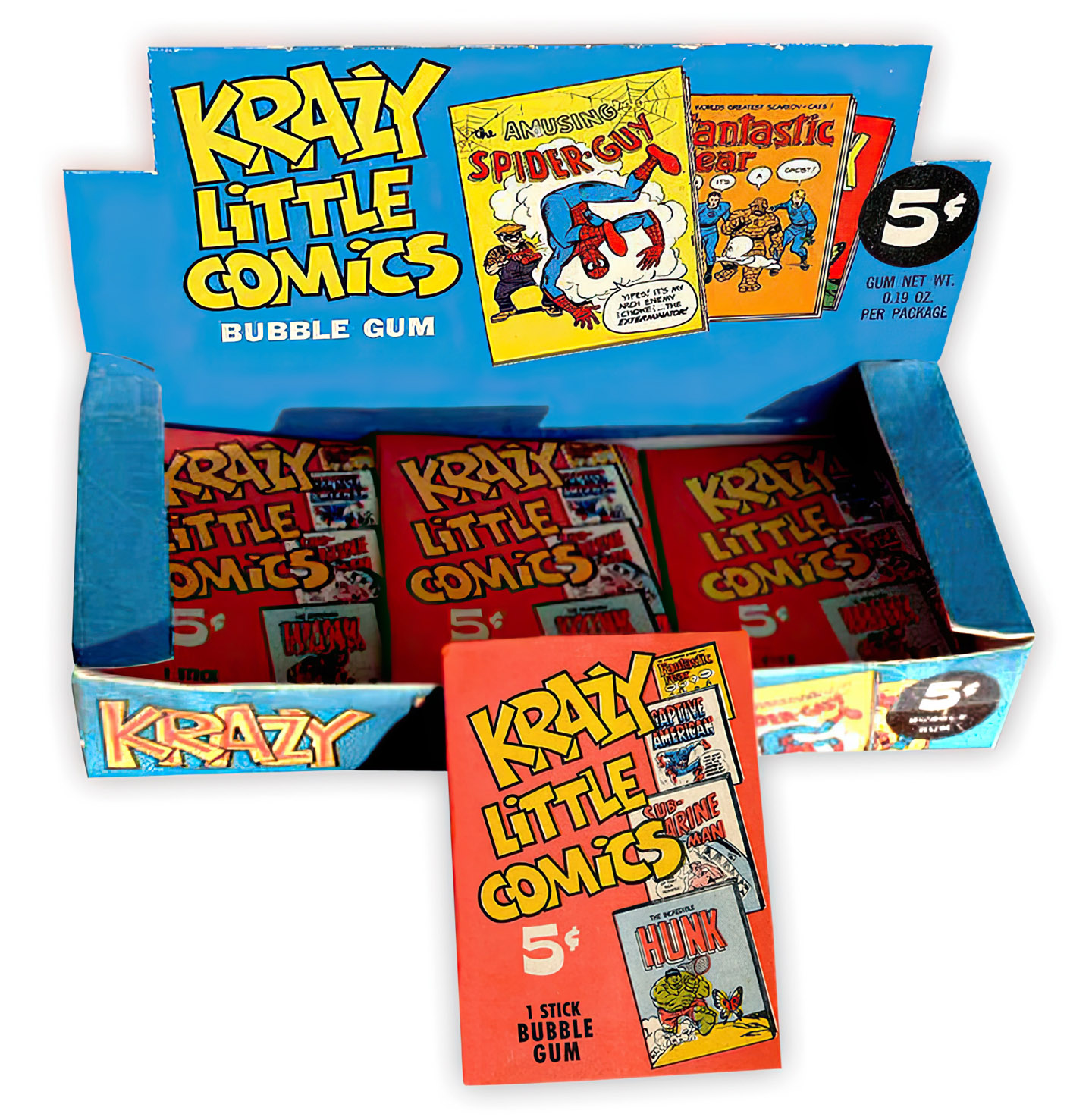
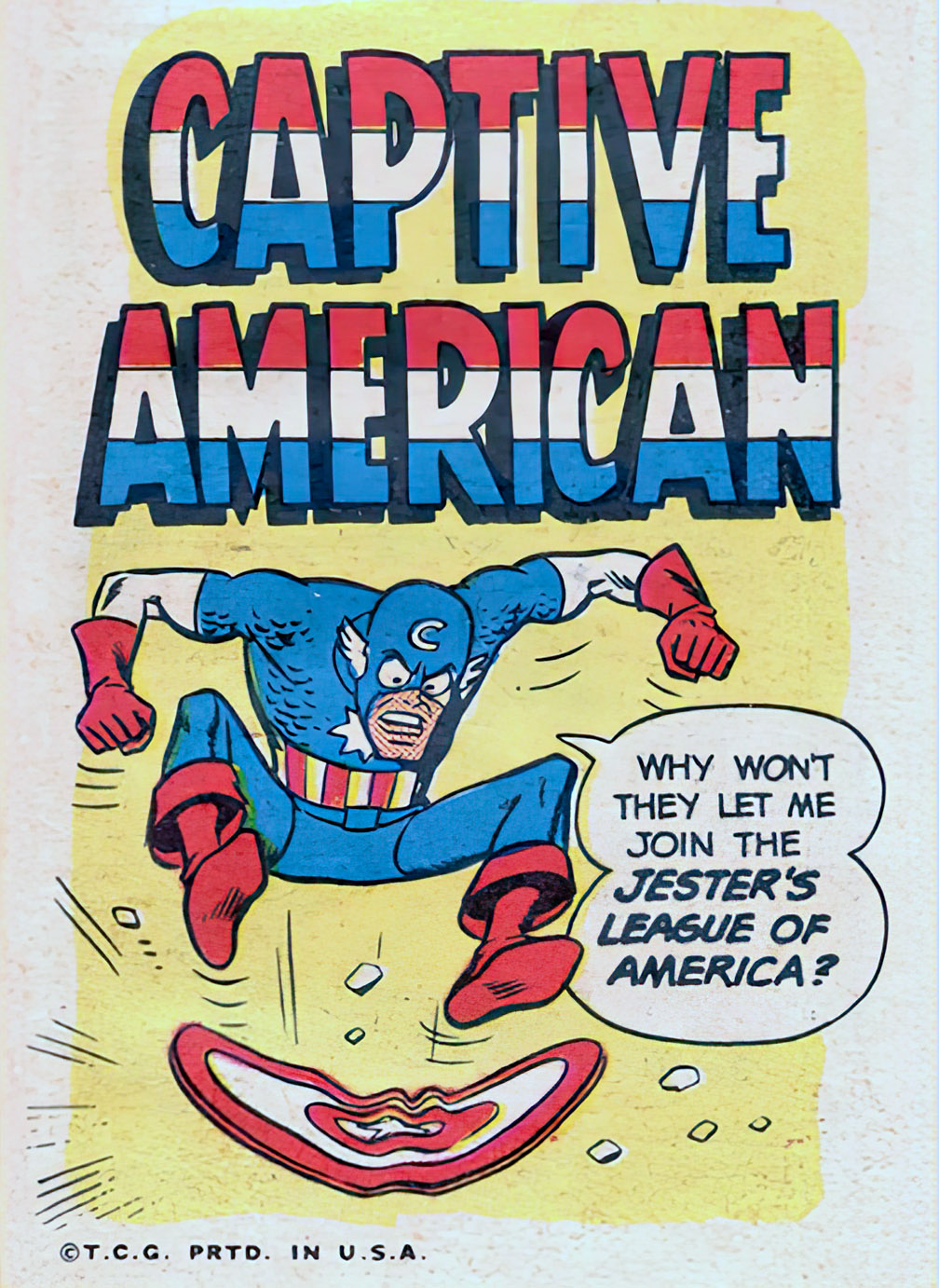
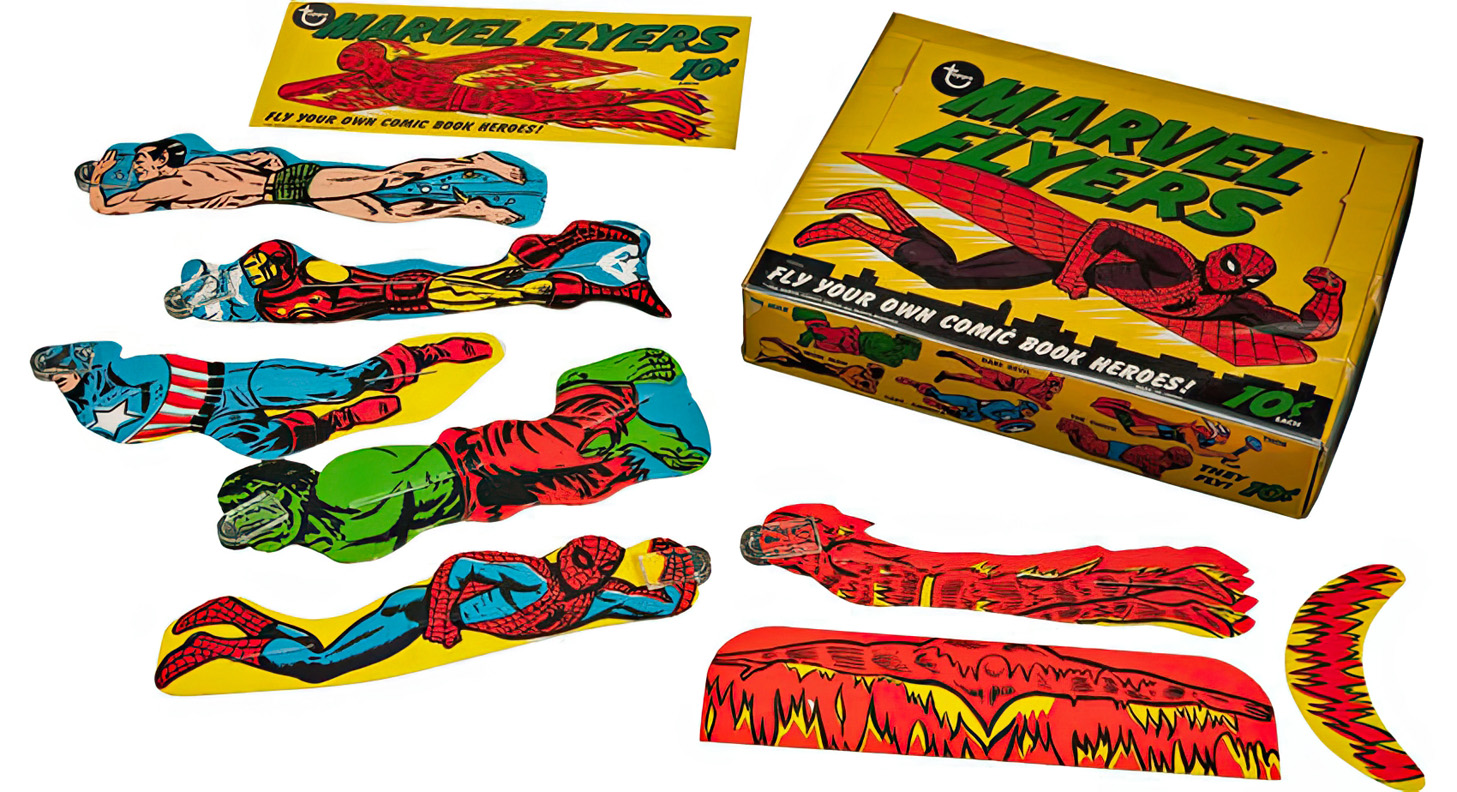
Both Donruss and Philadelphia Gum (“Swell”) beat Topps to the punch in the Marvel business in 1967, with cards and stickers respectively. Topps found a way in with the odd Marvel Flyers collection (designs from Wally Wood’s studio) and the mini-comics satire “Krazy Little Comics”, with art by Wood, Gil Kane and others. (Scripts by Roy Thomas.)
Final thoughts: If I could go back in time and tell seven-year Greg that he would one day work for both Topps AND Marvel, he’d probably tell me I’m nuts and chase me away.
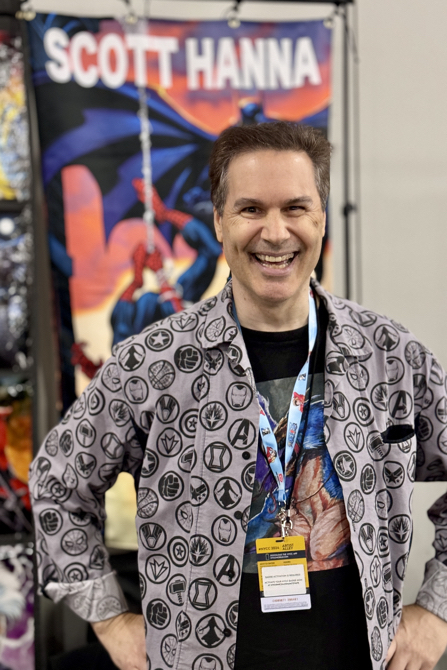
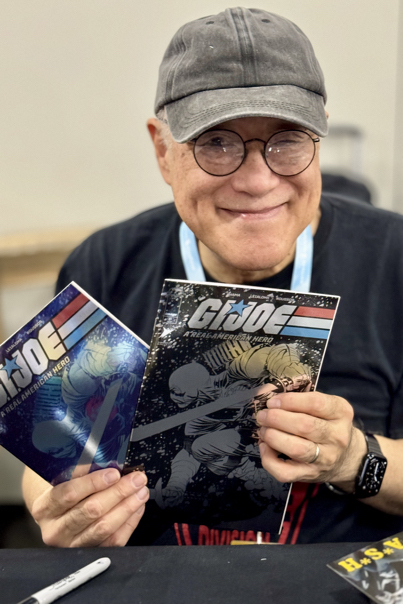
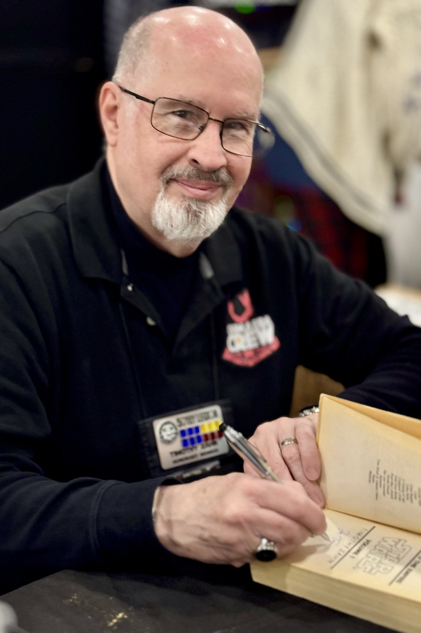
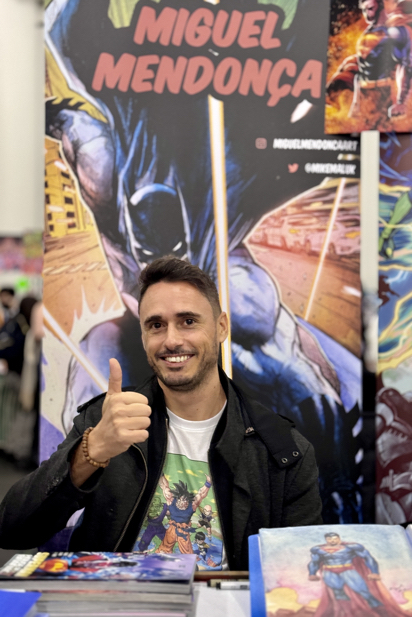
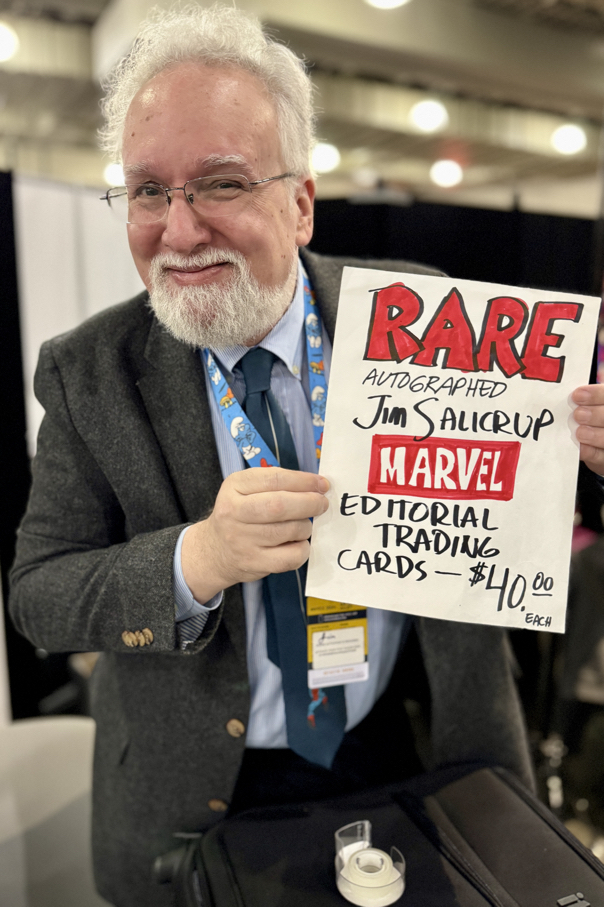
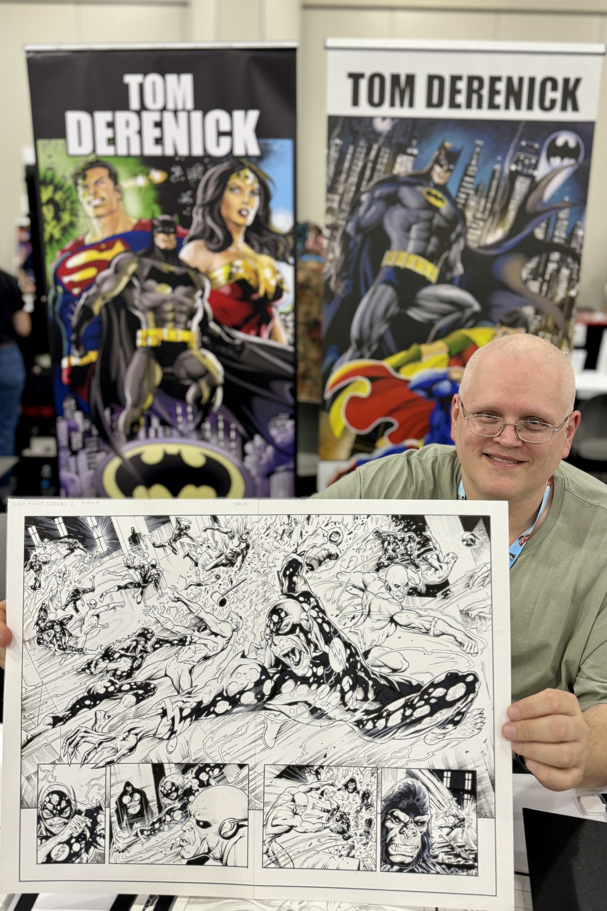
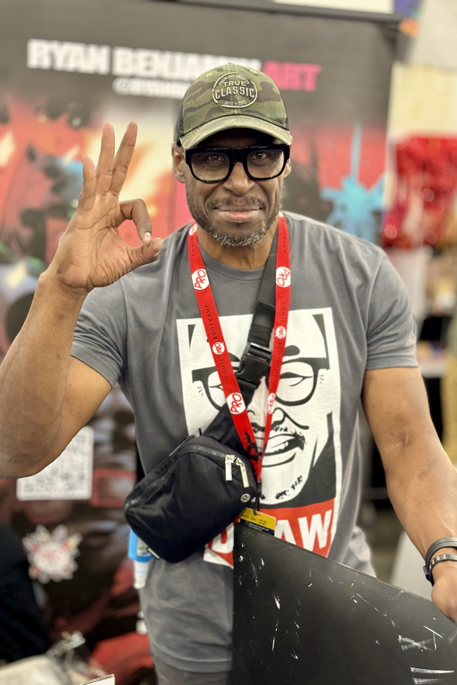
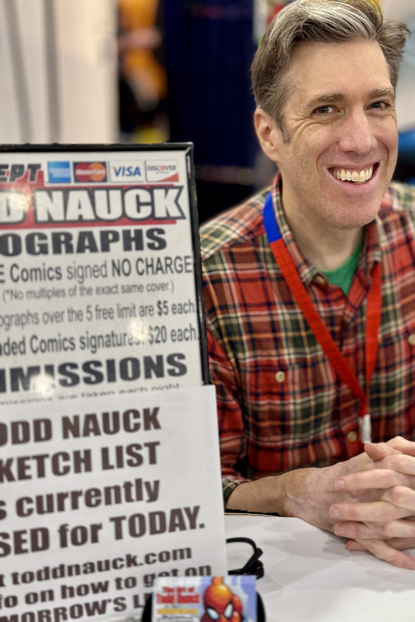
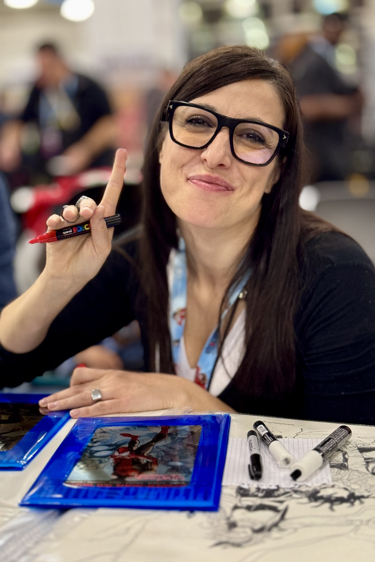
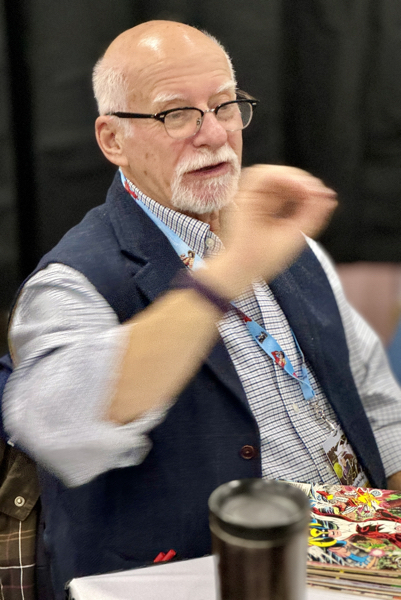
Scott HannaScott Eder & Vincent ZurzuloLarry HamaTimothy ZahnMiguel MendoncaJim SalicrupTim SeelyTom DerrnicickJae LeeRyan BenjaminTodd NauckSara PichelliChris ClaremontPatrick HorvathDave DormanElenora CarliniAdam KubertSimone Di MeoFreddie Williams IIThomas NachlikMarco ChecchettoAnthony MarquesLee WeeksAndy Park