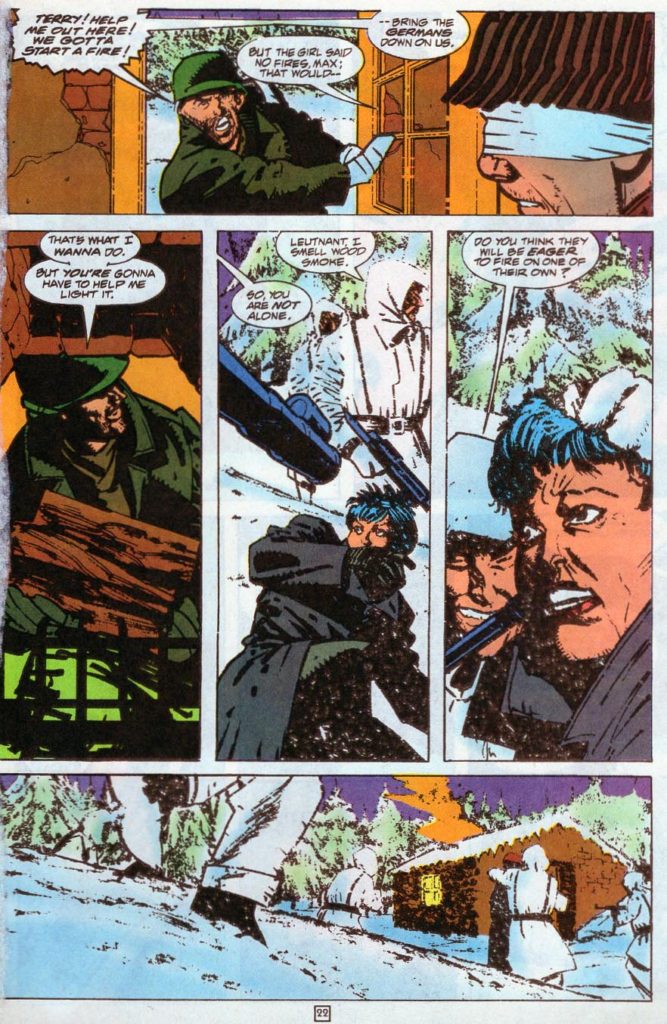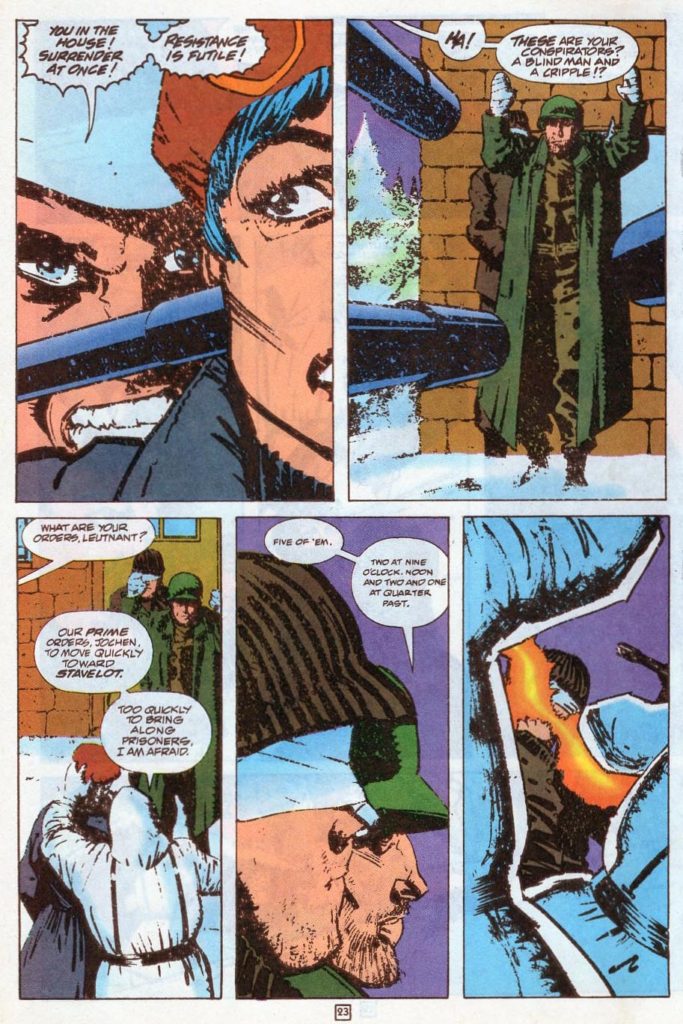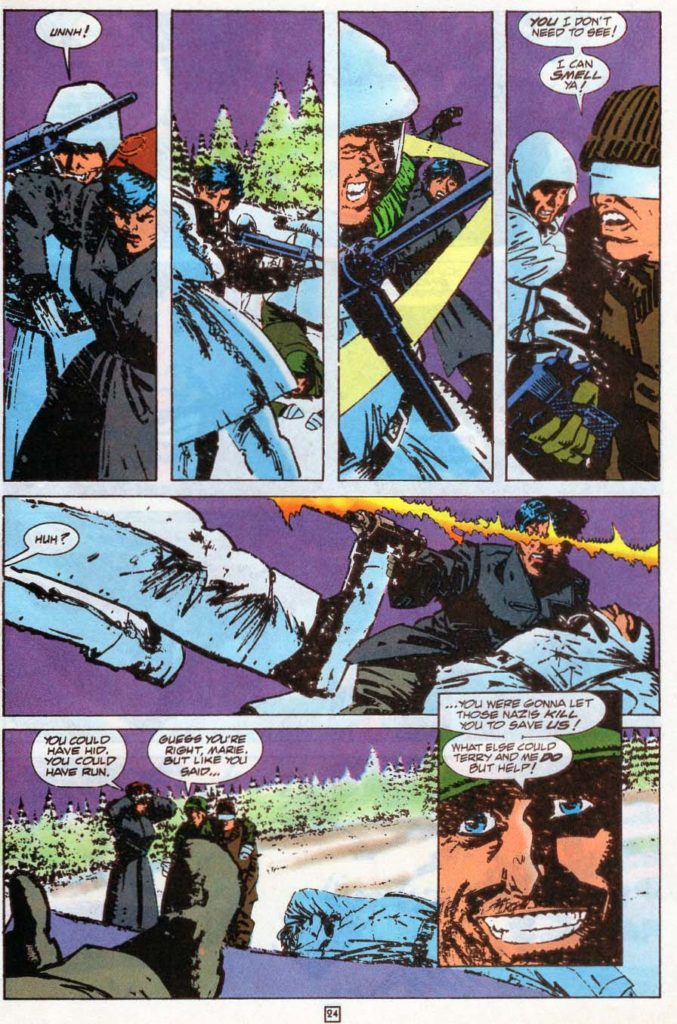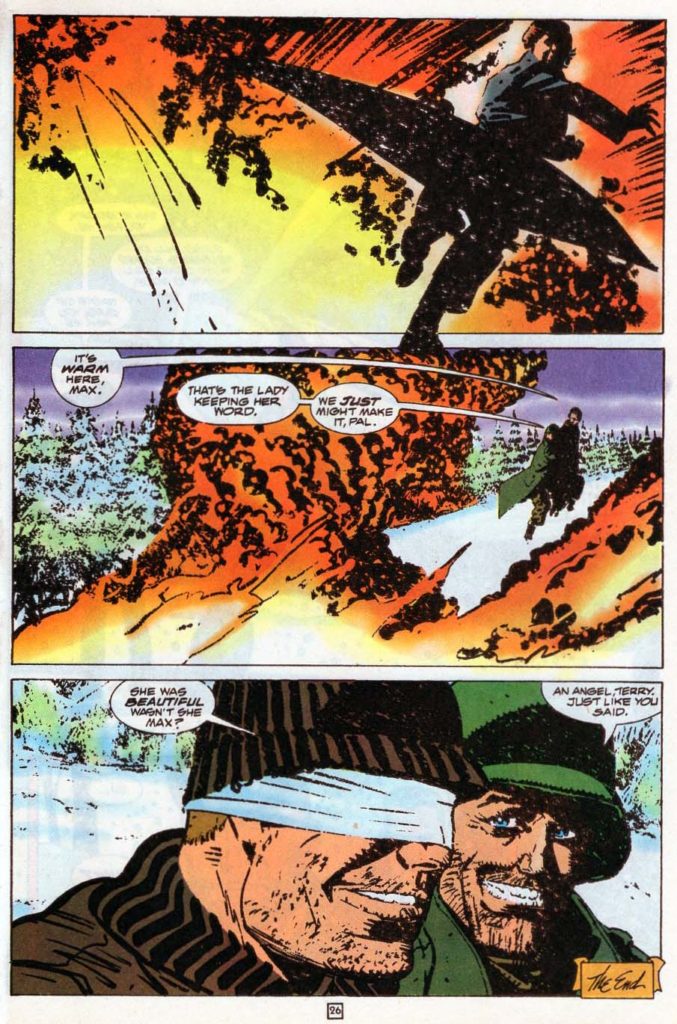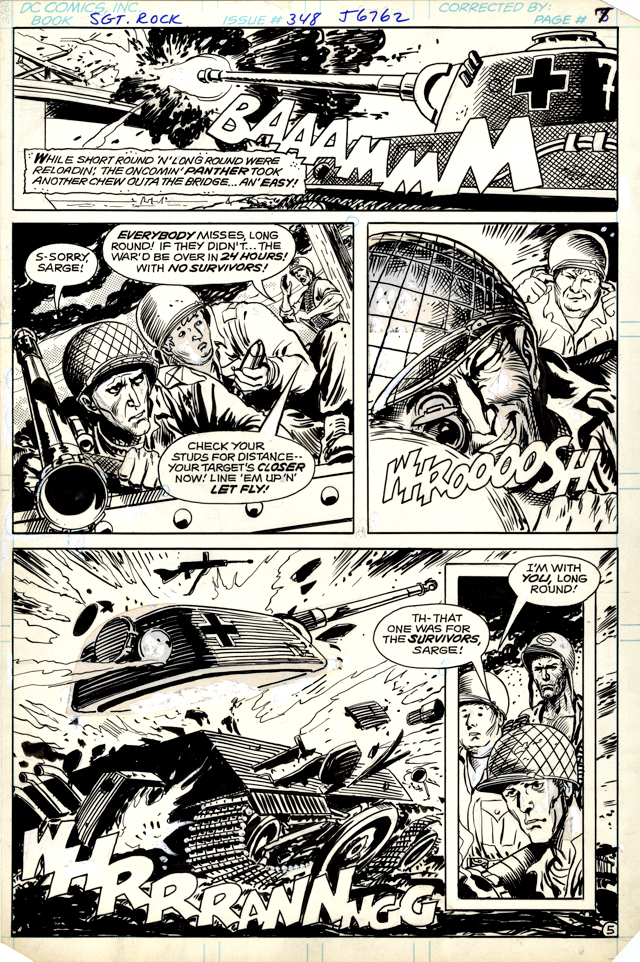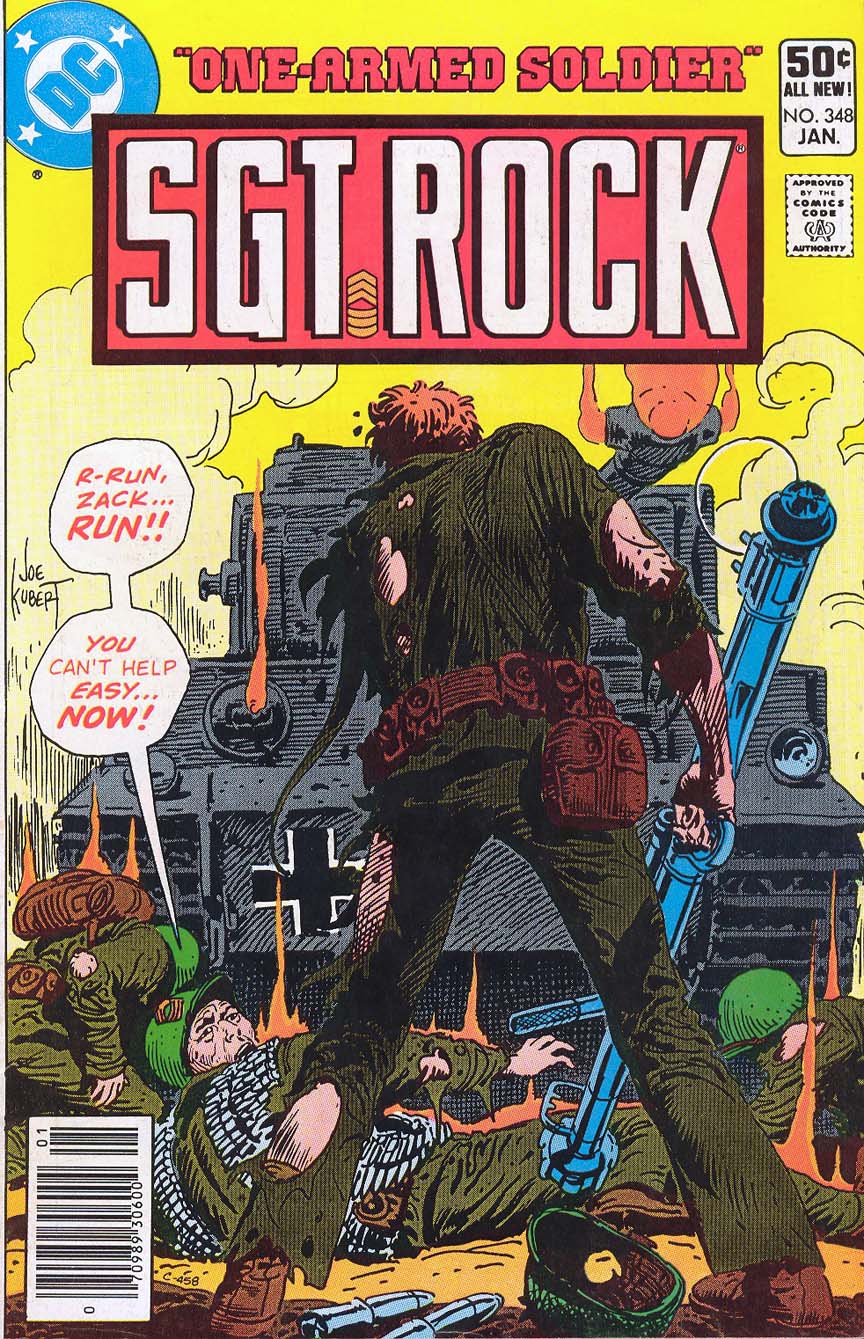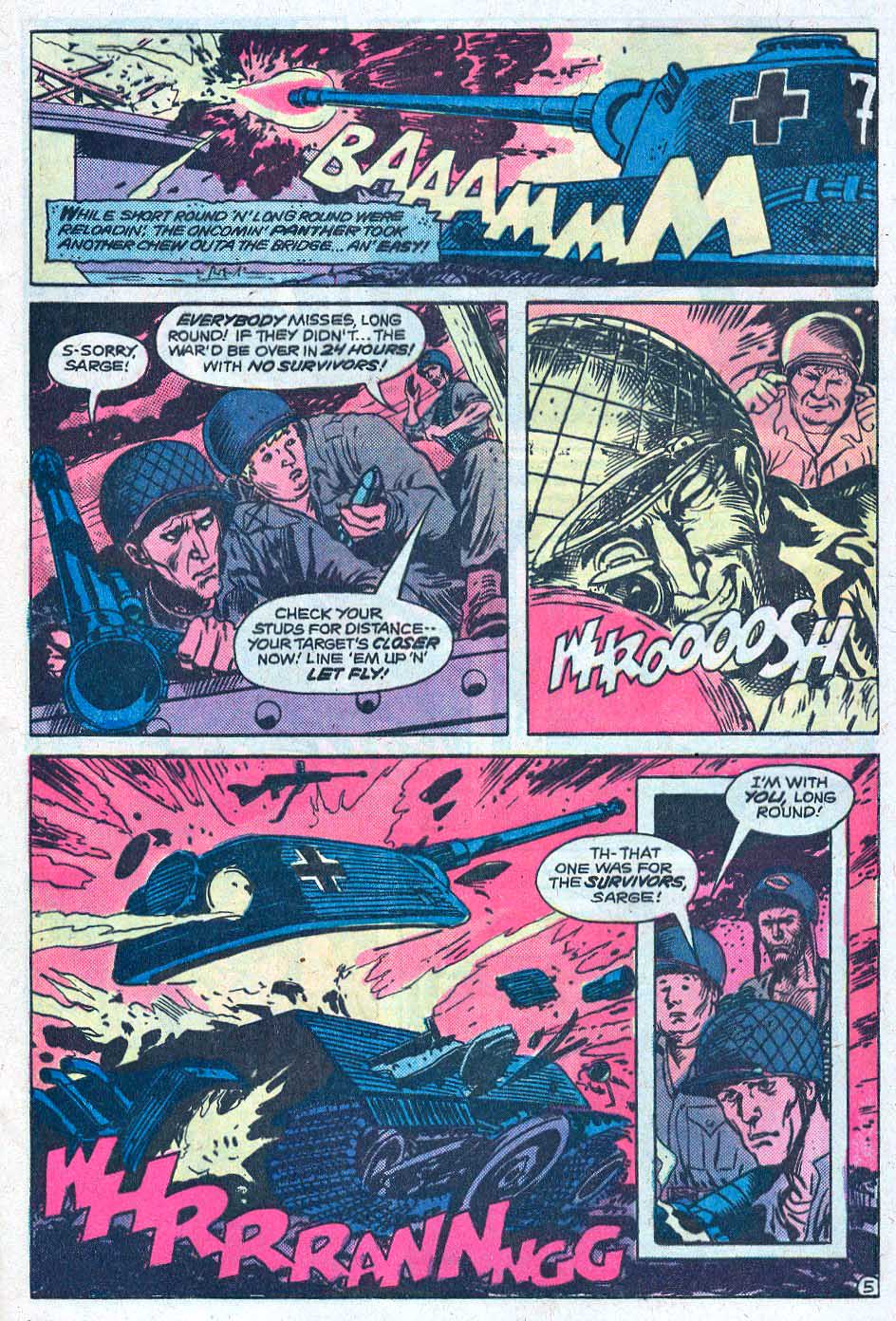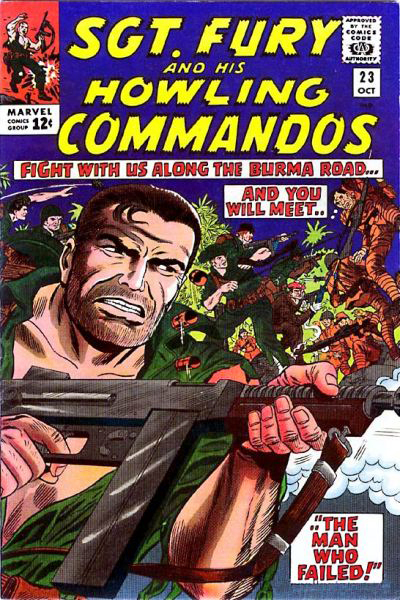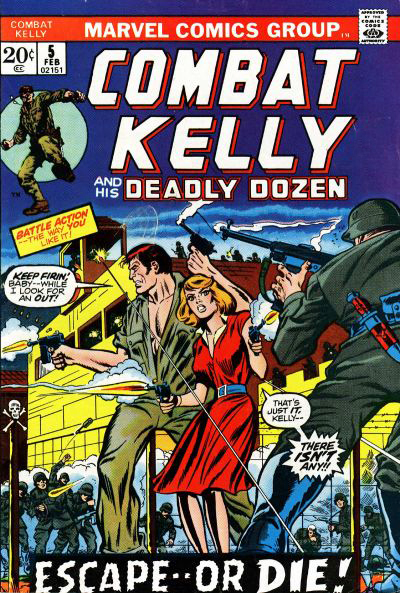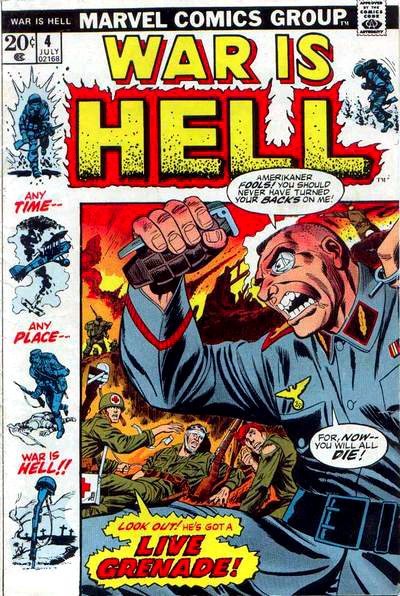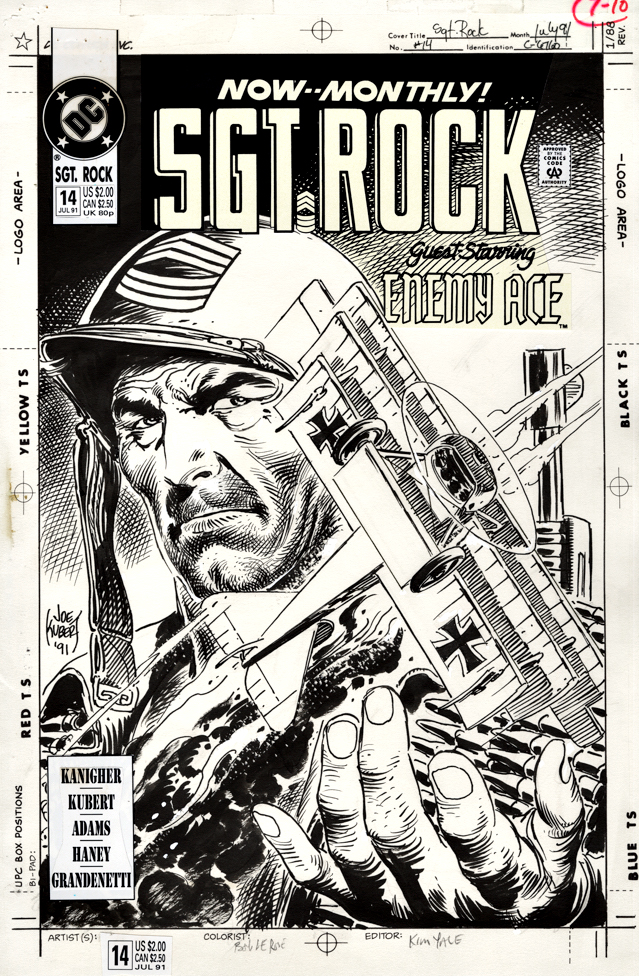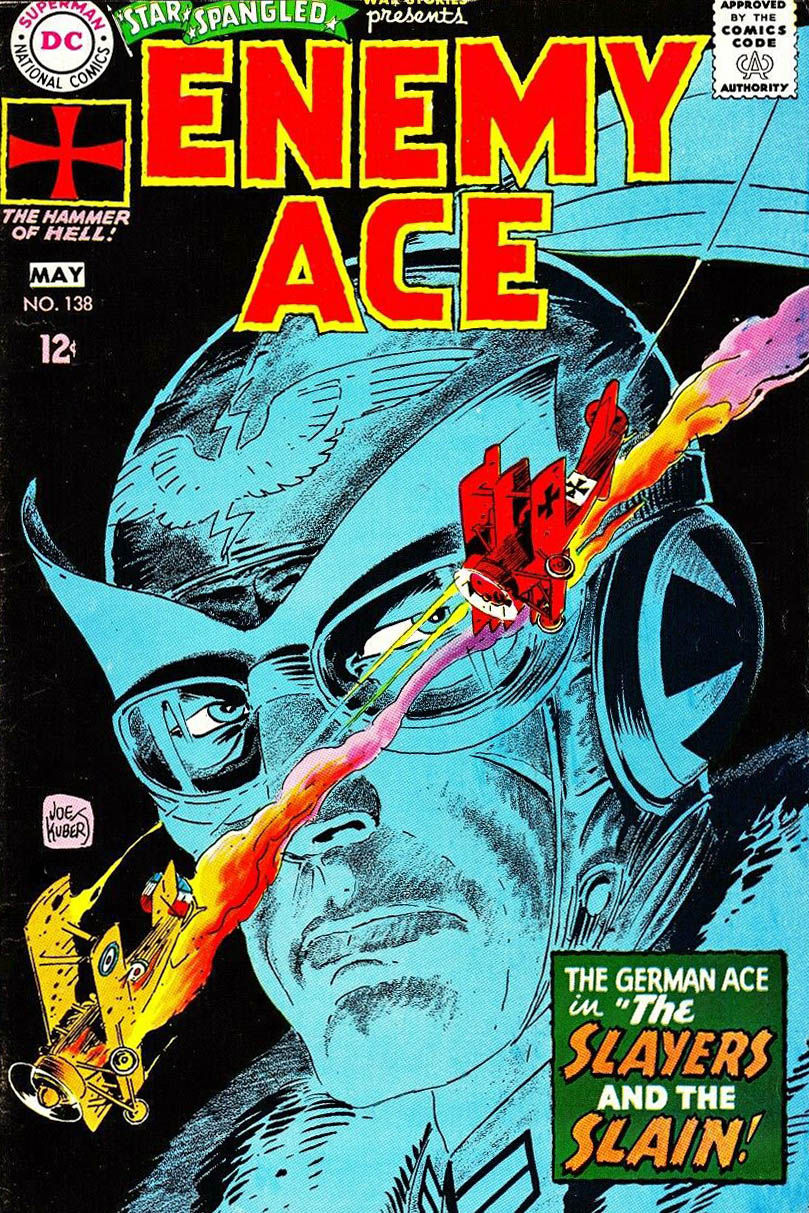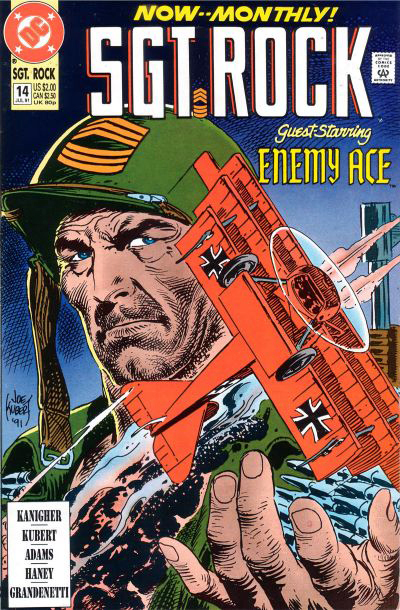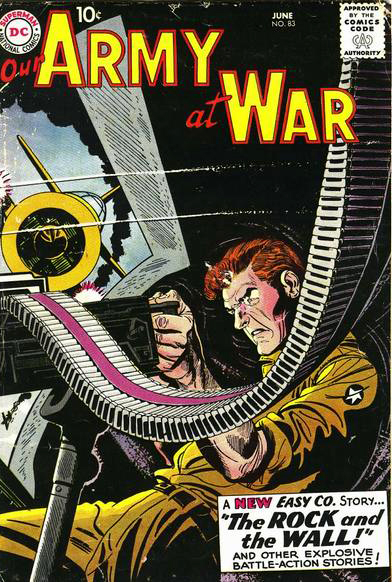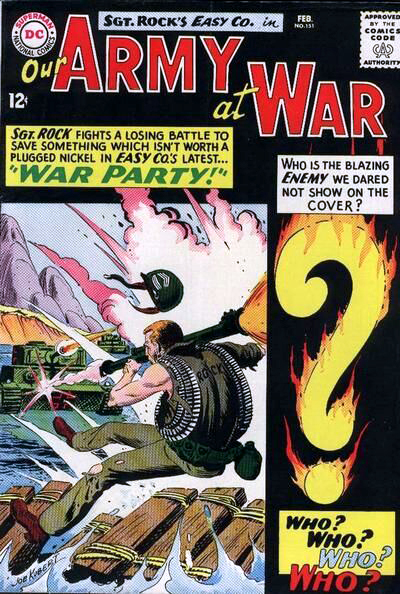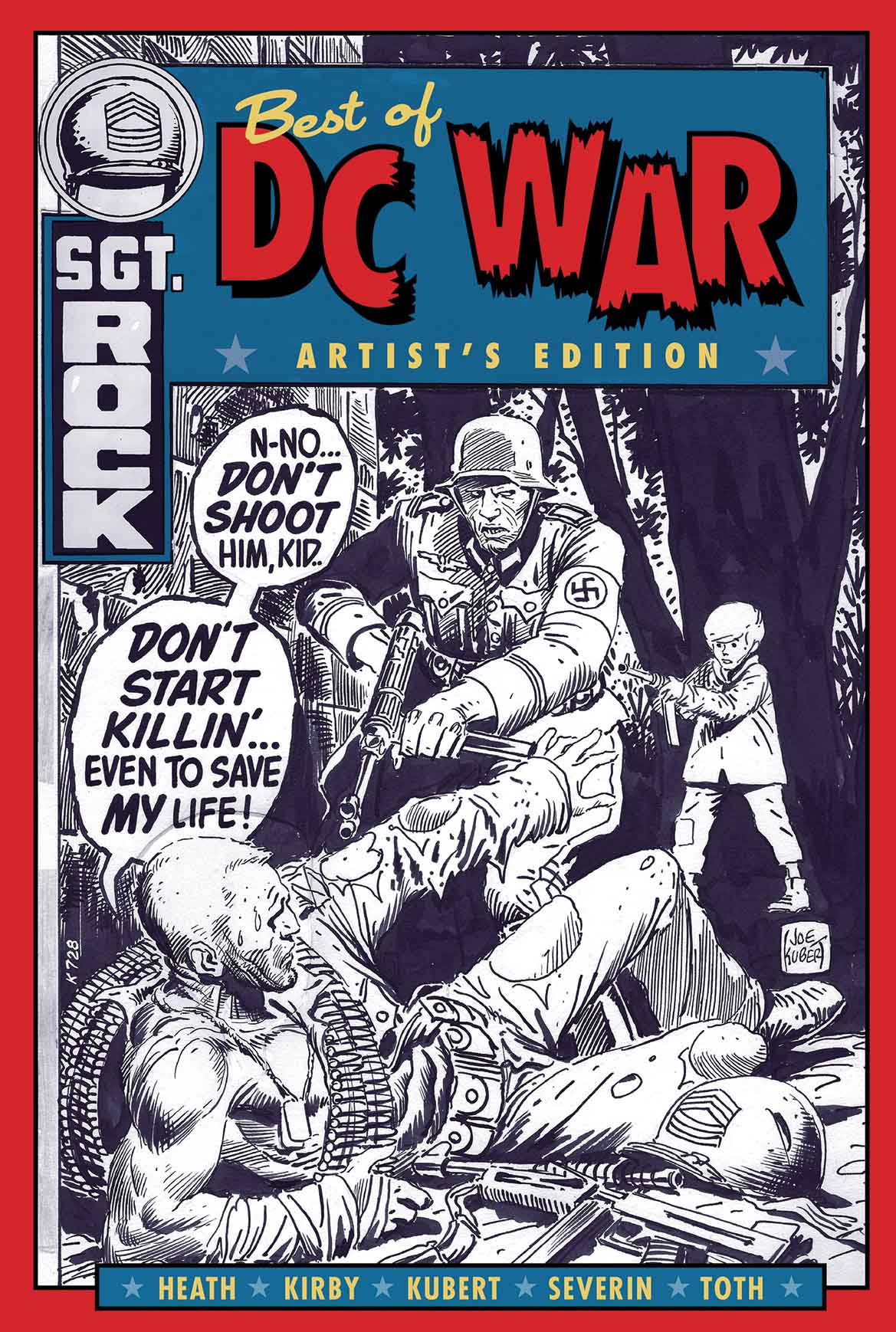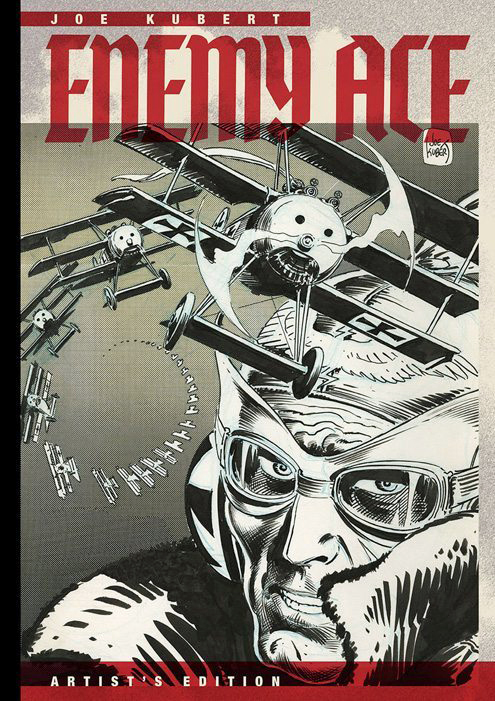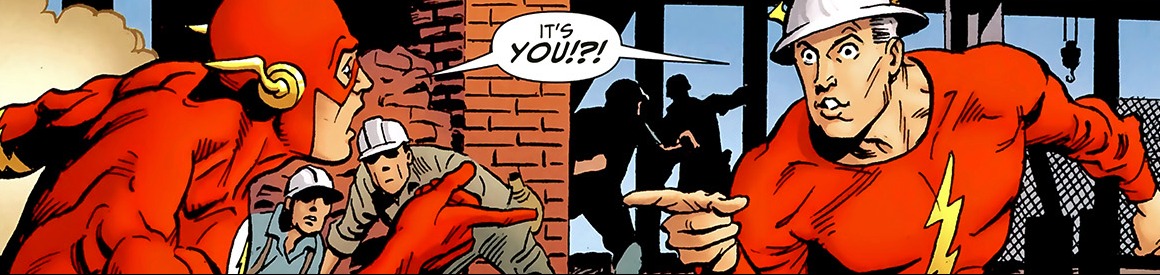
The legendary Joe Kubert “borrows” from himself to create an iconic cover image; one of the very few to feature both Sgt. Rock and Enemy Ace together.
It’s a beautifully rendered cover, and one my personal favorites.
Kubert’s covers graced so many DC war comics from the 60s through the 90s that occasionally seeing one from another artist is just… incongruous.
And as artist, editor and Publications Director, Kubert’s storytelling insight and eye for talent ensured that many of the interiors were terrific as well.
Ahead of Memorial Day later this month, we’re featuring a number of great pieces of art from DC’s war genre by some truly talented creators.
Stay tuned.
Revisiting an iconic image to craft a new one, more than 20 years later.Check the eyes on both the original cover and the homage.
Sgt. Rock and Enemy Ace make their first appearances years apart in The Silver Age, and DC and IDW create two beautiful original art collections 50 years later.
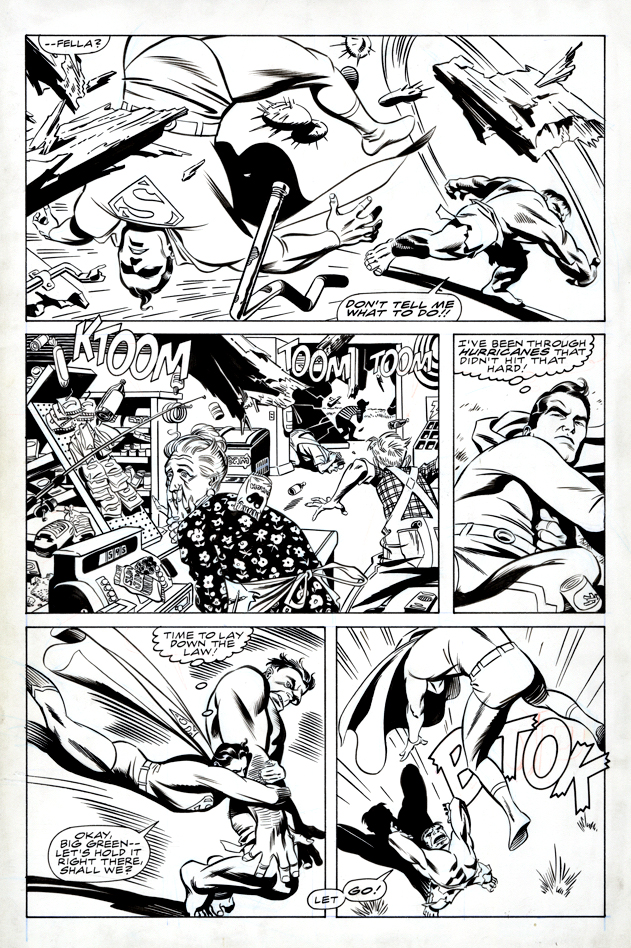
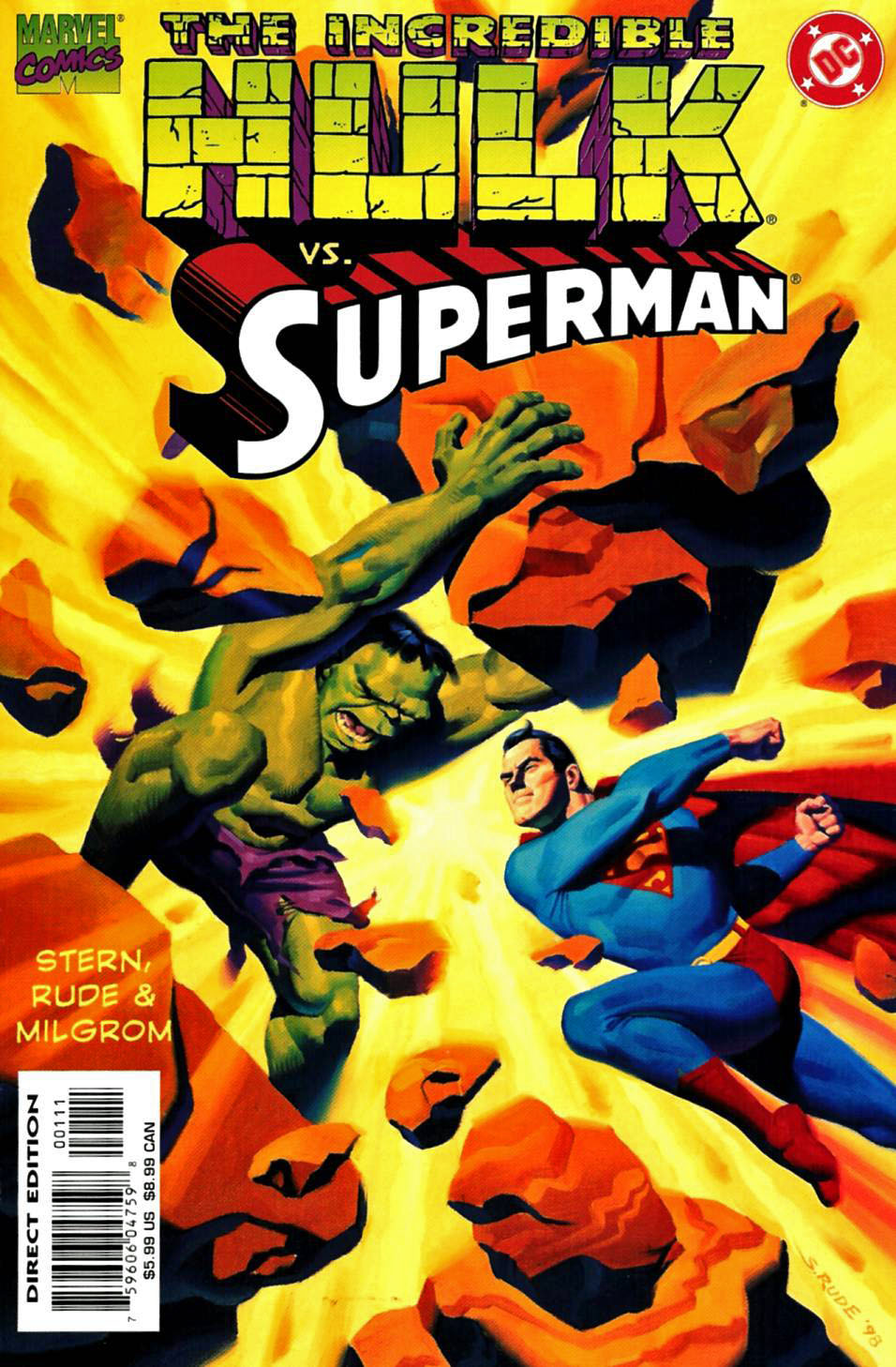
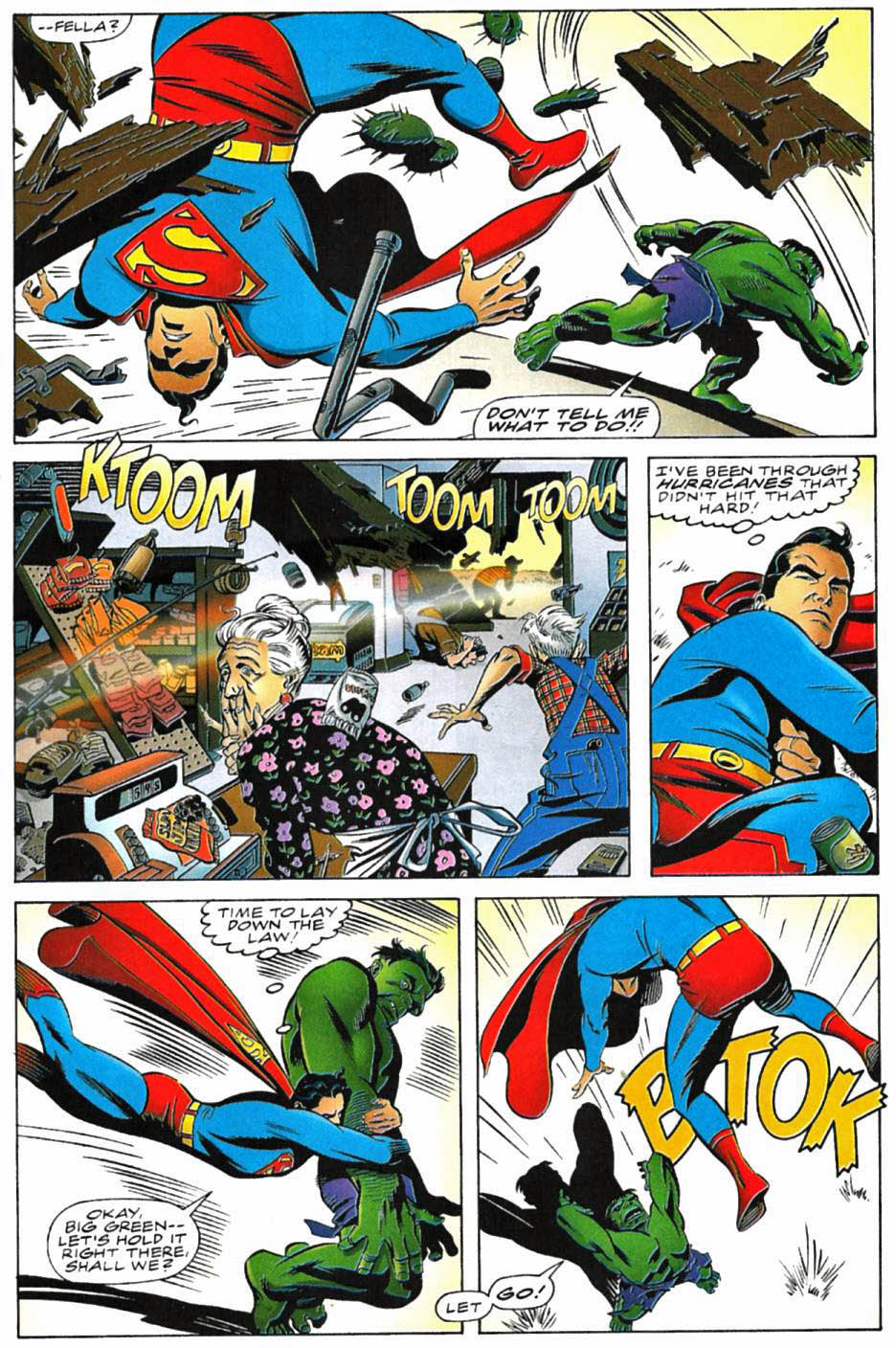
Steve Rude delivers a terrific action page of Superman vs. Hulk, as we continue to pay tribute to Hulk vs. heroes in other universes this week.
Superman vs. Hulk seems quite a bit more logical than Batman vs. Hulk. Theoretically, Superman would ultimately win, but at least he would be winded.
And come to think of it, Golden Age Superman, as originally conceived by Jerry Siegel and Joe Shuster, might still win, but it would be pretty close to a draw.
Early Silver Age Superman, who could move planets around, not so much.
Rude, who worships at the alter of Jack Kirby, and shows reverence for Shuster’s Superman as well, is the perfect artist to illustrate this pairing.
And Granny’s expression in the middle panel? Nothing like a bit of offbeat humor to lighten the mood of a titanic fight, albeit very briefly.
Rude is perfect for that, as well.
Technology gets better (and less expensive), and fans apply their creativity accordingly.
Late April is the time of year when we are typically revved up and ready for the upcoming summer movie blockbuster season.
Definitely not this year. June perhaps? (Fingers crossed, and all that.)
So here at the blog this week, we present the big blockbusters you will never see on the big screen anyway — crossovers featuring the Incredible Hulk with characters from other universes, starting with…
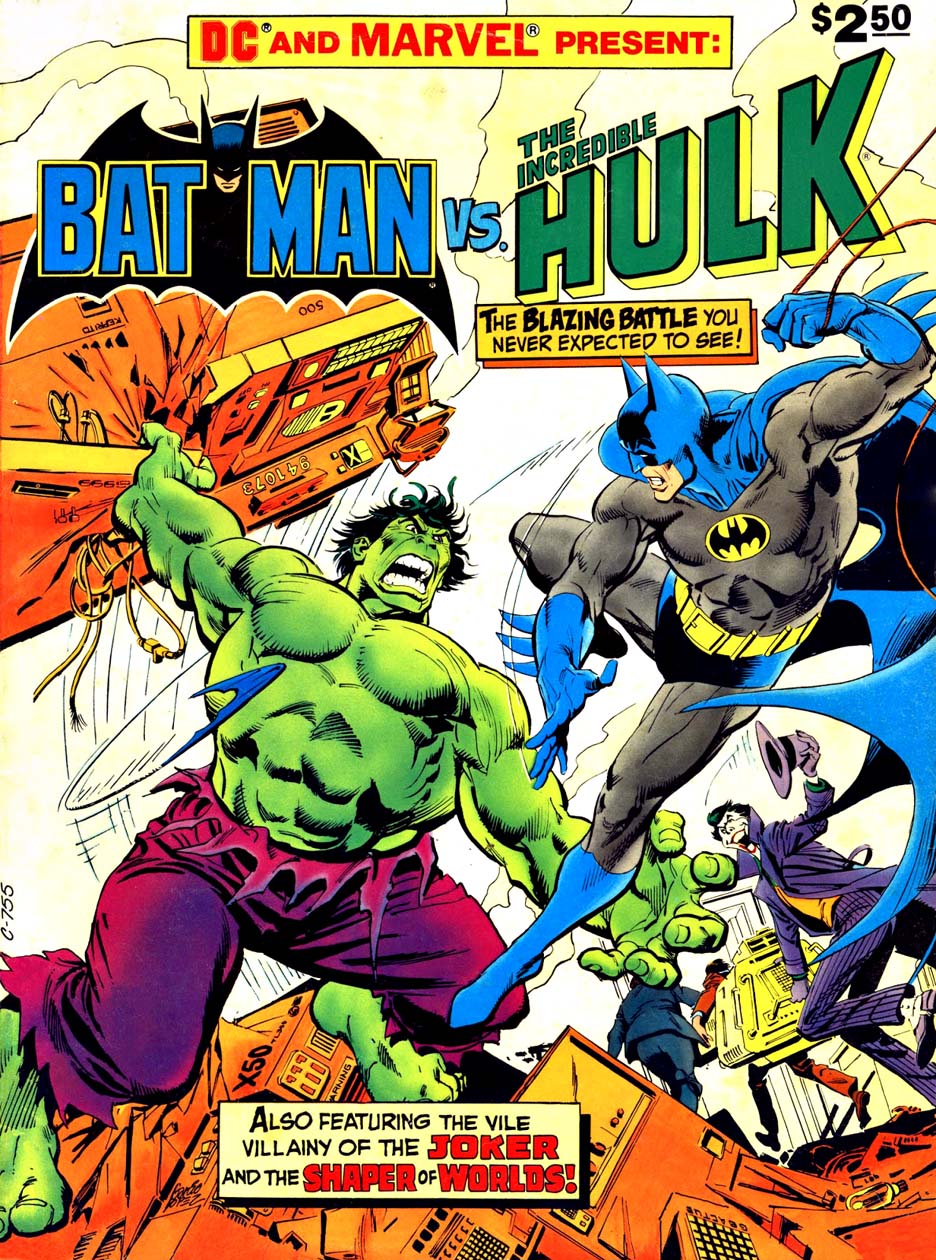
…Hulk vs. Batman.
This was the second character crossover between Marvel and DC, following the successful pairings of Spider-man and Superman a few years prior. At the time Superman was DC”s most important and recognizable character worldwide, so despite the power inequity, that original pairing made commercial sense. Of course, Batman vs. Spider-man is a fairer fight.
And Hulk vs. Superman? That seems fairer — More on that later.
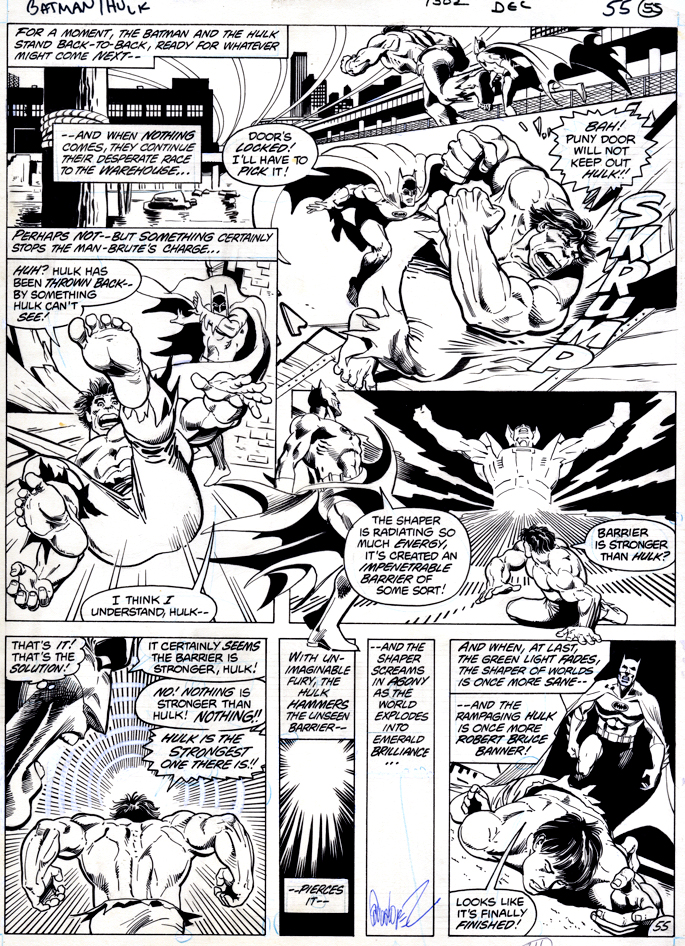
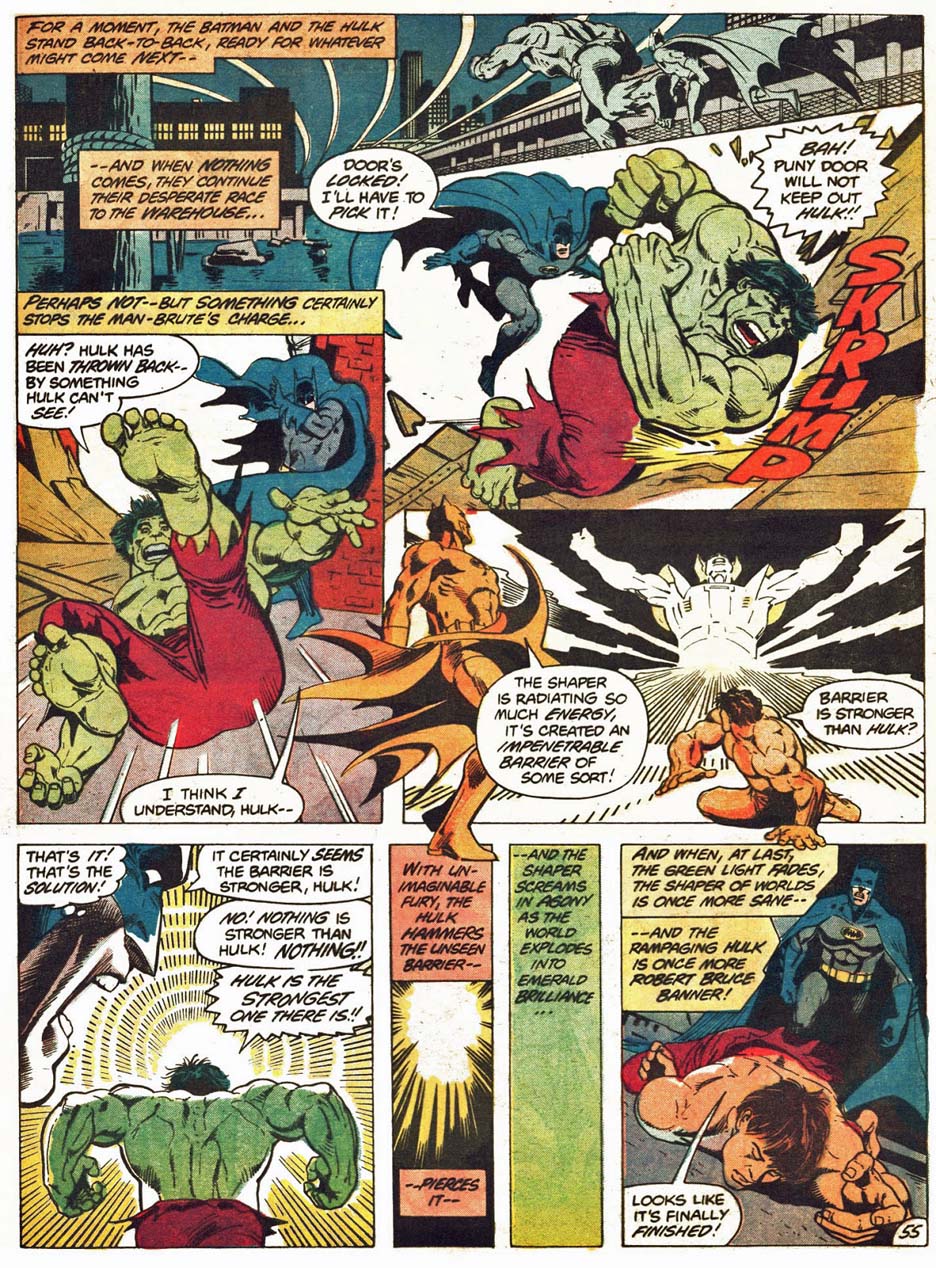
Meanwhile, despite the improbability of the match-up, Jose Garcia Lopez presents a master class in comic book storytelling in 48 pages.
It’s an astonishing piece of work, by an artist’s artist. Both visual imagination and draftsmanship are superb here. Many of the pages are top of class, and very few are anything less than terrific.
I prefer Lopez inking himself, but Giordano does a terrific job, and despite the mismatch of powers, it’s a fun ride.
But seriously, Batman “vs.” Hulk? (Eventually, of course, as illustrated here, they team up.) It may have been a fun ride, but realistically, it should have been a very short one.
We conclude our celebration of Jack Kirby’s legacy at DC Comics with one more look at Jack’s characters and concepts as envisioned by other creators.
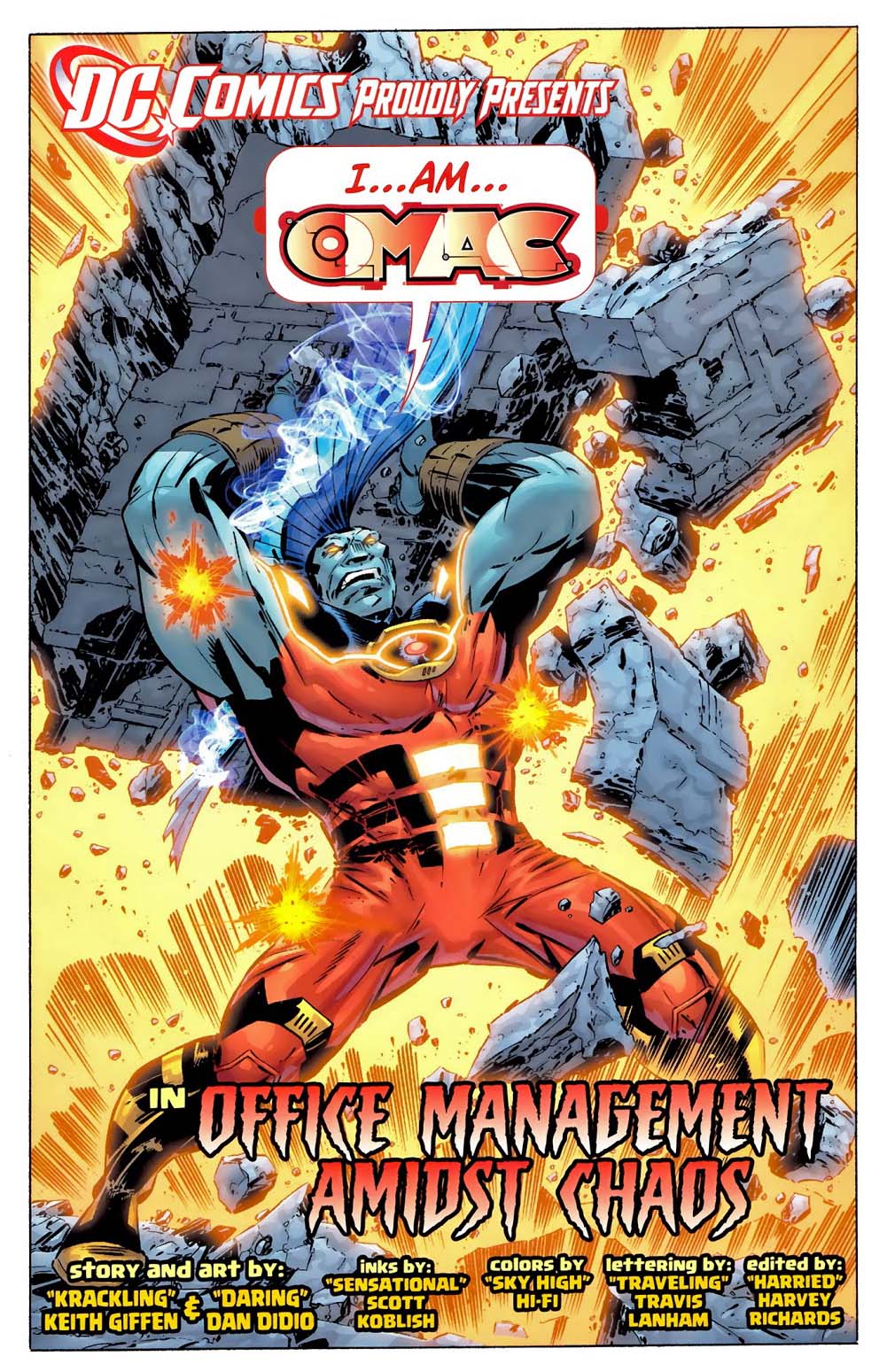
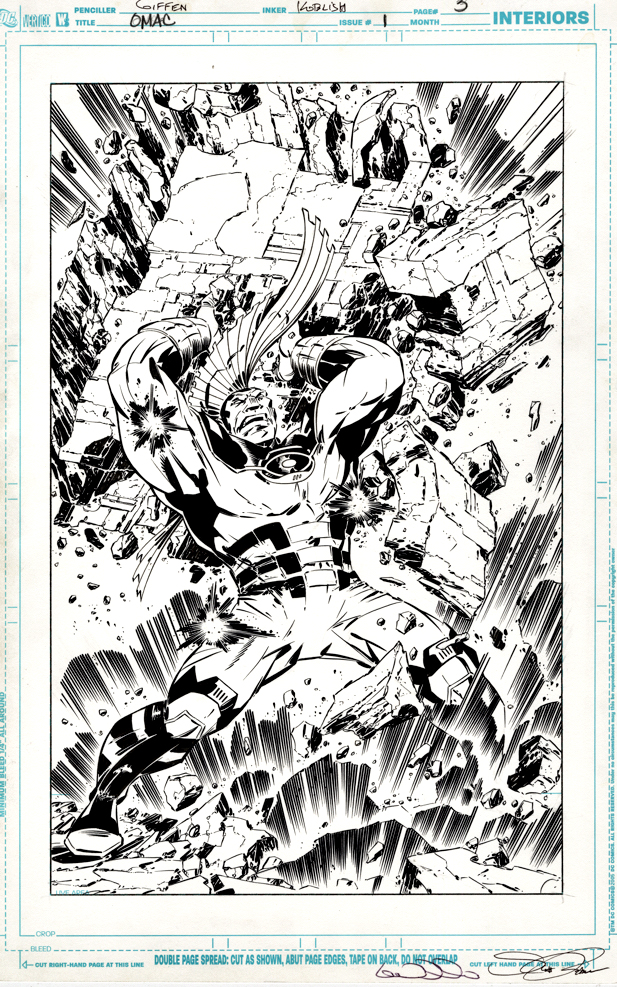
Keith Giffen gets an opportunity to play in the DC Kirbyverse with O.M.A.C., based on Jack’s short-lived series at DC about a future that was closer than we realized. Critically acclaimed, it was cancelled after just eight issues. (Coincidentally, Jack’s original series was cancelled after eight issues as well.)
“OMAC was my favorite title of DC’s initial New 52 relaunch, but being based on a Jack Kirby character that’s more obscure than Kamandi and Devil Dinosaur combined probably didn’t help when it came time for DC to trim its first wave of underperforming titles. The fact that it was written by fan rage magnet DiDio made for marketplace kryptonite. You could’ve lined the interior of the book with 20-dollar bills and nobody would’ve bought it.”—Tom Scioli, writer, artist and author of Jack Kirby: The Epic Life Of The King Of Comics.
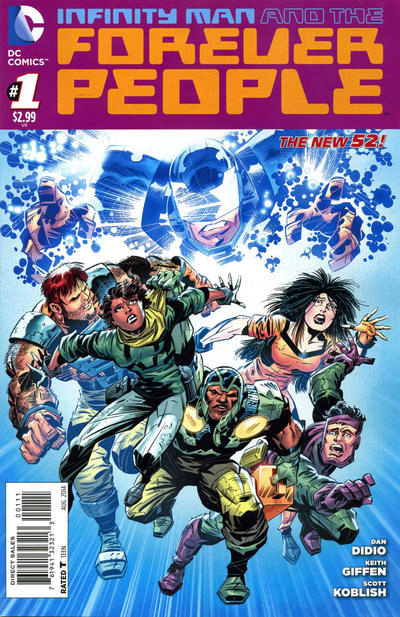
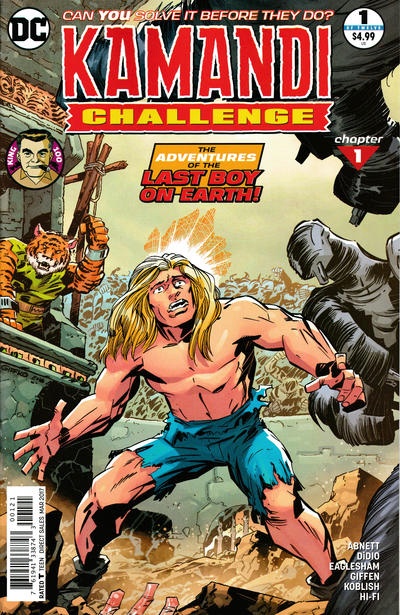
Giffen, a legendary Kirby fanatic, also wrote and drew a Forever People series and the first issue of the Kamandi Challenge, all with co-conspirator DiDio, who happened to be DC’s publisher at the time.
*Purists will note that some of the characters and titles actually made it onto newsstands before the close of 1970, but the fully integrated series (Jimmy Olsen, Forever People, New Gods, and Mister Miracle) — doesn’t fully materialize until the following year.
We continue to celebrate Jack Kirby’s legacy at DC Comics with a special two-week look at Jack’s characters and concepts as envisioned by other creators. 2021 is the Fiftieth anniversary of the Fourth World storyline. *
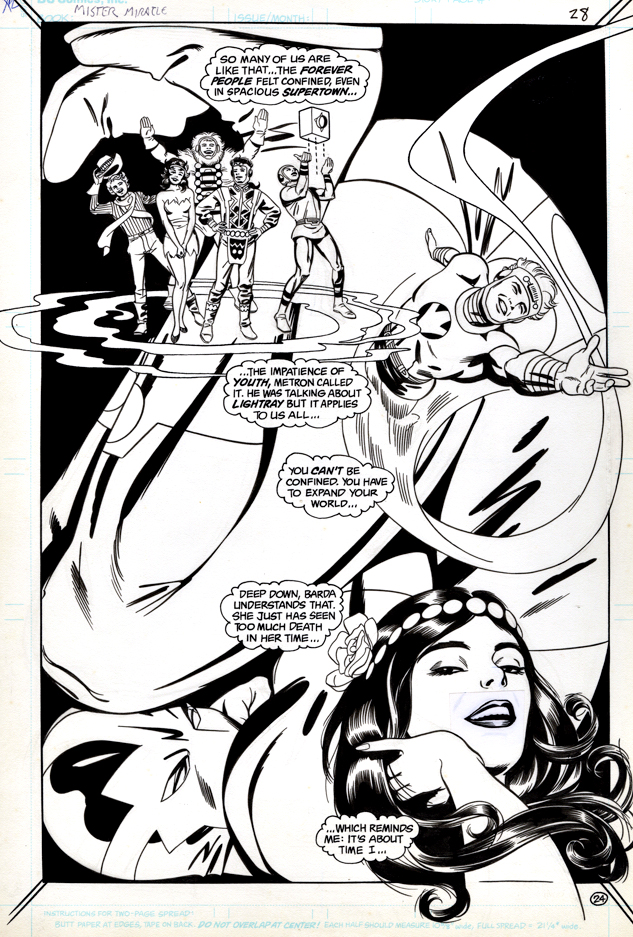
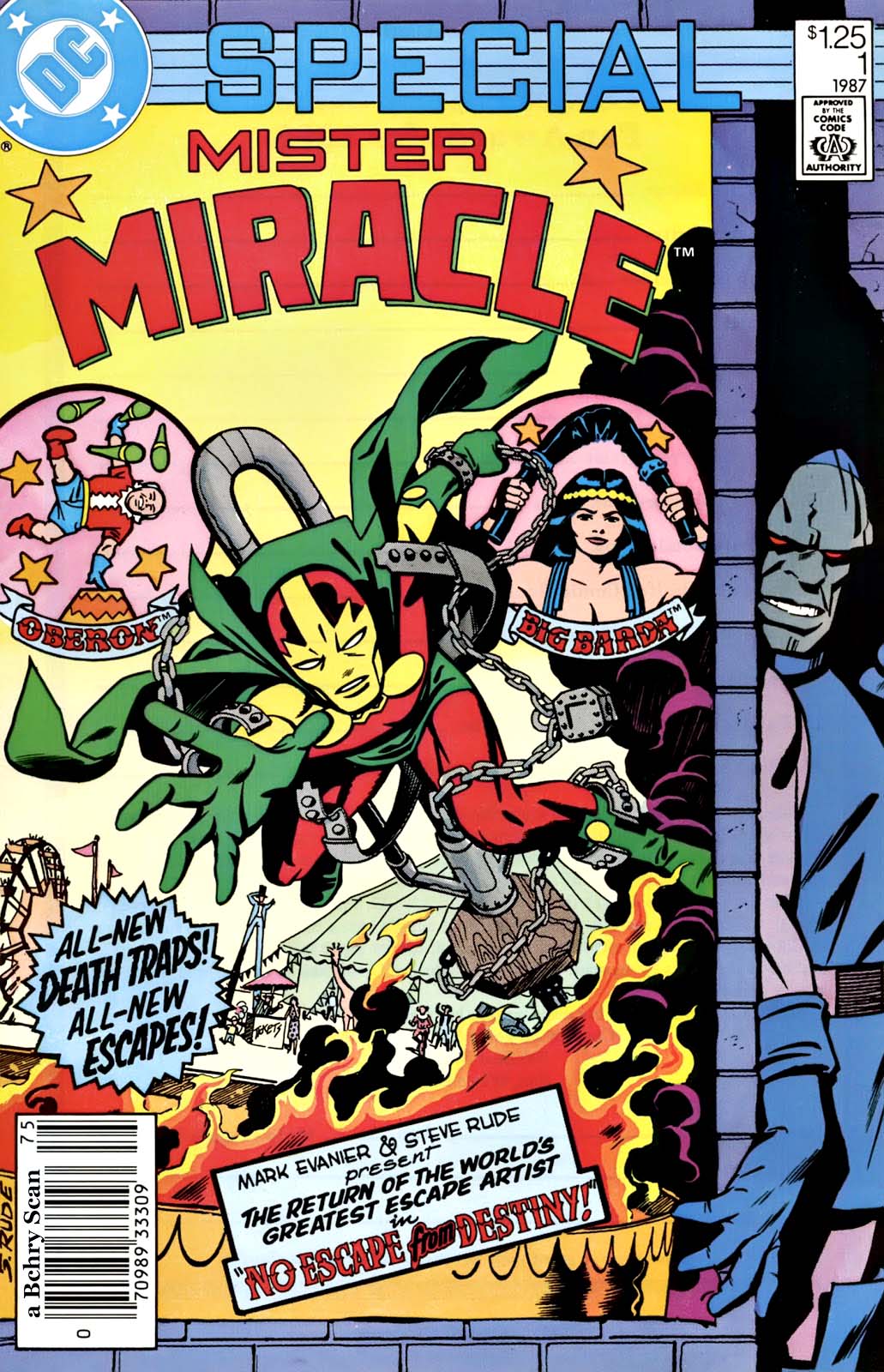
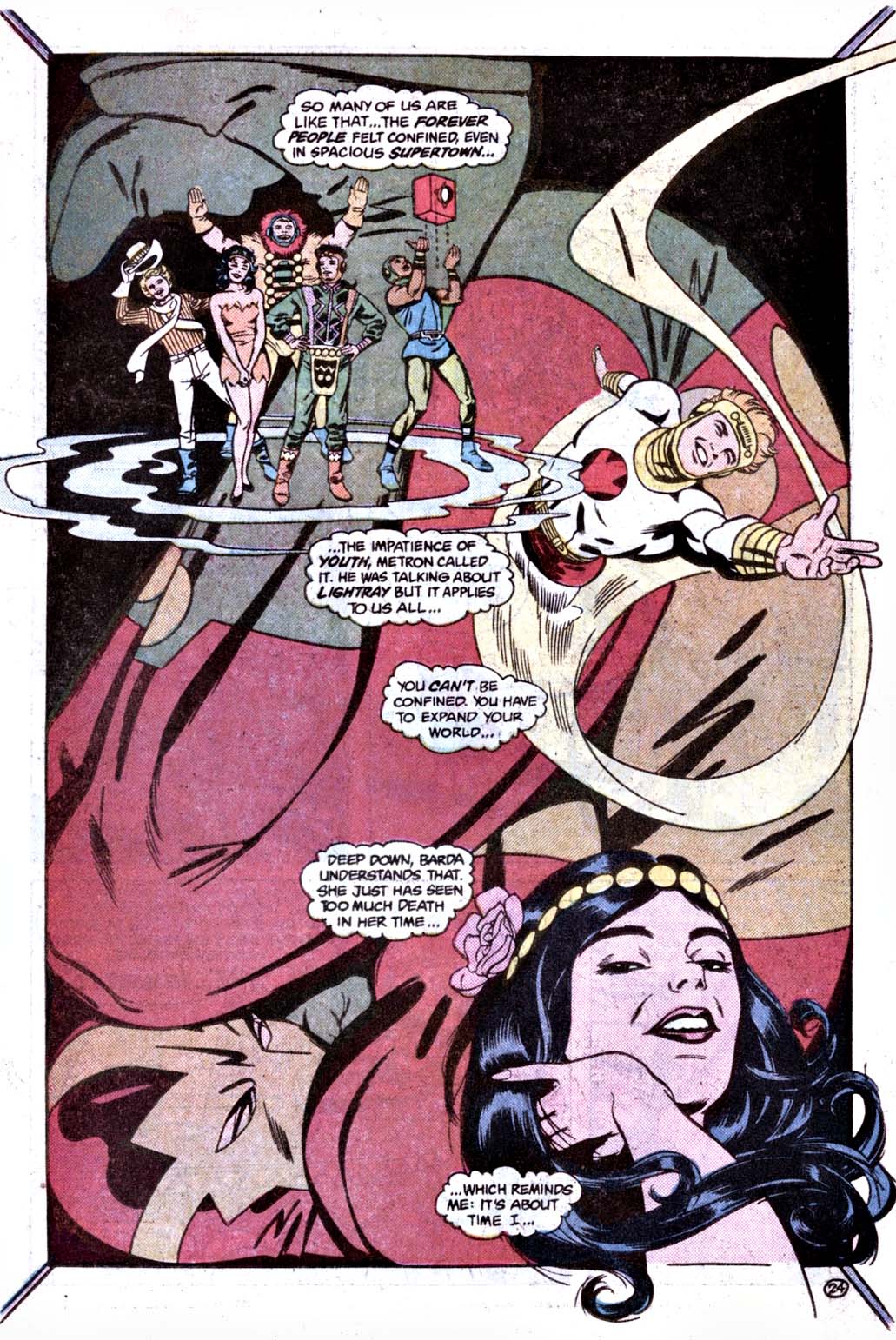
Jack Kirby super-fan Steve Rude pens this artistic love letter to Kirby’s Fourth World, in this one-shot from 1987. Along for the tribute are Jack’s best-known collaborators at DC, writer Mark Evanier and inker Mike Royer.
On this inventive and powerful splash page — the best in the issue — Rude cleverly uses a “trapped” Miracle as the backdrop for other Fourth World characters including The Forever People, Lightray of the New Gods, and Big Barda.
Rude and Evanier would reunite again for another Kirby tribute years later with a 1999 Jimmy Olsen story in Legends of the DC Universe # 14. (Inked this time by Bill Reinhold.)
*Purists will note that some of the characters and titles actually made it onto newsstands before the close of 1970, but the fully integrated series (Jimmy Olsen, Forever People, New Gods, and Mister Miracle) — doesn’t fully materialize until the following year.
We continue to celebrate Jack Kirby’s legacy at DC Comics with a special two-week look at Jack’s characters and concepts as envisioned by other creators. 2021 is the Fiftieth anniversary of the Fourth World storyline. *
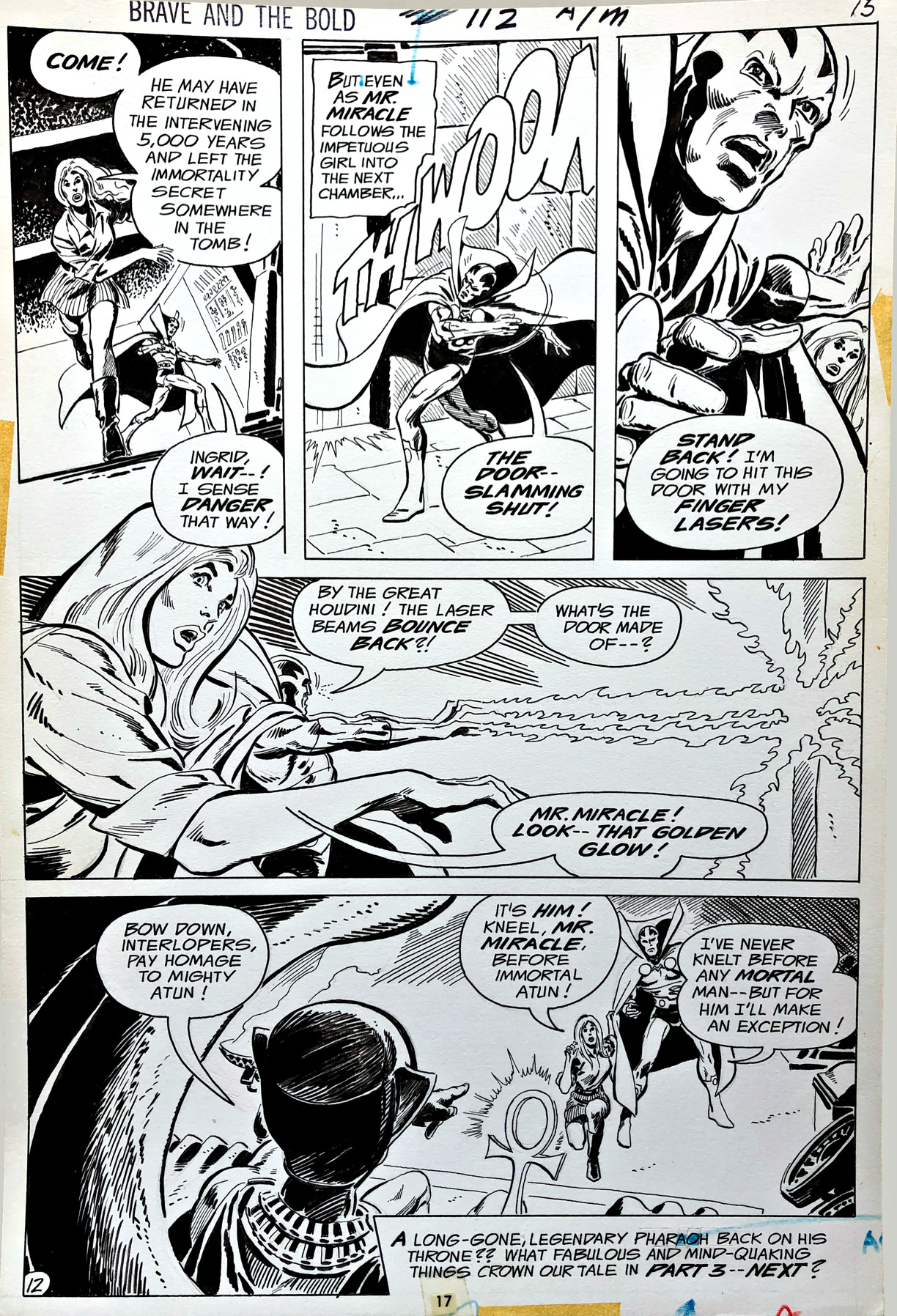
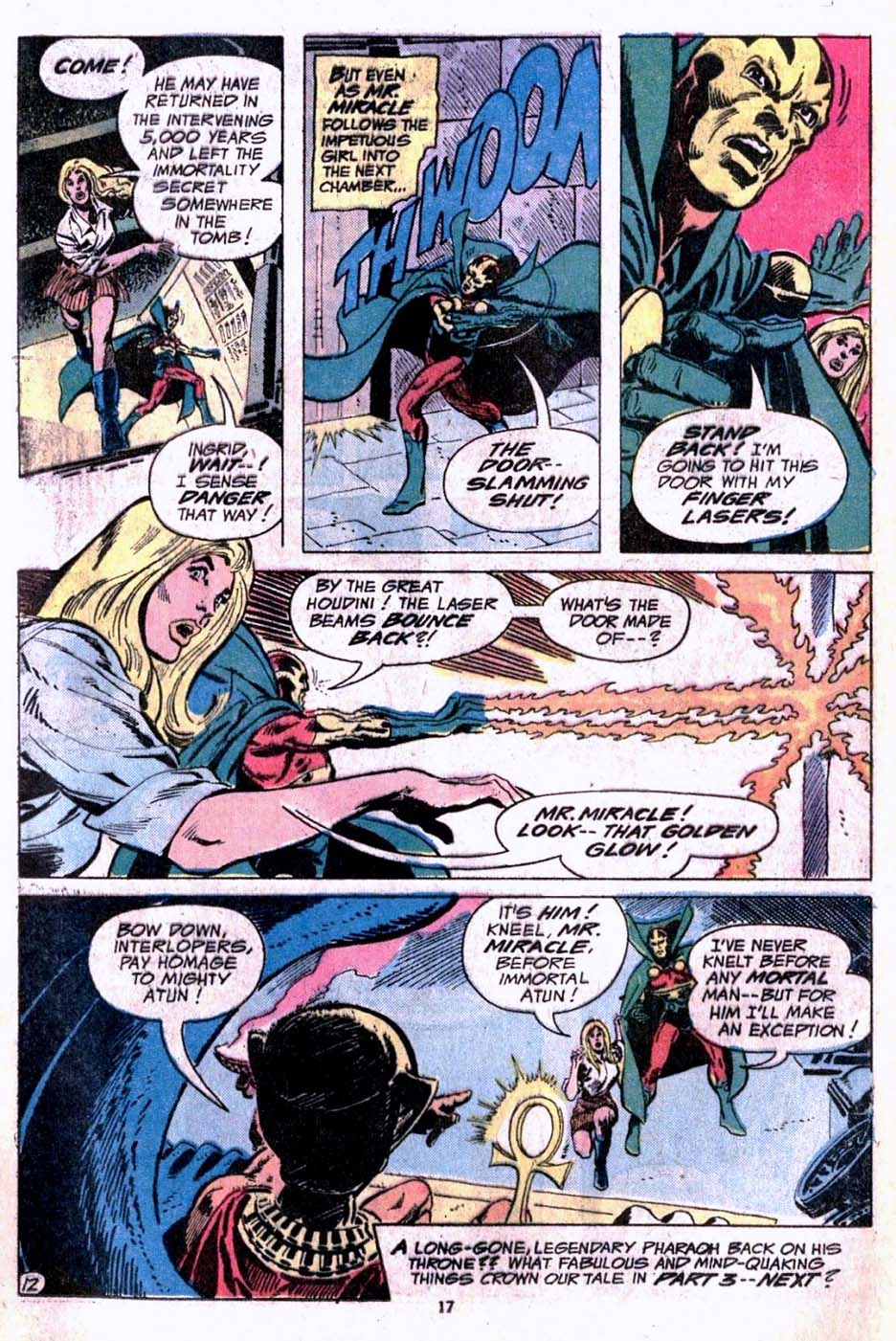
Mister Miracle makes his first appearance outside of the Jack Kirby DC universe in this cool Batman team-up story in the Brave and The Bold, penciled and inked by the legendary bat-artist Jim Aparo.
Ironically, Kirby’s own Mister Miracle title had been cancelled the month previously, effectively ending the Jack’s interconnected Fourth World, a little more than three years after it started.
Think of it as the 19th Bronze Age issue of Mister Miracle; it would take another three years for an actual issue #19 — without Jack’s involvement — to see the light of day.
(The bat team of writer Bob Haney and artist Aparo effectively weave Mr. Miracle into the greater DC Universe, and the two escape artists will team up again in issue #126 as well.)
*Purists will note that some of the characters and titles actually made it onto newsstands before the close of 1970, but the fully integrated series (Jimmy Olsen, Forever People, New Gods, and Mister Miracle) — doesn’t fully materialize until the following year.
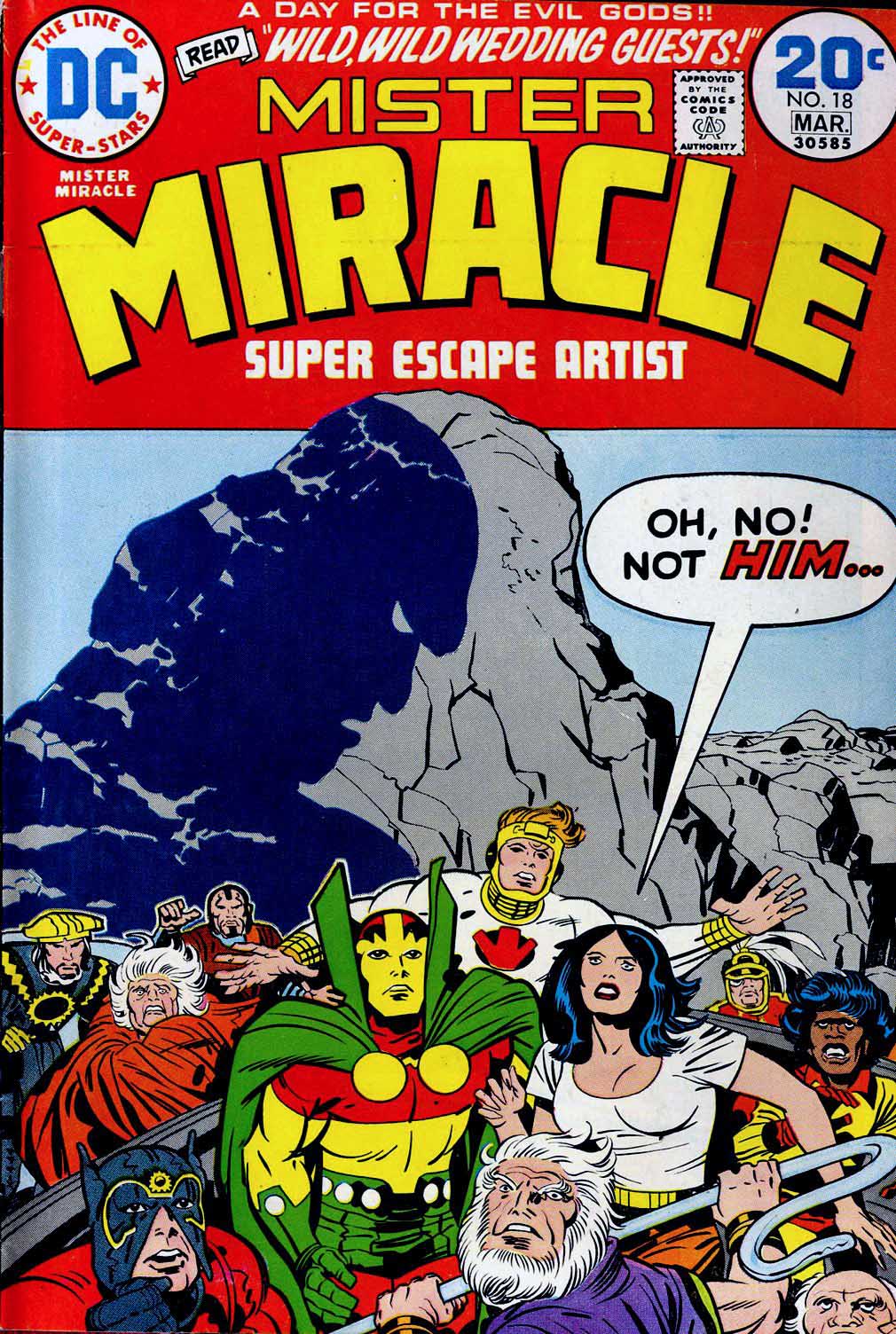
The final issue of Mister Miracle (#18) is also the final issue in Jack Kirby’s New Gods saga until he returns to it briefly about 10 years later. But hey, miraculously, our great escape artist shows up right on publication schedule —- albeit as a guest star in a Batman book.
We continue to celebrate Jack Kirby’s legacy at DC Comics with a special two-week look at Jack’s characters and concepts as envisioned by other creators. 2021 is the Fiftieth anniversary of the Fourth World storyline. *
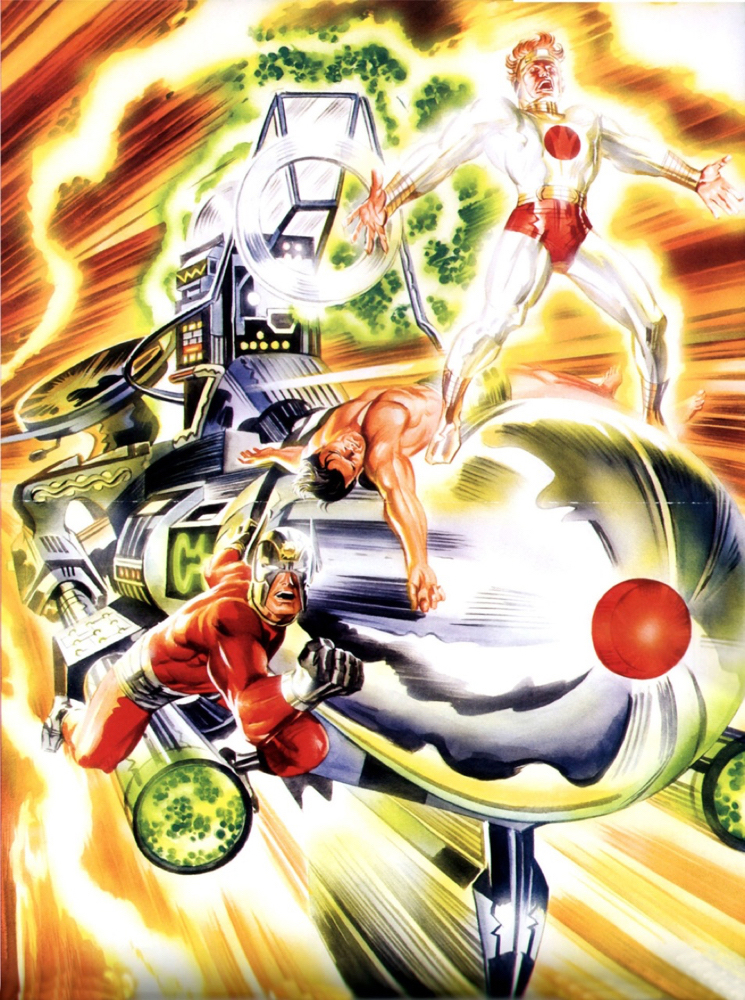
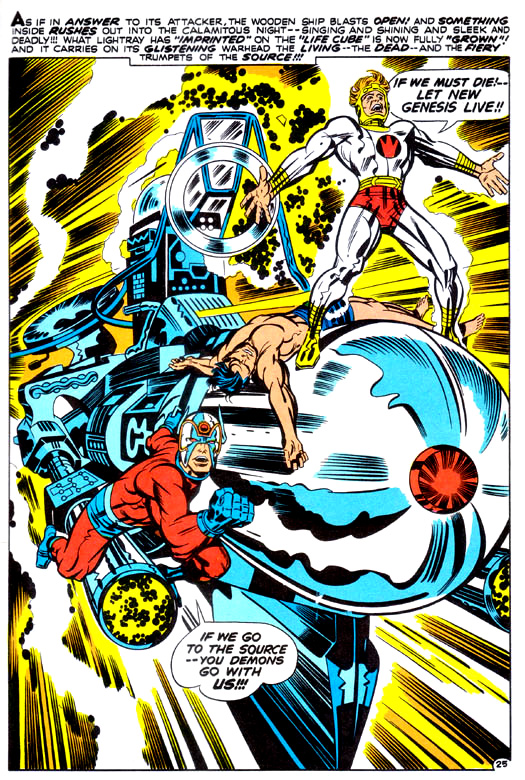
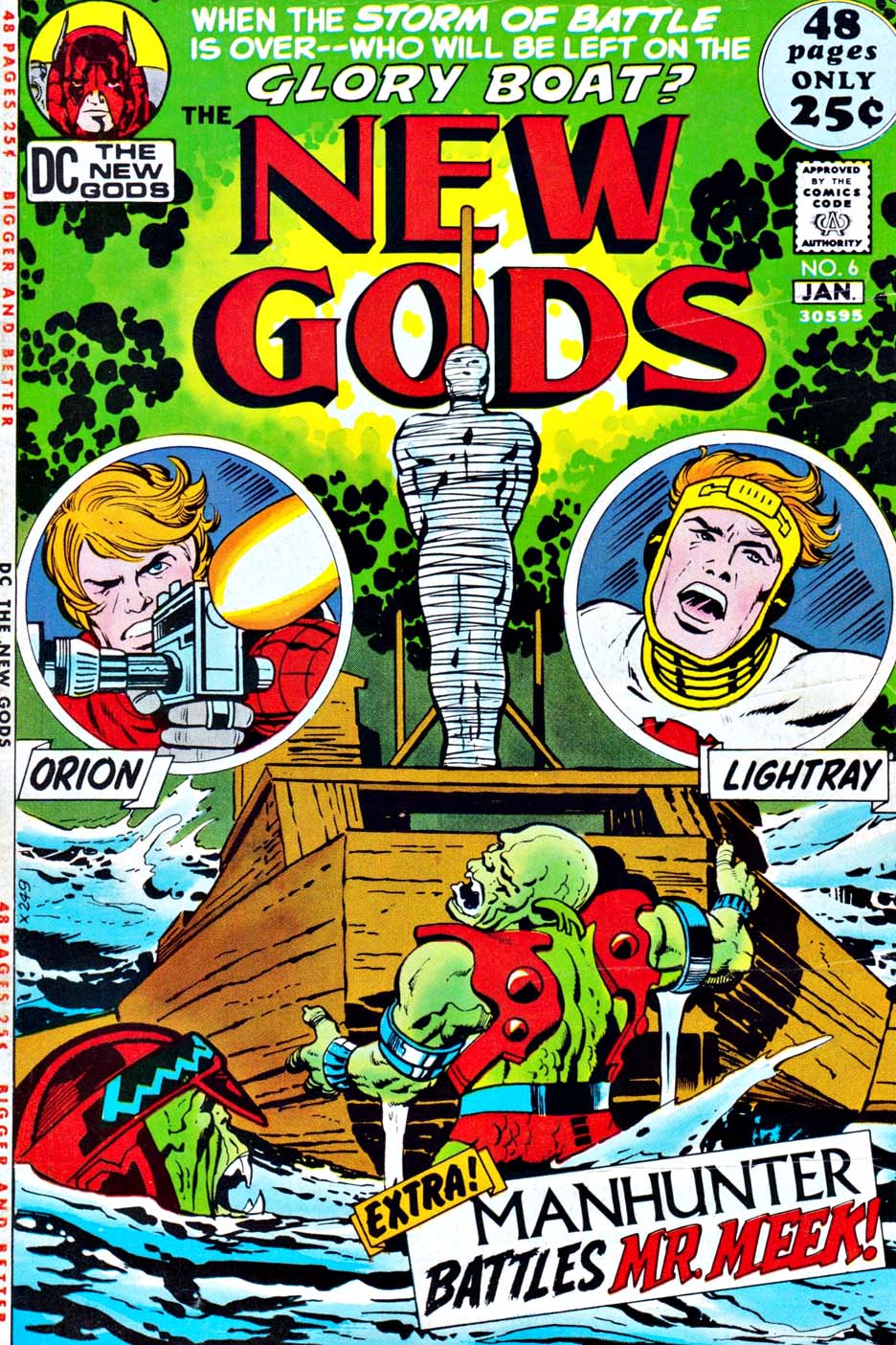
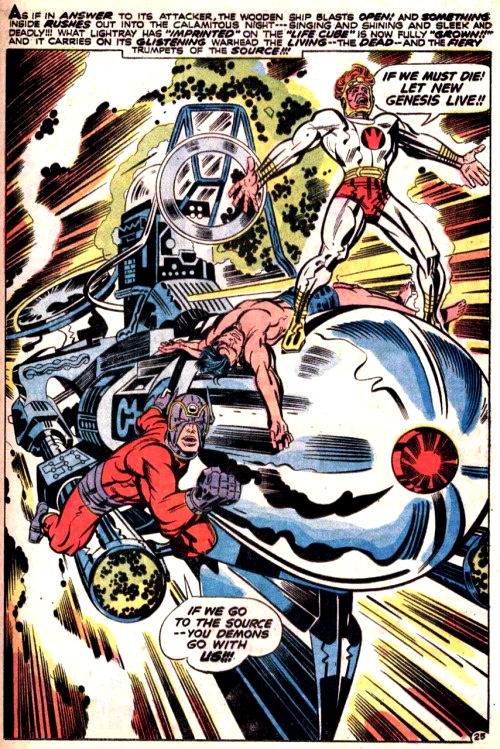
Alex Ross recreates one of Jack’s best-know splash pages from New Gods in his exquisite photo-realistic painted style for a lithograph and Giclee.
Jack Kirby. Alex Ross. Not much more to add here. Different art styles. Different art mediums. Different generations. Both masters of their respective forms.
*Purists will note that some of the characters and titles actually made it onto newsstands before the close of 1970, but the fully integrated series (Jimmy Olsen, Forever People, New Gods, and Mister Miracle) — doesn’t fully materialize until the following year.
As is often the case, the original color (below right) seems more true to form than the digital re-color, above.
Darkseid dispatches a number of earth’s greatest heroes in this great looking title page of the final issue of Earth 2:World’s End.
If you like your superhero universe grim and gritty, (as per our last post), this series, set in an alternate universe, should do nicely.
Darkseid is inarguably Jack Kirby’s greatest legacy at DC comics. Although his “fourth world” books didn’t last long at DC, Darkseid untimely became the “big bad” of the DC Universe. Shockingly, before Jack’s era, there was no over-arching multi-title super villain. This, despite the fact that by 1970, Marvel had at least a few. (Doctor Doom, Galactus, Kang, The Super Skrull, et al.)
Marvel had focused on continuity well before DC figured it out. In fact, Jack’s fourth world books, introduced the first cross-title continuity to the DC Universe.
But, as always, we digress.
Brazilian Artist and DC mainstay Eddy Barrows regularly combines quality draftsmanship and creative storytelling into a highly compelling story. Another Brazilian artist, Eber Ferreira, known for his detailed and meticulous brushwork, typically inks Eddy’s pencils.
More on Jack Kirby’s legacy at DC in the next few posts.
I’m not the ideal audience for Zach Snyder’s vision of the DC Universe.
I find it grim and dreary. Pretentious. Soulless.
Ultimately pointless.
These “Elseworlds” versions of the characters are for someone, obviously, just not me.
The four-hour version (“Snyder Cut”) of Justice League isn’t as much as a movie, but a living collection of splash pages, complete with sound effects.
If you’re an art fan, especially, there are indeed some gorgeous images, many conveniently unfolding in slow motion so you can catch all the visual eye candy without pausing the stream.
But, like I said, as a movie, not for me.
Bryan Hitch’s great cover from 20 years ago (!) is the type of iconic image of the team I can embrace. Superman happy. Batman grumpy. Everyone else somewhere in between.
That seems about right.
Fun fact: The JLA has had dozens — if not hundreds — of incarnations during its 60-year run, but here, if you swap Green Lantern (Kyle Rayner version) for Cyborg, you end up with the modern Snyder team.
A great image never goes to waste if you’re a smart publisher: Comic book cover, trade book cover, and full-bleed print.
The Fleischer Studio Superman Cartoons — the very first time Superman appeared on the big screen — continue to be regarded as animation legends.
Watching them today, 80 years later, they appear more astonishing than ever. This is especially true when you realize how much the studio was able to accomplish with the technology of the day.
The best known — and perhaps highest regarded — of these 8 original Fleischer shorts is the second one, “The Mechanical Monsters.”
Superman vs. an army of robots?
What’s not to love?
So it’s only fitting that the first issue of Superman Adventures, adapting the contemporary (1996) animated series, features Superman battling… an army of robots.
Writer Paul Dini and artists Rich Burchett and Terry Austin provide us with an action-packed “all ages” adventure, which includes Superman fighting a fairly powerful Superman robot.
Superman vs. Superman?
What’s not to love?
Side note: Superman The Animated Series, coming in the shadow of the phenomenal Batman animated series, doesn’t get enough love. My daughter and I watched them all. It’s a terrific version of Superman. Trust us on this.
Superman Adventures #1 pays homage to the classic 1941 cartoon “The mechanical monsters.”