Greg Goldstein's Comic Art Gallery

Gil Kane and Wallace Wood — Toys For The Holidays (Part 2)

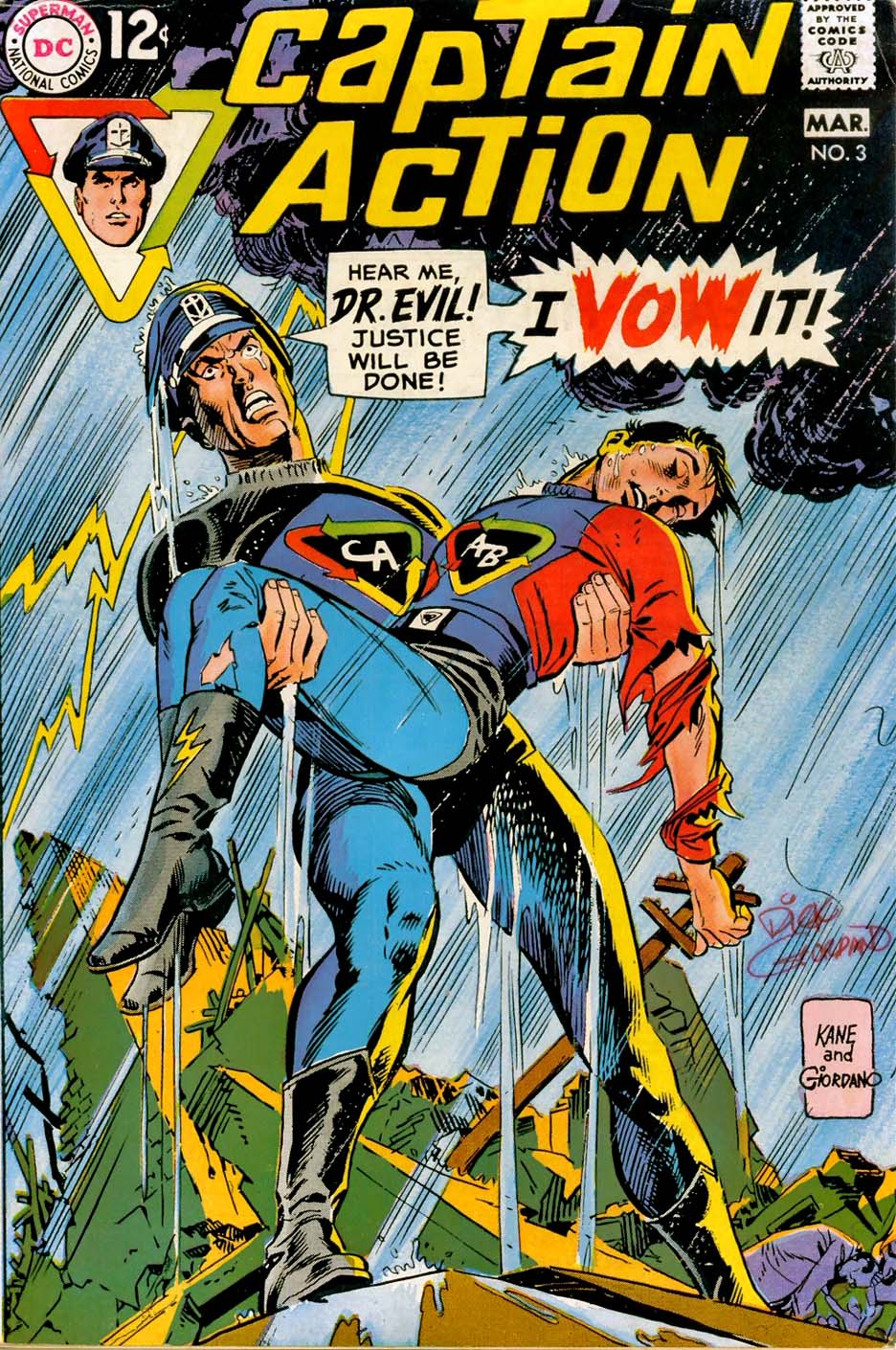
Captain Action #3, May 1969

Can lightning strike twice in the toy biz?  Inventor Stan Weston thought so, and I for one, became proof of concept.

Weston had created the original 12” G.I. Joe “doll” for Hasbro in 1964 and younger baby boomers like myself quickly became obsessed with the figures and all their wonderfully detailed accessories.

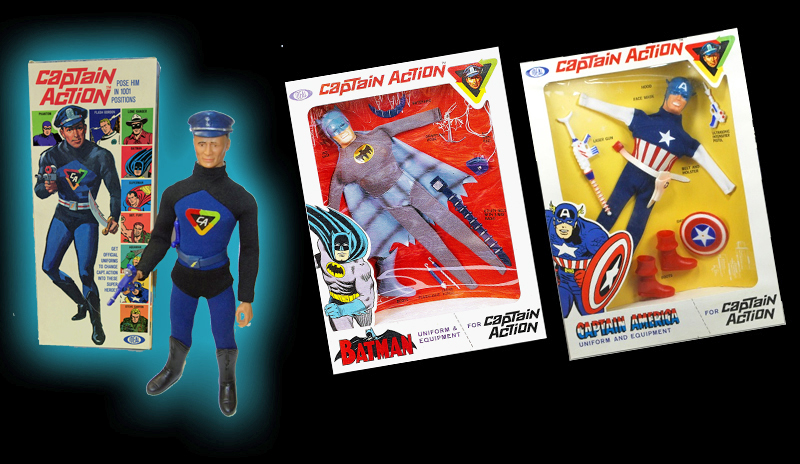
Next up: Weston took his invention to Ideal Toys in 1966, and turned it into a superhero concept, capturing the zeitgeist of the era. Captain Action was born, and despite the goofy name, its dozen licensed superhero costumes were a terrific gimmick.

Kids could turn the good captain into a number of well-known characters including Superman, Batman, Spider-Man, Captain America and Aquaman.

And the best part? The costumes and accessories worked just fine with existing G.I. Joes, so any crafty kid (we were all crafty, FYI) could create a multiverse Justice League without buying multiple Captain Action figures.

The toy line burned brightly, but briefly, and by 1968/69, the product was heading to the closeout racks. That apparently didn’t concern DC, which licensed the character for yet another brief comic book series.

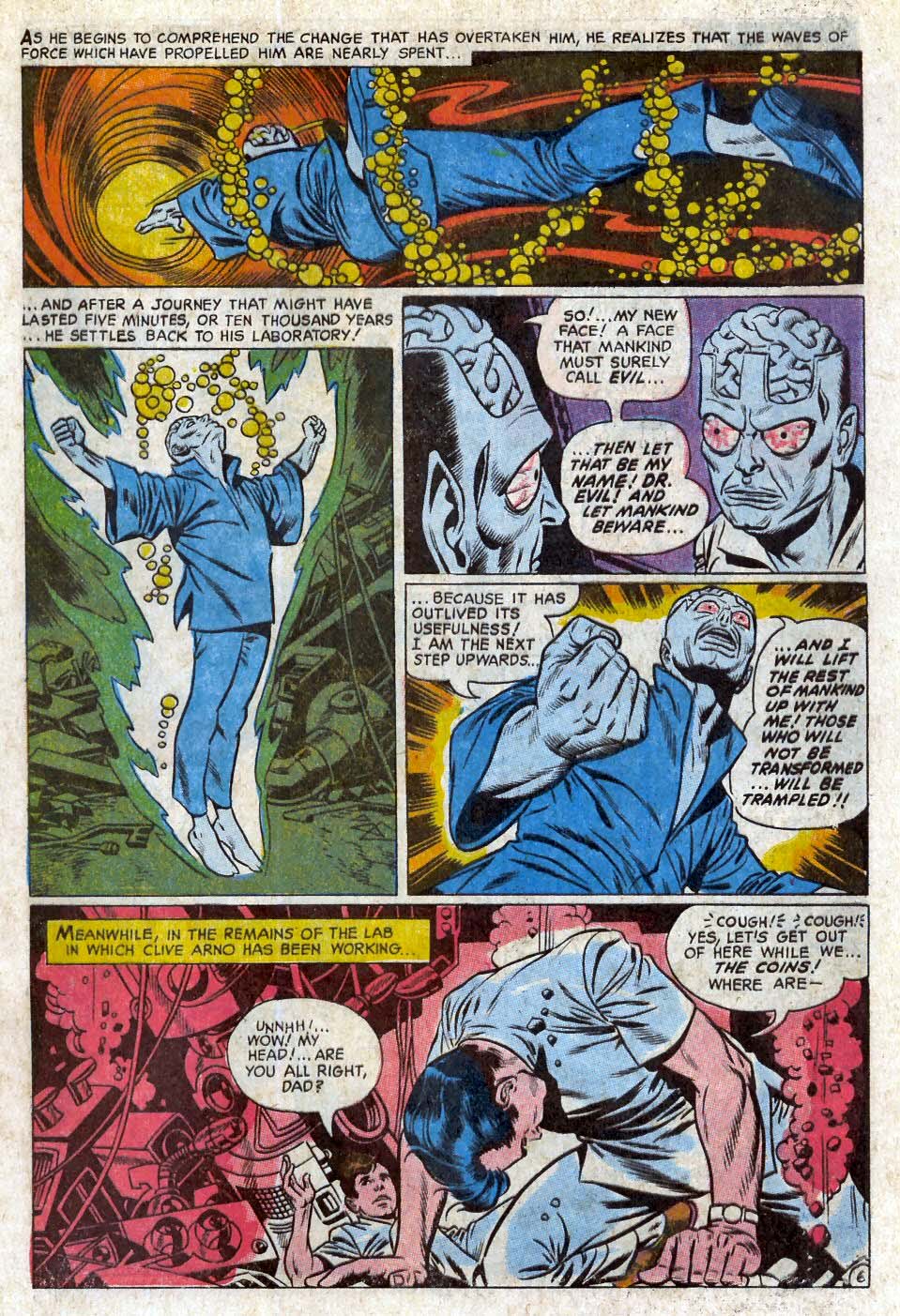
Fortunately, visual storytelling chores were handled by Gil Kane and Wally Wood, making for some great original art. (Wood drew issue #1 solo, and then inked Gil on issues #2, #3 and #5. Gil scripted, penciled and inked issue #4.)

This cool page features the origin of “Dr. Evil,” main nemesis to the good Captain. Remember when I said the Captain Action name was goofy? I have no words for naming a villain “Dr. Evil.”
Alex Toth — Toys For The Holidays (Part 1)

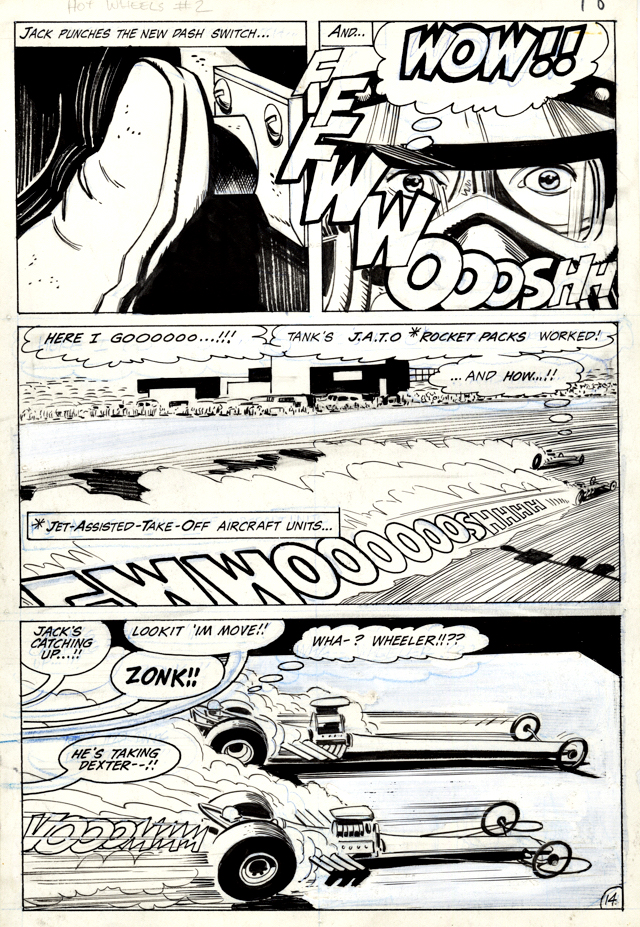
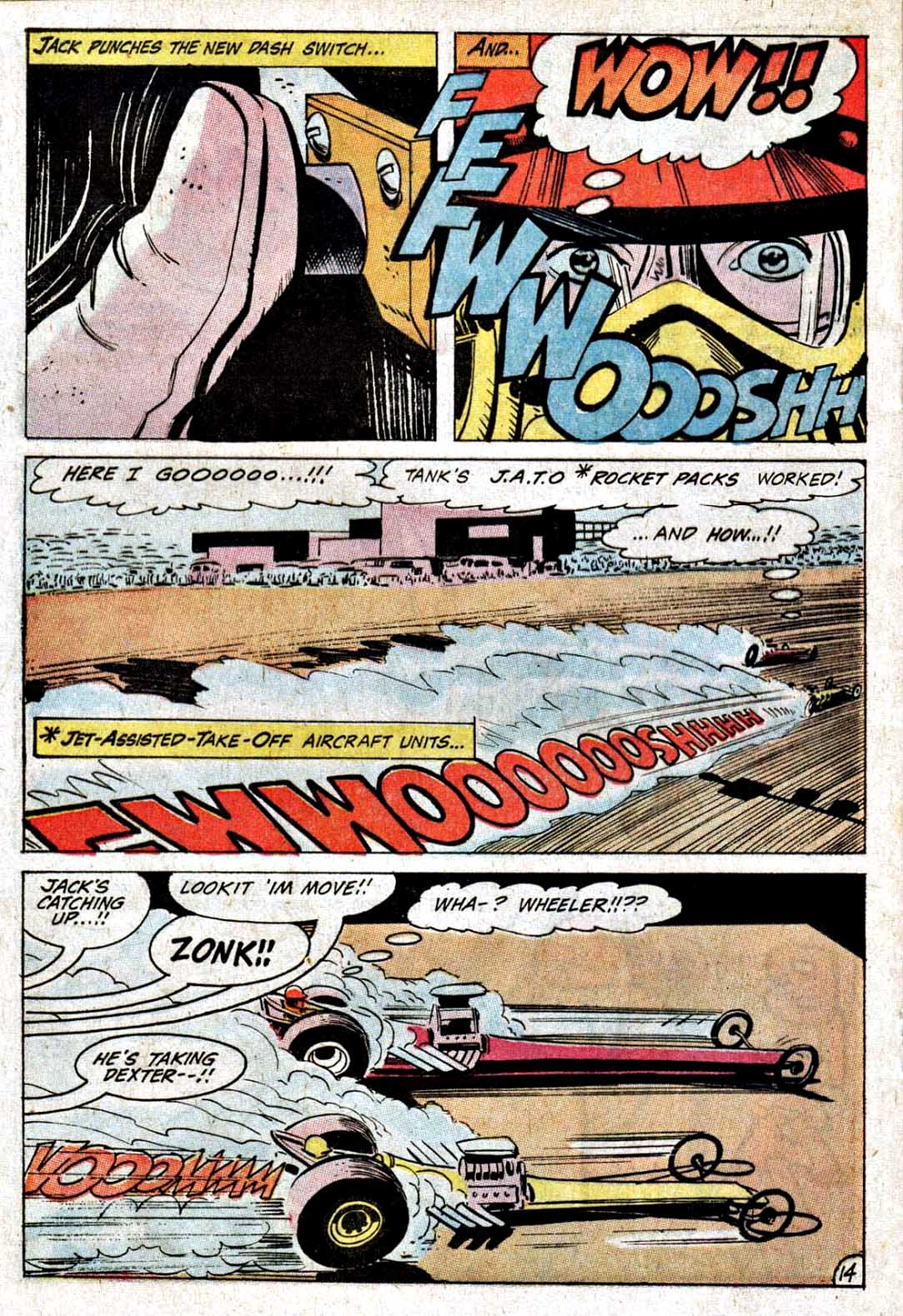
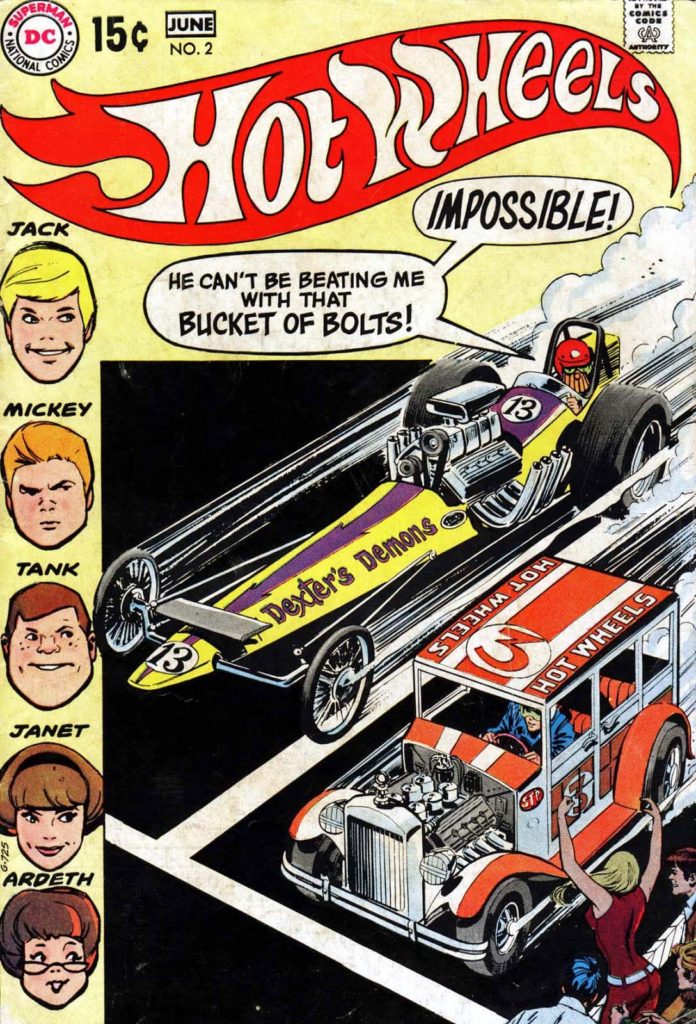
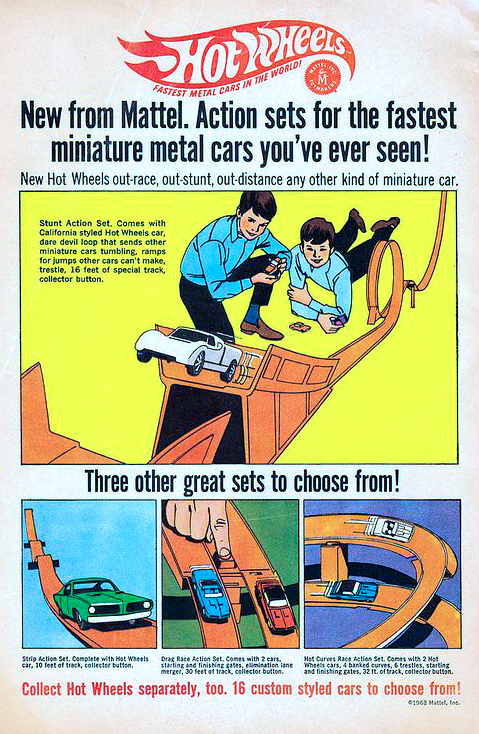
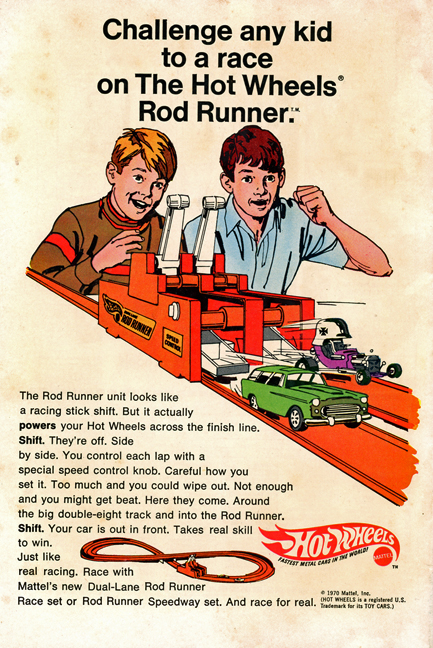
Hot Wheels #2, June1970

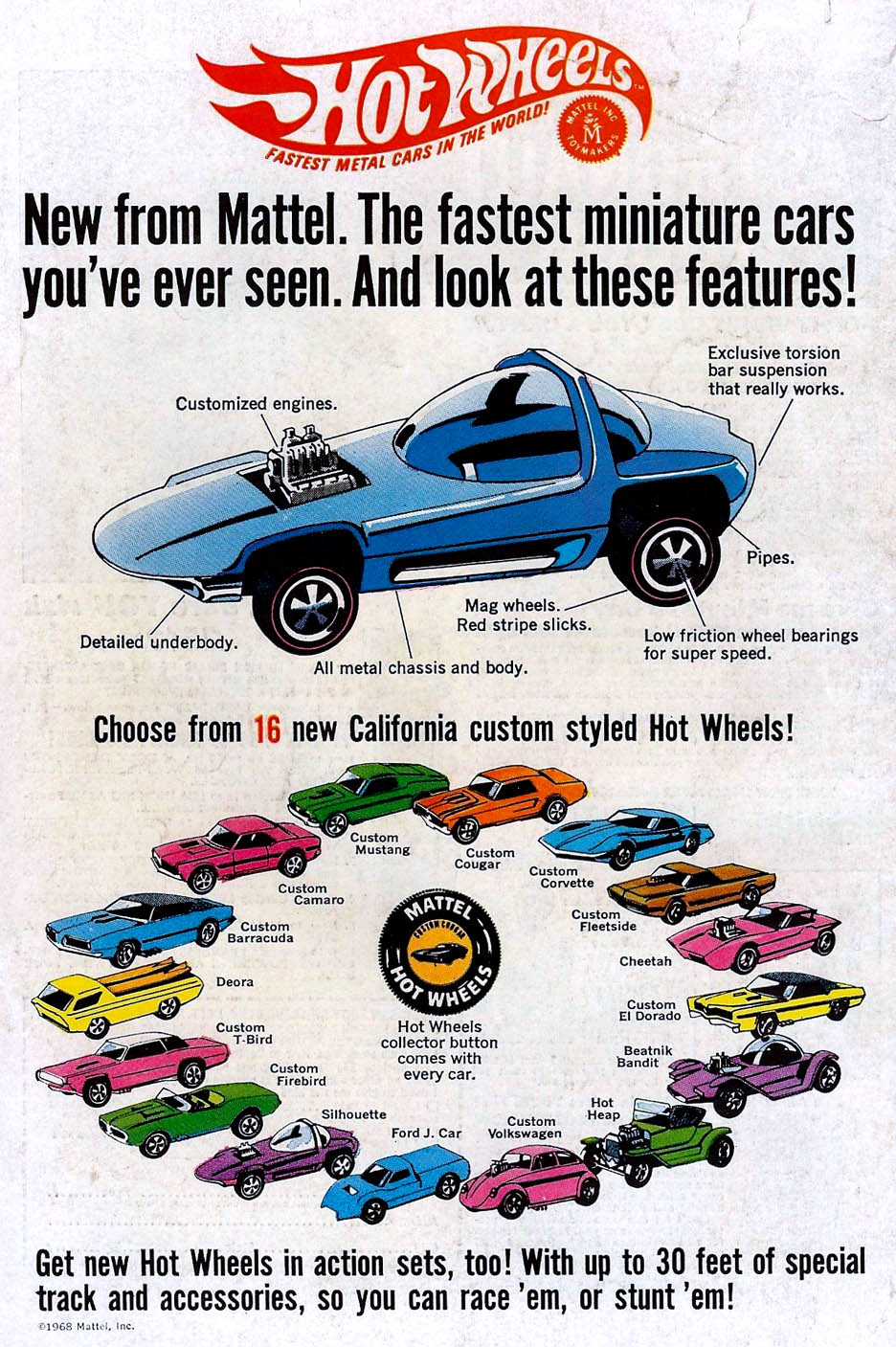
Mattel’s introduction of Hot Wheels in 1968 brought the 60s Cultural Revolution into miniature toy cars.

I had casually collected matchbox cars previously, and enjoyed them, but Hot Wheels’ souped up designs and colors were game changers. I couldn’t get enough.

And those crazy bright orange track sets and accessories? Near the top of my list for Hanukah 1969 and 1970, if I recall correctly.

DC jumped into the Hot Wheels business with a short-lived (six issues) licensed comic book series based on the animated TV series. Alex Toth, who knew both comics and cars well, and had developed the look and feel of the TV series, drew many of the stories.

I’ve tried for years to collect those six issues into a deluxe hardcover. In fact, I’ve had multiple meetings with senior execs at Mattel who all agree that it absolutely should be collected. Then, when push comes to shove, a contract never appears. My theory, and it’s based on similar situations, is that no one wants to take responsibility for the legal time and money spent on a project that ultimately doesn’t have much revenue potential in the scheme of things.

Sigh.  Alex Toth’s art should never, ever remain in limbo.  

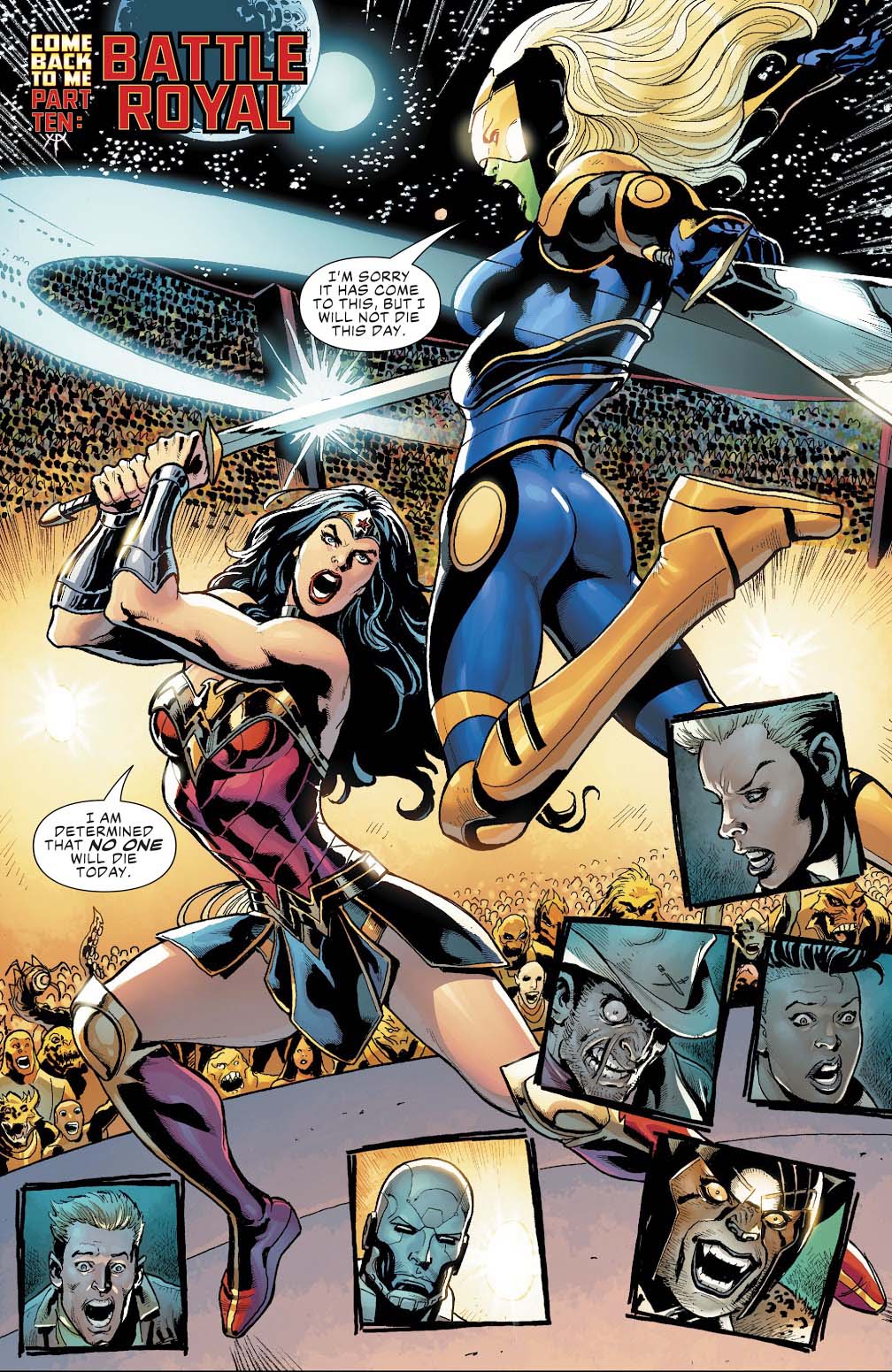
Tom Derenick — At Long Last, Wonder Woman

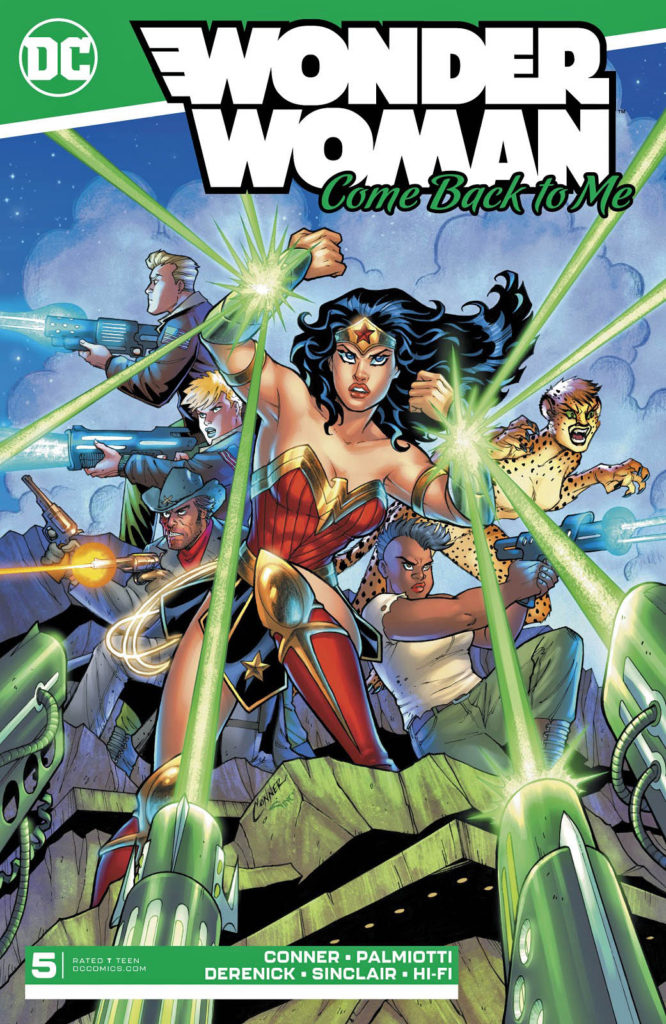
Wonder Woman: Come Back To Me #5, 2019

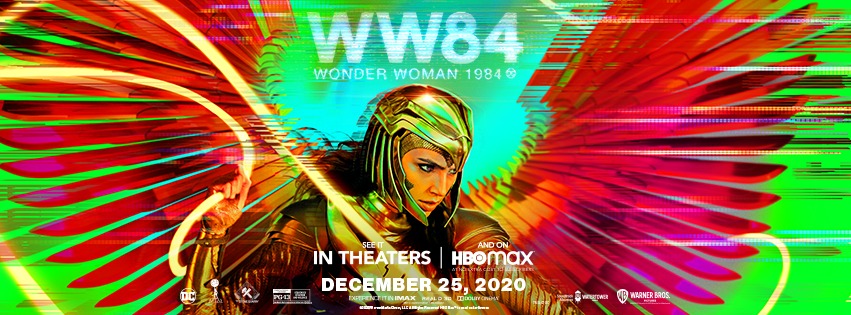
Tom Derenick helps us celebrate that, at long last, Wonder Woman1984 opens today in theaters and starts streaming on HBO Max.

Probably not a Christmas film per se, it is still something of a Christmas Miracle that the film, completed in time for a Holiday 2019 release, will finally see the light of day.

I’m looking forward to it, especially since I’ve already completed most of my Christmas film rituals, including watching Die Hard last night.

Happy Holidays!

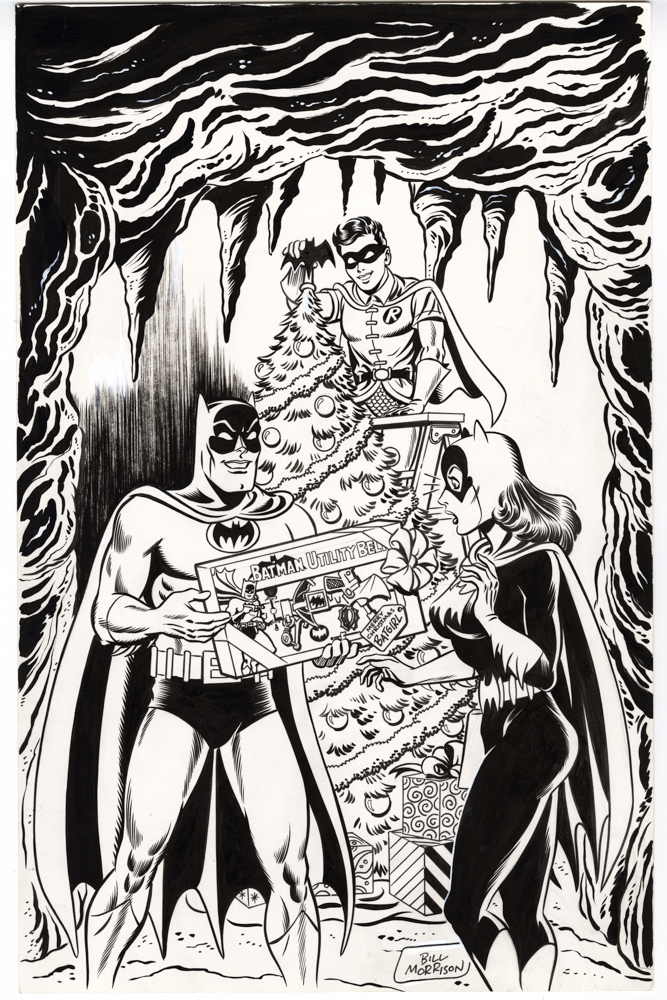
Bill Morrison — Christmas Time (Is Here Again)

Batman Family Commission, 2016

Bill Morrison helps the Bat Family — and us — get ready for some Christmas spirit.

(Although I’m not sure Batgirl is all that happy about her present.)

I keep meaning to get this great commission colored, but somehow I never quite get around to it. Oh well, there’s always next year.

In the meantime, here’s hoping everyone has a safe, healthy and happy Holiday Season. We’ll be back here on Christmas Day with a special post.

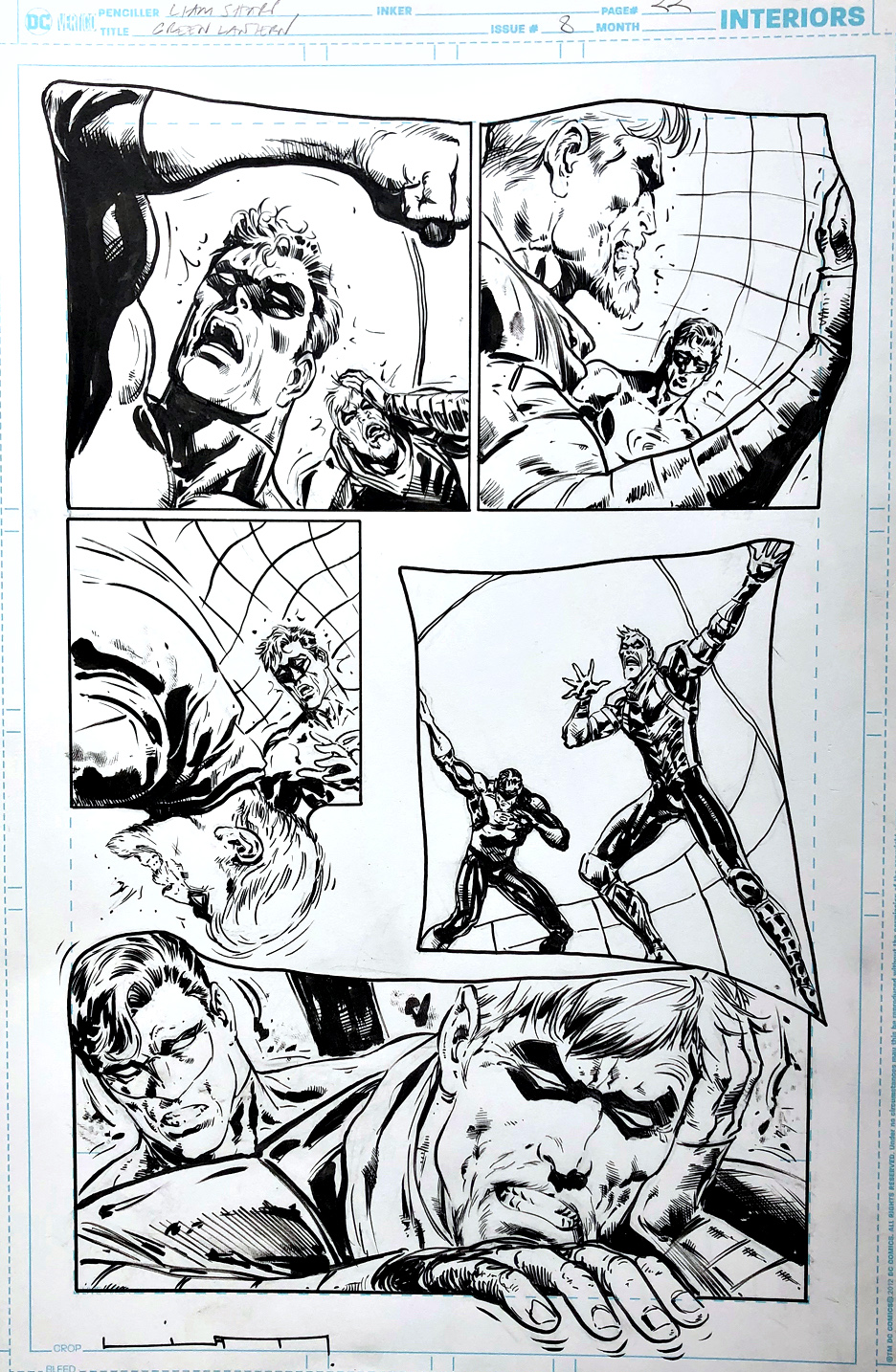
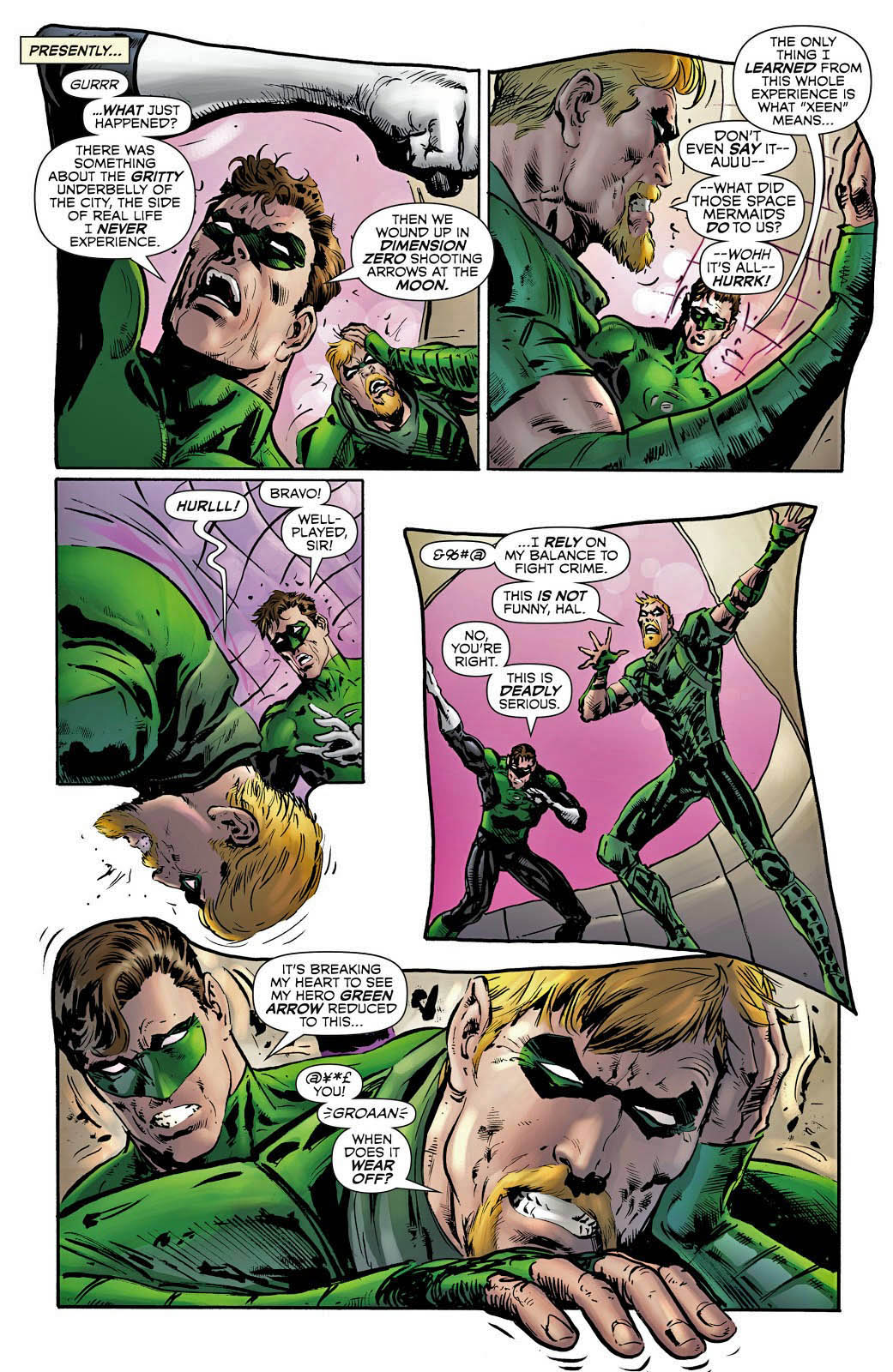
Liam Sharp — Green Reunion

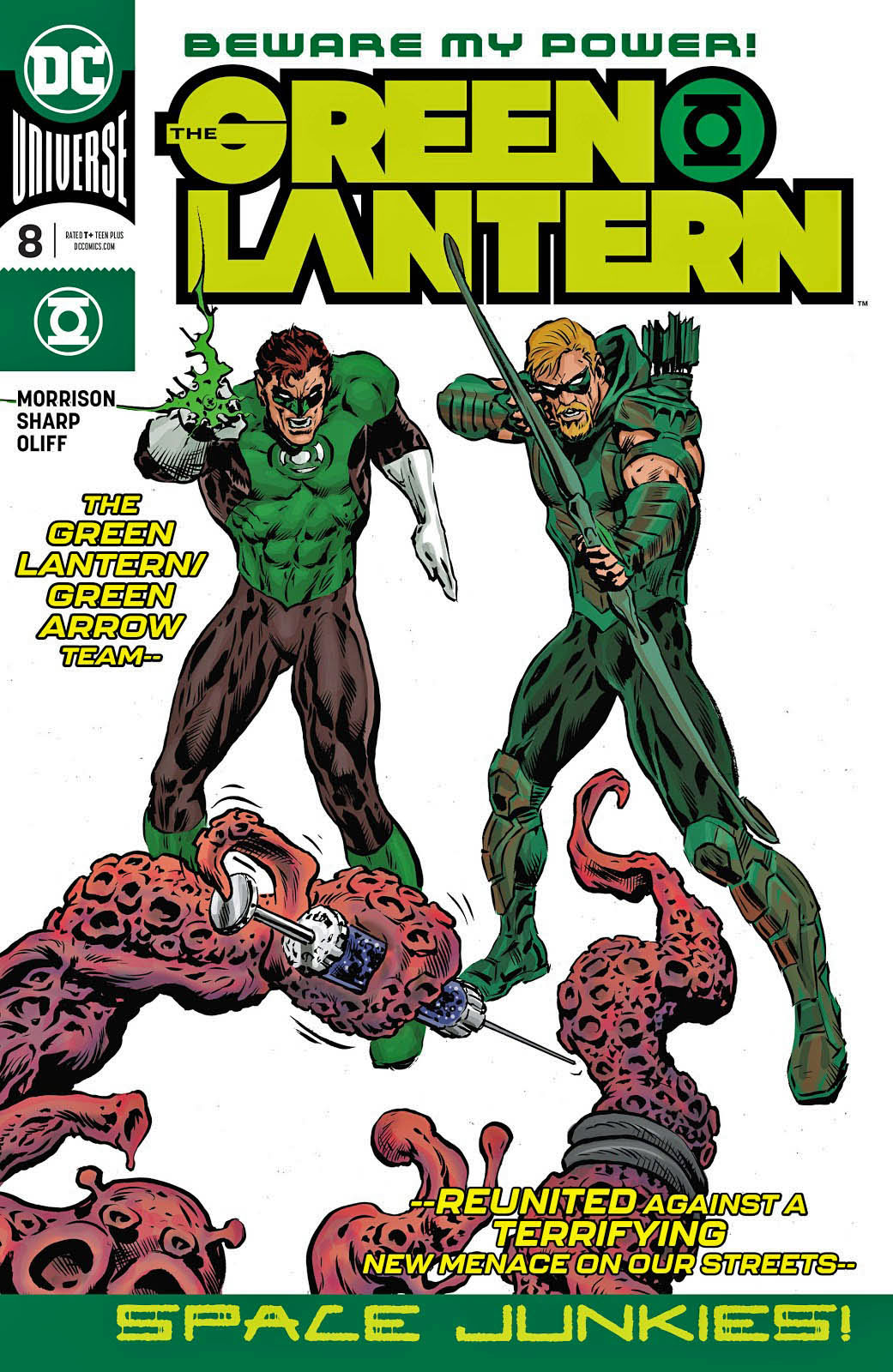
Green Lantern #8, August 2019

“Grant Morrison and Liam Sharp’s The Green Lantern is imaginative, surprising and just plain weird. And one of the most fearlessly unique comics currently on the stands.” –Rosie Marx
Liam Sharp reunites Green Lantern and his old teammate Green Arrow for a trippy alien drug ring story written by Grant Morrison.

Sharp has been a stellar artist since he broke into the industry in the 80s with work at 2000 AD, but in my opinion, his storytelling and draftsmanship get (ahem) sharper all the time.

I loved his contemporary work on Wonder Woman as well, but many of those originals were drawn at 18×24, and I hate to say it, but space is finite.

The GL pages — at least from this issue — are drawn at standard art size, and therefore a bit more manageable.

And of course, terrific.

Joe Staton — Green Energy

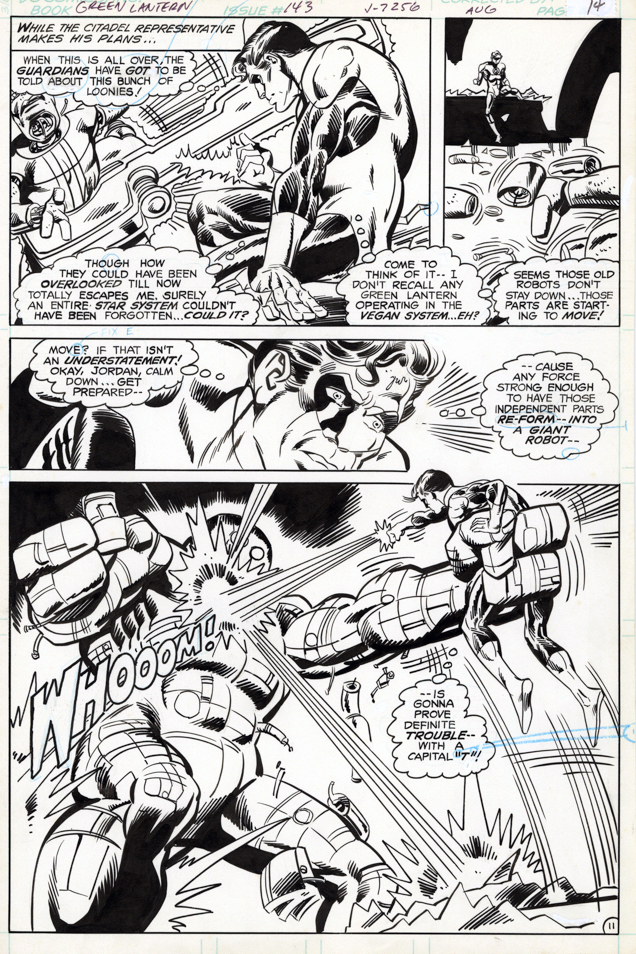
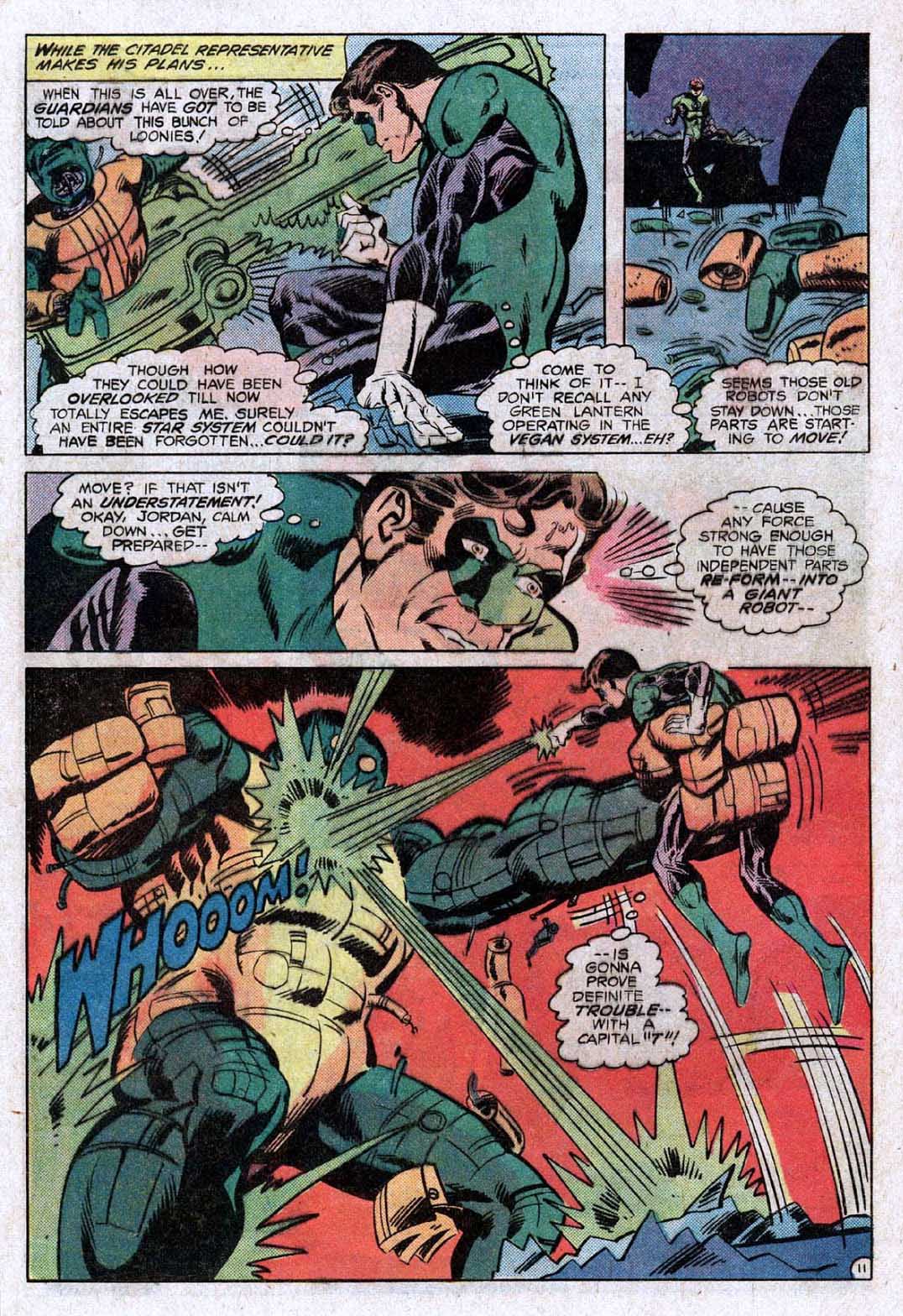
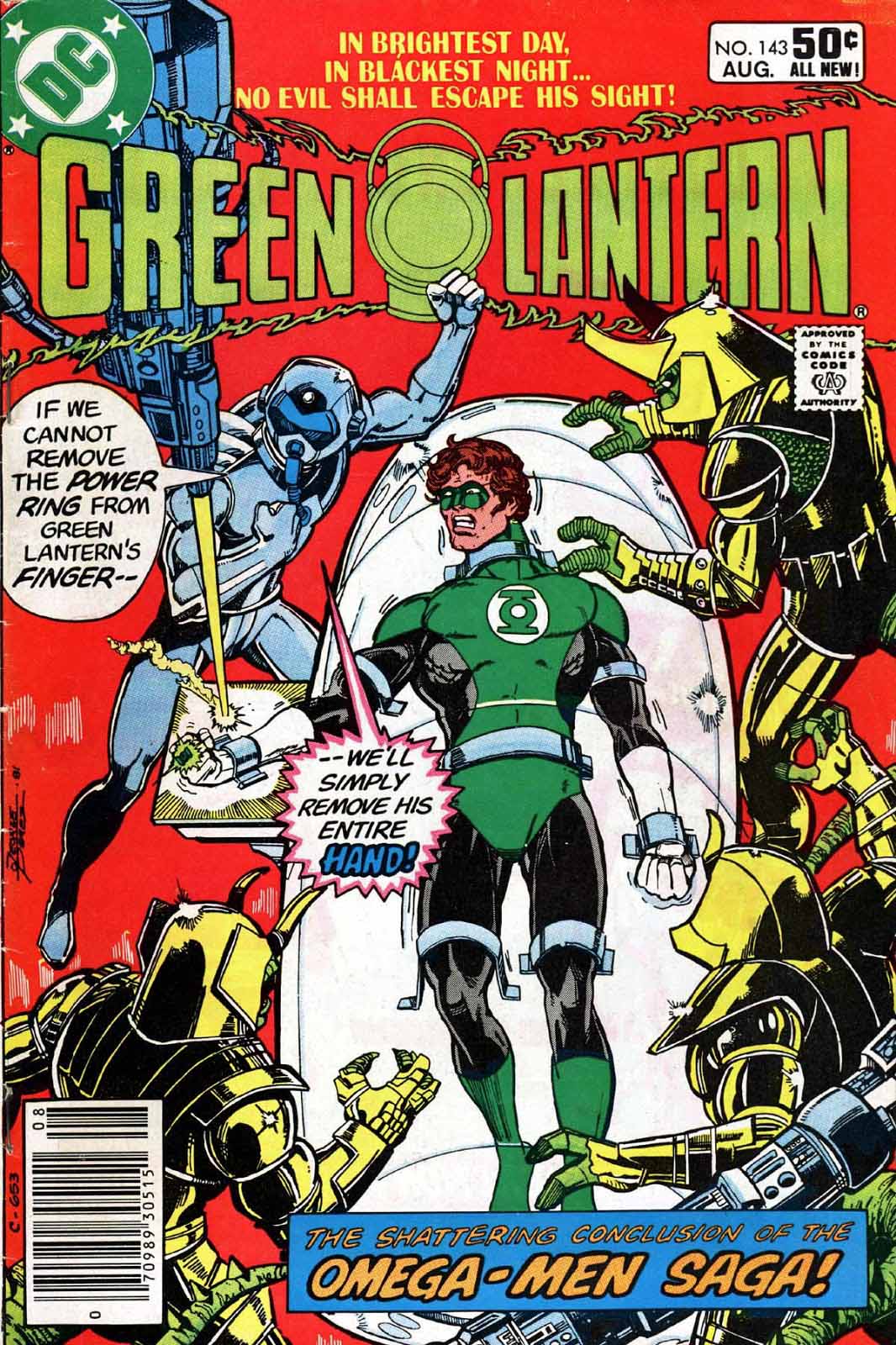
Green Lantern #143, August 1981

Continuing a celebration of Green Lantern’s anniversary this week.

Joe Staton somehow manages to channel a bit of Gil Kane and a bit of Neal Adams on this dynamic Green Lantern action sequence from 1981.

I first started following Joe’s work (with writer Nicola Cuti) on the quirky E-Man from Charlton back in 1973 1975.  (Funny enough, it lasted 10 issues, and I kept all 10, which is unusual for me. Guess I really liked it.)

Shortly thereafter, he took over art duties on the Justice Society in All-Star Squadron, a book I also enjoyed.

This page is from Joe’s first run on Green lantern with writer Marv Wolfman, and this story introduces the extraterrestrial superheroes, Omega Men. Joe later returned on the Green Lantern Corps with writer Steve Englehart.

When conventions finally return (mid-late 2021 is my guess) make sure you visit Joe wherever —and whenever — you find him. He is truly one of the humblest and nicest creators in the business. And obviously, very talented.

Gil Kane — Green Anniversary

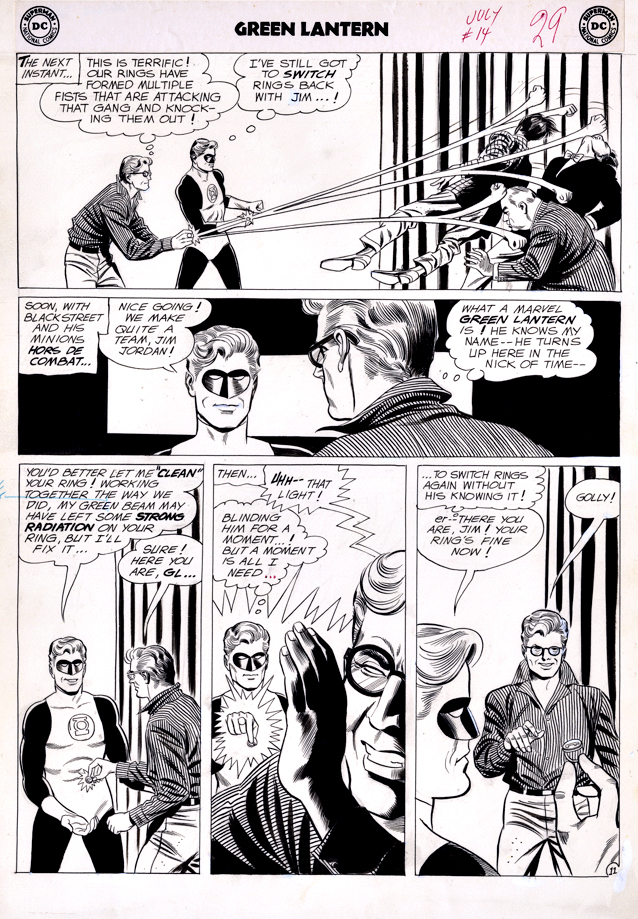
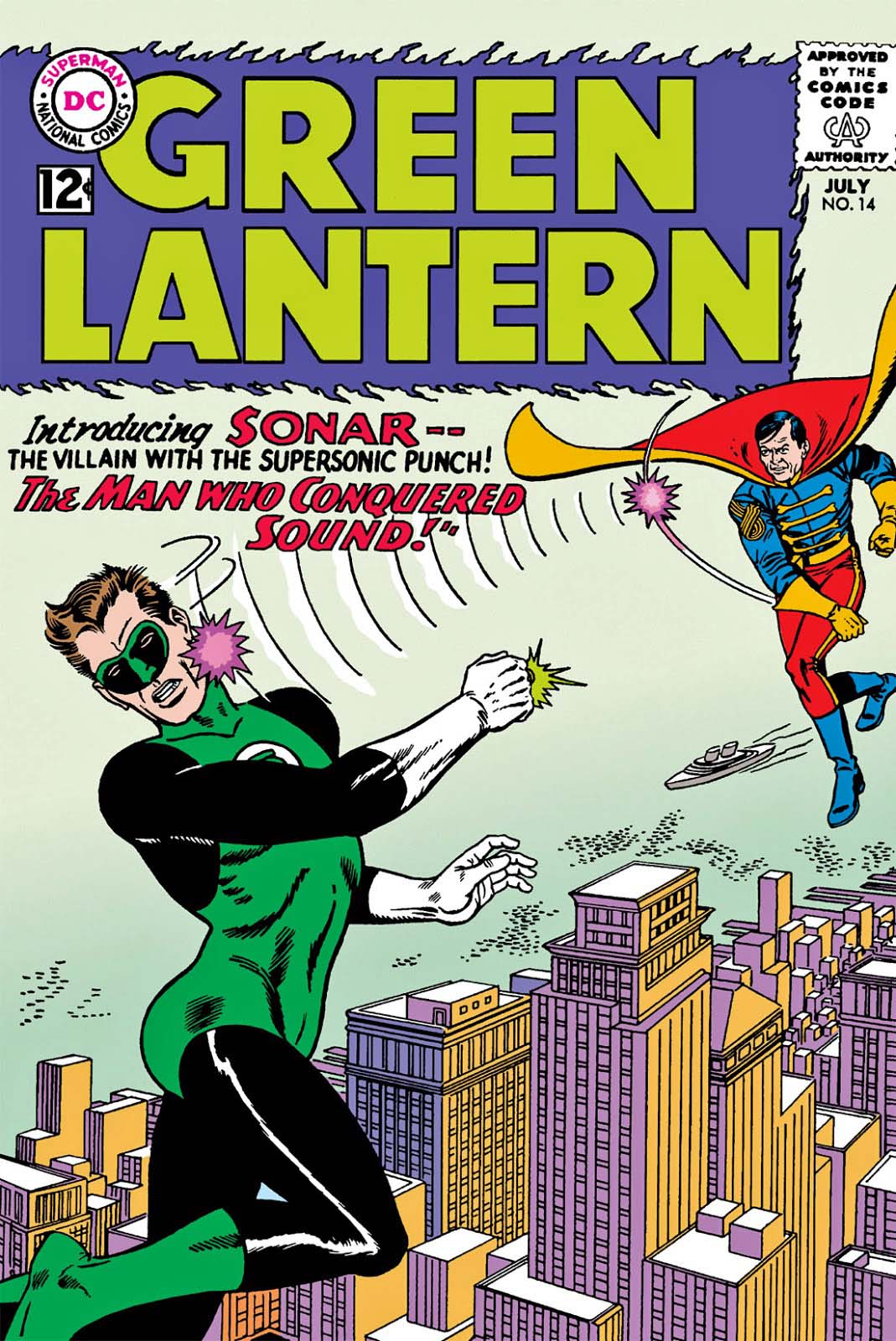
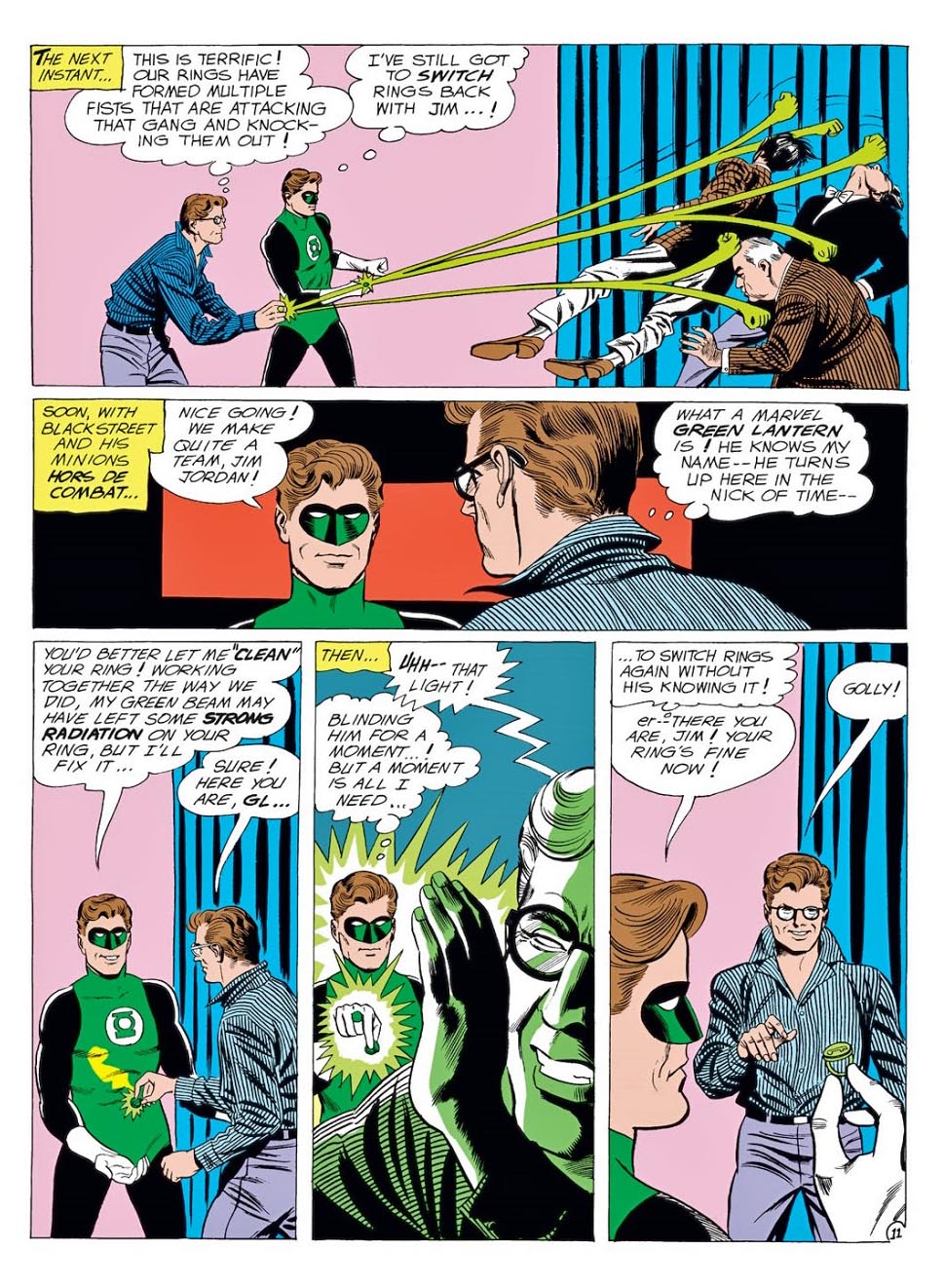
Green Lantern #14, July 1962

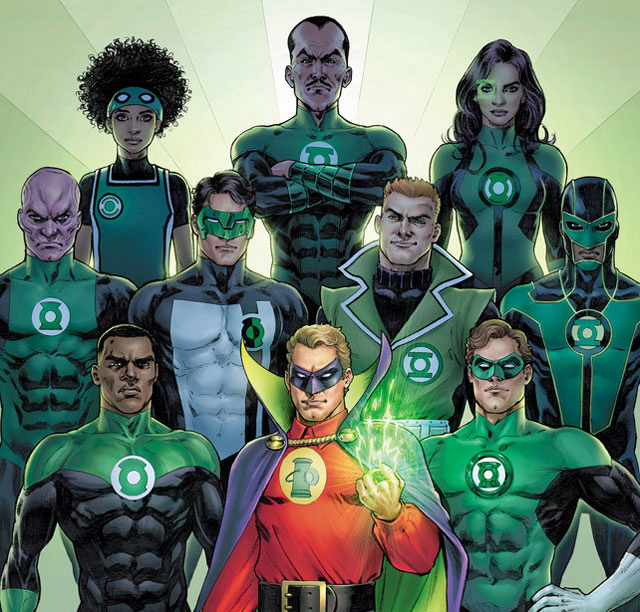
Green Lantern celebrates two anniversaries in 2020. 

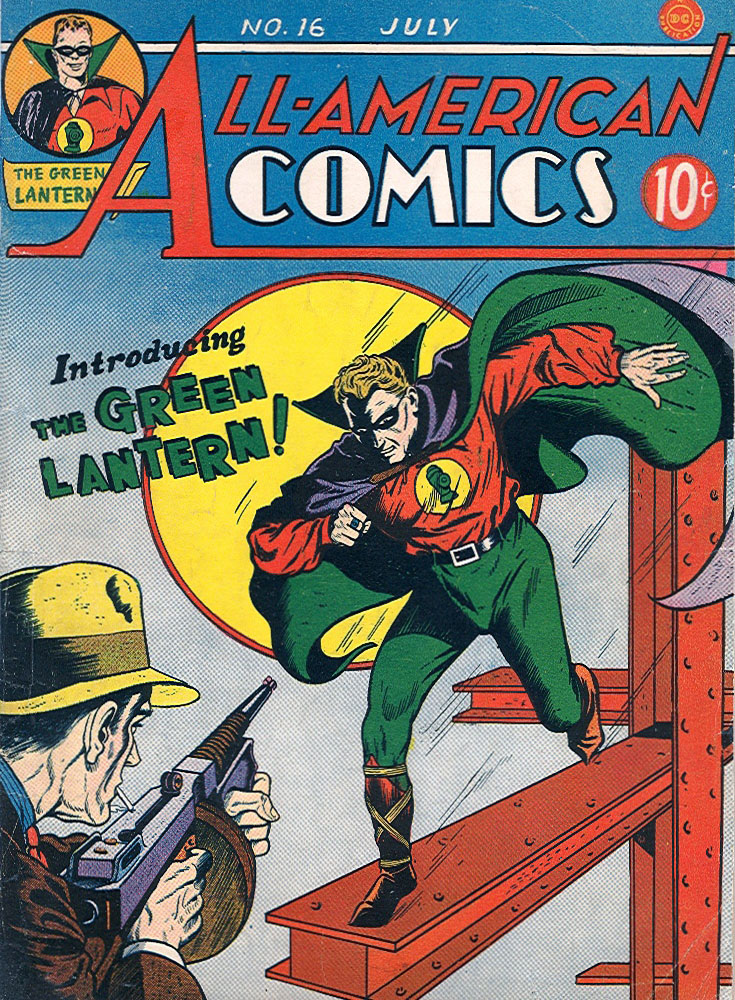
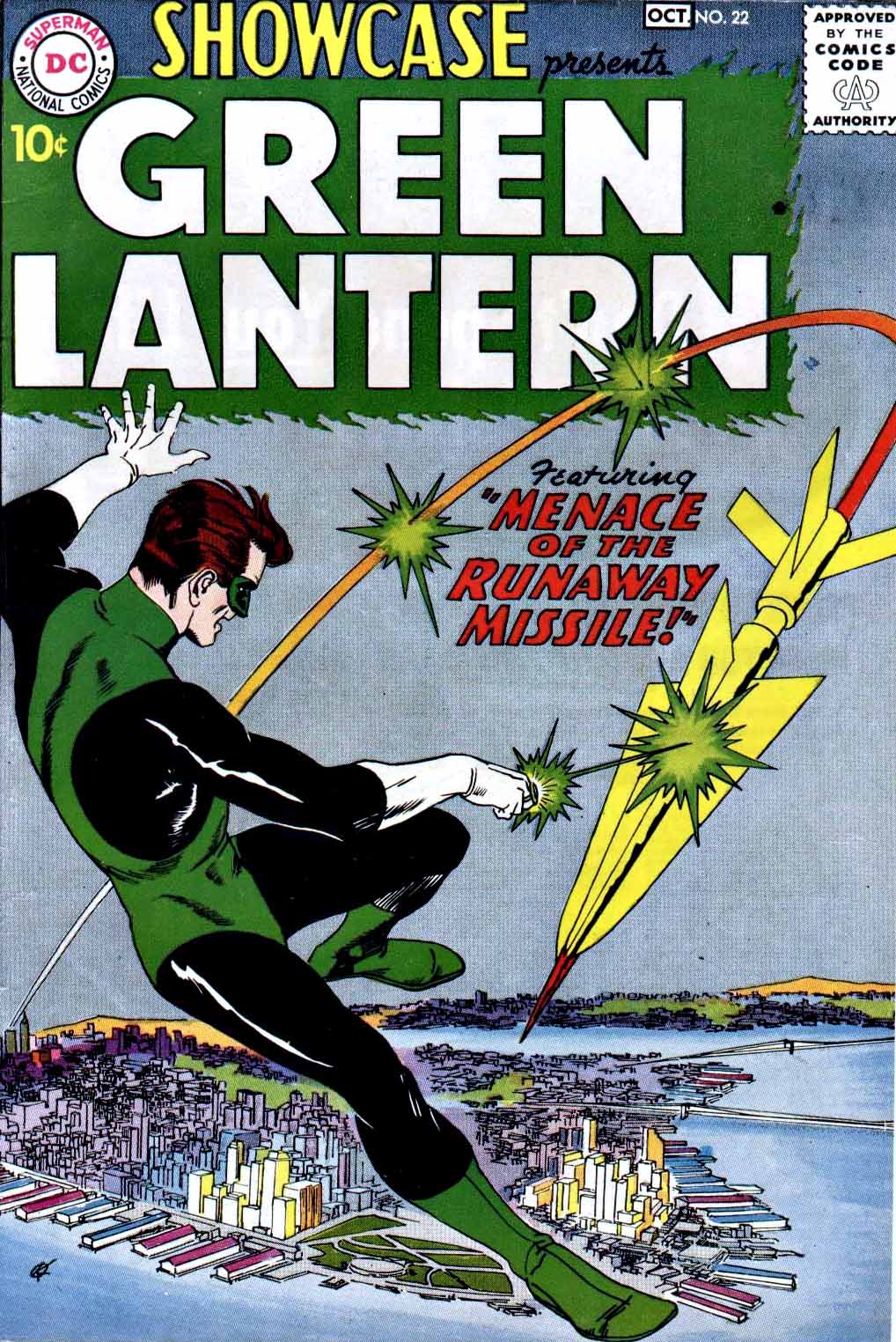
The original Green Lantern (Alan Scott) first appeared in 1940, and the Silver Age Green Lantern, Hal Jordan, gained his own DC comic book series in 1960, shortly after first appearing Showcase #22 the year prior.

During the first 75 issues of GL’s own Silver Age comic, Gil Kane is the artist most associated with this run.

In these early issues Gil is not quite GIL KANE yet. The art is very solid, slick, and polished, in DC tradition, but it would take a few years before Gil’s trademark style would fully break through the conservative confines of the scripting and editing.

By the time Gil finishes his 10-year run with issue #75, Green Lantern is not a giant commercial success, but Gil Kane is most certainly GIL KANE. Reading through collected editions of the series, you can clearly see the metamorphosis of his storytelling capabilities and artistic style.

As for issue #76 in 1970 (Another anniversary, now that you mention it) Denny O’Neil and DC shake things up a bit by adding Green Arrow to the mix — and artist Neal Adams takes the reigns.

The rest, as they say, really is history.

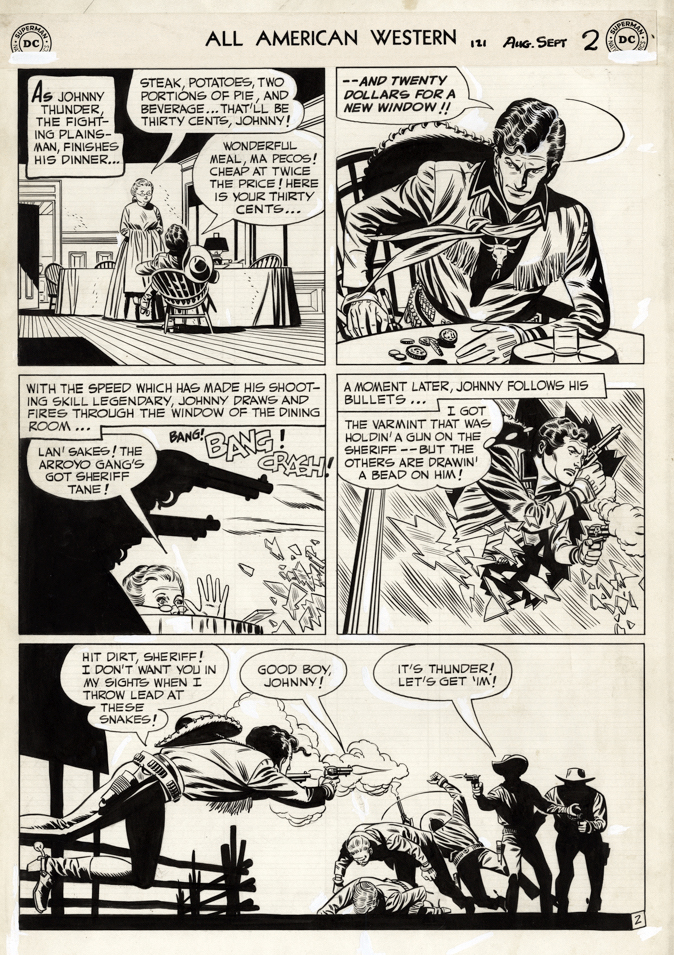
Alex Toth — Out West

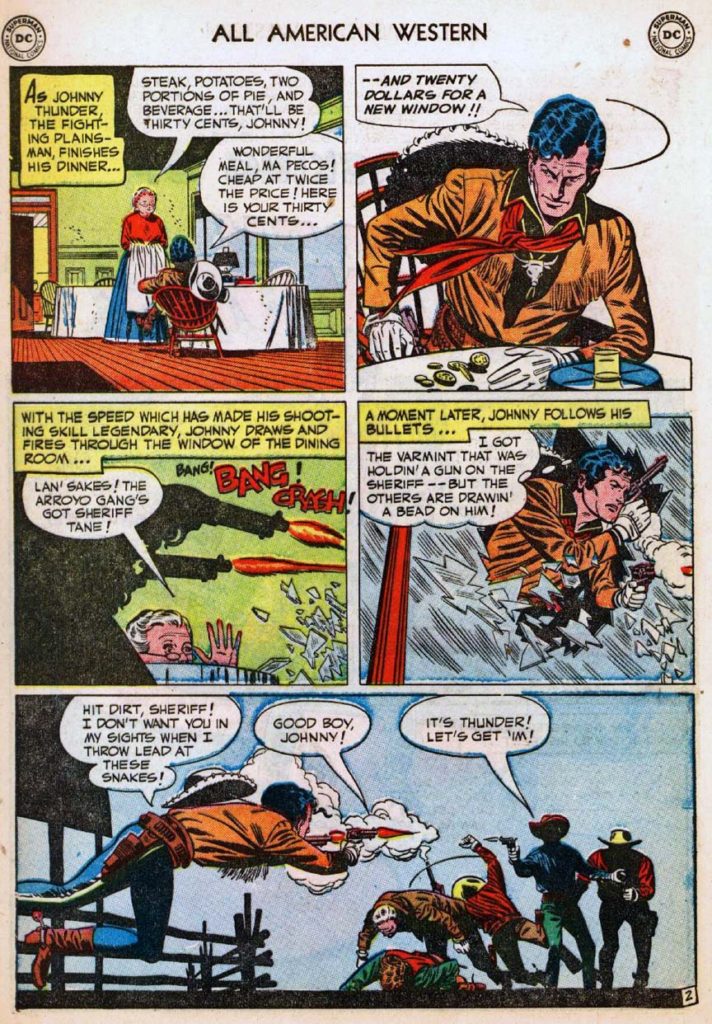
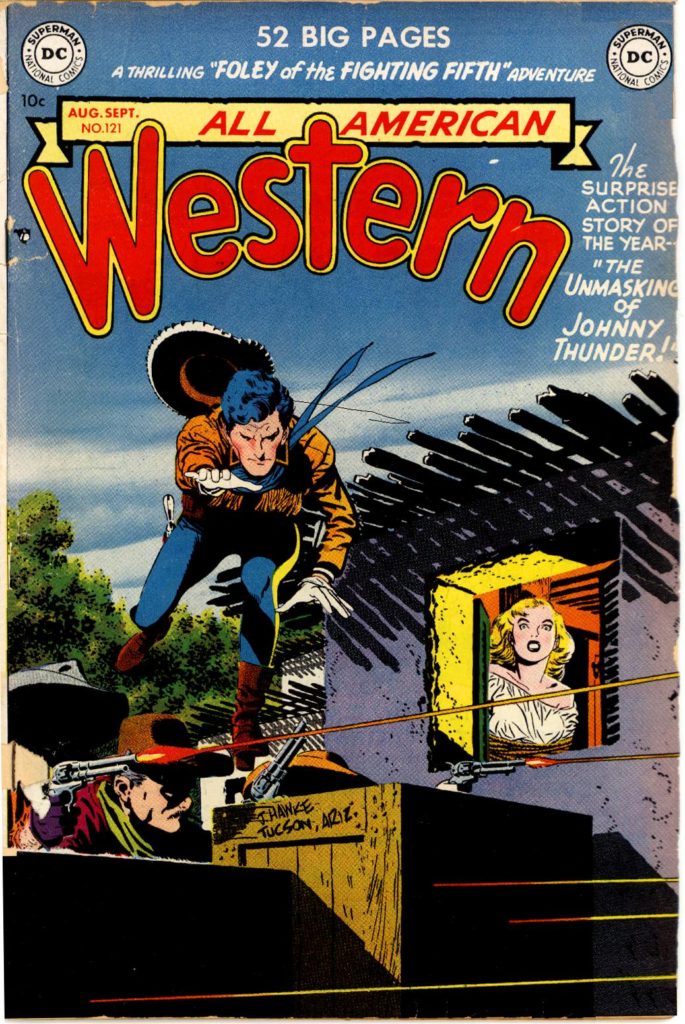
All American Western # 121, August 1951

Living in the West, this is probably the time of the year that reminds me most of… living in the West.

Warm, sunny afternoons, dry cold nights, cool mornings; just the way I pictured the climate watching dozens, if not hundreds of western films as a kid back in the cozy confines of the New York City metro area.

Ironically, I never read many western comics as a kid. (I guess I had my fill on TV.) So I never caught up to the classic western comic art until much later on.

Some of that great art that included Johnny Thunder by Alex Toth. Toth, an Eastern transplant himself, had a visual storytelling style perfect for those 50s Thunder stories. 

But then again, Toth’s amazing talent was perfect for just about any genre: Romance, horror, SF, war, and the all-too rare superhero story.

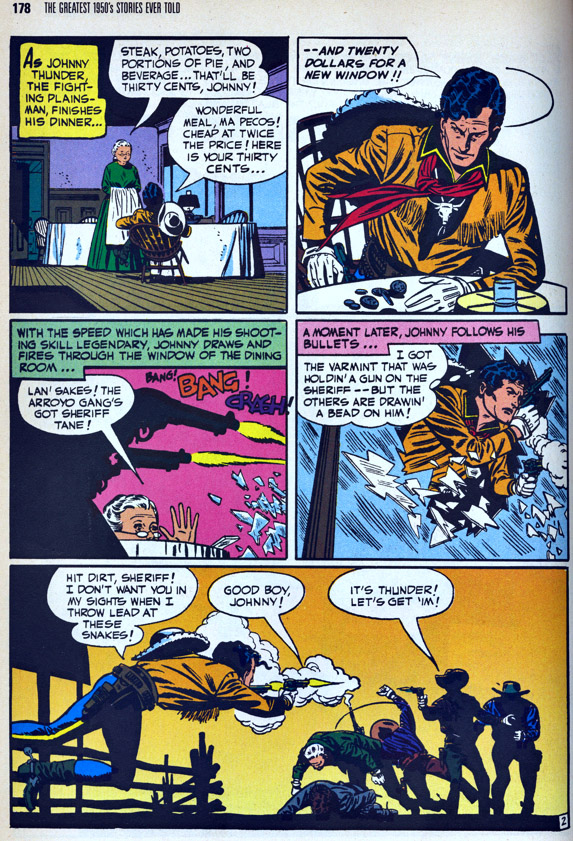
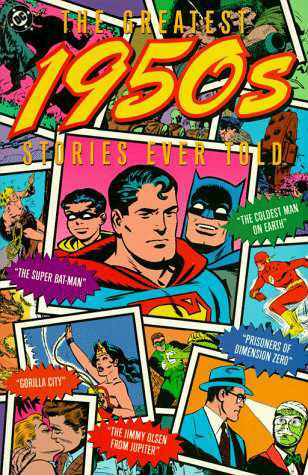
I had only read a handful of Johnny Thunder stories when this original was offered for sale, but coincidentally enough, it was from a terrific story I had in fact remembered. It appears in the DC’s collection of greatest comic book stories of the 1950s 

Can’t argue with the editorial choice one bit. 

Jack Kirby — Hello and Goodbye, Rinse, Repeat

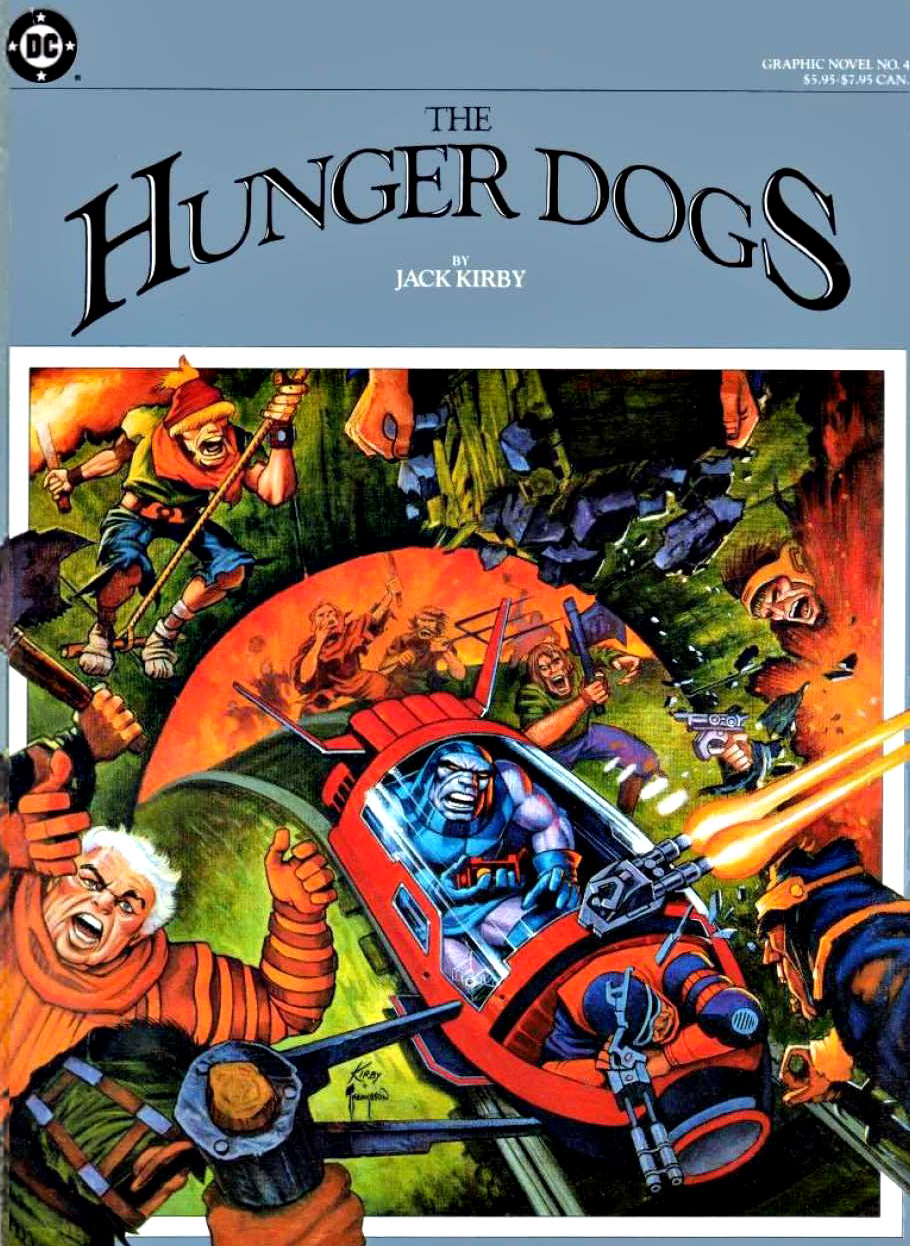
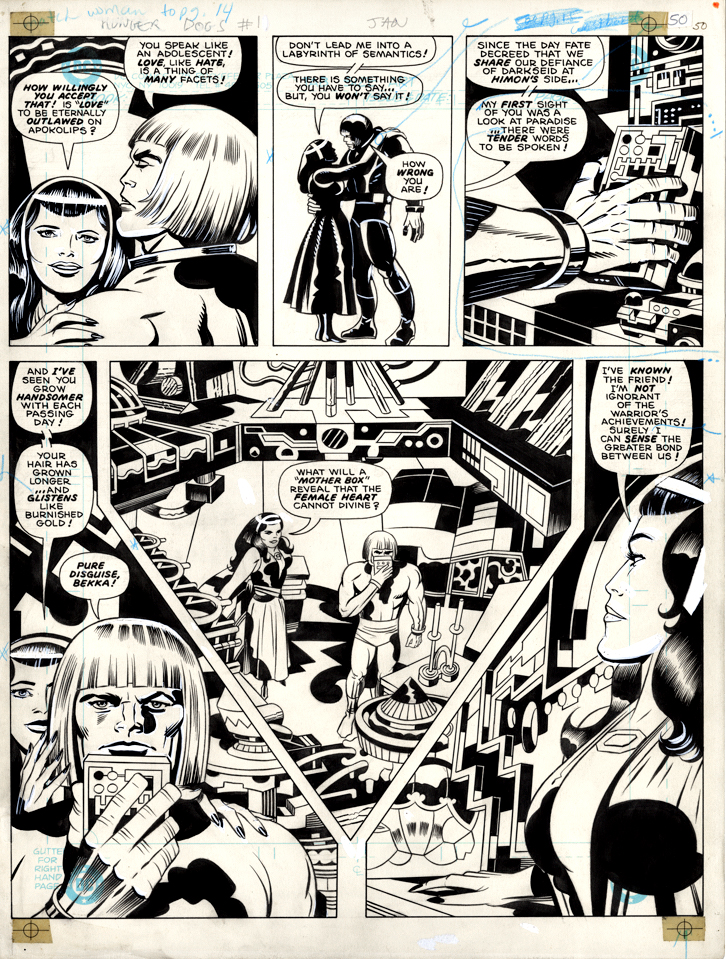
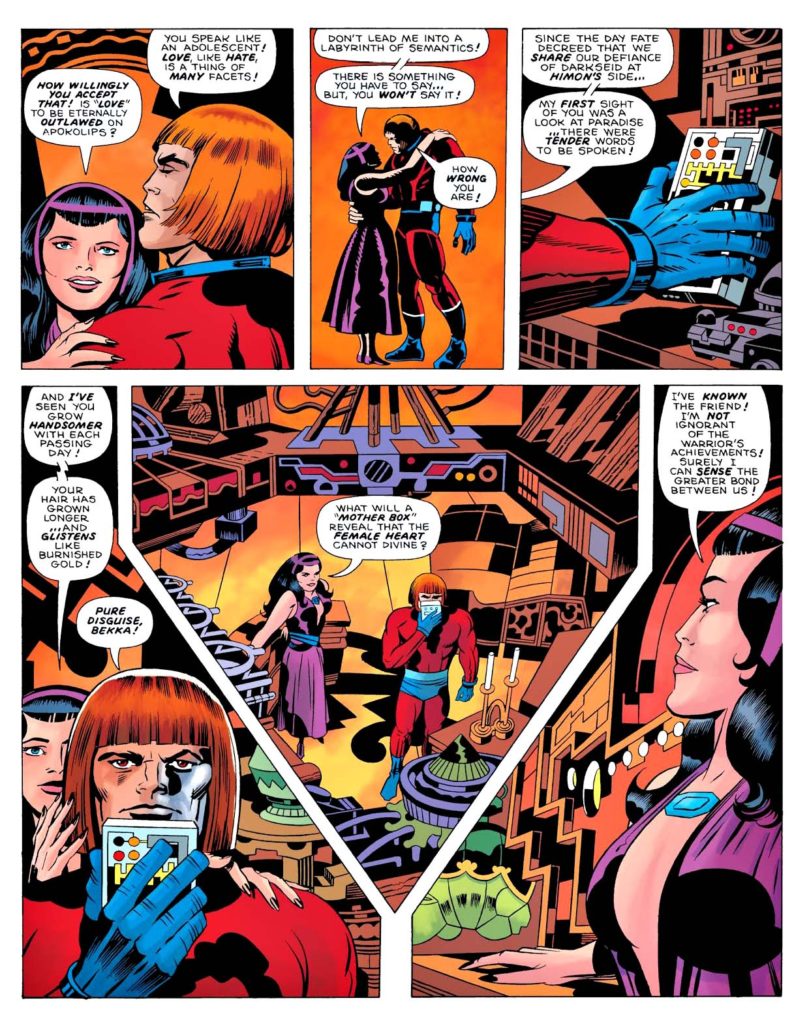
DC Graphic Novel #4 – The Hunger Dogs, June 1985

Jack Kirby’s tenure at DC was ultimately a mixed bag — for both Jack and DC. 

The Fourth World saga was one of the most ambitious projects ever attempted in comics at that time; yet, the books were cancelled well before they had a chance to fully realize Jack’s vision.

And yet…  there was something about those characters and premises that continued to resonate.

Jack’s Post DC career included a three-year return at Marvel (Think Eternals, et al), his own creator-owned comics (Captain Victory, Silver Star) and a home at animation house DePatie-Freleng studios and then later Ruby-Spears.

And then, another opportunity arose at DC to finish his New Gods saga. DC would reprint the original series in “deluxe” format and give Jack a chance to end the saga with new material.
But, unfortunately Jack wanted to end the saga in a way that would kill off the main characters, and by then DC had grown accustomed to having them in the line-up. 

So, Jack was again denied the chance again to finish it in his vision. And somehow the end of the saga morphed into a standalone graphic novel, Hunger Dogs, which also didn’t bring the story to a satisfactory conclusion.

And the graphic novel itself was a mess on the production end. Pages intended for the standard comic books were reworked for the graphic novel using photocopies, corrections, new “border” art and a host of other techniques to turn standard size pages into graphic novel pages.

Fortunately, Jack did create brand new large art pages for the GN, and they are pretty terrific in terms of page layout and composition, as evidenced here.  They are his final work for either of the “big two” publishers.

As for the New Gods? They lived on, and more importantly, Darkseid arguably became the most important villain in the DCU. Jack shared in some of that commercial success, and his family continues to share in that success today.

A fitting ending after all.

Jack Kirby — Goodnight, Santa Claus

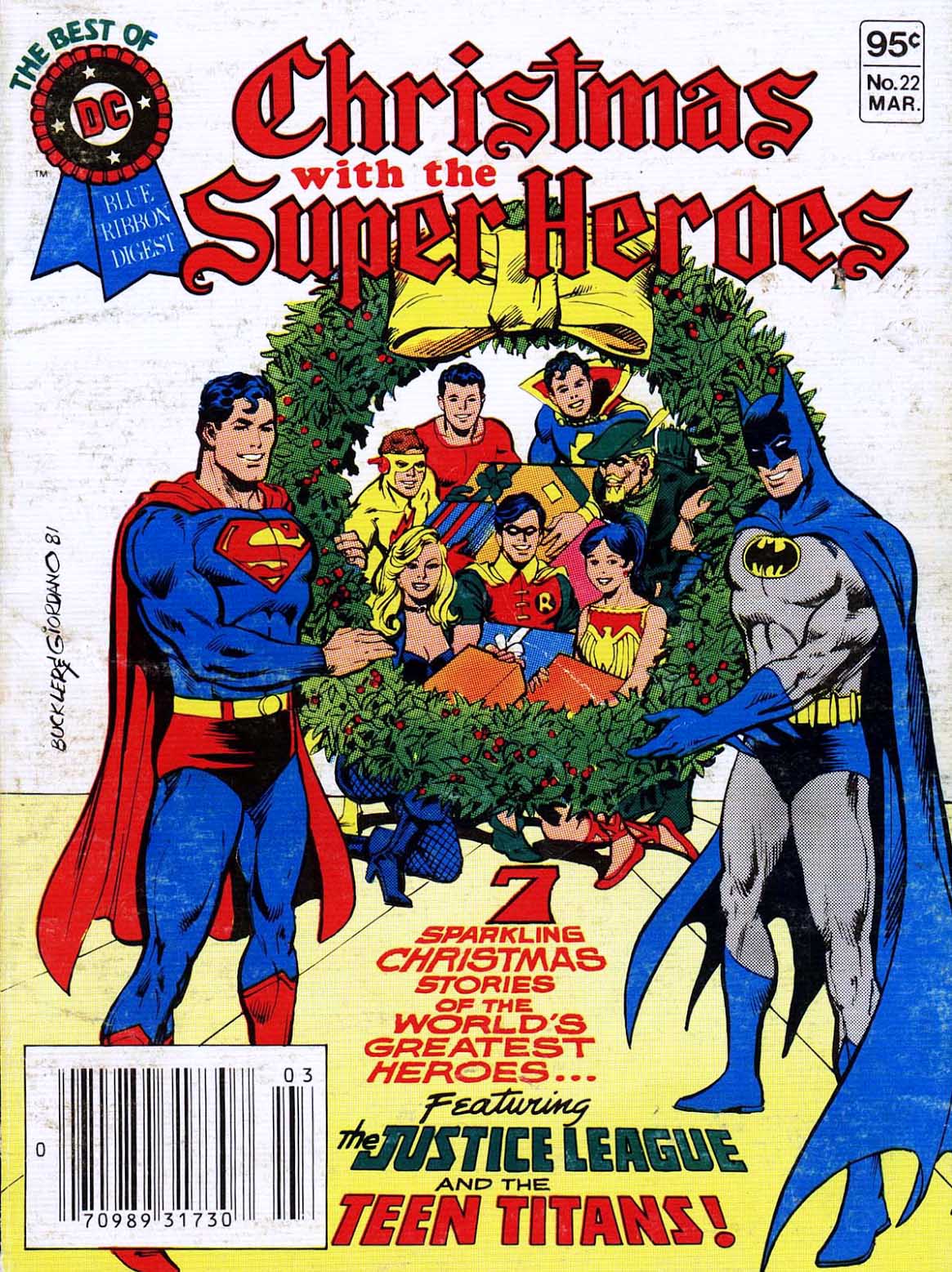
Best of DC #22, March 1982; originally Sandman #7, February 1976 and Kamandi #61, November 1978 (Both unpublished)

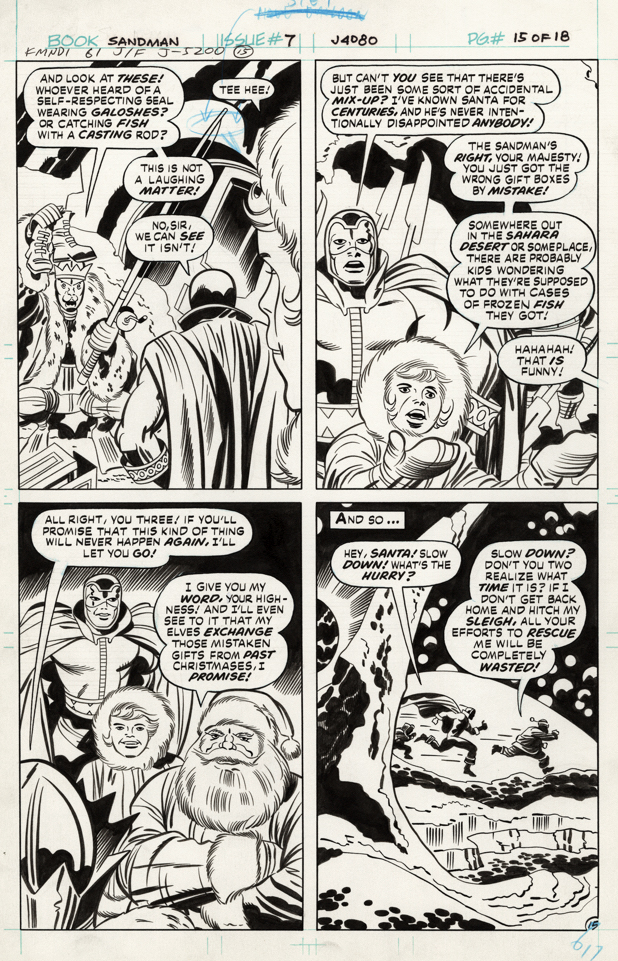
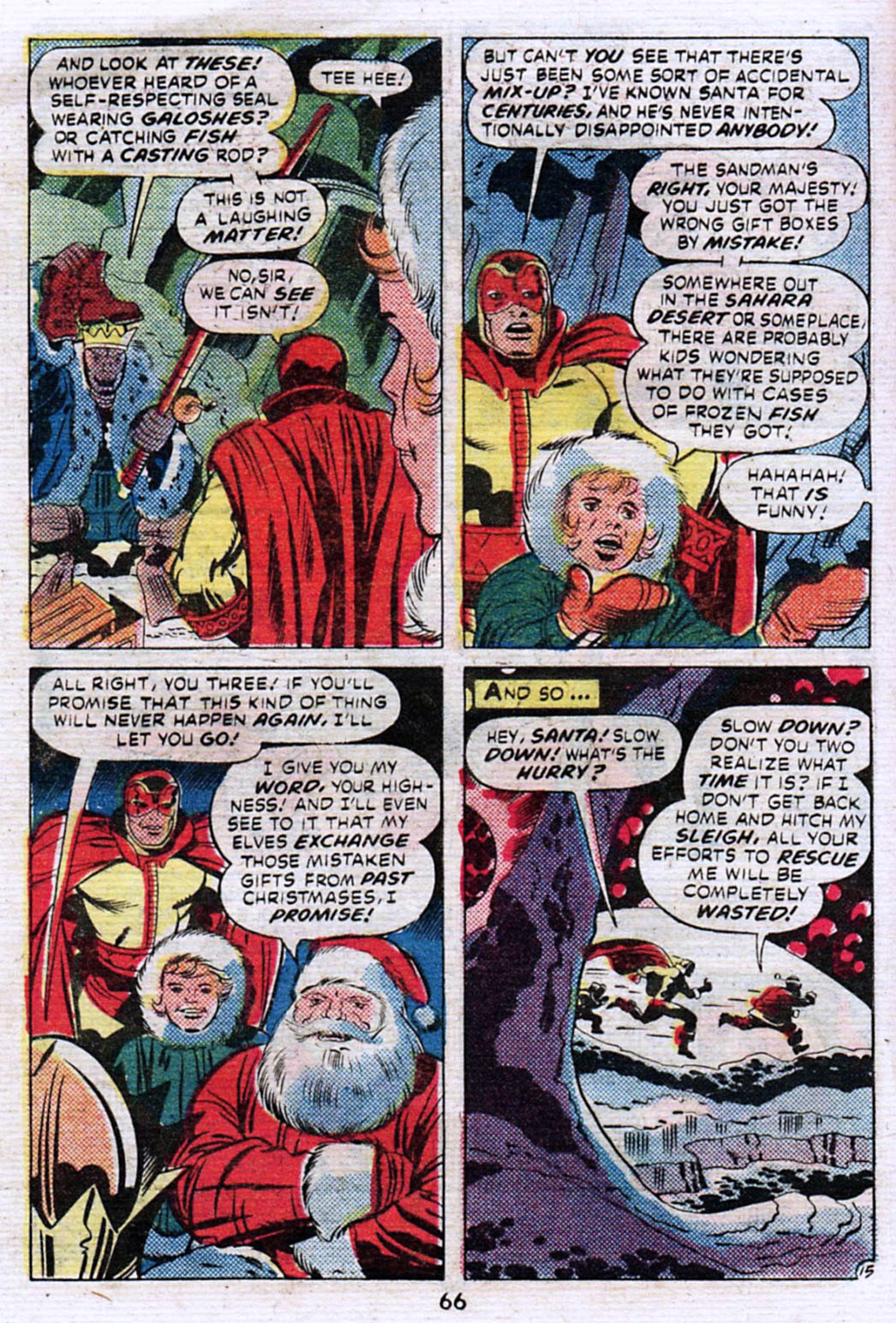
Here is some big goofy fun from Jack Kirby (inks by Mike Royer) with a story involving the Sandman and… Santa Claus. (You can’t make this up.)

Even goofier than the actual narrative itself, however, is the fact this story fell victim to cancelation, not once, but twice, before finally seeing print nearly six years after it was completed.

Kirby’s Sandman series was cancelled after issue #6, although this story for issue #7 had already been completed. It sat in inventory for two years, until it was slotted to appear as a back-up in Kamandi #61, and then that comic, along with dozens of others fell victim to the “DC Implosion” and was cancelled as well.

It finally saw print in Best of DC #22, a digest-sized publication, that hit the stands shortly before Christmas 1981.

Which means… It did not actually appear in traditional color comic book format until DC collected it in 2011 in the Jack Kirby Omnibus — 35 years later!